Why Visit Mostar?
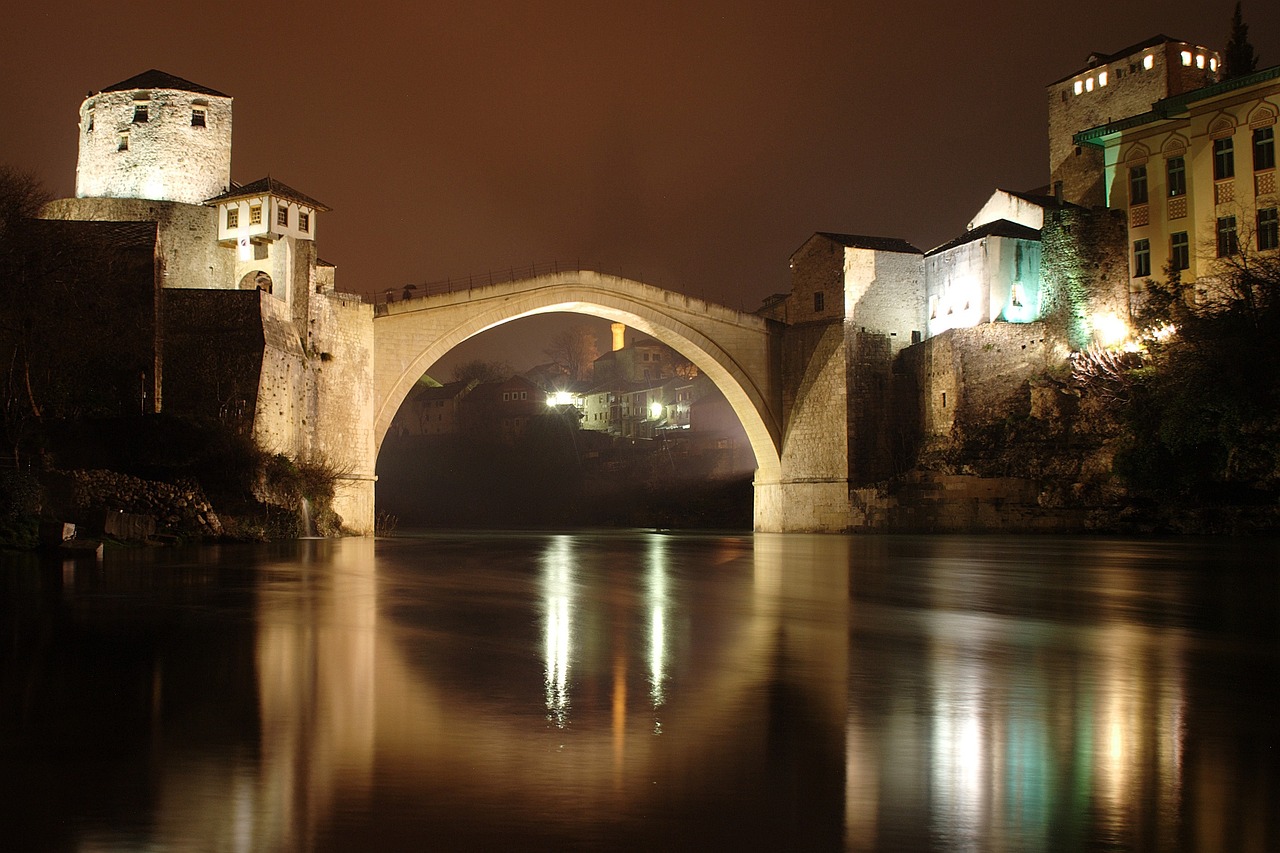
Mostar is one of those places that surprises you twice. The first surprise is visual: a delicate stone bridge arching over a jade-green river, minarets and church spires sharing the skyline, cobbled lanes twisting between Ottoman houses and Austro-Hungarian facades. The second surprise is emotional: how quickly it feels familiar, like a town you’ve always known, even as you’re tasting your first bite of burek or listening to the evening call to prayer echo through the valley.
I’ve been coming to Mostar regularly since my early twenties, staying everywhere from budget guesthouses above family-run bakeries to riverside apartments where the sound of the Neretva lulled me to sleep. Over the years, I’ve watched cafés open and close, bridge divers grow from nervous teens to seasoned professionals, and tourism gradually mature into something more thoughtful and local-driven.
If you’re planning 3 days in Mostar or even a full 5 day itinerary for Mostar, this guide is designed to be the only tab you need open: a deep, practical, and personal travel guide for Mostar, packed with things to do in Mostar, must-see attractions, local food, hidden gems, and real-world travel tips for Mostar from someone who keeps coming back.
Why consider Mostar for your next trip?
- Iconic beauty: The UNESCO-listed Stari Most (Old Bridge) is one of Europe’s most photogenic landmarks.
- Cultural layers: Ottoman, Austro-Hungarian, Yugoslav, and modern Bosnian influences blend into a unique urban tapestry.
- Compact and walkable: Ideal for a 3 day itinerary for Mostar, but rich enough to fill 4 days in Mostar or more.
- Affordable: Food, accommodation, and activities are still very good value compared with Western Europe.
- Gateway to Herzegovina: Waterfalls, medieval towns, wineries, rivers, and mountains are all easy day trips.
In 2026, Mostar feels more ready than ever to welcome curious travelers. New boutique stays are opening in restored Ottoman houses, the craft beer scene is expanding, and local festivals are drawing more international artists while still feeling wonderfully grounded.
Table of Contents
- Why Visit Mostar?
- Mostar at a Glance (2026)
- Suggested Itineraries: 3–5 Days in Mostar
- 20 Must-See Attractions in Mostar (Deep Dive)
- Neighborhoods & Areas to Explore
- Local Food & Drink in Mostar
- Nightlife, Entertainment & Cultural Experiences
- Best Day Trips from Mostar
- Cultural Etiquette & Local Customs
- Practical Travel Advice for Mostar (2026–2027)
- Summary & Best Time to Visit Mostar
Mostar at a Glance (2026)
Mostar is the largest city in Herzegovina, straddling the emerald Neretva River. It’s a city of contrasts: East and West, old and new, scars and resilience. In 2026, it’s also one of the most rewarding small cities in Europe to explore slowly.
- Population: ~105,000
- Language: Bosnian / Croatian / Serbian (you’ll hear all); English widely spoken in tourist areas.
- Currency: Bosnia and Herzegovina Convertible Mark (BAM / KM).
- Vibe: Relaxed, friendly, deeply social; days are for coffee, nights are for terraces and river breezes.
Upcoming events & trends for 2026–2027:
- Mostar Summer Fest 2026 (June–July): Multi-day music and culture festival bringing regional and international acts, expanding its jazz and world music stages.
- Red Bull Cliff Diving – Stari Most (typically August): The iconic bridge often hosts a World Series stop; 2026 is slated to be one of the biggest yet, with extended cultural programs.
- Mostar Film Festival 2026 (September): Growing independent film festival, adding more open-air screenings by the river.
- Old Town Restoration Projects: Ongoing restoration of several Ottoman houses into museums and boutique guesthouses scheduled through 2027.
Suggested Itineraries: 3–5 Days in Mostar
Whether you’re planning 3 days in Mostar or stretching it to a full 5 day itinerary for Mostar, the city rewards slow exploration. Below is a detailed 5-day narrative itinerary based on my own repeated stays. If you have fewer days, you can compress or pick and choose based on your interests.
Day 1 – Old Bridge Magic & Ottoman Mostar
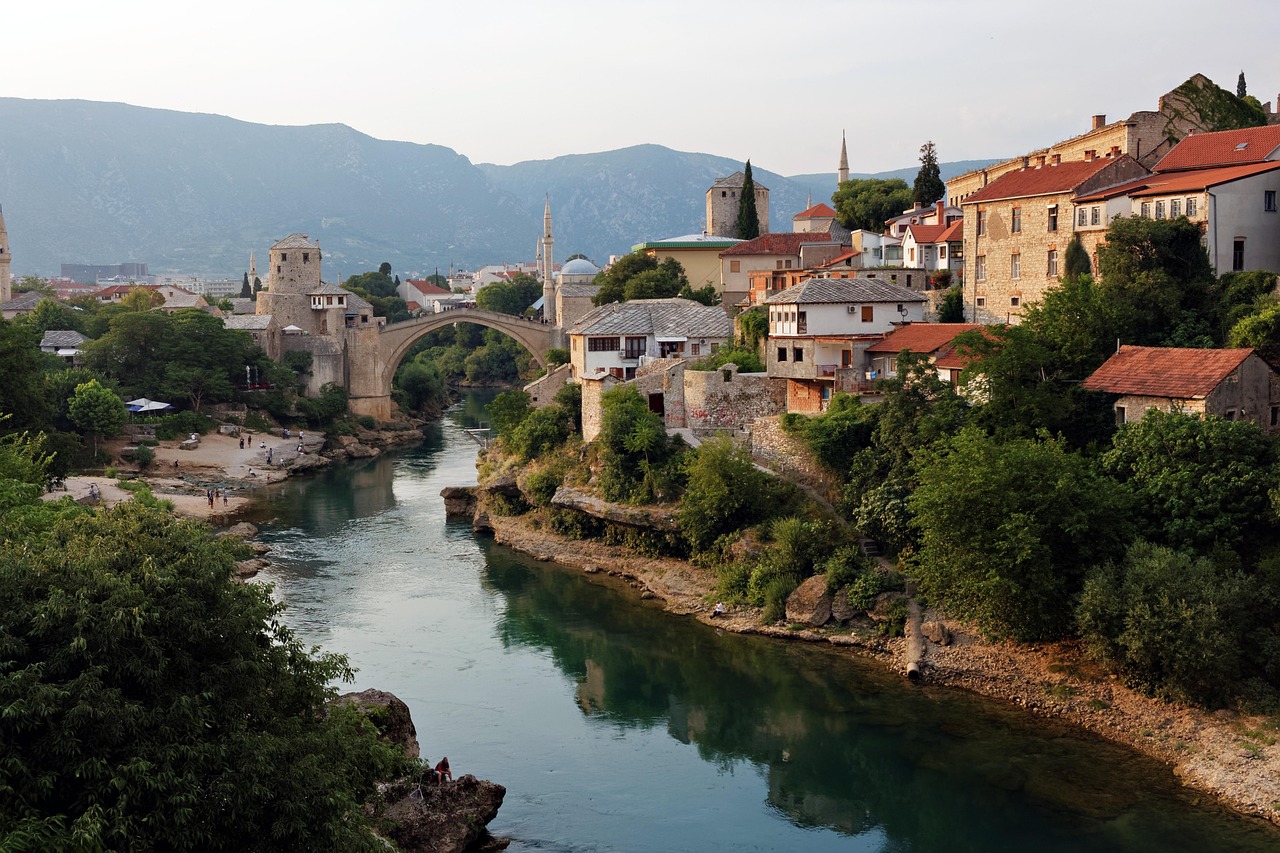
On my latest visit in 2026, I arrived in Mostar on an early morning train from Sarajevo. The sun was just starting to light up the karst hills as the Neretva shimmered below. Dropping my bag at a small guesthouse in the Old Town, I walked straight to the river—I always do this first.
Day 1 is all about the essentials: the Old Bridge, the cobbled lanes around it, and getting your bearings in the heart of the city. If you’re following a 3 day itinerary for Mostar, think of this as your orientation day.
Morning: First Encounter with Stari Most
Mostar’s Stari Most (Old Bridge) is one of the world’s great travel icons, but it still manages to feel personal when you step onto it early in the morning, before the day-trippers arrive.
I like to approach the bridge from the west bank first, via the narrow stone streets of the Kujundžiluk bazaar. The cobbles here are polished smooth by centuries of footsteps. Shops are slowly opening, the smell of coffee drifts out from tiny doorways, and you can hear the rush of the Neretva getting louder.
When you first see the arch of Stari Most, it’s hard not to stop in your tracks. The bridge you’re standing on is a faithful reconstruction completed in 2004, after the original 16th-century Ottoman bridge was destroyed during the war in 1993. But it carries the same slender, gravity-defying grace.
Practical tips for visiting Stari Most
- Footwear: The stones on the bridge are smooth and can be slippery, especially when wet. Wear shoes with good grip.
- Timing: Come at sunrise or just before sunset for fewer crowds and softer light.
- Photography: For classic shots, head to the riverbanks (especially the platforms near the Crooked Bridge and below the Koski Mehmed Pasha Mosque).
Watching the Bridge Divers
Mostar’s bridge divers are legendary. For generations, young men of the city have been leaping from the 24-meter-high arch into the icy Neretva, a daring rite of passage.
On my last summer visit, I watched as a diver in a red swimsuit collected donations in a hat, joking with the crowd in several languages. Once the amount hit his invisible threshold, he climbed the railing, paused to raise his arms, and then sliced down into the green water below, to a chorus of gasps and cheers.
If you’re adventurous, you can even arrange to jump yourself, under supervision from the local diving club. I’ve never quite worked up the courage, but a friend did it in 2025. He described the Neretva as “a punch of cold that turns into euphoria.”
Tips for watching/doing the dive
- Where to watch: From the bridge itself, or from one of the riverside terraces below.
- When: Most frequent in summer afternoons; less common in cold months.
- If you want to dive: Arrange it through the official Mostar Diving Club; they’ll train you on lower platforms first. Do not attempt it alone.
Late Morning: Kujundžiluk Bazaar & Craft Shops
After the drama of the bridge, I usually wander the Kujundžiluk bazaar—once home to coppersmiths and artisans, now a mix of souvenir stands, craft shops, and a few genuine workshops still hammering out metalware in the doorways.
Some stalls sell the usual magnets and T-shirts, but look closer and you’ll find delicate filigree jewelry, hand-hammered coffee sets, embroidered textiles, and paintings of Stari Most in every mood and season. I still use a brass coffee pot I bought here in 2016; the owner insisted on demonstrating the right way to make bosanska kafa, complete with foam and sugar cubes.
Shopping tips
- Bargaining: Polite negotiation is acceptable, but keep it friendly and don’t push too hard over a euro.
- What to buy: Copper coffee sets, small paintings, traditional jewelry, and handmade soaps make good souvenirs.
- Shipping: Some shops can arrange international shipping for larger items—ask before you fall in love with a heavy brass tray.
Lunch: Riversidе Čevapi or Japrak
By now you’ll be hungry. For your first lunch, I recommend something classic and comforting: čevapi (grilled minced meat sausages in flatbread) or japrak (vine leaves stuffed with meat and rice).
There are several restaurants with terraces along the Neretva; I often end up at one tucked under the Old Town, where the river noise drowns out the crowds and the grill smoke perfumes the air. Order a plate of čevapi with chopped onions and kaymak (a tangy clotted cream), plus a salad of tomatoes and cucumbers that taste like summer itself.
If you’re on a budget, čevapi is your friend—hearty, filling, and typically under 10 KM. It’s one of my core money-saving tricks when I spend a week in Mostar.
Afternoon: Koski Mehmed Pasha Mosque & Panoramic Views
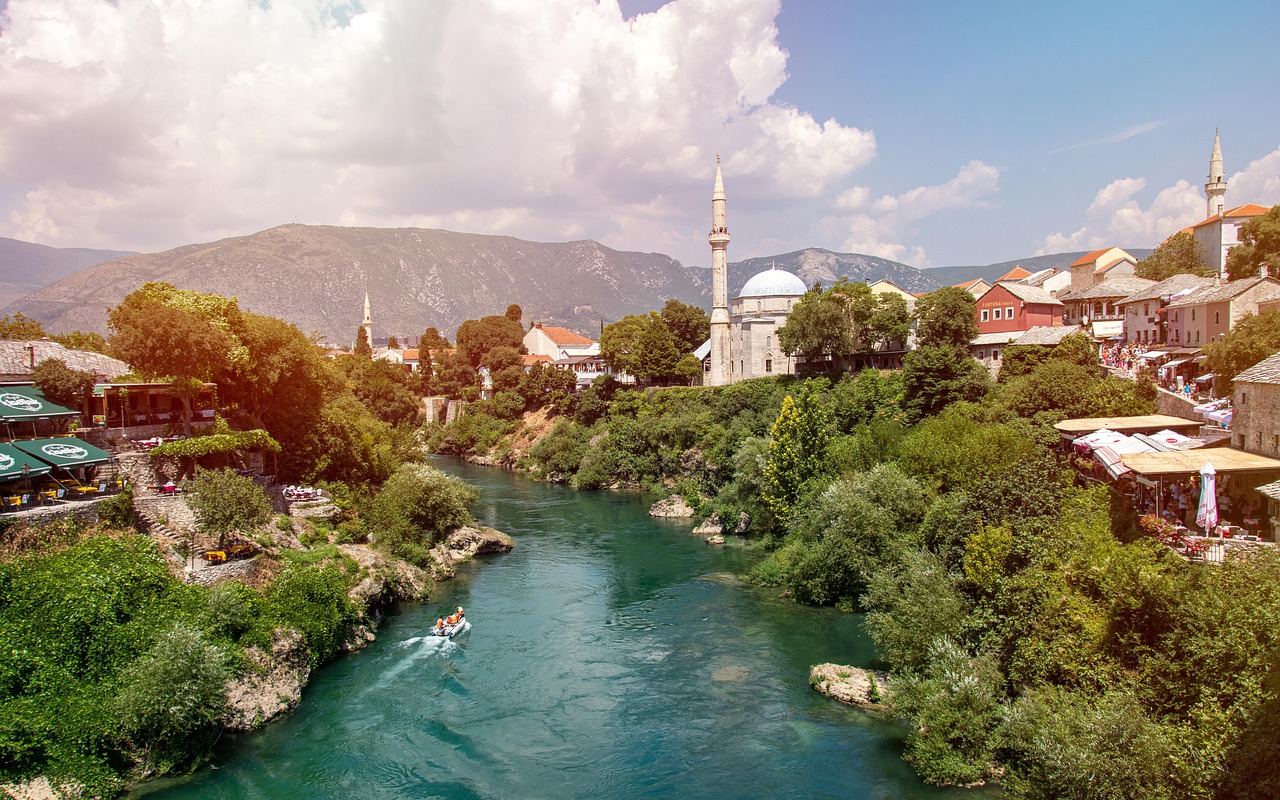
In the afternoon, head to the Koski Mehmed Pasha Mosque, just a short walk from Stari Most on the east bank. This 17th-century mosque is one of the best places to understand Mostar’s layered skyline—and to get that postcard-perfect bridge shot.
For a small fee, you can visit the mosque’s courtyard, prayer hall (dress modestly; shoulders and knees covered), and climb the minaret. The minaret is narrow, with steep stone steps, and not ideal if you’re claustrophobic, but the view from the top is unforgettable: the Old Bridge, the Neretva slicing through town, minarets and bell towers punctuating the rooftops, and the rocky mountains framing it all.
Tips for visiting Koski Mehmed Pasha Mosque
- Dress: Modest clothing; scarves are often available at the entrance, but bring your own if you can.
- Best light: Late afternoon when the sun lights up the west bank and the bridge.
- Family-friendly: Kids usually love the minaret climb, but keep a firm grip on smaller ones.
Evening: Old Town at Dusk & Romantic Bridge Views
As day-trippers head back to Sarajevo and Dubrovnik, Mostar exhales. This is my favorite time to wander: the bazaar lights switch on, the smell of grilled meat intensifies, and the stone of the bridge glows softly.
For a romantic evening, book a riverside table with a clear view of Stari Most. On one visit, a summer storm rolled in just after our food arrived; we watched lightning flash over the hills as the bridge shone under the rain, the river churning below. It’s one of those travel memories that still feels cinematic.
If you’re staying only 3 days in Mostar, you’ve now covered the absolute core—but we’re only just getting started.
Day 2 – History, War Stories & Neighborhood Wandering
Mostar’s beauty is undeniable, but to really understand it, you need to spend some time with its scars. Day 2 is about history—pleasant and painful—plus a deeper wander through the city’s neighborhoods beyond the Old Town.
Morning: War & Ethnographic Museums
I usually start with the Museum of War and Genocide Victims 1992–1995. It’s not an easy visit, but it’s essential if you want to grasp what this city has endured. Exhibits include photographs, personal objects, and testimonies from survivors. Take your time, and give yourself space afterward.
From there, I like to balance the heaviness with a visit to one of Mostar’s Ottoman houses, like the Bišćević House or Kajtaz House, both preserved examples of wealthy family homes.
Stepping inside, you’re transported to another century: low divans along the walls, stained-glass windows casting colored light, carved wooden ceilings, and carpets soft underfoot. Guides (often from the families who owned the houses) explain daily life, customs, and architecture. On my first visit, I was offered a tiny cup of Turkish-style coffee and ended up chatting about how the family fled during the war and returned to restore the house piece by piece.
Tips for museum visits
- Emotional pacing: Visit the war museum in the morning when you have more energy; follow it with a lighter cultural site.
- Photography: Always ask before taking photos inside private houses.
- Donations: Many smaller museums and houses rely on donations—consider leaving a bit extra.
Lunch: Local Cantina Off the Tourist Trail
For lunch, step away from the Old Town into a more residential area. One of my favorite budget lunches in 2025 was at a small pekara (bakery) a 10-minute walk north of the bridge, where locals queued for burek (meat-filled pastry), sirnica (cheese), and zeljanica (spinach and cheese).
For a few marks, you can get a hot slice wrapped in paper and a drink, then find a shady bench or low wall to sit and watch neighborhood life go by. It’s a simple, satisfying way to eat like a local and save money.
Afternoon: The Former Frontline & Sniper Tower
Mostar was heavily divided during the 1990s conflict, and traces of the frontline are still visible in bullet-pocked facades and abandoned buildings. One of the most infamous is the so-called Sniper Tower, a former bank building that was used by snipers during the war.
In recent years, the tower and its surroundings have become a canvas for street art, with murals, graffiti, and installations transforming it into a kind of unofficial open-air gallery. When I first visited a decade ago, access was more informal; in 2026, there are often local guides offering context tours around the area, which I strongly recommend over wandering alone inside any unsafe structures.
As you walk this area, you’ll see shells of buildings alongside new cafés and apartment blocks. It’s a powerful visual of how Mostar keeps moving forward without erasing its past.
Safety & respect
- Safety: Do not enter unstable or fenced-off buildings; stick to street level and guided walks.
- Respect: Avoid taking intrusive photos of people’s homes; remember many residents lived through the events these buildings witnessed.
Late Afternoon: Crooked Bridge (Kriva Ćuprija)
To soften the afternoon, head back toward the Old Town and seek out the Kriva Ćuprija, or Crooked Bridge. This small stone arch over a tributary of the Neretva looks like a miniature Stari Most, and many believe it was a practice run for the larger bridge.
I like this corner of Mostar in the golden hour: the sound of water tumbling under the bridge, the clink of glasses from nearby cafés, and fewer crowds than around the main bridge. It’s a lovely spot for families; kids love the little bridge and the ducks that sometimes paddle below.
Evening: Modern Mostar – Fejićeva Street & Boulevard
Spend your evening exploring Fejićeva Street and the Boulevard area—Mostar’s more modern, everyday heart. This is where locals shop, stroll, and meet for coffee. Boutique stores, ice cream parlors, and relaxed bars line the streets.
On one visit, I ended up in a small bar run by two brothers who’d lived abroad and returned to open a place with local wines and craft beers. They were eager to chat about how Mostar is changing, what it was like growing up during and after the war, and their hopes for the city. It was an evening that reminded me why I keep coming back: the conversations are as memorable as the views.
Day 3 – Nature, Panoramas & Relaxed River Time
By Day 3, you’ll be ready to mix city and nature. Whether you have a 3 day itinerary for Mostar or stretching to 4 days in Mostar, this day is perfect for views, easy hiking, and river lounging.
Morning: Fortica Hill & Skywalk
High above Mostar lies Fortica Hill, a viewpoint with sweeping panoramas and a glass skywalk that juts over the valley. If you drive or take a taxi up (which I recommend in the summer heat), the journey takes about 15–20 minutes from the center.
From the skywalk, Mostar unfurls beneath you: the winding river, the bridges, the patchwork of red roofs, and the rough ridgelines beyond. In 2024, Fortica started promoting more outdoor activities—zip lines, via ferrata routes—and by 2026 these are better organized with local guides and safety gear. It’s an adventurous option for families with older kids and for couples looking for something beyond the usual sightseeing.
Tips for Fortica
- Transport: Taxi or rental car; negotiate taxi price beforehand or insist on the meter.
- Time: 2–3 hours including photos and a drink at the café.
- Best for: Panoramic photography, mild adventure, and escaping summer heat.
Lunch: Picnic or View Café
You can pack a simple picnic (bread, cheese, cured meats, fruit from a local market) or eat at one of the cafés near the viewpoint. On my last visit, I brought fresh bread and local cheese, buying cold drinks on-site, and ate overlooking the river. Few lunches taste as good as those with a view you had to earn, even if “earning it” was just a taxi ride and a short walk.
Afternoon: River Time – Swimming & Relaxing
Back down in town, spend your afternoon by the water. The Neretva is famously cold even in high summer, but on a hot July day, that’s exactly what you want.
There are several informal swimming spots along the riverbanks, especially a bit further from the Old Town. Ask your guesthouse for the nearest local favorite. Don’t expect sandy beaches; think rocky banks, concrete platforms, kids jumping from low walls, and groups of friends sunbathing.
Safety for river swimming
- Current: The Neretva’s current can be strong; stick close to shore and follow local advice.
- Footwear: Water shoes or sturdy sandals help with rocks.
- Kids: Keep constant watch; this is not a lifeguarded beach.
Evening: Sunset from the Bridge & Nighttime Photography
For your final evening (if you’re on a 3 day itinerary for Mostar), circle back to Stari Most one more time—this city’s icon looks different every day. Sunset is particularly magical: the sky shifts from gold to pink, the first lights flicker on in the Old Town, and the bridge’s reflection sharpens in the darkening water.
Photography lovers should explore different angles: from the lower riverside paths, from the small bridge downstream, from the opposite bank, and from the minaret if it’s still open. I’ve shot the bridge in every season, and it never gets old.
Day 4 – Crafts, Coffee Culture & Local Life
If you’re lucky enough to have 4 days in Mostar, Day 4 is your chance to really slow down and sink into local rhythms: markets, cafés, workshops, and quiet corners of the city most day-trippers never see.
Morning: Old Market & Breakfast Like a Local
Start with the fresh produce market north of the Old Town (ask for the tržnica). Here, farmers from surrounding villages sell seasonal fruits and vegetables, homemade cheeses, honey, and cured meats.
I love wandering between stalls, picking up cherries or figs in late spring and summer, or apples and walnuts in autumn. If you’re staying in an apartment, this is where you stock up; if not, it’s still fun to buy a small bag of fruit to snack on throughout the day.
Breakfast might be somun bread with cheese or a pastry and yogurt. Sit on a bench outside and watch as the city wakes up around you: older men debating politics, women greeting each other with familiar kisses, kids running errands.
Mid-Morning: Coppersmith Workshops & Hands-On Experiences
Mostar’s coppersmith tradition is centuries old. Several workshops in the Old Town and nearby streets offer demonstrations, and a few are starting to experiment with short hands-on sessions where you can try basic hammering techniques on a small piece.
On one visit, I ended up chatting with a third-generation coppersmith who showed me his grandfather’s tools, still in use. We talked about how tourism has changed his business: fewer locals buying big sets, more visitors purchasing single cups or small plates. He let me try hammering a simple pattern, and I still have the slightly crooked piece on my desk at home.
Lunch: Vegetarian & Lighter Options
By Day 4, you might be craving something lighter than grilled meat. Mostar has slowly grown a small handful of vegetarian-friendly cafés and restaurants serving salads, grilled vegetables, and pasta dishes alongside traditional food.
Try a place that does pita (baked pies) with cheese and spinach, or a grilled vegetable platter with local olive oil. It’s entirely possible to eat well here as a vegetarian or even vegan, though you’ll need to ask about ingredients (many pastries contain dairy or eggs).
Afternoon: Coffee Culture – Bosnian Coffee Ritual
Bosnia takes coffee seriously, and Mostar is no exception. Set aside an hour to sit down for a proper Bosnian coffee, not just a quick espresso. You’ll be served a small copper pot (džezva) of strong coffee, a cup, a sugar cube or two, and often a piece of Turkish delight.
The ritual is to dip the sugar into the coffee, bite it, then sip. Locals will tell you that coffee here isn’t about caffeine; it’s about conversation and time. I’ve spent entire afternoons over two or three coffees, learning about someone’s family, business, or memories of the city.
Late Afternoon: Park Time & Residential Walks
For a different side of Mostar, walk through residential streets to one of the local parks. You’ll see laundry on balconies, kids playing football, and groups of friends gathered around chess boards or card games.
This is where you’ll feel the city as a living home, not just a stage set for visitors. On one spring trip, I stumbled upon a small community event in a park—music, homemade cakes, kids’ performances—organized to raise funds for a local school. I ended up staying for hours, welcomed as if I’d always been there.
Evening: Live Music or Low-Key Night Out
As the sun sets, seek out a bar or café with live music. In summer, many places host acoustic bands or traditional sevdalinka (Bosnian blues) evenings. These songs, full of longing and love, are hauntingly beautiful—even if you don’t understand the words, you’ll feel the emotion.
For couples, this can be a wonderfully romantic way to end the day. For families, look for outdoor venues where kids can move around; Mostar’s nightlife is more about conversation than clubbing, making it surprisingly family-friendly in the evenings.
Day 5 – Day Trips into Herzegovina: Waterfalls, Monasteries & Wineries
If you’ve built a full 5 day itinerary for Mostar, your last day is perfect for exploring the wider region. Herzegovina is compact, and several incredible sites are within an hour of the city. You can rent a car, join an organized tour, or hire a private driver for the day.
Option 1: Kravica Waterfalls – Nature & Swimming
About 40 km south of Mostar lies Kravica, a wide curtain of waterfalls tumbling into a turquoise pool. It’s one of the most popular day trips from Mostar, and for good reason.
On my first visit, I arrived in late May, just before the main summer crowds. The falls were full and roaring, mist hanging in the air. Wooden walkways and paths circle the lake, with several designated swimming spots. The water is cold but refreshing, and there are cafés and snack bars for lunch.
Tips for Kravica
- Best time: Late spring and early autumn for fewer crowds; summer for warm air and lively atmosphere.
- Family-friendly: Yes, but keep a close eye on kids near the water.
- Budget: Entry fee + parking; bring cash.
Option 2: Blagaj Tekke – Riverside Monastery & Spring
Closer to Mostar (around 12 km) is Blagaj, home to a 600-year-old dervish monastery clinging to a cliff beside the source of the Buna River. The white walls of the Blagaj Tekke reflect in the still blue-green water, making it one of the most photogenic spots in Herzegovina.
Inside, the rooms are simply furnished; visitors are asked to remove shoes and dress modestly. There’s a strong sense of calm here, especially if you arrive early before day tours. Outside, riverside restaurants serve fresh trout, grilled over open fires. I still remember the taste of lemony, smoky fish eaten under a canopy of vines while the spring rushed nearby.
Tips for Blagaj
- Dress: Shoulders and knees covered for entering the tekke; scarves provided.
- Photo spots: The opposite bank of the river and small boat tours near the cave.
- Combine with: Počitelj or Kravica for a full-day loop.
Option 3: Počitelj – Medieval Stone Village
Further south, perched above the Neretva, is the fortified village of Počitelj, a maze of stone houses, narrow paths, and towers. Climb to the fort at the top for expansive views over the river valley and red-roofed houses below.
Počitelj feels like stepping back in time. On my last visit, I bought pomegranate juice from an elderly woman sitting under a fig tree, then wandered up past the mosque and artist studios to the ruined fortress. The village is small but atmospheric, making it an ideal stop on a day trip loop.
Option 4: Herzegovina Wineries
Herzegovina’s dry, sunny climate is perfect for wine production, especially indigenous grapes like Žilavka (white) and Blatina (red). Several wineries near Mostar and Čitluk offer tastings and tours.
If you’re a couple looking for a romantic day out, this is a lovely option: vineyard views, unhurried tastings, and generous cheese and meat platters. In 2026, more wineries are adding bookable tasting experiences online, making it easier to plan ahead.
Evening: Last Night in Mostar
Whichever day trip you choose, try to get back into Mostar before full dark for one last wander through the Old Town. Sit for a coffee or a glass of Herzegovinian wine, watch the bridge under the stars, and say your quiet goodbyes—for now.
20 Must-See Attractions in Mostar (Deep Dive)
Below are 20 of the best places to visit in Mostar, from iconic landmarks to lesser-known corners. I’ve woven in history, significance, and personal tips so you can decide which to prioritize in your own itinerary.
1. Stari Most (Old Bridge)
Why go: The symbol of Mostar and one of Europe’s most extraordinary pieces of Ottoman architecture.
Commissioned in the 16th century by Suleiman the Magnificent, the original Stari Most stood for over 400 years before being destroyed in 1993. Its reconstruction, completed in 2004 using traditional techniques and some original stones, became a powerful symbol of reconciliation. Standing on the bridge, you’re not just crossing a river; you’re crossing centuries of history and the fault lines of recent conflict.
I still remember my first step onto the arch: the slight wobble in my knees (it’s steeper than it looks), the cool smoothness of the stones, and the view down into the water that seems impossibly far below. Even after multiple visits, I always take a moment in the middle, lean against the low stone wall, and just look: at the houses clinging to the banks, at kids splashing far below, at the mountains that hold the city like a bowl.
Best for: Everyone—families, couples, solo travelers.
2. Koski Mehmed Pasha Mosque
Why go: For the best panoramic view of the Old Bridge and the Old Town, plus a serene glimpse into Mostar’s Islamic heritage.
The mosque dates back to the early 17th century, restored after the war, and still serves a local congregation. The climb up the minaret is a rite of passage for Mostar visitors; it’s tight, a little dizzying, and absolutely worth it. Inside, the mosque’s prayer hall is quietly beautiful: patterned carpets, hanging lamps, and a mihrab (prayer niche) oriented toward Mecca.
Tip: Come just before late afternoon prayer to see the mosque as it gently transitions from tourist site to living place of worship.
3. Kujundžiluk Old Bazaar
Why go: To feel the bustle of Mostar’s commercial heart, past and present.
The name “Kujundžiluk” comes from the coppersmiths who once filled this street with the sound of hammer on metal. Today, it’s an atmospheric mix of souvenir shops, ateliers, and small eateries. I like to duck into the quieter side alleys, where older craftsmen still work at worn benches, and where you can sometimes find more unique pieces.
4. Kriva Ćuprija (Crooked Bridge)
Why go: A charming, quieter cousin of Stari Most.
Built in the mid-16th century, this little bridge spans the Radobolja River and is believed by many to have been a prototype for Stari Most. It was heavily damaged by flooding in 2001 but reconstructed. I find it a perfect place for a quieter coffee break—a tiny oasis just steps from the main tourist flow.
5. Bišćević & Kajtaz Houses (Ottoman Residences)
Why go: To step into 17th- and 18th-century domestic life.
Both houses are masterpieces of Ottoman residential architecture: overhanging wooden balconies, enclosed courtyards, finely carved interiors. Guides explain gender-separated spaces, guest reception customs, and the importance of privacy and hospitality. I find these houses particularly poignant because they show the everyday lives that war and time could have erased—but didn’t.
6. Museum of War and Genocide Victims 1992–1995
Why go: To understand the recent past that still shapes Mostar.
This is not a polished, distant museum; it’s raw, personal, and often heartbreaking. Exhibits are built around individual stories and objects. On my first visit, I left in silence, needing a long walk by the river to process it all. It will change how you see the city around you.
7. Former Sniper Tower & Street Art
Why go: To see how art and memory intersect in post-war Mostar.
The former bank building turned sniper position is now an unofficial gallery of murals and graffiti—some political, some abstract, some deeply personal. Guided tours can help you understand the building’s significance and the messages behind the artworks.
8. Catholic & Orthodox Churches of Mostar
Why go: To appreciate Mostar’s religious diversity and architectural mix.
The Franciscan Church of St. Peter and Paul, with its tall bell tower, and the Orthodox Cathedral (under stages of restoration) tell stories of different communities that have long shared this city. The juxtaposition of minarets and bell towers is one of the visual signatures of Mostar’s skyline.
9. Fortica Hill & Skywalk
Why go: For sweeping views and a hint of adrenaline.
Beyond the skywalk, Fortica also features a large cross visible from the city below, hiking and biking trails, and war-era bunkers. It’s a place where natural beauty and layered history converge.
10. Neretva Riverfront
Why go: To feel the literal lifeblood of the city.
The Neretva’s intense green comes from minerals in the karst landscape. Walk its banks, cross its bridges, watch fishermen cast lines at dawn. The river is both barrier and connector, a constant presence in Mostar’s story.
11. City Market (Tržnica)
Why go: To see and taste everyday life.
From seasonal produce to local cheeses and honey, this market is where you’ll feel Mostar beyond tourism. I’ve lost count of how many times a stallholder has slipped an extra apple or fig into my bag “for the road.”
12. Fejićeva Street & The Boulevard
Why go: For shops, cafés, and a feel for modern Mostar.
This area bridges the historic and the contemporary, with boutiques, bakeries, and banks. It’s where you’ll likely buy your SIM card, pick up supplies, and join the evening korzo (stroll).
13. Zrinjevac Park & Green Spaces
Why go: To rest your feet in the shade and watch local life.
Zrinjevac Park and other small green pockets in the city offer playgrounds for kids, benches for people-watching, and a glimpse of how Mostar relaxes on weekends.
14. New Bridges & City Views
Why go: For different angles on the city.
Walking across some of the newer bridges gives you different perspectives on the Neretva and the Old Town. I like to time a walk to catch the late afternoon sun lighting up the hills.
15. Small Art Galleries & Studios
Why go: To discover contemporary voices in a historic city.
Hidden among souvenir shops are real galleries showcasing local painters, photographers, and sculptors. I’ve picked up small prints here that now line my walls at home, daily reminders of Mostar’s colors.
16. University of Mostar Area
Why go: For a studenty vibe and cheap eats.
Bright murals, lively bars, and low-cost fast food spots make this area feel young and energetic. It’s a good place to tap into the city’s future generation.
17. Mostar Railway Station & Rail Journey Views
Why go: Not exactly an attraction, but the rail journey to/from Sarajevo is one of the most scenic short train rides in Europe.
The station itself is modest, but the tracks that snake along the Neretva gorge are pure drama. I always recommend at least one direction by train if schedules allow.
18. Western Suburbs & Everyday Neighborhoods
Why go: To see where and how people live beyond the tourist core.
Supermarkets, schools, local bakeries, hair salons—mundane to residents, but fascinating to slow travelers. I often rent apartments here for longer stays.
19. Festival Venues & Open-Air Stages
Why go: If you’re in town during Mostar Summer Fest or other events, these venues transform into outdoor theaters of music and performance.
20. Nighttime Old Town & Illuminated Architecture
Why go: Because Mostar after dark is almost a different city.
The stone glows, the river becomes inky black, and the sounds shift from tour groups to laughter from restaurant terraces. It’s one of the most romantic cityscapes I know, and also surprisingly safe and relaxed.
Neighborhoods & Areas to Explore in Mostar
Old Town (Stari Grad)
The heart of tourism and the most atmospheric part of the city. Cobblestones, historic bridges, bazaars, and riverside restaurants dominate. Stay here if you want to be steps from the main sights and don’t mind some noise in high season.
West Bank & Boulevard Area
More modern, with Austro-Hungarian buildings, government offices, and everyday shops. Good for budget stays and a more local feel, still within walking distance of the Old Bridge.
East Bank Residential Zones
Quieter streets, small parks, and family homes. If you’re seeking an authentic neighborhood vibe and don’t mind a 10–20-minute walk to the Old Town, this can be ideal and often cheaper.
University & Student Quarters
Younger crowd, bars, cheap eateries, and a casual atmosphere. Great if you’re on a tight budget or enjoy being near student life.
Local Food & Drink in Mostar
One of the best “things to do in Mostar” is simply to eat. Herzegovinian cuisine is hearty, flavorful, and deeply satisfying.
Must-Try Dishes
- Čevapi: Grilled minced meat sausages served in flatbread with onions and kaymak.
- Burek & Pita: Spiral or layered pastries filled with meat, cheese, spinach, or potatoes.
- Japrak & Sarma: Vine or cabbage leaves stuffed with meat and rice.
- Begova Čorba: Rich chicken and vegetable soup.
- Trout from Blagaj: Fresh river fish, usually grilled.
- Peka: Meat and vegetables slow-cooked under an iron bell; needs to be ordered in advance.
Sweet Treats
- Tufahija: Poached apple stuffed with walnuts and cream.
- Baklava: Layers of pastry, nuts, and syrup.
- Lokum: Turkish delight served with Bosnian coffee.
Drinks
- Bosnian Coffee: A ritual in itself.
- Herzegovinian Wine: Žilavka (white) and Blatina (red).
- Rakija: Strong fruit brandy; sip slowly.
- Local Beers: Domestic lagers plus emerging craft brews.
Saving Money on Food
To keep your budget in check:
- Eat big lunches at local pekara (bakeries) and grill houses off the main tourist streets.
- Shop at markets for fruit and snacks instead of always eating out.
- Ask your host for their favorite cheap local places—they’re rarely wrong.
Nightlife, Entertainment & Cultural Experiences
Mostar’s nightlife is more about conversation on terraces than wild clubs, but there’s still plenty to do after dark.
Evening Vibes
- Riverside Bars: Ideal for couples—wine, views, and the sound of water.
- Cafés on Fejićeva: Families and groups of friends; kids eat ice cream while adults linger over coffee or beer.
- Student Bars: Louder music, cheaper drinks, and a more energetic vibe.
Cultural Experiences
- Sevdalinka Music Nights: Check posters and social media for acoustic evenings in bars and cultural centers.
- Festivals: Mostar Summer Fest, film festivals, and occasional theater and dance performances in open-air venues.
Day Trips & Nearby Attractions from Mostar
Beyond the classic Blagaj, Počitelj, and Kravica waterfalls, there are other worthwhile excursions:
Medjugorje
A major Catholic pilgrimage site where apparitions of the Virgin Mary were reported in 1981. Even if you’re not religious, it’s interesting to see the infrastructure that has grown around the pilgrimage industry.
Ruište & Prenj Mountains
For hikers, the nearby mountains offer cooler air and well-loved trails. Local hiking clubs sometimes organize group walks; ask around in outdoor shops.
Konjic & Jablanica (if heading toward Sarajevo)
On the route to Sarajevo, stop in Konjic for its own old bridge and rafting, and Jablanica for lake views and roast lamb.
Cultural Etiquette & Local Customs in Mostar
Mostar is warm and welcoming, but a few basics will help you connect more deeply and avoid missteps.
Greetings & Politeness
- Greetings: A simple “Dobar dan” (good day) goes a long way.
- Handshakes: Common; wait for women to offer their hand in more conservative contexts.
- Titles: Older people may be addressed as “gospodin” (Mr.) or “gospođa” (Mrs.).
Dress & Behavior
- Dress modestly when visiting mosques or religious sites (shoulders and knees covered).
- Alcohol: Widely consumed, but avoid obvious drunkenness, especially near religious sites or around families.
- Public affection: Holding hands is fine; more intimate displays may draw stares in traditional areas.
Photography
- Ask before photographing people, especially in markets and residential areas.
- Inside religious sites, check for signs or ask attendants.
Talking About the War
- Many locals have direct war experiences; some are willing to share, others prefer not to.
- Listen more than you speak, avoid taking sides or making glib comments, and never treat trauma as a tourist attraction.
Practical Travel Advice for Mostar (2026–2027)
Best Seasons & Weather
- Spring (April–June): Mild, green, ideal for sightseeing and day trips.
- Summer (July–August): Hot (often 35°C+), lively, peak crowds around the bridge.
- Autumn (September–October): Warm days, cooler nights, fewer tourists—my personal favorite.
- Winter (Nov–March): Quiet, some closures; atmospheric but not ideal for waterfalls/swimming.
How to Get To & Around Mostar
- By train: Scenic line from Sarajevo; in 2026, services are improving but still check schedules in advance.
- By bus: Regular buses from Sarajevo, Dubrovnik, Split, and other regional cities.
- By car: Good roads; parking in the Old Town area can be tricky—use marked lots.
Getting Around the City
- On foot: Most key areas are walkable.
- Buses: Local buses exist but can be confusing; ask your host for current routes.
- Taxis: Affordable; agree on price or insist on the meter before starting.
- Car rental: Useful for day trips; book in advance in high season.
SIM Cards & Connectivity
As of 2026, several providers (such as BH Telecom, HT Eronet) offer prepaid SIMs with data. You can buy them at kiosks, official shops, or malls; bring your passport for registration. Many cafés and guesthouses offer free Wi-Fi, though speeds vary.
Money & Costs
- Currency: BAM (KM). Some places accept euros, but change is usually given in BAM.
- ATMs: Widely available; bank ATMs are generally more reliable than standalone ones.
- Daily budget: Backpackers can manage around 40–60 EUR/day; mid-range comfort is easy around 70–120 EUR/day.
Saving Money in Mostar
- Stay in guesthouses or apartments slightly outside the Old Town.
- Eat main meals at local pekara and grill houses rather than riverside tourist restaurants.
- Join shared day tours instead of private drivers if you’re solo.
Visa Requirements & Border Info
Citizens of the EU, UK, many European countries, and several others (including the US, Canada, Australia, New Zealand) can usually enter Bosnia and Herzegovina visa-free for short stays (up to 90 days) as of 2026. Always confirm with official government sources or your local embassy before travel, as rules can change.
Driving & Foreign Licenses
- Most foreign driver’s licenses are accepted for short stays; an International Driving Permit (IDP) is recommended, and sometimes required by rental agencies.
- Road conditions are generally good on main routes but can be narrow and winding in rural areas.
- Always carry your license, passport, and rental documents; police checks are not uncommon.
Health & Safety
- Tap water: Generally safe to drink in Mostar; many locals do.
- Emergency number: 112 for general emergencies.
- Safety: Mostar feels safe for visitors; use standard city precautions.
Hidden Tips from Repeat Visits
- Early starts: Visit Stari Most and the main bazaar before 9 am for quiet photos.
- Midday break: In summer, retreat indoors from 1–4 pm; use the time for museums or a nap.
- Ask locals: People are proud of their city and love recommending their favorite spots if you show genuine interest.
- Stay flexible: Weather can change quickly; swap day trips and city days as needed.
Summary & Final Recommendations
Mostar is compact but dense with experiences. In 3 days in Mostar, you can see the essentials: Stari Most, the Old Town, key museums, and a short excursion. With 4 days in Mostar, you can add Fortica, more neighborhoods, and deeper relaxation. A full 5 day itinerary for Mostar opens up Kravica, Blagaj, Počitelj, and the wider Herzegovina countryside.
The best time to visit Mostar is late spring (May–June) and early autumn (September–October), when days are warm, nights are pleasant, and crowds are manageable. Summer offers the most lively atmosphere and full festival calendar but can be very hot. Winter is quiet, introspective, and suited to travelers who prefer atmosphere over activity.
If you come with curiosity, respect, and a willingness to slow down—to linger over coffee, to listen to stories, to watch the play of light on stone and water—Mostar will stay with you long after you’ve crossed the bridge for the last time.