Why Visit Kathmandu in 2026?
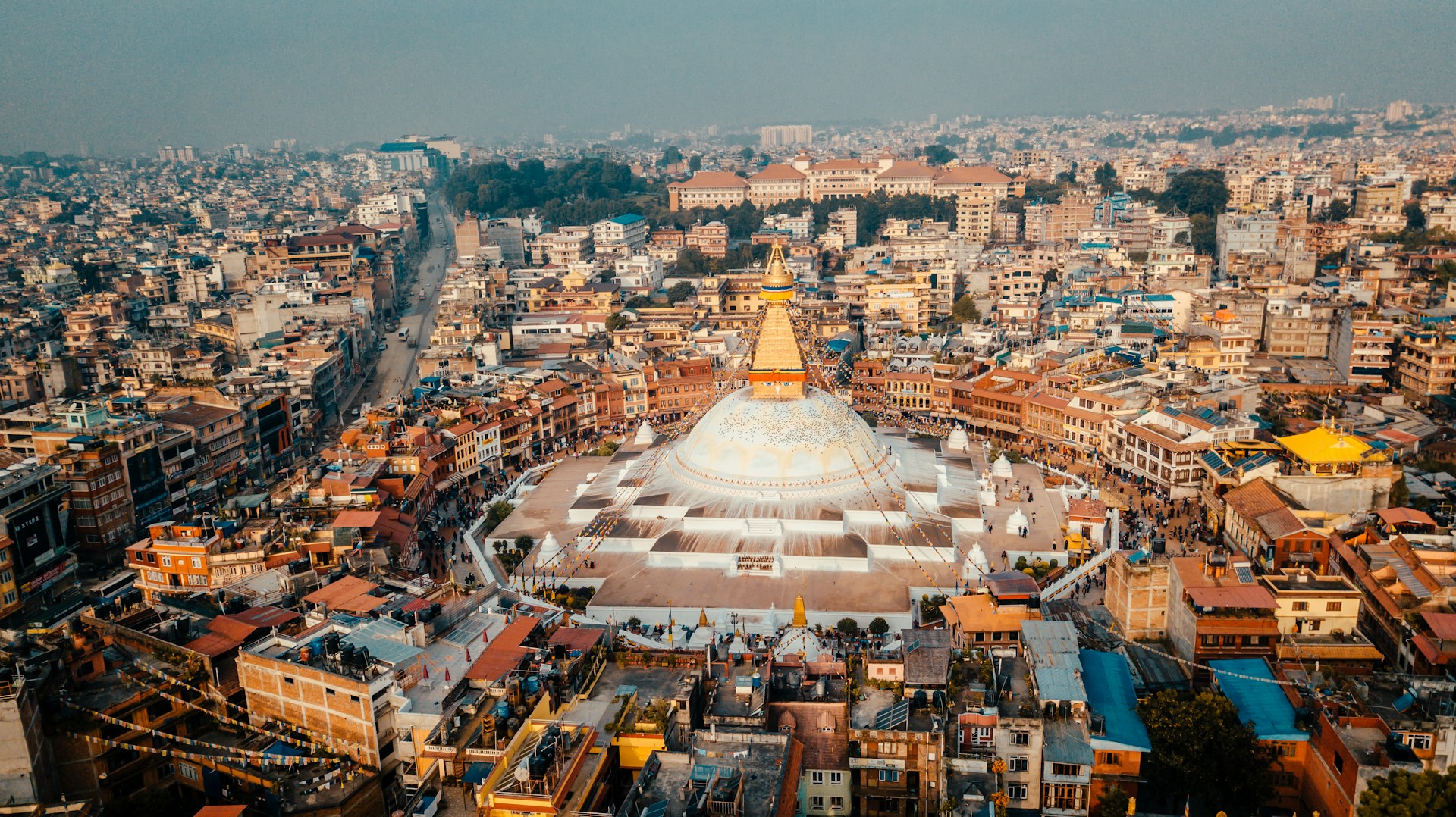
Kathmandu is a city that shouldn’t work, but somehow does. It’s loud, dusty, spiritual, chaotic, and unexpectedly gentle. The smell of incense from a 1,500-year-old temple mixes with the sizzle of momos frying on a street cart; motorbikes weave around sacred cows; monks in maroon robes scroll on smartphones under prayer flags.
I first came to Kathmandu over a decade ago, thinking I’d stay three days. I stayed three weeks. Since then, I’ve returned almost every year. In 2026, the city is still healing and rebuilding from the 2015 earthquake, but it’s also more vibrant than ever: new cafés, restored temples, improved roads (some, not all!), and a renewed energy around festivals and culture.
Travelers come to Kathmandu for Everest and the Himalayas, but most are surprised by how strongly the city itself gets under their skin. Whether you have 3 days in Kathmandu or you’re planning a slower 5 day itinerary for Kathmandu, there’s more than enough to keep you fascinated.
In this guide, I’ll walk you through:
- In-depth stories and guides to 20+ must-see attractions in Kathmandu (with personal tips and anecdotes).
- A detailed 4–5 day itinerary for Kathmandu (adaptable to a 3 day itinerary if you’re short on time).
- The most interesting neighborhoods to explore, from backpacker-thick Thamel to deeply local alleys of Asan and Patan.
- My favorite spots for local food in Kathmandu—including where to eat well for under $3.
- Hidden gems in Kathmandu that most quick tours skip.
- Cultural etiquette and local customs in Kathmandu you should know before you go.
- Very practical travel tips for Kathmandu: SIM cards, money-saving hacks, transport, visas, and safety.
Think of this as your long, immersive, human-written travel guide for Kathmandu, designed to help you feel the city rather than just tick off sights.
Table of Contents
- Why Visit Kathmandu in 2026?
- Kathmandu at a Glance
- Suggested Itineraries (3, 4, and 5 Days in Kathmandu)
- 20+ Must-See Attractions in Kathmandu (Deep-Dive Guides)
- Neighborhoods & Areas to Explore
- Local Food & Drinks in Kathmandu
- Nightlife, Entertainment & Cultural Experiences
- Best Day Trips from Kathmandu
- What’s New & Upcoming in 2026–2027
- Cultural Etiquette & Local Customs
- Practical Travel Advice for Kathmandu
- Summary & Best Time to Visit Kathmandu
Kathmandu at a Glance
Kathmandu sits in a bowl-shaped valley at about 1,400 meters (4,600 ft), ringed by hills and backed by Himalayan peaks on clear days. It’s the political, cultural, and spiritual heart of Nepal.
Three historic cities—Kathmandu, Patan (Lalitpur), and Bhaktapur—form the core of the valley. Each has its own Durbar Square, its own character, and its own rhythm. In between, the city sprawls into neighborhoods that feel like villages swallowed by urban expansion.
Don’t expect a manicured “old town” like in Europe. Kathmandu is raw: open drains, tangled wires, crumbling brick, gleaming new cafés, and golden temple roofs all mashed together. That’s the charm.
Suggested Itineraries: 3, 4, and 5 Days in Kathmandu
I’ve structured this guide so you can mix and match. If you only have a 3 day itinerary for Kathmandu, focus on Days 1–3. For a 4 day itinerary, add Day 4. For a full 5 day itinerary for Kathmandu, follow all five days—this is how I usually introduce friends to the city when they visit.
3 Days in Kathmandu – Classic Highlights
This version focuses on the must-see attractions in Kathmandu with minimal rushing.
- Day 1: Thamel, Kathmandu Durbar Square, Asan & Indra Chowk bazaars, Freak Street.
- Day 2: Swayambhunath (Monkey Temple), Patan Durbar Square, evening in Patan.
- Day 3: Boudhanath Stupa, Pashupatinath Temple, optional evening rooftop dinner.
4 Days in Kathmandu – Deeper Dive
In 4 days you add slower neighborhoods and more local food.
- Day 1: Old Kathmandu core: Durbar Square, Asan, Thamel.
- Day 2: Swayambhunath, Kirtipur old town, local Newari feast.
- Day 3: Boudhanath & Pashupatinath, evening in Boudha.
- Day 4: Patan Durbar Square, artisan alleys, sunset rooftop.
5 Days in Kathmandu – Slow & Local
This is the itinerary I recommend most. It balances the best places to visit in Kathmandu with downtime and hidden corners.
- Day 1: Arrival, Thamel orientation, short walk to Durbar Square & Asan.
- Day 2: Swayambhunath, Kirtipur, Taudaha Lake.
- Day 3: Boudhanath, Pashupatinath, Guhyeshwari, evening kora in Boudha.
- Day 4: Patan Durbar Square, Jawalakhel, Bungamati & Khokana.
- Day 5: Bhaktapur, Changu Narayan, hilltop viewpoints (Nagarkot or Kakani).
Below, I’ll walk through each day as a narrative, then dive into detailed sections for each major attraction.
20+ Must-See Attractions in Kathmandu (With Personal Stories & Tips)
This section doubles as the backbone of your itinerary and a deep-dive reference. I’ll start with the most iconic places and then move into quieter, lesser-known corners. Each of these sub-sections can be visited independently, but I’ll often refer to how they fit into a 3, 4, or 5 day itinerary for Kathmandu.
1. Kathmandu Durbar Square: The Beating Historic Heart
The first time I walked into Kathmandu Durbar Square, it was early morning. The city had just woken up. Women in bright saris circled the small shrines, leaving marigolds and rice; pigeons exploded into the sky as bells rang from the Taleju Temple. A group of boys played cricket with a broken bat in the shadow of an ancient palace. It felt like stepping into a living museum that had refused to freeze in time.
Durbar Square was the royal seat of the Malla kings (and later Shah kings) who ruled the valley. Many of the structures you see date from the 16th to 18th centuries, though several were damaged or collapsed in the 2015 earthquake. In 2026, you’ll see a mix of fully restored temples, ongoing reconstruction, and scarred but standing buildings.
Highlights Within Kathmandu Durbar Square
- Hanuman Dhoka Palace: Once the royal palace, now a museum with courtyards and carved wooden windows. I still find the dusty museum rooms oddly charming—like time capsules from the 80s.
- Kumari Ghar (House of the Living Goddess): A 18th-century brick building where the Kumari, a pre-pubescent girl believed to be an incarnation of the goddess Taleju, lives in semi-seclusion.
- Jagannath Temple: Famous for its erotic carvings on the struts. Guides love to point these out with a grin.
- Taleju Temple: The most sacred temple in the square, generally closed to non-Hindus and only fully open during Dashain festival.
My Experience & Tips
I usually enter from the Basantapur side, coming down from Freak Street. The square feels different depending on the time of day:
- Early morning: Best for photography and watching locals pray. Fewer touts.
- Late afternoon: Locals gather on temple platforms to gossip; soft golden light on the pagoda roofs.
On my last visit in late 2025, there was still scaffolding on a couple of temples, but the overall feel was much less like a construction site than in 2017–2018. By 2026, most of the major structures are expected to be structurally intact and at least partially restored, though restoration is always ongoing here.
Practical Info
- Entrance fee: Foreigners pay a city heritage fee (valid for multiple days if you keep the ticket). Check the latest price at the entrance—budget around $8–12.
- Best time: 7–9 a.m. or 4–6 p.m.
- Dress: Modest is appreciated, especially if you step into any shrines (shoulders and knees covered).
- Family-friendly? Yes, kids enjoy the pigeons, open spaces, and bright colors, but keep a close eye—there’s traffic at the edges and uneven stone.
After the square, I like to wander north via narrow alleys toward Asan
2. Boudhanath Stupa: A Circle of Peace
Boudhanath is where I go when Kathmandu overwhelms me. The moment you pass under the gate and the white dome appears, haloed by prayer flags, the city’s chaos seems to soften.
The massive mandala-shaped stupa is one of the holiest Tibetan Buddhist sites outside Tibet. Pilgrims and locals walk clockwise around it—this ritual is called kora—spinning prayer wheels, fingering mala beads, murmuring mantras. Shops and monasteries ring the stupa like a protective embrace.
Why It Feels Special
One cold evening in December, I joined the stream of people doing kora at dusk. Butter lamps flickered, monks chanted from a nearby gompa, and the giant Buddha eyes on the stupa glowed under floodlights. A Tibetan grandmother shuffled past, counting her beads; a group of teenagers took selfies on a rooftop café. It felt deeply sacred yet very lived-in.
What to Do at Boudhanath
- Walk multiple koras: Follow the clockwise flow. It’s meditative, and no one cares if you’re not Buddhist—as long as you’re respectful.
- Climb to a rooftop café: Grab a masala tea or yak cheese pizza and watch the stupa from above.
- Visit a monastery: Ask politely at one of the gompas on the ring road if visitors can sit in on evening prayers (some allow this).
- Shop for handicrafts: Boudha has good quality Tibetan jewelry, thangka paintings, and singing bowls, often better value than Thamel.
Food Near Boudhanath
This is one of the best areas for local food in Kathmandu, especially Tibetan and Himalayan dishes:
- Tibetan momos & thukpa: Look for small family-run eateries in side alleys; the simpler the place, often the better the food.
- Rooftop cafés: There are several with direct stupa views. I usually choose one that’s half-full of pilgrims and monks, not just tourists.
Practical Info
- Entrance fee: There is a stupa area fee for foreigners (around $2–4).
- Best time: Sunset, then stay after dark when the kora intensifies and butter lamps glow.
- Getting there: From Thamel, a taxi takes 20–40 minutes depending on traffic. Local buses and ride-hailing apps (Pathao) are cheaper but less straightforward for first-timers.
- Romantic? Very. An evening rooftop dinner here is one of my favorite low-key date ideas in the city.
3. Pashupatinath Temple: Life, Death, and the Sacred Bagmati
Pashupatinath is not an easy place, but it’s an essential one. It’s one of the most important Hindu temples dedicated to Lord Shiva in the world, and a major site for open-air cremations along the Bagmati River.
I remember my first visit vividly. I stood on the opposite bank as a family gathered around a pyre. There were tears, but also conversation, a kind of quiet acceptance. Life continued all around: monkeys stole food offerings, sadhus in saffron robes posed (sometimes too eagerly) for photos, and kids flew kites above the ghats.
Understanding What You’re Seeing
For many Western visitors, the cremations are confronting. But for Hindus here, death is public, ritualized, and intertwined with everyday life. Watching respectfully from across the river is acceptable; photographing cremations, however, is considered deeply insensitive.
The main temple complex itself is off-limits to non-Hindus, but there is plenty to see around the grounds:
- Ghats (stone platforms) along the river where cremations take place.
- Rows of small Shiva shrines on the far hill—these are striking in late afternoon light.
- Resident sadhus (holy men)—some are genuine ascetics, others are accustomed to tourist photos for tips. Ask permission and tip fairly if you take photos.
Tips for Visiting Pashupatinath
- Be respectful: Dress modestly, speak softly, and don’t treat the cremations as a spectacle.
- Hire a guide: On my third visit, I finally hired a local guide at the gate; it transformed the experience, helping me understand the rituals.
- Watch your bags: Monkeys are notorious thieves here—especially for food and sunglasses.
Practical Info
- Entrance fee: Around $8–10 for foreigners.
- Best time: Late afternoon, staying until dusk when aarti (fire ritual) sometimes takes place.
- Combine with: Boudhanath—they’re a short drive apart, perfect for the same day.
4. Swayambhunath (Monkey Temple): City Views and Sacred Monkeys
Swayambhunath is where Kathmandu reveals its shape. Climb the steep stone staircase from the eastern side and you’ll emerge, breathless, at a hilltop stupa with sweeping views over the city.
The nickname “Monkey Temple” is well-earned—an entire clan of monkeys lives here. I once watched one steal a Fanta bottle, expertly unscrew the cap, and drink it like a teenager on a break. Cute, yes. Harmless? Not always—keep snacks zipped up.
What to See
- Main stupa & Buddha eyes: One of the most iconic silhouettes in Nepal.
- Harati Devi Temple: A shrine to the goddess of children, always busy with mothers and kids.
- Small museums and monasteries: Often overlooked; the Buddhist museum has some interesting artifacts.
Best Experience
I like to come just after sunrise. The air is clearer, the monkeys are sleepy, and the city below is waking up. Bring a light jacket if you’re here in winter months.
Practical Info
- Entrance fee: Around $2–4.
- Access: You can climb the main stairway or come in from the vehicle road on the west (less dramatic but easier).
- Family-friendly? Mostly, but young kids may find the stairs tiring and monkeys intimidating.
5. Patan Durbar Square: Art, Bronze, and Quiet Elegance
If Kathmandu Durbar Square is the extrovert sibling, Patan Durbar Square is its calmer, artsy sister. Located in Lalitpur (often just called Patan), this square showcases Newari architecture at its finest.
I love Patan because it feels more like a living town than a tourist site. On my last trip, I spent an entire day here wandering from temple to temple, then losing hours in a tiny metal workshop where two brothers were casting bronze statues by hand.
Highlights
- Krishna Mandir: A stone temple with intricate carvings that look like lace in stone.
- Patan Museum: One of the best museums in South Asia—seriously. It’s beautifully curated, with exhibits on Hindu and Buddhist iconography, all set in restored palace courtyards.
- Mul Chowk, Sundari Chowk: Courtyards with carved windows and stone spouts.
Artisan Alleys
Step away from the central square and you’ll find narrow lanes full of craft workshops: metal casters, wood carvers, and thangka painters. I try to buy at least one small piece directly from an artisan each trip—it’s a great way to support the living heritage.
Practical Info
- Entrance fee: Around $8–10 (includes museum).
- Best time: Late morning to afternoon; plan at least 3–4 hours if you enjoy museums and slow wandering.
- Romantic? Yes—especially sunset drinks on a rooftop overlooking the square.
6. Bhaktapur Durbar Square: A Medieval City That Time Forgot
Bhaktapur feels like a separate world. About 13 km east of central Kathmandu, it’s a former royal capital with three main squares, brick lanes, and a slower pace. Many travelers say this is their favorite place in the valley; I’m one of them.
Unlike in central Kathmandu, much of Bhaktapur’s old fabric remains intact, and post-earthquake restoration has been especially active here.
What to See
- Bhaktapur Durbar Square: Palaces, golden gates, and courtyards.
- Taumadhi Square: Home to the towering Nyatapola Temple.
- Pottery Square: Where potters dry their wares in the sun—beautiful for photographs.
I once spent a monsoon afternoon under the eaves of Nyatapola, watching rain create rivers along the stone steps while kids slid down barefoot. No one was in a hurry; the whole square paused with the storm.
Practical Info
- Entrance fee: Higher than other sites (around $15–18), but it’s a city pass and absolutely worth it.
- Time needed: At least a half day; a full day is better. You can also overnight in Bhaktapur for a quieter experience.
- Combine with: Changu Narayan or Nagarkot as a day trip from Kathmandu.
7. Thamel: Backpacker Hub Turned Bohemian Quarter
Thamel is where most travelers first land: a maze of narrow streets filled with guesthouses, trekking shops, cafés, bars, and endless pashmina scarves. It’s touristy, yes, but also ridiculously convenient and, in its own way, endearing.
When I’m tired from trekking or writing, Thamel is where I go for good coffee and reliable Wi-Fi. I’ve watched it shift from scruffy backpacker ghetto to more polished bohemian quarter over the years, but there are still plenty of cheap eats and quirky corners.
Things to Do in Thamel
- Gear shopping: Knockoff North Face jackets, sleeping bags, and hiking poles. Quality varies—inspect zippers and seams.
- Café hopping: You’ll find everything from organic Nepali coffee to fancy bakery cakes.
- Live music: Some bars offer nightly Nepali rock, jazz, or fusion.
Staying in Thamel
For first-timers, Thamel is an ideal base: central, walkable, and full of options from $10 guesthouses to boutique hotels. If you’re noise-sensitive, ask for a room away from the street or consider staying in nearby Lazimpat or Kopan instead.
8. Asan & Indra Chowk: The Old Market Soul
For me, Asan is the true heart of Kathmandu. It’s a six-spoked junction where ancient trade routes once converged and where old Kathmandu is still fully alive.
Spices, brass pots, plastic buckets, vegetables, incense, cheap jeans—everything is sold here. I love getting lost in the lanes around Asan and nearby Indra Chowk, where you’ll find bead sellers, fabric shops, and hidden courtyards.
What to Look For
- Spice shops: Pyramids of chili, cumin, turmeric—great for foodie souvenirs.
- Temple shrines in the middle of the chaos: Locals casually ring bells and offer flowers while dodging motorcycles.
- Local snacks: Try sel roti (ring-shaped rice donuts) and lassi in clay cups.
Walk slowly, accept that you’ll be bumped into, and remember to look up—some of the most beautiful old wooden windows and carvings are above shop level.
9. Kirtipur: Hilltop Newari Heritage Town
Kirtipur is one of my favorite hidden gems in Kathmandu Valley. Perched on a ridge southwest of central Kathmandu, it’s a historic Newari town with stone-paved lanes, red brick houses, and panoramic valley views.
I first visited Kirtipur on a hazy winter afternoon. Kids were playing marbles in the alleys, women were drying chilies on rooftops, and old men sat in the sun, discussing politics in Newari. I barely saw another foreigner all day.
Highlights
- Bagh Bhairab Temple: One of the oldest in the valley, with impressive metalwork.
- Chilancho Stupa: A quiet Buddhist stupa with views.
- Traditional Newari houses: Many still with carved windows and brick courtyards.
Food in Kirtipur
This is an excellent place to sample Newari cuisine: dishes like choila (spiced grilled meat), bhatmas sandheko (spiced soybeans), and bara (lentil pancakes). Several local restaurants have rooftop terraces overlooking the valley.
10. Nagarjun (Jamacho) Hill: A Forest Escape
If you want a bit of nature without leaving the valley, Nagarjun Hill (also known as Jamacho) is a great half-day hike. It’s part of the Shivapuri-Nagarjun National Park, northwest of the city.
I hiked here on a misty spring morning; the trail wound up through pine and rhododendron forests, past small shrines. At the top sits the Jamacho Gumba (monastery) and, on clear days, expansive views over the valley and distant mountains.
It’s a good “warm-up” hike before a longer trek, and a nice way to escape the noise of the city for a few hours.
11. Kopan Monastery: Learn to Breathe Again
Kopan Monastery, perched on a hill northeast of Boudhanath, is famous among Westerners for its meditation and Buddhism courses. Even if you don’t join a course, day visits are possible when retreats aren’t in session.
I once spent a week here on a short course—no phones, early morning meditations, teachings under pine trees. Each evening, the city lights of Kathmandu glittered below like a separate universe. It’s a good place to reset your nervous system after long-haul flights and city noise.
12. Changu Narayan: Ancient Temple on a Ridge
Changu Narayan is one of the oldest temples in the Kathmandu Valley, dedicated to Lord Vishnu. It sits on a hilltop north of Bhaktapur, surrounded by a small village and terraced fields.
What I love here are the stone sculptures and inscriptions, some dating back to the 4th century. The courtyard is smaller than the big Durbar Squares, but the atmosphere is serene, and the village around it is quiet and friendly.
13. Guhyeshwari Temple: A Powerful Shakti Peeth
Near Pashupatinath, across the Bagmati, lies Guhyeshwari, one of the sacred Shakti Peethas dedicated to the goddess. Non-Hindus generally aren’t allowed inside the inner sanctum, but walking around the temple and watching the flow of pilgrims gives you a sense of the feminine sacred energy that balances Pashupatinath’s masculine Shiva presence.
I often stop here briefly on my way between Pashupati and Boudha, as it rounds out the “triangle” of major sacred sites.
14. Freak Street (Jhochhen): Echoes of the Hippie Trail
Just south of Kathmandu Durbar Square, Freak Street was once the heart of the 1960s and 70s hippie scene, where overlanders from Europe came for cheap hash, spiritual seeking, and communal vibes. These days, it’s quieter, with a few cafés and guesthouses, but I still like to wander here and imagine those days.
Have a tea in a second-floor café overlooking the street; older locals will sometimes share stories if you ask gently.
15. Taudaha Lake: A Quiet Waterside Escape
On the southwestern edge of the valley lies Taudaha Lake, a small but tranquil spot popular with local families and birdwatchers. It’s linked to ancient myths about the draining of the Kathmandu Valley’s primordial lake.
I’ve come here a few times when I needed a breather. There’s not much to “do” except walk the perimeter, feed the fish, drink tea, and watch birds…but that’s the point.
16. Budhanilkantha: The Sleeping Vishnu in a Pond
Budhanilkantha houses a remarkable statue of Lord Vishnu reclining on a bed of snakes, floating in a water tank at the base of Shivapuri hill. The black stone sculpture is about 5 meters long and dates back to the 7th or 8th century.
It’s a deeply devotional site, especially on Haribodhini Ekadashi, when thousands of pilgrims visit. I prefer visiting on a normal weekday morning, when the atmosphere is still and reverent.
17. Nagarkot: Sunrise Over the Himalayas
Nagarkot is one of the classic hill stations east of Kathmandu, famous for sunrise views over the Himalayas. On a clear day, you can see a stretch of snow peaks, including (on very clear days) Everest’s distant outline.
I’ve had both incredible clear mornings and complete whiteouts here—mountain weather is fickle. Still, even on hazy days, the cool air and pine forests make it a pleasant escape from the city.
18. Kakani: Quiet Ridges and Strawberry Fields
Kakani, northwest of Kathmandu, is less famous than Nagarkot but often clearer and far less crowded. It’s known for its strawberry farms and views over the Ganesh Himal range.
I once spent a night here in a simple homestay. We ate locally grown potatoes and fresh strawberries for dessert while the sky turned from orange to deep purple over the hills.
19. Bungamati & Khokana: Living Newari Villages
South of Patan, Bungamati and Khokana are two traditional Newari villages that feel like stepping back in time—though both were badly affected by the earthquake and are still rebuilding.
I spent an afternoon wandering their narrow lanes, watching women weave on wooden looms and men carve wooden masks in open courtyards. Children followed me, practicing their English and giggling.
These villages are great for seeing daily rural life close to the city and supporting communities still in recovery.
20. Shivapuri National Park: Forest Trails Above the Valley
North of the city, Shivapuri National Park protects forests, wildlife, and water sources for the valley. Several hiking trails crisscross the park, including routes to Nagi Gumba (a nunnery with views) and Shivapuri Peak itself.
I like to come here in spring when rhododendrons bloom. The sound of city horns disappears, replaced by bird calls and wind in the trees. It’s a reminder that the wild is never far from Kathmandu.
Neighborhoods & Areas to Explore in Kathmandu
Thamel
As described above, Thamel is your convenient launchpad: dense, walkable, noisy, but fun. It’s ideal for 3 days in Kathmandu if you want everything at your doorstep: tour agencies, cafés, bars, and gear shops.
Lazimpat & Baluwatar
Just north of Thamel, Lazimpat and neighboring Baluwatar are more residential and embassy-heavy. You’ll find mid-range and higher-end hotels, quieter streets, and a growing number of cafés and restaurants.
Patan (Lalitpur)
If you want to be surrounded by history but avoid Thamel’s tourist chaos, stay in Patan. The lanes around Patan Durbar Square are full of character: hidden courtyards, cafés in old houses, artisan workshops.
Boudha
For a peaceful, spiritual base, Boudha is hard to beat. Many visitors doing retreats or long stays choose guesthouses or apartments around the stupa. Evenings here are magical, with the kora and butter lamps.
Old Kathmandu (Asan, Indra Chowk, Maru Tole)
This is where you come for traditional architecture and pure local life. Accommodations are fewer here, but some heritage guesthouses are opening in restored Newari houses. Even if you stay elsewhere, spend at least half a day roaming these alleys.
Local Food & Drinks in Kathmandu: What and Where to Eat
Nepali food is often overshadowed by Indian or Tibetan cuisine in travelers’ minds, but it absolutely shouldn’t be. The best meals I’ve had in Kathmandu have been in small, unassuming places for under $3.
Must-Try Dishes
- Dal Bhat: The national staple—rice with lentil soup, vegetables, pickles, and often meat. It’s endlessly refillable in many local places.
- Momos: Dumplings steamed or fried, filled with buffalo, chicken, or vegetables. A must-eat.
- Thukpa: Tibetan-style noodle soup, perfect on cool evenings.
- Newari dishes: Choila, bara, samay baji, kachila—rich, spicy, and often meat-heavy.
- Gundruk & kinema: Fermented leafy greens and soybeans—acquired tastes but uniquely Nepali.
Where to Eat: Personal Favorites
I’m not listing every famous restaurant—just the types of places and experiences I return to.
- Local bhattis (eateries): Around Asan and side streets off Thamel, look for crowded spots where office workers eat dal bhat at lunch. Cheap, filling, and authentic.
- Momo corners: Some of the best momos are in small alley-side joints. I look for a line of locals and a simple menu.
- Newari feasts in Patan or Kirtipur: Ask your guesthouse or a local friend to recommend a traditional Newari restaurant—go with a group and order a spread to share.
- Coffee in Thamel & Patan: In 2026, Kathmandu’s coffee scene is thriving. Several roasters serve excellent locally grown beans from the mid-hills.
Drinks
- Masala chiya (spiced milk tea): You’ll probably drink this daily. Street-side stalls are cheap and delicious.
- Tongba & chyang: Millet-based warm alcoholic drink and rice beer—try in a traditional restaurant or in the hills.
- Local craft beer: A small but growing scene; some breweries offer taprooms in Kathmandu.
Saving Money on Food
- Eat at local lunch places instead of tourist restaurants; a dal bhat set is often $1.50–3.
- Street snacks are usually safe if you choose busy stalls with high turnover and cooked-to-order food.
- Tap water is not safe to drink—use bottled water or bring a filter bottle.
Nightlife, Entertainment & Cultural Experiences in Kathmandu
Kathmandu isn’t a party capital like Bangkok, but it has a solid nightlife and a rich palette of cultural experiences.
Nightlife
- Thamel bars: Live music, rooftop bars, and late-night spots where trekkers swap stories.
- Jazz & live music: A handful of venues host local jazz and blues nights, especially on weekends.
- Rooftop dinners: In Thamel, Patan, and Boudha, you’ll find plenty of rooftop terraces—my favorite way to end the day.
Cultural Experiences
- Traditional dance shows: Some restaurants offer cultural dance and music with dinner—yes, a bit touristy, but still enjoyable.
- Puja (prayer) ceremonies: With a local guide or host, you may be able to quietly observe morning or evening pujas at temples.
- Meditation & yoga: Numerous centers in Thamel, Patan, Boudha, and Kopan offer classes and retreats.
Family-Friendly Evenings
- Evening stupa walks in Boudha.
- Early evening strolls and tea in Patan Durbar Square.
- Momo-making classes—a fun hands-on activity for kids and adults.
Day Trips & Nearby Attractions from Kathmandu
Bhaktapur
As covered above, Bhaktapur is a must-see attraction near Kathmandu and works perfectly as a day trip or overnight from the city. Go early to beat the crowds and afternoon heat.
Nagarkot
Combine with Bhaktapur in a long day: morning in Bhaktapur, late afternoon drive to Nagarkot, sunset views, and return—or better, overnight in Nagarkot for sunrise.
Kakani
A quieter alternative for mountain views and fresh air, ideal if you’ve already visited Nagarkot on a previous trip.
Shivapuri & Budhanilkantha
Combine a morning visit to Budhanilkantha Temple with an afternoon hike into Shivapuri National Park—a nice mix of culture and nature.
What’s New & Upcoming in 2026–2027
Travel in Kathmandu is always evolving. Here are a few things to keep on your radar for 2026–2027:
- Ongoing heritage restoration: Several temples in Kathmandu and Patan Durbar Squares are in advanced stages of restoration, with projected completion dates through 2026.
- Festival highlights 2026–2027: Major festivals like Dashain, Tihar, Indra Jatra, Bisket Jatra (Bhaktapur), and Rato Machhindranath (Patan) will be in full swing; check specific lunar calendar dates closer to your trip.
- Improved domestic flights & trekking access: More reliable connections from Kathmandu to Pokhara and Lukla are expected as infrastructure upgrades continue.
- Growing eco & community tourism: More community-run homestays are popping up in villages like Kirtipur, Bungamati, and Kakani.
Cultural Etiquette & Local Customs in Kathmandu
Nepalis are generally warm, patient, and tolerant of foreigners’ mistakes. Still, a bit of cultural awareness goes a long way.
Temple Etiquette
- Dress modestly: shoulders and knees covered.
- Remove shoes before entering temple interiors or walking on raised platforms.
- Walk clockwise around stupas and temples when in doubt.
- Ask before taking photos of people or inside shrines.
- Non-Hindus may be restricted from certain temples or inner sanctums—respect signs and instructions.
Social Customs
- Use your right hand for giving/receiving money, food, or gifts.
- A slight bow with palms together (namaste) is a respectful greeting.
- Public displays of affection are still relatively discreet; holding hands is fine, but heavy PDA is frowned upon.
Photography
- Always ask before photographing individuals, especially in sacred contexts.
- Never photograph cremations at Pashupatinath.
Practical Travel Advice for Kathmandu (2026 Edition)
Getting In & Visa Requirements
Most travelers arrive via Tribhuvan International Airport (KTM).
- Visa on arrival: Many nationalities can get a tourist visa on arrival; bring passport photos and check latest fees (15/30/90 days) on the official immigration website.
- eVisa: In 2026, Nepal continues to expand eVisa options—apply online in advance to speed up arrival.
Money
- Currency: Nepalese Rupee (NPR).
- ATMs: Common in Thamel, Patan, Boudha; some charge high fees—withdraw larger amounts less often if safe to do so.
- Cash is king in small shops, local eateries, and for taxis.
SIM Cards & Connectivity
Getting a local SIM is straightforward and saves money.
- Major providers: Ncell and Nepal Telecom.
- You’ll need your passport and possibly a photo at official stores or airport kiosks.
- Data is inexpensive; 10–20 GB packages are common and affordable.
Getting Around Kathmandu
- Walking: Best for short distances in Thamel, old town, and Patan—but watch out for uneven pavements and chaotic traffic.
- Taxis: Easy to find; meters are rarely used. Agree on a price before starting; short hops in the city center should be a few hundred rupees.
- Ride-hailing apps: Local apps like Pathao and Tootle (motorbikes) or their car equivalents can be cheaper and easier than negotiating.
- Buses & microbuses: Very cheap but crowded and confusing if you don’t speak Nepali; best attempted with a local friend or guide.
- Car rental: Not recommended for short-term visitors; traffic is chaotic, roads are narrow, and navigation is tricky. Foreign driver’s licenses are technically accepted with an International Driving Permit, but renting self-drive vehicles is uncommon and often impractical in the city.
Safety & Health
- Petty theft exists but violent crime against tourists is rare. Use normal city precautions.
- Air quality can be poor, especially in winter—consider a mask if you’re sensitive.
- Tap water is not safe; use bottled or treated water, and be cautious with raw salads in very cheap places.
Saving Money in Kathmandu
- Stay in simple guesthouses slightly outside Thamel (Asan, Paknajol, or Patan side streets) for better value.
- Eat at local eateries at lunch and save “fancy” meals for evenings.
- Use ride-hailing apps where available instead of always taking tourist taxis.
- Buy trekking gear second-hand or rent if you’re only using it once.
Best Seasons & What They’re Good For
- October–November: Peak season. Clear skies, great for mountain views and trekking. Festivals like Dashain and Tihar often fall here—amazing cultural experiences but busier and slightly pricier.
- March–April: Warm, generally clear, rhododendrons in bloom. Another excellent time for trekking and city exploring.
- December–February: Cold but often sunny. Good for city visits if you pack layers; lodging can be chilly as central heating is rare.
- June–September (monsoon): Lush and green but wet; leeches in hiking areas, frequent rain, and clouds obscure mountains. However, city life continues, and crowds are fewer—fine for a primarily cultural visit.
Summary & Final Recommendations
Kathmandu is not a city you “do” in a checklist; it’s a place you absorb. Whether you follow a 3 day itinerary for Kathmandu or stretch it to a full 5 days in Kathmandu, try to balance iconic sights with slow wandering:
- Spend a morning in Kathmandu Durbar Square and the old bazaars.
- Climb up to Swayambhunath for sunrise or sunset views.
- Give yourself at least half a day each in Patan, Boudhanath, and Pashupatinath.
- Reserve one full day for Bhaktapur and possibly Changu Narayan.
- Fit in one nature escape—Nagarjun, Shivapuri, Nagarkot, or Kakani.
If you can choose your dates, the best time to visit Kathmandu is October–November or March–April for clear skies, comfortable temperatures, and excellent trekking conditions. But even in off-season months, there’s enough culture, food, and local life to make the trip worthwhile.
Come with patience, curiosity, and a willingness to get a little dusty—and Kathmandu will reward you with memories that feel far bigger than the valley that holds it.