Why Visit Cagliari?
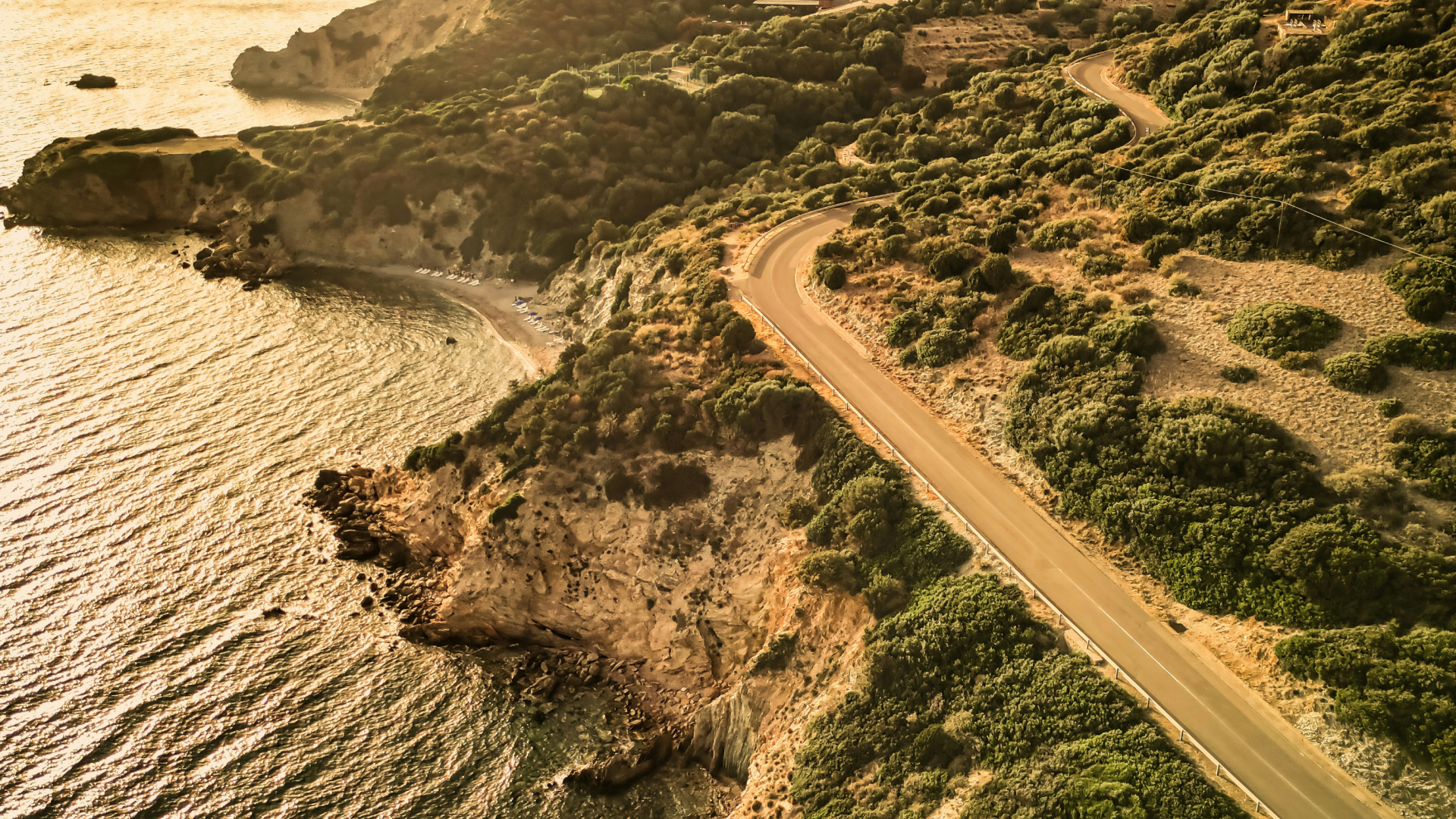
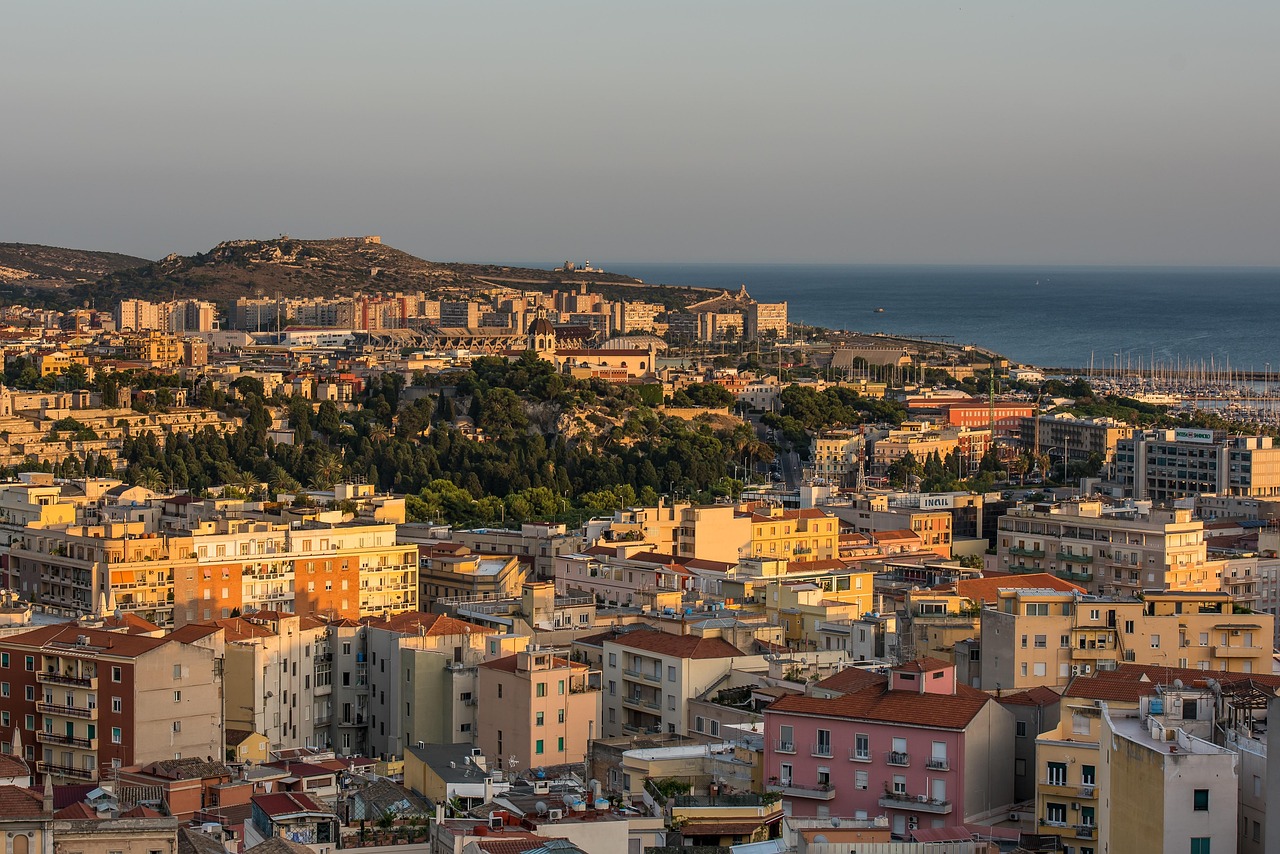
Every time my ferry or plane glides into Cagliari, there’s a moment when the city suddenly reveals itself: pastel buildings stacked up the hillside, the limestone bastions of Castello blazing in the sun, and the blue of the Golfo degli Angeli (Gulf of Angels) stretching out in front. I’ve lived in Sardinia and visited Cagliari more times than I can count; it’s the city I return to when I need good seafood, sunsets, and that slow Mediterranean rhythm that still somehow manages to be energetic and urban.
Cagliari is not a polished museum city. It’s lived-in, noisy in the best way, and full of layers: Punic tombs under apartment blocks, Roman amphitheaters beside traffic, Art Nouveau villas next to 1960s concrete. It’s a place where you can have a cappuccino in a medieval quarter in the morning, swim in turquoise water at Poetto Beach by lunch, then sip a spritz under the stars on the Bastione at night.
Compared with Italy’s big hitters (Rome, Florence, Venice), Cagliari is more affordable, less crowded, and deeply Sardinian. You’ll hear the local language (Sardu) as often as Italian, see nonna shopping for vegetables in the markets, and watch flamingos flying over salt pans at sunset. If you’re looking for a coastal city that mixes history, beaches, food, nightlife, and authentic local life, Cagliari is one of the best places to visit in Italy right now.
This travel guide for Cagliari is written with 2026 in mind, with detailed 3 day, 4 day, and 5 day itineraries, a deep dive into the 20+ must-see attractions, and plenty of hidden gems, cultural etiquette, and money-saving tips from someone who’s walked these streets many, many times.
Table of Contents
- Why Visit Cagliari?
- Cagliari at a Glance (2026 Overview)
- Neighborhoods & Areas to Explore
- Top 20+ Must-See Attractions in Cagliari
- Suggested Itineraries: 3, 4, and 5 Days in Cagliari
- Local Food in Cagliari: What & Where to Eat
- Nightlife, Entertainment & Cultural Experiences
- Best Day Trips from Cagliari
- Cultural Etiquette & Local Customs in Cagliari
- Practical Travel Advice for Cagliari (2026–2027)
- Summary & Best Time to Visit Cagliari
Cagliari at a Glance (2026 Overview)
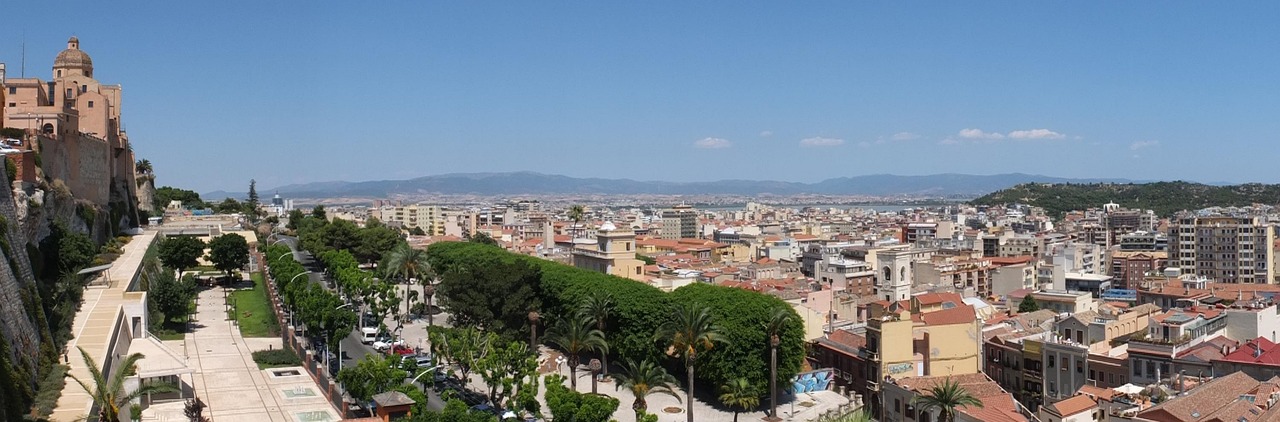
Cagliari is the capital of Sardinia, an island off Italy’s west coast. The city spreads around a large natural harbor and climbs a series of hills, crowned by the medieval quarter of Castello. With about 150,000 residents (and many more in the surrounding metro area), it feels big enough to be interesting but compact enough to feel walkable.
Quick Facts
- Country: Italy (Sardinia region)
- Population: ~150,000 in the city, ~430,000 in metro area
- Languages: Italian (official), Sardinian (Sardu) widely spoken
- Currency: Euro (€)
- Time zone: CET (UTC+1), CEST (UTC+2 in summer)
- Airport: Cagliari Elmas Airport (CAG), 10–15 minutes from city center
What’s New in Cagliari for 2026–2027
Over the last few years I’ve watched Cagliari evolve from a “locals-first” city to a quietly rising Mediterranean favorite. For 2026–2027, a few things to know:
- Harborfront Revitalization: The waterfront promenade near Via Roma and the marina continues to be upgraded with more bike paths, seating, and pop-up cultural events in summer 2026.
- Poetto Beach Facilities: Several stabilimenti (beach clubs) have revamped their structures with more eco-friendly materials and better showers/lockers. Prices have inched up, but comfort has too.
- Festivals & Events (2026–2027):
- Festa di Sant’Efisio – 1 May 2026 & 2027: One of Italy’s most spectacular religious processions, with thousands in traditional costume.
- Cagliari International Jazz Festival 2026: Usually late summer; expect big outdoor concerts and jam sessions in historic courtyards.
- Autunno in Barbagia – 2026 Season: While centered in interior villages, many tours depart from Cagliari in autumn, focusing on food, wine, and crafts.
- Cagliari Cruise & Sea Festivals: Several maritime events around spring and early summer 2026–2027 highlighting sailing, local seafood, and nautical heritage.
- Rising Popularity: Cagliari is still relatively calm compared to mainland cities, but July–August 2026 will likely be busy. Book accommodation and rental cars early.
Neighborhoods & Areas to Explore in Cagliari
Cagliari is a city of distinct quarters, each with its own mood. When I plan itineraries for friends, I almost always anchor each day in a different neighborhood so they can feel the city’s contrasts.
Castello (Historic Hilltop Quarter)
Vibe: Medieval, atmospheric, views for days.
Castello is the old fortified heart of Cagliari, perched high above the city. Narrow stone lanes, pale limestone buildings, and sudden panoramas over the sea. It’s where I usually start or end my days, because the light up here at sunset feels almost golden-pink.
Highlights: Bastione di Saint Remy, Torre dell’Elefante, Cagliari Cathedral, the Archaeological Museum, and the old city walls. Plenty of small wine bars and trattorie tucked into quiet corners.
Marina
Vibe: Lively, multicultural, full of eateries.
Marina sits between Via Roma and the port, and it’s where you’ll probably eat a lot. Packed with restaurants, gelato shops, and bars, it’s busy until late, especially in summer. You’ll hear a mix of languages, from Sardinian to Arabic to English.
Highlights: Strolling Via Sardegna and Via Napoli at night, sampling seafood and local food in Cagliari, and people-watching from outdoor tables.
Stampace
Vibe: Traditional, less touristy, deeply local.
Stampace climbs the hill west of Marina. It’s the heart of the Sant’Efisio festivities each May and still feels very authentic. Laundry hangs above narrow streets, and little bars serve cheap, strong coffee to regulars.
Highlights: Chiesa di Sant’Efisio, quiet streets, and a few excellent, underrated restaurants.
Villanova
Vibe: Residential, bohemian, flower-filled.
Villanova lies east of Castello and feels like a village within the city. Colorful facades, potted plants on every doorstep, and a more relaxed, creative vibe. I like staying here because you’re close to everything but sleep is easier than in Marina.
Highlights: Local cafés, small churches, and photogenic streets that are perfect for strolling early in the morning.
Poetto & Quartu Seaside Strip
Vibe: Beach life, families, joggers, and aperitivo.
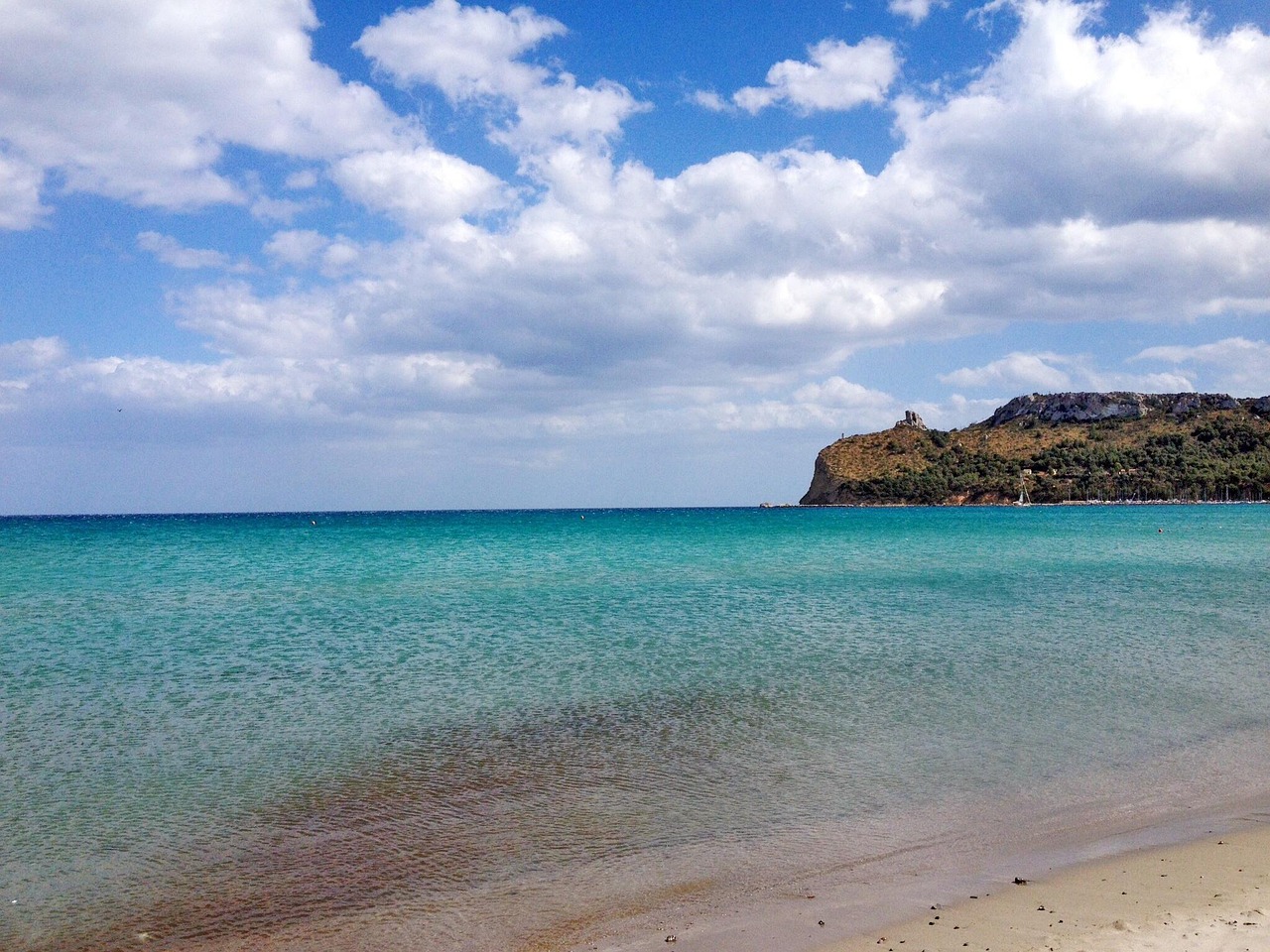
Poetto is Cagliari’s long city beach, stretching about 8 km toward Quartu Sant’Elena. In summer, this is where the city comes to swim, sunbathe, run, cycle, and party at the beach clubs. In winter it’s a wide, peaceful strand that’s perfect for long walks.
Highlights: Lidos (beach clubs), bike paths, food kiosks, and the views of Sella del Diavolo.
Molentargius & Salt Pans
Vibe: Nature, wetlands, flamingos.
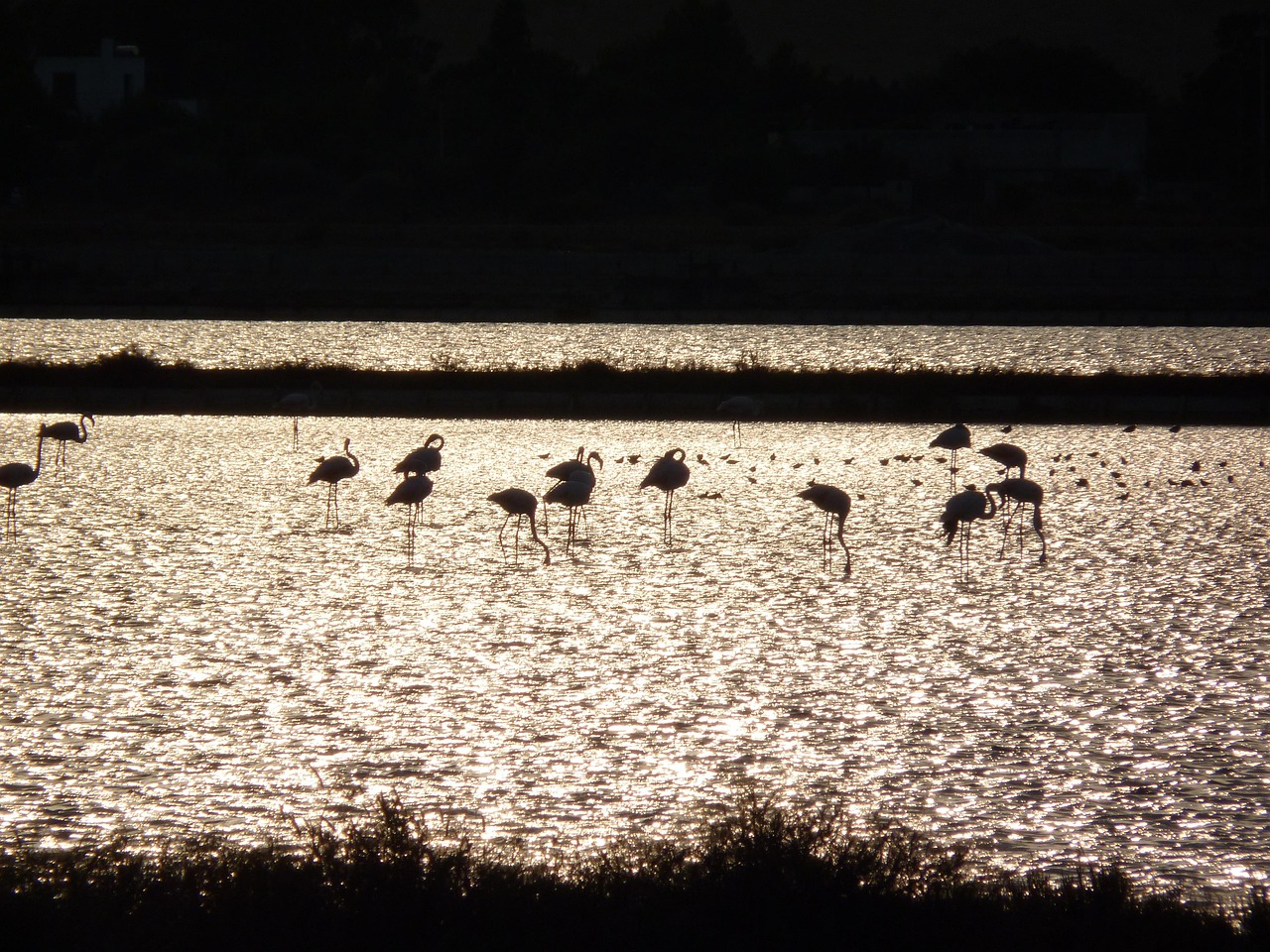
Just behind Poetto Beach lies Molentargius-Saline Regional Park, a mosaic of salt pans and wetlands home to thousands of pink flamingos. It’s surreal to bike or walk here and see these birds flying against a backdrop of apartment blocks and hills.
Highlights: Birdwatching, cycling paths, sunset views.
Top 20+ Must-See Attractions in Cagliari (with Personal Notes)
These are the best places to visit in Cagliari, mixing history, architecture, nature, and local life. I’ve grouped them by area and added personal tips from my own visits.
1. Bastione di Saint Remy
The Bastione di Saint Remy is probably Cagliari’s most iconic viewpoint. A monumental white-limestone terrace with sweeping arches, it connects the lower districts with Castello above via grand staircases and elevators.
I still remember my first evening here: I arrived around 7:30 pm in early June, just as locals were spilling out with gelato and aperitivo. Street musicians played under the arches, kids ran around the square, and the sky slowly shifted from blue to orange to deep purple over the harbor.
Why go: The perfect first stop in Cagliari. Come at sunset for panoramic views over Via Roma, the port, and the roofs of Marina.
Tips:
- Best time: Early evening for photos and atmosphere. Morning is quieter but harsher light.
- Access: You can walk up via the staircase from Piazza Costituzione or take an elevator from the lower level (good if you’re tired or with kids).
- Food/drink: There are a couple of cafés and bars on the terrace; they’re not the cheapest but the view is the point. For better value, eat in Villanova or Marina and just come here for a drink.
2. Cagliari Cathedral (Cattedrale di Santa Maria)
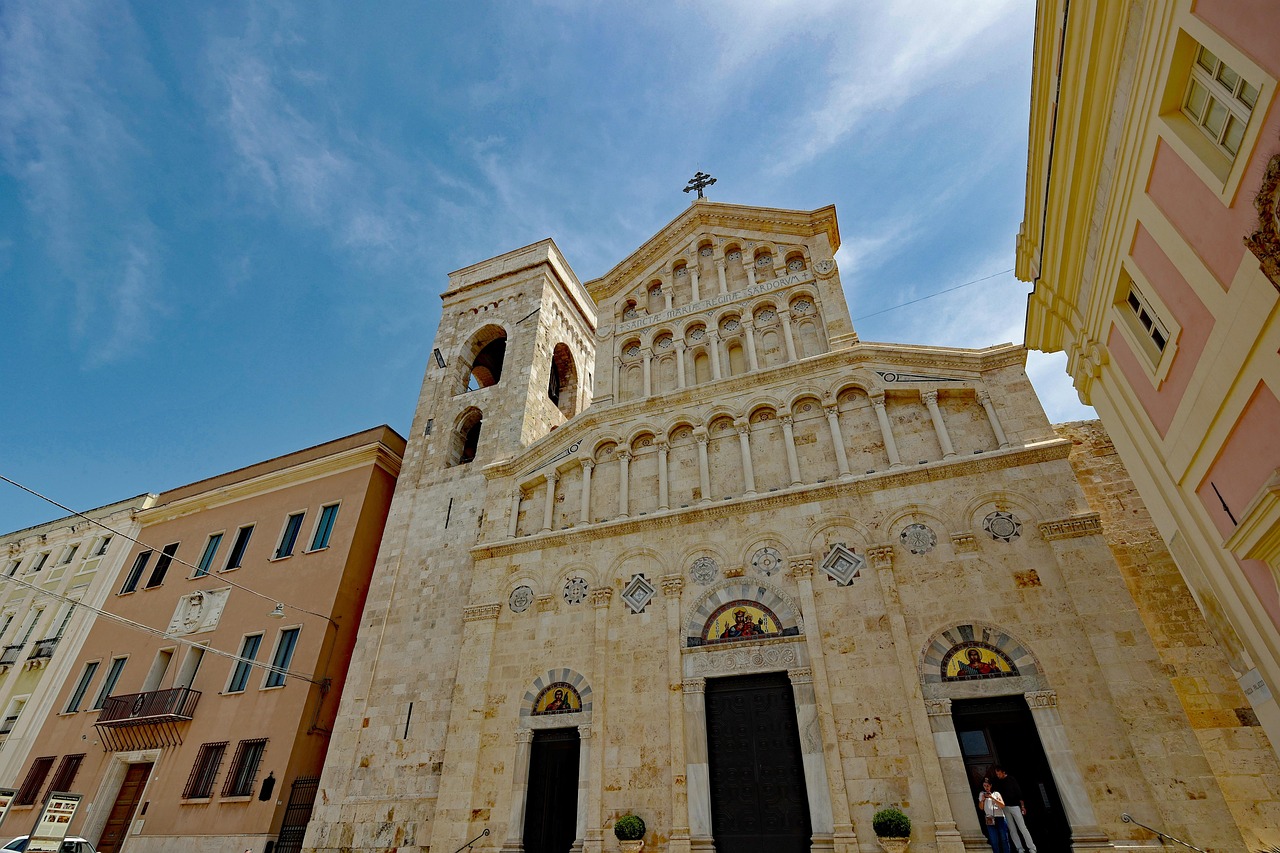
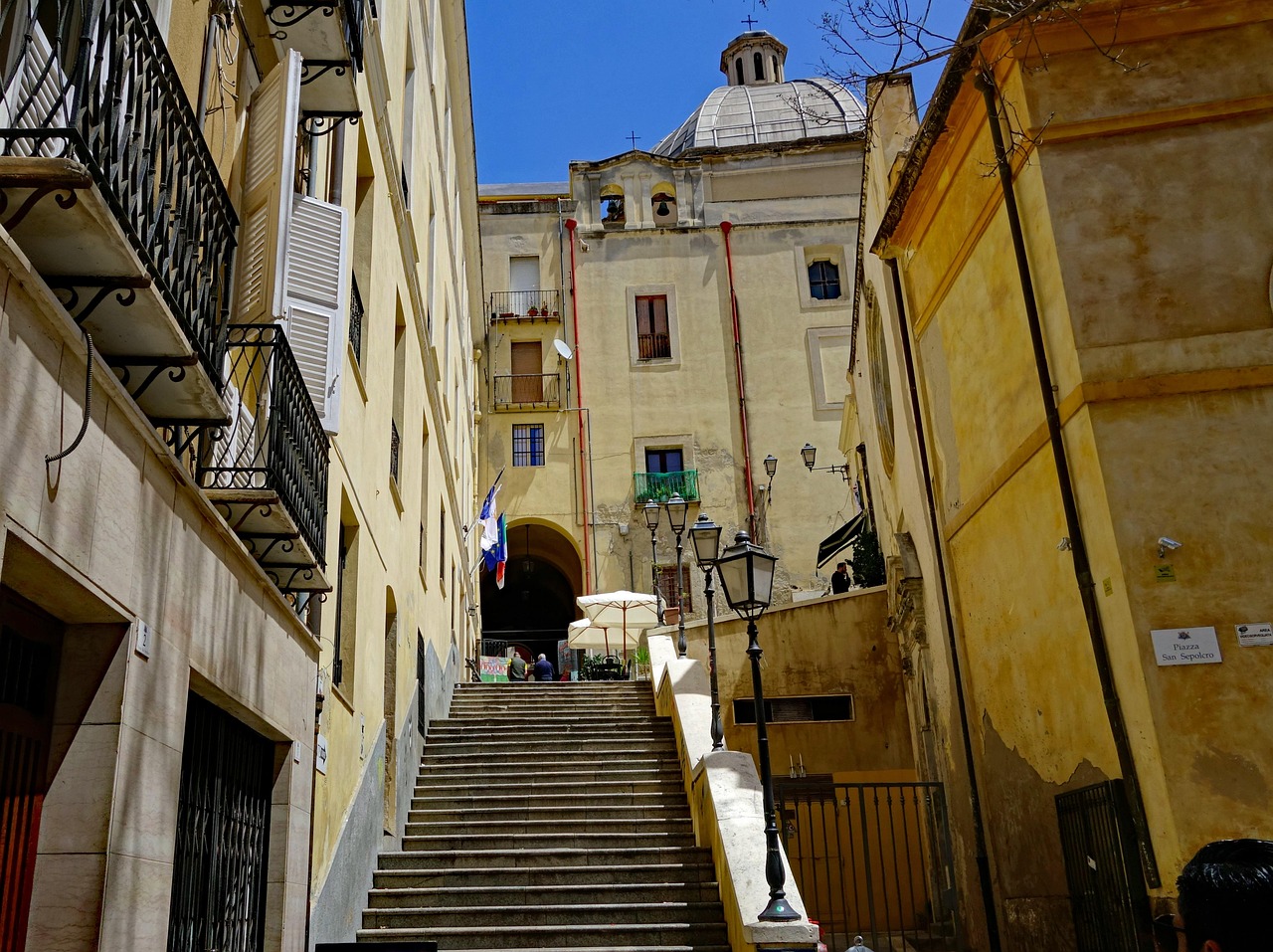
Set high in Castello, the Cathedral is a striking mix of styles, with a neo-Romanesque façade added in the 20th century and a richly decorated Baroque interior. I’ve ducked in here on hot days just to enjoy the cool stone and quiet.
Highlights: The crypt with royal tombs, ornate chapels, and the interplay of light and shadow along the nave. Step outside and wander the small piazza and side streets—this is one of the most atmospheric corners of Castello.
Tips: Dress modestly (shoulders covered) and keep voices low. It’s an active church, not just a tourist site.
3. Torre dell’Elefante
This massive medieval tower guards one of the main gateways into Castello. Built in the early 14th century by the Pisans, it’s named after the small stone elephant sculpture that hangs on its exterior.
On my second visit I climbed its steep wooden stairs in the late afternoon. From the top you can see terracotta roofs cascading down to the sea, with narrow alleys weaving between them. It’s one of the best places to grasp how hilly Cagliari really is.
Tips: The climb is relatively short but steep; fine for families with older kids, but hold younger children’s hands. Go in the late afternoon when the heat has eased.
4. Torre di San Pancrazio
Another imposing Pisan tower, slightly higher up in Castello. It feels a bit less visited than Torre dell’Elefante, which is exactly why I like it. The views are more inland, over modern suburbs and hills.
Tip: Combine both towers in a little loop walk through Castello, stopping at small wine bars tucked into the side streets.
5. National Archaeological Museum of Cagliari
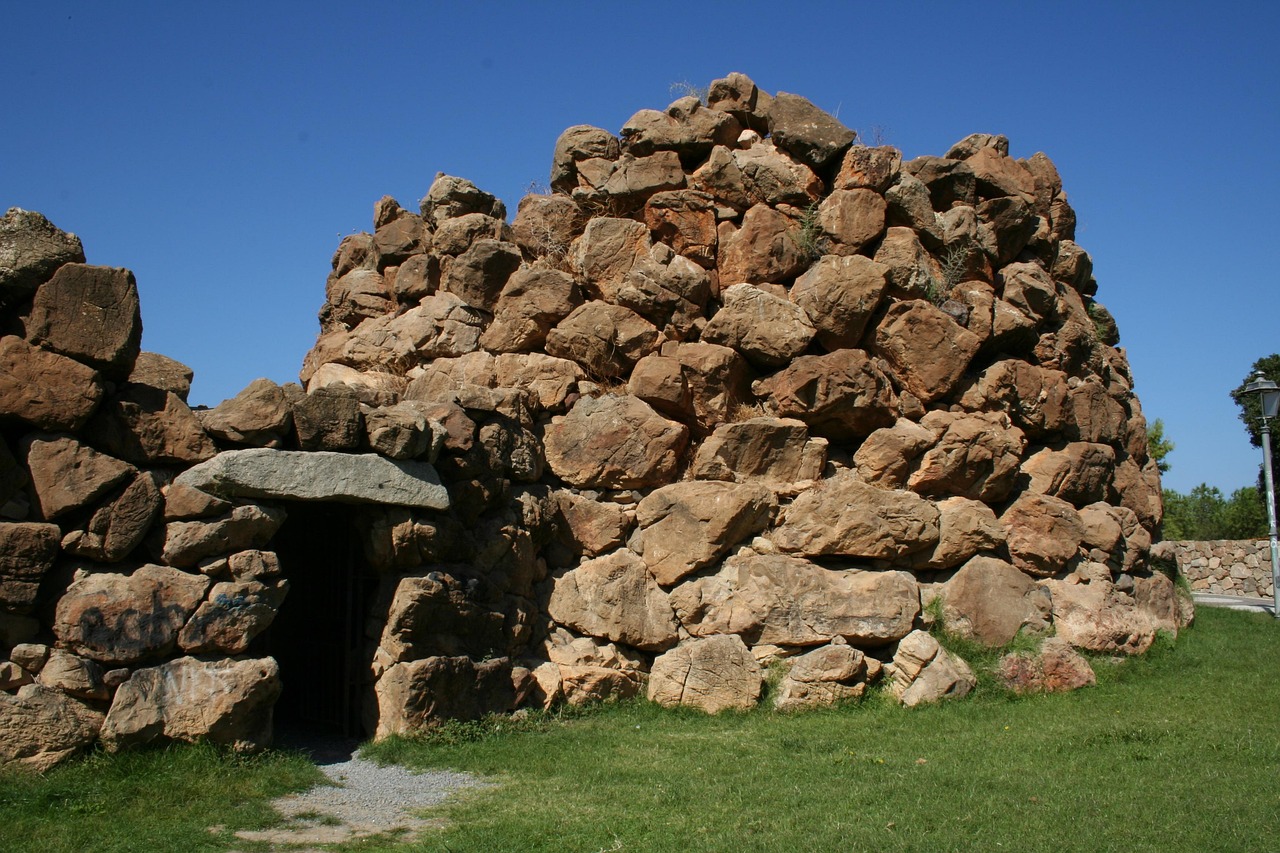
Sardinia’s history is long and mysterious, and this museum is the key to understanding it. The collection covers everything from the Nuragic civilization (famous for its stone towers and statues) to Phoenician, Punic, Roman, and medieval artifacts.
On a hot July afternoon when the sun was too intense for the beach, I spent three hours slowly exploring the Nuragic bronzetti (small bronze figurines) and the giant stone statues from Monte Prama. It turned a lot of random ruins I’d seen elsewhere on the island into a coherent story.
Why go: If you’re at all interested in history or planning to explore the rest of Sardinia, this is a must.
Tips:
- Combine with a walk through Castello and the Cathedral.
- Good rainy-day or midsummer-heat option.
- Audio guides and bilingual labels make it accessible even if you know little about Sardinian history.
6. Roman Amphitheatre of Cagliari (Anfiteatro Romano)
Carved into the rock of a hillside, this 2nd-century Roman amphitheatre once hosted gladiator fights and public spectacles. Even partly ruined, it’s impressive, especially when you imagine the crowds that once packed its stone seats.
I like approaching it via a quiet walk through the nearby public gardens, letting the modern city fade a bit before you arrive. Sometimes there are cultural events or concerts held nearby in summer—check local listings in 2026.
Tip: Pair with a stroll through the Orto dei Cappuccini (Capuchin Gardens) and a coffee break in one of the nearby cafés.
7. Poetto Beach
Poetto is Cagliari’s 8 km-long city beach, and it’s one of the main reasons I keep coming back. Soft sand, clear water, and a long lungomare (promenade) lined with kiosks and bars. On summer evenings it feels like the entire city is out walking, running, or having aperitivo here.
My routine: In late May or September, I like to catch bus PQ or PF from the center around 9 am, rent a sunbed at one of the stabilimenti, swim for a couple of hours, then have grilled fish and a glass of Vermentino at a beach bar. After a nap in the shade, I walk or bike along the promenade toward Sella del Diavolo for sunset views.
Tips:
- Family-friendly: The water is usually shallow near the shore, making it great for kids.
- Budget: Free areas exist between paid beach clubs; bring your own umbrella to save money.
- Season: June–September is full beach season. In winter, it’s lovely for walks but too chilly for most to swim.
8. Sella del Diavolo (Devil’s Saddle)
Jutting out between Cagliari’s port and Poetto Beach, this rocky promontory looks like a saddle—if you squint and use your imagination. Legend says the devil tried to conquer this bay, but the angels beat him, and his saddle fell here. Whether you buy the story or not, the hike is one of the best things to do in Cagliari.
The trail isn’t long (about 45–60 minutes up), but it can be hot. I usually start around 8 am in summer or mid-afternoon in shoulder season. From the top you see the curve of Poetto, the salt pans of Molentargius, and the whole city behind you.
Tips:
- Wear sturdy shoes; the path is rocky in places.
- Bring water and a hat; there’s almost no shade.
- Combine with a swim at Cala Mosca or a late lunch at Poetto.
9. Molentargius-Saline Regional Park
This network of salt pans and wetlands between the city and Poetto is one of Cagliari’s most unique landscapes. It’s also home to thousands of flamingos year-round, thanks to the mild climate and protected status.
The first time I biked through here at dusk, flamingos lifted off from the water in a pink cloud, wheeling against the sky with Cagliari’s skyline in the background. It felt like watching two worlds overlap: urban and wild, industrial and natural.
Tips:
- Rent a bike from the Poetto area or near the park entrance; it’s the easiest way to explore.
- Sunset and early morning are best for birdwatching and cooler temperatures.
- Bring binoculars if you’re keen on wildlife.
10. Marina District & Via Roma
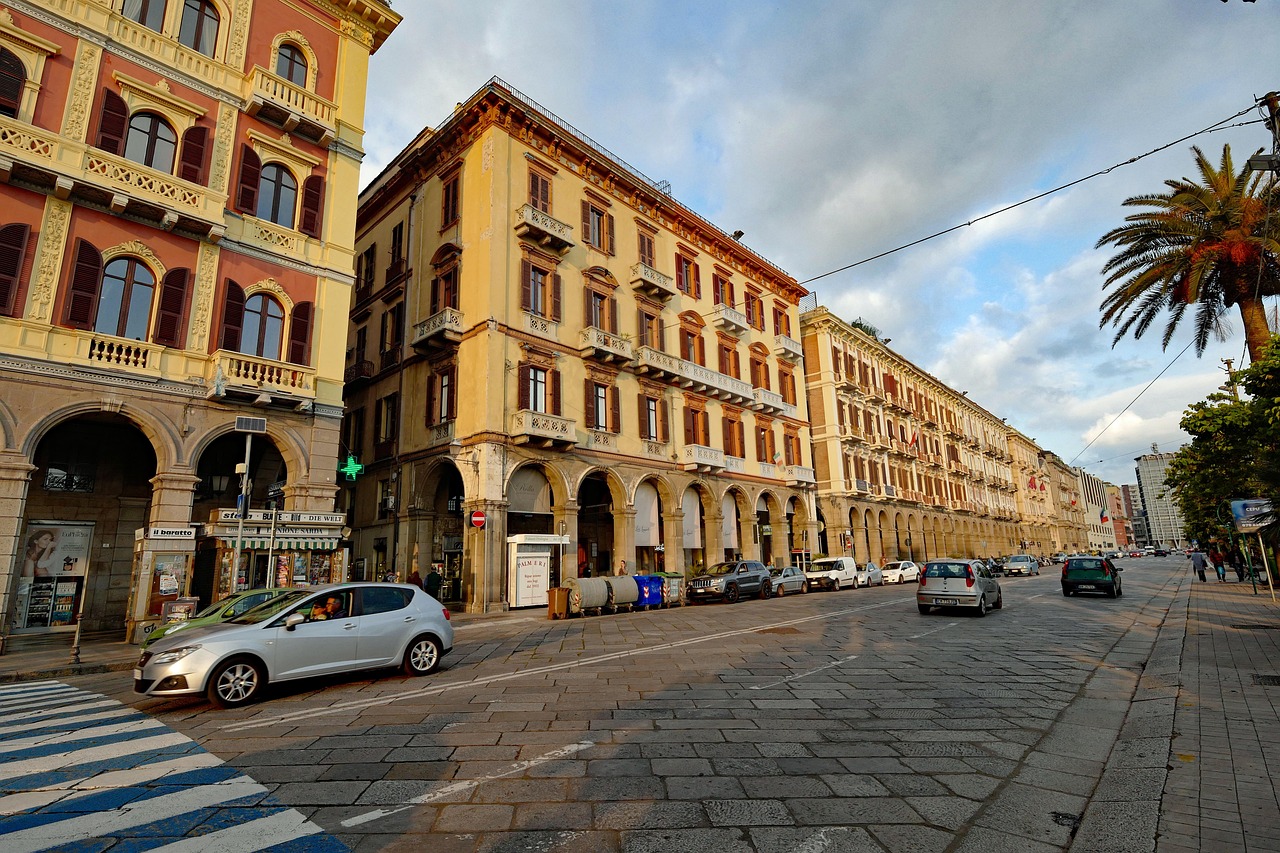
Via Roma is Cagliari’s showpiece seafront boulevard, with arcaded sidewalks, palm trees, and a view of the port. Parallel to it, the narrow lanes of the Marina district are packed with restaurants, wine bars, and small shops. This is where I usually end my nights, sharing plates of fritto misto and local wine with friends.
Tips:
- Dinner: Avoid the places with aggressive touts; look for menus in Italian first, then other languages.
- Budget eats: There are simple trattorie and pizzerie on side streets that offer excellent value, especially at lunch.
- Evening stroll: Walk Via Roma at twilight when the buildings glow and the port lights come on.
11. San Benedetto Market (Mercato di San Benedetto)
One of Italy’s largest covered markets, San Benedetto is a paradise for food lovers. Two floors of fish, meat, cheese, vegetables, and everything in between. This is where you come to see what local food in Cagliari really looks like before it reaches your plate.
I like to go on weekday mornings, around 9–10 am. Fishmongers shout prices, locals debate the best artichokes, and the smell of pecorino cheese fills the air. I often pick up picnic supplies here: pane carasau (thin crispy bread), olives, cheese, and fruit.
Tips:
- Come early; stalls start closing up after lunch.
- Bring cash; some vendors don’t take cards.
- Ask before touching produce; point and the vendor will select for you.
12. Orto Botanico (Botanical Garden)
Just below Castello, the Botanical Garden is a quiet green escape filled with Mediterranean plants, cacti, and shaded paths. In summer, when the sun bounces off the stone buildings, this becomes my favorite place to cool down for an hour.
Tip: Combine with the Roman Amphitheatre and nearby historic sites for a mixed culture-nature morning.
13. Basilica di Nostra Signora di Bonaria
This basilica, perched on a hill east of the center, is an important Marian shrine and offers lovely views toward the sea. The interior is elegant and peaceful, and the surrounding square is a calm spot to sit for a while.
Tip: If you’re walking toward Poetto from the center, consider detouring up here for the view, then continuing downhill.
14. Chiesa di Sant’Efisio & Sant’Efisio Festival Route
The small church of Sant’Efisio in Stampace is the starting point for one of Sardinia’s biggest religious festivals: the Festa di Sant’Efisio on May 1st. The procession runs from here through Cagliari and along the coast to Pula, with participants in elaborate traditional costumes from villages all over the island.
I attended in 2024 and still recommend visitors to plan around it if they can in 2026 or 2027: it’s a deep dive into Sardinian culture, music, and faith, with ox-drawn carts, flower-strewn streets, and an entire city watching in reverent silence.
15. Villanova Lanes & Murals
Villanova’s charm is more subtle than Castello’s. It’s in the flowerpots, the colorful doors, the occasional murals, and the glimpses into courtyards where families gather. For me, this is one of the best places for a slow, contemplative wander.
Tip: Go early in the morning when the streets are quiet and the light is soft for photography.
16. Old City Walls & Bastions Walk
Walking along the old walls of Castello in the late afternoon is one of my favorite free things to do in Cagliari. You’ll find viewpoints over different directions of the city: toward the port, the hills, and the inland plains.
Tip: Start near the Cathedral and wander toward the university buildings, stopping at lookouts along the way. Great for couples looking for a romantic sunset walk.
17. Santa Maria del Monte & Other Hidden Churches
Scattered through Stampace, Marina, and Villanova are small, often-closed churches that occasionally open for services or special events. When you find one open, step inside—it’s usually worth it. Frescoes, simple wooden altars, and a sense of community that feels very local.
18. EXMA & Contemporary Art Spaces
EXMA (Exhibiting and Moving Arts) is a former slaughterhouse turned into a contemporary art center. Exhibitions change regularly, ranging from photography to installations and local artists. Cagliari also has smaller independent galleries scattered around Villanova and Marina.
Tip: Check listings once you’re in town; 2026 is expected to see more international collaborations and summer evening events.
19. Via Dante & Modern Cagliari
For a sense of everyday life, walk Via Dante and the surrounding streets: shops, cafés, schools, and offices. It’s not a “sight” in the classic sense, but it rounds out your impression of Cagliari as a living city, not just a postcard.
20. Sunset Spots: Monte Urpinu & Lungomare
Monte Urpinu is a hilltop park with broad views over the city, port, salt pans, and sea. Locals come here to run, walk dogs, and watch the sunset. Another option is the west-facing stretches of lungomare (seafront) where you can see the sky blaze behind the port cranes and hills.
Tip: Pack a simple picnic from San Benedetto Market and bring it here for a budget-friendly romantic evening.
3, 4 & 5 Day Itineraries for Cagliari (2026)
These itineraries are based on trips I’ve taken myself and ones I’ve planned for visiting friends. Adjust as needed for your pace, season, and interests, but they’ll give you a solid framework whether you have 3 days in Cagliari, 4 days in Cagliari, or a full 5 days in Cagliari.
3 Day Itinerary for Cagliari
If you only have 3 days in Cagliari, focus on the historic center, Poetto Beach, and a taste of Sardinian food and culture.
Day 1: Castello & Marina – Classic Cagliari
Morning: Start in Marina. Grab a cappuccino and cornetto at a bar along Via Roma or in a side street. Then make your way up to Bastione di Saint Remy—either via the grand staircase or elevator. Spend time on the terrace, orienting yourself with the view.
From there, wander into Castello. Visit the Cagliari Cathedral, then follow the lanes to the National Archaeological Museum. Give yourself at least 1.5–2 hours there; it’s the key backdrop to everything else you’ll see in Sardinia.
Lunch: Eat in Castello or wander down to Villanova for a quieter, more local trattoria. Look for lunch menus with pasta alla bottarga (mullet roe) or fregola con arselle (tiny pasta with clams)—both classic local dishes.
Afternoon: Continue exploring Castello: climb the Torre dell’Elefante for city views, walk along the old walls, and get pleasantly lost in the streets. Stop for a coffee or a glass of Vermentino at a small bar.
Evening: Head down to Marina. Stroll Via Roma at sunset, then dive into the side streets for dinner. I usually pick a simple seafood trattoria and order the antipasto di mare (mixed seafood starters) as a shared platter—it’s the best way to sample multiple local flavors at once.
Day 2: Poetto Beach & Sella del Diavolo
Morning: After breakfast, catch bus PQ or PF from the center to Poetto Beach. Rent a sunbed and umbrella or set up in a free area. Swim, read, and relax; this is a Mediterranean city, after all.
Lunch: Eat at one of the beach kiosks—try fried calamari, insalata di mare (seafood salad), or a simple panino with local cheese and cured meats. Prices vary; check menus before sitting.
Afternoon: When the sun is less intense (around 4 pm in summer), walk or take a short bus ride toward Sella del Diavolo. Hike up to the main viewpoint; it’s not long but can be hot, so bring water.
Evening: Return to Poetto’s promenade. This is one of my favorite places for an evening aperitivo. Order a spritz or a glass of local wine, plus some snacks, and watch the sky change colors over the sea. Families, joggers, and groups of friends will all be out—excellent people-watching.
Day 3: Stampace, San Benedetto Market & Molentargius Flamingos
Morning: Start in Stampace. Visit the Chiesa di Sant’Efisio, then wander the surrounding streets. This area feels more old-school and less curated for visitors.
Then walk or take a short bus ride to San Benedetto Market. Spend at least an hour exploring the fish stalls and produce. Pick up snacks or picnic items for later.
Lunch: Eat near the market at a simple trattoria or back toward the center. I often go for malloreddus alla campidanese (Sardinian gnocchetti with sausage and tomato sauce) or culurgiones (stuffed pasta) when I’ve had enough seafood for a day.
Afternoon: Head out to Molentargius-Saline Regional Park. Rent a bike and cycle through the salt pans, looking for flamingos and other birds. If it’s too hot to bike, a guided tour by electric cart is often available in high season.
Evening: Return to the center. For your last night, consider a more special dinner: a seafood-focused restaurant with a view or a cozy spot in Villanova. Finish with gelato on a bench in a piazza—an essential Italian ritual.
4 Day Itinerary for Cagliari
With 4 days in Cagliari, you can slow the pace and add more cultural and neighborhood exploration.
Day 4: Roman Amphitheatre, Botanical Garden & Monte Urpinu
Morning: Visit the Roman Amphitheatre. Take your time exploring the site and imagining the spectacles that once took place here. Then walk down to the Botanical Garden for a shaded stroll among Mediterranean plants and cacti.
Lunch: Eat in a nearby café or head toward Villanova for lunch in a quieter, local restaurant. If you’re watching your budget, look for pasta dishes and house wine by the glass—they’re often very reasonably priced.
Afternoon: Make your way toward Monte Urpinu park. Spend a couple of hours walking the paths, finding viewpoints, and relaxing under the trees. If you’re traveling with kids, this is a great day: plenty of space to run and play.
Evening: Stay up at Monte Urpinu for sunset or return to the center. You might try a wine bar in Castello or Marina that focuses on Sardinian labels; ask the staff for recommendations from small local producers.
5 Day Itinerary for Cagliari
With 5 days in Cagliari, you can add a full day trip and dig deeper into local experiences.
Day 5: Day Trip – Nora Archaeological Site & Pula Village
Morning: Take a bus or drive west along the coast to Nora, near the town of Pula (about 45–60 minutes from Cagliari). Nora is a stunning coastal archaeological site with Roman and pre-Roman ruins right beside the sea. I still remember standing on the ancient stone streets and hearing the waves crash just meters away.
Lunch: Eat in Pula—a charming small town with plenty of trattorie—or pack a picnic to enjoy near the beach by Nora.
Afternoon: Explore more of the site, swim at the nearby beach, or wander Pula’s streets with a gelato in hand. In high season, guided tours run regularly; they’re worth it if you want more context.
Evening: Return to Cagliari. For your final night, choose a favorite spot you’ve already discovered or ask your host/hotel for a recommendation—they often know places that haven’t made it to online reviews yet.
Local Food in Cagliari: What & Where to Eat
Cagliari’s food scene is one of the city’s biggest draws. It’s a mix of seafood from the Gulf of Angels, rustic island dishes from the interior, and a growing number of creative contemporary spots. I’ve eaten my way through a lot of menus here—these are the essentials.
Must-Try Dishes
- Fregola con arselle: Tiny toasted pasta pearls with clams in a rich broth. Order this once and you’ll probably order it again.
- Malloreddus alla campidanese: Small ridged pasta with a sausage and tomato sauce, sometimes with pecorino grated on top.
- Culurgiones: Plump ravioli stuffed with potato, mint, and pecorino, usually served with tomato sauce. Comfort food.
- Bottarga: Cured mullet roe, shaved over pasta or salads. Salty, intense, very Sardinian.
- Fritto misto: Mixed fried seafood—squid, shrimp, small fish. Often excellent in Cagliari due to the fresh catch.
- Seadas (sebadas): Deep-fried pastry filled with cheese and drizzled with honey. A must for dessert.
- Pane carasau: Thin, crispy flatbread. You’ll find it on almost every table.
Where to Eat (General Pointers)
I won’t list specific restaurant names (they rotate quickly), but here’s how I eat well and save money in Cagliari:
- Marina: Great for variety and atmosphere. Look down side streets rather than right on Via Roma for better value and more local spots.
- Villanova & Stampace: Slightly cheaper, more local clientele. Excellent for simple trattorie serving traditional dishes.
- Poetto: Perfect for seafood lunches with a view; prices can be higher, so check before you sit.
- Markets: San Benedetto is ideal for picnic supplies. Some stalls and nearby bars do simple lunches.
Drinks to Try
- Vermentino di Sardegna: Crisp white wine, perfect with seafood.
- Cannonau: Robust red wine; Sardinians like to mention its link to local longevity.
- Mirto: Liqueur made from myrtle berries, usually offered after meals.
- Ichnusa: The local beer, often served ice cold at beach bars.
Money-Saving Tips for Eating & Drinking
- Look for pranzo di lavoro (workers’ lunch) menus on weekdays; they’re often great value.
- Order house wine (vino della casa) by the glass or carafe; it’s usually local and good.
- Do a market picnic for at least one lunch: bread, cheese, olives, fruit, and a cheap bottle of wine if you have a corkscrew.
Nightlife, Entertainment & Cultural Experiences in Cagliari
Cagliari’s nightlife is more relaxed than Rome or Milan, but there’s always something happening, especially from late spring to early autumn.
Nightlife Areas
- Marina & Via Roma: Bars, wine bars, and casual spots open late. Great for bar-hopping and people-watching.
- Castello: A bit quieter, with atmospheric wine bars ideal for couples.
- Poetto: In summer, beach clubs transform into late-night venues with DJs and live music.
Cultural Experiences
- Festa di Sant’Efisio (May 1st): A must-see if you’re in Cagliari in early May 2026 or 2027. Arrive early to stake out a spot along the route.
- Summer concerts: Check schedules at the Roman Amphitheatre area, Bastione, and various piazzas for open-air performances.
- Jazz & Classical: The Cagliari International Jazz Festival and other events bring international artists to town in summer and early autumn.
Day Trips & Nearby Attractions from Cagliari
With a full 5 day itinerary for Cagliari, it’s worth venturing beyond the city limits at least once. Distances are relatively short but public transport can be limited off-season, so check schedules or consider a rental car.
Nora & Pula
As described in the 5-day itinerary, Nora is a spectacular seaside archaeological site and Pula is a charming small town. Buses run regularly from Cagliari in high season.
Villasimius & South-Eastern Beaches
About 1–1.5 hours east by car or bus, Villasimius has some of Sardinia’s most beautiful beaches: turquoise bays, white sand, and rocky coves. In July–August it’s busy; in June and September it’s close to perfect.
Costa del Sud (Chia, Tuerredda)
Southwest of Cagliari, the coast around Chia and Tuerredda is another paradise of dunes and clear water. A rental car gives you the most flexibility; buses exist but are less frequent.
Interior Villages & Autunno in Barbagia
In autumn, many interior villages host Autunno in Barbagia events showcasing crafts, food, and traditions. While most of these villages are a bit far for a simple day trip, organized tours from Cagliari make it doable and are a great way to see another side of Sardinia.
Cultural Etiquette & Local Customs in Cagliari
Understanding a few local customs in Cagliari will make your trip smoother and more enjoyable.
General Etiquette
- Greetings: A simple “Buongiorno” (before lunch) or “Buonasera” (afternoon/evening) goes a long way when entering shops, cafés, or elevators.
- Dress: Beachwear belongs on the beach. In town, especially in churches and nicer restaurants, dress modestly—no bare chests or bikini tops.
- Noise: Italians can be loud in conversation, but in residential streets at night, keep voices down.
Dining Customs
- Coperto: A small per-person cover charge is normal; it’s not a scam.
- Tipping: Not obligatory, but rounding up or leaving a small amount (5–10%) for good service is appreciated.
- Coffee: Locals drink cappuccino in the morning, not after lunch; espresso (un caffè) is acceptable any time.
Language
Italian is the main language, but you’ll hear Sardinian (Sardu) often. English is spoken in many tourist-facing places, but less so in purely local bars and shops. Learning a few phrases (grazie, per favore, buongiorno) is appreciated.
Practical Travel Advice for Cagliari (2026–2027)
Getting Around Cagliari
- On foot: The historic center (Castello, Marina, Stampace, Villanova) is walkable, though hilly.
- Buses: ARST and CTM buses connect the center with Poetto, the airport, and suburbs. Tickets can be bought at kiosks, tobacco shops, or via apps; validate when boarding.
- Airport transfer: A frequent train connects Cagliari Elmas Airport with the main station in about 7 minutes; buses and taxis are also available.
- Car rental: Great if you plan to explore beaches and interior villages. Book early for summer 2026–2027; prices jump in high season.
Saving Money in Cagliari
- Visit in shoulder seasons (late April–June, September–October) for lower prices and good weather.
- Use public buses to reach Poetto instead of taxis.
- Stay in Villanova or Stampace for good value accommodations within walking distance of everything.
- Alternate sit-down meals with market picnics or pizza-by-the-slice lunches.
SIM Cards & Connectivity
- Italian operators like TIM, Vodafone, and WindTre offer tourist-friendly data packages.
- Buy SIMs at official shops in the center or at the airport; bring your passport.
- Wi-Fi is common in hotels and many cafés, but may be slower than you’re used to.
Visa Requirements & Driving
- Visas: Italy is in the Schengen Area. Many nationalities (including US, Canada, UK, much of Latin America, etc.) can visit visa-free for short stays; check up-to-date Schengen rules for 2026.
- Driving licenses: EU licenses are accepted. Non-EU visitors may need an International Driving Permit (IDP) alongside their home license—check before renting.
- Parking: In the historic center, parking is limited; many visitors choose accommodation with parking or use public transport instead.
Best Seasons by Activity
- Beach & swimming: Late May–September, with peak heat in July–August.
- Sightseeing & hiking: March–June and September–November for mild temperatures.
- Festivals: Early May for Sant’Efisio; late summer for jazz and cultural events; autumn for Autunno in Barbagia tours from Cagliari.
- Budget travel: November–March (excluding Christmas/New Year) has the lowest prices, but some beach services close.
Summary & Final Recommendations
Cagliari is not a city you tick off a list; it’s one you sink into. With its hilltop Castello, long sweep of Poetto Beach, pink flamingos, lively Marina district, and deep layers of Sardinian history, it offers a rare combination of urban energy and relaxed seaside life.
Whether you follow a 3 day itinerary for Cagliari, stretch it to a 4 day itinerary, or give yourself a full 5 days in Cagliari, you’ll have time for the must-see attractions, hidden gems, and plenty of slow moments: a coffee in a quiet piazza, a conversation with a market vendor, or a sunset on the Bastione.
Best time to visit Cagliari:
- Ideal overall: May–June and September–early October (great weather, swimmable sea, fewer crowds).
- For festivals & culture: Early May (Sant’Efisio) and late summer (concerts, festivals).
- For pure beach time: Late June–early September (book ahead and expect more people).
Come hungry, curious, and ready to walk—and Cagliari will reward you with views, flavors, and small everyday moments that linger long after you’ve left the Gulf of Angels behind.