Why Visit Greve in Chianti?
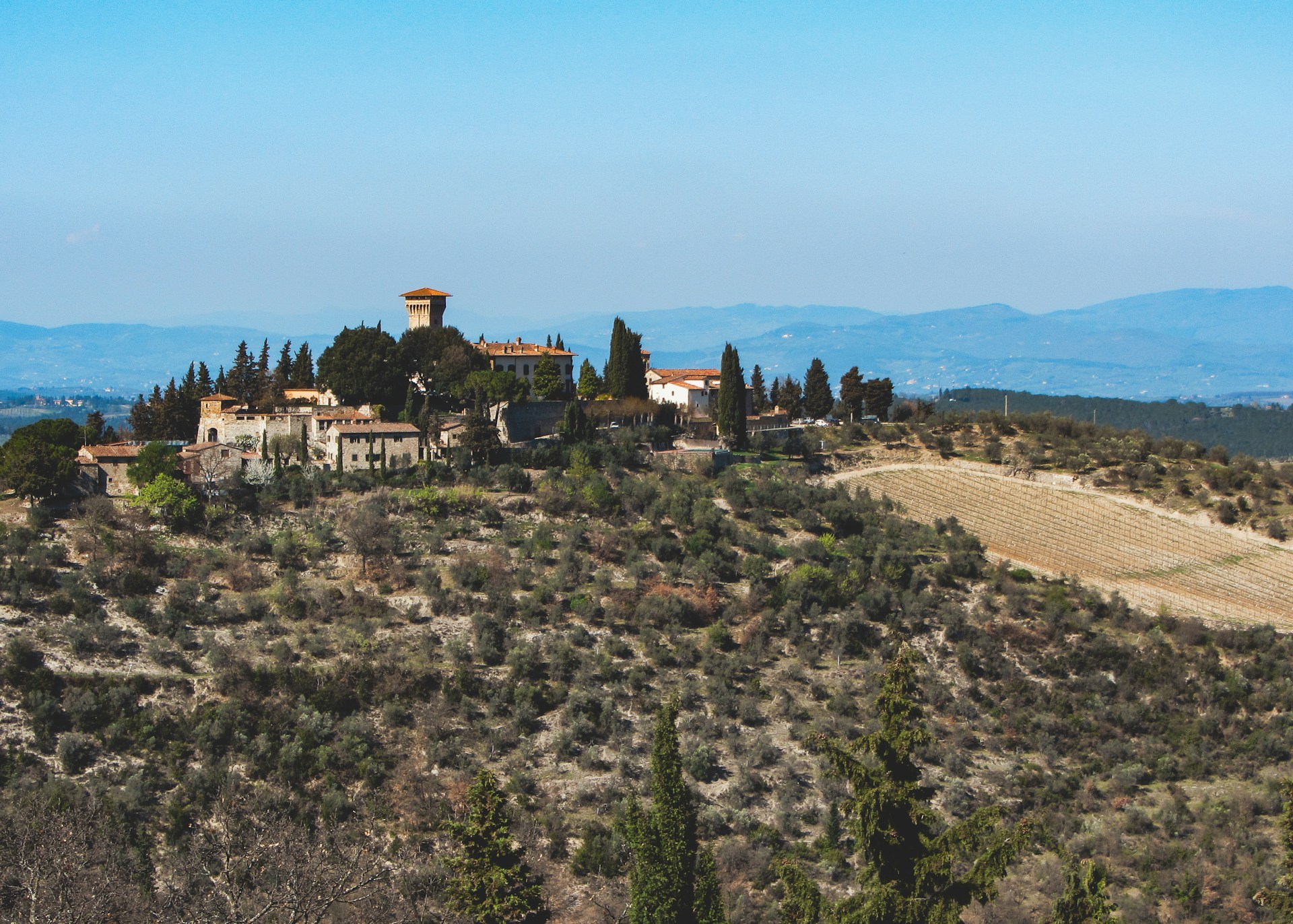
If you’ve ever imagined Tuscany as a patchwork of vineyards, stone farmhouses, and golden light, you were probably picturing the hills around Greve in Chianti. This small town, tucked halfway between Florence and Siena, is the beating heart of the Chianti Classico wine region. It’s where life slows down to the rhythm of vineyard work, market days, and long lunches under vine-covered pergolas.
I’ve been coming to Greve in Chianti for over a decade – first as a rushed tourist from Florence, later as someone who stayed longer and longer until the barista at my favorite café knew my order. What hooked me wasn’t just the wine (though that helps). It was the feeling that you can step out of time here: mornings that start with church bells and espresso, afternoons drifting between wine tastings and country walks, and evenings where the hills blush pink and the whole town seems to gather in the piazza.
Greve is ideal if you’re looking for:
- A base for 3–5 days in Chianti with easy access to wineries, medieval villages, and countryside walks.
- Authentic local food – from butcher counters piled with salumi to slow-cooked wild boar and handmade pasta.
- Romantic getaways – think vineyard sunsets, candlelit dinners, and stone villas.
- Family-friendly adventures – farm visits, gentle hikes, picnics among olive trees, and safe, walkable streets.
- Soft adventure – e-biking between hilltop hamlets, hot air balloon rides at dawn, and truffle hunting in oak forests.
- Cultural experiences – harvest festivals, village markets, concerts in ancient churches, and visits to small art-filled castles.
In this 2026 travel guide to Greve in Chianti, I’ll walk you through the must-see attractions, hidden gems, and my tried-and-tested 3, 4, and 5 day itineraries. I’ll share the places where I’ve had some of my best meals in Italy, the viewpoints I return to every trip, and the small cultural nuances that help you feel less like a tourist and more like a temporary local.
Table of Contents
- Why Visit Greve in Chianti?
- Essential Overview of Greve in Chianti
- Top 20 Attractions & Experiences in Greve in Chianti
- 3–5 Day Itineraries in Greve in Chianti (With Personal Stories)
- Neighborhoods & Surrounding Areas
- Local Food & Wine in Greve in Chianti
- Nightlife, Entertainment & Cultural Experiences
- Best Day Trips from Greve in Chianti
- Cultural Etiquette & Local Customs
- Practical Travel Tips for Greve in Chianti (2026–2027)
- Summary & Best Time to Visit Greve in Chianti
Essential Overview of Greve in Chianti
Greve in Chianti is a town of around 14,000 people in the metropolitan area of Florence, but the historic center itself feels like a village. It’s the main gateway into the Chianti Classico zone – you’ll see the iconic black rooster (Gallo Nero) symbol everywhere, from wine labels to street banners.
Located about 30 km south of Florence, Greve is perfectly placed for exploring central Tuscany while still feeling rural and relaxed. A bus connects it to Florence, but the real magic lies in having a car or bike to explore the surrounding hills, castles, and vineyards.
In 2026–2027, Greve continues to lean into sustainable, slow tourism. Several wineries have added organic certifications, and new walking/biking paths are being signposted to connect villages and cellar doors. There’s an increasing focus on small cultural events – open-air concerts, photography exhibits in old cellars, and food festivals that celebrate seasonal produce.
Top 20 Attractions & Experiences in Greve in Chianti
These are the must-see attractions in Greve in Chianti – some in the town itself, others in the surrounding hills, all within easy reach. I’ve visited each of these multiple times over the years, and I’ll share not just what they are, but how they feel, the best times to go, and any little tricks I’ve picked up.
1. Piazza Matteotti – The Heart of Greve in Chianti
If Greve has a soul, it lives in Piazza Matteotti. The first time I arrived in Greve, I stepped off the bus and walked straight into this wide, triangular piazza. Terracotta-roofed buildings frame it on all sides, with arched porticos sheltering wine shops, cafés, and artisan boutiques. It’s not the most “perfectly preserved” medieval square in Italy, but it feels utterly lived-in – which is why I love it.
The piazza dates back to the Middle Ages, when Greve was a market hub for the surrounding farms and castles. That function hasn’t changed much. On Saturday mornings, the weekly market fills the square with stalls selling everything from local pecorino and seasonal vegetables to clothes and kitchen gear. On summer evenings, you’ll find children chasing each other around the statue of Giovanni da Verrazzano while adults linger over aperitivo.
I like to start every trip here with a slow coffee under the arcades, just watching the town wake up. Around 9–10 a.m., delivery vans circle the square, shopkeepers sweep their thresholds, and the smell of fresh focaccia from the bakeries sneaks under the porticos.
Tips for visiting Piazza Matteotti:
- Best time: Early morning for quiet photos; Saturday morning for the market; summer evenings for atmosphere.
- Where to sit: Pick a café under the loggias on the long side of the triangle; you’ll have the best people-watching.
- Family-friendly: Very. Kids can run around while adults relax at café tables (just keep an eye on cars around the edges).
2. Antica Macelleria Falorni – Historic Butcher & Wine Cellar
Walk along the portico of Piazza Matteotti and you’ll spot one of Greve’s most famous institutions: Antica Macelleria Falorni. This family-run butcher shop has been here since 1729, and it’s a temple to Tuscan cured meats.
The first time I pushed open the heavy wooden door, the smell of aging salumi and spices wrapped around me. Hams hang from the ceiling, salami line the counters, and there’s an entire section devoted to Chianti specialties like finocchiona (fennel salami) and prosciutto del Chianti. If you’re squeamish about meat, it might be intense – but even then, the history and atmosphere are worth a peek.
Downstairs, there’s a cozy self-service wine-tasting cellar where you can load up a card and taste various Chianti Classico wines by the glass. I’ve spent rainy afternoons here comparing different vintages with friends, nibbling on a board of local cheeses and salumi.
Tips for Antica Macelleria Falorni:
- Try: A mixed tagliere (meat and cheese board) with a glass of Chianti Classico; their lardo on warm bread is dangerously good.
- Budget tip: Buy picnic supplies here (bread, cheese, salami) and head to a vineyard or hillside for lunch.
- Take-home: Vacuum-packed salami and pecorino travel well; ask staff about customs rules for your country.
3. Church of Santa Croce – Quiet Spiritual Center
At the upper end of Piazza Matteotti stands the Church of Santa Croce, Greve’s main parish church. It doesn’t shout for attention – its simple façade blends in with the other buildings – but inside, it’s a peaceful counterpoint to the bustle outside.
The church has medieval origins, though it’s been rebuilt and renovated over the centuries. I still remember ducking in on a hot August afternoon: the cool air, the faint smell of incense, and an older woman quietly arranging flowers near the altar. A few 16th–17th century artworks survive, and the soft light through the windows gives everything a gentle glow.
Tips for visiting Santa Croce:
- Respect: Dress modestly (shoulders covered) and keep voices low; this is an active parish church.
- Timing: Pop in during the midday heat or just before sunset when the light inside is lovely.
- Cultural moment: If you’re here on a Sunday morning, you may catch a local mass – a glimpse into community life.
4. Statue of Giovanni da Verrazzano & Verrazzano Legacy
In the center of Piazza Matteotti stands the statue of Giovanni da Verrazzano, the local-born explorer who in 1524 became the first European to enter New York Bay. If you’ve driven over the Verrazzano-Narrows Bridge in New York, you’ve already encountered his name – and here in Greve, you meet the man.
Locals are quietly proud of this connection. More than once, I’ve heard someone mention it when chatting with American visitors. The statue itself is a good landmark and meeting point, and kids love circling it on their bikes and scooters.
Tip: Use the statue as a navigational anchor; almost every road and alley in the historic center eventually leads back here.
5. Castello di Verrazzano – Vineyard, Castle & Views
Just a few kilometers above Greve, perched on a ridge with sweeping views, lies Castello di Verrazzano. This castle-vineyard estate is one of the most popular wine destinations near town – and for good reason.
The first time I visited Verrazzano, I cycled up from Greve on an e-bike, stopping every few minutes to take photos of the vineyards cascading down the hillsides. The guided tour took us through the historic cellars, past ancient oak barrels and dusty bottles laid horizontally in niches carved into the stone. Our guide wove in stories of the Verrazzano family and the explorer Giovanni, born right here in the castle.
We finished with a tasting on a terrace overlooking the valley. Platters of bruschetta, pecorino, and cured meats appeared magically, and every glass of Chianti Classico tasted better with that view.
Tips for visiting Castello di Verrazzano:
- Booking: Reserve tours and tastings in advance, especially May–October and on weekends.
- Transport: You can drive (10–15 minutes from Greve), take a taxi, or rent an e-bike; walking is beautiful but steep and better in cooler months.
- Family-friendly: Older kids and teens often enjoy the castle setting; they can taste grape juice while adults sample wine.
- Romantic: Consider a lunch or sunset tasting here – it’s one of the most atmospheric spots near Greve.
6. Montefioralle – Storybook Medieval Village Above the Vines
Montefioralle might be the most beautiful village in the Greve area – and that’s saying something. Just a couple of kilometers above town, this tiny hamlet crowns a hill, its stone houses clinging to a circular layout that betrays its ancient defensive origins.
My first walk up to Montefioralle was on a hazy spring afternoon. I followed a gently climbing road out of Greve, passed olive groves and vineyards, and suddenly the village appeared ahead of me like something from a medieval painting. Inside the walls, narrow flagstone lanes wind between houses draped with wisteria and pots of geraniums.
There’s a tradition that the Vespucci family (of Amerigo Vespucci fame) once lived here; you can look for a house with their family coat of arms. Whether or not that’s accurate, the village feels like a place history passed through slowly and never quite left.
Tips for Montefioralle:
- Getting there: Walk from Greve (about 30–40 minutes uphill), drive (limited parking below the village), or bike (e-bike recommended).
- Don’t miss: Loop the outer lane that circles the village; you’ll get postcard views over the vineyards back toward Greve.
- Best time: Late afternoon; light is gorgeous, and you can stay for an early dinner at one of the small trattorie.
7. Montefioralle Vineyards & Family Wineries
Below Montefioralle, the hills are quilted with some of my favorite small-scale vineyards. These family-run wineries offer a more intimate experience than some of the larger estates.
One late September afternoon, I joined a tiny group at a family cantina just below the village. The owner’s dog greeted us first, followed by the winemaker himself, still in muddy boots from the fields. We walked between rows of Sangiovese grapes, tasted them straight off the vine, and then headed into the cellar to see the fermentation tanks. The tasting took place at a simple wooden table, with the family’s grandmother occasionally popping in to bring more bread or olive oil.
Tips for Montefioralle wineries:
- Book ahead: Many small wineries only host visits by reservation.
- Ask questions: These winemakers love talking about their craft; don’t be shy.
- Combine: Visit Montefioralle village and one nearby winery in a half-day outing from Greve.
8. Wine Museum of Greve in Chianti
Before you dive into tastings, it’s worth spending an hour at the Wine Museum in Greve. Housed in a former wine cellar, this small museum gives context to what you’ll drink for the rest of your trip.
On one of my first visits to Greve, a rainy morning drove me inside. I wandered among old wine presses, dusty tools, and maps showing how the Chianti Classico region has evolved. There are displays on grape varieties, winemaking techniques, and the iconic black rooster designation.
Tips for the Wine Museum:
- Time needed: 45–60 minutes.
- Good for: Wine lovers, curious kids (there are some hands-on elements), and a rainy-day activity.
- Pair with: A stroll around town and a relaxed lunch; it’s all very close.
9. Greve’s Saturday Market
If possible, plan your stay to include a Saturday morning in Greve. That’s when Piazza Matteotti transforms into a bustling open-air market. This is where I fell in love with the town’s rhythms.
Villagers from the surrounding countryside arrive early, filling the square with chatter. Stalls sell seasonal produce – fragrant peaches in summer, porcini in autumn, artichokes in spring – along with cheeses, salumi, rotisserie chickens, plants, clothes, and household goods. I love grabbing a paper cone of hot fried polpette (meatballs) or a slice of roast porchetta and wandering from stall to stall.
Tips for the Saturday market:
- Timing: 8 a.m.–1 p.m. Arrive by 9:30 to see it at its liveliest.
- Cash: Many vendors are cash-only, though this is slowly changing.
- Picnic hack: Stock up on picnic supplies here for a day of touring vineyards.
10. The Chiantigiana (SR222) – Classic Chianti Scenic Drive
The Chiantigiana road (SR222) is the spine of the Chianti region, linking Florence and Siena through rolling hills, vineyards, and stone villages. Greve sits right along this legendary route, making it an ideal base for day drives.
One of my favorite travel days ever involved leaving Greve after breakfast, windows down, and meandering south along the Chiantigiana. Every curve revealed a new panorama: vineyards descending like waves, cypress-dotted ridges, and the occasional castle silhouette.
Tips for driving the Chiantigiana:
- Drive slowly: Not just for safety – you’ll want to pull over for photos constantly.
- Plan stops: Combine Greve with Panzano, Castellina, Radda, or Gaiole in single-day loops.
- Wine safety: Appoint a designated driver or use spit buckets during tastings; police checks are not uncommon.
11. Panzano in Chianti & The Butcher of Panzano
Just a 10–15 minute drive south of Greve lies Panzano in Chianti, a hilltop town famous for its butcher, Dario Cecchini. While Panzano is technically its own place, locals and visitors often combine it in their “Greve in Chianti area” explorations.
I’ve come here more times than I can count for long, meat-heavy lunches at one of Dario’s restaurants, followed by a stroll to the panoramic terrace above town. The view sweeps over the so-called “Conca d’Oro” (golden basin), one of the most prized wine-growing areas.
Tips for Panzano:
- Book ahead: Dario’s spots book out, especially weekends.
- Combine: Greve in the morning, lunch in Panzano, afternoon winery stop, then back to Greve.
- Vegetarians: Panzano is very meat-centric; you might prefer other villages.
12. Walking Trails Around Greve in Chianti
One of the joys of staying in Greve is being able to step out of town and into the countryside on foot. Over the years, I’ve collected a mental map of favorite walks: short loops through olive groves, longer trails connecting villages, and vineyard paths perfect for sunset.
My go-to evening walk starts near the center and climbs gradually toward Montefioralle, looping back through vineyards and olive trees. It takes about 60–90 minutes at a gentle pace, with plenty of photo stops.
Tips for walking around Greve:
- Footwear: Wear proper walking shoes; paths can be rocky or muddy after rain.
- Season: Spring and autumn are ideal; summer walks are best early morning or late afternoon.
- Respect: Stay on marked paths and respect private property; many vineyards are working farms.
13. Olive Oil Tastings & Autumn Harvest
Chianti isn’t just about wine. The olive oil from these hills is some of the best in Italy: peppery, green, and intensely fragrant. Several farms around Greve offer tastings and tours where you can see how it’s made.
One November, I visited a small olive farm during the harvest. Families were out under the trees with nets spread below, hand-picking the olives and chatting nonstop. Later, at the frantoio (oil mill), I watched the olives being pressed and tasted the fresh, neon-green oil drizzled over toasted bread. It was a revelation.
Tips for olive oil experiences:
- Best time: Late October–December for harvest; tastings available most of the year.
- Look for: “Olio Extra Vergine di Oliva Chianti Classico DOP” labels.
- Storage: Keep bottles dark and cool; use within a year for best flavor.
14. Tuscan Cooking Classes in and Around Greve
Want to bring a bit of Greve home with you? Take a cooking class. Over the years, I’ve kneaded pasta dough in farmhouse kitchens, learned to make pappa al pomodoro (bread and tomato soup), and watched nonnas shape perfect gnudi (spinach and ricotta dumplings).
Classes range from half-day sessions in town to full-day farm experiences that include garden visits and long lunches. They’re especially fun for couples and families with older kids.
Tips for cooking classes:
- Book early in peak season: May–September and harvest time fill up fast.
- Dietary needs: Many instructors can accommodate vegetarians and some allergies if told in advance.
- Souvenir: Take photos of recipes or ask for printed copies; you’ll want to recreate dishes later.
15. Greve in Chianti Festivals (2026–2027)
Greve comes alive during its festivals, when the wine, food, and music amplify the town’s usual charm. Two events to watch for in 2026–2027:
- Chianti Classico Expo (Expo del Chianti Classico) – Traditionally held in early September in Piazza Matteotti. Wineries from across the Chianti Classico zone pour their wines, there’s live music, food stalls, and a festive atmosphere that lasts into the night.
- Spring & Summer Cultural Events – Open-air concerts, art exhibitions in historic cellars, and small food festivals that vary year by year. 2026 is expected to feature expanded sustainable wine events and more local-producer markets.
On a warm September night during the Chianti Classico Expo, I remember standing in the piazza with a tasting glass around my neck (you buy one at the entrance), drifting from stall to stall, comparing wines under fairy lights while a band played Italian classics on a makeshift stage. It felt like the whole region had come to town.
16. Artisan Shops & Local Crafts
Beyond wine and food, Greve has a small but lovely ecosystem of artisan shops tucked under the porticos and in nearby streets. You’ll find hand-painted ceramics, leather goods, olive wood utensils, and original artworks inspired by the Tuscan landscape.
I like to spend an hour in late afternoon browsing these shops. You’ll sometimes catch the artisans at work, and they’re usually happy to talk about their techniques. It’s a good way to bring home something more meaningful than a mass-produced souvenir.
17. Viewpoints Over Greve in Chianti
Part of Greve’s charm is how it sits in a gentle bowl of hills, with viewpoints all around. Over the years, I’ve collected a handful of favorite spots where I go to watch the light change.
One of the easiest is a short climb from the center toward Montefioralle: after a few bends, you can look back over Greve’s terracotta roofs, the tower of Santa Croce, and the patchwork of vineyards beyond. Another is from the road to Castello di Verrazzano, where a lay-by offers a perfect panorama.
Photography tip: Sunrise and sunset give the softest light and longest shadows; bring a light jacket in spring and autumn, as the hills can be breezy.
18. Hot Air Balloon Rides Over Chianti
For a truly unforgettable perspective on Greve and the Chianti hills, consider a hot air balloon ride. Launch sites vary, but several companies operate in the Greve area, especially at sunrise when the air is calm.
Floating silently over vineyards, watching the morning mist burn off the valleys, is one of those rare travel experiences that really does feel like a dream. Below you, tiny roads wind between stone farmhouses; in the distance, the skyline of Florence sometimes appears on clear days.
Tips for balloon rides:
- Book ahead: This is a special-occasion activity that fills fast in high season.
- Timing: Early morning departures; you’ll be back in time for a late breakfast.
- Clothes: Dress in layers; it’s cool at altitude, especially in spring/fall.
19. Truffle Hunting in the Woods
In the oak and chestnut forests around Greve, truffles hide beneath the soil. Several local guides offer truffle hunting experiences with trained dogs, usually followed by a truffle-themed meal.
One crisp November morning, I followed a truffle hunter and his eager dog along a forest path. The dog zigzagged, snuffling the ground, until suddenly he started scratching frantically at one spot. The hunter gently moved him aside and unearthed a small, knobbly black truffle. Back at the farmhouse, that same truffle was shaved over scrambled eggs and fresh pasta. I’ve never tasted anything quite like it.
Tips for truffle hunting:
- Best seasons: Autumn and winter for black and white truffles; spring for some varieties.
- Book with reputable guides: To ensure ethical, sustainable practices.
- Clothing: Wear sturdy shoes and clothes you don’t mind getting muddy.
20. Agriturismi & Farm Visits
The countryside around Greve is dotted with agriturismi – working farms that host guests, often in beautifully restored stone houses. Even if you’re not staying at one, some offer day visits, lunches, or tastings.
One of my favorite Greve memories is a slow afternoon at an agriturismo just outside town: swimming in a pool overlooking vineyards, then sitting down to a long table under fig trees, where the owners served their own wine, olive oil, and vegetables from the garden. It felt like being adopted by a Tuscan family for the day.
Tips for agriturismi:
- Stay or day-visit: Consider spending at least one night at an agriturismo to fully experience this side of Chianti life.
- Kids: Many are very family-friendly, with animals, space to run, and relaxed meals.
- Booking: Reserve months ahead for June–September, especially weekends.
3–5 Day Itineraries in Greve in Chianti (With Personal Stories)
Here are my tried-and-tested itineraries for 3, 4, and 5 days in Greve in Chianti. Each day blends must-see attractions, hidden gems, and plenty of downtime to soak in the Tuscan pace of life.
3 Day Itinerary for Greve in Chianti – “First Taste of Chianti”
If you have 3 days in Greve in Chianti, you can get a delicious introduction to the town, its wines, and the surrounding countryside. Here’s how I’d structure it based on many “long weekend” stays I’ve taken over the years.
Day 1: Getting to Know Greve & Sunset in Montefioralle
Morning – Arrival & Piazza Matteotti
On my most recent 3-day visit in 2025, I arrived in Greve just after 10 a.m. from Florence. If you’re coming by bus, you’ll be dropped a short walk from Piazza Matteotti. If you’re driving, park in one of the public lots on the edge of town and stroll in.
I like to check into my accommodation (if it’s ready) or at least drop my bags, then head straight to the piazza for a late breakfast or early coffee. Under the arcades, settle into a table, order a cappuccino and a cornetto, and simply watch life go by. This is when you’ll start to feel the town’s gentle pulse.
Late Morning – Wine Museum & Artisan Browsing
Next, wander to the Wine Museum for a quick overview of Chianti history and wine culture. It’s small enough that you won’t get museum fatigue, but rich enough to deepen your appreciation of what you’ll be tasting later.
Afterwards, drift back through Piazza Matteotti and explore the artisan shops under the porticos. On one of my visits, I stumbled into a ceramics workshop where the owner was hand-painting bowls in soft Tuscan colors; I still use the one I bought there for summer salads.
Lunch – Antica Macelleria Falorni
By now, you’re probably hungry. Head to Antica Macelleria Falorni and order a tagliere of local salumi and cheeses, maybe a simple panino, and a glass of Chianti Classico. Eat slowly – there’s no rush here.
Afternoon – Walk to Montefioralle
In the mid-afternoon, when the town is quiet and the heat has softened, set off on foot toward Montefioralle. The walk takes 30–40 minutes uphill at a gentle pace. You’ll pass olive groves and vineyards, with increasingly pretty views back toward Greve.
Inside Montefioralle, wander the circular lanes, peek into the small church, and look for the Vespucci coat-of-arms. Find the outer lane that loops around the village walls – it’s my favorite walk in the area, and I’ve done it in every season: in spring with wildflowers, in summer with swallows swooping overhead, in autumn with grapevines turning gold.
Evening – Dinner in Montefioralle or Back in Greve
If you’ve booked ahead, have dinner at a small trattoria in Montefioralle, sitting on a terrace overlooking the valley as the sun sets. Otherwise, make your way back down to Greve (carry a small flashlight or use your phone if it’s dark) and eat in one of the town’s trattorie or wine bars.
End your first day with a gentle stroll around Piazza Matteotti, maybe a gelato in hand, feeling the town settle into nighttime quiet.
Day 2: Castello di Verrazzano & Chianti Countryside
Morning – Castle & Cellars
Reserve a morning tour at Castello di Verrazzano. After a simple breakfast in town, either drive or take an e-bike up to the castle (allow 20–30 minutes, including photo stops).
On one of my favorite visits, I took the 10 a.m. tour: we walked through manicured gardens, then descended into the historic cellars, where rows of barrels sat in the half-dark. Our guide shared stories of the estate, the Verrazzano family, and the black rooster symbol. Even after multiple visits, I always learn something new about Chianti here.
Lunch – Vineyard Lunch
Many tours end with a tasting that includes food; if you can, choose an option with a more substantial lunch. Eating bruschetta, pecorino, and ribollita at a long table while looking out over an ocean of vines is one of those “this is why I came to Tuscany” moments.
Afternoon – Relaxation or Extra Winery
In the afternoon, you have two good options:
- Slow option: Return to Greve, take a nap, lounge by the pool if your accommodation has one, or sip coffee in the piazza. This is ideal in hot summer months.
- Active option: Visit a second, smaller winery near Greve or Montefioralle. Choose a family-run estate for contrast; the experience will be more intimate.
Evening – Aperitivo & Stroll
Back in Greve, take an evening passeggiata – the Italian tradition of a stroll before dinner. Join locals circling the piazza, then pick a spot for aperitivo. I like a simple glass of local wine with a few snacks, watching children play and elders chat in clusters on benches.
For dinner, try a place specializing in pappardelle al cinghiale (wide pasta with wild boar ragu) or bistecca alla fiorentina (Florentine steak, ideally shared).
Day 3: Panzano or Walking Trails & Farewell Feast
Option A – Day Trip to Panzano
On your third day, take a half- or full-day trip to Panzano in Chianti. Drive or bus south along the Chiantigiana, watching the views unfold. In Panzano, wander the old streets, then head to one of Dario Cecchini’s butcher restaurants for a long lunch (book ahead). After eating, walk to the panoramic terrace for that famous view over the Conca d’Oro.
You can visit a winery near Panzano in the afternoon, then loop back to Greve before dinner.
Option B – Countryside Walk & Olive Oil
If you’d rather walk than drive, stay close to Greve:
- Take a longer countryside walk on one of the marked trails linking Greve and Montefioralle, or looping further into the hills.
- Arrange an olive oil tasting at a nearby farm.
- Spend some time souvenir shopping and photo-hunting around town.
Evening – Final Dinner & Nightcap
For your final night, splurge a little on a special dinner – maybe at a restaurant with a terrace overlooking the hills or a particularly good wine list. Order a bottle of Chianti Classico Riserva, toast to the trip, and linger over dessert. On more than one departure-eve, I’ve found myself lingering in the piazza until late, reluctant to say goodbye.
4 Day Itinerary for Greve in Chianti – “Deeper into Wine & Villages”
If you have 4 days in Greve in Chianti, follow the 3-day itinerary above, then add:
Day 4: Chiantigiana Loop – Radda & Castellina
Use your extra day for a scenic Chiantigiana loop drive deeper into Chianti. I’ve done this route several times, and it never gets old.
Morning – Drive to Radda in Chianti
Head south from Greve along the SR222, then branch off toward Radda in Chianti. The road winds through vineyards and forests, with occasional glimpses of stone farmhouses.
In Radda, explore the narrow medieval streets and the old walls. Grab a coffee in the main square and enjoy the quieter, slightly more remote feel compared to Greve.
Lunch – Countryside Trattoria
Have lunch at a countryside trattoria between Radda and Castellina; there are several excellent options. One rainy spring day, I ended up in a tiny place where the owner’s mother was rolling out pasta in the kitchen – the kind of slow, homey meal that defines Chianti for me.
Afternoon – Castellina in Chianti & Return
Continue to Castellina in Chianti, a lovely hilltop town with an ancient covered walkway (the Via delle Volte) and expansive views. After a wander and perhaps a gelato, loop back toward Greve, either via Panzano or another scenic route.
Back in Greve, keep dinner simple – maybe a light meal of salads and crostini, given the big lunch – and enjoy one last unhurried evening in the square.
5 Day Itinerary for Greve in Chianti – “Slow Tuscan Living”
With 5 days in Greve in Chianti, you can truly slow down. Use the 4-day plan above, then add:
Day 5: Cooking Class, Truffle Hunt or Balloon Ride
Your fifth day is all about a signature experience that you’ll remember long after you’ve left.
- Option 1: Cooking Class – Spend the day at a farmhouse kitchen learning to make Tuscan classics. The class I took last year started with picking herbs in the garden, then moved into kneading pasta and simmering sauces. We ate together on a terrace overlooking vineyards, passing bottles of the farm’s own wine.
- Option 2: Truffle Hunting – Join a truffle hunter and their dog in the woods, then feast on truffle-scented dishes at a farmhouse table.
- Option 3: Hot Air Balloon Ride + Leisure Day – Rise before dawn for a balloon flight, then spend the rest of the day doing as little as possible: lounging by the pool, napping, strolling into town for gelato.
Evening calls for a final, celebratory dinner in Greve, perhaps revisiting your favorite restaurant from earlier in the trip or trying one last new spot.
Neighborhoods & Surrounding Areas of Greve in Chianti
Greve itself is small, but understanding its “micro-neighborhoods” and nearby areas helps you choose where to stay and what to explore.
Historic Center of Greve
This is the area around Piazza Matteotti and the surrounding streets. It’s ideal if you want to walk everywhere, be close to cafés, shops, and the bus stop, and feel part of daily village life.
- Best for: Car-free travelers, short stays, food-lovers who plan to eat out often.
- Character: Stone townhouses, arcaded porticos, small alleys, and quick access to everything.
Hills Above Greve (Toward Montefioralle & Verrazzano)
The slopes above town host many agriturismi, villas, and small B&Bs. Staying here means waking up to vineyard views and birdsong, but you’ll likely need a car (or be comfortable walking/biking hills).
- Best for: Longer stays, couples, families wanting space and pools, romantic getaways.
- Character: Stone farmhouses, gravel lanes, olive groves, and big skies.
Montefioralle Village
For a fairy-tale experience, consider staying right inside Montefioralle. A small number of rooms, apartments, and B&Bs exist in the village.
- Best for: Couples, photographers, travelers seeking quiet and charm.
- Trade-off: You’re a walk or drive from Greve’s services; evenings are very quiet after dinner.
Outlying Hamlets & Countryside
The broader Comune di Greve in Chianti includes various hamlets and rural areas. Here you’ll find some of the most peaceful agriturismi and villas, often with sweeping views and very dark, starry skies at night.
- Best for: Groups of friends, families, and anyone wanting a “country house” base.
- Note: A car is almost essential; buses don’t reach all corners.
Local Food & Wine in Greve in Chianti
One of the main reasons I keep returning to Greve is the food. It’s rustic, seasonal, and comforting, with a deep respect for ingredients. Pair that with Chianti Classico wines, and you have a culinary paradise.
Must-Try Local Dishes
- Crostini Toscani – Toasted bread topped with chicken liver pate; rich, savory, and often the first thing to hit the table.
- Pappa al Pomodoro – A thick bread and tomato soup, drizzled with olive oil; simple but soul-satisfying.
- Ribollita – Hearty vegetable and bread soup, traditionally “reboiled”; perfect in autumn and winter.
- Pappardelle al Cinghiale – Wide ribbons of pasta with slow-cooked wild boar ragu.
- Bistecca alla Fiorentina – Massive T-bone steak, grilled rare, usually shared between two or more.
- Cantucci & Vin Santo – Almond biscuits dipped in sweet dessert wine.
Chianti Classico Wines
The signature wine here is Chianti Classico, made primarily from Sangiovese grapes. Within that, you’ll find:
- Annata – The “basic” Chianti Classico; usually fresh and vibrant.
- Riserva – Aged longer, with more structure and depth.
- Gran Selezione – Top-tier wines from selected vineyards; often complex and age-worthy.
On my last trip, I spent an evening in a wine bar in Greve comparing an Annata, a Riserva, and a Gran Selezione from the same producer – a fascinating way to taste the differences aging and selection can make.
Budget-Friendly Eating Tips
- Lunch vs. dinner: Make lunch your main meal (with set menus or simpler options), then have a lighter dinner of salads, crostini, and shared plates.
- Self-cater some meals: Use the supermarket and market stalls to assemble picnics or simple dinners if you have a kitchen.
- House wine: At many trattorie, vino della casa (house wine) is local and excellent value.
Nightlife, Entertainment & Cultural Experiences
Greve is not a late-night party town – and that’s part of its charm. Nightlife here means wine bars, long dinners, and occasional cultural events rather than clubs.
Evenings in Piazza Matteotti
Most nights, especially in warmer months, I end up back in Piazza Matteotti. People drift from restaurant to bar to gelateria, and children play in the open space. It’s safe, relaxed, and feels like a communal living room.
Wine Bars & Enotecas
Greve has a handful of wine bars where you can try different Chianti producers by the glass, often with small plates of food. These are great spots for couples and friends to unwind and talk over the day.
Cultural Events
Throughout the year, but especially from late spring to early autumn, look for:
- Small concerts in churches or piazzas
- Art exhibitions in historic buildings
- Wine and food festivals highlighting seasonal products
Ask at the tourist office in Piazza Matteotti when you arrive; they’ll have the latest schedule for 2026–2027.
Day Trips from Greve in Chianti
Greve’s location makes it a perfect base for day trips around Tuscany. Here are a few of my favorites:
Florence
Distance: About 1 hour by bus or 45 minutes by car. Spend a day among Renaissance art and architecture, then retreat to Greve’s calm in the evening.
Siena
Distance: Around 1.5 hours by car. Explore the stunning Piazza del Campo, the Duomo, and medieval streets, returning to Greve for dinner.
San Gimignano
Distance: About 1.5 hours by car. Famous for its medieval towers and gelato; it’s more touristed than Greve but worth a visit.
Volterra, Montalcino & Beyond
With a car and an early start, you can also reach Volterra, Montalcino, or even the Val d’Orcia as ambitious day trips, though for those I generally recommend an overnight if you have time.
Cultural Etiquette & Local Customs in Greve in Chianti
Understanding a few local customs goes a long way toward feeling at home in Greve.
Greetings & Politeness
- Say “Buongiorno” (good morning) or “Buonasera” (good evening) when entering shops, cafés, and restaurants.
- “Per favore” (please) and “Grazie” (thank you) are always appreciated.
- Locals may address you as signore (sir) or signora (ma’am); it’s a sign of respect.
Dining Etiquette
- Meals are meant to be unhurried; don’t expect the check until you ask for it (“Il conto, per favore”).
- Tipping is modest; leaving a few euros or rounding up the bill is common, not 20% like in some countries.
- Coffee with milk (like cappuccino) is usually a morning drink; locals tend to switch to espresso after lunch.
Dress & Churches
- Greve is casual, but Italians generally dress neatly; avoid walking around town in beachwear.
- In churches, cover shoulders and avoid very short shorts or skirts.
Siesta & Opening Hours
Many small shops close for a few hours in the early afternoon, especially outside peak tourist months. Plan your shopping for morning or late afternoon.
Practical Travel Tips for Greve in Chianti (2026–2027)
How to Get to Greve in Chianti
- From Florence: Bus services run from Florence (often from the area near the main station/Santa Maria Novella; check updated 2026 schedules). Driving takes ~45 minutes.
- From Pisa Airport: Drive via Florence (~1.5–2 hours) or take a train to Florence then bus/car to Greve.
Getting Around: Car, Bus, Bike
- Car rental: Best for exploring the wider Chianti region and remote agriturismi. Parking in Greve is relatively straightforward in designated lots.
- Public transport: Works well between Florence and Greve, but is limited for smaller villages and wineries.
- Bikes & e-bikes: Fantastic for short distances and scenic routes, especially with e-assist for hills. Several local outfitters rent bikes and organize guided tours.
Saving Money in Greve in Chianti
- Visit in shoulder seasons (April–May, late September–October) when prices are slightly lower and crowds thinner.
- Stay in an apartment or agriturismo with a kitchen to cook some meals.
- Use supermarkets and markets for breakfasts and picnics.
- Opt for group tastings at wineries rather than private tours if on a budget.
SIM Cards & Connectivity
- For EU visitors, roaming is often included; check your plan.
- Non-EU visitors can buy Italian or EU SIMs from major providers (TIM, Vodafone, WindTre) in larger cities like Florence before heading to Greve.
- Most accommodations and many restaurants offer free Wi-Fi, though speeds vary in rural areas.
Visa Requirements & Driving Licenses
- Italy is part of the Schengen Area. Many nationalities can visit for up to 90 days visa-free; always check current rules for 2026–2027 before travel.
- For driving, EU licenses are valid. Non-EU visitors should carry their home country license plus an International Driving Permit (IDP), especially when renting cars.
Best Seasons & Weather
- Spring (April–May): Green hills, wildflowers, mild temperatures; ideal for walking and cycling.
- Summer (June–August): Hot, sunny, lively; great for poolside relaxing and late evenings, but midday can be intense for hiking.
- Autumn (September–October): Harvest season, golden vineyards, wine festivals; my personal favorite time to visit.
- Winter (November–March): Quiet, some businesses reduce hours; cozy for food and wine lovers but with less outdoor activity.
Hidden Tips from Many Visits
- Carry a refillable water bottle; there are public fountains with drinkable water in town.
- Make dinner reservations on weekends and during festivals, even in a small town like Greve.
- Wear layers; evenings can be cool even after warm days, especially in spring and autumn.
- Give yourself unscheduled time – some of my best Greve moments have been the ones with no plan at all: an impromptu tasting, a surprise concert, a long chat with a shop owner.
Summary & Final Recommendations
Greve in Chianti isn’t about ticking off a list of blockbuster sights. It’s about settling in for a few days – 3, 4, or 5 days in Greve in Chianti – and letting the town’s rhythms, food, and landscapes seep into you.
Use this travel guide for Greve in Chianti to structure your days around a few must-see attractions – Piazza Matteotti, Montefioralle, Castello di Verrazzano, a Chianti Classico winery or two – then fill the spaces in between with slow walks, long lunches, and spontaneous conversations.
For most travelers, the best times to visit are:
- Late April–May: Blossoming countryside, comfortable temperatures, and fewer crowds.
- September–early October: Harvest energy, golden light, wine festivals, and rich seasonal food.
Come in summer if you crave heat, long days, and pool time; come in winter if you want solitude and cozy meals by the fireplace.
Whichever season you choose, Greve in Chianti rewards those who slow down, look closely, and stay curious – about the wine in their glass, the stories behind old stone walls, and the people who call these hills home. After many visits, I still find new corners and flavors each time. I suspect you will, too.