Why Visit Matera in 2026
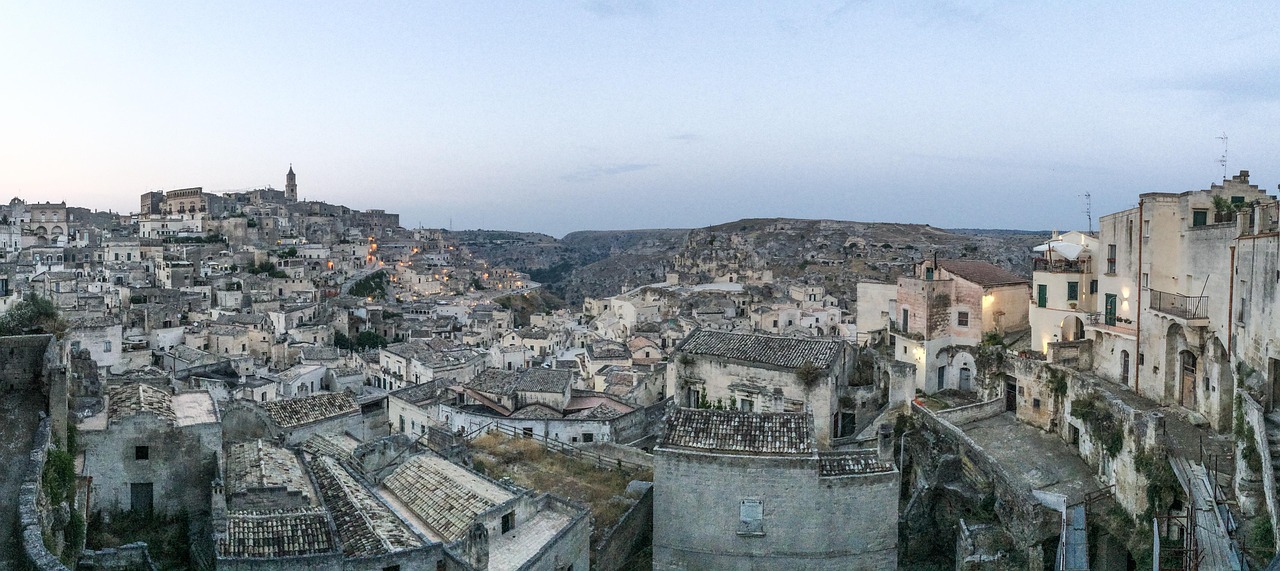
Matera is one of those places that feels almost impossible in the modern world: an entire city carved into rock, glowing honey-gold at sunset, with silent alleyways that suddenly open onto sweeping ravine views. I’ve visited Matera multiple times over the last decade, and every time I return, it feels like stepping into a living movie set, except that people still hang laundry out to dry in cave doorways and nonnas still roll orecchiette at their kitchen tables.
Once known as “the shame of Italy” for its poverty and cave dwellings, Matera has reinvented itself as a UNESCO World Heritage Site and a European Capital of Culture (2019). But unlike other destinations that become over-polished, Matera has managed to stay raw and real. You’ll still find stray cats sunbathing on stone steps, old men playing cards under arches, and tiny churches hidden behind unmarked doors.
In 2026, Matera is especially worth visiting. Many of the cultural initiatives that began around the 2019 European Capital of Culture year have matured into annual traditions and festivals. New small galleries, artisan workshops, and wine bars have opened in the Sassi while the historic center (the civita and piano) keeps its local, lived-in feel.
This travel guide is written as if I’m walking you through the city, step by step—sharing where I’ve gotten lost, where I’ve had my best meals, and where to sit when the bells of the Duomo ring at sunset. Whether you have a 3 day itinerary for Matera, 4 days in Matera, or a full 5 day itinerary for Matera, you’ll find ideas here to turn your trip into something special.
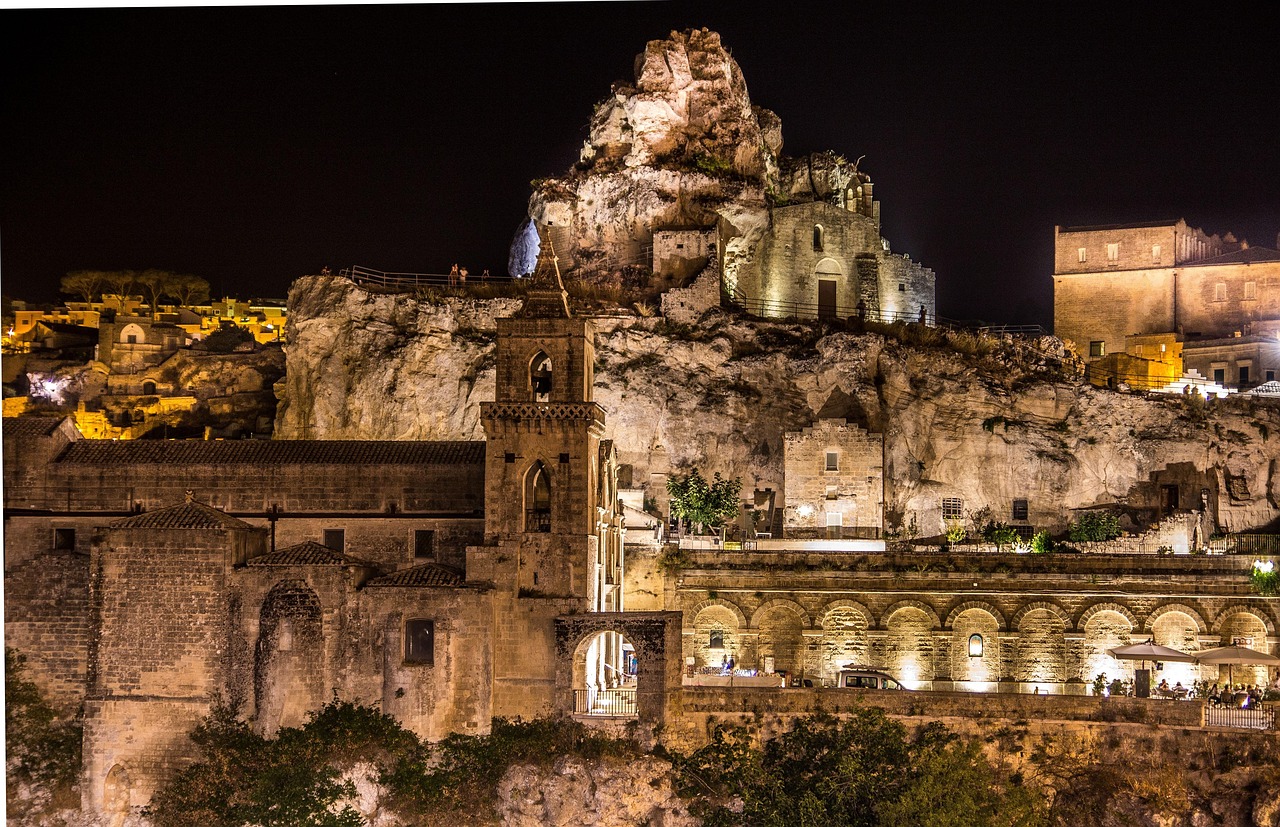
Table of Contents
- Why Visit Matera
- Matera at a Glance
- Neighborhoods & Areas to Explore
- 20 Must-See Attractions in Matera (With Stories & Tips)
- Suggested Itineraries: 3, 4 & 5 Days in Matera
- Local Food in Matera & Where to Eat
- Nightlife & Cultural Experiences
- Best Day Trips from Matera
- Cultural Etiquette & Local Customs
- Practical Travel Tips for Matera
- Matera 2026–2027: Events & What’s New
- Summary & Best Time to Visit Matera
Matera at a Glance
Matera sits in the Basilicata region of southern Italy, about an hour from Bari by car. The city is best known for the Sassi—two ancient districts of cave dwellings (Sasso Barisano and Sasso Caveoso) carved into a limestone ravine. Above them lies the “modern” historic center, with its churches, piazzas, and 19th-century buildings.
It’s not a big city, but it’s a layered one. Vertical, not horizontal. You’ll walk up and down more than you walk in a straight line. Distances don’t look far on the map, but the stairs make every journey feel like a small pilgrimage (worth it, I promise).
- Region: Basilicata, Southern Italy
- Population: ~60,000
- Famous for: Cave dwellings (Sassi), rock churches, film locations (from Pasolini to James Bond), rustic southern cuisine
- Ideal trip length: 3–5 days in Matera for first-time visitors
- Great for: Couples, photographers, history lovers, families with older kids, slow travelers
Matera’s Neighborhoods & Areas to Explore
Sasso Barisano
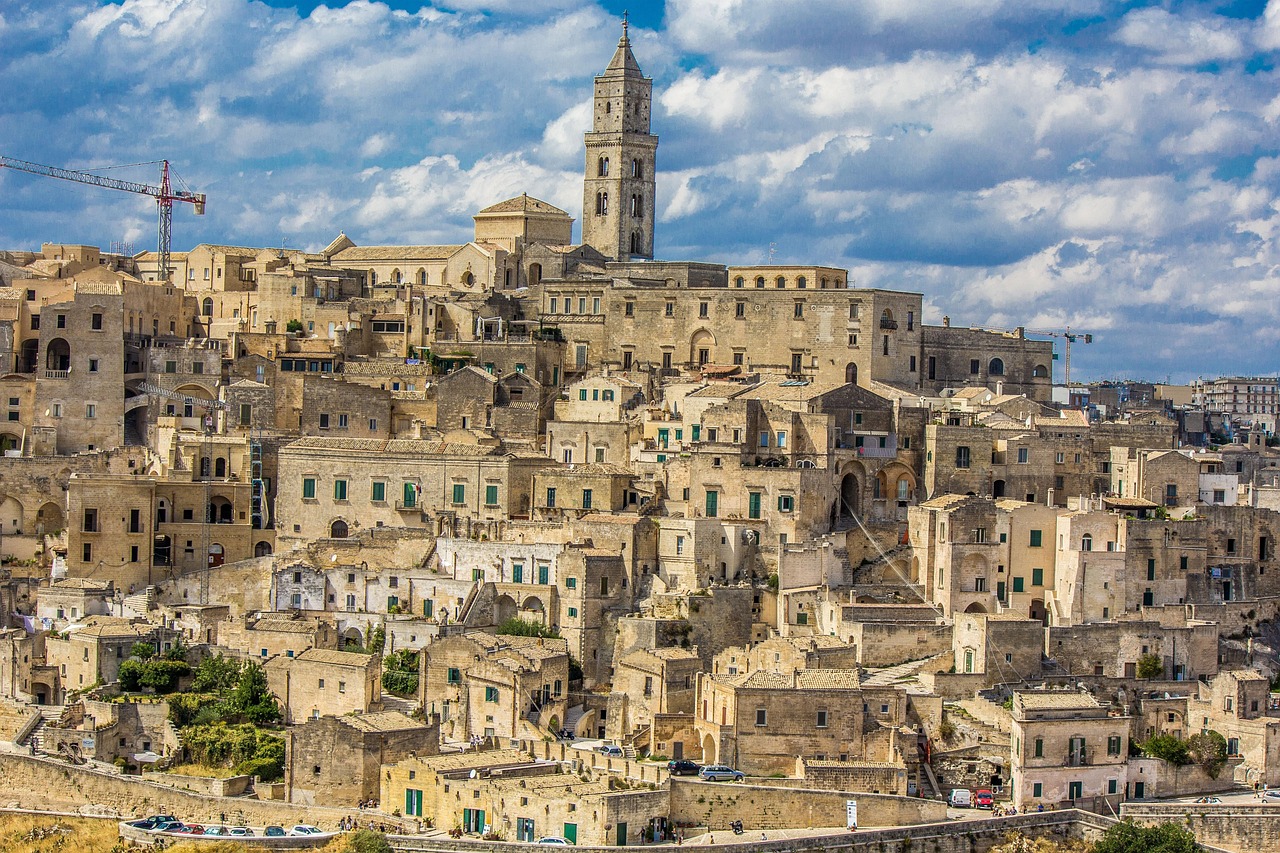
Sasso Barisano is the gentler of the two Sassi, with more restored cave hotels, restaurants, and artisan shops. If it’s your first time in Matera, you’ll probably stay here. I usually book a cave room on this side when I want easier access to the main piazzas and a slightly less dramatic climb home at night.
Sasso Caveoso
Sasso Caveoso feels more raw and theatrical—steeper slopes, more exposed rock, and some parts where the line between “abandoned cave” and “someone’s door” is blurred. Sunsets here are unbeatable. This is where I go when I want to feel like I’ve time-traveled.
Civita & Duomo Area
Perched on the ridge between the two Sassi, the Civita is crowned by the Duomo. Wandering its narrow lanes early in the morning, before the day-trippers arrive, is one of my favorite things to do in Matera. The views into both ravines are superb.
Il Piano (The “Modern” Historic Center)
Above the caves, the piano is the flat part of town where locals do their shopping and business. Don’t skip it: Piazza Vittorio Veneto, Via del Corso, and Piazza San Francesco d’Assisi show Matera’s more “everyday” side, with cafes, boutiques, and pasticcerie.
Parco della Murgia Materana
Across the ravine lies the Parco della Murgia Materana, a wild, rocky plateau dotted with caves and rock churches. If the Sassi show how humans adapted to the rock, the Murgia shows the raw rock itself. It’s my favorite place for sunrise hikes and quiet contemplation.
20 Must-See Attractions in Matera (With Stories, History & Tips)
Instead of just listing things to do in Matera, I’ll walk you through 20 of the best places to visit in Matera, with personal impressions, history, and practical advice. These are the anchors for any 3 day itinerary for Matera or longer trip.
1. Sassi di Matera (The Cave Districts)
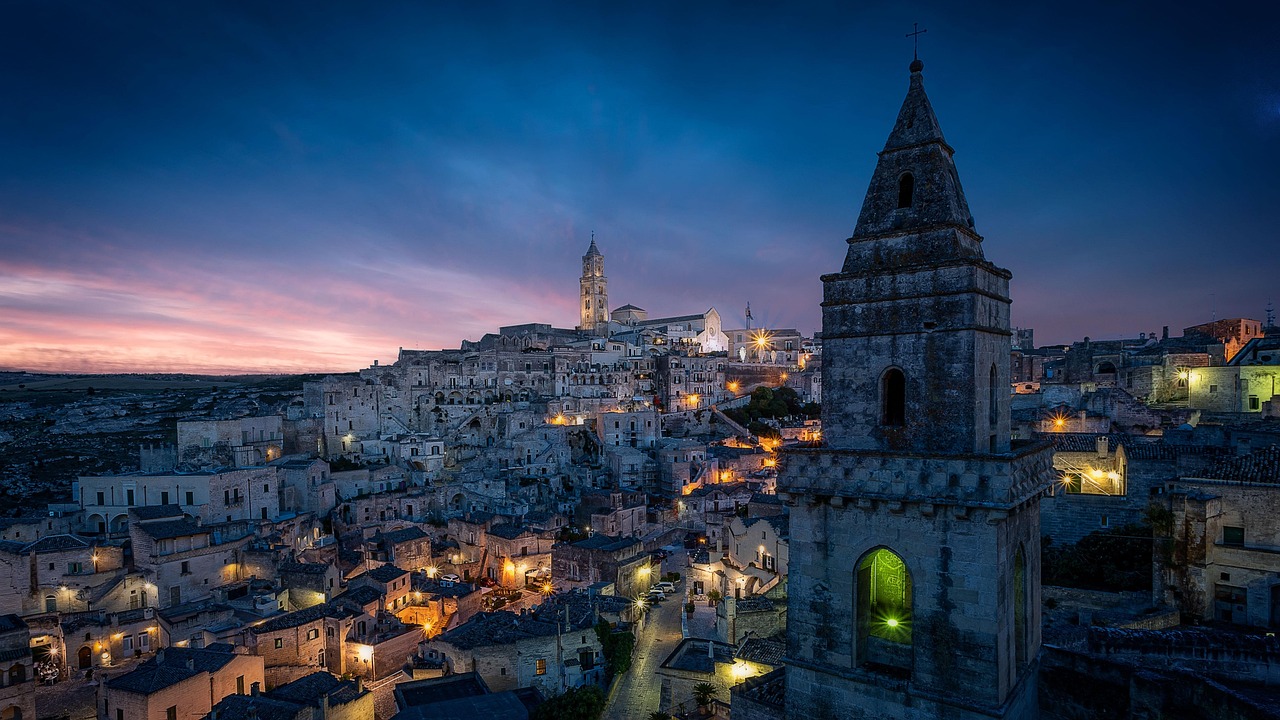
The Sassi themselves—Sasso Barisano and Sasso Caveoso—are the reason you’re here. The first time I descended the steps from Piazza Vittorio Veneto into the honeycomb of cave houses, I felt that strange mix of awe and disorientation, as if the streets were folding in on themselves.
Historically, these were troglodyte settlements that evolved from prehistoric caves into a dense urban system. Families shared space with animals, water was collected in cisterns, and the layout followed the contours of the ravine. After being declared a national disgrace in the 1950s, the Sassi were largely abandoned; later, they were carefully restored and became UNESCO-listed in 1993.
My tip: Walk the Sassi at three times of day: dawn (quiet, blue light), late afternoon (golden glow), and late evening (romantic, lights twinkling). Each time feels like a different city. For families, late afternoon is perfect—less heat, more gelato options open.
How to explore: Get lost on purpose. Start from Piazza Vittorio Veneto, descend the stairs into Sasso Barisano, and loosely aim for the Duomo. Don’t obsess over the map; stairs that look like dead ends often open into spectacular viewpoints.
2. Matera Cathedral (Duomo di Matera)
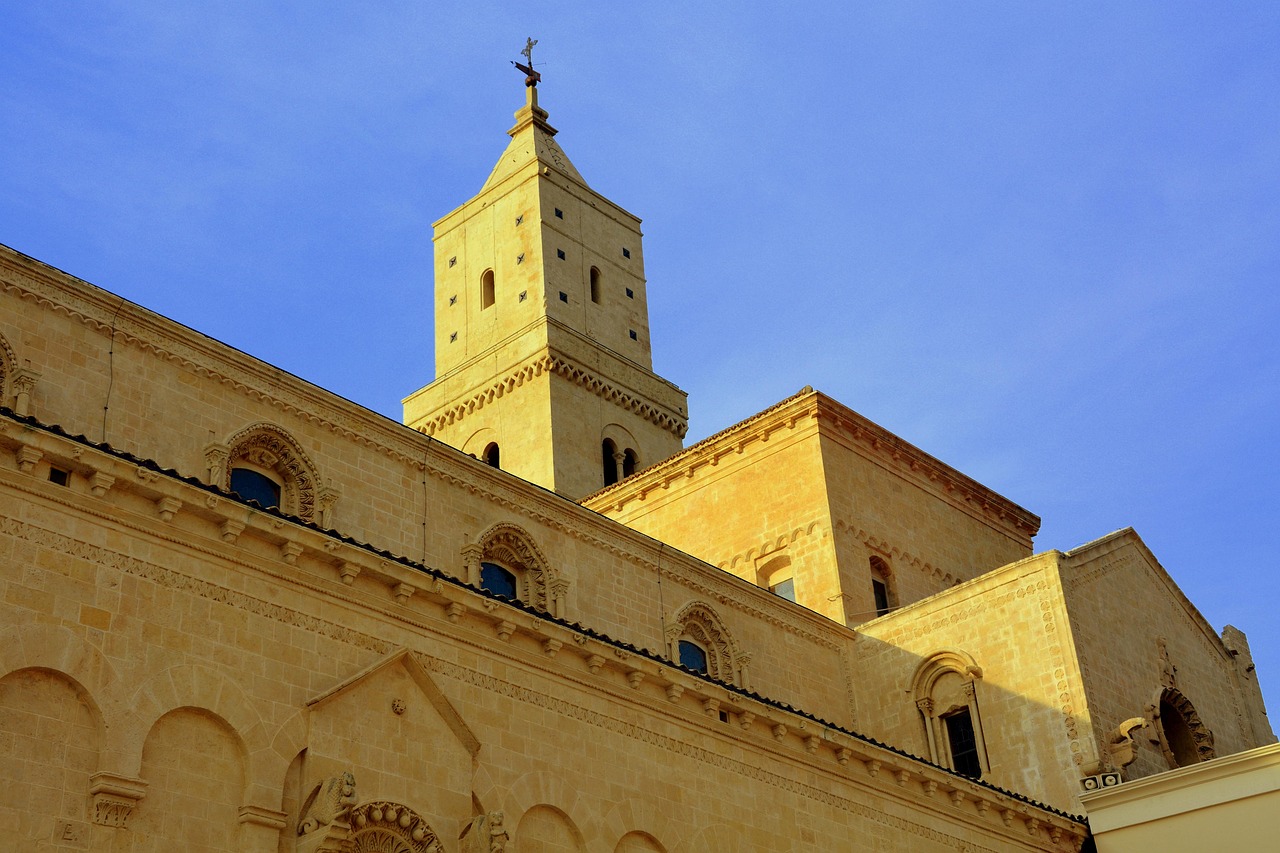
The Duomo sits like a crown over the city. The first time I climbed up here for sunset, I watched as the Sassi slowly lit up below me, church bells echoing through the ravine. It’s still my favorite sunset spot in Matera.
Built in the 13th century in Apulian Romanesque style, the cathedral’s façade is elegant yet austere, with a rose window and a tall bell tower visible from almost anywhere in the city. Inside, restorations have revealed layers of frescoes and baroque details.
Best time to visit: About 45–60 minutes before sunset. Explore inside, then step out to the terraces on either side to watch the sky change colors.
Tip for photographers: Bring a small tripod or brace your camera against the stone wall; the low light and wide views are perfect for long exposures.
3. Casa Noha
Casa Noha is usually my first stop when I bring friends to Matera. Run by the Italian heritage organization FAI, this 16th-century house hosts a multi-room video installation that tells the story of Matera—from prehistoric times to the dark days of poverty and the eventual rebirth.
The first time I visited, I emerged genuinely moved, with a deeper understanding of what it meant for families to live in one room, in caves with no proper sanitation. It changes how you see every stone in the Sassi afterward.
Tip: Go here on your first morning. It’s the perfect introduction and only takes about an hour.
Family note: Teens and older kids handle the multimedia format well; for younger children, the length and subject might be a bit heavy, but the visuals are engaging.
4. Casa Grotta di Vico Solitario
To understand daily life in the Sassi, step into Casa Grotta di Vico Solitario in Sasso Caveoso. This furnished cave house shows how a typical family lived here in the early 20th century: one room for cooking, sleeping, and working, with animals in a stable at the back.
I remember the guide pointing to the bed and explaining how up to six or seven people might sleep there, while goats and a mule rested nearby. It’s humbling and gives context to the decision to relocate families in the 1950s.
Tip: Combine this with a walk to the nearby Belvedere Luigi Guerricchio overlook for an iconic view of Sasso Caveoso.
5. Church of Santa Maria de Idris & San Giovanni in Monterrone
Perhaps the most photogenic of Matera’s churches, Santa Maria de Idris sits dramatically on a rocky spur above Sasso Caveoso. A small doorway leads into a cave church with faded frescoes, and from there you can access another cave church, San Giovanni in Monterrone.
The first time I climbed up here, the wind whipped around the rock and I could hear bells from multiple churches echo through the ravine. It felt almost monastic despite the tourists.
Best time: Late afternoon for beautiful light on Sasso Caveoso. Early morning is quieter if you want to contemplate the frescoes in peace.
Accessibility: The climb involves uneven steps carved into rock; wear good shoes and avoid if you have severe mobility issues.
6. Rupestrian Churches of the Murgia (e.g., San Falcione, Madonna delle Tre Porte)
Across the ravine, the Parco della Murgia Materana is scattered with rupestrian (rock-cut) churches, some with remarkably preserved frescoes. They tell the story of hermits, monks, and early Christian communities who sought solitude in these caves.
I still remember ducking into one tiny church—just me, my guide, and a flickering flashlight—while he illuminated a centuries-old fresco of saints that had survived humidity, war, and neglect. It felt like being let in on a secret.
Tip: Book a guided hike; many churches are locked and require a guide with keys. Wear sturdy shoes and bring water, especially from late spring to early autumn.
7. Belvedere di Murgia Timone
This is the “postcard view” of Matera: the city rising like a stone amphitheater from the opposite side of the ravine. If you’ve ever seen Matera in movies (including the recent James Bond scenes), this viewpoint will feel familiar.
I’ve been here for sunrise, midday, and sunset. Sunrise wins. Standing in the quiet, with the sky turning pink and the city slowly waking up, is worth the early alarm.
How to get there: By car (short drive and then a walk), taxi, or via the pedestrian suspension bridge and hiking paths from Sasso Caveoso. The hike is steep in sections but manageable if you’re reasonably fit.
8. Piazza Vittorio Veneto & Palombaro Lungo
Piazza Vittorio Veneto is the main square on the piano, always lively with kids on scooters and locals chatting on benches. Underneath it lies Palombaro Lungo, an enormous underground cistern that once held the city’s water supply.
Walking through its cool, damp corridors feels like entering the belly of the city. The engineering is impressive: channels, plastered walls, and the sheer volume of water it once stored.
Tip: Visit in the heat of the day; the cistern is refreshingly cool and gives you a break from the sun.
9. Church of San Pietro Caveoso
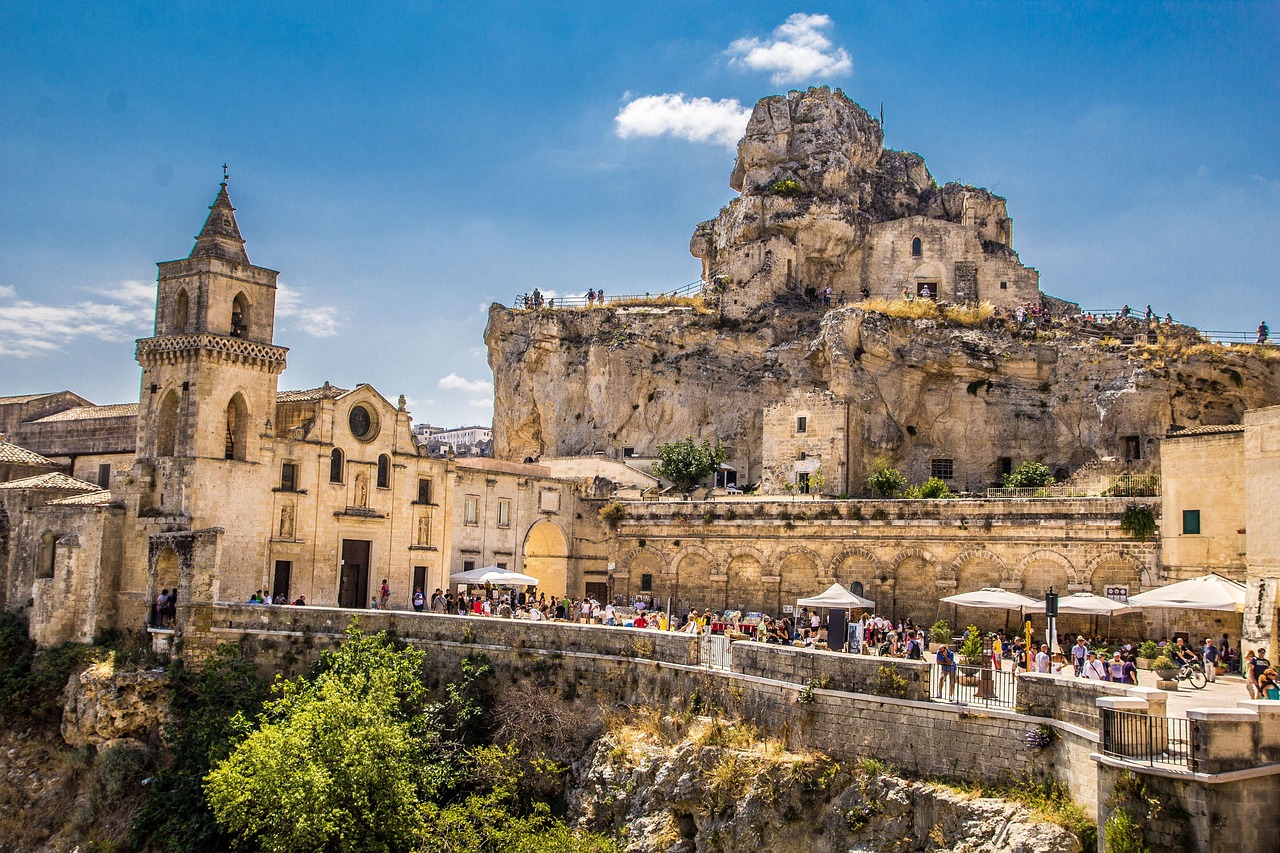
San Pietro Caveoso stands at the edge of the ravine like a stone ship, its façade facing the Murgia. Inside, you’ll find a baroque interior that contrasts with its rugged surroundings.
I like to sit on the low wall outside the church in the early evening, gelato in hand, and watch the last light hit the Murgia cliffs. It’s a romantic spot, especially when street musicians show up on busy nights.
10. Church of San Francesco d’Assisi & Piazza San Francesco
This baroque church anchors one of my favorite piazzas in Matera. The façade is ornate, with swirling stonework and statues that glow in the late afternoon sun.
Piazza San Francesco is where I often pause mid-day: an espresso at a nearby bar, a quick peek inside the church, and some people-watching as tourists pour down toward the Sassi.
11. Via Ridola & Museo Nazionale di Matera
Via Ridola is a gently sloping street lined with cafes and cultural institutions, including the Museo Archeologico Nazionale “Domenico Ridola”. It’s an excellent place to understand the deeper history of the region, from prehistoric finds to classical artifacts.
On one rainy day in Matera, I ducked in here and ended up spending hours longer than planned, mesmerized by Paleolithic tools and ancient pottery. It’s quieter than the Sassi and well worth the time.
Tip: Combine the museum with a slow stroll down Via Ridola, stopping for a coffee or aperitivo with a view toward Sasso Caveoso.
12. MUSMA – Museum of Contemporary Sculpture
MUSMA is one of the most unique museums I’ve ever visited: contemporary sculpture exhibited inside ancient cave spaces and courtyards of Palazzo Pomarici. The contrast between modern forms and ancient stone is striking.
I wandered here one hot afternoon, grateful for the cool caves, and found myself alone in many of the rooms, just me and some very unusual sculptures.
Tip: If you only visit one “modern” museum in Matera beyond Casa Noha and Ridola, make it this one. It’s also a good option for art-loving teens.
13. Convicinio di Sant’Antonio
This complex of interconnected cave churches and crypts in Sasso Caveoso is often quieter than the more famous sites, which is why I love it. There’s a sense of discovery as you move from one chamber to another.
The faded frescoes and carved niches speak of centuries of devotion. The first time I visited, I almost had the place to myself; the silence was thick, broken only by distant voices echoing up from the Sassi.
Hidden gem factor: Medium-high. It’s on some tours, but often overlooked by casual visitors. Great if you want a less crowded rock-church experience.
14. Belvedere Luigi Guerricchio & Sasso Caveoso Viewpoints
For sweeping views of Sasso Caveoso, head to Belvedere Luigi Guerricchio and nearby terraces. Looking across the bowl of caves and houses, you can trace the line of Santa Maria de Idris perched above.
In the evenings, I like to stroll along these viewpoints, pausing to take in the changing colors as lights flick on in cave windows. It’s a perfect romantic walk or family-friendly outing (just keep an eye on kids near the edges).
15. Hypogeum of Piazza San Francesco & Underground Matera
Beyond Palombaro Lungo, Matera hides many underground spaces—cisterns, cellars, and carved-out rooms known as ipogei. Some are accessible via guided tours originating near Piazza San Francesco.
On my second trip, I joined a small underground tour and was amazed at how much of Matera exists below street level. It adds another layer (literally) to your understanding of the city.
Tip: If you’re curious about water systems and underground architecture, ask at the tourist office or local tour agencies about current hypogeum tours—offerings change year by year.
16. Via Fiorentini & Artisan Workshops
Via Fiorentini runs through Sasso Barisano and is lined with cave restaurants and artisan shops. You’ll find handmade ceramics, carved stone lamps, leather goods, and the quirky local symbol: the cuccù whistle (a colorful bird-shaped whistle said to bring luck).
I have a small collection of cuccù at home now, all bought from different artisans along this street. My favorite shop owner once invited me into the back to see his workshop, dust motes floating in a shaft of light as he shaped clay.
Tip: Ask if the artisan made the item themselves. Many will proudly explain their process. Prices are generally fair, but you can politely ask if there’s a cash discount.
17. Tramontano Castle
On a hill above the piano, the unfinished 16th-century Tramontano Castle watches over Matera. It’s not the most spectacular castle in Italy, but its park and vantage point make it a nice detour if you have extra time.
I like walking up here in the late afternoon to escape the crowds and get a different perspective on the city. Locals use the surrounding park for jogging and dog walking, giving you a glimpse of everyday life.
18. Matera’s Film Locations (From Pasolini to Bond)
Matera has starred in films from Pier Paolo Pasolini’s “The Gospel According to St. Matthew” to Mel Gibson’s “The Passion of the Christ” and the James Bond movie “No Time To Die”. Several tour operators now offer “cinema tours” of key locations.
On my latest visit, I traced some of the Bond chase scenes through Sasso Barisano—climbing the same staircases, peering over the same walls. It’s a fun twist on exploring the city, especially for movie buffs.
Tip: If you’re short on time, pick up a simple map at the tourist office rather than booking a dedicated tour; you’ll recognize many spots just from stills.
19. Local Bakeries & Panifici (For Matera Bread)
Bread might not sound like an “attraction”, but in Matera, it is. Pane di Matera has PGI status and a distinctive shape, like a mountain ridge. It’s made from local durum wheat and natural yeast, with a thick crust and chewy crumb.
One of my rituals is to visit a panificio in the morning, buy a quarter loaf still warm from the oven, and tear off chunks as I wander. You’ll also find delicious focaccia topped with tomatoes or potatoes.
Tip: Look for small bakeries off the main streets; ask your accommodation for the nearest neighborhood favorite. Prices are low, and it’s an easy way to save money on snacks or simple lunches.
20. Evening Passeggiata on Via del Corso
Finally, one of the simplest but most authentic experiences: the evening passeggiata along Via del Corso and around Piazza Vittorio Veneto. Locals dress up, families push strollers, teenagers cluster in groups, and everyone seems to know everyone.
On my last night in Matera last year, I walked this route slowly, stopping for a spritz, greeting a shopkeeper I’d chatted with earlier. It felt less like tourism and more like briefly belonging.
Tip: Join in around 7–9 pm, especially on weekends. It’s free, family-friendly, and one of the best cultural experiences in Matera.
3, 4 & 5 Day Itineraries for Matera (With Personal Stories)
Whether you have 3 days in Matera, 4 days, or a full 5 day itinerary for Matera, these plans mix must-see attractions, hidden gems, and local experiences. I’ll keep the descriptions relatively concise but detailed enough to follow.
3 Day Itinerary for Matera: First-Time Highlights
Day 1: First Steps into the Sassi
Morning: Check into your cave hotel in Sasso Barisano if you can. Drop your bags and walk up to Piazza Vittorio Veneto. Start with Casa Noha to ground yourself in Matera’s history. Then wander slowly toward the Duomo, stopping at terraces to peek into both Sassi.
I still remember my first arrival: I followed my host down a staircase that looked like a movie set, stone all around, the air cooler and slightly damp. That moment when I opened the door to my cave room and saw stone walls lit by warm lamps is etched in my mind.
Afternoon: After lunch along Via Fiorentini, descend deeper into Sasso Barisano, exploring lanes and small churches. Grab a loaf of pane di Matera or focaccia at a bakery for a snack. If it’s hot, duck into Palombaro Lungo for a cool underground break.
Evening: Climb back up to the Duomo terraces for sunset. Watch as lights flicker on in cave windows. For dinner, choose a cave restaurant along Via Fiorentini—ask for a table near the entrance if you want a view, or deeper inside for a more atmospheric, candlelit experience. Finish with gelato on Piazza Vittorio Veneto and join the evening passeggiata.
Day 2: Sasso Caveoso & the Murgia
Morning: Head toward Sasso Caveoso. Visit Casa Grotta di Vico Solitario to see how families lived in cave houses. Then climb up to Santa Maria de Idris and San Giovanni in Monterrone for frescoes and ravine views.
Afternoon: Cross to the Parco della Murgia Materana. If you’re up for a hike, descend via the path near San Pietro Caveoso, cross the pedestrian bridge, and follow the trails up to Belvedere di Murgia Timone, exploring a few rock churches en route. Bring water and a hat; the sun can be intense.
One of my favorite memories is sitting on the ground at the Belvedere, back against a warm rock, sharing bread and cheese from the market with a friend as we looked across at Matera glowing in the late afternoon light.
Evening: Take a taxi back if you’ve hiked (or hike back before dark). Clean up and enjoy dinner in Sasso Caveoso with a ravine view—some restaurants set tables on terraces that feel like balconies over the void. Couples will love this night; it’s incredibly romantic.
Day 3: Museums, Hidden Corners & Shopping
Morning: Stroll along Via Ridola, visiting the Museo Nazionale “Domenico Ridola”. Then continue to MUSMA if you’re into contemporary art. If not, explore more of Sasso Barisano’s side streets and viewpoints.
Afternoon: Dedicate time to artisan shops along Via Fiorentini and the side alleys—this is where you pick up a cuccù whistle or hand-painted ceramics. For a late afternoon break, sit at an outdoor café on Piazza San Francesco or Piazza Vittorio Veneto with an aperitivo.
Evening: For your farewell night, book a special dinner at a cave restaurant or terrace overlooking Sasso Caveoso or Barisano. Walk one last loop through the Sassi afterward; the city at night is half the magic.
4 Day Itinerary for Matera: Deeper Exploration
If you have 4 days in Matera, follow the 3 day itinerary above, and add:
Day 4: Underground, Castle & Slow Time
Morning: Join an underground tour of hypogea starting near Piazza San Francesco. You’ll explore lesser-known cisterns and cellars that reveal how Matera managed water and storage.
Afternoon: Walk up to Tramontano Castle and its park. It’s not overrun with tourists, and you’ll see families and joggers enjoying the green space. Grab a simple lunch in the piano—there are good, affordable trattorias catering to locals.
Evening: Take a slow evening, perhaps focusing on the passeggiata, or join a guided night tour of the Sassi for a different perspective. On one of my later visits, I did a nighttime walking tour, and hearing the history while the city glowed around us felt almost theatrical.
5 Day Itinerary for Matera: Slow Travel & Side Trips
With 5 days in Matera, you can truly relax into the rhythm of the city. Build on the 4 day itinerary and add:
Day 5: Day Trip or Rural Experience
Option 1 – Murgia & Rock Churches in Depth: Hire a local guide for a half or full day exploring more remote rock churches and hiking trails in the Parco della Murgia Materana. They can unlock churches you’d never find on your own.
Option 2 – Farm or Masseria Visit: Arrange a visit to a nearby masseria (farm estate) for a cooking class or lunch featuring local products: caciocavallo cheese, olio lucano, and homemade pasta. I once spent a day at a family-run farm outside Matera, learning to shape orecchiette while the grandmother told stories in dialect—one of my favorite experiences ever.
Option 3 – Nearby Towns: Take a day trip to places like Gravina in Puglia or Altamura (more details in the Day Trips section below) if you want a taste of neighboring towns.
Return to Matera in the late afternoon, enjoy one last golden hour in the Sassi, and finish with a simple dinner of bruschette, local wine, and whatever dish you’ve fallen in love with here.
Local Food in Matera: What to Eat & Where
Matter-of-factly: the food in Matera is rustic, hearty, and often surprisingly affordable. It’s one of the joys of visiting. Here’s what to look for and some personal favorites.
Must-Try Dishes & Drinks
- Pane di Matera: The famous bread. Eat it plain, in bruschette, or alongside stews.
- Orecchiette con cime di rapa: Ear-shaped pasta with turnip greens, garlic, and anchovies—bitter and delicious.
- Cavatelli or strascinati: Local pasta shapes often served with rich tomato sauces or mushrooms.
- Peperoni cruschi: Crunchy dried sweet peppers, sometimes fried and sprinkled over dishes.
- Lamb and goat dishes: Common in traditional restaurants, often stewed or baked in clay pots.
- Cheeses: Caciocavallo, pecorino, and fresh ricotta.
- Local wines: Aglianico del Vulture from nearby Basilicata, Primitivo and Negroamaro from Puglia.
- Amaro Lucano: A local herbal liqueur, nice as a digestivo after dinner.
Where to Eat (and Save Money)
I won’t list every restaurant (Matera’s scene evolves quickly), but here’s how I approach eating here:
- Breakfast: Most accommodations include a simple breakfast. If not, head to a local bar on the piano for cappuccino and a pastry—it’s cheaper than in the Sassi and more local.
- Lunch: For budget-conscious travelers, grab focaccia, bread, cheese, and salumi from a bakery or small grocery and picnic on a bench with a view. Many Sassi restaurants offer cheaper lunch menus than dinner.
- Dinner: Splurge on cave restaurants a few nights; they really are a key Matera experience. On other nights, eat in the piano where locals dine—prices are lower and portions generous.
Tip: Reserve for Friday and Saturday nights, especially in high season (May–October). Many popular restaurants in the Sassi fill up.
Nightlife, Entertainment & Cultural Experiences in Matera
Evening Atmosphere
Matera isn’t a clubbing destination. Nightlife here is more about wine bars, late dinners, and strolling through the lit-up Sassi. The beauty of the city at night is the main event.
Wine Bars & Aperitivo
Look for intimate wine bars carved into caves, especially around Sasso Barisano and the streets leading down from Piazza Vittorio Veneto. I like to order a glass of Aglianico and a small plate of local cheeses before dinner.
Cultural Events & Performances
Depending on the season, you’ll find:
- Classical concerts in churches or small theaters
- Outdoor film screenings in summer
- Local festivals with live music and food stalls
Check the tourist office or cultural center on Via Ridola for current events during your stay.
Family-Friendly Evenings
Families often join the passeggiata, get gelato, and let kids run around in Piazza Vittorio Veneto or Piazza San Francesco. The Sassi at night are magical for children—just keep an eye on them near staircases and drop-offs.
Day Trips & Nearby Attractions from Matera
Once you’ve covered the must-see attractions in Matera, consider a day trip or two. Here are some good options.
Gravina in Puglia
Gravina sits over its own dramatic ravine, with bridges, rock churches, and a more low-key vibe than Matera. It’s about an hour away by car.
What to do: Walk the historic center, cross the stone bridge, explore rock churches, and enjoy a long lunch. It’s less polished, more local.
Altamura
Known for its own famous bread and beautiful cathedral, Altamura makes a tasty half-day trip.
What to do: Visit the cathedral, sample bread from a traditional bakery, and wander the narrow streets.
Metaponto & the Ionian Coast
If you’re visiting in warmer months and craving the sea, head to Metaponto on the Ionian coast for beaches and ancient Greek ruins.
What to do: Split your time between the archaeological area (Greek temples and theater) and the beach. Great for families.
How to Get Around for Day Trips
- Car rental: Most flexible option. Roads are generally good; park in designated lots outside Matera’s historic core.
- Trains & buses: Limited but possible for some destinations (check schedules in advance; they can be sparse on Sundays).
- Guided tours: Local agencies offer day trips combining multiple towns or wine/food experiences—good if you don’t want to drive.
Cultural Etiquette & Local Customs in Matera
Everyday Manners
Matera is friendly but traditional. A few basics:
- Greet with “Buongiorno” (morning/early afternoon) or “Buonasera” (evening) when entering shops, cafes, or speaking to staff.
- Dress modestly when visiting churches (shoulders covered, no very short shorts).
- Don’t shout or be overly loud in small alleys at night—people live in many of these cave houses.
Dining Customs
- It’s normal to linger over meals; you usually need to ask for the bill (“Il conto, per favore”).
- Tip 5–10% if service was good; not mandatory, but appreciated.
- Coffee with milk (cappuccino, latte) is mostly for mornings; after meals, locals order espresso.
Respecting the Sassi
Remember that the Sassi are a living neighborhood:
- Don’t photograph inside people’s homes or through windows.
- Stick to marked paths and avoid climbing onto fragile walls or roofs.
- Don’t carve or write on stone surfaces; erosion and vandalism are real issues.
Practical Travel Tips for Matera
Here’s the essential travel advice for Matera: how to get there, get around, save money, and stay connected.
Getting to Matera
- By Air: Closest major airport is Bari (BRI), about 60–75 minutes by car.
- By Train: Matera is served by Ferrovie Appulo Lucane (FAL) trains from Bari; trains are inexpensive but not high-speed.
- By Bus: Direct buses connect Matera to cities like Bari, Naples, and sometimes Rome, with seasonal variations.
- By Car: Straightforward if you’re comfortable driving in Italy. Park outside the Sassi (they are mostly ZTL—limited traffic zones).
Getting Around Matera
Matera is compact but vertical:
- On foot: The main way to move through the Sassi. Expect stairs and uneven surfaces.
- Local buses: Connect outer neighborhoods and parking areas with the center; useful if you’re staying outside the core.
- Taxis & tuk-tuks: Useful if you’re tired or carrying luggage; tuk-tuk tours are also a fun overview, especially for families.
Where to Stay (and Save Money)
- Cave hotels in the Sassi: Most atmospheric, mid- to high-range prices. Great for couples and special trips.
- Guesthouses in the piano: More affordable, easier access, and closer to supermarkets and everyday services.
- Apartments: Good for families or longer stays; having a small kitchen helps you save by cooking simple meals.
Money-Saving Tips
- Eat your main meal at lunch at local trattorias or with takeaway bakery food; have lighter dinners.
- Use tap water (it’s generally safe) and refill bottles instead of buying plastic each time.
- Visit paid sites strategically—combine them into a couple of days and check for combo tickets.
- Travel in shoulder seasons (April–early June, September–October) for better prices and milder weather.
SIM Cards & Connectivity
Italy has good mobile coverage in Matera. For 2026, major providers like TIM, Vodafone, and WindTre all work well.
- EU visitors can often use their home plans (roaming rules apply).
- Non-EU visitors: buy a prepaid SIM at airports or in Bari/Matera; bring your passport.
- Many hotels and restaurants offer free Wi-Fi, though speeds in some cave rooms can be patchy.
Visas & Driving
- Visas: Italy is in the Schengen Area. Check current requirements for your nationality in 2026; many travelers from the EU, UK, US, Canada, Australia, etc., can enter visa-free for short stays but may need ETIAS authorization once implemented.
- Driving licenses: Non-EU visitors may need an International Driving Permit (IDP) in addition to their home license. Car rental agencies can advise based on your country.
- ZTL zones: Don’t drive into the Sassi or restricted historic center unless your accommodation has arranged special access; fines are automated and expensive.
Best Seasons & What They’re Good For
- Spring (March–May): Mild temperatures, green Murgia hills, perfect for hiking and sightseeing. Occasional rain.
- Summer (June–August): Hot, especially midday; evenings are lively. Great for combining Matera with beach trips. Plan siestas.
- Autumn (September–November): Ideal weather, fewer crowds after early October, harvest festivals and good food.
- Winter (December–February): Quiet, atmospheric, and sometimes chilly; Christmas lights and presepi (nativity scenes) in the Sassi can be magical. Some smaller businesses may close.
Matera 2026–2027: Events & What’s New
While exact dates can shift year to year, here are recurring and evolving events to watch for in 2026–2027:
- Festa della Bruna (2 July): Matera’s biggest annual festival, honoring the Madonna della Bruna, with processions, fireworks, and the dramatic destruction of a papier-mâché float. It’s intense, crowded, and unforgettable.
- Rock Church & Murgia Festivals (Summer): Outdoor concerts, guided night hikes, and cultural events in the Parco della Murgia Materana are becoming more common as post-2019 initiatives mature.
- Film & Photography Events: Matera continues to attract filmmakers and photographers; expect workshops, screenings, and small festivals announced closer to the dates.
- Christmas & Presepi Viventi (December–January): Live nativity scenes in the Sassi and special Christmas lights—2026 and 2027 are expected to continue the trend of increasingly elaborate displays.
Before your trip, check Matera’s official tourism website or the Basilicata regional tourism board for updated event calendars for 2026–2027.
Summary: Key Takeaways & Best Time to Visit Matera
Matera is unlike anywhere else in Italy—or anywhere else, really. Carved into stone and perched above a ravine, it offers a mix of ancient cave dwellings, evocative rock churches, and a living community that still uses these spaces in daily life.
- If you have a 3 day itinerary for Matera, focus on the Sassi, Duomo, Murgia viewpoint, and a couple of cave churches and museums.
- With 4 days in Matera, add underground tours, Tramontano Castle, and more slow exploration of the piano.
- With a 5 day itinerary for Matera, include day trips or rural experiences—a farm visit, extra hikes, or nearby towns.
Best time to visit: For most travelers, April–early June and September–October hit the sweet spot of comfortable weather and manageable crowds. Summer works if you plan around the heat, and winter offers moody, quiet charm, especially around Christmas.
However long you stay, give yourself time to simply wander, sit on stone steps, watch the light change on the caves, and listen to the bells. That’s when Matera stops being just a list of must-see attractions and becomes a place you’ll carry with you long after you’ve left.