Why Visit Val d'Orcia
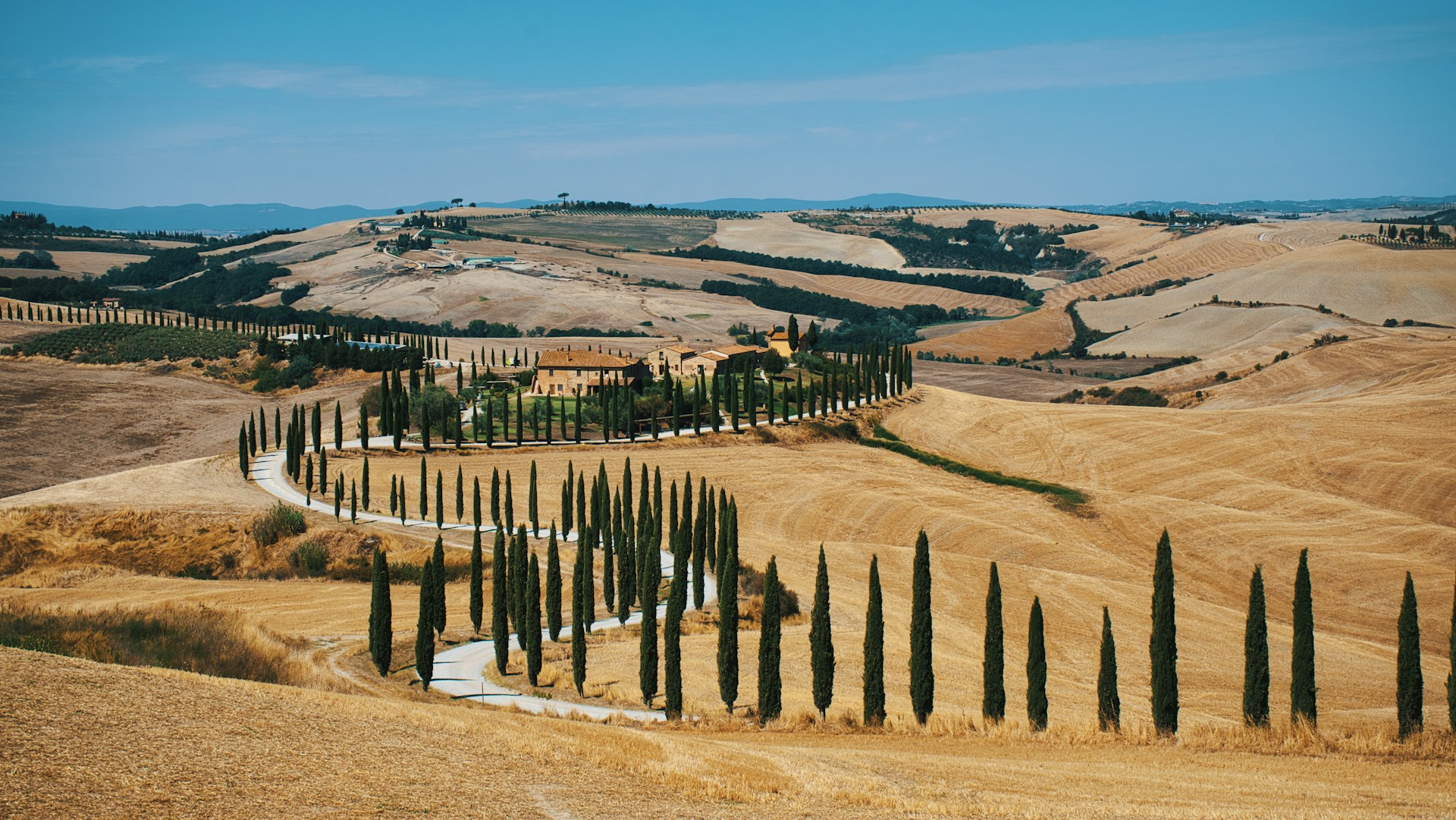
Val d'Orcia is how most people imagine Tuscany before they ever set foot in Italy: rolling golden hills, lone cypress trees lining winding roads, medieval hill towns perched on ridges, vineyards and olive groves stitched together like a patchwork quilt. Yet what makes this valley truly special isn’t just the scenery – it’s the quiet rhythm of life, the small-town rituals, and the way evenings seem to stretch out over glasses of Brunello and simple, perfect food.
I’ve been coming to Val d'Orcia for over a decade, sometimes for quick 4-day escapes, sometimes for long 7-day stays when I need to reset. I’ve watched spring wildflowers bloom under Monte Amiata, helped pick grapes during the vendemmia (harvest) in early autumn, and spent winter evenings by fireplaces in stone farmhouses while fog pooled in the valleys below.
This guide is written the way I plan my own trips here: slow, layered, and personal. You’ll find detailed itineraries for 4, 5, 6, and 7 days in Val d'Orcia, stories and tips for 20+ must-see attractions and hidden gems, and plenty of practical travel advice – from renting a car and parking in medieval villages to tasting the best local food in Val d'Orcia on a realistic budget.
If you’re looking for a region that is romantic but also family friendly, peaceful yet full of culture and wine, Val d'Orcia should be at the top of your list.
Table of Contents
- Why Visit Val d'Orcia
- Overview of Val d'Orcia & Best Bases
- 20+ Must-See Places & Hidden Gems
- 4–7 Day Itineraries in Val d'Orcia
- Local Food in Val d'Orcia & Where to Eat
- Evenings in Val d'Orcia
- Day Trips from Val d'Orcia
- Cultural Etiquette & Local Customs
- Practical Travel Advice for Val d'Orcia
- Events & Festivals 2026–2027
- Summary & Best Time to Visit
Overview of Val d'Orcia & Best Bases
Val d'Orcia lies in southern Tuscany, south of Siena and north of Lazio. The valley follows the course of the Orcia River and has been a UNESCO World Heritage Site since 2004 for its cultural landscape – a rare recognition that protects scenery shaped by centuries of careful farming, winemaking, and village-building.
The Main Towns & What They’re Known For
- Pienza – “Ideal Renaissance city,” famous for pecorino cheese, romantic views, and walkable stone streets. Great base for first-timers.
- Montepulciano – On the northeastern edge of the valley; known for Vino Nobile, deep wine cellars, and atmospheric lanes. Livelier evenings.
- Montalcino – West of the Orcia river; home of Brunello di Montalcino wines, fortress views, and serious tasting rooms.
- San Quirico d'Orcia – Right in the heart of the valley; a small, elegant medieval town with gardens and great access to photography spots.
- Bagno Vignoni – Tiny spa village with a steaming central pool. Ideal if you love hot springs and quiet evenings.
- Castiglione d'Orcia – Hilltop village with castle ruins and big views, less touristy and more lived-in.
- Radicofani – Southern edge, dominated by a fortress; wild-feeling landscapes and fewer visitors.
Where to Base Yourself
Over the years, I’ve stayed in almost every type of accommodation here: agriturismi tucked down dusty lanes, apartments in the historic centers, and vineyard estates. Here’s how I usually decide:
- First visit or short trip (4 days in Val d'Orcia): Base in Pienza or San Quirico d'Orcia – you’ll be central for the major sights and have good dining within walking distance.
- Wine-focused trip: Choose Montalcino or a nearby countryside agriturismo; it’s ideal for Brunello tastings.
- Romantic escape: Look at Bagno Vignoni or a secluded agriturismo between Pienza and San Quirico.
- Family trip: A farmhouse (agriturismo) near San Quirico or Castiglione d'Orcia gives kids space to run and often has a pool.
For most travelers, I recommend splitting 5–7 days in Val d'Orcia between two bases: 3–4 nights near Pienza or San Quirico, and 2–3 nights near Montalcino or Montepulciano. This keeps driving times short and lets you experience different corners of the valley.
20+ Must-See Attractions & Hidden Gems in Val d'Orcia
Below you’ll find detailed, story-style mini-guides to some of the best places to visit in Val d'Orcia. I’ve arranged them starting with the most iconic, then gradually moving toward quieter, lesser-known corners that I’ve grown to love over repeated visits.
1. Pienza – The Ideal Renaissance Town
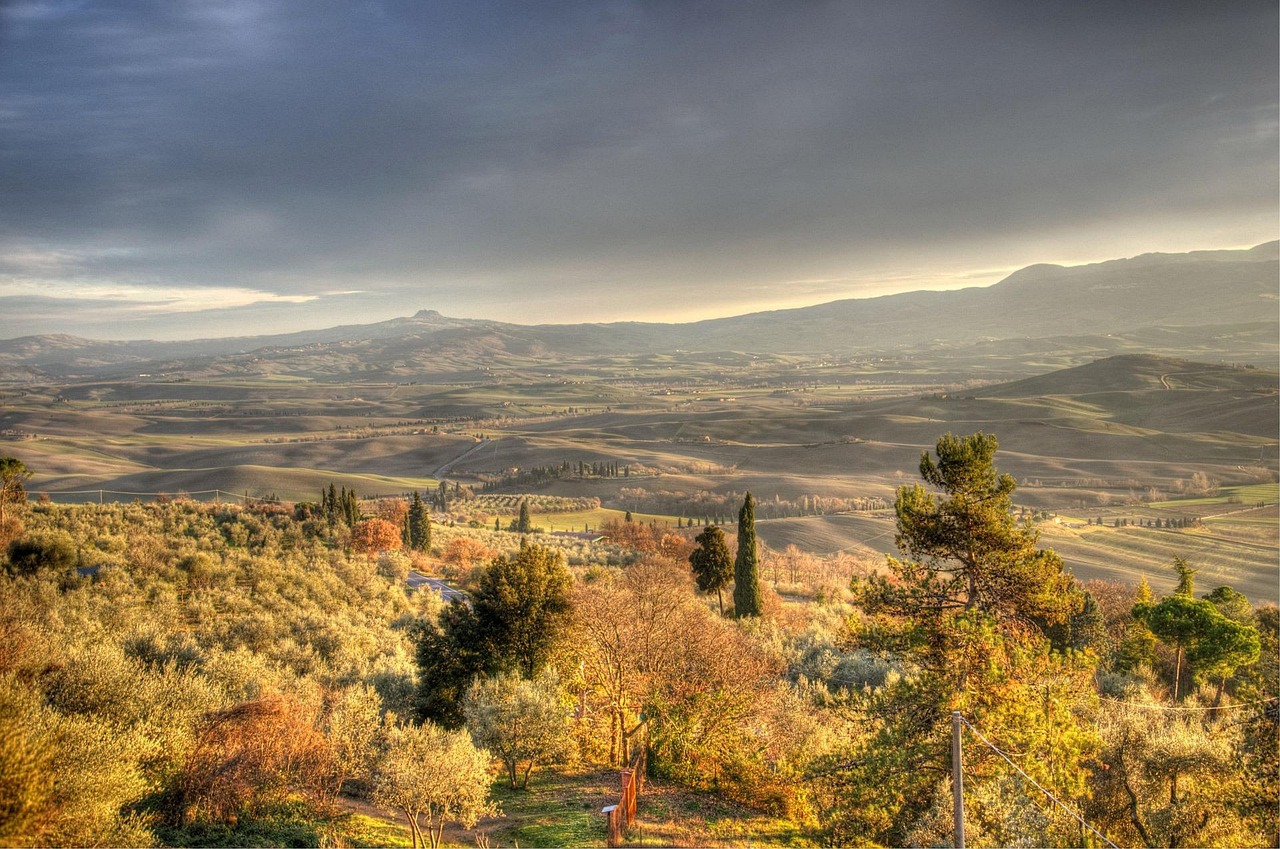
Pienza is often where I tell people to begin. Designed in the 15th century by Pope Pius II as an “ideal” Renaissance city, Pienza is compact, walkable, and perfectly positioned above the valley. My first memory here is of stepping onto Via dell’Amore at golden hour and seeing the whole Val d'Orcia stretch out in front of me like a painting – cypress-lined roads, farmhouses on distant hills, Monte Amiata hazy in the background.
The town itself is a cluster of creamy stone palazzi and narrow lanes with names like Via del Bacio (Kiss Street) and Via della Fortuna. On my last trip in 2025, I rented a small apartment just off the main square. I’d wake early, grab an espresso at the bar on Piazza Pio II, and watch deliveries of bread and produce before the day’s visitors arrived.
What to See & Do in Pienza
- Piazza Pio II & Duomo – A harmonious Renaissance square, framed by the Duomo, Palazzo Piccolomini, and the town hall. Step inside the Duomo for soft light and frescoes; then walk through the courtyard of Palazzo Piccolomini to the hanging garden if it’s open.
- Walk the Walls at Sunset – Follow the panoramic walkway along the southern ramparts. I like starting near Via del Casello about 45 minutes before sunset; it gives you time to stop at each overlook.
- Pecorino Cheese Tasting – Pienza is famous for its sheep’s cheese. Duck into one of the family-run cheese shops (you’ll smell them before you see them) and ask for a tasting of pecorino stagionato (aged) versus pecorino fresco (fresh). Many pair them with local honey or truffle spreads.
Food Tip
On one particularly chilly autumn evening, I hid from the wind inside a small trattoria near the walls. I ordered pici all’aglione (thick local pasta with garlicky tomato sauce) and a glass of Rosso di Montepulciano. It wasn’t fancy, but it was exactly what I wanted after a day of wandering. In Pienza, you can eat very well without breaking the bank if you stick to trattorie and osterie rather than the more polished “view” restaurants.
Getting There & Practical Tips
- By car: Pienza sits between Montepulciano (20–25 minutes) and San Quirico d'Orcia (10–15 minutes). The drive is gorgeous but winding.
- Parking: You can’t drive inside the old town if you’re not a resident. Follow signs to the paid parking lots below the walls. I usually aim for the lot on the eastern side – a short but uphill walk.
- Family-friendly? Yes. Kids love running along the walls and peeking over the valley. Just keep an eye on little ones near low railings.
- Best time: Early morning or after 5pm in high season to avoid crowds and bus tours.
2. Montepulciano – Hilltop Wine Capital
Technically just on the northeastern edge of Val d'Orcia, Montepulciano is usually part of any good travel guide for Val d'Orcia, especially if wine is on your mind. The town climbs a long ridge, its streets rising steadily toward the main square. The first time I drove up from the valley, I underestimated the hill – wear good shoes and accept that you’ll be walking uphill both ways somehow.
Montepulciano’s calling card is Vino Nobile di Montepulciano, a red wine made from Sangiovese (locally called Prugnolo Gentile). What I love most is visiting the historic cellars hidden beneath the palaces. You enter through a small doorway at street level, then descend into vaulted brick caverns where huge oak barrels line the walls.
Highlights in Montepulciano
- Piazza Grande – The main square at the top of town, framed by the unfinished façade of the cathedral and Palazzo Comunale. Climb the tower (if open) for one of the best views over the surrounding hills.
- Wine Cellar Tours – Several producers have aging cellars under the town. I usually pick one or two per visit to avoid palate fatigue. Guided tastings often include a walk through underground passages and a tasting of Vino Nobile, Rosso di Montepulciano, and maybe a Vin Santo.
- San Biagio Church – A beautiful Renaissance church just below the town, set among cypress trees and fields. I like to visit around late afternoon when the stone glows warm and the bells echo across the valley.
Personal Tip
On a trip in 2023, a winemaker told me to stop planning tastings back-to-back. “You’re in Tuscany,” he said. “It’s not a race.” Now I schedule one major tasting late morning, then a simple carafe of house wine with lunch, and maybe a glass with dinner. It keeps days in Montepulciano pleasantly relaxed rather than exhausting.
Practicalities
- By car: About 20–25 minutes from Pienza, 45–60 minutes from Montalcino, depending on route.
- Parking: Lots sit outside the city walls (look for P signs). Be ready for an uphill walk into town.
- Romantic? Absolutely – especially at night when the town is softly lit and mostly locals are strolling.
3. Montalcino – Home of Brunello
No travel guide for Val d'Orcia is complete without Montalcino. This hilltop town feels a bit wilder and more rugged than Pienza. The slopes around it are striped with meticulously tended vineyards producing Brunello di Montalcino, one of Italy’s most famous red wines.
I remember the first time I climbed up to the Rocca (fortress). It was a windy March day, and the valley below was still bare and brown. From the walls, the view sweeps over vineyards toward Monte Amiata. I stayed so long taking photos that my fingers went numb – worth it.
Things to Do in Montalcino
- Rocca di Montalcino – Climb the ramparts for panoramic views. There’s often a wine bar inside the fortress where you can do a small tasting.
- Wander the Old Streets – Montalcino is compact; take time to explore side alleys, artisan shops, and small churches.
- Visit a Brunello Winery – Many estates lie just outside town. Book tastings ahead, especially in high season or during harvest (September–October).
Food & Wine Notes
Brunello is a serious wine – structured, age-worthy, and not cheap. I’ve had some memorable meals in Montalcino at traditional trattorie where dishes like cinta senese (heritage pork), wild boar ragù, and grilled meats pair beautifully with a glass of Brunello or the more approachable Rosso di Montalcino.
Practical Tips
- By car: About 25–30 minutes from San Quirico d'Orcia, 45–60 minutes from Pienza.
- Parking: Multiple lots just outside the center. In high season, arrive before 10am or after 4pm.
- Adventurous? Wine touring can be adventurous in its own way; combine with nearby hikes for more physical activity.
4. San Quirico d'Orcia – The Heart of the Valley
If I had to name one town as the “geographical heart” of Val d'Orcia, it would be San Quirico d'Orcia. Many of the iconic postcard scenes – cypress clusters, lone chapels – are within a short drive or even a walk from here.
San Quirico itself is slightly quieter than Pienza but has a surprisingly refined feel. I often base myself at an agriturismo just outside town and stroll in for dinner. There’s something about the evening light on the stone façades along Via Dante Alighieri that makes the town feel suspended in time.
Don’t Miss
- Collegiata di San Quirico – A Romanesque church with multiple sculpted portals. Step inside for a cool, quiet moment.
- Horti Leonini – Formal Renaissance gardens just inside the walls. I like to wander the boxwood hedges and sit on a bench facing the town’s rooftops.
- Evening Passeggiata – Join locals in the early evening as they stroll, chat, and stop for a glass of wine or gelato.
Practicalities
- Location: Roughly midway between Pienza and Montalcino, and close to many famous viewpoints.
- Family-friendly? Yes, especially if you’re staying nearby – kids can enjoy the gardens and small-town atmosphere.
5. Bagno Vignoni – Thermal Village in a Piazza
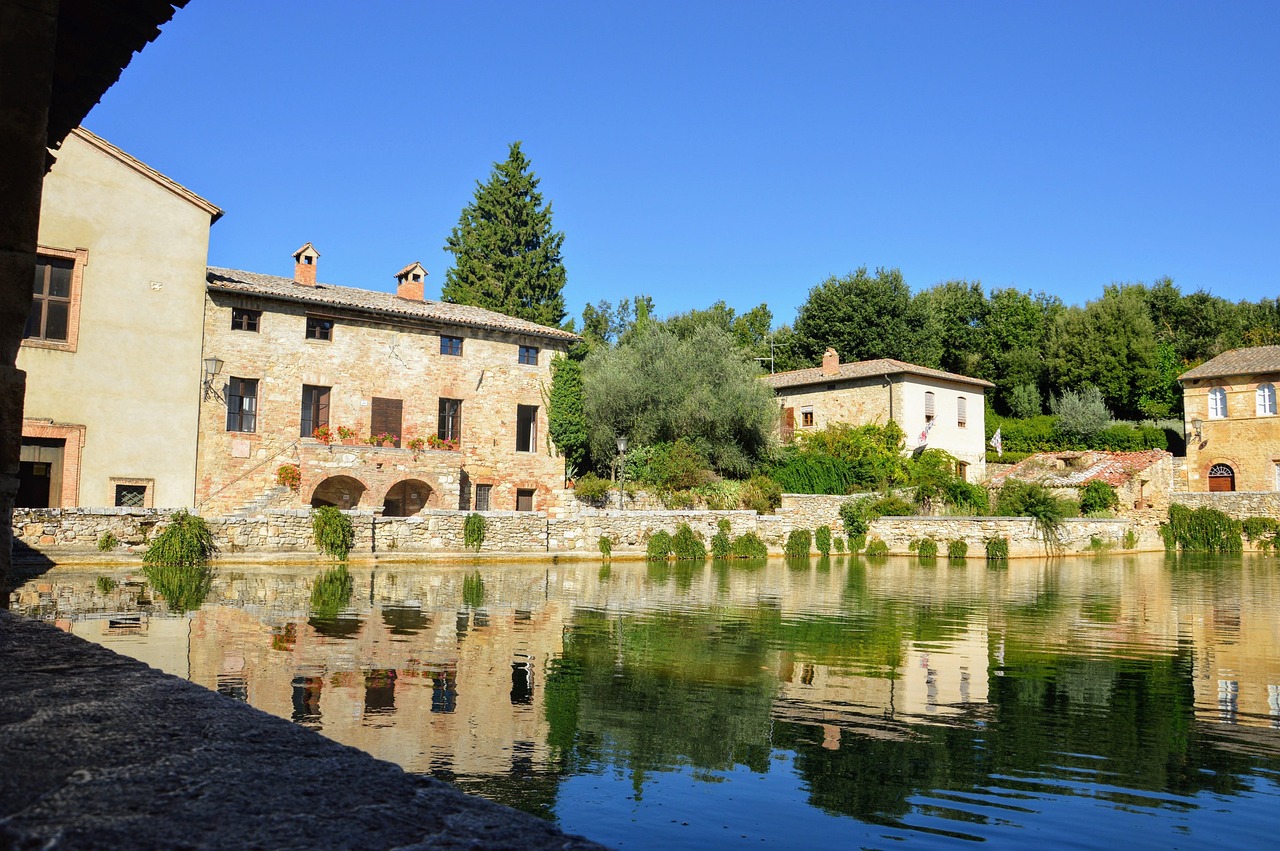
Bagno Vignoni is unlike any place I’ve seen in Italy. Instead of a typical stone piazza, the center of the village is dominated by a large, steaming pool of thermal water. The Romans knew these springs; medieval pilgrims soaked here on their way to Rome along the Via Francigena.
I first came on a misty November morning. Steam rose off the central pool, blurring the outlines of the surrounding houses. I sipped a hot cappuccino at a café near the edge of the water and watched as the village slowly woke up. It felt more like a movie set than a real town.
How to Enjoy Bagno Vignoni
- Spa Time – Several hotels and day spas offer access to thermal pools. On a chilly day, there’s nothing more decadent than slipping into 38°C water while the countryside cools around you.
- Walk the Old Mill Area – Below the town, channels and old mills show how thermal waters were once used. There are small pools and cascades; check current regulations before dipping in, as rules change to protect the environment.
- Dinner with a View – I once spent a long summer evening at a terrace restaurant overlooking the valley, lingering over grilled vegetables, pecorino, and a carafe of local red. Bagno Vignoni is ideal for long, slow meals.
Romantic Factor
This is one of my top picks for couples. Stay overnight if you can – by late evening, most day-trippers are gone, and the village becomes quiet and intimate, lit by soft streetlights reflecting off the water.
6. Cappella della Madonna di Vitaleta – The Iconic Chapel
If you’ve seen photos of Tuscany – that small stone chapel framed by cypress trees, set on a gentle ridge – you’ve probably seen Cappella della Madonna di Vitaleta. It lies between Pienza and San Quirico, surrounded by wheat fields and meadows.
The first time I visited, I made the mistake of trying to drive right up. The better way (and kinder to the landscape) is to park at the designated lot along the road and walk the last stretch along the dirt track. It’s about 10–15 minutes, easy even with kids.
Best Time to Visit
Sunrise and sunset are magical. I love early mornings in late May, when the fields are still green and dotted with flowers. In July and August, the hills turn golden, and the light is harsher midday, so I plan for late afternoon. Photographers line up along the track, but there’s enough space for everyone.
Tips
- Footwear: Wear decent shoes; after rain, the dirt track can be muddy.
- Respect: The chapel and surrounding land are often part of private property; stay on marked paths and don’t trample crops.
7. Gladiator Road & Cypress Lanes
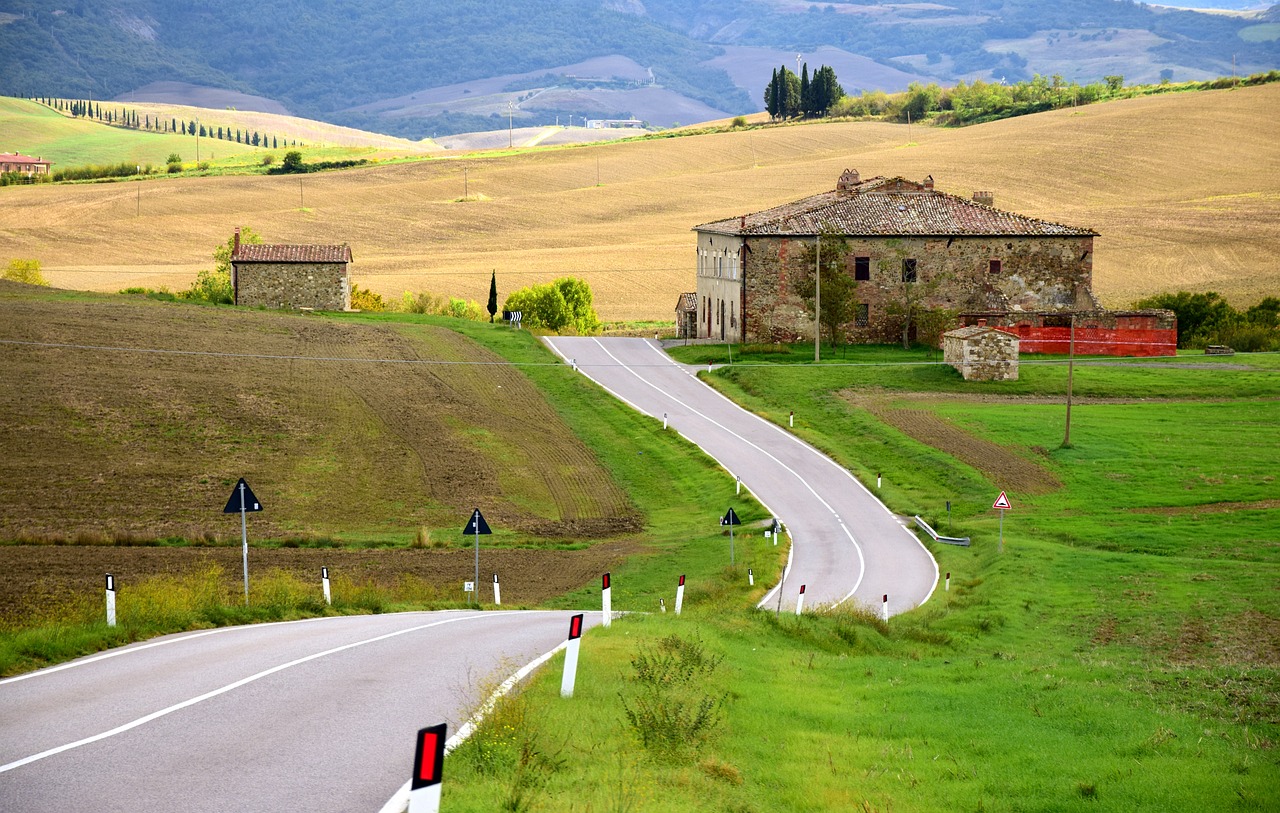
Near Pienza, there’s a lane that movie lovers know as the “Gladiator Road” – a dirt road lined with cypress trees leading down to a farmhouse, immortalized in Ridley Scott’s film “Gladiator.” It’s become a popular stop, but it still feels surprisingly peaceful in the early morning.
I remember arriving just after sunrise one June day. The light was soft, the fields still damp with dew, and there was no one else around. I walked a little way down the road, listening to birdsong and the distant hum of tractors starting their day.
Photography & Respect
As with many iconic views in Val d'Orcia, this road leads to a private farmhouse. Enjoy it from the public road and respect signs. For photographers, a longer lens helps compress the perspective of the cypress-lined road.
8. Bagni San Filippo – Wild Limestone Hot Springs
On the southeastern edge of the valley, near the slopes of Monte Amiata, lies Bagni San Filippo, a series of wild hot springs cascading through the forest. The white limestone formations, especially the famous “White Whale” (Balena Bianca), look almost otherworldly.
I’ve been here in both high summer and late autumn. In July, the pools can be crowded, and the water feels more warm than hot. In November, with chilly air above and warm water below, steam rises in thick clouds, and the forest is quiet except for the sound of water.
How to Visit
- Access: From the small village, a path leads down into the forest. It’s short but can be slippery – wear shoes you don’t mind getting wet or muddy.
- Facilities: These are natural pools, not a spa complex. No lockers, limited changing areas; bring a towel and dry clothes.
- Respect & Safety: Check current local regulations; sometimes access is restricted to protect the fragile environment. Don’t use soaps or shampoos in the water.
Family & Adventure
This is a fun outing for families with older kids or teenagers who like a bit of wilderness. For very young children, the rocky paths and hot water can be tricky.
9. Castiglione d'Orcia & Rocca di Tentennano
Castiglione d'Orcia is a slightly sleepier, more lived-in village that I’ve grown particularly fond of. Above it rises the rocky outcrop of Rocca di Tentennano, a medieval fortress that commands one of the widest views over the Val d'Orcia.
One late afternoon, I hiked up to the Rocca as storm clouds gathered over Monte Amiata. The wind was strong enough to make the name “Tentennano” (teetering) feel a little too real. From the ramparts, I watched sheets of rain sweep across distant hills while the town below remained in sun. It was one of those moments where you feel the raw geography of the place.
What to Do
- Explore the Village – Small squares, stone houses, a few cafés. It’s a good place to see everyday life, not just tourist shops.
- Climb the Rocca – Check opening times; they can be seasonal. The climb is short but steep.
- Walks in the Surrounding Hills – Several country lanes lead out into olive groves and fields, perfect for a late-afternoon stroll.
10. Radicofani – Southern Sentinel of the Valley
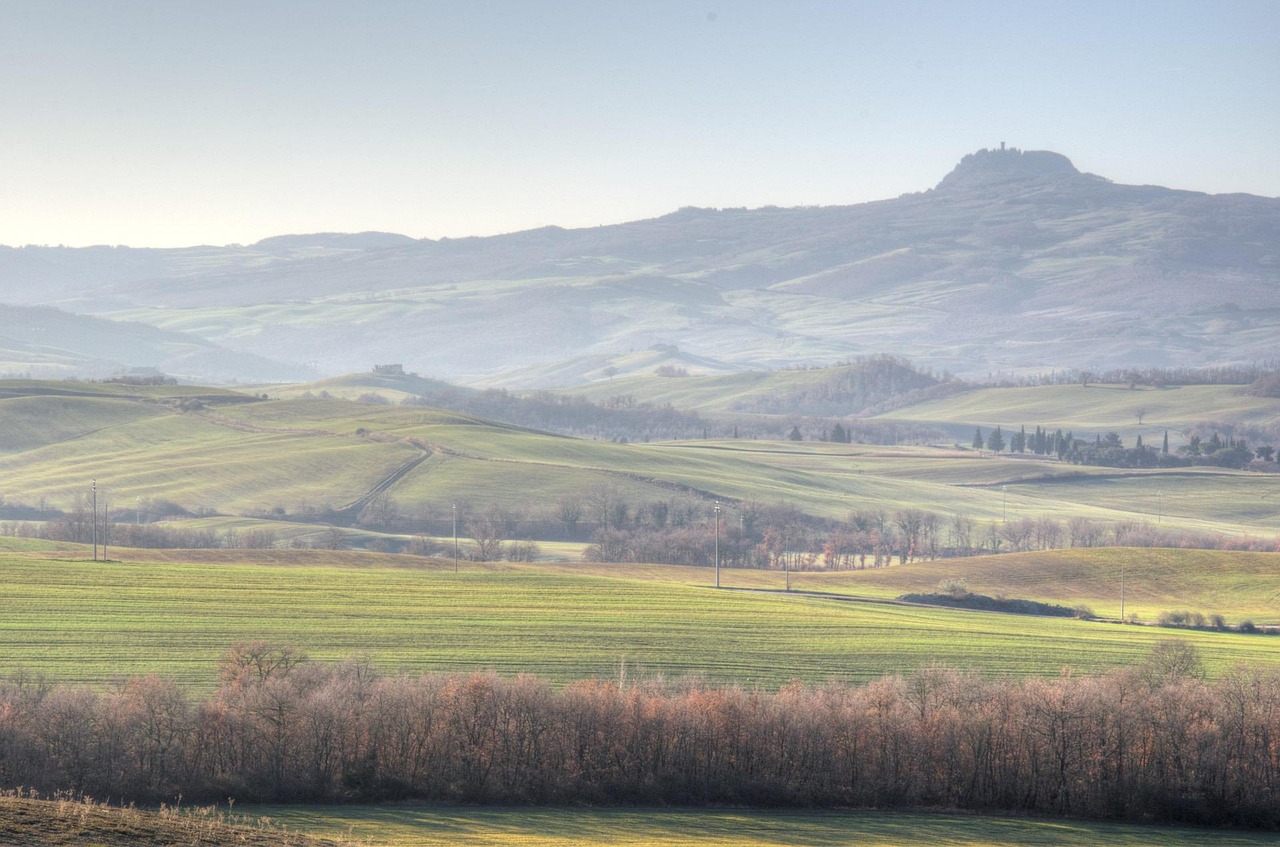
Radicofani sits at the southern edge of Val d'Orcia, crowned by an imposing fortress that has guarded this route toward Rome for centuries. Fewer visitors make it this far, which is exactly why I love it.
On my second visit, I arrived on a blustery winter day. The streets were quiet, the air smelled of wood smoke, and the fortress loomed high above the town. Climbing up, I passed small gardens and stone walls patched with moss. From the top, the landscape spread out in all directions – on clear days, you can see almost the entire valley.
Highlights
- Fortezza di Radicofani – Explore the tower and ramparts; exhibits tell the story of Ghino di Tacco, a sort of local Robin Hood figure.
- Historic Center – Small but atmospheric, with a few good trattorie serving hearty mountain-style dishes.
11. Monticchiello – Tiny Theatre Village
Monticchiello is a small, fortified village perched on a hill visible from Pienza. The approach by car is one of my favorites: the road twists through fields, with the village’s stone walls and towers growing larger at each bend.
Monticchiello is known for its “Teatro Povero” – a community theatre tradition where locals write and perform plays each summer, reflecting on social and political themes. I attended once in late July; the performance took place in the open air, with villagers of all ages acting under the stars. Even with my limited Italian, the emotion and humor were clear.
What to Do
- Stroll the Lanes – It’s tiny; you can circle the village in half an hour, but linger longer in small squares and along the walls.
- Teatro Povero (Summer) – Check dates (usually July–August). Tickets sell out for popular nights; book ahead if possible.
- Viewpoints – Just outside the walls, you’ll find lovely views back toward Pienza and across the valley.
12. Abbazia di Sant’Antimo – Romanesque Abbey in the Fields
South of Montalcino, down a winding road through vineyards and olive groves, stands the Abbazia di Sant’Antimo, a Romanesque abbey set in a peaceful valley. Legend says Charlemagne founded it; whether or not that’s true, it has the serene, timeless quality of very old sacred places.
On my last visit, I arrived during the late afternoon. The stone glowed honey-colored, and a few people sat quietly on the grass outside. For a long time, Gregorian chants by resident monks filled the church; the community has changed in recent years, but the interior is still beautifully austere – tall columns, simple carvings, and light filtering softly through small windows.
How to Experience Sant’Antimo
- Walk Around the Grounds – The setting is as important as the building: cypress trees, fields, and the hills rising behind.
- Attend a Service or Moment of Prayer – Check the current schedule; even if you’re not religious, the atmosphere is deeply calming.
- Combine with Wine Touring – Many Brunello estates are nearby; this makes a great cultural stop between tastings.
13. Panoramic Viewpoints Across Val d'Orcia
Some of my best memories in Val d'Orcia aren’t tied to specific towns but to quiet roadside pullouts where I’ve stopped to watch the light change. A practical travel guide for Val d'Orcia should include at least a few key viewpoints:
Classic Viewpoints
- Belvedere near San Quirico – Overlooks the famous farmhouse surrounded by cypress trees (often called “Podere Belvedere”). Sunrise is spectacular here.
- Road between Pienza & San Quirico – Multiple small pullouts with classic rolling-hill views.
- Road to Monticchiello – Sweeping vistas back toward Pienza and across cultivated fields.
Personal Advice
I always keep some flexibility in my itinerary for “view-chasing.” If the light looks promising late in the afternoon, I’ll cut museum time short and head for a favorite ridge. Pack a light jacket, a bottle of water (or wine), and maybe some pecorino and bread – impromptu picnics are one of the great joys here.
14. Monte Amiata – The Sleeping Volcano
South of Val d'Orcia rises Monte Amiata, an extinct volcano covered in chestnut and beech forests. On hot summer days, I love escaping here for cooler air and forest walks. In winter, there’s even modest skiing.
Driving up, you leave the open hills behind and enter dense woodland. The shift in landscape is dramatic – suddenly you’re in a mountain environment, with ferns, mushrooms, and shady paths.
Things to Do
- Hiking – Trails of varying difficulty, some leading to panoramic viewpoints and small sanctuaries.
- Chestnut Festivals (Autumn) – Villages around the mountain celebrate chestnut harvest with fairs and food stands.
- Cool-Weather Picnic – I often throw a picnic in the trunk when driving up for a hike; there are many picnic tables and clearings.
15. Local Markets – Everyday Life in the Valley
No matter how many museums and churches I visit, local markets are where I feel I really meet a place. In Val d'Orcia, weekly markets rotate through the towns. They’re a mix of produce stalls, cheese and cured meats, clothes, and household items. I love browsing early, before tour groups arrive.
Typical Market Days (Always Check Locally for Changes)
- Pienza: Weekly market often mid-week (e.g., Friday morning).
- San Quirico d'Orcia: Smaller but very local.
- Montepulciano & Montalcino: Larger markets with more variety.
Market Tips
On a recent spring trip, I built most of my lunches from market finds: just-baked bread, sun-warmed tomatoes, a wedge of pecorino, a handful of olives, and fruit. It’s one of the easiest ways to save money while tasting very local food in Val d'Orcia. Bring cash and your own cloth bag if you can.
16. Agriturismi – Farm Stays in the Countryside
Staying at an agriturismo – a working farm that offers rooms or apartments – is, in my opinion, the best way to experience Val d'Orcia. Over the years, I’ve slept in restored stone barns, vineyard cottages, and hilltop farmhouses.
One of my favorite memories is from an agriturismo near San Quirico, where the owners invited guests to join them for the olive harvest. We spent the morning combing branches with small rakes, then watched as the olives were pressed into bright green oil that tasted of pepper and grass. That evening, we ate it drizzled on toasted bread by the fireplace, with a simple bean soup and local wine.
What to Expect
- Rooms or Apartments – Often with rustic decor, thick stone walls, and views over fields.
- Home-Cooked Meals – Many offer breakfast and/or dinner featuring products grown on-site.
- Peace & Stars – Nights can be very dark and quiet; the sky on clear nights is full of stars.
Booking Tips
For trips in May–September, book well ahead, especially for family-friendly properties with pools. Renting a car is almost always essential for agriturismi; distances between them and towns can be several kilometers on unlit rural roads.
17. Vineyards & Wine Roads
Between Montepulciano, Pienza, and Montalcino, you could design entire days around wine. Even if you’re not a wine expert, driving the back roads between vineyards and stopping for tastings can be a highlight of 5 or 6 days in Val d'Orcia.
Wine Zones
- Montepulciano area: Vino Nobile and Rosso di Montepulciano.
- Montalcino area: Brunello di Montalcino and Rosso di Montalcino.
- Orcia DOC: A younger appellation covering many smaller producers in the valley.
Personal Advice
I tend to book one or two pre-arranged tastings per day, leaving room for spontaneous stops. Call or email wineries ahead; many require appointments, especially for English-language tours. If you’re driving, pace yourself – spit during tastings or share glasses, and drink plenty of water. Alternatively, consider hiring a driver for a dedicated wine day.
18. Walking & Hiking Trails
Val d'Orcia isn’t just about slow drives; it’s a wonderful place for walking. Many strade bianche (white gravel roads) wind through fields and are perfect for easy hikes. Parts of the ancient Via Francigena, a medieval pilgrimage route to Rome, cross the valley.
On one spring morning, I walked from San Quirico to Pienza along a mix of paths and back roads, watching the town slowly grow on the horizon. Larks sang above, and the scent of wild herbs rose as the sun warmed the fields.
Trail Ideas
- San Quirico – Pienza – 2–3 hours one way, undulating but not difficult.
- Loops around Monticchiello – Various lengths, with great viewpoints.
- Sections of the Via Francigena – Check local maps in San Quirico and Bagno Vignoni.
Tips
- Start early in summer to avoid midday heat.
- Carry water, sun protection, and a basic map (offline apps help; signal can be patchy).
- Respect crops and private property; stick to marked paths and roads.
19. Photography Spots & Golden Hour Magic
Every corner of Val d'Orcia is photogenic, but some spots are particularly special at golden hour. Over the years, I’ve learned that the key isn’t just knowing where to go, but being flexible with when. Foggy mornings in October, for example, can transform the valley into a sea of clouds with hill towns as islands.
Golden Hour Suggestions
- Sunrise: Belvedere farmhouse near San Quirico, Cappella di Vitaleta, ridges around Pienza.
- Sunset: Pienza walls, road to Monticchiello, cypress clusters between San Quirico and Montalcino.
Practical Advice
Bring a tripod if you’re serious about photography, but remember to also put the camera down. Some of my clearest memories are of moments I didn’t try to capture – a farmer waving from his tractor, kids chasing each other in a dusty lane, the sound of church bells echoing across the valley as the light faded.
20. Evening Piazzas & Small-Town Life
If you only experience Val d'Orcia during the day, you’re missing half its charm. Evenings here are unhurried. Locals stroll, kids play, older men gather at bar tables to debate football and politics. I always try to end my days in a piazza, glass in hand, notebook nearby.
Favorite Evening Spots
- Pienza: The small square near the Duomo and the lanes along the walls.
- San Quirico d'Orcia: Bars along the main street and around the church.
- Montepulciano: Piazza Grande after day-trippers leave; side streets with wine bars.
- Bagno Vignoni: Cafés overlooking the steaming central pool.
4–7 Day Itineraries in Val d'Orcia
Below are flexible itineraries that I’ve tested and tweaked over multiple trips. Each balances iconic things to do in Val d'Orcia with quieter, local experiences. You can compress or extend days depending on whether you’re planning 4, 5, 6, or 7 days in Val d'Orcia.
4 Day Itinerary for Val d'Orcia
If you only have 4 days in Val d'Orcia, focus on the core: Pienza, San Quirico, Montalcino, and Montepulciano, with a bit of countryside in between.
Day 1 – Arrival, Pienza & First Taste of the Valley
Whenever I arrive in Val d'Orcia, I try to keep the first day light. After checking into your base (Pienza or San Quirico are ideal for this 4-day itinerary), take a slow walk through Pienza. Let jet lag shake out as you wander the lanes and get your first look over the valley from the town walls.
Grab a gelato or an afternoon espresso, then find a spot along Via del Casello to watch the sun sink behind the hills. For dinner, choose a simple trattoria. I like starting with pici cacio e pepe or pici all’aglione, plus a carafe of local red. Go to bed early and let the quiet night reset your internal clock.
Day 2 – Montepulciano & Wine
On your second day, drive to Montepulciano. Park outside the walls and walk up through town, stopping at a café for a cappuccino and pastry. Visit a historic wine cellar late morning – I like tours that include a walk through the underground tunnels and a guided tasting of Vino Nobile and Rosso.
Have lunch at a trattoria with a view (ask for a table near a window or terrace). In the afternoon, stroll down toward San Biagio church, then circle back through quieter side streets. If you’re not too tired, stop at a small winery on your way back to your base for a low-key tasting.
Back in Pienza or San Quirico, spend the evening people-watching in the piazza. If it’s summer, kids will be out late; if it’s autumn, locals might be discussing the grape harvest and upcoming festivals.
Day 3 – Montalcino, Sant’Antimo & Brunello
Dedicate day three to Montalcino and the surrounding wine country. Start in town: explore the fortress, wander the streets, and maybe visit a small museum or church.
Late morning, drive down to Abbazia di Sant’Antimo. Spend time walking around the abbey, sitting quietly inside, and letting the serenity sink in. Have lunch at a nearby osteria or plan a picnic with supplies from a local market.
In the afternoon, visit a Brunello winery. Many estates offer tours that walk you through the vineyards and cellars before a seated tasting. Ask about current vintages and food pairings. Remember: if you’re driving, pace your drinking carefully or arrange a local driver.
Head back to your base for a relaxed evening. If you’re in San Quirico, stop at the Horti Leonini gardens before dinner and watch the last light on the town walls.
Day 4 – Countryside, Cappella di Vitaleta & Bagno Vignoni
On your final day, keep things loose and scenic. In the morning, head out early to Cappella della Madonna di Vitaleta for quiet and soft light. Then drive slowly along back roads toward San Quirico and beyond, stopping at viewpoints whenever the mood strikes.
By early afternoon, arrive in Bagno Vignoni. Have lunch overlooking the thermal pool, then spend a few hours soaking at a spa or walking the old mill area below town. For a 4 day itinerary for Val d'Orcia, ending with hot springs feels like a reward.
Finish the day with a long, unhurried dinner – maybe a shared antipasto of local salumi and pecorino, followed by grilled meats or a simple soup. Toast the valley one last time before you leave.
5 Day Itinerary for Val d'Orcia
With 5 days in Val d'Orcia, you can keep the 4-day structure and add a slower day focused on walking, Monticchiello, and a deeper dive into local food.
Day 1–3
Follow Days 1–3 of the 4-day itinerary above.
Day 4 – Monticchiello & Country Walks
Drive to Monticchiello in the morning, stopping at roadside viewpoints on the way. Explore the village, have a coffee, and soak in the quiet atmosphere. If you’re here in summer, ask locally about that evening’s Teatro Povero performance.
In the afternoon, take an easy hike or walk on back roads around the village. You don’t need a complex route; simply follow a loop on a map app or ask your accommodation for a suggested path. Bring water and a snack – maybe bread, cheese, and fruit from a market.
Return to your base in time to shower and head out for dinner. Consider choosing a restaurant known for seasonal menus: in spring, you might find dishes with wild asparagus; in autumn, truffles and mushrooms; in winter, hearty stews.
Day 5 – Markets & Hidden Corners
Spend your last day exploring local markets and any villages you’ve missed – perhaps Castiglione d'Orcia or a second visit to a favorite spot at a different time of day.
Start at a weekly market (check with your host for the latest schedule). Shop for picnic supplies and small gifts: a wedge of aged pecorino, a bottle of Orcia DOC wine, maybe some olive oil or honey. Then drive to a quiet viewpoint or field edge for a leisurely picnic.
In the afternoon, visit Castiglione d'Orcia and climb the Rocca di Tentennano if it’s open. End your 5 day itinerary for Val d'Orcia with one last sunset from a favorite ridge or town wall.
6 Day Itinerary for Val d'Orcia
With 6 days in Val d'Orcia, you can add a day trip to Bagni San Filippo and Monte Amiata, and maybe even change bases midway through your stay for a different perspective.
Suggested Structure
- Nights 1–3: Base in or near Pienza / San Quirico.
- Nights 4–6: Move to a countryside agriturismo closer to Monte Amiata or Montalcino.
Days 1–4
Follow the 4 or 5 day itinerary structure, but build in some free time. Don’t overschedule; part of the joy of a 6 day itinerary for Val d'Orcia is leaving room for spontaneity.
Day 5 – Bagni San Filippo & Forests of Monte Amiata
Drive toward Bagni San Filippo in the morning. Soak in the wild hot springs (if regulations allow) or simply walk the forest path and admire the limestone formations. Have a simple lunch in the village or bring picnic supplies.
In the afternoon, continue up into the forests of Monte Amiata. Pick a short hike or walk – many trails begin near mountain villages or refuges. The cool air and shade are a welcome change from the open fields of the valley.
Return to your agriturismo for a home-cooked dinner if available. Some of my most memorable meals in Val d'Orcia have been these set-menu farmhouse dinners, where everyone eats whatever the family has cooked that day.
Day 6 – Free Day: Repeat a Favorite or Discover a New Corner
I always like to keep the last day of a 6 days in Val d'Orcia plan open. Use it to revisit a place you loved in different light, or to finally see a village you’ve heard about from locals – perhaps Radicofani, or a second trip to Montepulciano for more wine shopping.
Alternatively, make it a pure rest day: sleep in, read by a pool, take a short walk at sunset, and let the valley’s slow rhythm sink in one last time.
7 Day Itinerary for Val d'Orcia
A full 7 days in Val d'Orcia lets you truly travel at the region’s natural pace. You can explore deeply, follow the weather and light, and still have downtime. I usually split a week like this:
Suggested Base Plan
- Nights 1–4: Pienza or San Quirico d'Orcia for central access.
- Nights 5–7: Montalcino or a rural agriturismo near Monte Amiata.
Days 1–4
Follow the structure from the 4 or 5 day itinerary: Pienza, Montepulciano, Montalcino & Sant’Antimo, Bagno Vignoni & Vitaleta, plus Monticchiello and markets.
Day 5 – Move Base & Deep Dive into Brunello Country
Check out of your first base and drive slowly toward Montalcino or your chosen agriturismo. Stop at viewpoints along the way, and maybe at a small village for coffee.
In the afternoon, visit a Brunello winery you haven’t yet seen. With a week, you can pick more specialized tastings – vertical tastings of different vintages, or tours that include vineyard walks and cellar visits in detail.
Settle into your new base in time for sunset. If you’re staying in the countryside, walk a little way down the lane at dusk – the soundscape changes as day insects give way to night ones, and distant dogs bark across the valley.
Day 6 – Radicofani & Southern Valley
Dedicate a day to the southern edge of the valley. Drive to Radicofani in the morning, explore the fortress, and enjoy the big views. Have lunch in town or at a roadside trattoria – look for menus featuring game, beans, and robust soups in cooler months.
In the afternoon, meander back via smaller roads, perhaps stopping at hot springs, tiny chapels, or simply quiet fields where you can walk a little and enjoy the solitude.
Day 7 – Your Perfect Val d'Orcia Day
Use your final day for whatever you feel you missed: an extra walk, a second soak in Bagno Vignoni, one last market, or an extended lunch at a restaurant you’ve been eyeing all week. When I stay for 7 days in Val d'Orcia, my last day often becomes a blend of small rituals: morning coffee in the piazza, a short drive for one last panoramic view, a lazy afternoon reading, and a farewell dinner filled with all my favorite local flavors.
Local Food in Val d'Orcia & Where to Eat
Tuscan food is rustic, seasonal, and comforting. In Val d'Orcia, the cuisine reflects the land: grains, beans, sheep’s cheese, olive oil, and meats, with a deep respect for simple ingredients.
Signature Dishes by Area
- Pienza: Pecorino in all forms – fresh, semi-aged, aged in caves, flavored with truffles or herbs.
- Montepulciano & Pienza: Pici – thick hand-rolled pasta, often with aglione (garlicky tomato), cacio e pepe, or wild boar ragù.
- Montalcino: Dishes designed to pair with Brunello – grilled meats, cinta senese pork, stewed game.
- Monte Amiata area: Mushroom and chestnut dishes in autumn, hearty soups in winter.
Where to Taste It
- Agriturismi: Many serve dinner to guests (and sometimes non-guests). Menus are set or limited, based on what’s in season. I’ve had unforgettable stews, roasted vegetables, and simple desserts like baked apples or cantucci with Vin Santo.
- Family Trattorie: These are my go-to for lunch and casual dinner – check what locals are ordering, and don’t be shy to ask the server for recommendations.
- Wine Bars (Enoteche): Great for grazing on cheese and salumi boards while tasting local wines.
- Markets: Perfect for picnic supplies if you’re watching your budget or want to eat outdoors.
Saving Money on Food
Eating well in Val d'Orcia doesn’t have to mean spending a fortune:
- Have one restaurant meal per day and make the other a market picnic.
- Choose house wines by the carafe – they’re usually local and very good value.
- Look for menu del giorno (daily specials) and lunch menus.
- Stay in a place with a small kitchen if you’re here for 5–7 days; cooking simple meals with market ingredients can be a pleasure in itself.
Evenings in Val d'Orcia
Evenings here are more about atmosphere than big events. This is when you feel the slower rhythm of regional life: kids circling the piazza on bikes, older couples arm-in-arm on the passeggiata, the clink of glasses as friends meet at bars.
What to Do After Dark
- Sunset Viewpoints: Pienza walls, Monticchiello overlooks, Montalcino fortress, Bagno Vignoni terraces.
- Harvest Festivals (Autumn): Many towns host small sagre (food festivals) celebrating chestnuts, new wine, or olive oil.
- Local Concerts & Events: Look for posters in town – small classical concerts in churches, jazz nights in wine bars, summer cinema under the stars.
- Thermal Soaks: In cooler months, an evening soak at a spa in Bagno Vignoni is bliss.
On my favorite evenings here, I do very little: a slow dinner, a walk, maybe a grappa or amaro at a bar, and then a long look at the stars before bed.
Day Trips from Val d'Orcia
Val d'Orcia makes a great base for exploring southern Tuscany. If you have 5–7 days, consider these day trips:
Siena
About 1–1.5 hours by car from much of the valley. Explore the fan-shaped Piazza del Campo, climb the Torre del Mangia, and visit the Duomo. Return to the quiet of Val d'Orcia in the evening.
Lake Trasimeno (Umbria)
Roughly 1–1.5 hours from Montepulciano area. Lakeside villages, boat trips, and seafood – a different landscape and cuisine from the hills.
Chianti Wine Region
North of Siena, the Chianti hills offer another style of wine and scenery. Best as a full-day outing from a 6 or 7 day itinerary for Val d'Orcia.
Cultural Etiquette & Local Customs
Understanding a few local customs makes traveling in Val d'Orcia smoother and more rewarding.
Greetings & Politeness
- Use “Buongiorno” (good day) until late afternoon, then “Buonasera” (good evening).
- A simple “Per favore” (please) and “Grazie” (thank you) go a long way.
- In small shops and bars, greet the staff when you enter and say goodbye when you leave.
Dining Customs
- Meals are leisurely; don’t expect fast service as in big cities. Enjoy the pace.
- It’s common to order multiple courses, but not obligatory. Sharing antipasti is normal.
- Tipping is modest: round up the bill or leave 5–10% for good service.
Dress & Behavior
- Dress modestly when visiting churches (shoulders and knees covered).
- In villages, keep noise levels down late at night; residents live in these historic centers.
Driving & Rural Life
- Drive slowly on country roads; tractors, cyclists, and wildlife share these routes.
- Don’t enter fields or private driveways for photos without permission.
- Respect local siesta hours; some shops close mid-day, especially in smaller towns.
Practical Travel Advice for Val d'Orcia (2026–2027)
Getting There
- Closest major airports: Florence (about 2–2.5 hours by car), Rome Fiumicino (about 2.5–3 hours), Pisa (about 2.5–3 hours).
- By train & bus: Mainline trains stop at Chiusi-Chianciano Terme and Siena. From there, regional buses connect to Montepulciano, Pienza, and other towns, but schedules can be limited.
Do You Need a Car?
For a truly flexible 4–7 day itinerary for Val d'Orcia, a car is strongly recommended. Public transport exists but is sparse, especially on weekends and evenings. With a car, you can reach viewpoints, agriturismi, and small villages at your own pace.
Car Rental Tips
- Rent from Florence, Rome, or Siena; compare prices, and book early for peak season.
- Most cars are manual; automatic transmission costs more and should be reserved in advance.
- Foreign driver’s licenses: Many visitors can drive with their home license plus an International Driving Permit (IDP). Check current Italian regulations for your nationality before travel.
- Watch for ZTL zones (limited traffic areas) in historic centers – cameras issue fines if you enter without permission.
Driving Distances (Approximate)
- Pienza – Montepulciano: 20–25 minutes
- Pienza – San Quirico d'Orcia: 10–15 minutes
- San Quirico – Montalcino: 25–30 minutes
- San Quirico – Bagno Vignoni: 10–15 minutes
- Pienza – Bagni San Filippo: 35–45 minutes
- San Quirico – Radicofani: 40–50 minutes
Parking
- Historic centers are mostly car-free for non-residents; use signed parking lots outside walls.
- Pay-and-display machines are common; keep coins or cards handy.
- At agriturismi, parking is usually free on-site.
SIM Cards & Connectivity
- Italian prepaid SIMs (TIM, Vodafone, WindTre, Iliad) are widely available in cities and larger towns; bring your passport to register.
- Coverage is generally good in towns and along main roads; some rural valleys have weaker signal.
- Wi-Fi is available in most accommodations, though speeds vary.
Money & Costs
- Currency: Euro.
- Cards are accepted in most restaurants, hotels, and supermarkets; small bars and markets may prefer cash.
- To save money over a multi-day trip, cook some meals, picnic, and favor wine by the carafe and trattorie over high-end restaurants.
Visas & Entry
Italy is part of the Schengen Area. Visa requirements depend on your nationality:
- EU/EEA/Swiss citizens can enter freely with an ID card or passport.
- Many other nationalities can enter visa-free for short stays (up to 90 days in 180) but may need to complete pre-travel authorization as EU systems evolve. Always check up-to-date information from official sources before travel in 2026–2027.
Seasons & Weather – What’s Best for What
- Spring (April–May): Green hills, wildflowers, mild temperatures. Ideal for hiking, photography, and a 4–7 day itinerary focused on landscapes.
- Early Summer (June): Longer days, fields turning golden, lively evenings. Great for families and romantic trips.
- High Summer (July–August): Hot, with temperatures often 30–35°C. Best if you have a pool and plan slower days; avoid midday hiking.
- Autumn (September–October): Wine harvest, olive harvest, warm days and cooler nights, beautiful light. Fantastic for wine-focused travel and food festivals.
- Late Autumn–Winter (November–March): Quiet, some businesses close or shorten hours, but hot springs and fireplaces shine. Expect cooler weather, foggy mornings, and occasional snow at higher elevations.
Health & Safety
- Tap water is generally safe to drink.
- Carry basic sun protection; even on cooler days, the sun can be strong.
- Roads are mostly well-maintained but narrow and winding; drive cautiously, especially at night.
Events & Festivals in Val d'Orcia (2026–2027)
Dates shift slightly each year, so always verify closer to your trip, but here are some recurring highlights you can expect in 2026–2027:
Spring & Summer
- Flower & Garden Events (May–June): Some towns decorate streets and squares with flowers; San Quirico’s gardens are especially lovely in late spring.
- Music Festivals (June–August): Classical and jazz concerts in churches, cloisters, and piazzas across the valley, especially in Pienza, Montepulciano, and Montalcino.
- Teatro Povero di Monticchiello (July–August): The community theatre performances in Monticchiello are a unique cultural experience worth planning around.
Autumn
- Vendemmia (Grape Harvest) – September: Not a single festival but a season; wineries are busy, some agriturismi offer harvest experiences.
- Wine Festivals (September–October): Various towns celebrate new vintages with tastings and events.
- Chestnut & Mushroom Festivals (October–November): Around Monte Amiata, villages host fairs dedicated to chestnuts and porcini mushrooms.
Winter
- Christmas Markets & Nativity Scenes (December): Small but atmospheric; churches and squares are decorated, and some villages create living nativity scenes.
- New Year’s & Epiphany (Late December–Early January): Fireworks, special dinners, and local traditions, though many rural places remain quiet and family-focused.
Summary & Final Recommendations
Val d'Orcia is a place that rewards both first-time visitors and repeat travelers. The first time you come, you’ll likely be swept away by the classic views – cypress-lined roads, stone towns, and sunsets that seem designed for postcards. On later visits, you’ll start to notice the subtler layers: the way the light shifts with the seasons, the rhythms of planting and harvest, the personalities of each village.
Key Takeaways
- Best trip length: Aim for at least 4 days in Val d'Orcia, ideally 5–7, to balance sightseeing with rest.
- Best bases: Pienza or San Quirico for first visits; add Montalcino or an agriturismo if staying longer.
- Transport: A car makes a huge difference for exploring multiple towns, viewpoints, and agriturismi.
- Food & wine: Embrace simple, local dishes and wines; alternate restaurant meals with market picnics to save money.
- Season: For most travelers, the sweet spots are April–June and September–October – ideal for landscapes, wine, and comfortable temperatures.
Whether you follow a detailed 4 day itinerary for Val d'Orcia or spend 7 days in Val d'Orcia drifting between hill towns and hot springs, try to leave space in your schedule for the unplanned: a detour down a dirt road, an extra glass of wine at sunset, a conversation with a farmer at a market stall. That’s where this valley really gets under your skin – and why I keep coming back, year after year.