Why Visit the Alhambra (and Why You Should Make It a Priority in 2026)
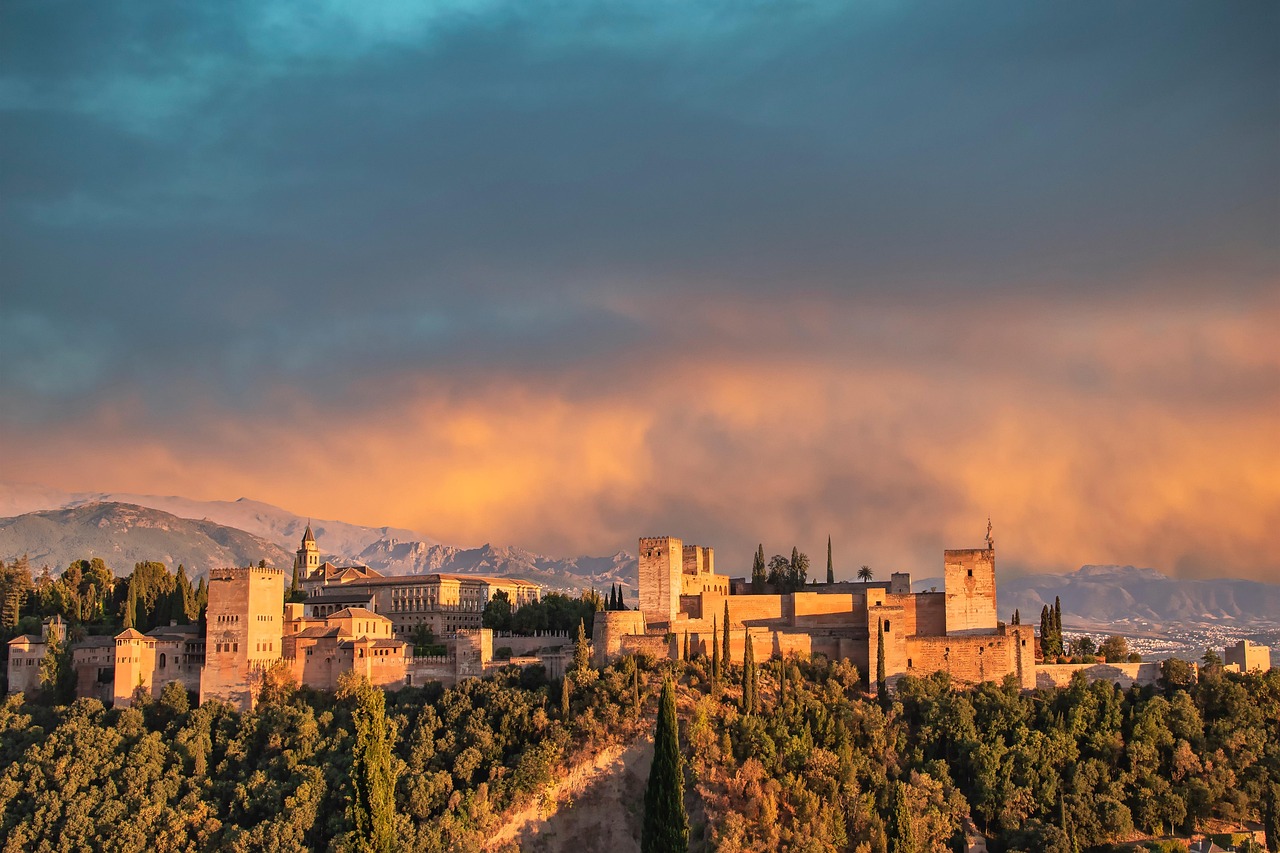
The Alhambra is many things at once: a fortress, a royal palace, a city within a city, and a living archive of Andalusia’s layered past. It’s also one of the most visited sites in Spain, which means it can be magical or maddening, depending on how you plan your visit. With a bit of strategy, it will be unforgettable for all the right reasons.
What makes the Alhambra special is the collision of three grand stories:
- Nasrid splendor: The last Muslim dynasty in Iberia left behind impossibly delicate stucco, carved cedar ceilings, and courtyards where every reflection in the water was calculated for effect.
- Christian conquest and reinvention: The Catholic Monarchs moved in, built the austere Renaissance palace of Charles V, planted new gardens, and layered their own symbolism onto the Moorish bones.
- Romantic rediscovery: By the 19th century, writers like Washington Irving “rediscovered” the semi-ruined Alhambra, turning it into a muse for painters, poets, and early travelers.
On a practical level, the Alhambra is also one of Spain’s best “all-in-one” experiences:
- It’s family friendly: safe paths, gardens where kids can run, and enough towers and stories of sultans and knights to keep them spellbound.
- It’s profoundly romantic: arcaded courtyards, fountains murmuring at dusk, and sunset views over Albaicín that feel staged for proposals.
- It’s quietly adventurous: hidden staircases, steep approaches, and off-the-beaten-path viewpoints that reward the curious.
In 2026–2027, the Alhambra is also in an intriguing moment:
- Ongoing conservation projects in parts of the Generalife and Alcazaba (you’ll see scaffolding, but also get rare glimpses into restoration work).
- Expanded night visit programs from April to October, including experimental light and sound installations on select weekends.
- Special exhibitions tied to the 700+ years since the rise of the Nasrid dynasty, with events spilling down into Granada’s old town (2026–2027).
If you’re considering a trip in 2026, know this: demand is high, but with the right timing and a smart itinerary, you can still find quiet corners where the Alhambra feels like it’s yours alone.
Table of Contents
- Why Visit the Alhambra
- 1–3 Day Itineraries for the Alhambra (With Personal Stories)
- Nasrid Palaces: The Jewel at the Heart of the Alhambra
- Generalife Gardens: Summer Retreat of the Sultans
- Alcazaba: The Fortress of Views
- Palace of Charles V & Museums
- Catholic Monarchs’ Quarters & Hidden Corners
- Viewpoints & Approaches: How to Walk Into the Alhambra
- Eating & Drinking Around the Alhambra
- Alhambra After Dark & Off-Hours Magic
- Nearby Attractions & Day Trips from the Alhambra
- Cultural Etiquette & Local Customs
- Logistics: Tickets, Timing, Seasons, and Practical Travel Advice
- Summary & Final Recommendations
1–3 Day Itineraries for the Alhambra (With Personal Stories)
1 Day Itinerary for Alhambra: The Essential Highlights
If you only have 1 day in the Alhambra, your goal is to experience the core: the Nasrid Palaces, Generalife, and the Alcazaba, with at least one panoramic viewpoint at golden hour. My most recent “test” of a 1 day itinerary for the Alhambra was in late October 2025 with a friend who’d flown in just for 36 hours. Here’s how we did it without rushing ourselves into a blur.
Morning: The Climb and First Impressions
We started from Plaza Nueva around 8:30 a.m., grabbing takeaway coffee from a small café just off Calle Elvira (locals will tell you: better coffee down here than near the gates). From there, we took the Cuesta de Gomérez route, my favorite approach when I want the arrival to feel ceremonial.
As you walk, the city noise thins out and the trees close in. You pass under the Puerta de las Granadas, then follow the gently climbing path until the Puerta de la Justicia comes into view—one of the most photogenic medieval gates in Spain.
We reached the main ticket control at about 9:00 a.m., giving us a buffer for our 10:00 a.m. Nasrid Palaces slot. Always aim to be inside the complex at least 45–60 minutes before your timed palace entry so you’re not stressed by lines.
Late Morning: Nasrid Palaces (Your Timed Entry)
Your visit to the Nasrid Palaces is the non-negotiable centerpiece. When the loudspeakers announced our time, we joined the short queue, scanning the faces around us: exhausted backpackers, impeccably dressed couples, kids already tugging at parents’ hands.
Inside, we moved slowly through the Mexuar, then into the Comares Palace with its mirrored pool of the Patio de los Arrayanes, and finally into the Palace of the Lions. I always tell people: don’t chase the perfect photo; chase the moments in between the crowds. Step back, lean against a cool column, and look up at the cedar ceilings. You’ll remember the sensation more than the shot.
For a 1 day itinerary for Alhambra, you’ll want to budget 90–120 minutes inside the Nasrid Palaces. You could spend double, but your legs will thank you later.
Midday: Charles V Palace and a Pause
Emerging from the palaces, we drifted toward the Palace of Charles V, that grand circular courtyard that feels like a Roman amphitheater dropped in the middle of a Moorish city. It’s worth a 20–30 minute wander and a quick visit to the Alhambra Museum on the ground floor if you have the energy.
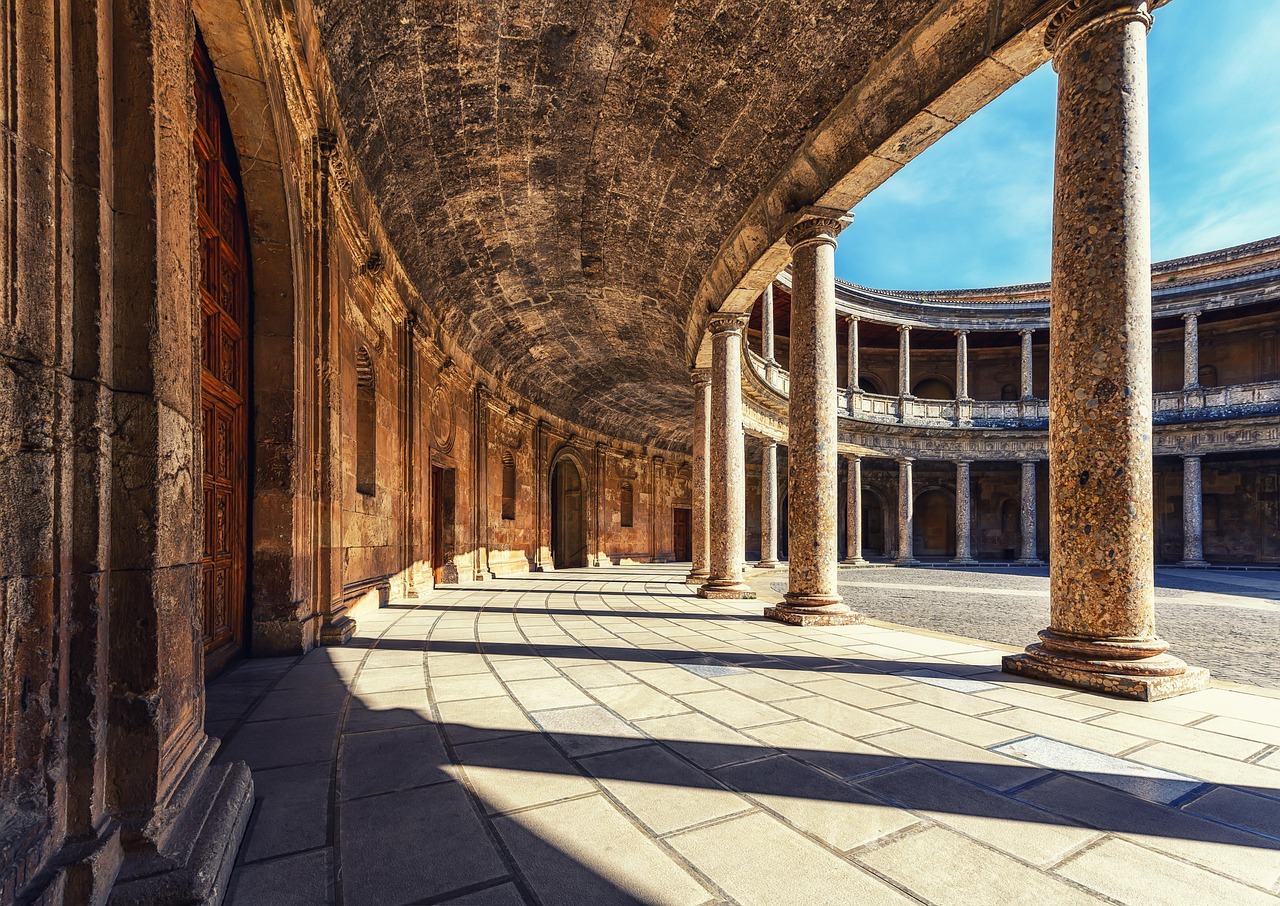
By now, it was close to 12:30 p.m., and the sun had climbed high. We stepped just outside the palace to a shady corner, pulled out the simple picnic we’d bought in town (bread, cheese, olives, fruit), and refueled. There are cafés inside the complex, but they’re more about convenience than character or value.
Early Afternoon: Alcazaba – The Fortress of Views
In a 1 day itinerary, I always put the Alcazaba right after lunch. Your body is a bit tired, but the promise of big views pulls you along. From the Charles V palace, it’s a short walk to the fortress entrance.
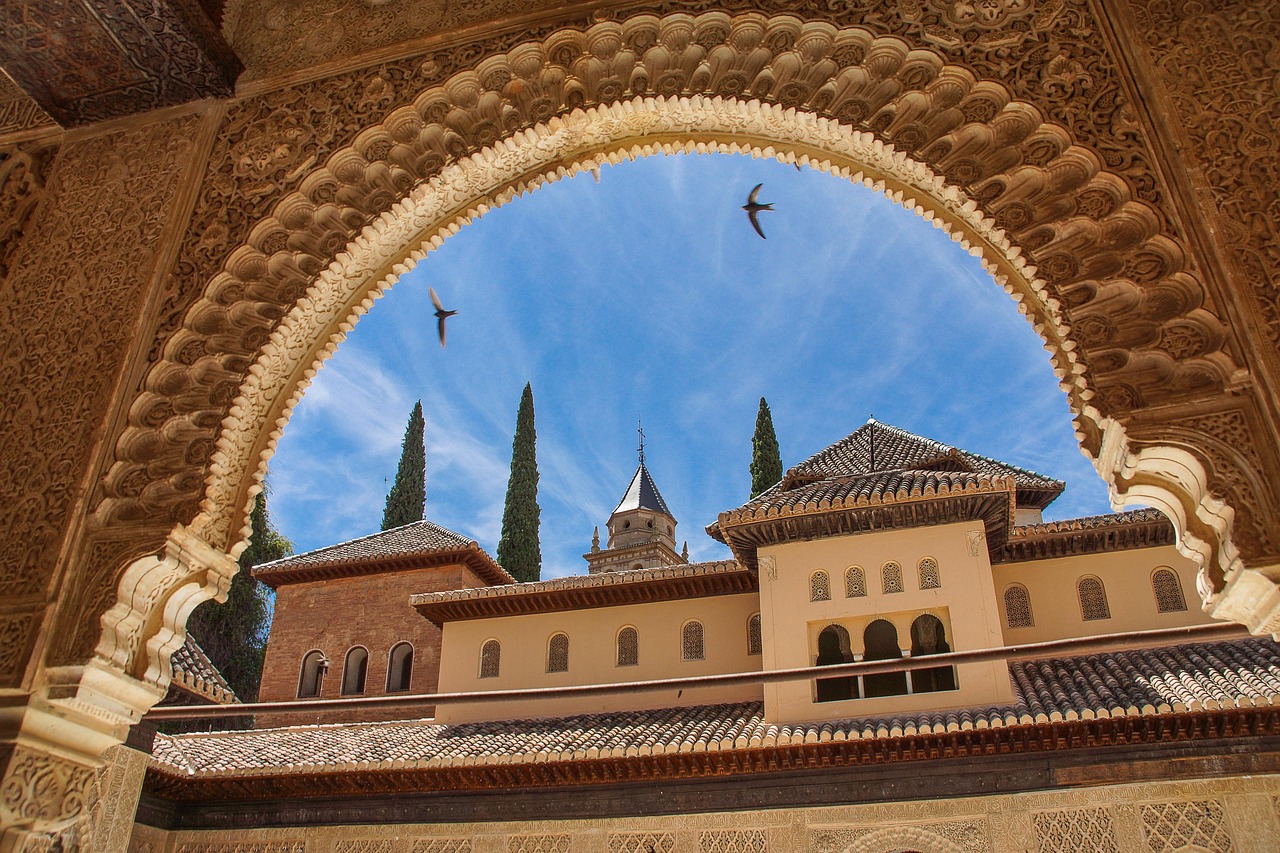
We climbed the Torre de la Vela, the highest tower, where Granada and the snow-striped Sierra Nevada opened in a 360-degree panorama. Up here, you really grasp how the Alhambra dominates the city. Families love this part—kids can imagine lookouts and battles; couples linger by the parapets taking in the rooftops of Albaicín below.
Plan for 45–60 minutes in the Alcazaba, including photo time and a short break on one of the stone benches with the view.
Mid-Afternoon: Generalife Gardens
The Generalife is technically a separate area, but your combined ticket covers it. From the Alcazaba, we followed the signposted paths uphill and across the ravine—a 10–15 minute walk—into another world of terraces and water.
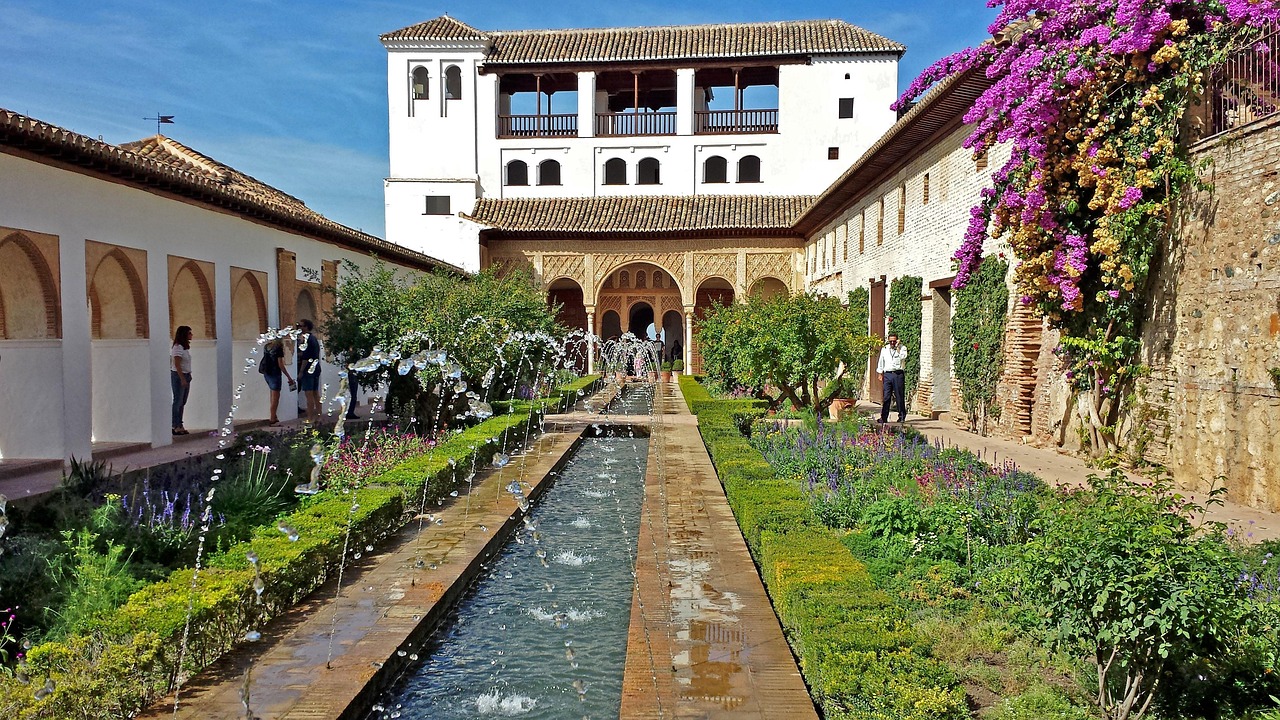
By 3:00 p.m., the light was softer over the Patio de la Acequia, and the crowds had thinned just enough to find little pockets of quiet. This is where I always slow down: listening to the channels of water, watching how the cypresses frame the skyline of the Alhambra itself across the valley.
Allow 60–90 minutes here if you only have 1 day in the Alhambra; it’s more than “just gardens”—it’s the summer palace, the sultans’ rural escape.
Late Afternoon: Last Look and Descent via Cuesta del Rey Chico
Around 4:30–5:00 p.m., we looped back toward the main complex and exited in time to descend by my favorite “secret” path: the Cuesta del Rey Chico (sometimes called the Cuesta de los Chinos). This narrow, stone-lined path drops you down into the valley between the Alhambra and Albaicín with gorgeous angles of the walls above.
In about 20 minutes you’re back in the city. If you still have gas in the tank, head straight across the river and up into the Albaicín for sunset at Mirador de San Nicolás, where the Alhambra glows red against the mountains.
That, to me, is the perfect “1 day in Alhambra” arc: inside the palace-city by morning, looking back at it from across the valley by evening.
2 Day Itinerary for Alhambra: Depth Without Exhaustion
With 2 days in the Alhambra, you can breathe. You’re no longer forcing the entire complex into a single day. My favorite visits in recent years have been these two-day marathons: one day mostly inside the walls, one day exploring the approaches, viewpoints, and connected neighborhoods.
Day 1: Classic Circuit, Slow Pace
Use the 1 day itinerary as your skeleton for your first day, but loosen it:
- Book your Nasrid Palaces for mid-morning (10:00–11:00 a.m.).
- Spend more time in the Alhambra Museum and the Museum of Fine Arts inside the Palace of Charles V.
- Enjoy a sit-down lunch at a nearby restaurant (see the Eating Around the Alhambra section).
- Add in some of the lesser-visited corners: the Partal, Rauda (former royal cemetery), and the orchards below Generalife.
On my last two-day visit in spring 2024, I used Day 1 to linger in places most people rush through. I spent 30 minutes just in the Patio de los Arrayanes watching clouds drift in the water’s reflection, then ducked into shaded arcades to read fragments of poetry inscribed in the stucco.
Day 2: Approaches, Albaicín, and Viewpoints
Day 2 in a 2 day itinerary for Alhambra is outward-looking. You’ve seen the interiors; now you get to see how the Alhambra sits in Granada’s landscape and history.
Morning: Albaicín and Secret Vistas
Start in the lower Albaicín, working your way up through whitewashed lanes. I usually grab breakfast near Calle Calderería Nueva (yes, it’s touristy, but early in the day it’s mostly Granadinos on their way to work), then zigzag toward Mirador de San Cristóbal and Mirador de la Lona.
These viewpoints are less crowded than San Nicolás and give you more of a sense of the Alhambra as part of a city, not just a postcard.
Midday: Carmen de los Mártires and Forest Walks
From the Albaicín, cross the river at Puente de Espinosa and climb through the Realejo neighborhood toward the Carmen de los Mártires, one of Granada’s most atmospheric historic gardens, with glimpses of the Alhambra peeking over treetops.
I love bringing a sandwich and finding a quiet bench here. It’s a gentle, green contrast to the tour-group current up on the main hill.
Afternoon: Alternative Approaches to the Alhambra
Spend the afternoon exploring the different ways people have approached the Alhambra over the centuries:
- Cuesta de Gomérez: The “royal” approach from Plaza Nueva, lined with souvenir stalls, leading to Puerta de las Granadas.
- Cuesta del Rey Chico: The more secretive, old mule path up the ravine, with mossy walls and few crowds.
- Car access via the main gate: Less romantic, but instructive—you’ll see how modern tourism infrastructure wraps around the historic core.
Walk at least two of these. Notice how the atmosphere changes with each route. When I guide friends, I often have us go up one way and down another, to really map the hill in our bodies.
Evening: Night Visit (Optional)
If your dates match, end your second day with a night visit to the Nasrid Palaces or Generalife. In 2026, these are typically offered from April–October on selected evenings (see Alhambra After Dark).
Walking back through the city around 11:00 p.m., with the palaces still flickering in your mind, you’ll feel like you’ve had a complete but unhurried 2 days in the Alhambra.
3 Day Itinerary for Alhambra: Immersion for Lovers of History and Beauty
A 3 day itinerary for Alhambra is my idea of bliss. This is what I recommend to photographers, architecture nerds, and anyone who wants to travel slowly. You’ll not only visit the must-see attractions in the Alhambra; you’ll start to feel like you know its rhythms.
Day 1: The Classic Alhambra Circuit
Follow the structure of the 1 day itinerary for Alhambra, but treat it as orientation. Don’t worry yet about capturing every detail; let yourself be overwhelmed.
Day 2: Details, Museums, and Lesser-Visited Corners
On my last three-day visit, I dedicated my second day to the micro:
- Revisiting the Nasrid Palaces with a guided tour focused on inscriptions and symbolism.
- Spending extra time in the Alhambra Museum to understand the ceramics, capitals, and woodwork up close.
- Exploring the Partal area, including the restored houses and towers along the northern wall.
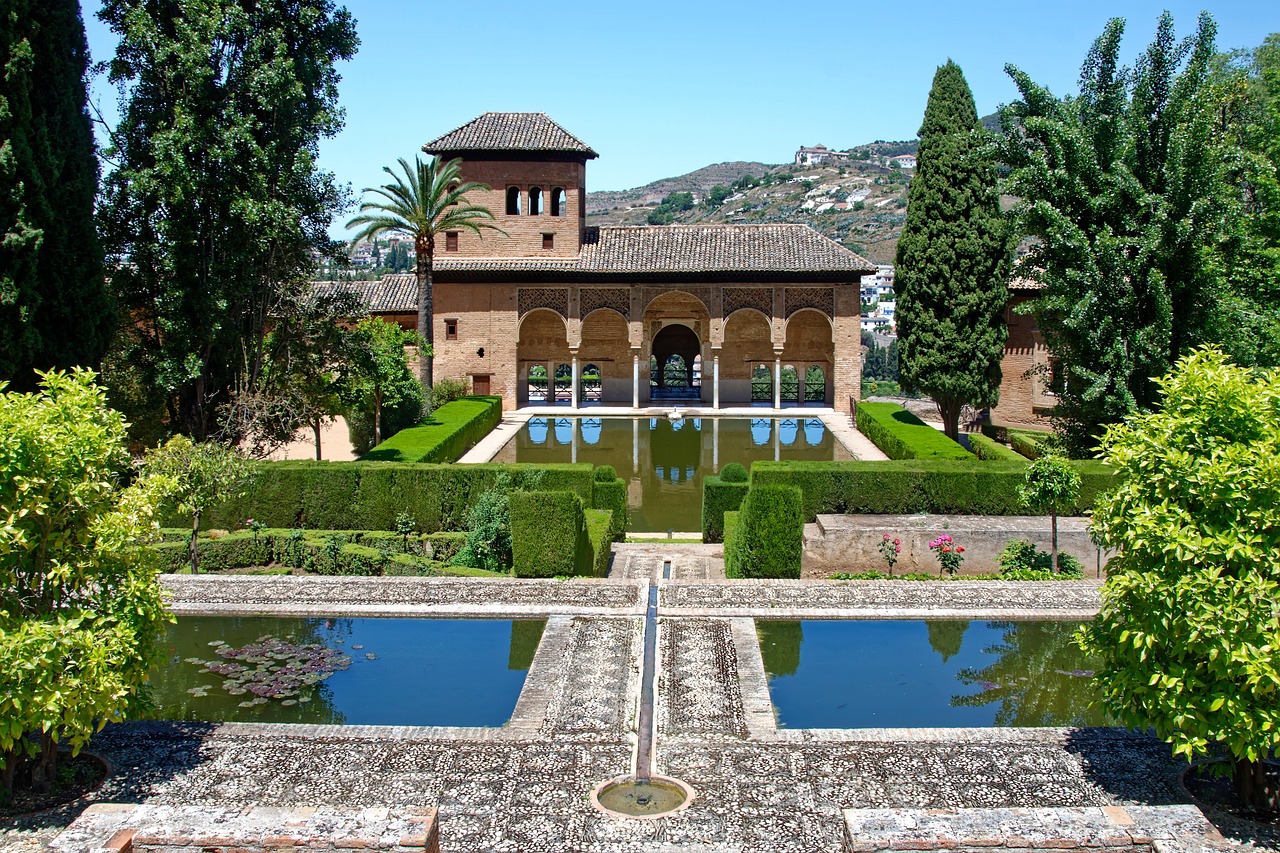
I remember one long, quiet hour in the Partal Gardens, sitting by the reflecting pool with only a few other visitors scattered around. An elderly local couple were telling their granddaughter how they used to sneak up here as teenagers before stricter ticketing. The Alhambra is full of those generational threads.
Day 3: Context and Day Trips
For Day 3, step partly out of the complex:
- Visit Granada’s Cathedral and Royal Chapel, where Isabella and Ferdinand are buried—closing the loop with their presence in the Alhambra.
- Take a half-day trip into the Sierra Nevada foothills or to the white villages of the Alpujarras (see Day Trips).
- Return to the Alhambra forest for a sunset walk and one last look at the walls from below.
By the end of 3 days in the Alhambra, you’ll have layers of impressions: the sound of fountains in the dark, the grit of old stone under your fingers, the way the light hits the towers at different hours in different weather. That’s when the monument stops being “a checklist item” and becomes a place you’ve actually known.
Nasrid Palaces: Heart of the Alhambra
The Nasrid Palaces—Comares, Mexuar, and Palace of the Lions—are the Alhambra’s sacred core. Your ticket to the Alhambra is really a ticket to this sequence of rooms and courtyards, stitched together over about 150 years as different sultans added, modified, and sometimes erased each other’s work.
A Brief History
Built primarily in the 13th–14th centuries under rulers like Yusuf I and Muhammad V, the Nasrid Palaces were the political and ceremonial heart of the last Muslim kingdom in Iberia. When the Catholic Monarchs took over in 1492, they largely preserved the palaces, using them as a royal residence and only gradually overlaying Christian symbols and chapels.
By the 18th century, neglect and earthquakes took their toll. Squatters moved in; wooden ceilings rotted; parts of the palaces were whitewashed or clumsily “fixed.” The 19th and 20th centuries saw major restoration efforts—some more faithful than others. Today, you’re walking through a palimpsest: original Nasrid fabric, careful modern repairs, and a few Romantic-era missteps.
What You Actually Walk Through (And What to Look For)
Your visit begins in the Mexuar, a semi-public audience hall. I always tell people to pause here and look for the blend of Islamic and Christian elements: Arabic inscriptions side by side with later Christian symbols, small chapels added after the conquest.
From there, you enter the Palace of Comares, dominated by the Patio de los Arrayanes—the Court of the Myrtles. The long pool is more than aesthetic; it’s a cooling device and a mirror, visually doubling the façade of the Torre de Comares.
Climb into the Salón de Embajadores (Hall of the Ambassadors), where sultans received foreign envoys. The wooden dome above represents the seven heavens of Islamic cosmology; I’ve spent entire visits just lying metaphorically on my back here, trying to decode the geometry.
The flow then twists into the Palace of the Lions—lighter, smaller in scale, more intimate. The Courtyard of the Lions is the postcard everyone knows: a delicate forest of columns around a central fountain carried by twelve marble lions. But the real magic is in the surrounding rooms:
- Hall of the Abencerrajes: with its starry muqarnas dome.
- Hall of the Two Sisters: with intricate honeycomb stalactite work.
- Upper galleries with glimpses out to the ravine and the Albaicín.
Personal Notes & Tips
On one winter visit, rain had cleared the air and scared away some of the crowds. The wet tiles darkened, the reflections deepened, and I noticed details I’d never seen before: faint traces of original paint on the stucco, the subtle differences in each arch. That day taught me: don’t fear “bad” weather at the Alhambra; it often enhances the mood.
- Timing: Book the first or last entry slot of the day for softer light and fewer people.
- Photography: Tripods and flashes are not allowed. Respect ropes and do not lean on delicate stucco.
- Time needed: 90–120 minutes minimum; 2 hours is ideal if you love architecture.
- Families: Tell kids stories of sultans, princesses, and envoys; it helps them see beyond “just pretty rooms.”
Generalife Gardens: Summer Palace and Water Paradise
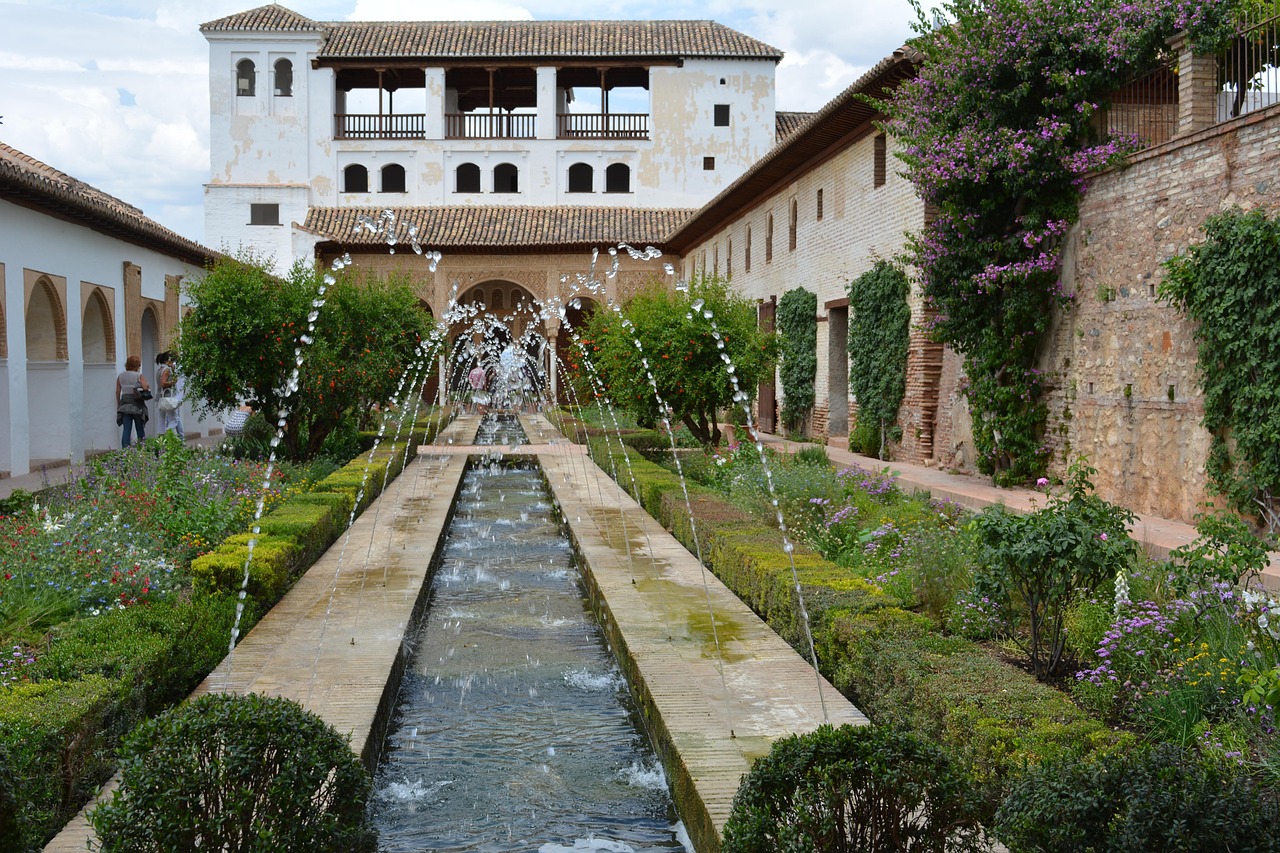
The Generalife sits on a neighboring hill, separated from the main Alhambra by a ravine, like a rural estate just outside the city. Built in the 13th–14th centuries, it was the Nasrid rulers’ summer retreat and agricultural domain.
Walking Through the Generalife
You’ll approach via a gently climbing path lined with cypresses and orchards. The first formal spaces are the Lower Gardens, a 20th-century reconstruction inspired by historic layouts, with geometric beds and water channels.
Climb up to the heart: the Patio de la Acequia (Court of the Water Channel). This long, rectangular courtyard is flanked by hedges and flowerbeds, with arcing jets of water that form an ephemeral “tunnel.” The water comes from the Acequia Real, a sophisticated irrigation channel that feeds much of the Alhambra.
Above, the Upper Gardens lead to miradores (viewpoints) where the Alhambra appears across the valley, perfectly framed by greenery. In spring, the scent of orange blossom and roses can be overwhelming in the best way.
Why It’s More Than “Just Gardens”
I’ve had some of my quietest, most contemplative Alhambra moments in the Generalife. One late May afternoon, I sat on a stone step while a gardener trimmed a hedge with old-fashioned shears. The rhythmic snip-snip mixed with the sound of water and low conversation in Spanish, French, and Arabic. You understand, viscerally, that the Alhambra is part of a Mediterranean continuum of garden culture.
Tips for Visiting
- Time needed: 60–90 minutes for a relaxed visit.
- Best time: Early morning or late afternoon; midday can be hot and bright.
- Seasonality: Spring (April–May) is peak bloom; autumn offers warm colors and softer light.
- Accessibility: Expect stairs and some uneven paths; check current accessibility routes at the visitor center.
Alcazaba: The Fortress of Views
The Alcazaba is the oldest part of the Alhambra complex—a pure military fortress whose origins go back to the 9th century, though most of what you see was expanded by the Nasrids in the 13th century. If the Nasrid Palaces are all about refinement and poetry, the Alcazaba is about dominance and defense.
Exploring the Fortress
After entering, you’ll walk through thick walls into an open interior space where the footprint of former houses and barracks is traced on the ground. This was once the garrison town, with soldiers’ quarters, cisterns, and storage.
Climb the Torre de la Vela, the watchtower crowned by a bell (famous to Granadinos for being rung on January 2nd, the anniversary of the Catholic conquest). The views from here are extraordinary:
- To the north: the white terraces of the Albaicín.
- To the south: the modern city spreading out toward the plains.
- To the east: the Sierra Nevada, often snow-streaked into late spring.
- To the west: the thick forest wrapping the hill.
I always advise people to take a slow lap around the ramparts. Different angles reveal different layers of Granada. Kids love counting churches and towers; photographers geek out over the play of light on tile and stone.
Personal Moments & Practicalities
One breezy February afternoon, I watched a storm front roll in from the west, the city gradually disappearing behind curtains of rain while the Albaicín still sat in sunshine. Up on the tower, with the wind tugging at my jacket, the Alhambra finally felt like the defensive outpost it was built to be.
- Time needed: 45–60 minutes, more if you linger with a camera.
- Footwear: Wear shoes with grip; the stone steps can be slick.
- Accessibility: Tower climbs require stair use; lower-level viewpoints are easier to access.
Palace of Charles V & The Museums
The Palace of Charles V is a bold Renaissance statement dropped right in the middle of a medieval Moorish complex. Commissioned in the 1520s by Emperor Charles V (Carlos I of Spain), it was meant to be a modern imperial residence that rivaled anything in Italy. Ironically, he never lived in it, and it remained roofless for centuries.
Architecture & Ambience
From the outside, the palace is a severe, square block. Inside, you step into a circular courtyard ringed by a double colonnade—Doric below, Ionic above. The acoustics are remarkable; on quiet days, your footsteps echo theatrically. Sometimes guitarists or singers test the sound, and the courtyard becomes an impromptu concert hall.
Alhambra Museum & Museum of Fine Arts
On the ground floor, the Alhambra Museum holds the best surviving examples of Nasrid art: carved stucco panels, wooden ceilings, ceramic tiles, and the original lions from the Courtyard of the Lions (swapped during conservation periods).
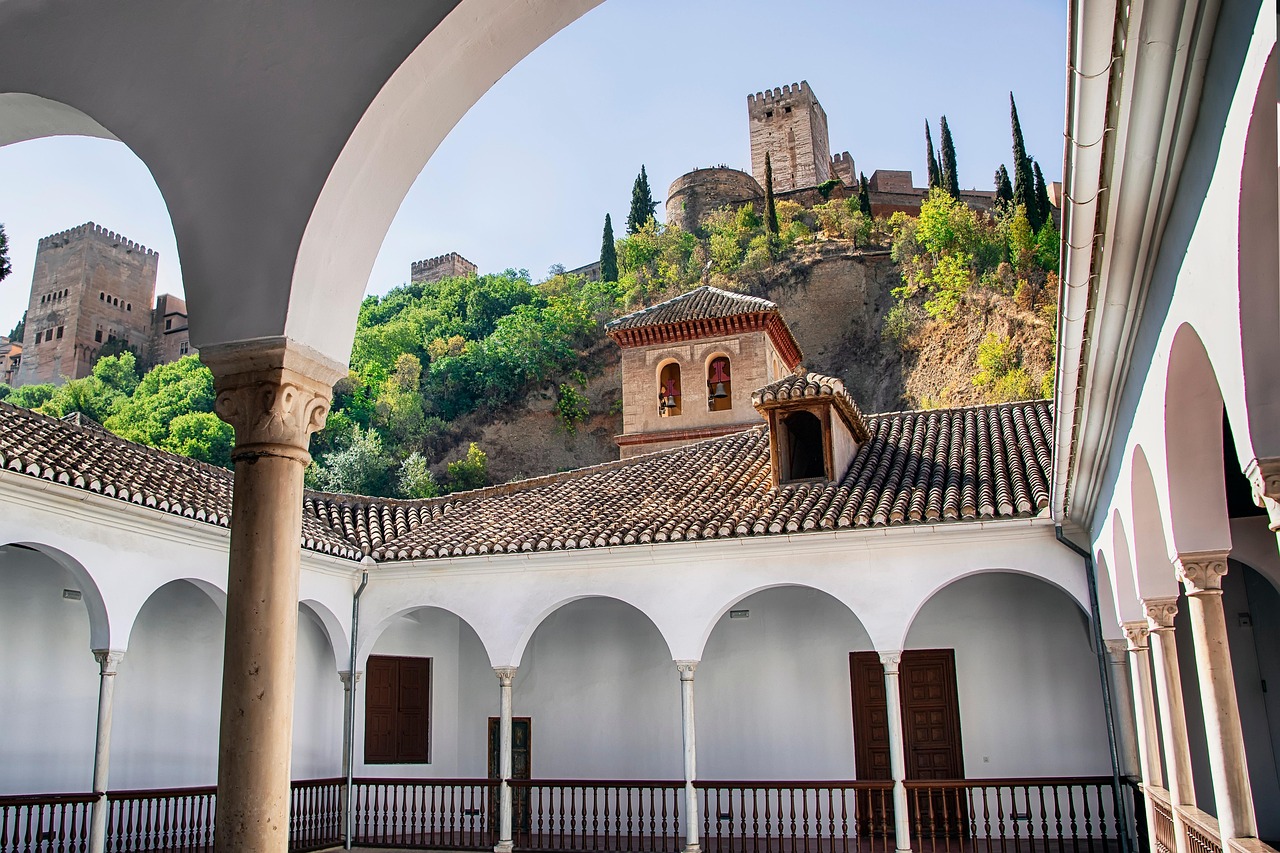
Upstairs, the Museum of Fine Arts focuses on post-conquest painting and sculpture from Granada and Andalusia, including works that romanticize the Alhambra itself.
Why You Shouldn’t Skip It
Many rushed visitors treat Charles V’s palace as a brief photo stop. If you have any interest in art history or want a deeper dive into Nasrid craftsmanship, give the museums at least an hour combined. On hot summer days, the thick walls and exhibition halls are also a welcome cool refuge.
Catholic Monarchs’ Quarters & Hidden Corners
Tucked within the complex are the former living quarters of the Catholic Monarchs, where Isabella and Ferdinand stayed and where Christopher Columbus is said to have negotiated aspects of his voyage. These rooms, chapels, and dependencies show the early Christian adaptation of a Muslim palace.
You’ll see:
- Simple but evocative chambers with coffered ceilings.
- Small chapels with altarpieces and devotional paintings.
- Corridors that look out onto courtyards that are more austere than their Nasrid neighbors.
On a quiet weekday in November, I found myself alone in one of these rooms, listening to the distant splash of a fountain. The shift from the elaborate poetry of the Nasrid spaces to the plainer, more vertical Christian aesthetic felt like a physical metaphor for the historical rupture of 1492.
Viewpoints & Approaches: How to See the Alhambra in Its Landscape
The Alhambra isn’t just about what’s inside the walls; it’s about how it perches above Granada, how its towers converse with the Albaicín, and how the Sierra Nevada frames everything. Here are the key approaches and viewpoints I return to again and again.
Cuesta de Gomérez & Puerta de las Granadas
This is the main pedestrian approach from Plaza Nueva. The street climbs gently under tall trees, souvenir shops thinning as you go. You pass through the monumental Puerta de las Granadas (Gate of the Pomegranates), then into the Alhambra forest.
I like to walk this route early, when the vendors are just setting up and the air still smells of damp earth and pine needles.
Cuesta del Rey Chico (Cuesta de los Chinos)
A more secretive path, this route starts near the river below the Alhambra and zigzags up through a narrow ravine. Moss-covered walls rise on either side; the Alhambra’s outer defenses loom overhead.
It’s slightly steeper and rougher underfoot than Cuesta de Gomérez, but far less crowded. On summer mornings, this is where I go to feel like the Alhambra is still a remote fortress.
Mirador de San Nicolás & Other Albaicín Views
The Mirador de San Nicolás is famous for a reason: the classic frontal view of the Alhambra with the Sierra Nevada behind. At sunset, it can feel like a festival—musicians, vendors, couples with wine in hand. It’s crowded, but the atmosphere can be magical.
For quieter alternatives, try:
- Mirador de San Cristóbal: higher up, with a more expansive city view.
- Mirador de la Lona: less touristed, with a more oblique angle.
- The terrace of certain cafés and carmens (historic houses with gardens) that open their gardens as viewpoints.
Eating & Drinking Around the Alhambra
Inside the Alhambra complex, food options are mostly functional: snacks, basic sandwiches, coffee from machines or standard cafés. They’ll keep you going, but they’re not the culinary highlight of Granada. The trick is to eat just outside the tourist trap ring.
Where to Eat Near the Alhambra (But Not in the Worst Tourist Zone)
A few personal favorites within reasonable walking distance:
- Realejo neighborhood: A 10–15 minute downhill walk from the main gate. Look for small bars doing traditional tapas with each drink—local favorites often cluster on side streets off Calle Pavaneras.
- Campo del Príncipe: A wide square in the Realejo with several terraces. On warm evenings, this is where locals actually hang out with families.
- Lower Albaicín: Around Carrera del Darro and Plaza Nueva, you’ll find a mix of touristy and genuinely good spots; I favor the tucked-away side streets where you hear more Spanish than English.
What to Eat
Granada has a strong tradition of free tapas with drinks. Order a beer, wine, or soft drink, and you’ll usually receive a small plate—anything from tortilla to mini hamburgers. Around the Alhambra, it can be patchier, but in the Realejo and central neighborhoods, it’s still alive and well.
Local specialties to look for:
- Remojón granadino: Orange and cod salad—refreshing in summer.
- Plato alpujarreño: Hearty mix of potatoes, morcilla, sausage, and ham—better on cooler days.
- Piononos: Small, syrupy pastries originally from nearby Santa Fe.
What to Bring Into the Alhambra
- A refillable water bottle (there are fountains, but not everywhere).
- Light snacks: nuts, fruit, a small sandwich. Picnicking on lawns is restricted, but you can discreetly snack on benches.
- Coffee if you’re particular—grab it in town on your way up.
Alhambra After Dark & Off-Hours
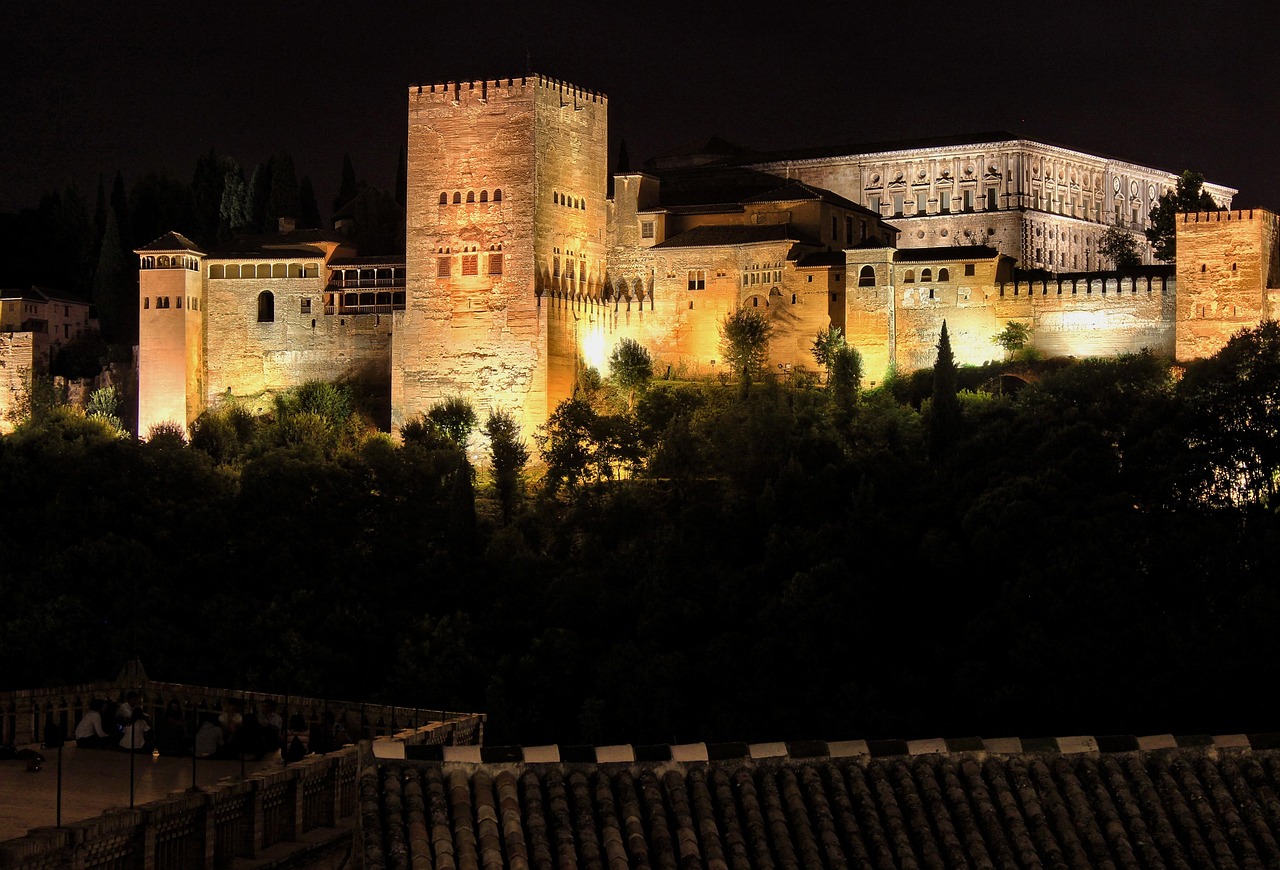
Some of my most lasting Alhambra memories are at night: the palaces lit in warm gold, the crowds thinned, the soundscape reduced to water and footsteps.
Night Visits (Nasrid Palaces & Generalife)
In 2026, night visits typically run from April to October, several evenings per week:
- Nasrid Palaces by night: A limited number of visitors are allowed in for about 1–1.5 hours. The route is shorter than daytime visits but intensely atmospheric.
- Generalife by night: Focuses on illuminated gardens and water. Often paired with music or light programs on selected dates.
On a summer night in 2023, I joined a late slot in the Nasrid Palaces. The Patio de los Arrayanes was almost silent, the pool reflecting stars and a thin crescent moon. Without the distraction of daytime detail, the architecture felt more sculptural, more abstract.
Golden Hour, Blue Hour, and Dawn
If you’re a photographer or just a lover of light:
- Golden hour (late afternoon): Best for the Alcazaba and views toward the Albaicín.
- Blue hour (after sunset): Ideal from Mirador de San Nicolás and other Albaicín viewpoints, when the Alhambra is lit but the sky still holds color.
- Dawn: Fewer people on the paths up the hill; mist sometimes gathers in the ravine. The complex opens later, but the surrounding forest and viewpoints are wonderfully peaceful early on.
Day Trips & Nearby Attractions from the Alhambra
Once you’ve immersed yourself in the Alhambra, it’s natural to look up at the mountains or down the valley and wonder what else lies within reach. Granada is well placed for short excursions that round out your Alhambra experience.
Sierra Nevada Mountains
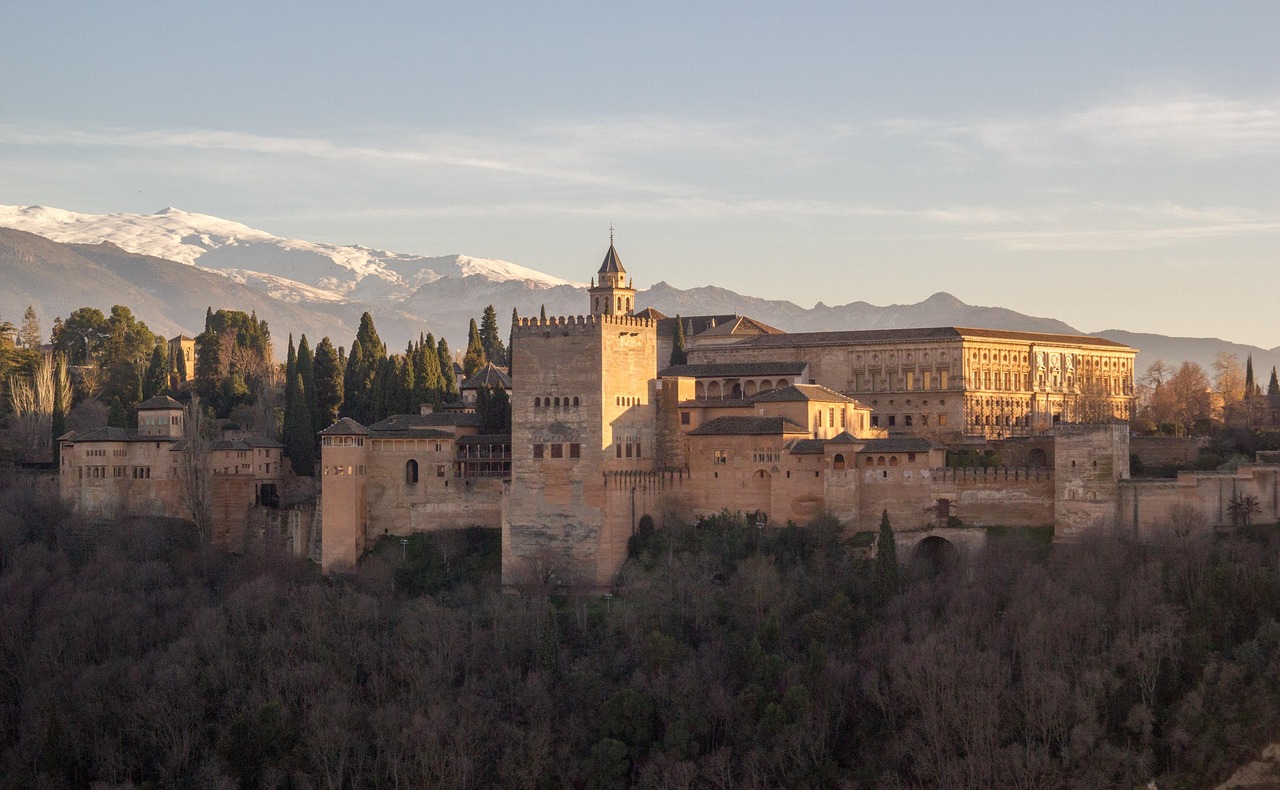
The peaks you see behind the Alhambra are part of the Sierra Nevada, home to Spain’s highest mainland mountain, Mulhacén. In winter, this means skiing; in summer, hiking in high alpine meadows.
From Granada, buses to the Sierra Nevada ski station take about 45–60 minutes. For hikers, local agencies offer transfers to trailheads. Even a simple half-day walk at medium altitude offers a different angle on the city and its palace.
Alpujarra Villages
South of Granada, the Alpujarra region is a chain of white villages clinging to terraced mountainsides. Places like Pampaneira, Bubión, and Capileira preserve traces of Berber-style architecture brought by Muslim and Morisco communities.
A full-day excursion here complements the Alhambra’s courtly world with rural landscapes and tough histories of expulsion and adaptation. Buses run from Granada’s bus station, or you can rent a car for more flexibility (see Logistics).
Cultural Etiquette & Local Customs Around the Alhambra
Granada is a relaxed Andalusian city, but a bit of cultural awareness goes a long way—especially at a site as globally significant as the Alhambra.
Respecting the Monument
- Do not touch or lean on delicate stucco, tiles, or woodwork. Oils from hands cause real damage.
- Keep voices low in enclosed rooms; sound bounces dramatically in the Nasrid Palaces.
- Follow staff instructions about one-way flows and restricted areas; they’re usually to protect vulnerable spaces.
Local Rhythms
Granada runs on a slightly later schedule than many northern European cities:
- Lunch from about 1:30–3:30 p.m.
- Dinner rarely before 8:30–9:00 p.m.
- Shops often close for a midday break (roughly 2:00–5:00 p.m.) outside the most touristy areas.
Dress & Behavior
There’s no strict dress code at the Alhambra, but:
- Comfortable, modest clothing is best—light layers in summer, something warm in winter mornings/evenings.
- Swimwear or overly revealing outfits will draw looks; this is still a historic monument, not a beach club.
- Public displays of affection are generally accepted, but be discreet in enclosed spaces and chapels.
Logistics & Travel Advice for Visiting the Alhambra in 2026–2027
Tickets, Types, and Timed Entry
The Alhambra operates on a strict capacity-controlled ticketing system. For 2026, expect:
- General Day Ticket: Includes Nasrid Palaces (timed), Alcazaba, Generalife, and most other accessible areas.
- Night Tickets: Separate tickets for night visits to the Nasrid Palaces or Generalife.
- Gardens-Only Tickets: Exclude Nasrid Palaces; good if general tickets are sold out but you still want to experience part of the complex.
Reservations open several months in advance and popular dates (spring weekends, holidays) can sell out weeks ahead. For 2026, I’d recommend booking:
- 2–3 months ahead for peak months (April–June, September–October).
- 4–6 weeks ahead for shoulder seasons.
- At least 1–2 weeks ahead even for winter if you’re not flexible on dates/times.
Opening Hours (2026 Overview)
Exact hours can vary, but typically:
- Daytime: Around 8:30 a.m.–6:00 p.m. (shorter) in winter; 8:30 a.m.–8:00 p.m. (longer) in summer.
- Night visits: Usually start around 10:00 p.m. in high season and somewhat earlier in spring/autumn.
Always check the official Alhambra website close to your trip for current Alhambra opening hours.
Best Time to Visit the Alhambra
For comfort and atmosphere, my ranking:
- Best: April–early June, late September–October (warm days, cooler evenings, good light).
- Also good: March, November (quieter, can be rainy but atmospheric).
- Challenging but manageable: July–August (heat and crowds; prioritize early morning and night visits).
- Winter: December–February (cold, possible snow on mountains, fewer crowds, shorter days).
How to Get to the Alhambra Without Wasting Time
From central Granada:
- On foot: 15–25 minutes uphill from Plaza Nueva via Cuesta de Gomérez or Cuesta del Rey Chico.
- Bus: Local minibuses (C30/C32 or equivalents) connect Plaza Isabel la Católica and the Alhambra entrance.
- Taxi: Affordable for small groups and convenient if you’re short on time or have mobility issues.
Where to Stay Near the Alhambra
I usually recommend staying in the lower city (around Plaza Nueva, Realejo, or lower Albaicín), not right at the top of the hill. That way you get:
- Easy access to restaurants and nightlife.
- Short walks to multiple approaches up to the Alhambra.
- Option to enjoy city life as well as the monument.
If you’re splurging, a few historic hotels and carmens in the Albaicín or along the Alhambra hill offer direct views of the palace—worth it if sunrise and sunset vistas from your window are a priority.
Getting Around, SIM Cards, and Money-Saving Tips
- SIM Cards: Spanish and EU travelers roam easily; visitors can buy prepaid SIMs/eSIMs from major providers (Movistar, Orange, Vodafone) in central Granada.
- Public Transport: Granada’s buses are efficient for crossing the city; Alhambra minibuses specifically target the hill.
- Car Rental: Not needed for the Alhambra itself and can be a hassle in the old town; rent only if you’re doing day trips (Sierra Nevada, Alpujarra).
- Money Savers:
- Book Alhambra tickets directly from the official site when possible.
- Take advantage of free tapas culture for lighter meals.
- Walk rather than taxi when feasible—the city center is compact.
Visa Requirements & Driving Licenses
Spain is part of the Schengen Area. In 2026:
- EU/EEA/Swiss citizens: No visa, just ID.
- Many other nationalities (e.g., UK, US, Canada, Australia): Short stays (up to 90 days in 180) typically visa-free but check current regulations.
- Others: May need a Schengen visa—apply well in advance.
Foreign driving licenses from many countries are accepted with an International Driving Permit (IDP) recommended or required, depending on your origin. Check up-to-date rules before renting a car.
Accessibility & Restrictions
The Alhambra is a medieval complex on a hill, but efforts have been made to improve accessibility:
- Some routes are wheelchair-accessible; others (like towers) are not.
- There are rest areas and benches, but distances can be long; consider splitting your visit over two days if stamina is an issue.
- Photography without flash is generally allowed; tripods and drones are prohibited.
Security & Queues
- Arrive at least 1 hour before your Nasrid Palace time slot.
- Bag checks at entrances; large luggage is not allowed.
- Pickpocketing is rare inside but can happen on crowded approaches and city streets—keep valuables secure.
Summary & Final Recommendations
The Alhambra rewards the traveler who slows down. Whether you follow a 1 day itinerary for Alhambra, stretch to a richer 2 day itinerary for Alhambra, or indulge in a full 3 day itinerary for Alhambra, the key is to balance the “must-see attractions in Alhambra” with time to simply sit, listen to the fountains, and watch the light move across stone.
For most visitors, I recommend:
- Visiting in spring or autumn for the best combination of weather and atmosphere.
- Booking tickets well in advance and anchoring your day around the Nasrid Palaces timed entry.
- Exploring both the interiors (palaces, museums, Alcazaba) and the exteriors (approach paths, Albaicín viewpoints).
- Allowing at least one evening to see the Alhambra lit up from across the valley or through a night visit.
Above all, remember that the Alhambra is not just a “thing to do in Granada.” It’s a living monument where past and present meet in the sound of running water and the shade of cypress trees. Walk it slowly, return to the same spots at different hours, and let it unfold at its own pace—you’ll carry it with you long after 2026.