Why Visit Sitges in 2026?
If you only know Sitges as “that beach town near Barcelona,” you’re seriously underestimating it. I’ve been coming here for over a decade—slow winter weekends, wild Carnival nights, lazy August escapes, and everything in between—and Sitges is the one place on the Catalan coast that never feels like a compromise between authentic and fun. It’s both.
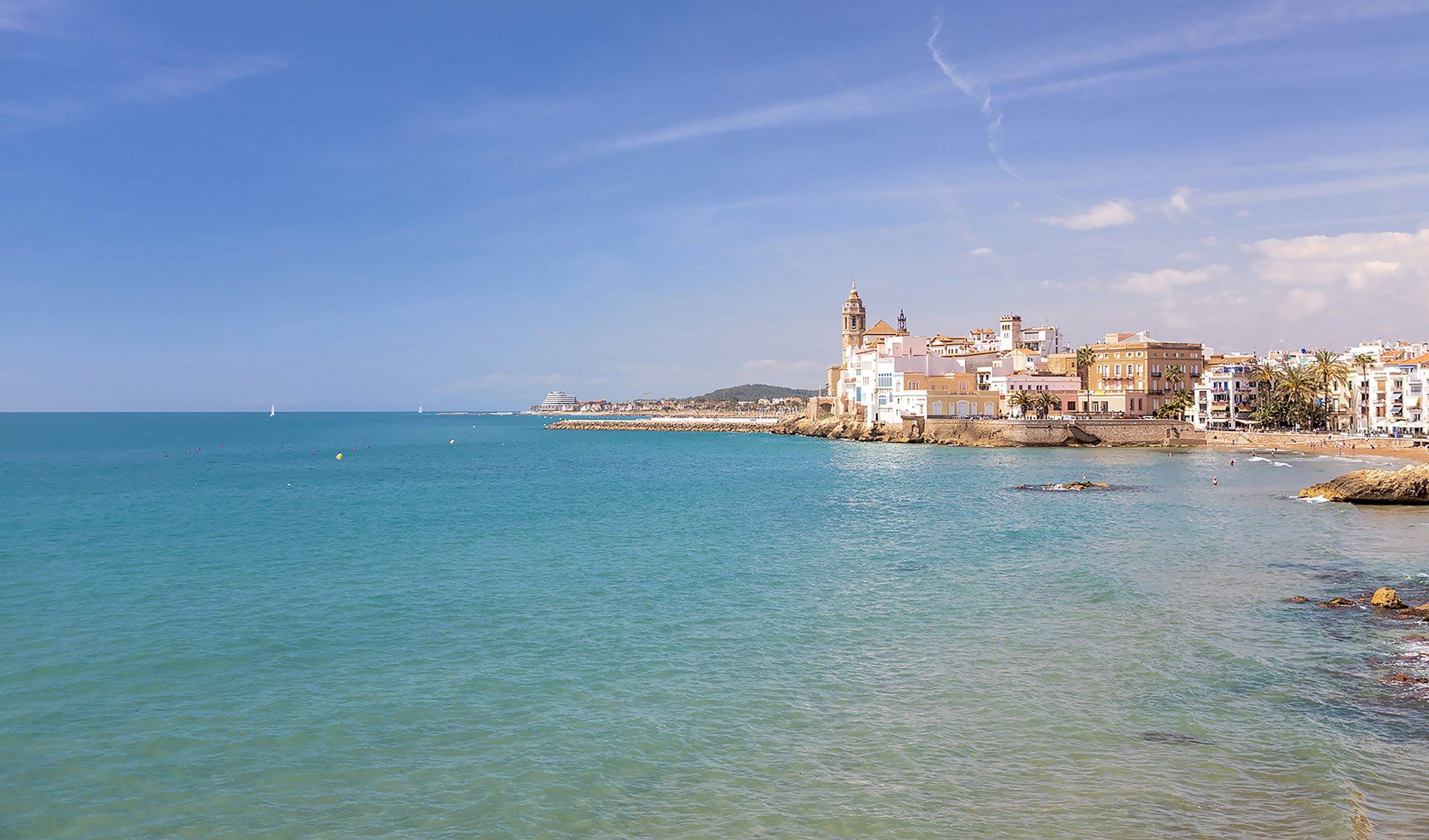
Sitges is a whitewashed Mediterranean town wrapped around a curved bay, crowned by a picture-perfect church at the water’s edge, and backed by the green folds of the Garraf Natural Park. It’s proudly artistic, openly LGBTQIA+ friendly, and home to festivals that somehow manage to be both chaotic and deeply local. It’s small enough to explore on foot, but big enough that you’ll still be discovering new bars, galleries, and viewpoints on day five.
In 2026, Sitges is leaning even more into its creative roots. You’ll find renovated galleries along the seafront, a growing foodie scene focused on seasonal Catalan cuisine, and a calendar stuffed with festivals, from the legendary Carnival (February) to the Sitges International Fantastic Film Festival (October). Add 17 sandy beaches, a laid-back but electric nightlife, and some of the best sunset walks on the Mediterranean, and you’ve got a destination that works beautifully for:
- 3 days in Sitges – A long weekend of beaches, food, and iconic sights.
- 4 days in Sitges – Add hidden gems, museums, and scenic walks.
- 5 days in Sitges – Settle in like a local with day trips and slow mornings.
- Romantic escapes, family holidays, and solo adventures (especially LGBTQIA+ solo travelers).
Whether you’re here for a 3 day itinerary for Sitges or a full 5 days in Sitges, this travel guide for Sitges is written like I’d plan your trip if we were sitting together over a café amb llet on the Passeig Marítim.
Table of Contents
- Why Visit Sitges in 2026?
- Sitges at a Glance
- Neighborhoods & Areas of Sitges
- 20 Must-See Attractions & Hidden Gems (With Personal Notes)
- 3–5 Day Itineraries for Sitges (With Personal Stories)
- Local Food in Sitges: What & Where to Eat
- Nightlife, Bars & Cultural Experiences
- Events & Festivals 2026–2027
- Day Trips from Sitges
- Practical Travel Tips for Sitges
- Cultural Etiquette & Local Customs
- When to Visit Sitges: Seasonal Guide
- Summary & Final Recommendations
Sitges at a Glance
Sitges is a compact coastal town about 35 km southwest of Barcelona, in Catalonia. It’s known for its beaches, Modernista architecture, LGBTQIA+ nightlife, and long-standing artistic community. Imagine the charm of a whitewashed fishing village, fused with the energy of a mini-resort and the creativity of a bohemian enclave—that’s Sitges.
- Region: Catalonia, Spain
- Population: ~30,000 residents (swells dramatically in summer & festivals)
- Language: Catalan & Spanish (English widely understood in tourist areas)
- Currency: Euro (€)
- Travel time from Barcelona: ~40 minutes by train from Barcelona Sants or Passeig de Gràcia
Neighborhoods & Areas to Explore in Sitges
1. Old Town (Centre Vila & Around the Church)
The Old Town is where I always start my trips, no matter how many times I’ve been. Narrow lanes lined with whitewashed houses, wrought-iron balconies, and splashes of bougainvillea climb up towards the iconic Parroquia de Sant Bartomeu i Santa Tecla, the church that defines Sitges’ skyline.
Here you’ll find tiny boutiques, wine bars tucked into old fishermen’s houses, and some of the best “get lost and wander” streets in town. Stay here if you want to be at the heart of everything: beaches, bars, and culture.
2. Passeig Marítim (Seafront Promenade)
This palm-lined promenade runs along most of Sitges’ main beaches. It’s where locals jog at sunrise, families stroll in the evening, and couples linger on benches at sunset. The north side is lined with gracious villas and Modernista mansions; the south side opens onto the sea.
It’s my favorite place for an early-morning run and a late-night, ice-cream-in-hand walk.
3. Poble Sec
Just inland from the center, Poble Sec is more residential and less polished—think local bakeries, cheap menú del dia joints, and kids playing in small squares. When I stay in Sitges for more than a few days, I often rent an apartment here: it’s quieter, cheaper, and still only 10–15 minutes’ walk from the beach.
4. Vinyet & Terramar
To the southwest along the promenade, the Vinyet and Terramar areas are home to graceful villas, gardens, and some of Sitges’ more upscale hotels. It feels almost suburban, with a slower pace and a lot of second homes. Perfect if you’re here for a romantic escape or a tranquil family holiday.
5. La Fragata & San Sebastián Beach Area
These areas wrap around the church and the small bay, and they’re where the line between “beach” and “town” blurs in the most charming way. In summer, I’ve spent entire days here, alternating between swims, coffees, and short wanders into the old streets behind.
6. Port d’Aiguadolç
A 15–20 minute walk northeast along the coastal path brings you to Sitges’ marina, Port d’Aiguadolç. With bobbing sailboats, sea-facing restaurants, and a slightly “resort within a resort” vibe, it’s one of my favorite spots for a long, lazy seafood lunch.
7. Garraf Natural Park Hinterland
Behind Sitges, the land rises into the rocky, aromatic hills of Parc Natural del Garraf. For hikers and cyclists, this is your playground: dusty tracks, sea views, and the smell of pine and wild herbs. On hot days, I like to do a short early-morning hike before retreating back to the sea.
20 Must-See Attractions & Hidden Gems in Sitges (With Personal Notes)
These aren’t just “best places to visit in Sitges” in a checklist sense—they’re the spots where I’ve actually spent time, gotten sunburned, lost track of the hour, or found myself chatting with locals. For each, I’ll share what to see, a bit of history, and practical travel tips for Sitges.
1. Parroquia de Sant Bartomeu i Santa Tecla (The Iconic Church)
This twin-bell-towered church is the face of Sitges. If you’ve seen a photo of Sitges, you’ve seen this silhouette: perched on a rocky outcrop, watching over the sea.
I still remember my first evening here: the sky was streaked pink, kids were playing football on La Fragata beach, and a saxophonist was busking near the steps. As the bells rang, everyone seemed to pause for just a moment—it felt like the town exhaling.
The church dates back to the 17th century, built on the site of earlier chapels. Inside, it’s relatively simple but peaceful, with baroque altarpieces and maritime touches. Outside is where the magic is: climb the steps from the promenade, or approach via the old streets behind for different perspectives.
- Best time to visit: Sunset or blue hour for photos; quiet mornings to sit inside.
- Family-friendly? Yes—kids love the steps and views.
- Romantic? Extremely; this is proposal central for a reason.
Tip: After sunset, walk along the seafront toward San Sebastián beach and look back for that classic night-time view of the church lit up against the water.
2. Museu Cau Ferrat
Cau Ferrat was the home and studio of Modernista artist Santiago Rusiñol, and it feels like stepping into the mind of an eccentric, brilliant collector. Ironwork, paintings, ceramics, and stained glass crowd the walls in a way that should feel overwhelming, but somehow doesn’t.
On a rainy March afternoon (yes, Sitges gets those too), I ducked in here to escape the drizzle and ended up spending two hours wandering from room to room. I loved the mix of high art—Picasso, El Greco reproductions—and everyday objects turned into beauty. It’s a perfect introduction to the artistic soul of Sitges.
- Don’t miss: The sea-facing windows upstairs; the light is gorgeous.
- Good for: Culture lovers, couples, and older kids/teens interested in art.
- Combined ticket: Often available with the Museu Maricel next door.
Tip: Visit in the late morning, then have lunch at a nearby restaurant in the Old Town—this part of Sitges stays pleasantly lively all year, even in low season.
3. Museu Maricel & Palau Maricel
Next to Cau Ferrat, Museu Maricel and the adjacent Palau Maricel form one of the most elegant corners of Sitges. The buildings themselves—white facades, blue tile details, arched windows—are works of art, but inside you’ll find a curated collection of medieval to contemporary Catalan art.
On my second visit, I managed to join a guided tour of Palau Maricel (check times in advance; they’re limited). Standing in the cloister with its sea views and ceramic details, it felt like being inside a movie set. The terrace overlooking the Mediterranean is one of the most beautiful viewpoints in town.
- Highlights: The cloister, the Golden Room, and the terraces.
- Photography: Fantastic—bring a camera, but be respectful of any no-photo signs.
- Accessibility: Some areas have stairs; ask staff about accessible routes.
Tip: If you’re doing a 3 day itinerary for Sitges, pair Cau Ferrat and Maricel in one morning to maximize cultural time without sacrificing beach hours.
4. Passeig Marítim (Seafront Promenade)
The Passeig Marítim is the spine of Sitges life. I’ve walked its length—about 2.5 km—at sunrise with only joggers and dog-walkers for company, and again at midnight in August, when it’s a river of people licking ice creams and drifting between bars and beach.
You’ll pass volleyball courts, kids’ play areas, statues (keep an eye out for the mermaid), and row after row of beach bars (chiringuitos) in summer. On one trip, I rented a bike and pedaled from the church end down to Terramar and back, stopping for a quick swim each way. It felt like the perfect Mediterranean day.
- Family-friendly: Very; flat, stroller-friendly, and full of play spots.
- Romantic: Sunset walks here are a cliché for a reason.
- Active travelers: Ideal for running, skating, or cycling.
Tip: For a quieter, more local vibe, walk toward the Terramar end in the late afternoon. It’s less crowded, and the light on the villas is beautiful.
5. Platja de la Ribera & Platja de la Fragata
Ribera and La Fragata are the two classic town-center beaches. On my first-ever winter visit, I sat on Ribera in a sweater and sunglasses, sipping a takeaway coffee and watching brave locals swim. In summer, these beaches are the social heart of Sitges—busy, yes, but never oppressively so if you come earlier in the day.
Ribera is wide, with soft sand and gentle waves. La Fragata, framed by the church and the sailing club, feels more intimate and is popular with families and groups playing beach sports.
- Facilities: Showers, sunbed and umbrella rentals (in season), nearby cafés and shops.
- Good for: First-time visitors, families, people-watchers.
- Safety: Lifeguards in high season; check flags for sea conditions.
Tip: Arrive before 10:00 in peak summer to claim a good towel spot near the water, or come after 17:00 when the sun softens and crowds thin a little.
6. Platja de Sant Sebastià
Just east of the church, Platja de Sant Sebastià feels more local, backed by low-rise houses and small restaurants rather than the grand promenade. I often come here when I want a slightly quieter vibe without leaving town.
I particularly love winter mornings here: older locals doing their daily swim, cafés setting out chairs, and the sun warming the sheltered bay. It’s less exposed than some other beaches, so it can feel pleasant even in cooler months.
- Vibe: Local, relaxed, family-friendly.
- Food: Several good rice and seafood restaurants line the back of the beach.
Tip: Book a terrace table for a paella lunch here on a sunny day—it’s one of the classic Sitges experiences.
7. Platja de la Bassa Rodona (LGBTQIA+ Beach)
Bassa Rodona is the most famous LGBTQIA+ beach in Sitges, and in peak season it hums with energy: groups of friends, couples, rainbow flags, and a playful vibe that spills over into the nearby bars at night.
Even as a solo female traveler, I’ve always felt welcomed here. The atmosphere is friendly and open, and the people-watching is second only to Barcelona’s Barceloneta, but with better water and a smaller-town feel.
- Vibe: Lively, social, inclusive.
- Nearby: LGBTQIA+ bars and clubs just inland from the promenade.
Tip: In peak Pride or summer weekends, it gets very busy—come early or embrace the crowd and make new friends.
8. Platja del Balmins & Nudist Culture
Between San Sebastián and the port lies Platja del Balmins, a series of small coves with a long-standing nudist tradition. It’s officially mixed-use now, but you’ll still find plenty of nude sunbathers, especially toward the far ends.
The first time I came here, I was slightly nervous—nudist beaches can feel intimidating if you’re not used to them. But Balmins is relaxed and non-judgmental. Keep your eyes at face level, respect personal space, and you’ll be fine whether you choose to strip off or not.
- Vibe: Chill, bohemian, mixed crowd.
- Good for: Adventurous travelers, couples, and anyone comfortable with nudity.
Tip: Bring everything you need (water, snacks) in shoulder seasons; the beach bars don’t always operate year-round.
9. Port d’Aiguadolç Marina
Port d’Aiguadolç feels almost like a separate little village: low-rise white houses, colorful shutters, and yachts bobbing in their moorings. I like walking here from town along the coastal path, then rewarding myself with a long lunch.
There’s a nice mix of restaurants—seafood, tapas, a few more international options—and in summer there’s a gentle buzz of live music and people enjoying drinks by the water. It’s less “see and be seen” than the central promenade and more relaxed resort.
- Family-friendly: Yes, especially for lunch.
- Romantic: Dinner on the terrace with the boats lit up is lovely.
Tip: If you’re staying in Sitges for 4–5 days, spend at least one evening here for a change of scene from the main town.
10. Garraf Natural Park (Parc Natural del Garraf)
Behind Sitges, the land rises into the rugged Garraf Natural Park, a landscape of limestone hills, scrubby vegetation, and distant sea views. On one spring trip, I joined local friends for a morning hike that started just outside town—we climbed up dusty tracks, passed abandoned farmhouses, and eventually looked back at Sitges as a white smear against the blue sea.
It’s not a manicured park; it feels wild and, in summer, hot. But for hikers and mountain bikers, it’s a perfect way to balance out lazy beach days with some activity.
- Best seasons: Spring and autumn; early mornings in summer.
- What to bring: Water, hat, sunscreen, sturdy shoes—shade is limited.
Tip: Ask at the tourist office for trail maps or join a guided hike if you’re not confident navigating on your own.
11. Casa Bacardí (Rum & Indiano Heritage)
Many of Sitges’ grand houses were built with money made in the Americas by “Indianos”—locals who emigrated, made fortunes, and returned. Casa Bacardí taps into that history: Sitges is the birthplace of Facundo Bacardí, founder of the famous rum brand.
I visited on a sleepy weekday and ended up in a small group tour that felt more like a private storytelling session. You learn about rum-making, the Bacardí family, and Sitges’ trading links, usually with a rum cocktail involved at the end.
- Good for: Adults, rum fans, history nerds.
- Rainy-day option: Excellent when the weather isn’t beach-friendly.
Tip: Book ahead in high season, and time your visit mid-afternoon when the sun is strongest and you’re ready for an indoor break.
12. Romantic Sitges: The Church Viewpoint & Sunset Corners
For me, Sitges is one of the most romantic small towns in Spain. The classic move is simple: climb the steps beside the church, lean on the stone wall, and watch the sky change color. I’ve done this with friends, solo with a journal, and on dates—it works every time.
Another favorite: walking the coastal path toward Balmins, then stopping at one of the little viewpoints overlooking the rocks. In winter, you might have it almost to yourself, with just the sound of waves and the cry of gulls.
Tip: If you’re planning a proposal or special moment, aim for the shoulder seasons (May–June, September–October) when it’s easier to find quiet corners.
13. Sitges Carnival (Carnaval de Sitges)
Carnival in Sitges is legendary—one of the wildest, most colorful in Spain. Usually held in February or early March (dates shift), it’s a week of parades, costumes, drag shows, and late-night street parties.
I came for Carnival once with a group of friends, and we barely slept. The Rua de la Disbauxa and Rua de l’Extermini parades roll down the main streets with floats, feathers, and thumping music, while bars spill out onto the sidewalks. It’s inclusive, chaotic, and incredibly fun, but not for early sleepers.
- Good for: Party lovers, LGBTQIA+ travelers, groups of friends.
- Not ideal for: Very young kids at night (daytime events are more family-friendly).
Tip: For 2026, book accommodation months in advance if your 3 days in Sitges coincide with Carnival; prices and demand spike dramatically.
14. Sitges International Fantastic Film Festival
Every October, Sitges hosts the Festival Internacional de Cinema Fantàstic de Catalunya, one of the world’s top genre film festivals (fantasy, horror, sci-fi). The town fills with film fans, industry people, and cosplay enthusiasts.
I’m not a hardcore horror fan, but I loved the festival atmosphere: people queuing outside the cinema in costume, Q&A sessions with directors, and midnight screenings where the whole audience gasps and laughs together.
- Vibe: Creative, geeky, international.
- Good for: Film lovers, culture travelers, solo visitors (easy to meet people).
Tip: If you’re planning a 4 day itinerary for Sitges around the festival, build in some downtime on the beach between screenings—your brain will thank you.
15. Museu Romàntic Can Llopis (If Reopened / Under Renovation)
Can Llopis is a 19th-century townhouse that used to house the Romantic Museum, with period furnishings and an impressive doll collection. It’s been closed for renovations in recent years; check its status in 2026, as reopening has been anticipated.
I visited once before the closure, and it was like stepping into a time capsule: high-ceilinged rooms, dark wooden furniture, and that slightly dusty, nostalgic air that old houses have. If it’s open when you visit, it’s a wonderful glimpse into Sitges’ bourgeois past.
Tip: Combine with a wander through the surrounding streets to spot Indiano-era houses with palm trees and ornate facades.
16. Carrer del Pecat (The “Sin Street” of Sitges)
Carrer del Pecat (“Street of Sin”) is Sitges’ tiny but legendary nightlife hub—though in reality, the party spills into several nearby streets. Small bars, music spilling outside, open doors, and a very mixed crowd: locals, tourists, LGBTQIA+ groups, couples, and solo wanderers.
On one summer visit, I bar-hopped here with friends, starting with a quiet vermut, then switching to gin and tonics as the night went on. We danced in a tiny bar where the DJ seemed to know everyone by name; it felt like a village party more than a big-city club scene.
Tip: Come after 23:00 for full energy. For a calmer drink, start the evening on the promenade and head here later.
17. Local Markets & Mercat Municipal
The Mercat Municipal is where Sitgetans actually shop: stalls piled with fresh fish, seasonal fruit and veg, cured meats, and local cheeses. I like coming here in the morning to grab picnic supplies—cherries, fuet sausage, a hunk of cheese, maybe some olives—and then heading to the beach.
It’s also an excellent place to observe daily life: older ladies comparing artichokes, kids being bribed with pastries, and chefs from local restaurants doing their rounds.
Tip: If you’re on a budget, shopping here and self-catering some meals is one of the best ways to save money in Sitges.
18. Santuario del Vinyet
Set a little inland in the Vinyet area, this small sanctuary is dedicated to Our Lady of Vinyet. Surrounded by trees and quiet streets, it feels worlds away from the bustle of the seafront.
I discovered it by accident on an evening walk, drawn by the sound of bells. There was a small service going on, and the mix of candles, murmured prayers, and the smell of wax and stone felt deeply calming. It’s a reminder that Sitges is more than beaches and bars.
Tip: Combine a visit with a stroll around the Vinyet villas and a sunset walk back along the promenade.
19. Hidden Lanes of the Old Town
Some of my favorite moments in Sitges have been unplanned: turning down a narrow lane and finding a tiny square with just a few tables and locals sipping vermut. The Old Town is full of these little surprises.
If you’re here for 3 days in Sitges, dedicate at least a couple of hours to aimless wandering. Look up at balconies, peek into courtyards, and follow the sound of music or clinking glasses. This is where you’ll find some of the most authentic hidden gems in Sitges.
Tip: Go in the late afternoon or early evening, when the heat softens and locals come out for their passeig (stroll).
20. Sitges Coastal Path Toward Garraf
Beyond the port, a coastal path follows the train line toward the small village of Garraf. Parts of it are rough and not suitable for small kids, but the sea views are incredible—rocky coves, turquoise water, and the occasional train flashing past.
On a not-too-hot April morning, I walked a section of this path with a friend. We stopped at a tiny, almost deserted cove, scrambled down, and swam in water so clear it felt unreal. We dried off on the rocks, listening to the trains and waves.
- Good for: Active travelers, photographers, people seeking quieter spots.
- Safety: Wear proper shoes, watch your footing, and avoid in bad weather.
Tip: Check with locals or your accommodation for current conditions and safest access points; erosion and maintenance can change the path over time.
3–5 Day Itineraries for Sitges (With Personal Stories)
Planning 3 days in Sitges or up to 5 days in Sitges? Here’s how I’d structure your time, based on trips I’ve actually taken. Feel free to mix and match depending on your interests.
3 Day Itinerary for Sitges: Classic Highlights & Easy Bliss
Day 1: First Impressions – Old Town, Church & Central Beaches
I like to keep the first day simple and sensory—feel the town, smell the sea, and let your shoulders drop.
Morning: Arrive by train from Barcelona, drop bags at your accommodation, and head straight to the Passeig Marítim. Walk from the central area toward the church, taking in the villas and sea views.
Stop for a late breakfast or early lunch at a café on or just behind the promenade. My usual move is a coffee and a bikini (toasted ham and cheese sandwich) to keep it simple.
Midday: Wander up to the Parroquia de Sant Bartomeu i Santa Tecla. Step inside for a moment of quiet, then circle around the outside terraces for views back along the beaches.
Afterward, head down to Platja de la Ribera or La Fragata. Swim, nap, read, people-watch. This is your “I’ve arrived” moment—don’t over-schedule it.
Afternoon: As the sun softens, explore the Old Town behind the church: narrow lanes, small squares, and independent shops. Duck into Cau Ferrat if you’re in a cultural mood; otherwise, just wander.
Evening: Have dinner at a traditional Catalan restaurant near San Sebastià or in the Old Town. Order a paella or a seafood rice if you’re hungry, or share a spread of tapas and local wine.
Finish with a slow walk along the promenade. If you’re jetlagged or tired, call it an early night. If not, grab a drink at a mellow bar near the seafront.
Day 2: Art, Marina & Nightlife
Morning: Start with coffee and a pastry in town, then visit Museu Maricel and, if timing allows, Palau Maricel. Spend an hour or two absorbing art and architecture.
Midday: Walk along the coastal path toward Port d’Aiguadolç. Take it slow; stop for photos. At the marina, choose a sea-facing restaurant for a long lunch—grilled fish, a salad, maybe a glass of white wine.
Afternoon: On the way back, detour to Platja del Balmins if you’re comfortable with nudist-friendly beaches, or return to Ribera or Bassa Rodona. Swim, nap, repeat.
Evening: This is your Sitges nightlife night. Start with a sunset drink at a beachfront bar, then dinner somewhere casual but good in the center. After 23:00, drift toward Carrer del Pecat and the surrounding streets. Try a couple of bars, see where the night takes you.
If you’re LGBTQIA+, you’ll find plenty of dedicated bars and mixed venues, all within a short walk.
Day 3: Markets, Hills or Extra Beach Time
Morning: Visit the Mercat Municipal. Pick up fruit, pastries, and maybe some cured meats and cheese. If you have kitchen access, this is a good time to plan a picnic-style lunch.
From here, you have two main options:
- Option A (Relax): Spend your last day beach-hopping—try San Sebastià in the morning, then the quieter Vinyet/Terramar stretch in the afternoon.
- Option B (Active): Head into the edges of Garraf Natural Park for a short hike or long walk. Ask your accommodation for straightforward routes.
Afternoon: Treat yourself to a last coffee or vermut in a quiet square in the Old Town. This is also when I like to shop for small souvenirs: local wine, olive oil, or ceramics.
Evening: For your final night, choose a restaurant with a view—either on the promenade or overlooking San Sebastià. Toast the town with cava and promise yourself you’ll come back for 4 days in Sitges next time.
4 Day Itinerary for Sitges: Add Hidden Gems & Local Life
With 4 days in Sitges, you can slow down and dip into local routines.
Day 4: Local Corners & Vinyet
Morning: Have breakfast in Poble Sec or a non-touristy café. Watch locals rush to work or linger over coffee. Then stroll toward the Santuario del Vinyet, weaving through calm residential streets.
Midday: After visiting the sanctuary, continue to the Vinyet/Terramar stretch of the promenade. Choose a quieter beach here—often less crowded than the central ones in high season.
Afternoon: Rent bikes or e-scooters to explore the full length of the promenade. Stop for ice cream, photos, and maybe a spontaneous paddle in the sea.
Evening: For dinner, try a restaurant a street or two back from the promenade—prices drop slightly, and the vibe feels more local. If you still have energy, a gentle drink on the seafront is the perfect goodbye to the day.
5 Day Itinerary for Sitges: Live Like a Local
With 5 days in Sitges, you’re not just visiting; you’re briefly living here. Use the first three days like the 3-day itinerary, then:
Day 4: Hike & Hidden Coves
Morning: Head into Garraf Natural Park for a hike. Aim for an early start, especially in warmer months. Pack water and snacks from the market.
Afternoon: Reward yourself with beach time—either in town or at a quieter cove if you’ve discovered any during your wanderings. Nap, read, and consciously do nothing for a while.
Evening: Try a wine bar or vermuteria in the Old Town. Order a local vermut with olives, then move on to dinner.
Day 5: Day Trip or Deep Chill
You now know Sitges well enough to decide:
- Option A – Day Trip: Take the train to Garraf village (for its tiny beach and quirky houses) or Vilanova i la Geltrú (a more workaday coastal town with an excellent promenade and good tapas).
- Option B – Deep Sitges: Revisit your favorite spots, spend more time at a favorite beach, or seek out a new café or bar you haven’t tried yet.
On my longest stays, this last day always turns into a mix of errands (buying gifts at the market), lingering goodbyes to familiar waiters, and one last sunset at the church.
Local Food in Sitges: What & Where to Eat
Catalan cuisine is hearty, seasonal, and deeply tied to the sea and the land. In Sitges, that means excellent fish and seafood, rice dishes, and plenty of tapas and pintxos.
Must-Try Dishes in Sitges
- Paella & Rice Dishes: Look for arroz a banda, arroz negro (black rice with cuttlefish ink), or fideuà (short noodles instead of rice).
- Xató: A local salad made with curly endive, cod, anchovies, tuna, and a rich romesco-like sauce. It’s a Sitges classic.
- Suquet de Peix: Fish stew with potatoes and a rich broth.
- Calçots (in season): Grilled spring onions dipped in romesco sauce, usually in winter/early spring.
- Tapas & Pintxos: Patatas bravas, croquettes, grilled octopus, anchovies, and more.
What to Drink
- Cava: Catalan sparkling wine, perfect as an aperitif or with seafood.
- Vermut: Aromatized wine, typically served on ice with an olive or orange slice—ideal pre-lunch.
- Local Wines: Look for Penedès wines; the region is just inland.
Where to Eat (Types of Places & Money-Saving Tips)
Because places change, I’ll focus on styles of spots and how I use them to balance budget and indulgence:
- Beachfront Restaurants: Great for views and atmosphere. Prices are higher, but I still usually splurge on at least one paella lunch with a sea view each trip.
- Backstreet Bodegas & Bars: These are your best bet for cheaper, more authentic tapas and daily menus. Look for places filled with locals at 14:00.
- Menú del Dia: Fixed-price lunch menus (often 12–20€) that include a starter, main, dessert or coffee, and sometimes wine or water. This is one of the best ways to eat well and keep costs down.
- Mercat & Supermarkets: If you’re staying in an apartment, shop for breakfast items and a couple of simple dinners. I often do picnic dinners on the beach with bread, cheese, ham, and fruit.
Tip: For budget travelers, make lunch your main meal (with a menú del dia) and keep dinner simple—tapas, sandwiches, or market buys.
Nightlife, Entertainment & Cultural Experiences in Sitges
Sitges has a surprisingly big nightlife scene for its size, but it’s less aggressive than larger city party zones. It’s a mix of cocktail bars, wine bars, LGBTQIA+ clubs, and mellow seafront terraces.
Types of Night Spots
- Seafront Bars: Perfect for sunset drinks and early evening. Good for couples, families (earlier), and groups.
- Old Town & Carrer del Pecat: Small bars, music, dancing, and later nights. This is where you go after 23:00.
- LGBTQIA+ Venues: Sitges is famously queer-friendly, with bars and clubs that cater mostly but not exclusively to gay men, plus mixed spaces and pop-up events during Pride and other festivals.
- Wine Bars & Vermuterias: Ideal if you want conversation over cocktails rather than clubbing.
Cultural Experiences
- Festivals: Carnival, Film Festival, local summer festivals with fireworks and concerts.
- Live Music: Some bars and seafront spots host live bands or DJs, especially weekends and in summer.
- Art & Exhibitions: Keep an eye on the cultural centers and museums for temporary shows.
Tip: Sitges nights start late by Northern European standards; don’t be surprised if bars are quiet at 21:30 and busy at midnight.
Events & Festivals in Sitges 2026–2027
Dates can shift slightly each year; always double-check closer to your trip. But these are the big ones to know for 2026–2027:
- Carnaval de Sitges (February/March 2026 & 2027): Week-long Carnival with huge parades, costume parties, and street celebrations.
- Rally Internacional de Coches de Época Barcelona–Sitges (March): Vintage car rally ending in Sitges; fun for families and photography lovers.
- Corpus Christi (June): Flower carpets laid out on the streets—beautiful, ephemeral art.
- Festa Major de Sitges (late August): The town’s main festival, with human towers (castells), fireworks, parades, and traditional dancing.
- Santa Tecla (September): Another important local festival with more castells and cultural events.
- Sitges International Fantastic Film Festival (October 2026 & 2027): Major genre film festival with screenings, talks, and events.
- Sitges Gay Pride (typically June): Parades, parties, and events emphasizing Sitges’ LGBTQIA+ identity.
In 2026, Sitges is also emphasizing sustainable tourism and has been promoting smaller cultural events—open-air concerts, art fairs, and food festivals—especially in the shoulder seasons to spread visitors more evenly through the year.
Day Trips from Sitges
If you’re here for a 4 day itinerary for Sitges or longer, a day trip can add variety.
1. Barcelona
Travel time: ~40 minutes by train.
Spend a day visiting Gaudí landmarks, wandering the Gothic Quarter, or exploring lesser-known neighborhoods. I often reverse the typical pattern and stay in Sitges, then “commute” to Barcelona for the day—it’s surprisingly easy.
2. Vilanova i la Geltrú
Travel time: ~10 minutes by train.
A more workaday town with a long, wide beach, good tapas bars, and fewer tourists. Perfect if you want to see what a less polished Catalan coastal town feels like.
3. Garraf Village
Travel time: ~10 minutes by train.
Small cove, green-and-white beach huts, and a relaxed vibe. Great for a half-day trip when you want a change of scenery but not much travel time.
4. Penedès Wine Region
Travel time: 45–60 minutes by car or train + taxi.
Home to cava houses and vineyards. Join a wine tour or visit wineries independently for tastings and vineyard walks.
Practical Travel Tips for Sitges
How to Get to Sitges
- From Barcelona Airport (El Prat):
- By train: Usually involves a change in Barcelona (Sants) to the R2 Sud line toward Vilanova/Sant Vicenç. Total around 1–1.5 hours depending on connections.
- By bus: Direct buses (check updated schedules) run in around 30–45 minutes.
- By taxi/ride-hail: 30–40 minutes depending on traffic; more expensive but easiest with luggage or kids.
- From Barcelona city: Frequent R2 Sud trains from Sants, Passeig de Gràcia, and Estació de França.
Getting Around Sitges
- On foot: Sitges is very walkable; most visitors don’t need a car within town.
- Bikes & Scooters: Great for the promenade and short hops; avoid the narrowest Old Town streets.
- Local buses: Handy for some residential areas and the hills, but most visitors manage without.
- Car rental: Only really necessary if you’re exploring the wider region extensively. Parking in town can be tricky and/or paid, especially in high season.
Saving Money in Sitges
- Stay a few streets back from the promenade or in Poble Sec for cheaper accommodation.
- Make lunch your main meal with a menú del dia.
- Use the Mercat Municipal and supermarkets for breakfasts, snacks, and some dinners.
- Drink tap water—it’s safe (though some people prefer filtered for taste).
- Travel off-peak (May–June, September–October) for better prices and fewer crowds.
SIM Card & Connectivity
- EU travelers: Most EU plans include roaming in Spain; check your provider.
- Non-EU travelers: Buy a local SIM or eSIM from providers like Orange, Vodafone, or Movistar. You can do this in Barcelona before coming or at phone shops in Sitges.
- Wi-Fi is widely available in hotels, many restaurants, and cafés.
Visa Requirements & Entry
- Sitges is in Spain, part of the Schengen Area.
- EU/EEA/Swiss citizens: Can travel with ID card/passport; no visa required.
- Many non-EU countries: Short stays (typically up to 90 days in 180) without visa; check your nationality’s current rules.
- From 2026, the ETIAS travel authorization system is expected to be in place for some non-EU visitors; verify requirements before your trip.
Driving & Foreign Licenses
- EU driving licenses are valid in Spain.
- Non-EU visitors may need an International Driving Permit in addition to their national license; check Spain’s latest regulations before travel.
- Driving in Sitges itself is not particularly fun due to narrow streets and parking—only rent a car if you truly need it for wider exploration.
Cultural Etiquette & Local Customs in Sitges
Sitges is international and relaxed, but it’s still Catalan and Spanish at its core. A few cultural notes will make your stay smoother and more respectful.
Language
- Both Catalan and Spanish are spoken; Catalan is the primary local language.
- English is widely understood in tourist-facing places, but less so in purely local settings.
- Learning a few phrases goes a long way:
- “Bon dia” (good day in Catalan)
- “Sisplau” (please in Catalan)
- “Gràcies” (thank you in Catalan)
Dining & Tipping
- Lunch is usually 13:30–15:30; dinner often starts around 20:30 or later.
- Tipping is appreciated but not obligatory; rounding up or leaving 5–10% for good service is common.
- Don’t be surprised if service feels more relaxed and less rushed than in some countries.
Beach Etiquette
- Topless sunbathing is common; nudity is accepted at Balmins and some specific areas.
- Respect personal space and avoid staring—common sense goes a long way.
- Take rubbish with you; many locals care deeply about keeping the beaches clean.
Social & LGBTQIA+ Culture
- Sitges has a long history as an LGBTQIA+ destination; visible same-sex affection is generally well accepted, particularly in central and seafront areas.
- Public displays of affection of all kinds are normal but not over-the-top; follow local cues.
- During Pride and Carnival, expect costumes, drag, and a very festive, expressive atmosphere.
When to Visit Sitges: Seasonal Travel Advice
One of the key travel tips for Sitges is to pick your season based on what you want most: swimming, festivals, quiet, or nightlife.
Summer (June–August)
- Best for: Beach time, nightlife, festivals, guaranteed warmth.
- Expect: Crowds, higher prices, buzzing bars, warm sea.
- Ideal trip length: 3–5 day itinerary for Sitges works perfectly, with plenty of beach hours.
Shoulder Seasons (May, September, Early October)
- Best for: Balancing warmth and calm, lower prices, cultural visits.
- Expect: Pleasant temperatures, swimmable sea (especially September), fewer crowds outside holidays.
- Ideal for: Couples, solo travelers, and anyone who wants both beach and exploration.
Winter & Early Spring (November–April)
- Best for: Quiet escapes, long walks, Carnival (if you time it right).
- Expect: Some closures or reduced hours for beach bars, but plenty of year-round spots; mild but not hot weather.
- Ideal for: Writers, remote workers, and travelers who don’t need to swim daily.
In short: For classic “Mediterranean holiday” vibes with manageable crowds, my favorite times are late May–June and September.
Summary & Final Recommendations
Sitges is one of those places that reveals itself slowly. On your first day, you’ll fall for the obvious: the church, the promenade, the beaches. By day three, you’ll have a favorite café, a preferred stretch of sand, and a sense of which streets feel like “yours.” Stay for 4 or 5 days in Sitges, and you’ll start to slip into the local rhythm—late dinners, morning market visits, and unhurried sunset walks.
For a 3 day itinerary for Sitges, focus on the seafront, Old Town, and a bit of art and nightlife. With 4 days in Sitges, add the marina, Vinyet, and a short hike. With a full 5 day itinerary for Sitges, build in a day trip or simply allow yourself the luxury of doing less and feeling more.
Come for the beaches, stay for the atmosphere, and leave with a mental snapshot: church bells at sunset, the smell of salt and sunscreen, and the low buzz of voices on the Passeig Marítim long after dark. In 2026, Sitges is very much itself—artistic, inclusive, and quietly addictive. I keep coming back. Don’t be surprised if you do too.