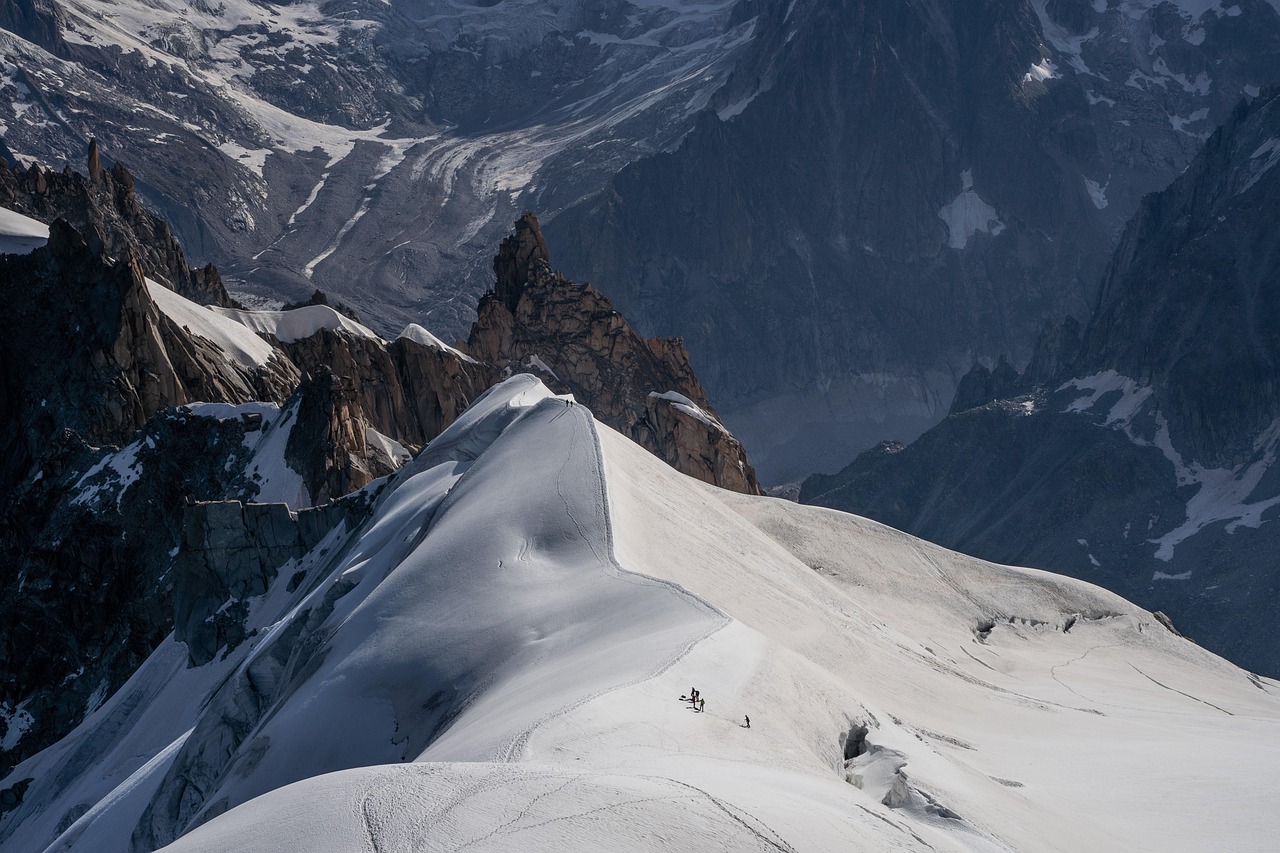
Why Visit Aiguille du Midi in 2026
If you only have time for one truly unforgettable high–alpine experience in the French Alps, make it the Aiguille du Midi. It is the mountain that turns casual visitors into lifelong mountain people. I still remember my first ascent back in 2012: a blue–sky October morning, the valley trees already rusting into autumn, and then—twenty minutes later—my boots crunching on snow at 3,842 meters, face to face with Mont Blanc. I’ve been back at least once a year since, in every season, and the place still surprises me.
The Aiguille du Midi is not just a viewpoint. It is an orchestrated journey: from the streets of Chamonix, into the cable car that climbs impossibly steep slopes, through tunnels carved inside the rock, onto metal platforms that cling to sheer cliffs, and finally out onto the “Step into the Void” glass box, hanging over a vertical kilometer of air. It’s the closest you can get to high–altitude alpinism without tying into a rope.
In 2026, visiting is easier and smoother than ever: online timed tickets, better queue management, and a renewed focus on educational displays about climate change and glaciology. Yet the essentials remain old–fashioned and raw: thin air, cold wind, and a horizon carved by some of Europe’s greatest peaks.
This long-form travel guide is written from the perspective of someone who has spent far too many mornings waiting for the first cabin, far too many afternoons nursing coffee at altitude, and far too many evenings watching the last light on the summit from down in the valley. It’s meant to help you design a 1, 2, or 3 day itinerary for Aiguille du Midi and its surroundings, whether you’re coming with kids, a partner, or an ice axe.
Table of Contents
- Why Aiguille du Midi Is Special
- Essential Overview: How to Visit Aiguille du Midi
- 1–3 Day Itineraries for Aiguille du Midi
- Main Sections, Viewpoints & Adjacent Sites
- 1. Chamonix Base & Approach to the Cable Car
- 2. The Aiguille du Midi Cable Car Ride
- 3. Plan de l’Aiguille Mid-Station & Balcon Nord
- 4. Summit Terraces & Mont Blanc Panorama
- 5. Step into the Void Glass Box
- 6. Ice Tunnel & Arête to the Vallée Blanche
- 7. Museums, Exhibits & Climate Story
- 8. Panoramic Mont Blanc & Helbronner (Italy)
- Eating & Staying Near Aiguille du Midi
- Aiguille du Midi at Off-Hours: Dawn, Dusk & Night
- Day Trips & Nearby Attractions
- Cultural Etiquette & Local Customs
- Practical Travel Tips & Money-Saving Advice
- Tickets, Opening Hours & On-Site Logistics
- Best Time to Visit Aiguille du Midi
- Events & What’s New in 2026–2027
- Summary & Final Recommendations
Essential Overview: How to Visit Aiguille du Midi
The Aiguille du Midi (3,842 m) is the highest point in Europe accessible by cable car without any climbing. It sits directly above Chamonix, in the Haute-Savoie region of eastern France, a valley that has been a magnet for mountaineers, skiers, and romantics since the 18th century.
From the base station on the south side of Chamonix, the visit unfolds in two main acts:
- Act I: The Cable Car & Plan de l’Aiguille – a two-stage ride from 1,035 m to 2,317 m, with the option to stop and hike at mid-station.
- Act II: The Summit Complex – a warren of tunnels, stairs, and terraces on several levels, including the famed “Step into the Void” and views across to Italy and Switzerland.
Most visitors come for a half-day, racing through the viewpoints in a couple of hours. That’s fine if you’re pressed for time. But the real magic happens when you slow down: let the light change, notice how the wind sculpts the snow, and watch the tiny ant-like movements of climbers on the surrounding ridges. This guide is written for those who want to do more than just tick a box.
1–3 Day Itineraries for Aiguille du Midi
Whether you have 1 day, 2 days, or 3 days in Aiguille du Midi and Chamonix, you can build an itinerary that feels both complete and personal. Below are narrative itineraries based on my own recent visits in 2024 and 2025, updated for 2026 logistics.
1 Day Itinerary for Aiguille du Midi
This 1 day itinerary for Aiguille du Midi is ideal if you’re passing through Chamonix, on a tight Alps schedule, or introducing kids to high mountain landscapes without overloading them. I followed this plan with friends from Lyon in late June, and it worked beautifully even with a 7-year-old in tow.
Morning: First Ascent & Summit Exploration
07:30–08:30 – Arrive at the Base Station
If you’ve pre-booked a morning departure (which you absolutely should from June–September), arrive at least 30 minutes before your time slot. I like to walk from central Chamonix along Avenue de l’Aiguille du Midi; the peak looms above you like a promise. On cold mornings, you’ll see climbers with coils of rope on their backs, half asleep but determined, heading for the same station.
08:30–09:00 – First Cable Car, Stage One
The first cabin of the day has a quiet, almost sacred atmosphere. As the cable tightens and you rise out of the station, the town falls away and the valley opens. Sit or stand near a window facing Mont Blanc for the best views. Kids love spotting tiny chalets and the Arve River below; I usually point out the Mer de Glace glacier in the distance, explaining how much it has shrunk in my own lifetime.
09:00–09:10 – Change at Plan de l’Aiguille
At the mid-station, you can either step out for a breath of mountain air or transfer straight to the second cable car. For a 1-day itinerary, I recommend going directly to the summit and saving Plan de l’Aiguille for the descent if time allows; the light on the high peaks is often best before noon.
09:10–09:20 – Second Cable Car to the Summit
This is the dramatic part: the car passes over huge granite cliffs with no pylon in between, gliding into a notch cut into the very rock of the Aiguille. Every time, just before reaching the top station, I still feel a little spine-tingle as we pass a few meters from the rock face.
Late Morning: Summit Terraces & Step into the Void
09:20–11:30 – Explore the Summit Complex
At the top station, you’ll exit into an interior corridor where the first thing you notice is the cold. Even in August it can be near freezing. I always pause here to layer up: hat, gloves, windproof shell. Then the exploration begins.
- South Terrace – My first move is usually to go straight outside onto the main terrace, where the full Mont Blanc panorama hits you. On a clear day, the summit dome of Mont Blanc feels close enough to touch, with the Dent du Géant and the Grandes Jorasses guarding the Italian frontier. Spend a good 20–30 minutes just absorbing this view; this is one of the must-see attractions in Aiguille du Midi.
- East-Facing Platforms – Walk the circuit of metal walkways and staircases that link the various viewpoints. Each has a subtly different angle: one frames the Chamonix valley, another the Vallée Blanche glacier. Look for climbers gearing up on the snow ridge below; I still find myself tracing their intended route with my eyes, remembering my own first rope team descent from here years ago.
Step into the Void
The “Step into the Void” is the glass box that juts out over a 1,000-meter drop. Is it touristy? Absolutely. Is it worth it? Yes, once. Even after multiple visits, my legs still argue with my brain when I step onto that transparent floor.
Queues for the glass box can reach 30–60 minutes by late morning in high season. With a 1-day itinerary, aim to do it before 10:30. My ritual is to watch a couple of people go first—there’s always someone who crawls out on hands and knees—then take a deep breath and walk out in one smooth motion. For photos, crouch down or sit to reduce reflections; staff will also take a shot on your phone.
Lunch: High-Altitude Meal or Picnic
11:30–12:30 – Coffee, Lunch & Warm-Up
The summit complex has a self-service restaurant and a smaller café. The food is decent but overpriced, as you’d expect at nearly 4,000 m. I often bring a picnic—good bread, local cheese, saucisson—from Chamonix and then buy hot drinks up top. If you do eat there, the tartiflette (potato, reblochon cheese, bacon) hits the spot on cold days.
Tip: If you’re prone to altitude headaches, drink more water than you think you need, go easy on alcohol, and avoid heavy, greasy food. I learned this the hard way after an ill-advised summit beer years ago.
Early Afternoon: Exhibits & Slow Descent
12:30–14:00 – Exhibits & Final Views
After lunch, duck into the interpretation center areas (more on these in the dedicated section below). In 2026, the updated climate exhibits are especially worth a look; they use time-lapse imagery and interactive screens to show how the glaciers you can see from the terraces have retreated.
I like to do one last slow circuit of the outdoor platforms before heading down. The light often softens a bit, and you may catch clouds rising from the valley, wrapping around the spires in slow motion.
14:00–15:00 – Descend to Plan de l’Aiguille
On the way down, I recommend getting off at the mid-station instead of going straight back to Chamonix. Step out, take a few deep breaths at this relatively comfortable altitude, and walk the short paths around the station for different perspectives on the valley. If you’re feeling energetic and the weather is stable, you can even start the Balcon Nord hike for an hour or so before looping back.
Late Afternoon: Return to Chamonix & Valley Stroll
15:00–16:00 – Return to Chamonix
The final cable car drops you right back into the bustle of Chamonix. I usually walk straight to a café terrace—La Terrasse on the main square is lively, while Moody Coffee Roasters near the river is my go-to for serious coffee—and let the whole experience sink in.
16:00–Evening – Explore Chamonix
With the rest of your day, wander the pedestrian streets, browse outdoor gear shops, or walk along the river. If you want one more great free viewpoint, head to the Parc de Loisirs near the sports center; from the grassy fields, the Aiguille du Midi looks improbably sharp against the sky.
This 1 day itinerary for Aiguille du Midi balances the must-see attractions with enough breathing space to actually feel the mountains, not just photograph them.
2 Day Itinerary for Aiguille du Midi & Chamonix
With 2 days in Aiguille du Midi and the Chamonix valley, you can slow down considerably, add a proper hike, and start to feel the rhythm of local life. I followed a version of this 2 day itinerary in September with my partner, mixing romance (sunset terraces, long dinners) with a bit of adventure.
Day 1: Classic Summit Experience at a Relaxed Pace
Use the 1 day itinerary above as your base, but stretch it out:
- Choose a slightly later ascent (around 09:30–10:00) to avoid the first rush of climbers.
- Spend more time in the exhibition areas, especially if you’re interested in glaciology or mountaineering history.
- Add a longer stroll at Plan de l’Aiguille on the way down, maybe a short out-and-back along the Balcon Nord trail.
In the evening, book a table at La Caleche or Le Monchu for classic Savoyard dishes—fondue, raclette, or pierrade. Both are touristy but fun, and locals still go when they’re in the mood for melted cheese. On one memorable September night, we emerged from a raclette feast to find the Aiguille glowing pink in the last alpenglow; we walked back to our apartment in near silence, full and slightly awed.
Day 2: Plan de l’Aiguille & Balcon Nord Hike
On your second day, focus on the mid-altitude world of meadows, boulders, and trails. This is the day that will stay with you if you love walking.
Morning – Up to Plan de l’Aiguille
Take the cable car only to the mid-station (you can buy a cheaper ticket if you’re not going to the summit that day). Step off into a different world: alpine grasses, marmots whistling, and a feeling of being suspended between valley and peaks.
Balcon Nord Hike
The Balcon Nord is a mid-level traverse that contours around the mountain, with huge views of the Mont Blanc range. You can hike:
- Short Option (Family-Friendly) – 1–2 hours out-and-back, turning around whenever you like. The path is rocky but not technical; I’ve seen kids as young as 6 enjoying it, as long as they’re used to walking.
- Full Traverse to Montenvers – 4–5 hours one-way, finishing at the Montenvers train above the Mer de Glace. This is one of my all-time favorite hikes anywhere, and I’ve done it in every month from June to October. The path undulates but never becomes extreme; the scenery is consistently spectacular.
On one October afternoon, I sat on a boulder halfway along, sharing a simple lunch—baguette, Beaufort cheese, a crisp apple—with a visiting friend. Below us, the valley was a patchwork of autumn color; above, the glaciers gleamed. It felt like sitting in a balcony seat at an opera of ice and light.
Afternoon – Optional Montenvers & Mer de Glace
If you complete the full traverse, ride the cog railway down from Montenvers to Chamonix (your cable car and train tickets can be combined in various passes—ask at the tourist office or ticket desk). The Mer de Glace itself is a sobering lesson in climate change; each year, more stairs are added to reach the shrunken glacier.
Back in town, treat yourself to an early evening drink at Elevation 1904 by the river, a favorite of off-duty guides, then a calmer dinner somewhere like Bighorn Bistro or Le Fer à Cheval.
With 2 days in Aiguille du Midi and Chamonix, you’ll have tasted both the high, harsh world of the summit and the more human-scale landscape of the mid-mountain. It’s a wonderful balance.
3 Day Itinerary for Aiguille du Midi & the Mont Blanc Massif
With 3 days in Aiguille du Midi and its surroundings, you can deepen your experience dramatically. This is my preferred minimum for anyone flying in from far away: it gives you time to adjust to altitude, to catch at least one perfect weather window, and to explore a second perspective on the Mont Blanc massif.
Day 1: Summit & Chamonix Orientation
Follow the 1 day itinerary, but keep it flexible. If the weather is poor on your first day, reverse the order of this 3 day itinerary—start with valley-level activities and wait for a clear window for the summit. One late May week, I postponed my ascent by 48 hours due to high winds; the eventual clear morning was worth every hour of waiting.
Day 2: Plan de l’Aiguille & Longer Hike
Dedicate your second day to the Balcon Nord or other mid-altitude hiking, as described in the 2 day itinerary. If you’re feeling ambitious and conditions allow, consider:
- Guided Glacier Hike – Not from Aiguille du Midi itself (those are serious alpine routes), but from nearby lift systems like the Grands Montets or Pointe Helbronner. Local guiding companies in Chamonix can arrange family-friendly glacier walks with crampons.
Day 3: Cross-Border Adventure to Italy via Panoramic Mont Blanc
If your budget and nerves allow, this is the day to ride the Panoramic Mont Blanc gondola across the Vallée Blanche to Pointe Helbronner in Italy. This is, without exaggeration, one of the most extraordinary cable car rides in the world.
Morning – Ascent to Aiguille du Midi & Panoramic Mont Blanc
Start early again, reach the summit, then board the Panoramic cabins that float across the glacier. Each small bubble carries a handful of people; as you glide above the seracs and crevasses, you’re left in stunned silence. I still remember my first crossing: a cloud sea filling the valleys below, peaks rising like islands all around.
Midday – Pointe Helbronner & Skyway Monte Bianco
On the Italian side, you can explore the terraces of Pointe Helbronner, visit the small crystal museum, and even descend further via the Skyway Monte Bianco cable car towards Courmayeur if you’ve arranged tickets and timing. The coffee is better on this side (this is Italy, after all), and the vibe is different—less austere, more dolce vita.
Afternoon – Return Crossing & Final Summit Moments
After crossing back, spend a final hour at Aiguille du Midi, revisiting your favorite terraces. The light in mid-afternoon can be warm and dramatic, with long shadows carving texture into the glaciers.
This 3 day itinerary for Aiguille du Midi turns a simple visit into a miniature expedition: France, Italy, high ridges, mid-mountain meadows, and valley culture all woven together.
Main Sections, Viewpoints & Adjacent Sites of Aiguille du Midi
To really understand how to visit Aiguille du Midi, it helps to break the experience down by the sections you’ll physically walk through. Below are sub-articles on at least eight major areas, written from multiple visits over the years.
1. Chamonix Base & Approach to the Cable Car
Your journey to the Aiguille du Midi begins long before you leave the ground. The base station, on the southern edge of Chamonix, is a small world unto itself: a mix of families wrangling kids, climbers tying last-minute knots, and camera-toting visitors staring upward.
I like to approach on foot from the town center, leaving the car parked at my accommodation or in one of the central lots. The walk takes about 10–15 minutes and lets you arrive in sync with the town rather than popping out of a vehicle directly into a queue. On crisp winter mornings, your breath steams, and you can hear the squeak of ski boots on the pavement; in summer, the air smells of pine resin and espresso.
Ticket Hall Rituals
Inside the station, the ticket hall can be chaotic at peak times. By 2026, most visitors will have booked timed tickets online, which you can convert to a physical pass at the machines. Nonetheless, there’s always a corner of the hall where last-minute optimists queue, hoping for no-shows and extra slots.
On one busy August morning, I watched a pair of Brazilian honeymooners haggle gently in broken French for an earlier slot; the staff, used to this dance, found them a cancellation. Moral: even if a day is officially “full” online, it can be worth checking at the desk in person, especially for 1–2 people.
What to Do Before Boarding
- Layer Up – The temperature difference between Chamonix (often 20–30°C in summer) and the summit (0°C or below) is brutal. I’ve lost count of the number of people I’ve seen in shorts and T-shirts, shivering miserably up top.
- Hydrate & Snack – Altitude hits harder if you’re tired or hungry. I usually grab a croissant or pain au chocolat from a bakery in town and a bottle of water; it’s cheaper than buying everything at the summit.
- Check the Live Cameras – Screens show summit conditions. I’ve aborted more than one planned ascent when the cameras revealed total whiteout while the valley was sunny.
Boarding & First Contact with the Crowd
Boarding the cable car is a small social drama. There’s always a shuffle for the best window spots, a few nervous laughs, and that moment when a guide, loaded with gear, slips in at the last second. I like to stand near the doors for quick exit photos, but if this is your only trip, aim for a side window facing towards Mont Blanc for the best sense of scale.
For families, keep younger kids close by; the jostle can be intense, and you don’t want a little one separated as people pack in. For older kids, give them a small “assignment” (“count how many waterfalls you see,” “spot the paraglider first”) to keep them engaged rather than overwhelmed.
2. The Aiguille du Midi Cable Car Ride
The cable car itself is one of the best places to appreciate the sheer audacity of this construction. Completed in its current form in 1955, it held the record for the highest vertical ascent in the world for many years. Even after dozens of rides, I still find myself quietly impressed during the second stage when the car glides over an almost vertical rock face without any supporting pylons.
Stage One: Chamonix to Plan de l’Aiguille
The first stage lifts you from 1,035 m to 2,317 m in roughly 10 minutes. As you rise, Chamonix shrinks, the river becomes a thin silver line, and the town’s church tower turns into a toy. Out the opposite windows, the Aiguilles Rouges ridge forms a backdrop, often lined with paragliders riding thermals.
I remember one July afternoon ascent where a summer storm was just clearing; the car passed through a layer of wispy cloud and emerged into sunshine, the peaks dusted with a fresh coat of snow. The collective gasp from the cabin felt almost rehearsed.
Stage Two: Plan de l’Aiguille to Summit
The second stage is more dramatic. The car swings out above steep granite faces, with the Chamonix valley now far below. As you approach the top station, the cables seem to disappear into the rock itself; only at the last moment does the carved notch of the station become visible.
For those with a fear of heights, this is the most challenging part. My advice, having once talked a very nervous friend through it: stand near the center of the cabin, focus on a fixed point inside (like the floor), and breathe slowly. It’s over quickly, and the reward on top is immense.
Winter rides have their own flavor. Skiers’ skis and snowboards form a clattering chorus, and the conversation shifts to snow conditions, avalanche risk, and which line to ski. In spring, you’ll often share the cabin with roped-up climbers heading for classic routes like the Cosmiques Arête, their ice axes and helmets adding a slight edge of seriousness.
3. Plan de l’Aiguille Mid-Station & Balcon Nord
The Plan de l’Aiguille mid-station deserves to be more than just a transfer point. At 2,317 m, it sits on a rocky plateau sprinkled with boulders, low shrubs, and patches of grass in summer, and forms the starting point for some of the best mid-altitude hikes in the valley.
Atmosphere & First Impressions
When you step out here, the air feels noticeably thinner but still comfortable; you’re high enough for sweeping views but low enough to walk without gasping. The soundscape shifts from urban murmurs to wind, distant waterfalls, and the occasional marmot whistle.
I often break my ascent here for 30 minutes even on days when I’m heading to the summit. There’s something grounding about standing on solid earth between two aerial journeys.
The Balcon Nord Trail
The Balcon Nord (“North Balcony”) is a gently undulating trail that traverses the mountainside towards Montenvers. It’s one of the best things to do in Aiguille du Midi’s orbit if you enjoy walking but aren’t a hardcore mountaineer.
- Difficulty – Moderate. The path is rocky and narrow in places but not exposed or technical in dry summer conditions. Good shoes are essential; I’ve seen too many people in city sneakers regretting it on loose gravel.
- Time – 4–5 hours from Plan de l’Aiguille to Montenvers, not counting stops. I usually allow 6 hours for a leisurely pace with lunch and photo breaks.
- Season – Late June to early October in most years, depending on snow. In 2024, I walked it in early June with patchy snow; a set of light hiking poles helped a lot.
The trail feels like a balcony indeed: the valley floor lies far below, the high peaks loom above, and you walk a middle line between human and alpine worlds. Every bend reveals a new composition: glaciers, dark forests, the sinuous Arve River, Chamonix itself a cluster of roofs.
Plan de l’Aiguille Refuge & Picnics
A short walk from the station lies the Refuge du Plan de l’Aiguille, a simple mountain hut where you can eat basic but hearty food—omelettes, soups, tarts. I’ve passed some blissful hours on its terrace, watching clouds play hide-and-seek with the peaks.
On quieter weekdays, the refuge can feel like a secret; on sunny weekends, it’s a convivial mix of locals and visitors. In my experience, staff are patient with kids and happy to refill water bottles as long as you order something.
For many visitors, especially families and those sensitive to altitude, Plan de l’Aiguille is actually the sweet spot: high enough to feel “in the mountains,” but gentle enough to encourage wandering. If the summit is socked in with cloud, consider spending your day here instead.
4. Summit Terraces & Mont Blanc Panorama
The summit complex of Aiguille du Midi is a labyrinth of stairs, corridors, and terraces spread over multiple levels. It’s easy to feel disoriented on your first visit, especially if the altitude makes your head a bit foggy. My strategy is always the same: move slowly, do a full circuit once, then return to the viewpoints I loved most.
Understanding the Layout
Once you exit the top station, you’ll follow signs through interior tunnels to various terraces. Think of the whole complex as a cluster of rocky spires connected by bridges and galleries, with vantage points facing in slightly different directions.
- South & Southeast Terraces – These offer the classic view towards Mont Blanc, the Bossons Glacier, and the Italian border peaks. On clear days, you can trace the normal route to Mont Blanc’s summit with your eyes.
- West & Northwest Platforms – These look back down towards Chamonix, across to the Aiguilles Rouges, and out towards the Aravis range in the distance.
- East-Facing Points – Overlook the Vallée Blanche and, in the far distance, peaks in Switzerland.
Each terrace has informational panels, and I recommend actually reading them; they’re well done, updated in recent years, and add layers of story to what you’re seeing. On one rainy autumn visit, I spent almost an hour sheltering by a panel, learning the names of obscure peaks I’d never bothered to identify before.
What to Look For
- Mont Blanc’s Summit – Easy to spot: a broad white dome. On clear mornings with binoculars, you can sometimes see tiny black dots moving along the ridge: summit teams in progress.
- Dent du Géant – A shark-fin spire to the southeast, often described as a granite tooth.
- Glacial Features – Seracs (towering blocks of broken ice), crevasses, and moraines. The shapes and colors change with light; I find early morning and late afternoon the most sculptural.
Time on the Terraces
I usually budget at least 90 minutes just for wandering the terraces, not counting the queue for Step into the Void or time in the exhibits. Families may move faster, but don’t rush; the whole point is to let the scale and silence sink in.
Be mindful of the altitude. If you start feeling dizzy, nauseated, or unusually short of breath, retreat inside for a while, sip water, and move more slowly. I’ve had mild altitude headaches here when I was dehydrated or rushed the ascent.
5. Step into the Void Glass Box
The Step into the Void is the Aiguille du Midi’s most photogenic feature: a glass box suspended over a sheer drop. It’s also the most polarizing. Some people love the thrill; others feel it cheapens the mountain. I sit somewhere in the middle: it’s an undeniably powerful sensation, best experienced once and then left to others.
How It Works
You’ll join a queue inside the summit complex, where staff manage the flow into the box. Small groups are allowed in for a minute or two each, enough for a few photos and a nervous laugh. The glass floor, walls, and ceiling give you an almost weightless feeling, though you are in fact solidly supported.
On my last visit in 2025, a young boy ahead of me marched confidently up to the edge, then froze as he looked down. His father coaxed him gently, and eventually they stepped out together, gripping hands. When they came back in, the boy’s grin was as wide as the valley below.
Tips for Visiting Step into the Void
- Timing – Go early (before 10:30) or later in the afternoon (after 15:30) to avoid the heaviest queues.
- Footwear – Staff may ask you to wear provided slippers over your shoes to protect the glass.
- Photos – For the least reflection, avoid using flash, and wear darker clothing if possible; light jackets reflect more.
- Fear of Heights – If you can’t bring yourself to step fully onto the glass, you can still enjoy the view from the threshold. No shame in that; I’ve watched experienced alpinists balk at the psychological trick your eyes play.
Whether you see it as a gimmick or a highlight, Step into the Void has become one of the must-see attractions in Aiguille du Midi for many visitors. Just don’t let it dominate your time; the broader terraces and quieter corners often offer more lasting memories.
6. Ice Tunnel & Arête to the Vallée Blanche
On one side of the summit complex, a tunnel leads into the rock and out to a snowy ridge: the starting point for the famous Vallée Blanche off-piste ski descent and various alpine routes. While the ridge itself is only for roped teams with equipment and experience, even peeking out from the tunnel entrance gives you a visceral sense of the “real” mountain world beyond the railings.
Winter & Spring: Skiers’ Highway
In winter and early spring, this area hums with activity early in the morning. Guides check harnesses, clients clip into crampons, and rope coils are slung over shoulders. The arête—often a narrow, corniced ridge with steep drop-offs on either side—is equipped with fixed ropes and sometimes a snow handrail, but it remains serious terrain.
On a bluebird March morning a few seasons ago, I watched a team step out onto the ridge just as the first sun hit their helmets. For a moment, they glowed like small beacons above the shadowed glacier. Even for someone who has descended that ridge several times, watching from above still set my heart beating a bit faster.
Summer: Climbers’ Gateway
In summer, the same access point becomes the gateway for alpine climbs: the Cosmiques Arête, the Trois Monts route to Mont Blanc, and more. The buzz is similar but with more clanking of hardware and the occasional whiff of nervous excitement.
As a regular visitor rather than a guide, I treat this area with deep respect. It’s a powerful reminder that beyond the metal railings and viewing platforms, this is still a wild, glaciated mountain environment.
For Non-Climbers
- You can usually walk partway through the rock tunnel to a signed viewing area, where you’ll see the ridge and the start of the glacier descent.
- Do not step onto the ridge itself unless you are properly equipped and with a qualified guide or very experienced partners.
- It’s an excellent teaching moment for kids or curious adults about what alpinism really entails beyond glossy photos.
For me, this area is where the Aiguille du Midi’s two identities meet: tourist viewpoint and mountaineers’ launchpad. Observing that intersection, quietly and respectfully, is one of the more fascinating cultural experiences in Aiguille du Midi.
7. Museums, Exhibits & Climate Story
The summit complex and base station host several exhibit areas that are easy to overlook in the excitement of the views. Yet they’re crucial to understanding what you’re seeing—and how rapidly it’s changing.
High-Altitude Interpretive Spaces
Inside the rock tunnels and adjacent to some terraces, you’ll find panels and small displays covering:
- Geology – How the Mont Blanc massif formed, with cross-sections of rock strata and explanations of granite vs. gneiss.
- Glaciology – How glaciers flow, how crevasses form, and what their retreat means for the region.
- Human History – From early explorers and the first ascents to the construction of the cable car.
In 2025 and 2026, these exhibits have been updated with more interactive elements and current data on glacial retreat. One display shows historical photographs from the same vantage points you have today; the difference in ice coverage is stark. I watched a teenage girl in 2024 stand in front of this panel, silent for a long time, then turn to her mother and say, “So it’s really happening, isn’t it?”
Base Station Exhibits
At the lower station and sometimes in temporary setups in Chamonix, there are changing exhibitions on topics like:
- Mont Blanc Scientific Expeditions
- Rescue Services & Mountain Safety
- Art Inspired by the Massif
These can be a good option on a day when the summit is closed or the weather is marginal. They also provide context that enriches a later visit up top.
Why It Matters
Places like Aiguille du Midi are at the front line of climate change. In my own 14 years of visiting, I’ve watched ice vanish from slopes that once seemed permanently white. The exhibits don’t sugarcoat this, and I appreciate that honesty. It makes the beauty outside feel even more precious and precarious.
8. Panoramic Mont Blanc Gondola & Helbronner (Italy)
The Panoramic Mont Blanc gondola that links Aiguille du Midi with Pointe Helbronner in Italy is one of the most extraordinary adjacent experiences you can have on the same ticket (with a supplement). It turns your visit from a French viewpoint into a cross-border traverse through the heart of the massif.
The Crossing
Small cabins for a handful of people glide across the Vallée Blanche, suspended high above the glacier. The journey takes around 30–35 minutes each way. The cabin windows frame constantly shifting views: yawning crevasses below, icefalls, isolated rock islands called nunataks, and the giants of the Mont Blanc range all around.
On a calm late-June day in 2023, I shared a cabin with a retired Swiss couple who’d been crossing this route every decade since the 1970s. They pointed out how the glacier’s surface had lowered, how rock bands now protruded where once there had been only snow. It turned the crossing into a living history lesson.
Pointe Helbronner & Skyway Monte Bianco
On the Italian side, Pointe Helbronner (3,462 m) offers its own terraces, slightly lower than Aiguille du Midi but with a different angle on the same peaks. Within the station, a small museum showcases alpine crystals—quartz, smoky quartz, and more—mined from the region’s rocks.
If you plan ahead and buy the right combination ticket, you can descend further via the Skyway Monte Bianco cable car to the Italian side, reaching the Courmayeur area. The architecture and style here feel distinctly Italian: sleek, design-focused, with better coffee and gelato options.
Practical Tips
- Weather Dependency – The Panoramic Mont Blanc is highly sensitive to wind and weather and often closes when conditions are marginal, even if the Aiguille du Midi cable car is running.
- Tickets – In 2026, you can purchase combined Aiguille du Midi + Panoramic Mont Blanc tickets, but they may sell out on peak days. Book well in advance for July–August.
- Time – Allow at least 3–4 hours for the round trip and time at Pointe Helbronner, on top of your main summit visit.
- Border Formalities – You are crossing between France and Italy within the Schengen Zone, so there’s usually no passport check, but it’s wise to carry ID anyway.
The crossing is not cheap, but for many, it’s the highlight of their 3 day itinerary for Aiguille du Midi. It gives you a three-dimensional sense of the massif that no static viewpoint can match.
Eating & Staying Around Aiguille du Midi
Where to Eat Near Aiguille du Midi
Food tastes better at altitude, but it also costs more. My strategy after years of trial and error: bring the essentials with you, then choose a couple of carefully selected spots in Chamonix to bookend your visit.
On the Mountain
- Summit Self-Service Restaurant – Functional, with standard mountain fare: soups, pastas, tartiflette, sandwiches. Quality is acceptable but not memorable; prices are predictably high. Good for warming up and sitting indoors during bad weather.
- Summit Café – Smaller, more focused on hot drinks, pastries, and snacks. I usually opt for a coffee or hot chocolate here rather than a full meal.
- Plan de l’Aiguille Refuge – A more atmospheric choice at mid-station, with simple but hearty home-style dishes. The omelette with cheese and herbs, eaten outside on a sunny day, has become a personal ritual.
What to Bring
- Water (at least 1 liter per person for a half-day visit)
- Snacks that handle cold well: nuts, dried fruit, chocolate, hard cheese, cured sausage
- A small thermos of tea or coffee if you’re on a budget
In Chamonix (Beyond the Tourist Trap Radius)
Immediately around the base station, options skew towards quick and touristy. Walk 5–10 minutes into town for better food and more local flavor.
- Moody Coffee Roasters – For serious coffee, light brunches, and pastries. Popular with digital nomads and guides on their days off.
- Le Fer à Cheval – A classic brasserie slightly off the main drag, with solid daily specials and a mix of locals and visitors.
- La Fine Bouche – A deli and takeaway spot where you can assemble an excellent picnic (cheese, charcuterie, quiches) before heading up.
- Bighorn Bistro – Near the Aiguille du Midi base, but a cut above most immediate neighbors, with good burgers, salads, and vegetarian options.
One of my favorite Aiguille du Midi rituals is to pick up picnic supplies in the morning—crusty baguette, Tomme de Savoie cheese, cured ham, a handful of cherry tomatoes—and eat them slowly on a terrace up top, with a hot drink from the café. It’s cheaper, tastier, and feels far more personal than a rushed tray-line meal.
Where to Stay for Visiting Aiguille du Midi
Because the Aiguille du Midi base station sits right in Chamonix, you can choose from a wide range of accommodations. The key is to balance proximity, noise levels, and your budget.
Best Areas to Stay
- Near the Aiguille du Midi Base – Ideal if you want to catch the earliest cabins. There are several mid-range hotels and apartments within a 5-minute walk. I once stayed in a small studio on Rue du Lyret; being able to stroll to the station in ten minutes at dawn felt luxurious.
- Chamonix Centre – Around the church and main square. Good for nightlife, restaurants, and atmosphere, still only 10–15 minutes’ walk from the base.
- Les Pèlerins / Gaillands – Residential neighborhoods 15–25 minutes’ walk or a short bus ride from the center, often with better-value apartments and calmer evenings.
Types of Accommodation
- Hotels – From historic grand hotels to modern design properties. Look for ones advertising Mont Blanc views; waking up to the Aiguille in your window is half the fun.
- Apartments – Very popular in Chamonix. Great if you want to self-cater and prep picnics. Booking early is essential for July–August and Christmas–New Year.
- Hostels & Budget Options – A handful of hostels cater to climbers and young travelers; they’re friendly, social, and often have gear drying rooms.
Personal Staying Pattern
Over the years, I’ve gravitated towards small self-catering apartments slightly off the main strip. Being able to brew my own coffee at 6 a.m., assemble sandwiches, and then walk quietly through the waking town to the base station has become a cherished ritual. After a long day in thin air, having a private space to decompress rather than a noisy hotel bar also feels kinder to the body.
Aiguille du Midi at Off-Hours: Dawn, Dusk & Night
The Aiguille du Midi itself does not operate late into the night—there are no standard night openings or light shows as of 2026—but the moments just after dawn and before dusk can transform the experience. And from the valley floor, watching the mountain after dark is a quiet, almost spiritual pleasure.
Golden Hour at the Summit
In summer, the first cabins of the day arrive at the summit while the sun is still low. The glaciers glow pink and gold, shadows are long, and the contrast between warm light and cold air is striking. On one late-August morning, I stood on the eastern terrace watching the first rays slip down the face of Mont Blanc like liquid metal. It felt almost indecent to be so comfortable and warm in my down jacket while climbers higher up were enduring real hardship.
Evening visits can also be magical if you time your last descent for just before closing, but be sure to check the day’s final cabin times—they change seasonally and missing the last one is not an option.
Blue Hour & Night Views from Chamonix
After dark, the Aiguille du Midi station glows faintly with a few security lights, a tiny constellated crown above the valley. In winter, when the stars are sharp and the air is crystal, I like to walk to the sports fields near the Centre Sportif Richard Bozon or down by the river and look up. The silence and sense of scale at night are profound.
Couples often ask me for “romantic” Aiguille du Midi experiences, and I usually point them to:
- A late-afternoon summit visit timed to catch the beginning of golden hour, followed by a slow stroll back through town.
- A simple picnic dinner by the river in Chamonix, watching the last light fade from the peak.
- Winter night walks in fresh snow, with the Aiguille a pale ghost above.
As of 2026, there are occasional special events—talks, film screenings—organized in Chamonix that relate to the mountain, but no regular sound-and-light shows or similar spectacles at the summit itself. And honestly, I hope it stays that way; the mountain’s natural drama is more than enough.
Day Trips & Nearby Attractions from Aiguille du Midi
Once you’ve visited Aiguille du Midi, you’ll likely want to see the Mont Blanc range from other angles. Fortunately, the Chamonix valley and surroundings offer some excellent day trips and complementary viewpoints.
- Mer de Glace & Montenvers – Reachable by cog railway from Chamonix. The once-massive glacier is now a sobering example of climate change, but the journey and the views remain impressive. Combine with the Balcon Nord hike from Plan de l’Aiguille if you’re fit.
- Brévent & Flégère – Lift systems on the opposite side of the valley from Aiguille du Midi. From their terraces and trails, you get the classic postcard view of the entire Mont Blanc chain, including the Aiguille itself. The Brévent summit platform is especially good at sunset.
- Courmayeur (Italy) – Via the Mont Blanc tunnel (by car, bus, or organized transfer) or via the Panoramic Mont Blanc and Skyway if operating and in your budget. The Italian side has a more laid-back vibe, different cuisine, and excellent gelato.
- Vallorcine & Swiss Border – Towards the eastern end of the valley; quieter, greener, with gentler hiking and small villages.
All of these can be comfortably done as day trips if you base yourself in Chamonix for 3 days or more. The free local bus system and Mont Blanc Express train make getting around relatively simple (more on that below).
Cultural Etiquette & Local Customs in and around Aiguille du Midi
Chamonix is cosmopolitan and used to visitors, but it’s also a working mountain town with its own rhythms and unspoken rules. A few cultural experiences and customs to keep in mind when planning your travel guide for Aiguille du Midi:
Language & Politeness
- Start interactions with a “Bonjour” (before 6 p.m.) or “Bonsoir” (evening). It makes a real difference in how you’re received.
- Most people in tourism speak English, but making a small effort in French—s’il vous plaît, merci, excusez-moi—is appreciated.
Mountain Culture
- Guides are highly respected professionals here. If you share a cable car with a guide and clients roped together, give them space; they’re often focused on safety briefings.
- On hiking trails, greet people with a simple “Bonjour” as you pass; it’s customary and creates a friendly atmosphere.
- Do not fly drones around Aiguille du Midi; regulations are strict, and it’s considered both a safety risk and an intrusion.
On the Aiguille du Midi Site
- Respect barriers and signage. Stepping over a barrier “just for a better photo” is frowned upon and can be dangerous.
- Keep noise moderate. Excited exclamations are natural, but this isn’t a nightclub; many visitors cherish the sense of awe and quiet.
- Supervise children closely around railings and stairs; locals can be outspoken if they see unsafe behavior.
Dining Customs
- Lunch is typically 12:00–14:00, dinner from 19:00 onwards. Some kitchens close in between.
- Tips are not obligatory (service is included), but rounding up or leaving 5–10% for good service is common.
Taking the time to align with local customs in Aiguille du Midi and Chamonix will make your stay smoother and your interactions warmer. It’s a small gesture of respect to a place that’s giving you a world-class experience.
Practical Travel Tips & Money-Saving Advice
Beyond the romance of peaks and glaciers, visiting Aiguille du Midi involves logistics. Here’s how to save time, money, and stress in 2026.
How to Get to Chamonix & Aiguille du Midi
- By Air – The nearest major airport is Geneva (GVA), about 1.5 hours by car. Regular shuttle buses operate directly to Chamonix; book ahead for best prices.
- By Train – From Paris, you can take a TGV to Bellegarde or Annecy, then regional trains to Chamonix. It’s slower than flying but more relaxing and climate-friendly.
- By Car – The Autoroute Blanche (A40) brings you close to Chamonix. Parking in town is a mix of paid lots and street parking; check your accommodation’s parking options.
Getting Around Chamonix
- On Foot – Chamonix town is compact; walking is the easiest way to get to the Aiguille du Midi base station from most central lodgings.
- Free Buses – With a guest card from your accommodation, you can use the valley’s bus system, which connects Chamonix to its satellites and lift stations.
- Mont Blanc Express Train – A scenic local train that runs up and down the valley, handy for access to places like Vallorcine.
- Car Rental – Useful if you plan to explore beyond the valley or into Italy/Switzerland. Foreign driver’s licenses are generally accepted, but check if an International Driving Permit is recommended for your nationality.
Money-Saving Tips
- Passes – Look into the Mont Blanc MultiPass or similar multi-day pass offerings, which can include Aiguille du Midi, Brévent/Flégère, Montenvers, and local transport. These often pay off if you’re here 2–3 days or more.
- Off-Peak Visits – Shoulder seasons (May–June, September–October) are cheaper and less crowded, though you must be flexible with weather.
- Self-Catering – Apartments with kitchens allow you to eat breakfast and some dinners at home and pack picnics, saving significantly.
- Water – Tap water is potable; refill bottles rather than buying plastic at every turn.
SIM Cards & Connectivity
- eSIMs – Many travelers now use eSIM data plans valid across the EU. These work fine in Chamonix and at the Aiguille du Midi base; coverage at the summit is patchy but usually present.
- Local SIMs – French SIM cards from operators like Orange, SFR, or Bouygues are easily bought in larger towns; in Chamonix, you’ll find resellers but not always full-service stores.
- Wi-Fi – Most hotels, apartments, and many cafés offer free Wi-Fi; the signal is reliable in town, weaker at altitude.
Visa & Entry Requirements (2026)
- France is part of the Schengen Area. Visitors from many countries (EU, UK, US, Canada, Australia, etc.) can enter visa-free for short stays, but always check current rules.
- From 2025/2026, the ETIAS travel authorization system for visa-exempt visitors is being phased in; check if you need to complete this before arrival.
- Carry ID (passport or national ID card) when crossing to Italy via Panoramic Mont Blanc; checks are rare but possible.
Health & Safety
- Altitude – At 3,842 m, mild symptoms (shortness of breath, light headache) are common. Move slowly, hydrate, avoid heavy exertion, and descend if symptoms worsen.
- Sun Protection – UV is intense at altitude and on snow. Use high-SPF sunscreen, sunglasses with good UV protection, and a hat.
- Insurance – Make sure your travel insurance covers high-altitude activities and cable cars; some policies exclude these by default.
Aiguille du Midi Tickets, Opening Hours & On-Site Logistics (2026)
Understanding the practicalities of how to visit Aiguille du Midi will save you a lot of frustration.
Ticket Types
- Return Ticket to Summit – Standard round trip from Chamonix to Aiguille du Midi (both cable car stages).
- Return Ticket to Plan de l’Aiguille Only – Cheaper, for those who only want the mid-station and hikes.
- Combined Tickets / Passes – Packages that include Aiguille du Midi plus other lifts (Brévent/Flégère, Montenvers, etc.), often called various “Mont Blanc” passes.
- Aiguille du Midi + Panoramic Mont Blanc – For crossing to Pointe Helbronner (Italy). More expensive and weather-dependent.
Timed Entry & Reservations
- Advance Booking – In summer and during holiday periods, book your specific ascent time at least several days ahead; 1–2 weeks ahead is wise for peak dates.
- Reservation Window – Typically opens a few months in advance; check the official website for exact dates for 2026.
- Flex Tickets – Some passes allow flexible days or times; these cost more but give weather flexibility, which can be invaluable.
Opening Hours (Typical Pattern, 2026)
Exact times vary by season and are adjusted for weather, but broadly:
- Summer (June–September) – First ascent around 07:10–08:10, last descent mid-to-late afternoon. Extended hours on peak days.
- Winter (December–April) – More focused on ski access; opening and closing times slightly shorter. Check if non-skiers are allowed at all times during severe weather.
- Shoulder Seasons – Spring and autumn may have maintenance closures; always verify before planning a dedicated trip.
Peak Hours to Avoid
- Mid-morning (09:30–11:30) in high season: the busiest time for both ascent and summit crowds.
- Mid-afternoon (13:30–15:30): often congested for descents, especially in summer.
For a calmer experience, aim for the first two or three cabins of the day, or a mid-afternoon ascent with a later descent (within operating hours).
Dress Code & Behavior Rules
- Dress – No formal code, but warm, layered clothing and proper footwear are essential. Flip-flops or high heels are a terrible idea on metal stairs at -5°C.
- Behavior – No smoking inside or on terraces. Drones prohibited. Respect quiet zones and safety barriers.
- Photography – Allowed in most areas, but avoid flash in exhibit spaces and be considerate not to block narrow walkways for extended photoshoots.
Accessibility
The Aiguille du Midi complex is partially accessible to people with limited mobility, with elevators and ramps reaching several terraces. However:
- Some sections involve staircases and narrow passageways that may be difficult or impossible with a wheelchair.
- Altitude may pose additional challenges; consult with a doctor if unsure.
- Contact the lift operator ahead of time for the latest accessibility information and assistance options.
Security & Queue Times
- Bag checks are standard at the base station. Avoid bringing large backpacks unless necessary.
- In high season, arrive 30–45 minutes before your booked ascent time to pass through queues comfortably.
Best Time to Visit Aiguille du Midi
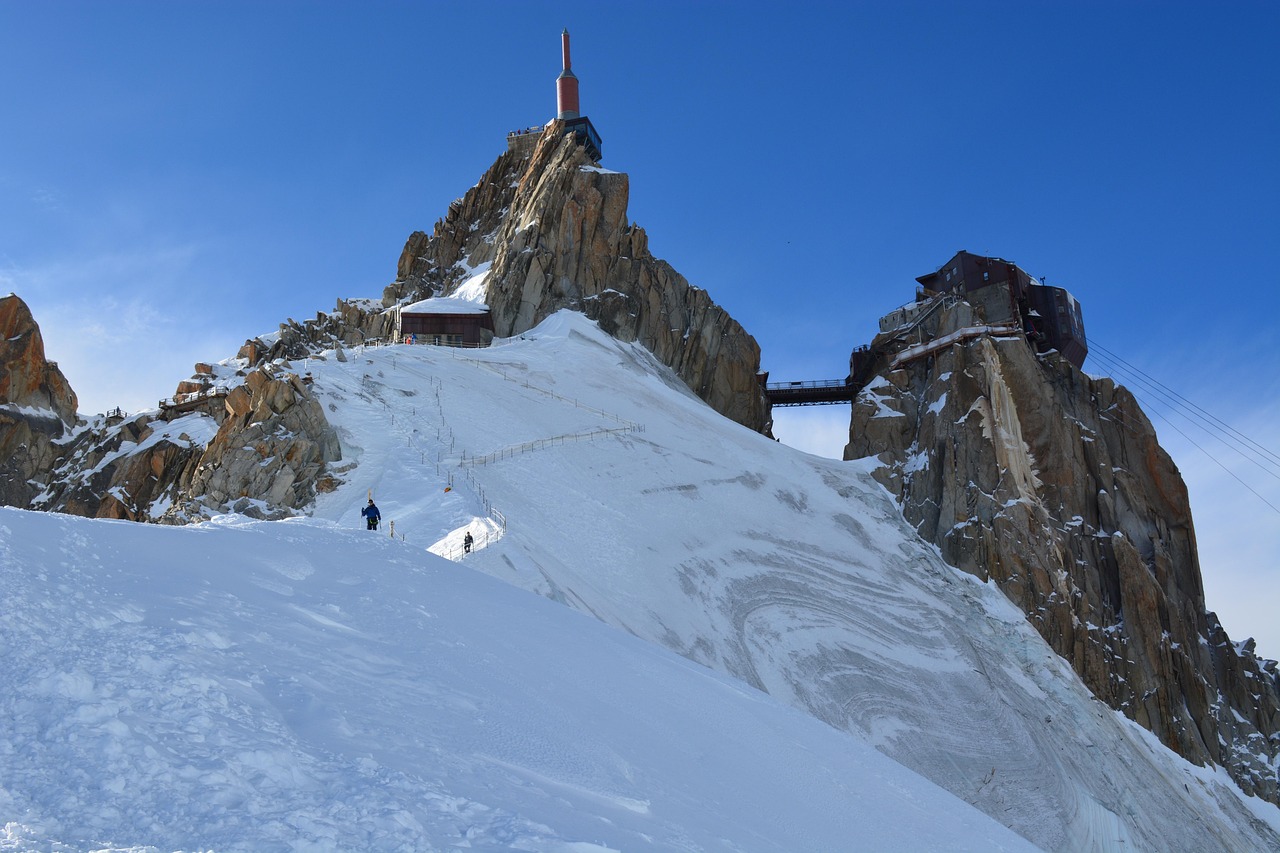
The best time to visit Aiguille du Midi depends on what you’re looking for: winter drama, summer hiking, or quiet shoulder-season contemplation.
- Winter (December–March) – Deep snow, dramatic contrasts, and a strong ski-mountaineering atmosphere. Best if you’re a skier or simply love winter landscapes. Weather can be more volatile; closures due to wind are more frequent.
- Spring (April–May) – Transitional, with lingering snow and fewer crowds. Ski touring continues at higher altitudes; lifts may have maintenance breaks. Check schedules carefully.
- Summer (June–August) – The busiest period. Warm valley temperatures, stable weather windows, and all hiking options open. Ideal for families and non-skiers. Expect crowds and higher prices.
- Autumn (September–October) – My personal favorite. Cooler, clearer air, autumn colors in the valley, and fewer visitors. Some services begin to scale back, and early snow can appear on trails, but the mood is incomparable.
For a 1 day itinerary for Aiguille du Midi, any season can work as long as you’re prepared. For a 2 day itinerary or 3 day itinerary, I lean towards late June, early July, or September, when you have a balance of operational lifts, reasonable crowds, and good weather probabilities.
Events & What’s New for Aiguille du Midi in 2026–2027
The Chamonix valley has a busy calendar of events that indirectly shape the experience of visiting Aiguille du Midi.
- Mont Blanc Marathon (June 2026) – A major trail running event; town is lively and busy, accommodation books up. Aiguille du Midi sees more visitors but remains manageable if you book ahead.
- UTMB – Ultra-Trail du Mont-Blanc (Late August 2026) – The valley’s biggest week. Thousands of runners and supporters descend on Chamonix. Expect crowds, festival atmosphere, and fully booked hotels. Visiting Aiguille du Midi during UTMB week is still possible but requires careful advance planning.
- Ongoing Exhibit Updates (2026–2027) – The Aiguille du Midi exhibits continue to evolve, particularly around climate science. Look out for new interactive installations in 2026 that connect live glacier data with what you see from the terraces.
- Public Transport Enhancements – The Chamonix valley continues to improve its low-emission bus fleet and train integrations. By 2027, expect more frequent services in high season and better real-time digital information.
If your travel dates are flexible, you may choose to avoid the busiest event weeks unless you’re specifically interested in trail running culture, in which case combining an Aiguille du Midi visit with UTMB or the Mont Blanc Marathon can be an unforgettable immersion.
Summary & Final Recommendations
The Aiguille du Midi is more than a cable car and a viewpoint. It’s a carefully choreographed journey from a bustling valley town into the thin, bright air of the high Alps; from human scale to glacial scale; from everyday concerns to something closer to awe.
If you’re planning 1 day in Aiguille du Midi, focus on the summit terraces, Step into the Void, and a brief stop at Plan de l’Aiguille. For 2 days, add a mid-mountain hike along the Balcon Nord and more time in Chamonix. With 3 days, consider the Panoramic Mont Blanc crossing to Italy and a complementary visit to Brévent, Flégère, or the Mer de Glace.
Book your Aiguille du Midi tickets early, dress for winter even in summer, move slowly at altitude, and give yourself time simply to stand and look. The best time to visit Aiguille du Midi in my book remains September, but every season has its character.
After more than a decade of returning to this needle of rock and ice, I still feel a small thrill each time I see its silhouette as the train rounds the bend into Chamonix. I suspect you might feel something similar when you leave—and that it will not be your last visit.