Why Visit Petit Luberon?
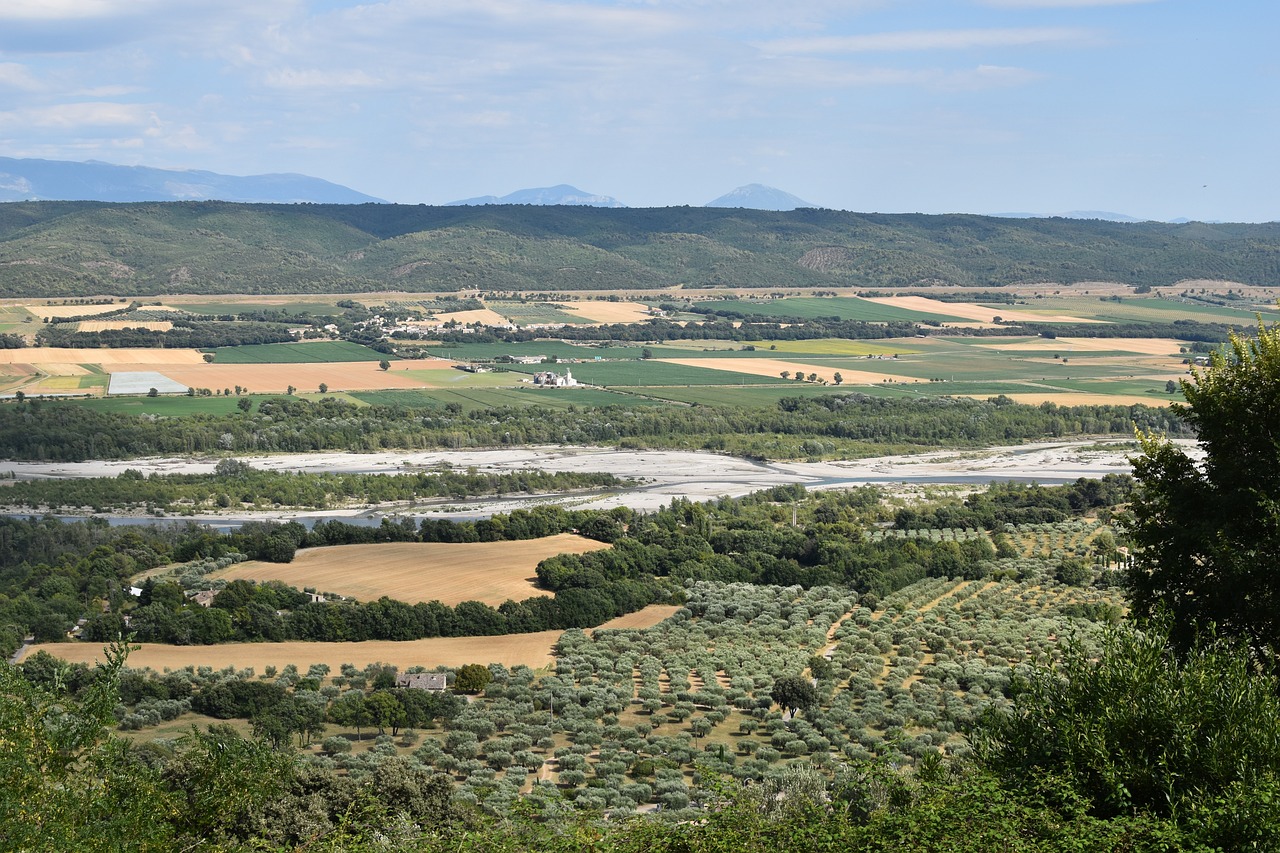
If you only know the Luberon from Instagram—lavender seas, stone villages, and tidy vineyards—the Petit Luberon itself will surprise you. This low limestone mountain range, stretching roughly between Cavaillon and Bonnieux, is where the postcard Provence of hilltop villages collides with a wilder, rockier, more secret landscape of gorges, cliffs, and high plateaus scented with thyme and pine.
I’ve been coming here on and off for over a decade, and I still find new footpaths, forgotten hamlets, and half-crumbled shepherds’ huts. Unlike some overrun corners of Provence, the Petit Luberon rewards those who slow down: linger in a café in Oppède-le-Vieux after the day trippers have gone, walk a little farther on the ridge above Ménerbes, wait for the bats to rise over the Combe de Lourmarin.
In 2026, the area feels especially alive. Several long-gestating trail restoration projects are finished, new farm-to-table tables have opened in tucked-away villages, and the Parc Naturel Régional du Luberon is leaning into sustainable tourism with better trail signage and seasonal shuttle experiments. Yet the Petit Luberon still feels like the quiet cousin of the better-known Alps or Pyrenees—rugged enough for real hiking, gentle enough for families, romantic enough for honeymooners, and close enough to Marseille and Avignon to fold into a broader Provence trip.
Think of this guide as a long walk in good company: we’ll wander through the main peaks, passes, valleys, and villages, stop for long lunches, and build out 4 day, 5 day, 6 day, and 7 day itineraries that actually match the pace of Provence. I’ll share what I do when I’m here—where I stay, what I order, and how I dodge crowds, summer heat, and high prices.
Table of Contents
- 1. Understanding the Petit Luberon
- 2. Peaks, Valleys, Passes & Villages – 15 Essential Places
- 3. Itineraries: 4–7 Days in Petit Luberon
- 4. Mountain Dining & Village Food Culture
- 5. Evenings in Petit Luberon: Après-Hike, Bars & Stargazing
- 6. 2026–2027 Events & What’s New
- 7. Day Trips & Nearby Attractions
- 8. Cultural Etiquette & Local Customs
- 9. Practical Logistics & Travel Advice
- 10. Mountain-Specific Logistics & Seasons
- 11. Summary & Final Recommendations
Understanding the Petit Luberon
The Petit Luberon is the western block of the Luberon Massif in Provence. Its long limestone ridge rises sharply from the Durance Valley to the south and the Calavon Valley to the north, reaching around 700–730 m at its highest points—nowhere near the Alps, yet high enough to create its own microclimate and a true “mountain on the edge of the Mediterranean” feeling.
This isn’t a ski destination—think hiking, cycling, climbing, and slow village life rather than chairlifts and pistes. When people talk about the Luberon, they often mean the whole region of hilltop villages and vineyards. But the Petit Luberon specifically refers to the wilder spine that links some of the most beautiful villages in France: Oppède-le-Vieux, Ménerbes, Lacoste, Bonnieux, Lourmarin, and more.
In 2026, public transport is still limited, but a rental car or e-bike opens up a wide world of things to do in Petit Luberon: gentle valley walks among vines, rocky ridge scrambles, cave-pocked gorges, and cool forests of oak and pine where cicadas scream in summer. What makes it special is the contrast: one hour you’re in an artists’ gallery in Ménerbes, the next you’re alone on a limestone crest, watching vultures wheel over the valley.
15 Essential Peaks, Valleys, Passes & Villages of Petit Luberon
Below are fifteen places I consider the backbone of any serious travel guide for Petit Luberon. Some are villages, some are gorges, some are nameless-feeling ridges that deserve names. I’ve visited each several times, in different seasons; I’ll note what they’re best for, their approximate altitude, and how they fit into a 4–7 day itinerary.
1. Crêtes du Petit Luberon (Main Ridge)
Altitude: ~600–730 m • Best for: hiking, trail running, big views • Best base: Bonnieux, Ménerbes, Oppède
Most visitors admire the Petit Luberon ridge from afar—the pale limestone line that closes the horizon. Walking along it is a different experience: the wind smells of garrigue (wild thyme, rosemary, savory), the light feels almost marine, and on clear days you can see all the way to Mont Ventoux and, sometimes, a hazy strip of Mediterranean.
My first full traverse was a windy April day in 2018, starting from the Forêt des Cèdres above Bonnieux and following the GR paths westward. Since then I’ve returned almost every year, sometimes just for an early-morning out-and-back before a long lunch. In spring 2025, the park completed extra waymarking and erosion-control work, so in 2026 the main crest path is in its best shape in years.
Experience: Expect rolling ups and downs rather than a single summit, with short rocky steps but no technical climbing. In summer, start by 7:30 am; the exposed limestone turns into a heat mirror by noon. In winter, the mistral can be brutal—but the light, with snow dusting Ventoux, is extraordinary.
Access: The easiest access is via the Forêt des Cèdres car park above Bonnieux (narrow but paved road). Another option is from Oppède-le-Vieux via the Col de la Royère. Without a car, a taxi drop-off makes sense if you’re planning a point-to-point hike back to your village.
Tip: Pack more water than you think; there are no reliable sources on the ridge itself. A 1.5 L bottle per person is the bare minimum in warmer months; 2–3 L is safer for long hikes.
2. Forêt des Cèdres (Cedar Forest above Bonnieux)
Altitude: ~700 m • Best for: family walks, picnics, easy access to ridge • Best base: Bonnieux
This planted cedar forest, started in the 19th century with seeds from the Atlas Mountains, is where I take wary friends who “don’t really hike.” Shady, gently graded paths, picnic tables, and a short panoramic loop mean that even in August, when the lowlands bake, you can find respite.
On my last visit in late June 2025, I arrived just after 9 am. Families were unloading coolers, kids balancing footballs and baguettes. I walked the sentier de découverte (interpretive trail), then continued up a short spur to a stony viewpoint with a 180-degree panorama over the Calavon Valley. It’s an instant introduction to the geography of the Petit Luberon: the ridge under your feet, the mosaic of vines and orchards below.
Access & Facilities: A paved but narrow road climbs from Bonnieux to the signed parking area. There are picnic tables, basic toilets (seasonal), and well-marked circuits from 30 minutes to 2 hours. Signage has been refreshed for 2026, with English summaries now added to French interpretation boards.
Family Tip: Bring a small ball or frisbee for the clearing near the main picnic area. It’s a rare wide, flat space in this rocky landscape, and kids inevitably gravitate there.
3. Bonnieux – The Balcony Village
Altitude: ~425 m at the upper church • Best for: romantic stays, base for hiking & wine • Known for: terrace views, good restaurants
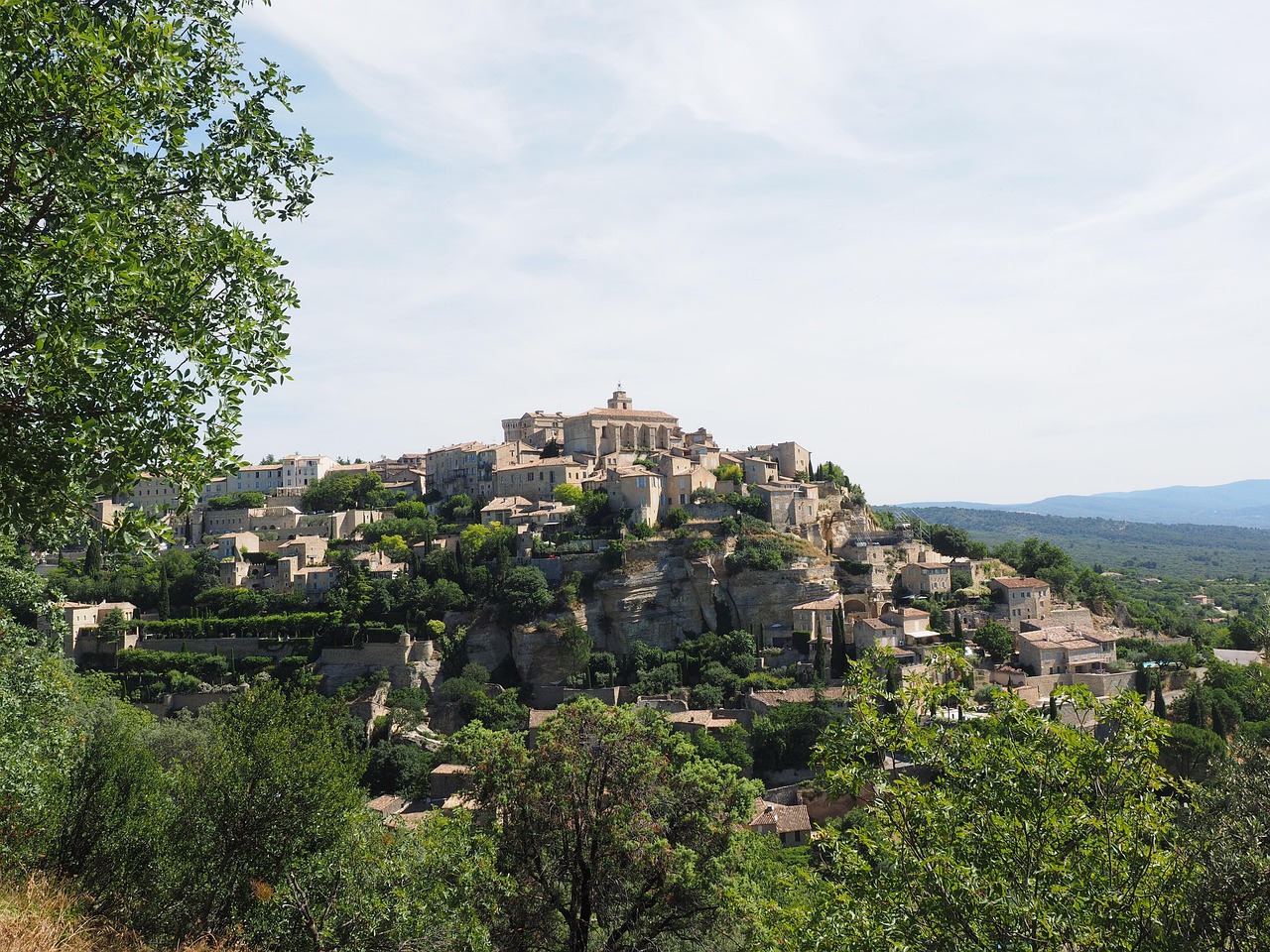
If I had to choose a single base for a 4 day itinerary for Petit Luberon, Bonnieux would be it. The village clings to the northern slope like a stone amphitheater, with steep lanes, plane-tree-shaded squares, and a new church (downhill) echoing the older one at the very top.
I like to stay just below the upper church, where a handful of small guesthouses and apartments offer terraces with big valley views. My daily ritual here: climb to the old church around golden hour, sit on the low wall, and watch the light wash across the patchwork of fields and villages below.
Things to do:
- Walk the steep lanes between the église haute (old church) and the newer church, popping into galleries and small boutiques.
- Visit the Musée de la Boulangerie (Bread Museum), a quirky, earnest love letter to bread-making traditions.
- Use Bonnieux as your gateway to the Forêt des Cèdres and ridge hikes.
Food: Bonnieux punches above its weight in restaurants. In 2026, the trend continues toward locally sourced, slightly creative Provençal cuisine—think lamb with thyme and honey, or courgette flowers stuffed with goat cheese. Make reservations for Friday and Saturday evenings, especially in high season.
Romantic Tip: Time a simple picnic—cheese, charcuterie, a bottle of rosé—for after-dinner stargazing at the Forêt des Cèdres car park. On clear nights the Milky Way is obvious, and you’ll often have the place to yourselves.
4. Ménerbes – Artists, Writers & Ridge Walks
Altitude: ~230–250 m • Best for: village strolling, wine, easy walks • Known for: Peter Mayle fame, art scene
Ménerbes is the hilltop village that, for better or worse, helped put the Luberon on the Anglophone map, thanks to Peter Mayle’s books. In the late 1980s and 90s, that fame brought a wave of expatriates and visitors; these days the village feels more balanced again, with a blend of local life, discreet second homes, and tasteful tourism.
I have a soft spot for Ménerbes. One autumn I rented a simple stone house on a quiet back lane for a month, working mornings at the kitchen table and walking the ridge path every afternoon. The views from the citadelle end of the village—over vines and out to the Petit Luberon ridge—never got old.
Activities:
- Stroll the main street to the citadelle viewpoint, then follow signed paths down among the vines for an easy loop.
- Visit local wineries on the lower slopes; many now offer pre-booked tastings in English.
- Browse art galleries and small studios; Ménerbes continues to attract painters and sculptors.
Family Tip: The lower vineyards provide safe, mostly flat paths for kids to roam and run. Look for waymarked circuits; bring hats and water because shade is limited.
5. Oppède-le-Vieux – Ruins & Ridge Gate
Altitude: ~320 m at the village, ~400 m at the church • Best for: romantic wanderings, history, hiking access
Oppède-le-Vieux is a partially restored medieval village perched on the northern flank of the Petit Luberon. Many visitors don’t realize that the modern village of Oppède is down in the plain; the “Vieux” is the ancient hilltop settlement, saved from complete ruin by artists and architects in the 20th century.
The first time I climbed to the ruined castle and church at sunset, I was with a local friend who’d grown up nearby. We sat on a broken wall, feet dangling into empty air, as swifts screamed around us. The valley below turned blue, then violet. Since then, I return almost every trip—usually late in the day, when the tour groups are long gone.
What to do:
- Park in the main lot below the village, then walk up the cobbled lane through stone houses and old doorways.
- Continue up to the church of Notre-Dame-d’Alydon and the ruins of the feudal castle for wide views.
- Follow the marked trails from the parking area into the lower woods, or climb further to access the ridge via the Col de la Royère.
Food: There are a handful of cafés and restaurants near the parking area and within the village, some only open seasonally. My ritual: a coffee or glass of rosé on a shaded terrace after a late-afternoon hike.
Romantic Tip: Arrive in the late afternoon, wander the deserted lanes as the light softens, hike up to the ruins, then linger for blue hour before descending with headlamps or phone torches. The atmosphere is cinematic.
6. Gorges de Régalon – The Secret Slot
Altitude: ~150–300 m • Best for: adventurous families, cool summer hiking • Base: Mérindol or Cavaillon area
The Gorges de Régalon, carved into the southern flank of the Petit Luberon, are a world away from the sunny, open slopes above. This narrow limestone canyon squeezes in places to shoulder width, with cool, damp air even in August. The first time I walked it, a giggling family ahead of me narrated every squeeze and scramble; their kids still called it “the secret slot” when I bumped into them the next day in Mérindol.
Experience: The main loop is 3–4 km, with some mild scrambling, low tunnels, and narrow passages. It’s not suitable for strollers and can be tricky for anyone with severe claustrophobia or mobility issues, but most reasonably fit walkers—including kids 7+—manage fine.
Safety & Seasons: The gorge is closed after heavy rain and sometimes in high fire-risk periods; always check local signage or the Luberon park website before you go. Avoid stormy days; flash floods are a real risk. In summer, this is a blissfully cool alternative to exposed ridge hikes.
Tip: Wear shoes you don’t mind getting dusty and perhaps slightly damp. Bring a small backpack rather than a big shoulder bag; you’ll appreciate having both hands free for scrambles.
7. Mérindol & Southern Slopes
Altitude: ~120–160 m • Best for: history, access to southern trails • Known for: Vaudois history, birdwatching
Mérindol sits on the hot, south-facing flank of the Petit Luberon. It’s less polished than the northern hilltop villages, with a more lived-in feel. It’s also historically important: in the 16th century, this was a center of the Waldensians (Vaudois), a Protestant group brutally persecuted; the village was destroyed in 1545.
On an overcast March day in 2024, I followed the sentier des Vaudois, a signed circuit that climbs from the modern village up to the site of the destroyed medieval settlement and viewpoints over the Durance valley. The air smelled of wet earth and pine; interpretive signs told the story of those events without sentimentality.
Activities:
- Walk up to the old village ruins and viewpoint.
- Use Mérindol as a starting point for southern-slope hikes toward the plateau.
- Birdwatch along the Durance; this stretch is known for raptors and migratory species.
Tip: The southern slopes get very hot in high summer; aim for early morning or late afternoon walks, and avoid the midday furnace.
8. Lourmarin & Combe de Lourmarin – Gateway to the Gap
Altitude: ~200 m • Best for: culture, markets, access to Combe de Lourmarin • Known for: château, literary ties, Friday market
Lourmarin is technically on the southern side of the Luberon, at the base of the Combe de Lourmarin—the only major road pass that cuts through the massif. It’s one of my favorite places for a gentle day: a stroll through the market, a visit to the Renaissance château, a long lunch on a shaded terrace, and then a drive or ride up through the Combe to the higher villages.
Combe de Lourmarin (Pass): The road winds through a narrow gorge, with sheer walls and glimpses of high cliffs. It tops out around 400–450 m before descending toward Bonnieux. I’ve cycled this in both directions; from Lourmarin, the climb is steady but never extreme. By car, it’s one of the most beautiful short drives in the region.
Things to do in Lourmarin:
- Visit the Château de Lourmarin, with its mix of Gothic and Renaissance architecture and cultural events.
- Browse the Friday market (one of the best in the region for quality food and crafts).
- Pay quiet respects at the grave of writer Albert Camus in the cemetery just outside the village.
Tip: In high season, arrive early on market day and park on the outskirts; the center clogs quickly. Combine a half-day in Lourmarin with an afternoon drive or bike ride through the Combe.
9. Lacoste – Castle on the Crest
Altitude: ~360 m • Best for: views, art, evening strolls • Known for: Château de Sade, art school
Lacoste, with its cobbled alleys and the looming ruins of the Château de Sade, feels more dramatic than its size suggests. From the crest by the castle, the Petit Luberon runs like a low wall across the horizon, villages scattered at its base.
In recent years, the village has become something of an open-air classroom thanks to the Savannah College of Art and Design (SCAD) campus, infusing it with a steady trickle of art students and temporary exhibitions. That mix of medieval stone and contemporary art is part of the charm.
Activities:
- Climb through the village to the castle ruins for a wide view over the valley to the Petit Luberon.
- Look for temporary exhibitions and installations tied to the art school.
- Wander the lanes around sunset; the village is especially atmospheric then.
Tip: Combine Lacoste with nearby Bonnieux or Ménerbes in a single day; they’re close by car or e-bike, and each has a distinct personality.
10. Cavaillon & Colline Saint-Jacques – Western Gateway
Altitude: ~180–200 m at the hilltop • Best for: first views of the massif, easy walks • Known for: melons, urban access
Cavaillon is a workaday town at the western gate of the Petit Luberon, known for its melons and its convenient train links to Avignon and Marseille. Many visitors blast past it; that’s a mistake. The small limestone hill of Saint-Jacques, right above town, offers one of the best “orientation” viewpoints in the area.
On a breezy May evening in 2025, I walked up from the center in under half an hour, passing the chapel and looping along the crest. The Petit Luberon ridge stretched eastward, its pale cliffs catching the last light. Below, the Durance and Calavon valleys framed the massif beautifully.
Tip: If you’re arriving by train and picking up a rental car in Cavaillon, consider a quick walk up Colline Saint-Jacques before driving into the hills. It’s a perfect “welcome to the Luberon” moment.
11. Buoux & Aiguebrun Valley – Cliffs & Caves
Altitude: ~300–500 m • Best for: hiking, rock climbing, history • Base: Bonnieux or Apt side
On the eastern end of the Petit Luberon, the Aiguebrun valley slices between the Petit and Grand Luberon ridges. Here, near Buoux, cliffs rise like giant stone ramparts, riddled with caves and ledges. This is one of the region’s climbing meccas, but even non-climbers will love the walks and atmosphere.
Activities:
- Hike along the Aiguebrun stream, under cool foliage and high walls.
- Explore the Fort de Buoux, an ancient stronghold perched on a rocky outcrop (check opening times; it’s occasionally closed for conservation).
- Watch climbers inch up the famous limestone faces; even as a spectator it’s thrilling.
Tip: The valley stays cooler and greener than the exposed slopes; it’s a good choice for midsummer walks. Wear sturdy shoes; paths can be rocky and uneven.
12. Calavon Valley – Vineyards & Old Rail Trails
Altitude: ~150–250 m • Best for: cycling, easy walks, wine • Base: Any northern village
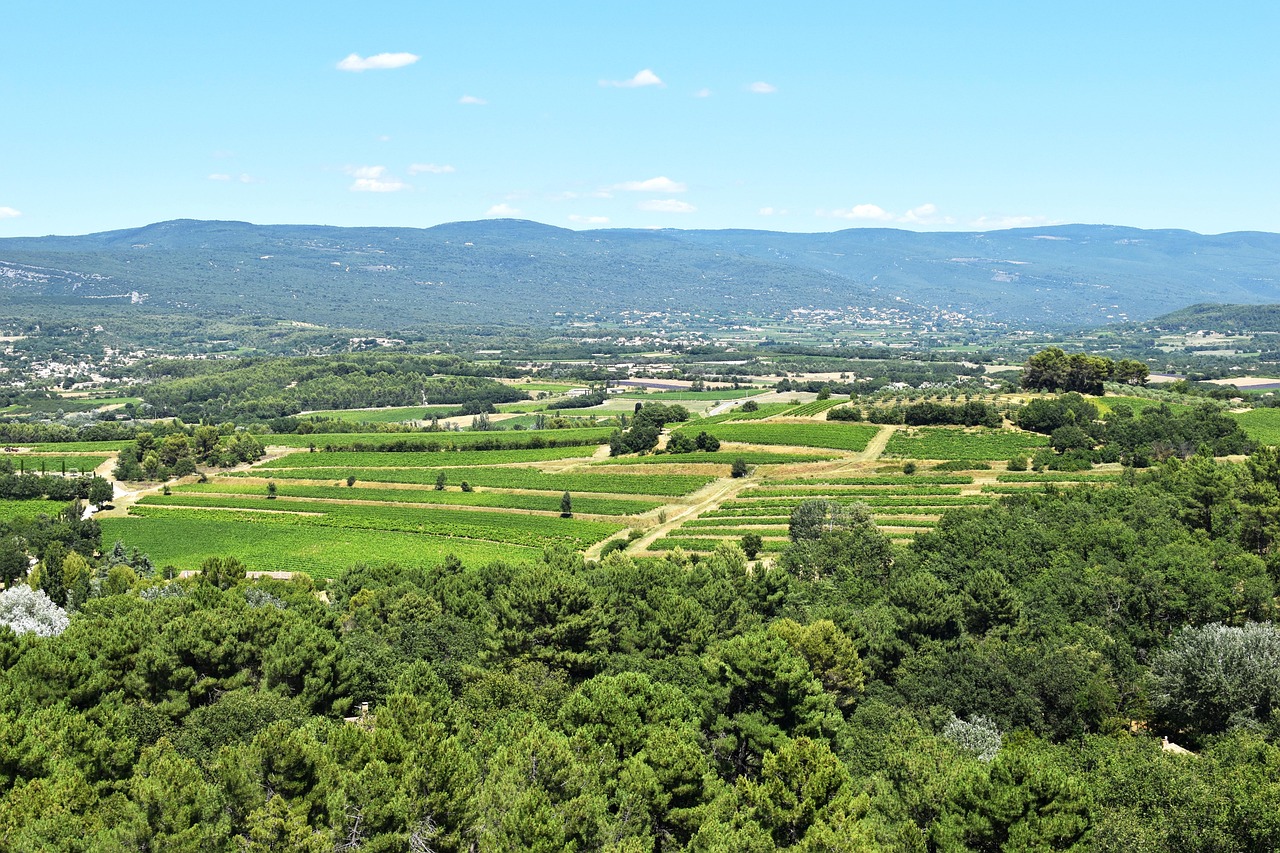
The Calavon Valley runs along the northern base of the Petit Luberon, a broad agricultural swath of vineyards, orchards, and the occasional village. It’s the quiet counterpart to the dramatic ridges above—a place to bike, stroll, and taste.
Activities:
- Ride or walk sections of the Véloroute du Calavon, a greenway built on an old railway line. It’s mostly flat and family friendly.
- Visit wineries on both sides of the valley, sampling AOP Luberon wines.
- Use the valley road system to shuttle between hilltop bases and trailheads.
Family Tip: The greenway is ideal for kids learning to cycle longer distances: separated from traffic, with gentle grades and frequent access points.
13. Plateau des Claparèdes – Lavender & Low Stone Walls
Altitude: ~400–500 m • Best for: cycling, lavender in season, easy hikes • Base: Bonnieux, Saignon
Just north of the Petit Luberon’s highest point, between Bonnieux and Saignon, lies the Plateau des Claparèdes: a gently rolling expanse of lavender fields, truffle oaks, and dry-stone huts (bories). In late June and early July, the air hums with bees and the light turns violet.
I’ve cycled this plateau in every season: in spring, when wildflowers sprinkle the verges; in high summer, when lavender steals the show; and in autumn, when the fields are bare but the sky seems enormous. There’s a sense of vastness up here that you don’t get in the tighter valleys.
Tip: Respect private fields; take photos from field edges and paths, not trampling through rows. In 2026, local farmers are increasingly vocal about “lavender tourism etiquette.”
14. Vallon de l’Aiguebrun & Limpar – Hidden Stream Valleys
Altitude: ~250–450 m • Best for: shaded walks, family hikes, birdlife
Beyond the main Aiguebrun valley near Buoux, several smaller stream valleys (local people often call them vallons) carve into the flanks of the Petit Luberon. These are where I go when I want solitude without effort—narrow footpaths under oak and boxwood, the sound of water in spring, birds flitting overhead.
Experience: These are not “named attractions” in the tourist brochures; they’re places you reach by following local hiking maps or GPX tracks. I generally park at small pullouts, look for yellow trail blazes, and follow my nose along the watercourses.
Tip: Bring a paper IGN map or a good offline mapping app. Mobile coverage can be patchy in the deeper folds of the hills.
15. Refuges, Cabins & Rural Inns – Sleeping on the Slopes
Altitude: ~400–700 m depending on location • Best for: hikers, romantic overnights, starry skies
Unlike the Alps, the Petit Luberon doesn’t have a dense network of staffed high-altitude refuges. What it does have is a scattering of rural inns, farm stays, and occasional simple mountain huts that give you the feeling of sleeping “in the hills” rather than just below them.
In 2023 I spent a night at a renovated farmhouse inn tucked against the northern slope between Ménerbes and Bonnieux. We ate on a terrace as swifts and bats traded the sky, then walked out under a sky full of stars, the ridge a dark silhouette above. That sense of being halfway between village and mountain is, for me, the essence of Petit Luberon living.
Tip: Book rural stays early for June–September, especially if you don’t have a car—they tend to be small and fill up fast. Ask specifically about walking access to trails if you’d rather not drive to hike.
Itineraries: 4–7 Days in Petit Luberon
The following itineraries are based on years of trial and error—my own and that of friends I’ve helped plan trips. They’re designed to be flexible: pick the 4 day itinerary for Petit Luberon if you’re adding on to a broader Provence trip; stretch to 5 days in Petit Luberon, 6 days in Petit Luberon, or a full 7 days in Petit Luberon if you want to sink into the rhythm of the place.
To keep this guide readable, I’ll outline each day’s logic, rhythm, and key experiences, with practical notes on timing and logistics. Think of these as editorial “days in the life” rather than rigid checklists.
4 Day Itinerary for Petit Luberon
Best for: first-time visitors, couples, families with older kids • Base: Bonnieux or Ménerbes
Day 1 – Arrival, Bonnieux & the Terrace View
I like to start gently. After a train to Avignon TGV or Marseille and a rental car pickup, aim to arrive in Bonnieux by early afternoon. The drive up from the valley winds through vines and cherry orchards; when the village suddenly appears on its hill, you’ll understand why you came.
Afternoon: Check into your guesthouse, then wander the lanes without a map. Step into the old church at the top, breathe the cool air, then step back out for your first panoramic view over the Calavon Valley and across to the Petit Luberon ridge. Locate the Forêt des Cèdres above you—you’ll be there soon enough.
Evening: Settle onto a terrace for dinner. I always suggest ordering something with goat cheese (a local staple) and whatever vegetable is in season—often tomatoes, courgettes, or aubergines in summer. Ask for a glass of AOP Luberon red or rosé; you’re drinking the landscape you’ve just admired.
Timing Tip: Resist the urge to schedule too much on day one. Jetlag and the heat can catch up with you. A slow evening, maybe a short stroll under the stars, is enough.
Day 2 – Forêt des Cèdres & Ridge Walk
Morning: After a simple breakfast—coffee, croissants, maybe a slice of fougasse—drive up to the Forêt des Cèdres. Arrive by 9 am in summer to secure parking and avoid the worst heat. Start with the short interpretive loop through the cedars to warm up; then, if you’re feeling good, continue up to the ridge.
I like a 3–4 hour out-and-back: climb to a panoramic knoll, find a rock to sit on, and simply watch the valley. Families can turn back at any point; there’s no single “summit” to reach, just steadily expanding views.
Afternoon: Return to Bonnieux for a long lunch or a picnic in the shade of the plane trees. In the late afternoon, drive or e-bike over to Lacoste. Climb to the castle, wander the art installations if any are on, and watch the light change on the Petit Luberon across the valley.
Evening: Dinner back in Bonnieux or in Lacoste. If you’re not exhausted, consider a short post-dinner drive back up toward the Forêt des Cèdres for stargazing.
Hiking Tip: For this first major hike, pack at least 1.5 L of water per person, plus sun protection. Even on cooler days, the exposed limestone can be deceptive.
Day 3 – Ménerbes & Oppède-le-Vieux
Morning: Drive down into the Calavon Valley and up to Ménerbes. Park outside the old core and walk up through the village to the citadel viewpoint. This is one of the classic must-see attractions in Petit Luberon: the ridge stretched out opposite, vineyards at its feet.
From the village, follow a marked path down among the vines for a gentle 1–2 hour loop. In spring, poppies and wildflowers dot the fields; in autumn, vines blaze red and gold.
Afternoon: After lunch in Ménerbes, continue to Oppède-le-Vieux. Park below and climb through the restored stone lanes to the church and castle ruins. Sit on the wall and let your imagination wander back through centuries of sieges and abandonment.
Feeling energetic? From the parking area, you can follow signed paths for an additional loop into the lower woods, or simply linger over a drink in the shade.
Evening: Back in Bonnieux, opt for something simple: maybe pizza or a salad, followed by a stroll. If you’re here in July or August, check for local concerts; many villages host evening events in their squares.
Day 4 – Lourmarin & Combe de Lourmarin
Your last day in this 4 days in Petit Luberon plan is about contrasts: a lively market village and a wild gorge.
Morning: Drive down to Lourmarin, aiming to arrive by 9 am if it’s a Friday market day. Wander the stalls—cheeses, olives, honey, cured meats, lavender products—and grab picnic supplies. Visit the château if you’re inclined; its architecture and exhibitions offer a different side of the region’s history.
Afternoon: After lunch (either picnic or terrace), drive up through the Combe de Lourmarin. Stop at signed viewpoints and admire the cliffs. If you’re keen for a last short hike, park in a lay-by and follow one of the short marked paths into the side ravines.
Depending on your onward travel, you can either return to Bonnieux for one last night or continue directly toward your next destination (Aix-en-Provence, Marseille, Avignon, or the coast).
Departure Tip: Build in extra time for the drive out; summer traffic through the Combe can be slow, and you’ll want to stop for photos anyway.
5 Day Itinerary for Petit Luberon
With 5 days in Petit Luberon, you can keep the 4-day core and add a full-day adventure into one of the wilder valleys, such as the Gorges de Régalon or Aiguebrun.
Day 5 – Gorges de Régalon & Southern Slopes
Morning: Drive to the Gorges de Régalon trailhead near Mérindol (check access status first). Start the loop early, ideally by 9 am in summer. The narrow, shaded canyon is a delight—kids love the sense of exploration; adults appreciate the natural air conditioning.
Midday: After emerging from the gorge and completing the loop, drive down to Mérindol. Have lunch in the village, then follow the sentier des Vaudois up to the old village site and viewpoint. This is a powerful cultural and historical experience, a reminder that these pretty hills have seen darker days.
Afternoon: If it’s not too hot, explore one of the short trails on the southern slopes above Mérindol, or simply sit with a drink and watch the light move across the Durance plain.
Evening: Return to your base. If you’ve been staying in Bonnieux, consider switching for your final night to a rural inn on the slopes to experience a different ambiance—dinner on a terrace with only crickets and the occasional owl for company.
Safety Tip: Never enter the Gorges de Régalon if heavy rain is forecast. Flash floods can fill the canyon alarmingly fast.
6 Day Itinerary for Petit Luberon
Six days in Petit Luberon lets you add Buoux and the Aiguebrun valley, plus a more relaxed village day or a cycling loop on the Plateau des Claparèdes.
Day 6 – Buoux, Aiguebrun & High Cliffs
Morning: Drive east toward Buoux and the Aiguebrun valley. Park at a designated lot by the stream. Follow the riverside path under towering cliffs; watch climbers inching up routes that have been famous in climbing circles for decades.
Midday: Picnic by the stream in a shaded spot, or book lunch at a countryside inn in the valley. The sound of water and the green canopy feel almost Alpine compared to the dry ridges above.
Afternoon: Visit the Fort de Buoux if open. The climb up is short but steep, with some exposed sections; the views from the top, over the valley and across to the Petit Luberon, are worth the effort.
Evening: Drive back via the Plateau des Claparèdes, stopping at lavender fields if in season. Pause at a dry-stone hut or a field edge to watch the light soften. Back at your base, treat yourself to a special-occasion dinner; you’ve earned it.
Alternative: For a lower-key sixth day, rent e-bikes and do a loop across the Plateau des Claparèdes, linking Bonnieux, Saignon, and the Calavon valley. This gives you new angles on the Petit Luberon ridge the entire way.
7 Day Itinerary for Petit Luberon
A full 7 days in Petit Luberon allows you to adopt local pace: more café time, more spontaneous stops, and deeper exploration of hidden gems in Petit Luberon.
Day 7 – Free Day: Markets, Wine & Small Wanders
Instead of scripting every hour, I always build a “free day” into a weeklong trip. In the Luberon, this is the day to follow your nose.
Options:
- Spend a lazy morning at a village market (Lourmarin on Friday, Apt on Saturday, others on different days), then visit a winery or two.
- Take an easy walk in one of the lesser-known stream valleys on the northern flanks—follow yellow blazes and enjoy the solitude.
- Return to a place you loved earlier in the week at a different time of day: Oppède-le-Vieux at dawn, the Forêt des Cèdres at sunset, Ménerbes in the quiet of a late morning.
Evening: For your final night, consider a simple, traditional dinner: a daube provençale (slow-cooked beef stew), or grilled lamb with local herbs, followed by a plate of local goat cheeses and honey. Toast the ridge that’s now etched in your memory.
Reflection Tip: I like to end a week here by jotting a few notes in a journal—favorite views, meals, small encounters. The Luberon is made up of these small moments as much as its big panoramas.
Mountain Dining & Village Food Culture
While there are no classic Alpine rifugi with dorms and ski racks here, the Petit Luberon has its own version of mountain dining: terraces with big views, rural inns on the slopes, and village restaurants that understand how hungry a hiker can be.
What to eat:
- Goat cheese: Fresh, ash-coated, or aged, often from farms on the surrounding plateaus.
- Lamb & game: Roasted with rosemary and thyme, sometimes with olives or prunes.
- Seasonal vegetables: Ratatouille, grilled courgettes, oven-roasted tomatoes.
- Olives & tapenade: The default nibble with your aperitif.
- Pastries: Almond-based treats, fruit tarts, and tropézienne-style cream brioche.
Coffee & breakfast: Breakfast tends to be simple—coffee, bread, butter, jam—unless you’re in a more international-facing hotel. I often supplement with a pastry from the village bakery: a croissant, pain au chocolat, or a local specialty with almond cream.
My routine: On hiking days, I grab a sandwich (jambon-beurre or goat cheese and tomato) and a pastry in the morning, plus fruit and nuts from the market. Lunch is often on a rock with a view. Dinner is where I indulge: a multi-course meal on a terrace in Bonnieux or Ménerbes, with a carafe of local wine.
Money-saving tip: Opt for the menu du jour (daily set menu) at lunch. You’ll eat well for significantly less than ordering à la carte in the evening.
Evenings in Petit Luberon
Evenings in Petit Luberon are less about wild nightlife and more about gentle rituals: an aperitif on a terrace, a stroll through cobbled streets, star-watching from a dark hillside.
Après-hike traditions: After a long hike, I like to head straight to a village café for a cold beer, a glass of rosé, or a panaché (beer-lemonade mix). Locals linger over drinks, kids play in the square, and everyone compares sunburn lines and dust on their shoes.
Village bars: You’ll find at least one or two in each main village. They’re casual, often family-run. Don’t expect cocktails lists; do expect decent wine, simple snacks, and people-watching.
Fondue & hearty plates: This isn’t Savoie; fondue isn’t a local staple. Instead, look for hearty stews, grilled meats, and oven-roasted vegetables. In cooler months (March–April, October–November), a daube with polenta or potatoes hits the spot after a chilly ridge walk.
Stargazing: The modest altitude and relative lack of light pollution make for good night skies. I like the Forêt des Cèdres car park, the plateau above Ménerbes, or any rural stay away from village lights. In August, the Perseid meteor shower can be spectacular.
Seasonal festivals: Summer brings music festivals, outdoor cinema nights, and village fêtes votives with bands and food stalls. Check village notice boards and tourist offices for up-to-date listings; in 2026, the park is also trialing a “Nuits des Étoiles du Luberon” series of guided astronomy evenings on select ridge viewpoints.
2026–2027 Events & What’s New in Petit Luberon
For 2026, a few trends and events are worth noting:
- Trail improvements: The Parc Naturel Régional du Luberon has completed new signage and erosion control on several ridge and valley trails, particularly near the Forêt des Cèdres and Oppède-le-Vieux.
- Summer shuttle pilot: A limited summer shuttle service is being tested between Cavaillon, Bonnieux, Ménerbes, and key trailheads to reduce car traffic. Check the park and village websites for schedules.
- Festivals:
- Festival de Lourmarin 2026 (June–August): Classical and jazz concerts at the château and village venues.
- Les Nuits du Luberon (July–August): Outdoor performances rotating between villages including Bonnieux, Ménerbes, and Oppède-le-Vieux.
- Harvest & wine events (September–October): Many wineries host open days and tastings tied to the grape harvest.
- Eco-initiatives: More villages are rolling out water fountains for refilling bottles and improved recycling; bring a reusable bottle and bags.
Looking ahead to 2027, expect continued expansion of cycling infrastructure, including better links between the Véloroute du Calavon and hilltop villages with e-bike charging points.
Day Trips & Nearby Attractions
Petit Luberon makes an excellent base for exploring wider Provence. A few worthwhile day trips:
- Mont Ventoux: About 1.5–2 hours by car. Iconic bald summit, great for a contrast “big mountain” day. Best in late spring to autumn.
- Avignon: 45–60 minutes. Papal Palace, bridge, lively streets. Combine with a morning hike if you start early.
- Aix-en-Provence: 1–1.5 hours. Elegant town, Cézanne heritage, markets and cafés.
- Les Alpilles (Saint-Rémy, Les Baux): 1–1.5 hours. Another low limestone range with dramatic cliffs and Roman sites.
- Calanques near Marseille/Cassis: 2 hours. Sea cliffs and turquoise coves; makes a striking sea-and-mountains contrast.
Tip: For day trips by train, consider basing your last night in Cavaillon or Avignon; for car-based excursions, hilltop villages still work fine with an early start.
Cultural Etiquette & Local Customs
Provence is relaxed, but a few customs will make your stay smoother and your encounters warmer.
- Greetings: Always say bonjour (or bonsoir in the evening) when entering a shop, café, or small office. Not doing so can be seen as rude.
- Language: Many people in tourism speak some English, but starting in French—Bonjour, parlez-vous anglais ?—goes a long way.
- Mealtimes: Lunch is generally 12:00–14:00, dinner from 19:30 or 20:00. Outside these windows, full meals may not be available.
- Dress: Casual but neat is fine. Swimwear stays at pools and beaches; in villages, cover up a little more.
- On the trail: Greet fellow hikers with a simple bonjour. Close gates, don’t disturb livestock, and keep to marked paths across private land.
- Driving & noise: Villages are quiet at night. Keep noise down after 22:00, especially in stone-walled streets where sound carries.
Tipping: Service is included in restaurant bills, but it’s customary to leave small change or round up if you’re happy (e.g., leaving €2–5 on a moderate bill).
Practical Logistics & Travel Advice for Petit Luberon
Getting There
By air: Nearest major airports are Marseille-Provence (MRS) and Lyon (LYS), with Avignon (AVN) for some seasonal flights.
By train: High-speed TGV to Avignon TGV or Aix-en-Provence TGV, then regional trains or buses to Cavaillon, Apt, or other gateways.
Getting Around
Car rental: The most flexible option. Roads are generally good but narrow in places. Foreign drivers’ licenses are accepted for short stays; if your license is not in Roman script, carry an International Driving Permit.
Public transport: Limited but improving. Regional buses connect larger towns and some villages, but frequency is low, especially on weekends.
E-bikes: A growing number of rental shops in villages like Bonnieux and Ménerbes. Excellent for exploring the Calavon valley and plateau roads, less ideal for hot midday climbs.
SIM Cards & Connectivity
In 2026, eSIMs from major European providers (Orange, SFR, Bouygues, Free) make data easy. Physical SIMs are available in supermarkets and phone shops in larger towns. Coverage is generally good in villages and valleys, patchy on some ridges and in deep gorges.
Money & Costs
The euro is the currency. ATMs are available in larger villages and towns; smaller hamlets may have none. Cards are widely accepted, but carry some cash for markets and small cafés.
Saving money in a high-cost region:
- Stay in apartments or gîtes and cook some meals with market produce.
- Make lunch your main restaurant meal; choose simpler dinners.
- Buy wine directly from producers in bulk or bag-in-box for home consumption; it’s cheaper and often excellent.
- Use free or low-cost activities: hiking, village wandering, markets, river swims.
Visa Requirements
France is part of the Schengen Area. Many nationalities can visit visa-free for up to 90 days within a 180-day period; others require a Schengen visa. Check current requirements well before travel, especially as EU entry rules continue to evolve.
Mountain-Specific Logistics & Seasons
Altitude & Acclimatization
The Petit Luberon’s modest altitude (mostly under 800 m) means altitude sickness is not a concern. What matters more is heat, sun, and wind. Hydrate well, wear sun protection, and respect the mistral wind when it blows hard.
Weather, Storms & Fire Risk
Spring (March–May): Variable; can be wet and windy or gloriously sunny. Great for wildflowers and cooler hiking.
Summer (June–August): Hot and dry. Many trails are exposed. Early starts are essential; some forested areas and gorges may close on extreme fire-risk days.
Autumn (September–November): Often ideal: warm days, cool nights, grape harvest, fewer crowds.
Winter (December–February): Quiet, with occasional snow dustings on the ridge, cold mistral days, and short daylight. Trails remain usable most of the time, but some restaurants and accommodations close.
Storms & closures: Heavy rain can make gorges and steep trails dangerous. Always heed local closure notices, especially in the Gorges de Régalon and forested areas in midsummer.
Roads & Passes
The main pass is the Combe de Lourmarin, open year-round in most conditions. Secondary forest roads to places like the Forêt des Cèdres can be temporarily closed during high fire risk or after heavy storms; respect barriers.
Gear & Clothing
- Footwear: Light hiking shoes or trail runners with good grip. Sandals are not enough for most trails.
- Layers: Even in summer, carry a light layer for the mistral; in shoulder seasons, a fleece and windproof shell are useful.
- Sun protection: Hat, sunglasses, high-SPF sunscreen, especially for ridge walks.
- Optional: Trekking poles for steeper or rocky descents. Crampons and heavy winter gear are rarely needed here.
Mountain Rescue & Insurance
In France, dial 112 for emergencies. Mountain rescue is professional, but costs can be significant for non-residents; ensure your travel insurance covers hiking and outdoor activities. Carry a charged phone and let someone know your route on longer hikes.
Cable Cars & Lift Passes
There are no cable cars or ski lifts in Petit Luberon; your lift pass is your own legs. That’s part of the charm: trails are free, views are earned, and you rarely queue for anything but ice cream.
Best Seasons for Key Activities
- Hiking: March–June and September–November.
- Wildflowers: April–May.
- Lavender fields (Plateau des Claparèdes): Late June–mid-July.
- Fall color (vines & oaks): Late October–mid-November.
- Swimming (rivers & pools): June–September.
Summary & Final Recommendations
Petit Luberon is not about altitude records or extreme sports. It’s about a particular kind of mountain life: pale limestone ridges above vineyards, stone villages clinging to slopes, gorges where the air stays cool in August, and terraces where you eat food grown within sight of your table.
If you have 4 days in Petit Luberon, base yourself in a hilltop village like Bonnieux, walk the Forêt des Cèdres and ridge, explore Ménerbes and Oppède-le-Vieux, and drive the Combe de Lourmarin. With 5–6 days, add wilder valleys like the Gorges de Régalon and Aiguebrun, plus a cycling loop across the plateau. With a full 7 day itinerary for Petit Luberon, slow down further: linger in markets, revisit favorite viewpoints at different times of day, and let village life shape your schedule.
Best seasons: For hiking and village life, April–June and September–early November balance good weather with manageable heat and crowds. July and August are vivid but hot and busier; plan early starts and long siestas. Winter is contemplative and quiet, with some closures but plenty of space and light.
Above all, give yourself time. The must-see attractions in Petit Luberon—the villages, the ridge, the gorges—are just the framework. The real magic lies in the simple rituals between them: morning coffee with the baker’s gossip, a chance conversation on a bench, the way the ridge turns pink at dusk. That’s what keeps drawing me back, year after year.