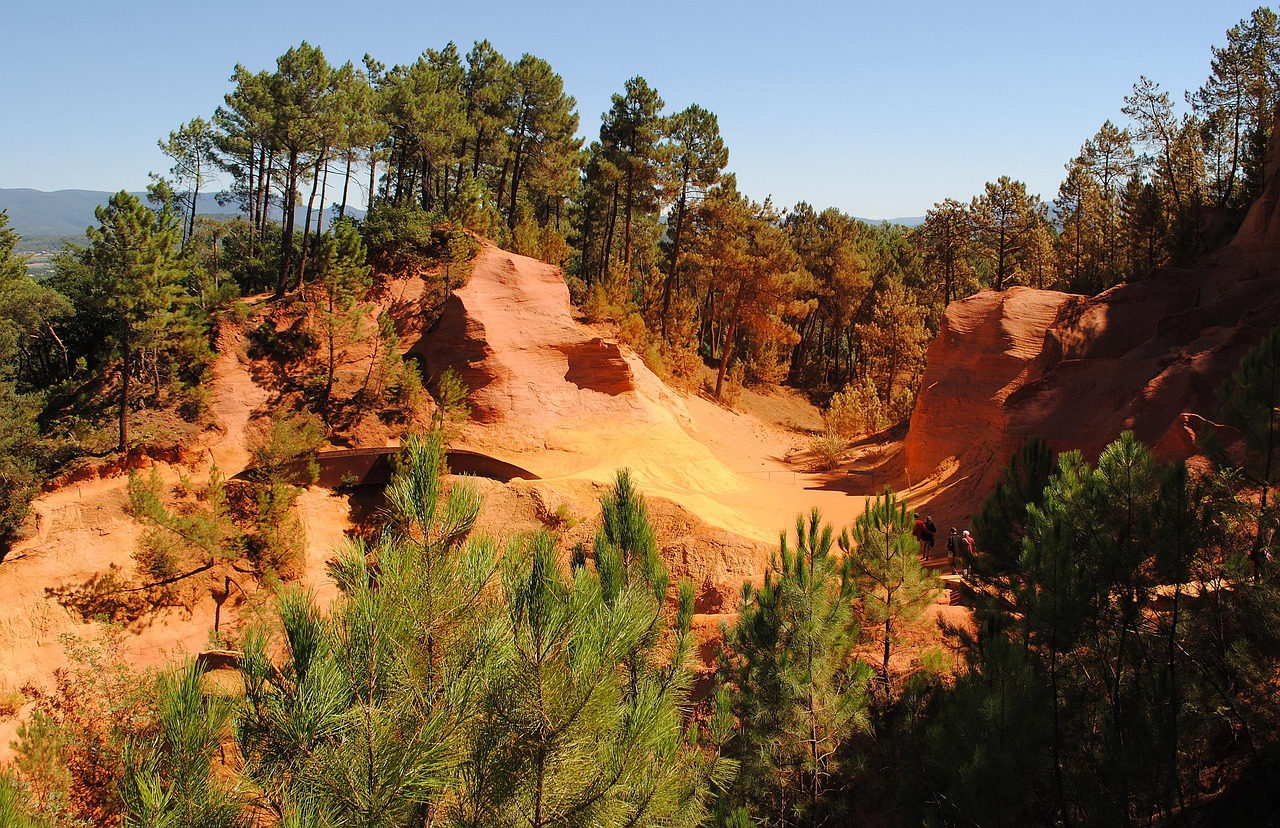
Why Visit the Ochre Trail in 2026
Set in the Luberon region of Provence, the Ochre Trail is a short but spellbinding walk through former open-air ochre quarries. It’s sometimes described as the “Colorado Provençal in miniature,” but that does it a disservice. This place has its own rhythm: pine resin in the air, cicadas buzzing, and a constant, quiet astonishment as the light changes on the sculpted cliffs.
What makes the Ochre Trail special is not just its beauty, but its scale. Unlike many “must-see attractions in France,” this one is compact, easy to reach, and genuinely family friendly. You can stroll it with a stroller (on the shorter route), bring grandparents (with a bit of care for the steps), or hike the longer loop and pair it with wine tasting, hilltop villages, and sunset views over lavender fields.
In 2026, the site is better managed than ever: improved signage in English, timed ticketing during the peak months to avoid overcrowding, and new interpretive panels that explain the geology and history of ochre mining. Local restaurants have stepped up as well, with more seasonal menus and less of the frozen “tourist plate” that haunted earlier years.
Table of Contents
- Overview: How to Visit the Ochre Trail
- 1–3 Day Itineraries for the Ochre Trail
- Main Sections & Viewpoints of the Ochre Trail
- Adjacent Sites & Day Trips from the Ochre Trail
- Eating Around the Ochre Trail
- Where to Stay Near the Ochre Trail
- Best Time to Visit & Ochre Trail After Dark
- Cultural Etiquette & Local Customs
- Tickets, Opening Hours & On-Site Logistics (2026–2027)
- How to Get There & Get Around
- Practical Travel Tips for the Ochre Trail
- What’s New: Events & Changes for 2026–2027
- Summary & Final Recommendations
Overview: How to Visit the Ochre Trail
The Ochre Trail (Sentier des Ocres) sits just below the village of Roussillon, one of the “Most Beautiful Villages of France.” The entrance is a few minutes’ walk from the main square, where the ochre-colored houses cluster around cafés and art galleries. You pay a small fee at the gate and choose between two loops:
- Short loop: about 30–35 minutes, gentle, with some steps.
- Long loop: about 45–60 minutes, more steps and a bit more up-and-down.
I always recommend the long loop if you’re able; the extra sections give you deeper canyons and quieter corners. But the real secret is time of day. The light on the ochre cliffs is everything. At midday in July, the colors flatten and the crowds pack the boardwalks. At 9:30 a.m. in late September, or an hour before closing in June? It’s magic.
For most travelers, the trail itself takes under an hour, but don’t treat it like a box to tick. Wrap it in a morning coffee in the village, a lazy lunch, and an afternoon exploring nearby hilltop towns. That’s how you turn “things to do in Ochre Trail” into a genuinely memorable day.
1–3 Day Itineraries for the Ochre Trail (2026 Edition)
Whether you have 1, 2, or 3 days in and around Roussillon, you can build an itinerary that feels full but not frantic. Below are my recommended plans for a 1 day itinerary for Ochre Trail, 2 days in Ochre Trail, and 3 days in Ochre Trail, each told the way I’ve actually done them in recent years.
1 Day Itinerary for Ochre Trail: The Essential Experience
If you only have 1 day in Ochre Trail and Roussillon, focus on light, pacing, and avoiding the tour-bus rhythm. I’ll describe the day exactly as I did it last June, when a Parisian friend joined me for a whirlwind Luberon escape.
Morning: Coffee in Roussillon & First Glimpse of Ochre
We arrived in Roussillon around 9:00 a.m., having driven from L’Isle-sur-la-Sorgue. The buses hadn’t yet arrived, and the village felt sleepy, shutters half-open, a few locals carrying baguettes back from the bakery.
We parked in the main paid car park below the village (follow the “Parking” signs as you approach). From there, it’s a five-minute climb up cobbled lanes to the Place de la Libération, the small main square. I always start with a coffee at Café de la Poste; it’s not a hidden gem, but if you grab a table on the edge of the terrace, you can watch the village wake up.
After coffee, we wandered the back lanes, following our noses rather than a map. This is a village to feel under your feet: uneven stone, faded red walls, shutters in every shade of green and blue. Pop into a few of the small art galleries, but resist buying a painting yet. The real inspiration awaits below on the trail.
Late Morning: Walking the Ochre Trail (Long Loop)
At 10:00 a.m., we headed to the Sentier des Ocres entrance, a three-minute walk from the square. You’ll see signs pointing “Sentier des Ocres” and a small ticket cabin at the top of a gentle slope.
In 2026, adult tickets hover around a few euros, with discounts for children. Timed entry may apply from late June through August, especially between 10:30 a.m. and 3:00 p.m., so if you’re visiting in high season, prebook your time slot online the day before (more on tickets below).
Standing at the wooden deck just past the gate, my friend actually went quiet – and this is a man who narrates his own life. The Orange Amphitheatre spread out below us, a bowl of blazing color. It’s here that you feel the scale: tiny figures winding along boardwalks at the base of the cliffs, pine trees clinging to impossible edges.
We chose the long loop, which I always recommend for a first visit. Plan 45–60 minutes if you stop for photos and to read a few signs. The path is a mix of wooden stairs, compacted earth, and viewing platforms with railings. Wear proper shoes: the ochre dust is fine and gets slippery on smooth soles. I’ve seen more than one visitor skid trying to descend a slope in flimsy sandals.
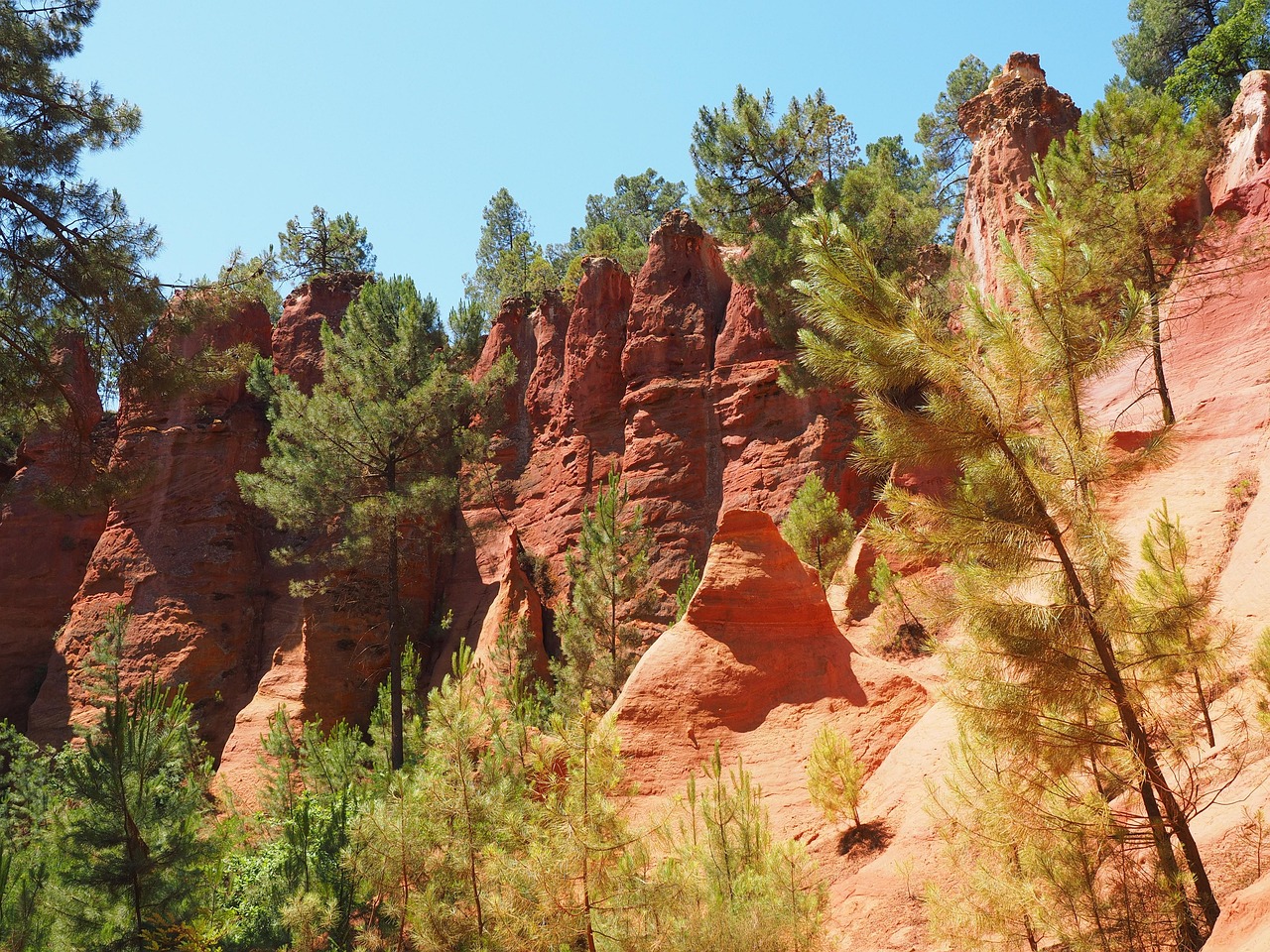
As you descend, you pass through a series of amphitheatres and gullies, the light changing with each turn. Watch how the wind has carved fluted columns and waves into the cliffs, and how the pine roots twist down into the ochre, searching for water. The Pine Forest Corridor is where I always inhale deeply and think, “This is why I live in Provence”: warm resin, cool shade, and a carpet of orange dust under a canopy of green.
On this particular June day, we met a local school group on a field trip. Their teacher had them hold out their hands while she brushed different shades of ochre powder onto their palms – yellow, orange, red. “This is your history,” she told them. “Your great-grandparents might have worked here.” It’s moments like that which remind you this is not just a pretty walk; it’s an open-air chapter of industrial and cultural history.
By 11:15 a.m., we were back at the top, shoes a shade more orange and camera rolls heavy. Don’t rush straight out. Take a moment on the final platform to look back; the perspective here is one of the classic shots of the Ochre Trail.
Lunch: Avoiding the Tourist Traps
The immediate radius around the trail entrance is filled with cafés and snack stands aimed at the tour-bus crowd. They’re fine for an ice cream or a quick lemonade, but for lunch I walk a little farther.
My go-to in 2026 remains a small bistro just off the main square (I’ll keep the name vague to protect it from turning into another Instagram circus, but ask any local shopkeeper for the “bistro with the view of the Monts de Vaucluse”). They do a superb plat du jour – often lamb with thyme and local vegetables – and a salade de chèvre chaud with warm goat cheese from a nearby farm.
Another trick: if you’re on a budget or traveling with kids, stop at a supermarket in Apt or Gordes before arriving and assemble a picnic. There are shaded spots just outside the village where you can eat without buying an expensive, mediocre sandwich.
Afternoon: Art, Ochre Studios & A Second Look
I like to spend the early afternoon exploring ochre-related art and crafts in Roussillon. Seek out:
- Small ateliers where artists still use natural ochre pigments.
- Shops selling powdered ochres in little paper packets – perfect if you paint or just want a tactile souvenir.
- Exhibitions in the former town hall, often featuring local painters inspired by the quarries.
On that June day, the heat built up by 3:00 p.m., driving many visitors to shade. We ducked into a tiny studio where the artist was grinding ochre into a fine paste to mix with linseed oil. He explained the difference between terre de Sienne, ocre jaune, and ombre brûlée, letting us smear colors onto a scrap of paper. It turned into an impromptu workshop and one of my richest cultural experiences of the trip.
Late Afternoon & Sunset: Viewpoints Above the Trail
By late afternoon, many day-trippers have left. This is when I like to climb to the panoramic terrace near the church, above the village. From here you see the ochre cliffs dropping away below, the Luberon ridge beyond, and sometimes a faint haze of the Mediterranean air.
If your ticket and opening hours allow (they change slightly year by year), the hour before closing is a gorgeous time for a second, shorter walk on the Ochre Trail, especially in shoulder seasons. The light turns honeyed, and the crowds thin. When I did this with my friend, we didn’t do the full loop again; we just walked down to the first big amphitheatre, sat quietly on a bench, and watched the colors shift.
Evening: Dinner in the Village & Blue-Hour Stroll
For a romantic evening, book a table on one of the restaurant terraces that look west. Many offer a menu du soir with local wines. Try a glass of rosé from the Luberon AOC, and if tian de légumes (a layered vegetable gratin) is on the menu, order it – it tastes like sun and herbs.
After dinner, wander the lanes one last time. The ochre walls turn a rich, velvety color in the blue hour, and the village quiets as buses roll away. It’s a fitting end to a 1 day itinerary for Ochre Trail: intense, but unhurried.
2 Day Itinerary for Ochre Trail: Ochre, Hilltop Villages & Wine
With 2 days in Ochre Trail and its surroundings, you can deepen the experience: walk the trail at different times of day, explore nearby ochre sites, and sample Luberon wines. I’ll base this on a recent autumn weekend I spent here, staying in a small guesthouse on the outskirts of Roussillon.
Day 1: As Above, But Slower
Follow the 1-day itinerary, but stretch it. Start the trail earlier (around opening time), linger longer at viewpoints, and allow time for a nap or a swim if your accommodation has a pool. In October, the midday sun is softer, and you can stay out comfortably most of the day.
Day 2 Morning: Colorado Provençal or Rustrel
On your second day, head to Colorado Provençal near Rustrel, about a 35–45 minute drive from Roussillon. This is a larger ochre site with more extensive hiking trails and wild formations. The colors are similar but the atmosphere is less curated, more rugged. Arrive early (before 9:30 a.m. in high season) to snag parking and avoid the heat.
The contrast between the neatly managed Sentier des Ocres and the broader landscape of Colorado Provençal is fascinating. You begin to understand how ochre deposits lace this entire region and how extraction shaped the local economy. Bring water, proper walking shoes, and be ready for a bit more exertion than the Roussillon trail.
Day 2 Afternoon: Luberon Wine & Village-Hopping
On my autumn weekend, I left Rustrel around noon and drove a lazy loop through Gargas (another ochre-mining village) and up toward Goult and Lacoste. This is perfect wine country, where small domaines welcome visitors for casual tastings. Look for “dégustation” signs by the roadside.
Plan one or two tastings at most; the Luberon’s roads are small and winding, and you don’t want to overdo it. Many wineries now operate on a reservation basis, especially on weekends, so call or email ahead. Ask to taste their white blends (often Grenache Blanc, Vermentino, and Clairette) – they pair beautifully with Provençal food.
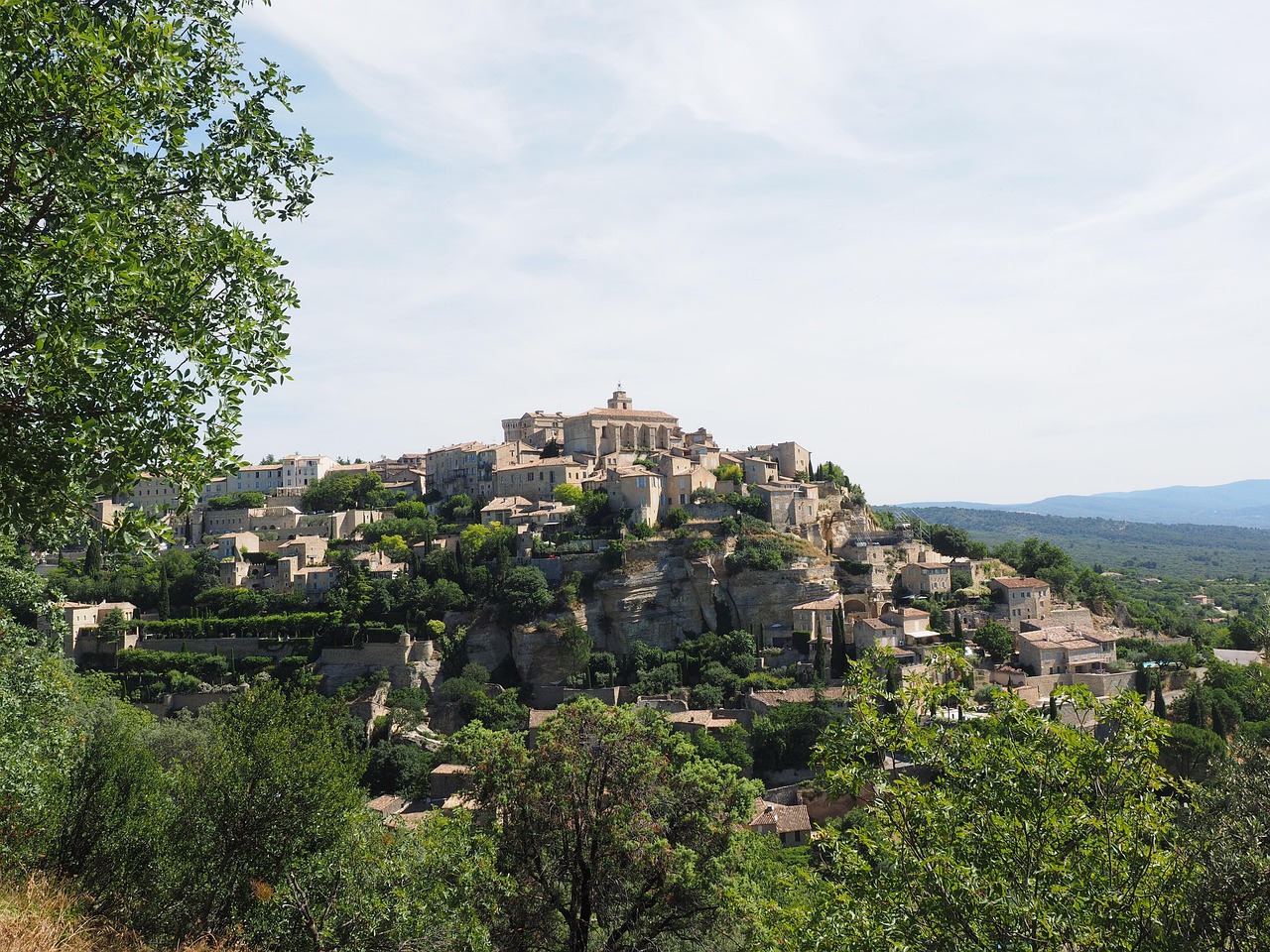
End the afternoon in a different hilltop village, such as Gordes or Bonnieux. Each has its own personality: Gordes is more polished and photogenic; Bonnieux quieter and more lived-in. From here, the views back toward the ochre cliffs of Roussillon remind you how compact yet varied this landscape is.
In the evening, drive back to Roussillon or stay in a countryside mas (farmhouse B&B). Two days in Ochre Trail country gives you time to eat in at least two different restaurants and see how the atmosphere changes from one night to the next.
3 Day Itinerary for Ochre Trail: Deep Dive into Ochre Country
With 3 days in Ochre Trail and the Luberon, you can balance art, history, hiking, and genuine downtime. I often recommend this 3 day itinerary for Ochre Trail to friends visiting from abroad who want a base that feels both iconic and relaxed.
Day 1: Ochre Trail & Roussillon (Core Experience)
Follow the 1-day itinerary, but consider:
- Visiting the trail twice – once in the morning, once at golden hour.
- Booking a guided tour with a local geologist or historian if available.
- Spending more time in the art studios and ochre pigment shops.
Day 2: Colorado Provençal & Ochre Mines of Bruoux (Gargas)
Combine two major ochre sites:
- Morning: Colorado Provençal (as described above).
- Afternoon: Mines de Bruoux in Gargas – immense underground ochre galleries carved into the hillsides.
The Bruoux mines require a guided tour (mandatory), often only in French, but even if you don’t understand every detail, the visual and sensory impact is huge: cool, vaulted orange tunnels, shafts of light cutting in from above. Reserve in advance, especially in July and August; slots sell out days ahead.
Stepping from the blazing Provençal sun into the 10–12°C coolness of the mines is an experience in itself. Bring a light jacket, even in summer. The contrast with the open-air Ochre Trail in Roussillon will give you a much stronger sense of how ochre was extracted and processed.
Day 3: Markets, Lavender (Seasonal), & Slow Luberon Living
On your third day, ease off the “must-see attractions in Ochre Trail” and lean into Provençal life:
- Morning markets: Depending on the day of the week, head to the market in Apt, Gordes, or Lourmarin. These are sensory feasts: piles of olives, fragrant herbs, local cheeses, and the occasional stand selling blocks of raw ochre for artists.
- Seasonal lavender: From late June to mid-July (varying by year), consider a side trip to the plateau of Sault or the fields near Abbaye de Sénanque. While lavender isn’t directly tied to the Ochre Trail, the combination of purple fields and red cliffs makes for an unforgettable 3 days in Ochre Trail country.
- Afternoon downtime: Find a shaded café, order a menthe à l’eau (mint syrup with sparkling water), and write postcards or sketch the village. Not everything has to be scheduled; the best travel memories often come from unscripted pauses.
By the end of three days, you won’t just know how to visit the Ochre Trail; you’ll understand how it fits into the daily life, economy, and identity of this slice of Provence.
Main Sections & Viewpoints of the Ochre Trail
The Ochre Trail isn’t long, but it’s varied. Here are eight key sections and viewpoints, described the way you’ll actually walk them. Think of this less as a checklist of “best places to visit in Ochre Trail” and more as a narrative guide through the landscape.
1. The Village Entrance & Roussillon Panorama
The first time I walked through the turnstiles at the Sentier des Ocres, it was a windy March afternoon. The village behind me was quiet, shutters flapping, while ahead the ground dropped away. A wooden platform juts out, offering your first full view of the ochre bowl below.
From here, you can see three layers of color: the soft red houses of Roussillon above, the bright orange cliffs in the middle, and the dark green pines framing everything. On a clear day, distant hills line the horizon. This is the iconic establishing shot you’ve seen in magazines; no wonder it anchors so many travel photos.
What to look for:
- The way the houses blend almost seamlessly into the cliff, built from the same earth they overlook.
- Old quarry cuts visible as sharp vertical faces, contrasting with softer, wind-carved forms.
- Morning vs. afternoon light. In the morning, the cliffs are front-lit and blazing; by late afternoon, shadows carve more drama into the relief.
How long to spend: 5–10 minutes, but give yourself space; this is where many groups cluster for their first group photo.
2. The Orange Amphitheatre
Descend the first series of steps and you enter what feels like a natural theatre. The trail curves along the side of a broad bowl, with cliffs rising opposite in vivid orange and rust. Wooden railings guide you, but the space feels wild, almost lunar.
On a still morning, you can hear individual conversations drift across the bowl. Kids tend to fall quiet here, sensing the scale. I’ve walked this section in all seasons: in spring, when the first ferns push through; in high summer, when the heat seems to radiate from the walls; and in November, when a rare drizzle turns the ochre darker and more intense.
History & significance: This amphitheatre is largely man-made, carved by decades of ochre extraction. You’re literally walking through an old industrial site, repurposed into a scenic walkway. Information boards (newly refreshed in 2025–2026) explain how ochre-rich sands were washed, filtered, and dried to make pigments used worldwide.
Tips: Stay on the designated path; the temptation to shortcut down a slope for a photo is strong, but each footstep accelerates erosion. And trust me, ochre stains are persistent – I once ruined a pair of pale sneakers here and wore orange toes for a week.
How long to spend: 10–15 minutes, especially if you pause at the mid-level platform that offers one of the best “sense of scale” shots with people below.
3. The Pine Forest Corridor
As the trail bends, orange gives way to green. You step into a corridor of tall pines, their trunks dusted at the base with ochre. The air cools noticeably; in July and August, this feels like stepping into a natural air-conditioned room.
I have a ritual here. Every visit, I stop, close my eyes, and just breathe: pine, earth, a faint metallic tang of minerals. The path underfoot softens, cushioned by needles. It’s here that you most clearly feel the juxtaposition of forest and quarry, nature and industry.
What to look for:
- Tree roots exposed in the ochre banks, tracing sinuous lines that look like natural sculptures.
- Subtle color shifts in the earth beneath the pines – from burnt umber to pale yellow.
- Birdlife: listen for warblers and, occasionally, woodpeckers tapping at trunks.
Family-friendly note: This is a good regrouping point if you’re walking with children. There are a few wider areas where you can step aside, drink water, and let kids play “spot the strangest tree root” without blocking the path.
4. Balconies over the Cliffs
The trail periodically brings you out of the trees onto wooden balconies perched on the edge of drops. These are some of my favorite vantage points: you’re high enough to see patterns in the landscape but close enough to appreciate textures.
On one visit in 2024, I arrived at a balcony just as a storm was building. Dark clouds rolled in over the Luberon, turning the light silver. The ochre below seemed to glow from within, even as the air cooled. A German couple next to me whispered, “Es sieht wie ein Gemälde aus” – it looks like a painting. They were right; the scene had the drama of a Romantic canvas.
Photography tip: This is where you can get some of the best wide shots of the Ochre Trail. If you’re serious about photography, come early or late in the day to avoid harsh shadows. A polarizing filter helps bring out the sky and cut glare on the cliffs.
How long to spend: 5–10 minutes at each balcony. Be patient; in peak season you may have to wait for a gap to get unobstructed photos.
5. The Red Canyon Bend
The long loop takes you through a narrow canyon where the walls close in and the color deepens to a rich, almost blood-red. This is where children often gasp – and where adults are suddenly very glad they wore older clothes.
I remember one hot afternoon in late August, the path here clogged by a slow-moving group. A little boy in front of me, maybe five years old, dragged his fingers along the wall as he walked, leaving a continuous line at child-height. His mother started to scold him, but then looked at the trail of red and laughed. “C’est beau, non?” she said. It is beautiful, isn’t it?
What to look for:
- Striations in the walls – evidence of different sediment layers and erosion.
- Small caves and scooped-out hollows, some used as lookout points by workers in the past.
- Color gradients: in some spots you can see three or four shades of red and orange within a single square meter.
How long to spend: 10 minutes; move slowly and let your eyes adjust to the confined, saturated space.
6. Yellow Sands & Fairy Chimneys
One of the most surprising parts of the trail, especially if you associate ochre only with red, is the section of pale yellow sands and delicate hoodoos (often called “fairy chimneys”). Here the landscape feels almost North African: soft dunes, gentle curves, vegetation eking out a living in harsh soil.
On a spring visit, I watched a group of art students setting up easels here. Their professor had chosen this spot because the subtler hues demand closer observation. “Le rouge, c’est facile,” he told them. “Le jaune, c’est plus difficile.” Red is easy; yellow is harder.
What to look for:
- Fairy chimneys: slender columns of ochre topped by harder rock caps.
- Footprints: rabbits and foxes leave clear tracks in the softer sands.
- Botanical resilience: look for small shrubs and grasses anchoring themselves in the most unlikely crevices.
How long to spend: 10–15 minutes. This is a nice spot to pause, drink water, and admire the delicacy of the formations.
7. Upper Plateau & Distant Luberon Views
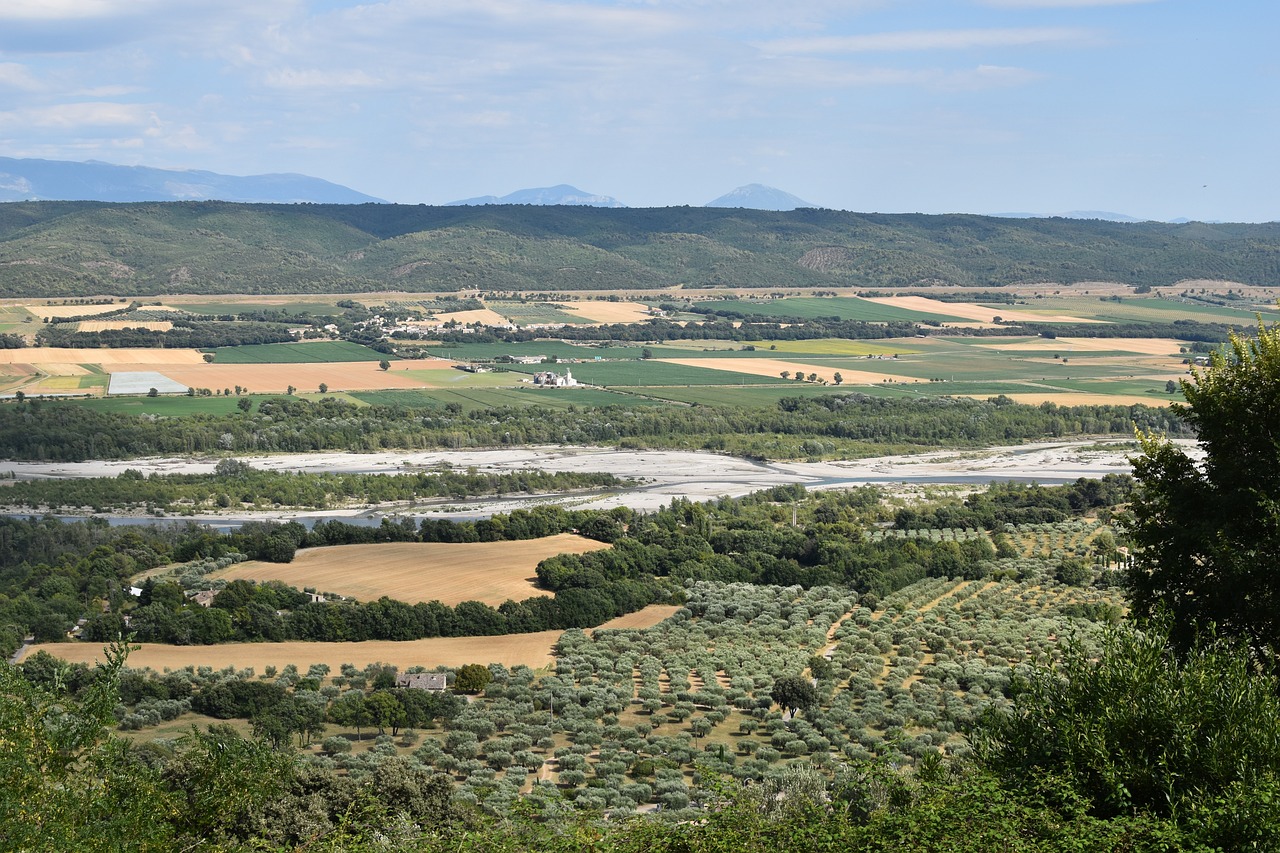
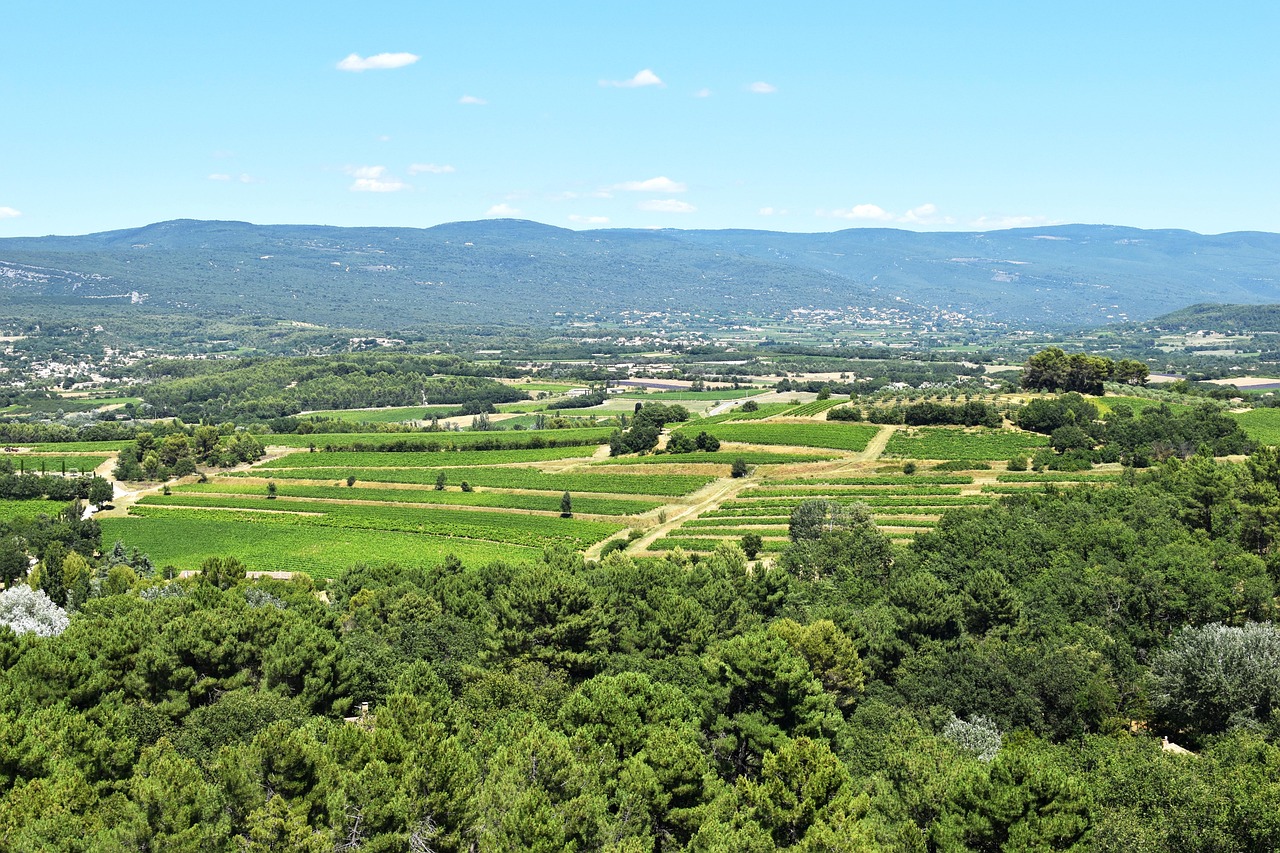
As the path climbs back toward village level, you reach an upper plateau dotted with pines and scrub. Here the drama of the canyons gives way to wide views across the Luberon valley. On clear winter days, I’ve even glimpsed a faint line of snow on distant peaks.
What to look for:
- The contrast between the intensely sculpted quarries below and the gently rolling farmland beyond.
- Terraced fields and vineyards that hint at centuries of human cultivation.
- Shifting colors on the horizon at different times of day – blue in the morning, purple at dusk.
This is also where I like to reflect on how compact the Ochre Trail experience is. In under an hour, you traverse a range of landscapes that would be the headline attraction in many other regions.
8. Old Quarry Edges & Secondary Paths
Along the upper sections of the long loop, you can see remnants of older, less manicured quarries: abrupt cut faces, piles of tailings partially reclaimed by vegetation, and faint traces of old tracks. These are reminders that ochre mining here was once loud, dusty, and physically demanding.
On a guided tour, a retired miner once pointed out where an old rail line used to run, carrying ore from the pits to processing areas. “C’était un autre monde,” he said. It was another world. Listening to him, I began to see the landscape differently – not just as a playground for hikers and photographers, but as a place where lives were spent and bodies worn out.
What to look for: Any signage indicating safety boundaries. Stay well back from unprotected edges; erosion can undercut paths in ways that aren’t obvious until it’s too late.
How long to spend: 10 minutes, more if you’re interested in industrial archaeology and like to read every panel.
Adjacent Sites & Day Trips from the Ochre Trail
The Ochre Trail is a jewel, but it shines even brighter when you pair it with nearby attractions. Here are a few of my favorite day trips and adjacent sites, all within easy reach by car.
Colorado Provençal (Rustrel)
As mentioned in the itineraries, Colorado Provençal is the Ochre Trail’s wilder cousin: larger, less manicured, and more physically demanding. Trails range from short loops to longer hikes through multi-colored hills. It’s especially rewarding in the cooler months (April–May, late September–October), when you can hike without baking.
Getting there: About 35–45 minutes by car from Roussillon. There’s a paid car park at the site. In peak summer, arrive early; the lot can fill, and access may be controlled.
Tips: Bring more water than you think you’ll need. The landscape is exposed, and shade is limited. Wear shoes you don’t mind staining; the ochre here is just as persistent as in Roussillon.
Mines de Bruoux (Gargas)
The Bruoux mines are an extraordinary network of man-made tunnels carved into the ochre hills of Gargas. Unlike the open-air Ochre Trail, these are interior galleries – cool, echoing, and lit for maximum drama. The scale is astonishing: ceilings up to 15 meters high, passageways stretching off into the dark.
Guided tours: Required, and usually offered only in French, but multilingual written materials are available. In 2026, there are plans for more regular English-language tours on summer weekends – check the official website for updates.
Personal note: I visited on a blazing July afternoon and was grateful for the steady 10–12°C inside. The guide dimmed the lights at one point to show us how miners once worked by the light of oil lamps; the darkness was absolute, humbling.
Gordes & Abbaye de Sénanque
A visit to the Ochre Trail pairs beautifully with the hilltop village of Gordes and the nearby Abbaye de Sénanque, famous for its lavender fields. Gordes is about 20–25 minutes by car from Roussillon. The abbey lies in a secluded valley below.
Best season: Late June to mid-July for lavender in bloom, though the exact timing shifts year to year. In 2026, expect slightly earlier flowering if current warming trends continue.
Tip: The abbey is a functioning monastery. Respect the posted rules about silence and photography, particularly in the cloister and church. This is an ideal “cultural experiences in Ochre Trail region” complement to the more touristic villages.
Eating Around the Ochre Trail
One of the pleasures of visiting the Ochre Trail is that you’re in the heart of a region that takes food seriously. That said, the immediate approach to the trail is crowded with places that know you’re hungry and unlikely to come back. Here’s how to eat well without wandering too far.
Where to Eat Near the Ochre Trail
In Roussillon itself:
- Terrace bistros around the main square: Good for a glass of wine and a light lunch. Look for daily specials written by hand (a sign they’re cooking seasonally) and avoid menus that try to cover everything from pizza to sushi.
- Backstreet bistros: A few streets off the main square, you’ll find smaller restaurants with more locals than tourists. Ask in a gallery or at your accommodation; locals will steer you right.
- Art café hybrids: Some galleries have attached cafés serving simple but well-prepared dishes; these can be excellent for a quiet lunch away from crowds.
What to Eat
- Tapenade & olive-based starters – the region’s olives are exceptional.
- Goat cheese salads – often with warm, grilled chèvre on toast, drizzled with honey.
- Provençal stews – such as daube de boeuf (slow-cooked beef) in cooler months.
- Seasonal vegetables – ratatouille, stuffed vegetables, and tian.
- Apricot and cherry desserts in late spring and early summer, when local orchards are heavy with fruit.
What to Bring onto the Site Itself
The Ochre Trail has no café inside the ticketed area. In summer, it can be brutally hot by midday. I always bring:
- A refillable water bottle (at least 0.75L per person in hot weather).
- A small snack – nuts, a piece of fruit, or a simple sandwich.
- A light scarf or hat for shade.
Please pack out everything you bring in. A few years ago, I watched a ranger quietly pick up a trail of dropped wrappers; it takes very little to spoil this fragile environment.
Where to Stay Near the Ochre Trail
You can visit the Ochre Trail as a quick stop on a Provence road trip, but staying nearby – ideally one or two nights – transforms the experience. The light at dawn and dusk, when most day-trippers are elsewhere, is worth the extra expense.
Staying in Roussillon
Roussillon has a mix of small hotels, guesthouses, and apartments. Staying in the village itself means you can stroll to the Ochre Trail entrance in minutes and wander the lanes after dark when the crowds evaporate.
My experience: I’ve stayed twice in a simple guesthouse just outside the historic core, with a terrace overlooking the cliffs. Both times, the owner (a retired ochre worker’s daughter) shared stories about growing up with orange-stained hands, playing in areas that are now protected. These conversations deepened my connection to the place more than any guidebook could.
Staying in the Countryside
If you have a car, consider a rural mas (farmhouse B&B) within a 10–20 minute drive. You’ll often get:
- Gardens and pools to escape the afternoon heat.
- Home-cooked breakfasts with homemade jams and local honey.
- Hosts who can advise on lesser-known walks and viewpoints.
Nearby Town Bases
If you prefer a slightly larger base with more services:
- Apt: A working town with markets and supermarkets; less pretty than Roussillon but more practical.
- L’Isle-sur-la-Sorgue: Farther away (about 40–45 minutes) but delightful if you’re into antiques and riverside cafés.
Best Time to Visit & Ochre Trail After Dark
Timing is everything when it comes to the Ochre Trail: season, time of day, and even day of the week all change the experience.
Best Seasons for the Ochre Trail
- Spring (April–early June): My personal favorite. Wildflowers, fresh green pines, and pleasant temperatures. May can be busy, but never as crowded as July–August.
- Summer (mid-June–August): Long days and lavender season (late June–mid-July), but also peak crowds and heat. Visit early morning or late afternoon; avoid midday.
- Autumn (September–October): Glorious light, fewer crowds, and warm days. A prime time for photographers.
- Winter (November–March): Quiet and atmospheric, though some facilities may reduce hours. Check opening times; occasional heavy rain can temporarily close parts of the trail for safety.
Golden Hour, Blue Hour, & Off-Hours Magic
Golden hour (the hour after sunrise and before sunset) is when the cliffs seem to emit their own light. Shadows deepen, and details pop. Blue hour in the village above is romantic: ochre walls against a deepening sky.
The Ochre Trail itself typically closes before true nightfall, so “after dark” experiences are more about the village and surrounding viewpoints. That said, recent years have seen occasional evening openings or special sound-and-light events in shoulder seasons. For 2026, local authorities have floated the idea of limited twilight visits on select dates, accompanied by guides to manage safety and environmental impact. Check the Roussillon tourism office for up-to-date info.
Ochre Trail After Dark: Village & Viewpoints
Even when the trail is closed, the cliffs remain visible from certain spots around the village:
- Church terrace: Offers a sweeping view over the valley. At night, the silhouettes of the cliffs are just visible; the real show is the starry sky on clear nights.
- Roadside pullouts: On the road leading toward Gordes, a couple of signed viewpoints let you park briefly and admire the illuminated village perched above its ochre base.
For a romantic evening, grab a gelato or a digestif and stroll the quiet lanes; Roussillon after dark feels like a stage set between performances, peaceful and slightly mysterious.
Cultural Etiquette & Local Customs
Provence is relaxed, but there are still cultural nuances that will make your visit smoother and more respectful.
Basic Etiquette
- Greetings: Always say “Bonjour” (morning/afternoon) or “Bonsoir” (evening) when entering shops, cafés, or ticket offices. It’s a small thing, but deeply appreciated.
- Volume: Keep voices moderate, especially on the trail and in churches or abbeys. The Ochre Trail is a scenic site, but also a place where locals bring schoolchildren to learn.
- Dress: Casual is fine, but beachwear belongs at the coast. In religious sites (like Sénanque Abbey), cover shoulders and avoid very short shorts.
On the Ochre Trail
- Stay on paths: It’s not just a rule for your safety; leaving the trail accelerates erosion of this fragile environment.
- No rock collecting: Taking bits of ochre home might feel harmless, but multiplied by thousands of visitors, it’s destructive – and prohibited.
- Photography: Tripods are generally discouraged or restricted in busy periods due to space. Drones are not allowed without special permission.
Dining Customs
- Lunch service typically runs from about 12:00–2:00 p.m.; dinner from 7:30–9:30 p.m. Arriving much earlier or later can mean limited options.
- Tipping is not obligatory (service is included), but rounding up or leaving 5–10% for good service is appreciated.
- Don’t expect to rush. Meals are meant to be savored; if you’re in a hurry, mention it politely when you order.
Tickets, Opening Hours & On-Site Logistics (2026–2027)
Details can change, but here’s how things stand as of 2026 for the Ochre Trail.
Opening Hours
The trail is generally open daily from spring through autumn, with shorter hours in winter. Typical patterns:
- April–May & September–October: Roughly 10:00–18:00 (last entry around 17:15).
- June–August: Extended hours, often 9:00–19:30 (last entry around 18:45).
- November–March: Reduced hours or occasional closures due to weather or maintenance. Always check ahead.
Tickets & Timed Entry
In 2026, expect:
- A modest entrance fee for adults; reduced rates for children and groups.
- Timed entry windows during peak periods (especially July–August, 10:00–16:00). Pre-booking online is strongly recommended then.
Reservations: Timed slots typically open a few weeks in advance. For peak summer weekends, book 3–7 days ahead to secure your preferred time, especially if you’re aiming for early morning or late afternoon.
Accessibility
The Ochre Trail involves numerous steps and uneven surfaces. The short loop is gentler, but still not fully wheelchair-accessible. If mobility is limited:
- Use the initial viewing platform near the entrance for a good overview without tackling the full path.
- Consider visiting Colorado Provençal or Bruoux Mines for alternative experiences; each has different accessibility profiles.
Facilities
- Toilets: Available near the entrance, not on the trail itself.
- Parking: Paid car parks below the village, with clear signage. In high season, lots can fill late morning; arrive early or late afternoon.
- Shops & snacks: Just outside the entrance, a few stands and shops sell drinks, ice cream, and souvenirs.
Security & Queue Times
Security is low-key: bag checks are rare, but staff monitor for safety and rule compliance. In peak summer, queues at the ticket booth can stretch to 15–30 minutes mid-morning. Beat this by:
- Arriving within 30 minutes of opening.
- Pre-booking tickets where possible.
- Visiting on a weekday instead of Saturday–Sunday.
How to Get There & Get Around
The Ochre Trail is in rural Provence; getting here is part of the adventure. Here’s how to reach it without wasting time.
By Car
Driving is by far the easiest way to visit the Ochre Trail and explore surrounding villages. Distances:
- From Avignon: ~1 hour.
- From Aix-en-Provence: ~1 hour 15 minutes.
- From Marseille: ~1 hour 30 minutes.
Roads are mostly well-maintained two-lane routes, with some narrow bends near hilltop villages. Parking in Roussillon is paid and signed; in high season, follow attendants’ directions to overflow lots if the main car park fills.
Car Rental & Foreign Licenses
Major rental agencies operate in Avignon, Aix, and Marseille. For most visitors:
- A standard home-country driver’s license is sufficient for short stays, provided it uses Roman script.
- An International Driving Permit (IDP) is recommended if your license is not in French or English, or if your home country’s regulations suggest it.
Automatic transmissions are increasingly available but often more expensive; book early if you’re not comfortable with manual.
Public Transport
Reaching Roussillon by public transport is possible but slow and involves connections:
- Train to Apt or Cavaillon (via Avignon or Marseille), then regional buses toward Roussillon (limited frequency).
If you’re relying on buses, check schedules carefully; services may be sparse on Sundays and holidays. For maximum flexibility, especially for 2 or 3 day itineraries, a car is strongly recommended.
SIM Cards & Connectivity
For navigation and on-the-go research:
- Consider a French prepaid SIM (Orange, SFR, Bouygues) or an eSIM if your phone supports it.
- Coverage around Roussillon and on the Ochre Trail is generally good but can drop in deeper gullies.
Practical Travel Tips for the Ochre Trail
A few practicalities can make the difference between a merely pleasant visit and a truly rewarding one.
Visa & Entry Requirements
The Ochre Trail is in France, part of the Schengen Area. Visa requirements depend on your nationality:
- EU/EEA/Swiss citizens: free movement, no visa required.
- Many other nationalities (including US, UK, Canada, Australia, New Zealand): visa-free short stays up to 90 days within any 180-day period, but subject to ETIAS once implemented (check current status for 2026).
Always verify the latest rules with official sources before travel.
Money-Saving Tips
- Visit in shoulder season (April–May, late September–October) for better prices on accommodation and fewer crowds.
- Book lodging with a kitchenette and shop at local markets; even one or two self-catered meals can save a lot.
- Picnic for lunch; splurge on dinner. Many restaurants offer better value in set evening menus.
- Combine visits: some regional passes or joint tickets may appear in 2026–2027 linking ochre sites and museums; check tourism offices.
What to Pack for the Ochre Trail
- Comfortable, closed-toe shoes you don’t mind staining.
- Light, breathable clothing in summer; a light jacket in shoulder seasons.
- Hat, sunglasses, and sunscreen – there’s little shade on parts of the trail.
- A small backpack with water and snacks.
- A camera or smartphone – and perhaps a microfiber cloth; fine dust can settle on lenses.
Family-Friendly, Romantic & Adventurous Angles
- Family-friendly: The short loop, early in the day, is ideal. Turn it into a color treasure hunt: how many shades of ochre can the kids find?
- Romantic: Stay in Roussillon, walk the trail near opening or closing, dine on a terrace, and stroll the lanes at blue hour.
- Adventurous: Pair the trail with longer hikes in Colorado Provençal, mountain biking in the Luberon, or trail running on quieter paths around Roussillon (early morning is best).
What’s New: Events & Changes for 2026–2027
The Ochre Trail itself doesn’t host huge festivals (its fragile environment couldn’t cope), but the broader region sees a vibrant calendar in 2026–2027.
Regional Events (2026–2027)
- Lavender Festivals (Sault, Valensole): Usually late July. Expect parades, distillery tours, and lavender-based products. While not in Roussillon itself, many visitors combine these with an Ochre Trail day.
- Provençal Markets: Weekly markets in Apt, Gordes, and Lourmarin continue as anchors of local life – not one-off events, but recurring cultural experiences.
- Art Exhibitions in Roussillon: The village regularly hosts small-scale art shows, often themed around ochre, color, and landscape. 2026 is slated to include a retrospective of local painters who used natural pigments.
Changes in the Travel Scene (2026)
- Improved signage & interpretation: More multilingual panels on the trail and in the village, making self-guided visits richer.
- Potential twilight openings: Trial programs of limited, guided twilight visits may roll out in shoulder seasons, strictly controlled to protect the environment.
- Sustainability measures: Continued efforts to manage erosion, limit visitor numbers at peak periods, and encourage off-season tourism.
Summary & Final Recommendations
The Ochre Trail is one of those rare places that looks as striking in person as it does in photographs – and yet, it’s the small, quiet details that stay with you: the smell of pine in the shaded corridor, the feel of fine dust underfoot, the stories of miners and artists who turned colored earth into livelihoods.
If you’re planning a 1 day itinerary for Ochre Trail, give the trail an unhurried hour, bracketed by time in Roussillon’s lanes and a meal that tastes of the Luberon. With 2 days in Ochre Trail country, add Colorado Provençal or Bruoux Mines and a hilltop village or two. With 3 days in Ochre Trail surroundings, you can weave in markets, lavender (in season), and the kind of unscheduled hours that define slow travel.
As for the best time to visit Ochre Trail, my own heart belongs to April–May and late September–October, when light is golden, temperatures kind, and crowds manageable. But each season has its charm, and with the right timing of day – early morning or late afternoon – even a peak-summer visit can be wonderful.
Ultimately, this travel guide for Ochre Trail is an invitation to go beyond the postcard. Walk the paths, listen to the echoes of work and weather in the cliffs, talk to the people who still live in ochre-colored houses, and let this small but extraordinary corner of France color your memories long after the dust has washed from your shoes.