Why Visit Albi?
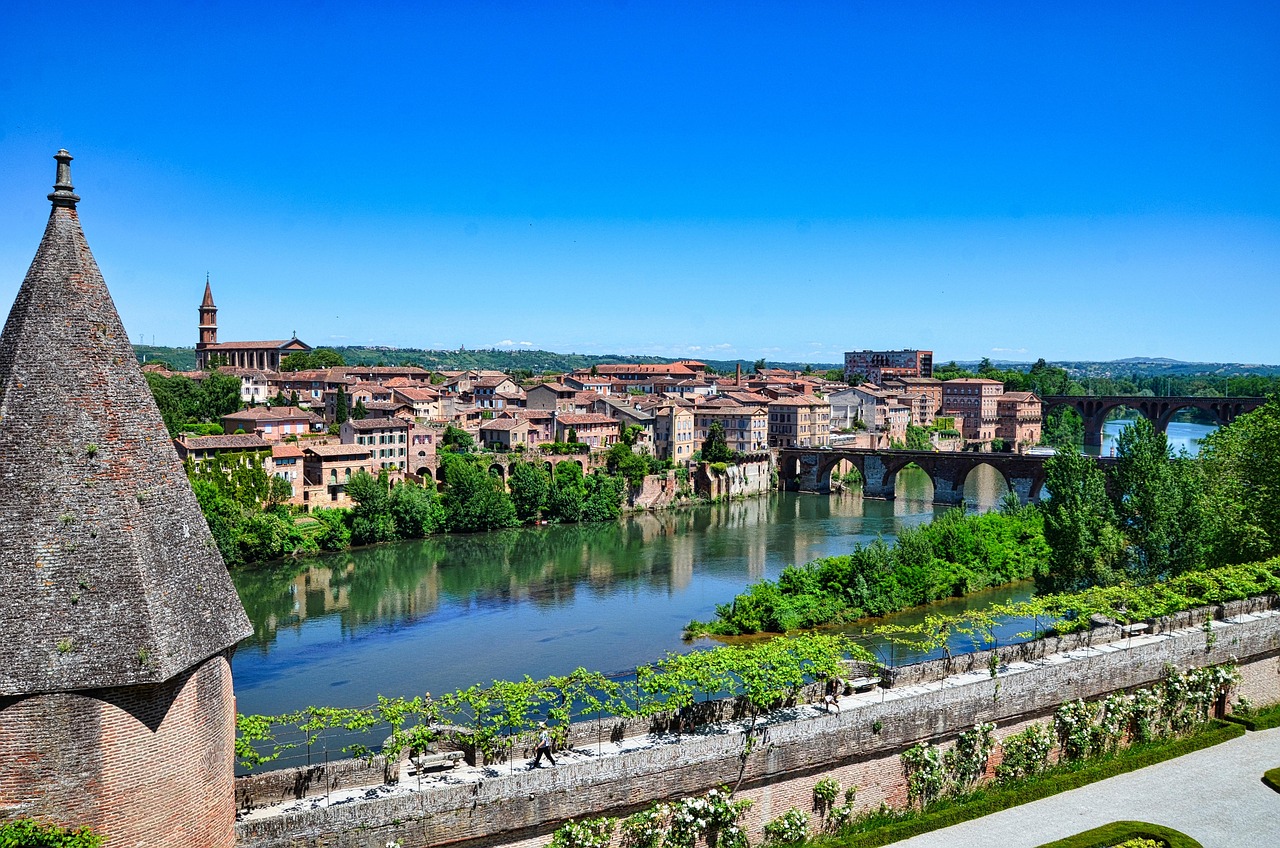
Albi is one of those places that sneaks up on you. It doesn’t shout like Paris or Nice; it hums. The red-brick skyline rising over the Tarn River, the gigantic cathedral that feels more like a fortress than a church, the medieval streets that somehow still smell faintly of baking bread and wood polish – it’s a city that feels deeply lived-in and quietly proud.
I’ve been living between Toulouse and Albi for years, and every time I come up on the train and see the Cathédrale Sainte-Cécile looming above the river, I still get that little flutter: “Ah, I’m home.” Albi is small enough that you can walk almost everywhere, but layered enough that 3–5 days never feel like too long. It’s a perfect size for slow travel – where you actually get to recognize faces at the market and have your favorite table at a café by day three.
Albi is ideal if you’re looking for:
- A walkable medieval city with dramatic brick architecture and a UNESCO-listed old town.
- Art and culture, especially the world’s largest collection of works by Henri de Toulouse-Lautrec.
- Romantic getaways – riverside sunsets, intimate wine bars, and quiet streets.
- Family-friendly activities – river cruises, easy museums, parks, and gentle walks.
- Local food and wine from the Tarn region: duck, cassoulet, Gaillac wines, and hearty southwestern cuisine.
- Hidden gems – cloisters, secret viewpoints, local markets, and tiny neighborhood squares.
Whether you’re planning a 3 day itinerary for Albi, stretching it to 4 days in Albi, or settling in for a full 5 day itinerary for Albi, this travel guide is written like I’d plan a trip for my own friends: with time to see the icons, but also to linger, taste, and get pleasantly lost.
Table of Contents
- Why Visit Albi in 2026
- Suggested 3, 4, and 5 Day Itineraries for Albi
- 20 Must-See Attractions in Albi (With Local Tips)
- Neighborhoods & Areas to Explore
- Local Food in Albi & Where to Eat
- Nightlife, Entertainment & Cultural Experiences
- Best Day Trips from Albi
- Cultural Etiquette & Local Customs in Albi
- Practical Travel Advice for Albi (Money, SIM, Transport, Visas)
- When to Visit Albi & Seasonal Tips
- Summary & Final Recommendations
Suggested Itineraries: 3, 4, and 5 Days in Albi
Below I’ll outline a personal, story-style plan for spending 3 days in Albi, then show you how I’d stretch it into a 4 day itinerary and a 5 day itinerary. You can mix and match, but I recommend following the general flow: start with the icons, then dig deeper into the local life and hidden gems.
3 Day Itinerary for Albi – “First-Time Essentials”
Day 1: The Red-Brick Heart – Cathedral, Toulouse-Lautrec & Old Town
Most of my friends arrive in Albi around late morning, either by train from Toulouse or by car. I always tell them: drop your bags, don’t fuss about your hotel yet, and walk straight to the river. There is no better introduction to the city.
Your Day 1 is all about the must-see attractions in Albi: the Cathédrale Sainte-Cécile, the Palais de la Berbie, and the Musée Toulouse-Lautrec, plus a slow wander through the medieval streets.
Morning – First Glimpse of the Cathedral & River Walk
- Start at the Pont Vieux, the old bridge. I love to begin here because you get the classic postcard view: the cathedral rising like a red fortress over the Tarn.
- Walk across the bridge, turn back for photos, and then follow the riverside path up towards the city center.
- Grab a coffee at a café near Place du Vigan – I usually stop at a terrace, order a café crème, and do a little people-watching.
Late Morning – Cathédrale Sainte-Cécile
From the outside, the cathedral looks almost defensive, more like a castle than a church. The first time I walked up its steps, the sheer scale of the brickwork made me feel tiny. Inside, it’s another world: a riot of color, frescoes, and intricate woodwork.
- What to see: the Last Judgment fresco, the painted vaults, and the carved choir stalls. Don’t rush – the details reveal themselves slowly.
- When to go: If you’re here in summer, aim for right when it opens or around lunch time to avoid the biggest crowds.
- Dress code: It’s a functioning church, so avoid bare shoulders and very short shorts; a light scarf in your bag is handy.
Local tip: On a hot day, the interior is a cool, almost cave-like relief. I’ve hidden in here more than once during August heatwaves.
Midday – Lunch in the Old Town
By now, you’ll be hungry. The streets around the cathedral are full of restaurants that spill into little squares. I usually recommend a bistro that serves magret de canard (duck breast) or cassoulet, paired with a glass of local Gaillac wine.
- Budget tip: Look for the plat du jour (daily special) – usually around 12–16€ and often the best thing on the menu.
- Family-friendly: Many places offer simpler kids’ menus (steak haché, pasta, roast chicken).
Afternoon – Palais de la Berbie & Musée Toulouse-Lautrec
The Palais de la Berbie was once the bishop’s palace; now it hosts the Musée Toulouse-Lautrec and some of the most beautiful formal gardens in the region. I still remember the first time I stepped out into the gardens: the geometric box hedges, the view over the Tarn, and the slow realization that people have been admiring this same bend in the river for centuries.
- Inside the museum: You’ll see posters, paintings, drawings, and personal objects by Henri de Toulouse-Lautrec, who was born in Albi. It’s not huge, but it’s dense and intimate.
- Plan 1.5–2 hours here; I like to do a slow walk through the museum, then sit in the gardens for a while.
- Photography: Check current rules, but gardens are generally fine; inside the museum, no flash.
Romantic angle: The gardens at golden hour are one of my favorite romantic spots in town. If you’re traveling as a couple, this is where you linger.
Late Afternoon – Medieval Streets & Shopping
After the museum, drift through the Vieil Albi (old town). The streets around Rue Mariès, Rue Timbal, and Place Sainte-Cécile are full of half-timbered facades and little boutiques.
- Stop into artisan shops for ceramics, regional food products, and small-batch soaps and perfumes.
- Look up: some of the prettiest architectural details are above eye level – carved beams, iron balconies, and old painted signs.
Evening – Dinner & First Night Stroll
For your first night, pick a restaurant with a terrace view of the cathedral or a smaller spot tucked in the backstreets. After dinner, walk back towards the river. On summer nights, the cathedral is often illuminated; it’s worth seeing twice – once by day, once after dark.
Day 2: River, Bridges & Across-the-Water Views
On Day 2, you’ll see Albi from the water and from its quieter residential side. This is where the city opens up a bit and feels less like a postcard and more like a place people really live.
Morning – River Cruise or Kayak
In the warm months (roughly May–September), you can take a boat cruise on the Tarn. I’ve done it in both high summer and early autumn; my favorite is late September when the light is softer and the riverbanks start to turn gold.
- Option 1: Scenic cruise – Perfect for families and anyone wanting a gentle start. Commentary is usually in French, but you don’t need to catch every word to enjoy the views.
- Option 2: Kayak or canoe – More adventurous, but still easy. You don’t need experience, and the current is usually calm.
- What to bring: hat, sunscreen, water, and a light windbreaker if it’s breezy on the water.
Midday – Lunch by the River
After your time on the water, grab lunch at a riverside restaurant or café. I like to sit where I can see both the water and the cathedral rising above.
- Try a salade de gésiers (salad with duck gizzards – sounds odd, tastes delicious) or a simple plat du jour with fish from the Atlantic.
Afternoon – The Right Bank (Across from Old Town)
Cross the Pont Vieux again, but this time explore the right bank more thoroughly. This side of the river is quieter, more residential, and has some of the best views of the historic center.
- Walk along the water and look back at the red-brick skyline – you’ll see why Albi is nicknamed the “Ville Rouge.”
- Stop at small neighborhood cafés where you’re more likely to hear only French; this is where you get a feel for local life.
Late Afternoon – Parks & Playgrounds (Great for Families)
If you’re traveling with kids, this is a good time to hit one of the small parks or playgrounds, let them burn energy, and give yourselves a quiet moment on a bench.
Evening – Wine Bar & Local Gaillac Wines
Back in the old town, pick a wine bar that highlights Gaillac wines from just up the road. I’ve spent many evenings here working my way through reds and whites with a plate of charcuterie and local cheeses.
- Ask for recommendations: Gaillac wines can be surprising – there’s everything from crisp whites to deeper reds and some interesting sparkling options.
- Budget tip: A glass of decent local wine here is often cheaper than in more touristic cities.
Day 3: Markets, Hidden Courtyards & Museums
Day 3 is for slower pleasures: markets, smaller museums, and the little corners that don’t make every list of “best places to visit in Albi” but are exactly what you’ll remember later.
Morning – Albi Covered Market (Marché Couvert)
If you’re here on a market day (especially Saturday or Wednesday mornings), head straight to the Marché Couvert. It’s not huge, but it’s dense with color and smells: cured meats, cheeses, seasonal fruit, olives, and pastries.
- Local food in Albi to try: local goat cheeses, fouace (a sweet brioche-like bread), and croquants (crunchy almond biscuits).
- Grab picnic supplies for lunch – bread, cheese, cured ham, fruit, and maybe a small bottle of wine if you’re planning to sit in a park.
Personal note: I always, always leave with more than I planned. It’s the figs that do me in every late summer.
Midday – Hidden Courtyards & Cloisters
After the market, wander through the old town again, but this time keep an eye out for open gates and small courtyards. Some religious and civic buildings have cloister-like spaces that are open to wander; they’re some of my favorite spots to escape the midday heat and noise.
Afternoon – Lesser-Known Museums & Galleries
Depending on your interests, you might pick one of the smaller museums (for example, local history or art spaces that rotate exhibitions). These change over time, but your hotel or the tourist office can point you to what’s current in 2026.
Late Afternoon – Coffee & Pastry Break
Find a bakery and treat yourself to a slice of fouace or another regional specialty. There’s a spot I return to every trip, and by now they know my face; that’s the joy of a city this size.
Evening – Final Night Stroll & Favorite Spot Revisit
For your last night (if you’re doing only 3 days in Albi), revisit your favorite place: maybe the cathedral square, the riverbank, or the gardens of the Palais de la Berbie if they’re still open. This is when I like to take a last, slow lap and mentally mark what I’ll do “next time.”
4 Day Itinerary for Albi – Adding Countryside & Deeper Exploration
If you have 4 days in Albi, I recommend using Day 4 for a close-by countryside escape or extra time in neighborhoods outside the historic center.
Day 4: Gaillac Wine Country or Nearby Villages
On my own fourth days, I often rent a car or join a small tour out to the Gaillac wine region or to one of the beautiful hilltop villages nearby.
- Option 1: Gaillac wineries – Visit 2–3 wineries for tastings, stroll through vineyards, and have a long lunch in a village square.
- Option 2: Cordes-sur-Ciel – A medieval village perched above the fog; on some mornings it does look like it’s floating in the sky.
Practical tips:
- Transport: Car rental is easiest for flexibility; otherwise look for day tours from Albi or regional buses (less frequent, check schedules carefully).
- Wine tasting etiquette: Spitting is normal and not rude; don’t feel obliged to drink every drop, especially if you’re driving.
By late afternoon, head back to Albi, find a relaxed dinner spot, and enjoy the feeling of coming “home” to the city after being out in the countryside.
5 Day Itinerary for Albi – Slow Travel & Hidden Gems
With 5 days in Albi, you can really travel like a local – sleep in a bit, choose a different café each morning, and build in real downtime.
Day 5: Neighborhood Wandering & Personal Favorites
On my longer stays, I like to dedicate a whole day to “unstructured wandering” – picking a neighborhood, walking every side street, and seeing what I find. This is when you discover:
- Little neighborhood squares with a single café and old men playing cards.
- Street art tucked into modern corners of town.
- Small chapels or community centers with exhibitions or events.
Use this last day for:
- Visiting any museums or sites you missed earlier.
- Returning to the market to buy food souvenirs.
- Simply sitting in your favorite spot with a book or a sketchpad and letting Albi’s rhythm sink in.
This is the kind of day that doesn’t show up in itineraries but often becomes the most vivid memory of the trip.
20 Must-See Attractions in Albi – In-Depth Local Guide
Now let’s dive deeper into the best places to visit in Albi. These 20 attractions mix the iconic with the quietly wonderful. For each, I’ll share a bit of history, why it’s worth your time, and some personal notes from my own visits.
1. Cathédrale Sainte-Cécile
The Cathédrale Sainte-Cécile is the anchor of Albi – visually, historically, and emotionally. Built between the 13th and 16th centuries, it’s one of the largest brick cathedrals in the world and a powerful symbol of the Catholic Church’s authority after the Cathar heresies in the region.
What always strikes me is the contrast: outside, a stark, almost militaristic brick fortress; inside, a burst of painted color and delicacy. The Last Judgment fresco is particularly mesmerizing – I’ve stood in front of it so many times, noticing new figures and details each visit.
Tips for visiting:
- Go once in the morning for quieter contemplation, then again at dusk when the light changes the feel of the interior.
- If there’s an organ concert or choral event during your stay (ask at the tourist office), go. The acoustics are astonishing.
- Respect the prayer areas; locals do come to worship, not just admire architecture.
2. Palais de la Berbie & Its Gardens
Originally a bishop’s palace, the Palais de la Berbie feels like the cathedral’s quieter sibling: still imposing, but softened by its exquisite terraced gardens. Walking along the ramparts, with the Tarn flowing below and the red-roofed houses clustering around, it’s easy to imagine medieval life here.
I often bring a book and find a bench overlooking the gardens. Even when there are other visitors, there are small corners that feel private. In spring, the flowerbeds explode with color; in autumn, the lower trees along the river turn golden.
Don’t miss:
- The view from the garden terrace out over the river – one of the best in the city.
- The contrast between the heavy brick walls and the delicate parterres below.
3. Musée Toulouse-Lautrec
Housed inside the Palais de la Berbie, the Musée Toulouse-Lautrec holds the largest public collection of works by Henri de Toulouse-Lautrec, who was born in Albi in 1864. Even if you think you don’t know his work, you’ve likely seen his famous posters for Parisian cabarets like the Moulin Rouge.
The museum traces his life from early drawings to mature works, and what I love most is seeing the evolution of his line – how he captured movement, personality, and the underbelly of Parisian nightlife with such economy and empathy.
Visiting tips:
- Plan at least 1.5 hours to avoid feeling rushed.
- Some descriptions are only in French, but the artwork speaks for itself; audio guides or pamphlets in English are often available.
- It’s a good rainy-day option – cozy, intimate, and absorbing.
4. Pont Vieux (Old Bridge)
The Pont Vieux is more than just a crossing; it’s a viewpoint, a symbol, and one of Albi’s oldest structures, with roots in the 11th century. From its stones, you can watch the water shift color throughout the day – muddy brown after heavy rain, glassy green on calm summer mornings.
I like to cross it at different times: sunrise, when the city is quiet; late afternoon, when the brickwork glows; and after dark, when reflections shimmer in the water. Each time, the view feels slightly new.
5. Old Town (Vieil Albi)
The Vieil Albi is not a single attraction but a tapestry: narrow lanes, half-timbered houses leaning towards each other, hidden courtyards, and small squares that suddenly open up after a tight passageway.
Streets like Rue Mariès and Rue Timbal are my go-tos when I want to feel immersed in Albi’s medieval fabric. Over the years, I’ve watched small shops change hands – an old bakery becomes an art gallery, a closed-up space reopens as a wine bar – but the bones of the streets remain the same.
How to explore:
- Wander without a strict plan; let curiosity lead you.
- Look for architectural details: carved beams, painted shutters, and stone doorframes.
- Go both by day and by evening; the atmosphere shifts dramatically.
6. Marché Couvert (Covered Market)
The Marché Couvert is where Albi’s love of food is on full display. Inside, the stalls are piled high with seasonal produce: white asparagus in spring, mountains of tomatoes in summer, mushrooms and chestnuts in autumn.
Over the years, I’ve gotten to know a few of the stallholders – the cheese vendor who always recommends something a little stronger than I think I want, the olive seller who slips an extra handful into the bag with a wink.
What to buy:
- Local cheeses, especially from the Tarn and neighboring Aveyron.
- Fouace and other regional pastries.
- Jars of pâté, tapenade, and local honey to take home.
7. Tarn River Walks & Banks
The Tarn River is Albi’s slow-moving spine. One of my favorite free things to do is simply walk along its banks, especially in the early morning or around sunset. The reflections of the cathedral and old town in the water are always changing.
In summer, you’ll see locals fishing, teenagers dangling their feet over the walls, and couples strolling hand in hand. In winter, it’s quieter, with a more introspective feel – mist sometimes rising off the water.
8. Right Bank Neighborhoods & Viewpoints
Across the Pont Vieux, the right bank is less touristed but full of charm. It’s where many Albigeois actually live, and where you’ll find small, everyday pleasures: a bakery with a line of schoolchildren after class, a bar-tabac with regulars at the counter.
I often come here when I need a break from the more polished historic center. The views back towards the old town are some of the best in Albi – especially from slightly elevated streets where you get the full sweep of the brick skyline.
9. Local Art Galleries & Studios
Beyond the big-name museum, Albi has a scattering of small galleries and artists’ studios. They come and go, but there are always a few worth seeking out. I’ve stumbled into exhibitions of local photographers, ceramicists, and painters that ended up being trip highlights.
How to find them:
- Look for posters on street corners and in cafés.
- Ask at the tourist office for current exhibitions in 2026–2027.
- Step inside any open-door studio; artists are often happy to chat about their work.
10. Cloisters & Quiet Religious Sites
In addition to the cathedral, Albi has smaller churches and cloistered spaces that feel like secret refuges. I’ve ducked into some of these on hot summer days and found myself alone, surrounded by stone and soft light.
Even if you’re not religious, they’re worth a short visit for their architecture and atmosphere. Keep your voice low, and take a moment to sit in silence; it’s a rare luxury in modern travel.
11. Place du Vigan
Place du Vigan is the city’s central modern square – the place where people meet up, where kids chase pigeons, and where seasonal events and markets often pop up. I pass through here almost every time I’m in town; it’s the crossroads of daily life.
Grab a coffee or ice cream, sit on the edge of a fountain, and watch the city move around you. This is everyday Albi, as important to understanding the place as any old stone.
12. Local Parks & Green Spaces
Albi isn’t overflowing with giant parks, but it has plenty of smaller green spaces dotted around, perfect for picnics or a quiet break. On my longer stays, I have “my” bench in one park where I write and watch dog-walkers pass by.
Family-friendly: Look for parks with playgrounds if you’re traveling with children; they’re a great way to let kids play and meet local families.
13. Nighttime Illuminations & Evening Ambiance
While not a single “site,” Albi after dark is its own attraction. The cathedral and surrounding buildings are often lit, casting dramatic shadows and giving the brick an almost glowing intensity.
On warm summer nights, I love wandering aimlessly, letting the sound of distant music or laughter pull me into different streets. It’s safe, gentle, and beautifully atmospheric.
14. Seasonal Festivals & Events (2026–2027)
Albi has a lively cultural calendar, and in 2026–2027 you can expect:
- Summer music festivals in and around the city – from classical performances in historic settings to more contemporary concerts.
- Food and wine events celebrating regional specialties and Gaillac wines.
- Christmas markets in December, with wooden chalets, mulled wine, and local crafts.
Exact dates shift each year, so check the official Albi tourism website or ask at the tourist office when you arrive. Planning your 3 or 4 day itinerary for Albi around a festival can completely change the feel of your visit – in a good way, if you like lively crowds.
15. Local Theaters & Performance Spaces
Catching a performance – whether theater, dance, or music – is one of my favorite cultural experiences in Albi. Even if your French isn’t perfect, you can still enjoy concerts or dance shows.
Tip: Look for posters advertising performances, and don’t be shy about walking into the theater’s box office and asking (in English or French) what’s on during your stay. Same-day tickets are often available outside peak events.
16. Street Markets & Brocantes (Flea Markets)
On certain weekends, Albi hosts brocantes – flea markets where you can find everything from antique linens to old posters and books. I’ve spent entire mornings sifting through boxes of dusty objects, imagining the lives they’ve lived.
If you love vintage or just enjoy browsing, these are worth seeking out. Ask at your accommodation or tourist office about scheduled dates while you’re in town.
17. Small Churches & Chapels
Beyond the cathedral, smaller churches scattered through the city hold layers of history and quiet beauty. I like ducking into them when I pass by; they’re usually empty, with worn pews and modest stained glass.
They might not make the list of “top things to do in Albi,” but they add nuance to your understanding of the city’s spiritual and community life.
18. Contemporary Architecture & Modern Albi
While Albi is famous for its medieval and Renaissance architecture, there are pockets of contemporary design that are worth noticing. Newer cultural centers, renovated industrial spaces, and modern housing developments show how the city is evolving.
On my last visit, I wandered into a newly redeveloped area that used to be somewhat industrial; now it’s a mix of housing, creative spaces, and green areas. It’s a reminder that Albi is not just a museum city but a living one.
19. Riverside Terraces & Cafés
Some of my favorite hours in Albi have been spent doing “nothing” – sitting on a terrace overlooking the river, sipping a glass of wine or a coffee, and letting time stretch. These riverside spots are perfect for couples, solo travelers with a book, or families taking a break.
In the evening, the reflections on the river and the murmur of conversation around you make for a simple, perfect moment.
20. Streets at Dawn & Dusk
The last “attraction” I’ll mention isn’t marked on any map: the city itself at its quietest times. Get up early one morning and walk through the old town before the shops open; or take a slow loop at dusk as lights flicker on in windows.
These are the moments when Albi feels most itself – a real place where people live, not just a destination. For me, this is the heart of travel: standing on a nearly empty street in a foreign city, listening to the sound of your own footsteps and the first clink of cups in a café setting up for the day.
Neighborhoods & Areas to Explore in Albi
Albi isn’t huge, but it has distinct areas worth understanding when planning your 3, 4, or 5 day itinerary for Albi.
Historic Center / Vieil Albi
This is the heart of the city: cathedral, Palais de la Berbie, Toulouse-Lautrec museum, most tourist-oriented shops and many restaurants. It’s where you’ll spend most of your first day or two.
Vibe: Beautiful, walkable, lively during the day, more subdued at night except for restaurant areas.
Right Bank (Across the Tarn)
Residential, quieter, with excellent views back towards the old town and some riverside walking paths.
Vibe: Everyday local life, fewer tourists, small cafés and shops catering to residents.
Around Place du Vigan
The modern commercial center: larger shops, banks, services, and the main square where people meet and events are held.
Vibe: Practical, bustling on market and shopping days, more modern architecture mixed with older buildings.
Outskirts & Residential Zones
Beyond the central core, Albi spreads into quieter residential neighborhoods. While you might not prioritize these on a short trip, walking or biking through them gives a sense of how people actually live here.
Local Food in Albi & Where to Eat
Albi sits in the southwest of France, a region obsessed with food. Think duck, hearty stews, good bread, and generous portions – this is not the place for extreme dieting.
Must-Try Dishes
- Magret de canard – Duck breast, usually served pink, with a rich sauce.
- Cassoulet – Slow-cooked beans with duck confit and sausage; more common in cooler months.
- Salade de gésiers – Salad with warm duck gizzards, often with walnuts; far better than it sounds.
- Fouace – A slightly sweet, brioche-like local bread.
- Croquants – Crunchy almond biscuits, perfect with coffee.
Wine & Drinks
Pair your meals with Gaillac wine, produced just a short drive away. There’s a diversity of styles: crisp whites, fruity reds, and some lovely sparkling wines.
Where to Eat – Types of Places
- Bistros & Brasseries: For classic local dishes and daily specials; ideal for lunch menus.
- Wine bars: For small plates, charcuterie, cheeses, and good glasses of wine; excellent for evenings.
- Bakeries (boulangeries): For breakfast pastries, sandwiches, and fouace.
- Markets & Picnics: For budget-friendly feasts assembled from fresh produce, cheese, and bread.
Money-Saving Eating Tips
- Opt for the fixed-price lunch menu (often labeled formule or menu du jour) – it’s usually far cheaper than ordering à la carte.
- Have your main meal at lunch and a simpler dinner of bread, cheese, and wine from the market if you’re watching your budget.
- Tap water (carafe d’eau) is free in restaurants – ask for it instead of bottled.
Nightlife, Entertainment & Cultural Experiences in Albi
Albi isn’t a party city, but it has a mellow, enjoyable nightlife – perfect for couples, groups of friends, or solo travelers who like a glass of wine and some live music rather than clubs until dawn.
Evenings in the Old Town
Most of the action is around the cathedral and main squares, where restaurants fill up with outdoor seating in warm months. I like to hop between a wine bar and a café, ending the night with a slow walk by the river.
Cultural Experiences
- Concerts in historic venues – classical, choral, or jazz nights hosted in churches or old buildings.
- Theater & dance – local and touring companies perform regularly.
- Festivals – from music to food and film, especially in spring and summer.
Family-Friendly Evenings
Take an after-dinner stroll for ice cream, let kids run around in a central square, and enjoy the safe, relaxed feel of the city at night.
Best Day Trips from Albi
If you’re staying 4 or 5 days in Albi, day trips add variety and a deeper sense of the region.
Gaillac Wine Region
Just 30–40 minutes away, the Gaillac region is a patchwork of vineyards and villages. Visit a couple of wineries, have lunch in a small town, and soak in the rural southwest France vibe.
How to get there:
- Car: Easiest; roads are straightforward.
- Train/bus: Possible to Gaillac town, then taxis, but less flexible.
- Tour: Join an organized wine-tasting tour from Albi if you don’t want to drive.
Cordes-sur-Ciel
A medieval hilltop village that seems to float above the morning mist. Its steep, cobbled streets are lined with shops and galleries, and the views over the countryside are outstanding.
Tip: Wear good shoes; the climb from the lower parking area to the top is no joke, but absolutely worth it.
Other Nearby Villages & Nature Spots
Depending on your interests, you might venture to other Tarn villages, rivers for swimming or canoeing, or small hiking areas. Ask locals where they go on sunny weekends; their answers will often lead you to the real hidden gems.
Cultural Etiquette & Local Customs in Albi
Understanding a few local customs in Albi – and France in general – will make your trip smoother and help you connect more genuinely with people.
Greetings & Politeness
- Always say “Bonjour” (daytime) or “Bonsoir” (evening) when entering shops, cafés, or speaking to staff. It’s considered rude to launch straight into a request.
- A simple “Merci, au revoir” when leaving is appreciated.
- People may seem reserved at first, but friendliness grows quickly once basic politeness is observed.
Restaurant Etiquette
- Meals are meant to be enjoyed slowly; don’t expect the rapid turnover style of some other countries.
- Asking for tap water: “Une carafe d’eau, s’il vous plaît.”
- Tipping: Service is included, but leaving a small tip (5–10%) or rounding up the bill is appreciated for good service.
Dress & Churches
- Casual but neat clothing is standard; athleisure is less common outside of actual exercise.
- In churches, avoid bare shoulders and very short shorts; bring a scarf or light layer if needed.
Language
While some people in tourism and hospitality speak English, many don’t. Starting with a few French phrases goes a long way:
- “Parlez-vous anglais ?” – Do you speak English?
- “S’il vous plaît” – Please.
- “Merci beaucoup” – Thank you very much.
Practical Travel Advice for Albi (2026 Update)
Getting To & Around Albi
By Train: The easiest way from Toulouse is by regional train (TER), typically around 1 hour. The station is a short walk or quick taxi ride from the center.
By Car: Driving gives you flexibility for day trips. Parking is available in and around the center, with a mix of paid and free options depending on distance.
Local Transport
- On foot: The historic center is compact; walking is the best way to explore.
- Bus: Local buses serve wider Albi; useful if you’re staying outside the core.
- Bike: In fair weather, cycling can be a pleasant way to move between neighborhoods and along the river.
SIM Cards & Connectivity
For 2026, your best options are:
- EU visitors: Your existing plan may include roaming in France – check before arrival.
- Non-EU visitors: Buy a prepaid SIM from major providers (Orange, SFR, Bouygues) in larger cities or at airports before coming to Albi, or use an eSIM if your phone supports it.
Most hotels, cafés, and many restaurants offer free Wi-Fi.
Money & Budget Tips
- Currency is the euro (€). Cards are widely accepted, but small cash is handy for markets and smaller establishments.
- Albi is generally cheaper than major French cities; you can eat and stay well on a moderate budget, especially if you use lunch menus and self-cater some meals.
- ATMs are easy to find around Place du Vigan and main streets.
Accommodation: Where to Stay
Historic Center: Ideal for first-time visitors and short stays; you’ll be steps from main sights.
Right Bank & Residential Areas: Good for quieter nights, often better value, and a more local feel.
Types of stays: Small hotels, B&Bs, apartments, and guesthouses are common.
Visas & Entry Requirements
Albi is in France, part of the Schengen Area. For 2026:
- EU/EEA/Swiss citizens: Can enter with a valid ID or passport; no visa needed.
- Other nationalities: Many travelers can enter visa-free for short stays (up to 90 days in 180) but must check specific requirements in advance.
- An electronic travel authorization system for some non-EU visitors may be in place or coming soon; verify on official government sites before travel.
Driving & Foreign Licenses
If you’re renting a car:
- Most foreign driver’s licenses are accepted for short stays; some countries require an International Driving Permit (IDP) alongside your home license – check requirements before departure.
- Drive on the right; seatbelts are mandatory; speed limits are strictly enforced.
- Parking in central Albi can be tight in peak season; choose accommodation with parking if you’re driving.
Safety
Albi is generally very safe. Usual common sense applies:
- Keep valuables secure, especially in crowds and markets.
- At night, the central areas are typically calm and safe for walking.
Hidden Money-Saving & Practical Tips
- Free views: Use bridges and riverside paths instead of paid viewpoints; they’re just as beautiful.
- Market picnics: Assemble meals from the market instead of eating every meal out.
- Off-peak travel: Visiting in shoulder seasons (April–June, September–October) lowers accommodation costs and avoids peak crowds.
- Tourist office: Stop by early in your trip for free maps, event info, and sometimes discount passes.
When to Visit Albi & Seasonal Advice
Each season offers a different flavor of Albi, and your preferred activities will influence the best time for you.
Spring (March–May)
Flowers in the gardens, milder temperatures, fewer crowds. Great for walking, river views, and exploring without the summer heat.
Summer (June–August)
Long days, outdoor dining, festivals, and river activities. It can get hot (30°C+), and this is peak tourist season, but the city still feels manageable compared to major hubs.
Autumn (September–November)
My personal favorite: still-warm days, harvest season in Gaillac, golden light on the brickwork. Ideal for a romantic 3 or 4 day itinerary for Albi.
Winter (December–February)
Quieter, cooler, with Christmas markets and a more local feel. Some activities (river cruises, certain events) pause, but museums and main sights remain open.
Summary & Final Recommendations
Albi is a city that rewards both the quick trip and the slow stay. In 3 days in Albi, you can see the cathedral, Toulouse-Lautrec museum, old town, and river – a concentrated dose of history, art, and beauty. With 4 days in Albi, add countryside or wine country, and with 5 days in Albi, settle into a rhythm that feels almost local.
Key takeaways for planning your travel guide for Albi into reality:
- Base yourself near the historic center for easy walking access to most things to do in Albi.
- Balance big-name sights with simple pleasures: markets, terraces, riverside walks.
- Don’t skip local food and wine; they’re central to the experience.
- Try to catch at least one cultural event – a concert, festival, or exhibition – for richer cultural experiences in Albi.
- Visit in spring or autumn if you can; they offer the best blend of weather, atmosphere, and value.
Most of all, give yourself permission to slow down. Sit in a square, watch the light change on the brick cathedral, and let this “red city” seep into your memory. Albi may not be the loudest name on the French travel circuit, but that’s exactly why it’s so easy to fall in love with.