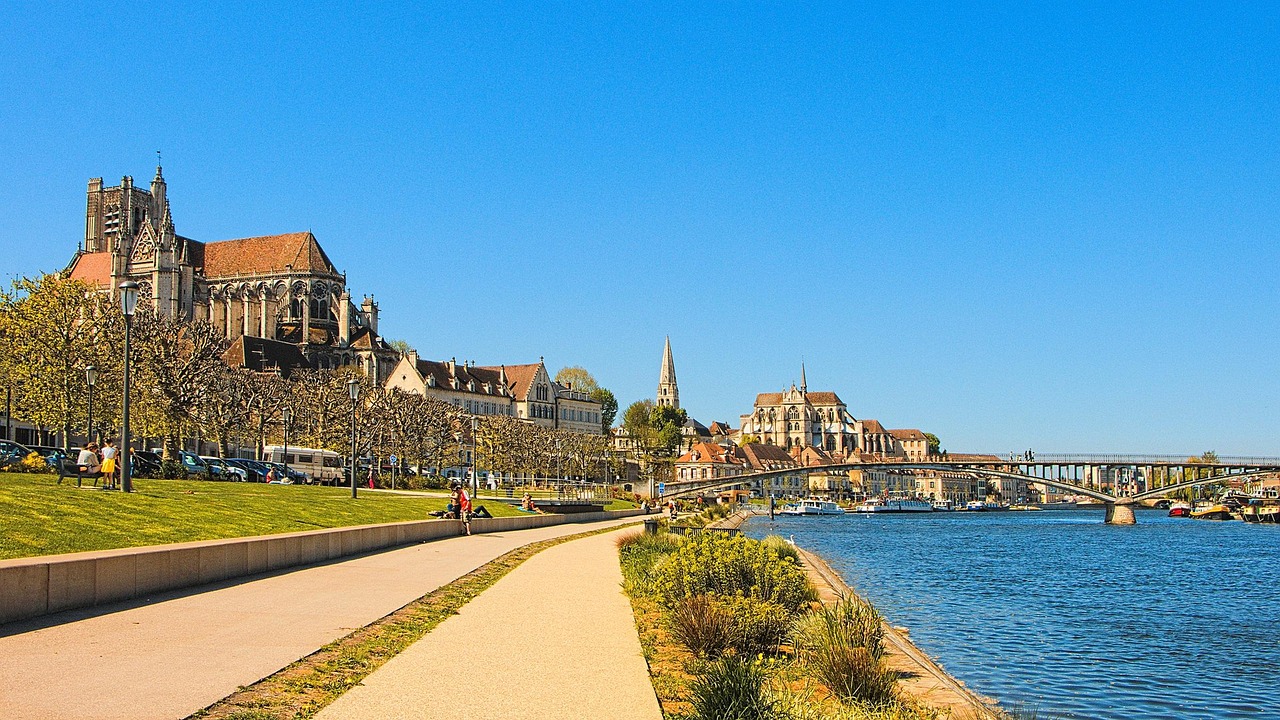
Why Visit Auxerre? What Makes This Burgundy Town So Special
If you love medieval streets, riverside sunsets, and good wine but hate the crush of over-touristed cities, Auxerre is going to feel like a secret you’re almost reluctant to share. I’ve been coming here for over a decade now—sometimes for work as a travel writer, sometimes just to escape Paris for a long weekend—and Auxerre has a way of slowing your heartbeat without ever feeling sleepy.
Auxerre sits on the banks of the Yonne River, in northern Burgundy, about 1.5–2 hours southeast of Paris. Its skyline is a cluster of Gothic towers—most notably the magnificent Cathédrale Saint-Étienne—rising above half-timbered houses and quiet cobbled lanes. It’s big enough to keep you busy for 3–5 days, yet compact enough that you can walk almost everywhere.
What keeps pulling me back is the mix of authentic local life and seriously rich history, without the tourist fatigue you can sometimes feel in bigger French cities. On a typical day, you might wander between Romanesque crypts and medieval frescoes in the morning, sip Chablis at a tiny wine bar in the afternoon, and watch the last light hit the cathedral stones while kids race along the river promenade.
Auxerre is also a brilliant base for exploring nearby vineyards, abbeys, and villages; so if you’re planning a 3 day itinerary for Auxerre or even a 5 days in Auxerre trip, you’ll have more than enough to fill your time with both city and countryside experiences.
Table of Contents
- Why Visit Auxerre
- Auxerre at a Glance (2026)
- Suggested Itineraries: 3–5 Days in Auxerre
- 20 Must-See Attractions in Auxerre
- Neighborhoods & Areas to Explore
- Local Food & Drink in Auxerre
- Nightlife, Culture & Entertainment
- Day Trips from Auxerre
- Cultural Etiquette & Local Customs
- Practical Travel Tips for Auxerre (2026–2027)
- When to Visit Auxerre & Final Takeaways
Auxerre at a Glance (2026)
Auxerre is the capital of the Yonne department, historically part of Burgundy, and today it feels like a very liveable small city with about 35,000 residents. It’s best known for its Gothic cathedral, Romanesque abbeys, and as a gateway to Chablis wine country. Yet there’s also a young energy—thanks in part to local students and creatives—that keeps the café terraces lively and the cultural calendar surprisingly full.
- Region: Bourgogne–Franche-Comté
- Nearest big city: Paris (1.5–2 hours by car or train)
- Vibe: Historic, walkable, lived-in, quietly vibrant
- Best for: Couples, culture lovers, foodies, families seeking a gentler French city, and wine travelers
- Good to know for 2026–2027: Auxerre is leaning into sustainable tourism—more bike lanes, electric buses being tested, and some historic sites now offer combined digital tickets with audio guides in English, Spanish, and German.
Throughout this travel guide for Auxerre, I’ll share not only the must-see attractions in Auxerre but also the hidden gems in Auxerre that I tend to keep for friends who promise they’ll actually come.
Suggested Itineraries: 3–5 Days in Auxerre
Auxerre is perfect for slow travel. You can see the highlights in 2 days, but to really breathe with the city, I recommend at least 3 days in Auxerre, with 4 or 5 if you want to add vineyards and countryside.
Below are flexible outlines—think of them as story-shaped itineraries. I’ll reference many of the best places to visit in Auxerre, but you can always swap days or reorder depending on your arrival time and interests.
3 Day Itinerary for Auxerre: Essentials & Atmosphere
If you only have 3 days in Auxerre, focus on the historic core, riverside life, and one vineyard or countryside experience. This is the itinerary I usually suggest to friends visiting for the first time.
Day 1 – Gothic Towers & Old Town Wanderings
I like to start at the heart: the cathedral and the old town. I still remember the first time I walked up from the river and saw the Cathédrale Saint-Étienne suddenly looming above the half-timbered houses. It felt like a film set, except the bells were unmistakably real.
- Morning: Explore Cathédrale Saint-Étienne d’Auxerre and its crypt; then stroll to Abbaye Saint-Germain.
- Lunch: Have a leisurely meal in the old town—try a bistro on Place des Cordeliers or just off Rue Fécauderie.
- Afternoon: Get lost in the Vieille Ville (Old Town); climb the Tour de l’Horloge area streets; coffee break on a terrace.
- Evening: Sunset stroll along the Quais de l’Yonne; dinner at a wine-focused restaurant; maybe an early night if you’re jet-lagged.
Day 2 – Riverside Life, Local Food & Wine
On my second day in Auxerre, I always try to slow things down. The Yonne River is where locals jog, fish, and walk their dogs, and where I’ve had some of my best low-key evenings with friends and a bottle of Chablis.
- Morning: Visit the Marché d’Auxerre (market days vary, typically Wednesday and Friday/Saturday mornings); sample cheeses and cured meats.
- Late morning: Walk or cycle the Voie Verte along the river.
- Lunch: Picnic by the Yonne or at a riverside brasserie.
- Afternoon: Explore art and history at the Musée Saint-Germain and smaller galleries; café break.
- Evening: Wine bar hopping in the old town; focus on local food in Auxerre like gougères, jambon persillé, and Chablis wines.
Day 3 – Chablis or Countryside Escape
For your third day, you can either head to the vineyards (my pick) or stay local with a mix of churches, parks, and more river time.
- Option A (Wine lovers): Day trip to Chablis – tours and tastings; return for dinner in Auxerre.
- Option B (Family-friendly): Combine Parc Roscoff, boat ride on the Yonne, and a relaxed afternoon café crawl.
- Option C (History buffs): Add a visit to Saint-Marien remains area and lesser-known churches.
4 Day Itinerary for Auxerre: Deepening the Experience
A 4 day itinerary for Auxerre lets you weave in more side streets, more meals, and more small moments—exactly the things that turn a trip into a memory. When I stay four nights, I usually use Day 4 as a “whatever the weather gives us” day.
- Day 1–3: Follow the 3-day itinerary above.
- Day 4:
- Morning at Parc de l’Arbre Sec or Parc Saint-Amâtre.
- Explore additional churches like Église Saint-Pierre and Église Saint-Eusèbe.
- Visit a second museum or temporary exhibition space.
- Evening: try a more modern bistro, or go to a concert or theatre performance if available (check the Théâtre d’Auxerre program).
5 Day Itinerary for Auxerre: Slow Travel & Side Trips
A 5 day itinerary for Auxerre is for when you really want to relax into Burgundy life. This is my favorite length: long enough for serendipity, short enough that you still feel like you’re on a focused trip.
- Days 1–4: Follow the 4-day itinerary above.
- Day 5 Ideas:
- Day trip to Vézelay (highly recommended for history and views).
- Or combine canoeing/kayaking on the Yonne with lazy café time.
- Or dedicate a full day to food: market, cooking class (if available), longer lunch, and an afternoon of pâtisserie “research.”
Throughout the following sections, I’ll dive into each of the things to do in Auxerre so you can customize your own perfect 3–5 days.
20 Must-See Attractions & Experiences in Auxerre
These are my personal picks for the best places to visit in Auxerre, blending the obvious headliners with a few quieter spots that locals love. I’ve organized them roughly from the most iconic to the more hidden gems.
1. Cathédrale Saint-Étienne d’Auxerre
The first time I saw the Cathédrale Saint-Étienne from the river, its pale stone catching the late afternoon light, I understood why Auxerre’s skyline is often compared to a stone ship rising from the Yonne. This Gothic cathedral dominates the city, but step inside and it feels surprisingly intimate.
Construction started in the 13th century and continued for centuries, which means you’ll find a mix of styles—early Gothic in the choir, Flamboyant Gothic in the façade, with a Romanesque crypt below that predates much of what you see above ground.
Highlights:
- The stunning stained-glass windows, particularly in the choir. On a sunny day, the colored light pools across the stone floor—it’s worth timing your visit for mid-morning or mid-afternoon.
- The Romanesque crypt, with frescoes dating back to the 11th century. It feels like stepping into a quieter, older Auxerre.
- The portal sculptures, which reward slow looking: saints, beasts, and intricate foliage carved in stone.
My tip: Arrive just after opening (usually around 9–9:30am) when tour groups haven’t yet arrived and the city is still waking up. In 2026, there are occasional organ concerts and special evening openings—check the tourist office website or posters outside the cathedral.
How to get there: From the riverfront, walk up Rue de la Marine; the cathedral will gradually reveal itself as you climb. It’s in the heart of the old town, so it’s an easy stop on any walking route.
Family / romantic / adventurous? Romantic for sure—especially at dusk. Family-friendly if your kids enjoy big spaces and a bit of history. Adventurous types might enjoy climbing nearby viewpoints rather than the cathedral itself.
2. Abbaye Saint-Germain d’Auxerre
If the cathedral is Auxerre’s soaring spiritual heart, Abbaye Saint-Germain is its quieter, more contemplative soul. This former Benedictine abbey, founded in the 5th century, is one of my favorite places in the city—especially on hot summer afternoons when the cool stone cloisters feel like a blessing.
The abbey complex includes a Romanesque bell tower, Gothic church, cloisters, and some of the oldest known mural paintings in France, hidden away in the crypt. They’re from the 9th century, and being in that underground space feels like time travel.
Why it matters: Saint-Germain was a major religious center in the early Middle Ages, and its scriptorium helped spread learning throughout the region. Today, the abbey also houses parts of the municipal museum, with archeological finds and rotating exhibitions.
My experience: I’ve visited Saint-Germain in every season. On a rainy November day, I had the cloister almost to myself, the sound of raindrops echoing off the stone, and I ended up staying for nearly two hours, just drifting between the exhibits and the courtyard. In summer, the abbey occasionally hosts concerts that are atmospheric without being overcrowded.
Tips for visitors:
- Don’t skip the crypt; guided visits provide context that really brings the faded frescoes to life.
- Check if your ticket includes access to the museum areas; in 2026, combined tickets are usually available.
- Photography is typically allowed but without flash in fresco areas—respect the rules, as the paintings are fragile.
Getting there: A short walk from the cathedral—combine them in one morning. Follow signs in the old town; it’s well-indicated.
3. Vieille Ville (Old Town)
Auxerre’s Vieille Ville is an open-air museum that people actually live in. This isn’t a polished, theme-park version of history; it’s a working town wrapped in timber beams and narrow lanes. If you only did one thing here, wandering the old town would still give you a sense of Auxerre’s character.
The streets around Rue Fécauderie, Rue Joubert, and Place Charles Surugue are where I usually start. Many of the half-timbered houses date back to the 15th and 16th centuries, some leaning at improbable angles. Look up—there are carved details, old signs, and quirky rooflines everywhere.
Personal route suggestion:
- Start at Place Charles Surugue, ringed by colorful timber houses.
- Walk toward the Tour de l’Horloge, Auxerre’s medieval clock tower.
- Drift along Rue Fécauderie and side streets; stop at a café for coffee or a glass of Chablis (yes, even mid-afternoon—when in Burgundy).
- Loop toward the cathedral, taking your time with side alleys where flower pots and cats seem to outnumber people.
My tip: Come back at different times of day. Early morning feels like a movie set before the crew shows up. Late afternoon brings out locals running errands. At night, some façades are beautifully lit.
Family-friendly? Absolutely. Kids tend to love the slightly crooked houses and cobblestones; just watch little feet on the uneven ground.
4. Tour de l’Horloge (Clock Tower)
The Tour de l’Horloge is the jewel of Auxerre’s medieval core: a 15th-century clock tower with an astronomical dial, standing right where the old Roman castrum gate once was. It marks the transition between eras—Roman, medieval, modern—and still feels like the symbolic heart of the town.
I remember my first winter visit, when the streets were quiet and a thin mist hung in the air. The clock’s gilded details glowed against the gray sky, and every so often a local would pass underneath without even looking up. That’s how you know you’re in a real city and not a postcard.
What to notice:
- The astronomical dial, showing the sun and moon—stand close and trace the markings.
- The narrow streets radiating out from the tower, each with slightly different character and shops.
- The way the tower lines up with the cathedral towers when viewed from certain angles—fun to photograph.
While you can’t always climb the tower (access can be limited), it’s worth circling it slowly, taking in the details, and then finding a nearby café terrace to simply sit and watch life flow around it.
Best time: Late afternoon, when the light is warm and the shops are still open; evenings around Christmas are especially atmospheric with seasonal lights.
5. Quais de l’Yonne (Yonne River Quays)
If the old town is Auxerre’s memory, the Quais de l’Yonne are its living room. This is where I always end up in the evening, no matter how my day has gone: along the river, facing the skyline, watching the reflections of the cathedral and abbey ripple in the water.
The riverside promenades are perfect for an unhurried stroll. Barges, pleasure boats, and the occasional péniche glide by; locals jog, walk dogs, or sit on benches having earnest conversations over cans of beer. On summer evenings, teenagers gather in clusters, music plays faintly in the background, and the whole city feels like it’s exhaling.
Things to do along the quays:
- Walk from the Pont Paul Bert bridge up and down both sides of the river for the classic skyline views.
- Rent a bike or just walk part of the Voie Verte, the greenway that follows the Yonne and Nivernais Canal.
- In summer, consider a short boat tour to see Auxerre from the water.
- Pack a picnic from the market and eat on the grass (be discreet and tidy with your trash).
Romantic? Extremely. I’ve watched more than one proposal here (and quietly cheered from a distance).
6. Musée Saint-Germain & Archaeological Collections
Inside and around Abbaye Saint-Germain, you’ll find Auxerre’s main museum spaces, bringing together archaeology, medieval art, and local history. It’s not huge, but it’s dense with stories.
Highlights include:
- Gallo-Roman artifacts from the ancient city of Autessiodurum (Auxerre’s Roman name).
- Medieval sculpture and religious art that once adorned local churches.
- Temporary exhibitions that often highlight Burgundy’s cultural heritage or contemporary artists.
I like to pair a museum visit with time in the abbey cloister; the combination of objects and the spaces they came from helps you imagine how the city evolved.
Tip: Check combined ticket options that include crypt access, museum entry, and sometimes other sites. In 2026, digital audio guides in English are more widely available than in previous years.
7. Église Saint-Pierre
While the cathedral gets most of the attention, Église Saint-Pierre is the church I most often revisit. It sits slightly apart from the busiest old town streets, and its ornate façade and quiet interior feel like a reward for those who wander just a bit further.
This church is a mix of Gothic and Renaissance elements, with a richly sculpted façade that almost looks too delicate to be stone. I’ve ducked in here more than once just to escape a summer downpour and ended up staying to admire the stained glass and the way light filters into the nave.
My tip: Combine Saint-Pierre with a loop through the surrounding streets—they’re a good example of everyday Auxerre life, with fewer souvenir shops and more real businesses.
8. Église Saint-Eusèbe
Église Saint-Eusèbe is another quietly beautiful church that often gets overshadowed by the cathedral. Its foundations are Romanesque, with later Gothic additions, and it has a slightly worn, lived-in feel that I find very moving.
The small square outside is a pleasant place to stop; I’ve bought pastries from a nearby bakery and sat on a bench here more than once, listening to the muffled sounds of the city and the occasional peal of bells.
Why go: To appreciate how rich Auxerre’s religious architecture is beyond the cathedral, and to explore a less touristy corner of the center.
9. Parc Roscoff & Riverfront Green Spaces
For families and anyone needing a dose of green, Parc Roscoff along the Yonne is a favorite. It’s not a grand formal park, but a relaxed, spacious area with lawns, trees, and play areas where locals gather.
I’ve spent lazy hours here reading on the grass, watching kids race around the playground while parents chat from benches. On summer weekends, you’ll see small groups picnicking and sometimes informal games of football or pétanque.
Good for: Families (playgrounds), couples (picnic), solo travelers (reading and people-watching), anyone needing a break from stone and history.
10. Parc de l’Arbre Sec
A bit further along the riverfront, Parc de l’Arbre Sec is larger and more landscaped, with walking paths, open lawns, and seasonal events. It’s one of my go-to places for a morning jog when I’m staying in Auxerre for more than a couple of days.
In summer 2026, expect more outdoor cultural events here—open-air concerts, small festivals, and family activities, as Auxerre continues to animate its public spaces.
Tip: Bring a reusable water bottle; there are public fountains, and Auxerre’s tap water is perfectly drinkable.
11. Marché d’Auxerre (Local Market)
No travel guide for Auxerre would be complete without the market. The Marché d’Auxerre is where you’ll feel the city’s everyday rhythm most vividly. Depending on the day, stalls pop up with everything from vegetables and cheeses to clothes and household goods, but my obsession is always the food section.
Here’s where you can find:
- Regional cheeses (Epoisses, Soumaintrain, goat cheeses).
- Charcuterie including jambon persillé (ham in parsleyed jelly).
- Fresh breads, gougères (cheese puffs), and pastries.
- Seasonal fruits—strawberries in late spring, apricots and cherries in summer, apples and pears in autumn.
I always recommend grabbing picnic supplies here: a bit of cheese, a baguette, some fruit, and maybe a pastry, then heading to the river or a park.
Money-saving tip: The market is one of the best ways to save money on food in Auxerre while still eating exceptionally well. Portions are generous, and vendors are usually happy to explain what you’re buying.
12. Voie Verte & Canal du Nivernais
If you like gentle outdoor adventures, the Voie Verte (greenway) along the Yonne and Canal du Nivernais is a gift. This flat, mostly car-free path is ideal for walking, cycling, or running, and it quickly transports you from town into countryside.
On one summer trip, I rented a bike from a local shop near the river and spent a whole day meandering along the canal, stopping in small villages for coffee and the occasional pastry. It’s not hardcore cycling—more like a moving picnic.
Practical tips:
- Ask your accommodation or the tourist office about bike rental options; in 2026, e-bikes are increasingly available.
- Wear sunscreen and bring water; shade can be patchy in some stretches.
- Family-friendly: yes, especially short segments. Keep an eye on younger kids near the water.
13. Stade de l’Abbé-Deschamps (AJ Auxerre Football Stadium)
For sports fans, Auxerre is synonymous with AJ Auxerre, the local football club that punched well above its weight for years. The Stade de l’Abbé-Deschamps, just outside the center, is a pilgrimage site of sorts if you follow French football.
I’ve been to a couple of matches here, and what struck me was how community-oriented it felt. Families, teenagers, old-timers who clearly have held the same seats for decades—everyone wrapped in blue and white scarves, cheering and groaning in unison.
2026–2027 note: Check the club’s fixture list in advance; weekend games are most common, and tickets can often be bought online. Even if you’re not a football geek, the atmosphere is a fun cultural experience.
14. Parc Saint-Amâtre & Residential Auxerre
To see how locals live beyond the tourist center, wander up toward Parc Saint-Amâtre and the surrounding residential streets. It’s a simple neighborhood park—trees, benches, a playground—but it offers a different view of Auxerre life.
I like to come here in late afternoon, after a day of sightseeing, and just sit for a while with a book. Children play, dog walkers pass each other and chat, and you’ll hear far less English than in the old town.
Good for: Travelers who enjoy observing everyday life and need a break from “must-see” mode.
15. Théâtre d’Auxerre & Cultural Venues
For a dose of cultural experiences in Auxerre, check out the Théâtre d’Auxerre and other performance spaces. The theatre’s program usually includes plays (mostly in French), dance, music, and sometimes family shows.
I once booked a last-minute ticket to a contemporary dance performance without understanding anything about the company beforehand—and walked out delighted. The crowd was a mix of ages, and it felt like a very local evening out.
Tip: Even if your French is limited, consider concerts or dance performances, which are more universally accessible. Check posters around town or the official website for schedules.
16. Street Art & Creative Corners
Auxerre isn’t a street art capital, but in the last few years, more murals and small-scale street art have appeared, especially in slightly out-of-the-way corners and along some underpasses or industrial edges.
On one spring visit, I followed a small local blog’s suggestions and spent an afternoon hunting down murals—bright geometric patterns, portraits, and whimsical creatures peeking out from side streets. It added a contemporary layer to my mental map of the city.
Tip: Ask at the tourist office if there are updated maps or suggestions for street art walks; sometimes they have informal tips from locals on staff.
17. Fromageries, Cavistes & Gourmet Shops
Some of my favorite “attractions” in Auxerre are actually food and wine shops. Small fromageries (cheese shops), cavistes (wine shops), and épiceries fines offer both excellent snacks and edible souvenirs.
I still remember the first time a patient cheesemonger in Auxerre walked me through the differences between a young and an older Epoisses, letting me smell each one and suggesting how to serve them. That ten-minute chat did more for my cheese education than any book.
Look for:
- Local cheeses and Chablis, Irancy, and Burgundy wines.
- Mustards, jams, and other regional products.
- Chocolatiers and pâtisseries for sweet treats.
Budget tip: These shops can be pricey, but a little goes a long way. Buy small amounts and savor them; it’s still cheaper (and better quality) than many restaurant appetizers.
18. Local Boulangeries & Pâtisseries
One of my Auxerre rituals: waking up, walking down a quiet street, and joining the queue at a bakery where everyone knows the staff by name. A good boulangerie is an essential cultural institution in any French town, and Auxerre has several.
Look for places with a constant stream of locals and shelves that don’t look overly staged. Try:
- A still-warm croissant or pain au chocolat in the morning.
- Tarte au citron (lemon tart) or éclair in the afternoon.
- Seasonal specialties—galette des rois in January, fruit tarts in summer, etc.
Etiquette: Say Bonjour when entering, and Merci, au revoir when leaving. It matters.
20. Local Festivals & Events (2026–2027)
Auxerre might not have the mega-festivals of a big city, but its local events are often more intimate and authentic. As of 2026–2027, keep an eye out for:
- Music and wine weekends in spring and early summer, with tastings and small concerts in historic venues.
- Summer street festivals featuring local bands, food stalls, and children’s activities, often centered around the riverfront or main squares.
- Christmas markets and festive lighting in late November and December; Auxerre’s old streets are especially magical then.
Check the Office de Tourisme d’Auxerre website for specific 2026–2027 dates, as they can vary year by year.
Neighborhoods & Districts of Auxerre
Auxerre isn’t enormous, but each area has its own personality. Understanding the layout helps when deciding where to stay and what to explore.
Centre Historique (Historic Center)
This is where most visitors spend their time: a compact maze of medieval streets around the cathedral, abbey, and clock tower. It’s perfect for walking, with plenty of cafés, restaurants, and shops. If it’s your first visit, staying here puts you at the heart of everything.
Best for: First-timers, couples, photography lovers, anyone who wants to walk everywhere.
Rive Gauche (Left Bank of the Yonne)
Cross the bridge from the historic center and you’ll find the quieter Rive Gauche. This side has residential streets, some modern housing, and lovely views back toward the skyline.
I often come here at sunset for the classic postcard view of Auxerre’s towers reflected in the river. It’s also a good area if you prefer staying somewhere slightly less touristy but still within walking distance.
Best for: Views, quieter evenings, access to the Voie Verte and parks.
Stadium & Eastern Residential Areas
To the east, near the Stade de l’Abbé-Deschamps, you’ll find more modern residential neighborhoods and commercial areas. Not particularly scenic, but useful for practical needs—larger supermarkets, sporting goods stores, etc.
Best for: Longer stays on a budget, travelers with cars needing easy parking, football fans.
Suburbs & Nearby Vineyards
Beyond the city proper, the landscape quickly shifts to vineyards, fields, and small villages. If you have a car (or bike and time), exploring these outskirts gives you a taste of Burgundy’s rural charm without the crowds of more famous wine towns.
Best for: Wine travelers, cyclists, anyone building a slower 4–5 day itinerary around Auxerre.
Local Food & Drink in Auxerre
Burgundy is one of France’s great gastronomic regions, and Auxerre holds its own as a small city with big flavors. If you’re a foodie, this might be the main reason you come—and even if you’re not, you’ll probably leave with a deeper appreciation for French regional cuisine.
Must-Try Local Specialties
- Gougères: Airy cheese puffs, often served as an apéritif. My favorite way to start any meal.
- Jambon persillé: Ham in parsleyed gelatin, a Burgundian classic. Looks rustic, tastes elegant.
- Œufs en meurette: Poached eggs in red wine sauce with lardons—rich, comforting, and perfect with bread.
- Boeuf bourguignon: Beef slowly braised in red wine; you haven’t really had it until you’ve eaten it in Burgundy.
- Escargots de Bourgogne: Snails with garlic and parsley butter. If you’re going to try escargots, this is the place.
- Cheeses: Epoisses, Soumaintrain, Chaource, and local goat cheeses feature heavily.
- Desserts: Seasonal fruit tarts, crème brûlée, and house pastries at local restaurants.
Local Wines & Drinks
- Chablis: The star—crisp, mineral white wine from vineyards a short drive away. You’ll see multiple styles (Petit Chablis, Chablis, Premier Cru, Grand Cru).
- Irancy: A nearby red wine appellation, mostly Pinot Noir, often with a bit of César grape—lovely with charcuterie.
- Crémant de Bourgogne: Sparkling wine, a great budget-friendly alternative to Champagne.
- Kir: White wine with blackcurrant liqueur; the local apéritif, best taken on a terrace.
My tip: Many restaurants offer very good house wines by the glass or carafe. Don’t be shy about asking the server for a recommendation; they usually light up when they get to talk about local bottles.
Where to Eat & Drink: My Personal Patterns
Rather than list dozens of specific places (which can change ownership or quality), here’s how I tend to structure my eating in Auxerre:
- Breakfast: At a bakery near where I’m staying—croissant or tartine, plus coffee. Some hotels include breakfast; if they do, I still often sneak out for a “second breakfast” pastry.
- Lunch: Either a menu du jour at a simple bistro (often the best value) or a picnic from the market—especially if the weather is good.
- Afternoon: Coffee and cake at a café or pâtisserie; occasionally an ice cream in summer.
- Dinner: Rotate between:
- Traditional Burgundian restaurants (for boeuf bourguignon, œufs en meurette).
- Modern bistros with creative takes on local ingredients.
- Wine bars that serve small plates and charcuterie boards—great for lighter evenings.
Money-saving advice: The menu du jour at lunch is often significantly cheaper than ordering à la carte at dinner, and portions can be generous. If you’re on a budget, make lunch your main hot meal and keep dinner simpler—wine, cheese, bread, and salads from shops or the market.
Nightlife, Entertainment & Cultural Experiences in Auxerre
Auxerre is more about wine bars and relaxed evenings than wild nightlife, but there’s enough to keep your nights interesting, especially over a 3–5 day stay.
Wine Bars & Cozy Evenings
Wine bars are Auxerre’s specialty: dim lighting, shelves lined with bottles, locals chatting in low voices. I’ve spent many evenings nursing a glass of Chablis or Irancy while nibbling on saucisson and cheese, listening to the gentle hum of conversation around me.
What to expect: Friendly staff, often happy to guide you through local wines; small plates or cold boards; a mix of ages, from students to retirees.
Cafés, Bars & Terraces
In good weather, much of Auxerre’s evening life unfolds on terraces. You’ll find:
- Cafés that gradually morph into bars as the day goes on.
- Riverside spots with views over the Yonne and skyline.
- Small, tucked-away bars favored by locals—great places to practice your French or just observe.
Tip: Nightlife is generally modest on weekdays and livelier on Friday and Saturday nights. Don’t expect Parisian late hours; many places wind down around midnight or 1am.
Cultural Experiences: Concerts, Theatre & Exhibitions
For cultural experiences in Auxerre, check:
- Théâtre d’Auxerre: Plays, dance, concerts.
- Local churches: Occasionally host classical music or choral concerts, especially in summer and around Christmas.
- Museums and galleries: Temporary exhibitions, evening openings for special events.
I like to plan at least one “cultural night out” during a multi-day stay; it anchors the trip and gives you a shared experience to talk about afterward over a glass of wine.
Day Trips & Nearby Attractions from Auxerre
One of the big advantages of basing yourself in Auxerre for 3–5 days is the number of excellent day trip options within an hour or so. Here are a few favorites.
Chablis
Distance: About 20 km north (roughly 20–30 minutes by car; limited bus options).
Chablis is a pretty wine village surrounded by some of the most famous Chardonnay vineyards in the world. On a sunny day, the slopes seem to roll on forever, covered in carefully tended vines.
What to do:
- Visit one or two wineries for tastings and tours (book ahead in English).
- Wander the village streets, popping into wine shops and small food stores.
- Enjoy a leisurely lunch featuring local specialties and, of course, Chablis.
Tip: If you don’t have a car, check for organized tours from Auxerre that include transport and tastings, especially in high season.
Vézelay
Distance: About 60 km south (roughly 1 hour by car).
Vézelay is one of Burgundy’s most beautiful villages, perched on a hill and crowned by the Basilique Sainte-Marie-Madeleine, a UNESCO World Heritage Site. The village’s stone houses and sweeping views over the surrounding countryside make it a dream day trip.
What to do:
- Visit the basilica and admire its Romanesque architecture and carved capitals.
- Stroll the main street with its galleries, shops, and cafés.
- Walk part of the pilgrimage paths radiating from the village, even if just for a short hike.
Tip: Vézelay can get busy in high season; arrive early or later in the day if possible.
Nearby Abbeys & Villages
The countryside around Auxerre is dotted with smaller abbeys, churches, and villages that reward unhurried exploration. If you have a car, create your own loop with stops at:
- Small Romanesque churches with frescoes.
- Village squares with a single bar-café and a handful of regulars.
- Local producers—cheese farms, honey producers, etc.—where you can buy directly.
Ask at the tourist office for suggestions based on your interests and the season; they often have printed maps and recent recommendations.
Cultural Etiquette & Local Customs in Auxerre
Auxerre is friendly and relaxed, but it’s still very French—and a few small gestures go a long way toward smooth interactions.
Greetings & Politeness
- Always say “Bonjour” (daytime) or “Bonsoir” (evening) when entering shops, cafés, and restaurants.
- Say “Merci, au revoir” when leaving.
- A simple “Parlez-vous anglais ?” before launching into English is appreciated.
At Restaurants & Cafés
- Table service is the norm; don’t seat yourself at a restaurant without being shown to a table.
- Tips: Service is included, but rounding up or leaving 5–10% for good service is common and appreciated.
- It’s normal to linger at your table after a meal; you usually have to ask for the bill (“L’addition, s’il vous plaît”).
Dress & Behavior
- Smart casual is fine almost everywhere; very sporty or beachwear-style clothing will stand out in the evening.
- In churches, dress respectfully—no swimwear, avoid very short shorts or tops.
- Keep noise levels moderate, especially at night in residential streets.
Language & Communication
In Auxerre, you’ll hear far more French than English, but basic English is common in tourist-facing places, especially by 2026. Still, knowing a few phrases (bonjour, s’il vous plaît, merci, excusez-moi) makes interactions warmer.
Practical Travel Tips for Auxerre (2026–2027)
Getting There & Getting Around
By train: Auxerre is reachable from Paris (usually from Gare de Bercy or Gare de Lyon) with direct or one-change regional trains. Journey time is about 1.5–2 hours.
By car: Around 1.5–2 hours from Paris via the A6 motorway. Parking is available in and around the center—some free, some paid. Check with your accommodation for suggestions.
By bus: Regional buses link Auxerre with nearby towns and villages, though schedules can be limited on weekends.
Getting around the city:
- On foot: The historic center is compact and easily walkable.
- By bike: Increasingly popular, with more bike lanes and the Voie Verte for longer rides.
- Local buses: Useful for reaching outlying neighborhoods and the stadium; schedules are posted at stops and online.
SIM Cards, Money & Payments
SIM cards: In 2026, your best bets are still major French providers (Orange, SFR, Bouygues) or pan-European eSIMs. You can:
- Buy a prepaid SIM at a phone shop or some supermarkets in Auxerre.
- Use an eSIM purchased online before arrival if your phone supports it.
Money:
- Currency is the euro (€).
- Cards are widely accepted, including contactless, but small markets and some tiny cafés may prefer cash.
- ATMs are common in the center.
Visas, Driving & Licenses
Visa requirements: For EU/EEA/Swiss citizens, no visa is needed. For many other countries (including the US, UK, Canada, Australia), short stays in France (up to 90 days in a 180-day period) are visa-free under Schengen rules as of my last knowledge. Always check updated 2026–2027 regulations with official sources before travel.
Driving:
- Most foreign licenses from major countries are accepted for short tourist stays; an International Driving Permit (IDP) may be recommended depending on your origin country.
- Driving is on the right; seatbelts mandatory; strict drink-driving laws.
- Car rental is available in or near Auxerre, but you won’t need a car for the city itself—only for exploring the countryside extensively.
Seasons & Weather: What’s Best for What
- Spring (March–May): Mild temperatures, blooming trees, fewer crowds. Great for walking, first café terraces, and a 3 or 4 day itinerary.
- Summer (June–August): Warm to hot, lively riverfront, more events and festivals. Ideal for evening strolls and outdoor dining, but book accommodation ahead.
- Autumn (September–November): My personal favorite—harvest season in vineyards, golden light, cooler but pleasant temperatures. Perfect for a 5 day itinerary mixing city and wine country.
- Winter (December–February): Quieter, potentially cold and gray, but lovely around Christmas with lights and markets. Good for budget travelers and those who like atmospheric, less crowded visits.
Saving Money in Auxerre
- Stay slightly outside the most central streets for better hotel or apartment rates; Auxerre is compact, so you’ll still be close.
- Make use of market picnics and lunch menus instead of always dining à la carte at dinner.
- Walk or bike rather than relying on taxis.
- Look for combined tickets or passes for historic sites and museums.
Safety & Health
Auxerre feels generally safe, even at night, but normal city precautions apply:
- Watch your belongings in crowded markets and on trains.
- Use well-lit streets at night.
- Emergency number in France: 112 (EU-wide) or 15/17/18 for specific services.
Summary & Final Recommendations: When to Visit Auxerre
Auxerre is one of those places that doesn’t demand your attention; it rewards it. If you’re looking for a city where you can walk cobbled streets, drink excellent wine, eat seriously good food, and still feel like you’ve discovered something a bit under the radar, this is it.
Best Seasons
- Best overall: Late spring (May–June) and early autumn (September–early October) for comfortable weather, vineyard activity, and a balance of liveliness and calm.
- Best for budget: Winter (excluding Christmas–New Year) and early spring.
- Best for outdoor life: Summer, when evenings by the Yonne are long and warm, and local festivals are in full swing.
Best Trip Length
- 3 days in Auxerre: Perfect for first-timers—cathedral, abbey, old town, quays, and one vineyard or countryside experience.
- 4 days in Auxerre: Adds depth—more churches, parks, and perhaps a cultural evening or extra museum time.
- 5 days in Auxerre: Ideal for slow travel—city, Chablis, Vézelay or other day trips, plus time for serendipity.
Above all, give yourself permission to move slowly here: linger on terraces, double back to that one street that caught your eye, return to the quays at different times of day. Auxerre reveals itself gradually, and that’s exactly why it stays with you long after you’ve left.