Why Visit Avenue de Champagne (Épernay)?
There are wine roads all over the world, but Avenue de Champagne is something rarer: a single, elegant boulevard that concentrates centuries of savoir‑faire into one walkable spine. In 2026, it feels both polished and lived‑in – a place where chef de caves hurry to tastings, school kids zigzag home on scooters, and visitors hover between cellars and café terraces, a little dazzled by the bubbles.
I’ve been returning to Épernay since my student rail‑pass days. Over the years I’ve tasted champagne in vaulted 19th‑century tunnels, watched the façades glow during December’s Habits de Lumière festival, and spent whole afternoons lingering over a single glass at a tiny grower’s house behind the avenue. Each visit feels familiar yet newly effervescent – like the first pop of a cork.
What makes Avenue de Champagne special in 2026:
- Concentrated excellence: Over 100 km of cellars and hundreds of millions of bottles sit beneath a single 1‑km street, home to legendary houses like Moët & Chandon, Perrier‑Jouët, and De Castellane.
- Walkable and human‑scale: Unlike some wine regions where you need a car, most of the things to do in Avenue de Champagne (Épernay) are a short stroll apart.
- Layers of history: From 18th‑century townhouses to 19th‑century industrial cellars and 21st‑century art installations, you can literally read the evolution of champagne in the architecture.
- Atmosphere after dark: Once the day‑trippers leave, Avenue de Champagne becomes almost cinematic – façades lit softly, corks still popping behind wrought‑iron gates.
- Base for the wider Champagne region: Épernay is an ideal hub for day trips to Hautvillers, Aÿ‑Champagne, Reims, and the rolling Montagne de Reims villages.
If you’re planning a 2 day itinerary for Avenue de Champagne (Épernay), or stretching it into 3 or 4 days in Avenue de Champagne (Épernay), this travel guide will help you decide what to sip, where to wander, and how to avoid the tour‑bus crush without missing the must‑see houses.
Table of Contents
- 1. Understanding Avenue de Champagne & How It’s Laid Out
- 2. Twelve Key Sites & Quarters Along Avenue de Champagne
- 3. Suggested 2–4 Day Itineraries (With Personal Stories)
- 4. Traditional Cuisine & Local Food in Avenue de Champagne (Épernay)
- 5. Evenings on Avenue de Champagne: Lights, Tastings & Slow Strolls
- 6. Cultural Experiences & Local Customs
- 7. What’s New: Events & Festivals 2026–2027
- 8. Day Trips & Nearby Villages
- 9. Practical Travel Advice & Money‑Saving Tips
- 10. Summary & Best Seasons to Visit Avenue de Champagne
1. Understanding Avenue de Champagne & How It’s Laid Out
Avenue de Champagne runs roughly east–west along the southern edge of central Épernay. At one end, it opens towards the Marne River and the vineyards beyond; at the other, it bends into more modern residential streets. Underneath, an entire underground city of chalk tunnels criss‑crosses the hill, stacked with bottles.
Think of the avenue in three chronological layers as you walk from the town side outwards:
- The Historic Town Gate (West End): Closer to Place de la République and Épernay’s old streets, you’ll find earlier townhouses and merchant buildings that predate the champagne boom.
- The Grand House Belt (Central Stretch): This is the postcard‑perfect part, with stately mansions of Moët & Chandon, Perrier‑Jouët, Pol Roger, and others. Most major cellar tours start here.
- The Industrial‑Artistic Fringe (East End): Around De Castellane and beyond, the avenue becomes slightly more industrial, with larger production facilities, playful brickwork, and in recent years, contemporary sculptures and art projects.
On my last winter visit in early 2026, I like to start mid‑morning from the town side, when the east‑facing façades catch the light and tour groups are still finishing breakfast. By late afternoon, I drift towards the De Castellane tower to watch the whole street take on that honeyed, pre‑sunset glow.
2. Twelve Key Sites & Quarters Along Avenue de Champagne
Below are twelve of the best places to visit in Avenue de Champagne (Épernay), each with history, character, and a few personal tips. You can weave them into any 2, 3, or 4 day itinerary for Avenue de Champagne (Épernay) depending on your pace.
2.1 Moët & Chandon & Maison Mercier – The Blockbuster Cellars
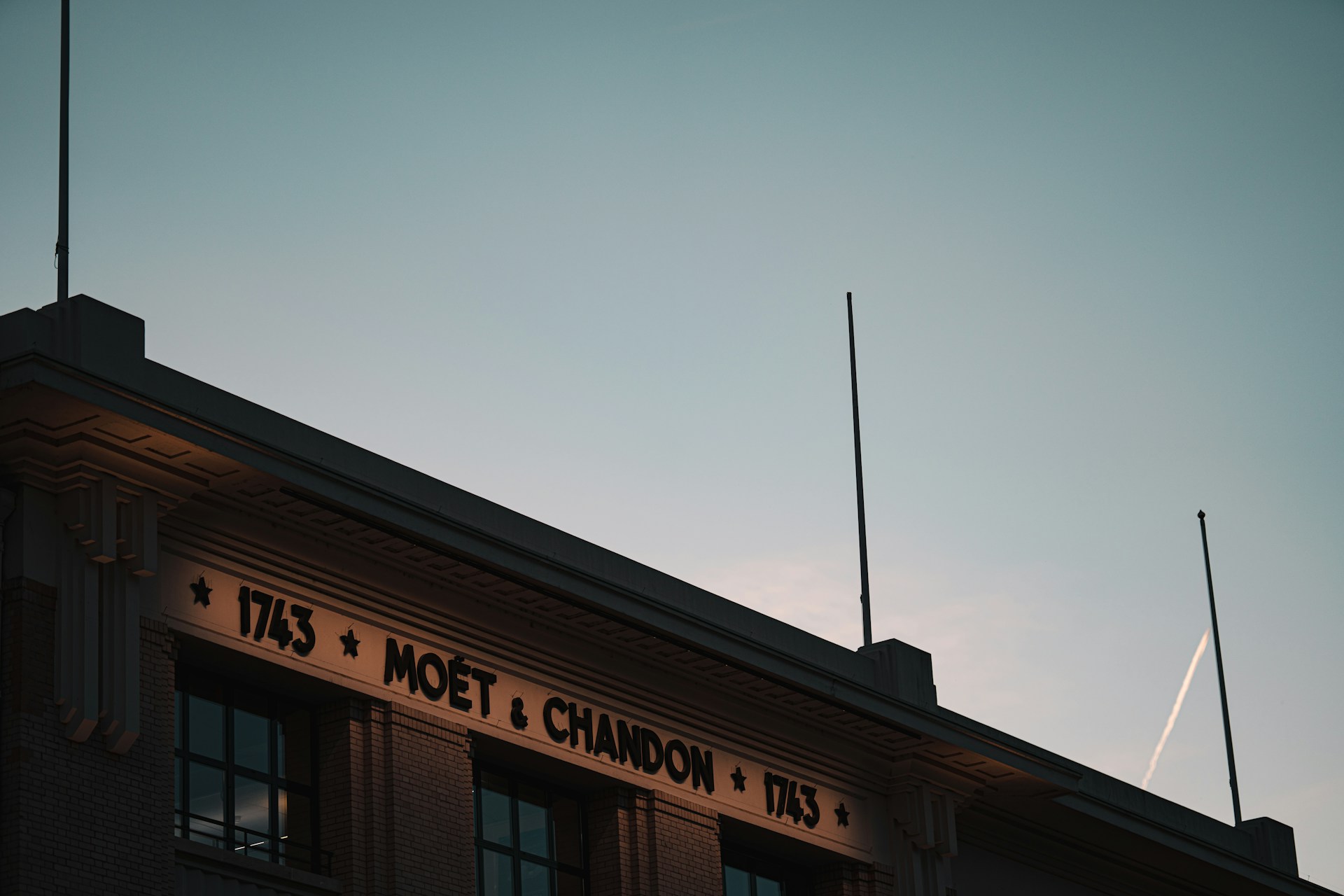
If Avenue de Champagne has a beating heart, it’s arguably the elegant compound of Moët & Chandon. The main courtyard feels like a stage set: pale stone, neat hedges, the statue of Dom Pérignon quietly presiding over the comings and goings of visitors.
My first visit to Moët was on a rainy March afternoon years ago. I still remember stepping from the drizzle into the deep chalk coolness – a temperature shift that always feels like entering a secret world. The tunnels, some dating back to the 18th century, stretch for around 28 km. When the guide flicks on the lights and the bottles appear, row after row, even the least romantic visitor goes quiet.
Why go:
- Superb, polished cellar tours in several languages, ideal for first‑timers.
- A textbook introduction to champagne production and the story of Dom Pérignon and the region’s rise.
- Excellent for families with older kids/teens who enjoy dramatic spaces; younger ones can find it long.
Tips (2026):
- Book in advance year‑round, especially for English tours in summer and during harvest (Sep–Oct).
- Choose at least the mid‑range tasting option; the step up in quality is worth the modest extra fee.
- For a quieter experience, aim for the first or last time slot of the day; midday is peak tour‑bus time.
Just down the avenue sits Maison Mercier, Moët’s more playful cousin.
Mercier’s selling point is its underground train that whisks you through the cellars – a hit with children and anyone with mobility issues. I brought a friend’s family here on a July trip; their 8‑year‑old still talks about “the champagne train” more than anything else in France.
Mercier tips:
- Perfect for a family‑friendly activity on a hot afternoon; the cellar temperature hovers around 10°C.
- The house style is fruit‑forward and approachable – easy to enjoy even if you’re not a serious wine geek.
2.2 Perrier‑Jouët & the Belle Époque Façades
Further along, the world of Perrier‑Jouët feels more intimate. Their historic mansion, with its delicate Art Nouveau motifs and pale green shutters, is one of the prettiest on the avenue. The brand’s iconic anemone design is echoed subtly in ironwork and interior details.
I visited on a crisp November morning in 2025, when the low sun flattened the crowds and the avenue felt like it belonged to the locals again. Inside, the tasting was almost hushed; we spent as much time talking about glassware and food pairings as talking about the wines themselves.
Why go:
- For a slightly more romantic, design‑conscious experience than the big blockbusters.
- Their Belle Époque cuvée is a splurge, but tasting it in situ is unforgettable if your budget allows.
Tip: Tours are fewer and smaller; book well ahead, especially around weekends and during major events like Habits de Lumière.
2.3 Pol Roger – Discreet Elegance
Pol Roger is almost the anti‑Moët: no giant statues or flashy branding, just a handsome, understated façade and a name whispered with respect by wine lovers. It’s famously been a favorite of Winston Churchill, and there’s a certain British reserve in the house style – structured, precise, age‑worthy.
On a spring trip in 2024, I joined a trade‑oriented tour here. It was nerdier than the usual public visits (malolactic fermentation came up more than once), but even casual drinkers will appreciate the calm, focused atmosphere. Pol Roger feels like a place for serious enthusiasts who want to go beyond the basics.
Tip: Public visit availability changes; some years are more limited. If Pol Roger is a must‑see, email well ahead or ask your hotel to help arrange a visit.
2.4 De Castellane & Its Iconic Tower
Towards the eastern end of the avenue, De Castellane announces itself with a whimsical, red‑brick neo‑Renaissance tower that looks part industrial monument, part fairy‑tale folly. It’s one of my favorite landmarks at sunset; when lit up at night, it serves as a beacon drawing you down the avenue.
One summer evening, after a day of tasting, we climbed the tower just before closing. The view over the town, the river, and the sea of vineyards is one of the best views in Épernay. As the light shifted, we could trace the curve of the Marne and see tiny tractors still moving among the vines.
Why go:
- Climb the tower for panoramic views – a must for photographers and architecture lovers.
- Atmospheric cellars with bold, graphic posters recalling the house’s Belle Époque advertising.
Tip: The climb involves stairs, so it’s not ideal for those with mobility issues. Time your visit late afternoon to linger for golden hour.
2.5 Château Perrier – Musée du Vin de Champagne et d’Archéologie Régionale
Just off the avenue, the recently restored Château Perrier hosts the Musée du Vin de Champagne et d’Archéologie Régionale. It’s where you come to understand why this landscape, and this chalk, birthed the world’s most famous sparkling wine.
On a rainy February day in 2026, I ducked in more to escape the drizzle than anything, and ended up staying almost three hours. The exhibits are well‑designed, with English explanations, weaving together geology, archaeology, and the evolution of champagne production.
Why go:
- Essential for context if you want more than just tastings – perfect for history buffs.
- Good family‑friendly stop; kids like the interactive displays and old tools.
Tip: It’s calmer in the late afternoon, when the tour groups have left. Combine with a stroll through the adjacent gardens when the weather allows.
2.6 Hidden Townhouses & the Side‑Street Mansions
Beyond the famous names, some of the most atmospheric corners of Avenue de Champagne hide in its side streets: modest grower houses, quiet courtyards, and small mansions that survived the wars with their ironwork intact.
On one of my favorite walks, I turned off the main drag near the mid‑avenue roundabout and followed a narrow lane that seemed to lead nowhere. Instead, I found a tiny family‑run producer (we’ll keep their name our little secret) whose courtyard was filled with rose bushes and old riddling racks used as trellises. We ended up chatting with the owner’s daughter about harvest dates and local school holidays over an impromptu tasting.
Tip: Don’t be afraid to gently push open a gate if there’s a sign reading “Vente directe” or “Dégustation” and a bell. These are often hidden gems in Avenue de Champagne (Épernay), with far fewer crowds and more personal encounters.
2.7 The “Town End” of Avenue de Champagne & Place de la République
The western end of the avenue bleeds into Épernay’s more traditional town fabric: bakeries, local banks, a florist, and children spilling out of school. This is where you’re reminded that people actually live here, not just pour and drink champagne.
I like to start many of my days here with a coffee and croissant at a corner café, watching locals run errands. In 2026, there’s a renewed focus on small, locally owned shops – a cheese monger showcasing regional products, a chocolatier experimenting with marc de champagne fillings.
Tip: If you’re crafting a 2 days in Avenue de Champagne (Épernay) plan, anchor at least one morning here before drifting up the avenue; it grounds the experience and offers cheaper, more authentic breakfasts than the hotel buffets.
2.8 Vineyard Edge & Views Over Épernay
At the far, eastern end of the avenue, the town thins and the vineyards begin. It’s here that you can best sense the geographical logic of Épernay: tucked into a bowl of vines, with the Marne acting as a silver ribbon below.
One of my rituals is to walk all the way out in the late afternoon, then climb slightly onto the vineyard tracks above Avenue de Champagne. Looking back, the entire avenue lies like a string of pearls, the grand houses lined up in a row.
Tip: In dry weather, wear decent shoes and venture a little up the tracks for photos. In or after rain, the chalk turns to slippery paste; stay on paved paths.
2.9 Small Grower Houses & Courtyard Tastings
While most of the big maisons have addresses right on the avenue, many grower‑producers occupy discreet courtyards and side streets just behind it. These are often the most rewarding discoveries for those who care about terroir and individuality.
On a warm May evening, I followed a handmade sign pointing to “Champagne de Propriétaire – Dégustation” down a small alley. It opened into a cobbled yard where the winemaker himself poured three cuvées at a wooden table, while his dog dozed under a tractor. The prices were modest, the wines characterful, and the conversation lively.
Why go:
- More personal stories – you’re often speaking to the family who grew the grapes.
- Excellent value bottles to bring home; some sell directly only from their cellar.
Tip: Many small growers prefer appointments, but some post open hours. A polite knock and a “Bonjour, est‑ce possible de déguster?” goes a long way.
2.10 Parks, Gardens & Picnic Spots Near Avenue de Champagne
After three or four tastings, you’ll crave shade, grass, and perhaps a non‑alcoholic drink. Épernay’s small parks near the avenue are a blessing. Locals bring baguette sandwiches, a soft cheese, and – when regulations and discretion allow – a half‑bottle of champagne for low‑key picnics.
One summer afternoon, digesting an over‑ambitious lunch, I spread out a scarf in a tiny park just off the avenue and watched an older couple play pétanque. Their rhythm – throw, sip, laugh – felt like a neat metaphor for life in Champagne.
Tip: Officially, open alcohol rules can be strict, but a discreet glass with food, in daylight, rarely bothers anyone as long as you’re respectful and tidy. Always check current local regulations.
2.11 Art, Architecture & Contemporary Installations
In the past decade, Avenue de Champagne has embraced contemporary art and design. Sculptures appear unexpectedly between classical mansions; seasonal installations line the pavements during festivals.
In 2025 during Habits de Lumière, light projections turned façades into living canvases. The chalk mansions became waves, constellations, even bubbling flutes of champagne in motion. Watching children chase the light patterns along the cobbles remains one of my most vivid Épernay memories.
Tip: In 2026–2027, look for temporary installations announced via the Épernay tourist office website; they often cluster around the central stretch of the avenue.
2.12 Avenue de Champagne by Night
After dark, Avenue de Champagne undergoes a transformation. The tour groups vanish, tasting rooms close their doors, and the street belongs to lingering couples, local dog walkers, and the occasional sommelier heading home.
On a clear October night, I walked the entire avenue slowly, from town end to De Castellane and back. The façades were gently illuminated, the air smelled faintly of damp chalk and distant fermentations, and my footsteps were the loudest sound. It felt almost like being backstage in a theatre after the show – an intimate, privileged moment.
Tip: Even if your schedule is packed, carve out one quiet night walk along the avenue. It’s one of the simplest yet most memorable things to do in Avenue de Champagne (Épernay).
3. Itineraries: 2–4 Days in Avenue de Champagne (Épernay)
Whether you’re planning a focused 2 day itinerary for Avenue de Champagne (Épernay) or lingering for 3–4 days, pacing is everything. Champagne tasting is deceptively gentle; it creeps up on you. Build in walks, water, and non‑alcoholic diversions.
3.1 2 Days in Avenue de Champagne (Épernay): The Essentials
This is the classic long‑weekend break I’ve repeated (and refined) many times: one day anchored around the big houses, one day exploring smaller producers and the surrounding town.
Day 1 – Grand Houses & First Bubbles
Morning: Coffee at the Town End & Moët & Chandon
Start near Place de la République around 9:00. I usually slip into a café where locals stand at the bar, order a café allongé and a still‑warm croissant, and watch Épernay wake up. Prices are kinder here than on the avenue itself.
Around 9:45, stroll up Avenue de Champagne. The first time I did this in early spring, the light bounced off the pale façades, and there was a sense of anticipation in the air – shutters opening, staff sweeping courtyards.
10:30 – Moët & Chandon Cellar Tour
Book a late‑morning slot. Arrive 10–15 minutes early to wander the courtyard and photograph the Dom Pérignon statue before the big groups arrive.
- Experience: About 90 minutes underground + tasting.
- Family note: Kids may enjoy the drama; bring a light jacket for everyone.
When you emerge into daylight, the first sip of chilled champagne in the tasting room feels earned. Don’t rush; this is your formal introduction to the region.
Lunch: Casual Brasserie Near the Avenue
By 12:30–13:00, you’ll be hungry. I prefer a simple brasserie one or two streets off the avenue where locals go for their plat du jour. Expect things like roast chicken with mustard cream sauce, steak‑frites, or a rich quiche with salad.
Tip: Order a pichet of local still wine or just water; save the bubbles for tastings.
Afternoon: Mercier or Perrier‑Jouët
For a first visit, I usually suggest Mercier in the afternoon, especially if you’re a family or a bit tired. The underground train keeps things light and fun. Alternatively, for a more romantic vibe, pick Perrier‑Jouët if you can secure a reservation.
- Leave at least two hours between tastings – your palate and head will thank you.
- Drink plenty of water; many houses provide carafes in the tasting areas.
Late Afternoon: Slow Walk to De Castellane
By 16:00–17:00, wander slowly towards De Castellane, admiring the shift in architecture as grand villas give way to slightly more industrial buildings. If you’ve pre‑booked, you could do a shorter cellar visit and tower climb now; otherwise, simply enjoy the exterior and the views.
Evening: First Night on the Avenue
Dinnerwise, stay within walking distance – always my rule in wine regions. Choose a bistro where you can sit outside if the weather cooperates. My favorite first‑night meal is something simple but local: maybe a jambon au champagne or a plate of regional cheeses and charcuterie, with a glass (not a bottle) of a house champagne.
After dinner, take a short night walk along the central stretch: the avenue will be calmer now. This is where you begin to understand the difference between busy tourist hours and the more intimate late‑night atmosphere.
Day 2 – Smaller Producers & Town Life
Morning: Old Town & Market
If your visit falls on a market day (usually early in the week or weekends; check the 2026 schedule), start there. I love wandering among stalls piled with champignons de Paris, local cheeses, and seasonal fruit, then grabbing a still‑warm baguette.
Otherwise, stroll Épernay’s old streets, duck into the church, and browse small shops. This is quieter, more residential than the avenue, a good counterpoint.
Late Morning: Grower Visit
Book ahead with a small grower‑producer either just off Avenue de Champagne or in a nearby village like Cumières or Dizy (reachable by short taxi). These visits are often the highlight of a 2 day itinerary for Avenue de Champagne (Épernay).
You may taste in a working cellar, with tanks and barrels in sight. I’ve had winemakers here pull out experimental bottles, explain soil maps spread on a barrel, and glance occasionally at a bubbling vat.
Lunch: Picnic or Wine‑Bar Style
If the weather is kind, compose a picnic with market provisions and enjoy it in a nearby park. Alternatively, choose a wine bar that offers small plates: rillettes, terrines, aged cheeses. This is a great chance to taste a glass of a producer you won’t have time to visit.
Afternoon: Museum or Second Grower
With just two days, I’d recommend the Château Perrier museum in the afternoon. It ties together everything you’ve seen and tasted. But if you’re more about wine than history, a second grower visit – perhaps specializing in single‑parcel wines or zero dosage – will broaden your view of champagne’s range.
Evening: Farewell Dinner
For a final night, reserve somewhere slightly special but still local – perhaps a restaurant in a historic townhouse within a short walk of your hotel. Splurge on a bottle from a producer you visited; the memory will stay with you long after the last sip.
3.2 3 Days in Avenue de Champagne (Épernay): Adding Depth
With three days, you can slow the pace and add a short day trip to a nearby village, plus more time exploring the avenue’s quieter corners.
Day 3 – Hautvillers or Aÿ‑Champagne Side Trip
On my favorite three‑day stays, the third morning is devoted to a trip up to Hautvillers, the hillside village associated with Dom Pérignon. It’s an easy taxi ride or, for the adventurous, a bike ride through the vineyards.
Spend the morning wandering its sloping lanes, admiring wrought‑iron shop signs, and visiting the abbey church where Dom Pérignon is buried. Have lunch on a terrace with views back down to Épernay, then return to town mid‑afternoon for one last, lazy stroll along Avenue de Champagne.
Alternatively, visit Aÿ‑Champagne, a historic Grand Cru village with its own impressive houses and cellars.
Back in Épernay, finish with a final tasting at a house you’ve been curious about but haven’t yet visited, then an early dinner and night walk.
3.3 4 Days in Avenue de Champagne (Épernay): Immersion
A 4 day itinerary for Avenue de Champagne (Épernay) allows true immersion – time to revisit favorites, explore more hidden gems, and simply be on the avenue without constantly checking the clock.
Day 4 – Free Day: Follow Your Nose
On my longest stays, the most rewarding day is the one without a fixed plan. Sleep in. Linger over breakfast. Walk the avenue end‑to‑end, turning into any side street that calls to you.
Stop for an unplanned tasting if a courtyard looks inviting. Sit on a bench and watch deliveries arrive at the big houses. Visit the museum you skipped. Or, if you’re “tasted out,” spend the afternoon reading in a park, letting the distant hum of traffic and cellars wash over you.
This unstructured day transforms your trip from a checklist of must‑see attractions in Avenue de Champagne (Épernay) into something more personal, and often more memorable.
4. Traditional Cuisine & Local Food in Avenue de Champagne (Épernay)
Champagne pairs well with more than oysters and caviar. In Épernay, you’ll find hearty, often rustic dishes designed for cold winters and long days in the vines, now elevated by thoughtful bistros and family‑run restaurants.
4.1 What to Eat
- Jambon au champagne: Ham slowly cooked in a champagne‑cream sauce. Rich, comforting, and far better than it sounds.
- Boudin blanc de Rethel: A delicate white sausage, often gently browned and served with mash or a light sauce.
- Andouillette de Troyes: For the adventurous. A strongly flavored tripe sausage – love it or hate it.
- Chaource & Langres: Soft, creamy local cheeses that sing with a glass of brut.
- Biscuit rose de Reims: Pink biscuits traditionally dipped into champagne (quietly, away from purists).
- Coq au champagne: A local twist on coq au vin, with champagne instead of red wine.
4.2 Family‑Run Restaurants & Where Locals Eat
Some of the most enjoyable meals I’ve had here were in modest dining rooms a few streets off Avenue de Champagne: lace curtains, paper place mats, a chalkboard menu, and a short list of champagnes from cousins or neighbors.
How to find them:
- Look for menus in French first, English second, or not at all.
- See where workers eat at lunch on weekdays.
- Avoid places with aggressively translated menus and photos of every dish.
I still remember a chilly January lunch in a tiny spot near the town hall: a steaming plate of blanquette de veau, a glass of entry‑level brut from an unknown grower, and the hum of locals discussing pruning schedules and school strikes.
4.3 Eating on a Budget
Épernay can be gentle on your wallet if you plan:
- Opt for the lunch “formule” – a set menu at fixed price – rather than à la carte.
- Buy picnic supplies from bakeries, fromageries, and the market for at least one meal a day.
- In wine bars, try by‑the‑glass flights instead of full bottles to sample widely.
5. Evenings on Avenue de Champagne
Evenings in Épernay are less about nightlife and more about an almost theatrical transition from busy tasting hours to lingering, low‑key pleasures.
5.1 Lit‑Up Monuments & Night Walks
Most of the grand houses on Avenue de Champagne are softly lit after dark. The play of light on carved stone, iron fences, and gravel courtyards is subtle but magical. I like to start at the town end after dinner and walk slowly towards De Castellane, pausing to peer through gates at quiet mansions.
5.2 Evening Tastings & Wine Bars
While cellars generally close by early evening, several wine bars keep pouring late. These are ideal for a final glass and people‑watching. On summer nights, terraces hum with a mix of locals and visitors comparing notes on their favorite cuvées.
5.3 Festivals & Sound‑and‑Light Shows
The annual Habits de Lumière festival in December turns Avenue de Champagne into a playground of lights and performances: video projections on façades, food stalls, and late‑opening houses. It’s crowded but unforgettable, and especially atmospheric in a light snowfall.
6. Cultural Experiences & Local Customs in Avenue de Champagne (Épernay)
Champagne may be glamorous, but daily life along Avenue de Champagne is grounded and quietly traditional. A little cultural sensitivity goes a long way.
6.1 Tasting Room Etiquette
- Always greet: Start with a warm “Bonjour” to staff and hosts before launching into questions.
- Reservations: Increasingly expected for visits, especially at smaller houses. Drop‑ins are more acceptable at the big maisons, but you may still wait.
- Spitting is normal: Don’t be shy about using the spittoon; professionals do it all day. No one will think you rude.
- Buy, but don’t feel forced: It’s polite to purchase at least a bottle after a generous free or low‑priced tasting at a small grower, but it’s not mandatory at big houses.
6.2 Dress & Demeanor
You don’t need to dress up, but the vibe is generally smart casual. Avoid beachwear, very loud behavior, or obvious intoxication – this is a working, professional environment for many.
6.3 Mealtimes & Sundays
Lunch is typically served between 12:00–14:00; after that, kitchens close until dinner. On Sundays and Monday evenings, many restaurants shut; plan ahead or ask your hotel for up‑to‑date suggestions.
7. Events, Festivals & What’s New in 2026–2027
Épernay’s calendar is quietly busy, especially around the vines.
7.1 Key Annual Events
- Spring 2026 – Printemps des Champagnes (regional): A series of tastings and events across Champagne. Épernay hosts satellite tastings and open days along the avenue.
- September–October 2026 – Harvest Season (Les Vendanges): While exact dates vary by year, the atmosphere is electric: tractors loaded with grapes, long days in the vines, occasional harvest celebrations.
- December 2026 & 2027 – Habits de Lumière: Multiday festival with light shows, parades, and late‑night openings on Avenue de Champagne. Reserve accommodation early.
7.2 Ongoing Changes in 2026
For 2026, several houses are expanding or updating their visitor centers, with more emphasis on sustainability and vineyard biodiversity. Expect more tours including vineyard walks and explanations of organic or biodynamic practices.
8. Day Trips & Nearby Attractions from Avenue de Champagne (Épernay)
Épernay is an ideal base to explore the broader Champagne region.
8.1 Hautvillers
Perched above Épernay, Hautvillers offers postcard views and a strong sense of history. The abbey church, Dom Pérignon’s resting place, is modest but moving, and the village lanes are lined with carved and painted iron signs.
Getting there: 10–15 minutes by taxi; cycling is possible but involves hills. In summer, some shuttle options run; check current timetables.
8.2 Aÿ‑Champagne
A historic Grand Cru village with its own big names and intimate side streets. Aÿ feels more compact and village‑like than Épernay, yet equally wine‑obsessed.
Getting there: Short train or taxi ride from Épernay; some visitors bike along the river.
8.3 Reims
About 30 minutes by train, Reims offers a different scale: a grand cathedral where French kings were crowned, larger museums, and additional champagne houses like Taittinger and Veuve Clicquot.
8.4 Montagne de Reims & Forest Walks
If you need a break from bubbles, the Montagne de Reims Regional Natural Park offers woodland paths, viewpoints, and the curious “faux de Verzy” – twisted ancient beech trees. A rented car or private driver makes this easiest.
9. Practical Travel Advice for Avenue de Champagne (Épernay)
9.1 Getting There & Around
By train: Direct trains connect Épernay with Reims and Paris (via Reims or Château‑Thierry). The station is a short walk from Avenue de Champagne.
On foot: The avenue and central Épernay are compact; you’ll walk most places.
Car rental: Useful for exploring outlying villages, but not essential for a short stay focused on Avenue de Champagne. Parking near the avenue can be tight during peak months.
9.2 Local Transport & Taxis
Local buses cover basic routes, but schedules are limited. For vineyard villages, taxis or pre‑arranged drivers are more reliable. Ask your hotel to call reputable drivers used to wine‑tour schedules.
9.3 SIM Cards & Connectivity
In 2026, EU eSIMs and prepaid SIMs from major French providers (Orange, SFR, Bouygues) are easy to obtain in Reims or Paris before arriving. Coverage in Épernay is good; some vineyard valleys have weaker signals.
9.4 Money‑Saving Strategies
- Travel in shoulder seasons (April–May, late September–early November) for lower hotel prices.
- Limit paid tastings to a couple per day and supplement with by‑the‑glass options at wine bars.
- Share tastings if driving; many houses allow a couple to split a set.
9.5 Accessibility & Cobblestone Logistics
Avenue de Champagne itself is relatively flat and paved, but some side streets and cellar tours involve stairs, uneven ground, or tight passages.
- Ask in advance about lift access to cellars; some major houses are better equipped than others.
- Wear shoes with good grip; chalk can be slippery when damp.
9.6 Combined Tickets & Booking Strategies
While there isn’t a single official “avenue pass,” various packages occasionally bundle museum entry with a cellar visit. Check the Épernay tourism office for current offers. In peak season, book key houses (Moët, Mercier, Perrier‑Jouët) at least several weeks ahead.
9.7 Photography Rules & Cellar Etiquette
- Photography is usually allowed in cellars but often without flash; always ask your guide.
- Refrain from touching bottles, equipment, or stacks of cages – they’re working spaces.
- Keep voices low; the echoing tunnels amplify sound.
9.8 Driving, Visas & Legalities
Visas: For 2026, Schengen rules apply; check your nationality’s requirements well before travel.
Driving licenses: Many non‑EU licenses are accepted with an International Driving Permit; consult your rental company.
Drinking & driving: France’s blood‑alcohol limits are strict. If you’re driving, either spit diligently, designate a sober driver, or hire a car with driver for cellar days.
9.9 Best Seasons & Weather Considerations
- Spring (April–May): Vines leafing out, moderate crowds, occasional rain. Great for photos.
- Summer (June–August): Long days, more visitors, higher prices. Book well ahead.
- Harvest (Sept–Oct): Magical atmosphere, but some houses limit visits; book early.
- Winter (Nov–March): Quiet, atmospheric, especially around Habits de Lumière. Short days and cold, but cellars are less crowded.
10. Summary & Final Recommendations
Avenue de Champagne is a rare place where the world’s idea of luxury sits gently atop a very real, working town. Walk it slowly, above and below ground. Balance blockbuster houses with quiet grower visits. Let at least one evening be about nothing more than strolling past lit‑up mansions, listening to your own footsteps on the pavement.
For most travelers, 2 days in Avenue de Champagne (Épernay) is enough to see the essentials; 3 days allows a meaningful village side trip; 4 days turns a visit into something like a short residency in the heart of Champagne.
When to come? For first‑timers, I often recommend late spring or early autumn: lighter crowds, active vineyards, and soft, flattering light for those atmospheric architectural shots that will forever remind you of your time here.
Whichever season you choose, remember that the real joy of Avenue de Champagne lies not only in the glasses you raise, but in the unhurried hours between them – the walks, the conversations, the quiet moments when you realize that beneath your feet, entire chalk cities of bottles are waiting patiently for their turn to sparkle.