Why Visit Biarritz Beaches in 2026?
If you only know the French Riviera, Biarritz will feel like a revelation. This is France facing the Atlantic, not the Mediterranean: waves instead of ripple, sea spray instead of stillness, surfers instead of superyachts. The beaches here are the beating heart of the town – not a backdrop, but a way of life.
What makes Biarritz Beaches special is the mix:
- Surf culture that’s genuinely world–class but still laid–back enough that you can show up as a complete beginner and not feel judged.
- Family–friendly coves where Basque grandfathers teach toddlers to float in rock pools while teenagers jump from the pier.
- Romantic cliff walks at golden hour, with Belle Époque villas on one side and the open Atlantic on the other.
- Serious food – from pintxos and grilled chipirons (baby squid) to oysters slurped with sandy feet straight off the beach.
- Easy day trips to quieter beaches, Basque villages, and Spanish tapas towns.
And in 2026–2027, Biarritz is in one of its most interesting phases in years. The surf scene continues to grow up (and get more sustainable), beach bars are getting more creative with local produce, and the town is leaning into its Franco–Basque identity with more festivals and cultural events that spill right onto the sand.
Table of Contents
- Why Visit Biarritz Beaches in 2026?
- 3–5 Day Itineraries for Biarritz Beaches (With Personal Stories)
- The 10 Main Beach Sections & Coastal Spots – Deep Dive
- Seafood, Beach Bars & Boardwalk Eating
- Evenings at Biarritz Beaches
- Cultural Etiquette & Local Customs
- Day Trips & Nearby Attractions
- Practical Travel Tips for Biarritz Beaches
- Beach–Specific Logistics & Safety
- Major Events 2026–2027
- Summary & Best Seasons to Visit Biarritz Beaches
3–5 Day Itineraries for Biarritz Beaches (With Personal Stories)
Below are my tried–and–tested ways to spend 3 days in Biarritz Beaches, plus how I stretch it to a 4 day itinerary for Biarritz Beaches and a full 5 days in Biarritz Beaches. I’ve done versions of each of these in recent years – solo, with friends, and once wrangling two surf–obsessed teenagers.
3 Day Itinerary for Biarritz Beaches – Classic First–Timer (and My Go–To Reset)
Day 1 – Grande Plage, Lighthouse Views & Sunset Pintxos
I like to start my Biarritz trips at Grande Plage, partly because it’s the postcard–perfect view, but also because it immediately drops you into the rhythm of the town. On my June 2025 visit, I checked into a small guesthouse just behind the Hôtel du Palais and walked straight down to the sand with my shoes still in my hand.
Morning: Grab coffee and a croissant from a bakery around Place Clémenceau (I still swear by the pistachio croissant at a tiny boulangerie on Rue Gambetta) and walk down the steps to Grande Plage.
- Swim & stroll: In summer, lifeguards usually open from around 10:30–11:00. I often start with a quick dip, then walk the full length of the beach, watching early surf lessons wobble on whitewater near the Casino.
- First surf session: If you’re new to surfing, Grande Plage is a good, central place to get a feel for it. I booked a 2–hour lesson with a local school next to the beach; they kitted me out and had me standing in sloppy waist–high waves by the end.
Lunch with a view: For something easy, I grab a salad bowl or poke from one of the casual spots on the promenade and eat on the steps, watching kids build sand fortresses at the waterline.
Afternoon: Walk the promenade north towards the Biarritz Lighthouse (Phare de Biarritz).
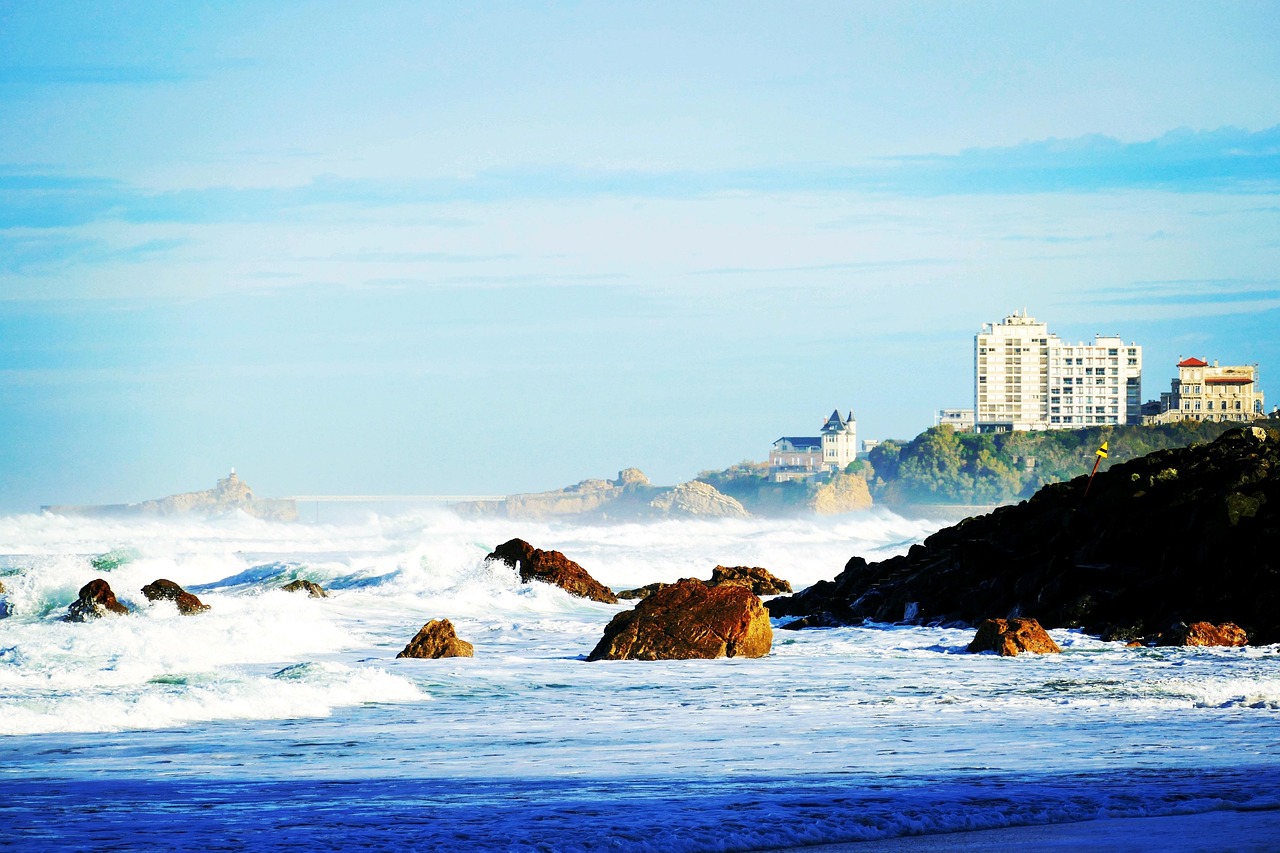
- Climb the lighthouse: 248 steps, but the view of the entire Biarritz coastline is the best orientation you can get.
- Coastal walk: I like to loop back via the cliff path, pausing at the benches to watch the surf lines wrap into Grande Plage.
Sunset & pintxos: In the evening, wander down to Rue des Halles and the area around Les Halles market. This is Basque pintxos territory – stand–up eating, small plates, chatter spilling into the street.
- Order a glass of txakoli (slightly sparkling Basque white wine) and a plate of grilled chipirons at a busy bar with napkins on the floor – that’s a good sign.
Day 2 – Côte des Basques, Old Port & Nightlife
Morning at Côte des Basques: This is the beach where I lose track of time. On my last autumn trip, I came “just for a quick coffee” and ended up staying until sunset.
- Take the stairs down from the cliff (or the small elevator in high season) and arrive at low tide if you can: the sand stretches far, and you can walk for ages.
- Book a surf lesson here if you’re a beginner – the mellow rollers and long sandy bottom are forgiving. I’ve had my best “I finally get this!” moments here.
Lunch on the cliff: Above the beach, there are a few casual spots where you can eat with a panoramic view. I often grab a burger or poke bowl and a cold beer and plant myself at one of the cliff–top tables.
Afternoon at Plage du Port Vieux:
- Walk back towards town and down into Plage du Port Vieux, a small horseshoe cove that feels like a natural swimming pool.
- This is perfect for families or anyone nervous about waves; I like to swim lazy laps out to the safety rope and back.
Evening: old–fashioned glamour & low–key bars
- Stroll the sea wall towards the Rocher de la Vierge, stopping for photos as the sky goes pink.
- Later, dip into a wine bar near Les Halles or head to a surf–y bar behind Côte des Basques, where sandy–haired locals nurse post–session beers.
Day 3 – Anglet or Milady, Market Lunch & Spa Time
By day three, you’ll have a feel for the central beaches. This is when I like to branch out.
Option A: Anglet Beaches (for space & surf)
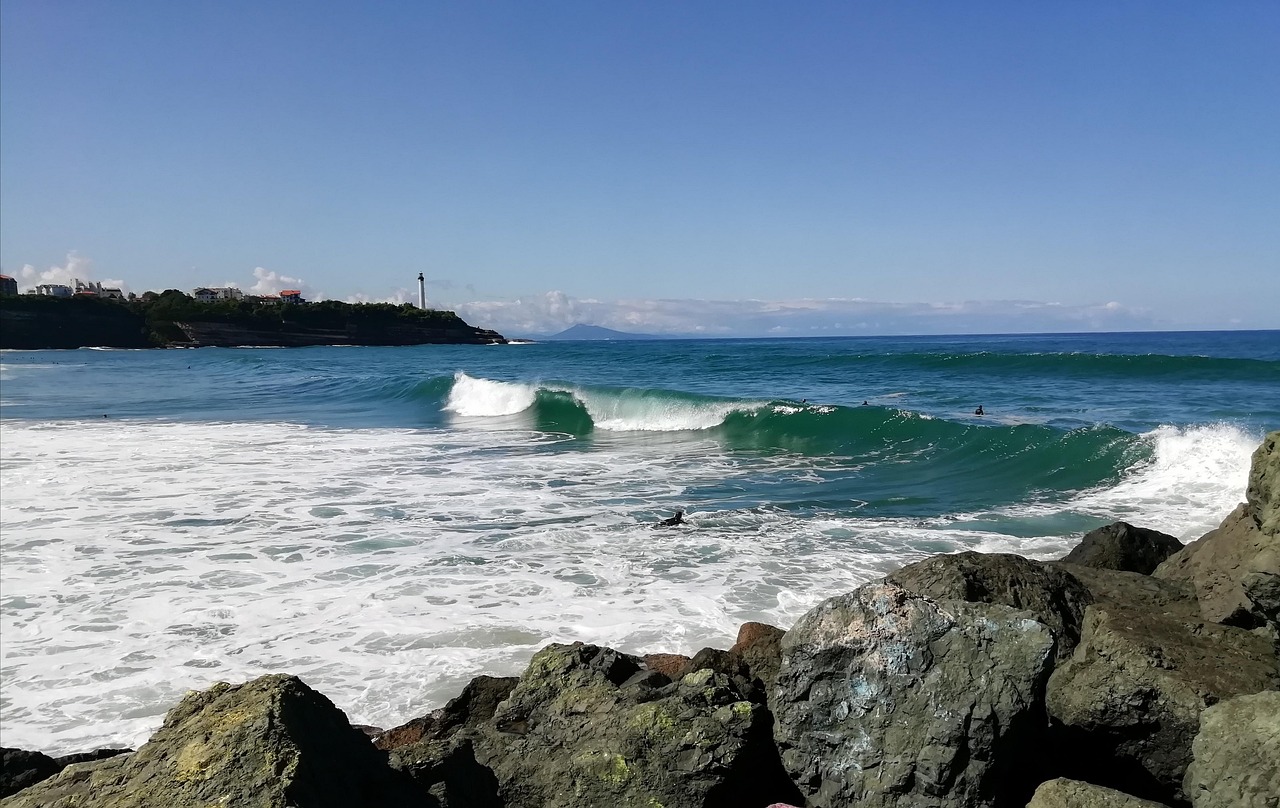
- Walk or bus north to Anglet, where a long run of beaches feels more spacious and wild.
- Pick a spot around Chambre d’Amour if you still want a few cafés, or push further north for quieter dunes.
Option B: Plage de la Milady (for families & rock pools)
- Take the bus south to Milady. At low tide, kids clamber over rocks and explore pools; adults stretch out on the sand with a book.
Market lunch: Head back to Les Halles and build yourself a lunch from different stalls: oysters at one counter, Basque cheese and cured ham at another, and a slice of gâteau Basque for dessert.
Afternoon & evening: spa or thalasso
- Biarritz is famous for thalassotherapy – seawater–based spa treatments. I like booking a late–afternoon slot: warm seawater pools as the sun sets make for a blissful farewell.
- Finish with a last drink on the promenade, watching surfers catch the final waves of the day.
This 3 day itinerary for Biarritz Beaches will give you a solid overview of the town’s main beaches, food scene, and easy coastal walks.
4 Day Itinerary for Biarritz Beaches – Adding Ilbarritz & a Mini Day Trip
When friends ask me how long to stay, I usually say: “4 days in Biarritz Beaches if you can.” That extra day lets you slow down and slip into local rhythms.
Day 4 – Plage d’Ilbarritz & Country–By–The–Sea Vibes
On my last trip, I spent a cloudless October day at Plage d’Ilbarritz, a short bus ride south. It’s the beach where ocean meets green hills and a golf course looms above the sand.
- Morning: Take the bus or bike down. The beach is broad, with fewer people than Grande Plage or Côte des Basques.
- Swim or surf: The waves here can be punchy, but on a calm day I like a long swim parallel to the beach with lifeguard flags in sight.
- Lunch barefoot: There are a couple of beach restaurants where you can eat with your toes still in the sand. I remember a grilled fish of the day, simply done with lemon and local vegetables, that tasted of salt and sunshine.
Afternoon mini–excursion:
- From Ilbarritz, it’s easy to continue further to Bidart for a quick wander through the village square and a coffee overlooking the sea.
Return to Biarritz in the late afternoon for a relaxed final swim at Port Vieux or Miramar, and a quiet night – or one last pintxos crawl if you’re still standing.
5 Day Itinerary for Biarritz Beaches – Slow Travel, Side Trips & Secret Corners
A 5 day itinerary for Biarritz Beaches is where you stop “visiting” and start “living” the town. When I stay five nights, I always find a new angle: a wine bar I somehow missed, a morning tide pool I’d never noticed, a storm swell that redraws the beach overnight.
Day 4 – Bidart & Erretegia
Follow the 4–day itinerary through Day 3, then:
- Take the bus to Bidart, a white–washed Basque village perched above the ocean.
- Walk down to Plage d’Erretegia, a wilder cove hemmed in by cliffs and greenery.
- Pack a picnic (Bidart’s bakeries are excellent) and make this a slower beach day, mixing swims with naps in the shade.
Day 5 – Guéthary, Long Lunch & Last Look Back
For your final day, head to Guéthary, a former fishing village turned low–key surf haven.
- Morning: Catch the local train or bus. Wander the narrow streets, then drop down to the small harbour and Parlementia surf spot.
- Watch the waves: When the swell is up, you’ll see serious surfers tackling long, heavy walls of water. I could sit here for hours.
- Long lunch: Book ahead for a seaside restaurant; this is where I’ve had some of my best seafood in the region – think grilled line–caught fish and creamy rice, with a carafe of local white wine.
Return to Biarritz for one last evening walk: I like to start at Miramar, walk past Grande Plage and the Casino, around to Port Vieux and the Rocher de la Vierge, saying goodbye to each beach in turn.
This 5 days in Biarritz Beaches plan balances classic sights, hidden gems, and enough unscheduled time that you can follow your own whims – always the best part of travel.
The 10 Main Beach Sections & Coastal Spots – Deep Dive
Now let’s go beach by beach. These are the must–see attractions in Biarritz Beaches – plus a few beloved outliers. I’ve walked, swum, or surfed each of these multiple times over the last few years; what follows is part history, part practical guide, part love letter.
1. Grande Plage – The Glamorous Heartbeat
Best for: First–timers, swimmers, sunbathers, people–watching, central convenience.
Not so great for: Serious surfers on crowded summer days, those allergic to crowds.
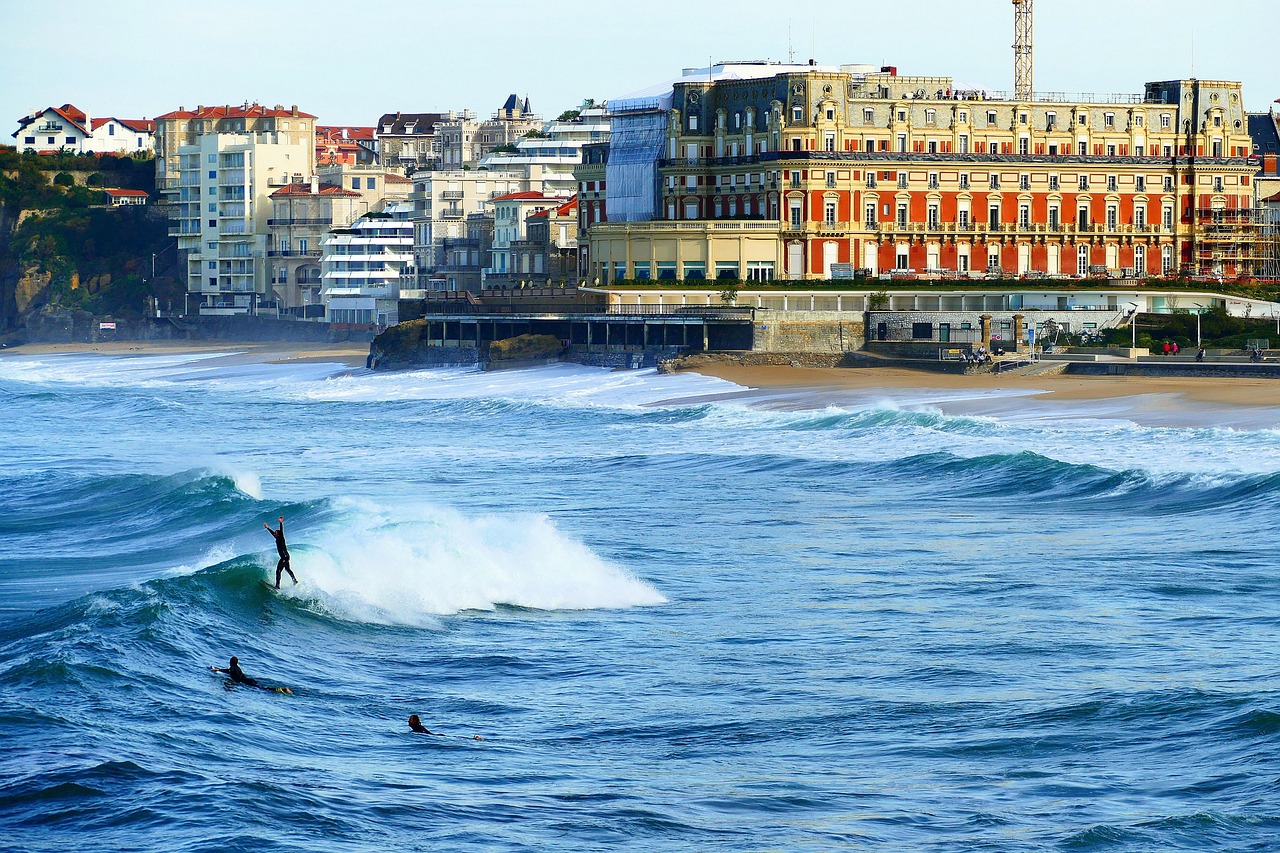
Grande Plage is the beach that usually appears when someone searches “best places to visit in Biarritz Beaches”. It’s framed by the Hôtel du Palais at one end and the Casino at the other, a sweep of sand that feels urban in the best way: cafés within flip–flop range, parasols marching in tidy rows, kids licking melting ice cream on the promenade.
I remember one July evening in 2024 when the tide was medium, the sun low, and the water full of laughing bodies – teenagers attempting bodysurfing, a cluster of older women with neon swim caps doing synchronized side–stroke, toddlers shrieking at the chill of the first wave.
History & significance:
- Biarritz’s fame as a resort town dates back to the 19th century, when Empress Eugénie (Napoleon III’s wife) fell in love with the place and built her palace here – now the Hôtel du Palais, overlooking Grande Plage.
- The beach became a fashionable destination for European high society, and traces of that old glamour still linger, especially in the architecture and the Casino.
Swimming & surf:
- Swimming: In summer (roughly mid–June to mid–September), Grande Plage is heavily lifeguarded and has roped–off swim zones. It’s a good choice if you like to feel looked–after in the water.
- Surfing: When the sandbanks cooperate, Grande Plage can offer fun peaks. I’ve had a couple of surprisingly good shoulder–season sessions here. In peak summer, crowds can be intense; beginners often take lessons closer to the shore, while more experienced surfers head to Anglet or Côte des Basques.
My practical tips:
- Timing: Arrive early for space in July–August. I like pre–breakfast swims around 8:00 – mostly locals, soft light, and room to move.
- Food: The promenade spots are fine for drinks and quick bites, but for better food value, duck a street or two inland around Rue Gambetta and Rue de l’Helder.
- Families: Easy access, nearby toilets, and lifeguards make this a family–friendly choice, though it gets hectic in high summer afternoons.
2. Côte des Basques – Surf, Cliffs & Endless Horizons
Best for: Surfing (especially beginners and intermediates), sunsets, romantic walks, photography.
Not so great for: Those with limited mobility (lots of stairs), high–tide sunbathing (the sand can disappear).
If Grande Plage is the extrovert, Côte des Basques is the soulful friend who talks you into one more glass of wine as the sun goes down. It’s the beach that made me fall in love with Biarritz in a way that felt personal, not postcard–driven.
On a clear day, from the cliff–top promenade you can see the hazy outline of the Spanish coast and the Pyrenees. At low tide, the sand stretches far, dotted with surfers waiting in waist–deep water for mellow Atlantic rollers.
Surf history: This is often cited as the cradle of European surfing. In the 1950s, American screenwriter Peter Viertel famously surfed here while filming “The Sun Also Rises”, introducing locals to the sport. You can still feel that legacy: surf schools, vintage–style longboards, and an atmosphere that’s excited but not aggressive.
My sessions here: I’ve surfed Côte des Basques in everything from knee–high mush to overhead storm leftovers. For beginners, a 1–meter swell and light winds are ideal. I love late summer afternoons: the water is still warm, the cliffs cast a long shadow, and the lineup is a mix of locals, kids, and visitors.
Tide matters:
- At high tide, the water can reach the cliffs; sometimes there’s effectively no dry sand. Lifeguards will often clear the beach if waves slam into the rocks.
- At mid to low tide you get the classic long–beach feel. Plan your visit around the tide chart; I’ve sat on the cliff with a coffee waiting for the sand to reappear more than once.
Access & cliff–top life:
- There are several staircases down; in high season a small elevator operates near the central access point, handy if you’ve overpacked or have kids in tow.
- Above, a string of bars and cafés offers excellent people–watching. I often meet friends here for sunset drinks, feet dusty from the path, hair still damp from the sea.
3. Plage du Port Vieux – A Natural Sea Pool
Best for: Families, nervous swimmers, stormy–day dips, snorkeling on calm days.
Not so great for: Those wanting waves or long walks on the sand.
Tucked into a rocky horseshoe below town, Port Vieux is where I go when the Atlantic is in a mood. On wild winter days, when Grande Plage is all whitecaps and rage, Port Vieux often remains swimmable, a kind of natural lido protected from the worst of the swell.
History: This used to be the old fishing harbour, and there’s still a working–harbour feel around the edges: stone walls, boats bobbing nearby, and a sense of enclosure that makes it feel intimate even when busy.
My rituals: In shoulder seasons, I like a pre–breakfast dip here. The water can be bracing, but locals swim year–round; I’ve shared the cove in January with wetsuited swimmers and a pensioner in a floral cap.
Practicalities:
- Access is via steps; the beach itself is small, and at high tide sand space becomes limited.
- There’s often a floating platform in summer that kids love to swim out to and jump from.
- No surf here, just calm water – ideal for little ones with armbands.
4. Plage du Miramar – Refined, Quiet Elegance
Best for: Quieter sunbathing, couples, hotel guests, reading with a sea breeze.
Not so great for: Big groups, beach games, or budget sun–lounger rentals.
North of Grande Plage and in the shadow of the Hôtel du Palais, Miramar feels more reserved. I think of it as the beach where people actually read on their towels. It’s popular with guests from nearby upscale hotels, but not exclusively so.
On calm days, I’ve had some lovely swims here, with slightly fewer people in the water than Grande Plage. The slope of the beach can be steeper, so waves sometimes break a bit more sharply at the shore.
My tip: Miramar is a nice option in mid–season (May, late September) when Grande Plage still attracts most visitors. You get many of the same views, with a fraction of the chatter.
5. Plage de la Milady – Local Families & Rock Pools
Best for: Families, picnics, relaxed days, tide–pool exploring.
Not so great for: Those wanting to be in the heart of town without transport.
South of the centre, Milady is where you start to feel more like a local. On summer weekends, the car park fills with French and Basque families unloading umbrellas, coolers, and a surprising number of beach toys.
Low–tide magic: One of my favourite Milady memories is from a September afternoon at very low tide. The rocks in front of the beach were exposed, creating a maze of pools. Kids in sun hats crouched over tiny crabs; parents hovered with plastic buckets. I ended up joining a small group debating whether a particular creature was a shrimp or just a very nervous piece of seaweed.
Facilities & access:
- There’s a decent car park (rare blessing), a playground, and a couple of casual eateries overlooking the beach.
- Bus connections from Biarritz centre are straightforward, and cycling here via the coastal path is a pleasure on a sunny day.
Swimming & surf: The waves can vary; sometimes it’s a gentle beach break, other days the swell can be chunky. Lifeguards operate in season – always stay inside the flagged area with kids.
6. Plage de Marbella – A Little Wilder
Best for: Confident surfers, a slightly wilder vibe, avoiding the crowds.
Not so great for: Nervous swimmers, very young children, those wanting lots of facilities.
Marbella sits between Côte des Basques and Milady, and to me it has a slightly rebellious energy – fewer families, more boards, and a sense that the ocean is in charge here.
I’ve had a couple of memorable surf sessions here in autumn: peaky beach break waves, fast and fun, with a lineup of mostly locals who were friendly as long as you respected priority and didn’t paddle straight to the peak like a hero.
My advice: If you’re not surfing, Marbella is still a gorgeous place for a walk or a quiet sit on the sand, but think twice before swimming on big–swell days. Always heed the lifeguards; the rips here can be strong.
7. Anglet Beaches – Space, Surf & Dunes
Best for: Surfers, runners, those wanting more space, sunset walks.
Not so great for: People without transport who prefer to stay hyper–central.
Technically a separate town, Anglet is effectively Biarritz’s northern extension – a long string of beaches that offer more breathing room. When Grande Plage feels like a festival, I come here.
Key spots:
- Chambre d’Amour: Closest to Biarritz, with cafés and a good mix of swimmers and surfers.
- Sables d’Or & Les Cavaliers: Further north, popular with surfers; on the right day, you’ll see impressive barrels.
- La Barre: The northernmost, near the river mouth and a nature reserve; great for walks and birdwatching more than swimming.
My Anglet rituals: I like to come here for a morning run along the promenade, then pick a quieter stretch of sand to cool off. On big–swell days, watching the surf at Cavaliers is as entertaining as any movie.
8. Plage d’Ilbarritz – Golf Greens & Ocean Blues
Best for: Mixed groups (some surf, some chill), long lunches, a “country by the sea” feeling.
Not so great for: Those without transport in low season, when bus frequencies drop.
Ilbarritz always feels to me like the beach equivalent of a deep breath. The hills roll gently down to the sand, the golf course adds a swathe of green, and restaurants straddle the line between casual and special.
My favourite day here: In October 2025, on a perfectly still day, I surfed soft chest–high waves all morning, had grilled turbot and crisp white wine for lunch on a terrace overlooking the water, then fell asleep on the sand with the sound of distant laughter from kids playing paddleball.
Practical note: The beach can feel more exposed to swell than some others; I swim here when the ocean is on its gentler days and stick close to the flagged zone.
9. Plage d’Erretegia (Bidart) – Green Cliffs & Secret–Cove Energy
Best for: Nature lovers, picnics, a wilder vibe, short hikes.
Not so great for: Those with mobility issues (steep path), people who want full facilities right on the sand.
Just south of Biarritz in Bidart, Erretegia feels like a small getaway. The cove is framed by green cliffs, and the approach down a winding path makes the reveal of the beach particularly satisfying.
I spent a whole day here in late May, watching clouds race across the sky between swims. A local family shared slices of gâteau Basque with me after their kids accidentally kicked sand onto my towel; we ended up trading recommendations for hidden gems in the Pays Basque.
Why it’s special: There’s a sense of being hugged by nature here – the sea ahead, cliffs behind, birds wheeling overhead. It’s one of my top picks for those who want a beach day that feels less urban and more elemental.
10. Guéthary & Parlementia – Long Waves & Slow Lunches
Best for: Surf watching, long leisurely lunches, couples, slow travel.
Not so great for: Those wanting big sandy expanses directly in town (there are beaches, but the coastline here is more rocky and intricate).
Guéthary is the place I go when I want to watch the sea, not necessarily be in it all the time. The Parlementia reef break just offshore is famous for its long, heavy waves. Even if you don’t surf, it’s mesmerizing to see specks of humans drop into walls of water rolling in from the deep Atlantic.
My ideal Guéthary day:
- Morning train from Biarritz, coffee in the village square.
- Walk down to the little harbour and along the coastal path, stopping to watch the surf and the fishermen.
- Settle into a terrace for a multi–course seafood lunch; I still dream of a plate of grilled octopus I had here, tender and smoky.
Swimming: There are spots to swim, but the coastline is rockier and more complex than Biarritz’s big sandy bays; check conditions and always follow local advice.
Seafood, Beach Bars & Boardwalk Eating Around Biarritz Beaches
One of the great joys of Biarritz is how close your plate is to the sea. You can eat very well here – Basque cooking is generous and rooted in top–notch ingredients.
Where Locals Actually Eat
Locals tend to avoid the most obvious seafront traps in peak summer, or they use them for a drink rather than a full meal. Instead, they gravitate towards:
- Les Halles & Rue des Halles: Pintxos bars, casual restaurants, and market–adjacent counters. I often build a meal from multiple stops – a few pintxos here, a plate of peppers there.
- Side streets off Rue Gambetta: Good value bistros and modern Basque spots, often with better prices than anything directly on the beach.
Sunset Cocktails Worth the Splurge
- Cliff–top bars above Côte des Basques: Yes, you’re paying a view tax, but the panorama is unbeatable. I justify it as “rent for a sunset”.
- Hotel terraces near Miramar: For a more dressed–up experience; I’ve nursed a single glass of wine for a full hour here, watching the light fade.
Fresh Fish & Shack–Style Spots
For that “toes in the sand, fish on the plate” feeling:
- Look for the no–frills spots by Ilbarritz and Milady – menus are shorter, but the fish is often excellent.
- In Guéthary, several restaurants near the harbour take their seafood seriously; call ahead for dinner in high season.
What to Eat: Local Food in Biarritz Beaches
- Chipirons à la plancha: Grilled baby squid with garlic and parsley.
- Pintxos: Basque tapas – try anchovy–pepper–olive skewers, stuffed peppers, and croquettes.
- Axoa: Basque veal stew with peppers – more for cooler evenings.
- Gâteau Basque: Buttery pastry filled with cream or cherry jam; my favourite with coffee mid–afternoon.
- Oysters: Especially at or near Les Halles; I like a half–dozen with a glass of white before a beach walk.
Budget Tips for Eating & Drinking
- Lunch menus: Many restaurants offer cheaper set menus at lunch than at dinner.
- Picnics: Buy from bakeries and Les Halles, then eat on a bench or the beach – a baguette, cheese, ham, and fruit can turn any patch of sand into a restaurant.
- Share plates: Portions can be generous; sharing a few dishes in pintxos bars keeps costs down and variety high.
Evenings at Biarritz Beaches – From Golden Hour to Late Night
One of my favourite things about Biarritz is how the energy of the beaches shifts as the sun goes down. The day crowd packs up their parasols, and the town exhales into something looser, more romantic, occasionally rowdy.
Sunset Rituals
- Côte des Basques cliffs: This is the classic sunset spot. Families, couples, surfers still in wetsuits – everyone turns west and watches the sky burn.
- Rocher de la Vierge walk: Start at Port Vieux and walk out to the statue; the lights of town behind you and the sea below make for cinematic views.
Beach Bars & Nightlife
Biarritz is lively but not a mega–club destination. Think bars with surfboards on the walls, live music nights, and the odd club that goes late if you want it.
- Behind Côte des Basques, you’ll find bars with sandy–foot patrons and relaxed vibes.
- Near Les Halles, wine bars and pintxos places hum until late, especially in July and August.
Bonfires & Night Beach Use
Important: Open bonfires on the beach are generally not allowed in Biarritz and surrounding areas due to safety and environmental reasons. You may see small, informal gatherings, but fines are possible and the dunes are fragile. If you want a firelit evening, look for bars with outdoor seating and candles instead.
Romantic Evenings
- Stroll from Miramar to Port Vieux along the seafront, stopping for a glass of wine overlooking the waves.
- Book a late dinner at a restaurant with ocean views and linger over dessert as the surf thunders below.
Cultural Etiquette & Local Customs in Biarritz Beaches
Biarritz sits at the crossroads of French and Basque culture. A little awareness goes a long way in making your interactions smoother and more enjoyable.
Language & Greetings
- French is the main language; you’ll also see and hear Basque (Euskara) on signs and in some conversations.
- Always start interactions with a polite “Bonjour” (daytime) or “Bonsoir” (evening). It’s essential in France and sets the tone.
- A simple “Kaixo” (hello in Basque) will delight some locals, though don’t worry if you don’t use it.
Beach Etiquette
- Topless sunbathing is acceptable and common on many beaches, but full nudity is generally limited to specific spots further afield; always check local norms.
- Keep a respectful distance from other beachgoers; don’t plant your umbrella right on top of someone else’s towel if space allows.
- Music is okay at low volume; if you’re cranking it, you’re doing it wrong. Use headphones in crowded areas.
- Absolutely no litter – locals take pride in their coastline. Use bins or take your trash with you.
Dining Customs
- Table service is the norm; you don’t usually seat yourself unless clearly indicated.
- Service charge is included in prices, but rounding up or leaving a small tip (5–10%) for good service is appreciated.
- Dinner starts later than some countries – 19:30–21:30 is typical.
Surf Culture Etiquette
- Respect the surf code: one surfer per wave, don’t drop in, and don’t paddle straight to the peak ignoring those waiting.
- If you’re a beginner, book lessons or stick to beginner zones rather than paddling into crowded peaks at Côte des Basques or Anglet.
Day Trips & Nearby Attractions from Biarritz Beaches
As much as I adore the beaches, some of my most memorable days have been when I gave my skin a break from the salt and explored inland or across the border.
Bayonne – Basque Capital on the River
Travel time: ~15–20 minutes by train or bus.
Bayonne is all half–timbered houses, riverside cafés, and a wonderful cathedral. It’s also the spiritual home of Bayonne ham and some excellent chocolate shops.
My usual pattern: morning wander through the old town, lunch in a traditional Basque restaurant, then back to Biarritz for an evening swim.
Saint-Jean-de-Luz
Travel time: ~20–30 minutes by train.
A sheltered bay with a long beachfront promenade and a pretty town centre. Great for families and those who like gentler swimming conditions than the often–feisty Biarritz surf.
San Sebastián (Donostia), Spain
Travel time: Around 1–1.5 hours by bus or car.
An easy cross–border day trip full of pintxos, Belle Époque architecture, and a gorgeous bay. I like to go early, eat my way through the old town, and still be back in Biarritz for a late evening stroll.
Inland Basque Villages
Towns like Espelette (famous for its peppers) and Ainhoa make for great half–day excursions if you have a car. They’re all white–green–red Basque colour schemes, low stone bridges, and slower rhythms.
Practical Travel Tips for Biarritz Beaches (2026)
How to Get Around
- On foot: Central Biarritz is very walkable. You can easily stroll between Grande Plage, Côte des Basques, Port Vieux, Miramar, and Les Halles.
- Bus: Local buses connect Biarritz with Anglet, Bidart, Ilbarritz, the airport, and Bayonne. In 2026, services remain frequent in summer; use contactless payment or buy tickets in advance where required.
- Car rental: Handy for exploring further afield (Guéthary, Saint-Jean-de-Luz, inland villages), but parking in Biarritz centre can be tricky and pricey in summer.
- Bikes & e–bikes: Increasingly common; coastal bike paths are improving year by year.
Where to Stay & How to Save
- Oceanfront: Gorgeous but expensive – you pay a premium for that sea view. If budget allows, I love staying near Miramar or Grande Plage for the ability to nip down for sunrise swims.
- In town (5–10 minutes’ walk): My preferred compromise. You can often find better deals just inland from the centre, and still be on the beach quickly.
- Further out: Staying in Anglet, Bidart, or even Bayonne can be cheaper, especially in high season; factor in transport costs and time.
- Self–catering apartments: Great for families and longer stays; shopping at Les Halles and cooking at “home” can drastically cut food expenses.
Money–Saving Strategies
- Travel in shoulder season (May–June, September–early October) for lower prices and still–pleasant weather.
- Eat your main meal at lunch when set menus are cheaper, then graze on pintxos in the evening.
- Skip paid sun–loungers; bring a towel or beach mat instead.
SIM Cards & Connectivity
- France is well–covered by major networks (Orange, SFR, Bouygues). You can buy a prepaid SIM at airports, phone shops, and some supermarkets – bring your passport.
- If you’re from the EU, your mobile plan likely includes roaming in France at domestic rates.
- Wi–Fi is common in hotels, cafés, and many bars.
Visa Requirements & Driver’s Licenses
- France is in the Schengen Area. Many nationalities can enter visa–free for short stays (typically up to 90 days in any 180–day period); always check the latest rules for 2026 before travelling.
- Most non–EU visitors can drive with a valid foreign license for short stays; some countries may require an International Driving Permit (IDP) alongside your home license – check your country’s specifics.
Best Seasons for Different Activities
- Swimming & family beach time: Late June to early September – warmest water, full lifeguard coverage.
- Surfing (intermediate–advanced): September–November and March–May – more consistent swells, fewer crowds.
- Surfing (beginners): May–June and September – still pleasant, but less crowded than July–August.
- Quiet coastal walks & cultural experiences: April–May and October – cooler but atmospheric.
Weather, Storms & Atlantic Mood Swings
The Bay of Biscay can throw serious storms, especially in late autumn and winter. In 2026, climate variability continues to make shoulder seasons a bit unpredictable, but patterns remain roughly:
- Winter (Dec–Feb): Stormy swells, dramatic seas, not ideal for casual swimming, but fantastic for wave–watching and photography.
- Summer (Jun–Aug): Generally calmer, though occasional strong swell days still happen.
Beach–Specific Logistics & Safety in Biarritz Beaches
Tides, Swell & When to Go in the Day
Tides on the Atlantic are significant; they change the shape and safety of many beaches.
- Côte des Basques: Check tide charts – at high tide there may be no beach. Low tide is best for long walks and beginner–friendly surf.
- Milady & Marbella: Low tide exposes rocks and tide pools; high tide can bring steeper shore breaks.
- Port Vieux: More sheltered, but still affected by swell; always note lifeguard flags.
Most surf shops and lifeguard stations post tide tables. I keep a tide app on my phone and plan my days around it.
Lifeguard Coverage
- Main beaches (Grande Plage, Côte des Basques, Port Vieux, Milady, Anglet) have lifeguards in season, generally from mid–June to mid–September, with some extended coverage in May and late September on weekends.
- Always swim between the flags and follow whistle signals.
Rip Currents, Jellyfish & Sharks
- Rip currents: Present on many Atlantic beaches. If caught, don’t fight directly to shore; swim parallel until out of the current, then back in with the waves. Better yet, stay within flagged areas.
- Jellyfish: Occasionally appear, especially after storms or warm currents. Watch for warning signs at lifeguard posts. If stung, rinse with seawater (not freshwater) and seek aid from lifeguards.
- Sharks: Encounters are extremely rare and not a typical concern in this area.
Equipment Rental
- Surfboards & wetsuits: Available at shops near Grande Plage, Côte des Basques, Anglet, and other major spots. In summer, book lessons or rentals ahead for peak times.
- Bodyboards: Fun for all ages; easy to rent on or near most big beaches.
- Umbrellas & loungers: Rented in designated zones on Grande Plage and some others. To save money, buy a simple umbrella in town and reuse it.
- Snorkels & masks: Handy for Port Vieux and calmer days at Milady or Ilbarritz; you can buy inexpensive sets in supermarkets and surf shops.
Sun Safety
- The Atlantic breeze can fool you; you’ll burn faster than you think. Use high–SPF sunscreen, reapply often, and consider a rash vest or UV shirt, especially for kids and surfers.
- Midday sun (12:00–16:00 in summer) is intense. I often retreat for a long lunch and return to the sand later.
Parking Strategy
- In summer, central parking fills quickly. If you must drive, aim for earlier mornings or evenings, or park slightly inland and walk down.
- For Milady, there’s a decent car park, but it also fills; Anglet has more options spread along the coast.
- Consider leaving the car at your accommodation and using buses or bikes for beach–hopping days.
Major Events & What’s New in 2026–2027
Biarritz’s event calendar shifts slightly each year, but some patterns are consistent, and 2026–2027 looks lively.
Surf Competitions & Festivals
- Summer Surf Events (2026 & 2027): Expect regional and national surf contests at Côte des Basques and Anglet between June and September. Even if you’re not a surfer, they’re fun to watch – beachside commentary, music, and food stalls.
- Longboard & Retro Surf Gatherings: Periodic events celebrate Biarritz’s longboard heritage; keep an eye on local surf shop noticeboards and the city’s tourism site.
Cultural Festivals
- Basque festivals: Throughout summer and early autumn, look for fêtes with traditional music, dancing, and pelota (Basque ball game) demonstrations in Biarritz, Bayonne, and nearby towns.
- Food & wine events: Seasonal markets, seafood festivals, and wine tastings pop up regularly – ask at Les Halles or the tourist office for 2026–2027 dates during your stay.
Changes in the Travel Scene (2026)
- Continued investment in cycling infrastructure between Biarritz, Anglet, and Bayonne, making car–free travel easier.
- Ongoing efforts to protect dunes and coastal ecosystems – expect some fenced–off areas and signposted “stay off the dunes” messages. These might slightly shift access paths but help preserve the coastline.
Summary & Final Recommendations – When to Visit Biarritz Beaches
If you’ve made it this far, you’ve probably realised that Biarritz Beaches are not just one place but a constellation of coves, bays, and headlands, each with its own mood.
Key Takeaways
- First–timers: Base yourself near the centre, spend 3–4 days following a mix of Grande Plage, Côte des Basques, Port Vieux, and a side trip to Ilbarritz or Anglet.
- Families: Aim for late June to early September, focus on Grande Plage, Port Vieux, Milady, and Saint-Jean-de-Luz or Bayonne as easy excursions.
- Couples: May, June, September, and early October are golden – quieter beaches, softer light, and plenty of romantic spots along the cliff paths and in Guéthary.
- Surfers: For the best mix of waves and manageable crowds, look to September–November and March–May; split your time between Côte des Basques, Marbella, Anglet, and day trips to Guéthary.
- Budget travellers: Travel shoulder–season, stay a few streets back from the beach, cook some meals from Les Halles, and use buses and your feet.
Best Seasons to Visit Biarritz Beaches
- May–June: My personal favourite for a first visit – warming water, blooming landscapes, and far fewer crowds than July–August.
- July–August: Buzzing, busy, full of life – ideal if you love energy and don’t mind sharing the sand.
- September–early October: Often the sweet spot – lingering warmth, good surf, and a more relaxed pace as families depart.
- Winter: For storm watchers, writers, and surfers chasing heavy swells; not for casual sea–bathers, but magical in its own moody way.
Biarritz is one of those places that deepens each time you return. The first trip is about the obvious – Grande Plage sunsets, Côte des Basques surf lessons, pintxos at Les Halles. The second might be about Ilbarritz lunches and Bidart coves. The third, if you’re anything like me, becomes about tiny rituals: a particular bench at Miramar, a specific tide at Port Vieux, the way the lighthouse looks on your last evening before you go home.
However long you stay – 3 days in Biarritz Beaches, 4 days in Biarritz Beaches, or a full 5 days in Biarritz Beaches – let the tides, the light, and your own curiosity set the pace. The Atlantic will still be here, breathing in and out, long after you board your train or plane. And if you’re anything like me, you’ll start plotting your return before the sand has even finished falling out of your shoes.