Why Visit Brest? The Soul of Brittany at the Edge of the Atlantic
When people picture France, they often think of Parisian boulevards or lavender fields in Provence. Brest rarely makes the first cut—and that’s exactly why it feels so special. This is a city that lives facing the ocean, shaped by storms, sailors, and shipyards, rebuilt from the ashes of World War II into a living laboratory of maritime life.
I first came to Brest on a rainy autumn afternoon years ago, stepping off the train with low expectations and a cheap raincoat. I left a week later obsessed with the light on the rade (the vast natural harbor), the smell of salt and seaweed in the air, and the way locals tuck into a bowl of cider and buckwheat galettes like it’s a sacred ritual. Since then, I’ve returned every year—sometimes for work as a guide, sometimes just to reconnect with the city’s rugged charm.
Brest isn’t “pretty” in the postcard sense. Much of it was flattened in WWII and rebuilt in the 1950s, so you’ll find broad avenues, concrete blocks, and unexpected pockets of color instead of medieval streets. But look closer: the fortified castle guarding the harbor, the dramatic cliffs of the nearby coast, the creative energy of former docklands turned into cultural spaces, and sunsets over the Atlantic that make you forget the chill in the air.
For travelers, Brest offers:
- Fantastic 3, 4, and 5 day itineraries packed with coastal walks, maritime museums, and local food.
- Authentic Brittany life far from overcrowded tourist circuits.
- Easy access to wild landscapes like the Crozon Peninsula, Ouessant Island, and the Pays d’Iroise coast.
- Deep maritime culture and some of France’s best ocean-themed museums and aquariums.
- Honest, hearty local food: galettes, crêpes, seafood platters, kouign-amann, and bowls of cider.
If you’re looking for things to do in Brest that go beyond the standard checklist, want a travel guide for Brest that reads like a local friend’s notebook, and need concrete 3 day, 4 day, and 5 day itineraries you can actually follow, you’re in the right place.
Table of Contents
- Why Visit Brest?
- Quick Overview of Brest in 2026
- Neighborhoods & Areas to Explore
- Top 20 Must-See Attractions in Brest
- Suggested 3, 4 & 5 Day Itineraries
- Local Food & Drink in Brest
- Nightlife, Entertainment & Cultural Experiences
- Best Day Trips from Brest
- Cultural Etiquette & Local Customs
- Practical Travel Tips for Brest
- Summary & Best Time to Visit
Brest in 2026: What’s New & What to Expect
As of 2026, Brest is quietly evolving. The city has been investing in its waterfront, its tram and bus network, and new cultural venues. It still feels lived-in and local, but you’ll notice more street art, more cafés, and more cyclists than a decade ago.
Major Events in 2026–2027
- Maritime Festivals (Summer 2026 & 2027): While the giant “Fêtes Maritimes de Brest” is held every four years, smaller maritime events, regattas, and tall ship gatherings fill the harbor most summers. Expect temporary food stalls, concerts, and historic ships docking along the quays.
- Ocean Science & Climate Conferences: With IFREMER and major ocean research institutions based here, Brest often hosts international conferences—good to know if you’re hunting for talks, exhibitions, or… hotel rooms (book early).
- Festival du Film Court de Brest (Short Film Festival): Usually in autumn, this is a great cultural experience if you’re in town: screenings, workshops, and a great way to experience French and international short films.
- Music & Street Art Events: Summer sees pop-up concerts, open-air cinema on the quays, and street-art tours—keep an eye on the city’s cultural agenda closer to your dates.
2026 is a strong year to visit: infrastructure works from earlier in the decade are largely done, the tram system is well integrated, and waterfront redevelopment around the commercial port continues to add new cafés and bars.
Neighborhoods & Areas to Explore in Brest
Brest’s layout is simple once you get a feel for its main spines: Rue de Siam and the tram line. Here are the areas I always recommend, both to first-timers and friends coming back for a second or third visit.
Centre-Ville & Rue de Siam
This is the post-war heart of Brest: wide avenues, big blocks, plenty of shops. Rue de Siam (pronounced “See-am”) runs from Place de la Liberté down toward the port and the château. It’s your main orientation line.
Here, I’ll grab a morning coffee and a croissant, people-watch from a terrace, and then wander down toward the harbor. It’s not the most atmospheric European “old town,” but there’s an honesty in its 1950s architecture and the way life unfolds here.
Recouvrance
Cross the Pont de Recouvrance and you enter Recouvrance—Brest’s older, more working-class neighborhood, stretching up the hill behind the arsenal. Narrower streets, stone houses, and a real sense of history. It’s also where some of the best views of the harbor and castle can be found.
Port de Commerce & Waterfront
Below the city center, the commercial port has transformed from purely industrial docks to a mixed-use waterfront. Old warehouses now house bars, restaurants, and cultural venues, especially along Quai Commandant Malbert and beyond.
Moulin Blanc & Marina
East of the center, the Moulin Blanc marina and beach are where Brest faces the radier (rade) more gently. This is where you’ll find Océanopolis and plenty of sailing boats. In summer, this is a family favorite for beachtime and ice cream.
Lambezellec & Residential Districts
North of the center, Lambezellec and other residential areas won’t be your main sightseeing focus, but they’re where you’ll stumble on everyday Brest: local markets, bakeries, and small parks, especially if you’re staying in an apartment rental.
Plouzané & Pays d’Iroise (Just Outside Brest)
Technically outside Brest proper but functionally part of its orbit, Plouzané and the coastal strip west toward Le Conquet and the Pays d’Iroise are where urban Brest dissolves into cliffs, lighthouses, and windswept beaches. If you have a car, this is your playground.
Top 20 Must-See Attractions in Brest (With Local Insight)
These are the must-see attractions in Brest that I return to again and again. I’ve ordered them roughly from most iconic to more “hidden gems,” though some “lesser-known” sites are favorites precisely because they’re quiet.
1. Château de Brest & Musée National de la Marine
The Château de Brest is the city’s anchor—literally and symbolically. Perched on a rocky spur above the harbor, it’s one of the oldest continuously occupied castles in France, with Roman origins and layers of medieval and modern fortifications.
The first time I visited, it was a blustery March morning. The wind off the rade cut through my jacket, but the views from the ramparts were worth every shiver: ferries gliding out toward the Crozon Peninsula, naval vessels moored below, and the modern city spread behind me.
Inside, the Musée National de la Marine (National Maritime Museum) tells the story of the French navy and Brest’s role in it—ship models, figureheads, navigation instruments, and poignant exhibits about exploration and war.
- Why go: Essential for history buffs, families, and anyone wanting a sense of Brest’s deep maritime roots.
- How to get there: A short walk downhill from Rue de Siam; follow signs to “Château” and “Musée de la Marine.” Tram stop: Château.
- Time needed: 2–3 hours including rampart views.
- Tips: Go early in the day for softer light on the water. On windy days, bring a scarf—those ramparts are exposed.
2. Océanopolis
Océanopolis is Brest’s signature family attraction and one of Europe’s most respected ocean discovery centers. It’s far more than an aquarium: think of it as a journey through three major climate zones—polar, tropical, and temperate—plus exhibits on marine science and conservation.
I’ve been several times, both on quiet weekdays and slammed summer Saturdays. My favorite memory: watching kids from a local school group completely fall silent as a massive shark drifted by the glass, then erupt in questions about its teeth.
- Highlights: Penguin colonies, coral reef tanks, seals, and interactive exhibits on climate change and ocean health.
- Family-friendly: Very. Strollers and toddlers everywhere, but also genuinely interesting for adults.
- How to get there: Bus from city center to Moulin Blanc; about 15–20 minutes. Plenty of parking if you’re driving.
- Time needed: 3–4 hours, longer with kids.
- Tips: Book tickets online in high season. Combine with a walk along the marina or a beach stop at Moulin Blanc.
3. Téléphérique de Brest (Urban Cable Car)
Brest has one of the few urban cable cars in France, linking the city center to the Capucins district across the Penfeld river. It’s quick, cheap, and offers a unique aerial perspective over the naval base and harbor.
On my first ride, an elderly Breton gentleman next to me pointed out, unprompted, where his father had worked in the arsenal before the war. That’s the kind of unscripted human moment Brest is full of.
- Why go: Great views, plus it deposits you right at Les Ateliers des Capucins, one of Brest’s coolest redeveloped spaces.
- Cost: Included in standard public transport tickets.
- Tips: Ride both directions for different views; sunset rides are especially beautiful on clear days.
4. Les Ateliers des Capucins
Once a huge industrial workshop for the navy, Les Ateliers des Capucins is now a vast, cathedral-like hall turned into a public space: climbing walls, cafés, bookshops, exhibitions, a cinema, and open areas where kids scoot around under the soaring steel beams.
I often bring a laptop here, find a corner table with a view of the cranes and rooftops, and work for a few hours before wandering through the rotating exhibitions.
- Good for: Rainy days, families, remote workers, and anyone into industrial architecture.
- How to get there: Take the téléphérique or bus; you’ll arrive right at the entrance.
- Tips: Check their event schedule—concerts, markets, and festivals are common.
5. Port de Commerce & Quai Commandant Malbert
This is where Brest’s working soul meets its social life. Cargo ships, fishing vessels, and tugboats line one side; bars, restaurants, and terraces line the other.
On mild evenings, I like to stroll along Quai Commandant Malbert, watching the lights sparkle on the water and the silhouettes of cranes. It’s also where you’ll see the legendary tugboat Abeille Bourbon moored—a beast of a ship built to rescue vessels in Atlantic storms.
- Why go: Evening drinks, seafood dinners, and authentic harbor atmosphere.
- Tips: Dress warmly for nighttime walks; the wind funnels along the docks.
6. Tour Tanguy
Facing the château across the Penfeld, the medieval Tour Tanguy is a small, squat tower housing a charming local history museum. Inside, dioramas and old photos show Brest before the devastation of WWII—cobbled streets, timbered houses, and a very different skyline.
Standing on the ramparts, I always find it moving to compare those images with the modern view before me, understanding how much the city has lost and reinvented.
- Good for: Context on Brest’s past, quieter than the main castle.
- Tips: Combine with a walk across Pont de Recouvrance and a wander through Recouvrance’s backstreets.
7. Musée des Beaux-Arts de Brest
Brest’s fine arts museum is modest compared to big-city institutions but well-curated, with works from the 16th to 20th centuries and a focus on maritime themes and Brittany.
On a wet winter afternoon, I once took refuge here and ended up spending two hours more than planned, lost in seascapes and portraits of Breton life.
- Why go: Culture hit between walks, especially on a rainy day.
- Tips: Free or reduced entry days are common—check ahead.
8. Rue de Siam & Place de la Liberté
Rue de Siam is Brest’s spine, stretching from Place de la Liberté down toward the port. It’s all about daily life: bakeries, clothing chains, small boutiques, and plenty of cafés.
On sunny days, terraces spill onto the sidewalks; on blustery ones, locals walk with purpose, collars up, bags of groceries in hand. Don’t come here expecting old-world charm; come for the pulse of the modern city.
9. Plage du Moulin Blanc
Brest’s main in-town beach is not the most spectacular in Brittany, but it’s an easy, pleasant escape. On warm days, families spread blankets on the sand, kids build sandcastles, and windsurfers zig-zag across the bay.
I’ve spent lazy afternoons here with a book, pausing occasionally to watch sailboats drift in and out of the marina.
- Good for: Families, casual beach time without leaving the city.
- Tips: Tides matter; check them if you’re planning to swim.
10. Conservatoire Botanique National de Brest
Hidden in a valley on the outskirts, Brest’s botanical conservatory focuses on rare and endangered plants from Brittany and around the world. The gardens unfold along a stream, with greenhouses housing tropical species.
It’s one of my favorite quiet spots: birdsong, lush greenery, and almost no tourists.
- Why go: Peaceful nature escape, especially lovely in spring and early summer.
- Tips: Wear comfortable shoes; paths can be steep and sometimes muddy.
11. Brest Naval Base & Arsenal Views
The naval base itself is off-limits to casual visitors for security reasons, but you can still get impressive views of dry docks, warships, and cranes from various vantage points: Pont de Recouvrance, the téléphérique, and paths along the Penfeld.
For anyone fascinated by big engineering and ships, it’s an open-air museum in motion.
12. Vallon du Stang-Alar (Stang-Alar Valley)
This green valley park is part of the botanical conservatory, but even if you’re not into plant collections, it’s a beautiful place to walk, jog, or picnic along the stream.
I often come here on my “city detox” days to clear my head under the trees.
13. Street Art & Murals of Brest
Brest has quietly become a canvas for street artists, with large murals on building façades and smaller works hidden down side streets. Recouvrance and areas near the port are particularly rich hunting grounds.
I like to wander without a fixed plan, turning wherever color catches my eye. Bring a camera.
14. Phare du Petit Minou (Just Outside Brest)
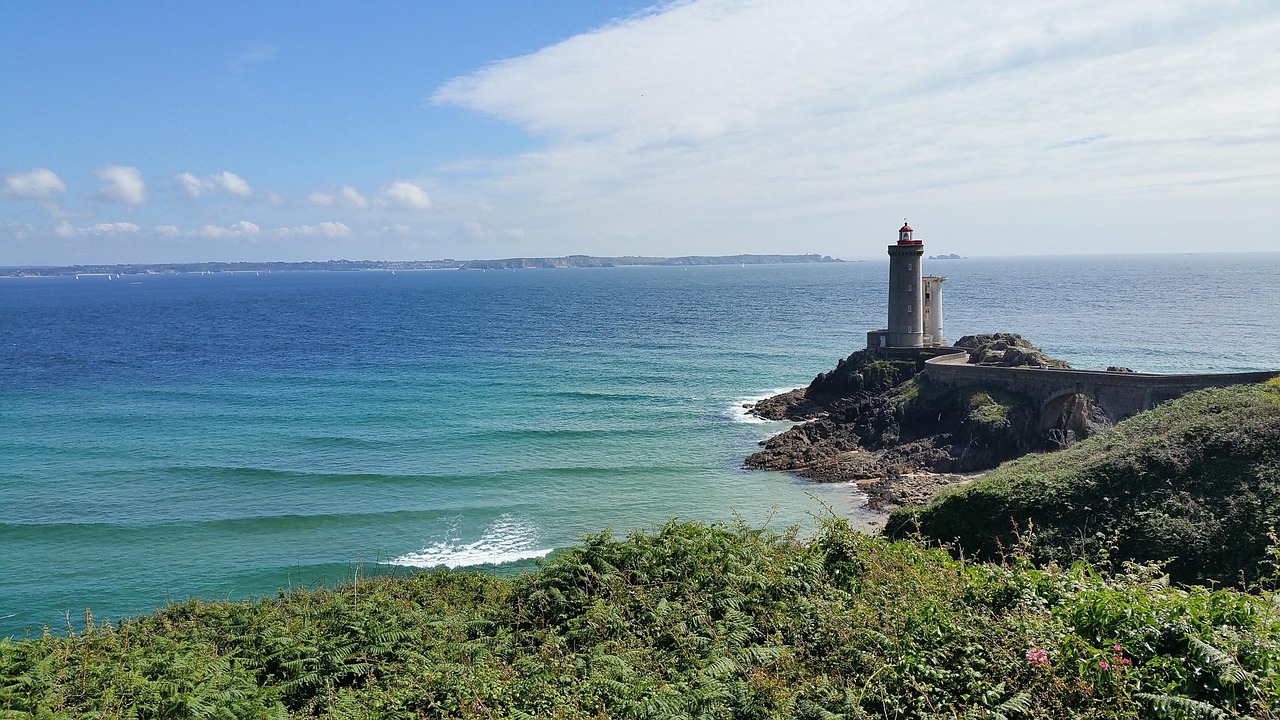
Technically outside Brest but practically part of every Brest itinerary, the Petit Minou lighthouse stands on a rocky promontory west of the city. A stone causeway curves out to the lighthouse, waves crash below, and surfers ride the breaks in the bay.
I’ve come here at dawn and at sunset; both are magical. The wind is almost always strong, so hold onto your hat.
- How to get there: Car is easiest (about 20–25 minutes). Some regional buses stop relatively nearby—check current schedules.
15. Musée Mémoires 39–45 (Memory Museum 39–45)
Housed in a former German command bunker on a hill overlooking the rade (often associated with Plougonvelin), this museum offers a powerful, immersive look at WWII in Brittany and Brest. Exhibits mix artifacts, testimonies, and reconstructed rooms.
The view from above the bunker is spectacular, but what stays with you are the personal stories inside.
16. Marché & Halles Saint-Louis
For a taste of daily life and local food in Brest, head to the covered market and stalls around Saint-Louis. Fishmongers, cheese sellers, vegetable stalls, and bakers offer everything you need for a picnic or a self-catered feast.
I try to come early on market days, grab a bag of fresh oysters or langoustines, a wedge of local cheese, and maybe a kouign-amann or two for “research.”
17. Église Saint-Louis
This large church near the center reflects Brest’s post-war reconstruction: simple, modernist lines, and an interior that feels both austere and quietly uplifting.
It’s a good counterpoint to the more traditional churches you’ll see elsewhere in Brittany.
18. Marina du Château
Just below the castle, this marina is packed with sailboats and offers one of the city’s best combinations of water, stone, and sky. Boardwalks and terraces make it a pleasant place to stroll, especially at golden hour.
19. Rives de la Penfeld (Banks of the Penfeld River)
When open (access varies due to naval installations), paths along the Penfeld river reveal a more intimate side of Brest: quiet water, wooded slopes, and occasional views of shipyards and bridges overhead.
Check locally which sections are accessible during your stay; they change with events and security needs.
20. Université de Bretagne Occidentale Campus & Student Quarter
Brest is a university town, and the campus area brings a youthful energy—cafés, cheap eats, student bars, and street art. It’s not a “must-see attraction” in the classic sense, but if you like to understand a city’s present, not just its past, wander through one afternoon.
3, 4 & 5 Day Itineraries for Brest (With Personal Notes)
Whether you have 3 days in Brest, 4 days in Brest, or a full 5 days in Brest, you can build a rich, varied trip. Below are flexible itineraries mixing must-see attractions, hidden gems in Brest, and local experiences. Adjust times according to weather (this is Brittany—rain jackets are not optional).
3 Day Itinerary for Brest – Essential Highlights
This 3 day itinerary for Brest gives you the city’s core: the harbor, castles, maritime culture, and a taste of local food and nightlife. It’s perfect if Brest is your base between other Brittany stops.
Day 1 – Harbor, Château & City Pulse
I like to start a first-timer’s visit with a big-picture overview of Brest and its maritime soul.
- Morning: Walk Rue de Siam, visit Place de la Liberté, and head down toward the harbor. Warm up with a coffee and pastry at a café along Rue de Siam.
- Late Morning to Afternoon: Explore the Château de Brest & Musée National de la Marine. Take your time on the ramparts; this is your orientation lab for the rest of the trip.
- Lunch: Seafood at a restaurant near the Port de Commerce or Marina du Château. Try a plateau de fruits de mer (seafood platter) if you’re with friends.
- Afternoon: Stroll along Quai Commandant Malbert, check out the Abeille Bourbon from the dock, and soak in harbor life.
- Evening: Drinks on the port terraces, then dinner in the center—perhaps galettes and cider at a traditional crêperie.
Personal tip: If jetlagged, keep day one light. Brest’s wind can be surprisingly tiring if you’re not used to it; hydrate and rest between stops.
Day 2 – Océanopolis & Waterfront Living
Day 2 in this 3 days in Brest plan is all about the sea and family-friendly attractions.
- Morning: Bus to Océanopolis. Spend a solid few hours moving through the polar, tropical, and temperate zones. Don’t rush; the interpretive material is excellent.
- Lunch: Casual lunch at one of the cafés near the marina or a picnic on Plage du Moulin Blanc.
- Afternoon: Time on the beach (weather permitting), a walk along the marina, maybe a short sailing excursion if available in season.
- Evening: Back to the center. If you’re into culture, visit the Musée des Beaux-Arts late afternoon before it closes, then dinner nearby.
Family-friendly note: Kids usually crash after Océanopolis and beach time. Plan a simple dinner close to your accommodation.
Day 3 – Recouvrance, Téléphérique & Capucins
On your last day of this 3 day itinerary for Brest, cross the river and get to know the right bank.
- Morning: Walk or tram to Pont de Recouvrance. Visit Tour Tanguy if open, for a glimpse of old Brest.
- Late Morning: Wander Recouvrance’s hilly streets, find small squares, and look for street art.
- Lunch: Simple lunch in Recouvrance or back across the bridge.
- Afternoon: Ride the Téléphérique de Brest over to Les Ateliers des Capucins. Explore the interior, exhibitions, bookshops, and views.
- Evening: Last-night dinner on the port or in a cozy crêperie. If you’re into nightlife, sample a bar around the harbor or in the student areas.
With this, your 3 days in Brest will have covered the city’s core must-see attractions plus a taste of local life.
4 Day Itinerary for Brest – Adding Nature & History
With 4 days in Brest, you can breathe a little and weave in more green spaces and WWII history.
Day 4 – Botanical Valley & WWII Memory
- Morning: Head to the Conservatoire Botanique National de Brest and the Vallon du Stang-Alar. Walk the valley paths, visit the greenhouses, and enjoy the calm.
- Lunch: Pack a picnic from the market or grab a light lunch at a nearby café.
- Afternoon: If you have a car, drive out to the Musée Mémoires 39–45 bunker-museum overlooking the rade. Without a car, use available regional buses or consider a guided tour that includes transport.
- Evening: Back in Brest, opt for a relaxed dinner and perhaps an early night or a film at the cinema in Les Capucins.
This 4 day itinerary for Brest gives you both green and gray: the resilience of nature and the weight of history.
5 Day Itinerary for Brest – Lighthouses & Wild Coast
With 5 days in Brest, you can add a proper coastal escape and one of Brittany’s iconic lighthouses.
Day 5 – Petit Minou & Pays d’Iroise Coast
- Morning: Pick up a rental car (or arrange car-sharing) and drive west to Phare du Petit Minou. Walk the causeway, explore the paths along the cliffs, and watch surfers down below.
- Lunch: Picnic on the cliffs (take your trash back with you) or continue to a small restaurant in Plouzané or further along the coast.
- Afternoon: Continue exploring the Pays d’Iroise coast—depending on time and transport, you might visit another lighthouse, a small harbor like Le Conquet, or just wander coastal paths.
- Evening: Return to Brest for a farewell dinner. If it’s your last night, go for something special: a slightly more upscale restaurant focusing on seafood and seasonal Breton ingredients.
With this 5 day itinerary for Brest, you’ll have combined urban exploration, maritime culture, nature, and wild coast—my ideal Brest experience.
Local Food & Drink in Brest
Eating in Brest is essentially a crash course in Breton comfort food and ocean flavors. Portions are generous, prices are reasonable compared to bigger French cities, and locals take their crêpes and cider very seriously.
What to Eat: Brest & Brittany Specialties
- Galettes (Buckwheat Crêpes): Savory crêpes, usually filled with ham, cheese, egg, sausage, or vegetables. The classic is the galette complète (ham, cheese, egg).
- Crêpes sucrées: Sweet crêpes with butter and sugar, salted caramel, chocolate, or fruit.
- Seafood: Oysters from nearby bays, mussels, scallops, langoustines, and fish of the day.
- Cidre Breton: Sparkling apple cider, often served in bowls (bolées). Dry (brut) or sweeter (doux).
- Kouign-amann: A dense, buttery, caramelized pastry—dangerously addictive.
- Far breton: A custardy prune cake, often served by the slice.
- Andouille de Guémené: Smoked tripe sausage, for the adventurous.
Where to Eat: Personal Favorites
I can’t list every restaurant (and places come and go), but here are types of spots I seek out, with examples you can easily find by searching when you arrive:
- Traditional Crêperies: Look for older, wood-paneled interiors and a short menu of galettes and crêpes. I like to go early or reserve; locals fill them quickly on weekends.
- Seafood on the Port: Along the Port de Commerce and Marina du Château you’ll find several reliable brasseries and seafood restaurants. Ask about the poisson du jour (fish of the day).
- Market Snacks: At Halles Saint-Louis, pick up fresh bread, cheese, and charcuterie for a picnic.
- Student Cafés: Around the university and some streets off Rue de Siam, you’ll find cheap daily menus (formules du midi) that are great for budget travelers.
Saving Money on Food
I often mix restaurant meals with self-catered ones:
- Lunch deals: Many restaurants offer cheaper lunch formulas (starter + main, or main + dessert) on weekdays.
- Picnics: Buy at bakeries and markets, then eat in a park, on the port, or by the beach.
- Crêperies: A galette + crêpe + cider combo is filling and usually good value.
Nightlife, Entertainment & Cultural Experiences in Brest
Brest’s nightlife is more about bars, concerts, and student energy than flashy clubs. Expect friendly, unpretentious spots where a sweater is more common than high heels.
Bars & Evenings Out
- Harbor Bars: Along the Port de Commerce and Marina du Château, you’ll find terraces for sunset drinks and late-night chats.
- Student Bars: Closer to the university and in some backstreets off Rue de Siam, you’ll find cheaper beers and live music.
- Cider Houses: Some crêperies double as cider specialists; ask for local producers.
Cultural Experiences
- Les Ateliers des Capucins: Regular exhibitions, performances, and film screenings.
- Short Film Festival: If you’re here in autumn, check the Festival du Film Court de Brest schedule.
- Concerts & Theaters: Brest’s main cultural centers and smaller venues host music from Breton folk to rock and jazz—check local listings.
Family-Friendly Evenings
- Sunset Walks: Along the port or up to viewpoints in Recouvrance.
- Cinema: Some cinemas occasionally show films in VO (original version) with French subtitles.
- Early Dinners: Many restaurants start serving around 7 pm; perfect for families.
Day Trips from Brest
One of Brest’s strengths is how easily you can escape the city for wild coasts and islands. With a car, your options multiply, but even without one there are rewarding day trips.
Crozon Peninsula
A rugged peninsula across the rade, famous for dramatic cliffs, turquoise coves, and coastal hiking paths. You’ll recognize some views from postcards and films.
- How to get there: Car or bus to places like Camaret-sur-Mer or Morgat; allow 1.5 hours each way.
- What to do: Hike sections of the coastal path, visit old fortifications, swim in sheltered coves (in summer).
Ouessant (Ushant) Island
At the very edge of the Atlantic, Ouessant is an island of lighthouses, windswept fields, and powerful seas. It’s a full-day or overnight trip, but unforgettable.
- How to get there: Ferries from Brest or nearby Le Conquet (check current operators and schedules).
- Tips: Weather can be rough; bring layers, even in summer.
Le Conquet & Pays d’Iroise
A pretty fishing port west of Brest, gateway to Ouessant and a great base for coastal walks, beaches, and lighthouses.
- How to get there: Car (about 30–40 minutes) or regional bus.
Daoulas & Landerneau
East of Brest, these smaller towns offer abbey ruins, art centers, and more traditional Breton architecture than post-war Brest.
- How to get there: Regional trains and buses from Brest station.
Cultural Etiquette & Local Customs in Brest
Bretons are famously proud, a bit reserved at first, but very warm once you’ve established a connection. Brest, being a port and university city, is used to outsiders and fairly relaxed—but a few basics go a long way.
Language
- French: The main language. Basic phrases like “Bonjour,” “Merci,” and “S’il vous plaît” are expected.
- Breton: You’ll see Breton on signs and hear it in cultural contexts. Most locals speak French as their main language, but saying “Demat” (hello) will get you smiles.
- English: Younger people and those in tourism often speak some English; older generations may not. Always start in French if you can.
Greetings & Politeness
- Always say “Bonjour” when entering shops, cafés, and markets; say “Au revoir” when leaving.
- Wait to be seated at restaurants; don’t assume you can take any table.
- In lines, respect the queue—no cutting in, even if it seems informal.
Dining Customs
- Meals are slower; don’t rush or expect the check immediately—ask for it with “L’addition, s’il vous plaît.”
- Water: You can always ask for a free carafe of tap water: “Une carafe d’eau, s’il vous plaît.”
- Tips: Service is included, but rounding up or leaving 5–10% for good service is appreciated.
Dress & Behavior
- Brest is casual: jeans, jackets, and waterproof layers are the norm.
- On coastal paths, respect fences and avoid trampling vegetation.
- On beaches, topless sunbathing is generally accepted but less common than on some Mediterranean coasts; use common sense.
Practical Travel Tips for Brest (2026)
Getting To & Around Brest
By Train: Direct trains from Paris Montparnasse (around 4 hours on the TGV) and other French cities. The station is close to the center; you can walk, tram, or bus to most hotels.
By Plane: Brest Bretagne Airport has flights from Paris, Lyon, and some European hubs. A shuttle bus or taxi connects the airport to the city.
Public Transport
- Tram & Buses: Brest has a modern tram line and extensive bus network. Tickets are valid across both, including the téléphérique.
- Tickets: Buy at tram stops, some bus stops, or via mobile apps. Day passes are good value if you’ll ride multiple times.
Car Rental & Driving
- When to rent: For day trips to lighthouses, Crozon, or Ouessant access points, a car is very useful.
- Foreign licenses: Most non-EU licenses are accepted for short stays (up to 12 months), but check if you need an International Driving Permit depending on your nationality.
- Parking: Paid parking in the center; free or cheaper further out. Always check signs.
SIM Cards & Connectivity
- Major providers: Orange, SFR, Bouygues, Free.
- Buy prepaid SIMs at operator shops, some supermarkets, or kiosks; you’ll need ID.
- EU visitors: Roaming rules usually cover France without extra charges (check your plan).
Money & Costs
- Currency: Euro (€).
- Cards: Widely accepted; contactless is standard.
- Budget tips: Use lunch menus, cook some meals if you have a kitchen, and walk/tram instead of taxis.
Visa Requirements
Brest is in France and the Schengen Area. Visa rules depend on your nationality:
- EU/EEA/Swiss: No visa needed; free movement.
- Many non-EU countries (e.g., US, Canada, UK, Australia, Japan): Short stays (up to 90 days in 180) usually visa-free, but you may need to pre-register with ETIAS once fully in effect—check official EU websites before travel.
- Others: Schengen visa required; apply before arrival.
Best Seasons to Visit Brest
- Spring (April–June): Longer days, blooming gardens, milder weather; great for walking and mixed city-coast itineraries.
- Summer (July–August): Warmest temps, best for beaches and festivals, but also busiest. Book accommodation early.
- Autumn (September–October): Still pleasant, fewer crowds, beautiful coastal light and big Atlantic swells.
- Winter (November–March): Storm-watching, moody skies, and quiet museums. Rain and wind likely; pack layers.
Hidden Tips from a Repeat Visitor
- Always have a windproof layer: Even on sunny days, breezes off the rade can feel cold.
- Check tide tables: For beaches, certain coastal walks, and photos around Petit Minou, tides change the scene.
- Use markets wisely: Shop in the morning, then build your day around a picnic—cheaper, and you’ll taste more local food.
- Plan rainy-day options: Océanopolis, museums, Les Ateliers des Capucins, and cafés with good windows are your friends.
Summary: Key Takeaways & Final Recommendations
Brest is not a city that tries to impress you with perfect façades. It’s a working harbor, a naval stronghold, and a gateway to wild Atlantic landscapes. That’s its charm.
- Best length of stay: A 3 day itinerary for Brest is enough for essentials; 4 days in Brest adds depth; 5 days in Brest lets you truly blend city and coast.
- Must-see attractions in Brest: Château de Brest, Océanopolis, Téléphérique & Les Ateliers des Capucins, Port de Commerce, Tour Tanguy, and at least one coastal excursion like Petit Minou.
- Best seasons: Late spring and early autumn are my favorites for balance of weather and crowds, but summer is ideal if you’re focused on beaches and festivals.
- Essentials to pack: Waterproof jacket, good walking shoes, layers, and a sense of curiosity for a city that reveals itself slowly.
If you’re willing to look beyond France’s headline destinations, Brest rewards you with authentic local life, deep maritime history, and access to some of Brittany’s most striking coastline. Use this travel guide for Brest as your base, adapt the 3, 4, or 5 day itinerary that fits your schedule, and let the wind off the rade do the rest.