Why Visit Caen?
If you love cities with layered history, walkable streets, and that very French mix of elegance and everyday life, Caen quietly steals your heart. I’ve been coming here for over a decade – first as a student tracing WWII history, then as a food-obsessed traveler, and now as a part-time local guide. Each time, Caen feels familiar and new at once.
Caen is the capital of Normandy’s Calvados department, a compact city that was almost completely destroyed in 1944 and then rebuilt around its medieval core. That contrast is everywhere: ancient abbeys next to post-war modernist blocks, a massive castle overlooking sleek tramlines, students and families picnicking on centuries-old ramparts.
Why Caen deserves a spot on your 2026 travel list:
- Perfect base for D-Day beaches – Omaha, Gold, Juno, Sword, and Utah beaches plus the American Cemetery and Pegasus Bridge are all easy day trips.
- Authentic Normandy city life – This is not a tourist theme park; it’s a lived-in city with great markets, cafés, and nightlife.
- Compact and walkable – You can cross central Caen on foot in 25–30 minutes, making it ideal for 3–5 day itineraries.
- Serious history – From William the Conqueror’s fortress to one of France’s best World War II museums, Caen is a history-lover’s playground.
- Local food and cider country – Camembert, Livarot, creamy sauces, apples in every form, and Calvados brandy just a short drive away.
- Good value vs. Paris – In 2026, Caen still offers more affordable stays and meals than the capital, without sacrificing culture.
Whether you have a tight 3 day itinerary for Caen focused on highlights, or you’re planning 4 days in Caen or even a relaxed 5 day itinerary for Caen, this travel guide for Caen is built to help you design a trip that feels local, not rushed.
Table of Contents
- Why Visit Caen?
- Quick Overview of Caen in 2026
- 3–5 Day Itineraries for Caen
- Neighborhoods & Areas to Explore
- 20 Must-See Attractions in Caen (In-Depth)
- Local Food in Caen & Where to Eat
- Nightlife, Entertainment & Cultural Experiences in Caen
- Best Day Trips from Caen
- Local Customs & Cultural Etiquette
- Practical Travel Advice for Caen
- Summary & Best Time to Visit Caen
Quick Overview of Caen in 2026
Caen in 2026 feels energized. The tram network that opened just a few years ago now runs smoothly, bike lanes keep multiplying, and the city is doubling down on cultural events and green spaces.
Major 2026–2027 events and changes:
- Normandy Liberation 82nd Anniversary (June 2026) – Commemorations across the region, with Caen’s Mémorial museum hosting special exhibitions and conferences.
- Festival Beauregard 2026 (early July) – A major music festival in nearby Hérouville-Saint-Clair, easily reached from Caen by shuttle/bus.
- Caen European Short Film Festival 2026 – Growing each year, with more screenings in outdoor and historic venues.
- Harborfront upgrades – The Bassin Saint-Pierre and Presqu’île area continue their transformation with new bars, art spaces, and riverside paths.
For travelers, this means more things to do in Caen, more cultural experiences in Caen, and better infrastructure, while the city still feels human-sized and relaxed.
3–5 Day Itineraries for Caen (With Personal Stories)
Here’s how I usually structure my time when I have 3, 4, or 5 days in Caen. These itineraries blend the must-see attractions in Caen with neighborhoods, food stops, and a few hidden gems in Caen that locals actually use.
3 Day Itinerary for Caen – Classic Highlights & Local Flavor
If you only have 3 days in Caen, focus on the core: William the Conqueror’s legacy, WWII history, and the harbor and abbeys that give the city its character.
Day 1 – Castle, Old Town & Port de Plaisance
On my first “proper” day as a Caen resident, I did exactly this loop – and I still repeat it with friends who visit.
Morning: Caen Castle & Musée des Beaux-Arts
Start at Château de Caen, William the Conqueror’s fortress, right in the center. I like to enter via the main gate on Rue du Château; from the moment you step onto the ramparts, modern Caen drops away.
- Walk the ramparts first for panoramic views of the city’s mix of stone spires and post-war buildings.
- Then duck into the Musée des Beaux-Arts inside the castle grounds – one of Normandy’s best art museums, rarely crowded.
- Grab a coffee at the museum café; it has a peaceful terrace that’s great for planning the rest of your day.
How to get there: From the Gare de Caen (train station), it’s a 20–25 minute walk or a short tram ride (Tram A or B to “Saint-Pierre”).
Tip: If you’re traveling with kids, the castle grounds are stroller-friendly and there’s lots of open space to run around.
Lunch: Around Place Saint-Sauveur
Head down towards Place Saint-Sauveur, one of my favorite squares in the city, lined with 18th-century facades and lively terraces.
For lunch I often choose:
- A bistro serving galettes (savory buckwheat crêpes) with local cider.
- Or a simple plat du jour – often fish with a creamy Normandy sauce.
Afternoon: Old Town, Rue Froide & Saint-Pierre
After lunch, wander the cobbled streets around Rue Froide and Rue Saint-Pierre. I always slow down here; you get a sense of Caen’s pre-war bones still holding everything together.
- Visit Église Saint-Pierre, the elegant gothic church that anchors the old town.
- Browse the independent bookstores and design shops on Rue Froide.
- Stop for a sweet crêpe or an ice cream if the weather’s warm.
Evening: Port de Plaisance & Bassin Saint-Pierre
Finish the day at the Bassin Saint-Pierre, the yacht marina at the edge of downtown. I love coming here at golden hour: the reflections of masts, the sound of clinking rigging, joggers passing by.
- Walk the promenade along the marina; it’s flat and easy, perfect for families and evening strolls.
- Choose a terrace for dinner – seafood is always a good idea here.
Romantic touch: In summer, the harborfront glows with soft light until late. It’s one of the nicest spots in Caen to linger over a drink.
Day 2 – Mémorial de Caen & WWII Heritage
This is the day that made me fall in love with Caen on a deeper level. The city’s WWII story is heavy, but the way it’s told here is thoughtful and human.
Morning & Early Afternoon: Mémorial de Caen
Dedicate at least half a day to the Mémorial de Caen, one of Europe’s top museums on WWII, D-Day, and the Cold War.
- Plan 4–5 hours minimum; I’ve easily spent full days here.
- Exhibits move chronologically from the rise of fascism to after the Cold War, with powerful personal stories.
- The D-Day and Battle of Normandy sections are especially detailed, with immersive multimedia displays.
How to get there: From the center, take bus line 2 or a taxi (10–15 minutes). There’s also ample parking if you have a car.
Food: The on-site restaurant is decent and convenient; I usually eat here to avoid breaking the flow of the visit.
Family-friendly: The content is heavy but well presented; older children (10+) usually handle it well. There are outdoor spaces to decompress between sections.
Late Afternoon: Jardin botanique & Canal de l’Orne Walk
After the intensity of the Mémorial, I always crave greenery. Head back towards the city and stop by the Jardin botanique de Caen, a peaceful botanical garden with an impressive collection of plants and trees.
- Take a quiet walk through the themed gardens.
- Find a bench and just sit – it’s a good spot for reflection after the museum.
If you’re still feeling energetic, continue to the Canal de l’Orne and walk or cycle along the towpath for a bit of fresh air.
Evening: Dinner in Vaugueux
For dinner, head to the Vaugueux district, one of Caen’s oldest surviving quarters, just below the castle. I still get a little thrill each time I turn onto these narrow cobbled streets.
- Choose a traditional Norman restaurant for moules-frites (mussels and fries) or a teurgoule (Norman rice pudding) dessert.
- Book ahead on weekends; this area is popular with locals.
Day 3 – Abbaye aux Hommes, Abbaye aux Dames & Neighborhood Wandering
Your third day rounds out the city’s big historical landmarks and gives you time to just be in Caen.
Morning: Abbaye aux Hommes & Hôtel de Ville
The Abbaye aux Hommes (Men’s Abbey) is William the Conqueror’s final resting place and one of Caen’s defining buildings. I like to arrive when it opens; mornings are quieter.
- Visit the abbey church, where William’s tomb lies under a simple stone in the choir.
- Explore the cloister and the surrounding buildings that now house Caen’s City Hall.
- Take a moment in the gardens; they offer beautiful views of the abbey’s architecture.
Lunch: Local Brasserie on Avenue du Six Juin
Walk back towards the center via Avenue du Six Juin, named after D-Day, and choose a brasserie. I often go for the plat du jour again – it’s usually the best value and most seasonal option.
Afternoon: Abbaye aux Dames & Panoramic View
Cross the city towards the Abbaye aux Dames (Women’s Abbey), founded by Matilda of Flanders, William’s wife. It’s slightly less visited than Abbaye aux Hommes, which makes it feel more contemplative.
- Tour the church and cloister; the stonework here has a different, lighter feel.
- Walk up to the park behind the abbey for one of my favorite (and underrated) views over Caen.
Evening: Casual Nightlife Around Port de Plaisance
On your last evening, revisit the harborfront to see it with more context. I like to do a relaxed bar-hop: start with a cider at a wine bar, then move to a casual spot with live music if something’s on.
This wraps up a solid 3 day itinerary for Caen: you’ve covered the big sites, eaten well, and felt the everyday rhythm of the city.
4 Day Itinerary for Caen – Add a Taste of the Coast
With 4 days in Caen, I always add a coastal or D-Day beach excursion. You keep Caen as your base but let Normandy’s landscapes into your trip.
Day 4 – D-Day Beach or Seaside Escape
There are several ways to shape this day; here are the two I personally rotate between, depending on who I’m traveling with.
Option A: D-Day Beaches & American Cemetery (Full-Day Excursion)
This is intense but unforgettable. I’ve done it independently by car and with small-group tours; both work well.
- Visit Omaha Beach and the American Cemetery at Colleville-sur-Mer.
- Stop at Arromanches-les-Bains to see the remains of the Mulberry harbors and visit the local museum.
- Optionally add Pointe du Hoc or Juno Beach depending on your interests and pace.
How to get there: Easiest with a rental car from Caen, or book a dedicated D-Day tour that departs from Caen or Bayeux.
Return to Caen for a simple, comforting dinner – I often crave a warm bowl of fish soup or a rustic stew after such a day.
Option B: Family-Friendly Seaside Day at Ouistreham Riva-Bella
For a more relaxed, family-oriented day, head to Ouistreham Riva-Bella, Caen’s seaside outpost.
- Take bus 61 from Caen to Ouistreham (about 40 minutes).
- Spend the day on the long sandy beach – there are playgrounds and often beachfront activities in summer.
- Walk the Orne estuary paths for a dose of nature.
This option pairs nicely with a 4 day itinerary for Caen if you want a mix of history and pure holiday vibes.
5 Day Itinerary for Caen – Deep Dive into City & Countryside
If you have 5 days in Caen, you can slow down even more and add another day trip. This is the pace I prefer when I’m not working – enough time to linger in cafés, revisit favorite spots, and slot in a countryside escape.
Day 5 – Suisse Normande or Calvados Countryside
Option A: Suisse Normande for Adventure Lovers
When I need hills and river views after a few days in the city, I go to Suisse Normande, a scenic area south of Caen.
- Base yourself around Clécy, the unofficial capital of Suisse Normande.
- Activities: hiking along the Orne river, kayaking, rock climbing, or even paragliding (check seasonal availability).
- Have lunch in a village restaurant serving hearty Norman fare.
How to get there: Best by car; organized day tours are sometimes available in high season.
Option B: Calvados & Cider Route
If food and drink are your thing, spend your last day exploring the Calvados and cider route east of Caen.
- Visit a family-run cidrerie to taste cider, pommeau, and Calvados.
- Pair tastings with local cheeses – Camembert, Pont-l’Évêque, Livarot.
- Stop in postcard villages with half-timbered houses.
This adds a delicious final note to a 5 day itinerary for Caen and gives you a deeper taste of Normandy beyond the city.
Neighborhoods & Areas to Explore in Caen
Caen is small enough that neighborhoods blur into each other, but each area has its own flavor. Over multiple stays, I’ve learned which corners to go to for quiet, nightlife, or good food.
Vaugueux
This medieval quarter at the foot of the castle survived WWII bombings better than most of Caen. Today it’s packed with restaurants and bars.
- Best for: Dinner, drinks, and old-world atmosphere.
- Vibe: Cobblestones, half-timbered houses, lively terraces.
City Center & Rue Saint-Pierre / Rue Froide
The heart of commercial Caen, mixing chain stores with independent boutiques and gorgeous churches.
- Best for: Shopping, cafés, casual people-watching.
- Vibe: Busy by day, calmer by night, lots of students.
Port de Plaisance & Bassin Saint-Pierre
This waterfront area is where I go when I need space and light. Modern bars and restaurants line the quays, and you can follow the water all the way towards the sea.
- Best for: Sunset walks, seafood, casual nightlife.
- Vibe: Maritime, open, a mix of families and young locals.
Universities & Côte de Nacre Campus Area
North of the center, around the Université de Caen Normandie, you’ll find student-heavy bars, cheap eats, and some intriguing post-war architecture.
- Best for: Budget-friendly food and nightlife.
- Vibe: Young, informal, authentically local.
Abbaye aux Dames & North Caen
Calmer residential streets, parks, and the stately Abbaye aux Dames. When I want a quiet afternoon walk, I gravitate here.
- Best for: Parks, architecture, quieter stays.
- Vibe: Residential, elegant, laid-back.
20 Must-See Attractions in Caen – In-Depth Guide
Below are the best places to visit in Caen, with history, what to expect, and my own notes from repeated visits. Together, they easily fill a 3–5 day itinerary for Caen.
1. Château de Caen (Caen Castle)
The Château de Caen dominates the city center. Founded around 1060 by William the Conqueror, it was once one of the largest fortified castles in Europe. Today its massive ramparts frame rolling lawns, museums, and some of my favorite vantage points over Caen.
I still remember my first walk along the walls on a misty autumn morning: the abbey towers rising through the fog, the tramlines snaking through the streets below, the quiet hum of a working city.
- Highlights: Panoramic views, remains of the ducal palace, defensive walls, and gateways.
- Best time: Early morning or just before sunset for photography.
- Family tip: Kids love the open spaces and exploring the old walls; bring a ball or frisbee.
2. Musée des Beaux-Arts de Caen
Inside the castle grounds, the Musée des Beaux-Arts is a sleek, light-filled building housing an impressive collection of European painting from the 16th–20th centuries. If it were in Paris, it would be famous; here, it’s a bit of a hidden gem.
I often pop in on rainy days: wander the galleries, then read or journal in the café. It’s a soothing break from outdoor sightseeing.
- Don’t miss: French and Italian masters, temporary exhibitions, and the modern/contemporary section.
- Practical: Check the combined ticket options with the nearby Musée de Normandie.
3. Musée de Normandie
Also in the castle, the Musée de Normandie tells the story of regional life from prehistoric times to the 20th century. If you want to understand the culture behind what you’re seeing and eating, come here.
It’s full of traditional costumes, tools, and household items – the kind of everyday objects that make history feel tangible.
- Great for: Context before countryside trips, families, and bad-weather days.
- Tip: Look for exhibits explaining Norman architecture and farming; they’ll color how you see villages later.
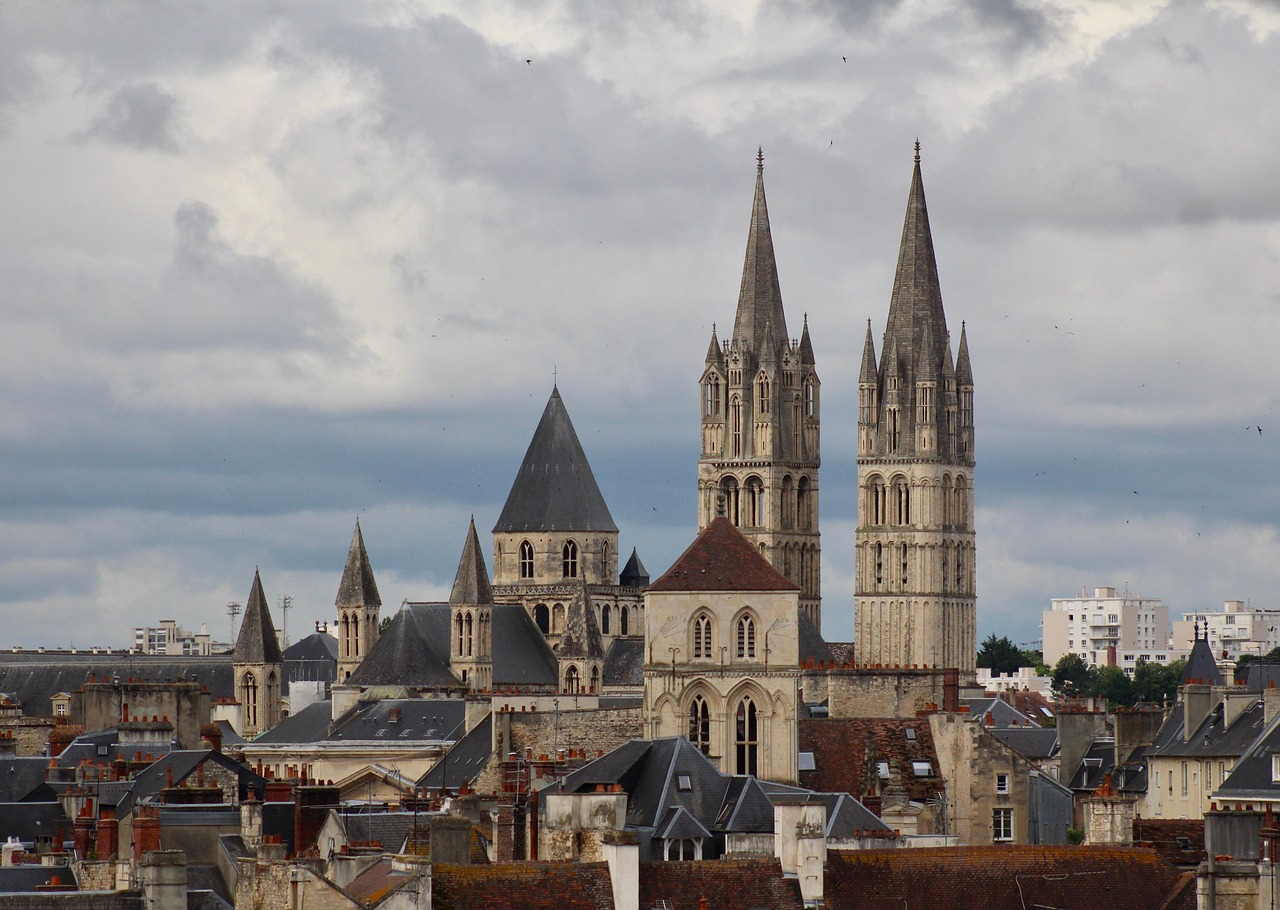
4. Abbaye aux Hommes (Men’s Abbey)
The Abbaye aux Hommes was founded by William the Conqueror in the 11th century and is his burial place. The abbey church’s Romanesque and Gothic blend is striking – austere and monumental rather than overly ornate.
I like to sit for a moment near William’s tombstone, a simple slab for such a larger-than-life figure, and imagine the centuries of people who have passed through here.
- Highlights: Nave and choir, cloister, and the City Hall buildings around it.
- Photography: The façade and towers are especially beautiful in late afternoon light.
5. Abbaye aux Dames (Women’s Abbey)
Founded by Matilda of Flanders, wife of William, the Abbaye aux Dames balances the story started at Abbaye aux Hommes. I find it a touch more peaceful, perhaps because it sees fewer tour groups.
There’s a beautiful park behind the abbey. The first time I discovered the viewpoint there, I stayed nearly an hour watching the city’s rooftops shift colors in the setting sun.
- Best for: Quiet contemplation, architecture, city views.
- Tip: Combine with a walk through the surrounding residential streets to see a different side of Caen.
6. Église Saint-Pierre
Right on the edge of the old town, Église Saint-Pierre is an elegant Gothic church that took several centuries to complete. Its soaring spire is one of Caen’s most recognizable landmarks.
I love ducking inside in the middle of a busy day of errands or guiding; it’s usually cool and quiet, with shafts of colored light from the stained glass.
- Good to know: Free entry; please dress respectfully.
- Nearby: Plenty of cafés and shops for a post-visit break.
7. Église Saint-Jean
Église Saint-Jean is sometimes called Caen’s “leaning church” because of its visibly tilted tower – a result of unstable ground and war damage. It’s a vivid reminder of what Caen endured in 1944.
Every time I pass, I notice locals barely glance at it; for them, it’s just part of the landscape. For visitors, it’s an arresting sight.
8. Mémorial de Caen
The Mémorial de Caen deserves another mention as a standalone attraction. Opened in 1988, it has grown into a comprehensive museum of 20th-century conflict and peace.
I’ve visited at least six times, and each visit feels different. On one trip, I joined a temporary exhibition focusing on children’s experiences during war; it stayed with me for weeks.
- Plan: Reserve tickets in advance in high season (June–September, and around D-Day anniversaries).
- Accessibility: Elevators and ramps make it accessible; audio guides available in multiple languages.
9. Jardin Botanique de Caen
The Jardin Botanique is one of those places that locals use more than tourists, which is precisely why I love it. It’s a peaceful, well-maintained botanical garden with medicinal plants, exotic trees, and seasonal flower beds.
In spring, I come here to watch the city wake up from winter: blossoms everywhere, students sprawled on the grass, families teaching kids the names of plants.
- Cost: Free entry.
- Best time: Spring and summer, but pleasant year-round.
10. Bassin Saint-Pierre & Marina
The Bassin Saint-Pierre is both scenic and symbolic: a working marina that also functions as Caen’s unofficial outdoor living room. Joggers, families, couples, and solo wanderers all share the space.
On summer evenings, I sometimes grab a takeaway pizza or a baguette sandwich and eat it on a bench here, watching the light fade.
- Activities: Walking, cycling, photography.
- Food & drink: Loads of restaurants and bars on either side of the basin.
11. Port de Plaisance & Presqu’île de Caen
Extending from the Bassin Saint-Pierre into the Orne river is the Presqu’île de Caen, a peninsula undergoing a slow transformation. New architecture, cultural spaces, and riverside paths are turning it into one of Caen’s most interesting emerging areas.
I like to walk or bike the length of the peninsula, checking on new buildings, art installations, and the evolving skyline.
12. Place Saint-Sauveur
Place Saint-Sauveur is a large, elegant square in the upper part of the center. Weekly markets fill it with color and noise; at other times, it’s a gracious open space with café terraces.
On my first winter in Caen, I stumbled upon a Christmas market here – twinkling lights, mulled cider, kids on a small carousel. It’s one of my happiest memories of the city.
- Market days: Check current schedules; Saturday is usually busiest.
- Tip: Great place to sample local produce and people-watch.
13. Rue du Vaugueux
Rue du Vaugueux is the postcard street of Caen: narrow, cobbled, lined with half-timbered houses and eating places. It’s lively but still feels lived-in, especially on slower weeknights.
I often bring visiting friends here on their first night in Caen – the architecture instantly sells them on the city.
- Best for: Dinner, drinks, romantic nights.
- Tip: Avoid the most aggressively touristy menus; look for smaller spots filled with French speakers.
14. Université de Caen & Campus 1
The University of Caen is not just for students; its post-war architecture and campus layout are fascinating. Destroyed in WWII, it was completely rebuilt and became a showcase of 1950s–60s design.
I like wandering through on weekdays: lectures spilling out, café lines, snippets of different languages – it reminds me that Caen is a young, evolving city.
15. Hôtel d’Escoville
The Hôtel d’Escoville is a gorgeous Renaissance mansion right in the center, near Saint-Pierre. Its courtyard is a quiet little architectural gem that many visitors rush past.
On a sunny day, I like to pop in, look up at the stone carvings and galleries, and enjoy the sense of stepping out of time for a moment.
16. Théâtre de Caen & Cultural Venues
The Théâtre de Caen is the city’s main performing arts venue, hosting theater, opera, dance, and concerts. Around it, you’ll find smaller venues and cinemas that keep Caen’s cultural life buzzing.
One of my best evenings in Caen was an impromptu decision to see a contemporary dance performance here – I bought a last-minute ticket and walked back through the quiet streets, head full of images.
17. Canal de l’Orne & Greenway
The Canal de l’Orne stretches from Caen to Ouistreham and the sea, with a towpath that’s perfect for cycling and long walks.
On my last spring visit, I rented a bike, packed a simple picnic, and rode about halfway to the coast and back. It’s flat, easy, and wonderfully calming.
- Best for: Outdoor lovers, families, runners, cyclists.
- Tip: Bring water and snacks; cafés thin out as you leave the city.
18. Zénith de Caen
The Zénith is Caen’s large arena for concerts and big shows. If you’re into live music or traveling with teens, check the schedule – catching a French band or international act here is a fun way to plug into local life.
I once saw a major French artist here on a whim; the energy in the crowd made me forget I wasn’t in Paris.
19. Hôtel de Ville & Gardens
Caen’s Hôtel de Ville (City Hall), housed within the Abbaye aux Hommes complex, has formal gardens that are open to the public. They’re beautifully laid out and offer photogenic views back towards the abbey.
I like coming here in late afternoon, when office workers are heading home and the light gets soft.
20. Post-War Architecture Walk
It might sound odd to list “post-war architecture” as an attraction, but in Caen, it’s essential to understanding the city. Much of what you see – the wide boulevards, apartment blocks, and modernist churches – rose from the rubble of 1944.
Over the years, I’ve come to appreciate the quiet dignity of these buildings. You don’t have to love the style to be moved by what they represent: survival and rebuilding.
- Tip: Join a guided architecture walk if available, or simply wander and notice the contrast between medieval, classical, and 1950s–60s facades.
Local Food in Caen – What to Eat & Where
Normandy is a paradise if you like butter, cream, cheese, apples, and seafood. Caen is a perfect place to dive into it all without the price tags of bigger cities.
Must-Try Normandy Specialties
- Camembert, Pont-l’Évêque, Livarot – Iconic local cheeses, often served as a trio.
- Teurgoule – Spiced rice pudding baked slowly until a dark crust forms; Caen comfort food at its best.
- Tripes à la mode de Caen – Traditional tripe stew; for adventurous eaters only.
- Seafood platters – Oysters, mussels, whelks, shrimp from the nearby coast.
- Galettes & crêpes – Buckwheat for savory, wheat for sweet, always good with cider.
- Cider, pommeau & Calvados – Apple-based drinks ranging from light to fiery.
Where I Actually Eat in Caen
I won’t name every restaurant (places change), but here’s the kind of spots I gravitate towards:
- Traditional Norman bistros in Vaugueux – For hearty dishes and rustic charm.
- Crêperies near Place Saint-Sauveur – Ideal for budget-friendly lunches.
- Seafood restaurants at the Bassin Saint-Pierre – Mussels in season, fish of the day, and harbor views.
- Student cafés around the university – Cheap, cheerful, good for coffee or a quick bite.
Money-Saving Food Tips
- Go for lunch menus – The menu du midi is often 2–3 courses for much less than dinner prices.
- Markets + picnics – Pick up cheese, bread, fruit, and cider at local markets (like Place Saint-Sauveur) and picnic in the castle grounds or parks.
- Boulangeries – Bakeries are your friend; a good baguette sandwich is underappreciated travel fuel.
Nightlife, Entertainment & Cultural Experiences in Caen
Caen punches above its weight for nightlife and culture thanks to its large student population and strong regional funding.
Nightlife Areas
- Vaugueux – Cosy wine bars, pubs, and restaurants; ideal for dates or laid-back evenings.
- Port de Plaisance – Larger bars, some with live music, terraces by the water.
- University district – Cheaper student bars and late-night spots.
Cultural Experiences
- Théâtre de Caen – Opera, theater, and dance (book in advance).
- Cinemas – Including arthouse options showing European films, often with subtitles.
- Festivals – Music, cinema, and street arts events throughout the year; check the city calendar before your trip.
Day Trips & Nearby Attractions from Caen
One of the best things about Caen is how many destinations you can reach in under an hour.
D-Day Beaches & Bayeux
- Bayeux – Medieval center and world-famous tapestry; about 15–20 minutes by train from Caen.
- Omaha & Utah Beaches – For American WWII history; best by car or organized tour.
- Juno & Sword Beaches – Canadian and British sectors; closer to Caen, possible by bus + walking.
Ouistreham Riva-Bella
Nearest sandy beach and ferry port; easy by bus 61 from Caen. Great for families and those craving a traditional seaside promenade.
Suisse Normande
Hilly countryside with plenty of outdoor activities – hiking, kayaking, climbing. Best reached by car or organized excursion.
Honfleur & Deauville/Trouville
Further afield but still doable as long day trips by car or combo of train + bus:
- Honfleur – Picture-perfect harbor town with art galleries and restaurants.
- Deauville & Trouville – Upscale seaside resorts with grand villas and wide beaches.
Local Customs & Cultural Etiquette in Caen
Normans are friendly but a bit reserved at first. A few small gestures make interactions smoother.
Everyday Etiquette
- Always greet – Say “Bonjour” when you enter shops or cafés, and “Au revoir” when you leave.
- Politeness – “S’il vous plaît” (please) and “Merci” (thank you) go a long way.
- Volume – Keep your voice moderate in public spaces; loudness is frowned upon.
Dining Customs
- Table manners – Hands visible on the table (not in laps), bread on the tablecloth, not on your plate.
- Tipping – Service is included, but rounding up or leaving a few extra euros for good service is appreciated.
- Timing – Lunch usually 12:00–14:00; dinner from 19:30 onwards. Some kitchens close between meals.
WWII Sites Etiquette
- Respect – Speak quietly, dress respectfully, and avoid selfies that feel flippant at memorials and cemeteries.
- Photography – Allowed in most places, but follow posted signs and staff instructions.
Practical Travel Advice for Caen (2026–2027)
Getting To & Around Caen
- By train – Direct connections from Paris Saint-Lazare (about 2 hours). The Gare de Caen is about a 20-minute walk from the center or a short tram/bus ride.
- By ferry – From the UK to Ouistreham, then shuttle or bus to Caen.
- Public transport – Trams A, B, and C plus an extensive bus network cover the city well.
- On foot – Central Caen is very walkable; expect 20–30 minutes to cross from one side to the other.
- By bike – Bike lanes are improving; the canal path is especially good.
- Car rental – Useful for day trips to rural areas and D-Day beaches; less necessary inside Caen itself.
SIM Cards & Connectivity
- Pick up a French SIM from operators like Orange, SFR, or Bouygues at kiosks or electronics stores in Caen.
- EU travelers can generally roam without extra charges (check your plan).
- Cafés and hotels almost always offer free Wi-Fi.
Money & Budget Tips
- Currency: Euro (€).
- Cards: Credit/debit cards widely accepted; carry some cash for markets and small purchases.
- Savings: Use lunch menus, stay slightly outside the very center, and walk or use trams instead of taxis.
Visas & Entry
- France is part of the Schengen Area. Many nationalities can enter visa-free for short stays; check official sources before travel.
- From 2025 onward, some travelers may need to complete the ETIAS authorization; verify current requirements for 2026.
Driving & Licenses
- Most foreign driver’s licenses are accepted for short visits; an International Driving Permit can be helpful, especially from non-EU countries.
- Drive on the right; strict speed limits and frequent speed cameras.
- Parking in central Caen is a mix of paid street spots and underground garages.
Best Seasons for Different Activities
- Spring (April–June): Ideal for city walks, gardens, and lighter crowds; perfect for a culture-focused 3 or 4 day itinerary for Caen.
- Summer (July–August): Long days, festivals, seaside trips; busiest at D-Day sites and beaches.
- Autumn (September–October): My favorite – softer light, harvest season for apples and cider, fewer tourists; great for a food-themed 5 day itinerary for Caen.
- Winter (November–March): Quieter, some outdoor sites less appealing, but museums, abbeys, and cozy restaurants shine.
Hidden Tips from Repeated Visits
- Start early – You’ll have abbeys and the castle ramparts almost to yourself before 10:00.
- Use markets as your pantry – Stock up on fruit, cheese, and bread and turn your accommodation into a mini-bistro.
- Layer clothing – Normandy weather is famously changeable; carry a light waterproof layer even on sunny days.
- Learn a few phrases – Even simple French (“Bonjour,” “Merci,” “Parlez-vous anglais ?”) softens interactions noticeably.
Summary & Final Recommendations – Planning Your Caen Trip
Caen is one of those cities that quietly grows on you. It doesn’t shout for attention, but if you give it 3–5 days, it rewards you with deep history, heartfelt memorials, good food, and a sense of real French life away from the clichés.
For a first visit, I recommend:
- 3 day itinerary for Caen – Focus on Caen Castle, abbeys, Mémorial de Caen, old town, and harborfront.
- 4 days in Caen – Add a D-Day beach or seaside day trip.
- 5 day itinerary for Caen – Add countryside (Suisse Normande) or cider/Calvados explorations for a fuller Normandy picture.
Best time to visit: Late spring (May–June) and early autumn (September–early October) balance pleasant weather, open attractions, and manageable crowds. Summer is wonderful for coastal trips and festivals, but book early around D-Day anniversaries.
Whether you come for family history, romantic walks by the marina, or adventurous river days in Suisse Normande, Caen is a city that stays with you. I still find new corners every year – and I suspect you’ll leave already plotting your return.