Why Visit the Camargue Beaches?
The Camargue is where the Mediterranean forgets it’s supposed to be glamorous and relaxes into something far more interesting: wide, wind-shaped beaches, pink salt lagoons, flamingos, white horses, and a stubbornly independent local culture. If the Côte d’Azur is a polished postcard, the Camargue coastline is a handwritten letter—salty, a little wild, and utterly memorable.
I’ve been coming back to these beaches for more than a decade, usually in the shoulder seasons when the light is soft and the mistral teases the dunes. In 2024 and 2025 I spent several long stays updating this guide, walking every stretch mentioned here, eating at the same low-key seafood shacks as the salt workers and horse trainers, and checking what’s actually open and worthwhile for 2026.
What you’ll find along the Camargue coast:
- Endless, untamed beaches – especially around Plage de l’Espiguette and the wilder reaches of Plage de Piemanson and Beauduc.
- Family-friendly shallows – soft-sand, gently shelving waters at Grau-du-Roi and Saintes-Maries-de-la-Mer.
- Romantic sunsets and big skies – sunsets here are long, slow performances across the lagoons and sea.
- Adventure and wind sports – kitesurfing, windsurfing, fat-biking in the dunes, horse riding on the beach.
- Deep local culture – Provençal and “gitan” (Roma) traditions, bull games in the arenas, Camargue cowboys (gardians) riding their white horses.
- Seafood and salt – grilled tellines (tiny clams), fresh fish, Camargue rice, and the famous fleur de sel harvested just inland.
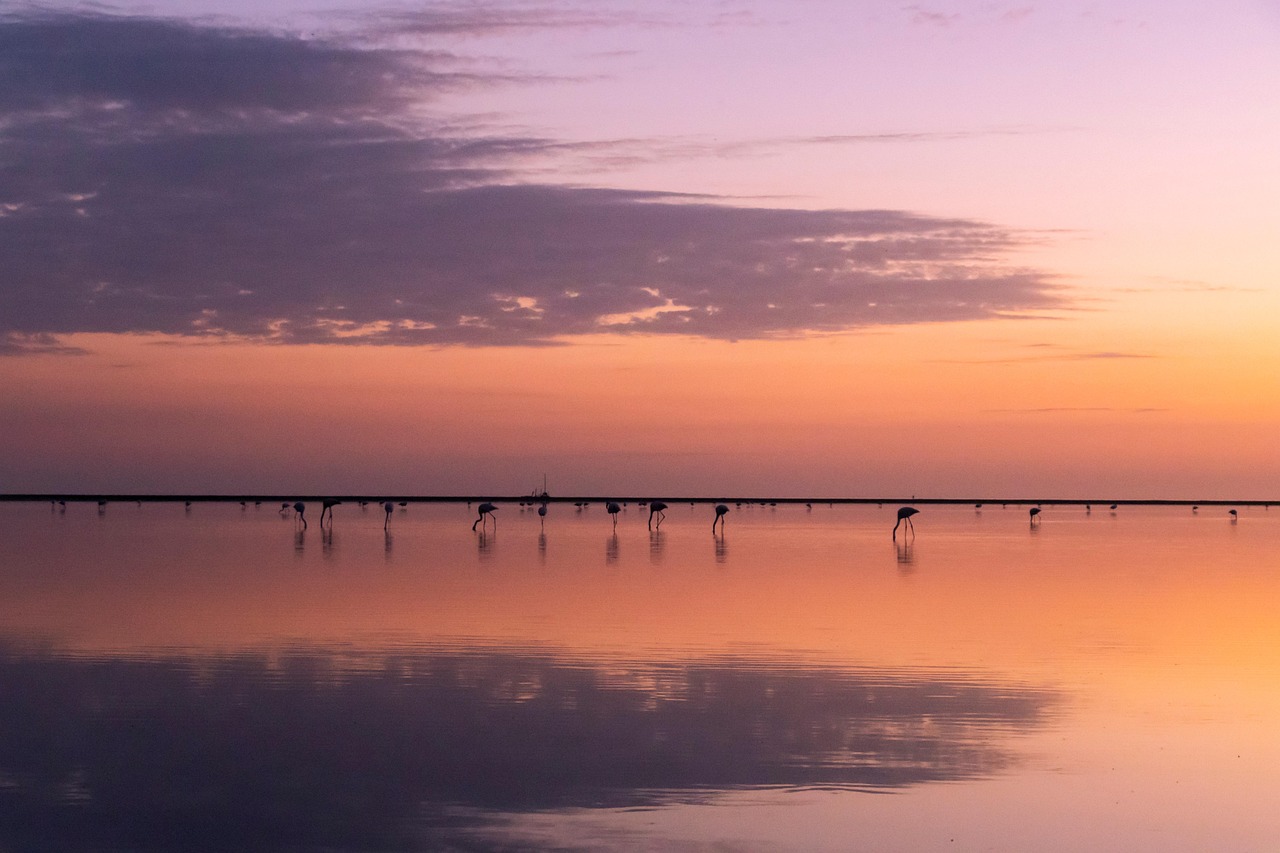
If you’re searching for a 3–5 day itinerary for Camargue Beaches, want to mix must-see attractions with genuine cultural experiences and local food, and still have time to sit quietly watching flamingos in the twilight, this 2026 travel guide for Camargue Beaches is for you.
1. Understanding the Camargue Coast
The Camargue sits between the two arms of the Rhône River as it empties into the Mediterranean, roughly between Le Grau-du-Roi in the east and Port-Saint-Louis-du-Rhône in the west. It’s technically split between the regions of Occitanie and Provence-Alpes-Côte d’Azur, but on the sand you’ll just feel “Camargue.”
What makes the beaches special:
- Space: You can walk for an hour along Plage de l’Espiguette and still feel like you haven’t reached the end.
- Wildness: Dunes, reed beds, and lagoons back many of the beaches instead of condos and malls.
- Light: The sunsets burn slowly across the salt pans and sea—photographers love it here.
- Tradition: You’re never far from horses, bulls, and the rhythms of a rural culture that predates mass tourism.
In this travel guide for Camargue Beaches, I’ll focus on the ten main beach sections and coastal areas that I’ve explored repeatedly between 2016 and 2025, and that remain the best places to visit in Camargue Beaches in 2026.
2. The 10 Main Beach Sections & Coastal Spots
2.1 Plage de l’Espiguette – The Iconic Wild Dune Desert
If there’s one image that defines the Camargue coast, it’s Espiguette: a huge, shifting body of golden sand backed by protected dunes and scrub. I usually come here on the first or last day of any trip, just to reset my internal horizon line.
What It’s Like
Espiguette feels more like the Atlantic than the Mediterranean: wide, windy, and often with a playful surf. On my May 2025 visit, a light mistral had sculpted the dunes into soft ridges; the only sounds were the waves and the occasional kite snapping overhead.
The beach is long enough to host different atmospheres along its length:
- Near the main parking: families, some beach bars (seasonal), lifeguards in high season.
- Further east: quieter, popular with naturists (well-signposted; easy to avoid or join as you prefer).
- Farther still: almost empty outside July–August; perfect for contemplative walks and couples seeking solitude.
History & Significance
Espiguette is part of a protected natural area, with dunes up to 10 meters high constantly re-shaped by wind and sea. The famous Phare de l’Espiguette, an inland lighthouse now stranded in the dunes, is a reminder of how rapidly this coast shifts. Since 2023, access has been more carefully managed to protect dune vegetation—boardwalks and signed paths are there for a reason; stick to them.
My Usual Day at Espiguette
When I want a proper “beach day” in the Camargue, I pack a big bottle of water, a wide-brimmed hat, and a simple picnic from the morning market in Le Grau-du-Roi—Camargue rice salad, a wedge of sheep’s cheese, a ripe tomato—and head to Espiguette before 10:00.
I like to walk at least 20–30 minutes along the waterline away from the main crowds before settling. On a calm June morning in 2024 I watched a pod of dolphins pass maybe 200 meters offshore, a reminder that this is still very much a living sea.
Best For
- Swimming: Good in summer; can be choppy with wind. The slope is gentle but watch for deeper sections with kids.
- Families: Excellent near the lifeguarded zones, especially in July–August.
- Romantic escapes: Walk east until the voices fade; you’ll have space for two.
- Wind sports: Kitesurfers and windsurfers love the exposed conditions; several schools operate nearby.
How to Get There
By car: From Le Grau-du-Roi, follow signs to “Plage de l’Espiguette” and “Parking Espiguette.” In high season, arrive before 10:30 for easier parking. The main car park is paid (budget ~€8–€10/day in 2026; prices are reviewed annually).
By bike: A dedicated cycle path links Le Grau-du-Roi to Espiguette (around 20–30 minutes, mostly flat). This is my preferred way: no parking stress, and the ride back at sunset is magic.
By public transport: Seasonal shuttle buses run from Le Grau-du-Roi center and Port Camargue in July–August; check timetables locally.
Food & Drink
There are seasonal beach bars (paillotes) closer to the main access, but choice is limited and prices reflect the location. I usually:
- Have a coffee and croissant in Le Grau-du-Roi early.
- Bring my own picnic and plenty of water (shade is minimal).
- Stop for an ice cream or cold drink back in town afterwards.
Personal Tips for Espiguette
- Wind check: If a strong mistral is forecast, come early or choose a more sheltered beach that day.
- Sun protection: There is almost no natural shade. Umbrellas or a small beach tent are invaluable in summer.
- Photography: The best light is early morning or about an hour before sunset; the dunes glow golden and footprints soften.
- Accessibility: There are some accessible walkways near the main entrance, but the sand is still soft beyond; check updated info at the parking kiosk.
2.2 Plage Nord & Plage Rive Droite – Classic Seaside Promenade (Le Grau-du-Roi)
When people ask for a straightforward, family-friendly spot with all conveniences, I usually point them to the northern beaches of Le Grau-du-Roi: Plage Nord and Plage Rive Droite. This is where the Camargue coastline flirts with classic French seaside resort life.
Atmosphere
Here you have a boardwalk-y feel (without the tackiness), soft sand, and a string of cafés, ice-cream parlors, and souvenir shops. On my August 2023 visit, the late afternoon was full of kids building sandcastles while grandparents watched from shaded benches along the promenade.
Best For
- Families with small children: Gently shelving water, regular lifeguard posts, playgrounds nearby.
- Non-drivers: Easy to reach on foot if you’re staying in town.
- First-time visitors: A soft landing into the Camargue coast, with everything within a few minutes’ walk.
What I Usually Do Here
I rarely spend a full day here, but I love a morning swim at Plage Rive Droite followed by a coffee at one of the cafés facing the sea. In shoulder season (late May, late September), the promenade is calm, and you get a front-row seat to watch the small fishing boats coming and going at the channel entrance.
Food & Local Spots
Skip the most obvious tourist menus and wander one or two streets back from the seafront. That’s where you find small bistros where locals eat a plat du jour of fresh fish or gardianne de taureau (Camargue bull stew). For ice cream, I usually go back, admittedly stubbornly, to the same artisanal gelateria near the lighthouse—because its salted caramel is dangerously good.
How to Reach
Once you’re in Le Grau-du-Roi, simply walk north from the harbor. Plage Nord and Rive Droite unfold along the waterfront, clearly signed. There’s street parking behind the seafront, but in July–August it fills quickly; plan to park further inland and walk.
Tips
- Peak periods: Late afternoon in school holidays gets busy; come early for a quieter swim.
- Accessibility: Good—paved promenade, ramps, and some beach wheelchairs available in summer.
- Shops: Ideal area to pick up last-minute beach gear (toys, umbrellas, towels) if you’ve forgotten anything.
2.3 Plage Sud & Boucanet – The Softer, Sunset Side of Le Grau-du-Roi
On the southern side of Le Grau-du-Roi, Plage Sud and Boucanet stretch towards La Grande-Motte. They’re still developed beaches but with a more relaxed rhythm than the northern promenade.
Why I Like This Area
I often stay near Boucanet when I want an easy base: I can walk to the beach in five minutes, the water is calm enough for a pre-breakfast swim, and there are enough restaurants to vary my meals without needing the car every night.
The beach itself is wide, sandy, and gently sloping. In September 2024 I spent a lazy afternoon here reading under an umbrella, occasionally interrupted only by the fruit seller wandering past with chilled slices of watermelon.
Best For
- Families: Similar to Rive Droite, but slightly less hectic.
- Sunset strolls: The view westwards towards Espiguette and beyond is gorgeous on clear evenings.
- Short breaks: If you have only 3 days in Camargue Beaches and want convenience, this area makes logistics smooth.
Eating & Drinking
This is where you start to find paillotes (seasonal beach bars) that double as sunset cocktail spots. Some are more about music and Instagram than substance, but a few offer genuinely good grilled fish and a chilled, toes-in-the-sand vibe. I tend to pick the ones that look slightly ramshackle; in my experience that’s where the cooking is more honest.
Getting There
From Le Grau-du-Roi center, head south along the coast by car, bike, or on foot. There are several beach access points and parking areas (mostly paid or time-limited in summer). Boucanet is also easily reached from La Grande-Motte by bike along the coastal path.
Tips
- July–August evenings: Beach bars can be loud; if you want quiet, choose accommodation a few streets inland or further towards Espiguette.
- Beach clubs: Reserve ahead for weekend dinners in high season.
2.4 Plages des Saintes-Maries-de-la-Mer – Where Village Life Meets the Sea
Saintes-Maries-de-la-Mer is the beating heart of the Camargue for many visitors: a whitewashed village pressed between sea and marsh, with a fortress-like church at its center and a horses-and-guitars energy that feels closer to Spain than to the Riviera.
The Main Beaches
The town beaches curve along the waterfront, divided into manageable sections:
- Plage Est: East of the harbor, long and family-friendly, with breakwaters that calm the swell.
- Plage Ouest: Westwards from the center, increasingly wilder as you walk.
- Central town beaches: Very easy access, cafés and restaurants just behind.
On summer evenings, these beaches are full of life: kids playing football in the late light, couples sitting on the rocks, guitars emerging from nowhere as the sky turns orange.
History & Culture
Saintes-Maries is known for its pilgrimages, especially the Roma pilgrimage in late May honoring Saint Sara. The village’s relationship with the sea is practical and spiritual: fishermen, bull herders, and pilgrims all share the same narrow streets and beaches.
My Saintes-Maries Routine
I like to arrive mid-afternoon, when the heat pushes people into siesta and the streets empty slightly. I’ll swim from the eastern beach, rinse the salt off at a public shower, then wander the lanes for an ice cream or a glass of rosé on a shady terrace.
On my September 2025 visit, I stayed three nights in a simple guesthouse in the old village. Each evening I’d walk out onto the beach just before sunset. The combination of church bells, waves, and distant horse hooves on the sand is hard to describe without sounding sentimental—but it gets under your skin.
Best For
- Families: Town beaches with services, lifeguards in season, and easy access to food and toilets.
- Romantic stays: Dawn and dusk walks, candle-lit dinners, guitar music drifting over the beach.
- Cultural travelers: Easy access to Camargue ranches (manades), bull games, and pilgrim traditions.
Food & Local Specialties
The seafront has its share of tourist menus, but look for places where locals are arguing loudly (affectionately) over a glass of pastis. Dishes to try:
- Tellines à la plancha: Tiny local clams, simply grilled with garlic and parsley.
- Brandade de morue: Salt cod whipped with olive oil and served with toast.
- Gardianne de taureau: Bull stew slow-cooked in red wine, served with Camargue rice.
Getting There
By car: About 45–60 minutes from Arles, Nîmes, or Montpellier depending on traffic.
By bus: Regional buses connect Arles and Nîmes to Saintes-Maries-de-la-Mer, though schedules are limited on Sundays and in low season.
Tips
- Parking: Several paid lots around the village; in high season, arrive early or late in the day.
- Noise: The center can be lively late into the evening during festivals; if you’re noise-sensitive, stay a few streets back from the main squares.
2.5 Plage du Crin Blanc & the Wild Eastern Stretch – Horses, Dunes, and Space
Walk east from Saintes-Maries-de-la-Mer and the town beaches gradually give way to something wilder. Plage du Crin Blanc (“white mane”) sits just far enough from the village to feel separate, yet close enough for an easy half-day escape.
What It Feels Like
There’s a reason so many film scenes of white horses galloping in the surf are shot around here. Early in the morning, you might spot riding groups from nearby ranches heading out along the water’s edge, hooves splashing in the shallows.
On a calm October morning in 2022 I walked for nearly an hour without seeing more than a handful of people. The dunes, dotted with low shrubs, frame views of the Étang de Vaccarès and its birds.
Best For
- Long walks: The coastline keeps unfolding, with fewer breakwaters and more natural curves.
- Photography: Horses, dunes, and big skies; come early or late for the best light.
- Quiet sunbathing: Especially outside peak summer weekends.
How to Reach
You can either:
- Walk from Saintes-Maries-de-la-Mer, following the coast eastwards.
- Drive or cycle along the D38 and follow signed tracks to beach car parks (conditions can be sandy; small cars sometimes struggle).
Tips
- Bring everything: No facilities; water, snacks, sun protection are essential.
- Respect horses: If you encounter groups on horseback, give them space and avoid sudden movements or drones.
2.6 Plage de Piemanson – The Edge-of-the-World Feel
Plage de Piemanson was once famous for its informal “beach camp city” of caravans and vans parked directly on the sand all summer. New regulations over the last decade have tamed that somewhat, but the beach’s rugged, end-of-the-road character remains.
Atmosphere
Getting to Piemanson feels like driving off the map. From Salin-de-Giraud, you cross landscapes of salt basins tinted pink and white, with flamingos feeding in the shallows. The road finally ends at a wide, sandy parking area behind the dunes.
The beach itself is long, open, and exposed. On a breezy day in April 2025 I watched kitesurfers leap against a backdrop of clouds, while families flew actual kites from the shoreline. There’s a refreshing absence of development: just sea, sand, and sky.
Best For
- Adventure seekers: Kitesurfing, windsurfing, long walks, wild-feeling picnics.
- Campers & vanlifers: Designated areas and evolving rules; check current 2026 regulations before planning an overnight stay.
- Birdwatchers: The drive in passes excellent birding spots.
Facilities
Minimal. In high season, you might find temporary toilets and sometimes a snack truck or two, but don’t rely on it. Bring your own water, food, and shade.
How to Reach
By car: From Arles, drive south to Salin-de-Giraud, then follow signs to “Plage de Piemanson.” The last stretch is a simple straight road past salt pans.
By bike: Possible but demanding due to distance and exposure; better if you’re staying in Salin-de-Giraud.
Tips
- Wind: It can be fierce; secure umbrellas and lightweight items.
- Check access: After storms or during certain environmental measures, access may be limited; ask at the tourist office in Salin-de-Giraud.
2.7 Plage de Beauduc – The Mythic Off-Grid Beach
Beauduc is whispered about in camper-van circles like a secret: a remote, off-grid beach at the very tip of the Camargue, long associated with free spirits, kiters, and people who like their holidays a bit improvised.
My Experience
I first came to Beauduc in 2017 in a small rental car, following a friend’s vague directions and a dirt track that seemed determined to return us to the marshes. We finally emerged onto a wide, hard-packed beach peppered with vans, kitesurf sails, and dogs chasing each other through the foam. It felt like the end of the world—in the best possible way.
By my return in 2024, access rules had tightened and some of the more anarchic camping had been curbed, but the essential spirit was intact: no concrete, no formal beach clubs, just sand, sea, and wind.
Best For
- Kitesurfing & windsurfing: One of the most iconic spots on the French Med for wind sports.
- Off-grid camping: Subject to evolving regulations; 2026 rules emphasize designated areas and limited stays.
- Adventurous souls: Those who don’t panic at the words “unpaved road” and “no facilities.”
Access & Conditions
The main issue is always access. The route to Beauduc has historically been an unpaved track, sandy in parts and prone to potholes. Local authorities have made periodic improvements, but conditions change with each winter. In March 2025 the track was passable in a normal car driven slowly and carefully in dry weather; after heavy rain, it can be risky.
Facilities
Count on no official facilities except any temporary signage about camping rules and protected zones. There may be makeshift food stalls in peak season, but you must be self-sufficient: water, food, shade, and waste disposal (leave absolutely no trace).
Tips
- Check current regulations: Ask the tourist office in Arles or Salin-de-Giraud for the latest on driving and camping rules for Beauduc in 2026.
- Drive slowly: Not just for your car’s sake, but also to avoid dust and respect local wildlife.
- Respect others’ space: Even in a free-spirited setting, don’t park too close to someone who’s clearly set up a quiet camp.
2.8 Plage de Salin-de-Giraud & the Rhône Mouth – Between Salt and Sea
Just south of the industrial-looking but fascinating Salin-de-Giraud, a network of small roads and tracks leads to the sea. These beaches are less individually famous than Espiguette or Piemanson, but they offer a quieter alternative with a strong sense of place.
What It’s Like
The sand is soft, the sea relatively shallow, and the horizon wide. What sets this area apart is what lies behind the beach: vast salt pans that, in certain seasons, turn shades of pink and red under the sun, dotted with flamingos.
On a late-afternoon visit in June 2024, I parked near a small dune, walked over to the beach, and swam alone for nearly half an hour. The only sound when I came out of the water was the distant hum of the salt works and the fluting calls of birds.
Best For
- Quiet escapes: Locals come here; tourists rarely linger compared to the headline beaches.
- Birdwatching: Combine a beach day with stops at bird hides around the lagoons.
- Photography: Salt pans, flamingos, and beach all within a short drive.
Getting There
From Salin-de-Giraud, small roads signed “plage” head south. Some sections can be rough; drive carefully and don’t attempt flooded tracks. This is a place where a local map or offline GPS is very helpful.
Tips
- No services: Self-sufficiency is key: water, snacks, and shade.
- Insects: Mosquitoes can be intense at dusk near wetlands; pack repellent.
2.9 Port Camargue & Marina Beaches – Nautical Camargue
Port Camargue is one of Europe’s largest marinas, a maze of pontoons, sailboat masts, and holiday apartments. It can feel like a world apart from the wild dunes, but its small beaches and waterfront walks are worth knowing, especially if you’re combining a beach holiday with sailing.
Atmosphere
The beaches here are modest but pleasant, tucked between breakwaters and protected by the marina’s arms. They’re ideal for families with very small children or anyone who prefers lake-like calm to surf.
I often end up here in the late afternoon, after a day on Espiguette, to walk among the boats, admire outrageous yacht names, and grab a drink overlooking the harbor.
Best For
- Sailing & boating: Charter options, sailing schools, and boat rentals abound.
- Very calm swimming: For nervous swimmers or toddlers.
- Evening strolls: The promenade around the marina is flat and atmospheric at dusk.
Food & Drink
There are several waterfront restaurants ranging from pizza and moules-frites to more sophisticated seafood. Prices trend higher than in Le Grau-du-Roi center, but you’re paying for the marina view.
Tips
- Parking: Paid lots near the marina; free or cheaper options a short walk away if you don’t mind a stroll.
- Sailing lessons: Book ahead for July–August; some schools offer English-language courses for kids.
2.10 Lesser-Known Coves & Quiet Corners – Micro Escapes
While the Camargue coast is more about long open beaches than rocky coves, there are still smaller, quieter corners to discover—often where dunes, breakwaters, or ports create micro-environments.
Examples
- Small inlets near Port Camargue: Pockets of sand between breakwaters with fewer people.
- Edges of town beaches in Saintes-Maries: Walk 10–15 minutes beyond the main clusters and you’ll often find a calmer patch.
- Backed-by-dune corners near Espiguette: Where a slight curve in the shore creates a wind-shadow and a little privacy.
How I Find Them
I walk. I follow the shore, let the crowds thin, and look for subtle shifts: fewer umbrellas, more locals, less noise. I also ask: the woman at the bakery, the guy renting paddleboards, the receptionist at my guesthouse. The answers vary, but a surprising number of people are happy to share their “quiet bit” of beach—as long as you don’t plaster it all over social media.
Tips
- Arrive early or late: Even small coves feel different when the midday crowd has gone.
- Stay flexible: A quiet corner one year can be discovered the next; part of the joy is the search.
3. 3–5 Day Itineraries for Camargue Beaches (With Personal Stories)
Below are suggested 3 day, 4 day, and 5 day itineraries for Camargue Beaches based on trips I’ve actually taken between 2021 and 2025. Adjust them to your pace, but they’ll give you a backbone for organizing your own 3–5 days in Camargue Beaches around the best places to visit, hidden gems, and genuine local food experiences.
3.1 A 3 Day Itinerary for Camargue Beaches – “First-Timer’s Introduction”
I often recommend this 3 day itinerary for friends visiting the Camargue coast for the first time. You’ll base yourself either in Le Grau-du-Roi or Saintes-Maries-de-la-Mer and split your time between wild dunes, village beaches, and lagoon landscapes.
Day 1 – Arrival, Le Grau-du-Roi & Espiguette
On my last 3-day camarguaise escape in September 2024, I rolled into Le Grau-du-Roi just before noon, having taken a mid-morning train to Nîmes and picked up a rental car there. The air already smelled faintly of salt and sunscreen.
Morning:
- Check into a small hotel or apartment near Boucanet or the town center.
- Walk the harbor, watch fishing boats unload, and grab a light lunch—maybe a tielle sétoise (spicy octopus pie) and salad.
Afternoon: Plage de l’Espiguette
After dropping my bags, I headed straight for Espiguette. The light was sparkling, the sand hot underfoot. I walked 20 minutes east along the shoreline before claiming a spot. For a first-timer, this beach redefines what “Mediterranean” can look like: no long lines of umbrellas, just dunes and sky.
I spent a few hours swimming, napping, and watching a group of teenagers trying to launch a kite big enough to lift them off the sand. Around 17:30, when the light started to soften, I walked back, now facing the low sun and the silhouettes of people heading home.
Evening:
- Dinner back in Le Grau-du-Roi—fresh fish or moules-frites at a harbor-side bistro.
- A slow stroll along Plage Rive Droite, watching the sea turn dark blue and the ferris wheel (if operating) light up behind the town.
Day 2 – Saintes-Maries-de-la-Mer & Village Beaches
Morning: Drive (45–60 minutes) or take a bus to Saintes-Maries-de-la-Mer. I like to arrive by 09:30, before the heat presses down and parking becomes competitive.
- Climb the ramparts of the fortified church (small fee) for rooftop views over the village, lagoons, and sea.
- Wander the narrow streets and pick up picnic supplies: bread, cheese, fruit, maybe some olives.
Afternoon: Beach & Horseback Ride
Spend the early afternoon on the town beaches—Plage Est is a good choice. The water is calm, the sand soft, and cafés are a few steps away if you need a cold drink.
Later in the afternoon, I often book a short horse ride with a reputable manade (Camargue ranch) that offers beach or marsh rides. Trotting along the shore as the late sun hits the water is one of those borderline cliché experiences that’s irresistible because it’s genuinely beautiful.
Evening:
- Dinner in Saintes-Maries: tellines, bull stew, and local wine.
- Walk the beach at dusk. In May and September, there’s often someone playing guitar near the sea wall.
- Drive back to Le Grau-du-Roi or stay overnight in Saintes-Maries if you prefer less back-and-forth.
Day 3 – Lagoons, Birds & Another Beach of Your Choice
Morning: Birdwatching & Wetlands
On my last trip, I spent my final morning at the Parc Ornithologique de Pont de Gau, just outside Saintes-Maries. It’s not wild in the purist sense, but it’s a fantastic, accessible way to see flamingos, herons, egrets, and countless other birds up close in a semi-natural environment.
Afternoon: Choose Your Beach
For your last swim and sand time, choose based on your mood:
- Espiguette again if you fell in love with the dunes.
- Boucanet or Plage Sud if you’re tired and want convenience and a nearby shower.
- Crin Blanc if you’re staying near Saintes-Maries and want more wild space.
End with a final seafood dinner and a quiet drink watching the waves. For me, this last evening is always a bittersweet mix of contentment and reluctance to leave.
3.2 A 4 Day Itinerary for Camargue Beaches – “Adding Wild Edges”
If you have 4 days in Camargue Beaches, you can keep the core of the 3-day plan and add a deeper foray into the wilder western side—Piemanson, Beauduc, or Salin-de-Giraud.
Day 1–2
Follow Days 1 and 2 from the 3-day itinerary: Le Grau-du-Roi & Espiguette, then Saintes-Maries-de-la-Mer.
Day 3 – Salin-de-Giraud & Piemanson
On my October 2023 trip, I dedicated a full day to the eastern bank of the Rhône. I left Arles after breakfast, crossed the river by ferry near Barcarin (a fun, short crossing), and drove through salt lands to Salin-de-Giraud.
Morning:
- Explore Salin-de-Giraud briefly: an odd but fascinating company town with workers’ houses and salt works.
- Drive towards Plage de Piemanson, stopping occasionally to photograph salt pans and flamingos.
Afternoon: Piemanson Beach Time
Set up for a simple beach afternoon at Piemanson: swim, walk, watch the kitesurfers. The sense of space is different here—more exposed, more raw. I made a basic picnic and ate sitting on a driftwood log, watching patterns in the sand blown by the wind.
Evening:
- Drive back to your base (Arles, Le Grau-du-Roi, or Saintes-Maries, depending on where you’ve chosen to stay).
- Optional: stop for dinner in Arles if you’re passing through; the old town is lovely after dark.
Day 4 – Free Day: Return to a Favorite or Try Beauduc
Your final day is your “choose your adventure” card:
- Return to a favorite beach you didn’t feel you’d had enough of—Espiguette, Saintes-Maries, or Crin Blanc.
- Or, make an expedition to Beauduc, if road conditions and regulations are favorable and you’re up for it.
If you choose Beauduc, leave early, pack thoroughly, and treat it as an all-day adventure. When I last did this in 2022, I left just after sunrise, spent a long day alternating between reading in the shade of my car and swimming, then drove back slowly as the sky turned deep orange over the marshes.
3.3 A 5 Day Itinerary for Camargue Beaches – “Slow and Deep”
With 5 days in Camargue Beaches, you can embrace a slower rhythm: more dawn swims, more sunset walks, and time for inland detours to Arles or Aigues-Mortes.
Day 1–3
Use the 3-day itinerary as your base: Le Grau-du-Roi & Espiguette, Saintes-Maries, and a lagoons/bird/beach mix.
Day 4 – Medieval Aigues-Mortes & Salt Pans + Late Beach
On my May 2025 stay, I devoted a full day to Aigues-Mortes, the walled town just behind the coast, followed by a late swim.
Morning:
- Drive or take a short train/bus to Aigues-Mortes.
- Walk the ramparts for panoramic views over the Camargue and salt pans.
- Visit the Salins d’Aigues-Mortes (salt works) on a little train or bike rental tour—some of the basins are startlingly pink.
Afternoon & Evening:
- Lunch in Aigues-Mortes (I favor small bistros in the side streets over the main square).
- Head back to the coast for a late-afternoon swim—Boucanet or Plage Sud are convenient options.
- Enjoy a sunset drink at a beach bar, toes in the sand.
Day 5 – Free Flow: Horses, Ranch Life, or Another Wild Beach
Use your last day to deepen the aspect of Camargue life that most appeals to you:
- Horses & ranches: Spend a half or full day at a manade, learning about Camargue bulls and horses, with a ride or 4x4 tour of the marshes.
- More wild coast: Return to Piemanson, Beauduc, or Crin Blanc for a final immersion.
- Food & markets: Build your day around local markets (e.g., in Le Grau-du-Roi or Saintes-Maries) and a long lunch, with just a quick dip in the sea later.
On my last 5-day stay, I used this final day for a slow horseback ride along the marshes near Saintes-Maries in the morning, then a lazy afternoon at the eastern end of the town beach reading under a parasol. It was the perfect farewell.
4. Seafood, Beach Bars & Local Food in Camargue Beaches
The Camargue isn’t a fine-dining showpiece like parts of Provence, but if you like simple, fresh seafood and honest local dishes, you’ll eat very well. Here’s how I approach food along the coast.
4.1 What to Eat
- Tellines: Tiny wedge-shaped clams, grilled on a plancha with garlic and parsley; order them whenever you see them.
- Sea bream, sea bass, and mackerel: Often grilled whole, with olive oil and herbs.
- Gardianne de taureau: Rich bull stew, cooked in red wine; pairs beautifully with Camargue red rice.
- Camargue rice: Red, black, or white varieties; often served in salads or as a side.
- Brandade: Salt cod brandade, creamy and flavorful.
- Local cheeses & charcuterie: Especially sheep’s and goat’s cheeses from inland.
4.2 Where Locals Actually Eat
In Le Grau-du-Roi, I avoid the most aggressively touristy places lining the harbor and instead pick:
- Smaller bistros on side streets, where the lunch menu is chalked in French and full of regulars.
- Simple fish restaurants near the fishing port—if the chairs are mismatched and the decor minimal, that’s a good sign.
In Saintes-Maries-de-la-Mer, I look for:
- Restaurants where you can see locals eating gardianne or rice-based dishes rather than only pizza and burgers.
- Places just behind the seafront rather than in the absolute center of the tourist flow.
4.3 Beach Bars & Sunset Cocktails
Seasonal paillotes (beach bars) pop up along:
- Plage Sud and Boucanet (Le Grau-du-Roi)
- Certain stretches near Espiguette’s main access
- Town beaches in Saintes-Maries-de-la-Mer
They’re perfect for a sunset drink—a glass of rosé, a spritz, or a local craft beer. I don’t come here for culinary revelation, but for that moment when the sea, sky, and clink of glasses merge into a single, lazy rhythm.
4.4 Saving Money on Food
- Lunch menus: Many places offer a menu du midi (set lunch) that’s better value than à la carte dinner.
- Self-catering: Renting an apartment with a basic kitchen lets you buy fresh fish and vegetables at markets and cook simple meals.
- Bakeries: A good boulangerie, some cheese, and fruit can make a perfect beach picnic for a fraction of restaurant prices.
5. Evenings on the Camargue Coast
Evenings are when the rhythm of Camargue Beaches shifts. The sun drops behind the dunes, the day-trippers rinse off and leave, and a softer mood spreads along the sand.
5.1 Bonfires & Nighttime Beach Life
Open bonfires are generally restricted due to fire risk and environmental concerns. Locals sometimes light small, controlled fires in less regulated spots, but as a visitor, you’re safer—and more respectful—sticking to official rules and enjoying the night air without flames.
5.2 Beach Bars & Clubs
- Le Grau-du-Roi & Port Camargue: A few beach bars and waterfront venues offer DJ sets, live music, and dancing in summer. It’s livelier here than in Saintes-Maries.
- Saintes-Maries-de-la-Mer: More about live music in bars and occasional outdoor concerts than big clubs. Flamenco-inspired guitar is common.
I’m not a big club-goer, but I’ve spent many evenings nursing a drink on a terrace while a local band plays covers and kids dance in front of the stage with sandy feet.
5.3 Sunset Cruises & Boardwalk Strolls
From Port Camargue and Le Grau-du-Roi, sunset cruises head out along the coast, occasionally with dolphin spotting chances. It’s touristy, yes, but on a calm evening, watching the coastline recede into a haze of pink and gold has its charm.
Alternatively, a simple boardwalk stroll along Rive Droite or Plage Sud at twilight is hard to beat. I often carry a light sweater and walk until the sky is deep cobalt, then turn back, guided by the lights of the town.
6. Cultural Experiences, Local Customs & Etiquette
The Camargue is more than its beaches. It’s a cultural landscape shaped by water, salt, bulls, and horses, with traditions that locals hold dear.
6.1 Key Cultural Experiences
- Manades & Gardians: Visit a Camargue ranch to see gardians (cowboys) work with bulls and horses. Many offer demonstrations and meals.
- Course Camarguaise: A local form of bull game where nimble young men attempt to snatch rosettes from a bull’s horns. Unlike Spanish bullfighting, the bull is not killed.
- Pilgrimages & Festivals: Especially in Saintes-Maries-de-la-Mer; see events section below.
- Salt & Rice Culture: Tours of salt pans and rice fields reveal how much these staples shape the landscape and cuisine.
6.2 Local Customs & Etiquette
- Greetings: A simple “Bonjour” when entering shops or restaurants is essential; it sets the tone.
- Language: Many people speak some English, but trying a few French phrases is always appreciated.
- Dress: Beachwear is fine on the sand but cover up (at least a shirt or dress) in town, shops, and restaurants.
- Religious & Roma Traditions: During pilgrimages, be respectful of processions and ceremonies. Avoid intrusive photos of individuals, especially during religious moments.
- Nature respect: Stay on paths in dunes, don’t feed or approach wildlife, and keep noise modest in natural areas.
6.3 Tipping & Payments
- Restaurants: Service is usually included; rounding up or leaving 5–10% for good service is customary but not obligatory.
- Cafés & bars: Leaving small change is appreciated.
- Cards vs cash: Cards widely accepted, but small beach bars or rural spots may prefer or only take cash.
7. 2026–2027 Events & What’s New in Camargue Beaches
For 2026–2027, several recurring events and a few new initiatives shape the travel scene along the Camargue coast.
7.1 Major Recurring Events
- Roma Pilgrimage, Saintes-Maries-de-la-Mer (May 24–26, 2026 & 2027): Thousands of Roma pilgrims gather to honor Saint Sara. The village is packed, accommodations book up months in advance, and the beaches take on a festival atmosphere.
- Fêtes Votivales (Summer 2026 & 2027): Local festivals in Saintes-Maries, Le Grau-du-Roi, and nearby villages with bull games, parades, music, and fireworks.
- Sea & Wind Sports Events: Kitesurfing and windsurfing competitions at Espiguette, Beauduc, and elsewhere—dates vary but often late spring or early autumn when winds are best.
7.2 New & Ongoing Changes for 2026
- Dune & Wetland Protection: Continued tightening of access at sensitive dunes near Espiguette and Piemanson; expect more boardwalks and fenced-off areas.
- Beauduc Access Management: 2026 is expected to see further clarification of camping rules, with designated areas and stricter enforcement of no-go zones.
- Cycle Infrastructure: Gradual improvements to coastal cycling paths, particularly between Le Grau-du-Roi, Port Camargue, and La Grande-Motte, making car-free beach hopping easier.
Always check local tourist office websites for the latest 2026–2027 event calendars; dates can shift slightly year to year.
8. Day Trips & Nearby Attractions from Camargue Beaches
While you could happily spend all your time between dune and sea, a few nearby destinations enrich a longer stay.
8.1 Aigues-Mortes
Walled medieval town with impressive ramparts, salt pan views, and a compact old center perfect for an afternoon wander.
- Getting there: 15–20 minutes by car from Le Grau-du-Roi; also accessible by bus or a small tourist train service in summer.
- What to do: Ramparts walk, salt works tour, explore narrow streets, enjoy a terrace coffee or ice cream.
8.2 Arles
Roman ruins, Van Gogh history, and a handsome old town on the Rhône. I often pair Arles with a Camargue stay to balance beach and culture.
- Getting there: 45–60 minutes by car from Saintes-Maries or Le Grau-du-Roi; or bus from Saintes-Maries.
- What to do: Amphitheatre, Roman theatre, Fondation Vincent van Gogh, stroll along the river.
8.3 Nîmes & Montpellier
Both cities make good gateways to the Camargue and worthy day trips:
- Nîmes: Roman monuments, beautiful gardens.
- Montpellier: Elegant old town, vibrant student energy, good food and wine scene.
8.4 Inland Camargue Villages & Nature Reserves
Scattered across the wetlands, small villages and nature reserves offer quieter explorations:
- Saint-Gilles: Abbey church and pleasant old streets.
- Natural reserves: Numerous birding hides and walking routes around Étang de Vaccarès and other lagoons.
9. Practical Travel Advice for Camargue Beaches (2026)
9.1 When to Go & Seasons
- Late April–June: My favorite time—mild to warm, fewer crowds, good for walking, birding, and early swimming.
- July–August: Hottest and busiest; best for guaranteed beach weather and nightlife, but book early and expect crowds.
- September–early October: Warm sea, softer light, calmer vibe; ideal for couples and photographers.
- Late October–March: Much quieter; some seasonal businesses close; better for walkers and birders than beach-bathers.
9.2 Getting There
- Airports: Montpellier (closest to Le Grau-du-Roi), Nîmes, Marseille.
- Trains: High-speed TGV to Nîmes, Montpellier, or Arles, then regional links or bus/car to the coast.
9.3 Getting Around
- Car rental: Most flexible for reaching wild beaches (Piemanson, Beauduc, certain Salin-de-Giraud spots).
- Public transport: Buses link Arles, Nîmes, Montpellier with Saintes-Maries and Le Grau-du-Roi, but schedules are limited off-season.
- Bikes: Excellent for local movement between town beaches, Espiguette, and Port Camargue; many rental shops.
9.4 Money-Saving Tips
- Travel in shoulder season (May–June, September) for lower prices and gentler crowds.
- Stay slightly inland (e.g., Aigues-Mortes) and drive to beaches if seafront prices are steep.
- Self-cater some meals and use markets for fresh produce and fish.
9.5 SIM Cards & Connectivity
- eSIM & EU roaming: Many EU visitors can roam at domestic rates; check with your provider.
- Local SIM: Operators like Orange, SFR, Bouygues offer prepaid SIMs; buy at airports, major supermarkets, or phone shops in cities.
- Coverage: Generally good in towns; can be patchy around remote beaches like Beauduc.
9.6 Visa Requirements & Driving
- Visas: France is in the Schengen Area; most EU/EEA citizens enter freely. Others may need a Schengen visa—check current requirements.
- Driving licenses: EU/EEA licenses accepted. Many non-EU visitors can drive with their home license plus an International Driving Permit (IDP); confirm for your nationality.
- Road rules: Drive on the right, seatbelts mandatory, strict drink-driving limits.
10. Beach-Specific Logistics & Safety
10.1 Swimming, Surf & Conditions
- Swimming season: Typically mid-June to late September for comfortable water temperatures.
- Surf: The Med isn’t a classic surf destination, but wind-driven chop and small waves are common at Espiguette, Piemanson, and Beauduc—good for body-surfing and wind sports.
- Best for calm water: Town beaches in Le Grau-du-Roi, Port Camargue, and Saintes-Maries (protected by breakwaters).
10.2 Lifeguards & Safety Flags
In high season, major beaches (Espiguette main area, Grau-du-Roi town beaches, Saintes-Maries town beaches) have lifeguard posts and flag systems:
- Green: Safe, supervised swimming.
- Orange/yellow: Caution; moderate conditions.
- Red: No swimming; dangerous conditions.
Always heed flags and lifeguard instructions, especially with children.
10.3 Rip Currents, Jellyfish & Wildlife
- Rip currents: Can occur when waves and sandbars align, particularly on long open stretches like Espiguette and Piemanson. If caught, swim parallel to shore until free.
- Jellyfish: Occasional blooms, particularly in hot, calm spells. Locals usually know when they’re around; ask lifeguards or watch what others are doing.
- Sharks: Sightings are extremely rare and not a concern for typical beachgoers.
- Mosquitoes: The real “wildlife hazard” of the Camargue—intense at dusk near wetlands. Use repellent and light, long sleeves/trousers in the evenings.
10.4 Equipment Rental
- Umbrellas & loungers: Available at many town beaches and some paillotes; wild beaches are mostly BYO.
- Paddleboards, kayaks, kitesurf gear: Rental shops in Le Grau-du-Roi, Port Camargue, and Saintes-Maries; some offer lessons.
- Bikes: Widely available for rent in coastal towns; ideal for exploring.
10.5 Parking Strategies
- Espiguette: Large paid lot; arrive before 10:30 in peak season.
- Le Grau-du-Roi & Saintes-Maries: Mix of street parking and paid lots; pay attention to signs and time limits.
- Piemanson & Beauduc: Sandy or rough parking areas; avoid soft sand if you’re not in a suitable vehicle.
10.6 Weather, Storms & Sun
- Storms: The Mediterranean can whip up sudden storms, especially in autumn; check forecasts.
- Sun: Strong from late spring to early autumn; SPF 30+ or 50, hats, and shade are essential, especially on dune-backed beaches with no natural cover.
- Wind: The mistral can make days feel cooler than they are while increasing sunburn risk; don’t be fooled by the breeze.
11. Summary & Final Recommendations
The Camargue coastline isn’t about polished beachfront promenades or celebrity spotting. It’s about space, light, and a certain rawness that sticks with you long after the sand is gone from your shoes. Over the years, I’ve come back again and again because it offers a rare combination: wild beaches, accessible family spots, deep local culture, and real food.
For most travelers, the best time to visit Camargue Beaches is:
- Late May–June: Ideal blend of warmth, manageable crowds, and active nature.
- September: Warm sea, mellow atmosphere, and superb light.
Choose a 3 day itinerary if you’re curious and short on time; 4 days if you want to add a wild edge like Piemanson; and 5 days if you’re ready to settle into the Camargue’s slower rhythm and layer beaches with cultural experiences.
Whichever way you slice your days—Espiguette’s vast dunes, Saintes-Maries’ village beaches, Piemanson’s wind-swept sands, or Beauduc’s mythic remoteness—the Camargue will reward you with something rare on the modern Med: the feeling that the horizon still belongs to the sea, not the hotels.