Why Visit Camargue Regional Nature Park?
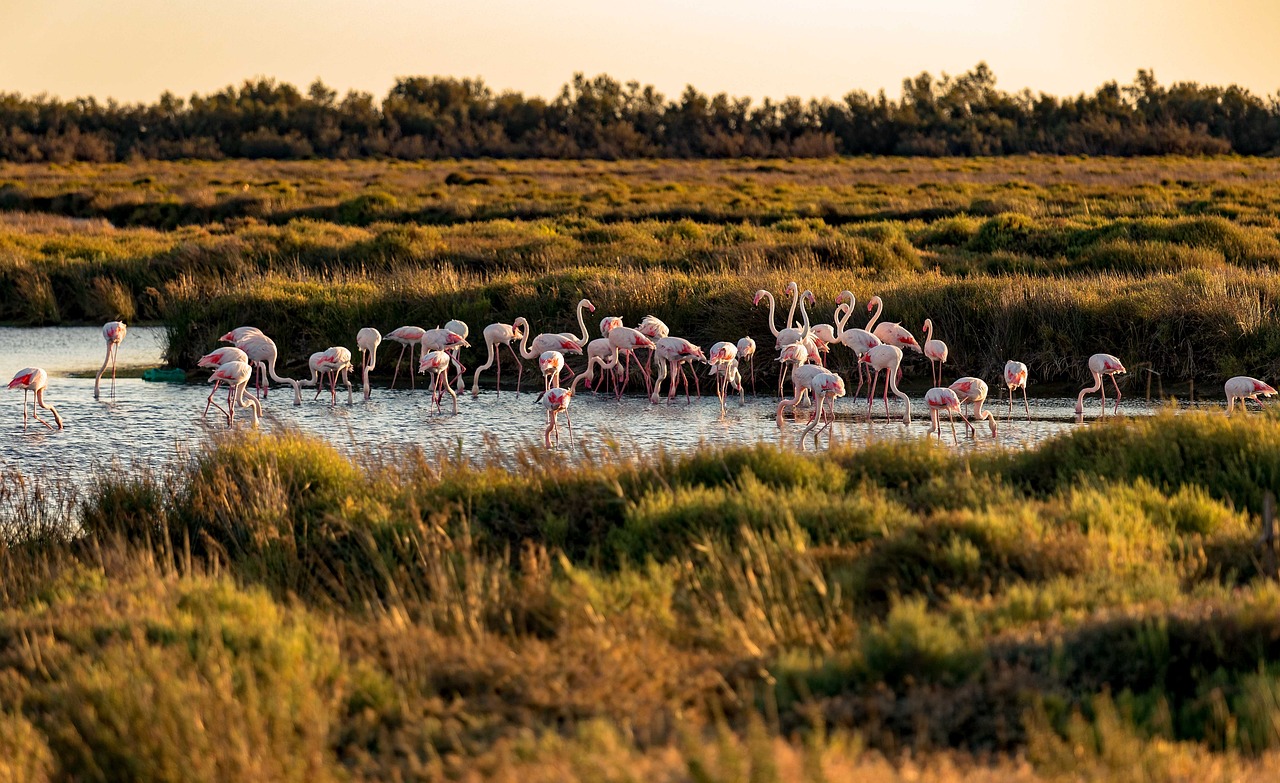
The Camargue Regional Nature Park is the wild, wind‑swept soul of southern France – a place where flamingos outnumber people at sunrise, white horses gallop through the surf, and salt pans glow pink under a huge Mediterranean sky. If Provence is all about hilltop villages and lavender, the Camargue is about space, light, and the subtle drama of wetlands and sea.
Spread between the two branches of the Rhône delta and the Mediterranean, the park is a mosaic of lagoons, rice paddies, reed beds, salt marshes and sandy beaches. It is one of Europe’s most important wetlands and a UNESCO Biosphere Reserve, home to more than 400 bird species and the iconic trio: flamingos, Camargue white horses, and black bulls.
I keep coming back because it never feels the same twice. In February, the mistral strips the sky clean, giving views that seem to stretch to North Africa. In May, rice paddies shimmer with new shoots and the first flamingo chicks appear. By late summer, the salt pans near Salin-de-Giraud blush an improbable pink. In autumn, migrating birds turn the sky into a moving tapestry.
For travelers planning a 3 day itinerary for Camargue Regional Nature Park or stretching to a 4 or 5 day itinerary, this guide offers a deeply practical, story‑driven look at the region: things to do in Camargue Regional Nature Park, best places to visit, local food, hidden gems, and cultural experiences that most day‑trippers miss.
Table of Contents
- Why Visit Camargue Regional Nature Park?
- Essential Overview of the Camargue
- Key Zones, Regions & Scenic Drives
- 15 Signature Trails, Viewpoints & Zones
- 3–5 Day Camargue Itineraries (With Personal Stories)
- Where to Eat & Drink in and around the Park
- Where to Stay: Mas, Cabins, Campgrounds & Towns
- After-Dark & Quiet Experiences
- Events & Festivals 2026–2027
- Day Trips & Nearby Attractions
- Cultural Etiquette & Local Customs
- Practical Travel Advice & Park Logistics
- Summary & Best Seasons to Visit
Essential Overview of the Camargue
Camargue Regional Nature Park (Parc naturel régional de Camargue) covers roughly 100,000 hectares in the Rhône delta, between Arles, Saintes‑Maries‑de‑la‑Mer, and Salin‑de‑Giraud. It’s not a fenced‑off national park but a lived‑in cultural landscape: rice farms, salt works, ranches (manades), villages, and protected reserves all interlacing.
Typical bases are:
- Arles – a Roman city on the park’s northern edge; best for culture, cafés, and easy day‑tripping.
- Saintes‑Maries‑de‑la‑Mer – whitewashed seaside town; beach access, horse riding, and pilgrim lore.
- Salin‑de‑Giraud – quiet, working town near pink salt pans and wild beaches.
- Aigues‑Mortes (technically in Petite Camargue, Gard) – medieval walled town and gateway to the western wetlands.
Unlike mountainous parks, Camargue’s drama is horizontal. Distances are deceptive; a “short” drive can take longer on small dykes and narrow roads, and the real joy is slowing down: watching light change over the étangs (lagoons), listening for bitterns in reed beds, and sharing a dawn beach with fishermen and riding schools.
Key Zones, Trail Systems & Regions Inside the Park
1. Étang de Vaccarès & Central Wetlands
This is the ecological heart of the park: a vast brackish lagoon ringed by reed beds and grazing pastures. It’s where I go when I want the archetypal Camargue landscape – low, watery horizons, bird silhouettes, and the gentle chaos of wind in reeds.
Most access is by small roads and marked viewpoints rather than long hikes; think short, flat walks and hide visits rather than summit trails.
2. Saintes‑Maries‑de‑la‑Mer & Eastern Beaches
The park’s main seaside town is ringed by beaches, marshes, and horse‑riding trails. It’s a good base if you’re focused on “classic” experiences – white horses, boat trips, bull games (course camarguaise), and family‑friendly beaches.
3. Salin‑de‑Giraud & the Pink Salt Pans
Across the Rhône from the main flow of tourists, Salin‑de‑Giraud feels more authentic and slightly rough‑edged in the best way. The salt pans here are otherworldly, especially in late summer when the brine turns neon pink from halophilic algae.
4. Western Camargue & Aigues‑Mortes
Technically part of “Petite Camargue” and the neighbouring Gard, this zone blends fortified medieval history with canals and wetlands. It’s ideal for scenic boat trips and visitors who prefer a more structured, town‑based stay.
5. The Dunes & Wild Beaches
South of Salin‑de‑Giraud and east of Saintes‑Maries‑de‑la‑Mer stretch long wild beaches – Plage de Piémanson, Plage de Beauduc – where the Camargue feels end‑of‑the‑world. They’re heaven for kite‑surfers, photographers, and anyone who likes big, empty horizons.
15 Signature Trails, Viewpoints & Zones (with Personal Notes)
Instead of high‑altitude treks, Camargue offers low, flat routes along dykes, beaches, and nature reserves. Each of these 15 zones can easily anchor half a day or more, and together they form the backbone of any travel guide for Camargue Regional Nature Park.
1. Parc Ornithologique de Pont de Gau
If you only have one afternoon and want guaranteed flamingos, Parc Ornithologique de Pont de Gau is your spot. It’s part sanctuary, part open‑air bird observatory, with a network of flat trails and hides wrapping around lagoons and reed beds.
I usually time my visits for late afternoon, when the light softens and flamingos gather in tighter groups. In January 2025, I watched a flock perform their “marching” courtship, all heads bobbing in unison, the whole marsh a frenzy of pink and reflected sky. Children nearby were whisper‑gasping; even after a dozen visits, so was I.
Practicalities: Just north of Saintes‑Maries‑de‑la‑Mer on the D570, with a big parking lot. Paths are mostly accessible for strollers and wheelchairs, though some dirt sections can be muddy after rain. Bring binoculars; rentals are available but often in demand in high season.
Family‑friendly? Very. Kids love the close‑up flamingos and herons, and there are benches and picnic areas.
Tip: In summer, the park sometimes offers evening opening hours; check the 2026 schedule, as sunset here is magical and far quieter than mid‑day.
2. Étang de Vaccarès Scenic Loop
Rather than a single trail, think of the Étang de Vaccarès as a circuit of viewpoints, short walks, and bird hides stitched together by small roads like the D37 and D36. I love doing this as a slow half‑day drive with frequent stops – a classic scenic drive in Camargue Regional Nature Park.
On a misty November morning in 2024, I drove the eastern shore, stopping at every lay‑by where reeds opened onto the lagoon. Flamingos fed in the distance, and occasional marsh harriers skimmed the surface. A small herdsman’s hut (cabanon) sat abandoned under a sky so big it felt theatrical.
Key stops: Mas du Méjan, La Capelière visitor centre (with a short interpretive trail and hides), and several unnamed viewpoints signed with small bird symbols.
Tip: Pack a picnic and refillable water; services are sparse, and that’s part of the charm.
3. La Capelière & Reserve Trails
La Capelière is the park’s main nature interpretation centre, on the eastern shore of Vaccarès. From the visitor centre, a short but wonderfully varied loop (about 2 km) leads through reeds, tamarisk groves, and boardwalks to hides overlooking small ponds.
In April 2025, I walked here just after a rainstorm. The scent of wet earth and wild thyme was intense, and the reeds were alive with unseen warblers. A local couple pointed out fresh boar tracks at the water’s edge – a reminder that the Camargue is wilder than it sometimes looks from the road.
Accessibility: Some sections of boardwalk are fine for strollers; others are narrow and muddy. Wear closed shoes you don’t mind getting dirty.
Best for: Birdwatchers, families who like short walks with lots of interpretive signage, and travelers interested in the ecology of the wetlands.
4. Beaches of Saintes‑Maries‑de‑la‑Mer
Right in front of Saintes‑Maries‑de‑la‑Mer, a string of beaches runs east and west, starting with family‑friendly stretches backed by cafés and gradually becoming emptier as you walk. These aren’t “trails” in the alpine sense, but a couple of hours of beach walking here will tell you a lot about the Camargue’s relationship with the sea.
One October, I started at the western end after a late breakfast, walking until the sounds of town faded. Riders on white horses appeared as silhouettes on the dunes, and a fisherman showed me a bucket of glistening tellines (tiny clams) he’d just raked from the shallows.
Family‑friendly? Absolutely. Gentle slope, lifeguards in high season, and ice cream never far away.
Tip: For a quieter, more romantic sunset, head east along the promenade and keep walking beyond the last car park; you’ll quickly leave 90% of the crowds behind.
5. Plage de Piémanson
Piémanson is one of the great wild beaches of France: a wide, dune‑backed sweep of sand south of Salin‑de‑Giraud. Reached by a long straight road past salt pans and industrial‑looking structures, it feels almost like arriving at the edge of the world.
In late September 2024, I parked at the end of the road and walked east for an hour without seeing anyone but a lone kite‑surfer. The wind carved ripples in the sand; the only sounds were the surf and the occasional rattle of rigging.
Access: From Salin‑de‑Giraud, follow signs to Plage de Piémanson. In high season, check 2026 regulations – past summers have seen changing rules on overnight parking and campervans as authorities try to protect the dunes.
Best for: Long walks, wild camping‑style picnics (daytime only), and photographers chasing big skies and minimalism.
6. Plage de Beauduc
Beauduc is a legend among kitesurfers and van‑lifers: a remote, often windy beach reached via a rough track. It’s less regulated than Piémanson, though rules tighten a little every year to protect the fragile environment.
My first trip here was in 2017, bouncing along a rutted road and wondering if I’d made a mistake. Then the track opened onto a vast crescent of sand dotted with colorful kites. I’ve been back several times, always with a high‑clearance car and a flexible schedule. It’s not for everyone – there are no services, and in storms the road can flood – but if you crave off‑grid beach time, this is your spot.
Tip: Check recent road conditions locally; in 2026 there are ongoing discussions about further restricting vehicle access to protect dunes. Bring everything you need and pack out absolutely everything.
7. Digue à la Mer (Sea Dyke Trail)
The Digue à la Mer is one of my favourite “trails” in the Camargue: a long dyke between sea and lagoons, stretching from Saintes‑Maries‑de‑la‑Mer towards the mouth of the Rhône. It’s perfect for cycling or long, contemplative walks.
In May 2025, I rented a bike in Saintes‑Maries and set out early. To my left: open Mediterranean, dotted with riders on horses in the shallows. To my right: étangs shimmering with flamingos. The surface is mostly packed dirt and gravel – fine for hybrid bikes, a bit rough for skinny road tires.
Best sections: For a taster, ride or walk 5–8 km from Saintes‑Maries and back. For a full‑day adventure, continue further, but note that shade is almost non‑existent.
Tip: Go early in summer to avoid both heat and wind, and bring plenty of water; there are no cafés once you leave town.
8. Domaine de la Palissade
East of the Rhône, near Salin‑de‑Giraud, Domaine de la Palissade offers a network of short signed trails through dunes, lagoons, and tamarisk scrub. Managed by the Conservatoire du Littoral, it feels wilder and less manicured than Pont de Gau.
I often recommend Palissade to visitors staying in Arles or Salin who want a half‑day of nature without driving all the way to Saintes‑Maries. In March 2025, I walked the longest loop (around 7 km) and didn’t meet a soul until I reached a hide overlooking a shallow étang full of shelducks and avocets.
Best for: Birders, solitude seekers, and anyone curious about the transition from river to sea.
9. Marais du Vigueirat
On the northern fringe of the park, near the junction of the Rhône and the canal, Marais du Vigueirat is a rich wetland reserve offering guided walks, horseback outings, and a family‑friendly discovery trail.
I first visited on a hot July day when the rest of the region felt parched. Under the shade of tall reeds and poplars, the air was cooler, filled with frogs’ croaks and dragonfly buzz. A local guide pointed out beaver‑like coypu (ragondin) and explained the delicate water management that keeps this mosaic of habitats alive.
Tip: Book guided visits in advance in 2026 high season – especially evening walks, which are superb for wildlife and cooler temperatures.
10. Aigues‑Mortes Ramparts & Salt Marsh Views
Though technically outside the core park in Petite Camargue, Aigues‑Mortes is an essential part of many visitors’ mental picture of the Camargue: medieval walls rising above pink‑tinged salt pans and canals.
Walking the ramparts on a clear winter day is one of my favourite simple pleasures. On one side: terracotta roofs and church spires; on the other: rectilinear salt pans changing colour with the angle of the sun. In 2023, a new set of interpretive panels went up explaining the Crusader history of the town – in 2026 they’re planning more digital content, but the view itself is timeless.
Best for: History buffs, photographers, and visitors who want to blend culture with light wetland exploration.
11. Salin‑de‑Giraud Salt Roads & Viewpoints
The approach to Salin‑de‑Giraud from the north is a minor adventure in itself: you cross the Rhône on a small ferry (Bac de Barcarin), then drive past tall white pyramids of salt and narrow canals. Short pull‑outs along the way reveal surreal perspectives on the salt basins.
I like to stop just before sunset, when the basins turn reflective and the salt piles glow gold. It’s an industrial landscape, yes, but one so integrated into the Camargue’s history that it feels almost natural now.
Tip: In 2026, some areas may have restricted access for safety; obey signage and never walk onto salt basins unless on an organized tour.
12. Mas de la Cure & Musée de la Camargue Area
On the road between Arles and Saintes‑Maries, Musée de la Camargue at Mas de la Cure is the cultural heart of the park. Surrounding the museum, a short “discovery path” winds through rice paddies, old irrigation channels, and historic agricultural buildings.
On a breezy afternoon in 2025, I followed this path after exploring the museum’s exhibits on manades, rice farming, and the Roma pilgrimage. A series of art installations – part of an ongoing contemporary art programme – punctuated the landscape, inviting you to sit, listen, and pay attention to small details: water trickling, birds calling, the distant rumble of a tractor.
Best for: Travelers interested in cultural experiences in Camargue Regional Nature Park, and those seeking context beyond the postcard images.
13. Canal du Rhône à Sète Towpath
Running west from the Rhône towards Sète, this canal skirts the northern edge of the wetlands. Short stretches of towpath make pleasant, shaded walks or bike rides. Between Gallician and Aigues‑Mortes, the canal passes vineyards, marshes, and small fishing huts.
I once cycled a stretch in late August, grapes heavy on the vines, dragonflies patrolling the canal. It’s less dramatic than the open wetlands, but it reveals another facet of Camargue life: the slow rhythm of boats gliding past, anglers chatting, families picnicking under plane trees.
Tip: For families, consider renting bikes in Aigues‑Mortes and doing a short out‑and‑back; towpaths are generally flat and easy.
14. Horseback Trails around Saintes‑Maries‑de‑la‑Mer
Riding a white Camargue horse through shallow lagoons is perhaps the most iconic activity here. Numerous riding schools (manades and centres équestres) around Saintes‑Maries offer 1–3 hour rides into marshes and along the sea dyke.
I’ve done several over the years, including a dawn ride in 2022 when we waded through knee‑deep water as flocks of flamingos lifted off ahead of us. The guides were local gardians (Camargue cowboys), proud of their horses and heritage, pointing out bull herds and explaining the subtleties of reading the water level against the reeds.
Family‑friendly? Many centres offer pony rides for younger children; check age limits. Helmets are usually provided.
Tip: For a more intimate experience, avoid the busiest beachfront stables and choose a manade slightly inland, even if it’s a few minutes’ drive.
15. Manades & Bull Pasture Visits
Camargue bulls (taureaux) and the traditions surrounding them are as central to local identity as the horses and flamingos. Manades – ranches where bulls and horses are raised – offer visits ranging from short pasture tours in tractor‑pulled trailers to full half‑day experiences with meals and demonstrations.
One of my most memorable mornings in the Camargue was at a small family‑run manade near Le Sambuc. We bumped out into the pastures while the gardian explained how they select animals for the course camarguaise – a non‑lethal bull game where agile men try to snatch rosettes from the bull’s horns. Later we watched a working demonstration in a small arena, then shared a lunch of gardianne (bull stew) at long communal tables.
Tip: Book visits directly with the manade when possible; many are adding English‑language tours in 2026, especially in peak season weekends.
Itineraries: 3–5 Days in Camargue Regional Nature Park
These itineraries are based on my own recent trips, adapted for different trip lengths. Whether you’re crafting a 3 day itinerary for Camargue Regional Nature Park or stretching to a 5 days in Camargue Regional Nature Park deep dive, you can follow them closely or treat them as a flexible framework.
3 Day Itinerary for Camargue Regional Nature Park
This 3‑day plan focuses on the must‑see attractions in Camargue Regional Nature Park, mixing birds, beaches, and culture. I usually suggest basing in Arles (for evenings) or Saintes‑Maries‑de‑la‑Mer (for immersion).
Day 1 – Arles to the Heart of the Wetlands
I like to arrive in Arles the night before, so I can have coffee under the plane trees at dawn and then head south as the light warms. On my last 3‑day loop in 2025, I left Arles around 9 a.m., windows down, the smell of brine and hay slowly replacing city dust.
Morning: Musée de la Camargue & Discovery Path
Drive the D570 toward Saintes‑Maries and stop at Musée de la Camargue. Spend 60–90 minutes with the exhibits – rice, salt, manades, Roma pilgrimage – then walk the short loop through surrounding fields. It’s the best crash‑course in the region’s human and natural history.
On a May morning, dragonflies flicker over irrigation channels, and you can often see white horses grazing in the distance. Kids often enjoy the old agricultural machinery and the occasional art installations scattered outside.
Lunch: Picnic by Étang de Vaccarès
Continue south, stopping at a small épicerie in Le Sambuc for fresh bread, cheese, and fruit (there’s also a simple café if you prefer a sit‑down meal). Then detour east towards La Capelière. After exploring the visitor centre and short trails, find a signed viewpoint over Étang de Vaccarès and picnic with birds wheeling overhead.
Afternoon: Pont de Gau Flamingos
Check into your lodging in Saintes‑Maries‑de‑la‑Mer (or nearby mas), then head to Parc Ornithologique de Pont de Gau for the late‑afternoon light. Plan 2–3 hours to wander the loop; even casual birdwatchers are usually enthralled. On my last visit, I ended up lingering until closing time, watching egrets backlit in the reeds.
Evening: Stroll & Seafood in Saintes‑Maries
Return to town, climb up to the roof of the church of Notre‑Dame‑de‑la‑Mer for sunset views over the town and lagoons, then settle into a terrace for dinner – perhaps grilled tellines or moules marinières. Avoid the most aggressively touristy spots right on the main square; a block inland often yields better quality and calmer service.
Day 2 – Horses, Sea Dyke, and Salt Pans
Morning: Horseback Ride along the Digue à la Mer
Book a 2‑hour dawn or early‑morning ride with a reputable stable. I favour slightly inland manades that have access to marsh trails ending at the sea dyke – the landscape feels less crowded than the beachfront rides.
Expect to wade through shallow water, pass bull pastures, and see flamingos lifting off in the distance. Even if you’re a beginner, Camargue horses are typically calm; just be honest about your level when booking.
Late Morning: Walk or Cycle Part of the Dyke
After the ride, rent a bike in Saintes‑Maries or simply walk a section of the Digue à la Mer. The juxtaposition of open sea on one side and lagoons on the other is uniquely Camarguais.
Lunch: Beachfront or Picnic
Grab a casual lunch – pizza, salads, or a plat du jour – at a beachfront café, or pick up picnic supplies to enjoy on a quieter stretch of sand east of town.
Afternoon: Drive to Salin‑de‑Giraud via Bac de Barcarin
In mid‑afternoon, drive east to Salin‑de‑Giraud, crossing the Rhône on the small car ferry at Barcarin. Kids love the short crossing; adults enjoy the change of perspective. Once in Salin, drive the salt roads (respecting signs) and stop at safe pull‑outs to photograph the salt piles and, in late summer, pinkish basins.
Evening: Sunset at Plage de Piémanson
Continue to Plage de Piémanson for a long walk and sunset. The wind can be intense; bring a windbreaker even in summer. On my last visit, a group of local friends set up a simple apéro – olives, bread, rosé – and insisted I have a glass. There are worse ways to watch the sun drop behind the salt works.
You can either stay the night in a guesthouse near Salin‑de‑Giraud or drive back to Saintes‑Maries (around an hour including the ferry wait).
Day 3 – Aigues‑Mortes and Petite Camargue
Morning: Aigues‑Mortes Ramparts
Drive west to Aigues‑Mortes (about 45–60 minutes from Saintes‑Maries). Explore the old town, then walk the ramparts for sweeping views over canals and salt pans. If you’re interested in Crusader history, allow at least 90 minutes; if you’re mostly here for the views and photos, an hour might suffice.
Lunch: Local Fare in Aigues‑Mortes
Choose one of the restaurants just off the main square – look for menus featuring local rice and seafood without laminated “tourist menu” vibes. I’ve had excellent brandade de morue (salt cod purée) here, though it’s rich in the summer heat.
Afternoon: Canal Walk or Boat Trip
Depending on your energy, either:
- Take a short boat trip on the canals and Petite Camargue, which usually includes commentary on local flora and fauna.
- Or walk/cycle a short stretch of the Canal du Rhône à Sète towpath for a gentle, shady afternoon.
Evening: Return & Farewell Dinner
Drive back to your base in Arles or Saintes‑Maries, stopping at roadside viewpoints if light and time allow. For your final dinner, splurge a little on a more refined restaurant that highlights local food in Camargue Regional Nature Park – rice dishes, bull meat, or creative seafood.
This 3‑day itinerary hits the best places to visit in Camargue Regional Nature Park while leaving space for serendipity – a sudden flock of birds, a roadside stand selling fresh melons, a village fête you didn’t know was happening.
4 Day Itinerary for Camargue Regional Nature Park
With 4 days in Camargue Regional Nature Park, you can slow down and dig deeper into the wetlands. I like to add an extra day focused on reserves and quieter corners.
Day 1–2 – As per 3‑Day Itinerary
Follow Days 1 and 2 from the 3‑day plan, basing in Saintes‑Maries or Arles.
Day 3 – Marais du Vigueirat & Northern Wetlands
Morning: Guided Walk at Marais du Vigueirat
Drive to Marais du Vigueirat, north‑east of Arles. I recommend joining a morning guided walk; English‑language tours are increasingly common in summer 2026, but check ahead. Guides help you spot shy species – purple herons, bitterns, sometimes even European pond turtles.
Lunch: On‑Site Café or Picnic
There’s a small café serving simple meals and drinks; otherwise, pack a picnic to enjoy in the designated area. This is a lovely, low‑key family day: kids enjoy the boardwalks and spotting frogs.
Afternoon: Free Time in Arles
Return to Arles mid‑afternoon. Use the rest of the day to wander the Roman amphitheatre, Van Gogh‑related spots, or simply sit at a café. The contrast between the gritty wetlands and Arles’ history is one of my favourite things about using the city as a base.
Day 4 – Domaine de la Palissade & Beauduc (Weather‑Dependent)
Morning: Domaine de la Palissade
Drive to Domaine de la Palissade near Salin‑de‑Giraud. Walk the longest interpretive loop; birdlife is excellent in spring and autumn, and even in summer, early mornings can be quite active. The views across the Rhône’s final meanders are quietly spectacular.
Lunch: Salin‑de‑Giraud
Have lunch in Salin – there are a handful of unfancy but solid local restaurants where workers from the salt works eat. Menus are short but honest: grilled fish, steaks, and daily specials.
Afternoon: Beauduc Adventure (Optional)
If the weather is stable and you’re comfortable with rough tracks, venture to Plage de Beauduc. Otherwise, return to Piémanson or explore more of the salt roads and small roads along the Rhône.
Evening: Quiet Sunset & Stargazing
Stay in or near Salin‑de‑Giraud for the night and, if skies are clear, step outside after dark. Away from major towns, the Camargue can offer surprisingly good stargazing, especially in shoulder seasons.
5 Day Itinerary for Camargue Regional Nature Park
A 5 day itinerary for Camargue Regional Nature Park lets you blend nature, culture, and slower days. This is what I’d suggest for photographers, birders, or couples looking for a romantic yet unhurried escape.
Day 1–3 – Core Highlights
Use the 3‑day itinerary as your foundation, but move at your own pace. For example, spend more time at Pont de Gau if you’re a photographer, or linger longer on the sea dyke if you’re a cyclist.
Day 4 – Manade Visit & Cultural Immersion
Morning: Manade Pasture Visit
Book a visit at a manade near Le Sambuc or Méjanes. Most visits include a tractor‑pulled trailer ride out to the bull pastures, explanations (often bilingual in high season), and sometimes a short demonstration of traditional riding skills.
On a cool April morning in 2025, I joined a small group at Manade X (names change; ask your host for current recommendations). The gardian talked about each bull as if they were old friends – or rivals. It was as much about storytelling as animals.
Lunch: Gardianne & Rice
Many manades offer lunch featuring gardianne de taureau (slow‑cooked bull stew) served with Camargue rice. It’s rich, peppery, and deeply satisfying. Vegetarian options are improving slowly; confirm when booking if you have dietary needs.
Afternoon: Free Time – Photography, Sketching, or Napping
Use the afternoon to return to a place that enchanted you earlier in the trip: maybe a quieter Vaccarès viewpoint, or the discovery trail at La Capelière. On longer stays, I love devoting a few hours just to sitting with a notebook or camera, letting the light shift.
Day 5 – Petite Camargue or Arles Deep Dive
You have two good options for your final day:
- Option 1: Petite Camargue & Aigues‑Mortes – Explore more of the canals, maybe rent bikes along the Canal du Rhône à Sète, visit nearby villages like Gallician or Le Cailar, and end with a drink on Aigues‑Mortes’ square as the sun hits the stone walls.
- Option 2: Arles in Depth – Stay in Arles, visit museums or galleries, perhaps catch a photography exhibition or bull game in the arena (non‑lethal course camarguaise is common in spring and summer weekends).
Either way, finish with a dinner that feels like a summary: Camargue rice, a glass of local rosé, maybe a shared tarte aux pommes or crème brûlée. Talk about which wetland you’d return to first; for me, it’s always a tie between Pont de Gau and some quiet, unnamed lay‑by on the east side of Vaccarès.
Where to Eat & Drink in and around Camargue Regional Nature Park
In‑Park & Near‑Park Options
The Camargue doesn’t have many formal in‑park restaurants in the national‑park sense, but plenty of mas (farmhouses), village bistros, and seasonal beach cafés. Highlights include:
- Saintes‑Maries‑de‑la‑Mer – Dozens of places offer seafood and bull dishes. I’ve had consistently good meals just off the seafront: look for chalkboard menus changing daily and locals at the bar.
- Le Sambuc & Méjanes – Smaller, more rustic options; perfect after a manade visit or Vaccarès loop.
- Salin‑de‑Giraud – Honest worker cafés; don’t come for Instagram, come for hearty plates and fair prices.
What to Eat: Local Specialities
- Camargue Rice – Red, black, and brown varieties; often served as a side or in hearty salads.
- Gardianne de Taureau – Slow‑braised bull stew in red wine, with olives and herbs; the quintessential local dish.
- Tellines – Tiny wedge clams, usually sautéed with garlic and parsley; wonderful with a glass of white.
- Bull Sausage & Charcuterie – Often part of apéro platters.
- Seafood Platters – Oysters, mussels, prawns, often from nearby Mediterranean farms.
Saving Money on Food
For budget travelers, the trick is to mix one sit‑down meal a day with picnics. Supermarkets in Arles, Saintes‑Maries, and Aigues‑Mortes sell excellent bread, cheese, fruit, and prepared salads. Picnic at viewpoints or designated areas near La Capelière, Musée de la Camargue, or on quieter beaches (always pack out trash).
Where to Stay: Mas, Cabins, Campgrounds & Towns
Gateway Towns
- Arles – Best for culture, evening life, and access by train. Great base if you’re combining Camargue with Provence.
- Saintes‑Maries‑de‑la‑Mer – Best for beach access and “immersive” Camargue ambience. Good mix of hotels, B&Bs, and apartments.
- Salin‑de‑Giraud – Simple, offbeat base; ideal for exploring wild beaches and salt pans.
- Aigues‑Mortes – Atmospheric walled town; good if you’re more focused on Petite Camargue and canals.
Types of Accommodation
- Mas & Rural Guesthouses – Farmhouses converted into guest accommodations; often the most atmospheric choice. Many include breakfast and sometimes dinner.
- Campgrounds – Several around Saintes‑Maries and Aigues‑Mortes, from simple to resort‑like. Great for families.
- Self‑Catering Gîtes – Apartments or small houses, ideal for longer stays and self‑catering picnics.
My Strategy
For trips of 4–5 days, I often split my stay: 2–3 nights in Arles for culture and restaurants, then 2–3 nights in or near Saintes‑Maries or Salin‑de‑Giraud for dawn and dusk in the wetlands without long drives.
After-Dark & Quiet Experiences in the Camargue
Stargazing & Night Skies
While not a formal dark‑sky reserve, the Camargue’s low population density means impressive night skies away from towns. My favourite stargazing spots are near Salin‑de‑Giraud (on safe, legal pull‑outs away from dunes) and some quiet roads east of Le Sambuc. In autumn, the Milky Way can be surprisingly vivid.
Sunrise & Sunset
- Sunrise – Beaches east of Saintes‑Maries, or viewpoints along the eastern shore of Vaccarès. Flamingos are often most active at dawn.
- Sunset – Church rooftop in Saintes‑Maries, salt roads near Salin‑de‑Giraud, or Aigues‑Mortes ramparts (check opening hours).
Ranger Talks & Night Walks
The park and partner organizations sometimes offer evening talks and guided night walks in summer, focusing on owls, bats, and nocturnal wetland life. For 2026, keep an eye on the Parc naturel régional de Camargue website and Marais du Vigueirat calendar; they’ve been expanding their night programmes.
Events & Festivals 2026–2027
Religious & Cultural Festivals
- Gipsy Pilgrimage, Saintes‑Maries‑de‑la‑Mer (May 24–26, 2026 & 2027) – Thousands of Roma from across Europe gather to venerate Saint Sarah and the Maries. The atmosphere is powerful, intense, and crowded; accommodation must be booked many months in advance.
- Autumn Pilgrimage (October 2026 & 2027) – Smaller but still significant; a good way to experience the spiritual side of the town with slightly fewer crowds.
Fêtes Votives & Bull Games
Many Camargue towns host fêtes votives between spring and early autumn: multi‑day celebrations with music, bull runs (abrivado), and non‑lethal bull games (course camarguaise). Arles, Saintes‑Maries‑de‑la‑Mer, and Aigues‑Mortes all have busy calendars for 2026–27.
Arts & Photography
- Rencontres d’Arles (Summer 2026 & 2027) – Major photography festival in Arles. Many photographers base in Arles, then build side trips to the Camargue for landscape and wildlife shoots.
Day Trips & Nearby Attractions
Arles
Roman amphitheatre, Roman theatre, cloisters, and Van Gogh‑related sites. A perfect rainy‑day option or cultural counterpoint to the wetlands.
Nîmes & Pont du Gard
About 1–1.5 hours from Arles by car: spectacular Roman remains and an aqueduct. Easy to combine with an evening in Arles if you’re based there.
Avignon & Provence Villages
Further north, but still reachable on a long day trip. Good if you’re combining the Camargue with lavender and vineyards in a broader southern France itinerary.
Cultural Etiquette & Local Customs
Respect for Nature
Camargue locals are deeply proud of their wetlands. The main etiquette rule is simple: don’t disturb wildlife or trample fragile zones. Stay on marked paths and respect bird‑nesting areas, especially in spring.
Manade & Bull Culture
Bull games here are different from Spanish bullfighting; the course camarguaise is non‑lethal, and bulls are often local heroes with names and followings. Even if you’re personally uneasy about bull sports, respect the cultural significance and express any concerns gently.
Language & Politeness
Basic French greetings go a long way: “Bonjour” when entering shops or restaurants, “Merci, au revoir” when leaving. In rural areas, English is less common, but people are generally patient if you try a few words of French.
Photography Etiquette
Always ask permission before photographing people closely, especially gardians at work, Roma pilgrims, or local events. Many are proud to be photographed but want to be asked.
Practical Travel Advice & Park Logistics
Getting There & Around
- By Air – Nearest airports: Marseille (MRS), Montpellier (MPL), Nîmes (FNI). From there, rent a car or take trains to Arles.
- By Train – Arles is well‑served by regional trains. From Arles, buses run to Saintes‑Maries in season, but schedules are limited.
- By Car – A car is the most practical way to explore the park, especially for reaching wild beaches and scattered reserves.
Car Rental & Driving
All major rental agencies operate at Marseille and Montpellier airports and in some city centres. A foreign driver’s licence is generally accepted; some non‑EU licences may require an International Driving Permit (IDP), so check before travel.
Roads in the park are mostly flat and easy, but can be narrow and occasionally flooded after storms. Drive slowly at dusk and dawn: wildlife and free‑roaming horses can appear suddenly.
Public Transport
There are regional buses between Arles and Saintes‑Maries‑de‑la‑Mer, and between Arles and some villages, but frequencies are low, especially outside summer. Without a car, choose a base with multiple tour options (Saintes‑Maries or Arles) and be prepared for some taxi use.
SIM Cards & Connectivity
France’s main providers (Orange, SFR, Bouygues, Free) all have good coverage in towns; signal can drop in remote wetland areas, especially near Beauduc and some Vaccarès viewpoints.
- eSIMs – Easy to purchase online before arrival.
- Physical SIMs – Available at airports, phone shops, and major supermarkets.
Visas & Entry Requirements
France is part of the Schengen Area. Many nationalities can visit visa‑free for up to 90 days in any 180‑day period; others need a Schengen visa. Always check up‑to‑date requirements for 2026 with your local French consulate.
Park Access, Fees & Permits
Camargue Regional Nature Park itself has no single entrance gate or fee. However, individual sites such as Parc Ornithologique de Pont de Gau, Musée de la Camargue, Marais du Vigueirat, and Domaine de la Palissade charge modest entry fees or guided tour fees.
No special backcountry permits are required for day visits, but some sensitive areas are only accessible on guided tours.
Seasonal Road & Trail Closures
Access to some beaches (Piémanson, Beauduc) and tracks can change yearly due to erosion, conservation measures, or storms. Always check local signage and, if in doubt, ask at visitor centres or your accommodation for the latest 2026 updates.
Weather & Best Seasons
- Spring (March–May) – Ideal for birdwatching, mild temperatures, and wildflowers. Some trails can be muddy.
- Summer (June–August) – Hot, dry, and busier, especially in Saintes‑Maries and Aigues‑Mortes. Early mornings and evenings are best for outdoor activities.
- Autumn (September–November) – Still warm early on, great light, fewer crowds, and excellent bird migration. Occasional heavy rains.
- Winter (December–February) – Quiet, starkly beautiful, cold mistral winds possible. Many tourist services reduce hours, but birding can be excellent.
Wildlife Safety & Environment
No large predators here, but some considerations:
- Mosquitoes – Intense in summer and after rains. Bring strong repellent, long sleeves, and consider light trousers at dawn/dusk.
- Snakes – Mostly shy; watch where you step in tall grass and never try to handle wildlife.
- Horses & Bulls – Admire from a safe distance unless you are with a guide; never enter pastures uninvited.
Leave No Trace in the Camargue
- Stay on marked trails and dykes to protect fragile soils and nesting sites.
- Pack out all trash, including cigarette butts.
- Never feed wildlife.
- Respect seasonal restrictions on beach driving and overnight parking.
What to Pack
- Light, breathable clothing plus a windbreaker (mistral can be fierce).
- Sun hat, sunglasses, high‑SPF sunscreen.
- Mosquito repellent and after‑bite cream.
- Binoculars and/or telephoto lens for birding.
- Closed‑toe shoes that can get muddy.
- Reusable water bottle; water fountains are rare in wild areas.
Front‑Country vs Backcountry Experiences
The Camargue is mostly front‑country: roads, short trails, and viewpoints. “Backcountry” here means more remote dykes, wild beaches, and reserves accessible by rough tracks or boat. You won’t be days from help, but you can easily be far from shops or cell signal; plan accordingly with water, snacks, and a basic map or offline app.
Money‑Saving Tips
- Base in Arles or Aigues‑Mortes for better accommodation deals, day‑tripping into the park.
- Picnic for lunch, eat main meals at lunchtime when menus are cheaper.
- Choose a few paid attractions (Pont de Gau, one reserve, one museum) and balance with free scenic drives and beaches.
- Travel in shoulder seasons (April–May, late September–October) for better prices and cooler weather.
Summary & Final Recommendations
Camargue Regional Nature Park is not about ticking off famous peaks; it’s about immersing yourself in a living landscape of water, light, and tradition. The things to do in Camargue Regional Nature Park – from watching flamingos at Pont de Gau to horseback rides along the sea dyke, from wandering Aigues‑Mortes ramparts to sharing stew at a manade – are best enjoyed slowly.
For most travelers, the sweet spot is 3–5 days in Camargue Regional Nature Park, split between culture (Arles, Aigues‑Mortes) and nature (Saintes‑Maries, Salin‑de‑Giraud, Vaccarès). Families will love the beaches and easy wildlife viewing; couples will find romance in sunrise rides and sunset salt pans; photographers and birders will be spoiled in every season.
Best seasons overall:
- Spring (April–May) – For birdlife, mild temperatures, and fresh greenery.
- Autumn (late September–October) – For golden light, migration, and calmer beaches.
Summer adds heat, crowds, and mosquitoes, but also festival energy and warm evenings; winter offers solitude and stark beauty. Whichever season you choose, come prepared to slow down, look closely, and let the Camargue’s quiet drama seep in. It’s a place that reveals itself layer by layer – and one that, in my experience, keeps calling you back long after you’ve left.