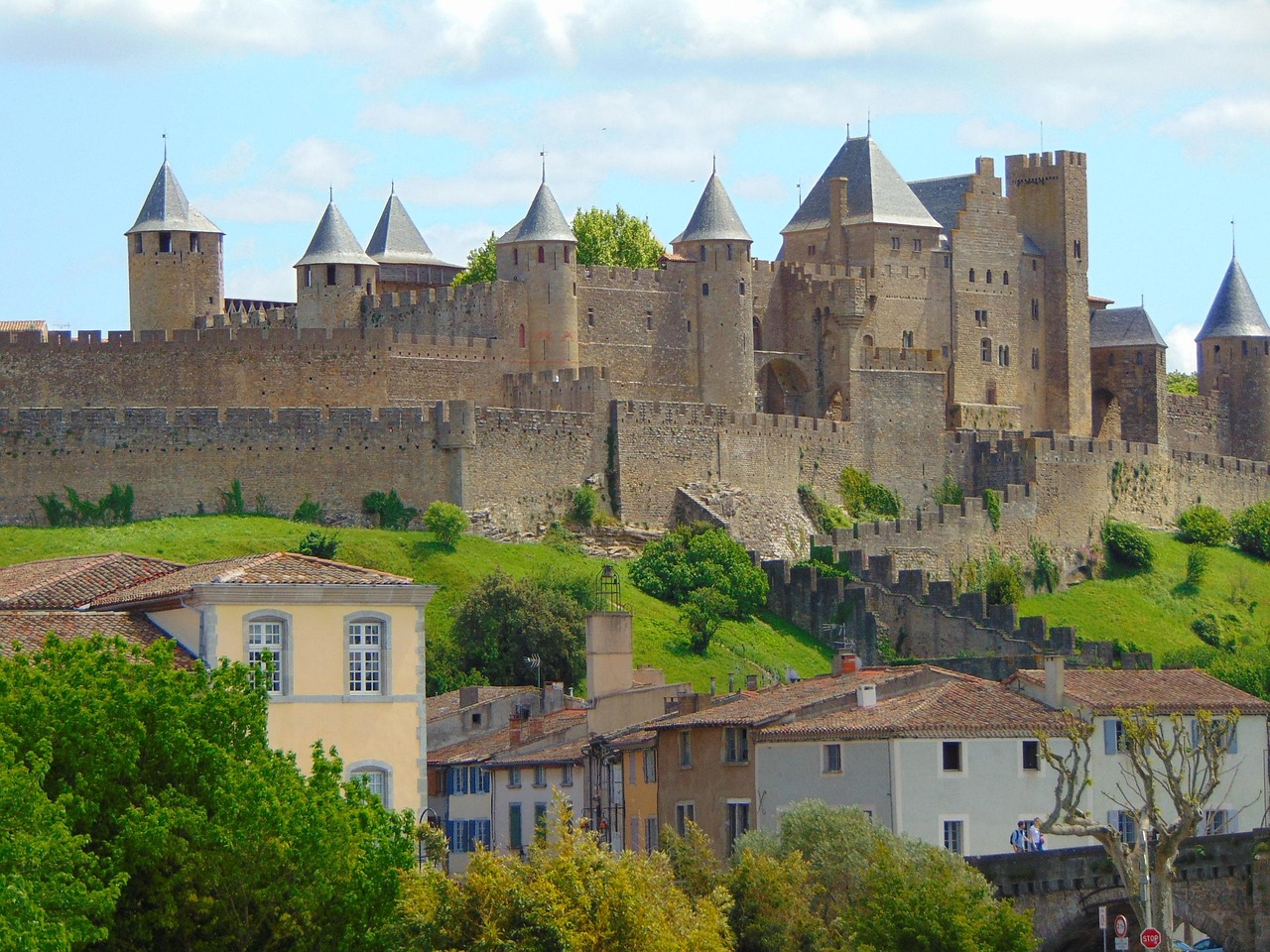
Why Visit Carcassonne Medieval City in 2026
Carcassonne Medieval City is, at heart, an extraordinary survivor: a fortified hilltop town whose bones stretch back to the Romans, reshaped by Visigoths, Crusaders, and 19th‑century romantics. It’s a place where history is not just in museums but under your feet and over your head as you walk along the ramparts, past arrow slits and machicolations, listening to swallows scream in the summer air.
In 2026, Carcassonne is more interesting than ever. After the quieter pandemic years, tourism has roared back, but so have local initiatives: more small, family-run restaurants inside the walls, better-curated historical exhibitions at the Château Comtal, and excellent evening events that balance spectacle with authenticity. The city is also refining pedestrian flows and accessibility along the ramparts, making it a better experience if you know how to time your visit.
You should consider Carcassonne Medieval City for your next trip if you’re looking for:
- A dramatic, photogenic medieval citadel unlike almost anything else in Europe, with fortifications you can actually walk along.
- Flexible stays: a perfect 2 day itinerary for Carcassonne Medieval City if you’re short on time, or a leisurely 3 day itinerary for Carcassonne Medieval City or 4 days in Carcassonne Medieval City if you want to explore beyond the postcard views.
- Rich cultural experiences: from Gothic choral music in the basilica to medieval reenactments, wine tastings, and local markets down in the Bastide Saint‑Louis.
- Local food in Carcassonne Medieval City: hearty cassoulet, duck confit, slow-cooked lamb, and excellent regional wines served in stone-vaulted rooms and vine-draped courtyards.
- Family-friendly adventures: knights, castles, ramparts, and hands-on workshops that genuinely engage kids.
- Romantic evenings: strolling through lantern-lit alleys, dining by candlelight with the ramparts above you, or watching the city’s stone walls glow in the dark.
Carcassonne can be as touristy or as quietly atmospheric as you let it be. Come in August at midday and rush around with the crowds; or slip in on a misty March morning and have whole stretches of wall almost to yourself. This guide is designed to help you find the latter experience, even in high season.
Table of Contents
- Understanding the Layout & History of Carcassonne Medieval City
- Suggested Itineraries (2–4 Days in Carcassonne Medieval City)
- The 12 Key Quarters, Monuments & Sites – Deep Dives
- Traditional Cuisine & Where to Eat in Carcassonne Medieval City
- Evenings in Carcassonne Medieval City
- Events & Festivals in 2026–2027
- Day Trips & Nearby Attractions
- Cultural Etiquette & Local Customs
- Practical Travel Advice & Hidden Tips
- Summary & Best Seasons to Visit
Understanding Carcassonne Medieval City’s Layout & Layers
The Cité sits on a hill above the modern “lower town” (the Bastide Saint‑Louis). Its famous double curtain walls wrap around a compact maze of lanes, punctuated by the Château Comtal and the Basilique Saint‑Nazaire. To really appreciate it, you need to think in layers:
- Roman foundations: lower courses of stone and some of the inner wall line go back to the 3rd–4th centuries CE.
- Medieval fortress: most of what you see – towers, battlements, barbicans – is 12th–14th century, expanded during the Albigensian Crusade and after.
- 19th‑century restoration: architect Viollet‑le‑Duc “reimagined” the Cité in the 1800s, adding the conical slate-roofed towers and some romantic flourishes we now consider iconic.
On my last winter visit in 2026, I walked the walls with a local guide who likes to tap his cane on different stones: Roman, Visigothic, medieval, 19th century. It’s like listening to a city speak four different dialects at once.
Practically speaking, the Cité is organized around:
- The main entrance at Porte Narbonnaise (east), where almost everyone arrives.
- The Château Comtal in the center-north, controlling the most strategic section of the walls.
- The Basilique Saint‑Nazaire in the southwest, spiritual and acoustic heart of the hill.
- The quieter western and southern walls, which I recommend for anyone craving a break from crowds.
Below, I’ll take you through itineraries that move through the Cité in a logical order, then deep dives into at least twelve main quarters and monuments.
Suggested Itineraries: 2–4 Days in Carcassonne Medieval City
These itineraries are based on how I actually host friends and family when they visit. Treat them as flexible scaffolding rather than rigid schedules. The idea is to mix must-see attractions in Carcassonne Medieval City with genuine local corners and time to simply wander.
2 Day Itinerary for Carcassonne Medieval City
If you only have 2 days in Carcassonne Medieval City, you can still experience the essential ramparts, the château, the basilica, and a taste of local food and evening atmosphere.
Day 1 – First Encounter with the Cité & Evening Magic
I like to start late morning so that you hit the ramparts in the softer afternoon light and stay into the evening.
- Late Morning: Arrival via Porte Narbonnaise
Walk up from the lower town (Bastide Saint‑Louis) across the Pont Vieux for the most cinematic first view. As you approach the twin-towered Porte Narbonnaise, pause at the small terrace just below the gate – it’s where I always stop new visitors and say, “Look up.” The layers of stone, the deep shadow of the gate, and the sense of stepping out of time never get old. - Lunch on a Side Alley
Avoid the first row of restaurants you see. Instead, duck along Rue Saint‑Louis or Rue Cros Mayrevieille and look for a place that’s half-full of locals speaking French or Occitan. I often end up at a small bistro with a short menu featuring cassoulet, duck, and a vegetarian daily special. Order a glass of vin de pays from Minervois or Corbières – local, robust, and perfect with hearty food. - Afternoon: Château Comtal & Ramparts
Buy the combined ticket for the Château Comtal and ramparts. This is the core of any travel guide for Carcassonne Medieval City. The self-guided route takes about 90 minutes to two hours if you pause to read and photograph. Don’t rush past the small exhibitions: the reconstructions of the walls through different eras really help you understand what you’re walking on. - Golden Hour Walk on the Western Walls
Time your ramparts walk so you’re on the western side (overlooking the lower town and Pyrenees) as the sun begins to drop. On clear days, you’ll see the mountains blush pink. I often linger at one of the projecting towers, leaning on the stone and listening to the wind whistle through the arrow slits. - Evening: Dinner & Night Stroll
After sunset, find a restaurant with a terrace facing the inner lanes rather than the main square. Try duck confit or slow-cooked lamb with white beans, and finish with a crème brûlée scented with local honey. After dinner, walk the lanes again: the souvenir shops shuttered, the stones radiating the day’s warmth, the towers floodlit. This is when Carcassonne Medieval City feels most like a real place rather than a stage set.
Day 2 – Basilique Saint‑Nazaire, Hidden Corners & Lower Town
- Early Morning in the Cité
If you can manage it, slip into the Cité around 8:00–8:30 a.m. In summer, I love grabbing a coffee and croissant from a small bakery just outside the walls and carrying them to a quiet bench near the southern ramparts. At this hour, delivery trucks and cats are the main traffic. - Basilique Saint‑Nazaire & Choral Music
The basilica is, for me, the soul of Carcassonne Medieval City. The mix of Romanesque solidity and Gothic light is astonishing. If you’re here on a Sunday or during a scheduled concert (check listings), choral music fills the nave and colored light from the stained glass pools on the floor. I still remember a cold January afternoon when a small choir rehearsed polyphonic chants; I ended up staying an hour, leaning against a pillar, utterly caught. - Exploring Quieter Lanes & City Walls
Wander the southern and western quarters: Rue de la Porte d’Aude, Rue Saint‑Nazaire, and the lanes skirting the walls. Look for small details – carved lintels, tiny walled gardens glimpsed through gates, cats sunning on stone steps. These are the hidden gems in Carcassonne Medieval City that tour groups rarely see. - Afternoon in the Bastide Saint‑Louis
Cross the Pont Vieux again into the lower town. The Bastide is a 13th‑century grid with its own atmosphere, far more local. Have lunch on or around Place Carnot, then visit a wine bar or small épicerie to taste local cheeses and charcuterie. - Optional: Boat trip on the Canal du Midi
If time allows, take a short cruise on the Canal du Midi. It’s a different slice of Carcassonne’s heritage and a nice contrast to the stone and crowds of the Cité.
3 Day Itinerary for Carcassonne Medieval City
A 3 day itinerary for Carcassonne Medieval City lets you go deeper: more rampart sections, small museums, and time to simply sit and absorb.
Days 1 and 2 can follow the plan above. For Day 3:
Day 3 – Western Gates, Second Ramparts Walk & Wine
- Porte d’Aude & The Dramatic Western Approach
Start by descending through the Porte d’Aude on the western side. This gate, with its steep zigzag path and looming walls, gives you a visceral sense of Carcassonne as a fortress. I like to walk down to the base of the hill, turn around, and just stare back up – it’s one of the best angles for photos. - Lower City Walk & Coffee
Stroll along the riverbank paths, then back over the Pont Vieux. Stop at a café in the Bastide for a leisurely coffee; by now you’ll recognize the outline of the Cité and start to orient yourself by its towers. - Second Ramparts Circuit
In the afternoon, re-enter the Cité and walk a different rampart section, ideally one you missed on Day 1. Pay attention to the views in each direction: towards the Pyrenees, the Montagne Noire, and across the Aude valley. - Wine Tasting & Local Products
Visit a wine bar or cave inside the Cité that focuses on Languedoc wines. I often recommend a flight of reds from Minervois, Corbières, and Fitou, then whites from Limoux (the original sparkling wine region, long before Champagne was famous). - Evening: The Cité After Dark, Again
On a third evening, dare to do “nothing”: just walk, perhaps with a cone of glace artisanale, looping the same lanes you’ve seen in daylight. Notice how different they feel: narrower, more intimate, the stone walls soft and almost tactile in the lamplight.
4 Day Itinerary for Carcassonne Medieval City
If you’re planning 4 days in Carcassonne Medieval City, you can really settle in, adding day trips into the surrounding countryside while still savoring the Cité itself. In practice, I suggest:
- Day 1–2: Follow the 2-day itinerary (core Cité, château, basilica, Bastide).
- Day 3: As above (western gates, second ramparts walk, wine).
- Day 4: Dedicate to a nearby Cathar castle (e.g., Lastours) or the vineyards of Minervois/Corbières, then return for one last evening stroll in the Cité.
Below, you’ll find detailed sections on things to do in Carcassonne Medieval City quarter by quarter, plus suggested day trips.
The 12 Key Quarters, Monuments & Sites – Personal Deep Dives
These are the places I return to on almost every visit, each with its own rhythm and story. Together, they form a layered picture of Carcassonne Medieval City.
1. Porte Narbonnaise & the Eastern Approach
History & Significance: Built in the 13th century and heavily restored in the 19th, the twin-towered Porte Narbonnaise was Carcassonne’s ceremonial and strategic entrance from the east. It’s designed to impress and intimidate, with its portcullis, murder holes, and thick defensive gates.
My Experience: My most vivid memory here is arriving one February afternoon as a storm rolled in. The sky went nearly black behind the towers, and the wind funnelled through the gate so hard that everyone instinctively hunched their shoulders. I ducked into the shelter of the barbican and watched lightning fork behind the silhouette of the ramparts – pure medieval drama.
What to Look For:
- Notice the depth of the gate passage – it’s essentially a short tunnel with multiple defensive layers.
- Look up: you’ll see the slots where portcullises would have dropped, and the murder holes above your head.
- Outside the gate, turn around to admire the full facade; there’s often a busker or a small market stall here in high season.
Tips for Travelers:
- Timing: Arrive before 10:00 a.m. in summer to avoid tour-group bottlenecks.
- Accessibility: The slope up from the car park or bus stops is moderate; wheelchairs can manage with assistance, but the cobbles are uneven.
- Photos: For the best Eastern approach shot, walk down the road a little and use the bend to frame the gate against the sky.
2. Château Comtal & the Inner Fortress
History & Significance: The Château Comtal is the citadel within the citadel – the count’s castle, built into the northern walls. It was the last line of defense, with its own moat (now dry), drawbridge, and inner keep. Today, it’s the main site museum, central to any must-see attractions in Carcassonne Medieval City list.
My Experience: I’ve visited the château at least a dozen times. The first time, I rushed through, dazzled but not really understanding what I was seeing. Years later, on a quiet November afternoon, I went back alone. Rain tapped lightly on the stone as I lingered in the small exhibition rooms, then emerged onto the ramparts with almost no one around. Standing in the wind, looking out over the Aude valley, I finally grasped why Carcassonne was built here: 360-degree visibility, commanding the routes between the Mediterranean and the Atlantic, between Spain and the rest of France.
What to See Inside:
- The inner courtyard: notice the mix of Romanesque and later additions.
- Exhibitions on the history of the fortifications and restoration works (these are updated periodically; in 2026, a new section highlights recent archaeological findings from within the walls).
- The rampart walk: an essential piece of any 3 days in Carcassonne Medieval City plan, offering some of the best views and architectural details.
Practical Tips:
- Tickets: Buy online in advance in high season; choose the earliest slot to minimize crowds.
- Kids: Children usually love the battlements; just keep a close eye on them on narrow walkways.
- Photography: Tripods may not be allowed inside; check current rules at the entrance. Handheld photos are fine.
3. Inner Ramparts & Western Walls
History & Layout: Carcassonne’s double walls – inner and outer ramparts – are what make the Cité so visually striking. The inner ramparts follow the line of the original Roman walls in places, while the outer ramparts were added in the 13th century to create a devastatingly effective defensive system.
My Experience: My favorite stretch is the western side in late afternoon, when the wind brings scents up from the river and the lower town. One April visit, I walked the walls during a passing shower; the stone turned dark and glossy, and a rainbow arched faintly over the Bastide. There were maybe three other people in sight – a different world from August when the ramparts can fill with visitors.
What to Notice:
- The towers vary in height and design; some are square (older, more Roman/early medieval), others round (later, better at deflecting projectiles).
- Arrow slits give you “framed” views – fun for photos and a reminder of the walls’ original purpose.
- Look down at the outer ditch and imagine it cleared of vegetation, offering no cover to attackers.
Visiting Tips:
- Wind & Weather: It can be seriously windy; bring a light jacket even on warm days.
- Footwear: Cobbles and stone steps demand solid shoes; high heels are miserable here.
- Accessibility: Many ramparts sections involve stairs and are not wheelchair accessible; check for the latest accessible routes at the tourist office.
4. Basilique Saint‑Nazaire & Its Square
History & Significance: Originally a Romanesque church, later expanded in Gothic style, the Basilique Saint‑Nazaire is sometimes called the “Jewel of the Cité.” Its 13th-century stained glass ranks among the most beautiful in southern France.
My Experience: The basilica is where I go when Carcassonne feels too crowded. Step inside and everything changes: sound softens, light filters through jewel-toned windows, and the stone seems to absorb the outside noise. Once, during a summer heatwave, I ducked in just to cool off and ended up staying through an impromptu organ rehearsal. The deep, resonant notes seemed to vibrate in my ribs; when I walked back out into the sun, the whole Cité felt quieter.
What to Look For:
- The rose windows in the transept – masterpiece Gothic design.
- Carvings on the capitals of columns: foliage, animals, sometimes strange little faces.
- The contrast between the heavier Romanesque nave and the lighter Gothic choir.
Etiquette: This is an active place of worship. Dress modestly (shoulders covered, no beachwear), speak softly, and avoid flash photography. During services, avoid wandering the aisles.
Outside the Basilica: The small square outside is one of my favorite spots to sit with an ice cream or a coffee and people-watch. Musicians often perform here in high season.
5. La Place Marcou & Central Squares
Character: Place Marcou and the surrounding smaller squares form the social heart of the Cité: terraces, cafés, and the inevitable souvenir shops. This is where many visitors spend their lunch breaks and where children chase each other between tables.
My Experience: I have a complicated relationship with Place Marcou. On summer afternoons it can feel overrun, but in shoulder season or early evening it recovers its charm. One October, under a canopy of turning leaves, I lingered over a glass of rosé while a local accordionist played old French chansons; older couples sang along softly, and the whole square felt like a scene from a film.
What to Do:
- Use it as a central orientation point – most lanes radiate from or lead back here.
- Stop for a coffee or apéritif, but consider eating main meals on quieter side streets to avoid tourist-trap pricing.
- Look at the facades above the restaurants; some retain older stonework or half-timbering.
Tip: In summer, reserve ahead for dinner anywhere facing the square, or eat slightly earlier (around 19:00) before crowds peak.
6. The Southern Quarter & Quiet Lanes
Character: South of the basilica, lanes narrow and slope gently towards the walls. This is one of the most atmospheric parts of Carcassonne Medieval City: residential, with little guesthouses, tiny gardens, and cats patrolling the rooftops.
My Experience: I discovered this area almost by accident years ago, ducking down a narrow lane to escape a noisy school group. I ended up on Rue Viollet‑le‑Duc, under a cascade of wisteria in May, with not another tourist in sight. Now I deliberately route my walks through this quarter when I need to remember that the Cité is (and was) a lived-in town, not just a museum.
What to Look For:
- Old stone doorways with worn thresholds – centuries of footsteps.
- Small signs of daily life: laundry lines, potted herbs, bikes leaned against walls.
- Views through gaps in the buildings straight to the outer countryside.
Tips: Keep your voice low; people live here. Early morning or late evening is especially peaceful — ideal for romantic walks or quiet contemplation.
7. Porte d’Aude & Western Descent
History & Drama: The Porte d’Aude is the Cité’s western gate, looking down over the Aude river and the lower town. Its steep access road once made assaults here particularly difficult; now it offers one of the city’s most dramatic walks.
My Experience: One evening in late spring, I walked down the zigzagging path with a friend visiting from Canada. Halfway down, the bells of Saint‑Nazaire began to ring, echoing between the stone walls. We stopped talking and just listened, watching swifts loop in crazy arcs above the ramparts. That moment – the light, the sound, the sense of vertical space – is carved in my memory.
What to Do:
- Walk all the way down to the base, then turn around for one of the best places to visit in Carcassonne Medieval City for photos: the Cité looming overhead, layers of wall and tower.
- Follow the path along the base of the walls for different angles; this is a prime spot for evening photography.
Practical Tips:
- Footwear: The path is steep and can be slippery when wet.
- Lighting: Late afternoon/early evening is ideal for soft light on the stone.
8. The Northern Quarter & Château Environs
Character: Around the Château Comtal, the northern quarter is a mix of fortifications, small shops, and residential corners. It’s busier than the southern lanes but still has pockets of calm.
My Experience: I often come here mid-morning for a second coffee, after doing an early lap of the ramparts. There’s a tiny café tucked into a side street with only a few tables; over the years, I’ve ended up chatting with everyone from an off-duty guide to a retired mason who worked on restoration projects in the 1970s.
What to Notice:
- The juxtaposition of massive defensive walls with smaller houses pressed up against them.
- Occasional views northwards to the Montagne Noire.
9. Outer Ramparts, Ditches & Perimeter Walk
Character & History: The outer ramparts, added mainly in the 13th century, encircle the Cité like a stone halo. The dry ditches and glacis beyond were designed to expose attackers to defensive fire.
My Experience: On hot summer days, I escape the crowds by circling the base of the walls outside. One July afternoon, cicadas screaming in the scrub, I walked the entire perimeter, passing picnic blankets, a couple sketching the towers, and a group of local teenagers practicing parkour on the low outer walls (not officially sanctioned, but impressive).
What to Do:
- Take a perimeter walk starting near Porte Narbonnaise, circling clockwise or counter-clockwise; it takes around an hour with photo stops.
- Appreciate how the Cité sits in its landscape: vineyards, the Aude valley, and distant hills all visible from different angles.
Tip: This is a great option for families with kids who need to run around; plenty of space, fewer cars, and constant visual interest.
10. Bastide Saint‑Louis (Lower Town)
History & Layout: Founded in the 13th century on a grid plan, the Bastide Saint‑Louis is Carcassonne’s “new” town – only 700+ years old. It’s where locals live, shop, and work, and it’s crucial for understanding Carcassonne beyond the medieval stage set.
My Experience: I love the Bastide. On market days (Tuesdays, Thursdays, Saturdays), Place Carnot fills with produce stalls and locals bargaining over tomatoes and goat cheese. More than once, I’ve come down from the Cité, slightly dazed by history and crowds, and “reset” with a coffee at a Bastide café, watching kids in school uniforms play around the fountain.
What to Do:
- Visit the market on Place Carnot; buy fruit, cheese, and charcuterie for a picnic.
- Explore the side streets for independent shops – wine merchants, bookshops, bakeries.
- Admire the Baroque churches and 18th–19th century townhouses.
Why It Matters: Staying partly in the Bastide, not only in the Cité, gives you a more balanced experience – especially for a 3 day itinerary for Carcassonne Medieval City or longer.
11. Pont Vieux & Riverbanks
History: The Pont Vieux (Old Bridge), dating from the 14th century, connects the Bastide and the Cité over the Aude River. Before the 19th-century Pont Neuf was built, this was the main crossing.
My Experience: Sunrise on the Pont Vieux is one of my secret joys. On late winter mornings, mist often clings to the water, and the Cité floats above it like something out of a fantasy novel. Runners and dog-walkers pass by, but otherwise it’s calm. In summer, I like to come here late at night, when the lights on the Cité reflect in the river.
What to Do:
- Cross at different times of day; morning, afternoon, and night all offer different atmospheres.
- Follow the riverbank paths for relaxed, flat walking and views back to the walls.
12. Canal du Midi & Port de Carcassonne
History & Character: The Canal du Midi, a 17th-century engineering marvel linking the Atlantic and Mediterranean, skirts Carcassonne to the north. While it’s technically outside the medieval city, it’s part of the broader heritage and a soothing contrast to stone walls and cobbles.
My Experience: One baking August afternoon, when the Cité felt like a pizza oven, I grabbed a bike and followed the towpath eastwards under plane trees. The shade, the slow-moving boats, and the plop of fish in the canal were a welcome reset. Later that evening, I took some friends on a short cruise starting from the Port – they still talk about the lock system and the quiet views of the countryside.
What to Do:
- Take a 1–2 hour boat cruise – commentary is usually in French and English.
- Rent bikes to follow the towpath for a few hours.
Traditional Cuisine & Where to Eat in Carcassonne Medieval City
One of the best cultural experiences in Carcassonne Medieval City is culinary. This is cassoulet country – hearty, slow-cooked food built for long, cool evenings, washed down with robust Languedoc wines.
Signature Dishes to Try
- Cassoulet: White beans, duck confit, pork, and sausage slow-cooked together until everything melds into rich, savory comfort. Some families here still argue about the “correct” recipe; don’t get between them.
- Magret de canard: Duck breast, usually grilled and served pink, with a red wine or honey sauce.
- Confit de canard: Duck leg cured and cooked in its own fat; crispy on the outside, melting inside.
- Charcuterie & local cheeses: Try goat cheeses from the nearby Montagne Noire and cured meats from local farms.
- Crème brûlée & crème catalane: A nod to the region’s ties to nearby Catalonia.
Where to Eat – Personal Pointers
Inside the Cité:
- Look for family-run restaurants on side alleys (Rue du Plô, Rue Saint‑Louis). I gravitate to places with short menus that change seasonally; they’re more likely to be cooking from scratch.
- Avoid menus translated into six languages with photos; these tend to target tour buses rather than locals.
In the Bastide Saint‑Louis:
- There’s a cluster of bistros and wine bars around Place Carnot and on nearby side streets that locals favor for lunch specials and after-work drinks.
- Many offer excellent formules (set menus) at lunchtime – a good way to save money.
Atmospheric Alleys for Evening Meals
For a romantic or simply atmospheric dinner, wander the narrower lanes between the basilica and the southern walls. Ivy-covered facades, lantern light, and the occasional glimpse of a tower above you create that perfect medieval ambiance.
I still remember a July evening eating outside in a tiny courtyard, stone walls rising on three sides, while a summer storm rumbled in the distance. The house cassoulet arrived in a heavy earthenware dish, bubbling and fragrant; a glass of Minervois in hand, I couldn’t imagine a better way to end a day.
Where to Stay: Inside the Old Quarter vs. Modern Town
Inside the Cité:
- Pros: Magical atmosphere, especially at night; you can wander quiet alleys after day-trippers leave; perfect for couples and history lovers.
- Cons: Higher prices; limited parking; more noise in high season; accessibility can be tricky (cobbles, stairs).
In the Bastide or Nearby:
- Pros: Better value; more local life; easier access to supermarkets, markets, and transport; quieter nights.
- Cons: You’ll need to walk or bus up to the Cité (10–20 minutes on foot from many hotels).
Personally, for a 2 day itinerary for Carcassonne Medieval City, I often suggest one night inside the Cité (for the magic) and one in the Bastide (for balance). For longer stays, basing in the Bastide and visiting the Cité morning and evening works wonderfully.
Evenings in Carcassonne Medieval City
Night is when Carcassonne Medieval City truly becomes itself – stripped of selfie sticks and tour groups, lit by warm lamps and the soft glow of floodlit walls.
Lit-Up Monuments & Night Walks
The ramparts, towers, and basilica are illuminated after dark, creating a theatrical scene visible from miles away. Inside the Cité, narrower lanes fall into shadow, punctuated by pools of light from windows and lanterns.
I love walking the same route three times in a day: early morning, mid-afternoon, and late night. The night version feels like a secret. On a recent spring visit, I walked from Porte Narbonnaise to Porte d’Aude around 23:00; I met only a cat and a couple of hotel staff smoking outside a back door.
Evening Tours & Performances
- Guided night tours: Seasonal nighttime tours (often in French, sometimes in English) explore Carcassonne’s legends, ghost stories, and darker history. They’re theatrical but fun, especially for families with older kids.
- Sound-and-light shows: In summer, there are often projections or light shows on the walls or at the château; schedules change yearly, but for 2026 expect enhanced digital projections during peak months (July–August).
- Music: The basilica and some squares host concerts, from classical to folk. Hearing a string quartet or choir in a stone nave is unforgettable.
Atmosphere: Busy vs. Quiet Hours
Busy tourist hours: 11:00–17:00 in high season, especially July–August. Expect crowds in main squares, queues at the château, and packed restaurants.
Quiet windows:
- Before 10:00 a.m. – peaceful streets, bakeries just opening.
- Between 19:00–20:00 – many day-trippers leaving; locals not yet out in full force.
- After 22:00 – especially outside July fireworks dates, the Cité calms dramatically.
Events, Festivals & What’s New in 2026–2027
Carcassonne has a lively cultural calendar. If you can align your visit with a major event, you’ll add another layer to your experience – just be sure to book accommodation early.
Major Annual Events
- 14 July Fireworks (Fête Nationale): One of France’s most spectacular fireworks displays, launched from and around the Cité. The walls appear to catch fire in a choreographed inferno. Expect huge crowds; book months ahead.
- Festival de Carcassonne (July): A month-long performing arts festival with concerts (rock, classical, jazz), theatre, and dance in both the Cité and Bastide. In 2026, expect continued emphasis on international acts alongside French stars.
- Medieval Weekends (summer & some spring/autumn dates): Historical reenactments, jousting, medieval markets – great for families.
- Christmas in Carcassonne (December): Markets, lights in the Bastide, and a quieter, more intimate atmosphere in the Cité.
What’s New & Changing for 2026–2027
- Enhanced Visitor Flow: The city is refining ticketing and entry points at the Château Comtal to reduce bottlenecks; expect more timed entry slots in peak season.
- Expanded Interpretation: New signage and multimedia content (QR codes, brief videos) at key walls and gates to explain architectural features.
- Sustainability Focus: Increased restrictions on vehicle access within the Cité; more emphasis on walking, cycling, and shuttle buses.
Day Trips & Nearby Attractions from Carcassonne Medieval City
Once you’ve soaked in the Cité, use Carcassonne as a base for exploring the wider Aude and Languedoc region.
Lastours Castles
What: Four ruined hilltop fortresses perched on a narrow ridge above the Orbiel valley – a classic Cathar country landscape.
Getting There: About 30–40 minutes by car north of Carcassonne. Public transport is limited; tours sometimes run in season.
What to Do: Hike up to the castles, explore the ruins, and soak in the views. Bring water and sturdy shoes.
Minerve & Minervois Vineyards
What: A beautiful stone village perched above river gorges, surrounded by Minervois vineyards.
Getting There: Around 1 hour by car from Carcassonne.
What to Do: Wander the village lanes, visit a winery for tasting, and picnic by the dry riverbed if conditions allow.
Limoux & Blanquette Wine
What: Small town known for Blanquette de Limoux, one of the oldest sparkling wines in the world.
Getting There: 30 minutes by train or car south of Carcassonne.
What to Do: Taste sparkling wines at local producers, stroll the town, and explore the nearby hills.
Canal du Midi Excursions
Beyond the short cruises near Carcassonne, you can do half-day or full-day boat trips to explore more locks and rural stretches. Check with local operators at the Port.
Cultural Etiquette & Local Customs in Carcassonne Medieval City
Understanding local habits will make your trip smoother and more enjoyable; it’s a key piece of travel advice for Carcassonne Medieval City.
General French & Local Norms
- Greetings: Always say Bonjour (daytime) or Bonsoir (evening) when entering shops, restaurants, or starting a conversation. It makes a big difference.
- Politeness: “S’il vous plaît” and “Merci” go a long way. People here can seem reserved at first but are usually warm when treated respectfully.
- Language: Many in tourism speak some English, but starting with basic French is appreciated.
In Restaurants & Cafés
- Seating: Wait to be seated rather than grabbing a table, unless clearly indicated otherwise.
- Tipping: Service is included in prices, but locals often round up or leave 5–10% if service was good.
- Eating Times: Lunch is typically 12:00–14:00; dinner 19:30–21:30. Outside these hours, full meals may be harder to find, especially inside the Cité.
Religious & Historic Sites
- Dress modestly in the basilica; shoulders covered and no beachwear.
- Photography rules: Avoid flash inside; check signs about photography and respect “no photo” areas.
- Quiet: Speak softly, especially during services or concerts.
Archaeological-Site Etiquette
- Stay on marked paths; don’t climb on fragile ruins.
- Do not remove stones or “souvenirs” from walls or ditches.
- Supervise children on ramparts and near drop-offs.
Practical Travel Advice & Hidden Tips for Carcassonne Medieval City
These are the little things I’ve learned from repeated visits – the kind of travel tips for Carcassonne Medieval City that can save you time, money, and frustration.
Getting There & Around
- By Air: Carcassonne Airport has low-cost flights from several European cities; Toulouse and Montpellier offer more options and are 1–1.5 hours away by train or car.
- By Train: Regular services connect Carcassonne to Toulouse, Narbonne, and beyond. The train station is in the Bastide; from there it’s about 25–30 minutes on foot to the Cité or a short taxi/bus ride.
- By Car: Parking near the Cité is paid and can be busy in high season; consider parking slightly farther out and walking.
- Within Carcassonne: The Cité is walkable but cobbled and hilly. Buses connect Bastide and Cité; taxis and rideshares are available but not always abundant late at night.
Saving Money
- Accommodation: Stay in the Bastide or just outside the center for better value, especially if you’re here more than 2 nights.
- Food: Have lunch as your main meal (set menus are cheaper), then a lighter dinner.
- Tickets: Look for combined or reduced tickets for multiple sites; children and EU residents under a certain age often get discounts or free entry (check up-to-date rules).
- Water: Carry a refillable bottle; there are public fountains in the Bastide and some in/near the Cité.
SIM Cards & Connectivity
- EU Visitors: Roaming is often included; confirm with your provider.
- Non-EU Visitors: Buy a local SIM (Orange, SFR, Bouygues) at airports or in the Bastide; eSIM options are increasingly available.
- 4G/5G coverage is good in town; inside thick stone buildings, reception can drop, but Wi‑Fi is common in hotels and many cafés.
Public Transport & Car Rental
- Within town: Local buses connect main points; tickets are cheap and can be bought on board or via apps.
- Day trips: For places like Lastours or Minerve, a rental car offers the most flexibility.
- Foreign drivers’ licenses: Most non-EU licenses are accepted for short stays; an International Driving Permit is recommended for non-EU languages. Check current French regulations before driving.
Visa Requirements
France is in the Schengen Area. Visitors from many countries can enter visa-free for short stays (usually up to 90 days in any 180-day period), while others require a Schengen visa. Always check the latest requirements with your local French consulate or official government sources before travel, especially with planned changes to EU entry systems.
Accessibility
- Cobbles & Slopes: The Cité’s narrow, uneven streets can be challenging for those with mobility issues or strollers; plan frequent rests.
- Ramparts: Many sections require stair climbing and are not wheelchair accessible.
- Adapted Routes: The tourist office can provide maps and current information on accessible paths and facilities.
Dress Code & Weather
- Summer (June–August): Hot, often 30°C+ in the afternoon. Wear light, breathable clothing, a hat, and sunscreen. Bring a shawl or light layer for basilica visits and cooler evenings.
- Spring & Autumn (March–May, September–October): Ideal for walking; layers are key as temperatures can swing. Occasional rain.
- Winter (November–February): Can be chilly and windy; quieter tourism-wise. Bring warm layers, especially for evening rampart walks.
Best Seasons & Crowd Avoidance
- Best overall: Late April–June and September–mid-October – warm but not too hot, manageable crowds.
- For very quiet visits: January–March midweek; some services may have reduced hours, but you’ll have space.
- To avoid peak crowds: Steer clear of mid-July to mid-August if you dislike crowds, or at least plan early morning and late evening visits to the Cité.
- Peak-hour strategy: Do the Château Comtal and main ramparts early; save wandering and cafés for midday when queues are longest.
Summary: Key Takeaways & Final Recommendations
Carcassonne Medieval City is more than a single postcard moment. It’s a layered place where Roman stones underlie Gothic arches and 19th-century restorations, and where modern life still pulses in the lower town and quiet residential lanes.
To make the most of your visit:
- Give yourself at least 2 days in Carcassonne Medieval City to experience both Cité and Bastide; 3–4 days unlock nearby countryside and quieter rhythms.
- Walk the ramparts, visit the Château Comtal, and sit quietly in the Basilique Saint‑Nazaire – these are non-negotiable highlights.
- Eat local food in Carcassonne Medieval City in family-run places on side alleys, not only on the main squares.
- Experience the Cité at different times of day – especially early morning and after dark – for contrasting atmospheres.
- Respect local customs, dress modestly in religious sites, and walk gently through residential lanes.
As for the best season to visit Carcassonne Medieval City, my vote goes to May–June and September, when days are long, temperatures pleasant, and crowds significant but bearable. But even in the depths of winter or height of summer, if you time your walks right and step a little off the main routes, you’ll find moments when the centuries drop away and the Cité feels, briefly, like it’s yours alone.
And that, more than any list of things to do in Carcassonne Medieval City, is why I keep coming back.