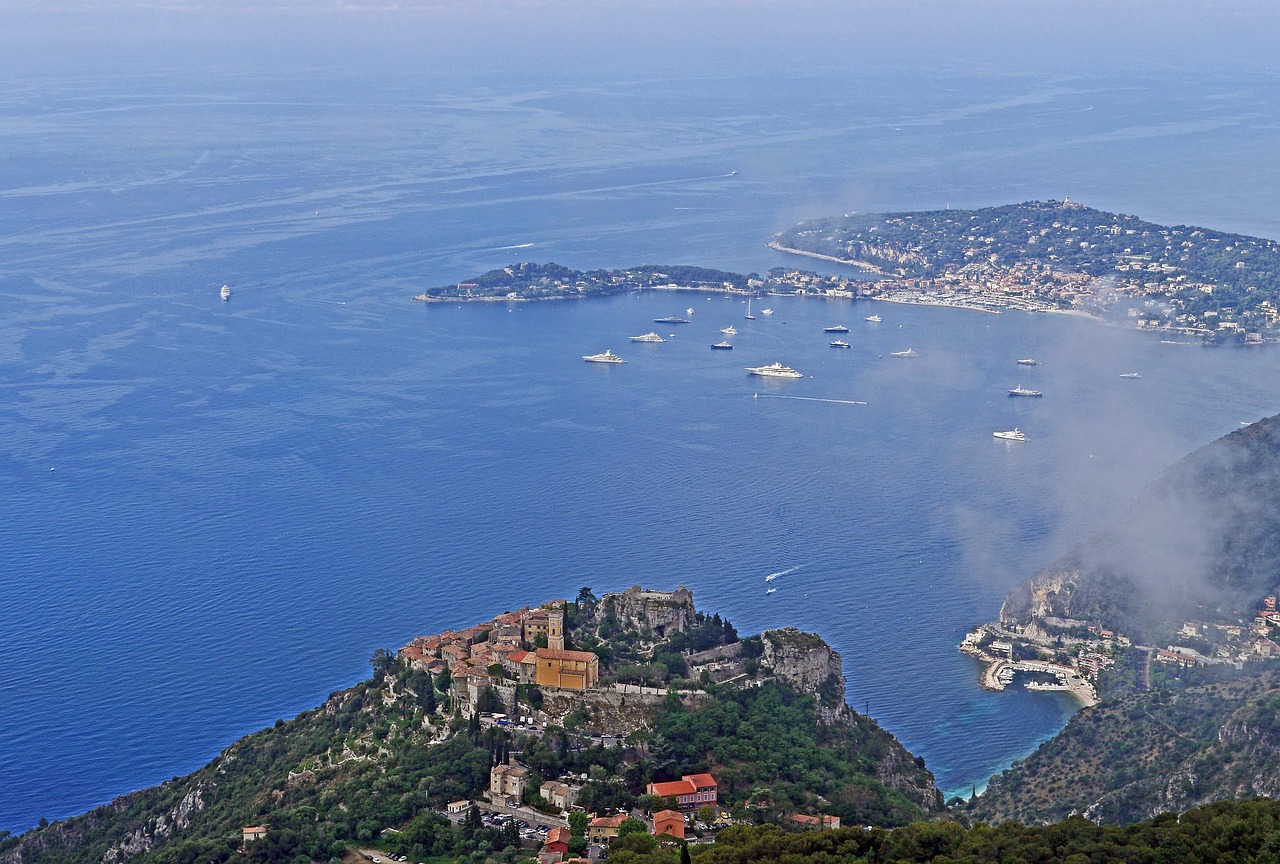
Why Visit the Corniche Roads in 2026
The Corniche Roads are where the French Riviera becomes cinema. Built in stages from the 19th century through the early 20th century, these cliff-hugging routes were once feats of civil engineering; today they’re a pilgrimage for anyone who loves scenic drives, slow travel, and that particular Riviera light that has seduced painters and filmmakers for a century.
In 2026, the Corniche Roads feel more accessible than ever while still retaining their old-world glamour. EV charging points are slowly appearing, bus connections have improved, and yet it’s still perfectly possible to pull into a lay-by on the Grande Corniche at sunset and have the view almost to yourself.
This guide is structured as a flexible 7–14 leg itinerary for Corniche Roads – you’ll see references to 7 legs of Corniche Roads, 8 legs of Corniche Roads, and so on, because you can slice this trip many ways depending on your time and appetite for hairpins. I’ll share the way I actually drive it, with overnight stops, small detours, and slow lunches that turn into conversations with local restaurateurs.
Table of Contents
- 1. Overview of the Corniche Roads
- 2. Recommended 7–14 Leg Itinerary for Corniche Roads
- Leg 1 – Nice to Villefranche-sur-Mer (Basse Corniche)
- Leg 2 – Villefranche-sur-Mer to Saint-Jean-Cap-Ferrat & Beaulieu-sur-Mer
- Leg 3 – Beaulieu-sur-Mer to Èze-Bord-de-Mer and Èze Village (Moyenne Corniche)
- Leg 4 – Èze Village to La Turbie and the Grande Corniche Ridge
- Leg 5 – La Turbie to Monaco (Moyenne Corniche Descent)
- Leg 6 – Monaco to Roquebrune-Cap-Martin (Basse & Moyenne Corniche)
- Leg 7 – Roquebrune-Cap-Martin to Menton and the Italian Border
- 3. Extending to 8–14 Legs: Slower Variations
- 4. 18 Key Route Stops & Viewpoints (Deep Dives)
- 5. Eating & Sleeping Along the Corniche Roads
- 6. Evenings on the Road: Riviera Nights
- 7. Day Trips & Nearby Excursions
- 8. Cultural Etiquette & Local Customs
- 9. Practical Travel Advice & Road Logistics (2026–2027)
- 10. Upcoming Events & Trends for 2026–2027
- 11. Summary & Final Recommendations
1. Overview of the Corniche Roads
When locals refer to the “Corniche Roads,” they usually mean the trio above the eastern stretch of the Côte d’Azur between Nice and Menton:
- Basse Corniche (D6098) – The “low” road, closest to the sea. It passes through ports and beach towns like Villefranche-sur-Mer, Beaulieu, and Cap-d’Ail. It’s buzzy, sometimes slow with traffic, but rich in people-watching and spontaneous swims.
- Moyenne Corniche (D6007) – The “middle” road, a classic scenic drive with sweeping bayside vistas, especially around Èze. This is where many think of when they search for a travel guide for Corniche Roads or “must-see attractions in Corniche Roads.” It’s the most balanced for views vs. accessibility.
- Grande Corniche (D2564) – The high, historic road, built largely along the Roman Via Julia Augusta. Sparse villages, big skies, and a sense that you’re skimming just below the clouds. In terms of sheer drama, the Grande Corniche wins.
On a map, the whole distance from Nice to Menton is barely 30 km, yet I’ve easily stretched it into 10 days and could justify two weeks. This is not about distance; it’s about depth. About taking the best places to visit in Corniche Roads and stitching them into your own story.
2. Recommended 7–14 Leg Itinerary for Corniche Roads
You can approach this as a compact 7 leg itinerary for Corniche Roads (one leg per day), or expand to an 8 leg itinerary for Corniche Roads, 9 leg itinerary for Corniche Roads, and so on, by adding extra nights in your favorite stops.
- Leg 1: Nice → Villefranche-sur-Mer (Basse Corniche)
- Leg 2: Villefranche-sur-Mer → Saint-Jean-Cap-Ferrat → Beaulieu-sur-Mer
- Leg 3: Beaulieu-sur-Mer → Èze-Bord-de-Mer → Èze Village (Moyenne Corniche)
- Leg 4: Èze Village → La Turbie → Grande Corniche Panorama
- Leg 5: La Turbie → Monaco (via Moyenne Corniche)
- Leg 6: Monaco → Roquebrune-Cap-Martin (low and mid roads)
- Leg 7: Roquebrune-Cap-Martin → Menton → Italian border
To transform this into a 10 leg itinerary for Corniche Roads or even a 14 leg itinerary for Corniche Roads, the easiest way is to:
- Add extra nights in Nice, Villefranche, Èze, Monaco, and Menton.
- Carve out full-day detours into the backcountry behind the Grande Corniche.
- Slow down: one driving day, one “stay-put” day, repeated.
Leg 1 – Nice to Villefranche-sur-Mer (Basse Corniche)
I like to start this trip with a late-morning departure from Nice, after an espresso and a tart citron on Place Garibaldi. The Basse Corniche begins almost casually at the eastern end of Nice, where the Promenade des Anglais yields to the Promenade des USA and then merges into the D6098.
The first time I drove this in spring 2023, I was in a slightly battered Renault Clio whose air conditioning had seen better days; by the time I wrote this guide in 2026, I’d upgraded to an electric Peugeot with quiet torque, but the ritual remained the same: windows down, sea breeze in, radio low enough to hear scooters darting by.
Leaving Nice: Port Lympia and the First Cliffs
Before you truly “hit the Corniche,” pause at Port Lympia, Nice’s old port. In 2026, it’s still one of my favorite places to watch the contrast between working fishing boats and glossy superyachts.
I usually grab a quick lunch at one of the informal bistros here – socca (a chickpea pancake) from a takeaway window, a glass of pale rosé if I’m not driving far that day, or a sparkling water with lemon if I’m planning to tackle the Grande Corniche later.
Drive Feel: Nice to Villefranche-sur-Mer
Once you skirt past the port, the road begins to climb gently. The cliffs at Mont Boron rise to your left; below, the Baie des Anges curves away. It’s an easy, family-friendly introduction to how to drive Corniche Roads: wide enough, with guard rails, and frequent pull-outs.
I recommend:
- Time of day: Late morning or golden hour. Avoid weekday rush hours when locals commute between Nice and Monaco.
- Direction: Eastbound (Nice → Villefranche). You’re on the sea side, which makes the views more immersive and the pull-offs easier.
- Vehicle: Any regular car is fine; scooters are fun but can be intimidating for beginners.
First Signature Viewpoint: Mont Boron Lookouts
A short detour up to Parc du Mont Boron gives you a balcony view of Nice and the port. I’ve brought visiting friends up here at least a dozen times; the reaction is always the same: a stunned pause, then an urgent search for a camera.
In 2026, the park is increasingly popular for sunrise yoga meetups and local trail runners, but it’s still easy to find a quiet corner. From the parking spots near the fort, you can also glimpse the early sweeps of the Basse Corniche as it curves toward Villefranche-sur-Mer.
Arriving in Villefranche-sur-Mer
The road drops into a broad curve and suddenly the Bay of Villefranche reveals itself – a deep, natural harbor framed by pastel houses. I still remember my first glimpse: it was mid-May, 9 a.m., the light perfectly oblique, and a cruise ship floating like a dot in the distance.
Villefranche is, in my view, the quintessential first-night stop on any Corniche Roads road trip itinerary. It’s quieter than Nice but more lived-in than some of the more rarefied capes.
Things to Do in Villefranche-sur-Mer
- Stroll Rue Obscure: This vaulted medieval lane runs under the old town’s houses. Cool and shadowy, it’s a fun, slightly mysterious walk for kids and romantics alike.
- Swim at Plage des Marinières: A long pebbly beach sheltered from the open sea. In summer, it’s family-friendly, with lifeguards and casual snack bars.
- Visit the Citadel Saint-Elme: Free entry, with museums and art exhibitions. The ramparts offer a fine view over the harbor.
Where I Like to Eat & Sleep
For a first Corniche night, I aim for something with a balcony if possible. Over the years, I’ve stayed in:
- A simple chambre d’hôtes up the hill with a terrace where the owner served homemade apricot jam (and gossip about local politics).
- A small, mid-range hotel right on the waterfront. Waking up to boats bobbing three meters from your window is hard to beat.
Food-wise, I often end up at a modest bistro just off the seafront rather than the flashiest spots. Ask for the plat du jour; in 2025 I had an unforgettable grilled sea bream with fennel that cost less than any café lunch in Paris.
Tips for Leg 1
- Parking: Use the main harbor parking in Villefranche; spaces can be tight, but turnover is decent outside July–August.
- Budget: Nice to Villefranche is a short hop. Save your fuel and toll budget for other parts of your trip.
- Romantic/Family/Adventure: Ideal for all three – couples stroll the old town at dusk, families play on the beach, photographers chase the changing light.
Leg 2 – Villefranche-sur-Mer to Saint-Jean-Cap-Ferrat & Beaulieu-sur-Mer
This leg feels less like a transit stage and more like a day of gentle detours. Technically, you could blast from Villefranche to Beaulieu-sur-Mer in 10 minutes. But the whole point of a travel guide for Corniche Roads is to help you resist that temptation.
Morning in Villefranche, Lazy Departure
I like to linger: breakfast on the quay, a quick swim if it’s warm, a stroll up to the church to see the Jean Cocteau-decorated Chapelle Saint-Pierre (tiny, atmospheric, sometimes overlooked even by seasoned visitors).
Detour: Saint-Jean-Cap-Ferrat
Instead of following the Basse Corniche straight east, turn off for Saint-Jean-Cap-Ferrat, one of the Riviera’s most coveted peninsulas. The drive around the cape isn’t officially one of the “Corniches” but it’s essential to understand the coast’s character.
Cap-Ferrat is where I go when I want to walk, not drive. Twice a year, usually in May and October, I follow the sentier du littoral (coastal path) around the cape. You can park near the port and pick up the trail, which loops around quiet coves and rocky points with the Corniche Roads visible as thin lines on the cliffs above.
Highlight: Villa Ephrussi de Rothschild
The Villa Ephrussi de Rothschild is a pink Italianate dream perched above the sea. Built by Béatrice de Rothschild in the early 20th century, it’s surrounded by themed gardens (Spanish, Japanese, Florentine, etc.) and dancing fountains set to music. Cheesy? A little. Charming? Completely.
My routine: arrive mid-morning, wander the house (don’t miss the porcelain collection if you’re a decorative arts fan), then settle in the gardens with a coffee from the tearoom. From the viewpoints, you can often see cruise ships in the Villefranche bay and, in clear weather, the jagged silhouette of the Grande Corniche above Èze.
Onward to Beaulieu-sur-Mer
Returning to the Basse Corniche, you’ll pass grand gates and glimpses of hidden villas. Beaulieu-sur-Mer appears almost suddenly – a compact town with palm-lined streets and a subtle Belle Époque air.
For lunch, I recommend the cafés around the marina or just behind the train station. You’ll find surprisingly good, modestly priced local food in Corniche Roads towns like Beaulieu if you skip the obvious tourist menus: think pissaladière (onion tart), stuffed vegetables, and fresh salads.
Family-Friendly, Romantic, or Adventurous?
- Family: The coastal path sections near Saint-Jean are gentle. Bring hats and water.
- Romantic: Villa Ephrussi’s gardens at golden hour are peak romance, especially outside high season.
- Adventure: Use the day to sea-kayak from Beaulieu or Cap-Ferrat’s coves if the weather is calm.
Where to Sleep
You can either:
- Stay a second night in Villefranche and do this leg as a loop.
- Overnight in Beaulieu-sur-Mer for a change of scene.
I often choose Beaulieu when I want an early start toward Èze the next morning.
Leg 3 – Beaulieu-sur-Mer to Èze-Bord-de-Mer & Èze Village (Moyenne Corniche)
This is where the Corniche Roads truly earn their fame. The Moyenne Corniche between Beaulieu-sur-Mer and Èze Village is one of the great drives of Europe – the sort of place you see in car commercials and travel posters. It’s also, inevitably, busy in July–August, but with the right timing it’s still magic.
From Beaulieu to Èze-Bord-de-Mer
Leaving Beaulieu, you’ll climb modestly, then drop again into Èze-Bord-de-Mer, the seaside sibling of hilltop Èze. This stretch of the Basse Corniche is dotted with beach clubs and a few public access points. In winter, I’ve had the pebbly shoreline almost to myself; in August, it’s towel-to-towel.
If you’re doing a 9 legs of Corniche Roads pace or slower, consider a morning swim here before heading up. There’s a simple pleasure in drying off in the sun, then tackling the ascent to Èze Village.
Driving the Climb to Èze Village
From Èze-Bord-de-Mer, follow signs to the D6007/Moyenne Corniche. The road switchbacks up, each hairpin revealing more of the curve of the coast behind you. I’ve driven this in mist, in glaring midday sun, and once in a rare February snowfall; each time, I pulled into at least one viewpoint lay-by just to stand there, leaning on the guardrail, listening to the distant hiss of the sea.
Èze Village: The Perched Jewel
Perched 429 meters above the sea, Èze Village is the Instagram darling of the Corniche Roads – and with reason. Its stone alleys spiral upward to an exotic garden planted among castle ruins. From the top, the view runs from Cap-Ferrat to Italy on clear days.
I’ve visited Èze more times than I can count. The trick is to:
- Arrive early (before 9:30 a.m.) or late (after 4:30 p.m.) to avoid tour-bus crowds.
- Use the paid parking below the village; spaces are limited in high season.
- Wear comfortable shoes – the alleys are steep and cobbled.
Things to Do in Èze Village
- Jardin Exotique d’Èze: Sculptures, cacti, and one of the best must-see attractions in Corniche Roads for panoramic views. Worth the modest entry fee.
- Fragonard Perfume Factory: Free visits with explanations (in English and French) of perfume-making. It’s touristy but well done and family-friendly.
- Nietzsche Path (Chemin de Nietzsche): A steep hiking trail linking Èze-Bord-de-Mer and Èze Village. Best done downhill unless you’re very fit. I like to park in Èze Village, hike down, have a swim, and take the bus back up.
Lunch with a View
Èze’s restaurants range from ultra-luxury (two of the Riviera’s big-name hotels sit right on the cliff edge) to simple creperies. In my most memorable lunch here, in late September 2024, clouds were rolling in from the sea, the terrace was half-empty, and the waitress kept topping up my carafe of water unasked, with a conspiratorial wink when a bus group arrived and was turned away for lack of reservation.
Overnight in Èze or Continue?
For a 7 legs of Corniche Roads pace, I’d overnight in Èze or nearby. For a 12 leg itinerary for Corniche Roads, spend two nights: one for the village, one for hiking and exploring the backcountry roads.
Leg 4 – Èze Village to La Turbie and the Grande Corniche Ridge
Now we climb higher. The Grande Corniche is, to me, the heart of the Corniche Roads experience: less trafficked, more exposed, and dramatically beautiful. It’s also where you need to be most aware of weather and driving conditions.
From Èze to the Grande Corniche
From Èze Village, a short, steep link road brings you up to the D2564. Almost immediately, the road feels wilder. Guard rails are present but sometimes minimal; there are fewer buildings, more scrub, and the occasional ruined stone house.
Signature Viewpoint: Col d’Èze
The Col d’Èze is a classic cycling climb and a beloved viewpoint. On weekend mornings in spring, you’ll see packs of Lycra-clad riders resting by the roadside café, swapping times and stories. I’ve stopped here more for the atmosphere than the coffee, which is basic but honest.
La Turbie: The Roman Echo
La Turbie crowns the ridge above Monaco and is home to the Trophée d’Auguste, a monumental Roman trophy erected by Emperor Augustus around 6 BC to celebrate his victory over Alpine tribes. The ruins loom above the village, an almost surreal presence.
In 2022, during a research trip, I spent an entire afternoon wandering the site, reading the interpretive panels, and imagining Roman soldiers trudging the early iteration of this route. The vantage point is extraordinary: below, the toy-sized Principality of Monaco; in the distance, the sea and the curve of the Corniche.
La Turbie Village Life
La Turbie is less polished than Èze, more a working hill town than a purely touristic stage set. It has:
- Local bakeries where you can snag a still-warm baguette.
- A few honest bistros; I once had a memorable plate of daube niçoise (beef stew) here on a rainy October evening.
- Quiet stone lanes that lead to sudden, expansive views.
Driving the Grande Corniche Ridge
Beyond La Turbie, the Grande Corniche traces the ridge, with intermittent pull-offs. One of my rituals is to stop at a particular lay-by just east of La Turbie, where a lone pine stands twisted by the wind. From there, you get a near-360-degree panorama: sea, mountains, and the sinuous lines of the Basse and Moyenne Corniche far below.
Safety & Conditions
- Seasonal Closures: The Grande Corniche rarely closes in winter, but it can be foggy or icy in cold snaps. Check conditions if you’re driving between December and February.
- Vehicle Suitability: Regular cars and motorcycles are fine. Large RVs can be unwieldy; I’d avoid them here.
- Breakdowns: Mobile coverage is generally good, but not perfect. Have European roadside assistance included in your rental or insurance.
Overnight Ideas
You can:
- Stay in La Turbie for a more local, quiet feel.
- Return down to Èze or even Monaco for a more glamorous evening.
When I want starry skies and silence, I choose La Turbie. When I want to write late into the night from a hotel balcony with city lights below, I drop into Monaco.
Leg 5 – La Turbie to Monaco (Moyenne Corniche Descent)
Whatever your feelings about Monaco – glitzy playground or dense urban oddity – its presence is a defining feature of this region. The descent from La Turbie to Monaco along the Moyenne Corniche is short but packed with views.
Choosing Your Route Down
There are several ways down:
- The direct D2564 → D6007, fairly straightforward.
- Smaller link roads with tighter curves, less forgiving for larger vehicles.
I usually take the main route; the vantage points are still superb, and it’s easier to manage with traffic.
Monaco from Above
From multiple bends, you’ll see Monaco’s improbable vertical cityscape wedged between mountains and sea. The first time I brought my father here, he fell completely silent at one of the viewpoints, then muttered, “It looks like someone dropped a Manhattan starter kit onto a cliff.”
Time in Monaco
Even if you’re not a casino person, it’s worth a few hours to:
- Walk around the Port Hercule area and watch the interplay of superyachts and service boats.
- Climb up to the old town (Le Rocher) to see the Prince’s Palace and oceanographic museum.
- Drive (or walk) portions of the Formula 1 Grand Prix circuit, which follows regular streets. As a driver, it’s oddly thrilling to navigate hairpins you’ve only seen on TV.
Parking & Practicalities
Monaco’s underground car parks are well run but can feel like a maze. I tend to use:
- Parking du Chemin des Pêcheurs for access to the old town and the museum.
- Parking de la Digue for the harbor area.
Prices are high but not outrageous for short stays. For those on a strict budget, you can park just outside Monaco and walk or bus in.
Eating in Monaco
My strategy for Monaco dining is either:
- Splurge intentionally on a high-end meal, accepting the cost as part of the experience.
- Or keep it simple with a snack and save your main meal for a more modestly priced town later.
In 2025, I had surprisingly good falafel from a small street counter near the Condamine Market – proof that even in Monaco, you can eat decently without derailing your budget.
Overnight?
For a 10 legs of Corniche Roads or longer itinerary, I suggest at least one night here, if only to experience the surreal contrast between the road’s natural drama and Monaco’s hyper-urban density. For a tighter 7 leg itinerary for Corniche Roads, a day visit may suffice.
Leg 6 – Monaco to Roquebrune-Cap-Martin (Basse & Moyenne Corniche)
Leaving Monaco eastward, the Corniche Roads regain their breath. This leg weaves through Cap-d’Ail and into Roquebrune-Cap-Martin, offering a mix of seaside promenades and high-perched lanes.
Cap-d’Ail: The Plage Mala Detour
Just beyond Monaco, Cap-d’Ail hides one of my favorite coves: Plage Mala. Reached via a stairway from the coastal path, it’s framed by cliffs and feels almost enclosed. In shoulder seasons (May–June, September), it’s idyllic. In high summer, it’s busy but still beautiful.
I’ve made it a tradition to stop here on at least one leg of every Corniche trip, even if only for a quick dip and a coffee at the beach bar.
Choosing Low vs. Mid Roads
Between Monaco and Roquebrune-Cap-Martin, you can:
- Stay on the Basse Corniche for closer sea views and town centers.
- Climb to the Moyenne Corniche for grander panoramas and access to the perched village of Roquebrune.
I like to take one road out and the other back if I’m doing a loop day.
Roquebrune Village: Medieval Eyrie
High above the more modern coastal sprawl lies the medieval village of Roquebrune, crowned by a 10th-century castle. The alleys are steep, often stepped, and wonderfully atmospheric. There’s a 2,000-year-old olive tree here that locals proudly point out; its gnarled trunk feels like something out of a fantasy novel.
On a winter trip in 2021, I arrived in Roquebrune just as a storm rolled in. The wind howled through the narrow lanes, shutters banged, and the sea below turned slate grey. I ducked into a tiny café where the owner insisted I try her homemade chestnut cake. Weather can shape your Corniche experience as much as the road itself.
Cap-Martin Promenade
Down by the sea, Cap-Martin has a coastal path that curves around the headland, used by joggers, families, and dog walkers. It’s one of the gentlest, most soothing walks along this stretch of coast.
You’ll glimpse Belle Époque villas, pine trees leaning toward the sea, and, in the distance, the outline of Italy. This is an excellent family-friendly activity and a contrast to the more vertical, strenuous trails above Èze.
Where to Stay & Eat
Roquebrune-Cap-Martin splits its personality between:
- The hilltop medieval village – quieter, with a few small guesthouses and restaurants.
- The seaside area – more hotels, easy train access, a mix of local and tourist eateries.
For a 11 leg itinerary for Corniche Roads or 12 legs of Corniche Roads, I like to spend at least one night in the medieval village and one by the sea, just to feel the difference.
Leg 7 – Roquebrune-Cap-Martin to Menton and the Italian Border
The final leg eastward brings you to Menton, often called the “Pearl of France.” It’s a fitting end (or beginning) to any Corniche Roads road trip itinerary.
Driving into Menton
Whether you come via the Basse or Moyenne Corniche, Menton announces itself with a cluster of pastel facades and the silhouette of the basilica tower above the old town. The border with Italy lies just beyond, and the cultural blend is tangible in the food, the dialect, and the pace of life.
Menton Old Town
The old town is a cascade of alleys and staircases. I’ve spent many afternoons here simply wandering, letting myself get lost until I spill out onto the seafront again. Key spots:
- Basilique Saint-Michel-Archange: Baroque church with a dramatic staircase down to the sea.
- Cimetière du Vieux Château: Hilltop cemetery with astonishing views along the coast.
- Jean Cocteau Museum (when open): A compact, evocative collection dedicated to the artist.
Lemon Capital
Menton is famed for its lemons – intense, fragrant, used in everything from tarts to liqueurs. In February–March 2027, the Fête du Citron (Lemon Festival) will again transform the town with citrus sculptures and parades. If you’re planning a 13 leg itinerary for Corniche Roads that includes late winter, consider anchoring it around this event.
Beach Time & Border Curiosity
Menton’s beaches are a mix of pebbly and sandy sections, with calm water that makes them good for families. When I need a mental marker for the end of the Corniche journey, I walk east along the promenade until I hit the border with Italy. There’s no dramatic gate – just a gentle crossing of an invisible line – but symbolically, it feels like the end of the road.
Overnight & Return
Menton deserves at least one night, ideally two. It’s:
- A good base for day trips into the Ligurian coast of Italy.
- A softer, more laid-back finale than Monaco.
From here, you can either:
- Loop back along a different Corniche (e.g., Grande Corniche westbound).
- Drop the car and return by train to Nice or onward destinations.
3. Extending to 8–14 Legs: Slower Variations
The above legs form a solid 7 legs of Corniche Roads structure. To build an 8 leg itinerary for Corniche Roads, 9 legs of Corniche Roads, all the way up to a 14 leg itinerary for Corniche Roads, simply:
- Add extra nights in your favorite towns (Nice, Villefranche, Èze, Monaco, Menton).
- Insert “rest days” with no driving – just walking, swimming, and café lingering.
- Include inland detours: Gorbio, Sainte-Agnès, Peille, Peillon, and other perched villages above the Grande Corniche.
One of my favorite long-form versions is a 12 legs of Corniche Roads route: 2 nights Nice, 2 Villefranche, 2 Èze, 2 La Turbie/Grande Corniche, 2 Monaco/Roquebrune, 2 Menton. You never drive more than 45–60 minutes in a day, leaving hours for serendipity.
4. 18 Key Route Stops & Viewpoints (Deep Dives)
Below are 18 of the best stops on Corniche Roads, each with a brief story, history, and tips. Many are already woven into the legs above; this section collects them for quick reference if you’re planning your own custom Corniche Roads road trip itinerary.
1. Port Lympia, Nice
Historic working port with colorful facades and a front-row seat to ferries and fishing boats. Great for local seafood and watching the play of light at sunset. It anchors the western end of the Corniche experience.
2. Mont Boron Viewpoint
Forested hill with walking trails and a balcony-like vantage over Nice, the port, and the first sweeps of the Basse Corniche. I like to come here at dawn when the city is still sleepy.
3. Villefranche-sur-Mer Old Town & Bay
Medieval alleys, harborfront cafés, and the deep-water bay that has sheltered ships for centuries. A classic Riviera postcard that rewards slow exploration.
4. Plage des Marinières, Villefranche
Long, sheltered beach ideal for families. In shoulder season, it becomes an almost local-only haunt – perfect for a morning swim before hitting the road.
5. Saint-Jean-Cap-Ferrat Coastal Path
Gentle coastal trail skirting rocky coves and pine-fringed bays. A wonderful antidote to driving, and a reminder that some of the hidden gems in Corniche Roads are best discovered on foot.
6. Villa Ephrussi de Rothschild
Belle Époque villa with themed gardens and musical fountains. Historically significant as a symbol of aristocratic Riviera leisure; today, a beloved cultural stop with family appeal.
7. Beaulieu-sur-Mer Marina
Understated marina with an easygoing feel. I’ve had many simple but excellent seafood lunches here, watching local boat owners tinker with their vessels.
8. Èze-Bord-de-Mer Beach
Pebble beach tucked between cliffs, with the hilltop village looming above. An ideal swim stop in a 9 leg itinerary for Corniche Roads where you have time to linger.
9. Èze Village & Jardin Exotique
Medieval village perched on a rocky spike, topped by an exotic garden. Historically a defensive site; today, one of the Riviera’s most photographed hill towns and a must for any list of things to do in Corniche Roads.
10. Chemin de Nietzsche Trail
Steep footpath linking Èze-Bord-de-Mer and Èze Village. Named after the philosopher who walked and supposedly found inspiration here. Not for flip-flops; bring water and decent shoes.
11. Col d’Èze (Grande Corniche)
Mountain pass and classic cycling challenge with a roadside café and broad views. Occasionally used in major bike races; a reminder that the Corniche Roads aren’t only for drivers.
12. La Turbie & Trophée d’Auguste
Hilltop village anchored by the ruins of a massive Roman trophy monument. Historically a marker of Roman dominance over the Alps; now a striking cultural stop overlooking Monaco.
13. Grande Corniche Ridge Viewpoints
Series of lay-bys with extraordinary panoramas. These are some of the best places to feel the full sweep of the Riviera, and to capture those “vehicle in the landscape” shots that convey journey and distance.
14. Monaco Harbor & Old Town
Dense city-state hub with a famous harbor, palace, and the F1 circuit. A cultural experience in its own right, and a study in how geography constrains and shapes urban life.
15. Plage Mala, Cap-d’Ail
Hidden-feeling cove accessed by stairs. A favorite among locals, and an evocative place to experience the wild side of the coast despite nearby development.
16. Roquebrune Medieval Castle & Village
Fortified village with one of the oldest preserved donjons in France. Its narrow alleys and castle walls whisper of centuries of border tensions and shifting allegiances.
17. Cap-Martin Coastal Path
Easy seaside walk under pines, with benches and broad views toward Menton and Italy. Excellent at sunset when the cliffs glow orange.
18. Menton Old Town & Seafront
Elegant finale to the Corniche Roads: baroque church tower, pastel houses, lemon shops, and a spacious promenade. Historically a winter resort for Europeans; today, a more relaxed alternative to Nice.
5. Eating & Sleeping Along Corniche Roads
One of the pleasures of this route is how easy it is to eat well at almost any budget. Local food in Corniche Roads towns blends French and Italian influences with Niçoise specialties:
- Socca – chickpea pancake, best eaten hot with black pepper.
- Pissaladière – caramelized onion tart with anchovies and olives.
- Salade niçoise – done properly, it never includes boiled potatoes or cooked green beans.
- Seafood – from simple grilled sardines to refined sea bream dishes.
Roadside Diners & Casual Stops
True “diners” in the American sense are rare, but you’ll find:
- Small cafés on the Basse Corniche in each town.
- View cafés on the Grande Corniche, especially near Col d’Èze and La Turbie.
- Boulangeries where you can build your own picnic.
Inns, B&Bs, and Hotels
Accommodation types along the Corniche Roads include:
- Chambres d’hôtes & B&Bs: Particularly in Villefranche, La Turbie, and Roquebrune village. My most rewarding encounters with locals have happened over breakfast tables in these places.
- Mid-range hotels: Abundant in Nice, Beaulieu, Monaco, Menton, and the seaside strip of Roquebrune.
- Luxury hotels: Concentrated in Èze, Cap-Ferrat, Monaco. Ideal for a splurge night on a romantic itinerary.
Planning Fuel Stops & EV Charging
In a combustion car, fuel is straightforward: stations are common in Nice, Beaulieu, Monaco, and Menton, with a few on the inland roads. For EVs in 2026:
- Fast chargers are present in Nice and Monaco, with more planned in Menton.
- Destination chargers appear at some hotels; always ask ahead.
Range anxiety is rare here due to short distances, but plan to charge in major towns rather than tiny villages on the Grande Corniche.
When to Push On vs. Overnight
My personal rule of thumb:
- If a town has both a rewarding evening atmosphere and a distinctive morning light (Villefranche, Èze, Menton), I stay overnight.
- If it’s mainly a daytime destination (e.g., Villa Ephrussi), I visit and move on.
For budget travelers, alternating splurge nights (Èze, Monaco) with simpler nights (La Turbie, Roquebrune village) helps keep overall costs sane.
6. Evenings on the Road: Riviera Nights
Evenings along the Corniche Roads can be surprisingly varied:
- Small-town main streets: In Villefranche and Menton, café terraces fill with locals and visitors alike. Children play late, old men argue over pétanque scores.
- Route-side bars: On the Moyenne and Grande Corniche, a few bars and restaurants hug the road, offering twilight views. I’ve watched more than one thunderstorm roll in from here, lightning flickering over the sea.
- Star-camping spots: Official campsites are mostly inland, but some lay-bys on the Grande Corniche offer extraordinary night skies. Wild camping in vehicles is a legal grey area; be discreet and respectful, and never camp where signs forbid it.
Where It’s Worth a Proper Night
- Villefranche-sur-Mer: Harborfront dinners, reflections of boats on the water.
- Èze Village: Quiet, lantern-lit alleys once the day crowds leave.
- Monaco: A spectacle of lights and late-night energy.
- Menton: Soft, strolling evenings along the promenade with gelato in hand.
7. Day Trips & Nearby Excursions
Once you’ve traced the main Corniche lines, a few side trips deepen the experience:
- Sainte-Agnès: Perched village above Menton, officially one of France’s most beautiful. Narrow access road but worth it for the views and fortress remains.
- Gorbio: Stone village above Roquebrune, with a giant plane tree at its heart and excellent hiking trails beyond.
- Peille & Peillon: Inland villages above La Turbie, reached by winding mountain roads that feel a world away from the Riviera bustle.
- Italian Coastal Towns: Ventimiglia and Bordighera are easy hops from Menton by car or train, offering markets and slightly different culinary flavors.
Practical tip: for these detours, a compact car is an asset. Roads are narrower than the Corniches, and hairpins tighter.
8. Cultural Etiquette & Local Customs
The Corniche Roads cross areas that are both deeply local and highly touristed. A few etiquette points make interactions smoother:
- Greetings: In shops and cafés, always start with “Bonjour” (daytime) or “Bonsoir” (evening) before asking for anything.
- Driving: Locals can be assertive drivers but generally respect rules. Signal clearly, don’t block passing places, and let faster cars pass when safe.
- Noise: In hilltop villages like Èze and Roquebrune, sound carries. Keep voices low late at night.
- Dress: Beachwear is fine on the beach, less so in old town streets or churches. A light cover-up goes a long way.
- Tipping: Service is included in restaurant bills, but rounding up or adding 5–10% for good service is appreciated.
Many residents have a love-hate relationship with tourism: it sustains livelihoods but strains infrastructure. Small gestures – using public bins, not blocking driveways, parking legally even if it means a longer walk – are noticed.
9. Practical Travel Advice & Road Logistics (2026–2027)
Direction: Eastbound or Westbound?
I prefer eastbound (Nice → Menton):
- You’re often on the sea-side of the road, with better access to pull-offs.
- Views unfold more dramatically, especially on the Moyenne and Grande Corniche.
Westbound has its merits too – sunrise over the sea, and slightly fewer tour buses in your lane at certain times.
Realistic Daily Distances
Distances are short, but time is deceptive. For comfortable exploration:
- Plan for 30–80 km per day maximum.
- Allow 3–5 hours of “exploration time” (stops, walks, meals) for every hour of pure driving.
Vehicle Types
- Regular car: Best all-round choice.
- Motorcycle/scooter: Exhilarating, but requires confidence with hairpins and traffic.
- 4x4: Not necessary; roads are paved.
- RV/camper: Manageable on Basse/Moyenne with care; Grande Corniche can be stressful.
Breakdowns & Assistance
Most rentals include European roadside assistance. Keep:
- Emergency number: 112 (EU-wide).
- Rental agency’s roadside number saved in your phone.
- Reflective vests and warning triangle (usually provided in the car; mandatory in France).
Seasonal Considerations
- Spring (March–May): Ideal for hiking and cooler driving; some higher inland roads can still see chill and occasional closures early in the season.
- Summer (June–August): Lively, hot, and busy. Plan early starts, midday siestas, and advance bookings.
- Autumn (September–November): My favorite: warm sea, quieter roads, harvest festivals inland.
- Winter (December–February): Soft light, fewer crowds, but shorter days and occasional storms. Grande Corniche can be foggy; drive with care.
Permits & Border Crossings
No special permits are needed for the Corniche Roads. Crossing into Monaco and Italy is straightforward within the Schengen Area, though carry ID/passport. Occasional spot checks can occur.
Visas & Driving Licenses
For non-EU travelers, visa requirements depend on nationality. For many, a short-stay Schengen visa suffices. Most foreign driver’s licenses are accepted in France; an International Driving Permit (IDP) is recommended if your license is not in a Latin alphabet.
SIM Cards & Connectivity
For travel tips for Corniche Roads in 2026:
- Buy a local SIM from Orange, SFR, Bouygues, or Free in Nice.
- EU roaming rules usually cover Monaco and Italy, but check your plan; Monaco sometimes counts as non-EU with some operators.
Public Transport vs. Car Rental
You can experience much of the Corniches without a car:
- Trains link Nice, Villefranche, Beaulieu, Èze-Bord-de-Mer, Monaco, Roquebrune-Cap-Martin, and Menton along the coast.
- Buses run along the Basse and Moyenne Corniche, though schedules can be sparse at night and on Sundays.
However, a car or scooter grants flexibility to explore the Grande Corniche and inland villages, making it my preferred mode for a full exploration.
Budgeting
Costs vary by season, but as a rough daily estimate for two people in 2026:
- Budget: 120–160 € (simple accommodation, self-catering or casual meals, limited paid attractions).
- Mid-range: 180–280 € (comfortable hotels, restaurant dinners, some splurges).
- High-end: 300 €+ (boutique stays, fine dining, private experiences).
Saving strategies: travel in shoulder season, mix self-catered breakfasts with one restaurant meal a day, and use public transport for some segments to avoid parking fees.
10. Upcoming Events & Trends for 2026–2027
A few notable events and shifts on the horizon for 2026–2027:
- Nice & Menton Festivals: Carnival in Nice (February 2027) and Menton’s Lemon Festival (Fête du Citron, February–March 2027) will draw crowds and increase accommodation prices along the Corniches.
- Monaco Grand Prix 2026 & 2027: Typically late May. Expect road closures, heavy traffic, and sky-high hotel rates in and around Monaco. If you’re not attending, either avoid these dates or use trains instead of driving through.
- EV Infrastructure Expansion: Regional plans call for more fast chargers near major Corniche nodes by late 2027, especially in Menton and the inland backcountry.
- Trail & Heritage Upgrades: Local authorities continue to improve signage for hiking trails and heritage sites such as the Via Julia Augusta remnants near La Turbie, enriching the cultural experiences in Corniche Roads.
11. Summary & Final Recommendations
The Corniche Roads are not a “checklist” destination; they’re a living, breathing corridor between sea and sky. Whether you craft a classic 7 leg itinerary for Corniche Roads or stretch it into a 14 legs of Corniche Roads odyssey, the essence is the same: move slowly, stop often, and let each bend surprise you.
Best seasons: For most travelers, late April to early June and September to mid-October offer the best mix of weather, manageable crowds, and open services. Winter has its own melancholic charm; high summer is vibrant but intense.
My strongest advice, after years of tracing these routes, is this: don’t try to do everything. Pick a few must-see attractions in Corniche Roads that resonate with you – Èze’s garden, La Turbie’s Roman trophy, Menton’s old town – then leave unstructured time for detours and discoveries. The most enduring memories often come from the places you didn’t plan to stop.
In the end, the Corniche Roads are less about getting from Nice to Menton than about learning to stretch a 30 km journey into days of layered experience: cliff-top vistas, impromptu swims, roadside conversations, and that moment when the light slants just so across the water and you realize you’re in no hurry to get anywhere else.