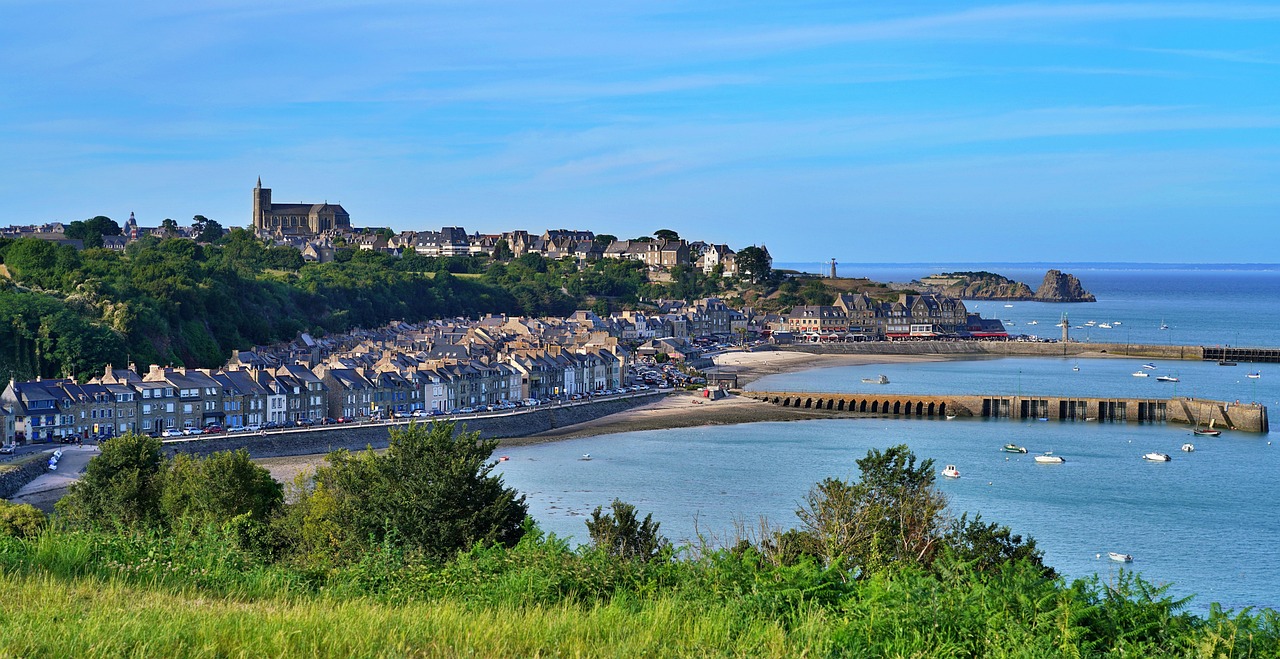
Why Visit the Côte d’Émeraude
The Côte d’Émeraude – the Emerald Coast of Brittany – runs along the north coast of Ille‑et‑Vilaine, roughly between Cancale in the east and Cap Fréhel in the west. I’ve been coming here almost every year since my student days in Rennes, and in 2026 it still feels like one of France’s most quietly magical stretches of coast: wild but gentle, deeply Breton yet welcoming to outsiders.
What makes it special is the color and the contrast. At low tide the sea pulls back like a curtain, revealing sandbanks and oyster beds; at high tide it rushes in, turning the bays aquamarine – the “emerald” that gives the coast its name. Above it all: granite ramparts, lighthouses, heather‑clad cliffs and villages that seem to have stepped out of an old seafaring novel.
This is a place where you can eat oysters straight from the producer in Cancale at noon, hike a cliff path near Cap Fréhel in the afternoon, and finish the day with a crêpe beurre‑sucre in a tiny stone village, children racing across the square while older locals argue about sailing and football. It’s family‑friendly, romantic, and quietly adventurous all at once.
In this long‑form travel guide for 2026, I’ll walk you through the main towns and landscapes of the Côte d’Émeraude – at least 18 of them – and share personal itineraries for 4, 5, 6 and 7 days, plus food tips, etiquette, and very practical travel advice. Think of it as planning with a local friend who’s obsessed with tide tables and kouign‑amann.
Table of Contents
- Why Visit the Côte d’Émeraude
- Understanding the Côte d’Émeraude
- Towns, Villages & Landscapes (18+ Detailed Profiles)
- Itineraries: 4–7 Days on the Côte d’Émeraude
- Regional Cuisine & Where to Eat
- Evenings on the Côte d’Émeraude
- What’s New & Upcoming Events 2026–2027
- Day Trips Beyond the Côte d’Émeraude
- Cultural Etiquette & Local Customs
- Practical Travel Advice & Money‑Saving Tips
- Summary & When to Visit
Understanding the Côte d’Émeraude
The Côte d’Émeraude isn’t an administrative region; it’s a poetic name that locals actually use. In practice, when we say “Emerald Coast” we usually mean the arc from Cancale to Cap Fréhel, with Saint‑Malo and Dinard as the two urban anchors, and a scatter of small ports and beach villages in between.
If you’re trying to decide where to stay, how to get around, and which places are must‑see attractions in Côte d’Émeraude, the key is to understand how the coast breaks down into sub‑areas:
- Eastern gateway (Cancale & Mont‑Saint‑Michel Bay): oysters, huge tides, views toward Normandy.
- Saint‑Malo & Rance Estuary: walled corsair city, beaches, sailing, and river scenery.
- Dinard & the chic Riviera strip: Belle Époque villas, promenades, family‑friendly beaches.
- Western wild coast (Saint‑Lunaire to Cap Fréhel): surf, cliffs, lighthouses, and coastal hiking.
- Inland gems (Dinan, Léhon, Combourg): medieval streets, riverside towpaths, castles, and countryside.
Over the years, I’ve based myself in Saint‑Malo when I wanted energy and nightlife, in Dinard when traveling with my nieces (calmer, easier beaches), and near Saint‑Briac or Saint‑Jacut when I wanted long walks, photography, and quiet evenings under big western skies.
Towns, Villages & Landscapes of the Côte d’Émeraude
This section dives into the main 18+ sub‑areas of the Côte d’Émeraude. Think of them as characters in a novel – each has its own temperament, favorite foods, and best time of day.
1. Saint‑Malo – The Walled Corsair City
Saint‑Malo is where most travelers first touch the Côte d’Émeraude. I still remember my first late‑evening arrival in 2010: the granite walls of the Intra‑Muros glowing gold under streetlights, the smell of salt and butter from crêperies, the murmur of the tide beyond the ramparts. I’ve lost count of how many times I’ve come back since.
Why it’s special: Saint‑Malo is an almost perfectly preserved 18th‑century corsair city, rebuilt stone by stone after WWII. The town’s massive walls encircle cobbled streets, churches, and tiny squares where gulls argue over dropped fries. Outside: a string of beaches stretching toward Paramé and Rothéneuf, dotted with wooden breakwaters and tidal pools.
Things to do in Saint‑Malo:
- Walk the ramparts: Do the full loop at least once, ideally at high tide and again at low tide. In 2026, the city has refreshed interpretive panels in French/English, making it easier to decode the maritime history.
- Explore intra‑muros streets: Duck into the cathedral, browse independent bookshops, and sample kouign‑amann from a bakery that still makes it with scandalous amounts of butter.
- Island forts: At low tide you can walk to Fort National and, when open, tour its stark defenses. Check tide tables – locals always do.
- Grand Plage du Sillon: A long, curve of sand perfect for morning runs, kite flying, and families; the light at sunset can be extraordinary.
Food & drink: For local food in Côte d’Émeraude, Saint‑Malo is an easy starting point: crêperies, seafood brasseries, and bistros are clustered inside the walls and along the Sillon. I often end up at a tiny creperie just off Rue Broussais for a galette complète and a bowl of raw cider, then a walk under the ramparts to digest.
Where Saint‑Malo fits in your trip: It’s one of the best bases for first‑timers – a hub for buses to Cancale and Dinard, trains to Rennes and Paris, and boat trips along the Rance. It’s also busy. For 4 days in Côte d’Émeraude, I’d spend at least 2 nights here; for a 7 day itinerary, Saint‑Malo makes sense as bookends to your trip.
2. Dinard – Belle Époque Glamour by the Sea
Across the Rance estuary from Saint‑Malo, Dinard feels like another world: paler stone, lush gardens, and whimsical villas that look like they were drawn by a romantic architect with a soft spot for turrets.
Character & history: Dinard became fashionable in the late 19th century, especially with English visitors who left behind neo‑Gothic villas, tennis clubs, and a certain tea‑time formality. Today, it’s a relaxed family resort with clean, sheltered beaches and a slightly old‑money feel – but without snobbery.
Best places to visit in Dinard:
- Plage de l’Écluse: The central beach, framed by striped changing cabins. Great for swimming at high tide; safe for children.
- Promenade du Clair de Lune: A palm‑lined path along the coast, illuminated at night in summer. I love walking this just after dinner, when the lights of Saint‑Malo shimmer across the water.
- Villa trail: Waymarked paths guide you past some of Dinard’s most eccentric villas. It’s like an open‑air architecture museum.
Food & mood: Dinard’s local food scene is quieter than Saint‑Malo’s but excellent: several crêperies near the market, small bistros hidden up side streets, and a weekly market where I always buy strawberries and far breton (a prune custard cake). Evenings are gentle: families strolling, older couples in hotel bars, kids with ice creams on the sand.
Base or day trip? For 4 days in Côte d’Émeraude, Dinard is a perfect base if you want a calmer vibe and don’t mind taking the ferry or bus to Saint‑Malo. For 7 days in Côte d’Émeraude, I like to spend 2–3 nights here with family.
3. Cancale – Oysters & Huge Tides
Cancale is where I go when I crave briny air and seafood that tastes like the sea itself. The town curls around a working harbor, with Mont‑Saint‑Michel a hazy silhouette on clear days.
Why Cancale is famous: Oysters. They’ve been cultivated here since at least Roman times. The shallows in front of town are patterned with oyster beds that emerge at low tide like a graphic print.
Things to do in Cancale:
- Eat oysters on the sea wall: At the far end of the harbor, informal stalls sell oysters by the dozen. Buy a plate, a wedge of lemon, and stand looking out at the bay, tossing shells into the dedicated bins. It’s one of the iconic things to do in Côte d’Émeraude.
- Harbor walk & Sentier des Douaniers: The coastal path climbs above town, giving sweeping views over the bay. In late afternoon, the light turns the water opalescent.
- Upper town & church: The main square up the hill feels more local, with bakeries, a weekly market, and fewer tourists.
Eating & drinking: Beyond oysters, try moules marinières (mussels) and a simple crêpe with salted caramel – Cancale has a quiet but serious pastry scene. I often pair oysters with a dry Muscadet or a chilled Breton cider.
Logistics: Buses from Saint‑Malo make this an easy half‑day or full‑day outing. With a car, you can link Cancale with Saint‑Coulomb’s beaches or the Pointe du Grouin headland for a coastal loop.
4. Dinan – Medieval Jewel Above the Rance
Strictly speaking, Dinan is a little inland, but it’s inseparable from the Côte d’Émeraude in spirit and in daily life. Many locals split their time between the sea and this hilltop town above the River Rance, and so do I.
Atmosphere: Dinan is a walled medieval town with half‑timbered houses leaning over cobbled streets. It feels like a film set until you notice the hardware store that’s been there for generations and the school kids in hoodies.
Highlights:
- Rue du Jerzual: A steep, cobbled lane linking the port and the old town. I always walk down and take my time walking back up.
- Port de Dinan: At the river, old stone warehouses now house restaurants and cafés. You can rent bikes or take boat trips along the canal.
- Ramparts & castle: The walls encircle much of the old town; climbing the tower rewards you with views over the patchwork countryside.
Food & markets: Dinan’s Saturday market is one of my favorites in Brittany – stalls piled high with artichokes, local cheeses, honey, and galettes‑saucisses (a sausage wrapped in a buckwheat crêpe). For local food in Côte d’Émeraude, this is where you taste the inland side of the cuisine: more pork, more butter, more rustic baking.
As a base: Dinan is ideal if you want a countryside feel but still be within 30–40 minutes’ drive of the main beaches. With a car, it works beautifully for a 5 or 6 day itinerary that mixes sea and inland culture.
5. Cap Fréhel – Cliffs, Heather & a Lone Lighthouse
If there’s one landscape that defines the wild side of the Côte d’Émeraude, it’s Cap Fréhel. Every time I go, I end up staying longer than planned, hypnotized by the wind and the scale of the cliffs.
Landscape: Pink sandstone cliffs drop sheer into the sea, topped with heathland that turns purple with heather in late summer. The lighthouse stands alone in the wind, a squat guardian over the Channel shipping lanes.
What to do:
- Coastal hike: The segment of the GR34 between Cap Fréhel and Fort la Latte is one of the most spectacular in Brittany. Allow 2–3 hours one way with photo stops.
- Birdwatching: The cliffs are breeding grounds for seabirds; bring binoculars if you have them.
- Picnics: I often bring a picnic of bread, cheese, and apples from Dinan’s market, then hunker in a sheltered hollow watching weather roll in.
Transport: A car makes this easy; otherwise, look for seasonal buses from Saint‑Malo or Saint‑Cast. The road can be busy in August; early morning or late afternoon are calmer and more photogenic.
6. Saint‑Briac‑sur‑Mer – Artists’ Village by the Sea
Saint‑Briac is where I go when I want balance: sheltered beaches for swimming, narrow lanes for wandering, and just enough cafés and galleries to keep things interesting.
Character: Once a fishing village, Saint‑Briac attracted painters in the late 19th century. It still has that creative, slightly bohemian feel. The main square is small but lively in summer, with kids on bikes and older residents playing pétanque nearby.
What to see & do:
- Beaches: Plage du Béchet and Plage du Port Hue are sandy, family‑friendly, and framed by islands and headlands.
- Coastal path: The Sentier des Douaniers here winds between small coves and high viewpoints looking toward Saint‑Malo and Cap Fréhel.
- Golf & sailing: The local golf course has sea views; sailing clubs offer lessons and rentals in season.
Food: A few low‑key restaurants and crêperies serve excellent galettes and seafood. I like to pick up picnic supplies from the small supermarket and enjoy them on the rocks at golden hour.
As a base: With a car, Saint‑Briac is a gorgeous base for 5 or 7 days in Côte d’Émeraude if you’re after a quieter holiday grounded in walking and beach time.
7. Saint‑Lunaire – Surf, Sand & Simple Pleasures
Just west of Dinard, Saint‑Lunaire feels like a laid‑back cousin: less polished, more surfboards. I spent a week here in 2024 working remotely, and the rhythm of coffee, writing, and late‑afternoon body‑surfing was addictive.
Highlights:
- Grande Plage de Saint‑Lunaire: Wide sand, gentle waves, and plenty of room for families even in high season.
- Pointe du Décollé: A dramatic headland with views back to Dinard and forward to Saint‑Briac. Sunset here is spectacular.
- Surf schools: Good for beginners and kids; wetsuits keep you warm even when the Channel is brisk.
Food & feel: A couple of beachfront brasseries, simple pizzerias, and crêperies give you everything you need. This is more about toes‑in‑the‑sand living than fine dining.
8. Saint‑Lunaire Hinterland – Quiet Lanes & Stone Farms
Drive just 5–10 minutes inland from Saint‑Lunaire and you’re in a different world: stone farmhouses, small chapels, and hedgerows buzzing with life. I often spend a half day exploring these backroads by bike.
Why go: To understand that the Côte d’Émeraude isn’t only about beaches. Fields of artichokes, tidy vegetable patches, and roadside shrines tell you this is living countryside, not just a resort strip.
Tips: Respect private property; many of the prettiest farms are working places. If you stay in a gîte out here, you’ll likely need a car, but you’ll also wake to birdsong instead of gulls.
9. Inland from Saint‑Briac – Rivers & Small Valleys
The small valleys behind Saint‑Briac hide quiet streams, walking paths, and tiny hamlets. When the coast is windy, I head here for shelter and dappled light.
Things to do: Walk waymarked circuits, look for wayside crosses and ancient oaks, and, in late summer, pick blackberries from hedges (far from the road). It’s a good place to stay in a farmhouse B&B if you’re planning a week‑long 7 day itinerary that mixes coast and country.
10. Saint‑Jacut‑de‑la‑Mer – Peninsulas & Tidal Adventures
Saint‑Jacut is a long, low peninsula fringed with beaches and coves. It’s one of the hidden gems in Côte d’Émeraude that locals are a bit reluctant to talk about too loudly.
What makes it special: At low tide, the world expands: sandbanks appear, islands become walkable, and shellfish gatherers dot the flats. Kids love this natural playground; so do photographers.
Activities:
- Beach‑hopping: South‑facing coves are warmer and more sheltered.
- Tidal walks: Always check tide times; never venture out without knowing when the sea will return.
- Abbaye de Saint‑Jacut: A former abbey turned retreat center; some parts are open to visitors, and it hosts occasional concerts.
Food: A couple of excellent crêperies and seafood places line the main street. It’s a calm, local scene – expect French families, not big tour groups.
11. Saint‑Cast‑le‑Guildo – Family Resort with a Wild Edge
Saint‑Cast sits between Saint‑Jacut and Cap Fréhel and works well as a base if you want easy beaches plus access to hiking. I often stop here between walks along the GR34.
Highlights: A long main beach, a modern marina, smaller coves to the west, and cliffs to the east. It’s slightly less polished than Dinard, but in a good way.
Best for: Families with kids who like space and nature, walkers tackling the coast path, and anyone who prefers simple self‑catering apartments to hotels.
12. Saint‑Coulomb – Dunes, Fields & Wild Beaches
Between Saint‑Malo and Cancale, Saint‑Coulomb is easy to miss – but its beaches are among my favorites for long, unbroken walks.
Key spots:
- Plage de la Guimorais & Chemin des Douaniers: Rolling dunes, salt‑tolerant grasses, and views across the bay.
- Farm country just inland: Small lanes lead past fields of vegetables and stone houses with blue shutters.
Why go: To escape crowds. Even in August, you can find breathing room here, especially early and late in the day.
13. Rothéneuf – Carved Rocks & a Quiet Suburb
Technically a suburb of Saint‑Malo, Rothéneuf feels like a village of its own, perched above rocky inlets. It’s famous for the astonishing rochers sculptés – hundreds of figures carved into the cliff by a hermit priest in the late 19th and early 20th centuries.
What to see: The carved rocks are otherworldly: saints, sailors, monsters, and masks peering from the stone. A small entry fee maintains the site.
Why I like it: After the bustle of intra‑muros, Rothéneuf’s lanes and small beaches offer a breather. It’s a good half‑day escape by bus or bike.
14. Paramé & Courtoisville – Saint‑Malo’s Beachy Extensions
East of Saint‑Malo’s walled town, Paramé and Courtoisville stretch along the Grand Plage du Sillon. This is where many locals live, away from the tourist core.
Character: Belle Époque villas, gardens, and long straight streets that run down toward the sea. The beach is the real draw: at low tide, it feels endless.
Tips: For a 4 day itinerary for Côte d’Émeraude, consider staying here instead of within the walls – you’ll have more space and easy beach access, but intra‑muros is a pleasant 20–30 minute walk along the sand or promenade.
15. Pleurtuit & Rance Estuary – Green Banks & Hidden Harbors
Pleurtuit sits inland from Dinard, near Dinard–Pleurtuit–Saint‑Malo airport. More interesting to visitors is the Rance estuary just beyond: a wide, winding river flanked by woods and villages.
Why visit: Boat trips, kayaking, and peaceful walks along the old towpath. In autumn, the trees turn shades of bronze and gold reflected in the still water.
Personal note: On rainy days when the coast feels raw, I often flee to the Rance; the valley seems to have its own, gentler weather.
16. Léhon – Monastic Quiet by the Canal
A short walk or bike ride from Dinan along the canal brings you to Léhon, a village so pretty it almost looks staged: stone houses, flowers in window boxes, and an ancient abbey beside the water.
What to do: Tour the abbey, linger on the bridge, and watch boats passing slowly on the canal. There’s a timeless, almost monastic calm here that’s perfect when you need a break from sightseeing.
17. Combourg – Romantic Castle & Lakeside Strolls
Combourg lies a bit further inland but makes a lovely day trip, especially if you’re following in the footsteps of French writer Chateaubriand, who spent part of his childhood in the castle here.
Highlights: The moated castle rising above a lake, tree‑lined walks, and a sleepy town center with a couple of good bakeries and cafés. It’s an easy add‑on if you’re driving between Rennes and the Côte d’Émeraude.
18. Pointe du Grouin – Dramatic Headland & Sea Birds
Between Cancale and Saint‑Coulomb, the Pointe du Grouin juts into the sea like the prow of a ship. On clear days you can see as far as Granville and the Channel Islands.
Why go: Raw coastal beauty, seabird colonies, and a sense of the open sea that’s different from the gentler bays elsewhere. I like to come for sunrise when the headland is almost empty.
Itineraries: 4–7 Days on the Côte d’Émeraude
The Côte d’Émeraude is compact, but the tides, winding roads, and wealth of small places mean it rewards slow travel. Below are outlines and personal notes for 4, 5, 6 and 7 day itineraries. In this 2026 guide I keep them realistic: you’ll see must‑see attractions in Côte d’Émeraude without turning your holiday into a marathon.
4 Day Itinerary for Côte d’Émeraude
Four days is just enough to grasp the character of the region. I’d base in Saint‑Malo (or Paramé/Courtoisville) and do day trips.
Day 1 – Saint‑Malo Intra‑Muros & Sillon Beach
Arrive by late morning if you can. Drop your bags and head straight for the ramparts – they’re the best orientation. Walk a full circuit, stopping often to look at the tides, the offshore islands, and the forest of masts in the harbor.
In the afternoon, wander the intra‑muros streets at your own pace: cathedral, small squares, maybe the town museum if it’s raining. I always duck into a café on Place Chateaubriand for a coffee and people‑watching.
Later, walk along the Plage du Sillon. Families play on the sand, kites whip in the wind, and the changing light is a photographer’s dream. Have dinner in a crêperie; try a galette complète and a bowl of dry cider – simple, classic local food in Côte d’Émeraude.
Day 2 – Cancale & Pointe du Grouin
Take the morning bus or drive to Cancale. Stroll the upper town, then descend to the harbor for oysters on the sea wall – a quintessential must‑see attraction in Côte d’Émeraude. Visit a sit‑down restaurant if you prefer cooked seafood.
In the afternoon, head to Pointe du Grouin for coastal walking and big sky views. Bring a light jacket: the wind can be fierce even on sunny days.
Return to Saint‑Malo for a casual dinner. If the tide and timing align, walk out to Fort National before sunset (check opening times and tide table).
Day 3 – Dinard & the Rance Estuary
Take the ferry from Saint‑Malo to Dinard – it’s far more evocative than the bus, with great views of the walled city receding behind you.
Spend the morning between Plage de l’Écluse and the villa walks above town. Lunch on a terrace overlooking the sea, then follow the Promenade du Clair de Lune.
In late afternoon, consider a short bus or taxi ride inland to glimpse the Rance estuary – or simply linger on the beach. As evening falls, take the ferry back; watching Saint‑Malo’s walls light up from the water is one of my favorite travel experiences in the region.
Day 4 – Dinan & Léhon (Inland Detour)
On your final day, head inland to Dinan by train, bus, or car. Explore the medieval streets, walk the ramparts, and descend the Rue du Jerzual to the riverside port. Have lunch in one of the quayside restaurants – I like a simple galette‑saucisse followed by a café gourmand.
In the afternoon, stroll or cycle along the canal to Léhon for abbey calm. Return to Saint‑Malo in the evening.
This 4 days in Côte d’Émeraude plan gives you a balanced taste of coast and countryside without rush.
5 Day Itinerary for Côte d’Émeraude
With 5 days in Côte d’Émeraude, you can slow down and add more wild coast. I’d still base in Saint‑Malo for the first 3 nights, then shift to Dinard or Saint‑Briac.
Day 1 – Saint‑Malo Deep Dive
As Day 1 of the 4 day itinerary, but with time to visit the main museum or the aquarium if you have children. In 2026, the Saint‑Malo History Museum has renewed exhibits on corsairs and global trade – engaging and kid‑friendly.
Day 2 – Cancale, Tidal Life & Saint‑Coulomb Dunes
Follow the Cancale program, but add an afternoon stop at one of Saint‑Coulomb’s beaches. Walk part of the GR34 among dunes and low cliffs; the change from bustling harbor to quiet dunes feels like a reset.
Day 3 – Dinan, Canal Biking & Evening Back in Saint‑Malo
As in the 4 day plan, but rent bikes in Dinan for a longer ride along the canal if you’re active. Back in Saint‑Malo, treat yourself to a slightly fancier dinner – there are several modern bistros focusing on local produce and seafood.
Day 4 – Move to Dinard or Saint‑Briac & Coastal Walks
Transfer to Dinard or Saint‑Briac (bus or car). Drop your bags and walk sections of the coastal path between Dinard, Saint‑Lunaire, and Saint‑Briac. This is one of my favorite stretches for golden‑hour light and village‑hopping on foot.
Evening in a small local restaurant; you’ll notice the slower, more village‑like rhythm compared to Saint‑Malo.
Day 5 – Rance Estuary or Inland Villages
Spend your last day exploring the Rance by boat or car: small ports, chapels, and green banks. Alternatively, drive inland to Combourg for castle romance. Either way, give yourself time for a long lunch and one last crêpe before you go.
6 Day Itinerary for Côte d’Émeraude
Six days in Côte d’Émeraude let you add Cap Fréhel and Saint‑Cast without feeling rushed. I like to base 3 nights in Saint‑Malo, 2 nights around Saint‑Briac or Saint‑Lunaire, and 1 night near Saint‑Cast or Cap Fréhel.
Days 1–3 – As per 5 Day Itinerary
Follow the Saint‑Malo, Cancale/Saint‑Coulomb, and Dinan program from above, adjusting based on weather. On rainy days, prioritize indoor sights and rivers rather than exposed headlands.
Day 4 – From Saint‑Malo to Saint‑Briac via Dinard & Saint‑Lunaire
Check out of Saint‑Malo, ferry to Dinard, spend a leisurely morning, then bus or drive west to Saint‑Lunaire for lunch and maybe a surf lesson or beach time. Continue to Saint‑Briac by late afternoon and walk the village lanes before dinner.
Day 5 – Saint‑Jacut & Rance Mouth
From Saint‑Briac, drive or bus to Saint‑Jacut‑de‑la‑Mer. Time your visit with mid‑to‑low tide for maximum sandbank magic. Walk the peninsula, explore coves, and linger over lunch in a small crêperie.
On the way back, detour to viewpoints over the Rance mouth or small harbors like Saint‑Suliac (another of the “plus beaux villages de France”). In the evening, relax in your coastal base.
Day 6 – Saint‑Cast & Cap Fréhel
Drive early along the coast to Saint‑Cast‑le‑Guildo for a beach walk and coffee. Then continue to Cap Fréhel for a half‑day hike toward Fort la Latte. If you’re comfortable driving at dusk, stay for sunset – the cliffs glow and the sea turns inky blue.
Either overnight nearby (for a very quiet, starry night) or return to your previous base if you prefer more restaurant options.
7 Day Itinerary for Côte d’Émeraude
A full week is the sweet spot. You can settle into the rhythms of tides, markets, and evening strolls. This 7 days in Côte d’Émeraude plan is ideal for couples, families, or solo travelers who want a mix of cultural experiences, local customs, and outdoor time.
Days 1–3 – Saint‑Malo, Cancale & Dinan
Follow the earlier suggestions, but give yourself permission to do less: a lazy coffee facing the harbor, a long afternoon on the Sillon, or a side visit to Rothéneuf’s carved rocks instead of a packed museum schedule.
Day 4 – Market Day & Inland Countryside
Plan to hit a good market: Saint‑Malo, Dinan, or Dinard depending on the day of the week. Shop like a local – vegetables, cheese, fruit, cured meats – then drive inland to a picnic spot along the Rance or near Combourg.
In the afternoon, wander small roads and villages, stopping whenever a church or a view catches your eye. This is less about checklist sightseeing and more about soaking in the quieter side of Breton life.
Day 5 – Move to Saint‑Briac/Saint‑Lunaire & Beach Time
Shift your base to Saint‑Briac or Saint‑Lunaire. Spend the day walking the coastal path, napping on the sand, or trying a water sport. Families will find this the most relaxed day; couples might enjoy a long, late dinner on a terrace, watching the sky change color.
Day 6 – Saint‑Jacut & Rance Mouth, Slowly
As in the 6‑day plan, but slower: less driving, more lingering in Saint‑Jacut’s lanes and on its beaches. Make a point of chatting (in French if you can) with shopkeepers – they’re usually happy to talk about tides, weather, and the peculiarities of 2026’s tourism season.
Day 7 – Cap Fréhel Finale
End your week with Cap Fréhel and, if you’re up for it, the walk to Fort la Latte. Bring a picnic and layers – even in July and August the wind can be chilly. On the drive back, stop in Saint‑Cast or another small port for a last ice cream or crêpe.
This 7 day itinerary for Côte d’Émeraude lets you see the iconic highlights while also giving you real downtime – something many rushed itineraries miss.
Regional Cuisine & Where to Eat
The food of the Côte d’Émeraude is firmly Breton: buckwheat galettes, wheat crêpes, butter‑rich pastries, cider, and above all seafood. Over the years I’ve built a mental map of favorite spots – humble and fancy – that I return to on each trip.
Signature Dishes by Sub‑Area
- Saint‑Malo & Dinard: Crêpes and galettes with every filling, moules‑frites, grilled fish, and the occasional creative bistro dish based on local catch.
- Cancale: Oysters, obviously – but also mussels, whelks, and other shellfish. Many places do a simple steamed mussel dish with cream and cider that’s pure comfort.
- Dinan & inland: Galette‑saucisse (market favorite), rustic pork dishes, far breton, apple‑based desserts, and hearty soups.
- Villages & countryside: Look for table d’hôtes in B&Bs and farm‑stays; meals here often use garden produce, eggs, and sometimes lamb or beef from nearby fields.
Agriturismi & Farm‑Stays
While “agriturismo” is an Italian word, the idea exists here as gîtes ruraux, chambres d’hôtes, and working farms that host guests. I’ve stayed on a small dairy farm near Saint‑Briac where breakfast included homemade yogurt, jams, and still‑warm bread – the kind of local food in Côte d’Émeraude you rarely find in hotels.
Family‑Run Trattorias & Inns (Breton Style)
Think small, family‑run crêperies and bistros rather than trattorias. In Cancale, Saint‑Malo, and Dinard, ask locals which places they go to outside August – that’s usually where you’ll eat best. Reservations are wise in July–August and on weekends year‑round.
Markets
Local markets are some of the best places to taste the region without spending much:
- Saint‑Malo: Several weekly markets; the one in Rocabey is particularly good for produce.
- Dinan: Saturday market around Place Duclos is big and lively.
- Dinard: Market days change with the season; check the tourist office website closer to 2026.
Buy picnic supplies and head for a beach or a riverside bench for a budget‑friendly feast.
Evenings on the Côte d’Émeraude
Evenings here are gentle. This isn’t the Riviera with all‑night clubs; it’s more about walks, sunsets, and conversations over cider.
Small‑Town Squares & Promenades
In summer, Saint‑Malo’s intra‑muros squares fill with people lingering after dinner, street musicians, and kids darting between café tables. Dinard’s Promenade du Clair de Lune comes alive with soft lighting and the sound of waves. In Saint‑Briac and Saint‑Jacut, evenings mean golden light on the water and the occasional impromptu game of pétanque.
Seasonal Celebrations & Festivals
Plan ahead if you want to experience local festivals:
- Route du Rhum (next edition 2026): This transatlantic sailing race starts from Saint‑Malo. The 2026 edition will turn the city into a giant boat show in late October–early November; electric atmosphere but crowds and higher prices.
- Fête des Remparts (Dinan, summer 2026): Medieval festival held every two years, with costumes, jousts, and markets. It’s immersive and great for families, but book accommodation early.
- Local music and food festivals: Each town has its own smaller events – seafood festivals in Cancale, village fêtes with dancing and galettes‑saucisses inland. Check municipal websites or tourist offices as 2026–2027 details firm up.
What’s New & Upcoming Events 2026–2027
For 2026–2027, a few things are worth noting when planning your travel guide for Côte d’Émeraude–inspired trip:
- Route du Rhum 2026: As above, expect Saint‑Malo to be very busy in the weeks around the race. Book early or choose quieter bases like Saint‑Briac or Dinan and day‑trip in.
- Ongoing GR34 improvements: Brittany continues to invest in signage and maintenance of the coastal path. In 2026 you’ll find clearer waymarks around Cap Fréhel, Saint‑Jacut, and Saint‑Briac.
- Sustainable transport initiatives: Local authorities are expanding bike‑share and shuttle bus options between key coastal towns in summer. Check in 2026 for up‑to‑date routes that may help you travel car‑free.
Day Trips from the Côte d’Émeraude
Once you’ve explored the main things to do in Côte d’Émeraude, consider these nearby attractions:
- Mont‑Saint‑Michel: Technically Normandy, but easily reached by car or organized bus from Saint‑Malo. Go early or late to avoid crowds.
- Rennes: The regional capital; half‑timbered old town, big Saturday market, and a different urban energy. About 1 hour by train from Saint‑Malo.
- Dol‑de‑Bretagne: Historic small town with a striking cathedral and nearby standing stones.
From a practical standpoint, a car gives you the most flexibility for these extras, though trains and buses cover Rennes, Dol, and Mont‑Saint‑Michel reasonably well.
Cultural Etiquette & Local Customs
Bretons are friendly but reserved. A few simple habits smooth interactions:
- Greetings: Always start with “Bonjour” (day) or “Bonsoir” (evening) when entering shops or speaking to staff. Follow with “Madame/Monsieur.”
- Language: English is fairly common in tourist areas, less so inland. Even a few French phrases are appreciated. You’ll also see Breton language on some signs; you’re not expected to speak it.
- Restaurant customs: Table service is slower by design. Ask for the bill (“L’addition, s’il vous plaît”) when you’re ready; it won’t automatically appear.
- Tides & safety: Locals take tides seriously. If you’re walking on sandbanks or around headlands, always check tide tables and heed posted warnings.
- Dress: Casual but neat is standard. Beachwear stays on the beach; town centers expect at least a T‑shirt and sandals.
Practical Travel Advice & Money‑Saving Tips
Getting There & Around
By train: Fast TGVs from Paris to Saint‑Malo (via Rennes) make this an easy weekend escape. Dinan and Dol‑de‑Bretagne are also on rail lines.
By air: Dinard–Pleurtuit–Saint‑Malo airport has limited connections; Rennes has more. From Rennes, trains or rental cars get you to the coast.
Car vs Train vs Bus
A car is not strictly essential, but it makes accessing smaller villages and Cap Fréhel much easier. Trains and buses work fine for a core 4 day itinerary for Côte d’Émeraude focused on Saint‑Malo, Dinard, Cancale, and Dinan.
- Driving distances: Saint‑Malo to Cancale ~20–25 minutes; Saint‑Malo to Dinard ~25 minutes by road (less by ferry); Saint‑Malo to Dinan ~30–40 minutes; Saint‑Malo to Cap Fréhel ~1h15.
- Rental cars: Easiest to pick up in Rennes or Saint‑Malo. Book ahead in July–August.
- Parking: Historic centers often have paid car parks just outside the walls (Saint‑Malo, Dinan). In small villages, park respectfully without blocking gateways.
SIM Cards & Connectivity
In 2026, eSIM options from major French providers (Orange, SFR, Bouygues) make staying connected easy. Physical SIMs are available at supermarkets and phone shops in Saint‑Malo, Dinard, and Dinan. Coverage is good across the region, with a few weaker spots along cliffs and deep valleys.
Visa Requirements & Driving Licenses
France is in the Schengen Area. Visitors from the EU and many other countries can enter visa‑free for short stays; others may need a Schengen visa – check current rules well before travel.
Most foreign driving licenses are accepted for short stays; some non‑EU citizens may also need an International Driving Permit. Verify for your nationality ahead of time.
Money‑Saving Tips
- Travel in shoulder seasons (May–June, September–early October) for lower prices and milder weather.
- Stay in gîtes or self‑catering apartments and cook some meals from market produce.
- Use buses between Saint‑Malo, Dinard, and Cancale instead of taxis when possible.
- Picnic lunches on beaches or along the Rance can be both memorable and inexpensive.
Best Seasons for Activities
- Spring (April–June): Wildflowers, quieter towns, excellent for hiking and photography. Water still cool.
- Summer (July–August): Beach weather, festivals, long evenings, but also crowds and higher prices.
- Autumn (September–October): Warm sea, fewer visitors, beautiful light; great for walking and markets.
- Winter: Storm watching, empty beaches, and a moody, romantic atmosphere – but reduced services in smaller villages.
Summary & Final Recommendations
The Côte d’Émeraude is more than a line on a map; it’s a rhythm of tides, market days, and evening walks that gets under your skin. As a travel guide for Côte d’Émeraude, this article has covered must‑see attractions, hidden gems, local food, cultural experiences, and travel tips – but the real joy lies in the small, unscripted moments: a conversation with an oyster farmer in Cancale, a sunset from Cap Fréhel, a quiet coffee in a Dinan side street.
Key takeaways:
- Best bases: Saint‑Malo for energy and transport, Dinard for Belle Époque charm, Saint‑Briac or Saint‑Lunaire for quieter beaches, Dinan for medieval inland atmosphere.
- Best time to visit: May–June and September for balance of weather and calm; July–August for maximum buzz and beach life; winter for dramatic seas and solitude.
- Transport: A car expands your range but isn’t essential for a compact 4 days in Côte d’Émeraude focused on main towns.
- Essentials: Respect tides, greet people properly, eat as many galettes and oysters as your conscience allows, and leave room in your schedule for simply watching the light on the water.
However you structure your 4, 5, 6 or 7 day itinerary for Côte d’Émeraude, give yourself the freedom to slow down. This coast rewards those who match their pace to the turning of the tide.