Why Visit the Crozon Peninsula in 2026
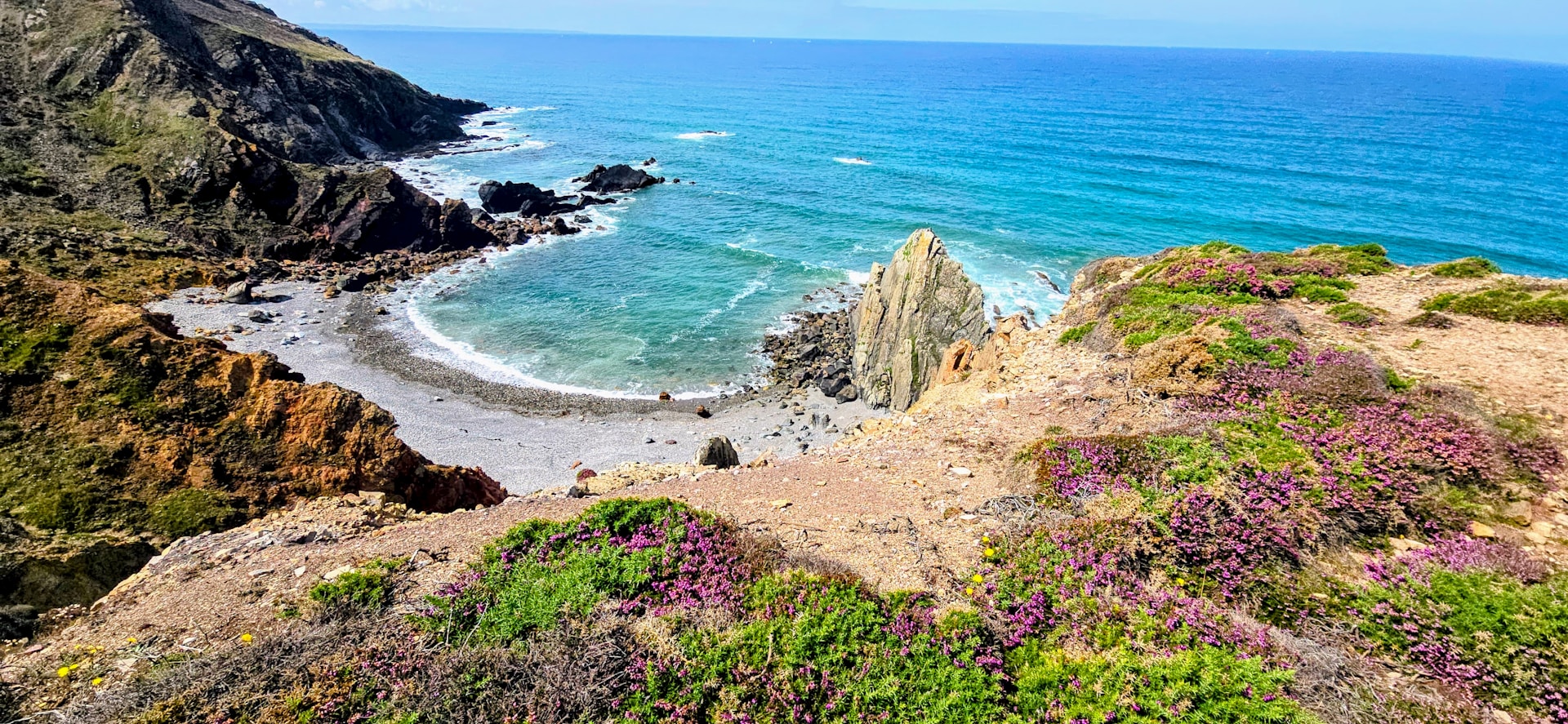
The Crozon Peninsula is the wild heart of Finistère, the “end of the earth” in western Brittany. It is a place of Atlantic light and granite, where jagged cliffs plunge into turquoise coves, heather moors roll down to secluded beaches, and tiny chapels watch over fishing villages that seem unchanged for decades.
If you’re looking for a manicured Riviera, this isn’t it. Crozon is raw, unhurried, and still mostly French. The crowds are modest compared to the Côte d’Azur, and even in August you can find a quiet stretch of sand if you’re willing to walk ten minutes further than everyone else.
In 2026, new coastal footpath signage, expanded summer bus routes, and a handful of thoughtful eco-renovations in old farmhouses have made it easier than ever to explore without a car and to stay in characterful places. Meanwhile, the cliffs and chapels are exactly as they’ve always been – battered by wind, soaked in stories, and spectacularly beautiful.
Whether you have a 4 day itinerary for Crozon Peninsula or 7 days in Crozon Peninsula, you’ll find a rhythm here: morning hikes along the GR34 coastal trail, long lunches of oysters and crêpes, afternoons swimming or surfing, and evenings watching the sun sink behind the silhouetted Tas de Pois rocks at Camaret.
Table of Contents
- 1. Understanding the Crozon Peninsula
- 2. Best Bases & How to Choose Your Village
- 3. 4–7 Day Itineraries (Detailed Daily Plans)
- 4. Towns, Sub-Areas & Landscapes (18+ In-Depth Profiles)
- 5. Regional Cuisine & Where to Eat
- 6. Evenings on the Peninsula
- 7. Events & Festivals 2026–2027
- 8. Day Trips Beyond Crozon Peninsula
- 9. Cultural Etiquette & Local Customs
- 10. Practical Travel Advice & Money-Saving Tips
- 11. Summary & Final Recommendations
Understanding the Crozon Peninsula
Geographically, the Crozon Peninsula juts out into the Atlantic like a three-pronged claw between Brest to the north and Douarnenez to the south. It’s defined by three main “arms”: the northern side facing the Rade de Brest, the western tip around Camaret-sur-Mer and the Pointe de Pen-Hir, and the southern flank along the Baie de Douarnenez.
What ties the region together is the GR34 coastal path, the legendary “sentier des douaniers” (customs officers’ path) that circles the peninsula. Over multiple trips, I’ve walked almost every kilometer of it here – from the quiet inlets of the Aber to the exposed cliffs of Pen-Hir and the forested creeks of Morgat. If you like hiking, this alone is reason to visit.
Culturally, Crozon is very much Breton: bilingual road signs, bagpipes (binioù), fest-noz dances, and a deep attachment to the sea. Fishing, agriculture, and small-scale tourism sustain most villages. The tourism that does exist skews toward French families, hikers, and surfers. English is understood in the main towns but far less in the backcountry; a few phrases of French (or even Breton greetings like “Demat”) go a long way.
Best Bases on the Crozon Peninsula
Over the years I’ve stayed in most of Crozon’s main villages. Each has a distinct character and works better for certain types of trips.
- Crozon town – Best all-round base. Central, with supermarkets, weekly market, and easy access by car or summer buses to almost everywhere.
- Morgat – Beach resort feel; great for families and first-timers. Direct access to sea caves and coastal walks.
- Camaret-sur-Mer – Atmospheric harbor town; perfect for sunsets, painters, and cliff walks at Pen-Hir.
- Roscanvel / Pointe des Espagnols – Quiet and wild; best for walkers and couples wanting solitude.
- Trez-Bellec / Telgruc-sur-Mer – Wide sandy beaches; good for relaxed, less-touristy stays.
- Argol & inland hamlets – Rural, slow, and budget-friendly; ideal if you have a car and want a farm stay.
For a first trip of 4–5 days in Crozon Peninsula, I suggest basing in Morgat or Crozon. For 6–7 days in Crozon Peninsula, consider splitting your stay: half in Morgat/Crozon, half in Camaret-sur-Mer or Roscanvel for a different feel.
4–7 Day Itineraries for Crozon Peninsula (2026)
Below are flexible itineraries you can adapt depending on whether you want 4, 5, 6, or 7 days in Crozon Peninsula. I’ve written them as if I’m traveling with you: where we actually walked, ate, swam, and what surprised us. Each day mixes must-see attractions in Crozon Peninsula with quieter corners and local food in Crozon Peninsula.
3.1 A 4 Day Itinerary for Crozon Peninsula – Essentials & Iconic Views
If you have just four days in Crozon Peninsula, you’ll want to prioritize the headline landscapes: Pointe de Pen-Hir, Cap de la Chèvre, Morgat’s sea caves, and a taste of the Rade de Brest side.
Day 1 – Morgat & Cap de la Chèvre: First Taste of the Cliffs
I usually start my Crozon trips in Morgat. Arriving by late morning, I like to drop my bags at a small guesthouse behind the seafront, then walk straight down to the wide, sandy beach. Morgat’s crescent bay, framed by pine-covered cliffs, is where you feel the peninsula exhale.
Morning in Morgat: Stroll the promenade, grab a coffee and a kouign-amann from the bakery near the harbor (still warm if you’re early), and sit on the low wall watching kids build sandcastles while paddle boarders head out toward the headland.
On my last visit in spring 2026, I rented a kayak from the harbor around 10:00. Sea conditions were calm, and we paddled toward the grottes de Morgat (sea caves), slipping into turquoise caverns streaked with iron-red and emerald rock. Guides still run classic boat tours, but if you’re comfortable on the water, kayaking feels more intimate.
- Tip: Tide and swell matter. Cave tours often run only at certain states of tide; check the schedule the day before, especially in shoulder seasons.
- Family-friendly: The shorter boat tours are ideal with kids; kayaks are better with teens and adults.
Afternoon: Hike to Cap de la Chèvre
After lunch (I usually opt for a simple galette complète at a crêperie on the harbor), lace up for your first slice of the GR34 coastal trail. The path climbs south from Morgat through maritime pines before opening to vast maritime heathland at Cap de la Chèvre.
The hike Morgat–Cap de la Chèvre return is about 13–16 km depending on the route. The first time I did this, a soft sea mist lifted just as we reached the cape, revealing a bowl of cliffs plunging into a glassy, deep-blue Atlantic. White-sailed boats were scattered like confetti below. It’s one of those must-see attractions in Crozon Peninsula that still feels wild.
- Romantic angle: Find a quiet spot among the gorse for a late-afternoon picnic; the light here around 17:00–19:00 in summer is pure gold.
- Adventurous option: Extend south to peek down on the hidden coves of Île Vierge (now largely closed to direct beach access for erosion control, but stunning from above).
Evening in Morgat
Back in Morgat, grab a drink on the terrace of a harbor bar. In high season there’s often a busker playing Breton tunes or soft rock as the sky turns pink over the anchored boats. Walk barefoot on the darkening sand; sometimes phosphorescence sparkles under the breaking waves on very dark nights.
Day 2 – Camaret-sur-Mer & Pointe de Pen-Hir: Cliffs, Art, and Sunset
On my second day, I like to drive (or in summer, take the seasonal bus) to Camaret-sur-Mer, about 20–25 minutes from Morgat. Camaret is one of the best places to visit in Crozon Peninsula: an old fishing port turned artists’ haunt, with a colorful seafront and access to the peninsula’s most dramatic cliffs.
Morning: Harbor & Vauban Tower
Start with a slow walk along the Quai Toudouze. Painters often set up their easels to capture the rusting hulls of old fishing boats beached near the Chapelle Notre-Dame-de-Rocamadour. This small chapel, rebuilt after WWII, is filled with maritime ex-votos: model ships and plaques left by sailors saved from storms.
Beside it rises the ochre Vauban Tower, part of the coastal defenses designed by Louis XIV’s engineer. Climb up for views across the harbor and out to the Tas de Pois rock stacks at Pointe de Pen-Hir.
Lunch & Art
Camaret’s seafront restaurants can be touristy, but a few still serve excellent seafood. I’m partial to ordering a platter of fruits de mer – oysters from the nearby Rade de Brest, whelks, langoustines – and a glass of crisp Muscadet. If you’re watching your budget, opt instead for a takeaway galette-saucisse (Breton sausage wrapped in a buckwheat crêpe) eaten on a bench by the harbor.
After lunch, wander up into the backstreets. You’ll find small galleries and craft shops featuring local painters, ceramicists, and photographers capturing the ever-changing light on Pen-Hir’s cliffs.
Afternoon & Sunset: Pointe de Pen-Hir
The walk from Camaret center to Pointe de Pen-Hir takes about 45–60 minutes each way, or you can drive and park near the headland. Every visit, I’m floored by the raw scale of this place: vertical cliffs dropping into foaming water, and the jagged “Tas de Pois” rock stacks marching out into the sea.
On a clear day you can see all the way to the Crozon’s southern arm and the distant Pointe du Raz. The memorial “Cross of Lorraine” here commemorates the Free French forces of WWII; it’s a poignant spot to reflect as the wind roars around you.
- Adventurous: Local guides offer climbing and abseiling on the Pen-Hir cliffs; book ahead in summer.
- Family-friendly: Stay well back from cliff edges with children; paths can be slippery after rain.
Stay for sunset if the weather’s kind. The sun often drops right behind the Tas de Pois, turning sea spray into misty gold. Bring a windbreaker; I’ve shivered here even in August.
Day 3 – Crozon Town, Aber & Rade de Brest Coast
By Day 3, it’s time to explore the quieter northern side of the peninsula, facing the Rade de Brest. I like to start in Crozon town itself. On Tuesday mornings, the weekly market fills the main square with cheese stalls, fishmongers, and farmers selling artichokes and cauliflowers – the backbone of local agriculture.
Morning: Crozon Market & Church
Grab picnic supplies at the market: a wedge of raw-milk cheese, some rillettes de maquereau (mackerel spread), ripe tomatoes, and a crusty baguette. Pop into the parish church to see its carved wooden calvary – a reminder that you’re in the land of enclos paroissiaux, the elaborate parish closes that dot rural Finistère.
Afternoon: Aber & Rade de Brest Views
Drive or cycle north to the Aber, an estuarine inlet that feels a world away from Pen-Hir’s drama. On a calm tide, mirror-smooth water reflects moored boats and wooded slopes. The first time I came here, we arrived at low tide, when the mudflats were exposed and herons stalked the shallows – a quiet, contemplative side of Crozon.
- Hidden gem: Follow the GR34 along the Aber’s edge; most visitors don’t stray far from the small parking lot, so the path is peaceful.
- Family-friendly: Flat paths and the fascination of crabs and shells at low tide make this easy with kids.
If time allows, continue toward Pointe de Roscanvel or the fortifications near Pointe des Espagnols (more on these later), for big views back toward Brest and its naval installations.
Evening: Quiet Dinner in Crozon or Morgat
By Day 3, I often crave something simple: a hearty cotriade (Breton fish stew) or far breton (prune custard cake) in a small bistro. Book ahead on weekends, especially July–August.
Day 4 – Southern Beaches & Telgruc-sur-Mer
For your final day in a 4 day itinerary for Crozon Peninsula, wind down with beaches and gentle walks on the southern side facing the Baie de Douarnenez.
Morning: Trez-Bellec & Telgruc-sur-Mer
Drive to Plage de Trez-Bellec, a huge sweep of sand near Telgruc-sur-Mer. At low tide the beach seems to stretch forever, and even in peak season it’s easier to find space here than at Morgat.
- Family-friendly: Shallow waters make this one of the best places for younger kids to paddle.
- Romantic: Walk hand-in-hand along the damp sand at the water’s edge; the curving bay and distant headlands are quietly beautiful.
Telgruc village itself is modest but pleasant; stock up on snacks or coffee at the café by the church.
Afternoon: Sainte-Anne-la-Palud or Lost Coves
If you’re driving and don’t mind heading slightly off-peninsula, continue to Sainte-Anne-la-Palud – a wild, dune-backed beach famous for its annual pilgrimage (pardon) and long, open horizon. I’ve often ended trips here, sitting in the dunes watching kite-surfers carve up the late-afternoon wind.
Alternatively, explore smaller coves back toward Crozon – your accommodation host will likely have a “secret” favorite to suggest. These are the hidden gems in Crozon Peninsula that don’t make the Instagram rounds as much as Pen-Hir, but which stay in your memory.
Head back to your base, pack slowly, and promise yourself you’ll return for a longer stay – perhaps a 6 day itinerary for Crozon Peninsula next time.
3.2 A 5 Day Itinerary for Crozon Peninsula – Adding Depth & Inland Villages
With 5 days in Crozon Peninsula, you can follow the 4-day backbone and add an inland day for chapels, forests, and rural life. I recommend inserting this as Day 3 or 4 depending on weather (save cliff days for clear skies).
Day 5 (or 3) – Argol, Landévennec & Aulne Maritime
Argol is one of my quiet obsessions on the peninsula: a small inland village with a classic Breton enclos paroissial (parish close) and a local museum of rural life. I spent a rainy afternoon here in autumn 2025, tucked under an umbrella as church bells echoed over the fields.
Visit the Église Saint-Pierre d’Argol and its calvary, then pop into the Maison des Vieux Métiers Vivants (House of Old Crafts) if it’s open – demonstrations of traditional weaving, woodwork, and farm tools help you understand the peninsula beyond its beaches.
Landévennec & the Aulne Estuary
Continue down winding lanes fringed with hydrangeas to Landévennec, officially just outside the strict Crozon Peninsula but spiritually part of it. The ruined abbey of Landévennec is one of Brittany’s most atmospheric sites: ancient stone walls softened by moss, overlooking the sinuous Aulne river as it widens toward the sea.
I remember wandering alone among the ruins one March morning, the only sound the patter of rain on laurel leaves. The on-site museum deftly tells the abbey’s story from early Christian times through Viking raids and monastic reforms.
- Hidden gem: The old naval graveyard visible across the Aulne, where decommissioned warships once lay rusting in lines. Many have now been dismantled, but it remains an eerie, fascinating sight.
Have lunch at the simple creperie in the village or picnic by the water’s edge. In the afternoon, stretch your legs on one of the marked trails above the estuary, where chestnut and oak forests feel a world away from Pen-Hir’s bare rock.
3.3 A 6 Day Itinerary for Crozon Peninsula – Two-Base Stay & More GR34
With 6 days in Crozon Peninsula, I suggest three nights in Morgat or Crozon and three nights in Camaret-sur-Mer or Roscanvel. Follow the 5-day plan, then add a day of point-to-point hiking along the GR34 and a day exploring Roscanvel’s fortifications.
Extra Day – GR34 Hike: From Morgat to Camaret (or Reverse)
This is my favorite long day hike on the peninsula: a 20–25 km stretch along dramatic coastline, with forests, heather moors, and cliff-top views. I did it again in May 2026, starting from Morgat at dawn, reaching Camaret in time for a late dinner.
You’ll pass Cap de la Chèvre, hidden coves, and the rugged coast above the Baie de Douarnenez. Plan logistics so you can bus or taxi back to your starting point. Pack plenty of water; while there are occasional beach cafés in summer, on shoulder-season days you may find stretches with no services at all.
- Adventurous: This is a full, tiring day, but the sense of having “earned” your view of the harbor lights in the evening is unforgettable.
Extra Day – Roscanvel & Pointe des Espagnols
Base yourself in or drive to Roscanvel for a day exploring the northern tip of the peninsula. Here, the land narrows to a dagger pointed at Brest, and centuries of fortifications still watch over the narrows.
Walk from village lanes down toward Pointe des Espagnols, where steep paths lead to gun batteries and bunkers carved into the cliffs. On a clear day, the panorama over the Rade de Brest is immense: ferries, naval vessels, and sailboats all weaving between the shores.
Roscanvel feels more residential and less touristy than Morgat or Camaret. When I stayed here, evenings were marked by the smell of woodsmoke and the chatter of neighbors in Breton as much as French. It’s one of the best hidden gems in Crozon Peninsula if you want to feel part of a living community rather than a resort.
3.4 A 7 Day Itinerary for Crozon Peninsula – A Full Week of Coastal Life
Seven days in Crozon Peninsula lets you slow down: repeat your favorite beach, linger over long lunches, and slot in an extra day for pure relaxation or a boat trip to the Île de Sein or Brest harbor from nearby ports.
Use the 6-day itinerary as your framework. For Day 7, I often:
- Return to my favorite cove (weather-dependent).
- Book a sailing trip from Camaret if the winds are fair.
- Or simply spend a slow village day, hopping between cafés, reading on a terrace, and watching the local rhythm.
This “white space” day is crucial: it turns a busy 7 day itinerary for Crozon Peninsula into a holiday that breathes.
Towns, Sub-Areas & Landscapes of the Crozon Peninsula (18+ Detailed Profiles)
Below are the core places that, together, define the character of the peninsula. Think of them as pieces of a mosaic: some make perfect bases, others are day-trip destinations, but all contribute to the region’s sense of place.
1. Morgat – Beachfront Base & Sea Caves
Character: Former sardine port turned relaxed seaside resort, with a broad, south-facing beach and colorful villas. Great for families, first-timers, and anyone who wants to mix hiking with easy swims.
History & Significance: Morgat’s heyday came in the late 19th and early 20th centuries, when wealthy industrialists built seaside villas here. The sea caves along the cliffs to the west have long drawn visitors; early postcards show rowboats edging into the same grottos kayakers explore today.
My Take: On my 2026 visit, I stayed in a converted fisherman’s house two streets back from the beach. Mornings began with the smell of butter and sugar from the bakery, and by 08:30 I’d be swimming in flat, glassy water before the day-trippers arrived.
What to Do:
- Kayak or boat tour to the grottes de Morgat.
- Easy clifftop walks toward Cap de la Chèvre.
- Stand-up paddleboarding in the calm inner bay.
- Evening ice creams along the promenade.
Food: Several crêperies line the seafront; look for menus featuring local cider and andouille de Guéméné (strong smoked tripe sausage) if you’re adventurous. A small weekly market appears in high season with regional products.
Best For: Families, beach lovers, soft adventurers, and as a base for a 4 day itinerary for Crozon Peninsula.
2. Crozon Town – Central Hub & Everyday Life
Character: Modest inland town, administrative heart of the peninsula. Less pretty than Morgat or Camaret but more practical, with supermarkets, pharmacies, and services.
History: Crozon developed as the inland center supporting outlying fishing hamlets and farms. Its church and square reflect the classic Breton pattern: a granite church, calvary, and war memorial at the core.
Why Visit: For the weekly market, local services, and a sense of everyday Breton life. If you rent a gîte nearby, Crozon will be where you buy groceries and chat with shopkeepers.
My Tip: I like to sit at a café on market day (usually Tuesday) with a bowl of café crème and watch the swirl: grandmothers inspecting cheese, teenagers buying churros, hikers comparing maps.
3. Camaret-sur-Mer – Harbor Lights & Artists’ Town
Character: Lively harbor with a distinctly artistic, bohemian edge. Cafés and restaurants line the quay; above, narrow streets climb to viewpoints and small galleries.
History: Once a major lobster port, Camaret suffered as fish stocks declined. Tourism and art filled the gap, but the town has retained a certain gritty charm – epitomized by the rusting boat skeletons near the Vauban Tower.
Personal Memory: One damp September evening I watched an older painter in a blue smock set up his easel under a dripping awning to capture the reflections of harbor lights in the rain-streaked water. That mix of persistence and poetry sums up Camaret for me.
Best For: Evenings out, sunset views at Pen-Hir, as a base for 5–7 days in Crozon Peninsula if you love harbor life.
4. Pointe de Pen-Hir – Iconic Cliffs & Tas de Pois
Character: The most photographed viewpoint on the peninsula: sheer cliffs, sea birds circling, and jagged rock stacks offshore.
Significance: The Cross of Lorraine memorial and WWII bunkers testify to Pen-Hir’s strategic importance. Today it’s a key stop on every travel guide for Crozon Peninsula.
Practical Tips:
- Go early or late to avoid peak tour bus times (roughly 11:00–16:00 in August).
- Good walking shoes are essential; paths are rocky and uneven.
- In strong winds or storms, keep well back from edges; rogue gusts are no joke here.
5. Cap de la Chèvre – Heathland & Ocean Vistas
Character: Broad headland covered in low heather, gorse, and wind-pruned pines, dropping into small inlets and dramatic cliffs.
Why It’s Special: Compared to Pen-Hir, Cap de la Chèvre feels more spacious and contemplative. Paths crisscross the heath, and you can easily find a quiet corner where the only sounds are wind and distant waves.
My Favorite Moment: One October, the gorse was bright yellow and the heather a muted purple, under a sky racing with clouds. We sat wrapped in scarves, passing a flask of hot coffee, watching a lone fishing boat trace slow arcs below.
6. Île Vierge & Southern Coves – Postcard Blues
Character: Once a “secret” cove, now famous on social media for its Mediterranean-looking turquoise water. Direct access to the tiny beach has been restricted in recent years to protect fragile cliffs and vegetation.
Responsible Visit: Enjoy Île Vierge from above via signed viewpoints along the GR34. Respect barriers and erosion control measures; every season I see new collapses along this stretch, a reminder of how sensitive the cliffs are.
7. Roscanvel – Quiet Peninsula Tip & Fortified Coast
Character: Low-key village strung along a ridge above the Rade de Brest, with scattered hamlets and a deeply local feel.
What It’s Known For: Coastal defenses from different eras – from Vauban-era forts to WWII bunkers – and sweeping views from Pointe des Espagnols and neighboring promontories.
My Experience: I rented a tiny stone house here for a week one spring. Evening walks took me through silent lanes perfumed with hawthorn, down to hidden inlets where only a couple of dinghies bobbed in the tides.
8. Pointe des Espagnols – Gateway to Brest
Character: Steep, fortified point overlooking the narrow entrance to the Rade de Brest. Strategic, windswept, and visually striking.
History: The name recalls 16th-century Spanish troops who once tried to establish a foothold here. Later, French defenses turned the area into a key military zone. Many fortifications can be visited on signed trails.
9. L’Aber – Tidal Inlet & Quiet Shores
Character: Sheltered estuary with moored boats, mudflats, and silent, reflective water.
Best For: Gentle walks, birdwatching, peaceful picnics – a soothing counterpart to the Atlantic side.
10. Telgruc-sur-Mer & Plage de Trez-Bellec – Sunlit Sands
Character: Small inland village with services, plus a wide, sunlit beach a short drive downhill.
Why Go: Fewer crowds than Morgat, easier parking, and a feeling of space. The bay curves gracefully, especially photogenic at low tide with wet sand reflecting the sky.
11. Tregarvan & Aulne Maritime – Riverine Calm
Character: Tiny riverside hamlet above the Aulne, technically just off the core peninsula but integral to its atmosphere.
Highlight: The tidal Aulne here is framed by wooded hills; at high tide it resembles a broad lake, at low tide a sinuous river bordered by mud and reeds. Perfect for contemplative walks and photography.
12. Argol – Parish Close & Rural Heritage
Character: Quiet agricultural village with a strong sense of Breton identity.
Known For: Its parish close, folk museum, and occasional fest-noz events where locals dance traditional Breton gavottes late into the night.
13. Landévennec – Abbey Ruins & Mild Microclimate
Character: Sheltered village on the Aulne estuary, with palm trees and a notably mild microclimate.
Highlight: The abbey ruins and the small ship graveyard across the water; a place where history, industry, and nature entwine.
14. Saint-Hernot & Woodland Above the Sea
Character: Patchwork of woods, clearings, and cliff paths between Morgat and Cap de la Chèvre.
Why Visit: To access some of the most beautiful stretches of GR34 and to peer down on hidden coves like Île Vierge from above.
15. Pointe de Dinan – Natural Arch & Wild Headland
Character: Less visited than Pen-Hir but nearly as spectacular, with a natural arch and rugged promontories.
Tip: Combine with a beach stop at Goulien or Lostmarc’h; the headland feels at its wildest in blustery weather when waves slam into the arch below.
16. Plage de Goulien – Surfers’ Beach
Character: Long, open beach on the west coast, oriented to catch Atlantic swells.
Activities: Surfing lessons, bodyboarding, dune walks. The vibe is youthful but mellow; campervans line the upper parking in summer, making coffee on gas stoves at sunrise.
17. Lostmarc’h – Megaliths & Atlantic Power
Character: Wilder, more elemental than Goulien, with standing stones on a bluff and waves hammering the shore.
My Memory: One winter, I watched a storm front roll in here: clouds like charcoal, breakers exploding into white chaos, and the wind so strong it stole your breath. An unforgettable, humbling encounter with the Atlantic.
18. Sainte-Anne-la-Palud & Baie de Douarnenez – Pilgrimage & Dunes
Character: Vast dune-backed beach and a significant pilgrimage site for Breton Catholics.
Events: The Pardon de Sainte-Anne, an annual gathering typically in August, draws thousands for processions, open-air Mass, and traditional music. Check 2026 dates if you want to experience this intense cultural moment.
Regional Cuisine & Where to Eat on the Crozon Peninsula
Crozon’s cuisine is anchored in the sea and the fields: fish, shellfish, buckwheat, butter, and apples. You won’t find the elaborate sauces of Paris here; instead, expect simple, honest dishes served generously.
Signature Dishes & What to Try
- Galettes & crêpes: Savory buckwheat galettes (try one with local cheese and ham) and sweet wheat crêpes with salted butter caramel.
- Fruits de mer: Oyster platters, whelks, prawns, and crab – often best in Camaret or Morgat.
- Cotriade: Rustic fish stew with potatoes and onions; ask for it in traditional bistros.
- Far breton: Dense custard-like cake with prunes; perfect with coffee.
- Kouign-amann: Infamous buttery, sugary pastry from Brittany; dangerously addictive.
- Breton cider: Served in bowls; choose doux (sweet) or brut (dry).
Where to Taste Local Food in Crozon Peninsula
- Morgat: Seafront crêperies for casual meals, plus a few bistros offering daily fish specials.
- Camaret-sur-Mer: Best for seafood platters; check blackboards for plateau de fruits de mer.
- Crozon Town: Good value lunch menus (formule) at local cafés and restaurants popular with residents.
- Argol & Inland: Farm-stays (fermes-auberges) occasionally open for hearty traditional dinners – ask at the tourist office for current recommendations in 2026.
Markets & DIY Picnics
For budget-conscious travelers, markets and supermarkets are your allies. The Tuesday market in Crozon and seasonal markets in Morgat and Camaret offer fresh produce, cheese, cured meats, and sometimes ready-made crêpes.
I often assemble picnic lunches: baguette, local cheese, tomatoes, fruit, and maybe a tin of quality sardines – then eat them on a headland or beach. It’s cheaper, more flexible, and usually comes with a million-euro view.
Evenings on the Crozon Peninsula
Evenings on Crozon are gentle rather than wild. This is a place of harbor lights, church bells, and the murmur of families strolling the promenade, not nightclubs.
Village Squares & Harbors
- Camaret-sur-Mer: The liveliest spot after dark, with restaurants and bars along the quay. In July–August, impromptu concerts and open-air events are common.
- Morgat: Beachfront bars with terraces; occasional live music in high season.
- Crozon Town: Quiet but pleasant for an evening walk around the square after dinner.
Sunset Viewpoints
- Pointe de Pen-Hir: For drama and big skies.
- Cap de la Chèvre: For softer, more meditative light.
- Goulien or Lostmarc’h: For sunsets over crashing surf.
Fest-Noz & Local Concerts
In summer and around certain festivals, you may find fest-noz (night festivals) in villages like Argol, Telgruc, or Crozon – evenings of live traditional music and group dances open to all.
My advice: don’t be shy. Locals will happily pull you into the circle and teach you the steps. It’s one of the most authentic cultural experiences in Crozon Peninsula.
Events & Festivals in 2026–2027
Exact dates vary year to year; check the Office de Tourisme de Presqu’île de Crozon website closer to your trip, but here are recurring highlights for 2026–2027:
- July–August 2026: Weekly summer markets, open-air concerts, and temporary art exhibitions in Morgat and Camaret.
- August 2026: Pardon de Sainte-Anne-la-Palud – large pilgrimage with processions and Mass near the dunes.
- Late July 2026: Local sea festival in Camaret-sur-Mer, with blessing of boats and maritime parades (dates subject to municipal confirmation).
- Autumn 2026: Harvest and cider festivals in inland villages around Argol and Landévennec.
- 2027: Expect repeat seasonal programming, plus occasional sailing regattas in the Rade de Brest visible from Roscanvel and Pointe des Espagnols.
Day Trips from the Crozon Peninsula
Once you’ve explored the best places to visit in Crozon Peninsula, you might want to dip into neighboring regions:
Brest
Access: About 1–1.5 hours by car via the bridge at Térénez and main roads. No direct train from Crozon; buses are limited.
Why Go: Urban contrast with museums (including Océanopolis aquarium), naval history, and a cable car crossing the harbor.
Douarnenez
Access: Approximately 1 hour’s drive south around the Baie de Douarnenez.
Highlight: Old fishing port, maritime museum with historic boats, and lovely coastal walks.
Pointe du Raz
Access: Around 1.5 hours by car. Combine with a full-day loop including Audierne.
Why Go: Another legendary “end of the earth” cliff, facing the Île de Sein, with dramatic sea currents.
Cultural Etiquette & Local Customs
Bretons are generally reserved but warm once you break the ice. A few guidelines will help your trip go smoothly:
- Greetings: Always say Bonjour when entering a shop or café, and Au revoir when leaving. It’s basic politeness.
- Language: French is the norm; English is spoken in touristy spots but less in small villages. A few simple phrases in French are appreciated.
- Religious Sites: Dress modestly in churches and chapels; speak quietly. Many chapels like Rocamadour in Camaret are active places of worship.
- Nature Respect: Stay on marked paths at fragile cliffs and dunes. Don’t pick protected plants or disturb nesting seabirds.
- Dining: Table service is the norm. Wait to be seated; tipping is appreciated but modest (round up or add 5–10% for good service).
- Driving & Parking: Don’t block farm gates or narrow lanes, even briefly – rural access matters to locals.
At festivals and fest-noz events, follow locals’ lead: join dances if invited, applaud musicians, and avoid loud, drunken behavior – these are community gatherings, not rowdy concerts.
Practical Travel Advice & Money-Saving Tips
Getting To & Around Crozon Peninsula
Nearest Hubs:
- Brest: Airport and TGV station; main gateway if arriving by plane or high-speed train.
- Quimper: Another regional hub with train connections.
By Car: A car is the most flexible way to explore multiple towns and hidden gems in Crozon Peninsula, especially outside July–August when buses are sparse.
- Driving from Brest: about 1–1.5 hours via Pont de Térénez.
- Driving distances on the peninsula: Morgat–Camaret ~20–25 minutes; Crozon–Roscanvel ~25–30 minutes; Crozon–Telgruc ~20 minutes.
- Parking: Free or low-cost in most villages; dedicated car parks at main viewpoints. Avoid parking on verges near cliffs.
By Public Transport:
- Summer-season buses connect Crozon, Morgat, Camaret, and some beaches. Schedules are limited; plan ahead.
- Outside peak season, services drop significantly. Without a car, base yourself in Crozon or Morgat and focus on nearby walks.
Car Rental & Driving Requirements
Rent cars in Brest or Quimper for best choice; limited options exist in Crozon itself. International visitors typically need:
- A valid driver’s license from their home country.
- For some nationalities, an International Driving Permit (IDP) is recommended; check current French regulations before 2026 travel.
- Minimum age usually 21–25 depending on rental company; surcharges may apply for younger drivers.
Roads are generally narrow and winding but well-maintained. Drive slowly in villages and be prepared for tractors, cyclists, and hikers.
Visas & Entry (2026)
France is part of the Schengen Area. As of 2026:
- EU/EEA/Swiss nationals can enter freely with ID card or passport.
- Many other nationalities can visit short-term (up to 90 days in 180) visa-free but may need to complete ETIAS authorization (expected to be implemented for some travelers; check official EU sources before departure).
- Others require a Schengen visa obtained before travel.
Always check up-to-date requirements from official French consular websites before planning your trip.
SIM Cards & Connectivity
- French SIM cards are available at airports, major supermarkets, and phone shops in Brest or Quimper.
- Look for prepaid plans with generous data; coverage on the peninsula is generally good in villages but can be weaker on some remote cliffs.
- EU roaming rules allow many European SIMs to work in France at domestic rates; non-EU travelers should consider local SIMs or eSIMs.
Money-Saving Tips
- Travel off-peak: Late May–June and September 2026 offer lower prices and fewer crowds, with often excellent weather.
- Self-cater: Rent a gîte or apartment with a kitchen; cook some meals using local market produce.
- Picnics: Turn lunch into a picnic; dinner out is usually more atmospheric and worth the splurge.
- Free activities: Most of the best things to do in Crozon Peninsula – hiking, beachcombing, exploring chapels – are free.
- Fuel up smart: Petrol is often cheaper at supermarket stations than at small rural pumps.
Best Seasons & What They’re Good For
- Spring (April–June): Wildflowers along the GR34, fewer visitors, cooler but pleasant temperatures. Great for hiking and photography.
- Summer (July–August): Warmest water, fullest event calendar, but also busiest and priciest. Ideal for family beach holidays and fest-noz experiences.
- Autumn (September–October): Still mild sea, golden light, quieter villages. Excellent for a 5 day itinerary for Crozon Peninsula focused on walking and food.
- Winter (November–March): Wild storms, short days, many restaurants closed or on reduced hours. Atmospheric for storm-watching and solitude lovers, but not ideal for first-time visitors.
Summary & Final Recommendations
The Crozon Peninsula is less a checklist of sights than a landscape to inhabit for a few days: walking its headlands, eating its seafood, and listening to the wind sing in the pines. If you remember a few key points from this travel guide for Crozon Peninsula, let them be these:
- Base smart: Morgat or Crozon for convenience; Camaret or Roscanvel for atmosphere; Telgruc or Argol for quiet and value.
- Bring boots: The GR34 is the peninsula’s spine, and walking it – even in short segments – reveals the best hidden gems in Crozon Peninsula.
- Eat locally: Crêpes, seafood, cider, market picnics – simple food, but memorable when eaten overlooking cliffs or harbors.
- Respect the elements: The Atlantic sets the tone. Plan your 4, 5, 6, or 7 day itinerary for Crozon Peninsula with weather flexibility built in, and always carry a windproof layer.
- Choose your season: For first-timers, May–June or September are ideal; for festive energy and warm seas, opt for July–August and book early.
After many visits, I still find new corners: a chapel I’d never noticed, a cove with just two footprints, a café where the owner remembers my face from last year. That’s the magic of Crozon Peninsula: it rewards both first glances and long, lingering looks.