Why Visit the Étretat Cliffs – And Why I Keep Going Back
Standing on the chalky edge of the Étretat Cliffs with the Atlantic wind in your face is one of those rare travel moments that silences you. I’ve been coming here regularly since my student days in Normandy, and even now, living a short drive away in Le Havre, I still find excuses to return – in winter storms, in quiet February sun, on packed August evenings when the sea turns molten at sunset.
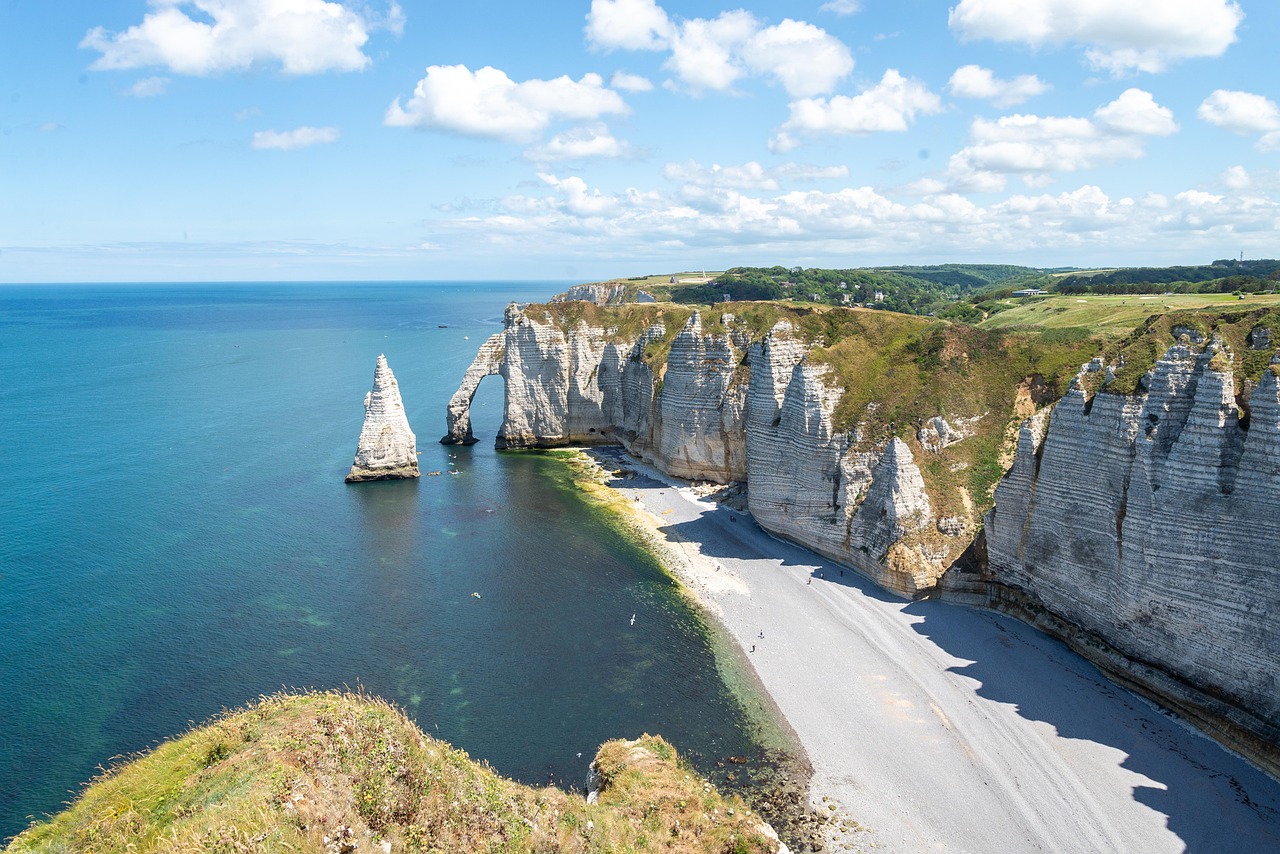
Étretat is not just “a nice coastal stop in Normandy.” It’s a place that has obsessed painters, writers, aviators, and architects for over a century. The white chalk arches – l’Aiguille (the Needle), la Porte d’Aval, and la Manneporte – feel almost theatrical, especially when the tide pulls back and reveals sea caves you can walk into. The cliffs are taller than they look in photos, the sea is louder, the drop is steeper, and the town tucked beneath them is more intimate than most imagine.
This travel guide is written very much from ground level: from sand in my shoes, salted hair, and too many paper cones of hot moules-frites eaten on the seawall. I’ll walk you through the famous viewpoints and the quiet corners: where to sit when the tourist crowds have thinned, which paths are safe at high tide, where locals actually eat, and how to structure 1, 2, or 3 days in Étretat depending on your appetite for walking, romance, or family adventure.
If you’re looking for a 1 day itinerary for Étretat Cliffs, a 2 day itinerary for Étretat Cliffs, or a fully immersive 3 day itinerary for Étretat Cliffs, you’ll find them here – along with all the practical travel tips for Étretat Cliffs, the best time to visit, and cultural nuances that make this little Norman town more than just a pretty backdrop.
Table of Contents
- Why Étretat Cliffs Are Special
- Quick Overview & How to Use This Travel Guide
- Day 1 – Iconic Étretat: Cliffs, Arches & First Impressions
- Day 2 – Hidden Paths, Culture & Local Life
- Day 3 – Day Trips, Deeper Walks & Slow Moments
- Main Viewpoints & Adjacent Sites (8 In-Depth Profiles)
- Eating & Drinking Around Étretat Cliffs
- Where to Stay & How to Get There Efficiently
- Étretat After Dark & Off-Hour Magic
- What’s New: Events & Changes in 2026–2027
- Best Day Trips from Étretat
- Cultural Etiquette & Local Customs
- Tickets, Opening Hours & On-Site Logistics
- Practical Travel Advice (Money-Saving, SIM, Transport, Visas)
- Best Time to Visit Étretat Cliffs
- Final Summary & Key Takeaways
How to Use This Travel Guide
This is a long, immersive travel guide for Étretat Cliffs, written as if I’m walking beside you. If you’re short on time, start with the itineraries (Days 1–3), then dip into the detailed profiles of each major cliff section and viewpoint when you need more detail.
- If you have 1 day in Étretat Cliffs, prioritize the classic west and east cliff walks and a sunset viewpoint.
- With 2 days in Étretat Cliffs, add gardens, local food, and a slower exploration of the town and beach.
- With 3 days in Étretat Cliffs, you can fold in a coastal hike or day trip to other Alabaster Coast villages.
Whenever I mention walking on the beach or under the arches, assume one crucial rule: check the tide times. The sea here moves fast and without mercy. Locals respect it; visitors sometimes underestimate it. I’ll flag the risky spots clearly.
Day 1 – Meeting the Icons: A Classic 1 Day Itinerary for Étretat Cliffs
When friends visit me in Normandy and only have 1 day in Étretat Cliffs, Day 1 is what I give them: the essentials, the camera-roll-fillers, the “I can’t believe this is real” angles. This day is suitable for couples, families with older kids, and solo travelers who don’t mind some uphill walking.
Morning: First Glimpse from the Pebble Beach & Western Cliffs
I like to arrive around 9:00–9:30 a.m. – early enough to beat the coach groups but late enough that the boulangeries are properly awake. The town is small, and parking can be tight by midday in high season.
Walk Through Town to the Beach
From the central parking area (Place du Général de Gaulle), I usually grab a takeaway coffee and a still-warm croissant aux amandes from a side-street bakery. As you walk down the main street, Rue Alphonse Karr, the sea appears as a thin blue line between stone façades. You hear it before you see it.
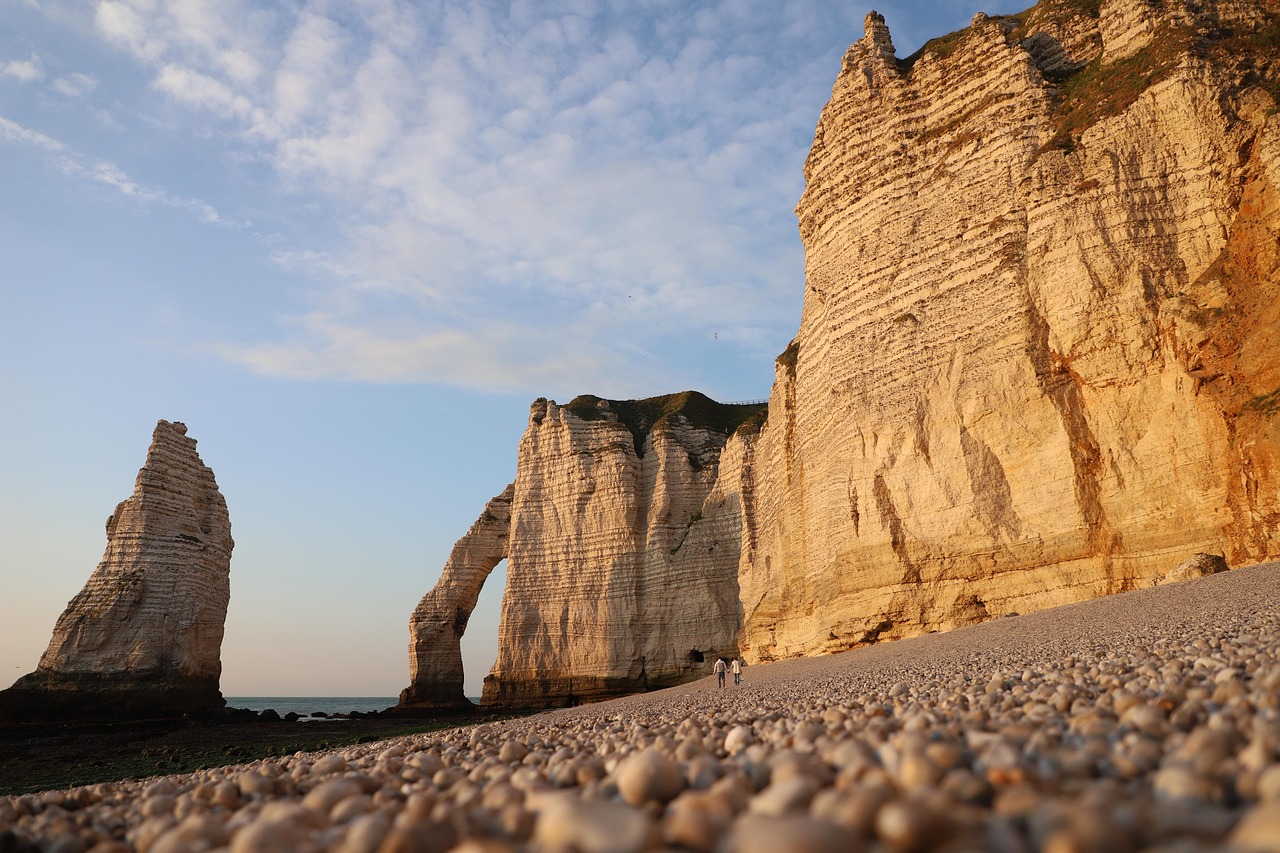
The promenade opens suddenly: a broad, gently curving stretch of grey pebbles, framed on both sides by soaring white cliffs. The western side is dominated by the pointed Aiguille and the massive stone arch of Porte d’Aval; the eastern side rises more gently towards the chapel of Notre-Dame de la Garde. Take five minutes just to stand there and orient yourself.
Climb the Western Cliffs to Porte d’Aval & L’Aiguille
Turn right (west) along the promenade. A broad paved path leads you past old wooden bathing cabins and a cluster of restaurants. At the far end, a footpath snakes upwards, sometimes stepped, sometimes just compacted earth. This is the start of the Falaise d’Aval walk.
It takes about 15–25 minutes to reach the main viewpoint, depending on how often you stop to look back at the town. I always stop: halfway up, there’s a point where the beach forms a perfect crescent and the houses look like toys.
At the top, you’ll find a grassy headland with a worn dirt track leading closer to the edge. Don’t rush: the best spots are slightly off the main path, but you should always stay behind the wooden posts and rope barriers. This chalk can crumble suddenly after rain.
What to Look For at Falaise d’Aval
- Porte d’Aval – The iconic arch, best viewed from slightly east of it so you get the Aiguille lined up just beyond.
- L’Aiguille – The sharp needle of rock that rises like a stranded sail. Monet painted it obsessively; you’ll see why as the light shifts.
- Sea birds – On quieter mornings, you can hear the cormorants and gulls echoing off the cliff face below.
On my last spring visit, a thin sea mist hung around the base of the Aiguille. It made the needle look like it was floating. A French couple next to me whispered, “C’est irréel…” – “It’s unreal” – which is exactly the right word.
Time & Difficulty
Allow 1.5–2 hours for this western section: walking up, lingering at various viewpoints, and coming back down. The path is not technically difficult, but it is steep in parts. Families with fit kids manage it fine; I’ve seen parents carrying toddlers in hiking packs, but I wouldn’t do it with a stroller.
Midday: Beach-Level Exploration & Lunch
Checking the Tide (Non-Negotiable)
Before you even think about going under the cliffs, check the tide table. Your hotel, the tourist office, and most restaurants display it, and it’s also available online. You want to start any beach-level exploration as the tide is going out, with plenty of margin before it comes back in.
Exploring the Northern Cave & Pebble Beach
On days with a good low tide and calm sea, you can walk along the base of the cliffs to explore small sea caves and rock pools. The chalk here is veined with flint; kids love collecting the smooth dark stones. I still have one on my desk from a winter walk in 2024, a reminder of how cold and clear the sea was that day.
Stay clear of the cliff base itself – bits do fall – and never, ever push your luck with the tide. Every year, firefighters rescue a few stranded visitors who misjudge how quickly the sea returns.
Lunch: Where I Actually Eat
The promenade restaurants are tempting, especially the ones with terrace seating, but they’re hit-and-miss and priced accordingly. I usually walk a few streets back.
- Simple bistro-style – A modest place just off the main street that does reliable moules marinières and grilled fish without the tourist markup. Ask your hotel or host; locals will point you away from the seafront.
- Creperie – Étretat sits between Normandy and Brittany’s culinary zones, so a good galette (savory buckwheat crepe) with local cider is never a bad idea, especially on cooler days.
My typical order on a walking-heavy day is a galette complète (ham, cheese, egg), a green salad, and a dry Normandy cider. Enough fuel without the sleepiness of a three-course lunch.
Afternoon: Eastern Cliffs & Chapelle Notre-Dame de la Garde
In the afternoon, cross to the other side of the beach and tackle the slightly more forgiving eastern cliffs – Falaise d’Amont. The path starts with a paved ramp and stairs leading up behind the casino.
The Chapel & Monument Experiences
It takes about 15–20 minutes to reach the stone chapel of Notre-Dame de la Garde, which sits on a lawned plateau above the town. This is one of my favorite places to bring a book; locals come here to walk dogs or just watch the sky.
Beside the chapel is a modern steel monument, L’Oiseau Blanc, honoring two pioneering French aviators who attempted a transatlantic flight in 1927 and disappeared. The sculpture faces the sea, and if you stand behind it, you can frame both the cliffs and the town through its wings.
Views from Falaise d’Amont
From here, you get what I think is the most complete establishing shot of Étretat: the beach, the town roofs, the western cliffs with the Aiguille and Porte d’Aval all in one frame. Photographers love the late afternoon light here; the chalk glows softly and the town’s colors deepen.
Optional: Further East Along the Cliffs
If you have energy and good shoes, continue east along the coastal path. Within 10–15 minutes, the crowds thin out dramatically. You walk past fields, grazing cows, and wildflowers (in late spring and early summer). There are informal side paths where you can sit well back from the edge and feel almost alone with the sea.
Sunset & Evening: Golden Hour Over the Arches
For sunset on Day 1, you have two prime choices:
- On the eastern cliffs – Watch the sun drop behind the Aiguille and Porte d’Aval. The cliffs go from white to honey to soft pink.
- On the promenade / beach – Sit on the pebbles with a blanket, a baguette, some local cheese, and cider. Families do this a lot in summer; kids run up and down the pebbles, parents watch the changing light.
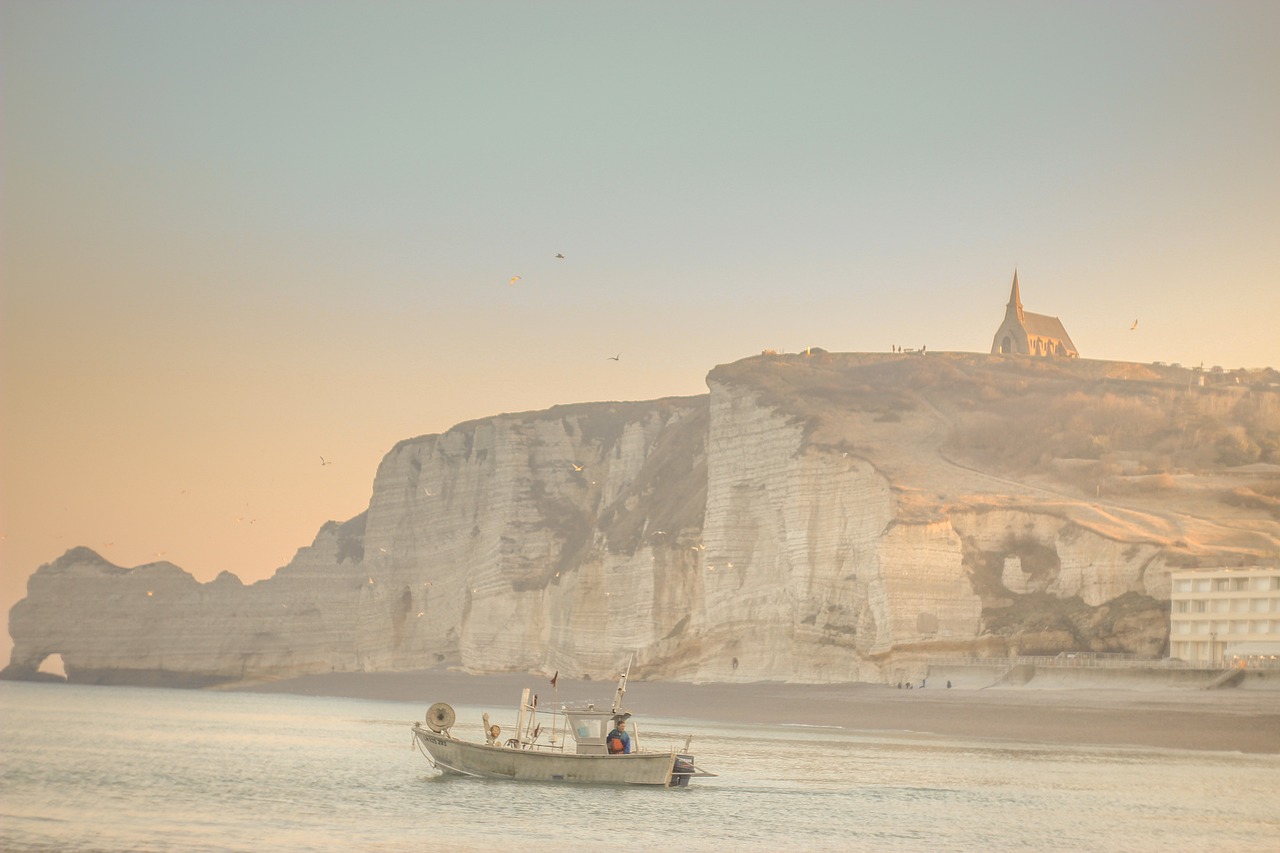
I still remember a July evening in 2025 when the tide was high and the sea unusually calm. The reflection of the cliffs on the water was almost mirror-perfect. A group of teenagers nearby started singing softly; the whole beach just… listened.
After dark, Étretat is quiet but not dead. A few bars stay open, often with local cider, Calvados, and simple snacks. But most visitors turn in early – which is ideal if you’re planning an ambitious second day.
Day 2 – A 2 Day Itinerary for Étretat Cliffs: Gardens, Hidden Corners & Culture
If you have 2 days in Étretat Cliffs, Day 2 is about slowing down and going beyond the postcard angles. You’ve met the cliffs; now you get to know them – and the town – more intimately. This day works beautifully for couples (it’s surprisingly romantic), curious families, and anyone who likes pairing outdoor time with a bit of culture.
Morning: Les Jardins d’Étretat – Surreal Art Above the Sea
Start your second day by returning to the eastern cliffs, but this time with a specific destination: Les Jardins d’Étretat. The entrance is just a short walk from the chapel; signage is clear.
A Brief History & What to Expect
The gardens occupy a historic site where actress Madame Thébault created a garden in the early 20th century, reportedly on advice from Claude Monet himself. In recent years, they’ve been reimagined as a sculptural, almost otherworldly landscape: clipped boxwood mounds, mirrored spheres, faces emerging from greenery, and narrow paths that force you to alter your pace.
I first visited on a gray October morning, half expecting the place to feel flat without strong sun. Instead, the mist gave it a dreamlike mood; the sculptures almost appeared and disappeared between the hedges.
What to Look For
- View platforms – Several small terraces give unique angles on the cliffs and town, often framed by sculpted hedges.
- Soundscapes – Some sections incorporate subtle sound installations; pause and listen.
- Seasonal colors – Spring brings fresh greens; summer adds flowers; autumn gives a softer, muted palette.
Allow 1–1.5 hours to wander, sit, and photograph. It’s a good place to shelter if the wind is strong on the open cliffs, as the hedges break the gusts.
Late Morning: Exploring the Town’s Backstreets
Head back down into town and avoid the direct beach route this time. Instead, zigzag through small residential lanes behind the main street. Here you’ll find half-timbered houses, hidden courtyards, and the quieter face of Étretat.
I like to duck into the small church, Église Notre-Dame d’Étretat, slightly set back from the center. Its interior is simple but atmospheric, and you can feel that this is still a living parish, not a museum.
Lunch: Picnicking Like a Local
On Day 2, I usually skip sit-down lunch in favor of a picnic. Visit a boulangerie for a fresh baguette tradition, a small cheese shop for local Neufchâtel or Camembert de Normandie, and maybe a charcuterie counter for sliced ham or pâté. Add seasonal fruit and a bottle of Normandy apple juice or cider.
Best picnic spots include:
- The grassy area around the chapel (respect the church grounds; keep it tidy).
- A quiet bench in the upper town, away from the main flow of visitors.
- The eastern cliff path, well back from the edge, with careful waste management (take everything with you).
Afternoon: Cultural Experiences & Hidden Corners
Musée du Patrimoine d’Étretat (Local Heritage Museum)
In the old town, visit the local heritage museum if it’s open (hours can be seasonal, check ahead). It’s not flashy, but it does a good job of contextualizing Étretat’s evolution from fishing village to fashionable resort to modern-day tourism hotspot.
Panels explain the life of fishermen, the arrival of 19th-century bathers, and the impact of famous visitors like Guy de Maupassant and Claude Monet. On my last visit in 2025, there was a temporary exhibit on early tourism posters that felt wonderfully nostalgic.
Arsène Lupin & Literary Étretat
Fans of French literature (or the Netflix series “Lupin”) will enjoy spotting references to Arsène Lupin, the gentleman thief created by Maurice Leblanc. Étretat is a key setting in some of the stories, and the town occasionally leans into this with themed walks or small exhibits. Ask at the tourist office for current offerings.
Family-Friendly Break: Beach & Ice Cream
If you’re traveling with kids, build in some unstructured time. Étretat’s pebble beach is a natural playground: stacking stones, paddling (careful of currents), or flying a kite on breezy days. There are several ice cream stands on or near the promenade; look for places making their own sorbets rather than pre-packaged tubs.
Evening: A Quieter Sunset & Dinner Beyond the Obvious
Off-the-Beaten-Path Sunset Spot
For a slightly different sunset on Day 2, walk a short way out of town eastwards along the coastal path (towards Vattetot-sur-Mer). Within 15–20 minutes you can find a grassy patch with open views but far fewer people. Bring a light jacket; wind chills quickly after sunset, even in summer.
Dinner: Where Locals Book Tables
For a more local dinner, aim for:
- Small bistro on a side street – Reservations are wise in high season. Look for a short, seasonal menu: a couple of fish dishes (often cabillaud cod or sea bass), a meat option, and a vegetarian plate.
- Seafood-focused spot – Serving platters of oysters, whelks, and shrimps, ideally with a view but away from the noisiest stretches.
Ask for recommendations at your accommodation; locals are frank about which places are “for Parisians” and which they actually frequent in the off-season.
Day 3 – A 3 Day Itinerary for Étretat Cliffs: Hikes, Day Trips & Deep Breathing
With 3 days in Étretat Cliffs, you can think beyond the town boundaries: coastal hikes to neighboring villages, slow mornings, or a half-day trip to a nearby port. This day is especially good for active travelers and couples who like long walks and quiet viewpoints.
Morning: Coastal Hike to Yport or Vattetot-sur-Mer
Choosing Your Direction
- East towards Vattetot-sur-Mer – Gentler, more pastoral, with fields and cows. Beautiful sea views, less infrastructure.
- West towards Yport – More dramatic cliff sections; you’ll ultimately reach a small fishing village with a pebbly beach and colored cabins.
I often choose the Yport direction if the weather is stable and I’m in good shape; it’s a satisfying half-day outing.
Practical Tips for the Coastal Walk
- Wear proper walking shoes; paths can be muddy after rain.
- Bring water and snacks; services between towns are minimal.
- Stay on marked trails and respect cliff-edge warnings.
- Check weather and avoid cliff walks in high winds or heavy rain.
Lunch in a Neighboring Village
In Yport, I like to sit at a small café overlooking the beach, order a simple plate of grilled fish or an omelette, and watch locals managing their boats and beach huts. It feels almost like stepping back a few decades, especially outside July–August.
Afternoon: Optional Day Trip to Le Havre or Fécamp
Le Havre – Architecture & Urban Contrast
About 45 minutes away by car or bus, Le Havre offers a complete contrast: a UNESCO-listed modernist city rebuilt after WWII. The Perret architecture, the soaring concrete church of St. Joseph, and the MuMa museum (with a strong Impressionist collection) make for a surprisingly rich afternoon.
Fécamp – Harbors, Benedictine & Maritime History
Fécamp, also within an hour’s radius, combines a working fishing port with the ornate Palais Bénédictine, where the famous herbal liqueur is produced. Tours include tastings and a dive into late 19th-century industrial romance.
Evening: Final Blue Hour at Étretat
Return to Étretat for one last evening on the cliffs or beach. I like to sit on the eastern side, closer to the chapel, during blue hour – that brief time after sunset when the sky deepens to cobalt and the town lights flicker on.
It’s a fitting goodbye: the shapes of the arches become silhouettes, and the sound of the sea seems louder once the day’s visual distractions fade.
Main Sections & Viewpoints of Étretat Cliffs – 8 In-Depth Profiles
Here are the must-see attractions in Étretat Cliffs – the specific sections and adjacent sites you’ll actually walk through, with history, significance, and personal notes.
1. Falaise d’Aval, Porte d’Aval & L’Aiguille
What it is: The western cliff section of Étretat, home to the iconic arch (Porte d’Aval) and needle rock (L’Aiguille).
History & Significance: These formations are the product of millions of years of erosion. The chalk plateau, laced with flint, has been carved by waves and weather into arches, pillars, and caves. Artists like Claude Monet, Eugène Boudin, and Gustave Courbet painted these exact viewpoints repeatedly in the late 19th century, capturing the cliffs in every season and light.
My experience: I try to come here in all conditions: I’ve stood at the edge under a blazing August sun with crowds around me, and I’ve been almost alone on a stormy November afternoon when the sea threw itself at the base of the cliffs so violently that you could feel the vibrations through your shoes.
What to look for: From the main viewpoint, look back towards town as much as out to sea; the contrast between manicured lawns and raw cliff edge is striking. Scan the Aiguille closely – at certain angles, you can imagine the legendary hollow interior of Arsène Lupin’s stories.
How long to spend: 1.5–2 hours for a leisurely out-and-back with stops. Add time if you’re photographing or sketching.
2. Falaise d’Amont & Chapelle Notre-Dame de la Garde
What it is: The eastern cliff complex, topped by a small chapel and the L’Oiseau Blanc monument.
History & Significance: The chapel dates back to the 19th century in its current form, dedicated to sailors and fishermen. The clifftop here has long served as a lookout point; during wartime it had strategic importance, and in peacetime it, too, drew artists and writers.
My experience: I like to bring visiting friends here first if the weather is clear. The overview of the entire town and western cliffs makes it easier to understand the geography of Étretat before we dive into more detailed walks.
What to look for: Note the way the town hugs the valley; Étretat sits in a natural gap in the cliffs where a small river once flowed. The chapel interior is simple; I often light a candle for seafarers lost along this rough coast.
How long to spend: 1–2 hours, depending on whether you walk further along the eastward coastal path.
3. La Manneporte – The Outer Arch
What it is: A larger, more distant arch beyond Porte d’Aval, accessible visually from clifftop paths and, at safe tides, partially from the beach.
History & Significance: Monet painted La Manneporte multiple times; in some canvases, it looks like a massive stone gateway to another world. It’s less photographed than the Aiguille but no less impressive in scale.
My experience: Reaching a good view of La Manneporte involves a bit more walking, which filters out casual visitors. The first time I rounded the bend and saw it, huge and unexpected, I realized how limited my mental picture of Étretat had been from guidebook covers alone.
What to look for: If you walk along the western clifftop trail, look back occasionally; La Manneporte reveals itself slowly, like a curtain being drawn.
How long to spend: Plan 2–3 hours if you include La Manneporte in a longer coastal walk.
4. Les Jardins d’Étretat
What it is: A contemporary art garden perched above the eastern cliffs, blending horticulture and sculpture.
History & Significance: Originally a private garden, reinvented in the 21st century as a fusion of landscape design and modern art. It’s become a cultural highlight, often featured in discussions of cultural experiences in Étretat Cliffs.
My experience: I bring people here who think they “don’t like gardens.” The surreal shapes, mirrored objects, and carefully choreographed sightlines convert most skeptics.
What to look for: The way the garden frames natural features – arches, sea, sky – is deliberate. Move slowly and pay attention to how your perspective changes with each turn.
How long to spend: 1–1.5 hours is comfortable.
5. The Pebble Beach & Sea Caves
What it is: The central beach of Étretat, composed of smooth grey pebbles, flanked by cliffs and, at low tide, accessible sea caves.
History & Significance: In the 19th century, this beach saw the birth of sea bathing tourism; wooden cabins and bathing machines once lined the shore. Fishermen still use parts of it to launch small boats.
My experience: I’ve had entire seasons of my life punctuated by walks on this beach – early morning runs, winter storm-watching, summer picnics with friends. The sound of waves on pebbles is one of Étretat’s defining sensory experiences.
What to look for: At low tide, small pools host anemones and tiny crabs. The caves are photogenic but must be respected; never enter them close to rising tide times.
How long to spend: As long as you like; it’s the natural axis of the town.
6. Église Notre-Dame d’Étretat & Old Town
What it is: The parish church and surrounding historic streets of Étretat.
History & Significance: The church, with Romanesque and Gothic elements, reflects the town’s medieval roots and maritime devotion. The streets around it show layers of 18th–19th century resort architecture.
My experience: When the cliffs are fogged in or battered by rain, this is where I retreat. The church interior, with votive ships hanging from the ceiling, tells a quieter story of the sea’s power.
What to look for: Carved wooden details, maritime memorials, and the way the town’s grid funnels people gently towards the beach.
How long to spend: 1–2 hours wandering with no fixed agenda.
7. Local Heritage & Arsène Lupin Connections
What it is: A cluster of small heritage exhibits and literary references tied to Étretat’s past.
History & Significance: Maurice Leblanc set some of his Arsène Lupin stories in Étretat, helping to mythologize the cliffs as a place of mystery and adventure. The town also preserves memories of early aviation, wartime events, and its fishing history.
My experience: I’ve joined a few Lupin-themed walks over the years; even if you’re not deeply invested in the character, they’re a fun way to see familiar spots through a new narrative lens.
What to look for: Street plaques, themed shop windows, and special events (see the 2026–2027 section).
How long to spend: 1–2 hours depending on your interest.
8. The Coastal Trails Beyond Étretat
What it is: Sections of the long-distance coastal path (GR21) that run east and west from Étretat along the Alabaster Coast.
History & Significance: The GR21, awarded “favorite trail of the French” in recent years, strings together ports, beaches, and cliff-top farms. Étretat is one of its crown jewels.
My experience: I walk parts of this trail several times a year. The moments when the path curves right along the cliff edge, with fields on one side and a sheer drop on the other, are some of the most exhilarating I know.
What to look for: Changes in cliff color and texture, traditional farmsteads, and occasional World War II remains.
How long to spend: Anything from a quick 1-hour stroll to full-day hikes.
Eating & Drinking Around Étretat Cliffs
Food in Étretat is dominated by three things: the sea, Norman dairy, and apples. The trick is to avoid the most touristy strip and aim for places where locals are still willing to eat in November.
What to Eat
- Seafood – Oysters, mussels, scallops (coquilles Saint-Jacques, especially in season from October to May).
- Crêpes & galettes – Savory buckwheat galettes with cheese, ham, egg; sweet crêpes with salted butter caramel.
- Norman dishes – Chicken or pork in cider sauce, cream-rich fish stews, teurgoule (slow-cooked rice pudding with cinnamon).
- Desserts – Apple tarts, far normand, and anything involving local cream.
Where Locals Actually Go
I won’t name specific restaurants (ownership and quality can shift), but here’s how I choose:
- Walk one or two streets back from the seafront.
- Look for a concise menu that changes with the season.
- Check for French being spoken at neighboring tables, not only foreign languages.
- Avoid laminated menus with photos of every dish.
What to Bring Onto the Site Itself
For cliff walks:
- Water in a reusable bottle (there are limited refill points on the cliffs).
- Light snacks: nuts, fruit, a small sandwich.
- A thermos of coffee or tea if you’re going for sunrise or in colder seasons.
Avoid glass bottles on exposed cliff paths; broken glass and bare feet are a bad combination on pebbles.
Where to Stay & How to Get to Étretat Without Wasting Time
Where to Stay
Étretat has a mix of small hotels, guesthouses, and rentals. I recommend:
- In-town guesthouses – You can walk everywhere, including sunrise and sunset viewpoints.
- Clifftop B&Bs – A bit outside town, offering sweeping views and a quieter environment.
- Nearby villages – If you have a car, staying in a neighboring village can be more peaceful and sometimes cheaper.
How to Get There
- By car – From Paris, allow about 2.5–3 hours. The last stretch is on smaller regional roads. Parking in Étretat can be limited in high season; arrive early.
- By train & bus – Take a train to Le Havre or Bréauté-Beuzeville, then a regional bus to Étretat. Connections vary by season; check timetables in advance.
- By organized tour – Day trips from Paris exist, but they give you limited time. If Étretat is a priority, an overnight stay is worth it.
Étretat Cliffs After Dark & Off-Hours
Night falls softly in Étretat. There’s no wild nightlife, but the cliffs and town change character in low light.
Sunrise
On clear mornings, sunrise from the western cliffs can be sublime. The sun comes up behind the town in summer, painting the eastern cliffs first. In colder months, bring hat and gloves; the wind can be fierce but the solitude is incomparable.
Golden Hour & Blue Hour
The hour before sunset (golden hour) is when the chalk glows. Photographers line the cliffs and beach, but there’s usually enough space for everyone. Blue hour, just after sunset, is my personal favorite: the sky deepens, the town lights up, and the cliffs become more mysterious silhouettes.
Evening Programs & Seasonal Events
From late spring to early autumn, the town occasionally hosts small concerts, outdoor cinema, or light installations. These vary by year; see the 2026–2027 section for current plans.
What’s New in 2026–2027: Events & Changes
Note: The following reflects projected and typical patterns for 2026–2027; always confirm dates closer to travel.
Annual & Recurring Events
- Spring 2026 – Coastal Hike Festival – Guided walks along the GR21, including themed hikes focusing on Impressionist viewpoints and local geology.
- Summer 2026 – Étretat Music Evenings – Small-scale concerts on or near the beach and chapel, ranging from classical quartets to jazz trios.
- Autumn 2026 – Apple & Cider Celebrations – Throughout Normandy, including markets and tastings in towns close to Étretat.
- Winter 2026–27 – Holiday Lights – Modest but charming decorations around the town center and promenade.
Travel Scene Changes in 2026
- Improved bus connections – Regional authorities have been working to improve links between Étretat, Le Havre, and Fécamp, particularly in summer.
- Cliff safety measures – Expect occasional temporary path closures after heavy rain or storms as authorities prioritize cliff stability and visitor safety.
Extra: Best Day Trips & Nearby Attractions from Étretat
Le Havre
Modernist architecture, MuMa museum, broad beach promenade. Reachable by car or bus in under an hour.
Fécamp
Fishing harbor, Benedictine Palace, dramatic cliffs. A good half-day, especially if you enjoy spirits and maritime history.
Yport & Small Coastal Villages
More authentic daily life than Étretat in high season. Perfect for a lazy lunch and a gentle stroll.
Inland Normandy
Apple orchards, cider farms (cidreries), and small market towns can easily fill a day if you have a car.
Cultural Etiquette & Local Customs in Étretat
Politeness Basics
- Always greet with a simple “Bonjour” when entering shops or restaurants.
- “S’il vous plaît” (please) and “Merci” (thank you) go a long way.
On the Cliffs
- Respect barriers and warning signs; they’re there because cliffs genuinely collapse.
- Keep noise moderate, especially around the chapel.
- Take all rubbish with you; the wind spreads litter quickly.
Dining Customs
- Meal times are generally 12:00–14:00 for lunch and from about 19:00 for dinner.
- It is normal to linger; you usually need to ask for the bill (“L’addition, s’il vous plaît”).
Beach & Swimming
- Topless sunbathing is not common here; modest swimwear is the norm.
- Respect lifeguard flags and notices; currents along this coast can be strong.
Étretat Cliffs Logistics: Tickets, Opening Hours & On-Site Rules
Access & Tickets
- Cliff paths – Generally free access, open year-round, subject to weather-related closures.
- Les Jardins d’Étretat – Paid entry, with defined opening hours that vary by season. In 2026, expect opening around mid-morning to late afternoon or early evening.
- Museums & heritage sites – Small entry fees; check individual schedules.
Opening Hours & Peak Times
- Cliffs – Technically accessible at all hours, but for safety, stick to daylight or well-lit times.
- Peak hours – Late morning to mid-afternoon, especially in July–August and on sunny weekends.
- Best times – Early morning or late afternoon for fewer crowds and better light.
Reservations & Sell-Out Windows
For 2026, expect:
- Gardens and some restaurants may require advance reservations in high season.
- Book dinners 1–3 days ahead for July–August and holiday periods.
Dress Code & Behavior Rules
- No specific dress code, but bring layers; coastal weather shifts fast.
- Good shoes are essential for cliff walks (no flimsy sandals).
- Drones are generally restricted or banned near cliffs and town; check local regulations.
Photography Restrictions
- Outdoor photography is unrestricted for personal use, but respect others’ privacy.
- In gardens and museums, follow posted guidelines; some areas may limit tripod use.
Accessibility
- The promenade and parts of the town center are accessible for wheelchairs and strollers.
- Cliff paths are steep and uneven; not suitable for all mobility levels.
- Les Jardins d’Étretat have some stepped sections; inquire directly for most current accessibility details.
Security & Safety
- Étretat is generally safe; standard precautions suffice.
- Most serious risks relate to cliffs and tides, not crime.
Practical Travel Advice for Étretat Cliffs
How to Get Around
- On foot – Within Étretat, walking is king; everything is close.
- By bus – Regional buses link Étretat with Le Havre, Fécamp, and nearby towns; schedules can be sparse off-season.
- By car – Best for exploring the wider Alabaster Coast and inland Normandy. Parking fees apply in central Étretat.
Saving Money
- Visit in shoulder seasons (April–June, September–October) for lower accommodation prices.
- Picnic for one meal a day instead of eating out three times.
- Use public buses when feasible instead of taxis.
SIM Cards & Connectivity
- France has widespread 4G/5G coverage; major carriers (Orange, SFR, Bouygues, Free) sell prepaid SIMs.
- EU visitors can use their plans without roaming charges (check your provider).
- Most hotels and many cafés offer Wi-Fi.
Car Rental & Driving
- Rent from larger hubs (e.g., Paris, Le Havre) for more options.
- Manual transmission is standard; automatics cost more.
- Parking in Étretat is a mix of paid and time-limited zones; watch signs carefully.
Visa Requirements & Foreign Licenses
- France is in the Schengen Area; check if your nationality requires a Schengen visa.
- EU/EEA driver’s licenses are valid. Many other countries’ licenses are accepted; an International Driving Permit can be helpful as a translation.
Seasonal Considerations
- Spring (March–May) – Blossoms in gardens, unpredictable weather, fewer crowds.
- Summer (June–August) – Warmest, busiest, long days perfect for late sunsets.
- Autumn (September–November) – Soft light, changing foliage, good for photography and hiking.
- Winter (December–February) – Quiet, moody seascapes, occasional storms; some businesses may close or reduce hours.
Hidden Tips
- Check tide charts every day; plan beach/sea cave time only on a falling tide.
- Bring a light scarf or buff – useful against sun, wind, and unexpected chill.
- Start at least one day at dawn; Étretat before 8 a.m. feels like a different world.
- Carry a small flashlight or use your phone light if you plan to walk back from clifftop viewpoints after sunset.
Best Time to Visit Étretat Cliffs
For most travelers, the best time to visit Étretat Cliffs is late spring (May–June) and early autumn (September). You get long enough days, manageable crowds, and often excellent light.
- Best for hiking & photography: April–June, September–October.
- Best for family beach time: Late June–early September.
- Best for solitude & moody seas: November–March (accepting more variable weather and reduced services).
Summary & Final Recommendations
Étretat Cliffs reward both quick encounters and slow immersion. In a single day you can tick off the best places to visit in Étretat Cliffs – the western and eastern viewpoints, the beach, the arches. With two or three days, you can layer in gardens, quiet paths, neighboring villages, and deeper cultural experiences in Étretat Cliffs.
Remember the essentials: respect tides and cliff edges, greet people with a simple “Bonjour,” pack for changing coastal weather, and give yourself time to just sit and watch the light move across the chalk. Whether you come for a 1 day itinerary for Étretat Cliffs, stretch it to a 2 day itinerary, or linger for a 3 day itinerary for Étretat Cliffs, the real magic lies in those unhurried moments between the must-see shots.
In 2026, as connections improve and interest in Normandy continues to grow, my advice is simple: arrive early, stay at least one night, walk a little further than most, and let the cliffs work on you. They always do.