Why Visit Gorges du Tarn?
Every time I return to the Gorges du Tarn, I’m struck by the same quiet disbelief: how can a place this dramatic still feel so unhurried, so uncrowded, and so deeply, stubbornly local?
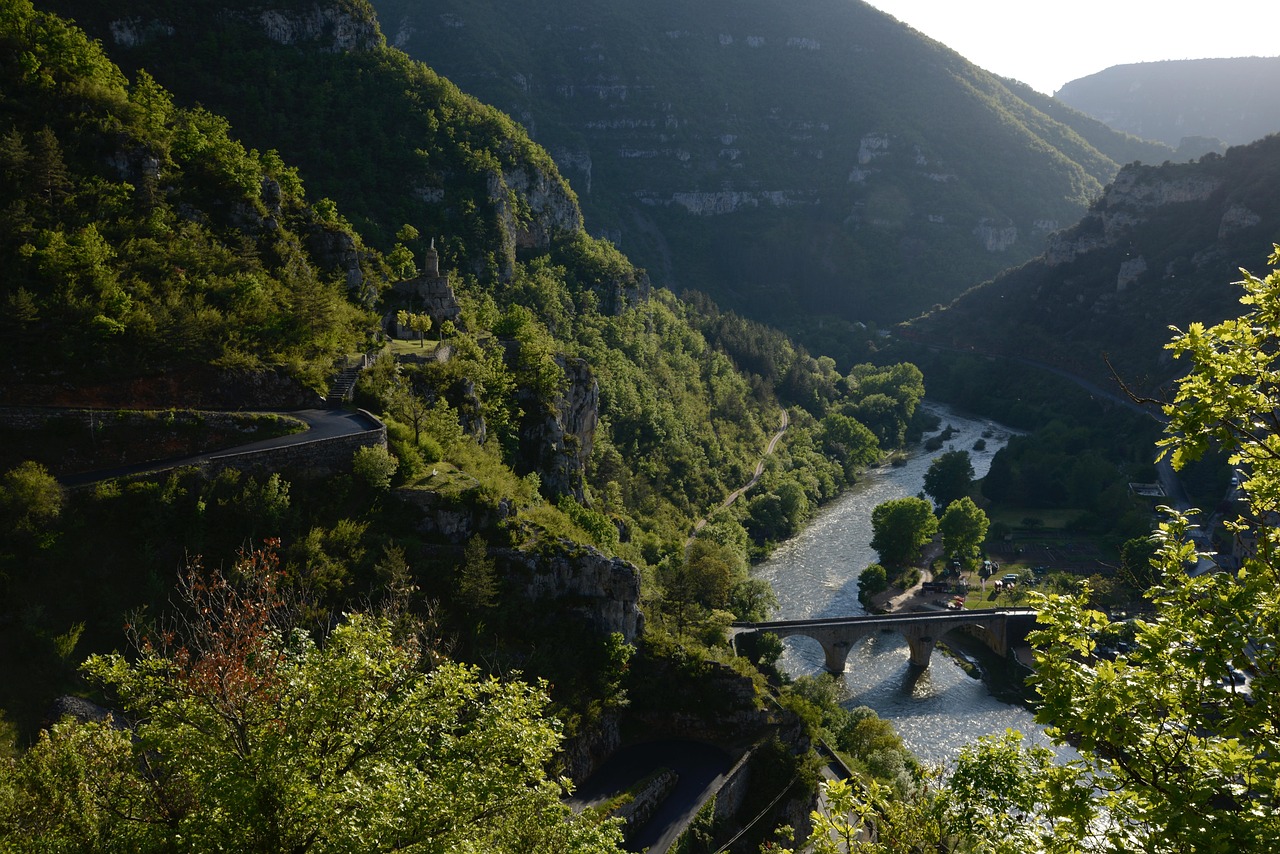
Carved into the limestone plateaux of the Grands Causses in southern France, the Gorges du Tarn is a long, sinuous canyon where vertical cliffs plunge down to a jade-green river. Medieval villages cling to ledges as though glued to the rock; vultures circle lazily overhead; and on summer evenings, the air smells of wild thyme, river water, and grilled lamb.
I’ve been coming here regularly for over a decade, most recently in spring and autumn 2025 while preparing this 2026 guide. I’ve stayed in troglodyte-style rooms in La Malène, cycled the balcony roads at dawn, canoed the river in both flood and low water, and shared pastis with retired shepherds in tiny cafés in Saint-Chély-du-Tarn. This isn’t a place you see in an afternoon; it’s a landscape you live in for a while.
Unlike the Alps or Pyrenees, the Gorges du Tarn is all about depth rather than height. The “peaks” here are limestone causses – vast, wind-scoured plateaux – and the drama comes from the 400–500 m vertical drop into the river valley, not from snow-capped summits. It’s an ideal destination if you want:
- Adventure without altitude sickness – kayaking, rock climbing, via ferrata, hiking, canyoning.
- Family-friendly nature – easy river swims, gentle canoe sections, short walks to viewpoints.
- Romantic hideaways – stone villages, candle-lit terraces, starry skies with almost no light pollution.
- Authentic rural France – this is Occitan country: Roquefort cheese, aligot, and villages where time really has slowed down.
- Affordable “mountain” scenery – compared with the Alps, the Gorges du Tarn is still relatively budget-friendly.
If you’re looking for a destination where you can design a 4 day itinerary for Gorges du Tarn or stretch to 7 days in Gorges du Tarn with no risk of boredom, this canyon delivers: riverside villages, high plateaux, caves, balcony roads, and enough hidden corners that you can always find a quiet beach by the water.
1. Overview of the Gorges du Tarn
The Gorges du Tarn stretch for roughly 50 km between the village of Quézac (near Florac) and Le Rozier, where the Tarn meets the Jonte. The canyon cuts through two main plateaux: the Causse Méjean to the south and the Causse de Sauveterre to the north – both around 900–1,100 m in altitude. Down at river level, the Tarn meanders at about 400–500 m, giving you sheer limestone walls up to 500 m high in places.
Unlike classic “alpine” regions with chairlifts and glaciers, the Gorges du Tarn is a soft-mountain environment: oak and pine forests, dry grasslands on the causses, and a Mediterranean feel at the bottom of the gorge. It’s excellent for:
- Hiking: From gentle riverside paths to demanding ascents up ancient mule trails to the causses.
- Water sports: Canoeing & kayaking are the signature experiences; there’s also paddleboarding and swimming.
- Climbing: World-class limestone crags, especially near Le Rozier and Les Vignes.
- Cycling: Road cycling on the balcony roads; gravel & MTB on the causses.
- Cave visits: Speleology and show caves, notably Aven Armand.
Base villages – like Sainte-Enimie, La Malène, Saint-Chély-du-Tarn, Les Vignes, and Le Rozier – are strung like beads along the river. Higher up, small hamlets dot the causses, offering a completely different atmosphere: big skies, grazing sheep, and silence broken only by wind and cowbells.
2. Signature Peaks, Valleys, Passes & Villages – 15 Deep-Dive Profiles
To really understand the best places to visit in Gorges du Tarn, it helps to think in layers: river-level villages, high plateaux, and the viewpoints or “peaks” that tie them together. Below are 15 places I return to on every visit, each with its own distinct character.
2.1 Sainte-Enimie – The Storybook Heart of the Gorge
Altitude: ~500 m (river level) Best for: First-time base, romantic stays, café life, short hikes, canoeing Accessibility: On the D907bis road; buses from Mende/Florac in season; parking can be tight in July–August.
I still remember the first time I drove into Sainte-Enimie. It was late afternoon in early June, years ago, and the sunlight ricocheted off the pale cliffs onto the stone façades, turning the whole village honey-gold. I parked above town and walked down through narrow alleys, past cats sleeping on windowsills, until the river came into view.
Sainte-Enimie is the most iconic village in the Gorges du Tarn and, for many, the best base for a 4 days in Gorges du Tarn or 5 day itinerary for Gorges du Tarn. The old town climbs steeply from the river, with stone houses, vaulted passages, and a charming central square lined with cafés.
What to Do
- Wander the medieval alleys: Go early or late to avoid day-trippers. Don’t miss the viewpoint by the old monastery ruins at the top of the village.
- Canoeing: Several outfitters on the riverfront offer half-day and full-day descents; I like starting here and finishing in La Malène.
- Short hikes: The path up towards the Causse de Sauveterre gives sweeping sunset views over the village and gorge.
Where to Eat & Drink
Over the years, I’ve tried nearly every terrace. My ritual: a coffee in the square at sunrise (when the bakers are just opening), and a glass of local wine in the evening watching the light fade on the cliffs. Look for menus featuring aligot (silky mashed potatoes with fresh tome cheese), truffade, and truite du Tarn (Tarn trout) grilled and served with lemon.
Tips
- Parking: Use upper parking lots and walk down; the lower ones fill by 10:00 in high season.
- Best season: May–June and September; July–August brings crowds but also a festive vibe.
- Base: Ideal for first-timers and couples; families with young kids might prefer more riverside access in La Malène or Saint-Chély.
2.2 La Malène – Gateway to the Most Dramatic Stretch
Altitude: ~450 m Best for: Canoe descents, boat tours, family stays, central location Accessibility: On D907bis; easy drive from Sainte-Enimie and Les Vignes.
La Malène is less polished than Sainte-Enimie, and that’s exactly why I love it. The village spreads along the river with a few hotels, a cluster of stone houses, and a handsome bridge. It’s also the launch point for the famed “Les Détroits” section – the narrowest, most vertical part of the canyon.
What to Do
- Boat tours (barques des bateliers): Traditional flat-bottomed boats piloted by local boatmen. I took my parents on a calm September morning; the guide peppered his geology talk with gossip about who used to farm which terraces.
- Canoeing: La Malène to Les Vignes or Le Rozier is my favourite run – a mix of quiet pools and playful rapids.
- Swim spots: Upstream and downstream, you’ll find pebbly beaches. In August 2024, I spent a whole afternoon alternating between reading on the shore and swimming in jade-green water.
Food & Stay
La Malène has a couple of reliable restaurants and a hotel with a terrace floating almost above the river. Expect hearty local dishes: duck confit, grilled trout, and pélardon goat cheese. For families, riverside campsites just outside the village are ideal, with direct water access.
2.3 Saint-Chély-du-Tarn – Postcard-Perfect Waterfall Village
Altitude: ~470 m Best for: Photography, romantic stays, quiet evenings Accessibility: Tiny access road from D907bis; limited parking.
Saint-Chély-du-Tarn feels like a film set: a stone bridge, a chapel at water level, and a waterfall that bursts straight out of the cliff into the river. I’ve come here in all seasons – in spring, when the waterfall is thunderous; in summer, when kids splash in the shallows; and in November, when mist wraps the cliffs and the village is silent.
What to Do
- Easy stroll: Cross the bridge, wander along the river, and climb a little way up the hillside paths for different angles.
- Photography: Sunrise and late afternoon are magical; tripods are welcome but be considerate of locals.
- Swimming: Small, shallow areas make it good for cautious swimmers, though the water is always brisk.
Stay & Eat
A few charming rentals and guesthouses hide among the stone houses – ideal if you want quiet nights. There’s usually a seasonal restaurant or snack bar; for more dining options, drive back to Sainte-Enimie.
2.4 Les Vignes – Adventure Hub and Climber’s Village
Altitude: ~390 m Best for: Rock climbing, via ferrata, active families, base for western gorge Accessibility: D907bis road; good parking, easy access to climbing sectors.
Les Vignes sits near the western end of the gorge, where the walls close in and the rock climbers appear like colourful ants on the cliffs. I usually base myself here when I’m climbing or when I want quicker access to the Gorges de la Jonte and the Point Sublime viewpoints.
Activities
- Climbing: Sectors of all grades, from friendly slabs to overhanging testpieces. The scene is international in summer, but still low-key.
- Via ferrata: Several routes nearby, including family-friendly options with guided trips.
- Canoeing: Many outfitters base here; you can paddle upstream stretches or do one-way trips.
Food & Atmosphere
Les Vignes has a couple of bars where climbers and paddlers gather at dusk – I’ve lost count of how many route recommendations I’ve scribbled on napkins there. Expect pizza, grills, and simple but plentiful plates. Campsites along the river make this an excellent low-cost base.
2.5 Le Rozier & Peyreleau – Where Three Gorges Meet
Altitude: ~390 m Best for: Exploring Tarn, Jonte & Dourbie gorges; birdwatching; balcony road drives Accessibility: Junction of D907bis and D996; bus links to Millau in season.
Le Rozier and Peyreleau face each other across the river, two stone villages at the confluence of the Tarn and Jonte. This is my favourite base when I want variety: from here, I can choose a day in the Tarn, a drive up the Jonte to watch vultures, or a detour into the smaller, wilder Dourbie gorge.
Highlights
- Belvédères de la Jonte: A series of cliff-edge viewpoints reachable by car and short walks, looking down into the Jonte gorge.
- Vulture watching: Griffon and black vultures soar on thermals; bring binoculars.
- Old streets: Especially in Peyreleau, where lanes twist up to a ruined castle.
Evening terraces here are exceptional, with views upriver and into the gorges. In September 2025, I spent several evenings here, sipping a glass of local Marcillac wine and watching the cliffs gradually lose their colour in the dusk.
2.6 Point Sublime – The Classic Panoramic View
Altitude: ~870 m Best for: Iconic views, photography, sunset picnics Accessibility: Paved road from Les Vignes; short walk from parking.
Despite the grand name, Point Sublime more than lives up to it. From this promontory on the Causse de Sauveterre, the Gorges du Tarn open below in a sweeping curve. The village of Saint-Chély-du-Tarn is visible far below, the river a thin silver ribbon.
I like to come here twice each trip: once at midday, to see the gorge in full light, and once for sunset, when shadows rise from the depths and the cliffs glow. In 2024, I brought a picnic of local bread, Roquefort, pélardon, and a tomato salad; we shared the viewpoint with just three other people and a very interested dog.
Tips
- Safety: Stay behind barriers; the drop is real and dizzying.
- Season: Accessible most of the year; check for occasional winter closures after heavy snow or ice.
- Family-friendly: Yes – the walk from parking is short, but keep kids close.
2.7 Causse Méjean – High Limestone Plateau of Big Skies
Altitude: 900–1,200 m Best for: Hiking, cycling, stargazing, rural stays Accessibility: Steep roads up from La Malène, Les Vignes, Meyrueis.
The first time I drove up the tight switchbacks from La Malène to the Causse Méjean, it felt like leaving one world for another. In 20 minutes, the cliffs and river gave way to rolling grasslands, scattered farms, and a horizon so wide it felt almost like the sea.
The Méjean is quiet, wind-brushed, and deeply traditional. Sheep graze under the watch of shepherds and patou dogs; narrow lanes lead to hamlets where you might find a single auberge serving whatever’s fresh that day.
Activities
- Hiking: From short walks to multi-hour loops, including circuits above the Tarn with breathtaking balcony views.
- Cycling: Ideal for road and gravel; traffic is minimal.
- Stargazing: The causses are part of a dark-sky region; I’ve had some of my best Milky Way sightings here on clear summer nights.
Best Bases
Small villages like Hures-la-Parade or Le Rozier’s hinterland hamlets offer gîtes and farm stays. This is where to come if you want silence and an authentic slice of pastoral life.
2.8 Causse de Sauveterre – Balcony Road & Panoramic Drives
Altitude: 800–1,000 m Best for: Scenic drives, road cycling, panoramic viewpoints Accessibility: Roads up from Sainte-Enimie, Le Rozier, and the Lozère interior.
If the Méjean is all about rural stillness, the Sauveterre is about views back into the gorge. A series of balcony roads run close to the cliff edge (safely, but thrillingly), offering countless pull-outs where you can stop and gaze straight down at the Tarn, hundreds of meters below.
In October 2023, I spent a full day just stopping at unnamed viewpoints, watching the light change on the cliffs. The autumn colours – golden oaks, red shrubbery – made the gorge look like a painting.
Highlights
- Point Sublime: The marquee viewpoint.
- Random belvédères: Don’t be shy about stopping; many of my favourite spots aren’t on any map.
- Cycling: Smooth, quiet roads with significant ups and downs; not for the unfit, but immensely rewarding.
2.9 Florac & Upper Tarn Valley – Gateway to Cévennes
Altitude: ~560 m Best for: Access to upper Tarn, Cévennes National Park, market days Accessibility: On N106; bus/road links to Mende and Alès.
Florac technically sits just upstream from the official Gorges du Tarn, but in practice it’s the small-town gateway to the whole region. It has a laid-back Cévenol feel: plane-tree-shaded squares, fountains, and a castle turned into a national park visitor centre.
I like to start or end my Gorges trips here, stocking up on picnic supplies at the market (especially goat cheese, charcuterie, and local honey) and picking up trail maps from the park office.
Things to Do
- Market: Lively weekly market with regional produce.
- Walks: Gentle riverside strolls and foothill hikes into the Cévennes.
- Cultural: Exhibitions and info at the Parc National des Cévennes centre.
2.10 Aven Armand – Otherworldly Underground Cathedral
Altitude (surface): ~1,000 m on Causse Méjean Best for: Families, rainy days, geology lovers Accessibility: Paved road; funicular descent into cave.
Aven Armand is a vast limestone cave discovered in 1897, now fitted with a discreet funicular that takes you down into a forest of stalagmites – some over 30 m high. I’m not usually a “cave person”, but this place is special: the scale feels almost cosmic.
The guided tours (available in several languages) blend science and storytelling, and lighting is used artistically without feeling like a theme park. On a hot afternoon in July 2022, descending into the 12°C coolness felt like stepping into another season.
Tips
- Bring a light layer: It’s cool underground, even in mid-summer.
- Combine with: A drive or hike on the Causse Méjean and a sunset at a nearby belvédère.
2.11 Cirque de Saint-Chély & Les Détroits – Deepest Heart of the Gorge
Altitude: River level ~430–450 m, cliffs up to 500 m above Best for: Canoe descents, boat trips, photography Accessibility: By river (canoe/boat) or by road lookout points.
This section between Saint-Chély-du-Tarn and La Malène is, to me, the emotional core of the Gorges du Tarn. The cliffs tighten, the river darkens in shade, and you feel really enclosed by rock. Canoeing here in early morning, with mist lifting off the water, is as close to a spiritual experience as I’ve ever had in a kayak.
In low water, it’s a gentle, dreamy float with occasional riffles; in higher flows, you’ll get a few bouncy rapids (still accessible to beginners, especially with a guide). Either way, the sense of scale is humbling.
2.12 Gorges de la Jonte – Vultures, Towers & Balconies
Altitude: River ~400–500 m; rims ~900–1,100 m Best for: Hiking, birdwatching, wild-feeling landscapes Accessibility: Road from Le Rozier to Meyrueis; parking at belvédères.
The Jonte gorge is the Tarn’s wilder cousin: narrower in places, less visited, and dominated by rock towers and circling vultures. From belvédères like Roche Décollée and Vase de Sèvres, you can gaze across an amphitheatre of vertical walls while dozens of vultures ride thermals at eye level.
One autumn, I spent an afternoon at a viewpoint with a pair of local bird enthusiasts who let me peer through their powerful scope; seeing the detail on the vultures’ feathers as they wheeled above the void was unforgettable.
2.13 Pas de Soucy – Chaotic Boulders & Wild Water
Altitude: ~380 m Best for: Short walks, dramatic river scenery Accessibility: Short drive from Les Vignes; signed parking and footpaths.
At Pas de Soucy, a rockfall long ago choked the Tarn with huge boulders, creating a thundering, chaotic stretch of whitewater that is off-limits to boats but a spectacular sight from the shore.
On my last visit, I came in late afternoon with a thermos of tea. The low sun lit the spray above the rapids, and the roar of water echoed off the canyon walls. It’s a place that reminds you of the river’s raw power, especially after heavy rain.
2.14 Saint-Rome-de-Tarn & Lower Tarn – Gentle Waters & Bridges
Altitude: ~350 m Best for: Quieter river stretches, family paddling, day trip from Millau Accessibility: Downstream from Millau; road and bus links.
Below the main gorge, the Tarn softens and widens, with pretty villages like Saint-Rome-de-Tarn offering calmer waters and a more languid feel. It’s an excellent option for families with small children or for a day when you want water time without big cliffs.
I often recommend a day here for those spending a week in the region: paddle, picnic, read, and recharge between more intense hiking or driving days in the gorge proper.
2.15 Millau & Viaduc de Millau – Modern Icon on the Horizon
Altitude: ~340 m (town), viaduct pylons up to 343 m high above valley Best for: Architecture lovers, paragliding, markets, urban contrast Accessibility: Major road hub (A75 motorway), train station, buses.
Strictly speaking, Millau lies on the Tarn outside the gorge, but in practice it’s a vital part of a travel guide for Gorges du Tarn. The town has a Mediterranean feel, a lively market, and a growing outdoor sports scene. Above it soars the Millau Viaduct, a slender cable-stayed bridge that looks almost impossibly delicate against the sky.
Each time I come, I take a few hours to wander the old quarter, taste local charcuterie, and then head to one of the viaduct viewpoints. Watching cars cross the airy span from below is oddly calming.
3. 4–7 Day Itineraries for Gorges du Tarn (With Personal Daily Stories)
Whether you’re planning a 4 day itinerary for Gorges du Tarn or stretching to a full week, you can mix river time, high-plateau viewpoints, and nearby gorges. Below is a flexible framework based on trips I’ve actually taken in 2023–2025.
3.1 4 Days in Gorges du Tarn – Essential Highlights
This 4-day itinerary is ideal for first-timers. Base yourself mainly in Sainte-Enimie or La Malène, with a final night option in Le Rozier or Millau.
Day 1 – Arrival, Sainte-Enimie & First Taste of the Tarn
I still remember one particular April arrival: I rolled into Sainte-Enimie just after a spring shower, the cliffs glistening and the village smelling of wet stone and bread. If you can, time your arrival for mid-afternoon to settle in and get your bearings.
- Check-in: Choose a small hotel or gîte in or just above the old village. If you have a car, upper parking is easier.
- Orientation walk: Wander the lanes, climb to the upper viewpoint, and cross the bridge to look back at the village.
- Riverside stroll: A gentle path follows the Tarn; perfect for stretching legs after travel.
- Dinner: Go for a hearty regional dish – I often choose aligot-saucisse on my first night to properly feel I’m back in the region.
Personal tip: On my last trip, I skipped dessert in the restaurant and instead bought a small box of local croustade (flaky pastry tart) at the bakery to enjoy back in my room with a cup of herbal tea by the open window, listening to the river.
Day 2 – Canoe Through the Heart of the Gorges
This is the day your memories will orbit around when you think back on things to do in Gorges du Tarn. The classic experience is a canoe or kayak descent through the most spectacular section between Sainte-Enimie or Saint-Chély and La Malène.
- Morning:
- Book with a reputable local base in Sainte-Enimie or Saint-Chély. They’ll shuttle you and fit you with gear.
- Opt for an easy-to-moderate section if you’re a beginner – they’ll advise based on water levels.
- On the water:
- Expect 3–5 hours of gentle paddling with breaks.
- Pull over at pebble beaches for swims and picnics; please pack out all trash.
- Keep your phone in a dry bag; I’ve seen more than one vanish into the river.
- Afternoon: Reach La Malène, perhaps reward yourself with an ice cream on the riverbank, then shuttle back.
- Evening: Quiet dinner in Sainte-Enimie; legs pleasantly tired, slight sun on your face.
Personal note: In June 2023, I did this run on a weekday after a stormy weekend. The river was full but safe, and we went hours without seeing another boat. A group of vultures followed us for a while, curious overhead, as we drifted between 400 m cliffs. It’s the kind of day that recalibrates your sense of space.
Day 3 – Balcony Roads & Point Sublime
Today is for views from above and a taste of the causses. You’ll need a car or e-bike; confident cyclists will love the challenge, but the climbs are serious.
- Morning:
- Drive up to the Causse de Sauveterre from Sainte-Enimie via the winding road.
- Stop at roadside belvédères; some require 5–10 minute walks from parking.
- Midday at Point Sublime:
- Arrive late morning before crowds; soak up the view.
- Picnic here – there are tables and informal spots.
- Afternoon:
- Continue to Les Vignes and perhaps explore Pas de Soucy for a short walk and wild-water views.
- Option: short via ferrata or a couple of climbing routes with a local guide.
- Evening: Depending on your next base, stay in Les Vignes or return to Sainte-Enimie/La Malène.
Personal tip: I like to carry a pair of binoculars on this day – not just for vultures, but for spotting hidden farms and small chapels perched on the cliffs.
Day 4 – Gorges de la Jonte & Departure
Finish your 4 days in Gorges du Tarn with something a little different: the Gorges de la Jonte and, if time allows, a brief stop in Millau.
- Morning:
- Drive to Le Rozier and follow the road up the Jonte.
- Stop at signed belvédères; each offers a different perspective.
- Short hike: There are several 1–3 hour loops near the rim that I do regularly; they’re well-marked, with exceptional vulture watching.
- Afternoon: Depending on your onward plans, either loop back to your base, or drive to Millau for an overnight or train/road departure. If you stay, fit in a viaduct viewpoint and dinner in town.
This 4-day itinerary covers the must-see attractions in Gorges du Tarn without rushing, giving you river time, height, and a taste of neighbouring gorges.
3.2 5, 6 & 7 Days in Gorges du Tarn – Slowing Down & Digging Deeper
With 5 days in Gorges du Tarn, you can add a full causses day or an extra canyon. With 6 days or a 7 day itinerary for Gorges du Tarn, you can slow the pace, include more hikes, and enjoy proper rest days.
Day 5 – Causse Méjean & Aven Armand
On one October trip, Day 5 was my favourite: a full day up on the Causse Méjean, with a cave visit as a cool, quiet interlude.
- Morning drive up from La Malène or Les Vignes:
- Take the dramatic switchback road; stop at roadside viewpoints.
- Arrive at Aven Armand for one of the morning visits (they’re less crowded).
- Cave visit: 1–1.5 hours underground. The guide in 2024 told a particularly good story about the cave’s early explorers descending by rope in candlelight.
- Lunch: Simple auberge on the plateau, or picnic with views over the high grasslands.
- Afternoon hike: Choose a 2–3 hour loop on the Méjean, or a there-and-back trail to a belvédère over the Tarn. The light up here can be extraordinary, especially in late afternoon.
- Evening: Either stay overnight on the plateau (farm stay) or return down to the river.
Day 6 – Slow River Day & Hidden Gems
This is your “buffer” day in a 6 day itinerary for Gorges du Tarn – built for rest, reading, and small discoveries.
- Morning: Late start, leisurely breakfast. Then drive or walk to a lesser-known river spot – your host or campsite owner will likely have secret suggestions.
- Midday: Long lunch by the river. I tend to pack bread, cold cuts, a jar of local lentil salad, cheese, fruit, and a thermos of coffee.
- Afternoon:
- Visit a smaller village like Castelbouc or Hauterives (often accessible only by footpath or boat).
- Short exploratory hike along an old mule path.
- Evening: Low-key dinner in your base village, then stargazing if the sky is clear.
On one July evening, I lay on the gravel bar near La Malène watching satellites slide over the canyon rim, with the Milky Way faintly visible between cliff silhouettes. No phone, no camera – just presence. That’s the magic of giving yourself extra days.
Day 7 – Millau, Lower Tarn & Farewell
For those on a 7 day itinerary for Gorges du Tarn, use the last day to reconnect with “civilisation” gently in Millau and the lower Tarn.
- Morning in Millau:
- Stroll the old streets, café-hop, and browse the market if it’s on.
- Consider a short guided tour about the town’s glove-making heritage.
- Viaduct viewpoints: Drive or join a tour to see the Viaduc de Millau from below and above. The official visitor centre offers good context.
- Afternoon: Last river stop in a gentler bend of the Tarn for a swim and nap before your onward journey.
By the time you leave, you’ll have seen not just the celebrated canyon, but the wider landscape and culture that shape it.
4. Mountain Dining & Local Food in Gorges du Tarn
Food here is hearty, rural, and anchored in the causses: sheep, potatoes, chestnuts, and hardy vegetables. After a day of hiking or paddling, nothing tastes better.
4.1 What to Eat
- Aligot: Mashed potatoes blended with fresh tome cheese and garlic until stretchy and silky. Often served with grilled sausage or steak.
- Truffade: Pan-fried potatoes with cheese and garlic; a cousin of aligot.
- Roquefort: The famous blue cheese from nearby caves; try it in salads, sauces, or just with bread.
- Pélardon: Small, tangy goat cheeses from local farms; excellent with honey.
- Truite du Tarn: Trout from the river, usually grilled or with almonds.
- Charcuterie: Dried sausages, cured hams, and pâtés from regional producers.
- Local pastries: Fougasse, croustade, and seasonal fruit tarts.
4.2 Refuges, Auberges & Inns
While the Gorges du Tarn isn’t dotted with high-altitude refuges like the Alps, it does have:
- Rural auberges on the causses: Often in stone farmhouses, serving set menus based on what’s seasonal. I’ve had memorable lamb stews and lentil dishes in these out-of-the-way places.
- Village inns: In Sainte-Enimie, La Malène, Les Vignes, and Le Rozier, small hotels with in-house restaurants serve classic regional menus.
- River cafés: Informal spots by the water offering salads, grilled meats, and ice cream – perfect for lunch between activities.
4.3 Coffee & Pastry Culture
Mornings here are about café crème and a croissant on a terrace, watching the village wake up. In peak season, some bakeries also offer savoury take-away items (quiche, sandwiches) that make excellent hiking lunches.
Local habit: People linger over coffee, especially in the off-season. Don’t rush; enjoy the rhythm.
4.4 How to Eat Well on a Budget
- Menu du jour: Fixed-price lunch menus in small restaurants are often excellent value.
- Self-catering: Book a gîte with a kitchen and stock up at markets in Florac or Millau.
- Picnics: Picnicking is practically an art form here – local cheese, bread, fruit, and a view.
- Avoid tourist traps: If menus are translated into five languages and portions look tiny, keep walking.
5. Evenings in Gorges du Tarn
Evenings here are soft: cliffs catching the last light, the river calming, and villages settling into a gentle buzz. There’s no roaring après-ski scene, but there is a distinct après-hike / après-paddle culture.
5.1 Après-Hike & Village Bars
By 18:00 in summer, terraces in Sainte-Enimie, La Malène, Les Vignes, and Le Rozier fill with people comparing routes and river levels over beers or pastis. I love these hours: gear drying on balconies, kids running around, and the smell of dinner starting to drift out.
5.2 Fondue Nights & Hearty Dinners
Cheese fondues are less of a tradition here than in the Alps, but you’ll find aligot nights and special menus in some auberges – big communal pots of potato-cheese served at long tables. It’s convivial, filling, and perfect after a long day outdoors.
5.3 Stargazing & Night Walks
Thanks to minimal light pollution, starry nights on the causses are astonishing. On clear August nights, I’ve sat on low stone walls watching the Perseids streak across the sky. Down in the gorge, cliffs frame the stars in a narrow strip, which is equally magical.
5.4 Seasonal Festivals
Local festivals are small but heartfelt: village fêtes with music, dancing, and communal meals. In 2026–2027, expect:
- Summer village fêtes: Especially in July and August; check local boards in each village.
- Gastronomy weekends: Occasional events celebrating local cheeses, charcuterie, and wines in Florac and Millau.
- Outdoor sports events: Trail races and paddling competitions often end with festive evenings in Le Rozier or Millau.
6. Cultural Experiences, Local Customs & Etiquette
This region sits at a crossroads of Occitan and Cévennes culture: discreet, hardworking, and proud of their land.
6.1 Everyday Etiquette
- Greetings: Always say “Bonjour” when entering a shop, café, or small restaurant; “Bonsoir” in the evening.
- Language: Many locals speak some English, but a few words of French go a long way.
- Respect for quiet: Villages can be very tranquil. Keep noise down at night, especially in gîtes and campsites.
6.2 River & Nature Respect
- No wild camping in the gorge: It’s heavily regulated; use official campsites and accommodations.
- Leave no trace: Take all trash with you, including food scraps and toilet paper.
- Respect private land: Much of the causses are privately owned; stay on marked paths.
6.3 Cultural Experiences
- Markets: Florac, Millau, and smaller village markets offer a window into daily life.
- Farm visits: Some goat cheese producers welcome visitors; ask at tourist offices.
- Occitan heritage: You may see signs or hear snippets of the local Occitan language; it’s cherished by many older residents.
7. Day Trips & Nearby Attractions
Once you’ve covered the core things to do in Gorges du Tarn, a few neighbouring spots are well worth a day.
7.1 Gorges de la Dourbie
Quieter and narrower than the Tarn, with pretty villages like Saint-Jean-du-Bruel and La Roque-Sainte-Marguerite. Excellent for road cycling and scenic drives.
7.2 Causses Noir & Chaos de Montpellier-le-Vieux
A strange, eroded landscape of rock towers and mazes near Millau. Family-friendly trails and a little tourist train make it a good choice with kids.
7.3 Cévennes Villages & Corniches
Head south into the Cévennes for chestnut forests, corniche roads with wide views, and villages like Barre-des-Cévennes or Le Pompidou. Ideal in spring and autumn when colours are rich.
8. Practical Travel Advice & Mountain Logistics
8.1 Getting There & Around
- Nearest major hubs:
- By air: Toulouse, Montpellier, Rodez, and Clermont-Ferrand airports.
- By train: Millau, Mende, and Alès have rail connections; from there, buses or car hire.
- Car rental: Strongly recommended for flexibility, especially for balcony roads and causses.
- Public transport: Seasonal buses link some villages, but timetables are limited. Fine if you’re patient and planning a slow, minimalist trip.
8.2 SIM Cards & Connectivity
- French SIMs: Available in larger towns (Millau, Mende) and at airports – Orange, SFR, Bouygues.
- Coverage: Decent in main villages and on causses; patchy in deep canyon sections.
- Wi-Fi: Most hotels and gîtes offer Wi-Fi, though speeds vary.
8.3 Visa & Driving Requirements
- Visa: Gorges du Tarn is in France, within the Schengen Area. Check current Schengen visa requirements for your nationality for 2026.
- Driving licences:
- EU/EEA licences are valid.
- Many non-EU licences are accepted; for some nationalities, an International Driving Permit (IDP) is recommended. Check your embassy or consulate advice.
- Road rules: Right-hand driving, strict speed limits, and random alcohol checks.
8.4 Seasons & What They’re Best For
- Spring (April–June): Best for hiking, wildflowers, and moderate river levels. My favourite time: everything is green, and crowds are light.
- Summer (July–August): Peak for canoeing and swimming. Warm to hot at river level, cooler on causses. Also peak crowds and prices.
- Autumn (September–October): Fantastic for hiking, quieter river, beautiful colours. Many services still open.
- Winter (Nov–March): Very quiet, some accommodations closed; balcony roads can be icy. Great if you want solitude and don’t mind limited services.
8.5 Mountain-Specific Logistics
- Altitude: Low to moderate (400–1,200 m). Altitude sickness is not a concern.
- Weather & storms: Summer thunderstorms can be intense; avoid exposed rims during storms and watch for flash-flood conditions in side canyons.
- Road & pass closures: Some balcony and plateau roads may temporarily close in severe winter conditions; check local info before travelling in Dec–Feb.
- Avalanche risk: Minimal for most visitors; snow can fall on causses, but this isn’t a high-alpine avalanche zone. Still, treat snowy cliff edges with extreme caution.
8.6 Gear: What to Pack
- Footwear: Sturdy hiking shoes/boots with good grip for rocky paths.
- Layers: Even in summer, evenings on causses can be cool; pack a light fleece and windproof jacket.
- Water gear: Quick-dry clothing, water shoes or sandals for canoe days.
- Sun protection: Hat, sunglasses, high-SPF sunscreen – the reflection off the river and rock amplifies exposure.
- Optional: Trekking poles, binoculars for vultures, and a light headlamp for late returns.
8.7 Safety, Rescue & Insurance
- Emergency number: 112 (EU emergency number).
- Mountain rescue: Coordinated by French rescue services; response times vary with location.
- Insurance: Make sure your travel insurance explicitly covers hiking, climbing, and water sports if you plan to do them.
- River safety: Always heed local outfitters’ advice on water levels. Wear lifejackets, and respect “no boating” zones like Pas de Soucy.
8.8 How to Save Money
- Travel off-peak: May–June and September offer lower prices than July–August.
- Self-cater: Rent gîtes with kitchens; cook simple dinners, eat big lunches out.
- Campsites: Excellent value, especially for families; many are beautifully located by the river.
- Activity bundling: Some outfitters offer discounts for multiple days of canoeing or combined activities.
- Fuel & tolls: Plan efficient loops; use the A75 (often toll-free in this section) wisely, and combine day trips to reduce driving.
9. What’s New in 2026–2027: Events & Travel Scene
While the Gorges du Tarn doesn’t change fast – that’s part of its charm – there are always small shifts and new events.
- Outdoor sports festivals (2026–2027): Le Rozier and Millau continue to host trail running races, climbing gatherings, and paddling events, often in late spring or early autumn. Check local tourism sites closer to your travel date for exact 2026–2027 schedules.
- Food & terroir weekends: Growing interest in local food has led to more producer markets and tasting events, especially in Florac and Millau.
- Dark-sky initiatives: Expect more guided stargazing nights on the causses as dark-sky tourism develops further through 2026–2027.
Infrastructure-wise, 2026 is seeing gradual improvements in waymarking on certain hiking loops and modest upgrades to visitor centres, but nothing that alters the wild feel of the gorge itself.
10. Summary & Final Recommendations
The Gorges du Tarn is one of those rare places where dramatic landscapes, living rural culture, and accessible adventure all converge. It’s big enough to fill a 7 day itinerary for Gorges du Tarn, yet intimate enough that, after a few days, your regular café will greet you as a familiar face.
Key Takeaways
- Best bases: Sainte-Enimie or La Malène for first-timers; Les Vignes or Le Rozier for climbers and multi-gorge explorers; causses farm stays for quiet and stars.
- Must-do experiences: A canoe descent, balcony-road viewpoints (especially Point Sublime), at least one high-plateau hike, and an evening in a village square watching life go by.
- Best seasons:
- May–June: Ideal balance of weather, river levels, and fewer crowds.
- September–early October: Golden light, comfortable temperatures, quieter villages.
- July–August: Perfect for families who want water time and a lively atmosphere, but book early and accept crowds.
- Trip length:
- 4 days in Gorges du Tarn: Enough for the essentials – river, viewpoints, one neighbouring gorge.
- 5–6 days: Time to explore the causses, caves, and hidden gems at a relaxed pace.
- 7 days: Perfect if you want to weave in day trips, rest days, and deeper cultural experiences.
Whenever I leave, crossing one last bridge over the Tarn, I find myself already plotting the next return: a new balcony road to explore, a different season to experience, another quiet bend in the river to claim for an afternoon. If you give yourself the gift of time here, the Gorges du Tarn will reward you with memories that stretch far beyond its limestone walls.