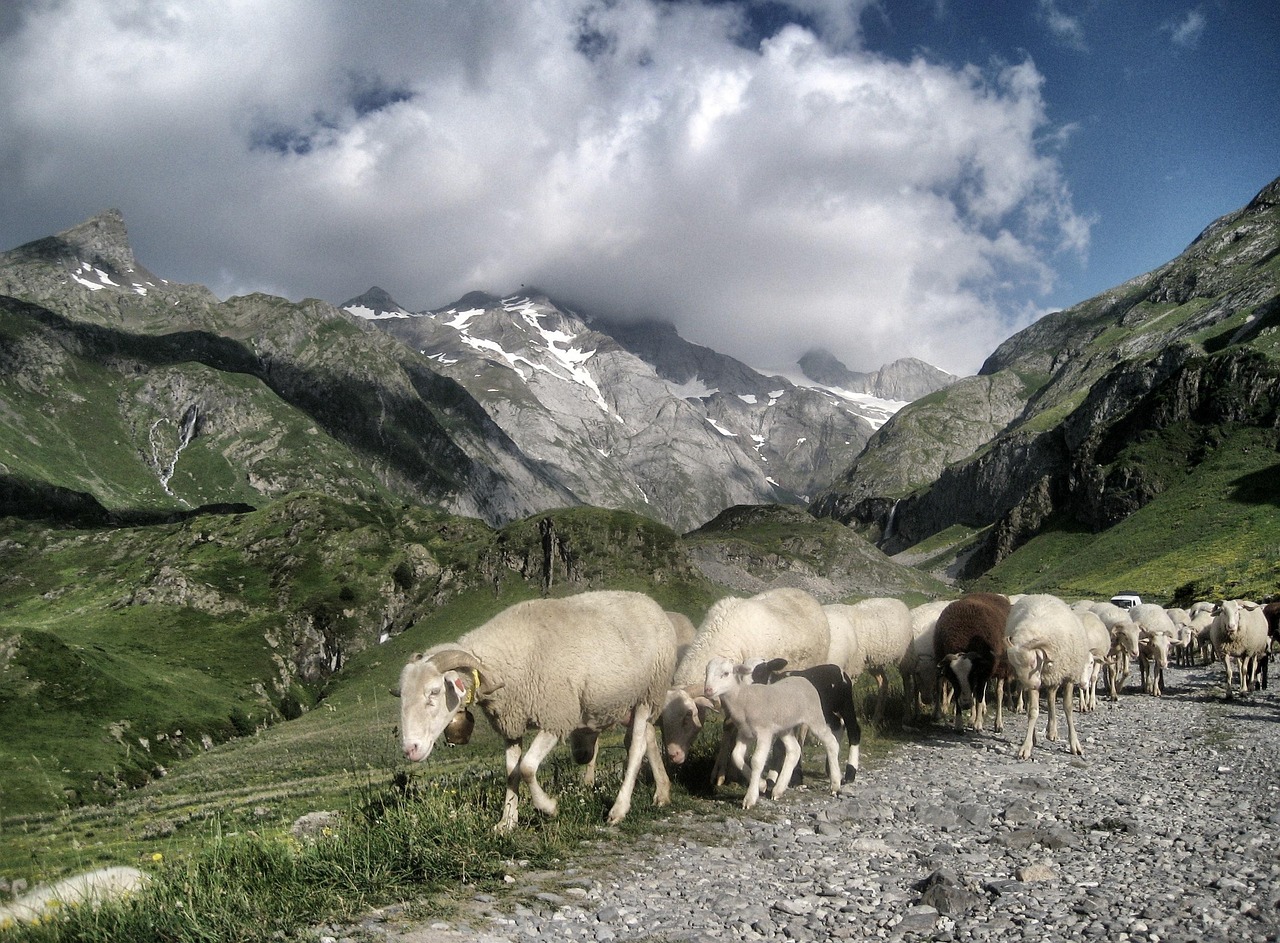
Why Walk the GR10 Trail?
The GR10 is a 930+ km waymarked route that threads its way along the French side of the Pyrenees from Hendaye on the Atlantic to Banyuls-sur-Mer on the Mediterranean. It’s not the wildest line (that’s the HRP), nor the easiest (many short valley walks are gentler), but it’s the most human: a continuous red-and-white ribbon connecting Basque farmhouses, high passes, spa towns, shepherds’ cabins, and Catalan villages.
What makes the GR10 special is its rhythm. Most days you climb hard out of a valley, cross a high col or ridge with big views of serrated peaks, then drop to a village or gîte where you eat a three-course dinner, refill your water bottles, and sleep in a real bed. It’s demanding but civilized, remote but never entirely cut off. You feel the mountains and the culture in equal measure.
If you’re torn between a classic road trip and a long hike, think of the GR10 as a slow-motion road trip on foot: 7–14 legs, each 1–2 days, linking distinct cultural regions – Basque Country, Béarn, Bigorre, Ariège, and Catalonia. In this travel guide for GR10 Trail I’ll lay out several ways to break the route down into 7 legs of GR10 Trail, 8 legs of GR10 Trail, 9 legs of GR10 Trail, and all the way up to 14 legs of GR10 Trail, so you can match the itinerary to your time and fitness.
Whether you’re a family doing a single scenic leg, a couple seeking a romantic mountain week, or a thru-hiker aiming for the full Atlantic–Mediterranean crossing, the GR10 offers some of the best places to visit in GR10 Trail: hanging valleys, glacial lakes, spa towns, Romanesque chapels, and sleepy farm villages that seem unchanged for generations.
Table of Contents
- Why Walk the GR10 Trail?
- Overview of the GR10: Start, Finish, and Main Regions
- Recommended 7–14 Leg Itineraries
- Leg 1: Hendaye to Sare & Ainhoa – Basque Atlantic Beginnings
- Leg 2: Ainhoa to Saint-Jean-Pied-de-Port – Pilgrim Crossroads
- Leg 3: Saint-Jean-Pied-de-Port to Larrau & Logibar – Into the Deep Basque Valleys
- Leg 4: Larrau to Lescun – The Secret Limestone Cirque
- Leg 5: Lescun to Cauterets – Big Peaks & Spa Towns
- Leg 6: Cauterets to Bagnères-de-Luchon – Lakes, Passes & High Granitic Country
- Leg 7: Luchon to Aulus-les-Bains – Into Wild Ariège
- Leg 8: Aulus-les-Bains to Mérens-les-Vals – Quiet Forests & Old Stone
- Leg 9: Mérens-les-Vals to Ax-les-Thermes & Beyond – Hot Springs & High Pastures
- Leg 10: Ax Region to Bolquère & Lac des Bouillouses – Plateau of Lakes
- Leg 11: Bouillouses to Banyuls-sur-Mer – Down to the Sea
- 18 Key GR10 Stops & Viewpoints in Detail
- Eating & Sleeping Along the GR10
- Evenings on the GR10: Villages, Bars & Starry Nights
- Day Trips & Nearby Attractions
- Cultural Etiquette & Local Customs
- Route Logistics & Travel Advice for GR10 Trail
- Events & What’s New in 2026–2027
- Summary & Final Recommendations
Overview of the GR10 Trail
The GR10 officially runs from Hendaye on the Atlantic coast to Banyuls-sur-Mer on the Mediterranean, always staying on the French side of the Pyrenees. Unlike a road trip where you drive from town to town, here your feet (or sometimes a shuttle or short train ride) are your engine. Still, the rhythm, planning and logistics feel very much like a long-distance road journey: you decide how many legs, how far to “travel” each day, and which must-see attractions in GR10 Trail to include.
Broadly, the GR10 crosses five cultural zones:
- Basque Country (Hendaye to near Larrau): lush green hills, red-and-white farmhouses, strong pastoral culture.
- Béarn & Bigorre (Larrau to Cauterets/Luz): deeper valleys, limestone cirques, transition from Atlantic to more continental climate.
- Central High Pyrenees (Cauterets to Luchon): granite peaks, glacial lakes, high passes, classic alpine scenery.
- Ariège (Luchon to Mérens/Ax): wilder, less developed, dense forests, old stone hamlets, a real feeling of remoteness.
- Eastern Pyrenees & Catalonia (Ax to Banyuls): higher, sunnier plateaus, Catalan culture, and finally the sun-baked Mediterranean hills over the sea.
A realistic thru-hike of the whole GR10 takes 45–60 days. But many walkers tackle it in sections, creating a 7 leg itinerary for GR10 Trail (one big leg per region), 10 legs of GR10 Trail (a detailed regional breakdown), or even a 14 leg itinerary for GR10 Trail (for those who like shorter days and more time in towns).
Recommended 7–14 Leg Itineraries on the GR10
You’ll see a lot of numbers tossed around online: 7 legs of GR10 Trail, 8 legs of GR10 Trail, 9 legs of GR10 Trail, and so on. The reality is that there’s no single “right” way; it’s more about how far you like to walk in a day and how often you want real beds and restaurant meals.
Here are some examples of how to structure your GR10 road-trip-on-foot itinerary:
7 Leg Itinerary for GR10 Trail (Fast & Committed)
- Leg 1: Hendaye – Saint-Jean-Pied-de-Port
- Leg 2: Saint-Jean-Pied-de-Port – Lescun
- Leg 3: Lescun – Cauterets
- Leg 4: Cauterets – Bagnères-de-Luchon
- Leg 5: Luchon – Aulus-les-Bains
- Leg 6: Aulus-les-Bains – Bouillouses Plateau
- Leg 7: Bouillouses – Banyuls-sur-Mer
10 Leg Itinerary for GR10 Trail (Balanced Classic)
- Leg 1: Hendaye – Sare/Ainhoa
- Leg 2: Ainhoa – Saint-Jean-Pied-de-Port
- Leg 3: Saint-Jean-Pied-de-Port – Larrau/Logibar
- Leg 4: Larrau – Lescun
- Leg 5: Lescun – Cauterets
- Leg 6: Cauterets – Luz-Saint-Sauveur/Gavarnie detour
- Leg 7: Luz – Bagnères-de-Luchon
- Leg 8: Luchon – Aulus-les-Bains
- Leg 9: Aulus – Bouillouses
- Leg 10: Bouillouses – Banyuls-sur-Mer
14 Leg Itinerary for GR10 Trail (Slow & Savoring)
In the detailed sections below, I effectively walk you through a 12–14 leg itinerary. You can combine or split legs to create the 8 leg itinerary for GR10 Trail, 9 leg itinerary for GR10 Trail, or 11 leg itinerary for GR10 Trail that best fits your schedule.
Leg 1: Hendaye to Sare & Ainhoa – Basque Atlantic Beginnings
I always start the GR10 with my feet in the Atlantic, on Hendaye’s wide sandy beach. In 2023 I did it on a misty June morning; in 2025, an unseasonal heatwave meant people were already swimming at 8 a.m. Either way, the ritual is the same: touch the water, turn your back to the ocean, and start walking east. Banyuls feels impossibly far away; that’s the point.
Hendaye itself is underrated. Before you rush off onto the red-and-white blazes, have a coffee and a gâteau basque at a café facing the bay. In 2026, the town has doubled down on being a trailhead, with clearer GR10 signposting from the train station and a new small info board about long-distance routes (GR10, Camino, coastal paths) just off the seafront. If you need last-minute gear, there are a couple of sport shops within a 10-minute walk.
Climbing Out of Hendaye: First Taste of the Basque Hills
The GR10 quickly leaves the seafront and threads into residential lanes, then green hills stitched together by low stone walls. Looking back, Hendaye’s beach shrinks to a thin pale band, and the ocean becomes an idea more than a physical presence. This first climb is where many realize whether they’ve packed too much.
Things to do in GR10 Trail’s first leg are simple and sensory: listen to cowbells, feel the humidity of the Atlantic atmosphere, and start learning to read the red-and-white stripes painted on rocks and posts. I always stop at the first col for a snack – usually a slice of ossau-iraty cheese and a piece of bread I picked up in Hendaye’s market the day before.
Hidden Gem: Farmhouse Cider and Basque Omlettes
Between Hendaye and Sare, several small farms sell cider and cheese directly. Look for hand-painted signs saying “Vente directe” or “Fromage”. On my 2024 walk, I ducked into one such farm on a drizzly afternoon. The farmer, in muddy boots, insisted I taste his cider before paying. We stood under a corrugated iron awning, sipping tart, lightly fizzy drink from mismatched glasses while the rain drummed loudly above.
Local food in GR10 Trail’s Basque section is rich and comforting: omelettes with piment d’Espelette, thick slices of ham, and creamy sheep’s milk yogurt. If you’re walking with children, this first leg is family-friendly: the gradients are manageable, you’re never far from civilization, and the farm animals are endlessly entertaining.
Sare & Ainhoa – Storybook Villages
Sare and Ainhoa are two of the most beautiful villages on the entire GR10. White houses with red timbering, geraniums in window boxes, and front doors that seem to have seen four generations of the same family pass through. In 2025 I overnighted in a small B&B just off Sare’s main square; my room smelled faintly of beeswax and old wood, and the owner brought me a pot of herbal tea when she saw my muddy socks drying on the balcony.
Must-see attractions in GR10 Trail’s first leg include:
- Sare’s church with its wooden galleries and shady churchyard.
- Ainhoa’s main street, which feels half museum piece, half living village.
- The views toward the iconic Rhune mountain, a local landmark (and a popular side hike if you have an extra day).
Evenings here are quietly romantic: couples share bottles of Irouléguy wine under vine-covered terraces, and hikers compare blisters over hearty platters of axoa (a Basque veal stew). If you’re easing into the trail, Sare or Ainhoa make perfect first-night stops, with several chambres d’hôtes and small hotels.
Leg 2: Ainhoa to Saint-Jean-Pied-de-Port – Pilgrim Crossroads
This leg feels like you’re crossing from one pilgrimage to another. The GR10 swings inland, and by the time you drop into Saint-Jean-Pied-de-Port, you’re sharing streets with Camino de Santiago pilgrims, many of whom are starting their own journeys the next day.
Rolling Ridges and First Long Views
The ridges between Ainhoa and Saint-Jean are some of the best viewpoints in GR10 Trail’s western third. On a clear day, you see wave after wave of hills, their slopes divided into patchwork fields and beech woods. In May 2025, I walked this stretch in swirling cloud that would occasionally lift to unveil a farmhouse or a flock of sheep, then close again like a curtain.
One of my favorite things to do in this section is detour slightly to a solitary cross on a hilltop, where an old bench looks out toward Spain. It’s not officially marked as a GR10 attraction, but every local hiker knows it. I’ve eaten many lunches there, boots off, socks steaming slightly in the cool air.
Arriving in Saint-Jean-Pied-de-Port
Saint-Jean-Pied-de-Port is a hinge between journeys. The walled old town sits on the Nive river, dominated by its citadel. When you enter through the Porte Saint-Jacques, you step directly into a stream of international pilgrims: Koreans comparing backpacks, Spaniards sipping wine, retirees from Toulouse debating whether they’ll make it to Santiago.
In 2026, the town is busy but well-organized. The GR10 runs right through, and the tourist office now has clearer maps for both GR10 and Camino walkers. This is a good place to adjust your kit: buy lighter socks, ship home something you realize you won’t need for the next 40 days, or pick up a new pair of walking poles if your old ones are already complaining.
Local Food & Evening Atmosphere
Local food in GR10 Trail’s Saint-Jean section overlaps with Camino fare: big salads, grilled meats, and pilgrim menus. But look for dishes that are deeply Basque: pipérade (pepper and tomato stew), trout from the Nive, and fromage de brebis with black cherry jam.
Evenings here are lively compared to the quiet farm valleys. I like to sit at a riverside bar, watching the stream of people heading to and from their gîtes. If you’re planning a multi-leg GR10 road trip itinerary on foot, Saint-Jean is a natural “checkpoint” town: rest day, laundry, maybe a short day hike instead of a full stage.
Leg 3: Saint-Jean-Pied-de-Port to Larrau & Logibar – Into the Deep Basque Valleys
Leaving Saint-Jean, the GR10 dives deeper into the interior Basque Country. You swap the bustle of the pilgrim town for hushed beech forests, long traverses under crags, and the feeling that you’re truly heading into the mountains now.
Long Forest Traverses and Pastoral Life
The path undulates through forests where sunlight filters green and gold. On my 2022 crossing, a thunderstorm chased me for hours here, rumbling just far enough away that I never quite got soaked. I walked with two shepherd dogs for an hour, their owner eventually whistling them back from a distant slope.
Hidden gems in GR10 Trail’s middle Basque section include unmarked viewpoints on minor cols – small clearings where the trees open just enough to reveal a deep valley and a cluster of barns. One such place, just before the long descent to Logibar, has become a personal ritual stop: I always drop my pack, sit on the same flat rock, and drink whatever is left in my water bottle in one slow go.
Larrau & Logibar – Edge of the High Country
Larrau is a compact mountain village with one of my favorite gîtes on the whole GR10. Stone houses cluster along the slope, and the valley feels steep, almost dramatic, compared to the softer hills behind you. Logibar, slightly lower down, is a classic stop with an inn that has been welcoming walkers for decades.
In 2024, after a long day of rain, I arrived at Logibar to find a wood stove already lit and a communal dinner of soup, slow-cooked lamb, and apple tart. Conversations ranged from gear hacks to stories from older French hikers who had done the GR10 in the 1980s, before GPS and lightweight everything.
Why This Leg Matters
This is where many hikers realize that the GR10 is not just a series of postcard views; it’s a continuous landscape shaped by pastoral life. Bells, transhumance trails, and the smell of sheep accompany you. It’s also where the ups and downs get more serious, setting the tone for the demanding sections to come in Béarn and the central Pyrenees.
Leg 4: Larrau to Lescun – The Secret Limestone Cirque
For me, the stretch to Lescun is where the GR10 turns properly mountainous. The air feels cooler, the passes higher, the ridges narrower. And then there’s Lescun itself – perhaps the single most beautiful village on the entire trail.
High Passes and Expanding Horizons
The climb out of Larrau is serious but rewarding. The forest thins, giving way to open grass slopes and rocky outcrops. On a clear day, turning around at the pass reveals the layers of hills you’ve already crossed from the Atlantic. It’s one of the best things to do in GR10 Trail if you want that cinematic “look how far we’ve come” moment.
In 2023, I shared this pass with a group of teenage French scouts, red scarves flapping in the wind. They were doing just a week on the GR10, and their leader used the view to explain how the Atlantic moisture shapes the landscape. It felt like a pop-up geography class at 2,000 meters.
Descent to Lescun – Limestone Towers
The approach to Lescun is a slow, tantalizing reveal. First you see odd limestone spires on the horizon. Then, as you contour around a shoulder, the full cirque opens: a bowl of cliffs and pinnacles, with the village perched on a terrace in the middle distance. I still remember my first glimpse in 2015 – I stopped mid-step and just stared.
Lescun itself is a stone village with narrow lanes, fountains, and a tiny shop that seems to stock exactly what hikers need (cheese, chocolate, pasta, and wine) and very little else. In 2026 the local council has continued efforts to manage visitor numbers gently, encouraging walkers to book accommodation rather than wild camp in the cirque, to protect the fragile pastures.
Eating & Sleeping in Lescun
The gîte in Lescun is legendary: big wooden tables, boots in the hallway, and a menu that usually includes a rich garbure (thick soup with cabbage and duck), followed by a hearty meat dish and homemade dessert. There are also a couple of small B&Bs for those who want more privacy – perfect for a romantic night in the mountains.
Evenings on the GR10 don’t get much better than sitting outside in Lescun as the limestone peaks turn pink, a glass of wine or a beer in hand, and the sound of cowbells drifting up from the valley.
Leg 5: Lescun to Cauterets – Big Peaks & Spa Towns
This leg crosses what I think of as the GR10’s “big country”: higher passes, longer days, and the sense you’ve fully left the Atlantic influence behind. It’s also where you hit one of the most popular hubs on the trail: Cauterets, a spa town cradled in a deep valley.
From Limestone to Granite
As you move east, the geology changes. The pale cliffs around Lescun give way to darker granites and more glacially carved valleys. This section is a patchwork of remote cabins, clear streams, and occasional ski infrastructure that feels oddly quiet in summer.
Hidden gems in GR10 Trail here include small, unnamed tarns where I’ve stopped to soak my feet. On a scorching July afternoon in 2022, I remember easing my boots off at one such pond, the water so cold it hurt for the first minute. Dragonflies skated on the surface, and I could hear marmots whistling somewhere up-slope.
Cauterets – Spa Town with Mountain Soul
Dropping into Cauterets always feels like re-entering civilization with a soft landing. Belle Époque buildings, steaming spa complexes, and bakeries that seem engineered to make you blow your calorie budget in a single visit. In 2026, Cauterets remains one of the best bases on the GR10: excellent trail access, good gear shops, and a strong sense of mountain culture.
Must-see attractions in GR10 Trail’s Cauterets area include:
- Les Thermes – the historic spa, where you can soak tired legs. I’ve lost whole afternoons here, drifting between pools and steam rooms.
- Pont d’Espagne – a side trip but absolutely worth it: waterfalls, stone bridges, and access to lakes.
- Local patisseries – especially those selling tourtes aux myrtilles (blueberry cakes) and croustades.
Food-wise, this is a highlight. One evening in 2023, I shared a table with a group of Spanish trail runners. We demolished plates of garbure, grilled trout, and cheese, finishing with a local Armagnac that felt like it could sanitize your blisters from the inside out.
Family, Romance, and Adventure Options
Cauterets is excellent for mixed groups:
- Family-friendly: short walks to waterfalls, the thermal spa, accessible lakes by bus.
- Romantic: spa hotels, evening strolls under fairy lights, good restaurants.
- Adventurous: side trips up to high lakes, trail running, or crossing into the neighboring valley toward Vignemale (though that’s more HRP territory).
Leg 6: Cauterets to Bagnères-de-Luchon – Lakes, Passes & High Granitic Country
Between Cauterets and Luchon lies some of the grandest mountain scenery on the GR10: hanging valleys, azure lakes, and passes that feel like thresholds between worlds. It’s a section that many hikers remember as the “heart” of their journey.
Up to the Lakes
The climb out of Cauterets is steady, with the town shrinking beneath you. Soon enough, you’re in classic Pyrenean granite country: boulder-strewn basins, clear streams, and lakes that mirror the sky. One of my favorite things to do in GR10 Trail here is to start before dawn and reach a lake just as the sun hits the peaks – the water shifts from inky black to deep blue, and the air is so still you hear your own heartbeat.
In 2022, I camped near one such lake (at a designated bivouac spot) and watched a couple celebrate a quiet anniversary dinner by their tent – a small bottle of wine, a candle in a windscreen, and two spoons sharing a tub of supermarket tiramisu. Romance on the GR10 doesn’t need starched tablecloths.
High Passes and Weather Games
This is also where you must respect the weather. In June and early July, snowfields can linger on north-facing slopes. Afternoon storms build quickly. I’ve had days where I set off in sunshine, crossed a pass in whiteout sleet, and descended into evening warmth all in 10 hours. Travel advice for GR10 Trail here: start early, check forecasts religiously, and be ready to wait out a storm in a refuge or cabin rather than push over an exposed col.
Bagnères-de-Luchon – Elegant Old Resort
Luchon is a grand old spa town that has seen cycles of fashion and neglect. By 2026, it’s experiencing a gentle renaissance, with younger entrepreneurs opening bars and boutiques in the old streets. The GR10 drops you right into town, where you’ll find:
- A thermal complex – slightly faded, but the hot pools are bliss after granite passes.
- Plenty of restaurants – from simple pizzerias to bistros serving duck, trout, and local mushrooms.
- Supermarkets and gear shops – essential resupply for the next, wilder legs.
Evenings here can be surprisingly lively in summer. One August night in 2023, an impromptu brass band set up on the main square. Hikers, locals, and holidaymakers danced together, hiking boots and sandals alike stomping to the rhythm.
Leg 7: Luchon to Aulus-les-Bains – Into Wild Ariège
East of Luchon, the GR10 enters Ariège, often called the wildest stretch of the trail. Trails are sometimes rougher, infrastructure sparser, and the feeling of stepping back in time more pronounced. It’s one of my favorite parts of the whole route.
Quiet Forests and Old Stone
You’ll spend long stretches in mixed forests, crossing clear streams and passing crumbling barns. In 2021, I walked several hours here without seeing another person, just deer tracks and the occasional cow. Phone signal is intermittent – a blessing if you lean into it.
Hidden gems in GR10 Trail’s Ariège section include:
- Small, unmanned cabins (cabane de berger) where you can shelter in a storm or cook a simple lunch.
- Old stone bridges half-swallowed by moss, reminders of centuries of transhumance.
- Wildlife sightings – I’ve seen chamois, griffon vultures, and once, a distant silhouette of what might have been a bear (the locals will debate this endlessly).
Aulus-les-Bains – Tiny Spa, Big Character
Aulus-les-Bains is a small spa village tucked in a deep valley. The thermal baths are less grand than Cauterets or Luchon, but they’re charmingly low-key. In 2024, I spent a rainy afternoon there, watching clouds snag on forested slopes from a café terrace, my boots steaming quietly by the radiator inside.
Must-see attractions in this part of GR10 Trail are less about monuments and more about atmosphere: the way the village feels wrapped in forest, the sound of the river, and the sense that life moves at a different pace here.
Food is simple but good: hearty soups, cheese, and sometimes trout or pork. One gîte owner in Aulus makes exceptional crème caramel; I’ve seen tough hikers go quiet with joy over dessert.
Leg 8: Aulus-les-Bains to Mérens-les-Vals – Quiet Transitions
Between Aulus and Mérens, the GR10 continues its Ariège odyssey: deep forests, old paths, and small hamlets where chickens wander freely across the lane. It’s a place to settle into the rhythm of walking, day after day.
Long, Meditative Days
On my 2020 traverse, this was where my mind finally quieted. No more constant planning of gear or pacing; just walking, eating, sleeping. The GR10 here is less about iconic sights and more about the internal journey. Yet there are things to do in GR10 Trail here, if you’re attentive: listen to different bird calls, notice the change in tree species as you climb and descend, watch clouds form and dissipate on the ridges.
In small hamlets, children sometimes watch you pass with frank curiosity. A simple “Bonjour” and smile go a long way. Once, in 2022, a family invited me to fill my water bottle from their kitchen tap, then insisted I take a handful of cherries from the tree out back.
Mérens-les-Vals – Stone Church and Hot Springs
Mérens-les-Vals is a small village known for its ancient stone church and nearby thermal springs. The GR10 skirts the village, but it’s worth dropping in. The stone architecture feels older, more Romanesque, than many other villages along the trail.
Accommodation is limited but cozy. In 2023, I stayed in a gîte where the owner had hiked the GR10 herself decades earlier. Over dinner (lentil soup, roast chicken, fruit tart), she shared stories of snowstorms in August and of how trail markings have improved since the paper-map-only days.
Leg 9: Mérens-les-Vals to Ax-les-Thermes & Beyond – Hot Springs & High Pastures
This leg offers a pleasing contrast: high pastoral terrain followed by one of the Pyrenees’ classic spa towns, Ax-les-Thermes. It’s a good place to pause, recharge, or even end a shorter 9 leg itinerary for GR10 Trail focused on the western and central sections.
Pastures, Pylons, and Perspective
You’ll cross grazing land where Mérens horses roam – a local breed, sturdy and sure-footed. Ski infrastructure appears again, but in summer it’s mostly dormant, metal pylons standing quiet against the grass. Some hikers grumble about these scars; I find they underscore how multi-layered these mountains are, serving winter and summer economies alike.
Ax-les-Thermes – Thermal Hub with Character
Ax-les-Thermes is spread along a valley bottom, with hot spring fountains where locals and visitors soak their feet. After days of GR10 ups and downs, few pleasures match sitting with your calves in hot mineral water, watching evening settle over the town.
In 2026, Ax remains a major node in the mountain travel scene: good public transport links (train to Toulouse), solid supermarkets, and a range of accommodation from simple gîtes to full-on spa hotels. It’s an excellent place to shuffle your itinerary – start or end a 7 leg itinerary for GR10 Trail here, or take a rest day before the eastern push.
Food & Nightlife
Local food in GR10 Trail’s Ax section leans hearty: cassoulet, duck, charcuterie, mountain cheeses. There’s also decent pizza and more international options, reflecting its popularity with weekenders from Toulouse. Nightlife is modest but real: a couple of bars where hikers and mountain bikers mingle over beers.
Leg 10: Ax Region to Bolquère & Lac des Bouillouses – Plateau of Lakes
East of Ax, the GR10 climbs onto higher, sunnier plateaus, eventually reaching the Lac des Bouillouses area – a plateau of lakes that feels almost Scandinavian in its scattered waters and open skies.
Up to the High Country
The initial climb is long but well-graded. Past the treeline, the horizon opens unexpectedly wide. In good weather, this is some of the most pleasant walking on the trail: big views, gentle undulations, and a sense of space rare in the steeper central sections.
Hidden gems in GR10 Trail here include lesser-known lakes just off the main path. One evening in 2022, I bivouacked near such a lake (respecting local regulations on distance from the shore). The sky was so clear that the Milky Way looked like spilt flour overhead. I woke in the night to the sound of something – probably a fox – investigating my pack.
Lac des Bouillouses – Crowds and Beauty
Lac des Bouillouses is accessible by shuttle and road, so it can feel busy on summer weekends. Don’t let that deter you: walk 30–40 minutes away from the main parking and you’ll find quiet coves and viewpoints. It’s one of the best places to visit in GR10 Trail’s eastern third for families, thanks to marked circuits of various lengths and simple lakeside picnics.
There’s a refuge and a couple of hotels near the lake, offering hot showers and proper beds. In 2025, I treated myself to a night in a lakeside room after a week of gîtes and bivouacs. Watching sunset over the water from a balcony felt decadently luxurious after days of trail grime.
Bolquère & Cerdagne Plateau
Bolquère and the surrounding Cerdagne plateau feel different again: more open, more sun-baked, with a hint of the Mediterranean ahead. Catalan flags start to appear on houses, and the language on some signs shifts.
For those planning 10 legs of GR10 Trail, Bolquère or Bouillouses often mark the start of the final leg to the sea. Stock up here; the final stretch can feel surprisingly long if you’re under-provisioned.
Leg 11: Bouillouses to Banyuls-sur-Mer – Down to the Mediterranean
The last stretch from the plateau to Banyuls is a study in transformation. Forests thin, garrigue shrubs appear, and the smell in the air changes. One day you’re under spruce; a few days later you’re walking between low stone walls and vineyards.
Rolling Hills and First Glimpse of the Sea
The GR10 undulates across lower ridges, passing through villages with strong Catalan identity. You’ll likely share the path with day hikers, trail runners, and sometimes even mountain bikers on intersecting routes. After weeks of relative solitude, the human density can feel strange.
Then, one afternoon – often hazy – you’ll see it: a strip of blue between hills. The Mediterranean. I’ve seen grown hikers cry at this point. In 2023, I walked this last stretch with a Belgian friend I’d met near Lescun; when we saw the sea, we stood in silence, then burst out laughing at how far away Hendaye suddenly felt.
Descent into Banyuls-sur-Mer
The descent to Banyuls threads through vineyards producing the sweet wine that bears the town’s name. The sea grows larger, the roofs closer. Eventually, you’re on streets, then on the seafront. The classic ritual mirrors Hendaye: boots off, feet in the water. Salty this time, not Atlantic-cool but Mediterranean-warm.
Banyuls-sur-Mer has a relaxed seaside vibe: palm trees, ice cream stands, cafés. It’s an ideal place to spend a day or two decompressing after a full crossing. Swim, eat seafood, drink a glass of Banyuls wine at sunset, and let your body realize it doesn’t have to walk 20 km tomorrow.
18 Key GR10 Stops & Viewpoints – History, Significance & Tips
Across the narrative above, we’ve passed many important places. Here I pull out at least 18 of the most prominent route stops and viewpoints in GR10 Trail and give them focused attention: history, significance, and personal anecdotes.
1. Hendaye – Atlantic Gateway
Historically a border town between France and Spain, Hendaye has seen smugglers, exiles, and holidaymakers cross its sands. Its wide beach made it a classic Belle Époque resort. For GR10 hikers, it’s the starting line: easy rail access, plenty of accommodation, and that essential psychological moment of “from sea to sea”.
2. Sare – Basque Heritage Village
Sare’s church, with its wooden galleries, is characteristic of Basque religious architecture. The village has long been a center of Basque identity, and local festivals celebrate traditional music and dance. I once arrived during a small music evening: a dozen villagers playing trikitixa (accordion) and tambourines under the plane trees.
3. Ainhoa – Borderline Beauty
Founded in the 13th century as a bastide village, Ainhoa sits near the Spanish border and has long been a stop for traders and pilgrims. Many houses bear date stones and inscriptions. Tip: check house lintels as you stroll; some have carved symbols and old Basque words.
4. Saint-Jean-Pied-de-Port – Pilgrims’ Fortress
Fortified by Vauban, this town’s name literally means “St John at the foot of the pass”. It’s a UNESCO-listed stop on the Camino. For GR10 walkers, it’s a cultural crossroads: you feel the global pilgrimage energy while following your own, more mountain-focused path.
5. Larrau & Logibar – Edge of the Pyrenees National Park
Historically pastoral, this valley now also serves as a gateway to protected high country. The inn at Logibar has hosted generations of shepherds, foresters, and hikers. The nearby Holzarte footbridge (a short detour) is a thrilling gorge crossing if you have a rest day.
6. Lescun Cirque – Limestone Amphitheatre
The cirque is a natural amphitheatre of limestone cliffs and towers. Historically, the village depended on transhumance; you still see flocks heading up in early summer. I once helped a shepherd briefly block the road while he guided sheep across – a reminder that this is living landscape, not just scenery.
7. Cauterets – Belle Époque Spa
Cauterets boomed in the 19th century as a spa for aristocrats. The architecture reflects that era: ornate facades, ironwork balconies. Today, it balances tourism with mountain sports. The local museum occasionally hosts exhibits on early Pyrenean explorers, worth a quick visit if you love mountain history.
8. Pont d’Espagne – Historic Gateway
Once part of a trans-Pyrenean trading route, Pont d’Espagne (Bridge of Spain) now draws visitors for its waterfalls and trails. Standing on the old stone bridge, you can imagine mule trains and smugglers crossing centuries ago.
9. Bagnères-de-Luchon – “Queen of the Pyrenees”
Nicknamed the “Queen of the Pyrenees”, Luchon was another 19th-century spa darling. Famous visitors included European nobility. The thermal treatments were prescribed for respiratory issues; even now, you’ll see people in bathrobes shuffling between spa and accommodation.
10. Aulus-les-Bains – Modest Waters
Smaller and less ostentatious than Cauterets or Luchon, Aulus nonetheless has a spa history dating back to the 19th century. The waters were said to help with cholesterol and liver conditions. Today, the spa season adds a gentle buzz to an otherwise quiet village.
11. Mérens-les-Vals – Romanesque Stone
The church at Mérens is a lovely example of mountain Romanesque architecture: thick walls, small windows, an intimate interior. In 2023, I stepped inside during a rain shower and found a single candle burning, its light warm against the stone.
12. Ax-les-Thermes – Hot Waters & History
Ax’s hot springs have been known since Roman times. The public foot baths in the town center are free and always busy. I’ve shared those pools with elderly locals and snowboarders alike, all quietly soaking sore joints.
13. Bolquère & Cerdagne – High, Sunny Plateau
Historically contested and culturally mixed, the Cerdagne plateau feels borderline – between France and Spain, between mountain and Mediterranean. Its open fields and wide skies are a relief after dense forests.
14. Lac des Bouillouses – Reservoir Turned Recreation Haven
Originally created as a hydroelectric reservoir, Bouillouses is now a protected recreation area. Regulations in 2026 continue to limit car access in high season, with shuttles and walking encouraged to protect the fragile shoreline.
15. Catalan Villages – Cultural Shift
As you approach the Med, villages fly the Catalan senyera and signs appear in two languages. Festivals feature sardana dances and human towers in some towns. Even the bread feels different: denser, crustier.
16. First Mediterranean Viewpoint
There’s no single named spot, but on a ridge above Banyuls you crest a rise and suddenly the sea is there. I remember the 2025 moment clearly: sweat-streaked, slightly sunburnt, having just cursed a steep dusty climb – and then, blue.
17. Banyuls Vineyards – Terraced Slopes
The terraced vineyards above Banyuls date back centuries, held in place by painstakingly built stone walls. Harvest here is hard manual work. Walking through them, you get a sense of how human effort has shaped even these steep slopes.
18. Banyuls-sur-Mer – Mediterranean Finale
Once a fishing village, now also a wine and diving hub, Banyuls marks the end of the GR10. There’s a small plaque near the water marking the trail’s finish. I’ve watched many finishers pose there, grinning, boots dangling from their packs.
Eating & Sleeping Along the GR10 Trail
One of the joys of the GR10 is that, unlike fully wild trails, you can often end your day with a hot shower, a proper bed, and a three-course meal. The culture of gîtes d’étape (hiker hostels) is strong along the route.
Types of Accommodation
- Gîtes d’étape: Dorm-style rooms, communal dinners. Budget-friendly, sociable.
- Refuges: Mountain huts, often at higher altitude. Simpler, sometimes no road access.
- Chambres d’hôtes & B&Bs: More private, good for couples or those needing recharge.
- Hotels & Spa Resorts: In towns like Cauterets, Luchon, Ax, Banyuls.
- Camping & Bivouac: Official campsites in valleys; regulated bivouac near some refuges.
Signature Dishes & Food Tips
Local food in GR10 Trail regions is robust and varies by area:
- Basque Country: Axoa, pipérade, fromage de brebis with cherry jam.
- Béarn & Bigorre: Garbure, confit de canard, black pork.
- Ariège: Lentil stews, pork dishes, simple desserts like crème caramel.
- Catalan East: Grilled meats, allioli, seafood near the coast, Banyuls wine.
Trail tip: breakfast in gîtes is often bread, butter, jam, and coffee – light for long days. I usually supplement with yogurt, nuts, or fruit bought in town. For lunch, cheese, cured sausage, and bread are staples, with a piece of chocolate as morale booster.
Planning Fuel Stops & Budgeting
Think of your body as the vehicle in this GR10 road trip itinerary. “Fuel stations” are villages and refuges; some days you’ll pass several, others none.
- Average half-board in a gîte (dinner + bed + breakfast) in 2026: 45–65 €.
- Picnic supplies for a day: 8–15 € if you shop in supermarkets rather than only small shops.
- Refuge meals: often slightly pricier but portions are big.
I typically budget 60–80 € per day if staying in gîtes and eating out, less (35–50 €) if mixing in camping and self-catering. Cash is still useful in some remote spots, though card acceptance has improved by 2026.
Evenings on the GR10: Villages, Bars & Starry Nights
Evenings are when the GR10 reveals its soul. The walking is done; now it’s about food, conversation, and the quiet satisfaction of tired muscles.
Village Nights
In small towns like Lescun, Aulus, and Mérens, evenings mean:
- Children playing football in the square.
- Locals nursing a beer or pastis at the single bar.
- Hikers spreading maps on tables, tracing tomorrow’s climb.
I love walking the main street just before dinner, when windows glow and the smell of soup or stewed meat escapes open doors.
Route-Side Bars & Live Music
In bigger hubs (Cauterets, Luchon, Ax), live music is common in summer: folk bands, jazz trios, sometimes DJs. These can be rowdy by mountain standards but still tame compared to big cities. Perfect for a celebratory night on a multi-leg itinerary.
Star-Camping Spots
Where bivouac is allowed, high lakes and passes offer unforgettable nights. On clear, moonless evenings, the Milky Way is astonishing. Remember:
- Respect local regulations on camping.
- Leave no trace; pack out all waste.
- Secure food against animals (marmots can be surprisingly tenacious).
Day Trips & Nearby Attractions from the GR10
If you’re breaking your GR10 walk into several trips or mixing hiking with other travel, there are excellent side excursions:
- Rhune (La Rhune) near Sare: Cog railway or hike to a Basque summit with huge views. Half-day to full day.
- Gavarnie Cirque from Cauterets or Luz: Spectacular UNESCO-listed glacial cirque; bus links and trails.
- Pic du Midi Observatory from the central Pyrenees: Cable car from La Mongie; stellar (literally) night sky tours.
- Foix Castle accessible from Ariège legs: Medieval fortress overlooking town; train connections.
- Collioure from Banyuls: Coastal town famed for Fauvist painters, reachable by train or coastal path.
These can be integrated into a 12 leg itinerary for GR10 Trail or 13 leg itinerary for GR10 Trail by adding rest/side-trip days without rushing the core walking stages.
Cultural Etiquette & Local Customs on the GR10
Walking the GR10 isn’t just about landscapes; it’s a series of quiet cultural encounters. Basic cultural experiences in GR10 Trail include:
- Greeting people: Say “Bonjour” to those you pass, especially in villages and on quieter paths.
- In gîtes: Remove boots at the entrance; keep shared spaces tidy; respect quiet hours.
- Meals: Dinner is often communal and served at a fixed time. Arrive punctually; wait for everyone before starting.
- Language: A few French phrases go a long way. In Basque and Catalan areas, locals appreciate recognition of their regional identity.
- Farms & livestock: Close gates you open, give wide berth to guardian dogs, and move calmly around animals.
Tipping is modest in rural France: rounding up or leaving 5–10% in restaurants is appreciated but not mandatory. In gîtes, if service is particularly warm, a small cash tip or a kind note in the guest book is welcome.
Route Logistics & Travel Advice for GR10 Trail
Below are practical travel tips for GR10 Trail, including direction, daily distances, seasons, gear, and access.
Which Direction to Walk?
- West to East (Hendaye to Banyuls): Traditional, slightly gentler start, finishing with Mediterranean reward. My strong recommendation for first-timers.
- East to West: Tougher start (steeper, hotter), but you finish with the lush Basque hills and Atlantic. Better if you have strong early-season legs and prefer fewer people early on.
Realistic Daily Distance & Leg Planning
Most walkers cover 15–25 km per day, with 800–1,500 m of ascent. In steep sections, measure your days more by ascent/descent than distance. For a 9 legs of GR10 Trail plan, aim for 5–7 days per leg with one rest day per week.
Seasons & Weather
- Late June–July: Snow mostly gone on main route, flowers in bloom, some storms.
- August: Warm to hot, busiest, thunderstorms common.
- September: Often ideal – stable weather, fewer people, rich colors.
- October: Lower sections still good but higher passes risk early snow and closures.
Winter and early spring are not suitable for a full GR10 traverse; many high sections are snowbound and avalanche-prone.
Vehicle Suitability, Public Transport & Access
While the GR10 is a foot trail, many travelers combine it with public transport or a car-based support system:
- Public Transport: Trains to Hendaye, Saint-Jean-Pied-de-Port, Luchon (via bus links), Ax-les-Thermes, and Banyuls. Buses in some valleys.
- Car Rental: Available in larger towns (Bayonne, Pau, Toulouse, Perpignan). Useful for day-tripping companions or luggage support.
- Foreign driver licenses: Most non-EU licenses are accepted for short stays; an International Driving Permit is recommended for non-EU visitors.
Permits, Borders & Safety
No special permits are required for the GR10 itself. You remain in France, though you may briefly skirt borders or cross into Spain on side trips.
- Visa requirements: Non-EU visitors should check Schengen visa rules. Most will have a 90-days-in-180 allowance, sufficient for the full trail.
- Rescue: In emergencies, call 112. Mountain rescue is professional; having appropriate insurance that covers mountain activities is essential.
- Navigation: The GR10 is well-marked with red-and-white blazes, but carry a map/app and know how to use it.
Saving Money
- Mix camping and gîtes to reduce accommodation costs.
- Shop in supermarkets in larger towns for snacks and picnic food.
- Travel in shoulder seasons (late June, September) for slightly lower prices.
- Use regional trains and buses instead of taxis for section transfers.
SIM Cards & Connectivity
In 2026, coverage is decent in valleys and towns but patchy or non-existent on high routes. Options:
- EU travelers: Roam like at home in France.
- Non-EU travelers: Buy a French SIM (Orange, SFR, Bouygues) at major stations or supermarkets before heading into the mountains.
- Offline maps (e.g., downloaded via apps) are essential.
Gear & Vehicle Analogy
Think of your body + pack as your “vehicle” for this GR10 road trip itinerary:
- Backpack: 40–55 L is sufficient for most.
- Footwear: Lightweight boots or sturdy trail runners; the trail is rough in places.
- Sleeping system: Required if camping; optional if using only gîtes and refuges (check blanket availability).
- Poles: Highly recommended to save knees on descents.
Breakdown options are human: if injured or exhausted, most valleys have a road and some form of transport out. Don’t hesitate to stop, reassess, or shorten your plan.
Events & What’s New on the GR10 in 2026–2027
The GR10 itself doesn’t host mass events (large races prefer different routes), but many towns along it have festivals and developments in 2026–2027 that matter to hikers:
- Cauterets Mountain Week (July 2026): A week of guided hikes, talks on mountain ecology, and local food markets.
- Luchon Trail Festival (August 2026): Trail races using neighboring routes, gear expos, and evening concerts – expect busier accommodation.
- Basque Cultural Festivals (Sare, Ainhoa, Saint-Jean): Music, dance, and traditional sports throughout summer weekends.
- Improved shuttle system at Lac des Bouillouses (2026 pilot): Expanded shuttle hours and capacity to reduce private car use and protect the area.
- New interpretive panels in Ariège valleys: Explaining pastoralism, wildlife, and forest history along key segments.
Check local tourist office websites before your trip; some events can impact accommodation availability, but they also enrich cultural experiences in GR10 Trail towns.
Summary & Final Recommendations for GR10 Trail
The GR10 Trail is not just a line on a map; it’s a 930 km narrative of mountains, villages, spas, and slow transformation from ocean to ocean. Whether you choose a 7 leg itinerary for GR10 Trail that hits the highlights, a 10 leg itinerary for GR10 Trail that balances pace and depth, or stretch it to a 14 legs of GR10 Trail journey with shorter days and side trips, the essence remains the same: sustained immersion in the Pyrenees.
Key takeaways:
- Best seasons: Late June to late September, with September often the sweet spot.
- Direction: West to east (Hendaye to Banyuls) is my preferred and recommended way.
- Daily goals: 15–25 km with realistic ascent targets; plan rest days in hub towns.
- Culture: Engage with local customs; greet people, respect farms, savor regional foods.
- Flexibility: Use public transport and town hubs to tailor your own 7–14 leg itinerary for GR10 Trail.
Above all, give yourself time. The GR10 rewards those who don’t rush: those who linger in village squares, who listen to shepherds’ stories, who watch sunrise over lakes and sunset over vineyards. In 2026, as more people discover long-distance trails, the GR10 still offers deep, quiet moments – if you’re willing to walk for them.