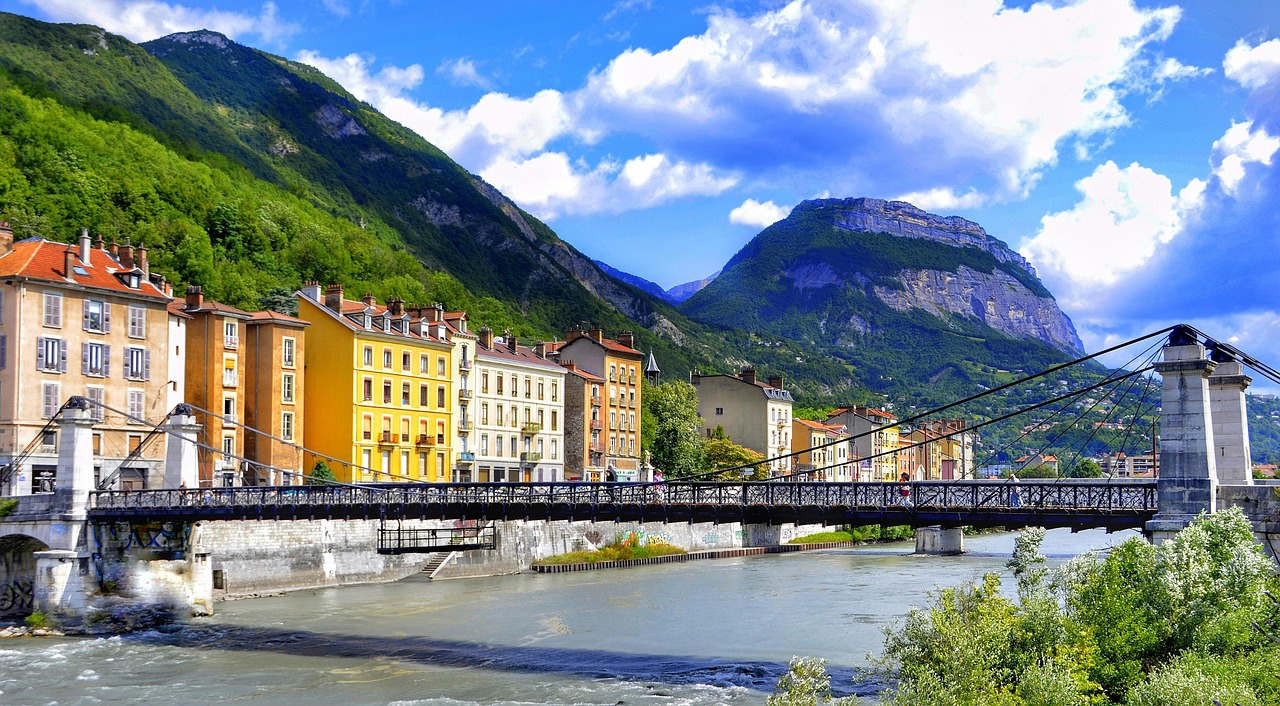
Why Visit Grenoble?
Grenoble doesn’t hit you all at once like Paris or Rome. It grows on you quietly, one mountain silhouette and one café terrace at a time. Tucked into a bowl of dramatic Alpine peaks, with the Isère and Drac rivers snaking around it, Grenoble is a city where students, scientists, skiers, and artists share the tramway every morning. It’s both deeply French and stubbornly its own thing.
I’ve lived on and off in Grenoble for years and still get a little jolt every time I walk out of the train station and see the mountains towering at the end of every street. The light changes by the hour; in winter the peaks glow pink at sunset, in summer thunderstorms roll in like theatre sets. It’s a city that rewards slow travel: lingering at markets, hopping between museums, escaping to nearby villages, and ending the day with a glass of Apremont wine on a terrace.
This travel guide for Grenoble is written like I’d plan your trip if you were a friend coming to visit for 3 days in Grenoble, 4 days in Grenoble, or even 5 days in Grenoble. We’ll mix the must-see attractions in Grenoble with genuine hidden gems in Grenoble: neighborhood bistros, quirky viewpoints, mountain walks, and places where locals actually go.
Whether you’re after a family-friendly city-and-mountains break, a romantic Alpine escape, or an adventurous base for hiking, climbing, and skiing, Grenoble is compact, affordable by French standards, and extremely easy to navigate. Think world-class museums, street art, local food, and cable cars all in one walkable package.
Table of Contents
- Why Visit Grenoble?
- Top 20 Attractions & Experiences in Grenoble
- 3–5 Day Itineraries for Grenoble
- Neighborhoods & Areas to Explore
- Local Food & Drink in Grenoble
- Nightlife, Culture & Entertainment
- Day Trips & Nearby Alpine Escapes
- Cultural Etiquette & Local Customs
- Practical Travel Tips for Grenoble
- What’s New & Upcoming Events 2026–2027
- Summary & Best Time to Visit Grenoble
Top 20 Attractions & Experiences in Grenoble
These are the best places to visit in Grenoble, blending iconic sites with corners where you’re more likely to hear French than English. I’ve included personal notes on when I like to go, what to eat nearby, and who each attraction is best for (families, couples, or adventure seekers).
1. La Bastille & The Bubble Cable Cars
If you only have one afternoon in Grenoble, go to La Bastille. The 19th-century fort sits 476 meters above the city, and the view is the postcard shot: rooftops, rivers, and mountains in every direction. It’s also the landmark Grenoble is best known for, and where I always take first-time visitors.
The fun part is getting there. The round glass cable cars—known as the “bulles” (bubbles)—have been floating over the Isère since 1976. I still get a tiny thrill when the cabin swings out over the river and the city shrinks below.
My routine: I like to go about 1–2 hours before sunset. I’ll walk along the river from Place Saint-Laurent, grab a quick espresso at one of the riverside cafés, then hop on the bubbles at the lower station. At the top, I wander the ramparts, take the obligatory skyline photos, and then settle at the terrace bar for a glass of local white wine while the city lights come on.
What to do up there
- Walk the panoramic paths and read the viewpoint signs explaining the surrounding peaks (Vercors, Chartreuse, Belledonne).
- Explore the old fortifications and underground galleries (kids love the tunnels).
- In summer, try the via ferrata routes that start right from the fortress cliffs (for adventurous travelers with proper gear or a guide).
- Visit the small exhibitions that sometimes occupy the casemates (installations, photography, or local history).
Family-friendly? Yes. Kids love the bubbles, the fort, and the open space to run around. Just keep an eye near edges and steep paths.
Romantic? Definitely—sunset up here is one of Grenoble’s most romantic moments, especially midweek when it’s quieter.
How to get there: Walk or take tram A or B to “Hubert Dubedout – Maison du Tourisme,” then follow signs to the Téléphérique. You can also hike up from the Saint-Laurent quarter (about 45–60 minutes, steep but shaded).
Local tip: In peak summer, lines for the cable car can be long from mid-afternoon. Go early morning or around 18:00–19:00. In winter, check wind conditions; sometimes the bubbles close for safety.
2. Vieille Ville (Old Town) & Historic Squares
Grenoble’s Vieille Ville is compact but packed with atmosphere: narrow lanes, Renaissance facades, hidden courtyards, and café-lined squares. This is where I suggest starting any 3 day itinerary for Grenoble because it orients you to the city and gives you that instant “I’m in France” feeling.
I often begin at Place Grenette, the classic central square with its fountain and terrace cafés. From there, I wander toward Place Saint-André, where the medieval Palais du Parlement du Dauphiné stands in ornate stone, and musicians sometimes play under the arches in the evenings.
Don’t miss
- Place Saint-André: Sit at Café de la Table Ronde, one of France’s oldest cafés, and order a noisette (espresso with a dash of milk). It’s touristy but full of character.
- Rue Très-Cloîtres: A quieter street with quirky boutiques and glimpses of the Bastille above.
- Hidden courtyards: Look for open portes cochères and peek into inner courtyards—many have old stone staircases and galleries.
Best for: First-time visitors, couples, street photography, people-watching, and anyone on a short 3 days in Grenoble visit.
Local tip: Early Sunday morning, the streets are almost empty except for the market stalls setting up. It’s my favorite time to photograph the old town without crowds.
3. Musée de Grenoble (Grenoble Museum of Fine Arts)
The Musée de Grenoble is one of France’s best art museums outside Paris, and locals are quietly proud of it. It sits along the Isère with a serene sculpture garden and a bright, airy interior that never feels overwhelming.
I like to come here on rainy days or hot summer afternoons. You can move from 13th-century religious art to Kandinsky and Picasso in a single floor, then sit in front of a huge abstract canvas and let your feet rest.
Highlights
- Strong collections of 20th-century modern art (Matisse, Picasso, Léger).
- Italian Renaissance works and French 17th-century painting.
- A peaceful sculpture garden perfect for a quiet break.
Family-friendly? Yes, especially with older kids, and there are often activity booklets at the entrance.
How to get there: Tram B to “Notre-Dame–Musée” or a short walk from the old town across the Isère.
Local tip: Combine with a stroll along the riverfront and a coffee at a nearby café along Quai Stéphane Jay.
4. Quartier Saint-Laurent & the Isère Riverfront
On the “other side” of the Isère, the Saint-Laurent district is one of Grenoble’s most photogenic areas: pastel houses stacked along the river, with the Bastille looming above. At night, lights reflect in the water and the atmosphere turns gently bohemian.
I like to cross the Passerelle Saint-Laurent, the pedestrian bridge, just as the evening light hits the facades. This is a great place to look back at the city and realize just how surrounded by mountains you are.
What to do
- Stroll the riverfront and photograph the iconic row of colorful houses.
- Have dinner at one of the small Italian or Savoyard restaurants tucked into side streets.
- Visit the Musée Archéologique Saint-Laurent, built around an ancient necropolis and early Christian site (fascinating and often overlooked).
Best for: Evening walks, photography, and couples on a romantic trip.
Local tip: On warm evenings, locals sit with takeaway pizza on the stone steps near the bridge—cheap, scenic dinner.
5. Cathédrale Notre-Dame & Place Notre-Dame
Grenoble’s Notre-Dame Cathedral sits modestly in a quiet square, partly hidden by surrounding houses. It doesn’t have the soaring drama of Paris or Strasbourg, but it rewards a slow, attentive visit.
I like to duck in here in the early afternoon when the sun filters through the stained glass and the city noise fades. The mix of Romanesque and Gothic elements tells the story of centuries of rebuilding.
Nearby: The arcades of Place Notre-Dame house cafés popular with students and professors. It’s a nice spot to pause between sightseeing stops.
Local tip: Check the side chapels and the archaeological remains beneath the cathedral (sometimes accessible via guided visits).
6. Place Grenette & Downtown Shopping Streets
Think of Place Grenette as the living room of Grenoble. Everyone passes through here at some point: families, office workers, students. The central fountain, ring of plane trees, and terrace cafés make it an easy place to spend an hour doing absolutely nothing.
From here, a grid of pedestrian streets spreads out: Rue Félix Poulat, Rue de Bonne, and Rue de la République, lined with shops from independent boutiques to familiar chains.
Best for: People-watching, casual meals, and orienting yourself on your first day.
Local tip: For a budget lunch, look for small bakery chains and grab a sandwich-formule (sandwich + drink + dessert) to eat on a bench.
7. MC2 – Maison de la Culture de Grenoble
MC2 is Grenoble’s main cultural hub for theatre, dance, classical music, and experimental performances. The building itself is a concrete-and-glass modernist statement; inside, the programming is usually bold and international.
I’ve seen everything here from minimalist dance productions to reimagined classic plays. Even if you don’t speak French, a music or dance performance can be a memorable cultural evening.
How to visit: Check their 2026–2027 program online ahead of your trip; tickets are often affordable compared to Paris. Take tram A to “MC2” stop.
Best for: Culture lovers, couples, and anyone wanting deeper cultural experiences in Grenoble.
8. Musée de la Résistance et de la Déportation
Grenoble was a key center of the French Resistance during World War II, and this museum tells that story with sensitivity and depth. It’s not an easy visit emotionally, but it’s an important one.
I first went on a cold, gray afternoon, and the combination of personal testimonies, objects, and photographs was sobering. It gives a powerful context to the plaques you see around town commemorating resistance fighters and deportees.
Allow: 1.5–2 hours. Displays are mostly in French, but there are summaries in English; an audio guide is helpful.
Best for: History buffs, thoughtful travelers, and older teens.
Local tip: Combine with a walk through nearby streets to spot memorial plaques and see how history is woven into everyday Grenoble.
9. Musée Dauphinois
The Musée Dauphinois is my personal favorite museum in Grenoble. Housed in a former convent on the hillside between the city and the Bastille, it covers Alpine life, regional history, and local traditions through beautifully curated exhibitions.
I like to walk up from the old town via narrow streets and staircases, then reward myself with the peaceful cloister and panoramic terrace. Exhibits range from traditional mountain dwellings to photography of Alpine landscapes.
Best for: Understanding the wider Alpine context of Grenoble, families, and anyone curious about local culture.
Local tip: It’s usually less crowded than the Musée de Grenoble and often free or very low-cost.
10. Parc Paul Mistral & Tour Perret
Parc Paul Mistral is Grenoble’s green lung: a big central park with lawns, sports fields, playgrounds, and the striking Tour Perret, an early reinforced concrete tower built for the 1925 International Exhibition.
On sunny days, I bring a picnic or a takeaway galette and sit in the grass watching families on bikes and joggers making circuits. It’s a nice break if you’re doing a 4 day itinerary for Grenoble and want a slower afternoon.
Family-friendly? Very—excellent playgrounds and space to run.
How to get there: Tram A or C to “Gustave Rivet” or “Chavant.”
11. Eco-District de Bonne & Shopping Center
The Caserne de Bonne area is a modern eco-district built around a former military barracks, now a shopping center and residential area. It’s an interesting example of Grenoble’s eco-conscious urban planning, with green roofs, courtyards, and energy-efficient buildings.
I like to cut through here on errands and end up having a coffee in the sunlit inner courtyard, surrounded by a mix of 19th-century brick and sleek contemporary lines.
Best for: Contemporary architecture fans, shoppers, and rainy-day browsing.
12. Grenoble Street Art & Grenoble Street Art Fest
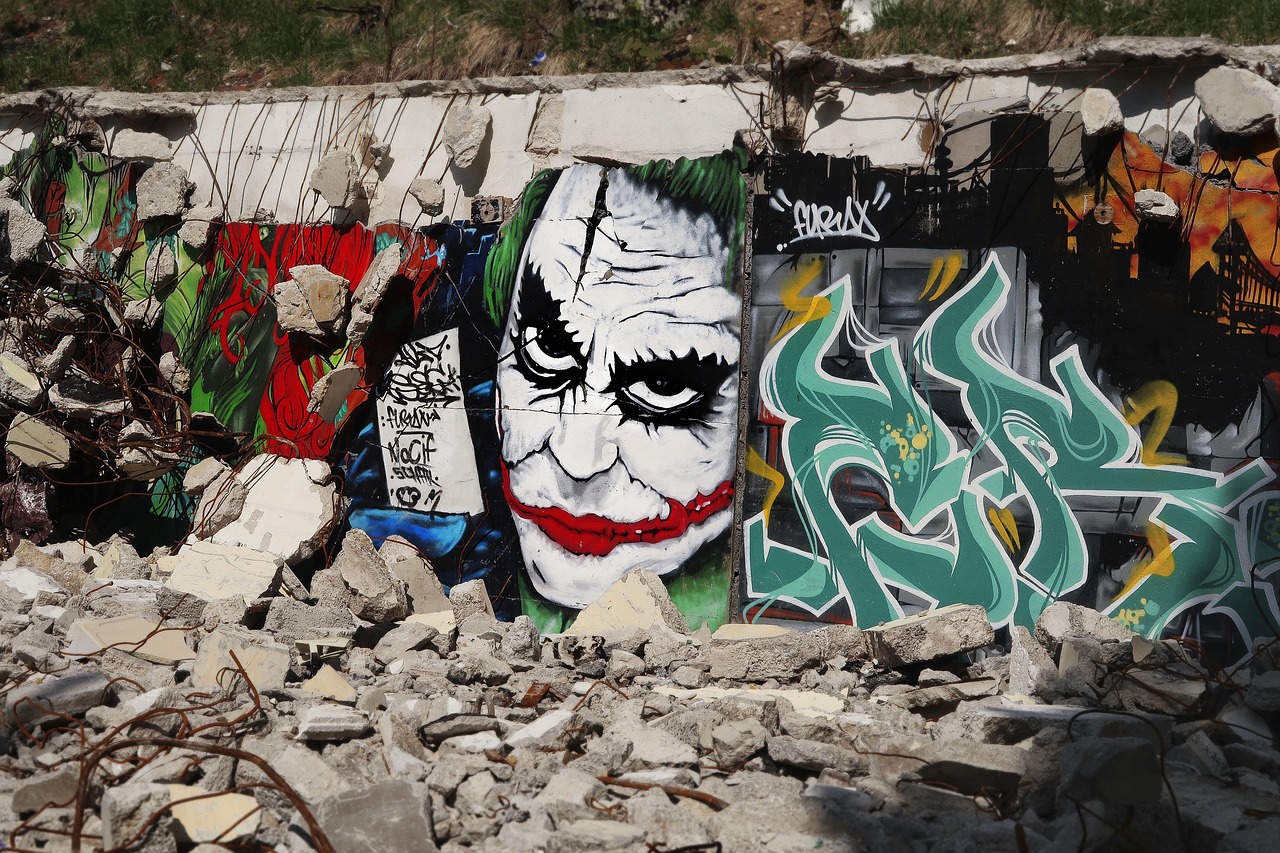
One of the coolest changes in Grenoble over the past decade has been the explosion of street art. Thanks to the annual Grenoble Street Art Fest, giant murals now color building facades from the center to the outer districts.
I often plan long, aimless walks just to discover new pieces. Some of my favorites are near the Bouchayer-Viallet area—massive, detailed murals that transform entire sides of buildings.
How to explore: Pick up or download a street art map (updated yearly) and follow a self-guided route. Great for a sunny afternoon if you’ve already ticked off the classic things to do in Grenoble.
Local tip: June is usually when new works are created live during the festival—fascinating to watch artists at work.
13. Le Magasin – National Contemporary Art Center
Housed in a former industrial hall designed by Gustave Eiffel’s workshop, Le Magasin is Grenoble’s main contemporary art center. The huge interior space allows for ambitious installations and exhibitions.
I’ve seen some wildly experimental shows here—some I loved, some I didn’t understand at all—but that’s part of the fun. It’s an easy add-on if you’re already in the Bouchayer-Viallet district hunting for street art.
Best for: Contemporary art lovers, architecture buffs, and curious travelers.
14. Bouchayer-Viallet District
Bouchayer-Viallet is a former industrial zone transformed into a creative quarter with concert venues, studios, and murals. The old brick halls and steel structures give it a raw, urban feel unlike the historic center.
I come here mostly for concerts at venues like La Belle Électrique, and I always arrive early to wander among the murals and old factory buildings, camera in hand.
Best for: Nightlife, live music, and street art. If your 5 day itinerary for Grenoble includes a weekend, check what’s on here.
15. Musée de Grenoble Sciences (La Casemate & Science Culture)
Grenoble is a major European science hub, home to high-tech labs and research centers. The city’s science culture spills into public spaces and small institutions like La Casemate, which runs exhibitions and workshops.
If you’re traveling with science-curious kids or teens, check current exhibitions focused on technology, innovation, and the future. It’s a nice counterpoint to the historic and art museums.
16. Jardin de Ville
Jardin de Ville is a small formal garden on the edge of the old town, once the private park of the city’s governors. Today, it’s where students sprawl on the grass, kids climb on playgrounds, and locals cross on their way to the cable car.
I often cut through here between appointments, and in summer there are sometimes open-air concerts or events.
Best for: Quick breaks, picnics, and relaxing in the shade.
17. Marché Saint-Bruno
Saint-Bruno Market is where Grenoble feels wonderfully everyday and multicultural. It’s a big open-air market with everything from produce and cheese to textiles and spices.
I like to go on Saturday mornings: I’ll buy seasonal fruit, maybe a wedge of local cheese, and wander through the stalls listening to a mix of French, Arabic, and Italian. It’s the opposite of polished tourist markets—raw, noisy, and real.
Local tip: Watch your belongings (like any busy market) and bring cash. Combine with a coffee at a nearby bar where market vendors grab their breaks.
18. Fromageries & Wine Bars (Local Cheese & Wine Culture)
Grenoble sits at a crossroads of Alpine cheese regions and Rhône-Alpes vineyards. You should absolutely dedicate at least one evening of your stay to a proper cheese-and-wine session.
My go-to ritual: pick up Bleu du Vercors-Sassenage, Tomme de Savoie, and some Saint-Marcellin from a fromagerie, then head to a wine bar that’s happy for you to nibble your own cheese with their glasses of Savoie or Isère wines (always ask politely first).
Best for: Food lovers, couples, and slow evenings.
19. Day-Trip Skiing in the Alps (Chamrousse, Les 7 Laux, Villard-de-Lans)
One of Grenoble’s greatest advantages is how close it is to ski areas. In winter, locals routinely work a half-day, then ski in the afternoon. If you’re here from December to March, consider a day trip to Chamrousse, Les 7 Laux, or Villard-de-Lans.
I’ve had some magical days at Chamrousse: catching the first gondola, skiing through forest runs with views down to the city, then ending with hot chocolate at a slope-side bar and a bus ride back in time for dinner in Grenoble.
Best for: Adventure seekers, families with older kids, and anyone wanting a taste of the Alps without committing to a full ski resort stay.
Local tip: Weekdays are far quieter than weekends. Rent gear in Grenoble to save time and money.
20. Hiking in the Vercors & Chartreuse Massifs
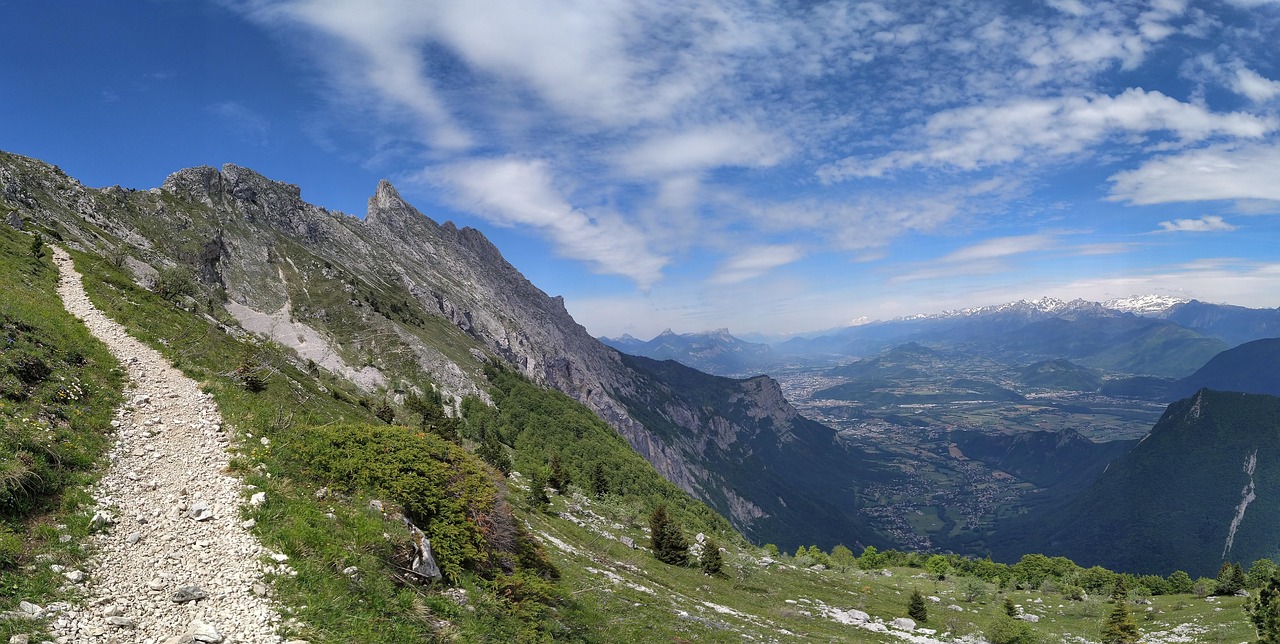
Even if you’re not an extreme hiker, you should try at least one mountain walk. The Vercors and Chartreuse ranges are close enough for half-day or full-day trips, and there are trails for all levels.
On hot summer days, I escape to the Vercors plateaus—cooler air, pine forests, and wide views. In autumn, Chartreuse turns golden and smells of damp leaves and woodsmoke.
Best for: Outdoor lovers, photographers, and anyone on a longer 4 day itinerary for Grenoble or 5 days in Grenoble.
Local tip: Always check weather and trail conditions; mountain weather changes quickly. Bring water, layers, and proper shoes.
3–5 Day Itineraries for Grenoble (With Personal Stories)
These itineraries are flexible frameworks for 3 days in Grenoble, 4 days in Grenoble, and 5 days in Grenoble. I’ll walk you through how I usually host friends: a mix of must-see sights, local food, and small surprises.
3 Day Itinerary for Grenoble: City & Bastille Highlights
If you only have 3 days in Grenoble, this plan hits the essentials while leaving room to wander.
Day 1 – First Impressions: Old Town, Riverfront & Bastille at Sunset
I love starting visitors gently, letting them adjust to the pace of Grenoble before throwing them into museums and mountains.
Morning: Arrive, drop bags, and head straight to Place Grenette. Grab coffee and a croissant at a terrace and watch the city move around you. From there, wander the Vieille Ville—Rue Lafayette, Place Saint-André, Place Notre-Dame. Duck into the cathedral, explore side streets, and note your favorite café terraces for later.
For lunch, I often take friends to a simple bistrot du midi—somewhere with a daily menu, usually around €15–€20 for a starter + main or main + dessert. Look for chalkboard menus and locals in work clothes.
Afternoon: Cross the Isère via the Passerelle Saint-Laurent and stroll along the riverfront. Enjoy that famous view back towards the colorful houses clinging to the embankment. If you’re museum-inclined and have time, drop into the Musée Archéologique Saint-Laurent for an hour.
Late afternoon & evening: Head to the Bastille cable car. Time your ascent to be at the top about an hour before sunset. Walk the ramparts, soak in the panorama, and let me insist: don’t rush. This is the moment when Grenoble really reveals itself.
After sunset, take the cable car back down and wander back through the old town for dinner. Try a restaurant serving local food in Grenoble: a gratin dauphinois, a hearty tartiflette, or a dish featuring noix de Grenoble (Grenoble walnuts).
Personal tip: My favorite part of day 1 is walking back through the slightly quieter old town after dinner. The mountains are dark silhouettes, shop shutters are down, and the city feels like it belongs to you.
Day 2 – Art, History & Parc Paul Mistral
Morning: After breakfast at your hotel or a local bakery, head to the Musée de Grenoble. Spend 2–3 hours moving through the collections at your own pace. Don’t try to see everything; pick a few rooms that resonate.
When you’re done, walk along the Isère, then cut back into the old town for lunch. This is a good moment to try a galette (savory buckwheat crêpe) with cheese, ham, or vegetables.
Afternoon: Take tram A or C to Parc Paul Mistral. Stroll the park, watch local life, and maybe grab an ice cream or drink at one of the kiosks. If you’re traveling with kids, let them loose on the playgrounds while you rest your feet.
From the park, you can walk back towards the center via Caserne de Bonne to admire the eco-district architecture and maybe browse the shops.
Evening: For a mellow night, choose a wine bar in the center and ask for local bottles—Savoie whites, Isère reds—and a planche (cheese and charcuterie board). This is a wonderfully French way to turn snacking into dinner.
Day 3 – Street Art, Saint-Bruno Market & Optional Museum
Morning: If it’s a market day (especially Saturday), start at Saint-Bruno Market. Wander the stalls, buy fruit, and nibble on a pastry. Then continue on foot or by tram towards the Bouchayer-Viallet district to hunt for street art and peek at Le Magasin.
Afternoon: Depending on your interests, choose:
- Musée Dauphinois for culture and views, or
- Musée de la Résistance for WWII history.
Both can be reached by tram and a bit of walking.
Evening: If you’re leaving the next morning, consider a final stroll through the old town and one last ice cream or dessert crêpe. I always feel a tiny pang saying goodbye to visitors at this point—three days in Grenoble go by fast, but you’ll have seen the city’s essential layers.
4 Day Itinerary for Grenoble: Adding a Taste of the Mountains
With 4 days in Grenoble, you can add a half-day or full-day mountain experience.
Day 4 – Half-Day in the Chartreuse or Vercors
Option A: Chartreuse
Take a morning bus or drive to a nearby Chartreuse village (such as Saint-Pierre-de-Chartreuse). Wander through the village, enjoy coffee with mountain views, and do a short hike on a marked trail. In summer, meadows are full of wildflowers; in autumn, forests glow with color.
Option B: Vercors
Head to Villard-de-Lans or another Vercors gateway village. Stroll through town, then take a gentle hike along the plateau edges where views plunge down to the valley.
Return to Grenoble by late afternoon. For dinner, seek out a restaurant serving mountain specialties: raclette, fondue, or diots (savoyard sausages) with polenta.
Local tip: If the weather is bad in the mountains, pivot and spend the day exploring more museums, shopping streets, or cafés in Grenoble. Flexibility is key.
5 Day Itinerary for Grenoble: Deep Dive City + Alps
A 5 day itinerary for Grenoble lets you really relax, add a ski or full hiking day (depending on season), and enjoy more hidden gems in Grenoble.
Day 4 – Full Mountain Adventure: Skiing or Big Hike
Winter (Dec–Mar): Book a day trip to Chamrousse or Les 7 Laux. Rent skis or snowshoes in Grenoble or at the resort, buy a day pass, and savor a whole day in the snow. Even if you’re not a skier, many resorts offer sledging areas and snowshoe trails.
Summer (May–Oct): Choose a longer hike in Vercors or Chartreuse. I usually start early, pack a picnic, and aim for a summit or viewpoint by midday, then descend in time for a late-afternoon coffee in a village.
Back in Grenoble, treat yourself to a hearty dinner and maybe a nightcap at a riverside bar.
Day 5 – Neighborhood Wandering & Slow City Day
Use your fifth day to explore neighborhoods you’ve only passed through:
- Walk through île Verte along the river and admire the tall residential towers with mountain backdrops.
- Explore more of Saint-Laurent’s back streets.
- Return to your favorite spots for second visits—this time as a semi-local.
Spend time in cafés writing postcards or journaling, pick up local products (walnuts, Chartreuse liqueur, regional wine), and enjoy a last lingering dinner. I always feel that by day 5, visitors start to walk at the same pace as the city—slower, more observant, more content.
Neighborhoods & Areas to Explore in Grenoble
Centre-Ville (City Center)
The heart of Grenoble: pedestrian streets, main squares, and most classic things to do in Grenoble. Best for first-time visitors, shopping, and nightlife.
Vieille Ville & Notre-Dame
Grenoble’s oldest quarter, with narrow lanes, stone facades, and historic churches. Great for walking, photos, and café-hopping.
Saint-Laurent
The colorful riverside district under the Bastille. Slightly bohemian, with good restaurants and access to hill paths.
Île Verte
A residential area along the river with iconic high-rise towers and big mountain views. Quiet, local, and pleasant for evening walks.
Saint-Bruno
A bustling, diverse district around the Saint-Bruno market. Everyday life, multicultural shops, and a more down-to-earth feel.
Bouchayer-Viallet
Former industrial, now creative: concert halls, studios, and street art. Best enjoyed in late afternoon or evening.
Caserne de Bonne & Hoche
Modern eco-district, shopping center, and new residential buildings. Interesting for urban planning and contemporary architecture.
Local Food & Drink in Grenoble
Must-Try Local Specialties
- Gratin Dauphinois: Creamy potato gratin from the Dauphiné region—pure comfort food.
- Noix de Grenoble: Protected-origin walnuts, often used in tarts, salads, and cheeses.
- Ravioles du Royans: Tiny cheese-filled ravioli served in broth or baked with cream.
- Tartiflette & Raclette: Cheese-heavy mountain dishes perfect after a day outdoors.
- Chartreuse: Famous herbal liqueur from nearby Chartreuse monastery—try green or yellow varieties.
Restaurants, Bistros & Markets
Where I Actually Eat:
- Casual bistros in the old town for daily menus at lunch.
- Crêperies around Place Notre-Dame for galettes and cider.
- Wine bars near Place Sainte-Claire for planches.
- Marché de l’Estacade and Saint-Bruno Market for produce and picnic supplies.
Money-saving tip: Make lunch your main meal with formule midi deals, then keep dinner lighter with takeaway or cheese and bread from markets.
Nightlife, Culture & Entertainment in Grenoble
Evening Drinks & Bars
Grenoble’s nightlife is shaped by its large student population. Expect relaxed bars, wine bars, and a few lively clubs rather than glitzy megaclubs.
Favorite areas include:
- Around Place Notre-Dame and Place Saint-André for atmospheric terraces.
- Bouchayer-Viallet for live music venues.
- Riverside spots along the Isère for summer evenings.
Cultural Evenings & Events
Check out:
- MC2 for theatre, dance, and classical music.
- Le Summum and other venues for concerts.
- Seasonal festivals—especially summer open-air cinema and music in parks.
Day Trips & Nearby Alpine Escapes
Chamrousse
Winter ski resort, summer hiking base, and one of Grenoble’s classic mountain playgrounds. Accessible by bus or car in about 1 hour.
Villard-de-Lans & Vercors Plateau
Charming village with cafés, markets, ski slopes in winter, and hiking/biking trails in summer. Great all-rounder for families.
Grande Chartreuse Monastery Area
Remote, peaceful, and atmospheric. The monastery itself is not fully open, but the surrounding trails and the nearby museum tell the story of the monks and the famous liqueur.
Nearby Lakes: Laffrey & Monteynard
On hot days, locals escape to lakes for swimming, picnics, and watersports. Lac de Laffrey is closest; Lac de Monteynard is famous for its turquoise water and footbridges.
Cultural Etiquette & Local Customs in Grenoble
Greetings & Politeness
Always start interactions with a polite Bonjour, Madame / Monsieur. This small gesture goes a long way in France. When leaving, a simple Merci, au revoir is appreciated.
Mealtime Etiquette
- Don’t expect to be rushed through meals; French dining is slower.
- It’s considered polite to keep hands visible on the table (not in your lap).
- Splitting bills can be tricky; ask On peut payer séparément? and be patient.
Tipping
Service is included, but locals often leave small change or round up by 5–10% in cafés and restaurants if service was good.
Dress & Behavior
Grenoble is casual but neat. Outdoor gear is common, especially in winter, but for evenings, smart casual (clean sneakers, dark jeans, simple jacket) fits in fine.
Practical Travel Tips for Grenoble
Getting Around Grenoble
Public Transport: Grenoble’s tram and bus network is excellent. Buy tickets at tram stops or via apps; validate them on board. For a 3–5 day itinerary for Grenoble, consider a multi-day pass.
Walking & Biking: The center is very walkable, and there’s a public bike system plus many bike lanes.
Car Rental: Not needed for the city itself, but useful for day trips into the mountains if you’re comfortable driving winding roads.
Foreign Licenses: Most foreign driver’s licenses are accepted for short stays; check if you need an International Driving Permit based on your country.
How to Save Money in Grenoble
- Eat main meals at lunch with fixed-price menus.
- Use bakeries and markets for picnics.
- Walk or use trams instead of taxis.
- Look for free or reduced-price museum days.
SIM Cards & Connectivity
You’ll find major French carriers (Orange, SFR, Bouygues, Free) with prepaid SIM options. Bring your passport and plan around €15–€30 for a tourist pack with data for a week or more.
Visa & Entry Requirements
France is part of the Schengen Area. Travelers from many countries can enter visa-free for short stays; others need a Schengen visa. Check your specific requirements well before travel.
Safety & Health
Grenoble is generally safe. Usual city precautions apply: watch belongings in markets and trams, avoid leaving valuables in cars, and be mindful late at night in quieter areas.
Best Seasons & What They’re Good For
- Spring (Apr–Jun): Mild, green, ideal for city strolling and lower-altitude hikes.
- Summer (Jul–Aug): Warm to hot in the city; great for alpine hikes and lakes. Occasional heatwaves.
- Autumn (Sep–Oct): Beautiful foliage, comfortable temperatures, fewer crowds.
- Winter (Dec–Mar): Cold, often gray in the valley, but excellent for skiing and mountain sports nearby.
What’s New & Upcoming Events in Grenoble (2026–2027)
Grenoble’s calendar is packed with festivals and events, many of them tied to its student and scientific communities.
- Grenoble Street Art Fest (June 2026 & 2027): New murals, live painting, guided tours.
- Cabaret Frappé Festival (Summer): Open-air music festival in city parks.
- Science & Innovation Events: Regular conferences and public outreach linked to Grenoble’s research centers.
- Christmas Markets (Dec 2026 & 2027): Festive stalls in central squares, mulled wine, and regional products.
Always check updated city tourism websites closer to your travel dates for exact schedules.
Summary & Final Recommendations
Grenoble is not about ticking off an endless checklist; it’s about balancing city life with mountains, museums with markets, and long café conversations with sudden bursts of outdoor adventure.
For a 3 day itinerary for Grenoble: Focus on the Bastille, old town, Musée de Grenoble, and at least one other museum or park.
For 4 days in Grenoble: Add a half-day mountain or village trip to Chartreuse or Vercors.
For 5 days in Grenoble: Dive deeper—spend a full day hiking or skiing, explore street art, and linger in neighborhoods beyond the center.
Best time to visit Grenoble overall: Late spring (May–June) and early autumn (September–early October) for comfortable temperatures, clear mountain views, and a good balance of city and outdoor activities. Winter is ideal if skiing and snow are your priorities, while summer is perfect for hiking and lakes if you don’t mind city heat.
Come with curiosity, a pair of good walking shoes, and a willingness to look up at the mountains often. Grenoble rewards that kind of traveler.