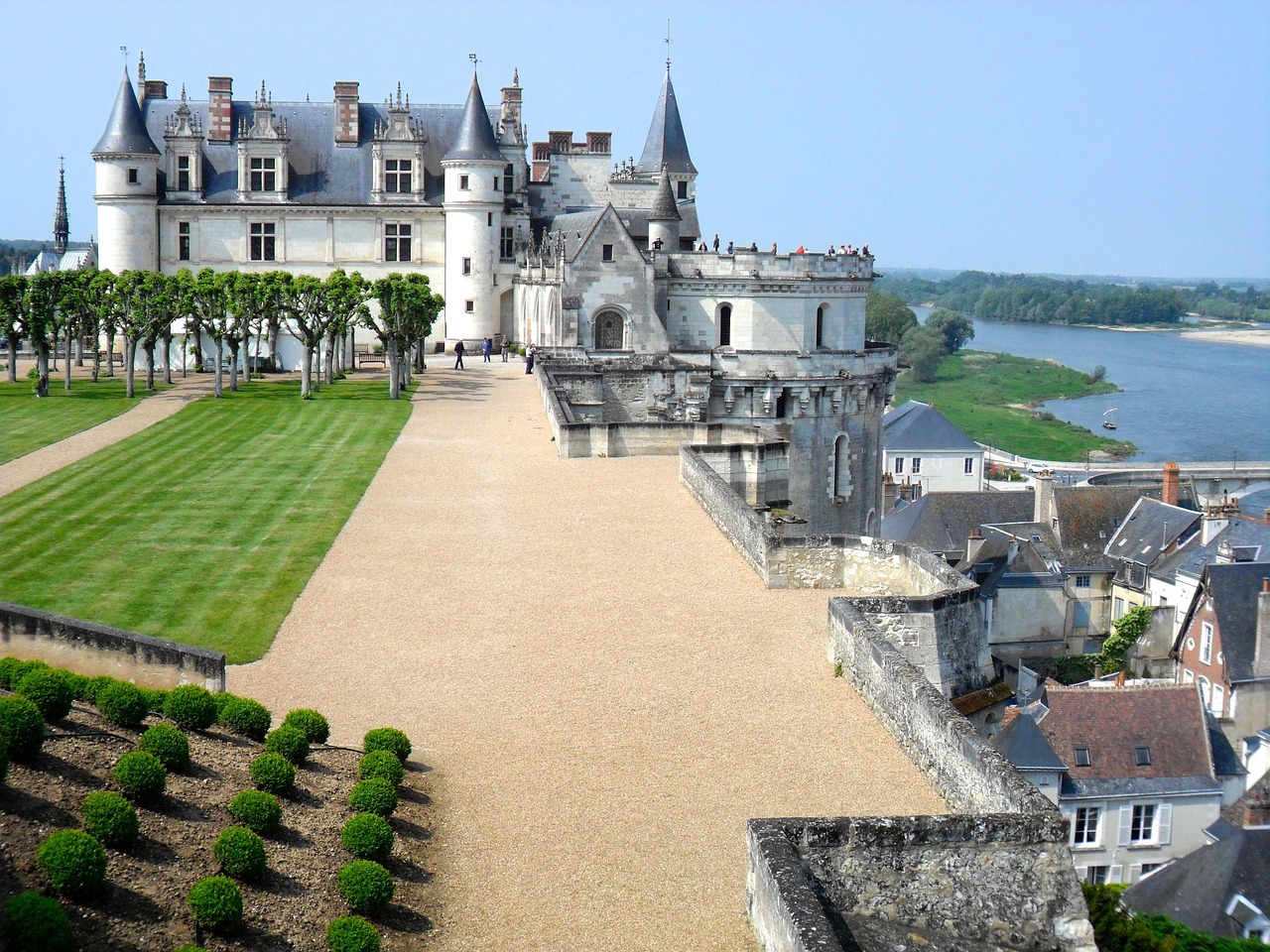
Why Visit the Loire Valley?
The Loire Valley is where France slows down and stretches out. It’s a long, lazy ribbon of river lined with storybook châteaux, vineyards that glow gold at sunset, and villages where the bakery still sells out by 9 a.m. because everyone knows the baker by name.
I’ve been coming here for over a decade, staying with friends near Tours, house-sitting in a hamlet outside Blois, and renting creaky-floored apartments in Saumur with a view of the river. Each visit feels different: spring is for wildflowers and bike rides, summer is for river swims and night-time château shows, autumn for truffle markets and harvest festivals, and winter for firelit wine cellars and empty castle courtyards.
What makes the Loire Valley special is the combination of epic scale and intimate moments: UNESCO-listed landscapes, Renaissance palaces, and yet a farmer will still hand you a tomato from his garden because “you can’t taste this in Paris.” It’s romantic without being precious, family-friendly without being theme-parked, and adventurous if you know where to look (kayaking, hot-air balloons, long-distance cycling along the Loire à Vélo).
This 2026 guide is written as a long, slow journey through the region: a detailed 4–7 day itinerary, deep dives into at least 18 key towns and landscapes, and very practical advice on driving, trains, wine-tasting etiquette, budgets, and seasonal strategies. Think of it as a companion for planning your own story here.
Table of Contents
- Why Visit the Loire Valley?
- 4–7 Day Itineraries in the Loire Valley (With Personal Stories)
- Towns, Sub-Areas & Landscapes – 18 Deep Dives
- Regional Cuisine & Where to Taste It
- Evenings in the Loire Valley
- What’s New in 2026–2027: Events & Festivals
- Day Trips & Nearby Attractions
- Cultural Etiquette & Local Customs
- Practical Travel Advice & Money-Saving Tips
- Summary & Final Recommendations
4–7 Day Itineraries in the Loire Valley (With Personal Stories)
Below are flexible itineraries that I’ve actually followed, tweaked over multiple trips with friends, kids, and a very patient partner who doesn’t love early mornings. The core logic is the same whether you have 4, 5, 6, or 7 days in the Loire Valley: anchor yourself in 1–2 bases (usually Tours + somewhere more rural), then day-trip out in loops.
4 Day Itinerary for Loire Valley – “First Taste of the Loire”
If you have 4 days in the Loire Valley, focus on the golden triangle: Tours, Amboise, Chenonceau, and Chambord. This is the itinerary I use when friends fly into Paris for just a week and want the “Loire greatest hits” without needing a car every second.
Day 1 – Arrival in Tours & First Evening on the Loire
I like to arrive in Tours around lunchtime on the TGV from Paris Montparnasse (about 1 hour to St-Pierre-des-Corps). In 2025 I arrived on a rainy April afternoon; by the time I’d checked into my small guesthouse near Place Plumereau, the sun had broken through and the half-timbered houses glowed like something from an illuminated manuscript.
Afternoon: Stroll the medieval streets of Vieux Tours. Duck into Cathédrale Saint-Gatien, whose stained glass turns even grey light into something almost Mediterranean. Stop at a café on Place Plumereau for a coffee or a glass of local Sauvignon Blanc.
Evening: Walk down to the riverfront near the Guinguette de Tours-sur-Loire (the seasonal open-air bar that’s become a summer institution). In summer 2026, expect live music most nights, pop-up food trucks, and entire families sprawled on deckchairs with rosé and paper cones of frites. It’s one of my favorite family-friendly spaces in France: kids run around, grandparents dance, and no one is in a rush.
Dinner tip: For a first taste of local food in the Loire Valley, I like a relaxed bistro such as a small place on a side street near Place Plumereau—look for a short menu featuring rillettes de Tours, goat cheese from Sainte-Maure, and sandre (pike-perch) from the Loire.
Day 2 – Amboise & Clos Lucé: Châteaux and Leonardo’s Garden
Morning: Catch an early train or drive to Amboise (about 25 minutes by train from Tours, 30–40 minutes by car). When I last visited in May 2024, I parked on the north bank of the Loire and crossed the bridge on foot; the view of Château d’Amboise perched above the river is one of the iconic Loire Valley shots.
Visit Château d’Amboise first thing to avoid the crowds. The terraces offer sweeping views over the river and town, and in 2026 the interpretive displays about the Renaissance court have been refreshed with better English-language panels.
Late morning & lunch: Wander the market streets below the château. On Fridays and Sundays, the riverside market is one of the best places for picnic supplies: goat cheese, strawberries from local producers, and maybe a still-warm baguette. I like to grab food and carry it up to a shady bench in the public gardens near the château.
Afternoon: Walk to Clos Lucé, Leonardo da Vinci’s last residence. Families love it: the grounds are dotted with life-size models of Leonardo’s inventions, which kids can climb into and fiddle with. I still remember a stormy afternoon in 2022 when we hid under the trees and watched a group of schoolchildren test his wooden helicopter model between bursts of rain.
Evening: Return to Tours. If you have energy, walk along the riverfront again. Otherwise, find a wine bar in Vieux Tours and ease into the local rhythm. This is also where you’ll start to hear the soft, almost musical accent of the Loire—slower and rounder than Parisian French.
Day 3 – Chenonceau & a Taste of the Vineyards
Morning: Head to Château de Chenonceau, arguably the most romantic château in France, spanning the River Cher on elegant arches. I try to get there right at opening; in June 2025 I arrived at 9 a.m., and for twenty silent minutes it felt like my own private fantasy.
Inside, look for the exquisite floral arrangements; Chenonceau has its own team of florists, and the displays change weekly. The long gallery over the river always stops me in my tracks—especially when sunlight patterns the stone floor through the checkerboard of windows.
Midday: Have lunch at the on-site crêperie or picnic in the designated area by the woods. If you’re here as a couple, consider splurging on lunch at the Orangerie restaurant; it’s quietly refined without being stuffy.
Afternoon: Drive or cycle through the nearby Montlouis-sur-Loire or Vouvray vineyards. In 2023 I joined a small tasting at a cave troglodytique (wine cellar dug into the tuffeau limestone) just outside Vouvray; the winemaker poured aged sparkling Vouvrays and told stories of the 2019 frost that nearly killed his crop. Tastings are usually very affordable, often free with a purchase.
Evening: Back to Tours. If you’re visiting in summer 2026, check schedules for son et lumière (sound-and-light shows) at nearby châteaux like Amboise or Blois; they make a magical, family-friendly end to the day.
Day 4 – Chambord & Blois: Grand Scale and River Town Charm
Morning: Drive or take a combination train + bus to Château de Chambord (about 1h15 from Tours by car). Chambord is the Loire’s most extravagant statement piece: 426 rooms, chimneys like stone candles, and Leonardo-inspired double-helix staircases spiraling through the heart of the building.
I still remember the first time I stood on Chambord’s rooftop terraces at 10 a.m. in October; mist was lifting off the surrounding forest, and the rooftops looked like the skyline of a forgotten stone city. Bring a light jacket—winds can be sharp even in summer.
Afternoon: After exploring Chambord’s interiors and park (you can rent bikes or even a small electric boat on the canal), continue to Blois (about 20–25 minutes by car). Blois makes a lovely late-afternoon stop: its own château is smaller but historically rich, and the old town spills down steep streets to the Loire.
Have a coffee or an early dinner on a terrace overlooking the river, then either return your rental car in Blois (if you’re heading back to Paris by train) or drive back to Tours for one last night.
This 4 day itinerary for Loire Valley is intense but balanced: you’ll see the key must-see attractions in Loire Valley while still tasting the quieter rhythms of local life.
5 Day Itinerary for Loire Valley – “Slow Châteaux & Vineyards”
With 5 days in the Loire Valley, keep the 4-day structure but add a night in the countryside or in Amboise for a different feel.
Days 1–3: Follow the Tours–Amboise–Chenonceau plan above.
Day 4 – Overnight in Amboise or a Vineyard Stay
Instead of returning to Tours after Chambord and Blois, I like to loop back and sleep in either:
- Amboise – If you like evening strolls, riverside dinners, and having Leonardo’s house almost to yourself in the morning.
- A vineyard B&B near Vouvray or Montlouis – For sunrise over vines and long talks with winemakers over breakfast.
On one 2022 trip we booked a simple chambre d’hôtes in Vouvray; the owner left us a bottle of their own sparkling wine in the room “just in case the sunset is good.” It was.
Day 5 – Loire à Vélo & River Villages
Use your extra day to experience part of the Loire à Vélo cycling route. Many rental shops in Tours, Amboise, and Blois offer day rentals; the path is mostly flat and family-friendly.
My favorite stretch for a day ride is between Amboise and Chaumont-sur-Loire. It hugs the river, passes small beaches where locals swim in summer, and ends at Domaine de Chaumont-sur-Loire, where the château and its International Garden Festival (see events section) make a fabulous reward.
Return your bikes in the late afternoon, then either catch an evening train onward or sleep one last night in Tours or Amboise.
6 Day Itinerary for Loire Valley – “Châteaux, Caves & Country Towns”
With 6 days in the Loire Valley, you can add the western Loire: Saumur, Chinon, and the troglodyte villages.
Days 1–4: Follow the 4 day itinerary for Loire Valley, ending with a night in Tours.
Day 5 – Saumur & Troglodyte Caves
Morning: Take an early train from Tours to Saumur (about 55 minutes) or drive (around 1h10). Saumur is a softer, quieter Loire town with a castle that floats above the river like a white ship.
Climb up to Château de Saumur for views and a walk through the collections (including a surprisingly interesting horse museum). When I visited with friends in autumn 2023, we sat on the castle terrace with coffee and watched rowers cut through the mist on the river below.
Afternoon: Explore the troglodyte caves in the surrounding hills—former quarries and dwellings carved into the limestone. Many have become wine cellars or mushroom farms. I’m still haunted by the earthy smell of a champignonnière we visited near Montsoreau, where mushrooms grew in perfect rows in the half-dark.
Evening: Stay overnight in Saumur. Have dinner in the old town; look for menus offering fouées (small baked pockets of bread that you fill yourself with rillettes, beans, or goat cheese).
Day 6 – Chinon & the Vienne Valley
Morning: From Saumur, it’s an easy drive or bus ride to Chinon (around 45 minutes by car). Chinon is one of my personal favorites: medieval stone lanes, a ruined fortress strung out along a ridge, and red wine that tastes like blackcurrants and pencil shavings (in a good way).
Take the lift or the steep path up to the Forteresse Royale de Chinon. Joan of Arc met the Dauphin here; you can stand in the same halls and look down at the Vienne River curling around the town. The site is well-interpreted and surprisingly engaging for kids, with interactive exhibits and props.
Afternoon: Lunch in town (I like the cafés on the square at the foot of the fortress) and then a winery visit in the surrounding hills. Many Chinon AOC producers are small, family-run estates; tastings are often just you, the winemaker, and a dog asleep in the corner.
Evening: Either stay in Chinon for a quiet evening (there’s something very romantic about walking the riverside at dusk) or return to Tours by car/train to position yourself for onward travel the next morning.
7 Day Itinerary for Loire Valley – “A Week of Loire Life”
With 7 days in the Loire Valley, you can slow down properly. I recommend:
- 3 nights in Tours (urban base, easy trains)
- 2 nights in Saumur or Chinon (wine & troglodytes)
- 2 nights in a rural gîte or a smaller town like Azay-le-Rideau or Montsoreau
Days 1–4: Follow the 4-day itinerary.
Days 5–6: Follow the Saumur & Chinon days from the 6-day itinerary.
Day 7 – Azay-le-Rideau & Country Lanes
On your final day, give yourself a softer landing with Azay-le-Rideau. The château sits like a jewel box in a mirror of water, surrounded by an English-style park. I’ve visited Azay in every season; my favorite was a drizzly February afternoon when mist curled around the turrets and there were more ducks than people in the gardens.
After exploring the château, wander into the village: have lunch at a small bistro, browse artisan shops, and maybe walk or cycle a bit along the Indre River. If you’re staying nearby in a gîte, this is the day to simply be: read in the garden, walk to the bakery, cook with market produce, and let the Loire’s slower rhythm sink in.
This 7 day itinerary for Loire Valley turns a checklist trip into something more like a residency. You’ll leave knowing not just the big sights, but the smell of the air at dusk, the curve of the roads between vineyards, and your favorite bakery.
Towns, Sub-Areas & Landscapes – 18 Deep Dives
Below are condensed deep dives into at least 18 of the Loire’s key places. In my notebooks, each of these towns has pages of scribbles—conversations, dishes eaten, little mishaps. Here’s the distilled version to help you choose where to base, where to day-trip, and what each is known for.
Tours – The Lively Heart & Best All-Round Base
Why go: Central location, excellent rail links, lively food and bar scene, medieval quarter, and a relaxed student vibe. For most first-timers, Tours is the best base for at least part of the trip.
Known for: Rillettes de Tours, lively Place Plumereau, Cathédrale Saint-Gatien, and being a hub for day trips to Amboise, Chenonceau, and Azay-le-Rideau.
My experience: I’ve stayed in Tours in every season. In summer 2021, I rented a tiny top-floor studio; at night I’d open the windows and hear a blend of buskers, church bells, and the low rumble of conversation from Place Plumereau. In January 2024, I came back for a short writing retreat; the town felt like a different place—misty, quiet, perfect for long café sessions with a notebook and a café crème.
Who it’s for: First-time visitors, train travelers, food lovers, and anyone who wants nightlife as well as day-time culture.
Transport: Direct TGV from Paris; regional trains to Amboise, Blois, Saumur, Chinon (via Tours or St-Pierre-des-Corps). Car rental is easy at the train station.
Amboise – Riverside Charm & Leonardo’s Last Home
Why go: Classic Loire views, two world-class sites (Château d’Amboise and Clos Lucé), good restaurants, and a human scale that makes it perfect for a 2–3 night stay.
Known for: Leonardo da Vinci, Sunday riverside market, hot-air balloon flights over the Loire at dawn.
Tip: If you’re planning a balloon flight (highly recommended for couples, magical for kids), book in advance and aim for your first morning in town—flights are weather-dependent, so you’ll have backup days.
Chenonceaux & the Cher Valley – The Romantic Heart
Why go: The château alone is worth it, but the surrounding Cher Valley is also ideal for canoeing, cycling, and slow country drives.
Hidden gem: Canoeing under the arches of Chenonceau at sunset. Several outfitters run trips where you paddle down the Cher and pass beneath the château—far fewer people see it from this angle.
Chambord & Sologne Forest – Grandeur & Wildness
Why go: Chambord’s architecture is almost absurdly grand, but stay for the surrounding Sologne forests: wetlands, lakes, and deer at dusk.
Tip: In autumn (late September to early October), locals come to hear the brame du cerf—the eerie bellowing of stags in rut. Rangers organize guided walks that feel genuinely wild, even though you’re never far from a car park.
Blois – Historic Layers & River Views
Why go: A compact, steep town with a château that’s a textbook of French architectural styles: Gothic, Renaissance, and Classical all stitched together.
Personal note: I love Blois in winter. The Maison de la Magie (House of Magic) is a quirky stop with kids, and in December the Christmas lights reflect off the river in a way that makes the town feel like a snow globe.
Chaumont-sur-Loire – Gardens & Art Above the River
Why go: Less about interiors, more about landscape art and experimental gardens. The International Garden Festival (April–November) features dozens of themed plots by landscape designers from around the world.
Tip: Allow a full afternoon. In 2023 I rushed it and regretted it; in 2024 I came back on a cloudy day and spent hours wandering from one dreamy, slightly surreal garden to the next.
Saumur – White Stone, Horse Culture & Troglodytes
(Covered in the 6-day itinerary above, but in short: base for exploring the central Loire’s “white villages,” visiting the Cadre Noir riding school, and tasting sparkling wines aged in caves.)
Chinon – Medieval Alleys & Cabernet Franc
(Also covered above; add that Chinon is particularly good for off-season stays: foggy mornings on the Vienne, log fires in wine bars, and fewer crowds at the fortress.)
Azay-le-Rideau – A Fairytale Château in a Sleepy Village
Why go: Azay’s château is smaller and more intimate than Chambord or Chenonceau, and the village feels lived-in rather than curated.
Personal anecdote: One July evening I ate at a simple bistro off the main street; the owner closed early because his friend was playing accordion at the guinguette by the river and “you can’t miss that.” Half the restaurant moved there together.
Montsoreau & Candes-Saint-Martin – Two of France’s Prettiest Villages
Why go: Twin villages at the confluence of the Loire and Vienne. Classified among “Les Plus Beaux Villages de France,” they’re all honeyed stone, flower boxes, and river views.
Romantic moment: Sitting on the steps near the water in Montsoreau one September, sharing a bottle of rosé and local goat cheese as the sky turned every shade of pink. No châteaux tickets, no lines—just the river.
Angers – Gateway to the Western Loire
Why go: Larger city with a strong student population, known for the Château d’Angers and its Apocalypse Tapestry, and as a base for exploring the Anjou vineyards.
Good for: Travelers arriving from Brittany or heading towards Nantes; those who like art and history slightly off the main tourist track.
Nantes – Where the Loire Meets the Atlantic
Why go: Strictly speaking, Nantes is just beyond the traditional château zone, but it’s on the Loire and increasingly visited in combination with the valley. Known for its creative scene, Machines de l'Île (rideable mechanical elephant!), and riverfront redevelopment.
Family tip: Kids go wild for the mechanical creatures; adults appreciate the food scene and the easy train ride back to Paris.
Vendômois & the Loir Valley (Without the “e”)
Why go: North of Blois/Tours, the Loir (a separate river) flows through gentler, less-toured countryside. Towns like Vendôme and Lavardin are perfect for travelers who want the Loire feel with fewer tour buses.
Hidden gem: Lavardin, another Plus Beau Village, with a ruined hilltop castle and stone houses leaning over the river. I once spent an entire afternoon sketching there—no entry fees, just peace.
Sancerre – Hilltop Vineyards at the Eastern Edge
Why go: At the far eastern edge of the Loire region, Sancerre is pilgrimage territory for white wine lovers. The hilltop town overlooks a patchwork of vineyards producing some of the world’s most famous Sauvignon Blancs.
Tip: Best for those with a car; pair it with nearby Pouilly-sur-Loire for a themed wine road-trip.
Orléans – Joan of Arc’s City
Why go: Historic city with a stunning cathedral and strong connections to Jeanne d’Arc. It’s not as immediately charming as smaller river towns, but it’s authentic and lived-in.
Good base: For those driving down from Paris or combining with the forests of Sologne and the eastern châteaux.
The Loire à Vélo – 900km of Bikeable Riverbanks
Why go: Not a town but a landscape in motion: the Loire à Vélo cycling route strings together many of the region’s best places along mostly flat paths, former towpaths, and quiet roads.
Personal note: My favorite long day was riding from Tours to Saumur with overnight bags sent ahead. We stopped whenever the mood took us—at a tiny beach, a lock-keeper’s cottage turned café, a makeshift picnic under poplars. If you like slow travel, this is your spine.
Vouvray & Montlouis-sur-Loire – White Wines & Troglodyte Cellars
Why go: Both AOCs produce superb Chenin Blanc in styles from bone-dry to lusciously sweet, plus sparkling wines. The villages themselves are quiet, but the landscape—vines climbing above cave-like cellars—is unforgettable.
Tip: Book tastings ahead on weekends, and always have a designated driver or spit during tastings if you’re self-driving.
Bourgueil & Saint-Nicolas-de-Bourgueil – Red Wine Country
Why go: For Cabernet Franc in a quieter, more rural setting than around Chinon. Ideal for a day of winery-hopping and long vineyard walks.
Hidden gem: Picnic tables placed at vineyard viewpoints; locals will point you to their favorites if you ask at the tourist office.
The Indre Valley – Quiet Charm & Lesser-Known Châteaux
Why go: South of Tours, the Indre River winds past small châteaux like Ussé (linked to the Sleeping Beauty legend) and low-key villages. It’s perfect for those who feel “castled out” but still want that soft, green Loire feeling.
The Sologne – Lakes, Heath, and Secret Estates
Why go: A landscape of lakes, forests, and hunting estates south of Orléans and Blois. Not showy, but deeply atmospheric.
Best for: Autumn walks, birdwatching, and those who like to combine châteaux with genuine nature.
Regional Cuisine & Where to Taste It in the Loire Valley
The Loire Valley’s food is often described as “the garden of France on a plate.” It’s generous without being heavy, seasonal without being faddish.
Signature Dishes & Products
- Goat cheese: Especially Sainte-Maure-de-Touraine (the log with a straw through the middle), Crottin de Chavignol near Sancerre.
- Rillettes de Tours: Slow-cooked pork spread, richer than rillettes from Le Mans.
- Fish from the Loire & Cher: Sandre (pike-perch), brochet (pike), often in beurre blanc.
- Fouées / fouaces: Hollow wood-fired breads you stuff yourself with rillettes, beans, or cheese—especially around Saumur and Chinon.
- Tarte Tatin: Originating just east of the region, but ubiquitous and often excellent.
- Local wines: Sauvignon from Sancerre, Chenin from Vouvray and Anjou, Cabernet Franc from Chinon and Bourgueil, plus sparkling Crémant de Loire.
Where to Eat – From Farm-Stays to Bistros
Farm-stays & agriturismi-style stays: In the Loire they’re usually called gîtes or chambres d’hôtes on farms. Around Chinon and Saumur, I’ve stayed on working vineyards where dinner is a shared table with the family—simple, seasonal, and unforgettable.
Family-run inns & trattoria-equivalents: Look for auberge or bistrot in smaller villages. In Azay-le-Rideau and Montsoreau, I’ve had some of the most honest, reasonably priced meals of my travels: three courses for under €30, local wine by the carafe, no pretense.
Markets: Don’t miss:
- Tours Halles: Covered market open most days; ideal for assembling a picnic.
- Amboise Sunday market: Huge variety, from cheese to clothes, with postcard views.
- Saumur Saturday market: Great for produce and local specialties.
Whenever I’m in the Loire, I plan at least one “market to table” day: buy whatever looks good in the morning, then cook it in a rental kitchen at night with a bottle of local wine. It’s cheaper, slower, and deeply satisfying.
Evenings in the Loire Valley
Evenings in the Loire Valley are rarely about big city nightlife. They’re about light: long sunsets over the river, illuminated château façades, and the flicker of candles in restaurant windows.
Small-Town Squares & Guinguettes
In summer, riverside guinguettes (open-air bars with food and music) pop up in Tours, Amboise, Saumur, and smaller towns. They’re multigenerational spaces: toddlers chase dogs, teens flirt by the bar, grandparents dance to live bands.
Sound & Light Shows
Many major châteaux run son et lumière shows from late spring through early autumn (check 2026 schedules):
- Blois: One of the best, projecting the château’s dramatic history on its walls.
- Chambord & Amboise: Periodic evening events with projections and music.
Seasonal Celebrations
- Harvest festivals (September–October): Many villages celebrate the grape harvest with parades, open cellars, and communal meals.
- Christmas markets (late November–December): Smaller than in Alsace, but Tours, Orléans, and Angers all host festive markets with local crafts and food.
What’s New in 2026–2027: Events & Festivals
Dates can shift slightly; always double-check closer to your trip, but as of 2026 you can plan around:
- International Garden Festival – Chaumont-sur-Loire (April–November 2026 & 2027): Each year has a different theme; expect increasingly bold climate and ecology-focused installations.
- Vitiloire – Tours (late May 2026, 2027): Large wine fair in central Tours featuring producers from across the Loire. Ideal for sampling widely if you don’t have a car.
- Fêtes Johanniques – Orléans (early May 2026, 2027): Medieval-style festivities commemorating Joan of Arc’s liberation of the city.
- Loire à Vélo 20th+ Anniversary Events (through 2026): Expect pop-up events, guided rides, and family-friendly activities celebrating the cycling route’s success.
- Music & Jazz festivals: Saumur, Chinon, and smaller towns host summer music events—check local tourism sites closer to your dates.
Day Trips & Nearby Attractions from the Loire Valley
Once you’re based in Tours, Amboise, Saumur, or Angers, a few tempting side trips open up:
- Le Mans: Not just for car racing; the medieval Cité Plantagenêt old town is beautifully preserved. About 1h by train from Tours.
- Chartres: Famous cathedral with world-class stained glass. Around 1h15–1h30 from Tours by train via a connection.
- Atlantic Coast (La Baule, Pornichet): From Nantes or Angers, trains in 1–1.5h; doable as a long summer day trip if you’re craving a beach.
- Parc Naturel Régional de la Brenne: South of the Loire, a land of a thousand lakes—birdwatching and quiet hiking; best with a car.
For each, plan your train times carefully; many smaller lines still have limited evening services, especially on Sundays.
Cultural Etiquette & Local Customs
The Loire is relaxed, but a few customs will smooth your way.
Greetings & Politeness
- Always start interactions with “Bonjour, Monsieur/Madame”. It changes everything.
- In small shops, say “Bonjour” when you enter and “Au revoir, bonne journée” when you leave.
In Restaurants
- Table service is unhurried; you’ll usually need to ask for the bill (“L’addition, s’il vous plaît”).
- Tipping is modest: rounding up or adding 5–10% for excellent service is appreciated but not obligatory.
Wine Tasting Etiquette
- It’s fine to spit at tastings; professionals do it.
- Buying a bottle or two after a free tasting is good form, especially at small family estates.
Quiet Hours & Rural Life
In villages, evenings are quiet. Respect local bedtimes—keep noise down after 10–11 p.m., especially if you’re staying in old houses with thin walls.
Practical Travel Advice & Money-Saving Tips
Getting Around – Car vs Train vs Bus
Do you need a car? For a classic 4 day itinerary for Loire Valley focused on Tours, Amboise, and Chenonceau, trains and occasional taxis are enough. For deeper vineyard or village exploration, a car is very helpful.
Driving Distances (Approximate)
- Tours – Amboise: 30–40 minutes
- Tours – Chenonceau: 40–45 minutes
- Tours – Chambord: 1h15
- Tours – Saumur: 1h10
- Saumur – Chinon: 45 minutes
- Tours – Azay-le-Rideau: 30 minutes
Car Rental & Parking
- Best pickup hubs: Tours (St-Pierre-des-Corps), Orléans, Angers, Nantes.
- Historic centers often have perimeter car parks; from there you walk 5–10 minutes into the old town. Follow P signs.
- Many châteaux charge for parking; bring coins or a credit card.
Public Transport
- Trains: Efficient between major towns (Tours, Amboise, Blois, Orléans, Saumur, Angers, Nantes). Less frequent on Sundays and evenings.
- Buses: Fill in gaps but can be sparse. Always check return schedules, especially from rural stops.
SIM Cards & Connectivity
- In 2026, eSIMs from providers like Orange Holiday or pan-European options are easiest for short trips.
- Physical SIMs are sold at larger train stations, supermarkets, and phone shops in cities like Tours and Orléans.
- Coverage is generally good; some dips in deep valleys or forested areas like Sologne.
Visa Requirements & Driver’s Licenses
- France is in the Schengen Area. Many nationalities can enter visa-free for up to 90 days; check your country’s status with official French government sources.
- Non-EU visitors often can drive with their home license for short stays; some rental agencies also require an International Driving Permit (IDP). Arrange one before arrival if in doubt.
Budgeting & Money-Saving Tips
- Base in fewer places: Longer stays in one base often mean discounts on apartments or gîtes.
- Picnics: Swap one restaurant meal per day for a market picnic; it’s cheaper and often more memorable.
- Château passes: Look for combo tickets (e.g., several Indre-et-Loire sites) and regional passes in 2026; tourist offices can advise.
- Travel off-peak: Late April–early June and September–mid-October offer better prices and fewer crowds.
Best Seasons by Activity
- Spring (April–June): Wildflowers, gardens at their best, pleasant cycling weather, fewer crowds than summer.
- Summer (July–August): Warm to hot; ideal for river swimming, guinguettes, festivals, and long evenings. Also the busiest and priciest.
- Autumn (September–October): Wine harvest, golden vineyards, cooler but often sunny days. My personal favorite.
- Winter (November–March): Quiet, some smaller attractions may close or reduce hours, but major châteaux remain open. Atmospheric, good for budgets and contemplation.
Summary & Final Recommendations
The Loire Valley rewards both the list-ticker and the wanderer. You can spend 4 days in Loire Valley racing between its must-see attractions—Chenonceau, Chambord, Amboise—and leave satisfied. Or you can give it 6 or 7 days, let yourself get lost in vineyards, linger at markets, and discover your own favorite bench by the river.
Best bases: Tours for connectivity and food; Amboise or Azay-le-Rideau for romantic charm; Saumur or Chinon for wine and countryside; Angers or Nantes if you’re combining with the Atlantic coast.
Best seasons: If you can, aim for May–June or September–early October to balance weather, crowds, and prices. Summer is wonderful if you embrace the energy; winter is magical in its own quiet way.
What ties the Loire together isn’t just the castles or the wines—it’s the pace. This is a region that invites you to slow down: to watch light shift on stone, to follow a side road just because the sign says “Dégustation,” to sit by the river and do nothing at all. Plan your itinerary, yes—but leave enough space for the Loire to surprise you.