Why Visit the Loire Valley Castles Route?
The Loire Valley Castles Route is France at its most cinematic: a ribbon of road shadowing a wide, slow river and threading through forests, vineyards, and storybook towns. It’s where Renaissance kings came to play, where Leonardo da Vinci spent his last years, and where winemakers quietly reinvented sparkling wine long before prosecco was fashionable.
What makes it special isn’t only the list of must-see attractions in Loire Valley Castles Route – Chambord, Chenonceau, Amboise, Azay-le-Rideau – but the way the journey stitches them together: tiny stone bridges, fields of sunflowers bowing to the road, bakeries perfuming the morning, kids splashing in the shallows of the Loire at dusk.
- For families: moated castles with working drawbridges, gardens with maze-like hedges, easy bike paths, and river beaches perfect for skipping stones.
- For couples: candlelit dinners in troglodyte caves, hot-air balloon flights at sunrise, quiet river walks beneath streaks of pink sky.
- For the adventurous: kayaking beneath castle arches, long-distance cycling along La Loire à Vélo, hot-air balloons, horseback riding in the Sologne forests.
This travel guide for Loire Valley Castles Route is designed to be flexible: you’ll find a detailed 10 leg itinerary for Loire Valley Castles Route as my “golden mean” suggestion, with notes on how to trim it down to 7–8 legs or expand to 13–14 legs if you want to go slower and deeper.
Table of Contents
- 1. Overview: How the Loire Valley Castles Route Unfolds
- 2. The Itinerary – 10 Legs (Adaptable to 7–14 Legs)
- Leg 1 – Orléans to Meung-sur-Loire & Beaugency
- Leg 2 – Chambord, Cheverny & Sologne Detours
- Leg 3 – Blois & Chaumont-sur-Loire
- Leg 4 – Amboise & Clos Lucé
- Leg 5 – Chenonceau & The Cher Valley
- Leg 6 – Tours, Villandry & The Gardens Corridor
- Leg 7 – Azay-le-Rideau, Ussé & The Indre Side-Roads
- Leg 8 – Chinon, Forteresse Royale & Wine Caves
- Leg 9 – Saumur & Troglodyte Villages
- Leg 10 – Angers & Western Loire Horizons
- 3. Eighteen Key Castles & Viewpoints in Detail
- 4. Eating & Sleeping Along the Route
- 5. Evenings on the Road
- 6. Day Trips & Nearby Detours
- 7. Cultural Etiquette & Local Customs
- 8. Practical Logistics & Driving Advice
- 9. Events & What’s New in 2026–2027
- 10. Summary & Best Seasons
Overview: How the Loire Valley Castles Route Unfolds
When locals talk about “la route des châteaux de la Loire,” we’re not referring to a single signposted highway but to a web of river-side roads, vineyard lanes, and forest tracks that roughly follow the Loire from Orléans to Angers (and sometimes all the way to the Atlantic).
For this road-trip itinerary, I define the core Loire Valley Castles Route as:
- Start: Orléans – historic gateway city on the Loire, easy train ride from Paris and a good place to pick up a rental car.
- End: Angers – elegant city of medieval ramparts, modern galleries, and a jumping-off point if you want to push on toward Nantes and the ocean.
- Major stops in order: Orléans → Meung-sur-Loire → Beaugency → Chambord → Cheverny → Blois → Chaumont-sur-Loire → Amboise (and Clos Lucé) → Chenonceau → Tours → Villandry → Azay-le-Rideau → Ussé → Chinon → Saumur → Fontevraud (optional but recommended) → Angers.
The driving is gentle: no mountain passes, no hairpins, plenty of services. A regular car is absolutely fine; a campervan or motorcycle makes it even more of an adventure. There are fuel and charging stations at all major towns, and the distances are short enough that you can string together many different versions: 7 legs of Loire Valley Castles Route if you’re in a rush, up to 14 legs if you want to linger.
The Itinerary – 10 Legs (Adaptable to 7–14 Legs)
Below is the 10 leg itinerary for Loire Valley Castles Route that I usually recommend to friends visiting in 2026. After the outline, I’ll walk you through each leg as a personal travel story and then dive deeper into 18 of the best places to visit in Loire Valley Castles Route.
- Leg 1: Orléans → Meung-sur-Loire → Beaugency
- Leg 2: Beaugency → Chambord → Cheverny (overnight nearby)
- Leg 3: Cheverny → Blois → Chaumont-sur-Loire
- Leg 4: Chaumont → Amboise & Clos Lucé
- Leg 5: Amboise → Chenonceau → Montrichard / Saint-Aignan
- Leg 6: Montrichard → Tours → Villandry
- Leg 7: Villandry → Azay-le-Rideau → Ussé
- Leg 8: Ussé → Chinon & vineyards
- Leg 9: Chinon → Saumur & troglodyte caves
- Leg 10: Saumur → Fontevraud (optional) → Angers
To turn this into a 7 or 8 leg itinerary for Loire Valley Castles Route, simply combine some nights (for example, do Chambord, Cheverny, and Blois in a single long day). To expand into 12–14 legs, add extra nights in Amboise, Chinon, and Saumur, and work in a cycling day or a full-day wine tour.
Leg 1 – Orléans to Meung-sur-Loire & Beaugency (Day 1–2)
I still like to start in Orléans, not because it’s the prettiest stop (it isn’t), but because it feels like a gateway. In 2026, the riverside promenade is livelier than ever: food trucks, pop-up guinguettes (casual outdoor bars), and kids racing scooters while the cathedral bells toll.
Pick up your rental car near the station, then give yourself at least half a day to wander: the Cathédrale Sainte-Croix shimmering with stained glass, the half-timbered houses around Place du Martroi, the Jeanne d’Arc house-museum. It’s an easy place to adjust: stock up on picnic supplies at the Saturday market (cheeses, rillettes, strawberries if in season), grab a local SIM card, and test your driving nerves on the boulevard along the river.
When I drove this leg again in spring 2026, I left Orléans after lunch, with the sun high and the river silver. The D2152 follows the Loire west, and it’s only about 20 minutes to Meung-sur-Loire, but I always take the slower road closest to the water, where willows dip into the current and you pass fishermen sitting on folding stools.
Meung-sur-Loire is one of those places people rush by. Don’t. The castle, once a fortified medieval palace, later softened by Renaissance renovations, is a delightfully eccentric introduction to the Loire Valley Castles Route. Unlike the polished royal residences later on, Château de Meung-sur-Loire still feels a bit lived-in and mischievous: costumes to try on, a somewhat creepy basement, and gardens that spill towards the river. Kids adore it.
I like to arrive mid-afternoon, wander the narrow streets, then settle at a café on Place du Martroi with a glass of local white – crisp Orléans-Cléry – and watch life drift by. For families, there’s usually a carousel in summer, and ice cream dripping down small chins.
Another 10–15 minutes of driving brings you to Beaugency, a town dominated by its handsome stone bridge arcing across the Loire and the stout keep of its château. The first time I arrived at Beaugency, years ago, it was at dusk: swallows skimming the water, the bridge glowing orange, and that feeling that your road trip had truly begun.
In 2026, Beaugency has quietly become a bit of an arts hub. The castle hosts immersive digital exhibitions (think swirling projections of Renaissance paintings set to atmospheric music). It’s one of the most family-friendly “museum” stops on the whole route, because kids are encouraged to interact, not shushed.
Where to stay: I often overnight here instead of Orléans. There are a couple of riverside B&Bs where you can fall asleep with the window open, listening to the distant rush of the Loire and the croak of frogs. Parking is usually easy and free just outside the old core.
What to eat: Look for sandre au beurre blanc (pike-perch with beurre blanc sauce), simple salads with local goat cheese, and in colder months, rillons (slow-cooked pork belly) with potatoes. On my last visit, I lingered over a plate of rillons and a glass of light red from nearby Cheverny, then walked the bridge under the stars.
For a 7 leg itinerary for Loire Valley Castles Route, you could compress this leg and start early from Paris, just pausing briefly at Orléans and Meung before sleeping in Beaugency or even near Chambord. But if your schedule allows, these first two small towns ease you gently into the slower rhythm you’ll need for the days ahead.
Leg 2 – Beaugency to Chambord & Cheverny (Day 2–3)
Leaving Beaugency after breakfast – ideally with crumbs of croissant still on your fingers – you turn slightly inland toward the forests of the Sologne. The flat farmland gives way to taller trees, and suddenly the sky narrows to a canopy of green. This is a leg where the journey itself is a pleasure: a straight, almost meditative road punctuated by glimpses of deer if you’re early.
And then, Chambord.
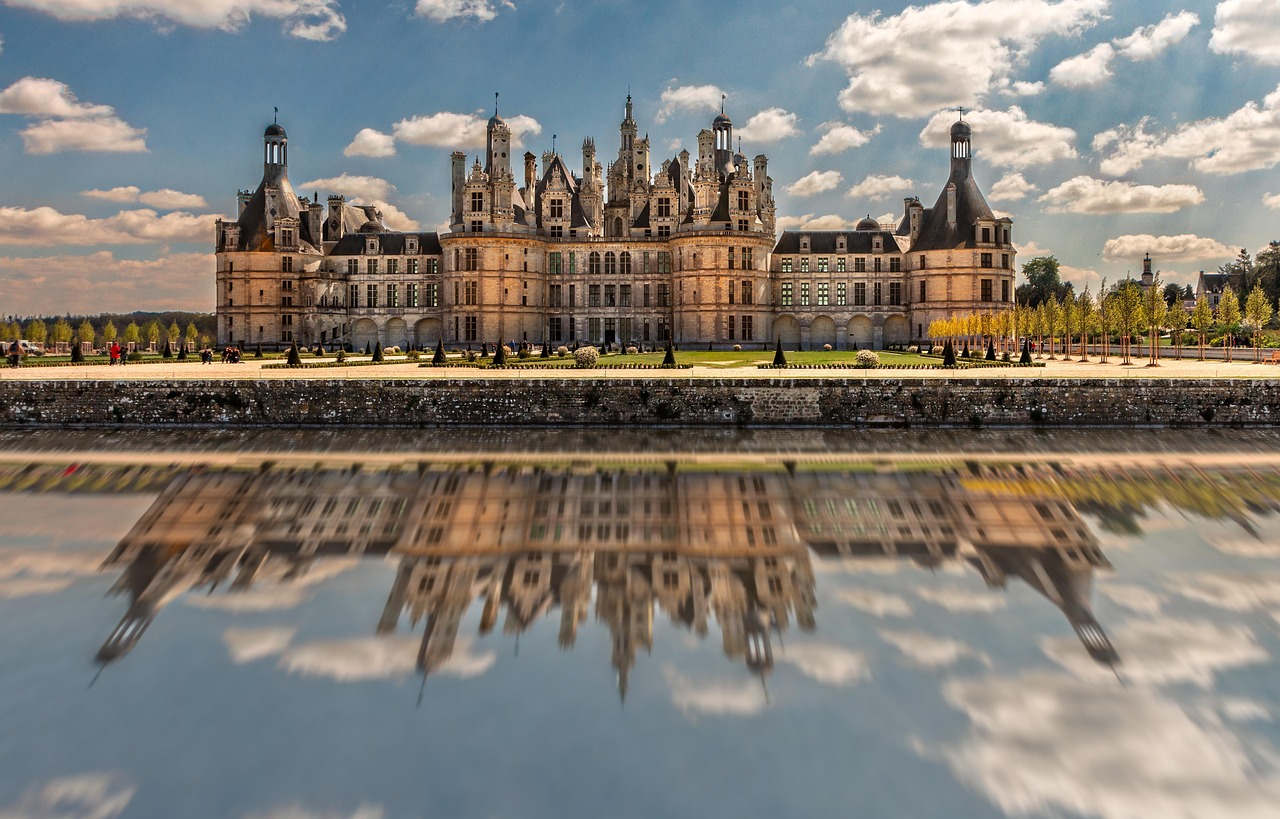
No matter how many postcards you’ve seen, nothing prepares you for the sheer audacity of Château de Chambord. It rises from its moat and lawns like an elaborate stone wedding cake, a riot of chimneys, turrets, and lanterns. I still remember my first approach: parked just outside the main lot, walked through the line of souvenir stalls, and then stopped dead when the castle came fully into view.
In 2026, Chambord has streamlined its visitor flow a bit, but it’s still wise to:
- Arrive early or late: Before 10:00 or after 16:00 to avoid peak bus crowds.
- Pre-book tickets: Especially from May to September and on weekends.
- Plan 3–4 hours: For the castle interior, the famous double-helix staircase, rooftop terraces, and a walk along the canal.
The double-helix staircase designed in the spirit of Leonardo da Vinci is one of my favorite spots for people-watching: couples pausing for photos, kids racing up and down, everyone craning up to the light pouring from the lantern tower. From the rooftop, you see why Chambord is more than just a château: it’s a hunting domain turned national park, with 5,000+ hectares of forest and wetlands.
Family tip: Rent bikes or an electric cart in the park for a loop around the estate. On my last visit with friends and their two children, the kids remember the “golf cart safari” more vividly than the interiors.
Lunch: The brasserie at Chambord is fine but touristy. If you’ve got a car (you do), pack a picnic and spread a blanket on the grass east of the castle, where you’ll mostly share the view with locals.
In the afternoon, it’s a short hop to Cheverny, through a patchwork of vineyards and tidy villages. The scale shrinks again: after Chambord’s theatrics, Cheverny feels like an elegant country house that somehow grew a little bigger than expected.
Château de Cheverny is impeccably furnished; you can actually imagine living here. Many visitors know it from the Tintin comics – it inspired Marlinspike Hall – and the small exhibition on Hergé’s work is catnip for fans and kids. What hooked me, though, is the pack of hunting hounds kept on the property. Time your visit for feeding, and you’ll see a disciplined chaos of tails and fur.
Wine stop: The appellation here (Cheverny AOC) produces fresh whites and light reds. A couple of cooperative cellars near the village offer short tastings; I often stop to pick up a bottle for the evening.
I like to sleep near Cheverny: a rural B&B tucked among vines, or a small inn in the village itself. This is where the road-trip starts to show its softer edges: dinners on a terrace, crickets chirping, the faint smell of woodsmoke in shoulder season.
Leg 3 – Cheverny to Blois & Chaumont-sur-Loire (Day 3–4)
The drive from Cheverny to Blois is one of those deceptive stretches: too short to feel like a proper road-trip leg, but rich enough in experiences that you can easily fill a day. I usually take the slower departmental roads, weaving through villages whose church spires act as navigational beacons.
Blois clings to a hillside above the Loire, its old town a jumble of slate roofs and steep staircases. The Château Royal de Blois is my go-to introduction to the political drama of the French Renaissance – four distinct wings from four eras, wrapped around a courtyard where kings plotted and queens schemed.
Inside, the audio guide does a solid job, but I always tell people to:
- Stand in the courtyard and look up: the spiral staircase, the colored brickwork, the carved monograms.
- Step out onto the terrace for a classic Loire view: river, bridge, and the far bank’s flat fields.
- Consider the evening sound-and-light show (in season) if you’re staying overnight – it’s a bit theatrical but fun.
Blois itself is worth half a day: cafés on Place Louis XII, the Maison de la Magie (house of magic) opposite the château – a hit with children – and the riverfront path where joggers, cyclists, and flâneurs share space.
By mid-afternoon, I like to move on to Chaumont-sur-Loire, about 20 minutes downstream. The road runs close to the river; keep an eye out for sandbanks and islets where birds congregate. This, for me, is one of the signature viewpoints: parking on the far bank and walking to the water’s edge, you see Chaumont’s castle perched high on its bluff, reflected in the slow current.
Château de Chaumont-sur-Loire is a delight, but the real magic is outside. Its International Garden Festival (usually late April–late October) transforms the grounds into an experimental art-and-botany playground. Each year has a theme; in 2026, local whispers suggest a focus on “Resilient Landscapes,” with installations engaging with climate, water, and biodiversity.
I’ve lost entire afternoons wandering from garden room to garden room, each with its own mood. One year there was a “floating” garden of mirrors and grasses; another time, an edible landscape you were encouraged to taste. It’s as far from formal Versailles-style gardening as you can get, and that’s exactly the point.
Evening tip: From late spring through early autumn, Chaumont sometimes opens select gardens for nocturnes – illuminated night visits with subtle music. If you can align your itinerary, do. It’s romantic, yes, but also slightly surreal; I remember walking under a canopy of LED “fireflies” with the real stars overhead.
You can sleep either in Chaumont (there are a few B&Bs uphill) or back in Blois. For a 9 leg itinerary for Loire Valley Castles Route, you might combine Blois and Chaumont into one night, pushing on toward Amboise the next day.
Leg 4 – Chaumont to Amboise & Clos Lucé (Day 4–5)
The Loire between Chaumont and Amboise is a wide, languid thing. The road hugs the river, with occasional rises that give you sweeping views across gravel islands and poplar groves. I like to drive this stretch with the windows down, music soft, and no rush.
Amboise is one of the emotional centers of the Loire Valley Castles Route. It manages to be both touristy and genuinely lived-in, with bakeries that open early for locals and wine bars that stay open late for visitors. The Château Royal d’Amboise sits high above the town, its terraces offering one of the best vantage points on the whole route.
Inside, you get a primer on the later Valois kings; outside, you get that view. I often see families lingering along the ramparts, kids pointing at kayakers below. In the tiny chapel of Saint-Hubert at the edge of the terrace lies Leonardo da Vinci’s tomb, modest but moving. I remember a quiet winter visit when I had the chapel almost to myself; the guard, a retired teacher, whispered stories about school groups asking if Leonardo was “the guy from the Ninja Turtles.”
A short, pleasant walk through town brings you to Clos Lucé, the manor house where Leonardo spent his final years under the patronage of François I. The house is furnished in period style, but the real fun is in the gardens, dotted with life-size models of Leonardo’s inventions that kids can clamber on: bridges, flying machines, war engines.
For couples, Clos Lucé is unexpectedly romantic: shady paths, lily ponds, and quiet corners. For families, it can easily fill half a day. In 2026, there’s talk of an expanded digital gallery focusing on Leonardo’s notebooks, with interactive projections.
Amboise also makes an excellent base for a 2–3 night stay if you’re shaping a 12 leg itinerary for Loire Valley Castles Route. From here, you can day-trip to Chenonceau, Chaumont, or even Tours without changing hotels.
Food & wine: The main street is lined with restaurants, but my bias is for the side alleys leading up toward the château. Think tarte tatin warmed just enough to melt the crème fraîche, local Vouvray whites that range from bone-dry to lusciously sweet, and charcuterie boards that make dinner seem optional.
Romantic tip: At least once, walk down to the river at blue hour. Stand on the bridge and watch the castle light up. It’s cliché, yes, but clichés are born for a reason.
Leg 5 – Amboise to Chenonceau & The Cher Valley (Day 5–6)
The next morning, after strong coffee and perhaps a still-warm baguette from the boulangerie off Place Michel Debré, steer your car south toward the Cher River. The landscape tightens: vineyards creeping up slopes, small woods, and villages with names that repeat in wine shops back home.
Chenonceau is one of the must-see attractions in Loire Valley Castles Route and, in high season, one of the busiest. Yet, despite the crowds, I never skip it. There’s something inherently enchanting about a château that literally spans a river like a stone bridge.
Arrive early (before 9:30 if you can) and head straight through the tree-lined avenue to the river. The first glimpse of the long gallery stretching over the water always makes me slow my steps. The history here is woven with powerful women – Diane de Poitiers, Catherine de’ Medici – and the château’s nickname, “the Ladies’ Castle,” is well earned.
Don’t miss:
- The flower arrangements in the rooms, refreshed constantly; the scent changes subtly as you move.
- The view from inside the gallery down the Cher, where kayakers and rowboats pass beneath you.
- The smaller, quieter farm and vegetable gardens behind the main building – a fine spot to let kids roam.
After touring the château, I like to wander down to the riverbank path on the far side, where you can frame that postcard shot of Chenonceau reflected in the water. In summer 2026, there are plans for more structured boat rentals – a chance to paddle or cruise under the arches, a perspective that makes the building seem to float.
The Cher valley itself is gentler and quieter than the main Loire corridor. For a more adventurous spin on your Loire Valley Castles Route road trip itinerary, consider:
- Kayaking on the Cher: Family-friendly stretches near Chisseaux, with half-day rentals.
- Cycling between vineyards: Easy loops linking Chenonceau, Montrichard, and Saint-Aignan.
I often spend the night in or near Montrichard, a small riverside town with a donjon (keep) on a hill and a relaxed evening buzz around the main square. Another good base is Saint-Aignan, especially if you’re traveling with children and want to visit the famous ZooParc de Beauval (arguably France’s best zoo).
For a 9 or 10 legs of Loire Valley Castles Route plan, this leg is perfect: one world-class château, soft river scenery, and a small-town night.
Leg 6 – Montrichard to Tours & Villandry (Day 6–7)
From the Cher you curve back up toward the Loire proper. The approach to Tours feels almost urban after days of villages and fields, but don’t be put off: it’s a youthful city with a vibrant food scene and a relaxed, livable core.
I usually park near the old town and walk to Place Plumereau, a square ringed with crooked half-timbered houses and terraces packed with students, families, and travelers. It’s one of the liveliest spots for an evening drink on the whole route. In 2026, the city’s continued to pedestrianise side streets, making it even more pleasant.
Tours makes an excellent hub if you’re organizing an 11 leg itinerary for Loire Valley Castles Route: from here, multiple châteaux are under an hour’s drive. But even on a shorter trip, I recommend at least an afternoon to:
- Visit the Cathédrale Saint-Gatien and its peaceful cloister.
- Stroll the Loire riverfront and, in warmer months, have a drink at one of the temporary guinguettes.
- Explore the covered market Les Halles for picnic supplies and local specialties (rillettes de Tours, goat’s cheese, rillons).
By mid- to late afternoon, head west to Villandry, only about 20 minutes away. The château itself is handsome, but what makes it one of the best places to visit in Loire Valley Castles Route are its extraordinary gardens.
I time my visits for late afternoon, when the light softens and the tour buses thin out. From the upper terrace, you look down on geometric parterres of vegetables, herbs, and flowers – cabbages and lettuces as ornamental as roses. Children treat the walkways like a maze; couples linger at the water garden.
In 2026, Villandry continues its serious work toward eco-friendly gardening: less chemical input, more experimentation with heritage varieties. If you’re a plant or design nerd, plan at least 2–3 hours.
You can overnight in Villandry itself (a couple of charming guesthouses and small hotels) or head back to Tours for a more urban evening. Personally, I like a night in Tours to reset: laundry, a broader choice of restaurants, and a brief taste of city life before returning to rural calm.
Leg 7 – Villandry to Azay-le-Rideau & Ussé (Day 7–8)
This leg is all about romance and fairy tales. The drive from Villandry to Azay-le-Rideau is short – about 20 minutes – but you’ll want to arrive early, especially in summer, to beat the tour groups and enjoy the château’s reflection when the moat is still.
Château d’Azay-le-Rideau is an almost perfect Renaissance jewel, compact and harmonious, built on an island in the Indre River. On a still morning, the mirrored image is so sharp you’ll see visitors instinctively lower their voices as they approach.
The interior is manageable (no endless sequence of rooms), making it great for families and anyone with limited museum stamina. The park around it invites strolling and lingering under tall trees. On my last visit, I arrived just as light rain cleared; mist rose off the moat, and the castle looked like it had been conjured out of a storybook.
The village of Azay-le-Rideau is also a pleasant place for lunch: small crêperies, wine bars pouring Chinon and Bourgueil reds, and shops selling local specialties. If you’re stretching to a 13 or 14 legs of Loire Valley Castles Route plan, consider adding a second night here and taking a side-trip to the nearby troglodyte village of Goupillières, where you can explore restored cave dwellings.
Continue west along the Indre toward Ussé, passing orchards and fields. The first glimpse of Château d’Ussé is a jaw-dropper: a fanciful silhouette of pointed towers and turrets on a hillside, said to have inspired Perrault’s “Sleeping Beauty.”
I’ll be honest: Ussé is more about the exterior than the interior, which can feel a little kitschy with its Sleeping Beauty tableaux. But that façade, rising above terraced gardens, is one of the iconic images of the Loire Valley Castles Route. It’s a fantastic family stop; kids love the fairy-tale atmosphere, and the hillside setting offers lovely views over the river valley.
I like to drive a bit further and overnight near Chinon, setting myself up for the next leg’s explorations. The road between Ussé and Chinon, especially in late afternoon light, is among my favorite for pure driving pleasure: gentle curves, vineyard vistas, and the occasional troglodyte house cut directly into the limestone cliffs.
Leg 8 – Ussé to Chinon & Vineyards (Day 8–9)
Chinon is where the Loire Valley Castles Route grows a little wilder and more wine-focused. The town sits at the foot of a long ridge crowned by the Forteresse Royale de Chinon, its medieval walls stretching above the Vienne River.
The fortress is largely in ruins, but that actually adds to its atmosphere. There are restored sections and good interpretive displays (including references to Joan of Arc’s visit), but the real draw for me is simply walking the ramparts and taking in the patchwork of roofs below and the vineyards beyond.
Chinon’s old town is compact and inviting. I’ve lost count of how many glasses of Cabernet Franc I’ve drunk at sidewalk tables here, watching life unfold: kids on bicycles, locals discussing politics, tourists clutching maps. The red wines of Chinon are one of the area’s biggest draws – fresh and peppery, often served slightly chilled in summer.
Wine experiences:
- Visit one or two wine caves in or just outside town for tastings – many are cut into the soft tuffeau stone.
- Book a half-day vineyard tour if you want to go deeper; in 2026, more bilingual options are available.
Chinon is also excellent for cycling. The Vienne river paths are mostly flat, and routes through the vines offer both exercise and photo ops. For a 10 legs of Loire Valley Castles Route itinerary, I’d absolutely anchor one full day here – castle in the morning, wine and river in the afternoon.
Family note: While wine might seem adult-focused, most domaines are used to kids; some offer grape juice tastings and space to run around. Just be mindful of long, seated tastings with little ones.
Leg 9 – Chinon to Saumur & Troglodyte Villages (Day 9–10)
From Chinon, the Loire Valley Castles Route bends westward again, threading closer to the main river. The town of Saumur rises ahead of you like something from a painting: pale stone houses, a church spire or two, and the Château de Saumur poised dramatically on its promontory.
I have a soft spot for Saumur. It’s big enough to have energy but small enough to cross on foot in 20 minutes. The château, with its angular towers, looks almost like a toy; up close, it’s more fortress than palace, with thick walls and a sense of watchfulness over the river.
Saumur is also a major center for sparkling wine (Crémant de Loire). Many producers have cellars dug deep into the tuffeau cliffs along the river – cool, echoing caverns lined with bottles. On hot days, I plan my visits here deliberately: there’s nothing like the blast of 12°C air as you step underground.
Troglodyte experiences: This stretch of the Loire is riddled with cave dwellings, wine cellars, and even restaurants carved into the rock. A couple of my favorite troglodyte stops:
- A troglodyte mushroom farm, where you can walk through dim alleys of oyster and shiitake mushrooms growing in the cool humidity.
- Troglodyte restaurants serving fouées – small, puffed breads baked in wood-fired ovens and stuffed with rillettes, beans, or goat cheese.
This is a leg where adventurous and curious eaters will be especially happy. I still remember a long, laughter-filled dinner in a cave restaurant near Saumur, the walls sweating slightly, the table crowded with baskets of fouées and pitchers of local red.
For families, Saumur also offers a well-known equestrian school (Cadre Noir) with shows and visits – a chance to see classical horsemanship in action.
Overnight in Saumur itself if you like a bit of nightlife and riverfront strolling, or choose a countryside B&B in a troglodyte hamlet if you want to lean into the uniqueness of the region.
Leg 10 – Saumur via Fontevraud to Angers (Day 10–11)
The final leg of this Loire Valley Castles Route road trip itinerary is reflective, both literally and metaphorically. You’re heading toward Angers, a city that feels like a bookend to Orléans: historic yet dynamic, with a distinct identity built around its imposing castle and tapestry art.
But first, a detour I consider essential: Abbaye Royale de Fontevraud, a short drive south of the river. This enormous monastic complex housed both monks and nuns and now functions as a cultural center, hotel, and artistic space.
The abbey church holds the effigies of Eleanor of Aquitaine, Henry II of England, and Richard the Lionheart; walking among them, you feel centuries fold in on themselves. In 2026, Fontevraud continues to host contemporary art exhibitions and concerts – check the calendar; I once stumbled on an a cappella performance in the refectory that left the whole room silent at the end.
Back on the main route, the Loire widens as you approach Angers. Its Château d’Angers is a different beast entirely: massive slate-and-limestone towers, black and white striped, guarding the entrance to the old city.
Inside hangs the extraordinary Apocalypse Tapestry, a 14th-century masterpiece that unrolls like a graphic novel across centuries. Even non-art-lovers tend to be struck by its scale and intensity. For a road trip that began with royal playthings in Orléans, ending here – with a meditation on history, power, and religion woven in wool – feels fitting.
Angers itself is a good place to catch your breath before heading onward (to Nantes, the Atlantic, or back to Paris). It has a buzzing food and bar scene, leafy boulevards, and parks where locals laze on the grass.
If you’re designing a 7 leg itinerary for Loire Valley Castles Route, you might have compressed some of the earlier legs, but I’d still try to save space for an evening in Angers. Check into a central hotel, wander the old streets, and maybe toast the end of your journey with a glass of Coteaux du Layon (sweet white) or Anjou red.
Eighteen Key Castles & Viewpoints – Sub-Articles & Personal Notes
Below are deeper dives into 18 of the best places to visit in Loire Valley Castles Route, with history, significance, and my own hard-earned tips.
1. Orléans – Gateway to the Loire
Historically, Orléans is famous as the city liberated by Joan of Arc in 1429. Today, it’s a practical and symbolic starting point: excellent train links to Paris, a compact center, and your first real encounter with the wide, shallow Loire.
The Cathédrale Sainte-Croix commands the skyline; step inside to feel the cool hush and trace the stained glass panels that tell Joan’s story. The Jeanne d’Arc house museum, though partly reconstructed, offers a surprisingly engaging multimedia presentation in English and French.
Personally, I love Orléans for its evolving riverside. In 2026, the banks are even more pedestrian-friendly, with seasonal bars where you can sip a beer or a glass of wine watching the light fade. It’s here that I often sketch out my latest Loire Valley Castles Route road trip itinerary on a napkin, mapping 7, 8, or 10 legs depending on my time.
2. Meung-sur-Loire – Quirky Castle & Slow Town
Château de Meung-sur-Loire wears its age openly: medieval bones, Renaissance wings, and layers of eccentric restoration. History buffs will enjoy its role as a residence of bishops; families will appreciate the playful presentation, from period costumes to the eerie underground passageways.
The town’s charm is modest but real: river walks, small squares, and a feeling that not much has changed. Each time I return, I find the same bakery open at the same time, the same old men playing cards at the café. It’s a gentle antidote to the blockbuster châteaux ahead.
3. Beaugency – Bridge, Castle & Digital Art
Beaugency’s medieval bridge once controlled a key Loire crossing. Today, it’s a scenic walkway with sunset views that rival anywhere on the route. The Château de Beaugency has been reinvented as an immersive digital art center, blending history and technology in vaulted stone halls.
I like Beaugency best off-season, when the mist rises from the river and you can walk the lanes almost alone. It’s a perfect first or second night stop: enough services to be comfortable, quiet enough to sleep deeply.
4. Chambord – The Loire’s Grand Theatrical Gesture
Built for François I as a hunting lodge that spiralled into megalomania, Château de Chambord is the largest castle on the Loire and a towering symbol of Renaissance ambition. Its central double-helix staircase – two intertwined stairways that never meet – is often attributed to Leonardo or at least to his circle.
On busy days, I head straight up to the rooftops, where chimneys and lanterns create a stone forest against the sky. From here, you sense the scale of the surrounding estate, now a national park with walking and cycling trails.
A practical tip from many visits: the main car park can feel chaotic at peak hours. If you’re comfortable walking a little extra, use the overflow lots; you’ll save time and nerves. And bring a light jacket – the stone interiors can be surprisingly cool even in summer.
5. Cheverny – Lived-In Elegance & Hounds
Unlike the more ceremonial royal residences, Château de Cheverny feels like a real home. It’s been in the same family for centuries, and you sense that continuity in the warm, richly furnished rooms and the personal touches in the displays.
The pack of hunting dogs is as famous as the house. Feeding time is choreographed chaos, and kids watch wide-eyed as dozens of sleek animals line up, trembling with anticipation.
On one rainy afternoon in 2025, I ducked into the Tintin exhibition almost as an afterthought and ended up staying an hour, rediscovering comics I’d loved as a child. Travel has a way of looping your life back on itself.
6. Blois – Four Wings of History
Château Royal de Blois is an architectural time-lapse: Gothic, Flamboyant, Renaissance, and Classical wings all facing the same courtyard. It was here that the Duke of Guise was assassinated in 1588 on the orders of Henri III – an episode that still gives the place a faintly haunted air.
I like to approach Blois from the bridge, park on the far bank, and walk in. The climb up to the château passes staircases and terraces that offer increasingly good views of the river. In the evenings, the town has enough buzz to keep you out past midnight if you wish – especially in summer, when street performers and open-air concerts pop up.
7. Chaumont-sur-Loire – Gardens as Art
Château de Chaumont itself – perched on its cliff – is very pretty, but the reason I return almost every year is the International Garden Festival. This is where landscape designers, artists, and horticulturalists are given plots to interpret a theme; the results can be whimsical, provocative, or downright strange.
In 2026’s anticipated “Resilient Landscapes” edition, expect installations engaging with drought, flood, and biodiversity. It’s a fantastic way to broaden a classic château tour into a reflection on the environment you’re driving through.
8. Amboise – Royal Terraces & Leonardo’s Town
Château Royal d’Amboise was a favorite residence of French kings in the late 15th and early 16th centuries. Its terraces offer a panorama of the Loire that I never tire of: bridges, islands, sandbanks, and the neat town below.
Walking from the château to Clos Lucé, you pass bakeries, wine shops, and small squares that seem permanently bathed in a soft light. It’s easy to see why Leonardo accepted François I’s invitation to spend his final years here; there’s a gentleness to Amboise that seeps into your bones.
9. Clos Lucé – Leonardo’s Last Home
Clos Lucé is a manor house, not a palace, but it holds a special place in the region’s imagination. Leonardo lived and worked here from 1516 to 1519, and the site leans into that legacy with models of his inventions, interactive displays, and landscaped grounds.
My favorite part isn’t the house itself but the shaded paths where reproductions of his sketches are displayed on glass panels among trees and streams. On a quiet weekday morning, you may find yourself walking alongside a French school group, their teacher explaining perspective and curiosity. It’s hard not to be inspired.
10. Chenonceau – The Bridge Over Water
Château de Chenonceau is, frankly, dazzling. Its arches span the Cher like an elegant stone viaduct, and the long gallery inside has seen centuries of balls, hospital beds (during World War I), and candlelit dinners.
The story of its rival mistresses and queens – Diane de Poitiers and Catherine de’ Medici – adds spice, but what I remember most is the sensory experience: the smell of flowers in every room, the muffled footsteps on old boards, the sudden view of sunlight flashing off the river through a window.
If you can, linger after your visit at the riverside. Rent a boat if the season and services allow, or simply sit on the bank with an ice cream. This is one of the true signature viewpoints of the Loire Valley Castles Route.
11. Tours – City Pulse in the Middle of the Valley
Tours isn’t technically a castle stop, but it’s a vital part of the ecosystem: a place to reset, to shop, to people-watch, and to connect with local culture beyond tourism.
I often schedule a Friday or Saturday night here on longer trips. Place Plumereau’s terraces buzz late into the evening; side streets hide tiny wine bars where the owners happily talk about terroir. In 2026, the city continues to promote cycling, with more secure bike parking – handy if you’re doing part of the route on two wheels.
12. Villandry – Geometry & Green
The gardens of Villandry are among the most photographed in France, and for good reason. The ornamental kitchen garden, with its blocks of vegetables arranged in colored patterns, is a lesson in how beauty and utility can coexist.
I love climbing to the highest terrace and watching the slow choreography of visitors below, strolling the alleys, pausing at intersections, leaning over railings. It’s one of the most family-friendly châteaux: kids delight in the patterns and the scale without needing to understand the historical details.
13. Azay-le-Rideau – Reflections & Romance
Azay-le-Rideau feels like a dream you half-remember. The way the castle’s turrets rise from the water, the soft curve of the park paths – everything conspires to slow you down.
On one misty autumn morning, I watched a heron stand motionless at the moat’s edge, its reflection as sharp as the castle’s. The only sounds were distant church bells and the crunch of gravel under my shoes. Those are the moments that define this route for me more than any grand narrative.
14. Ussé – Sleeping Beauty’s Silhouette
Château d’Ussé looks like it was built purely to be gazed upon. Its fairy-tale profile has reportedly inspired illustrators and storytellers for generations.
The interior, with its somewhat staged tableaux, may feel less authentic than some other sites, but if you lean into the fantasy – especially with children – it’s a lot of fun. For photographers, the terraces and the view down over the Indre valley are the real prize.
15. Chinon – Fortress & Cabernet Franc
Chinon’s fortress sprawls along a ridge, its walls and towers connected by walkways that invite aimless exploration. The setting above the Vienne is superb; on clear days, you can see rows of vines marching to the horizon.
The town below is one of my favorites for evenings: restaurants spilling onto squares, wine bars with chalkboard lists, and just enough tourists to create a pleasant hum without overwhelm. If you care about wine, this is a must-pause town.
16. Saumur – Sparkling Wine & Horse Culture
Saumur is the sparkling wine capital of the Loire, home to big houses and small producers alike. Touring the cellars – especially on a hot July day – is as practical (cool air) as it is instructive.
The town’s equestrian heritage shines through at the Cadre Noir, France’s national riding school. Shows and open rehearsals allow you to glimpse the artistry and discipline behind classical dressage.
17. Troglodyte Villages – Life in the Rock
The limestone cliffs along this part of the Loire have been carved into homes, cellars, and workshops for centuries. Some are now abandoned, others have become chic guesthouses or restaurants.
Wandering through a troglodyte village like Rochemenier or visiting a troglodyte mushroom farm offers a very different cultural experience in Loire Valley Castles Route – a reminder that history here is as much underground as above it.
18. Angers – Tapestries & A Strong Finish
Château d’Angers and its Apocalypse Tapestry are a fitting end point. The fortress walls, with their black-and-white banding, are stark and imposing; the tapestry inside, one of the largest medieval works of its kind, is intricate and absorbing.
Angers itself is also worth a full day: the modern art museum at the abbey of Ronceray, riverside walks along the Maine, and lively streets packed with students. It’s here, over one last glass of Loire wine, that I usually start plotting the next trip.
Eating & Sleeping Along the Loire Valley Castles Route
One of the quiet joys of this journey is how easy it is to eat well without spending a fortune. Local food in Loire Valley Castles Route is honest, seasonal, and often surprisingly affordable once you step away from the most obvious tourist traps.
Food: What to Look For
- Goat cheese: Especially crottin de Chavignol and Ste-Maure-de-Touraine, often served warm on salad.
- River fish: Sandre (pike-perch), brochet (pike), and alose (shad) with beurre blanc.
- Rillettes & rillons: Pork spreads and slow-cooked belly, perfect with bread and pickles.
- Fouées: Puffed breads baked in wood-fired ovens, stuffed with savory fillings, especially near Saumur.
- Wine: Vouvray, Montlouis, Chinon, Bourgueil, Saumur-Champigny, and sparkling Crémant de Loire.
For lunches on the road, I often favor picnics: a baguette, cheese, fruit, and a pastry from a village bakery. Most towns have riverside benches or small parks perfect for this.
Sleeping: Where & How
The route is rich in small hotels, chambres d’hôtes (B&Bs), and a growing number of tasteful gîtes (self-catering cottages). My usual pacing, based on many trips:
- First night: Beaugency or Meung-sur-Loire
- Second: Near Cheverny or Chambord
- Third: Blois or Chaumont
- Fourth & fifth: Amboise (using it as a hub)
- Sixth: Tours or Villandry
- Seventh: Azay-le-Rideau or Chinon
- Eighth: Chinon or Saumur
- Ninth or tenth: Saumur or Angers
For summer 2026, book well ahead for Saturday nights in Amboise, Chenonceau area, and Saumur. Midweek and shoulder seasons are easier, and you might snag last-minute deals.
Budget-wise, you can sleep comfortably for €80–€140 per night in a double room outside of peak holidays. Campsites and some rural gîtes can drop this further, especially if you’re in a campervan or RV.
Evenings on the Road
Evenings are when the Loire Valley Castles Route truly breathes. The buses leave, the day-trippers vanish, and the castles glow softly above quiet streets.
Small-Town Nights
Best towns to linger after dark: Amboise, Blois, Tours, Chinon, Saumur, and Angers. They have enough restaurants and bars to keep you busy without feeling rowdy.
In summer 2026, expect:
- Open-air concerts in many town squares.
- Nighttime castle visits (Chenonceau, Chaumont, Blois, and others run special nocturnes).
- Seasonal guinguettes (riverside bars) along the Loire and Cher.
In smaller villages like Meung-sur-Loire or Azay-le-Rideau, evenings are quieter, often ending with a slow stroll and an early night. Perfect if you’re on a family schedule or planning an early castle visit.
Starry Skies & Camping
If you’re in a campervan or tent, there are numerous riverside campsites, especially near Amboise, Saumur, and between Tours and Villandry. The absence of big-city light pollution means that on clear nights, the sky can be surprisingly star-filled.
Day Trips & Nearby Detours
Once you’ve grasped the backbone of the Loire Valley Castles Route, consider a few extra side trips:
- Sancerre & Pouilly-sur-Loire: East of Orléans, for crisp Sauvignon Blancs and hilltop views – best as a pre- or post-route addition.
- ZooParc de Beauval: Near Saint-Aignan, one of Europe’s best zoos – a full day for families.
- Nantes: West of Angers (about 1.5 hours), with its quirky Machines de l’Île and artistic river estuary installations.
- La Loire à Vélo stages: Build in a full cycling day, for example between Tours and Villandry or between Saumur and Montsoreau.
Most of these are reachable by car in under two hours, making them easy to weave into 11, 12, or 13 legs of Loire Valley Castles Route if you have the time.
Cultural Etiquette & Local Customs
The Loire is relaxed, but a few cultural notes will make your travels smoother:
- Greetings: Always say Bonjour (daytime) or Bonsoir (evening) when entering a shop or café. It matters.
- Meals: Lunch is typically 12:00–14:00, dinner from 19:30 onward. Many restaurants close in between; plan snacks accordingly.
- Driving courtesy: Locals are generally patient but expect you to use turn signals, keep right, and not dawdle in the fast lane.
- Wine tasting: Spitting is normal and not rude. Ask before driving if tastings are large; responsible consumption is taken seriously.
- Dress: Smart-casual is fine almost everywhere. In churches and religious sites, cover shoulders and avoid beachwear.
Tipping isn’t mandatory – service is included – but rounding up or leaving 5–10% for particularly good service is appreciated.
Practical Travel Advice & Route-Specific Logistics
Direction: East to West or West to East?
I personally favor driving east to west (Orléans → Angers):
- You start with smaller, less overwhelming stops and build toward the big names.
- The sun is often at your back in the late afternoon, making the scenery gentler on the eyes.
That said, there’s no wrong way; if flights or trains make Angers a better starting point, simply reverse the order.
Daily Distances & Pacing
Realistic daily driving distances on this route are short: often 50–120 km. The time pressure comes not from the road but from how many stops you try to cram in.
For a relaxed 10 legs of Loire Valley Castles Route plan, aim for:
- 1–2 major château visits per day, max.
- At least one unstructured hour daily for wandering a town or sitting by the river.
Vehicle Suitability & Roads
Roads are mostly excellent. A regular car is all you need. Motorcycles are a joy here; RVs and campervans are also very feasible, though parking near popular castles requires a bit more forethought.
No 4x4 is needed. There are no mountain passes, no seasonal closures for snow (this is central-western France, relatively mild). Occasional flooding can close some low-lying roads right on the riverbanks in winter or early spring; detours are always signposted.
Fuel & Charging
Fuel stations are common in and around all major towns (Orléans, Blois, Tours, Amboise, Saumur, Angers). Smaller village stations may close at night but often have 24/7 card pumps.
EV drivers will find growing infrastructure in 2026: public chargers in larger town car parks, supermarkets, and some château lots (notably Chambord and Amboise). Plan ahead with an app and avoid running your battery too low in rural stretches.
Breakdown & Emergencies
With a rental car, breakdown assistance is usually included – keep the number handy. In case of emergency, the European emergency number is 112. Most of the route offers mobile coverage, with a few patchy spots in forested Sologne and some river valleys.
Seasonality
There’s no monsoon, no regular snow closures, but seasons dramatically change the feel of the trip:
- Spring (April–June): Blossoms, mild temperatures, gardens at their best, slightly fewer crowds than peak summer.
- Summer (July–August): Warm to hot, long evenings, all services and festivals in full swing, also the busiest time.
- Autumn (September–October): Vines turning golden, grape harvest, softer light, often my favorite time.
- Winter (Nov–March): Some smaller sites close or reduce hours, but major castles remain open; far fewer visitors, moody river vistas.
Money-Saving Tips
- Buy combined château passes where available (e.g., multi-site tickets in some areas).
- Picnic for lunch instead of eating in château restaurants every day.
- Travel in May/June or September for better deals and fewer crowds.
- Use local bakeries and markets for breakfasts and snacks.
SIM Cards & Connectivity
At Orléans, Tours, or Angers, you can easily buy prepaid SIMs from major French operators (Orange, SFR, Bouygues) in phone shops or supermarkets. Expect to pay around €15–€25 for generous data. eSIM options also exist.
Public Transport vs Car Rental
You can reach many towns by train (Orléans, Blois, Amboise, Tours, Saumur, Angers) and then use bikes or local buses, but to fully enjoy the hidden gems in Loire Valley Castles Route – small villages, troglodyte sites, rural viewpoints – a car is strongly recommended.
Car rental is easiest in Orléans, Tours, and Angers, or directly from Paris (with a quick escape via autoroute). Book ahead for 2026 summer, especially automatic transmissions which are in shorter supply.
Visas & Driving Licenses
France is in the Schengen Area. Travelers from many countries can enter visa-free for short stays; check current rules, especially as regulations evolve between 2026–2027 (including any updated electronic authorization systems).
A valid foreign driver’s license is generally accepted. If your license is not in Roman script, an International Driving Permit is recommended and sometimes required by rental agencies.
Events & What’s New in 2026–2027
The Loire is not frozen in time. For 2026–2027, keep an eye on:
- Garden Festivals: Chaumont-sur-Loire’s 2026 “Resilient Landscapes” edition, plus ongoing themed displays at Villandry.
- Anniversary Exhibitions: Several castles (notably Amboise and Clos Lucé) rotating exhibitions on Leonardo and Renaissance science.
- Wine Events: Harvest festivals in Chinon, Bourgueil, Vouvray, and Saumur each September–October, with open cellars and tastings.
- Cycling Infrastructure: Continued expansion of La Loire à Vélo segments, making it easier to integrate cycling days into your 8, 9, 10, or 12 leg itinerary for Loire Valley Castles Route.
- Light Shows & Nocturnes: Many châteaux are investing in upgraded evening illuminations – check 2026–2027 schedules at Chambord, Chenonceau, Blois, and Angers.
Summary & Final Recommendations
The Loire Valley Castles Route is not a race; it’s an unfolding. However you slice it – 7 legs of Loire Valley Castles Route in a whirlwind week, or a leisurely 12–14 legs absorbing every curve of the river – you’ll leave with the same sense: that you’ve driven through a living museum that refuses to be only a museum.
My distilled advice after many years and many miles:
- Best seasons: May–June and September–October for balance of weather, crowds, and prices. July–August for festivals and long evenings; winter for solitude and mood.
- Core must-sees: Chambord, Chenonceau, Amboise & Clos Lucé, Villandry, Azay-le-Rideau, Chinon, Saumur, Angers – with at least a few of the quieter stops (Meung-sur-Loire, Beaugency, troglodyte villages) woven in.
- Mix your days: Alternate “big château” days with lighter ones of vineyards, villages, or gardens to avoid fatigue.
- Stay flexible: Leave space in your itinerary for the unplanned: a roadside market, a recommendation from a B&B host, a detour to a viewpoint that wasn’t on your list.
Above all, let the river set your pace. Drive slowly, stop often, and give yourself time to sit on a bank somewhere between Orléans and Angers, watching the light slide across the water, thinking about how many travelers before you have done exactly the same.