Why Visit Mer de Glace in 2026: What Makes It Special
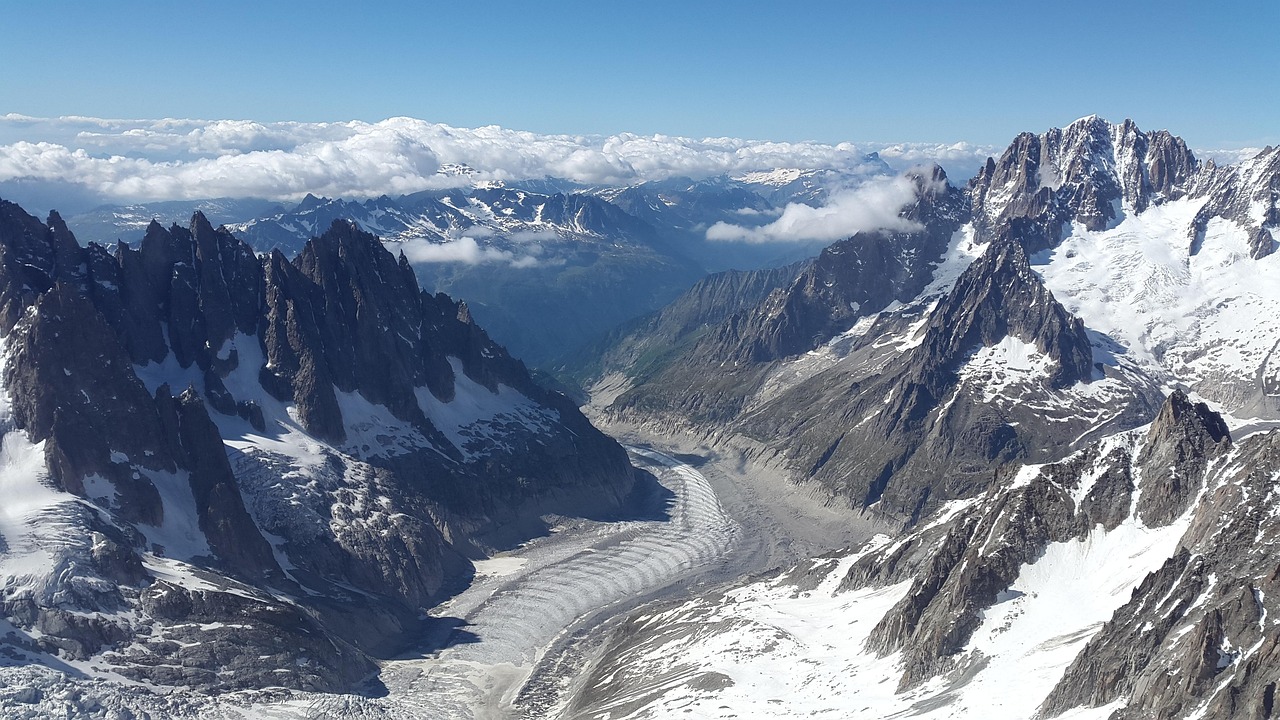
The Mer de Glace is not just “another glacier in the Alps.” It is France’s largest glacier, a 7-kilometre frozen river of ice winding through the Mont Blanc massif above Chamonix. It is also a living museum of climate change, visibly shrinking year after year. As someone who has watched the glacier retreat since my first visit in 2011, returning almost every season, I now consider a visit to the Mer de Glace both a privilege and an urgent invitation: come now, and come thoughtfully.
What makes the Mer de Glace special is the layering of experiences. You don’t simply show up for a postcard view, snap a selfie, and leave. You ride a century-old cog railway, step into an ice cave carved anew each winter, trace the history of mountaineering at Montenvers, and then sit on a terrace with a coffee or a glass of Apremont, staring at crevasses and seracs while listening to the distant rumble of the glacier shifting under its own weight.
In 2026, the infrastructure around the Mer de Glace continues to evolve. New interpretation panels explain the glacier’s retreat, safety measures on paths have been upgraded, and there is an increasing emphasis on slower, more meaningful visits – guided walks with glaciologists, small-group photography tours at dawn, and family-friendly educational activities. The Mer de Glace can be:
- Family-friendly: Kids love the red Montenvers train, the ice cave, and the small crystal gallery.
- Romantic: Sunset aperitifs on the Montenvers terrace, quiet walks with sweeping views of the Drus and Aiguille Verte.
- Adventurous: Ice climbing, glacier trekking with a guide, exposed trails that lead to high mountain huts.
Most visitors do the Mer de Glace as a half-day tick-box item in a whirlwind Chamonix weekend. I’m going to try to persuade you to give it more time. Whether you have a 1 day itinerary for Mer de Glace, 2 days in Mer de Glace, or a full 3 day itinerary for Mer de Glace, this travel guide will show you how to weave the glacier into a richer Mont Blanc experience.
Table of Contents
- Why Visit Mer de Glace in 2026
- Mer de Glace Overview & How to Visit
- Main Attractions & Viewpoints
- 1–3 Day Itineraries for Mer de Glace
- Where to Eat & Drink Around Mer de Glace
- Where to Stay Nearby
- Mer de Glace at Off-Hours & After Dark
- Day Trips & Nearby Attractions
- Cultural Etiquette & Local Customs
- Practical Travel Advice & Logistics
- Events & What’s New in 2026–2027
- Summary & Final Recommendations
Mer de Glace Overview & How to Visit
The Mer de Glace lies on the northern side of the Mont Blanc massif, above the town of Chamonix in Haute-Savoie, France. The usual gateway is the historic Montenvers – Mer de Glace cog railway, a bright red train that has been chugging up to the glacier since 1909. I still feel like a child when it emerges from the trees and the view opens up to the jagged skyline of the Drus and the Aiguille Verte.
When people ask me how to visit Mer de Glace, I always stress one thing: build in time. Even a “simple” visit – train, viewpoints, ice cave – can easily take 4–5 hours once you factor in queues, photos, and lingering at the terrace. If you add a marked trail walk or a meal at altitude, you’re looking at a full day.
Mer de Glace Opening Hours & Seasonality (2026)
Exact times change slightly each year, so check the official Compagnie du Mont Blanc site before you go, but as a rule:
- Winter (Dec–March): Fewer trains, shorter days. First departure from Chamonix typically around 10:00, last return mid/late afternoon. The ice cave usually opens slightly later in the morning due to safety checks.
- Spring & Autumn (April, May, late Sept–Nov): Shoulder seasons with moderate crowds and somewhat reduced frequency.
- Summer (late June–early Sept): Earliest trains often at 8:00 or 8:30, last return early evening. This is peak season, with queues and busy platforms between 10:00–15:00.
The best time to visit Mer de Glace in terms of weather and accessibility is typically mid-June to late September, but early mornings in winter can be magical if you are prepared for the cold and partial closures.
Mer de Glace Tickets & Tips
There are several ticket options, and this is where many first-time visitors waste time and money. Here’s how I usually advise friends in 2026:
- Montenvers Return Ticket: Includes round-trip train Chamonix–Montenvers and access to the gondola and ice cave when open. This is the basic “Mer de Glace ticket.”
- Mont Blanc Multi-Pass / Chamonix Pass: If you’re doing more than just the Mer de Glace (e.g., Aiguille du Midi, Brévent, Grands Montets), a multi-pass often pays off, especially for 2 days in Mer de Glace & Chamonix or a 3 day itinerary in the valley.
- Online Reservations & Timed Entry: In peak summer, you’re strongly encouraged (and sometimes required) to choose a departure slot. As of 2026, slots for mid-July to late August weekends can sell out 2–3 days ahead, especially in good weather.
My booking tip: If you know which day you’ll go, book your morning train a few days ahead online, then stay flexible about your return time – you can usually come back on a later train if there’s space.
How to Get There Without Wasting Time
The departure station is Chamonix-Montenvers, an easy 10–15 minute walk from central Chamonix along Avenue de Montenvers. From my apartment near Les Pècles, I usually stroll through town, grab a coffee at a bakery on Rue du Dr Paccard, and arrive 25–30 minutes before my train.
- By foot: From most central Chamonix hotels it’s 5–15 minutes on foot.
- By bus: Local Chamonix buses stop nearby, but unless you’re staying in Les Praz or Les Bossons, walking is often faster.
- By car: There’s parking near the station, but in high season it fills fast. If you’re in town already, walk.
Main Attractions, Viewpoints & Adjacent Sites at Mer de Glace
This section dives into the eight core experiences at and around the Mer de Glace. These are the places I return to again and again, in different seasons and times of day.
1. Montenvers Station & Panoramic Terraces
The first time I stepped off the Montenvers train, I remember the collective gasp from the carriage. One moment you’re in a pine forest, the next you’re in an alpine amphitheatre of rock and ice. The Montenvers station (1,913 m) itself is a handsome stone building dating from the early 20th century, flanked by terraces and the historic Grand Hôtel du Montenvers.
Most people rush straight toward the cable car to the ice cave. Don’t. Walk onto the main terrace first, take a breath, and look. You’ll see:
- The Mer de Glace dropping away below, its surface ridged with crevasses.
- The Aiguille du Dru and Aiguille Verte towering ahead – climbers’ dreams and nightmares.
- Information panels marking where the ice used to reach in various decades – each line a painful reminder of how fast it’s retreating.
On my latest winter visit in January 2026, I watched a group of schoolchildren line up along the “1820” and “1900” markers, their teacher explaining how far the glacier used to come. A murmur ran through the group as they looked down at the present-day ice, so much lower. The Mer de Glace is a masterclass in perspective.
How long to spend: 30–60 minutes for photos, reading signs, and soaking it in. Longer if you stop for coffee or an early lunch.
What to look for: The cracks and blue veins in the glacier, distant mountaineering parties roped up on the ice, and the faint zigzag of the old path that used to reach the glacier’s edge decades ago.
2. The Ice Cave (Grotte de Glace)
The Grotte de Glace is the star attraction for many visitors – and understandably so. Each year, workers carve a new tunnel and chambers directly into the glacier. Sculpted alcoves, icy benches, and softly lit corridors give you the surreal sense of walking inside a frozen wave.
Every time I go, the cave feels different: bluer in some years, more transparent in others, depending on how the ice has compressed and how much embedded rock dust it carries. In March 2025, I remember a particularly striking section where ancient air bubbles glowed against an almost cobalt background.
Getting there:
- From Montenvers station, you take a short gondola down toward the glacier, then descend a long series of metal staircases to the cave entrance.
- Each year, as the glacier retreats, more steps are added. In 2026, you can expect well over 500 steps – and remember, you have to climb back up.
Accessibility note: For those with limited mobility, this is the hardest part of a Mer de Glace visit. You can absolutely enjoy the upper viewpoints without doing the stairs. Don’t feel pressure to descend if it will make your day miserable.
Inside the cave, it’s cold but not unbearable – generally just below freezing. I always bring gloves, a warm hat, and non-slip shoes. The floor can be slick. With kids, I keep a firm hold of hands; they get excited and forget that ice is, well, slippery.
How long to spend: Allow at least 1 hour from Montenvers station down to the cave and back up, including your time inside. If you’re slow on stairs or love photography, 90 minutes is more realistic.
Photography tips: Don’t bother with flash – it flattens the ice. Set your phone or camera to a slightly slower shutter and higher ISO, brace yourself against a wall, and capture the natural blue glow. Morning light tends to be gentler; midday crowds are heaviest.
3. The Glaciology Trail & Climate Interpretation Path
One of the most quietly moving parts of a Mer de Glace visit is the glaciology trail – a series of outdoor panels and markers that trace the glacier’s past extent. I often walk it in silence, imagining the ice as it was when early mountaineers first arrived in the 18th and 19th centuries.
In 2026, new panels in French and English explain not just the glacier’s retreat but also how glaciers form, their role in the Alpine ecosystem, and what is being done to monitor them. On a visit in May 2026, I joined a short guided walk led by a young glaciologist from Grenoble. She passed around a chunk of dirty “black ice” filled with rock dust, explaining how it forms under pressure deep in the glacier.
Family tip: This is a fantastic activity with children aged 8+. Kids love matching the year markers to the height of the current ice, and it opens up big conversations about the environment without feeling preachy.
How long to spend: 30–45 minutes, more if you read everything carefully or join a guided walk (typically 60–90 minutes).
4. Grand Hôtel du Montenvers & Mountain Museum
The handsome stone building just above the station is the Grand Hôtel du Montenvers, a historic refuge that has hosted everyone from 19th-century aristocrats to modern alpinists. I’ve slept here several times, and each time it feels like stepping into a slice of mountaineering history – creaky floorboards, old photographs in the halls, and that view.
Inside, you’ll find:
- A cozy restaurant serving Savoyard classics and more refined dishes.
- A small but fascinating museum/exhibition space about the Mer de Glace, early tourism, and the development of the cog railway.
- Simple but atmospheric rooms and dorms if you decide to stay the night.
On a foggy October afternoon in 2024, I ducked into the hotel to escape a sleety wind, ordered a tartiflette and a glass of Mondeuse, and ended up chatting with the manager about how the glacier has changed in his lifetime. He pointed out black-and-white photos on the wall showing ice right up against the terrace where we were sitting. Today, the glacier lies hundreds of metres below.
How long to spend: If you’re just visiting the museum and grabbing a coffee, 45–60 minutes. If you stay for a full meal or to linger with a book, easily 2–3 hours.
Romantic tip: Book a night at the Grand Hôtel du Montenvers, have dinner in the dining room, and step out onto the terrace after dark. On clear nights, the stars over the Drus are unforgettable.
5. Signal Forbes Viewpoint
If you have the legs for a moderate hike, the Signal Forbes trail offers arguably the best overall panorama of the Mer de Glace. Named after the Scottish scientist James David Forbes, who studied the glacier in the 19th century, this balcony hike climbs above Montenvers to an open promontory with sweeping views.
Trail details (as of 2026):
- Start/Finish: Montenvers station.
- Time: 1.5–2 hours round-trip at a moderate pace.
- Elevation gain: Around 300–400 m.
- Difficulty: Moderate – well-marked but with some steeper, rocky sections.
I last hiked it in late September 2025 on a crystal-clear morning. Larches were just turning gold, and a dusting of early snow traced the high ridges. From Signal Forbes, the Mer de Glace lay below like a wrinkled silver ribbon, while the Aiguilles de Chamonix marched away to the south.
What to look for:
- The S-bend of the glacier, showing how it curves around the massif.
- Glacial moraines – ridges of rock and debris marking previous extents.
- The tiny dots of mountaineers crossing the ice, giving a sense of scale.
Tip: Start early (ideally before 10:00) to avoid midday heat in summer and to have quieter trails. Bring water; there are no fountains along the way.
6. Plan de l’Aiguille & High-Level Traverses
While not directly part of the Mer de Glace infrastructure, the Plan de l’Aiguille (the mid-station of the Aiguille du Midi cable car) is closely connected in many visitors’ 2 day itinerary for Mer de Glace and Chamonix. From this balcony above the opposite side of the valley, you get a completely different perspective on the Mont Blanc massif and can often spot the curve of the Mer de Glace in the distance.
One of my favourite moderate hikes in the valley is the Grand Balcon Nord, a traverse between the Plan de l’Aiguille and Montenvers. It threads along mid-height above the valley, offering dreamy views of both the glacier and the town far below.
Trail details:
- Direction: I prefer Plan de l’Aiguille → Montenvers (net downhill).
- Time: 2.5–4 hours, depending on pace and photo stops.
- Difficulty: Moderate, with some rocky sections and exposure in places.
On a cool August day in 2023, I walked the traverse with a couple visiting from Canada on their first trip to the Alps. We stopped every ten minutes for photos, unable to resist the shifting angles on the Mer de Glace as clouds curled around the peaks. If you’re building a 3 day itinerary for Mer de Glace and Chamonix, I strongly recommend devoting one day to this traverse.
7. Glacier Trekking & Ice Climbing Experiences
For those who want to go beyond viewpoints, the Mer de Glace offers accessible glacier trekking and introductory ice climbing with certified guides. These experiences are not just adrenaline hits; they’re immersive lessons in glacial geology and mountain safety.
On a bright July morning in 2022, I joined a small group led by a local IFMGA guide. We donned harnesses and crampons, learned how to walk roped together, and then wandered through a maze of crevasses and meltwater streams. At one point we descended into a narrow moulin – a vertical shaft carved by water – roped and belayed, surrounded by walls of luminous blue ice.
Practicalities (2026):
- Booking: Through Chamonix guiding companies; best reserved at least a few days ahead in July–August.
- Duration: Typically full-day (6–8 hours), including train rides.
- Fitness level: Moderate; you need to be comfortable walking on uneven terrain for several hours.
- Family-friendly? Some introductory trips accept kids around 12+, depending on conditions and company policy.
Tip: If you only have 1 day in Mer de Glace and you’re a reasonably fit adventure-seeker, consider making this your main activity and skipping the crowds at midday. You’ll see far more of the glacier than most visitors.
8. Evening at Montenvers & Blue Hour Over the Glacier
The Mer de Glace is usually a daytime destination, but staying later – or spending the night at the Grand Hôtel du Montenvers – transforms it. The buzz of day-trippers fades, and the mountains reclaim their silence.
On a clear June evening in 2025, I sat on the terrace as the last train rattled down toward Chamonix. The setting sun turned the Aiguille Verte orange, then pink. As blue hour settled, the glacier seemed to glow faintly, its white surface now a subtle, luminous grey. I could hear the occasional crack and groan from the ice below, like the glacier exhaling after a busy day of being admired.
Evening options (2026):
- Last train down + dinner at altitude: In peak summer, you can often take a late afternoon train up, enjoy an early dinner, and catch one of the last trains down just after sunset.
Photography note: Blue hour and early dawn are the best times to capture the texture of the glacier without harsh contrast. Bring a tripod or brace your camera on the terrace wall.
1–3 Day Itineraries for Mer de Glace & Surroundings (With Personal Stories)
Whether you have 1 day, 2 days, or 3 days in Mer de Glace and Chamonix, you can craft a memorable mix of must-see attractions, quieter corners, and genuine local experiences. Below are three itineraries based closely on how I’ve hosted friends and family over the years.
1 Day Itinerary for Mer de Glace – Classic Highlights with a Local Twist
If you only have 1 day in Mer de Glace, focus on the essentials but pace yourself so you actually feel the place rather than just ticking it off. This is based on a day I spent in early August 2025 with my sister and her two kids (ages 7 and 10).
Morning: Early Train & Terrace Orientation
We booked the 8:30 train from Chamonix-Montenvers online two days in advance. I insisted on the early slot; by 10:30 the station is heaving in summer. We walked from our apartment at 8:00, pastries in hand, and boarded with time to spare.
The kids loved the slow clack of the cog railway and the glimpses of the valley through the trees. I sat on the left side going up for the best views. At the top, we stepped onto the terrace before doing anything else.
Plan:
- Spend 20–30 minutes on the main terrace, taking photos and pointing out peaks.
- Read the glacier-retreat markers with kids – it turns the rest of the visit into a kind of treasure hunt for time.
By 9:20, the first wave of later trains was arriving, so we headed down toward the gondola before queues grew.
Late Morning: Gondola, Stairs & Ice Cave
We queued 10–15 minutes for the gondola – not bad for August. From the gondola station, we began the descent down the metal staircases. I always warn people: the climb back up is the hardest part of the whole 1 day itinerary for Mer de Glace.
With kids, we stopped at several platforms to read the date markers – “Look, in 1985 the glacier was up here!” – and to take photos. At the cave entrance, we zipped up jackets and pulled on gloves.
Inside, the kids darted ahead, mesmerised by the ice sculptures and tunnels. I lingered to photograph the light seeping through thin areas of ice. We spent around 25 minutes in the cave, which is about right with children: long enough to feel the magic, not so long that fingers and toes start complaining.
Timing guide:
- Gondola & stairs down: 20–30 minutes with photo stops.
- Inside cave: 20–30 minutes.
- Stairs & gondola back up: 30–40 minutes with breathers.
Lunch: Savoyard Flavours with a View
Back at the top around noon, the station area was now busy. Instead of grabbing a quick snack at the crowded kiosk, we walked into the Grand Hôtel du Montenvers restaurant. It was buzzing but not chaotic; we got a table by the window after a short wait.
We shared a tartiflette (potato, reblochon cheese, and lardons baked together), a big salad, and a plate of diots (Savoyard sausages) with polenta. The kids loved the tartiflette; I sipped a glass of local Apremont. Prices up here are a bit higher than in town, but for a 1 day in Mer de Glace visit, it’s worth it for the atmosphere.
Afternoon: Glaciology Trail & Quiet Corners
After lunch, we walked the glaciology trail near the station. The kids read aloud from the panels, especially interested in the photos of early visitors in long skirts and jackets.
We then found a quieter corner of the terrace, away from the main crowd, and sat for half an hour just watching the glacier. This is something I always build into a 1 day itinerary for Mer de Glace: unstructured time. Otherwise the day passes in a blur of logistics.
Late Afternoon: Return to Chamonix & Town Stroll
By 15:00, thunderclouds were building, so we took a mid-afternoon train back down. In Chamonix, we wandered the pedestrian streets, treated the kids to ice cream, and popped into a mountaineering gear shop where they tried on tiny harnesses and helmets.
Optional add-ons for 1 day:
- A short visit to the Alpine Museum in Chamonix to deepen the historical context.
- A relaxed drink on a terrace in town, watching paragliders land on the Savoy field.
This 1 day itinerary balances the must-see attractions in Mer de Glace – train, ice cave, viewpoints – with just enough breathing space to actually absorb where you are.
2 Day Itinerary for Mer de Glace – Adding Hikes & High-Altitude Perspectives
If you have 2 days in Mer de Glace and Chamonix, you can pair the classic glacier visit with one of the great balcony hikes or an Aiguille du Midi ascent. This is roughly what I did in late June 2024 with an outdoorsy couple from London.
Day 1 Morning: Classic Mer de Glace Visit (As Above)
We followed a similar pattern to the 1 day itinerary: early train, terrace, gondola, stairs, ice cave, glaciology trail, and lunch at Montenvers. But instead of returning to Chamonix in the afternoon, we stayed up at altitude.
Day 1 Afternoon: Signal Forbes Hike
Around 14:00, clouds were high and the forecast stable, so we set off toward Signal Forbes. The path starts behind the hotel and climbs steadily through scrub and rocky terrain. My friends were reasonably fit but not experienced hikers; we took it at an easy pace.
As we gained height, the glacier fell deeper below us, its curves more pronounced. We passed a small group of French hikers sharing saucisson and cheese on a rock; they waved us over and offered slices, which we accepted gratefully. This is one of my favourite things about the Alps – strangers sharing food as if we’d always known each other.
At the Signal Forbes viewpoint, we dropped our packs and simply stared. The curve of the Mer de Glace was fully visible, and the line of peaks seemed to rise straight out of it. We spent nearly 45 minutes there, taking photos and tracing our fingers along the moraines below, imagining where the ice had once flowed.
Return & Evening: We descended the same way, reached Montenvers in late afternoon, and caught a train back to Chamonix in time for a leisurely dinner in town. If you’re keen on a romantic experience, you could instead stay at the Grand Hôtel du Montenvers and watch sunset from the terrace.
Day 2: Aiguille du Midi & Plan de l’Aiguille to Montenvers Traverse
On day two, we focused on the other side of the valley to create a 2 day itinerary for Mer de Glace that showed the massif from multiple angles.
Morning: We took the Aiguille du Midi cable car up early (again, reserved online in advance – in July and August slots can sell out days ahead). The view from 3,842 m is incomparable: glaciers spilling away in every direction, climbers threading their way along knife-edge ridges. On clear days you can see all the way to the Matterhorn.
Late Morning / Early Afternoon: We descended to the Plan de l’Aiguille mid-station and set off on the Grand Balcon Nord traverse to Montenvers. This 2.5–4 hour hike is a highlight of many travellers’ 2 days in Mer de Glace and Chamonix.
The path undulates along the mountainside, crossing streams and rocky outcrops. All the while, the Mer de Glace lies below like a silent companion. Clouds rolled in and out on our June day, giving us alternating bursts of sun and misty mystery. We picnicked on a flat rock – baguette, Beaufort cheese, cherry tomatoes, and apricots from the Chamonix market – with the glacier as our dining room backdrop.
By mid-afternoon we reached Montenvers, pleasantly tired. Rather than rushing, we treated ourselves to a coffee and tarte aux myrtilles (blueberry tart) on the terrace, then drifted down on a late train.
Why this 2 day itinerary works: Day 1 gives you the Mer de Glace up close. Day 2 gives you the grand, cinematic overview from the opposite side and a sense of how the glacier fits into the wider Mont Blanc architecture.
3 Day Itinerary for Mer de Glace – Deep Dive into Glacier, Trails & Culture
With 3 days in Mer de Glace and Chamonix, you can create a slow, immersive experience: glacier, high trails, and local culture. Here’s a structure based on how I hosted a small group of friends in September 2023, updated with 2026 details.
Day 1: Classic Mer de Glace + Museum & Evening in Chamonix
Day 1 follows the classic pattern: early train, terrace, ice cave, glaciology trail, lunch at Montenvers. In the afternoon, instead of hiking, we returned to Chamonix and visited the Alpine Museum to contextualise what we’d seen.
The museum’s old posters, sepia photos, and mountaineering gear tell the story of how Mer de Glace became one of Europe’s earliest “tourist attractions.” In 2026, new exhibits highlight sustainability in the valley – a thoughtful complement to the glacier visit.
In the evening, we had dinner at a bistro favoured by locals (more on where to eat below), then strolled along the Arve river, watching the pink glow fade from the peaks.
Day 2: Glacier Trekking or Ice Climbing Adventure
For day two of this 3 day itinerary for Mer de Glace, we booked a guided glacier trek. We met our guide at 8:00 in Chamonix, checked gear, and took the train up with the first wave.
Instead of descending the tourist stairs, our group took a more direct path to a section of the glacier used for training. Under our guide’s supervision, we learned how to walk with crampons, to use an ice axe, and how to safely navigate crevassed terrain. We roped up in twos and threes, moving at a measured, steady pace.
By midday, we were deep in the icy labyrinth. The glacier felt both alive and ancient, groaning and cracking beneath our feet. We ate sandwiches perched on a rock outcrop, surrounded by ice towers. It’s the sort of experience that recalibrates what “a tourist attraction” means.
Safety & logistics:
- Only go with a certified guide; this is not a DIY activity.
- Guides provide technical gear (crampons, harness, helmet); you bring sturdy boots, layers, and sun protection.
- With changing glacier conditions, routes and access points shift from year to year. Trust your guide’s judgment.
We returned to Montenvers in late afternoon, tired and happy, and took a quiet train down. That evening, we kept things simple: takeaway pizza eaten on our balcony, watching clouds curl around the peaks.
Day 3: Aiguille du Midi + Grand Balcon Nord or Relaxed Valley Day
On the third day, you have two solid options depending on your energy and the weather:
- Option A: Aiguille du Midi + Grand Balcon Nord to Montenvers (as in the 2 day itinerary).
- Option B: Relaxed valley day with short walks, spa time, and local food, keeping the glacier as a distant presence rather than a direct objective.
When we did this in September 2023, we chose Option A because the weather was flawless. The combination of high-altitude views and a long balcony hike felt like a fitting finale to 3 days in Mer de Glace and its surroundings.
If weather or energy levels don’t cooperate, Option B can be just as rewarding. Explore the villages of Les Praz or Les Bois, walk along the river to Les Gaillands lake, or book a spa afternoon with a view of the Mont Blanc massif. The glacier remains there in your peripheral vision, a quiet anchor to your stay.
Where to Eat & Drink Around Mer de Glace
Food at altitude is rarely cheap, but around the Mer de Glace you can still eat well if you know where to go. I generally avoid the most obvious snack counters at peak lunchtime and aim for either a relaxed sit-down meal or a well-planned picnic.
Eating at Montenvers & On-Site
- Grand Hôtel du Montenvers Restaurant: Traditional Savoyard dishes, daily specials, and a few lighter options. My go-to orders: tartiflette, croziflette (similar but with local buckwheat pasta), and the day’s plat du jour. They also do good coffee and pastries mid-morning.
- Le Panoramique Snack Bar: Quicker, more casual. Think soups, sandwiches, quiches, and cakes. Quality is decent; the view makes everything taste better.
Local tip: If you’re on a budget, bring your own picnic from Chamonix – bread, cheese, charcuterie, fruit – and buy just drinks up at Montenvers. There are several spots slightly away from the main terrace where you can sit on rocks and eat in relative peace.
Where Locals Actually Go (Chamonix & Environs)
In town, away from the immediate tourist-trap radius around Place Balmat, you’ll find plenty of places where locals and seasonal workers eat:
- Small bistro on a side street: There are a couple of no-frills spots where lift workers, guides, and shop staff grab lunch. Look for daily menus around €14–18, often including a hearty main and dessert.
- Savoyard restaurants just off the main drag: These tend to have more authentic recipes and slightly kinder prices than the super-central places. I look for handwritten specials boards and plenty of French spoken at tables.
- Artisan bakeries: For early train days, I pick up a sandwich jambon-beurre (ham and butter on baguette) and a pastry before heading to Montenvers. It’s cheaper, tastier, and more flexible than trying to time lunch with the glacier crowds.
What to try: Fondue savoyarde, raclette, tartiflette, farçon (a sweet-savory potato dish), blueberry tarts, local beers from small Alpine breweries, and white wines from Savoie (Apremont, Roussette).
Where to Stay Near Mer de Glace
Most visitors base themselves in Chamonix, which has the best transport links and dining options. But for a unique experience, consider a night right at Montenvers.
Staying at the Grand Hôtel du Montenvers
Sleeping above the Mer de Glace is a luxury in terms of atmosphere rather than flashy amenities. Rooms are comfortable, warm, and often wood-panelled, with views either toward the glacier or the valley.
Pros:
- Uncrowded sunrise and sunset over the glacier.
- Silence after the last train leaves.
- Easy access to Signal Forbes and early-morning photography without day-tripper crowds.
Cons:
- Limited arrival/departure times dictated by train schedule.
- Higher price point than many valley options.
Staying in Chamonix
In town, choose your base according to your priorities:
- Near Chamonix-Montenvers station: Convenient for early trains; great if Mer de Glace is your main focus.
- Central Chamonix: Easy access to restaurants, bars, and shops; 10–15 minutes’ walk to the station.
- Les Praz / Les Bois: Quieter, more residential feel, beautiful walks and views; add 5–10 minutes’ travel time to everything.
From a purely practical Mer de Glace standpoint, central Chamonix or near the Montenvers station is ideal, especially for a tightly planned 1 or 2 day itinerary for Mer de Glace and Chamonix.
Mer de Glace at Off-Hours: Dawn, Dusk & Seasonal Programs

The Mer de Glace is primarily a daytime site, but the hours just after opening and just before closing are when it feels most magical.
Golden Hour & Blue Hour
Golden hour (shortly after sunrise and before sunset) paints the surrounding peaks in warm hues. The glacier itself catches more subtle light, but the contrast with the cliffs is dramatic. In summer, the earliest trains don’t quite reach true dawn, but if you take the first departure, you’ll still have soft morning light and thinner crowds.
Blue hour – that deep twilight just before dark – is when the glacier seems to glow from within. If you’re staying at Montenvers, step outside after dinner and give your eyes a few minutes to adjust; the ice takes on a ghostly beauty that no midday visit can match.
Seasonal Evening Programs
In recent years, there have been occasional special evening events at Montenvers – small concerts, storytelling evenings, or themed dinners. As of 2026, plans include:
- Selected summer evenings with extended restaurant hours and optional guided sunset walks to short viewpoints (weather permitting).
- Occasional stargazing nights with local astronomy clubs, explaining constellations above the Mont Blanc massif.
These events are typically announced a few months in advance; check local tourism sites or ask at Chamonix tourist office when you arrive.
Day Trips & Nearby Attractions from Mer de Glace
The Mer de Glace is one jewel in a valley full of them. If you’re building a longer stay, these make excellent additions.
Aiguille du Midi
The companion to any serious travel guide for Mer de Glace is the Aiguille du Midi, a cable car rising to 3,842 m with extraordinary views over glaciers and peaks. It gives you a “bird’s-eye” context for the Mer de Glace and the wider Mont Blanc massif.
Practical tip: Reserve tickets well in advance in July–August and on sunny weekends in shoulder seasons. Morning slots are best for clearer weather.
Lac Blanc & the Balcon Sud Trails
On the opposite side of the valley, above Flégère and Brévent, hikes like Lac Blanc offer mirror-like lake reflections of the Mont Blanc chain, including a distant glimpse of the Mer de Glace. It’s a classic day out from Chamonix and pairs beautifully with a Mer de Glace visit to round out your understanding of the region.
Italian Side of Mont Blanc
For a cross-border adventure, take the tunnel to Courmayeur in Italy and ride the Skyway Monte Bianco. The view of the massif is very different, and you get a sense of how the glacial systems link across the frontier.
Cultural Etiquette & Local Customs
Chamonix and the Mer de Glace sit in a corner of France that has one foot in traditional mountain culture and another in international tourism. A few small gestures go a long way.
Basic French Politeness
Always begin interactions with a “Bonjour, Madame/Monsieur”. It might seem trivial, but skipping this can be perceived as rude. Follow with your question in French if you can, or in English if you can’t; many locals in tourism speak English, but they appreciate the effort.
On the Glacier & Trails
- Stay on marked paths; don’t short-cut switchbacks, which causes erosion.
- Don’t walk onto the glacier without proper gear and a guide – you put rescuers at risk.
- Pack out all trash; microplastics and wrappers have no place in a glacial environment.
Restaurant Customs
In mountain restaurants, service can be unhurried. This isn’t indifference; it’s a different rhythm. If you’re on a tight schedule (for a train), mention it when you sit down. Tipping is not obligatory but rounding up or leaving 5–10% for good service is appreciated.
Practical Travel Advice for Mer de Glace (2026)
Best Time to Visit Mer de Glace
Summer (June–September) is the most popular: all facilities are open, long days, and the glacier easily accessible. Early summer can still have snow patches on higher trails; late summer often has clearer paths but more pronounced crevasses on the glacier.
Winter (Dec–March) brings a quieter, more austere beauty, but opening hours are shorter and some elements (like the ice cave) may be intermittently closed due to conditions.
Shoulder seasons (April–May, October–November) can be lovely with fewer crowds, but weather is more variable and some services may be limited.
Tickets, Reservations & Peak Hours
- Advance booking: In July–August and on sunny weekends, book your Montenvers train slot a couple of days ahead.
- Peak hours: 10:30–15:00 at Montenvers and the ice cave. Aim for the first train up or a late-afternoon visit for thinner crowds.
- Combo passes: If you’re also visiting Aiguille du Midi or other lifts, compare a Mont Blanc Multi-Pass with individual tickets.
What to Wear & Bring
- Layered clothing – it can be 28°C in Chamonix and 10°C with wind at Montenvers.
- Sturdy shoes with good grip (trainers are acceptable in dry summer conditions; in shoulder seasons I prefer light hiking shoes).
- Sun protection – high-altitude sun on ice is intense, even on cool days.
- Reusable water bottle, snacks, and a small backpack.
Accessibility
The train and upper Montenvers station are accessible, with ramps and relatively level surfaces. The ice cave and lower glacier platforms, however, require navigating many stairs and are not suitable for those with serious mobility issues. If you or someone in your group is less mobile, plan to enjoy the views, museum, and restaurant at station level.
Photography & Drones
Photography for personal use is widely allowed, but drones are not permitted without specific authorization due to safety and environmental regulations. Tripods are fine but be considerate about blocking paths or viewpoints.
Money-Saving Tips
- Bring your own lunch for at least one day.
- Consider a multi-day lift pass if you’re combining Mer de Glace with Aiguille du Midi or Brévent/Flégère.
- Travel in shoulder seasons (June or September) for slightly lower prices and fewer crowds.
SIM Cards & Connectivity
France is well-served by major providers (Orange, SFR, Bouygues, Free). In 2026, the easiest options are:
- eSIM plans purchased online before arrival.
- Prepaid SIMs from kiosks in Geneva airport or main French train stations; in Chamonix, some shops sell tourist SIMs but with less choice.
Coverage at Montenvers is generally good; inside the ice cave, obviously, you’ll lose signal.
Transport: Public & Car Rental
Public transport in the Chamonix valley is excellent, with free (or low-cost) buses and trains for those staying in local accommodation with a guest card. For Mer de Glace specifically, walking or a short local bus to the Montenvers station is easiest.
Car rental is useful if you plan to explore beyond the valley, but in Chamonix itself you can manage fine without. If you do drive, be prepared for limited parking in peak season.
Visa & Driving Requirements
For non-EU visitors, France is part of the Schengen area. Check current Schengen visa requirements for your nationality. For driving, most foreign licenses are accepted for short tourist stays, but an International Driving Permit is recommended if your licence is not in Latin script.
What’s New: Events & Changes in 2026–2027
Chamonix’s event calendar increasingly weaves in themes of sustainability and climate awareness, with the Mer de Glace at its heart.
- 2026 Summer Glaciology Weeks: Planned special guided walks and talks at Montenvers, with visiting scientists explaining the latest research on Alpine glaciers.
- Mont Blanc Mountain Film & Photo Events: Annual festivals in Chamonix often include screenings and exhibitions about the Mer de Glace and glacial change.
- Infrastructure updates: Ongoing improvements to safety barriers and interpretive signage at Montenvers, plus continued adaptation of paths as the glacier recedes.
If you’re planning a 2 or 3 day itinerary for Mer de Glace in 2026–2027, check the Chamonix tourism website a month or two before arrival to see what special programs might align with your stay.
Summary & Final Recommendations
The Mer de Glace is not a static monument; it’s a changing, vulnerable landscape that rewards time and attention. Whether your schedule allows a 1 day itinerary for Mer de Glace or a full 3 days in Mer de Glace and Chamonix, a thoughtful visit can be one of the most memorable travel experiences you’ll have in the Alps.
Key takeaways:
- Book early trains and, in summer, reserve your slots to avoid crowds and queues.
- Allow at least half a day; a full day is better, and two or three days let you combine glacier, hikes, and culture.
- Dress in layers, wear good shoes, and don’t underestimate the stairs to the ice cave.
- Consider a guided glacier trek or the Grand Balcon Nord hike if you want to go beyond the standard viewpoints.
- Respect the environment – the Mer de Glace is a powerful symbol of climate change; treat it with care.
Best seasons:
- June & September: Ideal balance of weather, crowds, and trail conditions.
- July–August: Lively, fully open, but busiest; plan ahead and aim for early mornings.
- Winter: Starkly beautiful, quieter, but with limited operations and variable access to the ice cave.
On my most recent visit in spring 2026, I stood at the terrace markers and looked down at the glacier, thinking of all the people who had come here before me, and all who will follow. If you come – and you should – take the time to not only see the Mer de Glace, but to feel it: its history under your feet, its uncertain future in your heart, and its present, fragile beauty all around you.