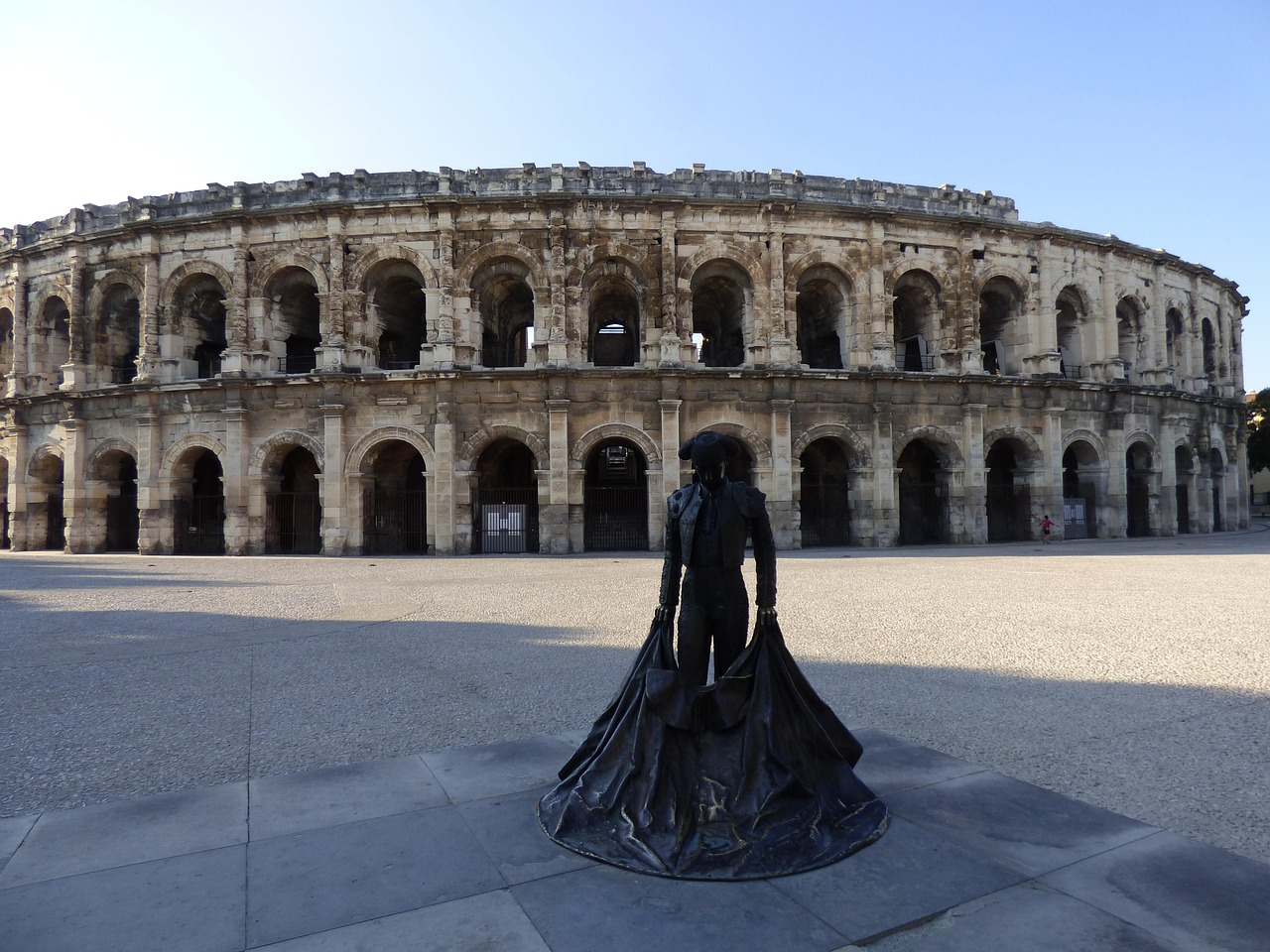
Why Visit Nîmes in 2026?
If you love history, food, warm evenings, and walkable cities, Nîmes should be very high on your list. The city is sometimes called the “French Rome”, but that nickname doesn’t quite capture how compact, livable, and human-scale it feels.
- Some of the best-preserved Roman monuments in the world – including an arena that still hosts concerts and festivals.
- A walkable, atmospheric old town full of narrow lanes, sunlit squares, fountains, and creamy stone façades.
- Local food in Nîmes that mixes Provençal sunshine with hearty Languedoc traditions: brandade de morue, bull stew, olive oil, Costières wine.
- Mild weather nearly year-round, with long golden evenings perfect for terrace-hopping.
- Easy base for day trips to the Pont du Gard, Camargue, Uzès, and even Avignon and Montpellier.
- Less touristy than Provence’s big names, so you still hear a lot of French and pay more local prices.
And in 2026–2027, Nîmes is especially lively: new exhibitions at the Musée de la Romanité, expanded tram’bus lines, and a packed calendar of concerts and festivals in the arena and Jardins de la Fontaine.
Table of Contents
- Why Visit Nîmes in 2026?
- 3–5 Day Itineraries for Nîmes
- 20 Must-See Attractions in Nîmes
- Neighborhoods & Areas to Explore
- Local Food in Nîmes & Where to Eat
- Nightlife & Cultural Experiences
- Best Day Trips from Nîmes
- Cultural Etiquette & Local Customs in Nîmes
- Practical Travel Tips for Nîmes
- When to Visit Nîmes & Final Takeaways
3–5 Day Itineraries: How Long to Stay in Nîmes?
People always ask me: “Is 3 days in Nîmes enough?” The honest answer: 3 days is perfect for a first taste, 4 days lets you slow down, and 5 days in Nîmes is where you start to feel like a temporary local.
Below I’ll give you flexible, story-like itineraries that you can mix and match. Think of them as templates rather than strict schedules; Nîmes rewards wandering and lingering over a glass of rosé.
3 Day Itinerary for Nîmes: Essentials & Atmosphere
This 3 day itinerary for Nîmes is ideal if it’s your first visit and you want the must-see attractions in Nîmes with a bit of local flavor. I’ll walk you through what I actually do with visiting friends.
Day 1 – Roman Icons & First Taste of the Old Town
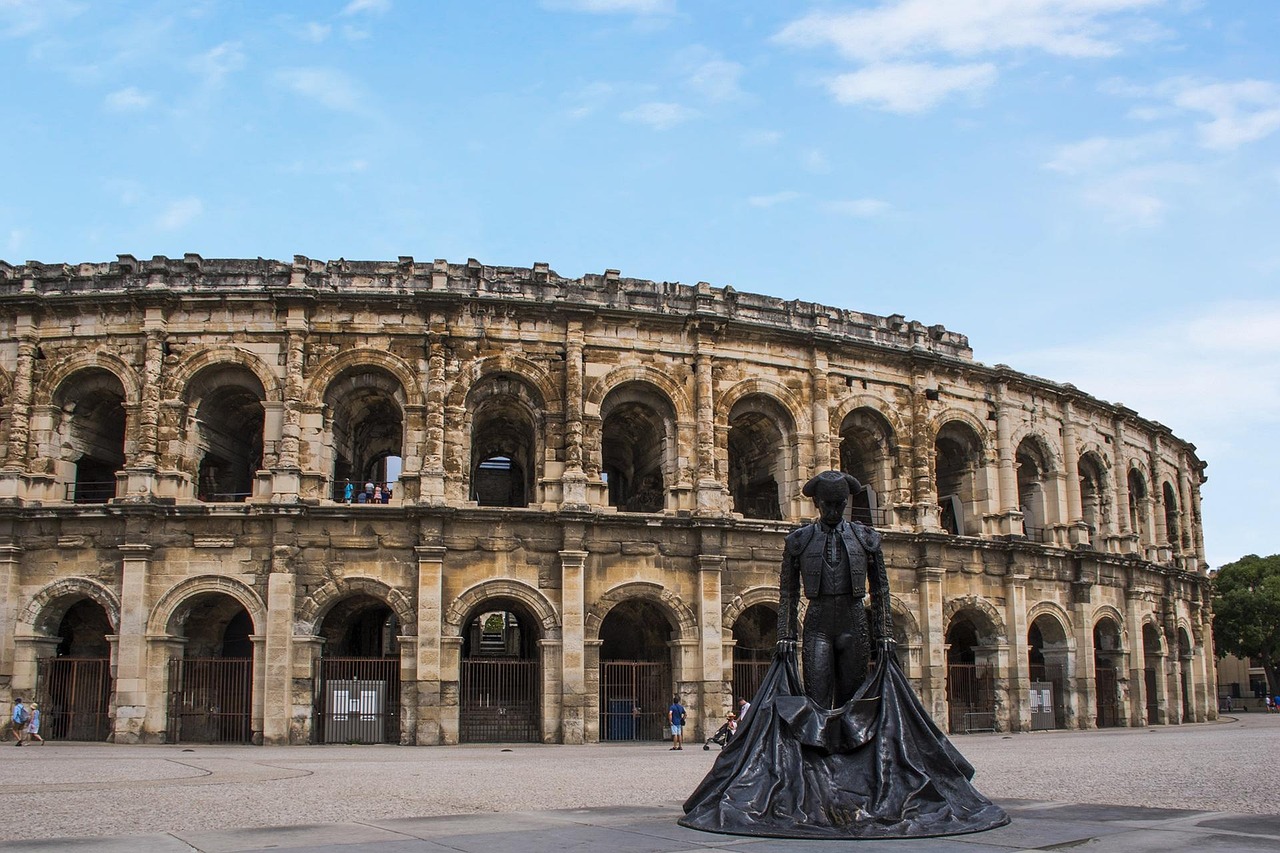
I like to start day one with the city’s most iconic sight: the Arènes de Nîmes. The first time I brought my parents here, we arrived just after opening, when the light was still soft and the stone cool to the touch.
- Morning: Arènes de Nîmes (Roman Arena)
Grab a coffee and croissant at a café on Boulevard Victor Hugo, then walk to the arena. The audio guide is genuinely useful—don’t skip it. Climb to the top tiers for a sweeping view of Nîmes’ “skyline” of church towers, tiled roofs, and the Tour Magne in the distance. - Late Morning: Stroll the Écusson (Old Town)
After the arena, wander into the Écusson, the medieval heart. I usually cut through Rue de l’Aspic toward Place de l’Horloge and the clock tower, then spiral into narrower side streets. Let yourself get a little lost. - Lunch: Simple Southern Fare
Try a lunch menu at a brasserie near Place aux Herbes. If it’s on the menu, order brandade de morue (the local salt cod and olive oil specialty) with a glass of Costières de Nîmes white. - Afternoon: Maison Carrée & Carré d’Art
Head to the Maison Carrée, the beautifully preserved Roman temple now recognized by UNESCO. I still get goosebumps walking up its steps. After a circuit outside, pop across to the Carré d’Art, the modern glass-and-steel museum and library designed by Norman Foster—great for architecture lovers and for rooftop views back to the temple. - Evening: Apéro & Dinner on a Square
By now, you’ll feel the city’s rhythm: kids playing around fountains, locals meeting for an apéritif. I like to settle on Place d’Assas or near the arena for a glass of pastis or rosé and people-watching. For dinner, try a small bistro in the old town—look for handwritten menus and locals at the bar.
Day 2 – Jardins de la Fontaine & Hidden Corners
On my second day in Nîmes, I almost always end up in the Jardins de la Fontaine. It’s my favorite place in the city: part formal garden, part ancient sanctuary, part everyday park.
- Morning: Jardins de la Fontaine & Temple of Diana
Enter the gardens from Quai de la Fontaine. Climb slowly, stopping to watch turtles in the basins and to admire the symmetry of the balustrades. At the back, you’ll find the romantic ruins of the Temple of Diana. I once sat here during a sudden summer shower; the sound of rain on ancient stone is something I’ll never forget. - Climb to Tour Magne
Continue up through pines to the Tour Magne, the ancient Roman tower crowning the hill. The last stretch of stairs to the top can be a bit of a workout, but the panoramic view over Nîmes is absolutely worth it. - Lunch: Picnic or Terrace
Grab supplies at a bakery and a fromagerie in town before heading to the gardens, or have lunch afterward on Rue de la Madeleine, which has several good-value spots popular with locals. - Afternoon: Musée de la Romanité
Across from the arena, this striking contemporary museum wraps around a Roman archaeological trove. Plan 2–3 hours: the top floor mosaics and the immersive exhibits are excellent, even if you’re usually “museumed-out”. The rooftop garden and terrace café are a lovely bonus. - Evening: Wine Bar & Stroll
Tonight, try a wine bar focusing on local Languedoc and Rhône bottles. I like to order a flight of Costières de Nîmes wines and some small plates, then wander through softly lit streets toward the cathedral before heading back.
Day 3 – Markets, Crafts & Optional Day Trip
- Morning: Les Halles de Nîmes
If you’re a food lover, dedicate your morning to Les Halles, the covered market. I come here even when I’m not hungry, just to watch fishmongers banter and smell the herbs and olives. Have an oyster plate with a glass of white at one of the counters, or a simple café crème at the bar where local workers start their day. - Late Morning: Artisan Shops & Hidden Passages
Back in the old town, explore side streets around Rue de l’Aspic and Rue des Marchands. Hunt for pottery, linen, and local gourmet products. Look for narrow passages (sometimes with tiny plaques) that cut between streets—these are my favorite short-cuts. - Afternoon: Short Day Trip or Extra Nîmes Time
If you only have 3 days in Nîmes, you can squeeze in a half-day trip to the Pont du Gard or Uzès (details later in the guide), but I often suggest lingering in Nîmes itself: revisit your favorite spot, linger in the Jardins de la Fontaine, or explore a less-known neighborhood like Gambetta. - Evening: Farewell Dinner
For a final night, choose a slightly nicer restaurant—Nîmes has several creative bistros doing modern takes on local dishes. Toast the city with a glass of chilled rosé or a herbal liqueur de Camargue.
4 Day Itinerary for Nîmes: Roman Heritage & Countryside Tastes
With 4 days in Nîmes, you can keep the core of the 3 day itinerary and add a dedicated day trip plus more time for cafés and spontaneous discoveries.
Day 4 – Pont du Gard or Uzès (Choose Your Adventure)
- Option A: Pont du Gard (Family-Friendly & Adventurous)
The Pont du Gard is a spectacular Roman aqueduct about 30 minutes from Nîmes. Take a bus, guided tour, or rental car. I love coming here with friends and kids: we swim in the river, rent kayaks in summer, and picnic under the arches. The museum on-site is also excellent. - Option B: Uzès (Romantic & Slow-Paced)
Uzès, a honey-colored medieval town, makes a perfect romantic day trip. Stroll arcaded squares, browse boutiques, and linger over a long lunch. On market days (especially Saturday), the whole town fills with stalls.
Return to Nîmes in the late afternoon and treat yourself to ice cream or a drink on a square you haven’t tried yet. I often end a 4 day itinerary for Nîmes with a quiet sunset walk around the arena, when it’s softly lit and mostly empty.
5 Day Itinerary for Nîmes: Living Like a Local
Five days in Nîmes lets you slow down, add another day trip, and explore less-touristed corners. This is my favorite rhythm: some planning, lots of wandering.
Day 4 – Camargue or Avignon
- Option A: Camargue (Wild & Adventurous)
Head toward the Camargue wetlands for white horses, black bulls, flamingos, and huge skies. You can do this as a guided tour from Nîmes or by car: visit Aigues-Mortes, then the beaches near Le Grau-du-Roi or Saintes-Maries-de-la-Mer. Great for families and photographers. - Option B: Avignon (Cultural & Urban)
A direct train whisks you to Avignon in about 30–40 minutes. Explore the Palais des Papes, Pont d’Avignon, and lively streets before returning to calmer Nîmes for the night.
Day 5 – Hidden Gems, Neighborhoods & Pure Flânerie
On my fifth day, I shy away from checklists and instead follow moods and smells: a bakery scent pulling me down a side street, a sunlit bench in a tiny square, an old man reading the paper on a terrace.
- Explore Gambetta and Révolution districts, which feel more residential and authentic.
- Visit a smaller museum like the Musée des Beaux-Arts or the Musée du Vieux Nîmes.
- Return to Les Halles to buy edible souvenirs: olives, tapenade, wine, local salt.
- Spend a lazy late afternoon in the Jardins de la Fontaine with a book.
- Finish with a final dinner somewhere you’ve walked past all week and thought, “I should try that place.”
This is where Nîmes stops being a trip and starts feeling like a place you could live.
20 Must-See Attractions in Nîmes (With Local Insight)
Here are the best places to visit in Nîmes, mixing big-name sites with lesser-known spots. I’ve grouped them roughly from the most famous to more hidden gems, but don’t feel bound by the order.
1. Arènes de Nîmes (Roman Amphitheater)
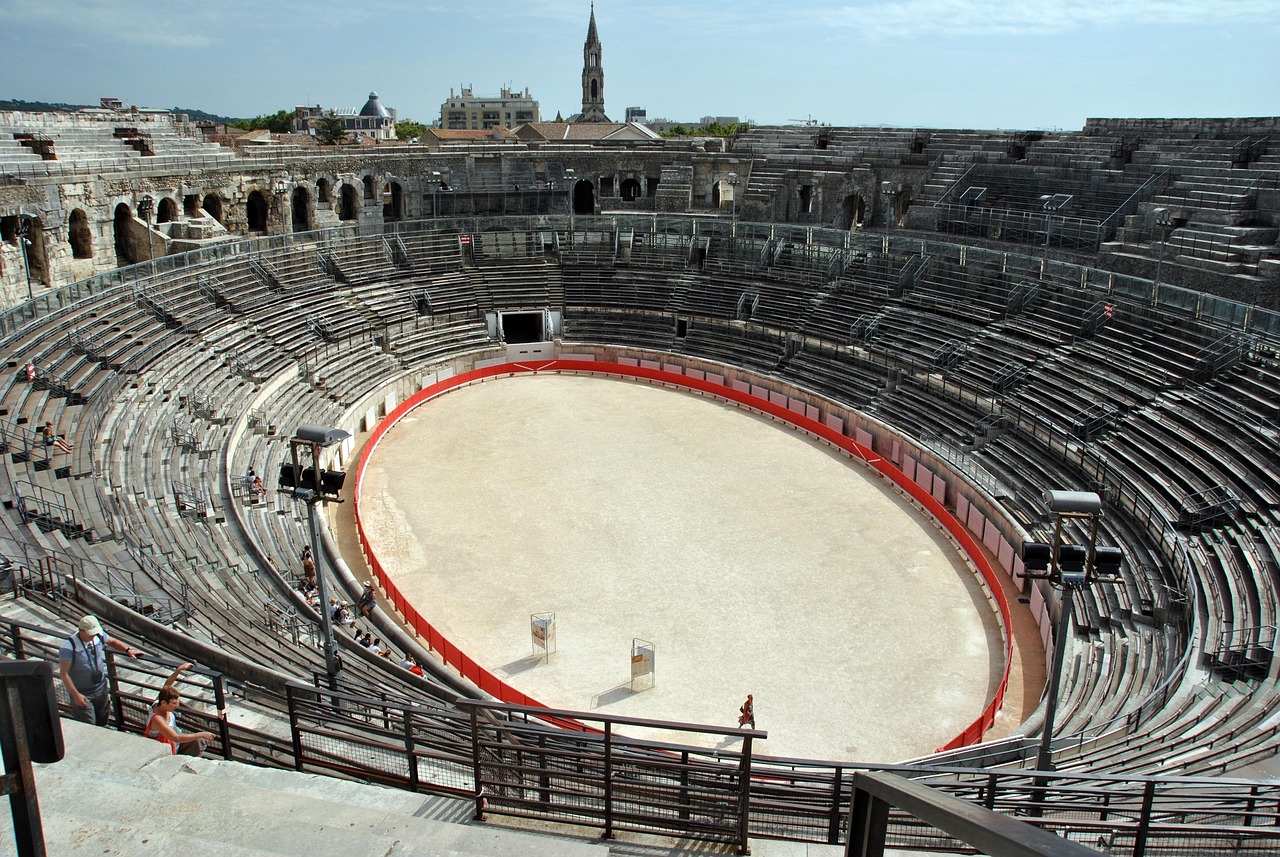
The Arènes de Nîmes is the city’s beating heart. Built around the end of the 1st century AD, it’s one of the best-preserved Roman amphitheaters anywhere. What I love most is that it’s still used: concerts, festivals, and (controversially) bull-related events in the spring and autumn Feria.
History & Significance: The arena once held around 24,000 spectators. You can still see the complex system of galleries, staircases, and corridors that allowed crowds to flow in and out. In the Middle Ages, people built houses inside the arena, turning it into a fortified neighborhood; that’s why it’s survived so well.
My Experience: My first time inside was on a blindingly bright June morning. I climbed up to the highest row, sat with my back against the warm stone, and listened to the echoes from a school group below. Years later, I came back for an evening concert—descending into the arena under violet lights felt like time travel with a rock soundtrack.
Tips for Visitors:
- Arrive at opening time in summer to beat heat and crowds.
- Take the audio guide; it adds vivid detail you’d otherwise miss.
- Wear a hat and bring water—shade is limited.
- Check the events calendar in 2026–2027 for concerts or performances; seeing the arena in action is unforgettable.
Family-Friendly? Yes—kids usually love the scale and the gladiator stories. Just watch the little ones on the steep steps.
2. Maison Carrée
This small but perfectly formed Roman temple is so elegant it almost doesn’t look real. Dating from the early 1st century AD and dedicated to the grandsons of Emperor Augustus, it’s among the best-preserved Roman temples anywhere.
My Experience: I like to approach it from the side streets so it suddenly appears between modern buildings—a white vision at the end of a narrow lane. I’ve sat on its steps in every season: in winter with a scarf and coffee; in autumn with warm stone under my legs and leaves drifting across the square.
Tips:
- Come early morning or late afternoon when the light is most flattering and the crowds thinner.
- Combine with a visit to the Carré d’Art opposite for a perfect old-meets-new architecture experience.
- The square around it is a nice place to pause with a gelato.
Romantic? Very. The square glows at night, making this a lovely spot for an evening stroll.
3. Jardins de la Fontaine & Temple of Diana
Laid out in the 18th century around ancient springs, the Jardins de la Fontaine is both a landscaped park and an archaeological site. You’ll find monumental staircases, statues, canals, and, tucked at the back, the mysterious ruins of the so-called Temple of Diana.
My Experience: I’ve walked these gardens in the blue hour when the statues seem to watch you, and at midday when families picnic under the trees. My favorite ritual is to bring a book and sit near the water, occasionally looking up to see kids fishing imaginary creatures with sticks.
Tips:
- Visit early or just before sunset to avoid the strongest heat.
- Wear comfortable shoes; there are some stairs and slopes.
- Bring a picnic—this is one of the nicest picnic spots in Nîmes.
Family-Friendly? Absolutely. Plenty of space to run, benches for grandparents, and safe paths.
4. Tour Magne
This ancient Roman tower crowns the hill above the Jardins de la Fontaine. It was part of the city’s defensive system and offered commanding views over the Via Domitia, the Roman road.
My Experience: The climb inside the tower is a bit tight and can feel steep, but emerging onto the top and seeing Nîmes spread beneath you is exhilarating. I once went up on a slightly cloudy day; watching shadows move across the city felt like being in a live painting.
Tips:
- Combine with the Jardins de la Fontaine; the path is clearly signposted.
- Bring water and a hat, especially in summer.
- Not ideal if you’re claustrophobic or afraid of heights.
5. Musée de la Romanité
Opened in 2018, this museum feels like a love letter to Nîmes’ Roman roots and beyond. Its undulating glass façade is meant to evoke a Roman toga; inside, you’ll find mosaics, sculptures, and interactive exhibits that bring the ancient city to life.
My Experience: I’ve visited three times and always discover new details—a tiny carved face on a cornice, a mosaic fish with almost mischievous eyes. The rooftop garden, planted with Mediterranean species, is my secret spot for a quiet break with a view over the arena.
Tips:
- Plan at least 2 hours; more if you love archaeology.
- The museum café is surprisingly good for lunch.
- Great rainy-day activity and good for kids thanks to interactive displays.
6. Cathédrale Notre-Dame-et-Saint-Castor
Nîmes’ cathedral is less famous than its Roman structures, but it’s a quiet anchor in the old town. A mix of Romanesque, Gothic, and later restorations, it reflects the city’s layered history.
My Experience: I like to pop in during the heat of the day when the stone is cool and the air smells faintly of wax and incense. Once, a local choir was rehearsing; their voices turned a quick visit into an unplanned concert.
Tip: Step outside and look for Roman carvings reused in the façade—a nice visual reminder of how each era builds on the last.
7. Les Halles de Nîmes (Covered Market)
This is where Nîmes eats. Under one roof, you’ll find butchers, fishmongers, cheese stalls, vegetable vendors, and small counters serving ready-to-eat food.
My Experience: My perfect morning here starts with a coffee at the bar where local workers crowd in, followed by a slow lap around the stalls. I usually leave with olives, a slice of fougasse, and maybe goat cheese if I’m staying in an apartment.
Tips:
- Come between 8:00–11:00 for the best atmosphere.
- Many stalls close around lunchtime or early afternoon.
- Great place to build a picnic or pick up edible souvenirs.
8. Carré d’Art & Place du Musée
Norman Foster’s glass-and-steel cube opposite the Maison Carrée is home to a contemporary art museum and the city’s library. The contrast between ancient temple and ultra-modern design is striking.
My Experience: I’m as drawn to the building as to the art inside. I like riding the elevator up just for the perspective over the square and the temple. On hot days, the shaded steps outside fill with students and locals reading or chatting.
Tip: Even if you’re not into contemporary art, the building and rooftop views make it worth a quick look.
9. Musée des Beaux-Arts
This fine arts museum is a bit of a hidden gem, housed in a 19th-century building with a grand staircase and a peaceful courtyard. Inside you’ll find European paintings from the Renaissance to the 19th century, plus some sculpture and decorative arts.
My Experience: I came here on a scorching August afternoon, mostly to escape the heat, and ended up staying two hours. The museum is rarely crowded, so you often get rooms almost to yourself—a treat if you like quiet contemplation.
Tip: Check temporary exhibitions in 2026–2027; the museum has been curating more thematic shows that tie into the city’s Roman and Mediterranean identity.
10. Musée du Vieux Nîmes
Set in the former episcopal palace near the cathedral, this museum focuses on local history and daily life across the centuries. It’s a great place to understand Nîmes beyond the Romans.
My Experience: I loved the rooms showcasing local crafts and old photographs. There’s something intimate about seeing everyday objects—lace, tools, signs—that connects you to the city’s inhabitants.
Tip: Look for exhibits on textiles and denim; Nîmes has a surprising connection to jeans (more on that soon).
11. Esplanade Charles-de-Gaulle & Fountain
This broad, tree-lined esplanade near the arena is both a transit hub and a public living room. There’s a large fountain, benches, and plenty of space for kids to run.
My Experience: I often cross here multiple times a day without planning to stay, then get drawn into sitting for ten minutes just watching life go by: buses, teenagers on scooters, elderly couples arm-in-arm.
Tip: In December, this area often hosts Christmas markets and seasonal events. In 2026, expect more open-air cultural programming tied to Roman heritage festivals.
12. Porte Auguste
One of the old Roman gates that once marked the entrance to the city, the Porte Auguste is a reminder that Nîmes was on a major Roman road.
My Experience: It’s not a “wow” monument like the arena, but I love the way it just sits there, integrated into daily life, with cars and pedestrians flowing around it. It’s a good place to pause and imagine Roman travelers arriving here 2,000 years ago.
13. Porte de France
Another surviving Roman gate, smaller than the Porte Auguste, located on the southwestern edge of the old town.
My Experience: I stumbled on this by accident my first visit, turning a corner and suddenly facing the arch. It’s a good reminder to wander beyond the main pedestrian lanes; Nîmes rewards curiosity.
14. Quai de la Fontaine
This elegant canal-like stretch of water leads from the city out toward the Jardins de la Fontaine, lined with trees and stately buildings.
My Experience: On soft spring evenings, this is one of my favorite walks. People sit on the low stone walls, couples stroll hand in hand, and the reflection of trees in the water is pure serenity.
15. Place aux Herbes
A lively square near the cathedral, Place aux Herbes is lined with cafés and framed by colorful façades.
My Experience: I’ve had countless coffees here. It’s touristy enough to be easy, but still frequented by locals. In the morning, it feels calm; by afternoon, it hums with chatter.
Tip: Prices on the main square can be slightly higher; if you’re on a budget, head one or two streets away for better-value spots.
16. Place de l’Horloge & Clock Tower
This square, dominated by the clock tower, is another anchor point in the old town. The tower itself sits on Roman foundations, like much of Nîmes.
My Experience: It’s a good meeting point when you’re exploring with friends. In December, lights and decorations make it especially pretty.
17. Traces of Denim: “De Nîmes”
Here’s a fun fact: the word “denim” comes from “de Nîmes”—from Nîmes. The city was once known for a sturdy serge fabric used for workwear, which evolved into the denim we know today.
My Experience: There’s no single “denim museum,” but I love hunting for small references in shops and exhibitions. Some local boutiques sell jeans or clothing paying homage to this history.
Tip: Ask in the tourist office about any 2026–2027 exhibitions or events around Nîmes’ textile history; these pop up periodically.
18. Street Art in Gambetta & Beyond
Nîmes isn’t a graffiti capital, but if you wander outside the most polished streets—especially around Gambetta and the edges of the center—you’ll find some striking murals and smaller pieces.
My Experience: One of my favorite afternoons was spent following a self-guided street art trail a local friend sketched on my map. We discovered a large bull mural near a parking lot and tiny stencil art in an alley that most visitors never see.
19. Jewish Heritage Traces
Nîmes has a long and complex Jewish history. While not as visible as in some cities, there are traces in street names and in local archives.
My Experience: I joined a small themed walking tour once that focused on religious communities in Nîmes; it opened my eyes to layers of the city’s past I’d never noticed.
Tip: If you’re interested in this topic, ask at the tourist office or check for specialized guided walks in 2026–2027.
20. Contemporary Nîmes: New Architecture & Public Spaces
Beyond Roman stones and old façades, Nîmes has been investing in modern architecture and public spaces: redesigned tram’bus stops, new cultural venues, and refreshed squares.
My Experience: I enjoy spotting the city’s contemporary side—sleek tram stops against Roman backdrops, new pedestrianized stretches, and the way light bounces off glass and stone at different times of day.
Tip: For a more “skyline-like” view, head a bit outside the center or up to the Tour Magne and look back at the blend of towers, rooftops, and modern structures.
Neighborhoods & Districts of Nîmes
Nîmes isn’t a huge city, but each area has its own feel. Here’s how I think about the main neighborhoods when choosing where to wander or stay.
Écusson (Historic Center)
This is the medieval heart: narrow streets, little squares, boutiques, and many of the main attractions like the cathedral, Maison Carrée, and Place de l’Horloge.
Why I Love It: It’s where I stay when I want to roll out of bed and be in the middle of everything. Mornings here are surprisingly calm; nights can be lively but rarely overwhelming.
Around the Arènes & Esplanade
Streets radiate from the arena, filled with cafés, hotels, and brasseries.
Best For: First-time visitors who want convenience and don’t mind a bit more touristy vibe. I often suggest this area for short stays: you can walk everywhere easily.
Gambetta & Révolution
Just across the canal from the old town, these neighborhoods feel more residential and slightly bohemian, with a mix of older apartments, small workshops, and newer spots.
Why I Love It: Rents and prices are a bit lower, so you find more local life: kids coming home from school, older cafés with regulars, a few good ethnic restaurants. Great area if you want to feel less like a tourist.
Quai de la Fontaine & Les 7 Collines
Leafy, elegant, and quieter, with 19th-century buildings and easy access to the Jardins de la Fontaine.
Best For: Romantic stays or families who want peace but still be walkable from the center. I love wandering here in the late afternoon when the light turns the stone facades golden.
Gare (Train Station Area)
Practical and busy, this area has chain hotels, some budget options, and easy access to buses and trains.
Best For: Short stays where you’re doing many day trips, or if you have early/late trains. I’ve stayed here a couple of times when using Nîmes as a base for the region.
Periphery & Newer Districts
On the edges of Nîmes you’ll find malls, retail parks, and new apartment blocks.
Best For: If you have a car and want free parking or cheaper chain hotels. Not essential for sightseeing, but sometimes useful.
Local Food in Nîmes & Where to Eat
Nîmes sits at a crossroads of Provence and Languedoc, close to the Camargue and the sea. The food reflects that: olive oil, garlic, tomatoes, fresh fish, lamb, bull meat, and plenty of herbs.
Must-Try Dishes in Nîmes
- Brandade de Morue – A creamy mix of salt cod and olive oil, often served hot as a gratin. I like it with a simple green salad.
- Gardianne de Taureau – A slow-cooked bull stew from the Camargue, usually served with rice. Rich, comforting, and perfect with a glass of red.
- Tapenade & Olives – The area around Nîmes produces excellent olives. Tapenade on toast with a glass of wine is my favorite apéro.
- Fougasse – A flatbread sometimes flavored with olives, lardons, or herbs. Great for picnics.
- Seafood – Thanks to proximity to the Mediterranean, you’ll see oysters, mussels, and fish in Les Halles and on menus.
- Local Cheese – Try pélardon, a small goat cheese from the Cévennes.
Where to Eat in Nîmes (From Markets to Bistros)
I tend to mix simple spots and one or two “treat” meals per trip.
- Les Halles de Nîmes – For breakfast oysters, quick lunches, and food shopping. Cheap to mid-range.
- Old Town Bistros – Around Place aux Herbes and side streets, look for daily chalkboard menus (plat du jour) for good value.
- Wine Bars – Several intimate bars focus on local wines with small plates. Great for solo travelers; sit at the counter and chat with the staff.
- Picnics – Buy from bakeries, markets, and supermarkets, then eat in Jardins de la Fontaine—a budget-friendly and beautiful option.
Money-Saving Tip: Opt for lunch menus (often 2–3 courses for a fixed price) and simpler dinners. I often do my “big” meal at lunch to save.
What to Drink in Nîmes
- Costières de Nîmes Wine – Reds, whites, and rosés from vineyards around the city. Affordable and good quality.
- Pastis – An anise-flavored spirit diluted with water, classic for apéro. Sip slowly.
- Local Craft Beer – A small but growing craft beer scene; ask bars for regional brews.
- Coffee – Mostly Italian-style espresso-based drinks; café terraces are a way of life.
Nightlife, Entertainment & Cultural Experiences in Nîmes
Nîmes’ nightlife is more about terraces and festivals than mega-clubs. Summer evenings are especially magical: warm air, open windows, and the sounds of conversations spilling into streets.
Evening Terraces & Wine Bars
The most typical night out is simple: find a terrace, order a drink, and watch the city go by. Around the arena, Place aux Herbes, and smaller squares in the Écusson, you’ll find plenty of options.
Concerts & Festivals (2026–2027)
The Arènes hosts a regular summer concert series, bringing French and international artists. In 2026–2027, expect:
- Summer Concert Series – Rock, pop, and classical performances in the arena; tickets often sell quickly.
- Feria de Nîmes – Spring and autumn festivals with parades, music, and crowded streets (note: also associated with bullfighting, which many visitors avoid).
- Roman Heritage Events – Reenactments and themed weekends linked to the Musée de la Romanité and arena.
Tip: If your visit overlaps with a Feria, book accommodation well in advance. The city is lively but can be overwhelming if you prefer quiet.
Theaters & Cinemas
Nîmes has several theaters and cinemas, some of which show films in original version (VO) with subtitles. Check listings for concerts, plays, and dance performances during your stay.
Best Day Trips from Nîmes
One of the biggest reasons I keep coming back to Nîmes is how easy it is to explore the region: rivers, medieval towns, and the wild Camargue are all close.
Pont du Gard
Why Go: A jaw-dropping Roman aqueduct over a clear river, perfect for swimming, kayaking, and history in one go.
How to Get There: About 30 minutes by car. There are also buses and organized tours from Nîmes; ask at the tourist office for the latest schedules in 2026.
What to Do: Visit the museum, walk across the aqueduct, swim or paddle, and picnic on the banks. Family-friendly and romantic all at once.
Uzès
Why Go: Honey-stone houses, arcaded squares, and one of the prettiest markets in the region.
How to Get There: Around 40–45 minutes by bus or car from Nîmes.
What to Do: Wander, shop, linger in cafés, visit the Duchy of Uzès if open, and enjoy the slower pace. Best on a clear day.
Camargue & Aigues-Mortes
Why Go: Medieval walled town, salt marshes that turn pink, wild horses, bulls, and beaches.
How to Get There: About 45–60 minutes by car; some tours combine Aigues-Mortes with the Camargue from Nîmes.
What to Do: Walk the ramparts of Aigues-Mortes, take a boat tour into the marshes, taste local salt and fougasse d’Aigues-Mortes, and, if you have time, visit a nearby beach.
Avignon
Why Go: The former papal city on the Rhône, with imposing palace and famous bridge.
How to Get There: Direct regional trains from Nîmes take around 30–40 minutes.
What to Do: Tour the Palais des Papes, stroll the old town, and walk along the river. In July, the Avignon Festival fills the city with theater and street performances.
Montpellier
Why Go: A bigger, more urban-feeling city with a lively student population and contemporary vibe.
How to Get There: 30–40 minutes by train from Nîmes.
What to Do: Explore pedestrian streets, visit the Antigone district for postmodern architecture, and enjoy the café culture.
Cultural Etiquette & Local Customs in Nîmes
Southern France is friendly but appreciates a few basic courtesies. Following them will make your trip smoother and more enjoyable.
- Always Greet People – A simple “Bonjour” when you enter a shop or approach a counter is essential. Add “Madame” or “Monsieur” if you can.
- Take Your Time – Meals are not rushed. If you need to leave quickly, mention it politely when you order.
- Terrace Culture – It’s normal to sit with a single drink for a while; you’re paying for the space as much as the beverage.
- Quiet in Residential Streets – At night, keep voices down in narrow streets where sound carries easily.
- Dress Code – Casual is fine, but locals tend to avoid beachwear in town. For nicer restaurants, avoid sportswear and flip-flops.
- Tipping – Service is included in restaurant bills. Locals often leave small change or round up, especially for good service.
- Language – A few French words go a long way. Even a hesitant “Parlez-vous anglais ?” is appreciated more than launching straight into English.
Practical Travel Tips for Nîmes (2026–2027)
Getting Around Nîmes
The center of Nîmes is wonderfully walkable; you can cover most sights on foot.
- On Foot – My default. Distances are short, and wandering is half the joy.
- Public Transport – Buses and tram’bus lines connect the center with suburbs and some nearby areas. In 2026, expanded lines make it easier to reach shopping zones and park-and-ride lots.
- Bikes & Scooters – You may find shared scooters or bike rental shops; good for covering slightly longer distances.
- Driving – Not needed in the center and can be stressful in narrow streets. If you’re renting a car, choose a place with parking or use park-and-ride lots.
How to Save Money in Nîmes
- City Passes – Check for combined tickets that include the arena, Maison Carrée, Tour Magne, and Musée de la Romanité.
- Markets & Picnics – Eating one picnic meal a day can significantly cut costs without feeling like a sacrifice.
- Lunch Menus – Choose fixed-price lunch menus and lighter, simpler dinners.
- Tap Water – In restaurants, ask for a “carafe d’eau”; it’s free tap water.
- Accommodation – Booking apartments a bit outside the very center (e.g., Gambetta) can save money while still being walkable.
SIM Card & Connectivity
In 2026, staying connected in Nîmes is straightforward.
- EU Travelers – Most EU SIMs roam at domestic rates; check your plan.
- Visitors from Outside EU – Buy a local SIM (e.g., Orange, SFR, Bouygues) at mobile shops or larger supermarkets. eSIM options are increasingly common.
- Wi-Fi – Hotels, many cafés, and some public spaces offer free Wi-Fi.
Visa & Entry Requirements
Nîmes is in France, part of the Schengen Area.
- EU/EEA/Swiss Citizens – Can enter with a valid ID card or passport.
- Many Other Nationals – Can enter visa-free for short stays (typically up to 90 days) but may need to complete pre-travel authorization (like ETIAS) once fully implemented; check the latest official information before 2026 travel.
- Others – May need a Schengen visa obtained in advance. Always verify current requirements with your local French consulate.
Driving & Car Rental
Renting a car can be useful for day trips but is not necessary inside Nîmes itself.
- Foreign Driver’s Licenses – Many are accepted for short stays; some non-EU licenses may require an International Driving Permit. Check with your rental company before travel.
- Parking – Use underground car parks or park-and-ride facilities; avoid driving into the tightest old town streets.
- Fuel & Tolls – Highways have tolls; factor that into day-trip costs.
Safety & Health
- Safety – Nîmes feels generally safe. As in any city, watch your belongings in crowded areas and on market days.
- Heat – Summers can be hot. Carry water, use sunscreen, and plan indoor or shaded activities in the early afternoon.
- Healthcare – Pharmacies are easy to find; for emergencies, dial 112.
When to Visit Nîmes & Final Takeaways
Best Seasons for Different Activities
- Spring (March–May) – My favorite time. Mild temperatures, blooming gardens, and fewer crowds. Perfect for sightseeing and day trips.
- Summer (June–August) – Lively, hot, and full of events. Great for festivals, long evenings, and combining Nîmes with beaches or rivers. Plan around heat and book accommodation early.
- Autumn (September–November) – Warm early autumn, with grape harvest vibes and softer light. Ideal for wine and food lovers.
- Winter (December–February) – Quiet, occasionally chilly but rarely severe. Good for budget travelers and those who prefer calm, with a dash of Christmas charm in December.
Major Events in Nîmes 2026–2027
- Feria de Nîmes (Spring & Autumn) – Major festivals with music, parades, and crowded streets. Be aware of bull-related events if you prefer to avoid them.
- Summer Concerts in the Arènes – Expect big French and some international names through summer 2026 and 2027.
- Roman Heritage Programming – The Musée de la Romanité and arena will continue to host exhibitions and themed weekends celebrating Nîmes’ ancient past.
Key Takeaways & Final Recommendations
After many visits, here’s how I’d summarize Nîmes for a first-timer:
- Stay at least 3 days in Nîmes to see the essentials without rushing; 4–5 days let you truly exhale and explore the region.
- Don’t skip the obvious sights—the arena, Maison Carrée, and Jardins de la Fontaine are famous for good reason.
- Build in unplanned time to wander the Écusson, linger in cafés, and sit in the Jardins de la Fontaine.
- Eat locally: brandade, bull stew, olives, and Costières de Nîmes wines are all part of the story.
- Use Nîmes as a base to see the Pont du Gard, Uzès, the Camargue, and Avignon without constantly packing and unpacking.
Nîmes may not be the loudest city in France, but that’s exactly its charm. It’s a place where ancient stones and everyday life coexist easily, where you can see world-class Roman monuments in the morning and chat with your waiter about the weather in the afternoon. If you’re looking for a city that feels both deeply historic and quietly alive, Nîmes in 2026 is waiting for you.