Why Visit Orléans in 2026?
Orléans is the historic gateway to the Loire Valley, but it’s much more than a stopover on the way to famous châteaux. It’s a city of layers: Roman roots, medieval wealth, Renaissance façades, industrial revival, and now a quietly confident, eco-forward mid-size city that still feels distinctly French and local.
- Human-sized and walkable: Most must-see attractions in Orléans are within a 15–20 minute walk of each other.
- Authentically local: You’ll hear more French than English, especially in cafés off the main squares.
- Joan of Arc’s city: The story of Jeanne d’Arc is literally on the street corners; she liberated the city in 1429.
- Gateway to the Loire Valley: Perfect base for day trips to Chambord, Blois, Meung-sur-Loire, and more.
- Affordable: Prices are gentler than Paris for accommodation, food, and activities.
In 2026–2027, Orléans continues to invest in cultural events along the Loire riverfront, with expanded summer festivals, more riverside terraces, and improved bike infrastructure that makes exploring by vélo genuinely enjoyable.
Table of Contents
- Why Visit Orléans
- Suggested 3–5 Day Itineraries
- 20+ Must-See Attractions in Orléans
- Neighborhoods & Areas to Explore
- Local Food & Drink in Orléans
- Nightlife & Cultural Experiences
- Day Trips from Orléans
- Cultural Etiquette & Local Customs
- Practical Travel Advice for Orléans (2026–2027)
- Summary & Best Time to Visit Orléans
3–5 Day Itineraries for Orléans
Before diving deep into the individual attractions, here’s how I’d structure 3 days in Orléans, then how I’d stretch that into 4 and 5 days in Orléans depending on your pace and interests. These are the routes I actually take friends on when they visit.
3 Day Itinerary for Orléans: Classic Highlights & Riverside Charm
Day 1 – Cathedral, Old Town & Joan of Arc
I usually start my first morning in Orléans by walking straight down to Place du Martroi, the city’s main square, to orient myself. From there, everything fans out logically.
- Morning: Cathédrale Sainte-Croix, Rue Jeanne-d’Arc, and a coffee on Place du Martroi.
- Afternoon: Maison de Jeanne d’Arc, wander the Old Town, and visit Hôtel Groslot.
- Evening: Dinner at a bistro near the cathedral and a twilight stroll to see the illuminated façades.
Day 2 – Loire River, Museums & Gardens
- Morning: Stroll the Loire riverfront, cross Pont George V, visit the local market.
- Afternoon: Dive into art and history at Musée des Beaux-Arts and relax under the trees at Parc Floral de la Source.
- Evening: Wine bar hopping around Bourgogne–Saint-Euverte district.
Day 3 – Hidden Streets, Canal Walks & Local Life
- Morning: Explore the quieter La Madeleine neighborhood and follow the Canal d’Orléans towpath.
- Afternoon: Pick one more in-depth site (e.g., Muséum d’Histoire Naturelle, Collégiale Saint-Aignan, or a Loire boat tour).
- Evening: Finish in Les Quais with riverside drinks and sunset.
With this 3 day itinerary for Orléans, you’ll have covered the core must-see attractions in Orléans and gotten a taste of its different moods: historical, riverine, and neighborhood-local.
4 Day Itinerary for Orléans: Add a Château or a Countryside Escape
For 4 days in Orléans, I recommend keeping the first three days similar and dedicating Day 4 to a nearby château or village:
- Option A (Château Focus): Day trip to Château de Chambord or Meung-sur-Loire & its château.
- Option B (Loire à Vélo): Rent bikes and follow the Loire à Vélo path to a nearby town like Saint-Jean-de-Braye or La Chapelle-Saint-Mesmin.
5 Day Itinerary for Orléans: Deep Dive & Slow Travel
A 5 day itinerary for Orléans is perfect if you like to travel slowly, linger in cafés, and mix urban exploring with a bit of countryside.
- Days 1–3: Follow the 3 days in Orléans plan above.
- Day 4: Château day trip (Chambord or Blois).
- Day 5: Reserve for markets, food, and hidden gems – take a cooking class if available, linger in the Halles Châtelet, and wander streets you missed.
With 5 days in Orléans, you don’t need to rush. You can build in long lunches, spontaneous stops, and time to simply sit with a glass of Loire wine and watch local life unfold.
20+ Must-See Attractions & Experiences in Orléans
Below are the main attractions and experiences I recommend, especially if you’re looking for the best places to visit in Orléans, hidden gems in Orléans, and authentic cultural experiences in Orléans. I’ve organized these roughly from most iconic to more offbeat.
1. Cathédrale Sainte-Croix d’Orléans
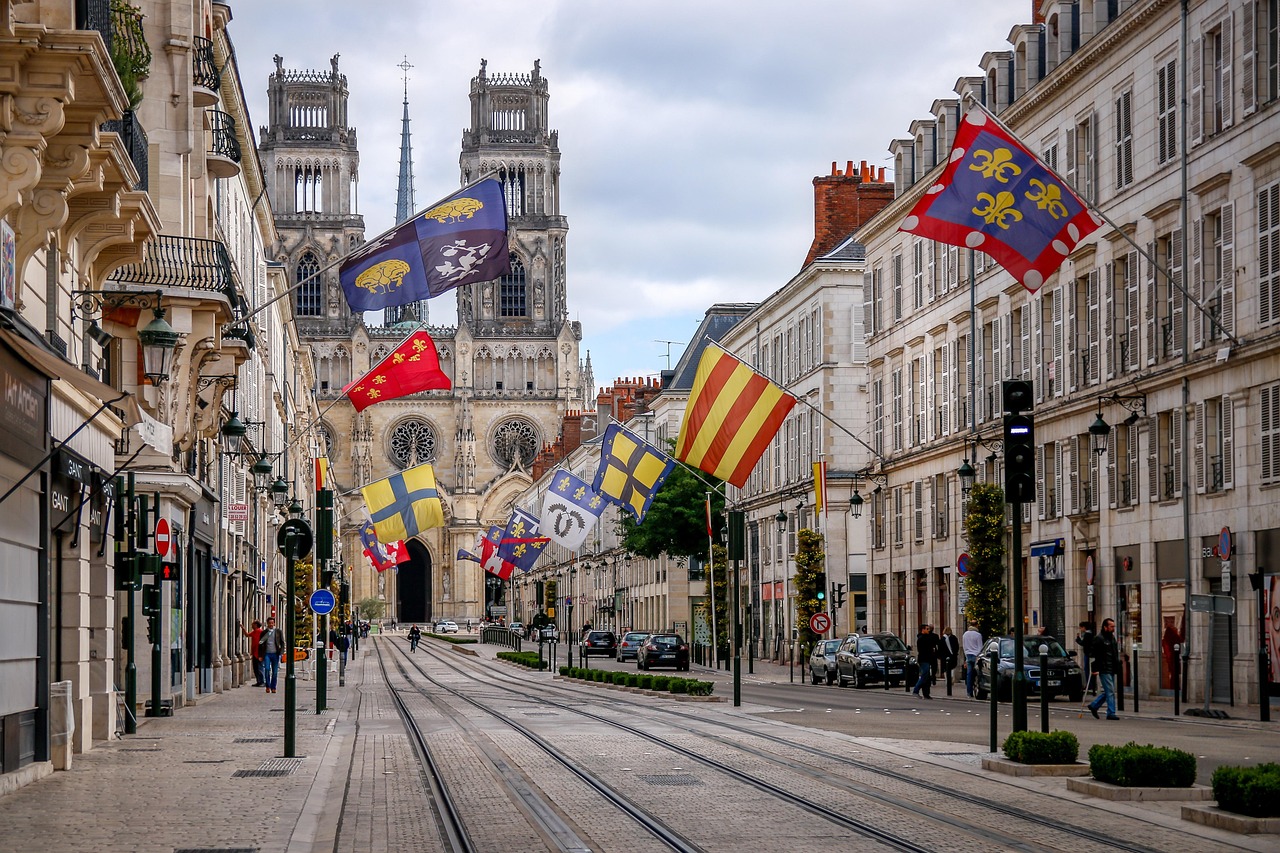
The first time I walked up Rue Jeanne-d’Arc and saw Cathédrale Sainte-Croix reveal itself at the end of the perspective, I actually stopped mid-step. The twin towers rise like lacework into the sky, and in the early morning, when there are more pigeons than people, the square is almost silent.
The cathedral you see today is largely Gothic, reconstructed after the Wars of Religion, but there has been a church on this site since at least the 4th century. The most moving element for me is the connection to Joan of Arc: stained-glass windows inside tell the story of the young woman who helped lift the siege of Orléans in 1429.
I like to visit twice: once in the morning to enjoy the quiet interior, and once at dusk when the façade is lit and the stone glows softly. In 2026, occasional light and sound shows are still planned in summer, projecting historical scenes on the façade – check the tourist office for dates.
- Family-friendly? Yes – kids are often impressed by the sheer size and the colorful windows.
- Romantic? Very. The square at blue hour makes a lovely backdrop for an evening stroll.
- How to get there: A 10–12 minute walk from Gare d’Orléans via Rue de la République.
- Tip: Dress modestly, keep voices low; this is an active place of worship.
2. Place du Martroi & Jeanne d’Arc Statue
Place du Martroi is Orléans’ living room. I’ve lost count of how many coffees I’ve had here, watching trams glide by and kids climb on the base of the equestrian statue of Jeanne d’Arc. The square has been a marketplace since medieval times and today is surrounded by cafés, brasseries, and shops.
The bronze statue of Joan at the center is a 19th-century homage to the city’s heroine. Locals barely glance at it as they cross the square to work, but if you stand there for a bit, you can feel how central her story still is to Orléans’ identity.
- Best time: Late afternoon for people-watching and a drink on a terrace.
- Budget tip: Skip the most touristy cafés right on the corner; walk a block or two away for better prices.
3. Rue Jeanne-d’Arc
Rue Jeanne-d’Arc is the grand, arrow-straight avenue that frames the cathedral like a stage set. When you stand at Place du Martroi and look toward the east, the twin towers of the cathedral rise up at the end, and the street is lined with elegant stone buildings and arcades.
I like to walk it slowly, ducking into side streets to find quieter corners of the Old Town. During the Fêtes de Jeanne d’Arc in May, this street fills with parades and medieval-themed events – in 2026, the city is expanding the festival with more street performances and evening concerts.
- Photo tip: Come early, around 8–9am, for photos without crowds or cars.
- Romantic? Yes – the perspective at night, with warm lights and the cathedral ahead, is beautiful.
4. Maison de Jeanne d’Arc
This half-timbered house is not the actual building where Joan slept during the siege (that one was destroyed), but a faithful reconstruction based on historical records. Inside, the Maison de Jeanne d’Arc is part museum, part multimedia space.
The first time I visited, I expected something dusty and traditional; instead, I found interactive displays, films, and a surprisingly nuanced look at Joan’s life and myth. It’s small, so you can easily fit it into a half-day of exploring the cathedral area.
- Good for kids? Yes – the multimedia elements keep them engaged.
- Allow: 45–60 minutes.
- Tip: Combine with Hôtel Groslot, which is just around the corner.
5. Hôtel Groslot
Hôtel Groslot is one of my favorite little surprises in Orléans. From the outside, it’s a handsome red-brick Renaissance mansion with a small manicured garden. Inside, it’s a time capsule of 19th-century civic grandeur, with richly decorated rooms that once hosted French kings and later served as the city hall.
I remember stepping into the council chamber on my first visit and being struck by how intimate it felt – you can almost imagine heated debates taking place under the chandeliers. The entry is often free or very low-cost, making it one of the best-value things to do in Orléans.
- Highlights: The grand staircase, painted ceilings, and portraits of notable Orléanais.
- Tip: Check for occasional temporary exhibitions or classical music recitals.
6. Vieux-Orléans (Old Town & Half-Timbered Houses)
The Old Town is where I always tell friends to “get lost on purpose.” Around Rue de Bourgogne, Rue du Tabour, and Rue de la Charpenterie, you’ll find some of the city’s best-preserved half-timbered houses, leaning slightly as if whispering to each other.
I’ve spent afternoon after afternoon here, ducking in and out of small boutiques, crêperies, and wine bars. It’s lively in the evenings, especially with students and locals. If you’re looking for hidden gems in Orléans, this is where you’ll find tiny courtyards and unexpected street art.
- Family-friendly? Yes, though evenings can be boisterous on weekends.
- Tip: Look up – many façades have small carved details and date plaques.
7. Les Quais & Loire Riverfront
The Loire is France’s last “wild” river, and in Orléans it’s wide, shallow, and constantly changing with the light and water level. The quays (les quais) along the riverfront are my go-to place for a decompressing walk, especially at sunset. Locals come to jog, picnic, or simply sit on the stone steps and watch the water.
In recent years, Orléans has invested heavily in this area: more benches, green spaces, seasonal bars, and event spaces. In summer 2026, expect open-air concerts, temporary guinguette-style riverside bars, and weekend markets.
- Romantic? Very – bring a bottle of Loire white and some cheese, and you have an instant picnic.
- Family-friendly? Yes, but keep an eye on small children near the water; currents can be strong.
- Photo tip: Evening light facing west, with the bridge and city in frame, is gorgeous.
8. Pont George V
Pont George V, with its stone arches stretching across the Loire, is the bridge you’ll likely cross at least once. I like to walk across it rather than just tram over – from the middle, you can see both the upstream islands and the cathedral towers.
On foggy mornings, the bridge looks ethereal; on clear summer evenings, it’s busy with cyclists and walkers. It’s also a key reference point: many directions in Orléans are given in relation to “the bridge.”
- Best time: Sunset, when the stone warms in color and the city lights begin to flicker on.
9. Musée des Beaux-Arts d’Orléans
Musée des Beaux-Arts is one of those museums that feels “just right” in size: big enough to absorb you for a couple of hours, small enough that you don’t leave exhausted. It houses an impressive collection of European paintings, from Renaissance pieces to 19th-century works.
I remember spending a rainy autumn afternoon here, lingering in front of a Delacroix and feeling grateful that the museum was nearly empty. It’s a great way to add a cultural experience in Orléans to your itinerary, especially if you enjoy art but don’t want the crowds of Parisian museums.
- Good for: Art lovers, a rainy-day backup plan.
- Allow: 2–3 hours if you explore in depth.
10. Parc Floral de la Source
South of the city center, Parc Floral de la Source is where Orléans breathes. It’s not just a park; it’s a botanical garden, small animal park, and event space rolled into one. The Loiret river literally “emerges” here from underground, which gives the park its name.
I love coming here in late spring when the irises and roses start to bloom. Families spread blankets on the lawns, kids run between the play areas, and older couples stroll through the themed gardens. It’s a wonderful place to reset if you’ve been sightseeing intensively.
- Family-friendly? Absolutely – playgrounds, small farm animals, open space.
- How to get there: Take tram line A to “La Source” and follow signs (about 20–25 minutes from center).
- Tip: Pack a picnic; food options inside can be limited in low season.
11. Muséum d’Histoire Naturelle
The Natural History Museum is small but endearing. If you’re traveling with kids, it’s a perfect 1–2 hour stop with fossils, taxidermy animals, and exhibits on the Loire’s ecosystems. I once ducked in here during an unexpected downpour and ended up staying long after the rain stopped.
- Good for: Families, science and nature lovers.
- Tip: Check for temporary exhibitions – they’re often well done and hands-on.
12. Collégiale Saint-Aignan & Lesser-Known Churches
While the cathedral steals the show, Orléans has several smaller churches that are worth your time. Collégiale Saint-Aignan, slightly off the main tourist track, has a quiet, reflective interior and a history that stretches back to the early Middle Ages.
I like stopping here on the way back from a morning market visit; it’s usually empty, and the cool stone and filtered light offer a gentle pause in the day. If you’re interested in religious architecture, mapping a little “church crawl” can be surprisingly rewarding.
13. Canal d’Orléans & Towpath Walks
To the east of the center, the Canal d’Orléans offers a different water landscape from the wild Loire: calm, tree-lined, and perfect for walking or cycling. I discovered it almost by accident, following a small signpost one evening, and now it’s part of my regular “unwind” route.
The towpath is ideal for an easy jog or a family bike ride. You’ll pass locks, small boats, and sometimes anglers sitting patiently on the banks. It’s not dramatic, but that’s exactly its charm.
- Good for: Runners, cyclists, anyone needing a green break.
- Tip: Bring water; amenities along the towpath are limited.
14. Local Markets & Halles Châtelet
Markets are where you really feel local life. My favorite is the covered market at Halles Châtelet, where I’ve spent too much money on cheeses I couldn’t pronounce and strawberries that smelled like summer.
On Friday and Saturday mornings, open-air markets pop up around the city (check the tourist office or your hotel for the nearest one). This is the best place to taste local food in Orléans on a budget: grab fresh bread, goat cheese from the region, seasonal fruit, and you’ve got a perfect picnic.
- Budget tip: Buy picnic supplies here instead of eating every meal out.
- Etiquette: Greet vendors with “Bonjour,” and don’t handle produce unless invited.
15. Rue de Bourgogne & Nightlife Strip
Rue de Bourgogne changes personality with the sun. By day, it’s a pleasant street with shops and cafés. By night, especially on weekends, it’s one of the city’s nightlife hubs, with bars, pubs, and small clubs.
I’ve had some of my most interesting conversations with locals in the wine bars off this street. It can be lively and a bit noisy late at night, so if you prefer quiet, choose accommodation a few streets away. But for an evening out, this is where to start.
- Good for: Young travelers, students, anyone wanting a fun night out.
- Tip: On busy nights, keep an eye on your belongings as you would in any nightlife area.
16. La Madeleine District
On the north side of the Loire, slightly away from the historic core, La Madeleine is a quieter residential district with a mix of 19th- and 20th-century architecture. I like wandering here when I’m tired of touristic streets: bakeries full of locals, small parks, and a more everyday rhythm.
It’s also a good area to look for more affordable accommodation and local restaurants that don’t cater primarily to tourists.
- Hidden gem: Small family-run boulangeries where you can grab still-warm pastries in the morning.
17. Loire à Vélo (Cycling Along the Loire)
The Loire à Vélo is a long-distance cycling route following the Loire River, and Orléans is one of its key stops. Even if you’re not doing the full route, renting a bike for a day and riding a section is one of the most joyful things to do in Orléans.
I like heading west toward La Chapelle-Saint-Mesmin or east toward Saint-Jean-de-Braye. The paths are generally flat and well-marked, suitable even for families with children (just be cautious near road crossings).
- Family-friendly? Yes, for school-age kids used to cycling.
- Tip: Book bikes a day in advance in high season (May–September).
18. Parc Pasteur
Close to the center, Parc Pasteur is a classic city park: big trees, a small lake, playgrounds, and lawns. When I’ve needed a quick break between museum visits, I’ve often sat here with a sandwich from a nearby bakery and watched kids on the merry-go-round.
- Good for: Families, picnics, a quick green escape.
19. Street Art & Contemporary Culture
Orléans isn’t known first for street art, but over the years I’ve noticed more and more murals and small interventions tucked into side streets. Some festivals have left behind colorful walls that contrast nicely with the historic stone.
If you’re into urban art, ask at the tourist office for any updated street art maps or current exhibitions; the city’s cultural agenda is evolving, and 2026–2027 will see more emphasis on contemporary arts spaces and pop-up events.
20. Major Events & Festivals (2026–2027)
Orléans’ calendar has a few anchor events that can really shape your travel experience:
- Fêtes de Jeanne d’Arc (Early May, annually): Reenactments, parades, medieval markets, and fireworks. In 2026, expect an expanded program for the anniversary cycle, with more night-time illuminations.
- Festival de Loire (September, biennial): Europe’s largest river festival, with traditional boats, concerts, food stalls, and fireworks. If it falls on your 2026 or 2027 travel dates, it’s absolutely worth planning around.
- Summer on the Quays: Open-air concerts, riverside bars, and cultural programming on the Loire riverfront (June–August).
- Christmas Markets (December): Smaller than in some cities but very atmospheric, especially around Place du Martroi.
If you’re building a 3 or 4 day itinerary for Orléans around these events, reserve accommodation early – locals and visitors from the region fill the city quickly.
Neighborhoods & Districts of Orléans
Centre-Ville (Historic City Center)
The Centre-Ville is where you’ll probably spend most of your time: cathedral, Place du Martroi, main shopping streets, and most major museums. It’s compact, walkable, and full of architectural variety – from medieval half-timbering to 19th-century Haussmann-style apartments.
For a first-time visit, staying here makes everything easy. In the evenings, the streets around Rue de Bourgogne and the cathedral light up gently; it feels safe and pleasantly lively without being overwhelming.
Quartier Bourgogne–Saint-Euverte
This district stretches east from the cathedral area and includes Rue de Bourgogne, the nightlife strip, and quieter residential lanes. It’s one of my favorite areas for dinner and drinks. During the day, you’ll find small design shops, vintage stores, and local cafés.
La Madeleine & North Bank
Across the Loire, La Madeleine feels more local and less polished. This is where I go for non-touristy bakeries, Laundromats (when I’m traveling longer), and budget-friendly restaurants. It’s also a pleasant base if you don’t mind walking or taking the tram into the center.
La Source & University Area
To the south lies La Source, a newer district built around the university campus and the Parc Floral. It has a young, studenty feel and less architectural charm but more green space. If you’re visiting someone at the university or attending a conference, you’ll likely spend time here; otherwise, it’s mainly a gateway to the park.
Local Food & Drink in Orléans
Orléans doesn’t have a single “signature dish” that everyone knows, but it’s surrounded by rich agricultural land and sits in the Loire wine region, so you eat and drink very well here. Some of my fondest memories involve simple meals: goat cheese, crusty bread, ripe tomatoes, and a glass of chilled Sauvignon Blanc.
What to Eat in Orléans
- Loire Valley Goat Cheese: Look for crotin de Chavignol and other local varieties.
- Rillettes & Charcuterie: Pork rillettes and terrines are perfect for picnic spreads.
- River Fish: When available, try pike-perch (sandres) or other Loire fish in traditional preparations.
- Tarte Tatin: The famous upside-down caramelized apple tart originates from nearby Lamotte-Beuvron.
- Pâtisserie: Éclairs, fruit tarts, and seasonal cakes in neighborhood bakeries.
What to Drink in Orléans
- Loire Whites: Sauvignon Blanc from Sancerre or Pouilly-Fumé, crisp and perfect with goat cheese.
- Loire Reds: Light reds from Chinon or Bourgueil, ideal for charcuterie.
- Local Beers: Craft breweries have been popping up; ask for regional options on tap.
Recommended Places to Eat & Drink (Personal Picks)
I rotate a few favorite spots when I’m in town; here are types of places to look for:
- Traditional Bistros near the Cathedral: Ideal for set lunch menus (formules) that won’t break the bank.
- Wine Bars on Side Streets off Rue de Bourgogne: Intimate places with chalkboard menus and local wines by the glass.
- Bakeries in La Madeleine: For cheaper, excellent pastries – I often grab breakfast here before crossing the bridge.
To save money, I often do one restaurant meal per day (usually lunch, when menus are cheaper) and one picnic or simple bakery meal. Markets and supermarkets are great for stocking up on fruit, yogurt, and snacks.
Nightlife, Entertainment & Cultural Experiences
Orléans doesn’t have the all-night chaos of bigger cities, but it has a warm, manageable nightlife and a lively cultural scene.
Nightlife
- Rue de Bourgogne: Bars and pubs, popular with students and young locals. Good for a casual night out.
- Wine Bars near the Cathedral & Old Town: Quieter, more intimate; perfect for couples and small groups.
- Riverside Guinguettes (Summer): Seasonal pop-up bars along the Loire with live music and simple food.
Cultural Experiences
- Classical Concerts & Theatre: Check local listings; the city’s opera house and theaters host regular performances.
- Museums by Night: On special dates, museums may stay open late with special programming – ask at the tourist office.
- Local Festivals: From the Fêtes de Jeanne d’Arc to the Festival de Loire, these are excellent windows into local customs in Orléans.
Day Trips from Orléans
Orléans is an excellent base for exploring the broader Loire Valley. Here are a few of my favorite easy escapes.
Château de Chambord
About an hour from Orléans by car (or a combination of train and shuttle), Château de Chambord is one of the Loire’s most famous castles. It’s massive, with more than 400 rooms and an iconic double-helix staircase often attributed to Leonardo da Vinci.
I like to arrive early, explore the interior before it gets crowded, then spend the afternoon walking in the surrounding park or renting bikes. It’s an excellent romantic or family-friendly day trip.
Blois
Blois, reachable in about an hour by train, has a charming old town and a beautiful château with a mix of Gothic, Renaissance, and Classical wings. I love wandering its sloping streets and having lunch on a terrace overlooking the Loire.
Meung-sur-Loire & Beaugency
These two smaller towns west of Orléans are perfect if you want something quieter than the headline châteaux. Meung-sur-Loire has a castle that feels more like a lived-in home than a museum, and Beaugency has a lovely historic bridge and riverside walks.
I once biked from Orléans to Meung-sur-Loire along the Loire à Vélo route, had lunch by the river, visited the château, and took the train back – a perfect slow-travel day.
Cultural Etiquette & Local Customs in Orléans
Understanding local customs in Orléans will make your trip smoother and more enjoyable.
- Always say “Bonjour”: Greet shopkeepers, servers, and even people entering an elevator. A simple “Bonjour, Madame/Monsieur” goes a long way.
- Politeness matters: Follow up with “S’il vous plaît” and “Merci.” Orléans is friendly but appreciates courtesy.
- Meal times: Lunch is typically 12:00–14:00; dinner from ~19:30 onward. Many restaurants close between lunch and dinner.
- Tipping: Service is included, but rounding up or leaving 5–10% for good service is appreciated.
- Church etiquette: Dress modestly, speak quietly, and avoid flash photography inside religious sites.
- Sunday quiet: Many shops close or have limited hours on Sundays; plan accordingly.
Practical Travel Advice for Orléans (2026–2027)
How to Get Around Orléans
Orléans is compact and easy to navigate, which is one of the big advantages of choosing it as a base.
- On Foot: The best way to explore the historic center. Most things are within a 15–20 minute walk.
- Tram & Bus: Two tram lines and multiple bus routes connect the city. Tickets can be bought at machines or via app; validate when boarding.
- Bikes: Increasingly good cycling infrastructure, especially along the Loire and the canal. Look for rental shops near the center.
- Car: Not needed in the city and parking can be a hassle; useful only for countryside day trips.
Saving Money in Orléans
- Eat your main meal at lunch: Fixed-price lunch menus are often far cheaper than à la carte dinners.
- Use markets & supermarkets: Great for breakfasts and picnic dinners.
- Walk or use trams: Avoid taxis where possible; distances are short.
- City passes: Check if the tourist office offers a museum or transport pass that matches your plans.
SIM Cards & Connectivity
In 2026, staying connected in Orléans is straightforward:
- EU travelers: Most EU phone plans roam at domestic rates in France.
- Non-EU travelers: Buy a prepaid SIM from Orange, SFR, or Bouygues at major shops or kiosks in town or at airports. You’ll need your passport to register.
- Wi-Fi: Common in hotels, many cafés, and some public areas.
Visa Requirements & Foreign Driving Licenses
Orléans follows French/Schengen visa rules:
- EU/EEA & many other nationals: Short stays (up to 90 days) may be visa-free; check the latest rules for your passport.
- ETIAS: An electronic authorization for many non-EU travelers is expected to be active by 2026; check if you need it before travel.
- Driving: Many foreign licenses are accepted for short stays, but an International Driving Permit (IDP) is recommended if your license is not in French or another EU language. Always check current regulations before renting a car.
Best Seasons to Visit Orléans & What They’re Good For
- Spring (April–June): My favorite time – mild weather, flowers in Parc Floral, Fêtes de Jeanne d’Arc in May. Ideal for a 3 or 4 day itinerary for Orléans with comfortable walking and cycling.
- Summer (July–August): Warm to hot, vibrant riverfront scene, Loire à Vélo in full swing. Great for evening riverside drinks and festivals, but bring sun protection.
- Autumn (September–October): Beautiful light, grape harvest in the wider Loire region, milder crowds. Excellent for photography and day trips to châteaux.
- Winter (November–February): Quiet, atmospheric, Christmas markets in December. Good for museum-hopping and a slower, introspective visit, but shorter days and colder weather.
Hidden Tips for Travelers
- Start early: Orléans wakes up gently; if you’re out by 8–9am, you’ll have many streets almost to yourself.
- Use the tourist office: They’re genuinely helpful, with up-to-date info on events, passes, and small local tours.
- Explore side streets: Don’t just stick to Rue de la République; the magic is often one or two streets away.
- Plan for Sundays: Stock up on snacks and check which museums are open; many shops will be closed.
Summary: Key Takeaways & Final Recommendations
Orléans is a city that rewards curiosity and a slightly slower pace. It’s ideal if you want a base that feels genuinely French, with plenty of things to do in Orléans but without the overwhelm of larger cities.
- For 3 days in Orléans: Focus on the cathedral, Old Town, Loire riverfront, key museums, and one park.
- For 4 days in Orléans: Add a château day trip or a longer Loire à Vélo ride.
- For 5 days in Orléans: Lean into markets, hidden neighborhoods, and slower cultural experiences.
- Best time to visit: Late spring (May–June) and early autumn (September–early October) for the best combination of weather, events, and manageable crowds.
Whether you’re tracing Joan of Arc’s footsteps, cycling along the Loire, or simply sipping wine on a quiet square, Orléans offers a kind of everyday magic that stays with you long after you’ve left. Build your 3, 4, or 5 day itinerary for Orléans using this travel guide for Orléans as a foundation, then let yourself wander – the city is small enough that some of your best moments will be the ones you didn’t plan.