Why Visit Parc National de la Vanoise?
When I think of the high Alps that still feel genuinely wild, my mind goes straight to Parc National de la Vanoise. Wedged between the Tarentaise and Maurienne valleys in Savoie, it’s France’s oldest national park (created in 1963) and, for me, still the most soulful. I’ve been returning almost every year since my first long trek here in my twenties; the park has seen me soaked in June storms, sunburned in August on high passes, and quietly alone on snow-dusted trails in late September.
What makes the Vanoise special isn’t just the scenery—though the scenery is outrageous: serrated 3,000 m peaks capped with glaciers, turquoise lakes, flower-filled meadows, and big skies that feel almost Himalayan in scale. It’s the texture of life here. The tinkling of cowbells in early morning fog, the smell of hay in tiny hamlets, the way a hut warden slides an extra scoop of croziflette onto your plate when you come in drenched from an unexpected storm.
For travelers planning a 3 day itinerary for Parc National de la Vanoise or stretching to a 5 day itinerary for Parc National de la Vanoise, this is a place where you can be in genuine high mountain terrain by late morning, yet be back in a village with excellent cheese and wine by dinner. It’s perfect for:
- Hikers and trekkers seeking multi-day hut-to-hut routes or satisfying day hikes.
- Families looking for gentler valley walks with marmots and cable cars doing the heavy lifting.
- Couples after romantic alpine lakes, quiet balconies, and candlelit dinners in Savoyard villages.
- Adventurers who want to push into glaciers, remote cols, and lesser-known valleys.
This travel guide is written from the ground up, based on multiple visits—most recently in summers 2024 and 2025, with an eye on what’s coming in 2026. I’ll walk you through things to do in Parc National de la Vanoise, the best places to visit, hidden gems, and detailed 3, 4, and 5 day itineraries that I’ve personally tested and tweaked over the years.
Table of Contents
- Why Visit Parc National de la Vanoise?
- Overview of Parc National de la Vanoise
- Key Zones, Trail Systems & Regions
- 15 Essential Trails, Viewpoints & Zones (In-Depth)
- Suggested Itineraries (3, 4 & 5 Days)
- Where to Eat & Local Food in and around Vanoise
- Where to Stay: Huts, Hotels, Camping
- After-Dark & Quiet Experiences
- Day Trips & Nearby Attractions
- Cultural Etiquette & Local Customs
- Practical Logistics & Travel Advice (2026–2027)
- Events & What’s New in 2026–2027
- Summary & Final Recommendations
Overview of Parc National de la Vanoise
Parc National de la Vanoise sits in the heart of the French Alps in Savoie, facing Italy’s Gran Paradiso National Park across the border. Together they create one of Europe’s largest protected high-mountain ecosystems. The park is flanked by famous ski resorts—Tignes, Val d’Isère, Les Arcs, La Plagne, Courchevel, Pralognan-la-Vanoise—but the core of the park is blissfully free of lifts and cars.
It’s a place of:
- Wildlife: ibex (the park’s symbol), chamois, marmots, bearded vultures, golden eagles, and, with luck, ptarmigan on higher ground.
- Glaciers & peaks: Dôme de la Vanoise, Grande Casse (3,855 m), Dent Parrachée, and dozens of glittering glaciers like Glacier de la Grande Casse and Glacier de la Vanoise.
- Lakes: icy tarns and larger lakes such as Lac des Vaches, Lac de la Plagne, Lac du Mont-Cenis (just outside the park), and a string of small turquoise bowls perched under cliffs.
- Alpine culture: working farms, Beaufort and Tomme de Savoie cheese, and villages that still smell of woodsmoke and curing meat at the end of summer.
Common gateway towns include:
- Pralognan-la-Vanoise – my personal favourite base; a compact village that feels like a genuine mountain town rather than a purpose-built resort.
- Termignon / Val-Cenis – quieter, perfect for accessing the southern and central parts of the park.
- Champagny-en-Vanoise – ideal for the western side and family-friendly walks.
- Val d’Isère & Tignes – better-known for skiing, but they are key bases for some spectacular day hikes and hut trips in summer.
For a concise travel guide for Parc National de la Vanoise, you could simply say: come for the high mountains, stay for the cheeses and the silence. But this guide goes deeper—into the specific valleys, the best must-see attractions in Parc National de la Vanoise, and the local customs that shape life here.
Key Zones & Trail Systems in Parc National de la Vanoise
1. Pralognan-la-Vanoise & the Central Core
Pralognan sits in a cirque of towering cliffs, glaciers, and waterfalls. It’s the heart of what many think of when they picture the Vanoise. The Refuge du Col de la Vanoise and Lac des Vaches hikes start here, as does access to the southern flanks of Grande Casse.
Best for: first-time visitors, classic “Vanoise” views, families (with options for shorter walks), and hut-to-hut transitions.
2. Champagny-en-Vanoise & Vallon de Champagny le Haut
A wide U-shaped glacial valley that’s one of my favourite places for accessible alpine walking. Champagny le Haut is also a Nordic-skiing centre in winter. In summer, it offers easy riverside trails, access to high huts like Refuge de la Glière, and mellow meadows rich with wildflowers in June and July.
Best for: families, gentler walks, early-season wildflowers, and low-stress strolling.
3. Tignes & Val d’Isère Side (Eastern Vanoise)
On the eastern edge, the ski resorts of Tignes and Val d’Isère become hiking hubs in summer. Don’t let the concrete fool you: take a lift up, walk past the last piste marker, and you’re quickly in wild terrain. The Lac de la Sassière area and the Col de la Lose region are particularly pretty.
Best for: using lifts to gain altitude, mixed groups of hikers & non-hikers, and those on public transport (buses to Val d’Isère/Tignes are relatively frequent in summer).
4. Haute Maurienne & Termignon / Val-Cenis
On the south side, the Haute Maurienne feels wilder and less developed. Villages like Termignon and Lanslebourg give access to the southern reaches of the Vanoise, including Refuge de Plan du Lac, Refuge d’Entre-Deux-Eaux, and the expansive Plateau du Vanoise from the opposite side.
Best for: quieter trails, longer traverses, and those combining Vanoise with the Mont-Cenis area or Italy.
5. Western Rim & Bozel / Courchevel Side
From Bozel and Courchevel (yes, that Courchevel), you can slip behind the ski slopes into lake-dotted basins and open ridgelines. The contrast between glitzy resort and quiet alpine valley can be quite fun—especially when you duck into a refuge where muddy boots are the dress code.
Best for: combining luxury stays with authentic hiking, access to Lac de la Rosière and higher basins.
15 Essential Trails, Viewpoints & Zones (In-Depth)
Below are fifteen of the best places to visit in Parc National de la Vanoise—my personal short-list after years of wandering this park. Think of them as ingredients for your own 3 days in Parc National de la Vanoise or a longer 5 days in Parc National de la Vanoise journey.
1. Lac des Vaches & Col de la Vanoise (from Pralognan)
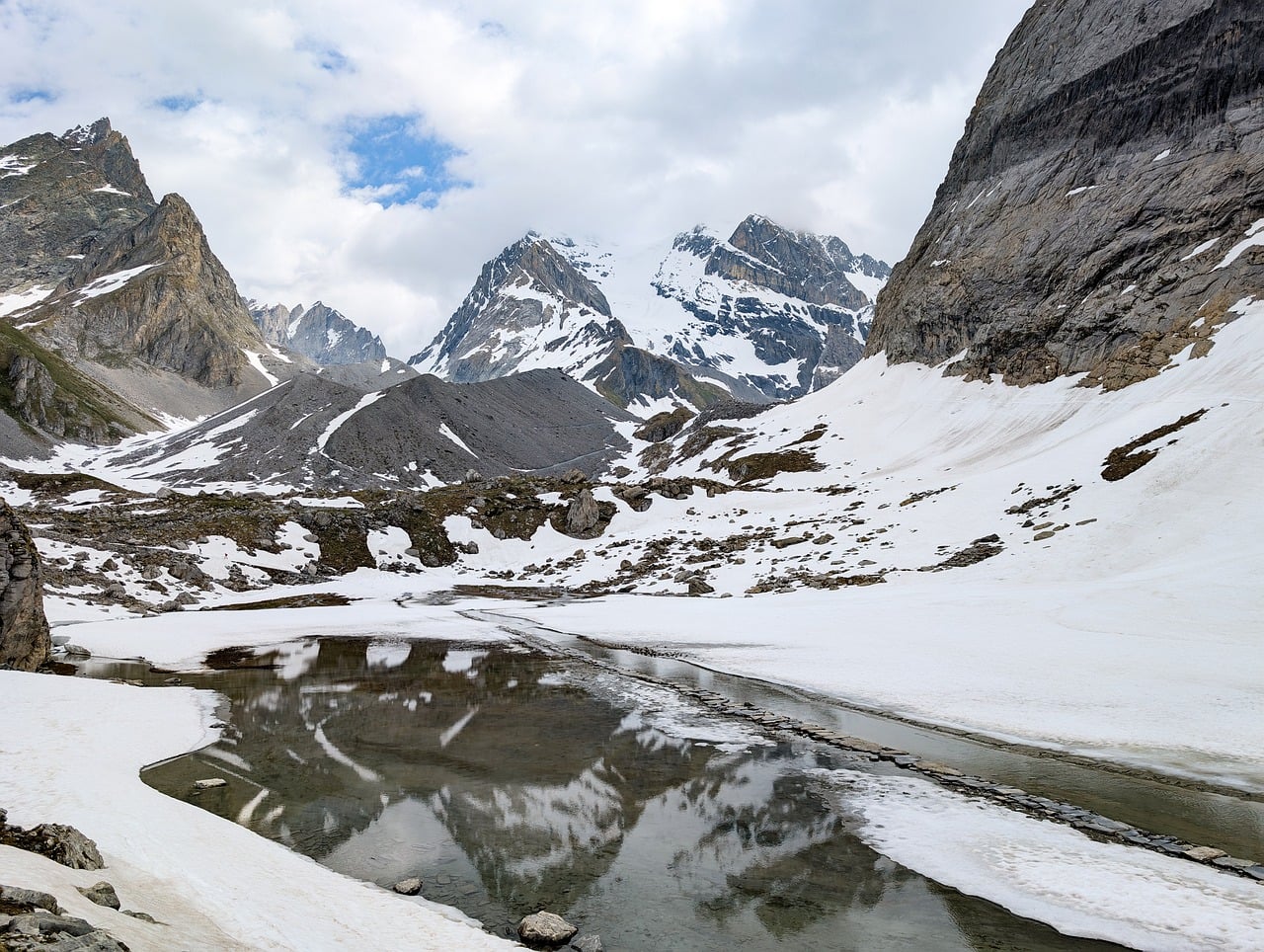
Why it’s iconic: If you’ve seen a photo of Vanoise, it’s probably this: a line of stepping stones across a milky lake beneath the hulking north face of Grande Casse. It’s almost absurdly photogenic, and yes, it’s as magical in person as it looks.
My experience: I’ve walked this path in blazing August sun, in June snow squalls, and once in late September when ice skimmed the lake, making each stone a tiny decision. The first time, I arrived late in the day, just as most hikers were descending. The light turned amber, marmots whistled from the slopes, and the stone path emptied out. I still think about that silence.
Route & difficulty: From Les Fontanettes (above Pralognan), you can take a steeper direct route via the Sentier du Moriond or a more gradual one via Les Barmettes and the famous stone path of Lac des Vaches. Either way, it’s a solid but manageable hike for reasonably fit walkers: about 800–900 m of ascent to Col de la Vanoise (2,518 m). Families with older kids often do it; younger children can manage at least to Lac des Vaches.
Refuge du Col de la Vanoise sits just beyond the lake on a high plateau. Its 2020s renovations mean comfortable dorms and a dining room where I once devoured a massive plate of lentil stew and Beaufort while a storm turned the windows into frosted glass.
What to eat: At Refuge des Barmettes, stop for tarte aux myrtilles (blueberry tart). At the Col de la Vanoise refuge, the soupe du jour is usually hearty and homemade. Bring a picnic of local Beaufort, saucisson, and a baguette from the bakery in Pralognan for a lake-side lunch.
Tips:
- Start early to have Lac des Vaches almost to yourself, especially in July–August.
- In 2026, day-use remains free; overnighting at the refuge requires advance booking in peak season (June–September).
- Weather moves quickly: pack a warm layer even in summer. Fog can make the stone path slippery.
2. Plateau du Vanoise Traverse
Why it’s special: A high, rolling plateau of grass, boulders, and tarns beneath a necklace of glaciers. It feels like walking on the roof of the Alps.
My experience: I first crossed the plateau from Refuge du Col de la Vanoise to Refuge de l’Arpont on a three-day hut trek. The day started in bright sun, turned stormy by midday, and then opened again near Arpont, when a double rainbow arced over the glacier. I arrived at the hut soaked, starved, and absolutely euphoric.
Route: The classic traverse runs between the Col de la Vanoise and Refuge de l’Arpont, continuing perhaps to Refuge de Plan Sec or Refuge d’Entre-Deux-Eaux. It’s part of the longer Tour de la Vanoise. Expect airy views, ibex on rocky slopes, and big sky. There’s little shade; you are truly exposed here.
Difficulty: Long but not technically hard for experienced hikers. Good footing, but weather and altitude (around 2,400–2,700 m) can make it feel demanding. This is superb for a 4 day itinerary for Parc National de la Vanoise with hut nights.
Tips:
- Carry enough water; some streams dry up in late season.
- Plan your day around early-afternoon thunderstorms in July–August—start early, finish early.
- Book huts early for weekends in late July and August; 2026 is expected to be busy again.
3. Refuge de l’Arpont & Glacier Views
Why it’s memorable: Perched on a grassy shelf facing the Glacier de l’Arpont and broader Vanoise icefields, this refuge offers one of the most cinematic hut terraces in the park. At sunset, the glacier blushes pink; at night, the Milky Way carves a path directly over it.
My experience: I spent a night here in 2023, writing in my notebook on the terrace as the last climbers came in, ropes coiled over their shoulders. The hut guardian, who’d been here for years, pointed out the glacier’s retreat lines on the opposite slopes—a sobering but fascinating mini-lesson in climate change.
Getting there: The hut is most often reached via the Plateau du Vanoise from Col de la Vanoise, or from the Maurienne side via Termignon and Refuge du Plan du Lac. Both approaches are full days for average hikers.
What to do:
- Short evening walks from the hut to catch different angles on the glacier.
- Sunrise photography—spectacular in clear weather.
- Relax: this is a hut where you actually want to build in downtime.
Tips:
- Bring earplugs for the dorms (hut life reality).
- Half-board (dinner & breakfast) is excellent value compared with carrying heavy food; in 2026, expect around €55–65 per person for half-board in high season.
- Pack a lightweight sleeping bag liner; blankets are provided.
4. Vallon de Champagny le Haut
Why it’s a favourite: This side valley feels like a lost world: wooden chalets, hay barns, and a wide meadowed floor with a river threading through it. It’s one of the most family-friendly places in the park.
My experience: On a drizzly June day in 2024, I walked the riverside trail while clouds dragged their bellies along the ridges. I saw more cows than people and ended up sharing a bench with a local farmer who explained the difference between Beaufort d’été and Beaufort d’alpage with the seriousness of a sommelier.
Activities:
- Easy riverside walk from Le Bois to Friburge and back.
- Picnic near the river; there are several designated picnic spots.
- Visit the small Maison du Parc information centre for exhibits on local culture and wildlife.
Tips:
- Ideal for day 1 of acclimatization before harder hikes.
- In summer 2026, a small electric shuttle is expected to run from Champagny village to Champagny le Haut—check local schedules.
- Bring a rain jacket: this valley catches sudden showers.
5. Lac de la Plagne & Rosuel (Peisey-Nancroix)
Why it’s special: A long alpine lake framed by steep slopes and waterfalls, reached from the lush Rosuel valley. This is one of the eastern Tarentaise’s jewels and relatively easy to reach.
My experience: I hiked here in late July, when the trail was lined with alpine roses and the air smelled of resin and damp earth. I spent an hour sitting on a boulder at the lake’s edge watching clouds play tag with the peaks.
Route & difficulty: From the Refuge-porte de Rosuel (a gateway hut just outside the strict core zone), a well-marked trail climbs steadily through forest, then meadows, to the lake. Expect a moderate half-day hike suitable for fit families.
Tips:
- Combine with a meal at the Rosuel refuge—excellent homemade cakes.
- Parking can fill on summer weekends; arrive early or use shuttles from Peisey-Nancroix.
- This is a good option in early season (late June) when higher passes may still hold snow.
6. Refuge du Col de la Vanoise (as an Overnight Experience)
Why stay overnight: Day-hikers come for Lac des Vaches; those who stay the night get the plateau to themselves. The atmosphere at dusk and dawn is completely different—ibex wander closer, and the crowds vanish.
My experience: One July, clouds rolled in late afternoon, and the hut felt like a ship in a grey sea. After dinner, everyone stepped outside to see if the sky would clear. It did: the clouds tore open and the Grande Casse appeared, lit by a last blade of sunlight. Spontaneous applause broke out—a surprisingly moving little moment of shared wonder.
What to expect:
- Dorms with bunk beds and blankets (liner required).
- Hearty dinners: soup, main (often meat or veggie gratin), cheese, dessert.
- Breakfast: bread, jam, butter, coffee/tea.
- Limited charging points; bring a battery pack.
Tips:
- Book via the official Vanoise refuge platform; weekends in July–August sell out fast.
- Pack earplugs and a headlamp.
- Respect quiet hours; hut etiquette is a big part of the culture here.
7. Dent Parrachée & Haute-Maurienne Vistas
Why it’s impressive: Dent Parrachée’s sharp tooth dominates the Maurienne side. While the summit is for climbers, hikers can enjoy its flanks and the stunning balcony trails around it.
My experience: I’ve never climbed Dent Parrachée itself, but I’ve looped around its base from Refuge de Plan Sec, watching morning light crawl down its walls. It’s one of those peaks that looks different from every angle, always slightly menacing, always magnetic.
Best hikes in the area:
- Balcony trail between Refuge de Plan Sec, Refuge de la Fournache, and Refuge d’Aussois.
- Day hikes from the dams above Aussois for lake and peak panoramas.
Tips:
- This is a good zone for late-season hiking (September) when some higher passes elsewhere may see early snow.
- Check dam road access; occasional closures for maintenance are announced locally.
8. Plan du Lac & Marmot Country
Why it’s family gold: The Plan du Lac plateau above Termignon is one of the best spots I know for guaranteed marmot sightings and huge views with very little effort. A small road takes you to the parking de Bellecombe, and from there it’s an easy stroll.
My experience: I’ve taken non-hiker friends here as a “soft landing” into the high Alps. Every time, the combination of big views and easy walking wins them over. Once, we watched a golden eagle circle lazily over the plateau while marmots chirped indignantly below.
Activities:
- Short loop walks around the lake and down towards Refuge de Plan du Lac.
- Photography: this is a classic stargazing and sunset spot (more on that later).
Tips:
- Arrive late afternoon for soft light and fewer crowds.
- In 2026, vehicle access may be subject to caps on peak days—check the park website and consider shuttles from Termignon.
9. Refuge d’Entre-Deux-Eaux & High Pastures
Why it’s underrated: Tucked away on a grassy bench, this refuge feels a little more off the beaten track than some of its cousins. It’s a wonderful stop on a longer traverse or a destination in itself from the Maurienne side.
My experience: I ended up here almost by accident after rerouting due to snow on a higher pass in early July. The hut guardian’s dog met us a few hundred meters before the refuge and escorted us in, tail wagging. Dinner felt like a family meal: long table, shared stories, wine passing back and forth.
Tips:
- Perfect for those seeking quieter hut experiences.
- Check opening dates; it tends to open slightly later and close slightly earlier than some bigger huts.
10. High Lakes above Tignes & Val d’Isère
Why go: Despite the somewhat stark look of Tignes’ concrete, the surrounding lakes and basins are gorgeous. Lac de la Sassière, just beyond the park boundary, and nearby basins feel wild and expansive.
My experience: On a windy August day, I walked up to Lac de la Sassière with a storm threatening. The lake was steel grey, waves chopping against the shore like a tiny sea. I tucked into a rocky alcove and ate my sandwich watching the sky turn theatrical.
Tips:
- Use lifts (when running in summer) to gain altitude, then hike into wilder ground.
- Weather can be harsher here; windproof layers are essential.
11. Rosuel Valley & Gateway Trails
Why it matters: Rosuel is one of the official portes (gateways) to the park, with an information centre, refuge, and easy trails that quickly feel remote. It’s a great first taste of Vanoise for those based in the Tarentaise (Les Arcs / Peisey-Nancroix).
My experience: I often stop here when driving between the Tarentaise and other valleys. Even just a two-hour walk up the valley clears my head, especially in shoulder seasons when it’s almost empty.
Tips:
- Combine with Lac de la Plagne for a full day.
- Family-friendly educational trails start from the visitor centre.
12. Vallée de Chavière above Pralognan
Why it’s a gem: South of Pralognan, the Chavière valley stretches up towards the Col de Chavière and the Maurienne side. It’s a long, glacially carved valley with old barns, waterfalls, and a sense of being gently funneled towards the high mountains.
My experience: I once walked up here on a hot August afternoon and ended up napping in the shade of a barn, listening to bees and the distant clunk of cowbells. On another trip, I used the valley as part of a multi-day crossing to the Maurienne, crossing the col with a group of tired but grinning friends.
Tips:
- Accessible out-and-back for those who want distance without technicality.
- The upper col may hold snow into July; check conditions.
13. Refuge de la Glière & Surrounding Meadows
Why it’s lovely: Above Champagny le Haut, this refuge sits in classic Vanoise terrain: wide meadows, tumbling streams, and big cliffs overhead. The approach is not too long and perfect for families or first-time hut visitors.
My experience: I brought my niece here for her first hut night. She was fascinated by the idea of sleeping in a big dorm with strangers and even more fascinated by the enormous cauldrons of pasta in the kitchen. In the morning, marmots whistled us awake.
Tips:
- Book early in school holidays; this is a popular introductory hut.
- Consider it for a gentle one-night detour on a 3 day itinerary for Parc National de la Vanoise with kids.
14. Lac de la Rosière (Courchevel Side)
Why it’s accessible: A jewel-toned lake surrounded by forest and cliffs, easily reached by a short walk from parking above Courchevel. It’s not inside the core park, but it’s part of the broader Vanoise environment and perfect for those staying on the western side.
My experience: I’ve come here with friends who were more into spa days than hiking. Lac de la Rosière was our compromise: a gentle outing with plenty of spots to sit, chat, and admire the water while still feeling like we’d “been in the mountains.”
Tips:
- Come early or late; midday in peak season can feel busy.
- Combine with a picnic of local cheeses from Bozel or Courchevel village.
15. Grande Casse Viewpoints
Why it’s unmissable: Grande Casse is the highest peak in the Vanoise and its granite walls dominate the skyline from many angles. While the summit is for alpinists, there are numerous accessible viewpoints where you feel very much in the presence of a giant.
My experience: My favourite view is from the plateau around Col de la Vanoise, at golden hour. Another is from certain bends on the ascent from Pralognan, where the mountain suddenly fills your peripheral vision like a rising curtain.
Tips:
- If you’re a photographer, plan at least one sunrise or sunset session aimed at Grande Casse.
- Bring a tripod if you care about night shots; the stars over this massif are spectacular on a clear, moonless night.
Suggested Itineraries: 3, 4 & 5 Days in Parc National de la Vanoise (2026)
Below are three tried-and-tested itineraries that work beautifully for first-time visitors. Each blends must-see attractions in Parc National de la Vanoise with quieter corners and local food experiences. I’ve designed them around typical public transport access and realistic daily distances, based on my own trips.
3 Day Itinerary for Parc National de la Vanoise
Day 1 – Arrival in Pralognan & Warm-Up Hike
For a classic 3 days in Parc National de la Vanoise, I always start in Pralognan-la-Vanoise. It has the right balance of amenities and authenticity. On my last 3-day trip, I rolled in on a late-morning bus from Moûtiers, backpack bumping my knees, already smelling pine on the air as we climbed the final switchbacks.
Morning / early afternoon: Check into your accommodation—a small hotel, guesthouse, or campsite. I like staying near the village centre so I can stroll to the bakery at dawn. Drop your bags, lace up your boots, and head for a warm-up hike:
- Les Barmettes & lower valley walk – From Pralognan, follow the trail towards Les Barmettes but don’t feel obliged to go all the way. Even a 1.5–2 hour out-and-back along the river gives you waterfalls, cliffs, and a first taste of Vanoise air.
- Stop at a riverside picnic spot for bread, cheese, and fruit picked up in the village. I often buy a chunk of Beaufort, some saucisson, and whatever fruit looks ripe at the small grocery.
Late afternoon: Wander Pralognan. Visit the little church, check out the Maison du Parc (park visitor centre) for trail conditions and potential closures in 2026 (early snowmelt or rockfall sometimes prompt re-routes).
Dinner: Try Le Grand Bec or another local restaurant for a first taste of local food in Parc National de la Vanoise. Dishes to look for:
- Croziflette – Savoyard pasta baked with cream, onions, and cheese.
- Fondue savoyarde – share between two or three; rich but perfect after a hike.
- Diots au vin blanc – local sausages cooked in white wine.
Personal tip: On my first night of a trip, I always walk a short loop through the village after dinner. The mountains loom darker, and you get a feel for the rhythm of the place—kids on bikes, climbers sorting gear, the smell of woodsmoke from chalets.
Day 2 – Lac des Vaches & Col de la Vanoise (Classic Icon)
This is the day for your signature Vanoise postcard. It’s the centrepiece of many 3 day itineraries for Parc National de la Vanoise.
Morning:
- Breakfast early (or grab pastries from the bakery).
- Drive or take the shuttle up to Les Fontanettes parking (or walk from Pralognan if you want extra elevation).
- Follow signs to Les Barmettes and Lac des Vaches. The path climbs through forest, then opens into meadows.
By late morning, you’ll reach Lac des Vaches. Step carefully along the iconic stone causeway across the lake. Take time to wander a little off the main line of hikers: even moving 50 meters aside can give surprising solitude.
Lunch: Either picnic by the lake or push on to Refuge du Col de la Vanoise and have lunch there. On my last visit, I arrived late enough that they’d nearly finished serving, but they still managed to scrape together a bowl of soup and a slab of cake for me—a very French kind of kindness.
Afternoon:
- Explore the plateau around the refuge; short paths lead to small lakes and even bigger views of Grande Casse.
- Head back mid-afternoon to avoid the worst of the downhill knee-strain in evening fatigue.
Dinner: Back in Pralognan, go lighter: maybe a salad and cheese board rather than full fondue, unless you’re ravenous.
Evening: If skies are clear, consider a short stroll just outside the village lights for simple stargazing. I often walk up towards the sports centre and look back over the darkening valley.
Day 3 – Vallée de Chavière or Champagny le Haut & Departure
Your final day can be tailored to your energy levels and onward travel.
Option 1: Vallée de Chavière (from Pralognan)
- Walk up the Chavière valley on easy paths, turning back when time or legs say so.
- Enjoy waterfalls, barns, and wide valley views.
- Picnic by the river before descending back to the village and catching your bus or car.
Option 2: Champagny le Haut (if you’re heading west)
- Drive via Bozel to Champagny-en-Vanoise and up to Champagny le Haut.
- Wander the valley floor, visit the small park centre, and enjoy a leisurely lunch at a local auberge.
- This is ideal if you’re then driving towards Annecy, Lyon, or Geneva.
Personal note: I like to end a short trip with something gentler. It gives my body a chance to wind down and my mind a moment to digest the experience. If you push hard to the last minute, you’ll arrive home exhausted and slightly dazed instead of pleasantly full of mountains.
4 Day Itinerary for Parc National de la Vanoise
A 4 days in Parc National de la Vanoise trip allows you to add a hut night and a taste of the plateau.
Day 1 – Arrival & Champagny le Haut Warm-Up
Start in Champagny-en-Vanoise. After checking in, drive or shuttle up to Champagny le Haut for mellow valley walks and a first immersion in alpine meadows. Visit the park info centre for detailed weather and trail conditions.
Day 2 – Refuge de la Glière Overnight
Pack light for an overnight hut stay. Hike up to Refuge de la Glière from Champagny le Haut on good trails (3–4 hours with stops). Spend the afternoon exploring nearby meadows or just soaking in the sun on the terrace.
Dinner will be communal and hearty; I remember a particularly good vegetable gratin and a table full of card games after dessert on a 2022 trip.
Day 3 – High Traverse & Transfer to Pralognan
From Glière, either:
- Return via a different path to Champagny le Haut, then drive to Pralognan, or
- If conditions and your fitness allow, coordinate a longer traverse via high paths (with guidance from refuge wardens) and arrange a pickup.
Arrive in Pralognan by late afternoon, check into accommodation, and enjoy a hot shower and clean clothes—always satisfying after a hut night.
Day 4 – Lac des Vaches & Departure
Use your final day for the Lac des Vaches / Col de la Vanoise hike as described in the 3-day itinerary. With hut legs already warmed up, you’ll enjoy it even more.
5 Day Itinerary for Parc National de la Vanoise
With 5 days in Parc National de la Vanoise, you can live the full hut-to-hut rhythm—arguably the best way to experience the park.
Day 1 – Pralognan Arrival & Valley Walk
Same as Day 1 of the 3-day itinerary: settle in, do a gentle walk, get oriented.
Day 2 – Pralognan to Refuge du Col de la Vanoise
Pack for four nights: a liner, change of base layer, light down jacket, rain shell, toiletries, and snacks. Hike via Lac des Vaches to Refuge du Col de la Vanoise and sleep there. This is an unforgettable first hut night high in the park.
Day 3 – Col de la Vanoise to Refuge de l’Arpont (Plateau Traverse)
Spend the day crossing the Plateau du Vanoise to Refuge de l’Arpont. This is one of the most beautiful days I’ve ever walked in the Alps: big skies, glaciated peaks, ibex on distant ridges. Arrive at Arpont, drop your pack, and let yourself just sit and stare at the glacier for a while.
Day 4 – Refuge de l’Arpont to Refuge d’Entre-Deux-Eaux / Plan Sec
Continue your hut-to-hut journey towards the Maurienne side. Depending on your preference and availability, aim for Refuge d’Entre-Deux-Eaux or Refuge de Plan Sec. The day will be long but gives wonderful perspectives on the southern side of the massif.
Day 5 – Descent to Maurienne & Exit
On your final day, descend to the Haute Maurienne (Termignon / Val-Cenis area). If you’ve left a car here or arranged a taxi transfer back to Pralognan or Moûtiers, you’ve essentially stitched together a miniature Tour de la Vanoise. I’ve done this loop twice, once clockwise, once counter-clockwise; both times, it felt like stepping out of a self-contained world back into one with roads and phones and obligations.
Note for 2026: Check in advance about any new reservation systems or capacity limits for popular refuges. Climate-related infrastructure upgrades are ongoing in some huts; schedules are usually announced over winter for the coming summer.
Where to Eat & Local Food in and around Parc National de la Vanoise
The Vanoise isn’t just a hiking destination—it’s a cheese-lover’s pilgrimage. This is the land of Beaufort, Tomme de Savoie, Reblochon, and endless cured meats.
In-Park Refuges & Picnic Spots
Refuges serve simple but filling fare—soups, stews, pasta, local cheeses. A few of my favourites:
- Refuge du Col de la Vanoise – good soups and cakes; generous portions in 2025.
- Refuge de l’Arpont – excellent veggie options when requested in advance.
- Refuge de la Glière – memorable blueberry tart on my last visit.
Picnic areas abound: riverside in Champagny le Haut, around Plan du Lac, and beside smaller lakes. Remember: pack out everything, including organic waste.
Gateway Town Restaurants
Pralognan-la-Vanoise has several restaurants and crêperies; I often rotate between:
- A brasserie for diots and polenta.
- A pizzeria on nights when I can’t face more cheese (yes, it happens).
- A café with outdoor seating for afternoon coffee and pastries.
Champagny-en-Vanoise and Bozel offer smaller but good selections; Bozel in particular has a couple of excellent bakeries where I stock up before multi-day hikes.
Saving Money on Food
- Self-cater breakfast & lunch – buy supplies in Moûtiers, Bourg-Saint-Maurice, or Modane before heading up-valley; village shops are good but pricier.
- Use hut half-board – it’s still cheaper (and lighter) than carrying full food loads for multiple days.
- Picnics – in good weather, a baguette, cheese, and fruit with a view beats most restaurant meals.
Where to Stay: Huts, Hotels, Camping
Mountain Huts (Refuges)
Staying in a refuge is both a cultural experience in Parc National de la Vanoise and a practical strategy. Huts provide:
- Beds with blankets (bring a liner).
- Dinner & breakfast (half-board).
- Drinks & snacks for purchase.
Booking (2026): Most huts require reservations via a central platform or direct websites. Peak July–August weekends sell out quickly.
Hotels & Guesthouses
Pralognan, Champagny, Bozel, Termignon, Val-Cenis all offer a mix of small hotels, B&Bs, and apartments. I tend to favour locally run guesthouses where owners are happy to discuss trail ideas over breakfast.
Camping
Official campsites exist in gateway villages. Inside the core park, wild camping is generally forbidden, but bivouac (simple overnight from dusk to dawn, without a tent left standing during the day) is tolerated in some zones—always check current regulations at visitor centres.
Saving Money on Accommodation
- Travel in June or September when rates drop and huts are less full.
- Mix refuge dorms with a couple of nights in a mid-range hotel.
- Share costs: huts and apartments are cheaper per person with 3–4 travelers.
After-Dark & Quiet Experiences in Parc National de la Vanoise
While the Vanoise doesn’t market itself as an official dark-sky reserve, light pollution is minimal once you step away from resort clusters. Some of my favourite evenings anywhere have been spent outside huts here.
Stargazing
- Plan du Lac – easy road access, big sky; excellent for families.
- Refuge de l’Arpont terrace – one of the great alpine night-sky spots.
- Col de la Vanoise – if the weather is clear, step away from the hut lights and look up.
Ranger Talks & Evening Programs
In summer, park rangers occasionally host evening talks in visitor centres and huts (topics range from ibex to glaciers). Schedules change yearly; check at local centres for 2026 listings.
Sunrise & Sunset Viewpoints
- Grande Casse from Col de la Vanoise – sunrise on the north face is unforgettable.
- Plan du Lac – sunset across the plateau, with marmots making last calls.
- Champagny le Haut – soft evening light on barns and meadows.
Day Trips & Nearby Attractions
Mont-Cenis & the Italian Border
From the Maurienne side, the Mont-Cenis plateau is an easy drive and offers a large turquoise lake, chapels, and big open spaces. Great for a rest day or mixed group.
Annecy
If you’re flying via Geneva or Lyon, a day or two in Annecy (about 2 hours’ drive from Moûtiers) makes a wonderful contrast: lake swims, old town strolls, and restaurants galore.
Tarentaise & Other Ski Resorts
Les Arcs, La Plagne, and Courchevel all offer summer lifts and walking routes. They’re less wild but can be a gentle post-Vanoise decompression zone.
Cultural Etiquette & Local Customs
The Vanoise sits in Savoie, where mountain culture is shaped by farming, transhumance, and a strong sense of community. A few guidelines:
- Greetings: Always say Bonjour or Bonsoir when entering a shop, hut, or small restaurant. On trails, a simple “Bonjour” or “Salut” is common, especially in quieter areas.
- Refuge etiquette: Remove boots at the entrance; keep dorms quiet after about 10 pm; don’t spread gear everywhere; respect seating assignments at dinner.
- Farms & pastures: Close gates behind you; don’t approach livestock; keep dogs on a lead (and note that some pastures with guard dogs are best avoided with pets).
- Tipping: Service is included in France, but leaving small change or rounding up in cafés and huts is appreciated, especially after good service.
- Language: English is widely understood in resort towns but less so in smaller villages. Learning a few French phrases goes a long way.
Locals are generally reserved but warm once a basic level of courtesy is established. I’ve had some of my most interesting mountain conversations in half-French, half-hand gestures over hut breakfast tables.
Practical Logistics & Travel Advice (2026–2027)
Getting There & Around
By train: Major rail gateways are Moûtiers (for Pralognan/Champagny/Bozel) and Modane (for Termignon/Val-Cenis). From there, buses or taxis connect up-valley. In summer 2026, seasonal bus lines are expected to run as usual—check the Altibus or regional Auvergne-Rhône-Alpes sites.
By car: A car offers maximum flexibility, especially for early starts or linking valleys. Mountain roads are well-maintained but winding; allow extra time.
Public Transport vs. Car Rental
- Public transport: Feasible for a 3–4 day trip centered on one base (Pralognan, Champagny, Val-Cenis). Less convenient for multi-valley traverses.
- Car rental: Best from Geneva, Lyon, Chambéry, or Grenoble airports. An International Driving Permit is recommended if your license is non-EU, though many rental agencies accept standard licenses in Roman script.
Entrance Fees & Permits
As of 2026, there is no general entrance fee for Parc National de la Vanoise. However:
- Parking at some trailheads may be paid (especially Plan du Lac / Bellecombe, Rosuel, resort carparks).
- Overnight stays in huts require reservations and payment.
- Organized groups (e.g., large guided tours) may need special permits.
Seasonality & When to Go
- June: Snow lingers on higher passes; valleys explode with wildflowers. Great for lower hikes, but check conditions for anything above ~2,300 m.
- July–August: Prime hiking season; all huts open. Trails and popular lakes are busiest, especially early August. Thunderstorms are common in the afternoons.
- September: My favourite month. Fewer people, stable weather (usually), golden grasses, potentially some early snow up high.
- October–May: Ski season and winter walking; many trails under snow, huts closed or minimal service.
Best for hiking & wildflowers: late June to mid-July. Best for hut-to-hut trekking: mid-July to early September. Best for quieter trails & photography: September.
Weather & Altitude
Most hiking ranges from 1,500–2,700 m. Altitude sickness is uncommon but you’ll feel the thinner air if you go from sea level to a 2,500 m hut in one day—expect a bit more breathlessness on climbs.
Weather shifts quickly. Pack:
- Waterproof jacket & light overtrousers.
- Warm layer (fleece or light down).
- Hat, gloves (even in summer for high passes).
- Sun hat, sunglasses, high-SPF sunscreen.
Wildlife & Safety
The Vanoise doesn’t have bears or wolves in the way some other mountain areas do (though wolves occasionally roam the broader Alps). You’re more likely to encounter:
- Ibex & chamois – keep a respectful distance; don’t try to approach.
- Marmots – cute but don’t feed them.
- Guard dogs (patous) – near flocks. Give them space, walk calmly, and avoid sudden movements; detour if necessary.
Snakes exist but are generally shy; watch where you put your hands when scrambling on warm rocks.
Leave No Trace Basics
- Stay on marked paths to reduce erosion.
- Carry out all waste, including tissues and food scraps.
- Don’t pick wildflowers or disturb wildlife.
- Respect quiet zones and seasonal closures to protect sensitive species.
Connectivity & SIM Cards
Mobile coverage is patchy. Expect reception in villages and at some higher points; valleys and plateaus can be dead zones.
- SIM options (2026): French providers like Orange, SFR, Bouygues, and Free all offer prepaid SIMs. Orange typically has the best rural coverage.
- eSIMs: If your phone supports eSIM, consider an EU-wide data plan for convenience.
- Download offline maps (e.g., Maps.me, Gaia, or IGN maps) before heading out.
Visas & Entry Requirements
France is part of the Schengen Area. For most non-EU visitors:
- Short stays (up to 90 days in 180) are visa-free for many nationalities, but check current rules.
- From 2026, the EU’s ETIAS travel authorization may be required for some visa-exempt travelers—verify before your trip.
Foreign Driver’s License Acceptance
Most car rental agencies accept licenses in Roman script. An International Driving Permit (IDP) is recommended, especially if your license is in a non-Latin alphabet.
Front-Country vs. Backcountry Experiences
Front-country: Day hikes from villages, cable car-assisted walks from Tignes/Val d’Isère, short outings like Plan du Lac or Champagny le Haut. Comfort is close at hand; ideal for families or cautious hikers.
Backcountry: Hut-to-hut traverses across the Plateau du Vanoise and into more remote valleys. You’re committed for the day; weather and navigation matter more. These are the trips that stick with you for years.
What to Pack (Summer Hiking)
- Sturdy hiking boots or trail shoes.
- Layers: base, mid, shell.
- 1–2L water capacity (more on hot days).
- Snacks (nuts, dried fruit, chocolate).
- Map & compass or GPS with offline maps.
- First-aid kit & blister care.
- Lightweight liner (for huts).
- Headlamp.
Events & What’s New in 2026–2027
While the Vanoise itself isn’t a festival-heavy destination (thankfully), the surrounding valleys host events that might shape your plans:
- Fête de la Montagne (Summer 2026): Many alpine villages, including some Vanoise gateways, host mountain-themed weekends with guided hikes, local produce markets, and concerts. Dates vary; check local tourism websites.
- Trail Running Races: Several trail events in Pralognan, Champagny, and Val-Cenis bring in crowds on specific weekends. If you’re not racing, you may want to avoid these dates for quieter trails or, conversely, enjoy the festive atmosphere.
- Refuge Renovations: A few huts are undergoing phased eco-upgrades (water treatment, solar). Short closures or reduced capacity may occur in spring/autumn shoulder seasons of 2026–2027; always verify when planning hut-to-hut trips.
Check the official Parc National de la Vanoise and local tourist office websites in early 2026 for exact dates and any new regulations (e.g., potential experimental day-use caps at popular sites on peak days).
Summary & Final Recommendations
Parc National de la Vanoise is the kind of place that quietly rearranges your sense of scale. Peaks and glaciers dominate the skyline, but it’s the smaller details that linger: the taste of Beaufort after a long climb, the way marmots pop up like sentries along a path, the hush that falls over a hut when the last light leaves the plateau.
For most travelers, I recommend:
- 3 days if you want a concentrated taste: base in Pralognan, hike to Lac des Vaches, add a second valley (Champagny or Chavière).
- 4 days if you can fit in at least one hut night—a transformative experience.
- 5 days or more if you dream of a true hut-to-hut traverse across the Plateau du Vanoise and into the Maurienne.
Best seasons:
- Late June–mid July for wildflowers, water-rich waterfalls, and slightly fewer crowds (watch for residual snow).
- Mid July–late August for guaranteed hut openings and big mountain energy (book early, start hikes early to dodge storms and crowds).
- September for golden light, calmer trails, and a sense that the mountains are exhaling after summer.
If you plan carefully, respect the mountain environment, and give yourself time to linger—on hut terraces, beside lakes, in quiet valleys—the Vanoise will reward you with some of the richest alpine days you can have in Europe. It’s not just a checklist of things to do in Parc National de la Vanoise; it’s a place to inhabit for a while, to walk slowly through, and to remember long after you’ve gone back down to the valleys.