Why Visit Perpignan?
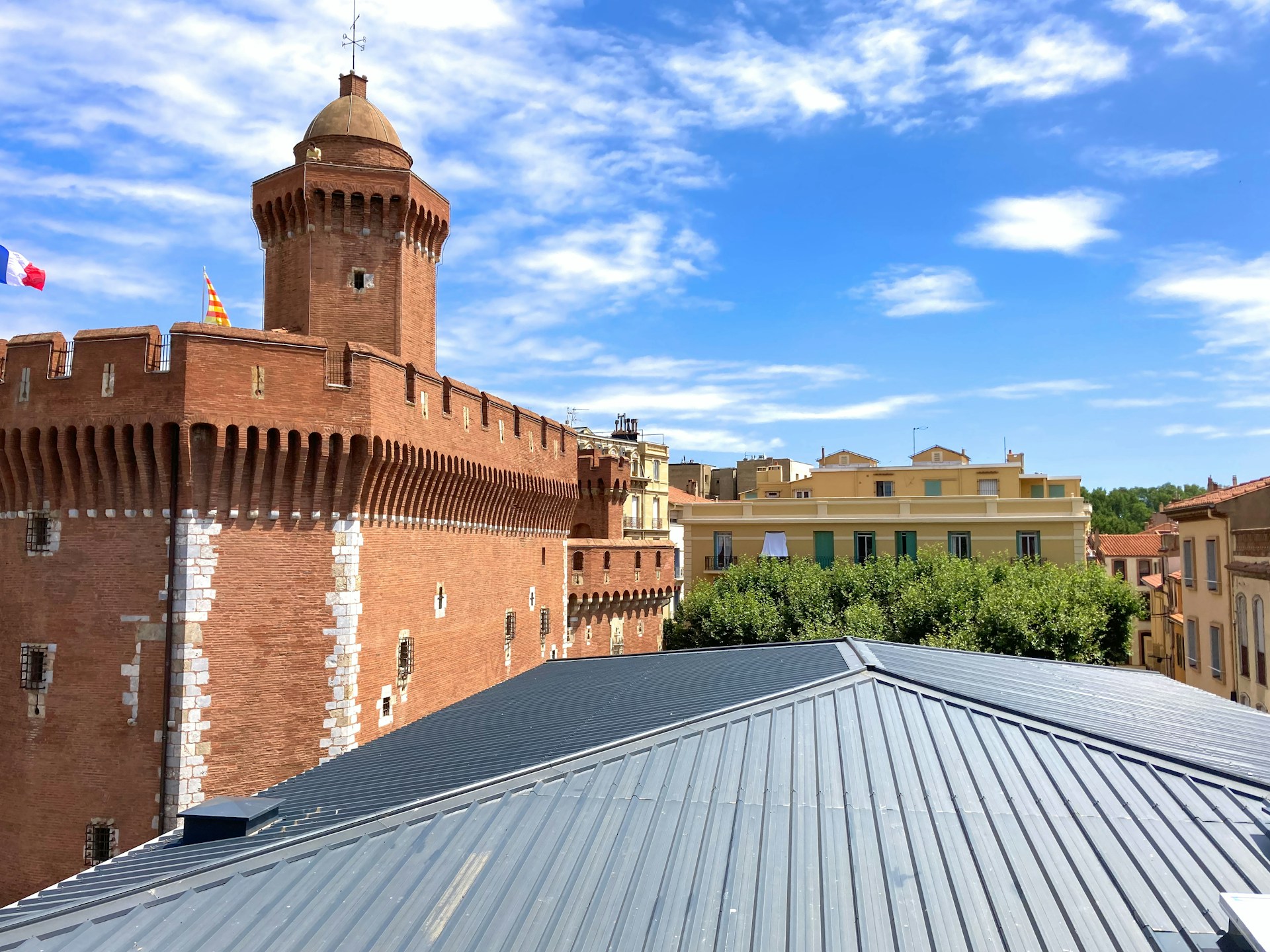
Perpignan is the kind of place that sneaks up on you. On a map, it’s a small city tucked into the very bottom of France, brushing the Pyrenees and almost touching Spain. In person, it’s a sun-drenched, orange-and-ochre city where French and Catalan cultures blend in the streets, where tapas bars sit next to boulangeries, and where the Mediterranean light makes everything feel like a movie you’ve somehow wandered into.
I’ve been coming to Perpignan for over a decade now—first as a backpacker chasing cheap flights and sunshine, later as a travel writer, and lately just because I can’t stay away. It’s where I learned to drink muscat de Rivesaltes properly chilled, where I first realised that bullfighting posters could be considered art, and where “just a quick coffee” at a terrace inevitably turns into a long, lazy afternoon of people-watching.
Perpignan is perfect if you want a genuine, less touristy South of France experience with enough things to do for 3–5 days, plus easy day trips to beaches, mountains, and medieval villages. It’s big enough to feel alive, small enough that you can walk almost everywhere, and compact enough that you’ll start recognizing faces after a couple of days.
Use this 2026 travel guide for Perpignan as your deep dive into the city: a mix of personal stories, detailed itineraries, hidden gems, and practical travel advice. Whether you have 3 days in Perpignan or a full 5 day itinerary, you’ll find ideas here to fill every moment—without feeling rushed.
Table of Contents
- Why Visit Perpignan?
- Perpignan at a Glance (2026 Overview)
- Neighborhoods & Areas to Explore
- 20+ Must-See Attractions in Perpignan
- Suggested 3, 4 & 5 Day Itineraries for Perpignan
- Local Food in Perpignan: What & Where to Eat
- Nightlife, Entertainment & Cultural Experiences
- Best Day Trips from Perpignan
- Cultural Etiquette & Local Customs in Perpignan
- Practical Travel Tips for Perpignan (2026–2027)
- Summary & Best Time to Visit Perpignan
Perpignan at a Glance (2026 Overview)
Perpignan is the capital of the Pyrénées-Orientales department, often branded now as “Pyrénées-Méditerranée.” It’s the historical capital of the Kingdom of Majorca and today the unofficial capital of French Catalonia. You’ll hear French and Catalan on the streets, see red-and-yellow striped flags everywhere, and taste Spanish influences in almost every dish.
In 2026, the city is leaning even harder into its cross-border identity. There’s a renewed focus on cultural festivals, sustainable travel, and improving connections to nearby beaches and mountain towns. The TGV (high-speed train) still gets you from Paris to Perpignan in about 5 hours, and there are frequent trains and buses to Barcelona, Collioure, and other coastal gems.
Major Events & What’s New in 2026–2027
- Visa Pour l’Image 2026 (International Photojournalism Festival) – Late August to early September. Exhibitions across the city, including the Couvent des Minimes and Campo Santo. If you’re here then, book accommodation early.
- Festival de Perpignan Off – Parallel photo exhibitions in smaller galleries and bars; fantastic for discovering local artists.
- Sant Jordi & Catalan Cultural Events (April 2026–2027) – Book and rose festival with markets and readings, increasingly ambitious each year.
- Jazzèbre Festival – Late September to October; jazz concerts in Perpignan and nearby villages.
- Urban Revitalization Projects – Ongoing improvements around the Gare district and along the Têt riverfront; expect more pedestrian-friendly zones and bike lanes.
Neighborhoods & Areas to Explore
Perpignan is small but surprisingly diverse. Each neighborhood has its own personality, and walking between them is one of my favorite “free” things to do in Perpignan.
Centre Historique (Old Town)
This is the heart of Perpignan: narrow medieval streets, painted shutters, arcaded squares, and the red-brick bulk of the Castillet watching over it all. I always recommend staying here on a first visit—you can walk to nearly all the must-see attractions in Perpignan.
- Best for: First-time visitors, café culture, history lovers, evening strolls.
- Highlights: Castillet, Place de la Loge, Palais des Rois de Majorque, Rue Paratilla (spice and produce alley).
- Vibe: Lively during the day, pleasantly buzzy but not wild at night.
Quartier Saint-Jean
Centered around the Cathédrale Saint-Jean-Baptiste, this area feels almost like a village within the city. On Sunday mornings, when the bells ring and locals trickle in and out of mass, it can feel like you’ve stepped into another era.
- Best for: Architecture, quiet evenings, families.
- Highlights: Cathedral, Campo Santo, small artisan shops and galleries.
Quartier de la Gare (Railway District)
This is where you arrive if you come by train. It’s a bit grittier, more local, and famously associated with Salvador Dalí, who declared Perpignan’s station the “Centre of the Universe.” Over the years, I’ve come to appreciate this district’s slightly chaotic charm, especially its street markets.
- Best for: Budget stays, street photography, easy transport connections.
- Highlights: Dalí mosaic at the station, Saturday markets, cheap cafés.
Quartier Saint-Mathieu & Saint-Jacques
A historically working-class, multicultural area with a large Gitan (Roma) community, this part of Perpignan is raw, colorful, and controversial. Some parts feel run-down, but there’s incredible energy, especially around religious festivals and local celebrations.
- Best for: Adventurous explorers, street life, social photography (discreetly).
- Highlights: Church of Saint-Jacques, viewpoints over the city, traditional music on some evenings.
Les Allées Maillol & La Méditerranée
Modern Perpignan: broad boulevards, newer apartment blocks, shopping centers, and a more contemporary feel. I come here mainly for specific restaurants or events at the Palais des Congrès, but it’s also where many locals live their everyday lives.
- Best for: Shopping, local life, business travelers.
- Highlights: Théâtre de l’Archipel (a striking modern building), cinemas, larger hotels.
20+ Must-See Attractions in Perpignan (With Local Insights)
These are the best places to visit in Perpignan, ordered roughly from the most iconic to more hidden gems. I’ve included personal notes and practical tips drawn from multiple visits—morning, noon, and night, and in all seasons.
1. Le Castillet
Le Castillet is Perpignan’s postcard child: a red-brick, fortified gate that once formed part of the city walls. Every time I exit Rue des Marchands and see it framed by café terraces, I’m reminded why I fell for this city in the first place.
Why go: It’s the symbol of Perpignan and offers one of the best panoramic views over the old town and out to the Canigou mountain.
What to do: Climb the narrow spiral staircase to the top. The steps are a bit steep and uneven, so wear decent shoes. The small museum inside (often about Catalan history and local identity) is worth a quick lap, but the real reward is the rooftop terrace.
My tip: Aim for late afternoon on a clear day. I went up once in winter just before sunset and watched the sky turn pink behind the snow-dusted Canigou; it was one of those unexpectedly perfect travel moments.
Good for: Families (kids love the “castle”), couples, first-time visitors. Not ideal for those with mobility issues due to stairs.
How to get there: You literally can’t miss it—situated at the edge of the historic center, 10–12 minutes’ walk from the train station.
2. Palais des Rois de Majorque (Palace of the Kings of Majorca)
This 13th-century palace-fortress dominates a hill above the city and offers the most sweeping view over Perpignan and its surroundings. The first time I climbed up there, I remember thinking, “How is this not world-famous?”
History in a nutshell: Built when Perpignan was the continental capital of the Kingdom of Majorca, the palace blends Gothic architecture with Mediterranean influences. It later became a military fortress, which is why it feels both royal and austere.
What to do: Wander through the courtyards, chapel, and former royal apartments. The palace is often quiet, especially in the morning, so you can really linger and imagine the life that played out here centuries ago. The ramparts walk is a must.
My experience: I love coming here on slightly overcast days—the stone looks dramatic, and the views are still incredible. Once, during a summer evening concert, I sat in the courtyard as music bounced off the walls and the sky slowly darkened. If your trip coincides with an event here, don’t miss it.
Practical tips:
- Wear a hat and bring water in summer—there’s little shade in the courtyards.
- Check opening hours; they can vary by season and on public holidays.
- It’s a short but fairly steep walk from the center; allow 15–20 minutes at an easy pace.
3. Cathédrale Saint-Jean-Baptiste & Campo Santo
The cathedral is Perpignan’s spiritual heart, and even if you’re usually “churched out” when traveling in France, this one is worth your time. The attached Campo Santo (a cloistered cemetery) is one of the most atmospheric spots in the city.
Inside the cathedral: Step in from the bright Mediterranean light, and your eyes take a moment to adjust. The massive single nave and Catalan Gothic style give it a solid, grounded feel. I like to sit for a few minutes in the dim light, especially on hot afternoons, and just let the quiet settle.
Campo Santo: Through an unobtrusive gate next door, the Campo Santo opens like a stone amphitheater of memory. White marble tombs, arcades, and an occasional cat lounging in the sun. During festivals, it transforms into a concert or event space.
My tip: Come in the late morning, then have coffee at one of the nearby cafés. On Sundays, the area feels especially alive with families and older locals.
Good for: Architecture lovers, photographers, anyone needing a quiet pause.
4. Place de la Loge & Hôtel de Ville
Perpignan’s most elegant square, framed by arcades, stone facades, and the Loge de Mer (former maritime exchange), now attached to the town hall. I joke that if you sit here long enough, you’ll eventually see everyone in Perpignan walk by.
What to do: Grab a terrace table, order a coffee, glass of rosé, or panaché (beer with lemonade), and watch life unfold. This is also a good orientation point for exploring nearby lanes.
My experience: I’ve written entire articles from these café tables, pausing to note how the light moves around the square. In the evening, the buildings glow warmly, and the square takes on a slightly theatrical feel.
Tip: Prices are a bit higher here than in side streets, but you’re paying for the view and ambiance. For budget-friendly drinks, wander 2–3 streets away.
5. Loge de Mer & Hôtel de Ville (Town Hall)
The Loge de Mer is a gorgeous late-Gothic building that housed the maritime and commercial court. Attached to it is the Hôtel de Ville, where you’ll find an unexpected artistic treasure: Aristide Maillol’s sculpture “La Méditerranée.”
Why it matters: Together, these buildings tell the story of Perpignan as a once-thriving Mediterranean trading hub. They symbolize the city’s former importance and current pride.
My tip: Pop into the town hall courtyard during opening hours to see Maillol’s sculpture up close. It’s free and usually quiet.
6. Rue Paratilla Market Street
Rue Paratilla is my favorite street in Perpignan. It’s short, narrow, and absolutely crammed with stalls and tiny shops selling spices, olives, dried fruits, cheeses, and more. The air smells like cumin, oranges, and cured ham all at once.
What to do:
- Buy a small cone of olives or nuts to snack on while you wander.
- Pick up local cheeses (ask for roussillon specialties) and dried figs for a DIY picnic.
- Just observe the hustle—this is where you feel the Mediterranean soul of the city.
My experience: I rarely leave Rue Paratilla empty-handed. One time, a vendor insisted I try a new batch of sun-dried tomatoes; we ended up discussing olive varieties for 20 minutes in a messy mix of French, Spanish, and gestures.
Tip: Best in the morning. By late afternoon some stalls start to close or look picked over.
7. Musée d’Art Hyacinthe Rigaud
Perpignan’s main art museum, recently renovated, is a gem. It combines classical works (including those of portraitist Hyacinthe Rigaud) with modern and contemporary pieces, and often hosts excellent temporary exhibitions.
Why go: It’s the best place in the city to get your cultural fix indoors, especially if you hit a rainy day (rare but possible) or need a break from the heat.
My experience: I stumbled into a temporary Dalí exhibit here once, expecting a quick browse and staying nearly two hours. The layout encourages slow wandering, and the building itself, with its courtyards and staircases, is beautiful.
Tip: Check what’s on during Visa Pour l’Image; they often coordinate exhibitions with the festival.
8. Théâtre de l’Archipel
This striking modern building along the riverfront looks almost like a cultural spaceship. Designed by Jean Nouvel, it’s Perpignan’s main performing arts venue and a symbol of the city’s contemporary side.
What to do:
- Catch a performance (theater, dance, music, or opera—check the 2026–2027 program online).
- Even if you don’t see a show, walk by at dusk to admire the architecture and lighting.
My tip: I like to combine a show here with dinner at a nearby restaurant. The area feels very local in the evenings, with students and families heading home or out.
9. Casa Xanxo
Casa Xanxo is a beautifully preserved 16th-century merchant’s house in the old town, offering a glimpse into the life of a wealthy Perpignanais during the Renaissance.
Highlights: The carved stone facade, Gothic details, interior rooms with exhibits on local history, and occasional small-scale art displays.
My experience: It’s one of those places you might walk past without noticing. The first time I visited, I realized how much of Perpignan’s history is tucked behind unassuming doors.
Tip: Combine with a walk through the nearby lanes; look up often—there are beautiful hidden architectural details everywhere.
10. Campo Santo (More Than a Cemetery)
While technically part of the cathedral complex, the Campo Santo deserves its own mention because of how it transforms during events. In summer, I’ve watched films projected on its walls and sat through concerts under the stars here.
Good for: Quiet reflection by day, magical settings for events by night.
Tip: Check local listings for what’s on; the atmosphere is different every time.
11. River Têt Walks & Bridges
The River Têt slices past Perpignan, and while it’s not the most dramatic river in Europe, its banks and bridges give you refreshing vistas and quiet walking paths.
What to do: Stroll along the riverfront near the Théâtre de l’Archipel, cross the bridges, and enjoy an alternative “skyline” view of the city, especially at golden hour.
My experience: When I’ve had writing deadlines in Perpignan, I’d take short river walks to clear my head. It’s amazingly easy to find calm just a few minutes from the historic center.
12. Église Saint-Jacques & Saint-Jacques Neighborhood
The Church of Saint-Jacques sits above a tangle of streets in one of Perpignan’s most characterful neighborhoods. The area has seen social challenges, but it retains a powerful sense of community and identity.
Why go: For a raw, real slice of Perpignan and some of the best city views from nearby vantage points.
My tip: Go during the day. Be respectful—this is a living neighborhood, not a museum. Avoid intrusive photography, especially of residents.
13. Place de la République
Another lively square, more relaxed and local than Place de la Loge, with plenty of cafés and regular events, markets, and occasional performances.
My experience: I love late-morning coffees here, watching older men discuss politics over noisettes and kids chase pigeons around the fountain.
Tip: Good place to refuel during a day of sightseeing—there are some reasonably priced lunch options.
14. Promenade Along Boulevard Wilson & Castillet Area
The stretch around the Castillet and Boulevard Wilson is perfect for an evening promenade. Locals stroll, kids ride scooters, and street performers sometimes appear in summer.
My tip: Walk this area both by day and by night; the atmosphere changes completely with the lighting.
15. Couvent des Minimes
A former convent turned exhibition space, often used during the Visa Pour l’Image festival and other cultural events. The cloistered architecture pairs beautifully with modern photography and art.
Why go: For the interplay of old stones and contemporary exhibitions. Even when empty, the space has a serene, timeless feel.
16. Chapelle des Dominicains
This former Dominican chapel is another atmospheric venue used for exhibitions and sometimes concerts. High ceilings, Gothic arches, and a sense of quiet grandeur.
Tip: Check if there’s a temporary exhibition; they’re often excellent and rarely crowded.
17. Perpignan Train Station & Dalí Connection
Dalí once proclaimed Perpignan’s train station to be the “Centre of the Universe” after a mystical experience here. The station has leaned into this, with a Dalí-inspired mosaic and signage.
Why go: If you’re arriving by train, you’re here anyway. Take a moment to look around and appreciate the surrealist touch in an otherwise ordinary station.
My experience: It’s a fun, quirky detail to mention later when you tell people about your trip. I always smile when I see the mosaic; it’s like Dalí giving you a sideways wink.
18. Canigou Viewpoints Around the City
Mont Canigou, sacred mountain of the Catalans, often appears on the horizon like a painting. On clear days, especially in winter and spring, its snow-capped peak is visible from many spots in Perpignan.
Best viewpoints:
- Top of the Castillet
- Palais des Rois de Majorque ramparts
- Higher points in Saint-Jacques neighborhood
My tip: If you’re a photographer, plan at least one sunrise or sunset session focused on capturing Canigou with the city in the foreground.
19. Covered Markets & Local Food Halls
Perpignan has several markets and smaller food halls where you can sample local produce, cheeses, charcuterie, and Catalan specialties.
What to do:
- Pick up picnic supplies: goat cheese, local saucisson, olives, and fruit.
- Chat with stall owners about seasonal specialties—artichokes in spring, ripe tomatoes and peaches in summer.
My tip: Markets are often best early in the morning; by midday, they’re buzzing and can feel overwhelming if you’re not a crowd person.
20. Street Art & Murals
In the last few years, more and more murals and street art pieces have appeared around Perpignan, especially in less touristy neighborhoods.
Where to look: Around the train station, small side streets off Boulevard Wilson, and parts of Saint-Jacques and Saint-Mathieu.
My experience: I love pairing a “serious” cultural visit (like the art museum) with an informal street art hunt to balance the day.
3, 4 & 5 Day Itineraries for Perpignan (With Personal Stories)
Whether you’re planning a 3 day itinerary for Perpignan or stretching your stay to 4 or 5 days, you can easily fill your time without rushing. Below are flexible itineraries based on how I actually structure my own visits. Adjust them to your pace and interests.
3 Day Itinerary for Perpignan (3 Days in Perpignan)
This plan is ideal for a first visit: a mix of must-see attractions in Perpignan, food, and relaxed wandering.
Day 1: Historic Heart & City Icons
I like to start my first day in Perpignan early, especially in summer when the light is soft and the streets are quiet.
Morning:
- Breakfast at a café near Place de la République. Order a croissant or chocolatine and a café crème. Sit outside if it’s warm.
- Walk to Le Castillet. Climb to the top (aim to be one of the first up there to avoid crowds). Spend time taking in the 360° view and spotting landmarks you’ll visit later.
- From the Castillet, wander along Boulevard Wilson and back into the old town, letting yourself drift through narrow lanes.
Late Morning to Lunch:
- Head to Rue Paratilla. Pick up olives, dried fruits, and maybe a chunk of cheese.
- Grab a simple lunch at a nearby brasserie—try something with anchovies de Collioure or local charcuterie.
Afternoon:
- Visit the Cathédrale Saint-Jean-Baptiste and Campo Santo. Take your time inside; the cool air will feel amazing if it’s hot out.
- Stop at Place de la Loge for a drink. I often bring a notebook and jot down impressions here.
- Optional: Visit Casa Xanxo for a compact dose of history.
Evening:
- Dinner in the old town—look for a place serving boles de picolat (Catalan meatballs) or seiche à la plancha (grilled cuttlefish).
- Stroll around the Castillet area at night. The lighting makes it feel like a movie set.
Day 2: Palace, Art & Riverfront
Morning:
- Walk up to the Palais des Rois de Majorque. Take your time exploring the courtyards and ramparts. I like to sit on a wall for a while, just absorbing the view.
- On the way back down, stop in small side streets for photos and maybe a coffee at a quieter café.
Lunch:
- Find a bistro between the palace and the center. Look for daily specials (plat du jour)—they’re usually good value and very local.
Afternoon:
- Visit the Musée d’Art Hyacinthe Rigaud. Allocate at least 1.5–2 hours.
- Walk toward the Théâtre de l’Archipel and the Têt river. Cross a couple of bridges for different views.
Evening:
- If there’s a performance at the Théâtre de l’Archipel that interests you, book tickets in advance and plan dinner nearby.
- Otherwise, head back to the center for tapas at a Catalan-style bar—perfect for a relaxed night.
Day 3: Markets, Local Life & Hidden Corners
Morning:
- Start at a local market hall or open-air market (depending on the day of the week). Buy fruit for breakfast; peaches and apricots in summer are incredible.
- Take a gentle walk through Saint-Jacques or Saint-Mathieu, staying mindful and respectful.
Afternoon:
- Use this as a “free” afternoon. Revisit your favorite spot, or check out any museum, chapel, or exhibition you missed.
- Consider a street art wander near the Gare district.
Evening:
- Final dinner in the old town—go for something you haven’t tried yet, like pa d’ous (Catalan-style French toast) for dessert.
- Finish with a slow walk through the illuminated streets. This is when I always start planning my next trip back.
4 Day Itinerary for Perpignan (4 Days in Perpignan)
With 4 days in Perpignan, you can follow the 3 day itinerary above and add either a half-day adventure or a deeper cultural dive.
Day 4 Option A: Beach Escape (Half or Full Day)
Morning & Afternoon:
- Take a bus or drive to Canet-en-Roussillon (about 15–20 minutes). Long sandy beach, family-friendly, with plenty of cafés and ice cream stands.
- Walk the promenade, swim, and relax. In summer, rent a sunbed and umbrella if you want comfort.
- Have a seaside lunch—grilled fish, mussels, or a simple salade niçoise.
Evening:
- Return to Perpignan by late afternoon.
- Casual dinner in the center; you’ll probably be pleasantly tired from the sun and sea.
Day 4 Option B: Deeper Cultural Day
If beaches aren’t your thing, stay in Perpignan and focus on culture.
Ideas:
- Visit additional churches and chapels (Saint-Jacques, Chapelle des Dominicains).
- Spend extra time at the art museum or catch a temporary exhibition.
- Join a guided walking tour with a local (in 2026, more small-group tours are operating, often bilingual French/English).
- Take a Catalan cooking class if available—ask at the tourist office or look online.
5 Day Itinerary for Perpignan (5 Days in Perpignan)
A 5 day itinerary for Perpignan is ideal if you like to mix city time with day trips. Here’s how I’d structure it.
Days 1–3: Follow the 3 Day Itinerary Above
This covers the core sights and experiences within Perpignan itself.
Day 4: Collioure Day Trip (Romantic & Family Friendly)
Why Collioure: This colorful seaside town is one of the most beautiful in the region, with a small bay, a royal castle, and Fauvist art history (Matisse and Derain painted here). It’s my go-to recommendation for a romantic day.
How to get there:
- Train from Perpignan to Collioure: about 30 minutes.
- In summer, consider arriving early to avoid crowds; the town is popular.
What to do:
- Walk the harborfront and climb up to the Château Royal.
- Swim in the bay or lounge on the pebbly beach.
- Visit some of the small art galleries and follow the Fauvism trail markers.
- Have lunch at a seaside restaurant; anchovies from Collioure are famous.
Evening:
- Return to Perpignan by early evening.
- Light dinner or tapas—after a seaside feast, you might not be very hungry.
Day 5: Mountains or Wine Country
For your fifth day, choose between mountain scenery and wine tasting.
Option A: Mountain Villages & Canigou Foothills
- Head toward Prades or other villages at the foot of Canigou.
- Enjoy short hikes, village strolls, and views back toward the plains.
- Best with a rental car, though some buses exist (check schedules carefully).
Option B: Wine Country (Rivesaltes, Banyuls, etc.)
- Visit wineries around Rivesaltes (for sweet fortified wines) or toward the coast for Banyuls and Collioure AOC wines.
- Book tastings in advance where possible, especially in high season.
- Don’t drink and drive; if you’re tasting widely, go with a tour or designated driver.
My experience: I’ve done both, and honestly, they’re equally rewarding; it depends if you’re more into hiking and scenery or food and wine.
Local Food in Perpignan: What & Where to Eat
Perpignan’s food scene is a delicious fusion of French and Catalan influences, with a big emphasis on fresh produce, seafood, and hearty, family-style dishes. Over various trips, I’ve developed some go-to favorites that I end up ordering again and again.
Must-Try Dishes & Drinks
- Boles de picolat: Catalan meatballs in a rich tomato and olive sauce, often served with white beans. Comfort food at its best.
- Brandade de morue: Creamy salt cod dish, usually served as a spread with bread.
- Escalivada: Roasted peppers, eggplant, and onions, marinated in olive oil—a simple but wonderful starter.
- Grilled cuttlefish or squid (seiche à la plancha): Often served with garlic and parsley.
- Anchovies de Collioure: Salty, flavorful anchovies from nearby Collioure, appearing on salads, toasts, and pizzas.
- Crème catalane: The Catalan cousin of crème brûlée, usually lighter and scented with citrus and cinnamon.
- Rousquilles: Soft, ring-shaped biscuits with a lemony icing; perfect with coffee.
- Muscat de Rivesaltes: A sweet fortified wine made nearby; try it as an aperitif or dessert wine.
Where to Eat: Personal Favorites
I won’t list every restaurant in Perpignan (they change too often), but here’s the kind of places I seek out and the experiences I’ve had.
Traditional Catalan Bistros
Look for small bistros in the old town with chalkboard menus and a mix of French and Catalan dishes. I’ve had some of my most memorable meals in places where the owner also serves and occasionally stops to chat.
What to look for:
- Menu du jour with seasonal ingredients.
- Local wines by the glass (ask for suggestions from Roussillon AOCs).
- Dishes labeled “catalan” or “à la catalane.”
Tapas & Wine Bars
Given Perpignan’s proximity to Spain, tapas bars are everywhere. They range from simple counters with a few classics to more creative spots with fusion dishes.
My usual order: A mix of patatas bravas, grilled octopus, local charcuterie, cheese, and a glass (or carafe) of red from nearby vineyards.
Cafés & Bakeries
For breakfast or afternoon breaks, I rely heavily on bakeries and cafés around Place de la République and Place de la Loge.
Try:
- Fresh croissants or pain au chocolat in the morning.
- Rousquilles and coffee mid-afternoon.
- Occasional café gourmand (coffee served with mini desserts) if you can’t choose just one sweet.
Saving Money on Food
Perpignan is generally more affordable than bigger French cities, but you can still overspend if you only eat in the main squares.
- Lunch deals: Look for formule midi or menu du jour—set menus at lunchtime that are often excellent value.
- Picnics: Buy supplies at Rue Paratilla or a market, then picnic near the river or in a quiet square.
- Avoid tourist traps: If a menu is in six languages and someone is aggressively trying to pull you in, walk a street or two away for better options.
Nightlife, Entertainment & Cultural Experiences in Perpignan
Perpignan’s nightlife is more relaxed than party-centric. Think wine bars, terrace cafés, and cultural events rather than thumping clubs. That said, students and younger locals keep things lively, especially on weekends.
Evenings in the Old Town
I love early evening in Perpignan: the light softens, shutters open to let in a breeze, and terraces begin to fill. A typical night for me is a lingering dinner followed by drinks at a wine bar.
Live Music & Festivals
- Jazzèbre Festival (Autumn): Jazz and world music concerts across the city and surrounding region.
- Summer Concerts at the Palais des Rois de Majorque: Check listings; the atmosphere is fantastic.
- Local bars: Some host live music on weekends—ask locally or check posters around town.
Family-Friendly Evenings
- Early dinners on terraces (kids are welcome in most places).
- Evening walks around the Castillet and riverfront.
- Occasional outdoor movie screenings or street performances in summer.
Romantic Experiences
- Sunset views from the palace or Castillet followed by dinner.
- Day trip to Collioure for a seaside dinner and return to Perpignan.
- Quiet strolls through the old town’s backstreets after dark.
Best Day Trips from Perpignan
One of Perpignan’s biggest advantages is how close it is to both the Mediterranean and the Pyrenees. Even with just 4 days in Perpignan, you can fit in at least one of these excursions.
Collioure
I’ve already mentioned Collioure in the 5 day itinerary, but it deserves its own highlight. It’s compact, walkable, and extremely photogenic.
Canet-en-Roussillon
The easiest beach escape from Perpignan—wide sandy beaches, lots of facilities, and kid-friendly.
Banyuls-sur-Mer & Côte Vermeille
Further along the rocky coast, with terraced vineyards tumbling down to the sea. Great for hiking, wine, and quieter coves.
Prades & Canigou Foothills
A gateway to the mountains, with traditional villages and cooler air in summer.
Rivesaltes & Wine Country
Perfect for wine lovers—fortified Muscat and other Roussillon wines.
Practical Tips for Day Trips
- Transport: Trains and regional buses cover most major spots. For smaller villages or more flexibility, rent a car.
- Timing: In summer, start early to avoid heat and crowds.
- Food: In small villages, restaurants may close mid-afternoon; plan meals accordingly.
Cultural Etiquette & Local Customs in Perpignan
Perpignan is both French and Catalan, and locals are proud of this dual identity. A bit of cultural awareness goes a long way.
Language
- French is the main language; Catalan is also present in signage and conversation.
- Learning a few basic phrases in French (bonjour, s’il vous plaît, merci) is appreciated.
- English is spoken in some hotels and restaurants, but not everywhere; be patient and use gestures or translation apps if needed.
Greetings & Politeness
- Always start interactions with bonjour (daytime) or bonsoir (evening).
- Say au revoir when leaving a shop or café; it’s considered polite.
- Wait to be seated in restaurants; don’t just grab a table inside without checking.
Mealtimes & Dining Customs
- Lunch is typically 12:00–14:00; dinner from around 19:30–21:30.
- It’s normal to linger over meals; you won’t be rushed out.
- Tap water (carafe d’eau) is free; ask for it if you don’t want bottled water.
Catalan Identity
- Red-and-yellow Catalan flags and symbols are common; they reflect regional pride.
- Some locals identify strongly as Catalan; others as French; many as both. It’s generally fine to ask polite questions about culture, but avoid heavy political debates unless the other person initiates.
Photography
- In more sensitive neighborhoods (like parts of Saint-Jacques), avoid photographing people without permission.
- Inside churches, check for signs; in some areas, photography may be restricted or discouraged.
Practical Travel Tips for Perpignan (2026–2027)
Getting To & Around Perpignan
Arriving
- By train: TGV from Paris (around 5 hours); regional trains from Montpellier, Toulouse, Barcelona, and beyond.
- By air: Perpignan–Rivesaltes airport has limited flights; many visitors fly into Barcelona, Girona, or Montpellier and take a train or bus.
Getting Around the City
- On foot: The best way to explore the center; most attractions are within 10–20 minutes’ walk of each other.
- Buses: Local buses cover the city and nearby towns; tickets are inexpensive. Check 2026 timetables online or at the tourist office.
- Bikes: Cycling is becoming easier with new bike lanes; ask your accommodation about rentals.
- Car rental: Handy for day trips to smaller villages, mountains, and vineyards, but not necessary inside Perpignan itself.
Sim Cards & Connectivity
- EU travelers: Roaming is usually included in mobile plans; check with your provider.
- Non-EU travelers: Buy a local prepaid SIM (Orange, SFR, Bouygues, Free) at phone shops or some supermarkets. You’ll need ID.
- Coverage in and around Perpignan is generally good, including coastal and many rural areas.
Money & Costs
- Currency: Euro (€).
- Cards are widely accepted, but keep some cash for markets and smaller cafés.
- Perpignan is cheaper than many big French cities; you can eat well on a moderate budget, especially at lunch.
Visa Requirements & Driving Licenses
- Visas: Perpignan is in France and the Schengen Area. EU/EEA and many other nationalities can enter visa-free for short stays; others require a Schengen visa. Always check the latest rules before traveling.
- Driving licenses:
- EU/EEA licenses are accepted.
- Many non-EU licenses are accepted for short stays; an International Driving Permit (IDP) is recommended for some nationalities.
- Check with your rental company and national regulations before arrival.
Safety & Health
- Perpignan is generally safe; use common-sense precautions (watch your bag in crowded areas, especially markets and train station).
- Tap water is safe to drink.
- In summer, heat can be strong—use sunscreen, hats, and drink water regularly.
Best Seasons & What They’re Good For
- Spring (March–May): Mild weather, fewer crowds, great for walking and day trips; Canigou often still snow-capped for beautiful views.
- Summer (June–August): Hot and lively; best for beaches and festivals, but expect more visitors and higher prices.
- Autumn (September–November): Warm early in the season, grape harvest time, fantastic for wine and hiking; Jazzèbre and sometimes Visa Pour l’Image overlap.
- Winter (December–February): Quiet, cooler but often sunny; good for budget travelers and those who like a calm city atmosphere.
Hidden Tips From Repeated Visits
- Plan a “buffer” half-day with no fixed agenda—it’s usually when you stumble on your favorite café or view.
- Carry a light scarf or shawl to cover shoulders in churches, especially in summer outfits.
- Use smaller side streets to move between main sights; they’re cooler in summer and far more photogenic.
- Check local event boards and the tourist office—Perpignan often has pop-up events, concerts, or markets that aren’t widely advertised online.
Summary & Final Recommendations
Perpignan is one of those cities that grows on you. The first time you come, you’ll probably focus on the must-see attractions—the Castillet, the palace, the cathedral. By the second or third visit, you might find yourself returning for a particular café, the way the light hits a certain square at 6 pm, or the taste of a dish you can’t quite replicate at home.
For a 3 day itinerary for Perpignan, you can comfortably see the highlights, taste local food, and start to feel the rhythm of the city. With 4 days in Perpignan, you can add a beach escape or deeper cultural experiences. At 5 days in Perpignan, you unlock fantastic day trips to Collioure, the mountains, and wine country, turning your stay into a miniature Mediterranean holiday.
Best time to visit Perpignan: If you can choose freely, I’d aim for late April–June or September–early October: warm but not sweltering, active but not overcrowded, with plenty of cultural events. Summer is wonderful for beaches and festivals, while winter offers a quieter, slower-paced, and budget-friendly city break with crisp views of Canigou.
Whatever season you choose, give yourself enough time to slow down. Sit in the squares, wander the markets, walk without a plan. Perpignan rewards travelers who are willing to look beyond the obvious and let the city reveal itself, one sunlit street at a time.