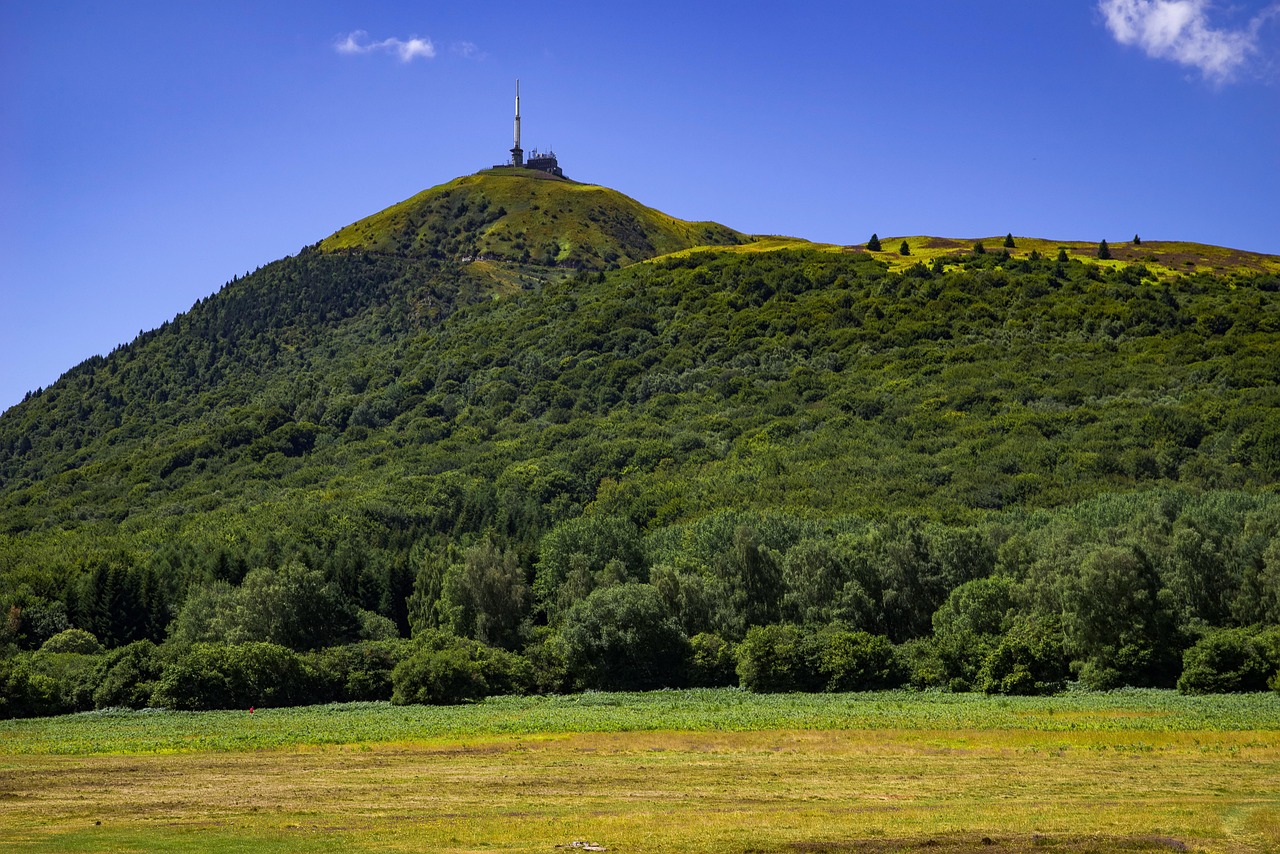
Why Visit Puy de Dôme – What Makes It Special
Every time I see Puy de Dôme from the autoroute or from a plane window, it has the same effect: shoulders drop, breathing slows, and I know I’m back in the Auvergne. It’s more than just a mountain; it’s the emblem of an entire region, a perfect volcanic cone rising above rolling green pastures, crater lakes, and ancient stone villages.
At 1,465 meters, Puy de Dôme is the most famous summit in the Chaîne des Puys, a UNESCO-listed chain of some 80 volcanoes spread across central France. What makes it so compelling as a destination is the combination of easy access and wild feeling: you can arrive by panoramic cog railway, sip a coffee near the summit, then step onto trails where the only sound is wind in the grass and the distant bells of Salers cattle.
In 2026, Puy de Dôme is particularly worth a visit: new interpretive panels around the Roman temple ruins, expanded family-friendly programming at Vulcania, refreshed walking paths, and a growing food scene in nearby Clermont-Ferrand and Orcines mean the area is better set up than ever for curious travelers, families, and hikers.
Whether you have just 1 day in Puy de Dôme or you’re planning a full 3 day itinerary for Puy de Dôme, this guide is structured to help you experience the mountain the way locals do: unhurried, well-fed, and with time to watch the clouds slide over the crater rims.
Table of Contents
- Why Visit Puy de Dôme
- Essential Overview & How to Visit
- 1–3 Day Itineraries for Puy de Dôme
- Main Sites, Viewpoints & Adjacent Attractions
- Eating & Drinking Around Puy de Dôme
- Puy de Dôme After Dark & Off-Hours
- Events & What’s New in 2026–2027
- Practical Travel Advice for Puy de Dôme
- Summary & Best Time to Visit
Essential Overview & How to Visit Puy de Dôme
Puy de Dôme sits just northwest of Clermont-Ferrand, the regional capital of Auvergne, in the département that shares its name. For most visitors, the mountain is the centerpiece of a broader stay in the region – you combine a day or two on and around the volcano with forays into crater lakes, stone villages, and the volcanic plateau.
Getting There
By train: Clermont-Ferrand is on direct lines from Paris (about 3.5–4 hours), Lyon, and Nîmes. From the station, local buses and taxis reach the base of Puy de Dôme in around 25–35 minutes.
By car: From Clermont-Ferrand, follow signs to Orcines / Puy de Dôme. The main access point is the Panoramique des Dômes station at La Font de l’Arbre, with large paid parking. In peak summer and autumn weekends, arrive by 9:30 a.m. to avoid queues and full car parks.
How You Actually Reach the Summit
- Panoramique des Dômes cog railway – a modern, accessible train that spirals up to the summit in about 15 minutes. This is how most families, photographers, and casual visitors go up.
- By foot via the “Chemin des Muletiers” – the historic mule path, a steep but beautiful 45–75 minute hike from Col de Ceyssat to the top. My preferred route outside the hottest part of summer.
Once on top, you follow a circular path around the summit, with viewpoints in all directions, access to the Temple of Mercury ruins, paragliding take-off zones, and interpretive panels that explain the geology and history.
Puy de Dôme Tickets & Opening Hours (2026)
Tickets: There is no fee for the mountain itself or the trails. You pay only for the cog railway (Panoramique des Dômes) and for parking at the base.
- Cog railway tickets: return and one-way options; discounts for children, families, and late-day rides. In 2026, expect around 16–20€ for a standard adult return, but check the official site shortly before you go.
- Advance booking: In July–August, on long weekends, and during major events (e.g. Tour de France stages), book timed tickets online the day before if possible. Outside peak periods you can usually just show up, but I still book weekend mornings.
- Opening hours: The train generally runs from morning to just after sunset in high season, with reduced hours in winter. The summit itself is accessible 24/7 to hikers, weather permitting.
For the most up-to-date Puy de Dôme opening hours, always check the official Panoramique des Dômes site a few days before your visit; they adjust for storms and maintenance.
1–3 Day Itineraries for Puy de Dôme
Below you’ll find personal, story-driven itineraries for 1 day, 2 days, and 3 days in Puy de Dôme and its surroundings. I’ve structured them the way I actually host visiting friends: a first day for the essentials, then layers of nature, culture, and food as you add days.
1 Day Itinerary for Puy de Dôme – Iconic Highlights
When I have just 1 day in Puy de Dôme with friends coming in on the morning train from Paris, we keep it simple: one mountain, one medieval core, and one long, unhurried meal. This 1 day itinerary balances easy logistics with the must-see attractions in Puy de Dôme.
Morning: Arrival & Ride Up the Mountain
I like to start the day in Clermont-Ferrand with a quick espresso and a croissant near the train station, then drive or take the bus to the Panoramique des Dômes base station at La Font de l’Arbre.
- Arrival time: Aim to reach the base station by 9:00–9:30 a.m. in high season. This usually gets you on a train within 20–30 minutes and avoids the midday crush.
- Tickets: If you’ve pre-booked a timed slot, arrive 20–30 minutes early. If not, just buy on-site and choose the next available departure.
The cog railway itself is half of the fun. As it spirals up, the horizon widens and you begin to see the chain of volcanic domes stretching to the north. Children press their noses against the glass; hikers eye the trails they’ll be walking down later. It’s a gentle, anticipatory climb.
Late Morning: Summit Walk & Temple of Mercury
At the summit station, step out and give your eyes a moment to adjust. If it’s a clear day, you’ll see nearly the entire Chaîne des Puys, the Limagne plain, and, on exceptionally crisp days, the distant outline of the Massif du Sancy.
I always start with the circular summit path. Walking clockwise from the station:
- First viewpoint: A sweeping view east toward Clermont-Ferrand, with its dark volcanic-stone cathedral clearly visible. This is the shot that shows Puy de Dôme in context with the city – I still take the same photo every visit.
- Temple of Mercury: Continuing around, you reach the extensive ruins of the Roman Temple of Mercury, now with improved signage (new panels added in late 2025). Spend 20–30 minutes here; read the reconstructions, and imagine hundreds of pilgrims climbing the mountain 2,000 years ago to make offerings.
- Western rim: This is where I usually pause and simply sit on the grass. You’re looking out across the undulating line of cinder cones and domes, many with perfect craters. This is the UNESCO view you’ve seen in documentaries.
Allow 1.5–2 hours on the summit: a full lap of the path, time at the temple ruins, and at least one long pause just to watch the paragliders take off, their colorful wings catching the thermals.
Lunch: Picnic Above the World
On a first visit, I recommend packing a picnic rather than rushing into the summit café. Before you head up, pick up:
- Saint-Nectaire or Cantal cheese from a fromagerie in Clermont.
- A baguette or two, some Auvergne cured ham (jambon d’Auvergne), and fruit.
There are plenty of spots on the grassy slopes just off the main summit path where you can sit and eat without anyone in your line of sight. Just remember to pack out every scrap; wind carries litter quickly on the summit.
Afternoon: Walk Down or Train Return
If your group is reasonably fit and the weather is stable, I like to walk down via the Chemin des Muletiers in the afternoon. It’s steep in places but technically simple, taking 45–60 minutes back to the Col de Ceyssat car park. From there, you can arrange a taxi or have your car waiting if you’ve done a shuttle with friends.
If you prefer, simply ride the cog railway back down and spend a little time at the interpretation center at the base, where there are exhibits on the geology and ecology of the area.
Late Afternoon & Evening: Clermont-Ferrand Old Town
Back in Clermont-Ferrand by late afternoon, I like to wander the old town:
- Walk around the Cathédrale Notre-Dame-de-l’Assomption, built in dark volcanic stone that turns almost purple at sunset.
- Continue to Place de Jaude, the central square, for an ice cream or an aperitif.
For dinner, avoid the most obvious tourist terraces right on Place de Jaude. Instead, slip into one of the side streets between the cathedral and the square. My guests usually fall in love with a simple meal of truffade (a melted cheese and potato dish) and local wine in a small bistro.
If you’re catching an evening train out, you can walk or tram back to the station. If you’re staying, a night stroll past the cathedral, now illuminated against the sky, is a quiet way to close your 1 day itinerary for Puy de Dôme.
2 Days in Puy de Dôme – Volcanoes, Villages & Views
With 2 days in Puy de Dôme, you can move beyond the summit itself and understand the landscape as a whole. My preferred 2 day itinerary for Puy de Dôme builds on Day 1’s highlights and adds more varied terrain, plus a taste of village life.
Day 1: As Above
Use the Day 1 itinerary as your foundation: summit, temple, possible hike down, and Clermont-Ferrand in the evening.
Day 2 Morning: Chaîne des Puys – Gergovia or Puy de Pariou
On your second morning, I like to choose between two options depending on the group:
- Puy de Pariou – For active travelers and families with older kids who want the classic crater hike.
- Plateau de Gergovie – For history lovers and younger families who prefer gentler walking and big views.
Option 1: Hiking Puy de Pariou
Puy de Pariou is the perfectly shaped crater you may recognize from Volvic water labels. The hike starts from car parks near Orcines or the Col de Ceyssat side, depending on your chosen route. In 2026, trails are well-marked, and some sections have been reinforced to reduce erosion.
- Time: Allow 2.5–3.5 hours round-trip, including crater exploration and breaks.
- Route: A loop trail takes you through forest, then up the flank of the volcano to the crater rim, before dropping into the crater itself via a path and steps.
- What to look for: Notice the changes in vegetation as you climb; interpretive signs explain how volcanic soils affect plant life.
Standing on the rim, with Puy de Dôme looming in the background, gives you a powerful sense of scale. I once hiked here during an early autumn mist: the crater was half-filled with cloud, and Puy de Dôme floated above it like an island.
Option 2: Plateau de Gergovie
The Plateau de Gergovie is the site of the famous battle where Vercingetorix defeated Julius Caesar in 52 BCE. Today, it’s a broad, breezy plateau with wide views and easy walking paths.
- Time: 2–3 hours is plenty for a loop walk and time at the interpretation center.
- Family-friendly: Paths are mostly flat; great for strollers and young kids to run around.
- Highlights: Bronze statue of Vercingetorix, panoramic views back to Puy de Dôme and the Chaîne des Puys, and exhibits on the battle and Gallic life.
On windy days, it can be bracing; bring a light jacket even in summer. I love coming here early in the day when the light is low and the volcanic domes cast long shadows.
Day 2 Afternoon: Village Life – Saint-Saturnin or Montpeyroux
After a morning on the heights, I like to drop into one of the “Plus Beaux Villages de France” in the area. Two favorites:
Saint-Saturnin
Saint-Saturnin is a compact medieval village built tightly around a Romanesque church and a castle. Narrow lanes, stone doorways, and cascading flowers in summer make it feel almost theatrical.
- Walk: A 45–60 minute loop through the streets, down to the small river, and up to a viewpoint over the village.
- Church: The Romanesque church is dim and cool inside – step in for a few minutes of quiet; note the carved capitals.
- Cafés: Have a coffee or a glass of local wine on a small terrace; in 2026, a couple of newer cafés emphasize regional produce and homemade cakes.
Montpeyroux
Perched on a hill with a distinctive tower, Montpeyroux is another fine option, especially if you’re driving between Clermont-Ferrand and Issoire. I often stop here on the way back from lake or spa excursions.
- Viewpoint: Climb up to the tower area (check seasonal opening) for a 360-degree panorama over vineyards and volcanic hills.
- Streets: Wander the cobbled lanes, peek into artisan workshops, and admire the use of pale and dark volcanic stones in the houses.
Dinner: Rustic & Romantic
For a romantic evening on your second night, choose a small inn or bistro in one of the villages or in the outskirts of Clermont. Some country restaurants around Orcines and Royat specialize in volcanic terroir – think lentils from Le Puy (nearby), slow-cooked beef from Salers cattle, and generous cheese boards.
This kind of two-day itinerary balances the must-see attractions in Puy de Dôme with quieter cultural experiences in the villages – you’ll leave feeling like you’ve begun to know the region, not just ticked a mountain off a list.
3 Days in Puy de Dôme – Deeper Nature & Culture
With 3 days in Puy de Dôme, you can slow down and add water, spa time, and a bit of whimsy. Here’s how I like to plan a 3 day itinerary for Puy de Dôme when friends stay a long weekend.
Day 1 & 2: As Above
Use the previous Day 1 and Day 2 suggestions as your base.
Day 3 Morning: Crater Lake Walk – Lac Servière or Lac Pavin
Lac Servière
My first choice for a relaxed morning is Lac Servière, a nearly circular crater lake ringed by forest and meadows, about 30–40 minutes’ drive from Clermont-Ferrand.
- Walk: A flat, family-friendly loop around the lake (about 1 hour strolling, less if you walk briskly).
- Atmosphere: In early mornings, mist hangs over the water; by mid-morning, families appear with picnics and fishing rods.
- Tip: In summer weekends, arrive before 10:00 a.m. for easier parking and a quieter trail.
Bring a thermos of coffee and pastries from a village bakery; there’s something deeply calming about sitting on a log and watching the reflections shift with the breeze.
Lac Pavin
For more drama, choose Lac Pavin, a deep, almost perfectly round crater lake with dark blue water near Besse-en-Chandesse.
- Walk: A partially wooden walkway and path circuit the lake (about 1 hour).
- Legends: Local stories talk of a submerged village and mysterious depths – a fun bit of lore if you’re traveling with kids.
- Side trip: Combine with a short visit to Besse, a medieval mountain town with narrow streets and regional shops.
Day 3 Afternoon: Vulcania or Spa Time in Royat
Option 1: Vulcania – Family-Friendly Science & Fun
Vulcania is a unique theme park dedicated to volcanoes and earth sciences, built partially underground in a volcanic landscape. It’s brilliant for families, but I’ve gone with only adults and we still ended up doing half the interactive exhibits.
- Time: You can spend a full day, but with a 3-day itinerary, I’d aim for a focused 4–5 hour visit.
- Attractions: 3D and 4D films about eruptions, interactive exhibits on plate tectonics, children’s play areas, and seasonal shows.
- Tip: Buy tickets online to avoid lines at opening, especially during school holidays. In 2026, they’ve added more programming in English and Spanish.
Option 2: Royat – Thermal Waters & Belle Époque Charm
If you’re feeling more in need of relaxation than stimulation, head to Royat, a historic spa town just up the hill from Clermont-Ferrand.
- Thermal baths: Book a few hours at one of the thermal centers (Royatonic is popular), with hot pools, jets, and sometimes outdoor baths with volcano views.
- Architecture: Walk past Belle Époque façades and old casino buildings; some feel like they’ve stepped out of another era.
On a chilly autumn afternoon, slipping into the hot mineral water after two days of hiking is my idea of bliss.
Evening: Farewell Dinner & Night Views
For your last night, consider an early evening drive or bus up to a viewpoint near Orcines or the lower slopes of Puy de Dôme to catch one more sunset over the Chaîne des Puys. Then, settle into a restaurant you’ve been curious about – maybe one focused on modern interpretations of Auvergne classics.
This sort of layered 3 day itinerary for Puy de Dôme lets you experience the mountain in several moods: from summit panoramas to lakeside stillness and steamy spa air, woven together with food, wine, and small-town charm.
Main Sites, Viewpoints & Adjacent Attractions
Below are deeper dives into the eight places I find myself returning to again and again around Puy de Dôme. Think of them as the anchors for your personal travel guide for Puy de Dôme, each with history, significance, and a few stories from my own visits.
Puy de Dôme Summit & Temple of Mercury
On a crisp October morning in 2025, I stood on the summit of Puy de Dôme with a mug of thermos coffee, watching paragliders line up along the western rim. The grass was frosted at the edges; the sky a hard blue. Below, the Temple of Mercury ruins were catching the first light. This, to me, is the essence of the mountain: ancient stones, modern adventure, and wide, unbroken horizons.
Approach & Summit Layout
Whether you arrive by train or on foot, you’ll emerge near the modern facilities: a visitor center, small shops, and restrooms. From here, a broad path splits:
- Left (clockwise): Toward the eastern and northern viewpoints, looking out over Clermont-Ferrand and the Limagne plain.
- Right (counter-clockwise): Past the paragliding zones and toward the Temple of Mercury.
The summit circuit is about 1.5 km, gently undulating and mostly accessible, with benches at key viewpoints. I recommend doing the full loop in one go, then circling back to your favorite spots for longer pauses.
Temple of Mercury – History in the Clouds
The Temple of Mercury was once one of the highest-altitude sanctuaries in the Roman world. Pilgrims climbed from the valley, often on multi-day journeys, to make offerings to Mercury, god of travelers and commerce. Excavations since the 19th century – and especially in the late 20th and early 21st centuries – have revealed massive foundations, walls, and fragments of sculpture.
In 2026, you’ll find:
- Reconstructed elements: Low walls suggesting the original footprint, with illustrated panels showing how the temple might have looked.
- Interpretive signage: Recently refreshed panels in French and English explaining the temple’s role, the archaeological campaigns, and a few key finds now housed in regional museums.
- Viewpoints: Platforms that let you look down on the ruins and outward to the surrounding volcanoes at the same time.
I like to stand here and imagine Roman travelers arriving exhausted from the climb, catching their first glimpse of the temple against the sky. It adds a layer of human continuity to the mountain that pure geology can’t provide.
Time on the Summit & What to Look For
For first-timers, I suggest budgeting 2–3 hours on the summit:
- 30–45 minutes walking the circuit.
- 30–45 minutes at the Temple of Mercury.
- 30–60 minutes simply sitting, watching paragliders, clouds, and light shift across the landscape.
Bring a light wind layer even in summer; the summit can be significantly cooler and windier than the base. In winter, conditions can change quickly, and trails may be icy – crampons or good traction are wise if you’re hiking.
Accessibility & Family Friendliness
The cog railway, summit facilities, and much of the summit path are accessible to wheelchairs and strollers. Families with small children will find plenty of safe, open spaces to explore and clear signage. Paragliding take-offs are fenced off, but you can watch from a short distance – always a hit with kids.
Chaîne des Puys & UNESCO Landscape
The Chaîne des Puys is the string of volcanic domes, cones, and maars that stretches roughly north–south behind Puy de Dôme. In 2018, together with the Limagne fault, it became a UNESCO World Heritage site, recognized for illustrating continental rifting and volcanic processes exceptionally well.
On a clear spring day, I like to drive up to one of the ridge trailheads north of Puy de Dôme, park, and spend a few hours walking from dome to dome. The feeling is of moving along the spine of a sleeping creature, each hump a volcano with its own story.
Key Trails & Viewpoints
- Puy des Goules: A broad, open crater you can descend into; the trail is moderately steep but short.
- Puy de la Vache & Puy de Lassolas: Twin volcanoes with red cinder slopes, especially striking in late afternoon light.
- Puy de Côme: Less visited, with peaceful forested paths and views back to Puy de Dôme.
Most of these hikes are 2–4 hours round-trip, with moderate elevation gain. Trailheads are accessible by car; public transport is patchier, so a rental car or taxi is usually the simplest option.
What Makes the Landscape Special
What I love about the Chaîne des Puys is how legible it is once you’ve had a bit of explanation. Interpretive panels at major trailheads explain:
- The difference between dome and cone volcanoes.
- How crater lakes (maars) form.
- Why the Limagne fault is such an important piece of continental geology.
After a couple of hikes, you begin to see the whole chain differently – not as random hills but as a story frozen mid-chapter.
Tips for Visitors
- Season: April–October is best for hiking; snow and mud can complicate trails in winter and early spring.
- Gear: Good walking shoes, water, sun protection, and a light jacket. Trails are not technically difficult but can be exposed.
- Etiquette: Stay on marked paths to protect fragile vegetation and prevent erosion; this is a big focus of UNESCO management.
Vulcania Park
Vulcania is often described as a “volcano theme park,” but that makes it sound more kitsch than it is. In reality, it’s a thoughtful mix of science center, multimedia experiences, and family-friendly attractions, set in a crater-like depression not far from Puy de Dôme.
I’ve visited several times since its opening, most recently in late 2025 with two friends and their seven-year-old. We spent four hours alternately learning new things and being shaken around by 4D earthquake simulators – in a good way.
Layout & Highlights
The park is partially underground, with spiraling ramps and galleries leading from one exhibit to the next. Highlights include:
- Immersive films: Short 3D and 4D films on eruptions, tectonic plates, and space volcanoes.
- Interactive zones: Hands-on demonstrations of lava flows, gas emissions, and seismic waves.
- Children’s areas: Play spaces where younger kids can climb, dig, and discover without needing to read complex panels.
Practical Tips
- Tickets: Book online in advance, especially in July–August and during French school holidays. Combo tickets with other regional attractions are sometimes offered.
- Timing: Arrive close to opening to make the most of your day; crowds build as the morning wears on.
- Food: On-site restaurants are convenient but generic; if you’re picky, bring snacks or plan to eat a bigger meal back in town.
For families, Vulcania is a strong candidate for one of your full days, particularly if the weather is unsettled. For adults only, I’d pair a half-day visit with a short hike or spa time.
Clermont-Ferrand Old Town & Cathedral
Clermont-Ferrand is the city most travelers will use as their base to visit Puy de Dôme. It’s not a pretty-pretty town in the postcard sense; its cathedral and many buildings are built from dark volcanic stone, giving the center a moody, dramatic character.
On my last evening there in 2026, I walked from the train station up to the cathedral just as the bells were ringing for vespers. The narrow streets around it felt intimate, with small wine bars and crêperies tucked into the old fabric of the city.
Key Sights
- Cathédrale Notre-Dame-de-l’Assomption: Gothic, imposing, and strikingly dark. Step inside to see the stained glass and feel the vertical pull of the nave.
- Basilique Notre-Dame-du-Port: A UNESCO-listed Romanesque basilica a short walk away; quieter, with beautiful sculpted capitals.
- Place de Jaude: The main square, anchored by statues of Vercingetorix and other historical figures; a good orientation point.
Food & Nightlife
Clermont-Ferrand’s food scene has been quietly improving. Around the cathedral and in streets like Rue des Gras, you’ll find:
- Traditional bouchons auvergnats serving hearty dishes like aligot and truffade.
- Wine bars featuring local wines from the volcanic slopes north of the city.
- Small bistros experimenting with modern takes on regional produce.
For a casual night, I like to share a board of local cheeses and charcuterie with a glass of red from the Côtes d’Auvergne, then stroll past the cathedral lit up against the night sky.
Orcines – The Mountain Gateway
Orcines is technically a cluster of villages and hamlets rather than a single compact town, but it’s the administrative gateway to Puy de Dôme. Many of the access roads, trailheads, and small hotels that serve mountain visitors sit within its boundaries.
I often stay just outside Orcines in small guesthouses: you’re close to the mountain but away from city bustle, with night skies dark enough to see stars properly.
Why Base Yourself Here
- Proximity: 10–15 minutes by car to the Puy de Dôme cog railway base; easy access to other volcano trailheads.
- Quiet: Even in high season, mornings and evenings feel calm; birdsong replaces traffic noise.
- Local life: Bakeries, small grocery stores, and a few solid restaurants serving locals as much as visitors.
Where to Stay
In and around Orcines, you’ll find:
- Chambres d’hôtes: Family-run guesthouses with breakfast included.
- Gîtes: Self-catering cottages ideal for families or small groups.
- Small hotels: A handful of simple, comfortable hotels oriented toward hikers and cyclists.
Book early for July–August and September weekends; demand often exceeds supply when the weather is at its loveliest.
Crater Lakes: Servière, Pavin & Chambon
The crater lakes around Puy de Dôme offer a completely different flavor of the volcanic landscape: cool water, reflective surfaces, and forested shores that smell of pine.
Lac Servière
Lac Servière is my go-to for an easy morning or evening walk. The circuit is straightforward, and the light on the water changes beautifully throughout the day. In summer 2026, local authorities have continued to refine parking and signage to minimize impact on the shore.
Lac Pavin
Lac Pavin feels more enclosed and mysterious. The deep blue color hints at its depth and volcanic origins. On foggy days, the far shore can vanish, leaving you in a half-world of water and trees.
Lac Chambon
Lac Chambon is more developed, with beaches, pedal boats, and cafés. It’s especially good for families wanting a swimming day after hikes; the backdrop of mountains and volcanic peaks makes it more scenic than your average lake resort.
Medieval Villages: Montpeyroux, Saint-Saturnin, Usson
The volcanic plateau of Auvergne is dotted with stone villages that feel timeless, built from the same materials as the mountains around them. Three I keep returning to:
Montpeyroux
Described earlier in the 2-day itinerary, Montpeyroux is a compact hilltop with a defensive tower and a warren of lanes. It’s lovely at golden hour; the stone seems to glow from within.
Saint-Saturnin
Also covered above, Saint-Saturnin rewards slow wandering – look for old carved lintels, tiny side chapels, and the interplay of dark and light stone in house façades.
Usson
Usson is a bit further from Puy de Dôme but worth a half-day if you have time. Once a royal prison for Queen Margot, it sits on a lava dome with extensive views.
- Walks: Short circuits around the hilltop with orientation tables pointing out distant peaks.
- Atmosphere: Quieter than Montpeyroux; you may have streets almost to yourself outside peak weekends.
Spa & Belle Époque Towns: Royat & La Bourboule
Volcanoes mean mineral waters, and mineral waters mean spas. Around Puy de Dôme, two spa towns stand out:
Royat
Already discussed as part of the 3-day itinerary, Royat offers easy access from Clermont-Ferrand and a mix of modern facilities and older resort architecture.
La Bourboule
La Bourboule, further west toward the high plateau, feels like a little slice of Belle Époque elegance dropped into the mountains. Grand façades, ornate railings, and an old casino building evoke an era of long stays and prescribed cures.
- Thermal centers: Some focus on respiratory therapies; others have more general wellness offerings.
- Family-friendly: Parks and riverside walks make this a good stop with children; you can combine it with nearby hikes in the Massif du Sancy.
Eating & Drinking Around Puy de Dôme
Auvergne is a region for people who like honest, substantial food. Around Puy de Dôme, the cuisine is anchored in potatoes, cheese, cured meats, and beef, with plenty of lighter options emerging in recent years.
What to Eat
- Truffade: Sliced potatoes pan-fried with garlic and melted tome fraîche cheese, often served with a green salad and cured ham.
- Aligot: A silky, stretchy mix of potatoes and cheese; you’ll sometimes find it at special events and in more traditional restaurants.
- Cheeses: Saint-Nectaire, Cantal, Fourme d’Ambert, Bleu d’Auvergne – all protected AOP cheeses from the region.
- Salers & Aubrac beef: Often served grilled or slow-cooked.
Where Locals Actually Go (Near Puy de Dôme)
Avoid the most obvious tourist places right at the cog railway base or summit; they’re fine for a coffee but not memorable. Instead:
- Orcines & surrounding hamlets: A handful of inns and bistros where you’ll hear as much local Auvergnat dialect as standard French at neighboring tables.
- Clermont-Ferrand side streets: Around the cathedral and Rue des Gras, look for small places with short menus and blackboards listing the day’s dishes.
- Village restaurants: In Saint-Saturnin, Montpeyroux, and Royat, seek out places a street back from the most obvious views; often, these are where owners cook mostly for locals, with better prices and more generous portions.
What to Bring Onto the Site Itself
For a day on Puy de Dôme:
- Water (there are taps and cafés, but it’s best not to rely on them exclusively).
- A simple picnic – bread, cheese, fruit, nuts – to avoid having to time your summit visit to restaurant hours.
- A thermos in shoulder seasons; hot coffee or tea on the summit feels luxurious in cold wind.
Puy de Dôme After Dark & Off-Hours
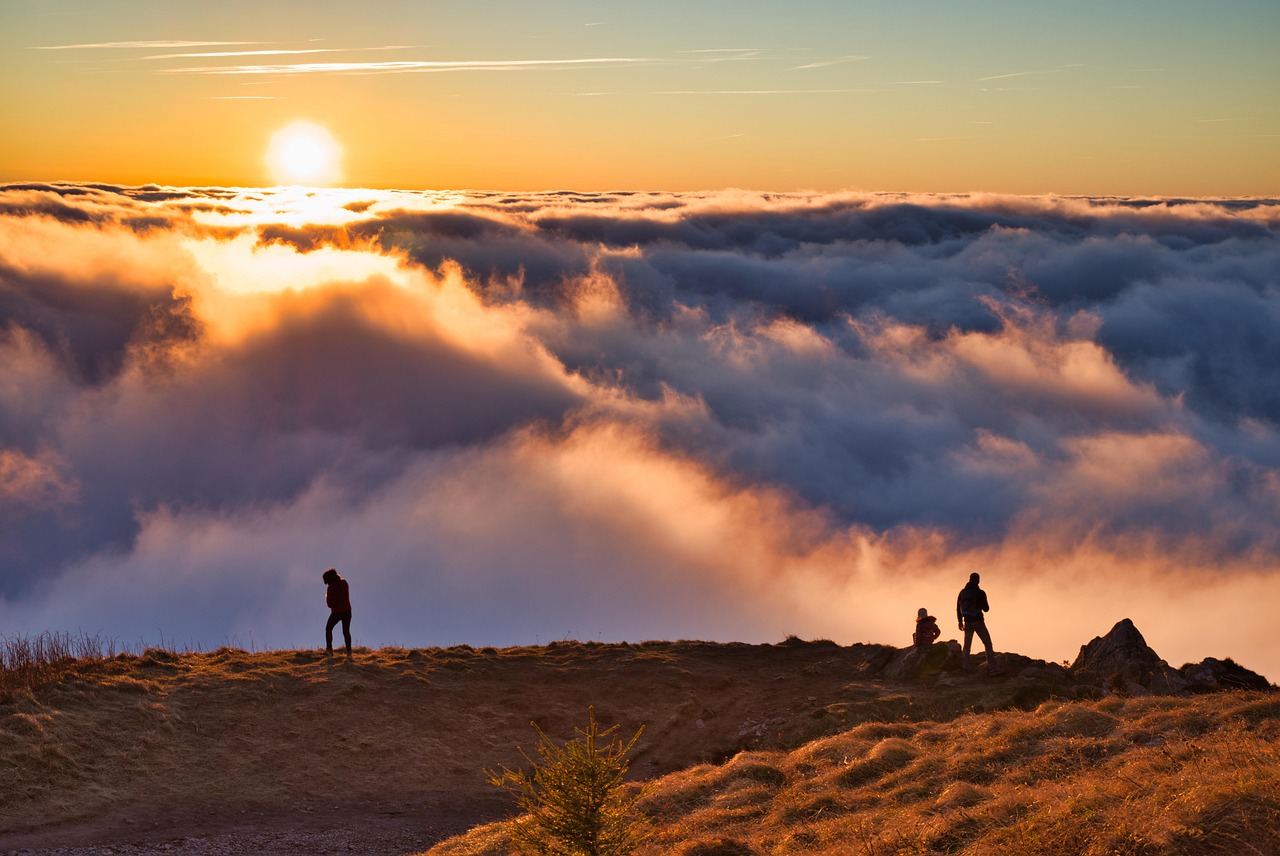
Puy de Dôme is primarily a daytime destination, but the hours just after sunrise and just before and after sunset are when the mountain feels most magical.
Sunrise & Golden Hour
On a summer morning in 2024, I hiked up the Chemin des Muletiers starting just before dawn. By the time I reached the summit, a band of orange was lifting behind Clermont-Ferrand, and the Chaîne des Puys was a series of soft silhouettes.
- Golden hour: The hour after sunrise and before sunset offers the best light for photography – long shadows on the volcanic domes, warm tones on the temple ruins.
- Practicality: Check cog railway early/late schedules; they often add extended hours in July–August for sunset visits.
Blue Hour & Night
Once the sun drops, the city lights of Clermont-Ferrand come on, glowing in the valley below. On particularly clear nights, you can see stars remarkably well from the summit and mountain slopes.
In recent summers, there have been occasional evening programs on select dates – guided walks at dusk, small concerts near the summit station, and astronomy nights with telescopes. For 2026–2027, expect a continuation and possible expansion of these; check local listings and the official Puy de Dôme website a month or two before your trip.
Events & What’s New in 2026–2027
Each year brings small but meaningful changes to the travel scene around Puy de Dôme. For 2026–2027, here are some notable points:
Major Events (Subject to Annual Confirmation)
- Summer trail & running events: The area continues to host trail races and mountain runs that attract athletes from across Europe. Expect increased accommodation demand on those weekends.
- Cultural festivals in Clermont-Ferrand: The city’s film festival (especially for short films) and music events often spill into the broader region, making winter and spring more lively than you might expect.
- Local food & wine fairs: Autumn harvest festivals, cheese fairs, and small wine events in villages north of Clermont highlight volcanic terroir.
Infrastructure & Visitor Experience Updates
- Improved signage: 2025–2026 has seen a push to renew bilingual interpretive signage at major sites, including the Temple of Mercury and several Chaîne des Puys trailheads.
- Accessibility work: Small upgrades to paths and facilities around the cog railway base and summit station are ongoing to improve access for visitors with reduced mobility.
- Public transport tweaks: Seasonal bus schedules to Puy de Dôme and Vulcania are reviewed annually; 2026 is expected to maintain increased summer frequency introduced in 2024–2025.
Practical Travel Advice for Puy de Dôme (2026)
To make the most of your trip, it helps to understand a few local customs, logistical details, and money-saving tricks.
Cultural Etiquette & Local Customs in Puy de Dôme
- Greetings: Always say bonjour (daytime) or bonsoir (evening) when entering shops, restaurants, or small museums. It sets the tone.
- Meal times: Lunch is typically 12:00–14:00; dinner from 19:30 onward. Many restaurants close in mid-afternoon.
- Tipping: Service is included, but rounding up or leaving a small tip (5–10%) for good service is appreciated.
- Nature etiquette: Stay on marked trails, keep dogs leashed where indicated (especially around livestock), and pack out all rubbish.
How to Get Around
- Car rental: The most flexible option, especially for crater lakes and smaller villages. Rentals are available in Clermont-Ferrand; book ahead for peak season.
- Public transport: Buses link Clermont-Ferrand with Puy de Dôme base station, Royat, and some villages, with seasonal variations. Good for core sites but limiting for deeper exploration.
- Taxis & rides: Available but should be pre-booked for early or late journeys to/from trailheads.
Saving Money
- Picnics: Use markets and bakeries for lunches; eating out once a day instead of twice adds up quickly.
- Off-peak travel: Shoulder seasons (May–June, late September–October) often mean lower accommodation prices and fewer crowds, with still-good weather.
- Multi-day stays: Some guesthouses offer discounts for 3-night stays or midweek bookings.
SIM Cards & Connectivity
France has widespread 4G coverage, with 5G in Clermont-Ferrand and some surrounding areas. On the mountain and in remote valleys, coverage can drop, but you’ll usually have intermittent signal.
- eSIMs: Easy to purchase online before arrival for data-only plans.
- Physical SIMs: Available from major operators (Orange, SFR, Bouygues) in city shops and some supermarkets.
Visa Requirements & Driving Licenses
- Visas: Puy de Dôme is in France, which is part of the Schengen Area. Check Schengen visa requirements for your nationality; many visitors can stay up to 90 days without a visa.
- Driving licenses: EU/EEA licenses are valid. Many non-EU licenses are accepted, but an International Driving Permit (IDP) is recommended if your license is not in French or English.
Best Time to Visit Puy de Dôme
- Spring (April–June): Green hills, wildflowers, fewer crowds. Weather can be changeable; bring layers.
- Summer (July–August): Warm, generally stable weather; peak season with busiest trails and higher prices.
- Autumn (September–October): Often my favorite: crisp air, golden light, and colorful foliage; still-active tourism infrastructure.
- Winter (November–March): Quiet and atmospheric; some facilities reduce hours, and snow/ice can complicate mountain access.
Landmark-Specific Logistics: Puy de Dôme Tickets & Tips
- Ticket types: Return and one-way cog railway tickets; family passes; possible combined offers with Vulcania at times.
- Reservations: In peak dates, book online at least a day or two ahead; weekend mornings and holiday afternoons sell out first.
- Peak hours to avoid: 11:00–15:00 on sunny summer days. Go early morning or late afternoon for fewer crowds and better light.
- Dress code: No formal requirements, but sturdy shoes and a windproof layer are wise on the summit; avoid flip-flops if you plan to walk trails.
- Photography restrictions: None for personal use on the mountain; respect any no-drone policies in place (drones are generally restricted without permission).
- Security & queues: Expect bag checks at the cog railway base in busy periods; lines can be 30–60 minutes at midday in peak season.
- Accessibility: The cog railway and summit facilities are designed to be accessible; some sections of the summit path are more challenging, but there are good viewpoints close to the station.
Summary & Final Recommendations
Puy de Dôme is one of those rare places that delivers exactly what its postcards promise and then quietly offers much more. It is a perfect, simple visit – a train up, a walk around, a photo – but it’s also a gateway to an entire volcanic world of crater lakes, stone villages, and slow, generous food.
If you only have 1 day in Puy de Dôme, focus on the summit and Clermont-Ferrand’s old town. With 2 days, add a Chaîne des Puys hike and a medieval village. With 3 days, layer in crater lakes, Vulcania or spa time, and longer, quieter walks.
For most travelers, the best time to visit Puy de Dôme is late spring (May–June) or early autumn (September–early October), when the trails are open, the light is beautiful, and the crowds are manageable. Summer is vibrant and easy, if busier; winter is for those who don’t mind some logistical compromises in exchange for solitude.
However you choose to shape your own travel guide for Puy de Dôme, give yourself at least one unstructured hour on the summit or by a crater lake – no photos, no schedule, just sky, stone, and the sense of standing in a landscape that has been reshaping itself for millions of years.