Why Visit the Quiberon Peninsula in 2026
Quiberon feels at once end-of-the-world and effortlessly accessible. Just a slim causeway (the isthme de Penthièvre) links it to the mainland, yet the moment you cross it, the light sharpens and the air tastes of salt and seaweed. It’s a place made for long weekends and week-long escapes alike: beach-hopping, coastal hikes, surfing, sailing, lazy seafood lunches, storm watching, island day trips, and sleepy village markets.
In 2026, the peninsula is in a sweet spot: well-known to French families and surfers, but still oddly under the radar for many international travelers. That means you can still find a quiet dune to yourself in shoulder season, eat where locals do without needing to book weeks in advance (outside August), and feel like you’ve slipped into a slower, more elemental rhythm.
This long-form 2026 travel guide to the Quiberon Peninsula is written as I live and travel it: on foot, by bike, with sandy feet, wind-tangled hair, and a notebook smeared with butter from too many kouign-amann. I’ll share not only the must-see attractions and classic viewpoints, but also the tiny coves, unassuming cafés, and small etiquette details that mark you out as a respectful visitor rather than just another summer invader.
Table of Contents
- 1. Quiberon Peninsula at a Glance
- 2. 3–5 Day Itineraries (With Personal Stories)
- 3. The 10 Key Beaches, Coves & Coastal Spots (Deep Dives)
- 4. Seafood, Beach Bars & Boardwalk Eating
- 5. Evenings on the Peninsula: From Sunsets to Slow Nights
- 6. Cultural Etiquette & Local Customs
- 7. Day Trips & Nearby Attractions
- 8. Practical Travel Advice & Logistics
- 9. What’s New & Upcoming Events 2026–2027
- 10. Summary & Final Recommendations
Quiberon Peninsula at a Glance
The Quiberon Peninsula juts into the Atlantic off the Morbihan coast in southern Brittany. It’s about 14 km long and rarely more than 2 km wide, with two utterly different faces:
- Côte Sauvage (Wild Coast): The west side – dramatic cliffs, heaving surf, blowholes, and raw Atlantic energy. This is for hikers, photographers, storm-watchers, and experienced surfers.
- Baie de Quiberon (Bay side): The east side – calmer, sandy beaches facing a protected bay, often glassy in summer, perfect for families, swimming, and paddleboarding.
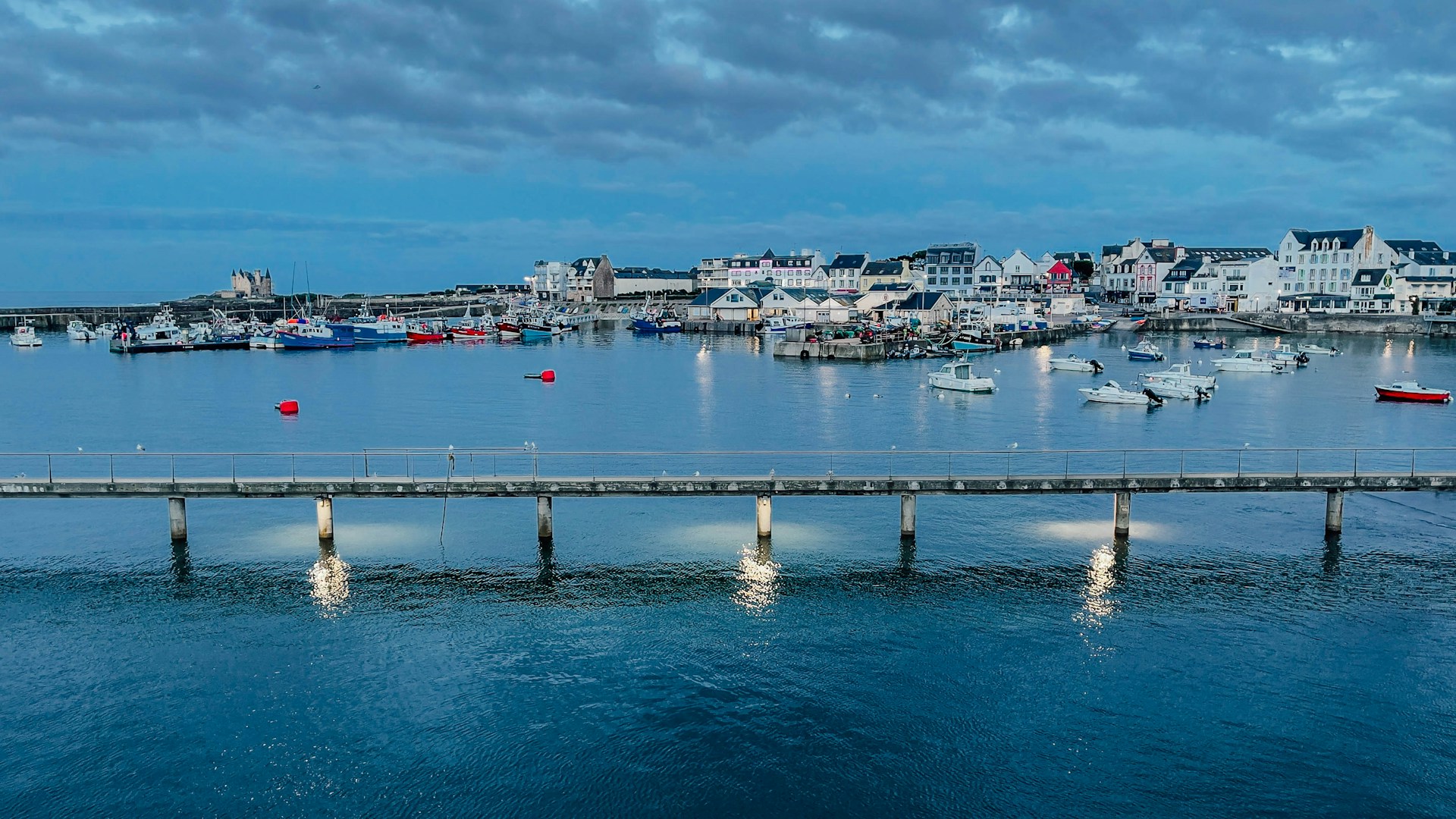
At the tip, you’ll find the town of Quiberon itself: ferry port for the islands of Belle-Île, Houat, and Hoëdic, a classic Breton resort with a seafront promenade, ice-cream parlours, crêperies, and a real working fishing harbor.
The peninsula is compact enough that you can cross from wild cliff to sheltered bay in under 10 minutes by bike. That contrast is the essence of Quiberon: you choose your mood each day – or each hour.
3–5 Day Itineraries for Quiberon Peninsula (With Personal Stories)
Because you asked specifically for a 3 day itinerary for Quiberon Peninsula, 4 day itinerary for Quiberon Peninsula, and 5 day itinerary for Quiberon Peninsula, I’ve structured this section as three overlapping plans. Think of them as modular: you can follow them as written, or mix and match days depending on weather, tides, and your energy.
2.1 – 3 Days in Quiberon Peninsula: The Essentials
When friends ask me what to do with 3 days in Quiberon Peninsula, I always say: “Base yourself in or just above Quiberon town, walk the Côte Sauvage, spend one day on the bay side beaches, and save a sunset for the tip.” This 3 day itinerary for Quiberon Peninsula hits the greatest hits without feeling frantic.
Day 1 – First Taste of the Wild Coast & Quiberon Town
On my most recent early-summer arrival, I dropped my bag at a small oceanfront hotel overlooking the bay, inhaled that unmistakable Atlantic smell, and headed straight for the Côte Sauvage. You should too.
Morning: Arrival & Orientation Walk
- Getting there: If you’re coming by train, ride the TGV to Auray, then the seasonal Tire-Bouchon train or bus to Quiberon. Drivers cross the isthmus of Penthièvre – try to time it outside peak August afternoons when traffic can crawl.
- Check-in & coffee: Drop your luggage in Quiberon town. I often stay near Grande Plage for the sea views and easy strolls. Start with a coffee and a still-warm far breton at a café near the seafront.
Walk the promenade along Grande Plage de Quiberon to stretch your legs and let the town’s rhythm sink in: kids with nets chasing crabs, retirees discussing the weather (always), and the smell of butter from the crêperies.
Afternoon: Côte Sauvage Introduction
After lunch (a classic galette complète – ham, egg, and cheese – is never a bad idea), walk or cycle west out of town toward the Côte Sauvage. The coastal path begins just beyond the built-up area; almost immediately, the land begins to crumble into the ocean in a series of cliffs, arches, and sea caves.
- Route idea: From Quiberon town, follow the signed path to Pointe du Percho. It’s a gentle few hours out-and-back with constant Atlantic views.
- What to bring: Windbreaker (yes, even in July), water, and a camera. If you’re sensitive to sun, a hat is essential; there’s almost no shade.
On a June afternoon last year, I watched a father and daughter sit side by side on the grass above the cliffs at Pointe du Percho, silently counting the sets of waves rolling in. That’s the mood here: not adrenaline for its own sake, but a quiet awe.
Evening: Aperitif by the Harbor
Head back into town as the light softens. Down by Port Maria, fishing boats bob and gulls keen while locals queue at the fishmongers, baskets in hand.
- Drink with a view: Grab an apéritif (try a Breton cider or a kir breton) at a bar overlooking the harbor.
- Dinner: Opt for a seafood bistro where the menu changes with the catch – langoustines, spider crab, and grilled seabass are reliable delights.
After dinner, stroll along Grande Plage. On still evenings, families linger, children build last-minute sandcastles by phone torchlight, and the town relaxes into itself.
Day 2 – Bay Beaches & La Pointe du Conguel
Your second day in this 3 days in Quiberon Peninsula plan is about gentler waters and a long, lazy exploration of the peninsula’s eastern side.
Morning: Family-Friendly Bay Swimming
- Best for families: Plage du Goviro and Plage du Conguel have calm, shallow waters and lifeguard coverage in high summer – ideal if you’re traveling with kids or nervous swimmers.
- Best for early dips: I prefer to slip into the bay at Plage de Kermorvan before 9 a.m., when it’s mostly retirees doing their daily bracing swim.
One memorable August morning, I watched a grandmother in a floral swim cap coax her grandson into the water with the promise of a post-swim crêpe. He waded in with theatrical reluctance, shrieking at each wavelet – and then refused to get out. That’s the magic of these gentle beaches.
Afternoon: Walk to Pointe du Conguel
From the bay beaches, follow the well-marked path to Pointe du Conguel, the southern tip of the peninsula. The walk is easy, flat, and panoramic, with views across to Belle-Île and Houat on clear days.
- Allow: 1–2 hours with stops for photos and rock-pooling.
- Family tip: Pack a simple picnic – baguette, cheese, tomatoes, and fruit – and eat on the rocks, keeping a respectful distance from the water’s edge.
There’s a small, weathered marker at the tip, and every time I walk out here I feel like I’ve reached the edge of something – not just Brittany but whatever noise I left behind on the mainland.
Evening: Crêperie Night & Ice Cream
For your second evening, lean into the holiday atmosphere. Choose a crêperie with outdoor seating, order a savory buckwheat galette (try one with scallops in season) followed by a sweet crêpe with salted caramel, and wash it down with a bolée of cider.
Afterwards, join the line at one of the gelato stands by the promenade. I usually choose salted butter caramel (of course) and wander the boardwalk as the sky fades from apricot to deep blue.
Day 3 – Full Côte Sauvage Immersion
The final day of this 3 day itinerary for Quiberon Peninsula is your chance to really commit to the wild side. Check the weather and swell forecast – you want decent visibility and not too much driving rain.
Morning & Afternoon: Hike or Cycle the Côte Sauvage
- Route suggestion: Take the bus or drive to Penthièvre (near the isthmus) and then follow the coastal path south along the Côte Sauvage back toward Quiberon.
- Highlights: Port Blanc, Port Bara, Pointe du Percho, countless unnamed inlets and blowholes.
The path undulates above the cliffs, at times close enough to taste the spray, at others set a little inland behind dunes. In May 2025, I walked it under a sky that couldn’t decide between sun and drama, and spent half the afternoon stopping just to watch the changing light on the water.
Pack snacks or a simple lunch; cafés are scarce along the wild coast, and that’s precisely the point. Just before Port Bara there’s often a food truck in high season, serving up decent coffee and sandwiches – a welcome surprise if you’ve underestimated your appetite.
Evening: Farewell to the Atlantic
Your last evening could be as simple as a takeaway portion of fish & chips eaten on the wall above Grande Plage, feet dangling, watching surfers take their final waves. Or, if you want one last splurge, book a table at a slightly smarter restaurant overlooking the bay.
Either way, take a final walk to the waterline and promise yourself you’ll be back with a longer 4 day itinerary for Quiberon Peninsula next time.
2.2 – 4 Days in Quiberon Peninsula: Adding Islands & Hidden Coves
If you have 4 days in Quiberon Peninsula, you can add either a day trip to an island or a deeper dive into the peninsula’s smaller coves and villages. When I have four nights, I usually spend one day on Belle-Île and one day exploring the quieter northern stretches of Quiberon.
Day 4 Option A – Belle-Île-en-Mer Day Trip
Ferries to Belle-Île-en-Mer depart from Quiberon’s Port Maria. Book in advance in high season (especially July–August), and aim for an early departure to maximize your time.
- Crossing time: About 45 minutes.
- On arrival: Rent a bike or scooter in Le Palais and follow the coastal roads to Les Aiguilles de Port Coton, immortalized by Monet's paintings.
Belle-Île has its own wild cliffs and sandy coves, but I always notice the difference in scale and color from Quiberon: the greens feel sharper, the cliffs a touch more theatrical. It’s a familiar but distinctly separate world.
Eat lunch in a small harbor like Sauzon – grilled sardines and a glass of Muscadet – and catch a late-afternoon ferry back to the peninsula, sun-tired and a little salt-crusted.
Day 4 Option B – Northern Quiberon & Quiet Beaches
If islands don’t appeal, stay local and explore the northern half of the peninsula and isthmus – an area many short-stay visitors skip.
- Penthièvre Beach: A wide, dune-backed strand on the bay side, popular with kite-surfers and families who like space to roam. I’ve had entire morning walks here in September seeing only dog walkers and a couple of hardy swimmers.
- Saint-Pierre-Quiberon: A quieter town with a slightly more villagey feel than Quiberon proper. Good for a relaxed lunch and a slower pace.
Spend the afternoon beach-hopping along the bay side – there are pocket beaches tucked between the dunes where you can still feel like you’ve discovered something just for yourself.
2.3 – 5 Days in Quiberon Peninsula: Settling into the Rhythm
With 5 days in Quiberon Peninsula, you can stop rushing. This 5 day itinerary for Quiberon Peninsula weaves in rest days, market mornings, and repeat visits to your favorite spots. It’s how I most love to experience the peninsula.
Day 5 – Markets, Repeats & Slow Time
Start with the Quiberon market (check current schedule; as of 2026, it usually runs several mornings a week in high season). Wander between stalls of local produce, cheeses, saucisson, and Breton pastries.
Use this day to revisit whatever has drawn you most strongly: maybe a second long swim at your favorite bay beach, another hike along the Côte Sauvage but at a different tide, or simply a long café terrace afternoon watching the world go by.
On one languid September day, I sat outside a café near the harbor for almost three hours, writing, watching locals greet each other, and listening to the low Breton murmur around me. I realized then that Quiberon isn’t just a place of spectacle – it’s a place of ordinary, gentle rituals, if you give it enough time.
The 10 Key Beaches, Coves & Coastal Spots – Deep Dives
The Quiberon Peninsula is essentially a string of beaches and coves, but not all are equal, and each has its own mood, microclimate, and ideal time of day. Below are ten of the most important stretches – not as a quick checklist, but as places I’ve return to across many years and seasons.
1. Grande Plage de Quiberon – The Beating Heart
Best for: Easy swimming, promenade strolls, families, people-watching, beginners’ surf when conditions allow.
Grande Plage runs along the front of Quiberon town, curving gently from the ferry port to the Pointe du Conguel direction. It’s the peninsula’s default living room – the one everyone passes several times a day, whether to swim, sit, or simply shortcut to the bakery.
I have early-morning memories of this beach in every season: January storms sending spray over the promenade; April sunlight making the wet sand shine like polished metal; August dawns when the sea is perfectly flat and only the most dedicated swimmers are out.
History & Significance
Grande Plage’s development mirrors Quiberon’s transformation from fishing village to resort town in the late 19th and early 20th centuries. The seafront hotels and villas you see now were once the height of elegance for Parisian holidaymakers drawn by the promise of “tonic” Atlantic air.
Swimming, Surf & Safety
- Swimming: Generally safe and lifeguarded in high season. The slope is gentle, making it popular with families, though waves can pick up on windy days.
- Surf: When swell filters into the bay, you’ll see longboarders and surf schools making the most of mellow waves. This is where I first stood up on a board, grinning like an idiot.
- Hazards: Watch for shorebreak on bigger days; follow lifeguard flags. Jellyfish can appear in summer – ask lifeguards about current conditions.
Food & Atmosphere
The promenade is lined with cafés, ice cream stands, and casual eateries. You’ll pay for the view, but for a once-a-trip sunset drink, I still recommend a terrace overlooking the sand. If you’re on a budget, pick up a takeaway crêpe or sandwich from a side-street bakery and eat on the sea wall.
Personal Tip
My favorite time here is very early morning in late spring or early autumn. The beach belongs to joggers, dog walkers, and a few swimmers, and the town feels like it’s just waking up. If I have deadlines, I often come down with a notebook and let the rhythm of the waves set my writing pace.
2. La Côte Sauvage – The Wild Edge
Best for: Coastal hiking, photography, couples’ walks, storm watching, experienced surfers. Not for casual swimming.
The Côte Sauvage is not one beach but an entire west-facing coastline, exposed to the full force of the Atlantic. Cliffs between 20 and 30 meters high, carved by wind and waves, drop to foaming coves and rock shelves. Even after countless visits, I still feel a tightening in my chest the first time I see it each trip.
History & Mood
For centuries, this coast has been both a lifeline and a threat. Countless shipwrecks lie offshore; local oral histories are full of stories of daring rescues and tragic losses. Standing above the cliffs at dusk, those stories feel close.
The mood here shifts with the weather. On bright, calm days, the water glows turquoise and families walk the paths in shorts and sunhats. In winter gales, the same spots are almost frightening: waves explode against the rocks, spray flies over the path, and you understand why locals respect this coast almost religiously.
Swimming & Safety
This is crucial: the Côte Sauvage is not a swimming coast. There are powerful currents, steep drop-offs, and waves that can knock you off your feet on even seemingly gentle days. In some sheltered coves, you’ll see experienced locals slip in for a quick dip at very low swell, but if you’re visiting, stick to bay-side beaches for swimming.
Surfing
Sections of the wild coast are surfable, but this is terrain for those who know Atlantic conditions well. If you’re not experienced, book a lesson with a local surf school that chooses safer, more beginner-friendly spots and times.
Personal Anecdote
One blustery March afternoon, I sat huddled in my jacket above a particularly dramatic cove, watching two local photographers take turns edging closer to the cliff edge for the perfect shot. A gust of wind made one stagger back, eyes wide – he laughed, but the message was clear: out here, you are never fully in control.
3. Pointe du Percho – Gateway to the Wild
Best for: Iconic views, easy coastal walk, couples, photographers, sunset watchers.
Pointe du Percho is one of the Côte Sauvage’s emblematic viewpoints. A short walk from the roadside car park brings you to a natural stone arch and sweeping cliff-top panoramas.
History & Significance
The headland is dotted with remains of World War II fortifications, and you can still see concrete bunkers half-swallowed by grass. They’re a jarring contrast to the natural beauty, a reminder of how strategic and contested this coastline once was.
Best Time to Visit
- Sunset: On clear evenings, the sun sinks directly into the ocean, lighting the arch and surrounding cliffs in gold and then deep orange.
- Late afternoon: Fewer crowds than midday, softer light for photos, and often more dramatic waves.
Personal Tip
Bring a windproof layer even on apparently mild days; the headland catches every breeze. On my last visit, a couple arrived in T-shirts, took two steps onto the path, and immediately turned back for their car to dig out jackets – I’ve been that person too many times.
4. Port Blanc – The Photogenic Arch Beach
Best for: Dramatic scenery at low tide, photographers, adventurous couples, quiet contemplation.
Port Blanc is a small cove on the Côte Sauvage, famous for its natural rock arch standing just offshore. At low tide, a narrow strip of sand appears, and you can walk closer to the water (with care).
Tides & Timing
Check tide tables before you go: the beach almost disappears at high tide. At mid-to-low tide, you can descend the path to the sand, but always watch the swell – rogue waves are not a myth here.
Swimming & Safety
As with much of the wild coast, Port Blanc is not recommended as a casual swimming spot. The waves refract around rocks, and currents can be unpredictable. Enjoy it with your feet in the sand, not in the surf.
Personal Experience
One misty October morning, I arrived at Port Blanc just as the fog was lifting. The arch appeared and disappeared as the light shifted, and I had the cove almost entirely to myself except for a local painter set up with an easel halfway up the path. We nodded, but didn’t speak – the place felt too hushed for conversation.
5. Port Bara – Wild, Wide & Wave-Lashed
Best for: Surf watching, advanced bodyboarding, stormy walks, moody photography.
Port Bara is one of the few sandy breaks on the Côte Sauvage. The beach sits between two rocky headlands, catching swell straight from the open Atlantic. On big days, waves detonate with a roar that you feel in your bones.
Surf & Conditions
- For surfers: This is a powerful, hollow wave when conditions line up. It’s a spot for experienced surfers with good knowledge of Atlantic beach breaks and local etiquette.
- For spectators: Stand at a safe distance on the dunes or headlands and watch. Big days here are as compelling as any extreme-sport video, but live and laced with sea spray.
Swimming & Hazards
Swimming is generally unsafe at Port Bara due to heavy shorebreak, strong currents, and sudden changes in depth. The beach can also be completely consumed by the tide at certain stages.
Personal Anecdote
I still remember a December trip where I stood on the headland above Port Bara, wrapped in everything I owned, watching a handful of neoprene-clad figures hurl themselves into overhead, icy surf. When one caught a clean, long barrel, the tiny group of spectators actually clapped. The surfer later jogged back up the path, face split in a grin, steam rising off his wetsuit in the cold air.
6. Pointe du Conguel – The Gentle Tip
Best for: Easy family walks, sunrise/sunset strolls, quiet couples’ time, accessible nature.
While the Côte Sauvage howls on the west side, Pointe du Conguel at the southern tip offers a softer experience. The path is flat, well-maintained, and loops around the point with constant sea views.
Family-Friendly Walk
The loop is manageable even for young children, with plenty of rocks to clamber on (under supervision) and coves where you can stop and skim stones. Bring binoculars – you might spot dolphins offshore on calm days.
Romantic Angle
For couples, this is a classic sunset spot: walk hand in hand around the tip, then sit on a low rock and watch the sky fade. I’ve eavesdropped on more than one proposal here over the years – Breton romance, wind hair and all.
7. Plage du Goviro – Calm Waters Near Town
Best for: Families with small children, relaxed swimming, SUP, beach games.
Just north of Quiberon town on the bay side, Plage du Goviro offers a calm, gently shelving beach with fine sand. It’s less hectic than Grande Plage but still within easy walking or cycling distance of town.
Why Locals Like It
Many local families I’ve chatted with prefer Goviro for young kids: the water is usually milder, and there’s a bit more breathing room in high season. It’s also a common spot for early-morning stand-up paddleboarders gliding across glassy water.
Facilities
Lifeguards in summer, some nearby parking, and easy access make it a practical choice. There’s less in the way of on-beach cafés, so bring snacks or plan to walk back into town afterwards.
8. Penthièvre Beach – The Dune Backed Gateway
Best for: Long walks, kite-surfing, space, sunrise runs, quieter family days outside peak season.
Penthièvre sits at the narrow isthmus connecting the peninsula to the mainland. On one side you have the bay, on the other the open Atlantic, with dunes in between. The sense of space is immense; even in summer, you can usually find your own slice of sand with a short walk.
Swimming & Conditions
The bay side is generally safer and calmer, better for families. The ocean side is more exposed, with stronger waves and currents; check local advice before swimming and always stay within lifeguarded zones where present.
Personal Tip
I love Penthièvre on still, misty mornings in late September. The dunes loom softly, the sea and sky blur into one, and the only sounds are your footsteps and the occasional distant bark of a dog.
9. Saint-Pierre-Quiberon Bays – Pocket Beaches & Village Charm
Best for: Quieter family days, sheltered swims, staying slightly away from the main resort atmosphere.
The stretch around Saint-Pierre-Quiberon on the bay side is dotted with small, curved beaches that feel more intimate than Quiberon’s larger strands. It’s a good base if you want easier parking, a more low-key village vibe, and quick access both to bay and wild coast.
Swimming & Family Appeal
The pocket bays are often well-sheltered from wind and swell, making them ideal for children. At low tide, rock-pools appear, and I’ve spent entire afternoons here watching kids hunt for tiny crabs with intense concentration.
Atmosphere
Saint-Pierre feels more lived-in than overtly resorty. You’ll hear more Breton spoken in the bakery queue and see more year-round residents. It’s a nice place to rent an apartment if you’re doing a longer stay.
10. The Hidden Coves – Veiled Corners Between the Famous Spots
Finally, a nod to the countless unnamed or less-publicized coves sprinkled along both coasts. Some are tiny indentations just big enough for two towels; others are small beaches reached by narrow sandy paths through the scrub.
How to Find Them
- Walk or bike the coastal paths rather than driving from big beach to big beach.
- Look for narrow tracks heading seaward from main trails – often used by local fishers or regular bathers.
- Ask at your accommodation; many hosts will point you toward their favorite less-crowded spots.
Etiquette & Safety
Respect “no access” or “private property” signs; don’t hop fences. Take your rubbish with you, keep noise low, and don’t light fires unless you’re in an officially designated area. Always check your exit route in case the tide rises faster than you expect.
Personal Anecdote
One late afternoon in June, I followed a barely-there path down to a tiny cove I’d never noticed before, cradled between two low headlands. The tide was on its way out, the water calm and crystalline. I had just enough time for a quick swim before the sun slipped behind a bank of clouds, turning the whole scene silvery. I’ve tried to find that exact cove again since and never quite managed it – which feels right, somehow.
Seafood, Beach Bars & Boardwalk Eating – Where Locals Actually Eat
A good travel guide for Quiberon Peninsula must talk frankly about food, because eating is half the experience here. This is a place where even casual harbor-side cafés can turn out impeccable mussels, and where you can spend everything you saved on accommodation on seafood platters if you’re not careful.
Seafood Basics
Look for “plateau de fruits de mer” (seafood platters) piled high with oysters, clams, whelks, prawns, crab, and sometimes lobster. They’re not cheap, but they are a ritual. I usually share one with a friend as an early-evening treat rather than a full meal, paired with a glass of crisp Muscadet.
- Oysters: Ask which ones are local that day; you’ll often see options from the wider Morbihan area.
- Mussels: Moules marinières (with white wine and shallots) is the classic; moules à la crème adds a touch of decadence.
- Fish of the day: Many places simply list poisson du jour; ask what it is and how it’s prepared.
Where Locals Actually Eat
In high season, the most prominently located seafront restaurants can veer touristy, but that doesn’t mean they’re bad. Still, some of my best meals have been in slightly tucked-away backstreets or in Saint-Pierre-Quiberon.
- Harbor-side bistros, Port Maria: Go at lunchtime when the menus are better value and you can watch the comings and goings of the fishing boats.
- Backstreet crêperies: Seek out places a block or two inland; they frequently serve more generous, less rushed meals at lower prices.
- Saint-Pierre-Quiberon: A few under-the-radar spots here cater more to locals than day-trippers; ask your host for current favorites, as ownership can change.
Boardwalk & Beach Eats
For casual meals, you’ll find:
- Beach bars: Temporary summer bars often pop up near major beaches, serving simple dishes (burgers, salads, crêpes) and drinks. Prices can be steep, but you’re paying for your toes-in-sand seat.
- Food trucks: Near popular surf spots and some car parks on the Côte Sauvage, you may find trucks selling coffee, sandwiches, and sometimes galettes.
- Bakeries: My go-to budget lunch is a bakery sandwich (ham and butter is a French classic for a reason) and a pastry eaten on a bench overlooking the sea.
Sunset Cocktails & Drinks
The best sunset cocktails are generally:
- Along the Quiberon seafront promenade, especially slightly elevated terraces with bay views.
- At select beach bars near Grande Plage or Plage du Conguel in high season.
Expect to pay a premium for the view, but as an occasional indulgence, it’s worth it. I still remember one July evening where the entire terrace fell silent for a full minute as the sky went molten orange – glasses paused mid-air, conversations stalled. When the sun finally dipped, everyone exhaled and resumed talking at once.
Saving Money on Food
- Lunch instead of dinner: Many restaurants offer more affordable menus du jour at lunchtime.
- Self-catering: If you have access to a kitchen, buy fresh fish at Port Maria in the morning and cook at home, then splurge occasionally on meals out.
- Alternating days: I often alternate “big seafood night” with “picnic on the beach” to keep overall costs reasonable.
Evenings on the Peninsula – From Bonfires to Quiet Moons
Evenings in Quiberon are less about clubs and more about light, tide, and simple pleasures. The rhythm shifts from sunbathing and swimming to strolling, eating, and, in some cases, gathering around small fires on the sand.
Bonfires & Beach Gatherings
Small, controlled bonfires appear on certain stretches of beach in summer evenings – often where locals know it’s permitted or at least tolerated. Regulations can change, so always check local rules; never assume it’s fine to light a fire anywhere.
When I’m lucky enough to be invited to a local bonfire, it’s usually a simple affair: blankets, a guitar, a few bottles of cider, and stories told over crackling driftwood. If you join such a gathering, bring something to share and offer to help clean up afterwards.
Beach Bars & Low-Key Nightlife
Quiberon has a handful of bars that stay lively late into August nights, especially around the seafront. Expect more of a convivial, mixed-age crowd than a hardcore clubbing scene. Some evenings you’ll find live music – Breton folk, soft rock covers, or DJ sets.
Sunset Cruises & Evening Walks
Boat operators based in Quiberon occasionally offer sunset cruises in summer – a wonderful way to see the coastline from the water, glass in hand. Book ahead in high season.
Personally, I’m a sucker for simple evening walks: along Grande Plage, out to Pointe du Conguel, or even just through quiet backstreets where the smell of dinners being cooked drifts through open windows. The peninsula is very safe, and walking after dark feels comfortable, with the caveat of bringing a torch for unlit sections.
Cultural Etiquette & Local Customs
Brittany has a strong regional identity, and even in touristy Quiberon, you’ll feel that pride in small ways: bilingual street signs (French and Breton), traditional music at festivals, and a certain quiet reserve in everyday interactions.
Basic Politeness
- Always greet: Say “Bonjour” (daytime) or “Bonsoir” (evening) when entering a shop, approaching a counter, or asking for directions.
- Use “vous” not “tu”: Unless someone explicitly invites you to use the informal, stick with the formal “vous.”
- Excuse yourself: “Pardon” or “Excusez-moi” goes a long way in tight spaces or when you need attention.
Beach & Nature Etiquette
- Topless sunbathing: Common on many French beaches, including Quiberon, but less so on very family-focused areas. Use your judgment.
- Dogs: Often restricted on main beaches in high season; look for local signage.
- Dunes: Stay on marked paths to prevent erosion; dune ecosystems are fragile.
Dining Customs
- Reservations: Advisable in July–August, especially for dinner.
- Timing: Lunch typically 12:00–14:00, dinner from around 19:30. Arriving at 18:00 expecting full dinner service will usually end in disappointment.
- Tipping: Service is included, but rounding up or leaving a small tip (5–10%) for good service is appreciated.
Local Festivities
Look out for small local festivals celebrating Breton music (fest-noz), seafood, or sailing. Even if you don’t fully understand what’s happening, your respectful presence – and willingness to try a few dance steps if invited – is welcome.
Day Trips & Nearby Attractions
While this travel guide for Quiberon Peninsula focuses on the peninsula itself, a few easy day trips round out a longer stay.
Belle-Île-en-Mer
Already mentioned in the 4 day itinerary for Quiberon Peninsula, Belle-Île is the classic excursion: cliffs, coves, small harbors, and its own gentle rural interior. Book ferries early in summer.
Île de Houat & Île d’Hoëdic
Smaller and more low-key than Belle-Île, these islands appeal to those looking for long, pale beaches and simple village life. Ferries depart from Quiberon in season; check current timetables and book ahead.
Carnac & Locmariaquer
Back on the mainland, the megalithic alignments at Carnac and the stone circles near Locmariaquer offer a deep time contrast to the ephemeral pleasures of beach life. They’re easily reachable by car or bus from the Quiberon isthmus.
Practical Travel Advice & Logistics
When to Visit – Seasons & Activities
- June & September: My favorite months. Warm enough for swimming most days, fewer crowds, better value accommodation, and a more relaxed vibe.
- July–August: Peak season. Bustling, festive, but also busy and pricier. Book well ahead.
- Spring & Autumn (April–May, October): Great for walking the Côte Sauvage and storm watching. Water is cool, but surfers rejoice.
- Winter: Wild, quiet, often wet and windy – but if you love storms and solitude, this is your season. Many tourist services reduce hours or close.
For swimming, late June through early September is most comfortable. For surfing, autumn and winter bring more consistent swell, but you’ll need proper cold-water gear.
Getting There
- By Train: TGV to Auray, then seasonal Tire-Bouchon train or bus to Quiberon.
- By Car: From Rennes or Nantes, follow signs toward Auray and then the Quiberon peninsula. Expect traffic on summer weekends, especially at the isthmus.
- By Air: Nearest major airports are Nantes and Rennes; from there, train or rental car to Auray/Quiberon.
Getting Around the Peninsula
- Bike: My preferred mode. Distances are short, and bike hire is widely available in Quiberon town and Saint-Pierre-Quiberon.
- Bus: Local buses connect main points, though schedules thin outside high season.
- Car: Useful, but parking at beaches can be tight in summer. Arrive early or later in the afternoon to avoid circling endlessly.
- On foot: Perfect for specific sections (Côte Sauvage, Pointe du Conguel, within town), less practical for longer hops unless you enjoy big walking days.
Accommodation – Where to Stay & How to Save
There are three main options:
- Oceanfront (bay side or wild side): Pricier, but the joy of waking to sea views is real. If budget allows, consider at least one or two nights.
- In Quiberon town: Excellent if you want easy access to ferries, restaurants, and Grande Plage. Noise levels higher in peak months.
- Further out (Saint-Pierre-Quiberon, isthmus, countryside): Better value, more local feel, but you’ll rely more on a car or bikes.
To save money, I often choose a simple room slightly back from the seafront but within a 5-minute walk, giving me the best of both worlds – quick beach access without paying top-tier prices for direct sea views.
SIM Cards & Connectivity
- EU visitors: Roaming rules often allow you to use your existing plan without extra charges (check with your provider).
- Non-EU visitors: Buy a local SIM (e.g., Orange, SFR, Bouygues) at a larger town or online before arrival. Coverage on the peninsula is generally good, with occasional weak spots near cliffs.
Visa & Driving Requirements
- Visas: France is in the Schengen Area. Many nationalities can enter visa-free for short stays; check current rules for 2026 before travel.
- Driving Licences: EU/EEA licences are valid. Many other countries’ licences are accepted; some visitors may need an International Driving Permit. Confirm before renting a car.
Beach Logistics & Safety
Tides & Swell
Tides in Brittany are significant, and the difference between high and low can transform beaches:
- Check local tide tables (horaires de marées) – posted in harbors, tourist offices, and online.
- On the wild coast, avoid getting trapped on rocks or cut off by incoming tide.
- For rock-pooling, aim for low tide; for safer swimming on bay beaches, mid-tide can be ideal.
Lifeguards & Flags
- Main beaches (Grande Plage, Goviro, some Saint-Pierre bays, Penthièvre) have lifeguard stations in high season.
- Swim between the flags and respect closures; if a red flag is flying, don’t go in.
Jellyfish, Rip Currents & Other Hazards
- Jellyfish: Appear in some summers; check notices at lifeguard posts. If stung, seek first-aid advice; don’t rub sand into the area.
- Rip currents: More of a concern on the wild or open-ocean sides. If caught, stay calm, float, and swim parallel to the shore to escape the current.
- Sharks: Sightings are extremely rare and not a normal concern for swimmers here.
Equipment Rental
- Surfboards & wetsuits: Available from surf schools and rental shops in Quiberon and Saint-Pierre-Quiberon.
- SUPs & kayaks: Rent on the bay side; ideal on calm days.
- Umbrellas & loungers: Limited formal rental; many people bring their own umbrellas or beach tents.
- Snorkels: Bring your own for simple rock-pool snorkeling on calm bay days; shops sometimes sell basic kits in season.
Sun & Storm Safety
- Sun: Atlantic breezes can mask strong UV; use sunscreen, hats, and seek shade at midday.
- Storms: Spectacular to watch from a safe distance. Stay well back from cliff edges and don’t venture onto rocks when waves are large.
Parking Strategy
- Arrive early (before 10 a.m.) at popular beaches in July–August.
- Use bikes to hop between beaches and avoid moving your car repeatedly.
- Respect no-parking zones; towing does happen, especially if you block emergency access.
What’s New & Upcoming Events 2026–2027
As of 2026, several recurring events and small shifts are shaping travel on the peninsula:
- Summer Sailing Regattas (2026 & 2027): Expect colorful fleets of dinghies and larger yachts, especially on weekends in July and August. Great viewing from the bay-side promenades.
- Seafood & Coastal Festivals: Quiberon and nearby towns often host seafood-themed weekends with tastings, music, and cooking demos. Check the 2026–2027 local events calendar closer to your trip.
- Coastal Path Improvements: Ongoing efforts to maintain and slightly reroute sections of the Côte Sauvage path for erosion control. Some short diversions may be in place; follow local signage.
- Eco-Initiatives: More emphasis on waste reduction on beaches, including expanded recycling points and campaigns encouraging reusable water bottles and picnic containers.
Before your trip, it’s worth checking the Quiberon tourist office website (and their social media) for up-to-date listings of 2026–2027 festivals, concerts, and special events.
Summary & Final Recommendations
The Quiberon Peninsula is both simple and complex: simple in its basic ingredients – sea, sand, rock, wind – and complex in the way those elements combine differently on each beach, each day, each season. If you come for a quick 3 day itinerary for Quiberon Peninsula, you’ll taste the essentials: the Côte Sauvage, the bay beaches, the harbor life. Give yourself 4 days in Quiberon Peninsula or 5 days in Quiberon Peninsula, and you’ll start to sink into the rhythm: market mornings, favorite coves, preferred evening walks.
For most travelers, the best seasons to visit are:
- Late May–June: Wildflowers on the cliffs, long days, smaller crowds.
- September: Warm sea, softer light, more space on the sand.
July–August bring energy and events, perfect if you thrive on a lively seaside buzz and don’t mind sharing the view. Winter and shoulder months offer solitude and powerful Atlantic moods – ideal for walkers, writers, and storm lovers.
However you shape your travel guide for Quiberon Peninsula into reality – as a family holiday, a romantic long weekend, or a solo reset by the sea – come prepared to walk, to watch the sky, to respect the ocean, and to eat very, very well. If you do, this narrow strip of land at the edge of Brittany will get under your skin, the way it has under mine, and you’ll find yourself planning your next trip before you’ve even left.