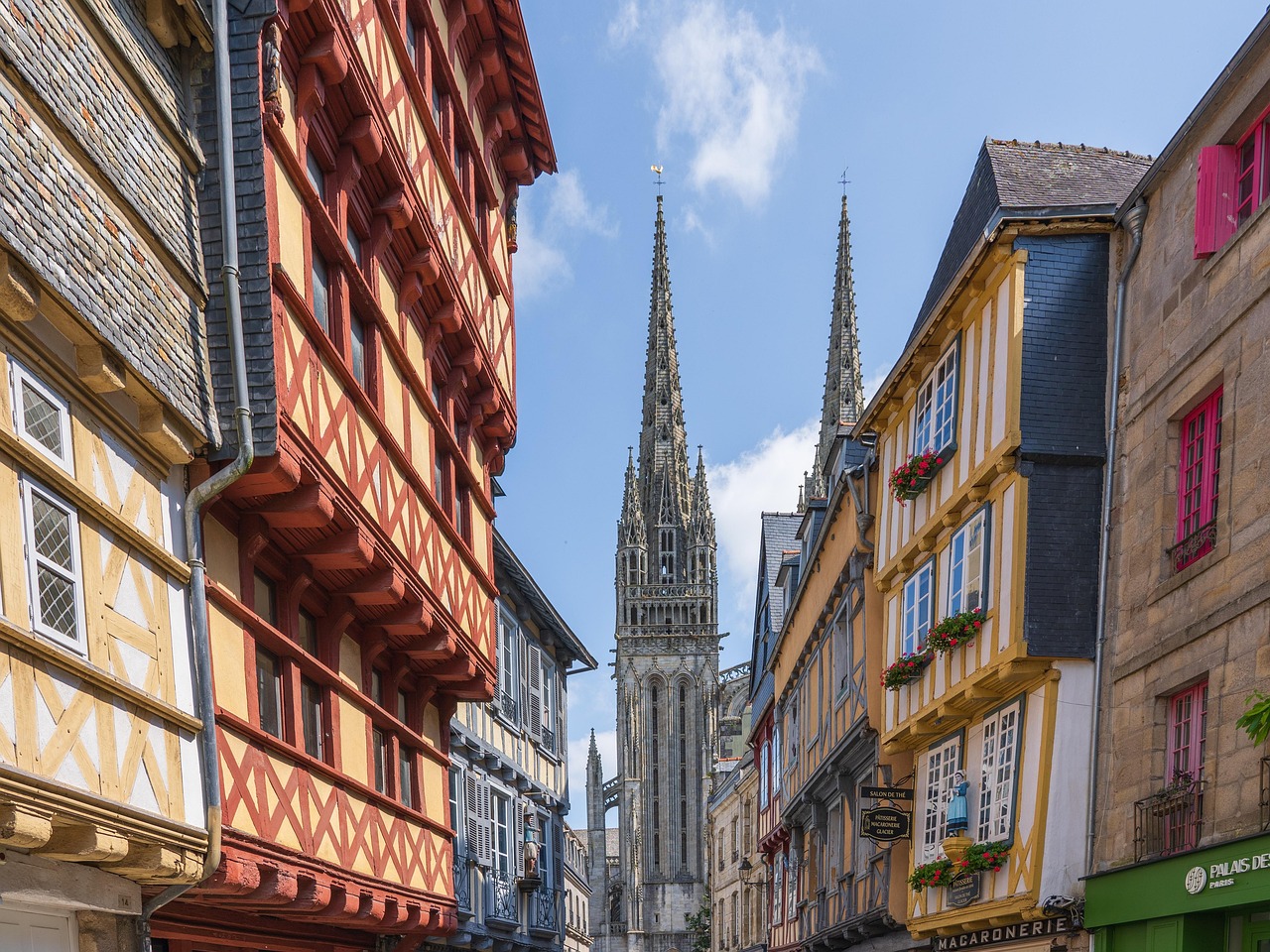
Why Visit Quimper? What Makes This Small Breton City So Special
Quimper is one of those places that quietly steals your heart. No Eiffel Tower, no metro, no frantic bucket‑list crowds—just cobbled lanes, crooked half‑timbered houses, a jaw‑dropping Gothic cathedral, and a riverfront where locals actually have the time to say bonjour and mean it.
I’ve lived between Quimper and nearby coastal villages for years, and I still get that little thrill every time I walk over the Odet river bridges and see the twin spires of Saint‑Corentin Cathedral rising above the medieval rooftops. Quimper is small enough to feel intimate, but big enough to keep you busy for several days: museums, markets, creperies, riverside walks, Celtic festivals, pottery workshops, and some of the best galettes in Brittany.
This travel guide for Quimper is written as if I’m walking you around the city personally: where I actually eat, where I send my friends when they visit, which streets to wander at golden hour, and how to shape a 3, 4, or 5 day itinerary for Quimper that mixes must‑see attractions with genuine local life.
Whether you’re planning 3 days in Quimper as part of a Brittany road trip, a relaxed 4 day itinerary for Quimper focused on culture and food, or a deeper 5 days in Quimper to explore both the town and surrounding coastline, this guide will help you plan it in detail.
Table of Contents
- Why Visit Quimper
- Quick Overview of Quimper in 2026
- Suggested 3, 4 & 5 Day Itineraries for Quimper
- 20 Must‑See Attractions in Quimper (Deep Dive)
- Neighborhoods & Areas to Explore
- Best Local Food in Quimper & Where to Eat
- Nightlife, Entertainment & Cultural Experiences
- Best Day Trips from Quimper
- Major Events & Festivals 2026–2027
- Local Customs & Cultural Etiquette
- Practical Travel Tips for Quimper
- Summary & Final Recommendations
Quick Overview of Quimper in 2026
Quimper (pronounced more like “Kam‑pair” than “Quim‑per”) is the historical capital of Cornouaille in Brittany, western France. With around 63,000 residents, it’s a compact, walkable city wrapped around the confluence of three rivers: the Odet, Steïr, and Jet. The old town is a postcard of medieval timbered houses, stone bridges, and café terraces.
In 2026, Quimper feels quietly confident. Tourism has grown, but it’s not overwhelmed. The historic center has been steadily pedestrianized, the riversides are greener, and there’s a fresh wave of young chefs, craft brewers, and designers breathing new life into traditional Breton culture.
- Region: Brittany (Bretagne), Finistère department
- Language: French, with Breton visible on signs (you’ll hear it during festivals)
- Vibe: Medieval, relaxed, creative, strongly regional
- Perfect for: Culture lovers, foodies, families, couples, slow travelers
- Not ideal if: You need big‑city nightlife or skyscraper skylines
3, 4 & 5 Day Itineraries for Quimper
Below are flexible itineraries that you can adapt to your pace. I’ve written them as I’d plan for close friends visiting for the first time. Each “day” mixes big‑name sights, hidden gems, and local food stops.
3 Day Itinerary for Quimper – A Perfect First Taste
If you only have 3 days in Quimper, this itinerary hits the must‑see attractions while keeping things relaxed. It’s ideal for first‑timers, couples, and families.
Day 1 – Old Town, Cathedral & River Walks
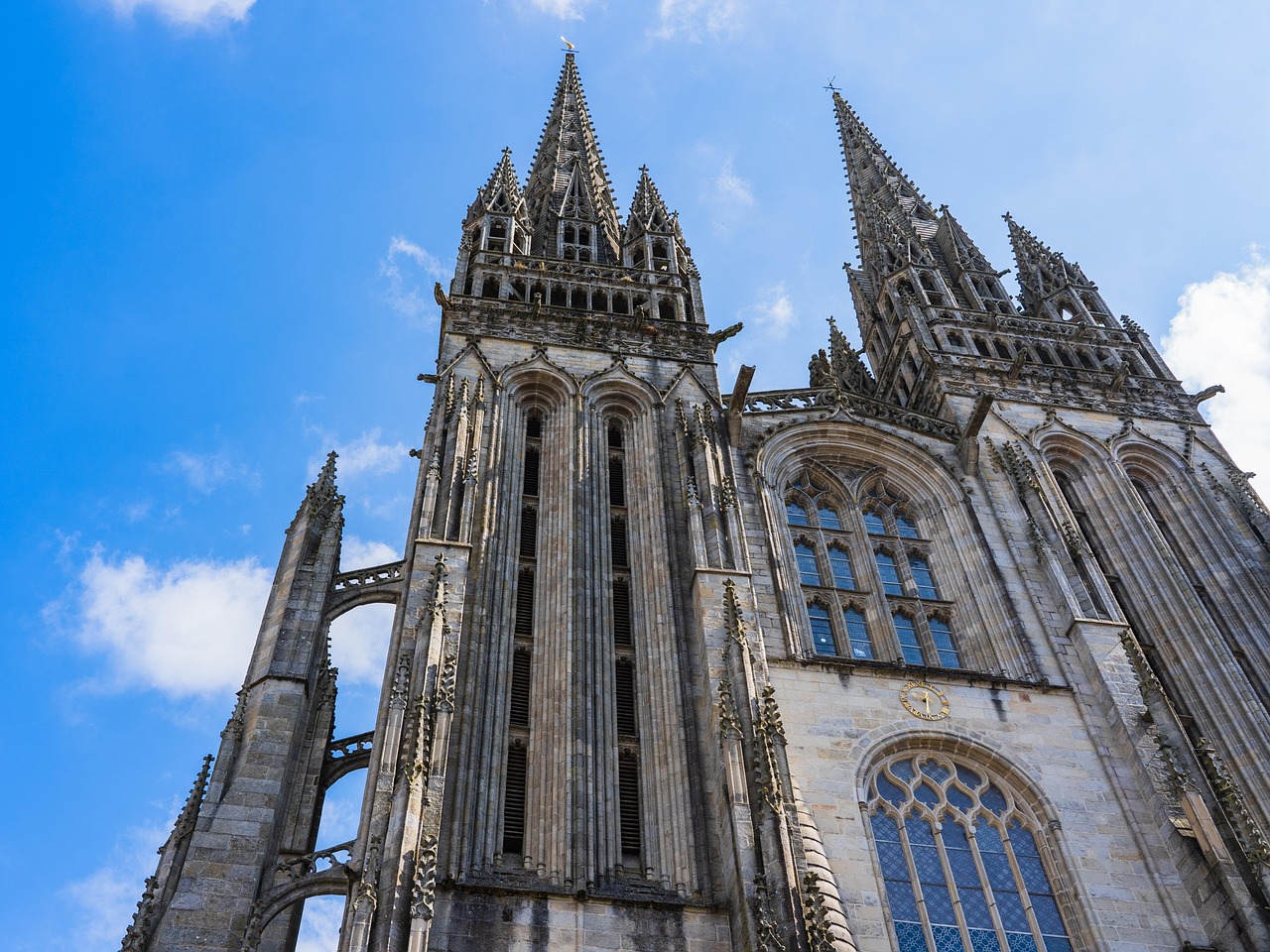
I like to start every visitor in the same place: in front of Saint‑Corentin Cathedral, under the stone gaze of its twin spires. If you arrive in the morning, the light pours through the stained glass and paints the floor in jewel tones.
Spend your first morning:
- Exploring Saint‑Corentin Cathedral inside and out
- Wandering the place Saint‑Corentin and the half‑timbered streets around it
- Stopping for a coffee at a terrace on Place au Beurre (also known as “Crêpe Square”)
For lunch, grab a traditional galette complète (ham, cheese, egg) at one of the old‑town creperies—I often go to a small, unfussy spot just off the square where the menu is still handwritten and the cider comes in chipped bowls.
In the afternoon, follow the Odet river downstream. Cross the little pedestrian bridges, peek at the flower‑decked houses, and loop back via the Steïr river. If your legs still have energy, detour up to the Jardin de la Retraite, a surprisingly exotic garden tucked behind old stone walls.
Day 2 – Museums & Breton Culture
On your second day, dive into Quimper’s layered history and art.
- Morning at the Musée Départemental Breton (costumes, archaeology, folklore)
- Afternoon at the Musée des Beaux‑Arts (fine arts, Breton painters, Pont‑Aven school)
I like to break up the museum time with a picnic from the Halles Saint‑François, the covered market. Pick up a wedge of local cheese, a baguette, some charcuterie, and fruit, and walk a few minutes to eat by the river.
In the evening, check if there’s a concert or dance event at the Théâtre de Cornouaille or a local fest‑noz (traditional Breton night festival with live music and dancing). These are fantastic cultural experiences in Quimper—don’t be shy, locals will happily pull you into the circle dances.
Day 3 – Faïence, Locmaria & Countryside Feel
Day three is for the quieter side: pottery, riverside walks, and the village‑like Locmaria district.
- Walk (20 minutes) or take a quick bus ride to Locmaria
- Visit the Quimper Faïence Museums & workshops
- Explore the Romanesque church of Locmaria and the riverside cloister garden
Grab lunch at a riverside café here—this is where I come when I want to feel like I’ve left the city without actually leaving it. In the afternoon, you can either:
- Continue strolling along the Odet (toward the more natural, leafy stretches), or
- Head back to town for last‑minute shopping (local food, striped Breton shirts, ceramics)
For a low‑key final evening, I’d suggest a relaxed seafood dinner in the center, followed by a slow wander through the old town as the lights come on and the cathedral glows. That’s usually the moment visitors say, “We should’ve booked more than 3 days in Quimper…”
4 Day Itinerary for Quimper – Add Coast & Countryside
With 4 days in Quimper, you can keep the 3‑day structure and add a coastal escape.
Day 4 – Day Trip to Bénodet & the Odet River
On your fourth day, take a bus or drive to Bénodet, Quimper’s closest seaside resort (about 20–25 minutes). If you’re here in late spring or summer, I highly recommend:
- A boat cruise on the Odet river between Quimper and Bénodet (one of the most beautiful rivers in France)
- Time on the sand beaches and the coastal promenade
- A stop at a café overlooking the water for crêpes and a bolée of cider
Return to Quimper in the late afternoon. If you still have energy, stroll through a different part of the city—perhaps the modern shopping streets around Rue Kéréon—for a glimpse of everyday local life.
5 Day Itinerary for Quimper – Deep Dive into Brittany’s Soul
With 5 days in Quimper, you can comfortably explore the city, enjoy two different coastal flavors, and dip into the rugged, wild side of Finistère.
Day 4 – Odet River & Bénodet (as above)
Day 5 – Wild Coast: Pointe du Raz or Locronan & Douarnenez
For a fifth day, I usually suggest one of two options, depending on your energy and whether you’re traveling with kids:
- Locronan & Douarnenez – Medieval stone village plus a pretty harbor town, very family‑friendly
- Pointe du Raz – Dramatic cliffs and Atlantic views, more outdoorsy and windswept
Both can be reached by car (easiest) or bus (slower, but possible). I’ll detail these more in the Day Trips section below, but for a 5 day itinerary for Quimper, this final day is where Brittany’s raw beauty really hits you.
20 Must‑See Attractions in Quimper – Detailed Local Guide
Here’s a closer look at the best places to visit in Quimper. For each one I’ll share history, what to actually do there, and some personal notes or travel tips.
1. Saint‑Corentin Cathedral (Cathédrale Saint‑Corentin)
The Saint‑Corentin Cathedral is Quimper’s soul. Its two spires dominate the skyline, making it the natural orienting point for your whole stay. Construction started in the 13th century and went on for centuries, which is why you’ll notice different Gothic styles as you circle the exterior.
I love approaching from the Rue Kéréon side: the half‑timbered houses open up suddenly onto the square and the cathedral rears above you, slightly bent. Yes, the cathedral actually bends—the nave is subtly angled to avoid marshy ground, which gives it a unique, almost organic feel inside.
Inside highlights:
- The stained glass windows, some of the finest in Brittany, especially luminous on bright mornings
- The choir stalls and carved details—look for tiny faces and animals
- The sense of vertical space; stand in the center and just look up for a while
Tips: Go soon after opening (usually 9–9:30 am) to avoid tour groups. Dress modestly (no beachwear), keep voices low, and avoid flash photography. If you’re here at Christmas or during major festivals, step in during an organ rehearsal—the acoustics are goosebump‑worthy.
2. Medieval Old Town & Half‑Timbered Houses
The old town around the cathedral is where you’ll spend a big chunk of your time. It’s compact, but every lane has its own personality. Many of the houses date back to the 15th–17th centuries, with overhanging upper floors and colorful wooden beams.
My favorite walking route:
- Start on Rue Kéréon (main shopping street with cathedral view)
- Wander to Rue des Boucheries and Rue du Sallé for the most crooked facades
- Loop via Place au Beurre (Crêpe Square) and Place Terre au Duc
In the early evening, when shop shutters come down and people linger over drinks, the old town feels like a big village square. This is a great time for people‑watching and photography—the warm lights on stone and wood are beautiful.
Family tip: Kids love spotting the oldest date carved into beams or finding the narrowest alley. Turn it into a little scavenger hunt to keep them engaged.
3. Musée Départemental Breton
Housed in the former Episcopal Palace next to the cathedral, the Musée Départemental Breton is where you really learn what makes Brittany—and Quimper—so distinct. This is not a stuffy museum; it’s full of color, textiles, carved wood, and little everyday objects that tell big stories.
What you’ll see:
- Traditional Breton costumes from different areas (the headdresses alone are incredible)
- Archaeological finds from prehistoric to medieval times
- Exhibits on Breton language, myths, and daily life
On my last visit, I lingered over a series of black‑and‑white photos of rural life in early 20th‑century Cornouaille. Seeing those faces, then stepping back outside into the modern city, gives you a real sense of continuity.
Tip: Combine this with the cathedral in one morning. There are English explanations for the main pieces, but if you read French you’ll get more nuance.
4. Musée des Beaux‑Arts de Quimper
Just across the square from the cathedral, the Musée des Beaux‑Arts punches far above its weight for a city of this size. If you’re into painting, this is one of the must‑see attractions in Quimper.
Highlights:
- Works from the Pont‑Aven school and Breton landscape painters
- A strong collection of 19th‑century French art
- Rotating temporary exhibitions—check what’s on in 2026 when you visit
I like to duck in here during the middle of the day, when the streets are hottest or most crowded. The galleries are calm, well‑lit, and perfect for an hour or two of quiet wandering. On rainy days (this is Brittany, after all), it becomes my refuge.
5. Odet River Walks & Bridges
The Odet river is often called “the prettiest river in France,” and while that might be local pride talking, it’s definitely one of the most atmospheric. In Quimper, the Odet is lined with stone quays, flower boxes, and little terraced houses whose reflections ripple in the water.
My usual loop:
- Start at the footbridge near the cathedral
- Walk downstream along the right bank, crossing each small bridge as you go
- Circle back along the left bank, ending near the covered market
In spring and summer, flower displays are at their peak and you’ll see rowers gliding by in the morning. In winter, mist hangs low over the water and the scene feels almost medieval.
Romantic tip: Sunset along the Odet is one of the most romantic activities in Quimper. Bring a takeaway crêpe or an ice cream and stroll slowly; the cathedral reflections at dusk are beautiful.
6. Steïr River & Old Mills
The Steïr river, a tributary of the Odet, feels more intimate and slightly wilder. Walking along its banks, you’ll pass old mills and quieter residential streets. When I need a mental reset, this is where I go.
Look for the remains of historic watermills and note how the city quickly softens into greenery. It’s a reminder that Quimper is surrounded by countryside; within 10–15 minutes on foot from the cathedral, you can be watching ducks and listening to birds instead of traffic.
7. Locmaria District & Romanesque Church
Locmaria is technically part of Quimper, but it has a distinct village feel. It’s also the historical cradle of the city, with human settlement here dating back to Roman times.
The key sight is the Romanesque church of Notre‑Dame de Locmaria, one of the oldest churches in Brittany. It’s small and simple compared to Saint‑Corentin, but that’s exactly its charm—thick stone walls, rounded arches, and a quiet, contemplative atmosphere.
Just behind the church, you’ll find a cloister‑like garden with views over the river. When I bring friends here, they often can’t believe we’re still in the same city we left 20 minutes earlier.
8. Quimper Faïence Museums & Workshops
Quimper is famous across France for its faïence—a type of tin‑glazed pottery with distinctive Breton designs. Even if you’re not usually into ceramics, seeing how these are made is worth your time.
In Locmaria, you can visit historic faïence factories and workshops, where artisans still hand‑paint plates, bowls, and figurines. Many have small museums attached, tracing the evolution of designs from the 17th century to today.
I still have a small Quimper faïence bowl I bought on a rainy afternoon years ago; it’s chipped now, but I use it for olive pits and it never fails to transport me back.
Tip: If you want to bring home something genuinely local, skip the mass‑produced souvenir shops and buy directly from these workshops. Prices range from accessible to collector‑level, but there’s usually something for every budget.
9. Jardin de la Retraite
The Jardin de la Retraite is one of Quimper’s true hidden gems. Tucked behind stone walls just off a busy street, this terraced garden feels almost Mediterranean, with palm trees, exotic plants, and sun‑warmed steps.
It was created in the 19th century on the former grounds of a religious community. Today, it’s free to enter and rarely crowded. I often come here with a book or coffee to sit on one of the stone benches and listen to the rustle of leaves above the city hum.
Family tip: Great spot for kids to burn energy without worrying about traffic. There are steps and some steep sections, so keep an eye on very young children.
10. Halles Saint‑François (Covered Market)
If you want to understand the local food culture, go to the Halles Saint‑François. This covered market is where locals actually shop for produce, cheese, fish, and charcuterie. The best time is morning, especially Saturday when it’s at its liveliest.
What I usually do:
- Walk one lap just to see what’s in season
- Pick a cheese I’ve never tried before (ask the vendor for something “bien local”)
- Grab fresh oysters if you’re adventurous—they’ll open them for you
This is also where you’ll find some of the best local food in Quimper to assemble a picnic: bread, pâté, fruits, a bottle of cider. Eating by the river afterward is one of those simple pleasures that makes travel memorable.
11. Place au Beurre – “Crêpe Square”
Place au Beurre is crêpe heaven. This little square is lined with creperies, each with its own take on the classic galettes (savory buckwheat crêpes) and sweet crêpes.
I have a soft spot for the very simple: a galette with local cheese and a fried egg, followed by a butter‑sugar crêpe and a bowl of slightly dry Breton cider. Sit outside if the weather allows and plan to linger; meal times are slower in Brittany than many visitors are used to.
Tip: In high season, go early (around 12:00 for lunch or 19:00 for dinner) to avoid waits. For more atmosphere, choose a place where you can see the crêpiers at work.
12. Théâtre de Cornouaille & Cultural Center
The Théâtre de Cornouaille is Quimper’s main performing arts venue, hosting theater, dance, music, and festivals. Architecturally, it contrasts beautifully with the old town—a modern building that signals Quimper’s contemporary cultural life.
I’ve seen everything here from modern dance to Breton harp concerts. Even if you don’t speak French, music and dance performances can be very accessible. Check the 2026 program ahead of your trip if cultural experiences in Quimper are a priority.
13. Jardin du Prieuré de Locmaria (Priory Garden)
Behind the Locmaria church lies the Jardin du Prieuré, a formal, almost monastic garden designed with medieval inspirations. Divided into sections of medicinal plants, vegetables, and ornamentals, it’s like a living history lesson.
On warm days, I like to walk the little gravel paths, reading the plant labels (in French and Latin) and imagining how monks once used these herbs for remedies and cooking.
14. Quais de l’Odet & Architectural Perspectives
The quays of the Odet offer some of the best architectural perspectives in Quimper: stone bridges, flowered railings, and lines of 18th‑ and 19th‑century townhouses. This is where you’ll really appreciate the city’s layered history—medieval roofs behind classical facades, modern life moving through it all.
Walk both sides of the river to see how the skyline changes. In the evening, reflections of the lit‑up cathedral and old houses in the water make for one of the classic skyline views of Quimper.
15. École des Beaux‑Arts & Contemporary Art Spaces
Quimper has a strong artistic tradition, and the École des Beaux‑Arts plus small contemporary galleries around town keep that alive. Pop into any gallery you see open; many showcase local painters and ceramicists riffing on Breton themes in very modern ways.
If you like seeing a city’s creative side beyond museums, this is your path. Ask in the tourist office for a current map of galleries—they’re good at keeping track of new openings.
16. Rue Kéréon & Shopping Streets
Rue Kéréon is the main artery from the river to the cathedral. Yes, it’s shopping‑oriented, but it’s also architecturally rich, with cantilevered medieval houses, carved details, and ever‑present cathedral views.
Here you’ll find:
- Shops selling Breton striped shirts and nautical wear
- Artisan food boutiques (caramel au beurre salé, biscuits, cider)
- Cafés for a mid‑afternoon café crème or hot chocolate
Money‑saving tip: For edible souvenirs, compare prices here with the covered market; the Halles often have better deals and more local producers.
17. Parc de la Glacière & Green Belts
For a real breath of fresh air without leaving town, head to the Parc de la Glacière and surrounding green belts. Locals jog, walk dogs, and picnic here; tourists rarely venture this far, which makes it ideal if you’re staying longer and want to tap into everyday Quimper life.
18. Festival Venues & Fest‑Noz Spaces
Quimper hosts a variety of festivals, especially in summer, and many squares and halls transform into dance floors for fest‑noz (traditional night festivals). These dances are a huge part of cultural experiences in Quimper.
If you see posters for a fest‑noz during your stay, go. The music (bagpipes, bombards, fiddles) is hypnotic, and locals of all ages join in. Don’t worry about getting the steps perfect; just follow your neighbors and enjoy.
19. Médiathèque Alain‑Gérard (City Library)
The Médiathèque Alain‑Gérard is a modern library and cultural hub. It’s not on most tourist lists, but I include it because it shows another face of Quimper: contemporary, community‑oriented, and literate.
Step inside to browse books, exhibitions, or simply enjoy the calm. If you’re traveling long term and need a quiet place to work or read, it’s perfect.
20. Historic Cemeteries & Calvaries
Like much of Brittany, Quimper has historic cemeteries and calvaries (stone cross groups) that are rich in sculpture and symbolism. These quiet corners offer a different, contemplative kind of visit and some unusual architecture.
I often stop at one on my way back from a walk, just to read a few names and dates and feel connected to the generations who built the city around us.
Neighborhoods & Areas to Explore in Quimper
Centre‑Ville (Historic Center)
This is the heart of Quimper: cathedral, museums, old streets, cafés, markets. It’s where you’ll likely stay and spend most of your time. Streets are mostly pedestrianized, and everything is a short walk away.
Best for: First‑time visitors, nightlife, food, easy access to sights.
Locmaria
South of the center along the Odet, Locmaria is quieter and more residential, with the church, priory garden, and faïence workshops. It feels like a riverside village attached to the city.
Best for: Pottery, peaceful walks, feeling a step outside the tourist zone.
Kerfeunteun & Residential Hills
Kerfeunteun and similar outer districts are mainly residential, but if you’re staying in an Airbnb or with friends you may end up here. Hills offer some surprising views back toward the cathedral, and you’ll find more everyday shops and bakeries.
Zone Commerciale & Modern Areas
Like any French city, Quimper has outlying commercial zones with big supermarkets, DIY stores, and chain restaurants. They’re not pretty, but they can be practical if you’re self‑catering or traveling by car.
Tip: Avoid booking accommodation too far into these zones if you don’t have a car; you’ll spend your time walking along big roads instead of rivers and cobbles.
Best Local Food in Quimper & Where to Eat
Brittany is one of France’s great food regions, and Quimper is an excellent place to taste its classics without Paris prices. Think crêpes and galettes, fresh seafood, salted butter everything, and crisp apple cider.
Must‑Try Dishes & Drinks
- Galette complète: Buckwheat crêpe with ham, cheese, and egg—my default lunch.
- Seafood platters: Oysters, whelks, prawns; best near the coast but also good in Quimper.
- Kig ha farz: A traditional Breton meat and buckwheat dumpling dish; look for it on daily specials.
- Far breton: Dense custard‑like cake with prunes.
- Salted butter caramel: In sauces, ice cream, spreads—just give in.
- Breton cider: Served in bolées (bowls), ranging from sweet (doux) to dry (brut).
Where I Actually Eat (Representative Types of Places)
Names and offerings shift over time, but here’s the kind of places I gravitate to, all within or near the center:
- Old‑town creperies around Place au Beurre – For the classic galette + cider experience.
- Small bistros off the main streets – Daily chalkboard menus, often excellent value at lunch.
- Halles Saint‑François – For picnic supplies and quick bites, especially in the morning.
- Riverside cafés near the Odet – For coffee, cakes, and people‑watching.
- Locmaria cafés – Quieter, with a village feel and usually some pottery on display.
Money‑Saving Food Tips
- Lunch menus: Many restaurants offer a fixed‑price lunch (formule midi) that’s much cheaper than dinner.
- Picnics: Markets and bakeries make it easy to eat well on a budget by the river or in a park.
- Crêpes to go: Window‑service crêpes are cheaper than sit‑down and still delicious.
- Tap water: Ask for a carafe d’eau instead of bottled water; it’s free and normal.
Nightlife, Entertainment & Cultural Experiences in Quimper
Quimper isn’t a wild party city, but it has a cozy, convivial night scene and rich cultural life.
Evening & Nightlife Suggestions
- Wine and cider bars: Around the old town, you’ll find relaxed spots perfect for a glass before or after dinner.
- Breton pubs: Some bars lean into Celtic music and atmosphere; look for live music nights.
- Théâtre de Cornouaille: Check the program for concerts, theater, and dance.
- Fest‑noz: If you see a poster, go. These dances are the heartbeat of modern Breton culture.
Cultural Experiences
- Traditional music concerts: Harp, fiddle, and bagpipes in churches or halls.
- Exhibitions: Museums and galleries run temporary shows throughout the year.
- Workshops: Pottery painting, Breton cooking classes, or folk dance introductions (ask at the tourist office).
Best Day Trips from Quimper
Bénodet & Odet River Cruise
Distance: ~15 km / 20–25 minutes by bus or car.
Why go: Sandy beaches, relaxed seaside promenade, and the chance to cruise the lower Odet river, which winds between wooded banks and grand old villas.
What to do: Odet river cruise (in season), beach time, coastal walk, ice cream on the harbor.
Locronan & Douarnenez
Distance: Locronan ~15 km; Douarnenez ~25 km.
Why go: Locronan is one of France’s officially “most beautiful villages,” with impeccably preserved granite houses and a central square. Douarnenez offers harbors, seaside atmosphere, and maritime history.
What to do: Stroll Locronan’s stone streets, visit artisan shops, enjoy a crêpe; in Douarnenez, walk the harbor, visit the maritime museum (with historic boats), and eat fresh fish.
Pointe du Raz
Distance: ~50 km / around 1 hour by car.
Why go: For raw Atlantic cliffs, crashing waves, and the feeling of standing at the edge of the world. This is one of Brittany’s most iconic landscapes.
What to do: Coastal path walks, lighthouse views, photography. It’s windy—bring layers even in summer.
Concarneau & Pont‑Aven
Distance: Concarneau ~25 km; Pont‑Aven ~35 km.
Why go: Concarneau has a walled island town (Ville Close) in its harbor; Pont‑Aven is a riverside town famous for the painters (Gauguin and co.) who worked there.
What to do: Walk Concarneau’s ramparts, eat fish and chips on the quay; in Pont‑Aven, visit small galleries, riverside walks, biscuit shops.
Major Events & Festivals in Quimper (2026–2027)
Exact dates are confirmed year by year, but these are recurring highlights to watch for in 2026–2027:
- Summer Breton Festivals (July–August): Multi‑day celebrations of traditional music, dance, and costumes. Expect parades, concerts, and fest‑noz nights.
- Christmas Market (December): Lights, stalls, and hot drinks around the old town and cathedral square.
- Art & Pottery Events: The faïence heritage means regular exhibitions and craft fairs, particularly in Locmaria.
- Local Food Festivals: Weekend events celebrating cider, crêpes, or regional specialties; check the tourist office calendar for 2026–2027 dates.
Local Customs & Cultural Etiquette in Quimper
Bretons are friendly but a bit reserved at first. A few simple habits go a long way.
Greetings & Politeness
- Always say “Bonjour” (daytime) or “Bonsoir” (evening) when entering shops or speaking to someone, followed by “Madame” or “Monsieur”.
- “Merci, au revoir” when you leave a shop is appreciated.
- Smiles and eye contact are welcome, but not big hugs or backslaps with strangers.
In Restaurants & Cafés
- Seat yourself only if there’s no sign saying otherwise; often staff will show you a table.
- Take your time; meals are not rushed. Ask for the bill (“L’addition, s’il vous plaît”), it won’t appear automatically.
- Tipping is modest; service is included, but rounding up or leaving a few coins for good service is kind.
Religious & Cultural Sites
- Dress respectfully in churches (avoid bare shoulders, beachwear).
- Keep voices low, especially during services.
- Photography is usually fine but don’t use flash during services or on people at prayer.
Language
- French is the main language; Breton is visible on signs and in cultural contexts.
- Even if your French is basic, starting with a French greeting before switching to English is appreciated.
Practical Travel Tips for Quimper in 2026
Getting Around Quimper
- On foot: The historic center is very walkable; most attractions are within 10–15 minutes of each other.
- Bus: Local buses connect outer neighborhoods and nearby towns like Bénodet; tickets are inexpensive and can be bought on board.
- Bike: Cycling is possible, especially along rivers and toward the countryside, though the old town cobbles can be bumpy.
- Car: Useful for day trips; park in designated car parks around the center and walk in.
How to Save Money in Quimper
- Travel off‑peak: Late spring and early autumn are cheaper and less crowded.
- Use lunch specials: Eat your main meal at lunchtime, lighter in the evening.
- Self‑cater partly: Use markets and supermarkets for breakfast, snacks, or simple dinners.
- Walk: You won’t need taxis inside the city if you’re reasonably mobile.
- Free sights: Cathedral, old town, rivers, gardens, and many cultural events are free.
SIM Cards, Public Transport, Car Rental & Visas
SIM Cards & Connectivity
- Major French providers (Orange, SFR, Bouygues, Free) have coverage in Quimper.
- You can buy prepaid SIMs in phone shops or larger supermarkets; bring your passport.
- EU visitors often roam at domestic rates; check with your provider.
Arriving & Public Transport
- By train: Direct or connecting services from Paris and other French cities to Quimper station, which is a short walk or bus ride from the center.
- By bus: Regional buses connect Quimper to nearby towns and coastal spots.
Car Rental & Driving
- Rental cars are available in Quimper and at major arrival points like Paris or Rennes.
- Foreign driver’s licenses: Most European licenses are accepted; many other nationalities can drive with their home license for short stays, sometimes alongside an International Driving Permit. Check your country’s rules before travel.
- Driving is on the right; roundabouts are common; speed limits are enforced.
Visa Requirements (Overview)
- Quimper is in France, part of the Schengen Area.
- EU/EEA/Swiss citizens can enter with national ID or passport.
- Many other nationalities can visit for up to 90 days in 180 without a visa; others need a Schengen visa. Always check current official requirements well before your trip.
Best Time to Visit Quimper & Seasonal Advice
Brittany’s weather is maritime and changeable—bring layers year‑round. Each season has advantages:
Spring (April–June)
- Mild temperatures, flowers along the rivers, less crowded.
- Great for walking, early festivals, and photography.
Summer (July–August)
- Warmest weather, long days, peak festival season.
- Best for combining city with beaches and coastal hikes.
- Book accommodation in advance; prices higher.
Autumn (September–October)
- Still mild, fewer visitors, beautiful light.
- Excellent for a relaxed 3 or 4 day itinerary for Quimper focused on food and culture.
Winter (November–March)
- Quiet, some rain and stormy days, but also dramatic coastal scenes.
- Perfect if you like cozy cafés, museums, and Christmas markets.
Summary & Final Recommendations for Visiting Quimper
Quimper is not a city of single blockbuster attractions; it’s a place where the whole experience adds up: the crooked houses, the cathedral bells, the smell of buckwheat and butter, the feel of river breezes, the surprise of Breton music drifting from a square at night.
- For 3 days in Quimper: Focus on the cathedral, old town, rivers, museums, and Locmaria. You’ll leave with a solid feel for the city.
- For 4 days in Quimper: Add a trip to the coast—Bénodet and the Odet river are ideal.
- For 5 days in Quimper: Dive deeper with an extra day trip to Locronan, Douarnenez, Concarneau, or Pointe du Raz.
For most travelers, the best time to visit Quimper is late spring through early autumn, with June and September being especially good balances of weather and crowds. Whenever you come, plan to slow down. Sit by the Odet with a crêpe, wander without a map for a while, step into a fest‑noz if you pass one. That’s when Quimper really gets under your skin—and, if you’re like me, calls you back again and again.