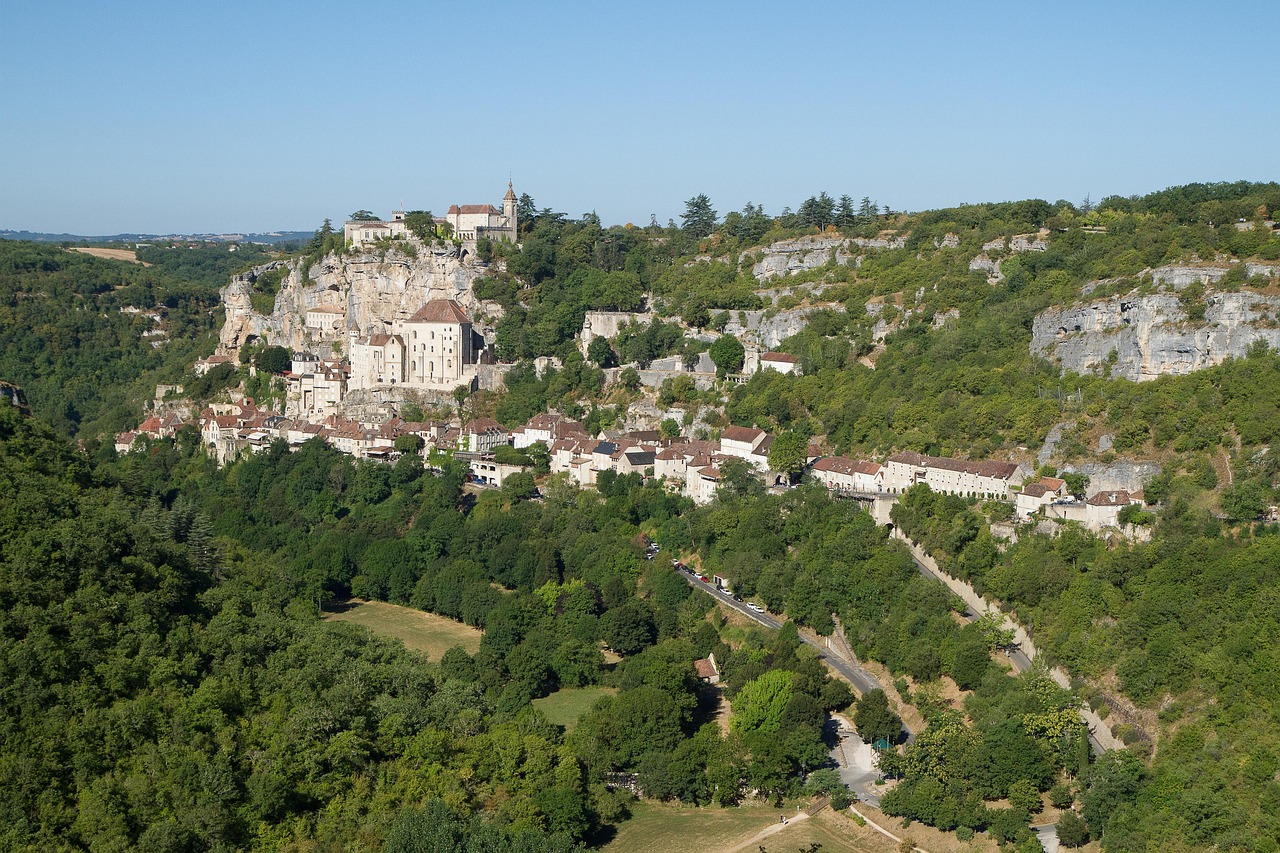
Why Visit Rocamadour in 2026?
Rocamadour is one of the most spectacular villages in France – and that’s in a country overflowing with spectacular villages. Built vertically into a cliff above a narrow gorge, it combines:
- Jaw-dropping scenery – A natural stone amphitheater with a storybook village glued to its face.
- Thousand-year-old pilgrimage heritage – Chapels, relics, legends of miracles, and the famous Black Madonna.
- Rich rural gastronomy – Goat cheese AOC, duck, walnuts, truffles, and hearty Quercy wines.
- Easy access to nature – Caves, river valleys, hiking routes, and some of France’s prettiest drives.
- Family-friendly adventures – Animal parks, easy walks, castles, and caves that kids (and adults) adore.
- Romantic corners – Quiet terraces at dusk, candlelit chapels, cliffside viewpoints with almost no one around if you time it right.
In 2026–2027, Rocamadour is leaning even more into slow, sustainable tourism. Several new walking routes, updated shuttle systems, and crowd-management measures mean you can enjoy the must-see attractions in Rocamadour with less stress, especially if you follow the timing tips I’ll share below.
Whether you have a 3 day itinerary for Rocamadour or you’re planning 4 or 5 days in Rocamadour as a base for the Lot and Dordogne, this guide will help you craft a trip that feels immersive, not rushed.
Table of Contents
- Why Visit Rocamadour in 2026?
- Quick Overview of Rocamadour
- Neighborhoods & Areas of Rocamadour
- 3–5 Day Itineraries for Rocamadour
- 20 Must-See Attractions in Rocamadour (Deep Dive)
- Local Food in Rocamadour & Where to Eat
- Nightlife, Entertainment & Cultural Experiences
- Events & Festivals 2026–2027
- Day Trips from Rocamadour
- Local Customs & Cultural Etiquette
- Practical Travel Advice for Rocamadour
- Summary & Best Time to Visit Rocamadour
Quick Overview of Rocamadour
Rocamadour is a small village (fewer than 700 residents) in the Lot department, in the Occitanie region of southwest France. It’s perched above the Alzou canyon and has been an important Christian pilgrimage site since at least the 12th century. Pilgrims came to venerate the Black Madonna and the tomb of Saint Amadour, climbing hundreds of steps on their knees as penance.
Today, Rocamadour is a UNESCO-listed site (part of the Routes of Santiago de Compostela in France) and one of the most visited villages in the country. That popularity means it can get crowded – but with smart timing and a good plan, you can still find quiet corners and authentic experiences.
Expect steep climbs, stone alleys, sweeping views, and a strong sense of history. This is not a nightlife or shopping city; it’s a place to slow down, look up at the cliff, listen to the bells, and eat very, very well.
Neighborhoods & Areas of Rocamadour
Rocamadour is compact, but it has distinct zones that feel like mini-neighborhoods. Staying or spending time in each area gives you a slightly different experience.
1. Le Village (The Medieval Street)
This is the main pedestrian street that snakes along the middle level of the cliff, lined with stone houses, restaurants, and small hotels. In peak season it can be shoulder-to-shoulder at midday, but at night or early morning it feels intimate and cinematic.
I often stay in small guesthouses here because you can step out and be in the heart of everything. The trade-off is noise in summer evenings, but double-glazed windows and a late glass of Cahors wine usually solve that.
2. Le Sanctuaire (Sanctuary Level)
Above the village, accessible by the Grand Escalier or elevators, lies the complex of churches, chapels, and the plaza. This is the spiritual and emotional heart of Rocamadour. Bells chime, candles flicker, and pilgrims quietly queue to see the Black Madonna.
I like to come here just after sunrise or just before closing when the tour groups are gone. Even if you’re not religious, there’s a palpable serenity.
3. Le Château & Ramparts (Top of the Cliff)
At the very top you have the 19th-century château and its ramparts. The château itself is privately owned, but you can walk the ramparts for incredible panoramic views of the canyon, the village, and the surrounding countryside.
This is where I bring friends on their first evening: we buy some Rocamadour cheese, a baguette, and a small bottle of wine, then watch the light fade over the valley. Pure magic.
4. Vallée de l’Alzou (The Valley Floor)
Down below the cliff, the valley floor feels almost rural compared to the bustle above. There’s a quiet road, some picnic spots, and walking paths that give you those postcard views looking up at the village.
If you’re driving, this is where some of the main parking areas are; it’s also a good place for families to let kids run a bit without fear of them tumbling down a medieval staircase.
5. L’Hospitalet (The Outlook Hamlet)
Just across the canyon, a few minutes’ drive (or a scenic walk) from Rocamadour proper, L’Hospitalet is more of a hamlet than a neighborhood – but it’s where you get the classic “skyline” view of the village. There are a few hotels, restaurants, and the main postcard-perfect lookout.
I often recommend people stay here if they want free parking, easier car access, and quieter evenings while still being less than 10–15 minutes’ walk from the heart of Rocamadour.
3–5 Day Itineraries for Rocamadour
Whether you’re planning a 3 day itinerary for Rocamadour or stretching to 4 or 5 days in Rocamadour, the key is pacing. The village is small but vertical, and the real joy lies in lingering – not sprinting up and down the steps four times a day.
Below are three detailed itineraries based on my own stays. Each day mixes iconic sights, hidden gems, and local food, tailored for different trip lengths. Feel free to swap days around depending on weather and energy.
3 Days in Rocamadour – Classic Highlights & Gentle Explorations
Day 1 – First Glimpse, The Village, and Nighttime Rocamadour
On my last 3-day visit, I arrived in Rocamadour around midday, checked into a small guesthouse in the lower part of the village, and immediately ignored my luggage in favor of a walk. If you’re driving, park in one of the designated car parks in the valley (P1, P2, or P3; they’re well signposted) and take the shuttle or walk up.
I always start in L’Hospitalet, across the canyon, because your first look at Rocamadour from here sets the tone for the whole trip. Stand at the viewpoint, let your eyes travel from the château down through the sanctuary and to the village street hugging the rock. It’s one of the best places to visit in Rocamadour for that “wow” moment.
Afternoon: Wander the Medieval Street (La Cité)
Walk or shuttle down into the village and enter via the Porte du Figuier, the stone gate at the lower end. The main street, Rue de la Couronnerie, is lined with shops selling local food (lots of Rocamadour cheese), pilgrim medals, and regional crafts. Yes, there are touristy bits, but look up: carved lintels, old wooden beams, tiny shrines tucked into corners.
I like to:
- Stop for a coffee or a glass of local wine at a terrace and just people-watch.
- Duck into small side alleys – some end in tiny viewpoints over the valley.
- Visit the small Tourism Office for maps of walking paths and updated info on 2026 events.
Late Afternoon: First Ascent to the Sanctuary
When the day-tripper buses start to thin (usually from about 4 pm), head up the Grand Escalier, the Great Staircase leading to the sanctuary level. Historically, pilgrims climbed this on their knees; you can just use your feet, but take your time.
At the top, you emerge into the sanctuary plaza, surrounded by chapels. I recommend:
- Popping into the Basilique Saint-Sauveur to admire the Gothic nave.
- Spending time in the Chapelle Notre-Dame with the Black Madonna (more on that in the attractions section).
- Stepping out onto the Belvédère lookout for views back down into the gorge.
Evening: Rocamadour by Night
As the sky darkens, the cliff and buildings are lit up in soft golden light. This is my favorite time in Rocamadour. Have dinner in the village – look for places with regional menus featuring duck, lamb, and Rocamadour cheese – then stroll the street again when it’s nearly empty.
If you still have energy, walk a short portion of the Chemin de Croix (Way of the Cross) or simply find a bench and listen to the quiet. Families usually head in early; couples linger with dessert and wine.
Day 2 – Pilgrimage, Château Views & Valley Walks
Morning is when Rocamadour feels most sacred. I like to wake early, grab a simple breakfast (coffee and a croissant) in the village, and be at the sanctuary as the doors open.
Morning: Deep Dive into the Sanctuary
Use this second visit to explore properly:
- Walk the series of small chapels tucked under the cliff.
- Look for the hanging ex-votos – offerings from sailors and others who believed the Virgin saved them.
- Spend unhurried time in front of the Black Madonna – regardless of belief, there’s a thousand years of human hope in that small statue.
If there’s a morning mass, sit quietly at the back for a few minutes; it’s a powerful way to feel the living faith of the place, not just its tourism.
Late Morning: Chemin de Croix & Château Ramparts
From the sanctuary, follow the Chemin de Croix, the path that climbs through shaded woodland past 14 stations depicting the Passion of Christ. Even if you’re not religious, it’s a peaceful walk with occasional views back over the village.
At the top, pay the small fee to walk the Château ramparts. In 2026, they’ve continued maintaining the paths and safety rails, which makes it accessible for kids with supervision (though strollers won’t work here).
Afternoon: Picnic & Valley Walk
Stop by a small grocery or deli in the village and assemble a picnic: local bread, Rocamadour cheese, walnuts, and cured meats. Head down to the valley floor and find a shady spot along the Alzou.
After lunch, walk one of the marked trails that give you changing perspectives on the cliffside village. These are great for photography – and they let kids burn off energy without constant stair-climbing.
Evening: Quiet Corners & Local Wine
On this second night, try a different restaurant. I like to ask locals which places their families go to on a Sunday – you’ll often end up somewhere less flashy and more authentic. Look for a chance to try:
- Magret de canard (duck breast) grilled over a wood fire.
- Tourte aux noix (walnut tart) for dessert.
- A glass or two of Cahors red wine or a lighter local rosé.
Day 3 – Caves, Countryside & Farewell Views
For your final day, balance one of the famous nearby caves with some relaxed time back in Rocamadour.
Morning: Gouffre de Padirac or Grotte de Lacave
Drive (or join a tour) to either:
- Gouffre de Padirac – A spectacular chasm and underground river you explore partly by boat.
- Grotte de Lacave – A beautiful cave system with dramatic lighting and easy access.
Both are among the best day trips from Rocamadour, and kids love them. Book tickets ahead in high season (June–September, school holidays).
Afternoon: Last Wanders & Shopping
Return to Rocamadour by mid-afternoon. Use this time to:
- Pick up edible souvenirs – vacuum-packed cheese, walnut oil, local honey.
- Take any last photos from your favorite viewpoints.
- Visit any small chapels or museums you missed.
Evening: Golden Hour Farewell in L’Hospitalet
End your 3 days in Rocamadour back at L’Hospitalet. From the main viewpoint, watch the cliffside village glow as the lights come on. It’s a fitting farewell – the kind that makes you whisper “We’ll be back” and actually mean it.
4 Days in Rocamadour – Adding Deeper Walks & Villages
With 4 days in Rocamadour, you can follow the 3 day itinerary above and add an extra day focused on slow travel: more hiking, more villages, and more time in local cafés rather than in queues.
Day 4 – Causse Walks & Dordogne Village Charm
Morning: Walk on the Causse (Limestone Plateau)
The “causse” is the limestone plateau above Rocamadour, dotted with dry stone walls, low oaks, and sheep. It’s a stark, beautiful landscape that feels worlds away from the tourist bustle below.
Ask the tourist office for a current map of marked trails. I like a ~2–3 hour circular walk starting near L’Hospitalet, looping across the plateau, and returning via a different valley. Bring water, a hat, and good shoes – the terrain is rocky but not difficult.
Afternoon: Visit a Nearby Village
In the afternoon, drive out to Carennac or Loubressac, both listed among “Les Plus Beaux Villages de France.” These villages offer:
- Stone houses with lauze (stone) roofs and flower-decked balconies.
- Quiet lanes where kids can roam more freely.
- Small cafés that feel delightfully unhurried compared to Rocamadour’s main street.
Evening: Casual Dinner & Early Night
After three days of climbing and exploring, day four is a good time for an early night. Grab a simple dinner – even a takeaway crêpe eaten on a bench – and enjoy the luxury of not having anything on your agenda except sleep.
5 Days in Rocamadour – Slow Immersion & Hidden Gems
A 5 day itinerary for Rocamadour lets you truly sink into the rhythm of the place. I did this a couple of years ago in early June, working remotely in the mornings and exploring in the afternoons, and it remains one of my most restorative trips.
Day 5 – Animal Parks, River Time & Secret Viewpoints
Morning: Family-Friendly Animal Parks
If you’re traveling with children, use one morning to visit the nearby Rocher des Aigles (Eagles’ Rock) or Forêt des Singes (Monkey Forest). Both are very close to Rocamadour and are perennial kid favorites.
- Rocher des Aigles – Birds of prey shows with eagles, vultures, and other raptors, set against the cliff.
- Forêt des Singes – A large park where Barbary macaques roam semi-freely; you walk among them.
Afternoon: River Swim or Canoe
On a hot day, head to the Dordogne River for a swim or canoe trip. This is one of the most refreshing ways to escape the heat that bounces off Rocamadour’s stones in high summer.
Rental bases along the river offer 1–3 hour canoe routes suitable for beginners and families. You’ll pass under dramatic cliffs and by more pretty villages.
Evening: Hidden Viewpoints & Last Supper
For your final evening, ask a local (your hotel host, a shopkeeper) for their favorite little-known viewpoint. Over the years I’ve been sent to:
- A tiny ledge off a side path of the Chemin de Croix.
- A meadow above L’Hospitalet with no one else in sight.
End with a lingering dinner, maybe splurging slightly on a more gourmet take on local food in Rocamadour. Toast the cliff one last time and start planning when you’ll return.
20 Must-See Attractions in Rocamadour (Deep Dive)
These are the best places to visit in Rocamadour and its immediate surroundings. For each, I’ll share history, what to expect, and personal tips from my visits.
1. Sanctuary of Rocamadour (Le Sanctuaire)
The sanctuary complex, halfway up the cliff, is the beating heart of Rocamadour. It’s a cluster of chapels, churches, and stairways tucked into the rock, all wrapped around a central courtyard.
Founded between the 11th and 13th centuries, the sanctuary grew as Rocamadour became a major stop for pilgrims heading to Santiago de Compostela. Kings, nobles, and commoners came to seek miracles from the Virgin Mary.
I still remember the first time I stepped into the courtyard: the rock wall rising behind the chapels, the faint smell of wax and stone, and the soft murmur of prayers. I’d visited plenty of churches before, but this felt like a vertical monastery carved into a cliff.
Don’t Miss:
- The worn stone steps of the Grand Escalier, polished by centuries of knees and feet.
- Small details – carved angels, ancient inscriptions, and ex-votos hung in thanks for miracles.
- The way the chapels are literally embedded in the rock – look up to see natural stone forming parts of the ceilings.
Tips: Visit early morning or late afternoon; dress modestly (shoulders covered) out of respect; speak softly – this is still a living sanctuary.
2. Chapelle Notre-Dame & The Black Madonna
Inside the sanctuary complex, the Chapelle Notre-Dame houses Rocamadour’s most famous relic: the Black Madonna, a small wooden statue of the Virgin Mary and Child, darkened over centuries by candle smoke and age.
The chapel itself is intimate, with a vaulted ceiling and a slightly mysterious light. Pilgrims line up quietly to stand before the statue; some touch the stone, others simply gaze. The atmosphere is hushed but not oppressive.
On one visit, I watched a grandmother whispering to a wide-eyed little girl, explaining that generations of their family had come here. It struck me that in all our fast travel, places like this are anchors – not just for faith, but for continuity.
History Note: The Black Madonna of Rocamadour has been credited with countless miracles since the Middle Ages, especially by sailors and the sick. Many ex-votos (votive offerings) around the chapel are thanks for healings or rescues at sea.
Tips: Photos may be restricted or discouraged inside; check signs and follow the lead of locals. Even if you’re not religious, treat the space with quiet respect.
3. Basilique Saint-Sauveur
The Basilique Saint-Sauveur is the largest church in the sanctuary complex and part Romanesque, part Gothic. It’s where many of the larger liturgies and concerts take place.
Architecturally, I love the way the heavy stone columns and arches frame slender stained-glass windows. The echo of footsteps on the old slabs, the smell of incense, and the occasional distant bell add to the atmosphere.
In 2026, the basilica continues to host classical and sacred music concerts, especially in the summer festival season. I once listened to a string quartet here, the notes rising into the vaulted ceiling – the acoustics are superb.
Tips: Check the 2026–2027 program at the tourist office or church noticeboard; if a concert coincides with your stay, it’s worth planning your evening around it. Arrive 15–20 minutes early for a good seat.
4. Grand Escalier (Great Staircase)
The Grand Escalier is the main stairway linking the village street to the sanctuary. Historically, pilgrims climbed its 200+ steps on their knees. You’ll likely walk it several times during your stay.
On one hot June afternoon, I made the mistake of charging up in a hurry; by the time I reached the top, I was breathless and missed much of the beauty along the way. Since then, I always take it slowly, pausing at landings to admire side chapels and small sculptures.
Tips: If you have mobility issues, use the elevators (small fee) tucked into the cliff; otherwise, wear good shoes, take your time, and drink water in summer. Early morning and evening climbs are cooler and quieter.
5. Château de Rocamadour & Ramparts
Perched at the top of the cliff, the Château de Rocamadour looks older than it is – the current structure is largely 19th-century, built on the site of older fortifications. The real attraction here is the rampart walk, which offers sweeping views over the gorge and village.
I like to come up here late in the day, when the heat has eased and the light is soft. The perspective from above makes you appreciate just how improbable Rocamadour’s vertical architecture really is.
Tips: There’s a small entrance fee to access the ramparts; bring a few coins. It’s not ideal for those with vertigo, but most of the path feels reasonably secure. Sunrise and sunset are both gorgeous up here.
6. L’Hospitalet Viewpoint & Chapel
L’Hospitalet is where many of the famous postcard shots of Rocamadour are taken. The main viewpoint is just steps from the road and offers a perfect, slightly elevated angle on the whole cliffside village.
The small chapel here commemorates an old pilgrims’ hospital; it’s a quiet spot to reflect before descending into the bustle of the main site.
I’ve lost track of how many sunsets I’ve watched from this viewpoint. Once, in mid-September, I stood with just three other people as swallows dipped in the valley and the village lights blinked on one by one. That memory alone keeps me coming back.
Tips: Arrive 30–40 minutes before sunset for the changing colors; in high season, parking here can be tight, so consider walking from your accommodation.
7. Chemin de Croix (Way of the Cross)
The Chemin de Croix is a peaceful path leading from the sanctuary up to the château, marked by 14 stations depicting the Passion. Each station is a small stone chapel or relief set among trees and rocky outcrops.
This is one of my favorite walks in Rocamadour. Even when the village feels crowded, the Chemin de Croix often has stretches where you’re alone with birdsong and your thoughts.
Tips: The path is uphill but not difficult; wear decent shoes and take water if it’s warm. It’s especially atmospheric in the early morning mist or golden light before sunset.
8. Alzou Valley Walks
The Vallée de l’Alzou beneath Rocamadour offers relatively flat walking paths along the dry riverbed and through woodland. From here, you get the dramatic upward view of the village.
One March trip, after a morning of drizzle, I walked the valley path almost alone, the rock walls darkened by rain and the village half-shrouded in mist. It felt like I’d stumbled into a medieval painting.
Tips: Paths are generally well-marked, but after heavy rain some sections can be muddy; check conditions at the tourist office. Great for families with strollers or those wanting a break from stairs.
9. Rocamadour Medieval Gateways & Fortified Walls
Rocamadour’s lower entrance, the Porte du Figuier, and other remnants of walls and towers hint at its fortified past. In the Middle Ages, these gates controlled who could enter the narrow cliffside town.
I like to pause under the arches and imagine the long lines of pilgrims who must have passed here, dusty and footsore, eyes turning upward in hope as they glimpsed the sanctuary for the first time.
Tips: Look for carved coats of arms and dates on the stone; kids enjoy spotting the defensive features, like arrow slits and heavy wooden doors.
10. Rocher des Aigles (Eagles’ Rock)
Just above Rocamadour, the Rocher des Aigles is a bird park specializing in raptors – eagles, vultures, falcons, and more. The highlight is the flying demonstrations, where birds swoop and glide over the valley with the village as backdrop.
I visited with friends’ kids one summer and was surprised by how much I enjoyed it myself. Watching a massive vulture glide silently just overhead, then circle back to the cliff, is unforgettable.
Tips: Check show times in advance (they vary by season). Bring a hat and sunscreen; many seats are in full sun. Educational signage is kid-friendly but mostly in French, though the visuals speak for themselves.
11. Forêt des Singes (Monkey Forest)
Another family favorite, the Forêt des Singes is a large park where Barbary macaques roam semi-freely. You walk on marked paths while the monkeys go about their business, often sitting just a few meters away.
On my last visit, a juvenile monkey sat on a fence post and watched us with as much curiosity as we watched him. Guides stationed throughout the park share information about behavior and conservation.
Tips: Don’t feed or touch the monkeys, and follow staff instructions; the park is very safety-conscious. It’s an easy half-day outing from Rocamadour, best in the morning before it gets hot.
12. Moulin du Saut & Alzou Gorge
A bit further along the Alzou gorge lies the ruined Moulin du Saut, an old mill perched dramatically above the gorge floor. The walk there is one of my favorite “hidden gems in Rocamadour” experiences.
The path winds along the gorge, with occasional views up to the cliffs. The mill ruins themselves feel romantic and slightly wild, especially if moss and ivy have had a good rainy season.
Tips: Wear sturdy shoes; the path is uneven in places. Check accessibility and any seasonal closures at the tourist office. Bring water and snacks – there are no cafés down here.
13. Rocamadour Night Illumination & Soundscapes
While not a single “site,” the night illumination of Rocamadour deserves its own mention. Each evening, the village and sanctuary are lit in a way that emphasizes their verticality and stone textures.
I love walking the main street around 10–11 pm in summer, when most day-trippers are gone. The lamps cast warm pools of light, windows glow, and the cliff looms dark above. From L’Hospitalet, the entire composition looks like something from a fantasy film.
Tips: Bring a light jacket; temperatures can drop quickly at night, even after hot days. Photographers should bring a tripod or brace their camera against walls for longer exposures.
14. Local Farms & Goat Cheese Producers
Rocamadour’s name doesn’t just belong to the village – it’s also an AOC-protected goat cheese. Visiting a local farm to see how it’s made is both delicious and enlightening.
On one visit, I joined a small group at a nearby ferme where the farmer showed us the goats, the milking process, and the affinage (aging) room. We tasted cheese at different stages – from very fresh and tangy to older, with a firmer texture and more complex flavor.
Tips: Ask at the tourist office for current farms offering visits in 2026–2027. Many require advance booking and are easiest to reach by car. Combine a morning visit with a picnic lunch featuring your new favorite cheese.
15. Grotte des Merveilles (Cave of Wonders)
Just above Rocamadour, the Grotte des Merveilles is a small but fascinating cave with prehistoric paintings and impressive stalactites and stalagmites. It’s less famous than Padirac or Lacave, which means fewer crowds.
The guided tours (usually in French, with written translations available) explain both the geology and the cave art. I found it a calm, cool escape on a hot afternoon, and the small group size meant we could ask lots of questions.
Tips: Wear a light jacket – cave temperatures are cool year-round. Book ahead in peak season, especially if you prefer an English-friendly tour slot.
16. Gouffre de Padirac (Day Trip)
About 35 minutes’ drive from Rocamadour, the Gouffre de Padirac is one of France’s most spectacular cave systems. You descend into a vast chasm, then board a small boat to glide along an underground river.
The first time I visited, the transition from bright sunlight to the cool, echoing cavern felt otherworldly. The guide’s flashlight picked out delicate rock formations as we floated past in near silence.
Tips: Essential to pre-book tickets online in summer 2026, including specific time slots. Arrive 30 minutes early; wear non-slip shoes. Not ideal for those with severe claustrophobia.
17. Grotte de Lacave (Day Trip)
The Grotte de Lacave, about 25–30 minutes from Rocamadour, offers a different cave experience: dramatic lighting in vast chambers, including one with a dreamy blue glow.
I visited on a rainy afternoon when outdoor plans had been washed out; it turned into one of the highlights of that trip. The train ride into the cave and the theatrical lighting make it especially appealing to kids and those who like a bit of spectacle.
Tips: Tours generally run regularly in season; for 2026 times, check their official site or tourist office. Combine with a stop in the nearby village for a relaxed drink by the river.
18. Dordogne River Canoe Trips
While not in Rocamadour itself, canoeing the Dordogne River is an iconic regional experience and an easy half-day trip. You’ll paddle past cliffs, castles, and beaches where you can stop to swim.
I like the shorter 2–3 hour routes that start near Carennac or Gluges; they’re relaxed, scenic, and don’t require serious fitness. One summer afternoon, I drifted along in near silence except for birds and the occasional splash – the perfect antidote to a crowded morning in a popular village.
Tips: Wear water shoes or sandals that stay on; bring a dry bag for your phone and camera. Book same-day or day-before in shoulder seasons; in peak summer, reserve a day or two ahead.
19. Nearby “Plus Beaux Villages”: Autoire, Loubressac & Carennac
Three gorgeous villages within ~40 minutes of Rocamadour – Autoire, Loubressac, and Carennac – are all labeled “Most Beautiful Villages of France” and each has its own character.
- Autoire – Set in a deep cirque of cliffs, with a waterfall walk nearby.
- Loubressac – Perched on a hill, with wide views over the Dordogne valley.
- Carennac – Along the river, with a lovely cloister and half-timbered houses.
I like to choose one or two on a given day and leave plenty of time for slow wandering and café stops. In Carennac, I once spent a rainy hour under a café awning, watching the river darken and brighten again as clouds moved through.
Tips: A car is the easiest way to string these together; roads are narrow but scenic. Go early or late in the day to avoid tour groups and have a better chance at easy parking.
20. Local Markets & Food Shops
While Rocamadour itself has more shops than full markets, the surrounding towns host weekly marchés bursting with local produce: goat cheeses, walnuts, prunes, seasonal fruits, and more.
On longer stays, I often drive to a nearby town’s morning market, fill a bag with picnic supplies, and come back to Rocamadour for a lazy lunch. It’s both cheaper than eating out for every meal and a great way to experience everyday local life.
Tips: Ask the tourist office for the current 2026–2027 market days in nearby towns like Gramat or Souillac. Go early (before 10 am) for the best selection and cooler temperatures.
Local Food in Rocamadour & Where to Eat
Southwest France is a paradise for food lovers, and Rocamadour is no exception. The local cuisine is hearty, rich, and deeply tied to the land. Here’s what to look for and how to enjoy it without breaking the bank.
Must-Try Dishes & Specialties
- Rocamadour AOC goat cheese – Small, round, creamy; eat it young and soft on toasted bread, or slightly aged in salads.
- Magret de canard – Duck breast, usually served pink, often with a honey or berry sauce.
- Confit de canard – Duck leg slow-cooked in its own fat, then crisped; incredibly tender.
- Foie gras – A regional specialty; try a small portion as a starter if you’re curious.
- Lamb from Quercy – Often roasted or grilled; the lamb here is particularly flavorful.
- Walnut-based desserts – Tarts, cakes, and even ice cream featuring local noix.
- Cahors wine – Inky, tannic reds that pair perfectly with duck and lamb.
Restaurants & Budget Tips
In high season, Rocamadour’s main street is lined with restaurants, some more authentic than others. To save money and eat well:
- Look for “Menu du jour” – Fixed-price lunch menus are often the best value, with 2–3 courses.
- Eat your main meal at lunch – Portions are generous; a lighter dinner (cheese, bread, salad) can be assembled cheaply.
- Check side streets – Step away from the busiest stretch of Rue de la Couronnerie for quieter, often better-value places.
For 2026, several family-run restaurants continue to emphasize local, seasonal ingredients. I tend to go back to small bistros where the owner is also your server and the menu is chalked on a board – a sign that it changes with what’s fresh.
Nightlife, Entertainment & Cultural Experiences
Nightlife in Rocamadour is quiet and atmospheric rather than wild. Think wine on a terrace, evening concerts, and late strolls under the lights.
Evening Activities
- Terrace bars – Enjoy a glass of wine or an apéritif as the cliff glows at sunset.
- Church concerts – In summer, the basilica and chapels host classical and sacred music performances.
- Night photography walks – The illuminated cliff offers incredible photo opportunities; just bring a tripod or steady hand.
Cultural Experiences
- Pilgrimage rituals – Quietly observe or, if you wish, participate in mass or processions on major feast days.
- Local festivals – See below for the 2026–2027 calendar; events often include music, markets, and traditional dress.
- Food tastings – Some shops offer tastings of cheese, foie gras, or walnut liqueurs; ask politely if not advertised.
Events & Festivals in Rocamadour (2026–2027)
Exact dates can shift slightly each year, but here are recurring events to look for in 2026–2027. Confirm specific dates with the tourist office or official websites closer to your trip.
- Marian Pilgrimage Feasts (May & September 2026–2027) – Major religious celebrations honoring the Virgin Mary, with processions, special masses, and many pilgrims.
- Summer Music Festivals (July–August 2026 & 2027) – Classical and choral concerts in the basilica and nearby churches.
- Local Food & Artisan Fairs (various weekends) – Stalls featuring Rocamadour cheese, walnut products, wine, and crafts.
- Heritage Days (Journées du Patrimoine, mid-September) – Many sites offer special tours or reduced entry.
If your 3 or 4 day itinerary for Rocamadour overlaps with a major feast, be prepared for larger crowds but also richer cultural experiences. Book accommodation well ahead for those dates.
Day Trips & Nearby Attractions from Rocamadour
Rocamadour makes a great base for exploring the Lot and Dordogne regions. With 4 or 5 days in Rocamadour, you can easily add:
- Gouffre de Padirac – Underground river & chasm; book tickets ahead.
- Grotte de Lacave – Dramatically lit caves; ideal on rainy days.
- Dordogne River villages – Autoire, Loubressac, Carennac as mentioned above.
- Canoe trips – Along the Dordogne for castles and swimming.
- Gramat – Nearby town with services, markets, and a more “everyday France” feel.
A car gives you the most flexibility, but some day trips are accessible by regional bus or organized tours; check 2026 schedules at the Rocamadour tourist office.
Local Customs & Cultural Etiquette
Rocamadour may be heavily visited, but it’s still a small French village and an active pilgrimage site. A few cultural notes will help you fit in and avoid faux pas.
Everyday Etiquette
- Greetings – Say “Bonjour” (daytime) or “Bonsoir” (evening) when you enter shops, cafés, or speak to staff. A simple “Merci, au revoir” on leaving goes a long way.
- Quiet in churches – Speak softly, silence phones, and avoid taking photos during services.
- Dress – Casual is fine, but cover shoulders in religious spaces; avoid beachwear in the village.
- Dining – Table service is the norm; wait to be seated. It’s polite to order at least a drink if you sit on a terrace.
Pilgrimage Sensitivity
Remember that for some visitors, Rocamadour is not just a “thing to do” but a deeply important spiritual journey.
- Give space to groups clearly on pilgrimage (look for scallop shells, banners, or organized chants).
- In chapels, avoid posing for loud selfies near people praying.
- Follow any signage about silence, no flash, or restricted areas.
Practical Travel Advice for Rocamadour (2026)
These travel tips for Rocamadour will help you plan a smoother, more budget-friendly trip in 2026–2027.
Getting There
- By train – Nearest larger station: Brive-la-Gaillarde or Cahors. From there, regional trains/buses or car rental to Rocamadour/Gramat.
- By car – The easiest option; roads are generally good but can be narrow. Parking is in paid lots around the valley and L’Hospitalet with shuttle buses up in high season.
- By air – Closest airports: Brive–Souillac, Toulouse, or Bergerac, then drive or train-plus-car.
Getting Around
- On foot – Within Rocamadour, you’ll mostly walk. Expect many stairs and steep paths.
- Shuttles – Seasonal shuttle buses connect parking areas, L’Hospitalet, and the village; check 2026 schedules locally.
- Car rental – Best for exploring surrounding villages and caves. Foreign driver’s licenses from most countries are accepted; non-EU visitors may be asked for an International Driving Permit (IDP), so bring one if possible.
Money-Saving Tips
- Visit in shoulder seasons (April–May, late September–October) for lower prices and fewer crowds.
- Book accommodation in L’Hospitalet or nearby villages for better value than the most central spots.
- Make use of fixed-price lunch menus and assemble simple dinners from grocery shops.
- Buy a combined ticket if offered for multiple sites (e.g., caves or animal parks) to save a few euros.
SIM Cards & Connectivity
- EU visitors can usually roam on their existing plans.
- Non-EU visitors can buy prepaid SIMs from major French providers (Orange, SFR, Bouygues) in larger towns or at airports.
- Coverage is generally good but can be patchy in deep valleys; Wi-Fi is available in most hotels and many restaurants.
Visa & Entry Requirements
- Rocamadour is in France, part of the Schengen Area.
- EU/EEA/Swiss citizens can travel freely.
- Many other nationalities (e.g., US, Canada, UK, Australia) can enter visa-free for short stays (up to 90 days in 180) but must comply with evolving EU entry rules (like ETIAS when implemented – check official sources before travel).
- Always verify current requirements with your local French consulate or official government websites before 2026 travel.
Best Seasons & What They’re Good For
- Spring (April–June) – Green valleys, moderate crowds, ideal for hiking and a 3 or 4 day itinerary for Rocamadour.
- Summer (July–August) – Long days, festivals, but busy and hot; best for families and those wanting lively atmosphere.
- Autumn (September–October) – My personal favorite: warm days, cooler nights, fewer crowds, beautiful light.
- Winter (November–March) – Very quiet; some services limited; atmospheric if you like solitude and don’t mind occasional closures.
Summary & Final Recommendations
Rocamadour is one of those places that lives up to its photos – and then goes further. The cliffside skyline, the sanctuary chapels, the Black Madonna, the quiet valley paths, and the rich local food all combine into an experience that’s far more than a quick stop on a tour bus route.
For a 3 day itinerary for Rocamadour, focus on the sanctuary, château, valley walks, and one nearby cave. With 4 days in Rocamadour, add a full day exploring the causse and nearby villages. With 5 days in Rocamadour, you can truly slow down: visit farms, enjoy river time, and discover your own hidden gems in Rocamadour.
If you can, aim for late spring or early autumn 2026–2027 for the best balance of weather, open services, and manageable crowds. And no matter how long you stay, make sure you see the village at least once at dawn, once at sunset, and once lit up at night – three different faces of the same extraordinary place.