Why Visit Saint-Jean-Pied-de-Port?
Saint-Jean-Pied-de-Port is one of those rare places that feels both timeless and intensely alive. Tucked into the foothills of the French Pyrenees, this small Basque town is best known as the traditional starting point of the Camino Francés, the most famous route of the Camino de Santiago. But even if you never lace up a pair of hiking boots, Saint-Jean is worth a dedicated trip.
I’ve been coming here regularly for over a decade—sometimes as a “fake pilgrim” just walking the first few kilometers, sometimes just to eat my way through rue d’Espagne on a long weekend. What keeps pulling me back is the mix of medieval architecture, Basque culture, dramatic mountain scenery, and the steady flow of pilgrims from all over the world. It’s both a quiet country town and an international crossroads.
In 2026, Saint-Jean-Pied-de-Port is more popular than ever, but it still feels human-scale. You can walk the whole town in 15 minutes, then spend hours lingering on stone bridges, browsing artisan shops, or nursing a glass of Irouléguy wine while watching hikers shuffle in with dusty boots and wide smiles.
- For culture lovers: Basque language and traditions, centuries-old churches, and a UNESCO-listed historic center.
- For foodies: Local cheeses, charcuterie, trout from mountain streams, and hearty Basque dishes, plus excellent regional wines.
- For families: Easy walks, riverside picnics, friendly locals, and a very compact, safe town center.
- For couples: Romantic stone lanes at sunset, mountain-view terraces, and cozy guesthouses.
- For adventurers: The legendary Camino, mountain hikes, river activities, and day trips deeper into the Pyrenees.
This travel guide is written as if I’m walking beside you: we’ll plan 3–5 days in Saint-Jean-Pied-de-Port together, explore at least 20 must-see and lesser-known spots, talk about local customs, and I’ll share the small details that don’t always make it into glossy brochures—like where to find the quietest viewpoint at sunrise or how to save money on accommodation during peak pilgrim season.
Table of Contents
- Quick Overview & Essential Info
- Neighborhoods & Areas to Explore
- Top 20+ Attractions & Experiences
- 3–5 Day Itineraries
- Local Food & Drink
- Nightlife, Entertainment & Cultural Experiences
- Events & Festivals 2026–2027
- Day Trips & Nearby Attractions
- Cultural Etiquette & Local Customs
- Practical Travel Tips & Money-Saving Advice
- Final Summary & Best Seasons to Visit
Quick Overview & Essential Info
Saint-Jean-Pied-de-Port (Donibane Garazi in Basque) sits in the French Basque Country, about an hour southeast of Bayonne/Biarritz by car or train. It’s small—just a few thousand residents—but hosts an astonishing number of visitors, especially from April to October.
- Country: France
- Region: Nouvelle-Aquitaine (French Basque Country)
- Population: ~1,500 in town; feels bigger in pilgrim season
- Languages: French and Basque (you’ll hear both); English widely understood in pilgrim-related businesses
- Currency: Euro (€)
- Best known for: Starting point of the Camino Francés; UNESCO-listed “Routes of Santiago de Compostela in France”
For most travelers, Saint-Jean-Pied-de-Port is either the start of a long pilgrimage or a short but intense immersion into Basque culture and mountain life. This guide focuses on the latter: a dedicated 3–5 days in Saint-Jean-Pied-de-Port itself, with options to extend your stay.
Neighborhoods & Areas to Explore
Even though Saint-Jean-Pied-de-Port is compact, it has distinct pockets worth knowing when you plan where to stay and what to do.
1. The Walled Old Town (Inside the Ramparts)
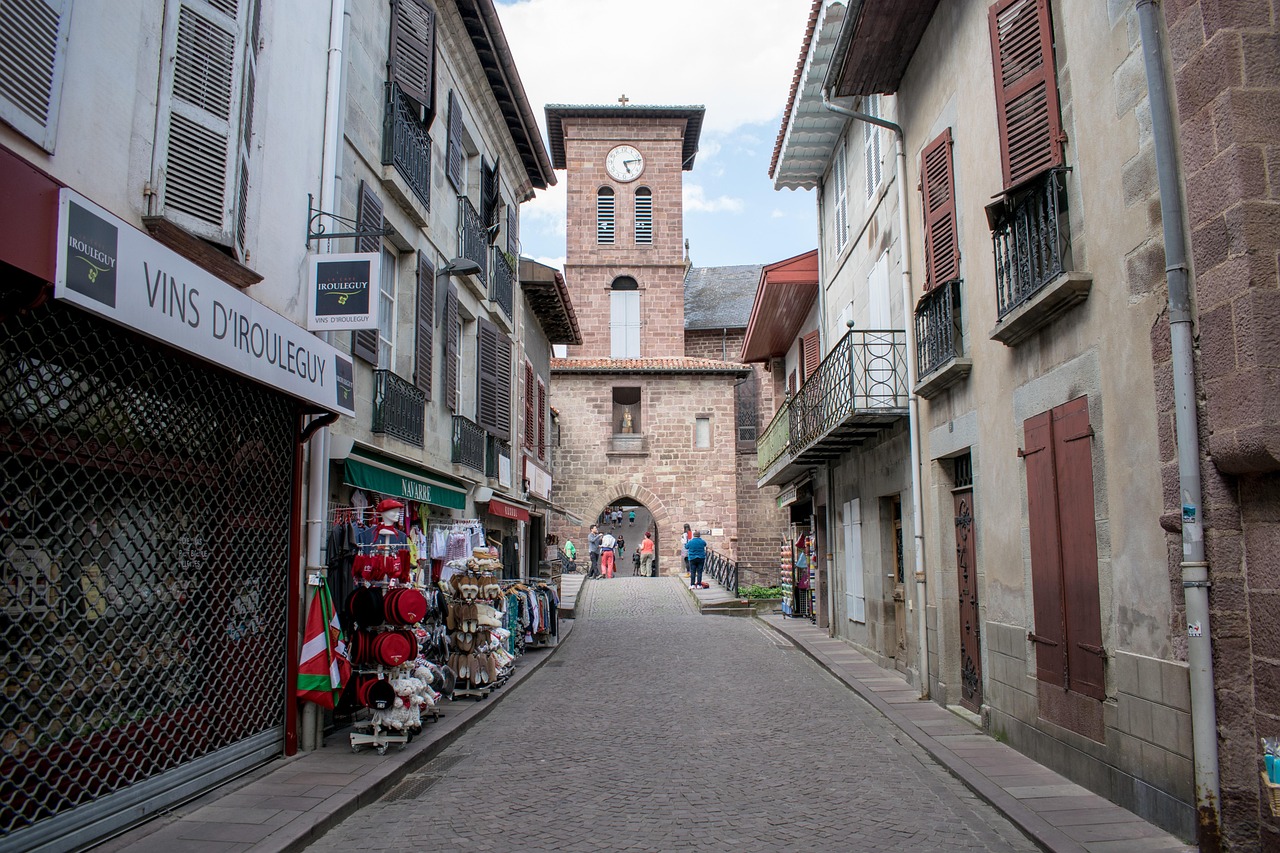
This is the postcard-perfect heart of Saint-Jean-Pied-de-Port: cobbled lanes, half-timbered Basque houses with red shutters, stone archways, and the famous Porte Saint-Jacques. Most pilgrims pass straight through here on their way to Spain, but it’s worth slowing down to explore.
Staying inside the walls means you’ll be steps away from bakeries, restaurants, and the river. It can be lively (and a little noisy) in peak season, but never overwhelming—the town is too small for that.
2. Rue d’Espagne & Rue de la Citadelle
These two parallel streets form the backbone of the historic center. Rue de la Citadelle climbs gently from the river up to the citadel, lined with pilgrim hostels, cafés, and artisan shops. Rue d’Espagne continues east through the Porte d’Espagne toward the road to Roncesvalles.
I love walking Rue de la Citadelle early, around 7:30–8:00 a.m., when the first pilgrims are just emerging. There’s a soft murmur of different languages, and the scent of fresh bread drifts out of the bakeries.
3. The Nive Riverfront
The Nive de Béhérobie river slices through the town, with traditional Basque houses perched right on its banks. On warm days, the riverfront is the town’s living room—kids ride bikes, anglers try their luck, and visitors linger on the bridge to take photos.
On my last visit, I stayed in a small chambre d’hôtes with a balcony directly overlooking the water. Waking up to the sound of the river and church bells is one of my favorite memories here.
4. Lower Town & Train Station Area
Just outside the walls, the lower town feels more residential and everyday. You’ll find the train station, larger car parks, supermarkets, and a few budget-friendly eateries. If you’re arriving by train, this is your first impression—don’t worry, the medieval magic is a five-minute walk uphill.
5. Surrounding Hills & Countryside
One of the joys of Saint-Jean-Pied-de-Port is how quickly you can step into nature. A 10–20 minute walk from town puts you among rolling hills, farms, and small hamlets with red-and-white Basque farmhouses. If you have a car or don’t mind longer walks, the surrounding countryside is a dream for sunrise and sunset strolls.
Top Attractions & Experiences in Saint-Jean-Pied-de-Port
Below are more than 20 of the best places to visit in Saint-Jean-Pied-de-Port, mixing famous landmarks, hidden gems, and local experiences. I’ve arranged them roughly from most iconic to more off-the-beaten-path.
1. The Citadel of Saint-Jean-Pied-de-Port
The 17th-century citadel brooding over Saint-Jean-Pied-de-Port is the town’s most striking feature. It’s not just an old fortress; it’s the best vantage point to understand how the town hugs the slopes and how close the Pyrenees really are.
The walk up starts from Rue de la Citadelle. It’s short but steep, and the first time I did it I underestimated the climb and forgot water—not a disaster, but don’t repeat my mistake on a hot July day. As you climb, look back frequently; the view of the rooftops and river keeps expanding.
The citadel itself has served various roles over the centuries—fortress, barracks, school—and today hosts an educational institution, so interior access is limited. But you can walk around the ramparts and grassy slopes, which are free and open most of the day.
- Family tip: Kids love running along the grassy embankments. Bring a simple picnic for an easy, budget-friendly lunch with a view.
- Romantic tip: Come up about 45 minutes before sunset. The light over the valley is golden, and the crowds thin dramatically.
- Photo tip: The best skyline shot of Saint-Jean-Pied-de-Port is from the pathway between the upper ramparts and the town, facing southwest.
2. Porte Saint-Jacques (Saint James Gate)
Porte Saint-Jacques is the gate every pilgrim passes through on their way toward Spain. It’s part of the UNESCO-listed “Routes of Santiago de Compostela in France” and, for me, one of the most emotionally charged spots in town.
I still remember the first time I stood there at dawn, watching a group of nervous pilgrims pose for a photo under the arch, backpacks carefully adjusted. Some were laughing; others were already teary. Even if you’re not walking the Camino, pause here and watch the flow of humanity. It’s a living stage.
From the gate, you get a wide view over the lower town and the valley. The path continues toward the Camino route to Roncesvalles, so if you want a “Camino taster,” walk 30–60 minutes along the trail and then loop back.
- Best time: Early morning (7–9 a.m.) to see the pilgrim wave.
- Accessibility: The climb up Rue de la Citadelle is cobbled and steep; wear good shoes.
3. Rue de la Citadelle
If you’ve seen photos of Saint-Jean-Pied-de-Port, chances are you’ve seen Rue de la Citadelle: a gently sloping cobbled street lined with stone and half-timbered houses, archways, and signs offering pilgrim accommodation in half a dozen languages.
I like to walk this street at least three times each trip: early in the morning for the quiet and soft light, midday to browse shops and chat with owners, and after dark when the lanterns come on and conversations drift from open windows.
Look for the small plaques on house façades that list the building’s old function or date of construction—many go back to the 16th century. It’s easy to hurry through; don’t. Take your time weaving between the bakeries, craft shops, and hostels.
4. Pont d’Eyheraberry & the Nive River Houses
The stone bridge over the Nive—Pont d’Eyheraberry—is the scene you’ll find on postcards: white-and-red houses leaning over the water, flower boxes, reflections rippling in the current.
In summer 2024, I spent an entire rainy morning here, just standing under my umbrella watching clouds snag on the hills while locals crossed the bridge with market baskets. It was one of those “nothing happens, everything happens” travel moments.
- Photo tip: Shoot from both sides of the bridge; each angle gives a different composition of the houses and hills.
- Family-friendly: Kids love leaning on the rails to spot trout in the clear water.
5. Église Notre-Dame-du-Bout-du-Pont
Right beside the river stands the Gothic church of Notre-Dame-du-Bout-du-Pont, built mainly between the 13th and 14th centuries. It’s surprisingly imposing for such a small town—an echo of the days when this was a major waypoint for medieval pilgrims.
Step inside and let your eyes adjust. The interior is simple but atmospheric, with a high vaulted ceiling and wooden galleries. Often you’ll find a mix of locals lighting candles and modern pilgrims sitting quietly, absorbing the fact that their journey is about to begin.
I like to stop here late afternoon. The light filtering through the stained glass adds warmth, and the day-trip crowds have usually dispersed.
6. Pilgrims’ Office (Accueil des Pèlerins)
Even if you’re not officially walking to Santiago, the Pilgrims’ Office is worth a peek. It’s where long-distance walkers register, pick up their pilgrim passports (credenciales), and receive advice about the crossing to Roncesvalles.
The volunteers here are a wealth of information—not just about hiking, but about the town itself. On one visit, I ended up chatting with an older volunteer from Brittany who had walked the Camino five times and gave me an impromptu mini-lecture on Basque history.
- Travel tip: If you’re planning even a short Camino segment, stop in to ask about current trail conditions, especially in early spring or late autumn when snow or storms can affect routes.
7. Saint-Jean-Pied-de-Port Weekly Market
The weekly market (usually held on Mondays, with seasonal variations) transforms Saint-Jean-Pied-de-Port from a picturesque town into something more raw and local. Farmers from the surrounding valleys come in to sell cheese, cured meats, honey, peppers, seasonal fruits, and vegetables.
I try never to miss market day when I’m in town. It’s my favorite place to stock up on picnic supplies: a wedge of Ossau-Iraty cheese, some Bayonne-style ham, cherry jam, and a crusty baguette. You’ll also find stalls selling handmade Basque linens, berets, and wooden crafts.
- Money-saving tip: A well-constructed market picnic can easily replace a restaurant lunch and still feel indulgent.
8. Irouléguy Vineyards & Wine Tasting
Saint-Jean-Pied-de-Port sits right next to the Irouléguy AOC, one of France’s smallest and most distinctive wine regions. The vineyards cling to steep hillsides, producing robust reds and fresh rosés and whites.
You can taste Irouléguy wines in almost every bar and restaurant in town, but visiting a winery or cooperative is worth the effort. The Cave d’Irouléguy cooperative, a short drive away, offers tastings and a chance to understand the terroir.
The first time I visited in autumn, the hills were aflame with red and gold vines. We sampled a structured red on a terrace overlooking the valley, and I remember thinking: this is exactly what I imagined Basque wine country to feel like—intimate, rugged, and slightly wild.
9. Prison des Évêques (Bishops’ Prison)
This small stone building tucked into the old town has a dramatic name—“Bishops’ Prison”—that likely exaggerates its historical role, but it’s still a fascinating little museum. It offers exhibits on the history of the town and the Camino routes, along with an atmospheric vaulted cellar.
It’s a compact visit (30–45 minutes), perfect for a rainy day or when you need a break from walking. I found the interpretive panels surprisingly good, especially the ones explaining how Saint-Jean-Pied-de-Port fit into broader medieval trade and pilgrimage networks.
10. Rue des Fours and Rue des Fossés (Quieter Backstreets)
Step just one street away from the main pilgrim arteries and Saint-Jean-Pied-de-Port suddenly becomes much quieter. Rue des Fours and Rue des Fossés run roughly parallel to the walls and are where you’ll find more residential houses, small workshops, and everyday life.
On a late spring trip, I wandered here after dinner and stumbled on a group of neighbors sharing a bottle of wine on a doorstep, children weaving around their legs. One woman greeted me with a cheerful “Gabon!” (good evening in Basque) and offered a cherry from a bowl. It was a small, unscripted moment that felt very much like the “real” Saint-Jean.
11. Riverside Walk & Picnic Spots
Follow the Nive upstream or downstream from the town center and you’ll quickly find quiet spots for a picnic or a simple stroll. The riverbanks are lush and green in spring and summer, with plenty of shade.
For families, this is an ideal way to decompress after sightseeing: grab sandwiches from a bakery, find a bench or grassy patch, and watch the water. Couples will appreciate the gentle, romantic pace—especially at golden hour.
12. Camino de Santiago Trail Taster (Saint-Jean to Huntto or Orisson)
You don’t need to commit to the full 800 km to experience the Camino. One of my favorite activities is a half-day “taster” hike along the route from Saint-Jean-Pied-de-Port toward Spain.
Follow the signs for the Route de Napoléon and walk as far as Huntto (about 7 km return) or Orisson (about 16 km return if you go back the same way). The climb is steady but the views open quickly: rolling Basque hills, grazing sheep, and glimpses back to Saint-Jean-Pied-de-Port nestled in the valley.
- Safety tip: Weather changes fast in the Pyrenees. Even for a short hike, bring layers, water, and check the forecast at the Pilgrims’ Office.
- Romantic angle: Sunrise or early morning hikes here are unforgettable, with mist in the valleys and shafts of light hitting the ridges.
13. Small Heritage & Basque Culture Exhibits
While the major Basque museums are in Bayonne and Bilbao, Saint-Jean-Pied-de-Port often hosts small temporary exhibits in municipal spaces or the old town, focusing on local crafts, Basque language, or Camino history.
On one autumn visit, I stumbled into a free exhibit about traditional Basque house architecture—complete with scale models and old photos. It deepened my appreciation for the distinctive red-and-white farmhouses we’d been passing all week.
14. Visits to Local Farms & Fromageries
The hills around Saint-Jean-Pied-de-Port are dotted with small farms producing sheep’s milk cheeses, especially Ossau-Iraty. Some welcome visitors for tastings or short tours (book ahead if possible).
My most memorable visit was to a family-run farm where we tasted cheeses at different ages—fresh, semi-aged, and fully matured—while the farmer’s dog tried (and failed) to look uninterested. We left with a vacuum-packed wedge and a jar of black cherry jam, classic Basque companions.
15. Artisan Shops: Basque Linens, Knives & Crafts
Saint-Jean-Pied-de-Port is a pleasant place to shop for authentic Basque goods without the big-city crowds. Look for:
- Basque linens (striped tablecloths, tea towels, aprons)
- Basque knives with distinctive handles
- Local ceramics and wooden kitchenware
- Gourmet foods like Espelette pepper products, jams, and piment d’Espelette–flavored chocolates
I always pick up a couple of striped tea towels; they’re light, practical souvenirs that instantly remind me of the Basque Country when I’m back home.
16. Walk Along the City Walls
The ramparts surrounding the old town are not just scenic—they’re also a great way to orient yourself. Short sections are accessible as walking paths, giving you different perspectives on the rooftops and countryside.
It’s a gentle, free activity that works for almost everyone and makes for a lovely after-dinner stroll in summer.
17. Outdoor Activities: Rafting, Canyoning & Cycling
Thanks to its Pyrenean location, Saint-Jean-Pied-de-Port is a jumping-off point for more adventurous pursuits. Local outfitters organize rafting and canyoning in nearby gorges, as well as guided hikes and mountain-bike outings.
One July, I signed up for a half-day canyoning trip. We spent the morning sliding down natural rock chutes and jumping into clear pools—a fun, adrenaline-tinged contrast to the quiet of the old town.
- Family note: Many activities have child-friendly options; check age limits and difficulty levels when booking.
18. Sunset Vistas from Nearby Hills
If there’s one thing I recommend to every visitor, it’s to catch at least one sunset from a vantage point above town—not just from the citadel, but a bit further out where you can see the layers of hills receding into the distance.
A simple option: follow a small country lane (with a flashlight for the way down if you stay late) toward a nearby hamlet and watch as lights begin to twinkle in Saint-Jean-Pied-de-Port below.
19. Local Parks & Playgrounds
Traveling with kids? Saint-Jean-Pied-de-Port has a few small parks and playgrounds, mostly near the lower town. They’re nothing fancy, but they’re invaluable “reset” spots for young travelers who need to run around after being good in museums and restaurants.
While the kids play, adults can enjoy mountain views and a coffee from a nearby café—an easy win-win.
20. Local Festivals & Basque Sports Demonstrations
At various points in the year, especially in summer, Saint-Jean-Pied-de-Port hosts small festivals featuring Basque music, dance, and traditional sports like pelote basque (Basque pelota). Sometimes these are scheduled events; sometimes they feel almost spontaneous.
During one August visit, I turned a corner and found a crowd gathered around an impromptu pelote match in front of a fronton (walled court). The crack of the ball against the wall, the shouts in Basque, and the energetic spectators were a vivid reminder that Basque culture isn’t just something in museums—it’s lived.
3–5 Day Itineraries for Saint-Jean-Pied-de-Port
Whether you’re planning 3 days in Saint-Jean-Pied-de-Port, 4 days, or a full 5 day itinerary, the town rewards slow exploration. Below are suggested plans based on my own stays, blending must-see attractions, food stops, and quieter moments.
3 Day Itinerary for Saint-Jean-Pied-de-Port
This 3 day itinerary for Saint-Jean-Pied-de-Port is perfect if you want a deep taste of the town without rushing, focusing on the old center, riverfront, and a short Camino taster.
Day 1: First Impressions & Old Town Highlights
I like to treat my first day as a gentle orientation, especially if I’ve arrived by train or car from the coast.
- Morning: Arrive, check into your accommodation (ideally inside the walls), and take a slow walk along Rue de la Citadelle. Visit the Église Notre-Dame-du-Bout-du-Pont and wander down to the Nive riverfront.
- Lunch: Grab a simple lunch at a riverside café—trout, a salad, or a hearty omelette are good bets.
- Afternoon: Explore the Prison des Évêques and nearby backstreets. Pause for an afternoon coffee or hot chocolate on a terrace.
- Late afternoon: Climb to the citadel for your first panoramic view of Saint-Jean-Pied-de-Port.
- Dinner: Try a restaurant featuring Basque specialties—axoa (a veal and pepper stew), local charcuterie, and Irouléguy wine.
Day 2: Camino Taster & Local Flavors
On your second day, dip your toes into the Camino and dive deeper into local food.
- Morning: After breakfast, head to the Pilgrims’ Office for trail info, then walk part of the Camino toward Huntto or Orisson. Turn back in time for a late lunch.
- Lunch: Reward yourself with a hearty meal in town—this is a great time to try pipérade (pepper and tomato dish) or local lamb.
- Afternoon: Visit artisan shops for Basque linens and gourmet products. If it’s market day, weave that into your schedule.
- Evening: Enjoy a relaxed dinner and a glass of wine on a terrace overlooking the river.
Day 3: Countryside & Culture
- Morning: Visit a nearby farm or fromagerie (book ahead) to learn about cheese-making and taste Ossau-Iraty.
- Lunch: Picnic by the river with your market or farm purchases.
- Afternoon: Stroll the city walls and quieter side streets, or attend any small heritage exhibits that might be on.
- Evening: For your last night, book a slightly special dinner and take one more walk through the illuminated old town.
4 Day Itinerary for Saint-Jean-Pied-de-Port
With 4 days in Saint-Jean-Pied-de-Port, you can follow the 3 day itinerary and add a dedicated day trip into the hills or nearby villages.
Day 4: Village & Vineyard Excursion
- Morning: Rent a car or arrange a taxi to visit Irouléguy vineyards and a nearby village such as Saint-Étienne-de-Baïgorry.
- Lunch: Enjoy a leisurely lunch in the countryside, pairing Basque dishes with local wines.
- Afternoon: Explore a second village or take a short hike in the hills before returning to Saint-Jean-Pied-de-Port.
- Evening: Casual dinner back in town and perhaps a Basque music or pelote event if one is happening.
5 Day Itinerary for Saint-Jean-Pied-de-Port
A 5 day itinerary for Saint-Jean-Pied-de-Port is ideal if you want to really slow down: mix walking, food, day trips, and some proper rest.
Day 1–4:
Follow the 4 day itinerary above, keeping things flexible based on weather and energy levels.
Day 5: Adventure or Deep Relaxation
- Option A (Adventure): Book a half-day rafting or canyoning trip, or a longer guided hike deeper into the Pyrenees.
- Option B (Restful): Sleep in, linger over coffee, browse shops, read by the river, and revisit any favorite spots. This is the “I’m not in a hurry” day.
By the end of 5 days in Saint-Jean-Pied-de-Port, you’ll know the rhythms of the town well enough that leaving will feel a bit like saying goodbye to a friend.
Local Food & Drink in Saint-Jean-Pied-de-Port
Food is one of the biggest reasons I keep returning to Saint-Jean-Pied-de-Port. The town punches far above its weight in terms of local gastronomy, combining French and Basque traditions with mountain heartiness.
Must-Try Local Foods
- Ossau-Iraty cheese: A semi-firm sheep’s milk cheese, often served with black cherry jam.
- Bayonne-style ham & Basque charcuterie: Delicate, lightly salted cured meats.
- Axoa: A rustic veal and pepper stew, especially comforting in cooler months.
- Pipérade: A sauté of peppers, tomatoes, and onions, sometimes with eggs or ham.
- Trout: Fresh from mountain streams, often grilled or pan-fried with almonds.
- Gâteau Basque: A dense cake filled with custard or black cherry jam.
- Piment d’Espelette: Mild, fragrant chili pepper used in many local dishes.
Local Drinks
- Irouléguy wine: Try both the reds (structured, often with tannins) and rosés (perfect on a warm afternoon).
- Basque cider: Slightly funky and dry; often poured from a height to aerate.
- Local beers: A growing craft scene offers Basque brews in some bars.
Where I Like to Eat (Types of Spots to Look For)
Names and ownership can shift from year to year, but here’s what I always seek out:
- Simple bistros near the river for trout, salads, and daily specials.
- Basque-focused restaurants in the old town for axoa, lamb, and creative takes on classic dishes.
- Bakeries along Rue de la Citadelle and nearby streets for morning croissants and slices of gâteau Basque.
- Wine bars offering flights of Irouléguy and local nibbles.
Money-Saving Food Tips
- Prix-fixe lunches: Many restaurants offer a more affordable set menu at lunchtime than in the evening.
- Market picnics: Assemble your own feast from the market and grocery stores for a fraction of restaurant prices.
- Tap water: In France, you can ask for a “carafe d’eau” (jug of tap water) at restaurants; it’s normal and free.
Nightlife, Entertainment & Cultural Experiences
Saint-Jean-Pied-de-Port is not a nightlife capital—think cozy evenings rather than wild parties. After dark, the town shifts into a softer mode: pilgrims resting sore feet, locals chatting in Basque and French at small bars, couples strolling by the river.
Evening Options
- Wine bars & cafés: Sip Irouléguy wine or Basque cider on a terrace, especially along the river or in the old town.
- Low-key pubs: Some spots attract a pilgrim crowd swapping stories from the trail.
- Summer events: Outdoor concerts, Basque dance performances, and occasional pelote matches (check posters and the tourist office).
- Night walks: The illuminated ramparts and bridges are atmospheric and romantic.
Cultural Experiences
- Basque music & dance: Look for posters advertising performances; they’re often linked to festivals or weekends.
- Religious ceremonies: If you attend a mass at the church, be respectful; you may hear hymns in Basque.
- Language: You’ll hear both French and Basque. Learning a few Basque words (like “egun on” for good day) is appreciated.
Events & Festivals in 2026–2027
Exact dates can shift slightly each year, so confirm with the local tourist office closer to your trip, but here are the types of events you can expect around 2026–2027:
- Pilgrim Season (April–October 2026 & 2027): Not an official festival, but a steady, living event as thousands of walkers pass through. Accommodation books up quickly in April–June and September–October.
- Local Basque Festivals (Summer 2026 & 2027): Multi-day celebrations with music, dance, food stalls, and Basque sports, often in July or August.
- Weekly Markets (All Year): The Monday market continues into 2026–2027, with seasonal produce and products.
- Christmas & New Year 2026–2027: A quieter but charming time, with modest decorations and a more local atmosphere.
Because Saint-Jean-Pied-de-Port is small, any event—no matter how “minor”—tends to transform the atmosphere. Ask at your hotel or the tourist office what’s happening during your stay; you may discover a choir concert in the church or a folk-dance evening that doesn’t appear on big websites.
Day Trips & Nearby Attractions
Once you’ve explored the best places to visit in Saint-Jean-Pied-de-Port itself, consider these nearby options for variety.
1. Saint-Étienne-de-Baïgorry
A charming village about 20 minutes by car, Saint-Étienne-de-Baïgorry offers riverside walks, vineyards, and classic Basque architecture. It’s a good destination for a half-day of wine tasting and gentle exploration.
2. Espelette (Pepper Village)
About 40–45 minutes’ drive away, Espelette is famous for its strings of red peppers drying on whitewashed façades. The village is touristy but fun, especially if you love food—pepper-infused products abound.
3. Coast: Bayonne & Biarritz
If you’re craving the Atlantic after the mountains, Bayonne and Biarritz are reachable by train or car in about 1–1.5 hours. Bayonne offers a rich Basque cultural scene and museums, while Biarritz adds beaches and a more glamorous seaside vibe.
4. Deeper into the Pyrenees
With a car, you can plunge deeper into the Pyrenees for more serious hiking, scenic passes, and remote villages. Always check road and weather conditions, especially outside summer.
Cultural Etiquette & Local Customs
Understanding a few local customs will make your time in Saint-Jean-Pied-de-Port smoother and more rewarding.
Language & Greetings
- French: A simple “Bonjour” (before evening) or “Bonsoir” (evening) when entering shops or restaurants is expected.
- Basque: You may hear “Egun on” (good day) or “Arratsalde on” (good afternoon). Using one or two Basque words is a nice gesture.
- English: Widely understood in pilgrim-focused places; less so in purely local spots, but people are generally patient.
Restaurant Etiquette
- Meals are unhurried; don’t expect quick turnover like in some countries.
- It’s polite to say “Merci, au revoir” when leaving.
- Tipping is not obligatory (service is included), but rounding up or leaving a small extra for good service is appreciated.
Pilgrim Culture
- Pilgrims sometimes look exhausted or emotional—give them space and kindness.
- If you take photos at the Pilgrims’ Office or Porte Saint-Jacques, be respectful and avoid intrusive close-ups of strangers without consent.
Dress & Behavior
- Casual dress is fine almost everywhere, but cover shoulders in churches and avoid loud behavior during services.
- Late-night noise carries in the narrow streets—keep voices down after about 10–11 p.m.
Practical Travel Tips for Saint-Jean-Pied-de-Port
Getting There
- By train: Regional trains connect Saint-Jean-Pied-de-Port with Bayonne (and onward to Biarritz, Bordeaux, and Paris).
- By car: Driving gives you maximum flexibility for countryside and day trips; roads are scenic but can be winding.
- By bus: Limited options exist, often aligned with school or local routes; trains are generally easier.
Getting Around
- The town itself is walkable; you won’t need a car to explore Saint-Jean-Pied-de-Port proper.
- Car rental: Best arranged in larger cities (Bayonne, Biarritz) before you come; local options are limited.
- Taxis: Available but not abundant; book ahead for early or late rides.
SIM Cards & Connectivity
- France is well covered by major providers (Orange, SFR, Bouygues). Prepaid SIMs are easiest to buy in larger cities or at airports.
- EU visitors can usually roam on their existing plans; check your contract.
- Most hotels and many cafés offer free Wi‑Fi, though speeds vary.
Money & Costs
- Currency: Euro (€).
- Cards are widely accepted, but keep some cash for small purchases, markets, and rural stops.
- Saint-Jean-Pied-de-Port can be good value compared to big cities, but prices rise in peak pilgrim season.
Saving Money
- Travel in shoulder seasons (March–early April, late October–November) for lower prices and fewer crowds.
- Use pilgrim hostels (gîtes) if you’re on a tight budget; some accept non-pilgrims outside peak times.
- Self-cater breakfasts and some lunches using supermarket and market buys.
Accommodation
- Gîtes & pilgrim hostels: Simple, budget-friendly, often shared rooms or dorms.
- Chambres d’hôtes: Guesthouses with a personal touch and often excellent breakfasts.
- Small hotels: Comfortable mid-range options, sometimes with river or hill views.
- Booking tip: For stays in April–October, especially if you want private rooms, book well in advance.
Visa & Entry Requirements
- Saint-Jean-Pied-de-Port is in France, part of the Schengen Area.
- EU/EEA/Swiss citizens: Can enter with a national ID card or passport.
- Many non-EU visitors: May need a Schengen visa depending on nationality. Always check official French government or embassy websites before travel.
Driving & Foreign Licenses
- Foreign drivers’ licenses from many countries are accepted in France for short stays; some nationalities may need an International Driving Permit alongside their license. Check your country’s regulations.
- Driving is on the right. Seatbelts are mandatory.
- Parking in Saint-Jean-Pied-de-Port can be tight in summer—use designated lots outside the walls when possible.
Best Seasons & Weather
- Spring (March–May): Green hills, blossoming trees, cooler temperatures, increasing pilgrim traffic. Great for hiking and quieter sightseeing.
- Summer (June–August): Warm to hot, busiest season with festivals and long days. Ideal for families and outdoor activities, but book early.
- Autumn (September–November): My personal favorite: golden vineyards, stable weather (often), and a second, slightly older wave of pilgrims. Excellent for photography and wine trips.
- Winter (December–February): Quiet, some businesses close or reduce hours, but the town has a peaceful charm. Good if you want a very local feel and don’t mind cooler, wetter weather.
Health & Safety
- Saint-Jean-Pied-de-Port feels safe, even at night. Normal travel precautions apply.
- For hiking, treat mountain weather with respect: bring layers, water, and tell someone your route.
Hidden Tips from Repeat Visits
- Arrive the day before you plan any serious hiking; give yourself time to adjust and explore without a pack.
- Wake up early at least one day to watch the pilgrim wave and enjoy nearly empty streets.
- Carry a light scarf or layer—even in summer, evenings can be cool.
- If you’re sensitive to noise, bring earplugs; stone streets amplify late-night footsteps and early-morning departures.
Final Summary & Best Time to Visit Saint-Jean-Pied-de-Port
Saint-Jean-Pied-de-Port may be small, but as a travel destination it’s remarkably rich. In just 3 days in Saint-Jean-Pied-de-Port, you can explore the walled old town, walk by the Nive, climb to the citadel, taste local wines and cheeses, and sample a short stretch of the Camino de Santiago. With 4 or 5 days in Saint-Jean-Pied-de-Port, you can add day trips to villages and vineyards, more ambitious hikes, or simply more time to sit in cafés and watch the world walk by.
If your priorities are hiking, cultural experiences, and avoiding extremes of heat and crowds, the best seasons for visiting Saint-Jean-Pied-de-Port are:
- Late April–June: Lush landscapes, lively but not overwhelming pilgrim presence, comfortable temperatures.
- September–early October: Warm days, cooler nights, harvest season in the vineyards, and beautiful autumn colors starting in the hills.
Summer is ideal for families and festival-seekers, while winter is for those who prefer a quieter, more introspective town with a distinctly local feel.
Whichever season and itinerary you choose—3, 4, or 5 days—Saint-Jean-Pied-de-Port rewards those who slow down. Take time for small rituals: a morning coffee on Rue de la Citadelle, a sunset over the valley, a shared smile with a nervous pilgrim at Porte Saint-Jacques. Those are the moments that will follow you home long after you’ve left this little Basque gateway to the Pyrenees.