Why Visit Salin de Giraud Salt Flats?
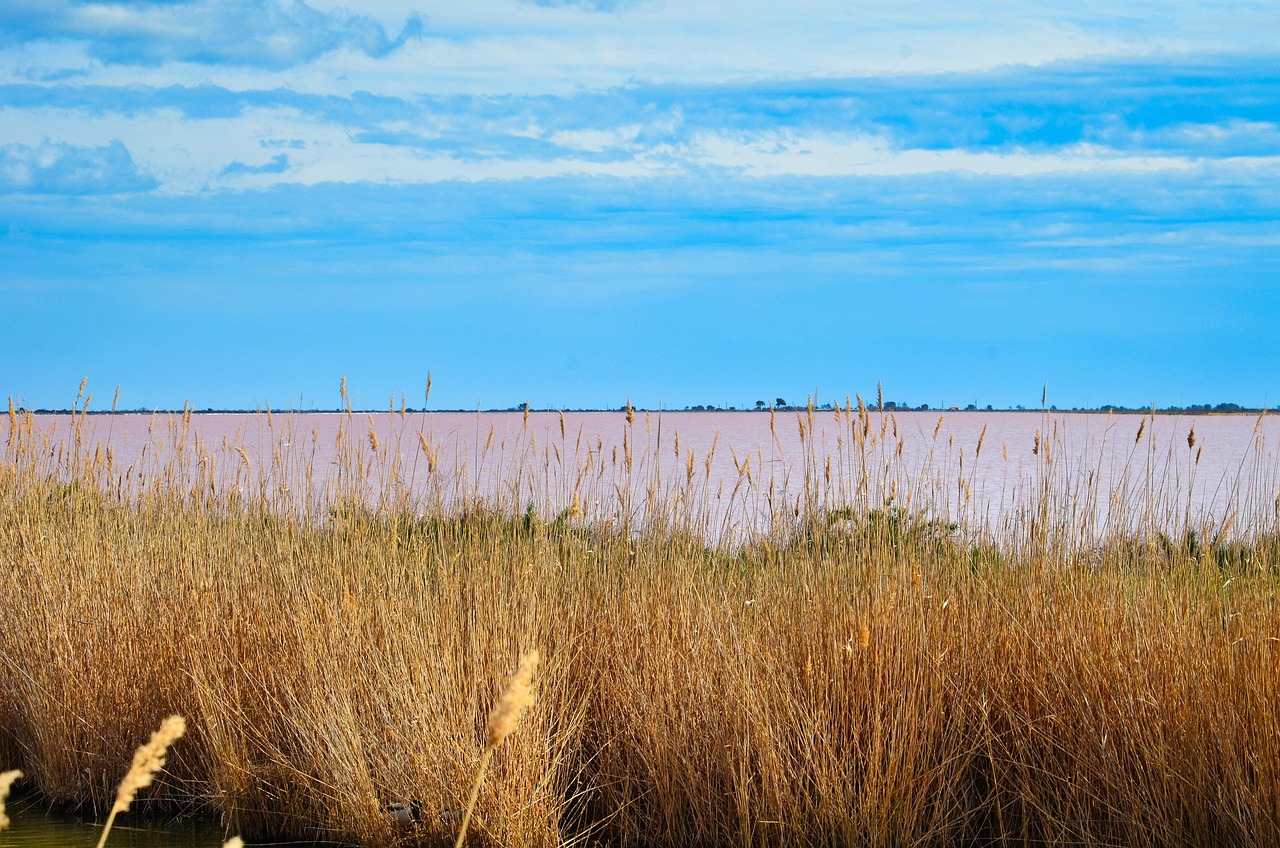
When people talk about the Camargue, they usually think of white horses, black bulls, and flamingos. But the secret heart of the region, at least for me, lies in the shimmering pink lakes and endless geometric pans of Salin de Giraud Salt Flats.
On my first visit in late September 2022, the air smelled faintly of salt and wild herbs, the mistral wind had calmed to a soft breeze, and the basins glowed an improbable rose under a bruised purple sky. Since then I’ve returned at least once a year—at sunrise in spring, in the fierce white light of July, and in the mellow dusk of October—to walk the levees, watch the salt pyramids grow, and photograph the flamingos as they skim across water that looks more like a watercolor wash than a lake.
Salin de Giraud is not a “checklist” destination. It’s a place of light, color, and space. You come here to:
- Walk or cycle along the dikes between pink and turquoise salt pans, with the sea on one side and the Rhône delta on the other.
- Climb up to viewpoints where the pyramids of salt look like miniature mountains against the horizon.
- Watch flamingos and migratory birds feed in the shallow basins.
- Swim on wild, open beaches where the sky seems twice as big as elsewhere.
- Experience a working industrial landscape that’s also a fragile ecosystem, sculpted by centuries of salt-making.
It’s also a surprisingly flexible stop: an easy 1 day itinerary for Salin de Giraud Salt Flats if you’re road-tripping Provence, a gentle 2 days in Salin de Giraud Salt Flats if you love photography and birdwatching, or a full 3 day itinerary for Salin de Giraud Salt Flats if you pair it with nearby villages, rice fields, and the wild beaches of the Camargue.
1. Salin de Giraud Salt Flats Overview & History
Salin de Giraud lies on the right bank of the Rhône, at the southern edge of the Camargue, facing the Mediterranean. Officially part of the commune of Arles, it feels worlds away from Roman ruins and café-lined squares. This is an industrial village born from salt and transformed by tourism, yet it still carries the rhythm of a working site.
The salt works were founded in the 19th century, when entrepreneurs realized that the shallow lagoons, intense sun, and steady winds of the Camargue were perfect for large-scale sea salt extraction. Over time, a company town sprang up: workers’ housing, a church, a school, a grid of streets, and then endless dikes and basins pushing out toward the sea.
Today, the salt operation is still active, but large sections are accessible to visitors by bike, on foot, or via guided tours. What makes it special isn’t just the industrial heritage; it’s the visual poetry of the landscape. Depending on the season and salinity, the water shifts from pale green to milky blue to an almost neon pink. The salt forms ridges that look like frost on glass. Flamingos stir up clouds of shrimp, and the wind creates ripples that catch the last light.
On my most recent visit in April 2026, I watched a small group of children on rented bikes stop dead in their tracks when they first saw the pink basins. One whispered, “C’est pas vrai…” (This can’t be real). That reaction—disbelief giving way to wonder—is the essence of a trip here.
2. Main Sections & Viewpoints: 8 Essential Areas to Explore
Though the salt flats feel like one huge landscape, in practice your visit will revolve around a series of distinct zones, each with its own character. Below are eight of the best places to visit in Salin de Giraud Salt Flats, with detail on how to experience them like someone who has slowly learned their moods over several years.
2.1 Salin de Giraud Village Center & Industrial Heritage
I always tell people: don’t rush straight to the pink water. Start in the village of Salin de Giraud itself. This is where you get the human story behind the landscape you’re about to explore.
The village is compact—a few main streets, modest houses, a church, and some remnants of workers’ housing from the salt company’s boom years. On my second visit in 2023, I spent a rainy morning wandering with an elderly resident who’d worked at the salins in the 1970s. He pointed out the old company buildings, the cooperative store, and the row houses built for different ranks of employees.
Look for:
- Église de Salin de Giraud – A small, simple church that once served the salt workers. Step inside for a moment of quiet and notice the maritime motifs and votive offerings.
- Workers’ Quarters – Rows of modest houses, many now renovated. They give a sense of the community that grew around the salins.
- Local café terraces – Ideal for a coffee before you head out. You’ll hear snatches of Provençal and see workers in high-vis vests grabbing a quick espresso.
Time needed: 1–2 hours for a slow wander, coffee, and a stop at the small local info point (or tourist office when open) to pick up a map of the salt routes.
Personal tip: If you’re doing a 1 day itinerary for Salin de Giraud Salt Flats, arrive early and spend just 45 minutes in the village—enough to ground yourself—before moving on to the viewpoints.
2.2 The Salt Pyramids & Industrial Vista
The salt pyramids are the iconic image of Salin de Giraud: gleaming white mounds, almost blinding under the sun, rising out of the flat horizon like snow-capped hills. They’re also an active work area, so access is controlled, but several viewpoints allow you to get close without intruding.
On a searing July afternoon in 2024, I watched trucks inch along the dikes, depositing load after load of salt onto a growing pile, while a mechanical scraper carved clean angles into the mountain. It’s oddly hypnotic—brutal and beautiful at once.
How to see them:
- Guided tours (often seasonal, from late spring to early autumn) sometimes include a close approach to the pyramids, with commentary on the stages of salt production.
- Self-guided cycling or driving routes around the designated perimeter roads offer safe pull-offs for photos.
What to look for: The contrast between the white salt and the pastel basins; the texture of the salt crust at the edges; reflections of the salt mountains in the water on still days.
Time needed: 30–60 minutes, more if you’re photographing or sketching.
Photography tip: For that iconic must-see attraction in Salin de Giraud Salt Flats shot, aim to arrive in late afternoon. The lower sun gives the salt texture and prevents blow-out highlights. A polarizing filter helps manage glare.
2.3 The Pink Salt Pans (Les Salins Roses)
This is the scene that fills your Instagram feed: water so pink it looks unreal, sliced by thin white dikes and dotted with birds. The color comes from halophilic (salt-loving) microalgae and brine shrimp, which thrive in the hypersaline basins late in the evaporation cycle.
I’ve seen the pink at its most intense in late August and early September, during a stretch of hot, dry weather. In April 2026, the tone was subtler—more salmon and mauve than fuchsia—but the trade-off was cooler temperatures and fewer people.
Access & walking experience:
- Several marked routes lead pedestrians and cyclists along the dikes between basins. Surfaces vary from compacted gravel to firmer salt-crust paths.
- Most of the time, you walk elevated above the pans, so you get sweeping views in both directions.
- Distances can be deceptive; allow time for photo stops and just standing still to absorb the view.
How long to spend: For a quick taste, 1–2 hours. For photographers and birdwatchers, half a day can easily disappear here.
Family-friendly? Yes, with caveats: it’s fantastic for children who like open spaces and bikes, but there’s no shade and very little in the way of facilities once you’re out on the dikes. Bring hats, water, and snacks.
Personal note: My favorite moment here was a calm October evening in 2025. The wind dropped, and the basins turned mirror-smooth. The sky went from gold to lavender, and the water followed every color shift like a perfect reflection. I barely spoke for an hour—just watched and listened to the soft splashes of flamingos feeding.
2.4 Flamingo & Birdwatching Zones
The flamingos of the Camargue are celebrities in their own right, and Salin de Giraud is one of the best low-key places to see them without the crowds of more famous reserves.
The birds feed in shallow basins, sifting the brine for shrimp and algae. Their presence depends on water levels and food supply, so exact locations shift, but there are known zones where you’re likely to encounter them.
What it’s like: In the early morning, especially in spring and autumn, you may find whole groups of flamingos wading in misty light, their reflections elongated on the water. As the day warms, they often move or fly low overhead, the beating of their wings surprisingly loud in the otherwise quiet air.
How to watch respectfully:
- Stay on marked paths and dikes; do not approach the birds by crossing into basins.
- Use binoculars or a zoom lens rather than trying to get physically close.
- Keep voices low; this is a fragile ecosystem.
Time needed: 1–3 hours, depending on your interest. I often combine an early morning birdwatching loop with coffee and a late breakfast back in the village.
Family & couples: This can be both family-friendly and quietly romantic. One couple I met in 2024 had brought a picnic thermos to share hot coffee while watching sunrise over the basins—a simple but perfect start to their day.
2.5 Plage de Piémanson – The Wild Beach
Plage de Piémanson is where the salt flats meet the sea. It’s a vast, sandy stretch of wild beach that feels wonderfully remote, even in mid-summer. Once famous for its free-spirited campervan community (which has been regulated in recent years), it’s now more controlled but still refreshingly undeveloped.
On a late May afternoon in 2023, I arrived after a long morning cycling the dikes. The wind was up, kites flickering in the sky, and the beach seemed to go on forever. Families had set up simple camps with windbreaks and coolers; kids were building sand fortresses with moats that the tide would soon claim.
What to expect:
- Soft, expansive sand and relatively gentle waves, depending on wind conditions.
- Plenty of space to spread out, even in peak season.
- Limited services: portable toilets in high season, occasional food trucks, but no permanent restaurants on the sand.
Activities:
- Swimming and sunbathing (watch for currents and heed local safety flags).
- Long walks at sunset, when the sky and sea blend into one pastel band.
- Kite-flying, beach games, and sandcastle engineering—excellent for families.
Time needed: Half a day or more. For a 2 day itinerary for Salin de Giraud Salt Flats, I like to dedicate one late afternoon and evening here.
Personal tip: Bring a lightweight windbreaker, even in summer. The sea breeze can be surprisingly cool, especially in the evening.
2.6 The Dike Routes – Walking & Cycling Through the Flats
If you only drive to a viewpoint, you’ll miss the true rhythm of the salt flats. The best way to feel their scale is to walk or cycle the dikes, following narrow raised tracks that thread between basins and lagoons.
Over several visits, I’ve tried these routes on foot, on a rented city bike, and once on an electric bike (a blessing in the mistral). They’re all rewarding, but do pay attention to distance and weather. Distances add up quickly, and in high summer, sun exposure is relentless.
Key experiences:
- The sensation of being suspended between sky and water, with little else in view.
- Subtle changes in water color and texture from basin to basin.
- The soundscape: wind, distant machinery, bird calls, and your own footsteps or tires crunching on gravel.
How long to spend: A short loop might take 1–2 hours; a full exploratory circuit can easily take 4–5 hours with stops. For the 3 day itinerary for Salin de Giraud Salt Flats, I dedicate most of one day to slow exploration of these paths.
Tip for adventurous travelers: In shoulder seasons (April–May, September–October), consider an early morning or late afternoon ride. The light is softer, and you’ll have long stretches of dike entirely to yourself.
2.7 Rhône Crossing & Approaches – The Journey In
One of the pleasures of visiting Salin de Giraud is the approach itself. Coming from Arles, you have two main choices: a longer overland drive, or the more atmospheric ferry crossing of the Rhône from Port-Saint-Louis-du-Rhône (services and exact operations can vary; always check locally).
On a breezy afternoon in 2022, I drove onto the little ferry, windows down, the air filled with the scent of brine and diesel. The crossing is short, but the feeling of leaving the “mainland” and entering the watery mosaic of the Camargue marks the beginning of the adventure.
What to look for on the way in:
- Marshes and lagoons with herons and egrets standing stock-still in the shallows.
- Rice fields (in season) stretching in geometric patterns.
- Occasional white horses grazing in flat, open pastures.
Time needed: The crossing itself is quick, but queues can build in peak season. Build in an extra 30–45 minutes if you’re catching a specific tour at Salin de Giraud.
Personal note: I recommend arriving via the ferry at least once. The sense of transition—from solid land to the amphibious world of the Camargue—helps you understand where the salt flats sit in the landscape.
2.8 Adjacent Nature Reserves & Wetlands
Though this guide focuses on the salt flats themselves, you’d be missing out if you didn’t also explore the surrounding Camargue wetlands and nature reserves. Several protected areas lie within easy reach, and they share the same migratory birds and distinctive light, but with a wilder, less industrial atmosphere.
On a cool January morning in 2025, I walked a loop trail in a nearby reserve and saw more bird species in two hours than I normally see all year. The winter light, low and silvery, made every reed and ripple stand out.
Why include them in your visit:
- They offer a different texture to your trip—a contrast to the geometric salt pans.
- You’ll learn how the salt industry and conservation efforts coexist.
- They’re excellent for walking, photography, and quiet contemplation away from any crowds.
Time needed: Half a day to a full day, depending on how deeply you want to explore. Perfect add-ons for a 2 days in Salin de Giraud Salt Flats or 3 days in Salin de Giraud Salt Flats plan.
3. Suggested 1–3 Day Itineraries
Below you’ll find detailed, narrative-style itineraries for 1 day, 2 days, and 3 days in Salin de Giraud Salt Flats. Think of them as frameworks rather than rigid schedules. The light, weather, and your own energy levels should guide your choices.
3.1 1 Day Itinerary for Salin de Giraud Salt Flats
This 1 day itinerary for Salin de Giraud Salt Flats works well if you’re on a tight schedule but still want to experience the essence of the place: the village, the salt basins, and the sea.
Morning: Arrival & Village Orientation
On one of my typical one-day runs (most recently in May 2026), I aimed to arrive in Salin de Giraud village by 9:00 am. That timing avoids the earliest chill in shoulder seasons and the midday heat in summer.
I parked near the center and walked slowly through the village. The café terraces were waking up, chairs clattering on pavement, locals greeting each other with a quick “Bonjour” and a nod. I always start with a café crème and a croissant at a local bar—nothing fancy, just the daily rhythm of a working town.
After breakfast, I stopped by the local information point (or tourist office, when open) to pick up a map of walking/cycling routes and to ask two key questions: which areas of the flats were open that day, and where flamingos had been seen recently. Staff are usually happy to point out current highlights and any temporary restrictions.
Time allocation: 1.5–2 hours in the village, including breakfast and a short stroll.
Late Morning to Early Afternoon: Pink Basins & Salt Pyramids
By 10:30–11:00 am, I was usually heading out toward the salt flats proper. For a single-day visit, I recommend either:
- Joining a guided tour (if the schedule fits) that combines viewpoints of the pink basins and salt pyramids, or
- Following a self-guided drive-and-walk loop that hits the key overlooks.
On my 2026 visit, I opted for a self-guided loop. I drove slowly along the access road, stopping at marked viewpoints. The first glimpse of a truly pink basin always feels surreal, no matter how many times you’ve seen it in photos.
At one stop, I walked up a short embankment to a higher vantage point. From there, I could see the salt pyramids to one side, the village in the distance, and the patchwork of basins stretching out toward the sea. I spent at least 30 minutes just taking it in and experimenting with different compositions for photos: zooming in on the textures of the salt crust, then pulling back to capture the geometric patterns.
Lunch: For a 1-day trip, I usually pack a simple picnic—bread, cheese, olives, fruit—and eat it at a quiet spot overlooking the basins, careful to stay on designated paths. Alternatively, you can drive back to the village for a quick lunch at a local restaurant, but that eats into exploration time.
Time allocation: 3–4 hours for driving, walking, viewpoints, and lunch.
Afternoon: Dike Walk or Short Cycle
By early afternoon (around 2:00–2:30 pm), I like to commit to one relatively short but immersive dike route—something in the 5–8 km range, which is manageable in 1.5–2.5 hours even with frequent stops.
On one spring visit, a light breeze kept conditions comfortable. I walked along a dike lined with low, salt-tolerant vegetation, watching flamingos on one side and smaller waders probing the mud on the other. The sun was high, but with a hat, sunscreen, and plenty of water, it was a meditative few hours.
Tips for this segment:
- Choose a loop recommended by the tourist office that is clearly marked and suitable for your fitness level.
- Wear sturdy shoes; surfaces vary from compact grit to uneven salt-crust.
- Bring more water than you think you need—there are no fountains out on the dikes.
Time allocation: 2–3 hours.
Late Afternoon & Sunset: Plage de Piémanson
For your final act, drive out to Plage de Piémanson in the late afternoon—ideally by 5:00–6:00 pm depending on the season. The trajectory from village to salt basins to open sea feels like a natural day-long progression.
Here, kick off your shoes and walk the waterline. On one August evening, I watched a storm build far out to sea while the sky over the beach stayed golden, lightning flickering on the horizon like a private light show. Children were still chasing waves; couples sat wrapped in towels, waiting for the sun to sink.
You can swim if conditions are safe, read, or simply drift along the shore until the sky starts to color. Stay through sunset if you can—the afterglow often lasts longer here than you expect.
Time allocation: 2–3 hours, including sunset.
Evening: Return & Simple Dinner
After dark, you’ll either drive back to your base (Arles, Saintes-Maries-de-la-Mer, or another town) or stay nearby (more on that later). If you’re driving, take it slow; wildlife sometimes crosses the road, and the lack of lighting makes speeds deceptive.
Where to eat: For a 1-day visit, I usually keep dinner simple: a local pizzeria or brasserie in Salin de Giraud, or a casual spot back in Arles. The point is to end the day with something hearty and unfussy, still tasting salt on your lips from the sea breeze.
3.2 2 Day Itinerary for Salin de Giraud Salt Flats
A 2 day itinerary for Salin de Giraud Salt Flats allows you to slow down: watch the light change, revisit favorite viewpoints in different conditions, and add more birdwatching or time at the beach.
Day 1: Immersion in the Salt Landscape
Follow the structure of the 1 day itinerary for your first day: village exploration, pink basins, salt pyramids, a medium-length dike walk, and sunset at Plage de Piémanson. The difference is psychological—you know you have another day, so you’re less tempted to rush.
On my first 2-day stay in 2024, I spent my first day almost exactly as described above, but lingered longer over lunch and at each viewpoint, experimenting with different angles and just watching the birds.
Evening of Day 1: Night in or Near Salin de Giraud
Staying nearby changes everything. After dinner in the village, I walked out toward the edge of town just to see the sky. The lack of light pollution compared to the cities meant a surprising number of stars, and the faint glow from the direction of the salins felt like a distant lighthouse.
Day 2 Morning: Sunrise Over the Basins
Set your alarm for before sunrise. I know it’s hard on vacation, but the reward is enormous. In late September 2025, I walked out onto a dike in the half-light, the world still grey-blue. As the sun edged up, the basins slowly picked up color, like someone was gradually turning up the saturation.
What to bring: A thermos of hot coffee or tea, a light jacket (even in summer, dawn can be cool), and a headlamp for the approach if it’s still dark.
Sunrise is also the best time for birdwatching. Flamingos and other waterbirds are more active, and the light is exquisite for photography.
Time allocation: 2–3 hours, including walking and a slow, quiet start to the day.
Day 2 Late Morning: Extended Dike Cycling Adventure
After a late breakfast (either back in the village or picnic-style), dedicate the late morning and early afternoon to a longer cycling route. This is where the 2-day plan really pays off.
On my 2024 trip, I rented an electric bike and followed a longer loop recommended by a local—about 25 km in total, with several optional detours. The e-assist meant I could tackle stretches of headwind without exhausting myself, and it turned the ride into a moving meditation: pedal, stop for photos, pedal, watch birds, pedal, drink water, repeat.
Tips:
- Rent a quality bike (ideally with some suspension) from a reputable provider. Ask for a repair kit and pump.
- Carry a physical map or offline GPS track; mobile coverage can be patchy.
- Plan a shaded rest spot for midday if possible (even if it’s just a sheltered nook near a building or trees).
Time allocation: 4–5 hours, including breaks.
Day 2 Late Afternoon: Return to a Favorite Spot
With two days, you have the luxury of revisiting a place that spoke to you. Maybe it’s a particular pink basin, a corner where the flamingos gathered, or a quiet segment of beach. I often find that the second visit, when the novelty has worn off, is deeper.
On my last 2-day trip, I went back to a modest viewpoint over a not-especially-famous basin simply because I liked the curve of the dike and the way the reeds framed the water. I sat there with a book, reading a few pages, then looking up at the changing light.
End the day with another sunset—either at the beach or over the flats—and a relaxed dinner, feeling like you’ve really met the place rather than just passed through.
3.3 3 Day Itinerary for Salin de Giraud Salt Flats
A 3 day itinerary for Salin de Giraud Salt Flats is for those who like to go deeper: photographers, birders, slow travelers, or families who want a mix of adventure, relaxation, and cultural experiences.
Use the first two days as outlined above. For Day 3, we’ll add surrounding wetlands, local culture, and flexible time for weather-dependent choices.
Day 3 Morning: Adjacent Nature Reserve & Birdwatching
On my 3-day stay in early 2025, I dedicated the third morning to a nearby nature reserve. Trails ranged from 2 km strolls to 10+ km loops, mostly flat but varying in surface and exposure.
What you’ll experience:
- Quieter paths with fewer people than the main salt viewpoints.
- Different bird species: herons, egrets, avocets, stilts, and more.
- A more “natural” feel—reeds, lagoons, and sometimes small wooded patches.
Bring binoculars if you have them, and a field guide or app if you enjoy identifying species. Even if you’re not a hardcore birder, there is something soothing about watching birds go about their lives in such a wide, open setting.
Time allocation: 3–4 hours.
Day 3 Afternoon: Cultural & Industrial Heritage
The third afternoon is a good time to dive deeper into local history and culture. Depending on what’s open in 2026–2027, this may include small exhibitions on the salt industry, photographic displays, or local heritage walks in the village.
On one visit, I joined a short guided walk led by a local association. We traced the lines of the old company town, learned about working conditions in the early 20th century, and heard stories about community life—weddings, festivals, strikes, and football matches on dusty pitches.
Why this matters: It’s easy to romanticize the salt flats as pure beauty, but they’re also the product of hard labor and economic shifts. Understanding that adds depth to every view you’ve already enjoyed.
Time allocation: 2–3 hours, plus a café stop.
Day 3 Late Afternoon: Free Time – Choose Your Own Adventure
By the third late afternoon, you’ll have a feel for the place and what you enjoy most. Use this slot to:
- Return to Piémanson Beach for one last swim or walk.
- Revisit the pink basins under different light.
- Take a leisurely drive through nearby rice fields and marshes.
- Simply sit in the village square with a glass of rosé, watching the world go by.
On my last 3-day trip, I spent this final window re-walking a short section of dike I knew well, just to see it in cooler, slightly hazy late-afternoon light. It was like saying goodbye properly.
Day 3 Evening: Camargue Night & Farewell
For your final night, consider a simple ritual: walk out to the edge of the village, listen for frogs and distant bird calls, and look up at the stars. The Camargue at night has a quiet that city-dwellers rarely experience. It’s a fitting end to 3 days in Salin de Giraud Salt Flats—a reminder that the landscape keeps moving and changing long after you’ve gone.
4. Eating & Drinking Around Salin de Giraud
The immediate surroundings of the salt flats are not a restaurant gauntlet like a big city monument; if anything, food options are pleasantly limited and mostly local and unpretentious. That’s part of the charm, but it does require a bit of planning.
4.1 Where Locals Actually Go
In Salin de Giraud village, you’ll find a handful of cafés, bars, and small restaurants that serve as community hubs. Expect simple Provençal and Camargue-influenced fare: grilled fish, steak, salads, pizzas, and the occasional bull stew (gardianne de taureau) sourced from the local manades (bull ranches).
Over repeated visits, I’ve learned to trust places that:
- Are busy at lunch with workers in high-vis gear and locals in work clothes.
- Offer a menu du jour (daily set menu) written on a chalkboard.
- Serve a decent local rosé by the pichet (carafe).
Typical dishes to look for:
- Tellines – Tiny local clams sautéed with garlic and parsley.
- Gardianne de taureau – Slow-cooked bull stew in red wine, served with Camargue rice.
- Sea bream or sea bass – Simply grilled, often with local herbs.
- Camargue rice salad – Using the region’s famous red or black rice.
4.2 What to Bring Onto the Site
Once you’re out on the dikes and near the basins, there are no cafés, kiosks, or shops. You need to be self-sufficient:
- Water: At least 1.5–2 liters per person for a half-day, more in summer.
- Snacks: Nuts, fruit, sandwiches—foods that don’t mind the heat.
- Sun protection: Hat, sunscreen, and perhaps a light scarf.
I’ve seen more than one unprepared visitor turn back early because of thirst and sun fatigue. Don’t be that person—stock up at a village bakery, supermarket, or market before heading out.
4.3 Avoiding Tourist Traps
There are fewer outright “tourist traps” here than in major cities, but prices can still creep up close to the beach or at peak summer. My rule of thumb:
- Eat your main meal at lunch in the village, where daily menus are often better value.
- Stick to simple dishes that local kitchens know well.
- Save beachside or seafront vendors for snacks and drinks, not full meals.
5. Where to Stay Near Salin de Giraud Salt Flats
Because Salin de Giraud is relatively small, it doesn’t have a dense hotel scene, but there are several good options within an easy drive that let you combine salt landscapes with other Camargue experiences.
5.1 Staying in Salin de Giraud Village
There are a few guesthouses, small hotels, and rental apartments in and around the village itself. These are ideal if your priority is maximizing time on-site and minimizing driving.
Pros: Walkable access to cafés and basic shops; short drives or even bike rides to the salt flats; a quiet, authentic atmosphere.
Cons: Limited nightlife; fewer dining options, especially off-season.
5.2 Arles: Culture & Convenience
Many visitors base themselves in Arles, about an hour away by car. It’s a superb choice if you want to balance the salt flats with Roman ruins, art, and a wider food and lodging scene.
I often stay in Arles when combining work and leisure: mornings in the Camargue, evenings wandering Arles’ stone streets and eating in its bistros.
5.3 Other Camargue Bases
You can also stay in Saintes-Maries-de-la-Mer or smaller rural accommodations (gîtes, mas, and chambres d’hôtes) scattered across the Camargue. These options tend to be more immersed in nature—think horse paddocks, rice fields, and garden breakfasts.
Booking advice for 2026–2027: Summer weekends and French school holidays book out early. Reserve 3–6 months ahead for July–August or major festivals, especially if you want family rooms or specific amenities like pools.
6. Practical Logistics: How to Visit Salin de Giraud Salt Flats
This section pulls together key travel tips for Salin de Giraud Salt Flats, including how to get there, tickets and tips, opening hours, and on-site rules.
6.1 Getting There Without Wasting Time
By car: This is by far the easiest and most flexible way. From Arles, plan on around an hour depending on your exact route and traffic. Roads are mostly flat and straightforward, but can be exposed to wind.
By public transport: Service is limited. At time of writing (2026), regional buses connect some Camargue points, but timetables can be sparse and may change seasonally. If you’re relying on public transport, check with the Arles tourist office or regional transport websites before you plan a day trip.
By bike: For the very fit and adventurous, multi-day cycling itineraries through the Camargue can include Salin de Giraud. However, I would not recommend biking from Arles as a simple day trip unless you’re an experienced long-distance cyclist.
6.2 Tickets, Access & Opening Hours
Most of the salt flats themselves form part of a working industrial site and sensitive environment. Access is therefore regulated, with a mix of:
- Freely accessible public roads and paths around the periphery.
- Designated walking and cycling dike routes that may require a small access fee or be part of a managed area, depending on the zone.
- Guided tours that include areas otherwise off-limits.
Opening hours: Vary by season and by specific access point. In general:
- Summer (roughly May–September): Longer daylight, with early-morning and late-evening access to certain paths.
- Off-season: Shorter hours, some tours paused, and occasional weather-related closures.
Because policies can change and some areas are subject to conservation or industrial needs, always confirm Salin de Giraud Salt Flats opening hours via local tourist information or official websites before your visit.
6.3 Ticket Types & Reservations
You may encounter:
- Per-person access fees for certain managed trails.
- Guided tour tickets (by vehicle, mini-train, or on foot).
- Combined tickets including adjacent sites or exhibitions.
Reservations: For popular guided tours in peak season (especially weekends in July–August), reservations are strongly recommended, sometimes days or weeks ahead. For simple access to public dikes and periphery viewpoints, no reservation is needed.
How far ahead do tours sell out? For 2026, expect the busiest weeks (late July–mid August) to book out 3–7 days ahead for prime time slots (sunset, golden hour tours). Shoulder season tours are more forgiving but can still fill on sunny weekends.
6.4 Dress Code, Behavior & Photography Restrictions
There’s no formal dress code, but practical considerations apply:
- Footwear: Closed shoes or sturdy sandals; surfaces can be rough, salty, and occasionally muddy.
- Clothing: Lightweight, breathable layers; a hat; something windproof in shoulder seasons.
Behavior rules:
- Stay on marked paths and dikes; do not enter basins or climb on salt infrastructure.
- Do not disturb birds or other wildlife; avoid loud noise.
- Take all litter with you—there are few bins out on the dikes.
Photography: Personal photography is widely allowed from public areas and designated visitor routes. Commercial or drone photography may be restricted or require permits—check locally.
6.5 Accessibility & Mobility
Accessibility varies. Some viewpoints close to parking areas have relatively flat, firm surfaces suitable for people with limited mobility. However, many dikes are narrow and uneven.
If accessibility is a concern, prioritize:
- Viewpoints reachable by car with minimal walking.
- Guided tours that use vehicles or mini-trains designed for diverse mobility needs.
- Visiting in cooler times of day to avoid added stress from heat.
6.6 Security & Queue Times
There are no airport-style security checks here, but you may encounter:
- Small queues at ticket booths for managed areas or tours, especially in high season.
- Traffic queues at the Rhône ferry crossing or near popular beach access points.
To minimize waiting:
- Arrive early in the day for beach parking in July–August.
- Book tours in advance and arrive at least 15–20 minutes before departure.
7. Salin de Giraud After Dark & Off-Hours
The salt flats are primarily a daytime destination, but the edges of the day—dawn, golden hour, blue hour—are when they’re most magical.
7.1 Golden Hour & Blue Hour
In the hour before sunset, the low sun slants across the basins, exaggerating textures and deepening colors. The salt ridges cast long shadows, and the pink of the water can become almost luminous.
After sunset, the blue hour brings a cooler palette: mauves, indigos, and silvery reflections. On my October 2025 visit, I stayed on a dike until nearly full dark, watching the sky slowly drain of color while flamingos became silhouettes.
7.2 Seasonal Evening Programs
In some years, local operators and cultural organizations run evening events—from guided sunset walks to occasional sound-and-light projections or concerts in nearby spaces. Availability varies year to year; in 2026–2027, expect a continued trend toward small-scale, environmentally sensitive events rather than large spectacles.
Check with the Arles and Camargue tourist offices or village noticeboards for up-to-date listings.
7.3 Night Photography & Stargazing
While much of the site is not formally open at night, the surrounding countryside offers dark-sky conditions better than most urban areas. If you’re staying nearby, step outside late in the evening on a clear night and look up—you’ll see significantly more stars than in city centers.
Night photography over the basins themselves must respect access restrictions and safety; don’t attempt to walk dikes after dark unless you’re on an organized, authorized outing.
8. Cultural Etiquette & Local Customs
Though Salin de Giraud sees visitors, it remains a working village and industrial area, not an open-air theme park. Understanding a few local customs helps ensure your trip is respectful and welcomed.
8.1 Everyday Etiquette
- Greetings: In shops, cafés, and restaurants, always begin with a simple “Bonjour” or “Bonsoir.” It sets a friendly tone.
- Language: Many people speak at least some English, but a few French phrases go a long way. Don’t assume English first; start in French and switch if invited.
- Noise: The village is generally quiet, especially at night. Keep volumes low after 10 pm.
8.2 Environmental Respect
The salt flats and surrounding wetlands are fragile. Locals are acutely aware of environmental pressures: climate change, water scarcity, and the impact of mass tourism elsewhere in the region.
- Stay on marked paths to avoid damaging salt crusts and vegetation.
- Never feed wildlife or leave food scraps behind.
- Carry out all trash, including cigarette butts.
8.3 Cultural Experiences in Salin de Giraud & the Camargue
While Salin de Giraud is smaller than Arles or Saintes-Maries-de-la-Mer, it still participates in broader Camargue traditions:
- Fêtes votives (village festivals) often include parades, music, and events related to bulls and horses.
- Food traditions focus on rice, seafood, and bull meat, reflecting both sea and land.
If you’re lucky enough to be in town during a local fête, follow residents’ lead: be enthusiastic but respectful, and remember that these are not staged shows but living traditions.
9. Day Trips & Nearby Attractions
Salin de Giraud is best seen as part of a wider Camargue and Provence journey. Here are a few day trip ideas that pair naturally with your visit.
9.1 Arles
Distance: About 1 hour by car. Famous for its Roman amphitheater, Van Gogh connections, and lively markets, Arles offers a completely different vibe from the salt flats: stone, history, and café culture.
What to do: Visit the amphitheater and Roman theater, wander the old town, explore the Luma Arles art complex, and eat in one of the many bistros.
9.2 Saintes-Maries-de-la-Mer
Distance: Around 1–1.5 hours by car. A seaside pilgrimage town and de facto capital of the Camargue, known for its fortified church, Romani pilgrimages, and beaches.
What to do: Climb the church roof for panoramic views, walk the seafront, and explore nearby wetlands via organized tours.
9.3 Other Camargue Wetlands & Ranches
Consider visiting manades (bull and horse ranches) that offer guided rides, demonstrations, and meals. This gives a more human, agricultural counterpoint to the salt landscapes.
Always choose operations with good animal welfare reputations and small group sizes.
10. Travel Advice & Money-Saving Tips
This final practical section covers general travel advice for Salin de Giraud Salt Flats, including seasons, transport, SIM cards, and visas.
10.1 Best Seasons for Different Activities
- Spring (March–May): Mild temperatures, good for walking and cycling, increasing bird activity, some pink basins starting to show color later in the season.
- Summer (June–August): Strong sun, hottest temperatures, most intense pink hues in late summer; best for beach time but requires careful sun and heat management.
- Autumn (September–November): My personal favorite: still warm, beautiful light, excellent for photography, fewer crowds, rich birdlife.
- Winter (December–February): Quiet, cooler, more changeable weather; fewer services but atmospheric if you enjoy solitude and birdwatching.
10.2 Getting Around: Car Rental & Public Transport
Car rental: Renting a car from Marseille, Nîmes, or Avignon airports or city centers is the most convenient option. Roads to Salin de Giraud are straightforward, though exposure to wind and occasional flooding in extreme weather are considerations.
Foreign driver’s licenses: Most visitors from the EU, UK, US, Canada, Australia, and many other countries can drive in France with their national license for short stays. An International Driving Permit (IDP) is recommended (and sometimes required) if your license is not in Latin script or if your rental company insists—check terms in advance.
Public transport: Limited in the Camargue. If you’re without a car, consider organized tours from Arles or Saintes-Maries or carefully research bus routes and timetables.
10.3 SIM Cards & Connectivity
Mobile coverage around Salin de Giraud is generally decent but can dip in some remote areas of the wetlands.
- EU visitors: Many EU phone plans include roaming in France at domestic rates. Confirm with your provider.
- Non-EU visitors: Consider a local SIM from Orange, SFR, Bouygues, or Free, available in major cities and some supermarkets.
Downloading offline maps before you head into the Camargue is a wise precaution.
10.4 Visa Requirements
France is part of the Schengen Area. Visa requirements depend on your nationality:
- EU/EEA/Swiss citizens: No visa needed; travel with national ID or passport.
- Many non-EU nationals (including US, Canadian, Australian, and some others): Short stays (usually up to 90 days in any 180-day period) are visa-free but still subject to entry rules; from 2025–2026, some may require pre-travel authorization via ETIAS once implemented.
- Other nationalities: May require a Schengen visa. Check with your nearest French consulate or official government website well before travel.
10.5 How to Save Money
- Travel in shoulder seasons (April–May, September–October) for lower accommodation prices and more comfortable weather.
- Picnic lunches for dike days instead of restaurant meals.
- Stay in Arles or nearby town if village accommodations are pricey or limited—competition can keep prices more reasonable.
- Combine visits: Plan your salt flats visit on the same day as other Camargue stops to make the most of car rental and driving time.
10.6 Hidden Tips from Repeated Visits
- Watch the wind forecast: A strong mistral can make walking or cycling on exposed dikes unpleasant, but it also clears the air for extraordinary visibility and crisp photos. Plan shorter walks on very windy days.
- Bring a light scarf or buff: Not for fashion, but for dust and wind protection on dikes and beaches.
- Carry a small trash bag: There are long stretches with no bins; having your own bag makes “leave no trace” easy.
- Flexible planning: If a storm or intense heat wave hits, use that day for Arles museums or village cafés, and save the salt flats for clearer, cooler windows.
11. Events & What’s New in 2026–2027
While Salin de Giraud itself is quieter than larger towns, the wider Camargue and Arles region offers a rich calendar. For 2026–2027, expect:
- Camargue festivals & fêtes votives: Each village, including Salin de Giraud, typically has its own annual festivities with parades, music, and bull-related events. Dates vary; check local listings closer to your travel time.
- Arles photography and arts festivals: Iconic events such as the Rencontres d’Arles (summer photography festival) continue to draw international crowds, making Arles a buzzing base for day trips to the salt flats.
- Small-scale nature and birdwatching events: Guided bird walks, especially in migration seasons (spring and autumn), are often organized by local associations and reserves.
- Ongoing sustainability initiatives: Expect incremental changes in how visitor access is managed, with continued emphasis on protecting sensitive habitats while allowing meaningful contact with the landscape.
Because specifics change yearly, always check regional tourism websites and local noticeboards once your travel dates are set.
12. Best Time to Visit Salin de Giraud Salt Flats
There is no single “perfect” time; it depends what you’re hoping to experience.
- Best overall balance (my pick): Late September to early October – warm but not hot, beautiful light, active birdlife, and often vivid colors in the basins.
- Best for intense pink hues: Late summer (August–early September), depending on weather and industrial cycles.
- Best for cycling and walking comfort: April–May and late September, when days are mild.
- Best for solitude and moody skies: Winter, accepting shorter days and potential chill.
Whenever you go, build some flexibility into your schedule. The Camargue is a dynamic landscape, and a slight shift in weather—fog at dawn, a clearing storm, a calm sunset—can turn an already compelling view into something unforgettable.
13. Summary & Final Recommendations
Salin de Giraud Salt Flats is not a quick selfie stop; it’s a place to slow down and let the landscape work on you. Whether you have 1 day, 2 days, or a full 3 days in Salin de Giraud Salt Flats, you can shape your visit around your interests: photography, birdwatching, family beach time, romantic sunsets, or simply the pleasure of walking long, quiet paths between sky-colored basins.
Key takeaways for planning:
- Start in the village to ground yourself in the human story.
- Prioritize at least one dike walk or cycle to feel the scale of the flats.
- Don’t miss the pink basins and salt pyramids, but also give time to the beach and surrounding wetlands.
- Visit in spring or autumn if you can, or plan carefully for heat and sun in summer.
- Respect local customs and environmental rules—this is a living, working landscape.
Across my repeated trips from 2022 to 2026, the salt flats have never looked the same twice. That, for me, is their greatest gift: you can return again and again, and each time, the light, the water, and the wind will compose a new version of the same grand, quiet story.