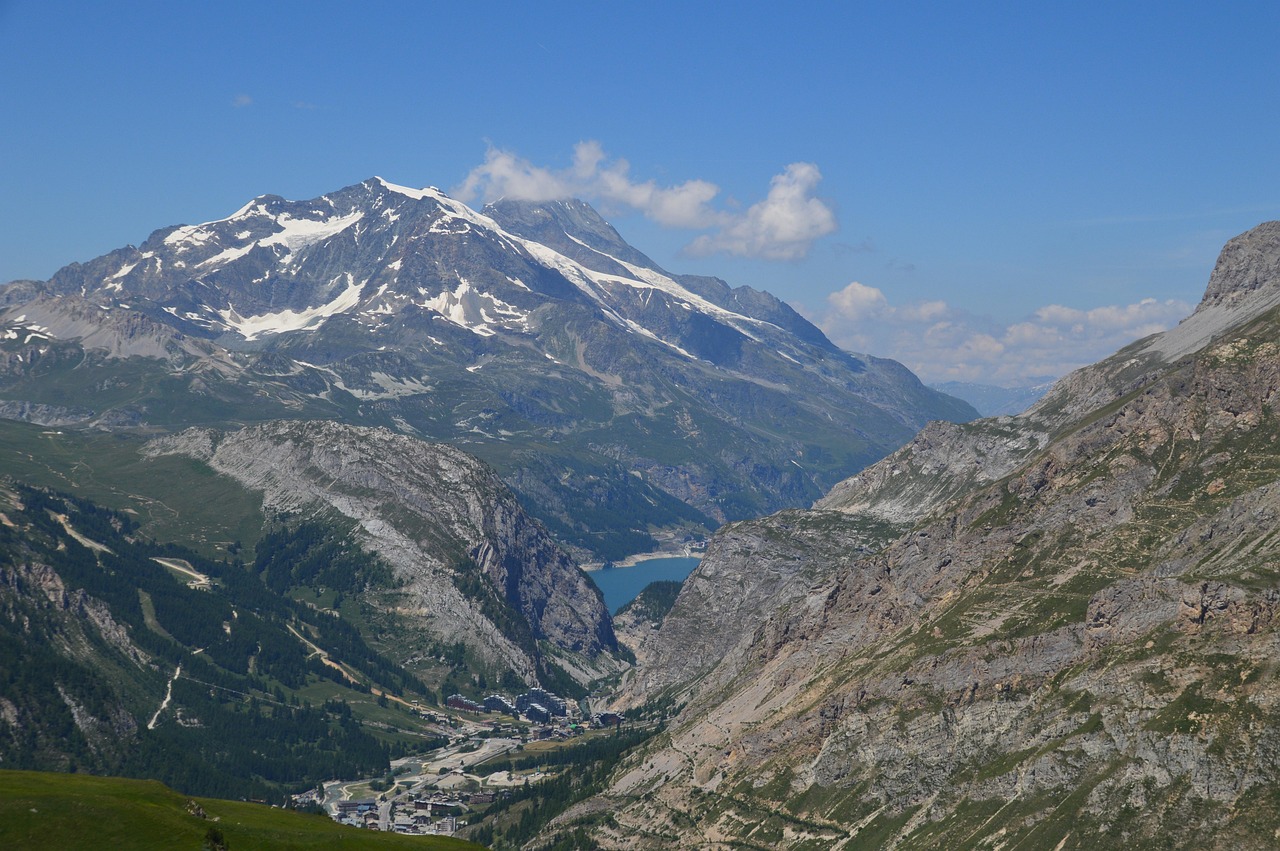
Why Visit Val d’Isère in 2026
Val d’Isère is a high-altitude village at 1,850 m in the French Alps, glued to the Italian border and wrapped in the white drama of the Vanoise National Park. Official brochures call it part of the “Espace Killy” area, but to those of us who know it well, it’s simply Val: a place where a bluebird morning on the Solaise plateau feels like you’re skiing straight into the sun, where après-ski can be as wild or as quietly sophisticated as you want it, and where even summer has the same sharp, alpine intensity.
What makes Val d’Isère special compared with other Alpine resorts is a combination of:
- Snow reliability: The high altitude and extensive snowmaking mean strong seasons from late November to early May.
- Village character: Despite its international fame, the stone-and-wood architecture and the 17th-century church keep a sense of place intact.
- Massive terrain: Linked with Tignes, there are over 300 km of pistes plus seriously good off-piste for confident skiers with guides.
- Food and wine: From Michelin-starred dining to smoky little bars serving tartiflette, the local food in Val d’Isère is a huge part of the appeal.
- Year-round life: In summer you’ve got glacier hikes, mountain biking, lakes, and wildflower meadows – far more than a “winter-only” resort.
In 2026 and 2027, Val d’Isère is leaning even further into its identity as a full-mountain destination, with upgraded lifts, improved green-run connections for families, and a stronger summer festival calendar. If you’re planning 3 days in Val d’Isère or a 7 day itinerary for Val d’Isère, this guide is written so you can pick the chunk of time that suits you and still feel you’ve seen the real village – not just the brochure version.
Table of Contents
- Why Visit Val d’Isère in 2026
- Val d’Isère at a Glance
- 3–7 Day Itineraries for Val d’Isère
- On-Property Zones & Resort Experience
- 10 Key Amenities & Nearby Spots – Deep Dives
- Dining & Local Food in Val d’Isère
- Evenings & Nightlife in Val d’Isère
- Cultural Etiquette & Local Customs
- Day Trips & Nearby Attractions
- Events & What’s New in 2026–2027
- Practical Travel Advice for Val d’Isère
- Summary & Final Recommendations
Val d’Isère at a Glance
The village of Val d’Isère unfolds along a single main spine – the Avenue Olympique – with hamlets branching off: La Daille at the lower entrance, the central village where most of the action is, and Le Fornet at the far end. When I say “on-property zones” here, I’m talking less about one resort and more about clusters of hotels, chalets, and shared facilities that give each corner of Val its own personality:
- La Daille: Best for quick access to Tignes, value stays, and families wanting apartments close to the funicular and gondola.
- Centre Village: Where you stay if you want to walk everywhere – restaurants, bars, ski school meeting points, and the main lifts (Solaise and Olympique).
- Le Fornet: Quieter, prettier, more romantic; stone houses, forest, and great access to high, scenic skiing and summer hikes.
Across these areas, you’ll find pools, spas, kids’ clubs, and all the classic Alpine comforts. But the real “resort” is the village itself; you’re never more than a few minutes from a bakery, a cheese shop, or a bus stop that gets you where you want to be in under 10 minutes.
3–7 Day Itineraries for Val d’Isère
The biggest question friends ask me is: “How many days do I need in Val d’Isère?” My honest answer is that you can get a satisfying taste in three days, but if you’re a skier or hiker, you’ll feel short-changed. Below, I’ve written overlapping itineraries for 3 days in Val d’Isère up to 7 days in Val d’Isère. Think of them as layers; the 4 day itinerary adds another layer onto the 3-day plan, and so on.
3 Day Itinerary for Val d’Isère – “First Taste of Val”
For a 3 day itinerary for Val d’Isère, I focus on the essentials: the iconic slopes, the old village, a proper Savoyard meal, and at least one spa session to soak in the mountain view. I’ll assume a winter visit here (December–April), but I’ll note summer alternatives as we go.
Day 1 – Arrival, Solaise Plateau & Village Orientation
I like to arrive in the late morning from Geneva or Lyon, so I can check into my hotel or chalet by early afternoon and still get a half-day of gentle skiing or a walk. The bus or private transfer drops me near the central roundabout, and I always have the same first ritual: a quick espresso at Café Face opposite the slopes, watching people stream out of the Solaise gondola.
What to do:
- Check-in and gear: If you’re renting skis, I’ve had consistently good experiences with shops like Killy Sport and Precision Ski. Reserve online for a discount and to skip queues.
- Head up Solaise: Take the large, smooth Solaise gondola right from the village. Even if you’re not skiing, the ride itself is worth it for the panorama and the sun deck at the top.
On my last winter trip (Feb 2025), I arrived to heavy snowfall and a milky-white sky, but as we rose above the village, the clouds thinned and the Solaise plateau appeared like a bright, winter island. I watched a group of kids snake down the green run, helmets bobbing, while parents sipped hot chocolate outside the mountain café.
For skiers: Warm up on the green “M” and the blue runs on Solaise; they’re wide, forgiving, and perfect for the first afternoon. If you’re a confident skier, drop into the Madeleine run or head towards the Plan piste.
For non-skiers / summer visitors: In summer, Solaise is still a must – the gondola runs, and you can walk easy trails across the plateau, spotting marmots and picking out Tignes in the distance.
Late afternoon: Ride down before the last lift, then wander the village. The stone church of Saint-Bernard, with its onion-shaped bell tower, is my anchor in Val; I’ve watched it in every kind of weather, from blizzards to golden July sunsets.
Dinner: For your first night, I like to ease into local food in Val d’Isère with something classic but not too heavy:
- La Casserole – Known for generous portions and Savoyard staples. Their tartiflette has become a bit of a ritual for me on night one.
- Les Fées – A cozy spot with good vegetarian options if you’re easing off cheese and charcuterie.
Tip: Book in advance during peak weeks (Christmas, New Year, February holidays). Tipping is modest in France – round up or leave 5–10% if service was kind and attentive.
Day 2 – Espace Killy Highlights & Après-Ski
This is your main exploration day, whether you’re skiing, snowboarding, or hiking in summer. The goal is to taste the breadth of the area without rushing.
Morning: After a simple French breakfast (croissant, baguette, jam, coffee – most hotels do this very well), I aim to be at the lifts just before they open. On my last trip, I made a beeline for the Olympique gondola, which whisks you up to the Bellevarde side.
Up here, the mountains feel more dramatic, with steeper faces and long views down to La Daille and beyond.
- Intermediate skiers: Cruise the red and blue runs like OK, Verte, and Diebold.
- Advanced skiers: If conditions are good and you’re comfortable, consider booking a guide for off-piste routes like the Face de Bellevarde or the Cugnai sector later in your stay.
Summer variation: In July and August, the Bellevarde lifts open for hiking and mountain biking. I’ve spent warm afternoons walking the balcony trails here, watching paragliders circle above the valley.
Lunch on the mountain: My go-to for a mix of views and reliable food is La Fruitière (part of the Folie Douce complex) above La Daille.
One January afternoon, I sat here with a glass of Apremont (a dry local white) and a surprisingly delicate dish of trout and winter vegetables, while below us the music from Folie Douce started to thump. You can go down and join the party after lunch – or retreat to something quieter.
Après-ski options:
- La Folie Douce: Famous for its open-air DJ sets, stage shows, and champagne showers. Fun, but crowded; better if you’re with a group of friends and like a full-on party.
- Cocorico: At the bottom of the slopes near the village, with live bands and a more mixed crowd.
- Quiet alternative: I often skip both and head straight to my hotel spa, especially if I’ve pushed my legs hard.
Evening: For a second-night dinner, I suggest stepping up the food game a little. If your budget allows, L’Atelier d’Edmond in Le Fornet (two Michelin stars) is unforgettable – more on that in the dining section. Otherwise, Avancher near the church does an excellent raclette served the proper way, with the half-wheel brought to your table.
Day 3 – Le Fornet, Old Village & Spa Time
Your last day in a 3 day itinerary for Val d’Isère should be about depth rather than distance. I like to spend it in and around Le Fornet, the quieter end of the valley.
Morning: Take the free shuttle bus from the village center to Le Fornet (10 minutes). Even the bus ride is scenic: stone chalets, snow-laden trees, and the river rushing beside the road.
From Le Fornet:
- Winter: Take the cable car and then the lifts that guide you towards the high glacier sector. The skiing here feels wild and open; on a clear day, the view from the top is one of the best in the entire Espace Killy.
- Summer: You can hike the valley towards the Col de l’Iseran, passing alpine meadows and, if you’re lucky, spotting ibex on the slopes.
Lunch: In winter, I sometimes stay up high and grab a simple mountain meal (soup, omelette, or pasta), but if you’re planning a long, leisurely lunch, book a table back in the hamlet at L’Atelier d’Edmond or its more casual bistro side.
Afternoon: Head back to the village for a final wander: pick up local cheese (Beaufort, Tomme de Savoie) from a fromagerie, chocolates from a patisserie, and maybe a bottle of génépi liqueur to take home.
Spa session: For your farewell, book a late-afternoon slot at one of the bigger spa complexes – more details later, but I’ve had great experiences at the spas inside Hôtel Christiania and Les Barmes de l’Ours.
My perfect final evening is simple: a glass of wine at a quiet bar, one last look at the lit-up slopes, and then a slow walk back through snow that crunches just enough under your boots.
4 Day Itinerary for Val d’Isère – “Adding Adventure”
For 4 days in Val d’Isère, add a dedicated adventure day – off-piste with a guide if you’re a confident skier, or a long hike / snowshoe if you’re not.
Day 4 – Guided Adventure or Scenic Exploration
Option 1: Off-piste with a guide (advanced skiers)
On my fourth winter day, if snow and weather allow, I hire a local guide (ESF, Evolution 2, or Oxygène are solid choices). We’ve explored couloirs above Le Fornet, long powder bowls near the Pissaillas glacier, and quiet glades above La Daille.
A good guide doesn’t just keep you safe – they also tell stories: how the village has changed, where the avalanche-prone slopes are, why a certain ridge is always windy. It deepens your connection to the mountain.
Option 2: Snowshoeing & culture (families and non-skiers)
Snowshoe walks through the forested lower slopes are surprisingly peaceful even in peak season. I once did a dusk outing where we turned off our headlamps and listened to the river and the distant chatter from the village, the sky going from blue to deep violet.
Evening: For your extra night, try a more modern take on Alpine food – somewhere that does lighter dishes, good cocktails, and maybe live music. Bars around the central arena cluster are lively without being wild, and this is a good night to sample them.
5 Day Itinerary for Val d’Isère – “Settling In”
By the time I hit 5 days in Val d’Isère, I start to feel like a temporary local. The extra days let you slow down, linger in cafés, and revisit favorite runs or trails instead of constantly trying something new.
Day 5 – Your Perfect Loop & Hidden Corners
I dedicate day five to doing my personal “perfect loop.” That might mean:
- Starting on Solaise for morning sun.
- Crossing over to the Tignes side for lunch (the mountain restaurant at Tignes Le Lac has great terraces).
- Returning via Bellevarde and dropping back into the village just before last lifts.
What I love is how your own perfect loop will be different. By day five, you’ll know which runs feel like home, which cafés make your favorite hot chocolate, and which corners of the mountain are strangely quiet even when the main pistes are packed.
Hidden gem: Ask locals or your hotel staff for a recommendation of a small, family-run mountain hut. There are a few scattered around the area where you can sit by a wood stove and feel like you’ve slipped out of the main resort altogether.
6 Day Itinerary for Val d’Isère – “Beyond the Slopes”
With 6 days in Val d’Isère, you can afford to take an entire day “off” from skiing or hiking and still feel satisfied. This is when I indulge in the full resort experience: spa, long lunch, shopping, and slow exploration.
Day 6 – Spa, Shopping & Slow Village Life
Morning: Sleep in, have a late breakfast, and then head for a spa session. I like booking a mid-morning slot – a long massage followed by time in a warm pool with snowy views has become my secret weapon against mid-trip exhaustion.
Midday: Stroll the shops: gear boutiques, artisan food stores, French fashion. You can pick up everything from a new pair of goggles to a carefully aged Beaufort cheese.
Afternoon: If the weather is kind, I’ll sit at a terrace café in the main square and simply watch village life unfold. Children dragging sledges, locals chatting in the local Savoyard accent, ski instructors clomping by in their red or blue uniforms.
This is also a great day to explore the church properly, check out any temporary art exhibitions, or visit the local museum if it’s hosting something interesting.
7 Day Itinerary for Val d’Isère – “Living Like a Local”
With a full 7 days in Val d’Isère, the resort really opens up. You have space for a proper day trip, a repeat of a favorite adventure, and evenings that don’t feel rushed.
Day 7 – Day Trip or Second Adventure
Option 1: Col de l’Iseran & Vanoise (summer)
In summer, I love driving or cycling up to the Col de l’Iseran – one of the highest paved passes in Europe. The landscape up there feels lunar, especially early or late in the day when traffic is minimal. From the pass, you can launch into hikes that cut into the Vanoise National Park, with a serious sense of remoteness.
Option 2: Full-day ski safari (winter)
In winter, use your last day to do a full ski safari: start at one end of the area, aim for lunch in the middle, and finish at the other end. It’s a satisfying way to stitch the whole Espace Killy together in your mind.
Evening: Mark your final night with either your favorite restaurant of the week or somewhere special you’ve saved for last. I often end at a low-key wine bar, sharing a charcuterie board with friends and toasting to the mountain that always finds a way to pull me back.
On-Property Zones & Resort Experience
Val d’Isère isn’t a single resort property; it’s a village of many hotels, chalets, and residences, each with their own pools, spas, kids’ clubs, and signature suites. But the experience is remarkably cohesive because everything is walkable or reachable by free shuttle.
Pools & Wellness Zones
Several four- and five-star hotels host the kind of pools that feel almost cinematic – glass walls looking out to snow-laden trees or the floodlit Face de Bellevarde. I’ve ended countless days floating on my back, watching snowflakes tap the windows.
- Families: Look for hotels or residences that explicitly welcome kids in the pool during certain hours; some keep adult-only times in the evening.
- Couples: Seek out spa zones with jacuzzis, steam rooms, and quiet relaxation areas; they’re perfect after a day on the mountain.
- Solo travelers: Don’t be shy about booking spa treatments – therapists are used to guests traveling alone.
Dining Zones
Most upscale hotels have at least one in-house restaurant, often excellent, but I almost always recommend mixing on-property dining with meals in the village. All-inclusive packages are rare here compared with sun-and-sand resorts; Val d’Isère is more about half-board (breakfast and dinner) or European plan (room only).
My advice: If you love exploring food, avoid being tied to a full half-board plan every night. A flexible package or B&B gives you freedom to taste the full range of local food in Val d’Isère.
Kids’ Clubs & Family Zones
Val is surprisingly family-friendly for a place with a reputation for serious skiing and après. Several hotels run kids’ clubs; ski schools have excellent children’s programs; and the gentle slopes on Solaise are perfect for beginners.
In my experience, French ski schools are direct and efficient with children, but always kind. If your kids are shy, request an English-speaking instructor, and consider a private lesson on day one to ease them in.
Slopes & Access
The biggest choice you’ll make is where to stay relative to the lifts:
- Doorstep skiing (or nearly): Many hotels and chalets in the centre and at La Daille offer ski-in/ski-out or a short walk to lifts.
- Shuttle-based: Staying slightly away from the main front can bring quieter nights and better value, with free buses doing the heavy lifting.
For couples and solo travelers, I like central locations; for families with small children, being genuinely close to the ski school meeting point is worth paying extra for.
10 Key Amenities & Nearby Spots – Deep Dives
Here are ten places and experiences I return to again and again – the “on-property” amenities and nearby spots that define Val for me. Each could be its own sub-article; consider this your in-depth guide to the best places to visit in Val d’Isère.
1. Solaise Plateau – The Sunny Balcony of Val d’Isère
The Solaise plateau is where I send every first-timer. You step off the gondola and feel as if the whole valley opens up beneath you – peaks in every direction, the village tiny below, and a soft hush that’s absent down in the bustle.
History & significance: Solaise has long been central to Val’s ski identity. Recent lift upgrades have made it faster and more comfortable to access, and the reworked beginner areas and café terraces have turned it into a semi-pedestrian mountain village of its own.
My experience: I’ve taught friends to ski here, watched kids take their first wobbly turns, and even done a sunrise yoga session on a special event morning in early March. The light is always extraordinary – even on cloudy days, the plateau seems to hold onto brightness.
Tips for visitors:
- Arrive early for the quietest slopes and best snow.
- Non-skiers can buy a pedestrian ticket for the gondola and still enjoy lunch and views at the top.
- On windy days, Solaise can feel exposed; pack an extra layer.
2. Bellevarde & Face de Bellevarde – The Iconic Olympic Face
If Solaise is the friendly host, Bellevarde is the charismatic daredevil. The Face de Bellevarde, home to World Cup and Olympic races, looms over the village; at night, when it’s floodlit, you can trace every twist of its descent.
History: Designed as part of preparations for the 1992 Albertville Winter Olympics, the Face became a proving ground for racers. It’s steep, long, and unforgiving if you hit it with tired legs or icy conditions.
My experience: I’ve skied the Face in perfect creamy snow with a big grin – and once, foolishly, late in the day when it was scraped to ice. I spent more time side-slipping than carving and vowed never to underestimate it again.
Visitor tips:
- Only attempt the Face if you’re a confident, strong skier.
- For most people, better to admire it from the village or enjoy the gentler runs nearby.
- In summer, hiking trails criss-cross this face; the sense of scale is even clearer on foot.
3. Le Fornet Hamlet & Glacier Sector
Le Fornet is the part of Val d’Isère that feels the most like an old mountain village: stone houses, wooden balconies, and a river that runs fast in spring. Above it, the lifts climb towards glacier terrain where, even on busy days, you can find silence.
History & character: Long before mass tourism, this was a working hamlet. The old wooden barns and grain stores have mostly become chalets now, but the bones of the place remain.
My experience: I’ve stayed in Le Fornet several times when I wanted quiet nights. Waking up here feels different; you hear the river, not the nightlife. In deep winter, snow piles against the lower windows and the whole hamlet glows under the streetlights.
Tips:
- Stay here if you value peace and don’t mind a short bus ride to the main village.
- In summer, use it as a base for hikes into the Vanoise – the trails start practically at your door.
- Book a special meal at L’Atelier d’Edmond; allow time to stroll the hamlet before or after.
4. Centre Aquasportif – Val’s Public Pool & Fitness Hub
The Centre Aquasportif is Val d’Isère’s answer to “What if my legs are tired, the kids are restless, and I still want to move?” It’s a public complex just off the main street, with a large pool, slides, spa area, climbing wall, gym, and courts.
My experience: On a stormy January afternoon when the visibility had dropped to nothing and the wind howled over the ridges, I abandoned the mountain by midday and spent hours here instead. I floated in the warm pool looking up at the snow through high windows, then sat in the steam room until I felt human again.
Why it matters:
- Families can burn off energy when skiing isn’t an option.
- It’s a social hub for locals and seasonal workers too; you get a different slice of village life.
- Great for bad-weather days or if someone in your group doesn’t ski.
Tips: Bring a swimsuit and flip-flops from home to avoid resort prices; check opening hours, as spa zones may close earlier than the pool.
5. Église Saint-Bernard de Menthon – The Heart of the Village
The church doesn’t appear in many “top 10 things to do in Val d’Isère” lists, but it’s where I always orient myself: a stone anchor in a shifting sea of snow and tourism.
History: Dating back to the 17th century, dedicated to Saint Bernard of Menthon, patron saint of mountaineers and skiers. Inside, baroque altarpieces glow in gold leaf and candlelight.
My experience: I’ve ducked in here to escape blizzards, to listen to Christmas carols sung in French and English, and once simply to sit in silence for 10 minutes when my head was too full of noise. It’s a reminder that this valley carried human stories long before ski lifts arrived.
Visitor tips: Dress modestly, speak quietly, and feel free to light a candle if that feels meaningful to you, whether you’re religious or not.
6. La Folie Douce – High-Altitude Theatre & Party
Love it or roll your eyes at it, La Folie Douce is a phenomenon. Perched above La Daille, it’s part restaurant, part open-air club, part performance art, with dancers in costumes, live singers, and DJs pumping beats over the valley.
My experience: I’ve done the full Folie once – danced in ski boots, sipped a too-expensive drink, and skied down with a big, silly grin. Once was enough for me, but I send my younger, party-loving friends there without hesitation.
Tips:
- Time your drinks – you still have to ski down afterwards, and the run can be crowded and chopped up.
- Book ahead if you want lunch at La Fruitière, the more gastronomic restaurant next door.
- Families with teens might enjoy the spectacle earlier in the afternoon before things get too wild.
7. Fromageries & Local Food Shops – The Taste of Savoie
If you only ski and never step into a fromagerie, you’ve missed half the story. Savoie’s cheeses – Beaufort, Abondance, Tomme – are the backbone of local dishes like fondue, raclette, and tartiflette.
My experience: I always make time to talk to the cheesemonger. Over the years, I’ve learned which cheeses come from which valleys, which are best young or aged, and how the hay or wildflowers influence the flavor.
Visitor tips:
- Ask for a mix of cheeses to take home; they travel surprisingly well in winter.
- Try local cured meats (saucisson, jambon cru) and jarred specialties like onion confit for raclette.
- If you’re in an apartment, plan a DIY raclette night; rental shops even hire out raclette grills.
8. Summer Lakes & Meadow Walks – Val Beyond the Snow
In summer, Val d’Isère breathes differently. The air is softer, the slopes turn green, and small lakes mirror the peaks. I’ve spent July afternoons walking along the Isère river, picnicking by alpine tarns, and watching children chase butterflies instead of snowflakes.
Why it’s special: Many people know Val only as a winter resort, but summer brings festivals, mountain bike events, and a calmer, more local rhythm. Prices drop, the days lengthen, and you can explore without heavy gear.
Tips:
- Pack layers – even in August, evenings can be chilly at 1,850 m.
- Use the lifts that run in summer for easy access to high viewpoints.
- Look out for guided nature walks; learning about alpine flora and fauna adds richness to hikes.
9. Wine Bars & Quiet Evenings – The Grown-Up Side of Val
Val’s nightlife has a party reputation, but there’s a refined side too: intimate wine bars where you can taste local bottles, share charcuterie boards, and discuss the day’s adventures without shouting over music.
My experience: Some of my favorite nights in Val have been spent in a dimly lit corner, glass of Mondeuse or Roussette in hand, talking with friends or with the barman about snow conditions and local gossip.
Tips: Ask for wines from Savoie and nearby regions; they rarely travel far beyond the Alps but pair perfectly with the food.
10. Chalet & Apartment Life – Living Like a Local
Staying in a self-catered apartment or catered chalet is another way to experience Val. You shop at the local supermarket, visit the bakery each morning, and fall into an easy routine that feels more like living here than visiting.
My experience: I’ve had weeks where we skied hard all day, then returned to a chalet where a chef had prepared dinner; and others where we took turns cooking simple pasta and salads, leaving more budget for lift passes and wine. Both have their charms.
Tips:
- For families or groups, chalets can be more economical and sociable than separate hotel rooms.
- Book early for peak weeks (Christmas, New Year, February) – the best options disappear quickly.
- Check distances to lifts and bus stops carefully; 200 m uphill in ski boots can feel much longer than it looks on a map.
Dining in Val d’Isère – From Savoyard Classics to Michelin Stars
Food is one of the main reasons I keep returning to Val. The village punches above its weight for both rustic, comforting dishes and fine dining. When people ask about the best local food in Val d’Isère, I always say: pace yourself. Heavy cheese dinners every night will slow you down on the slopes.
On-Property Restaurants vs. Village Dining
Most four- and five-star hotels have excellent in-house restaurants: beautifully plated dishes, curated wine lists, and polished service. For couples on a short stay, eating on-property can be extremely convenient, especially if you’re tired after a long day.
However:
- Half-board deals (breakfast + dinner) sometimes lock you into the same dining room every night. If you’re here for 3 days, that might be fine; for 7 days, it can feel repetitive.
- Many packages allow you to swap your included dinner for credit at partner restaurants – ask before you book.
- Some of my best meals have been in tiny village spots you’d miss if you never left your hotel.
Signature Dishes to Try
- Fondue Savoyarde: Melted cheese (often Beaufort, Comté, Emmental) with white wine and garlic, eaten with chunks of bread. Share one between 2–3 people; ordering individually is overkill.
- Raclette: Half-wheel of cheese melted at your table and scraped over potatoes, charcuterie, and pickles.
- Tartiflette: Gratin of potatoes, reblochon cheese, onions, and lardons. The definition of comfort food.
- Diots: Local sausages often cooked in white wine, served with polenta or potatoes.
- Crozets: Small square buckwheat pasta, often baked with cheese.
Are All-Inclusive Packages Worth It?
Val d’Isère isn’t really an “all-inclusive” destination in the Caribbean sense. You’ll find:
- Half-board: Breakfast and dinner included; drinks usually extra.
- Bed & breakfast: Breakfast included; you’re free for other meals.
- Self-catering: In apartments and chalets.
My take: For most travelers, especially those who care about exploring, B&B or self-catering plus flexible restaurant choices is best. Half-board can be good value in peak weeks if you’re staying at a high-end property and don’t mind eating there most nights.
Tipping & Hidden Charges
Service is usually included in France, and you’ll rarely see Americans-style tipping expectations.
- Round up the bill or leave 5–10% if service was excellent.
- Check if bread, water, or couvert charges are applied – it’s rare here, but occasionally you’ll see a small cover charge.
- Ask about “menu du jour” or set menus; they can be better value than ordering à la carte.
Best Nearby Restaurants Worth a Taxi or Shuttle
- L’Atelier d’Edmond (Le Fornet): Two Michelin stars, beautifully calibrated food that still nods to local ingredients. Ideal for a romantic night or a special occasion.
- Le Trifollet (on the slopes): Lovely for a long lunch on a sunny day; easy ski-in/ski-out location.
- Avancher: Warm, welcoming, excellent raclette and Savoyard dishes in a contemporary setting.
- Small village bistros: Ask your hotel for current recommendations; the scene shifts a little each year.
Getting Away From the Resort for a “Real Local” Meal
While Val is very much a resort village, many of the restaurants are run by local families or long-time residents. Your best bet for a less touristic feel is to:
- Visit in shoulder seasons (early December, late April, June, September) when crowds thin.
- Go early or late in the evening, avoiding peak 7–9 pm times.
- Ask staff where they eat on their day off; often they’ll point you to simple, authentic spots.
Evenings in Val d’Isère – Bars, Entertainment & Quiet Nights
Evenings in Val d’Isère can be anything from family board-game nights in a chalet to DJ sets and dancing on tables. The beauty is that the village is compact enough that you can drift from one mood to another easily.
On-Property Entertainment
Many hotels offer:
- Piano bars or live acoustic music in the lobby.
- Wine tastings or themed dinners.
- Kids’ movie nights or supervised early-evening activities.
I’ve had some of my coziest evenings wrapped in a blanket near a hotel fireplace, sipping génépi and watching snow fall outside the windows.
Lobby Bars & Lounge Scenes
Lobby bars in Val tend to be relaxed and stylish: leather armchairs, low lighting, and bartenders who actually care about cocktails. They’re ideal for couples and small groups who prefer conversation over crowd noise.
Après-Ski into Night
If you want the classic progression:
- Après on the mountain (Folie Douce) or at the base (Cocorico).
- Shower and change.
- Dinner in the village.
- Drinks at a bar or small club, often with a mix of holidaymakers and seasonnaires.
Even at its liveliest, Val’s nightlife feels contained; step a few streets back from the main noise and you’re in quiet, residential lanes again.
After Dark in Nearby Areas
Most visitors stay in Val for the evening; there’s little reason to head elsewhere at night, as neighboring villages are smaller and quieter. If you have a car and feel like a change, Tignes has its own après and bar scene, but it rarely surpasses Val’s for atmosphere.
Cultural Etiquette & Local Customs in Val d’Isère
Val d’Isère is international, but it’s still a French mountain village with its own rhythms and unspoken rules. Respecting these makes your stay smoother and more rewarding.
Greetings & Politeness
- Always start interactions with a polite “Bonjour” (daytime) or “Bonsoir” (evening).
- In shops and cafés, greet staff when you enter and say “Merci, au revoir” when you leave.
- English is widely spoken, but opening with a French greeting is appreciated.
Dining Customs
- Meals are unhurried; don’t expect rapid turnover like in some Anglo cultures.
- It’s normal to linger after dessert with coffee or digestifs.
- Splitting bills between large groups is accepted but can be time-consuming; warn your server early.
On the Slopes
- Respect the skier’s code: the downhill skier has right of way; stop only at the side of the piste, not in blind spots.
- Give ski schools and children’s groups plenty of space.
- Off-piste without a guide and proper equipment is strongly discouraged; avalanches are a real risk.
Local Life & Seasonality
Many of the people serving you food, teaching your children to ski, or cleaning your room are seasonal workers who live intense, hard-working winters. A little kindness – learning someone’s name, tipping fairly, being patient on busy days – goes a long way.
Day Trips & Nearby Attractions from Val d’Isère
While Val d’Isère itself is rich enough to fill a week, there are a few worthwhile excursions if you feel like exploring.
Vanoise National Park
What: A protected natural area with hiking trails, wildlife, and pristine alpine scenery.
How to get there: By car or organized excursion in summer; some trails link directly from Le Fornet and the Col de l’Iseran area.
What to do: Guided hikes, photography, wildlife watching (ibex, chamois, marmots), picnics with mountain views.
Col de l’Iseran
In summer, the road to the Col de l’Iseran is a classic drive or cycling route, with sweeping curves and jaw-dropping views. There’s a small chapel at the top and trails radiating out into the high plains.
Tignes
Linked by lifts and pistes in winter, Tignes is reachable by car or bus in other seasons. It has a more modern, purpose-built feel, but the lake and glacier access make it interesting for a day, especially if you’re curious about different resort styles.
Events & What’s New in Val d’Isère, 2026–2027
Val d’Isère’s calendar balances world-class ski races with local festivals and growing summer events.
Major 2026–2027 Events
- FIS Alpine Ski World Cup (December 2026): The annual men’s and women’s races on the Face de Bellevarde and surrounding slopes. The atmosphere is electric; locals crowd the finish area with cowbells and flags.
- Christmas & New Year’s Celebrations (December 2026 – January 2027): Village lights, fireworks, torchlit descents, and festive markets.
- Classicaval Music Festival (January/February 2027): Chamber music concerts in the village church; intimate, atmospheric, and a beautiful contrast to the sporty daytime vibe.
- Summer Mountain Bike & Trail Events (2026 season): Dates vary, but expect endurance races, trail-running competitions, and guided events.
What’s New in 2026
- Ongoing investment in lift infrastructure, making beginner connections smoother and reducing bottlenecks.
- Expanded summer programming (guided hikes, kids’ activities, yoga retreats) as Val continues to position itself as a year-round destination.
- Increased emphasis on sustainability, with more electric shuttles and initiatives to reduce energy use in lifts and snowmaking.
Practical Travel Advice for Val d’Isère
How to Get There & Airport Transfers
Nearest major airports:
- Geneva (GVA): Around 3–3.5 hours by road, depending on traffic.
- Lyon (LYS): Roughly 3 hours by car or transfer.
- Chambéry (CMF): Closer but with more limited flight options.
Transfers:
- Shared shuttle buses (cheaper, longer travel time, set schedules).
- Private transfers (more expensive but door-to-door and faster).
- Train to Bourg-Saint-Maurice, then bus or taxi (scenic and often relaxed).
Roads in winter are generally well maintained, but snowstorms can slow things down; always allow extra time on travel days.
Public Transport & Getting Around
Within Val d’Isère, free shuttle buses run frequently between La Daille, the village center, and Le Fornet. I rarely need a car once I’m here.
Car Rental & Foreign Driver’s Licenses
If you do drive:
- Most foreign driver’s licenses are accepted in France for tourists; check your country’s specific requirements.
- Winter tires or chains are essential; mountain passes can be snowy and icy.
- Parking in Val can be limited and expensive; book accommodation with parking if you bring a car.
SIM Cards & Connectivity
France is part of the EU roaming zone, so EU SIMs work as at home. For visitors from outside the EU:
- Buy a French prepaid SIM (Orange, SFR, Bouygues) at the airport or in a larger town before heading up the valley.
- Many hotels and cafés offer free Wi-Fi, but mountain coverage can be patchy.
Visa Requirements
France is part of the Schengen Area. Depending on your nationality, you may have:
- Visa-free entry for short stays (typically up to 90 days in 180 days) for many countries.
- Visa requirements; check with the French consulate or official government websites well in advance.
Money-Saving Tips
- Travel in shoulder seasons: Early December, late March, and April often have lower prices and quieter slopes.
- Book passes online: Lift passes may be cheaper if pre-purchased.
- Self-cater some meals: Breakfasts and simple dinners cooked in your apartment free up budget for special restaurant nights.
- Use free buses: Avoid taxis within the village unless you have mobility issues or heavy luggage.
Seasonal Considerations
- Winter (late November–early May): Prime ski season. December brings festive charm; January is colder and quieter; February is busy with school holidays; March and April offer longer days and often softer snow.
- Summer (late June–early September): Best for hiking, biking, and alpine lakes. Lifts run on a summer schedule; temperatures are mild but nights cool.
- Shoulder seasons (May, October): Many lifts and hotels close; quiet and atmospheric but limited services.
All-Inclusive vs European Plan & Pricing Windows
Val’s pricing varies dramatically with season:
- Peak: Christmas–New Year and February holidays; highest prices, busiest slopes.
- Mid: January, early March; better value, still excellent snow.
- Late: Late March–April; good deals, longer days, spring skiing conditions.
All-inclusive in the classic sense is rare; think instead in terms of half-board vs. B&B vs. self-catering. Choose based on how much you enjoy exploring restaurants versus having everything handled.
Weather, Water & Electricity Quirks
- Weather: Rapid changes; always check forecasts and avalanche bulletins.
- Water: Tap water is safe and generally excellent; refill bottles rather than buying plastic.
- Electricity: Standard European 230V, Type C/E plugs; bring adapters if needed.
Tipping & Service
As mentioned, tipping is modest. You’ll rarely see “service not included” on bills; if you do, confirm with your server. For transfers, guides, and ski instructors, small tips are appreciated:
- Ski instructors: often €10–€20 per day per family/group, more if you’re especially grateful.
- Guides: similar or slightly higher, depending on the length and difficulty of the outing.
Hidden Tips From a Frequent Visitor
- Lift pass photos: Take a clear, recent headshot in advance; some passes require one and doing it at home is more convenient.
- Boot comfort: Invest in boot-fitting or at least proper socks; sore feet can ruin a trip.
- Midday breaks: On very cold days, warm up inside every couple of runs instead of pushing through and getting exhausted.
- Sun protection: High altitude means stronger UV; use high-SPF sunscreen and good sunglasses or goggles.
- Plan rest: In a 6 or 7 day itinerary for Val d’Isère, schedule at least one lighter day to avoid burnout.
Summary & Final Recommendations – When & How to Visit Val d’Isère
Val d’Isère is one of those places that reveals itself in layers. On your first visit, you’ll remember the big things: the sweep of the slopes, the energy of après-ski, the weight of a fondue pot in the middle of a crowded table. On your second or third, it’s the smaller details that stick: the sound of the church bells, the cheesemonger’s advice, the way snow squeaks under your boots at -15°C.
Best Seasons to Visit Val d’Isère
- For serious skiing: Late January to mid-March – reliable snow, fewer crowds than peak holidays.
- For families: Christmas (for magic, if not quiet) or March/early April (warmer, more daylight).
- For budget-conscious skiers: Early December and late April – watch snow reports, but the deals can be excellent.
- For hikers & cyclists: July and August – full summer operations, wildflowers, and long days.
Whether you choose a 3 day itinerary for Val d’Isère packed with slopes and Savoyard food, or 7 days in Val d’Isère letting you sink into village life, the key is the same: balance the big, must-see attractions with quiet, local moments. Ride Solaise for the views, yes – but also make time for a slow coffee in the sun, a conversation with a ski instructor, or a stroll through Le Fornet at dusk.
If there’s a final piece of travel advice for Val d’Isère I always give, it’s this: don’t try to do everything. Pick a few must-see attractions in Val d’Isère, leave space for serendipity, and let the mountains set the pace. They’ve been here far longer than any of us – and they reward those who take the time to really look.