Why Visit Verdon Gorge?
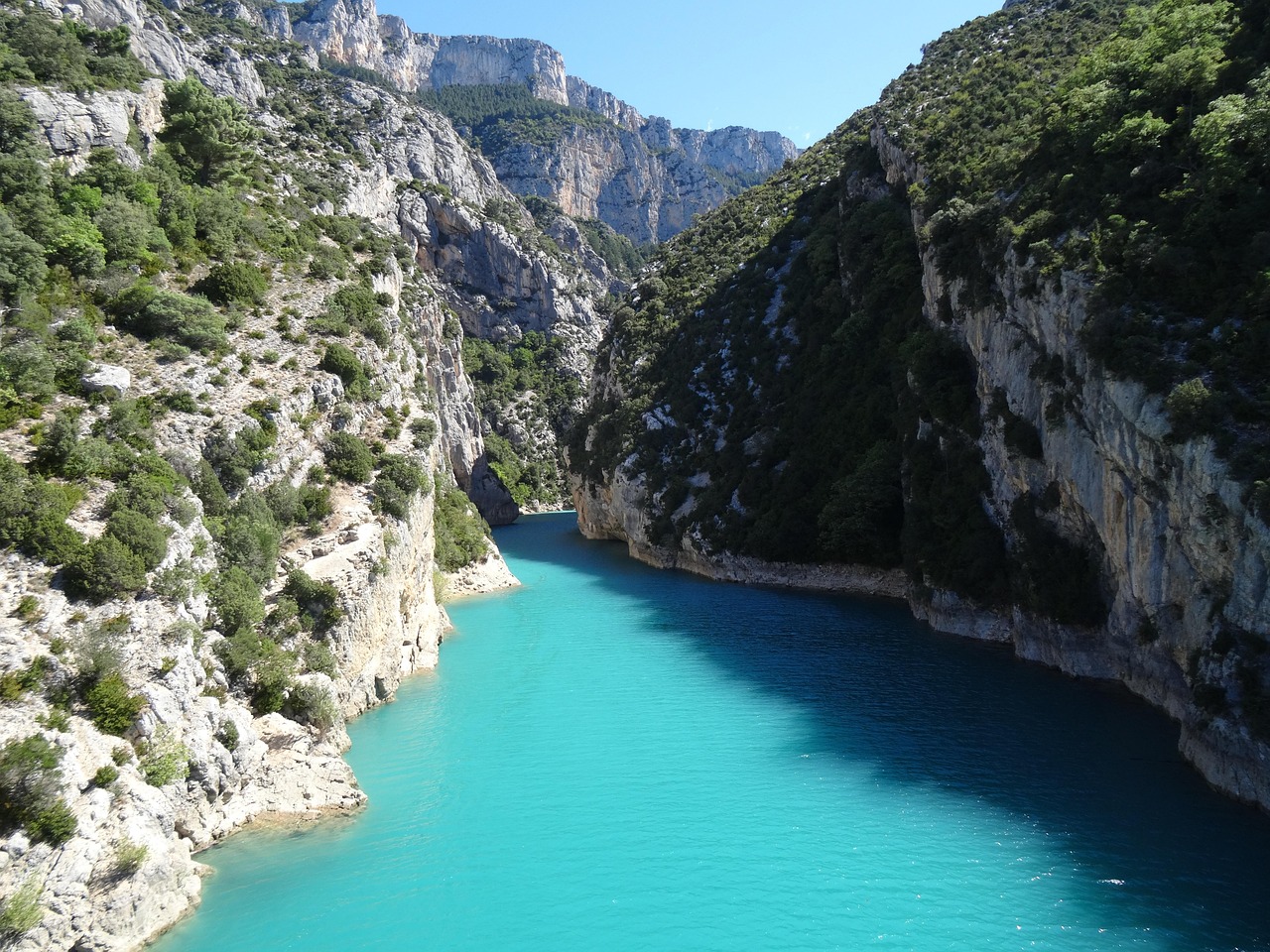
Every time I drive up from the lavender plains of Valensole and the road suddenly tips towards the turquoise ribbon of the Verdon, I remember why I keep coming back. The Verdon Gorge (Gorges du Verdon) is not just “Europe’s Grand Canyon” – that comparison is lazy and misses its soul. It’s a place where sheer limestone walls plunge 700 meters to a river so improbably blue it looks edited, where eagles ride thermals over medieval villages, and where you can swim, climb, hike, paddle, or simply sit at a café terrace and watch the light change on the cliffs.
What makes Verdon Gorge special is the contrast. One hour you’re walking a narrow balcony path drilled into a cliff, the next you’re eating lavender honey ice cream by a calm lake. It’s wild and yet deeply lived-in; the villages have real year‑round communities, not just a summer crowd. Over the last decade, I’ve spent long stretches here in every season – April wildflowers, August thunderstorms over Sainte-Croix, crisp October mornings in Trigance, even one magical dusting of snow in La Palud-sur-Verdon.
If you’re debating where to spend 4–7 days in the south of France and want something more rugged than the Riviera, this travel guide for Verdon Gorge is for you. I’ll walk you through 4 day, 5 day, 6 day, and 7 day itineraries, the best places to visit in Verdon Gorge, local food and mountain dining, hidden gems, cultural etiquette, and very practical travel tips for Verdon Gorge from a serial return visitor.
Table of Contents
- Why Visit Verdon Gorge?
- Quick Overview & How the Region Fits Together
- Suggested Itineraries (4–7 Days in Verdon Gorge)
- Peaks, Valleys, Passes & Villages – 15 In‑Depth Local Profiles
- Mountain Dining & Local Food in Verdon Gorge
- Evenings in Verdon Gorge
- Practical Logistics & Travel Advice for Verdon Gorge
- Day Trips & Nearby Attractions
- 2026–2027 Events & What’s New
- Summary & Final Recommendations
Quick Overview: How Verdon Gorge Fits Together
The Verdon region fans out around three main elements: the Grand Canyon du Verdon (the deep central gorge), the emerald lakes at each end (notably Lac de Sainte-Croix and Lac de Castillon), and the ring of villages and passes that serve as bases for exploration. There’s no single “Verdon town” – you choose a base depending on whether you want balcony hikes, lake swims, or quiet hilltop evenings.
Most visitors divide their time between:
- North Rim – around La Palud-sur-Verdon and the Route des Crêtes, best for dramatic cliff‑edge drives, iconic hikes (like the Blanc-Martel trail), and climbing.
- South Rim – around Aiguines and Comps-sur-Artuby, with sweeping gorge panoramas, the dizzying Artuby Bridge, and quieter villages.
- Lake Bases – around Moustiers-Sainte-Marie, Les Salles-sur-Verdon, and Esparron-de-Verdon, ideal for swimming, paddle-boarding, and more leisurely days.
There are no trains that reach the gorge proper; you’ll rely on a car or bike. Altitudes are “mountain-lite”: most villages sit between 500–1,000 m, with the higher passes and peaks around 1,500–1,900 m. That means no severe altitude concerns, but real alpine weather: sudden storms, cool nights, and sometimes snow outside the high summer window.
Suggested Itineraries: 4–7 Days in Verdon Gorge
The following itineraries are built from trips I’ve actually taken, tweaked over several years to balance must‑see attractions in Verdon Gorge with quieter, more local corners. Use them as scaffolding – you can compress or stretch, but the pacing works.
4 Day Itinerary for Verdon Gorge – Highlights without the Rush
If you have 4 days in Verdon Gorge, you can still see the icons: balcony hikes, lake time, and one or two quiet villages. I’d base in Moustiers-Sainte-Marie (days 1–2) and La Palud-sur-Verdon (days 3–4), which keeps driving time manageable.
Day 1 – Arrival, Moustiers-Sainte-Marie & First Glimpse of Lac de Sainte-Croix
I tend to arrive via Manosque or Aix-en-Provence, climbing through the Valensole plateau as the road narrows and the traffic thins. It’s like a pressure valve releasing after the coast. Check into your guesthouse in Moustiers-Sainte-Marie, where creamy stone houses cling to a cleft in the cliffs and a tiny chapel perches high above on the rock.
My ritual on the first afternoon is simple:
- Stretch your legs on the steep staircase up to Notre-Dame de Beauvoir, the chapel above town. The climb takes 20–30 minutes; the view over the rooftops to Lac de Sainte-Croix always resets my sense of scale.
- Stroll the lanes, peek into faïence (glazed ceramics) workshops, and note the small star hanging on a chain high between the cliffs – local legend says it was placed there for a returning Crusader.
- Finish with an early dinner on a terrace. Try aïoli (garlic mayo with fish and vegetables) or ravioles with local goat cheese, paired with a light rosé from the nearby Sainte-Croix vineyards.
If you arrive in time, drive the 10 minutes down to the lake just before sunset. The light on the water is soft, and in early summer the air smells faintly of broom and pine.
Day 2 – Lake Day: Lac de Sainte-Croix & the Lower Gorge
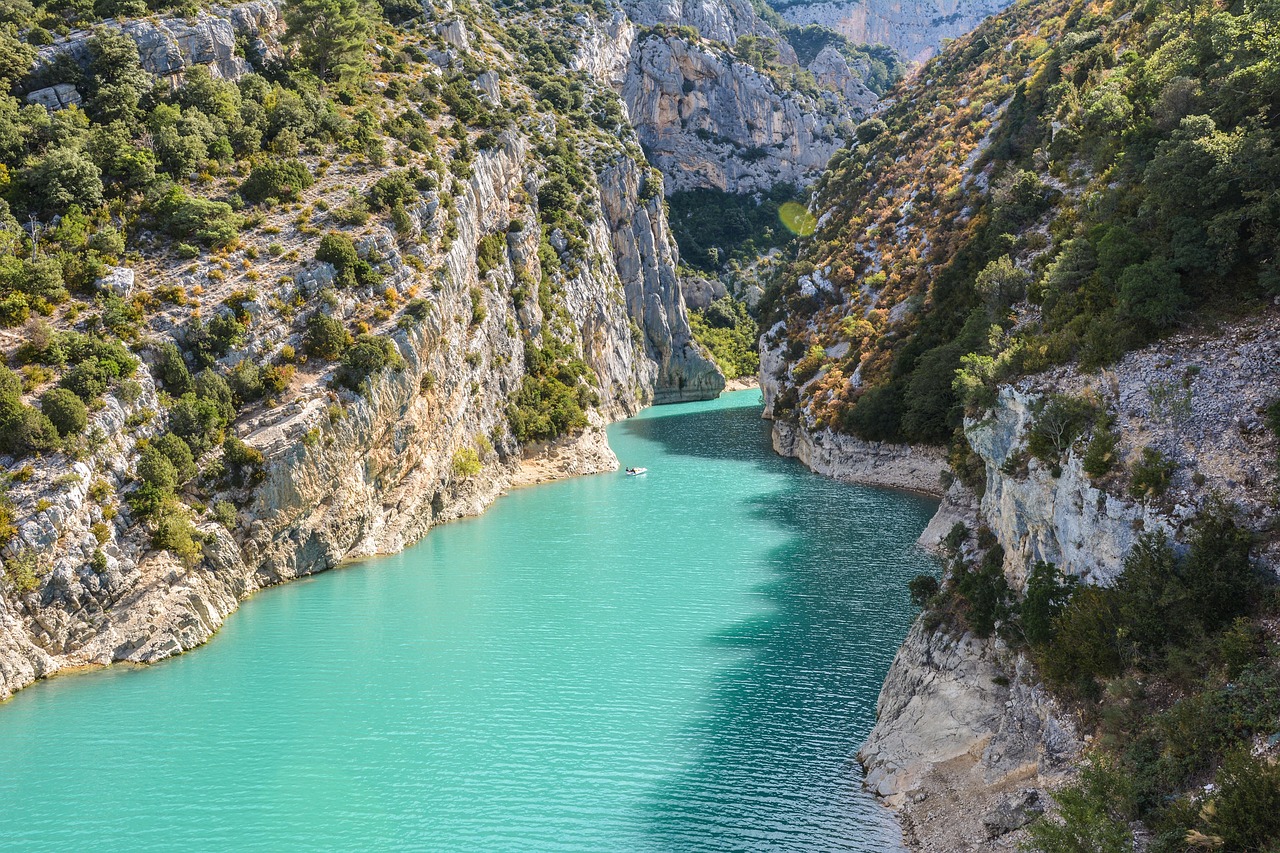
Your second day focuses on the turquoise heart of the region. Lac de Sainte-Croix is artificial – the old village of Salles lies beneath it – but it feels wild, framed by cliffs and forested hills.
- Morning – Paddle into the Canyon: Drive to the bridge at the mouth of the gorge (Pont du Galetas). Rent a pedalo or kayak and paddle upstream into the lower gorge: vertical walls, overhanging rock, and the cool breeze that rises from the water. In high season (July–August 2026), go early; rentals now cap numbers by mid‑day to protect the riverbanks.
- Lunch – Lakeside Picnic: Grab bread, cheese, fruit, and a pot of tapenade from Moustiers in the morning and picnic on the eastern shore near Les Salles-sur-Verdon. I usually bring a lightweight sarong – it serves as picnic blanket, towel, and sun-shade.
- Afternoon – Swim & Siesta: Spend a lazy few hours swimming and dozing. The lake shelves gently at the main beaches, making this a perfect family‑friendly activity. Water temperatures in July and August hover around 23–25°C.
- Evening – Sunset Drive to Aiguines: Before dinner, drive the curving road up to Aiguines. The view from the village square – lake, fields, and the first folds of the Alps – is one of my favorites in the region.
Day 3 – North Rim: La Palud-sur-Verdon & the Route des Crêtes
Check out of Moustiers and drive toward La Palud-sur-Verdon, your base for the next two nights. The road already hints at what’s coming: hairpins, glimpses of pale cliffs, and patches of dense forest. La Palud itself is a small, rather unassuming village, but it’s the perfect launchpad for the north rim.
After dropping your bags, set out on the Route des Crêtes (D23), a one‑way, 24‑km loop that clings to the edge of the gorge.
- Stop at multiple belvédères (viewpoints). At each I seem to discover a new shade of turquoise or a different way the light hits the rock.
- Watch for rock climbers – tiny colored dots on the vertical faces – and for griffon vultures introduced in the 1990s, now a fixture in the skies. Bring binoculars if you have them.
- Allow 2–3 hours with scenic stops; the road is narrow and you’ll want to take it slowly.
Dinner back in La Palud tends to be hearty: daube provençale (wine‑braised beef), caillettes (herbed meatballs), or trout from the Verdon. If you’re a stargazer, step out after dark: the gorge has relatively low light pollution and you’ll often see the Milky Way on clear summer nights.
Day 4 – Classic Hike: Blanc‑Martel Trail & Departure
On your final day, tackle the region’s most famous hike: the Sentier Blanc‑Martel. It’s a one‑way balcony and riverside trail between the Chalet de la Maline (north rim) and Point Sublime (near Rougon).
- Distance / difficulty: ~14 km, 5–6 hours, with some exposed sections, metal ladders, and tunnels. Not suitable for very young children or anyone uncomfortable with heights.
- Logistics: In 2026, the shuttle buses run more frequently from May–October. I usually park at Point Sublime, take the shuttle to La Maline, then hike back to the car.
- Highlights: The narrow tunnels (bring a headlamp), the long flights of metal stairs, and those moments when the gorge suddenly opens and you see the river far below in a shaft of sun.
I hiked Blanc‑Martel most recently in October 2025 after an autumn storm; the waterfalls were fatter, and a thin mist hung in the gorge. Start early to avoid crowds and afternoon thunderstorms in summer, and always check local info for occasional closures due to rockfall.
After the hike, either head onward to the Riviera or back toward Aix/Marseille, or add more days to deepen your stay.
5 Day Itinerary for Verdon Gorge – Adding a Second Canyon & More Villages
With 5 days in Verdon Gorge, you can keep the 4‑day structure and add a detour into the wilder Bauduen / Esparron / Lower Verdon area or the secondary canyon of the Gorges de Trévans. I recommend:
- Days 1–2: Base in Moustiers-Sainte-Marie (as above)
- Days 3–4: Base in La Palud-sur-Verdon (north rim hikes and drives)
- Day 5: Move to Esparron-de-Verdon or Bauduen for a quieter, more local lake experience before departure
Day 5 – Esparron-de-Verdon & the Quieter Lakes
On several trips, I’ve ended my Verdon stay at Esparron-de-Verdon, and I’ve never regretted it. It’s smaller and less showy than Sainte-Croix, but also calmer, with coves you can only reach by boat and less of the high‑season crowd.
- Rent a small electric boat or kayak from the village harbor and spend 3–4 hours exploring coves and narrow arms of the lake.
- Swim from the rocks – the water is often remarkably clear, and you’ll see fish darting near the shore.
- Walk the lakeside path toward the old windmill for sunset views.
It’s a gentle end to what may have been a fairly adventurous trip, and a perfect choice for couples or families who like a slower final day.
6 Day Itinerary for Verdon Gorge – Adding Peaks, Passes & a Second Big Hike
For a 6 day itinerary for Verdon Gorge, we can add a more high‑alpine flavor: one extra day around Castellane and the Artuby valley, and a second major hike on the south rim.
Day 5 – Castellane & the Roc
Move east to Castellane, a small town backed by a dramatic limestone block topped with a chapel, the Roc Notre-Dame. I still remember my first dawn here: fog pooled in the valley, and the Roc rose above it like an island.
- Morning: Wander Castellane’s old center, sit with a coffee under the plane trees on the main square, and stock up on picnic supplies at the weekly market (usually Wednesday and Saturday mornings; check 2026 local listings).
- Late Morning Hike: Climb the Roc Notre-Dame via the well‑marked path from town (about 45–60 minutes up). The chapel is usually open in season; even when it’s not, the view over the Verdon and surrounding peaks is spectacular.
- Afternoon – Rafting Option: If water levels and regulations permit (they often do in spring and early summer), join a rafting trip from Castellane into the upper Verdon. It’s an exhilarating way to feel the river’s power, and guides are good with families (age limits apply, usually 8+).
Day 6 – South Rim Hike: Sentier de l’Imbut or Vidal & Aiguines
The Sentier de l’Imbut is for confident hikers, a more technical counterpart to Blanc‑Martel on the south rim. My last run of it, in late September, was dry and leaf‑strewn, with dappled light filtering through beech and oak.
- Distance / difficulty: 10–12 km depending on loop; steep, potentially slippery sections, some exposure. Not suitable for small children or vertigo sufferers.
- Highlights: Descending through forest into the heart of the gorge, the roaring Styxx section where the river disappears under boulders, and the calm pools where you can sit and let your feet dangle in the icy water (no swimming in the dangerous Styxx zone itself).
After the hike, retreat to Aiguines for a well‑earned dinner and a slower evening, watching the last light fade over the lake from the castle viewpoint.
7 Day Itinerary for Verdon Gorge – A Full Week in the Canyon
With a 7 day itinerary for Verdon Gorge, you can really exhale: combine lake days, both rims of the main gorge, a secondary canyon, and a couple of very quiet, very local nights.
- Days 1–2: Moustiers-Sainte-Marie & Lac de Sainte-Croix
- Days 3–4: La Palud-sur-Verdon & Route des Crêtes + Blanc‑Martel
- Days 5–6: Castellane / Artuby valley (Roc Notre-Dame, rafting, Trigance or Comps-sur-Artuby)
- Day 7: Esparron-de-Verdon or Baudinard gorges for a tranquil finale
This is the structure I followed in 2024 when writing notes for this 2026 guide, and it remains my ideal balance of things to do in Verdon Gorge: one part adventure, one part dolce vita.
15 Peaks, Valleys, Passes & Villages of Verdon Gorge – Detailed Local Profiles
Beyond itineraries, the Verdon is a mosaic of specific places, each with its own mood and micro‑climate. Here are fifteen of the best places to visit in Verdon Gorge, with the kind of detail you only get after returning several times.
1. Lac de Sainte-Croix (Lake & Valleys)
Altitude: ~500 m
Best for: Swimming, kayaking, family days, easy scenic walks
Best bases: Moustiers-Sainte-Marie, Les Salles-sur-Verdon, Aiguines
Lac de Sainte-Croix is the wide turquoise basin at the west end of the gorge, created by a dam in the 1970s. When the old village of Les Salles was flooded, a new one was built higher; older locals still tell stories of rowing over their former streets at low water.
In summer 2025, I stayed a week above the lake near Aiguines. Mornings were glass‑calm, with fishermen already out. By mid‑day, families dotted the beaches; in late afternoon, thunderheads sometimes built over the distant peaks. If you like your mountain time with a strong dose of water, this valley is for you.
Tips:
- In 2026, certain swimming areas have new no‑boat buffer zones for safety – watch for buoys and updated maps at rental stands.
- Shoulder seasons (late May–early June, mid‑September) are ideal: warm water, fewer crowds, and cheaper lakeside rooms.
2. Moustiers-Sainte-Marie (Village Base)
Altitude: ~630 m
Best for: Romantic stays, ceramics, dining, light hiking
Best seasons: April–June for flowers, September–October for quieter lanes
Moustiers is almost too pretty: a cascade of houses, a creek splitting the village, and that improbable star strung high overhead. It’s also one of the best places for local food in Verdon Gorge, with several good bistros and patisseries.
I usually stay in a small chambre d’hôtes up one of the side alleys, where shutters bang gently in the night wind and the smell of baking bread drifts up in the morning. From here you can walk to trailheads, shops, and the short but steep stairway to the chapel. It’s an ideal base for couples and first‑timers to the region.
Don’t miss: the tiny faïence museum, which explains how Moustiers ceramics once graced royal tables across Europe.
3. La Palud-sur-Verdon (North Rim Village)
Altitude: ~940 m
Best for: Hiking, climbing, cyclists, serious gorge explorers
Best seasons: May–June, September for cooler temperatures and stable weather
La Palud is not a postcard village like Moustiers; it’s a working mountain community with a few cafés, one decent bakery, and an outsized concentration of climbers. I like it precisely because it feels like a basecamp, not a stage set.
The tourist office here is one of the best resources in the region, with detailed, regularly updated maps of hikes, climbs, and via ferratas. In 2024, they’d just launched a new bilingual safety leaflet for gorge hikes; expect more of that in 2026 as visitor numbers grow.
Evenings tend to revolve around simple meals and early nights – especially if you’re up at dawn for a long hike. If you arrive in high summer, book accommodation well ahead: La Palud fills with French families, German hikers, and van‑lifers in July and August.
4. Route des Crêtes (Balcony Road)
Altitude: 800–1,300 m along the loop
Best for: Scenic driving, short walks to viewpoints, photography
Best time of day: Early morning or late afternoon for light and vulture activity
This looping balcony road is the single best introduction to the gorge’s verticality. Each viewpoint has a slightly different angle: some frame the river far below in a narrow slot; others open to distant ridges and peaks. On my last drive, I stopped so often it took nearly four hours to complete the loop.
Practical tips:
- It’s one‑way for most of its length; follow the arrows from La Palud.
- Parts of the road are closed in heavy snow or after rockfall; check with the La Palud tourist office, especially in winter and early spring.
- Several short trails peel off to viewpoints – wear proper shoes; the ground is steep and loose in places.
5. Point Sublime & Rougon (Viewpoint & Eagle Village)
Altitude: ~870 m
Best for: Sunset view, start/end of Blanc‑Martel, birdwatching
Best base: Rougon for quiet nights, La Palud for services
Point Sublime is aptly named: it juts out over a bend in the gorge, offering a layered view of cliffs, river, and forest. When I guided friends here for the first time, they fell silent – the rare kind of silence that means a place has landed.
The nearby hamlet of Rougon is a cluster of houses under crags, with a small restaurant terrace that’s perfect for a slow lunch. Vultures and eagles often ride the thermals above; bring binoculars or a zoom lens.
6. Aiguines (Balcony Village above the Lake)
Altitude: ~820 m
Best for: Lake panoramas, woodturning heritage, quiet evenings
Best seasons: June and September; July–August can be busy at midday but evenings stay peaceful
Aiguines sits on a shoulder above the lake, dominated by a fairytale château with pointed turrets. Historically, it was known for woodturners who crafted the ornate wooden balls that decorated shepherds’ staffs and bedposts across Provence.
I spent a rain‑speckled week here in early June 2023. Between storms, the lake would glow an almost unnatural blue, and small rainbows formed over the distant dam. The village itself has a sleepy rhythm: a couple of good restaurants, a bar where locals argue amiably about football, and narrow streets that always seem to lead to another viewpoint.
7. Comps-sur-Artuby & Artuby Valley
Altitude: ~900 m
Best for: Road cycling, quiet hikes, access to Artuby Bridge bungee
Best seasons: Spring and autumn – summers can be hot in the exposed valleys
The Artuby valley feels different from the main Verdon canyon: more open, more pastoral, with rolling fields and pockets of forest. Comps-sur-Artuby is a crossroads village, modest but friendly, with a couple of bars, a bakery, and one excellent butcher.
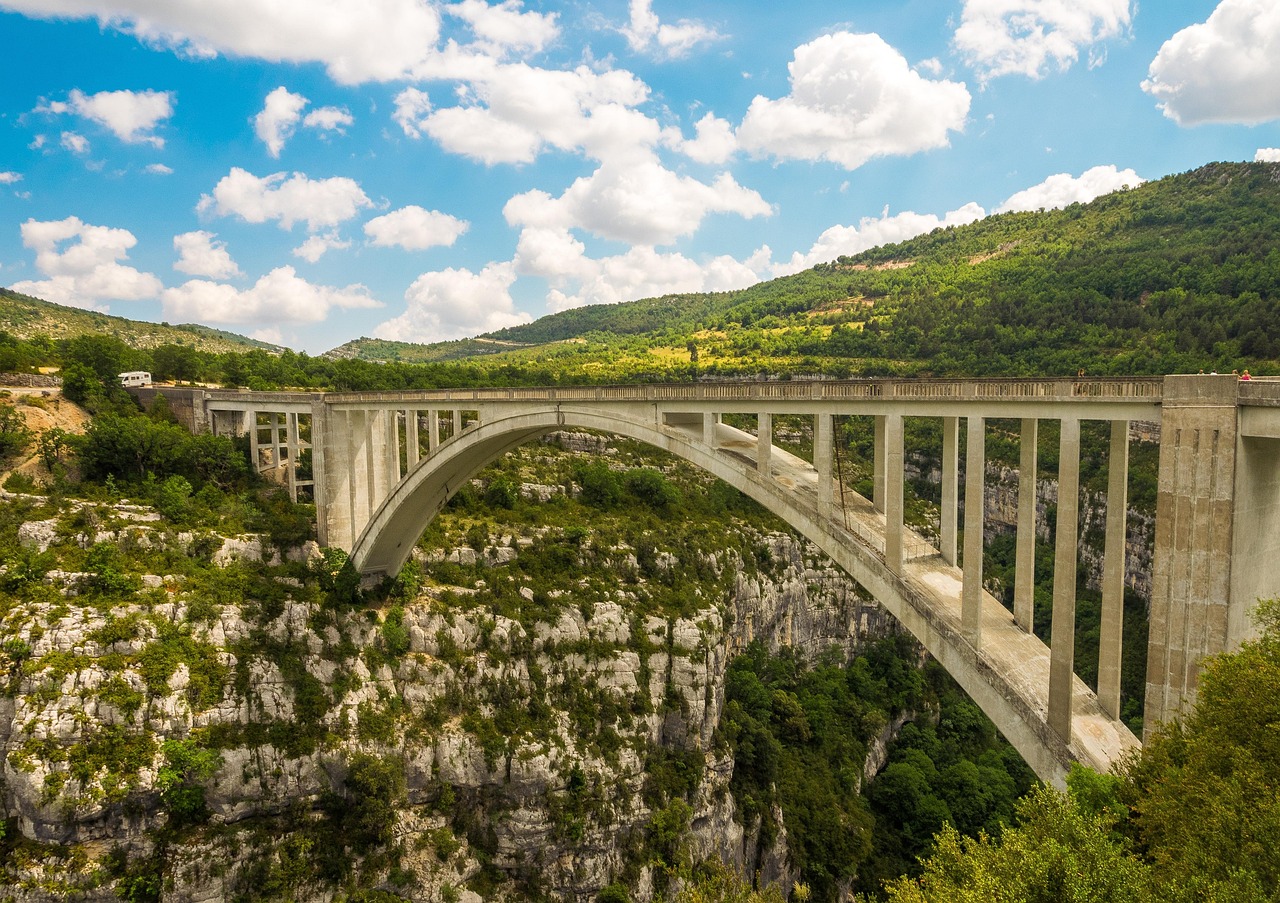
It’s also the nearest proper base to the Artuby Bridge (Pont de l’Artuby), where, on a dare from a friend, I once watched rather than joined a bungee jump. The bridge itself is a beautiful, slender arch over a deep cleft; even if you’re not jumping, it’s worth a stop.
8. Castellane & Roc Notre-Dame
Altitude: ~720 m (town), ~900 m (chapel)
Best for: Market days, rafting, Roc hike
Best seasons: May–September
Castellane is often the first “gateway” town people see when they drive in from the east. It has just enough bustle – supermarkets, outdoor shops, market days – to make it a handy provisioning stop, but also a very local feel. The Roc Notre-Dame looms above, a natural compass.
The climb to the chapel never gets old. Each switchback reveals more of the town’s patchwork roofs and the meandering Verdon; inside, the tiny sanctuary is cool and faintly scented with wax and dust. I’ve done it at sunrise, in mid‑day heat, and by the softer light of late afternoon – sunrise remains my favorite, with swallows sketching arcs around the Roc.
9. Trigance (Castle Village on the Fringe)
Altitude: ~800 m
Best for: Romantic stays, quiet hiking, base for eastern gorge
Best seasons: April–June, September–October
On the quieter eastern edge of the gorge, Trigance is a stone ring perched on a hill, crowned by a castle that now houses a hotel and restaurant. Staying here feels like stepping a half‑century back: nights are dark and still, bells mark the hours, and traffic is minimal.
It’s a wonderful base for couples who want a romantic, secluded stay but still be within 30–40 minutes of the main canyon drives and hikes. From Trigance, you can explore smaller side valleys – sometimes going hours on a trail without meeting anyone else, especially outside of peak season.
10. Rougon (Eagle Village Above the Gorge)
Altitude: ~930 m
Best for: Birdwatching, quiet base for Blanc‑Martel, photography
Best seasons: May–June and September
Rougon is smaller and even quieter than Trigance, clinging to a promontory near the famous Couloir Samson entrance to the gorge. I’ve stayed here twice in simple guesthouses where the owners knew every vulture by its wing pattern.
From the village, short paths lead to viewpoints over the gorge, and longer, wilder trails connect to high pastures. If you’re the kind of traveler who likes to wake to bells and birds rather than traffic and café chatter, Rougon will suit you.
11. Esparron-de-Verdon (Lower Lake & Canyon Mouth)
Altitude: ~380 m
Best for: Swimming, kayaking, tranquil days, family stays
Best seasons: Late May–September
Esparron feels slightly removed from the high drama of the main gorge, but it’s exactly where I go when I want to decompress. The village rises above the lake, whose arms reach into small side canyons. Much of the shore is undeveloped, so a boat is the best way to explore.
In 2022, I spent three days here after a week of hard hiking. My routine: slow mornings with coffee on the balcony, a few hours paddling and swimming, an afternoon nap, and an evening stroll through the village. It’s a place that encourages idleness in the best sense.
12. Sentier Blanc‑Martel (Signature Gorge Hike)
Altitude range: 500–900 m
Best for: Adventurous hikers, iconic canyon experience
Best seasons: May–June, September–October (avoid peak summer heat if possible)
Named after early explorers of the gorge, this is the must‑see attraction in Verdon Gorge for hikers. It weaves between balcony sections, tunnels, and riverside stretches, never dull, sometimes demanding, always scenic.
On my most recent hike, I was struck again by how the scale constantly shifts: one moment you feel hemmed in by rock, the next the gorge opens and you glimpse distant peaks. The metal ladders and tunnels add a sense of adventure, but they’re also where people bunch up; start early to stay ahead of the crowds.
13. Sentier de l’Imbut & Vidal (Technical South Rim Trails)
Altitude range: 600–1,000 m
Best for: Experienced hikers comfortable with exposure
Best seasons: Late spring and early autumn, in dry conditions
If Blanc‑Martel is the classic, the Imbut/Vidal combination is the connoisseur’s choice. It dives steeply from the south rim into the gorge, traverses above the river, and occasionally squeezes through tight rocky passages. At one point, you reach the Imbut itself, where the Verdon disappears under a chaos of boulders.
I first did this trail under the guidance of a local friend who grew up in Aiguines. He knew every root and rock, and he also knew when to say “we turn around here” as clouds built overhead – a good reminder that in steep terrain, weather matters more than pride.
14. Pont de l’Artuby (Bridge & Side Canyon)
Altitude: ~820 m
Best for: Dramatic viewpoints, bungee (for the brave), photography
Best seasons: April–October
The Artuby Bridge sits over the deepest point of the Artuby canyon, a slender, symmetrical arch with a void beneath it. It’s an easy stop on a south‑rim drive, but its impact is outsized: looking down, your stomach will flip even if you’re not about to jump.
On bungee days, the atmosphere is almost festive – spectators cheering, jumpers psyching themselves up, staff double‑checking harnesses. On non‑jump days, there’s just wind, swallows, and the distant rustle of the trees far below.
15. Lac de Castillon & Upper Verdon Valleys
Altitude: ~880 m
Best for: Quieter lake days, kayaking, access to upper Verdon hikes
Best bases: Saint-André-les-Alpes, Saint-Julien-du-Verdon, Castellane
North of Castellane, the Lac de Castillon stretches out, greener than Sainte-Croix and flanked by wooded slopes. Fewer international visitors make it this far, so even in August you’ll find pockets of peace.
It’s also the gateway to higher peaks and passes of the upper Verdon, where altitudes edge toward 2,000 m and alpine meadows bloom with wildflowers in June. If you crave more “real mountain” alongside the gorge, consider a night or two up here.
Mountain Dining & Local Food in Verdon Gorge
The Verdon sits at a culinary crossroads: Provencal olive oil and tomatoes meet mountain cheeses and hearty stews. It’s not quite the high‑alpine fondue culture of the Savoie, but you’ll find similar comfort food, especially in cooler seasons.
Refuges, Auberges & Rural Inns
Scattered around the region are small auberges and gîtes d’étape – simple country inns catering to hikers and cyclists. Rooms are basic, but meals are often stellar: set menus built around what’s in season and what the owner’s cousin just delivered from their farm.
I remember one rainy night near Trigance when the auberge served daube de sanglier (wild boar stew) with polenta, followed by a cheese plate featuring a pungent local goat cheese and a milder cow’s milk tomme. We lingered over genepi liqueur as the rain drummed on the shutters.
Signature Dishes to Try
- Agneau de Sisteron: Tender lamb from the nearby Sisteron area, often roasted with herbs.
- Truite du Verdon: Trout from the local rivers, grilled or with almond butter.
- Panisses & Socca: Chickpea specialties more common on the coast but increasingly found inland.
- Goat Cheese (chèvre): From fresh and creamy to firm and aged, often served with honey or herbs.
- Lavender Honey & Nougat: Sweet souvenirs from Valensole beekeepers and nougat makers.
Coffee & Pastry Culture
Morning coffee in the Verdon is not a rushed takeaway affair. Expect to stand at the bar with a small espresso or sit at a terrace with a café crème and a croissant. In villages like Moustiers and Castellane, bakeries are social hubs: people pop in not just for bread but to exchange news.
My personal indulgence is a tarte aux myrtilles (blueberry tart) when I can find it, or a simple flan pâtissier eaten on the nearest bench with my notebook open.
Where to Stay: Village vs. Lakeside vs. Rural
- Village centers (Moustiers, Castellane) offer walkable dinners, shops, and some nightlife.
- Lakeside stays (Les Salles, Esparron) are ideal for families and swimmers, but you’ll drive more for hikes.
- Rural gîtes & farm stays around Trigance, Rougon, or the Artuby valley give starry skies and deep quiet – romantic, but you’re committing to driving for most activities.
Prices rise sharply in July–August; for 2026, expect double rooms in popular villages to start around €120–€180 per night in high season, with rural stays somewhat cheaper. Self‑catering apartments are a good way to save money in this high‑cost region, especially for families.
Evenings in Verdon Gorge
Evenings in the Verdon are less about glitz and more about simple pleasures: terrace wines, long dinners, and watching the sky change.
Après‑Hike Traditions
After a long trail like Blanc‑Martel or Imbut, the ritual is simple: shower, then claim a table at the village bar. Local beers from Provence or a carafe of chilled rosé appear; boots sit in a haphazard pile under tables. Conversations drift between French, German, Dutch, English – hikers comparing routes and sharing weather tips.
Village Bars & Fondue Nights
While classic Swiss‑style fondue isn’t dominant here, many mountain‑oriented restaurants now offer a cheese fondue or raclette night in the cooler months (October–April). Sitting around a bubbling pot in La Palud or Trigance, the gorge outside in darkness, feels deliciously cocooned.
Stargazing & Night Walks
The Verdon region benefits from relatively low light pollution. On clear nights, especially around new moon, the Milky Way is visible from many villages. I often take a short walk out of town after dinner, headlamp off, just to let my eyes adjust and watch the sky.
Seasonal Festivals
- Lavender Festivals (Valensole & Riez, June–July): While technically outside the gorge, these are easy day trips and worth timing your visit for if you like markets and photography.
- Local Fêtes Votives: Many Verdon villages have summer festivals with music, food stalls, and sometimes fireworks. Check notice boards on arrival; schedules vary year to year.
Practical Logistics & Travel Advice for Verdon Gorge (2026–2027)
Getting There & Around
Nearest major hubs: Marseille (MRS), Nice (NCE), and Aix-en-Provence (TGV). From there, you’ll need a car or combination of train + bus + car hire.
Car Rental & Driving
A car remains the most practical way to explore Verdon Gorge, especially if you want to combine multiple valleys and passes in 4–7 days.
- Foreign licenses: Most non‑EU licenses are accepted if in Latin script; some nationalities are advised to carry an International Driving Permit. Check French consular advice specific to your country.
- Road character: Many roads are narrow, winding, and without guardrails. Drive slowly, especially on the Route des Crêtes and south‑rim roads.
- Winter: Snow and ice are rare but possible at higher points (La Palud, passes) between December–March. In such periods, winter tires or chains may be mandated.
Public Transport
There are regional buses from Manosque, Digne, and Draguignan to towns like Castellane and Moustiers, but schedules are sparse and rarely align perfectly with hikes. If you’re relying on buses, base yourself in one or two villages and focus on local trails and lake activities rather than grand circuits.
Money‑Saving Tips
- Travel shoulder season: May–June and September offer lower prices and far fewer crowds than July–August.
- Self‑cater: Book an apartment with a kitchen, shop at village markets, and cook some meals yourself.
- Picnics: A baguette, cheese, fruit, and a shared pastry can make a memorable lunch with a view for under €10–€15 per person.
- Shared cars: If traveling as a couple or small group, one rental car split between you is vastly cheaper than guided day trips.
Mobile Data & SIM Cards
Coverage in the Verdon is generally good in villages and along main roads but can drop inside the deeper parts of the gorge. For 2026:
- EU travelers: Roaming is still included for most EU plans; check with your provider.
- Non‑EU travelers: Consider buying a French eSIM or physical SIM (Orange, SFR, Bouygues) on arrival. Tourist packages with 20–50 GB are common and affordable.
- Download offline maps (e.g., Google Maps, Maps.me) and key trail maps before you arrive.
Visa Requirements
The Verdon Gorge lies within France and the Schengen Area. Visa requirements depend on your nationality:
- EU/EEA/Swiss citizens can enter freely.
- Many other nationalities can enter visa‑free for up to 90 days in any 180‑day period.
- From 2025–2026, the EU’s ETIAS travel authorization is rolling out; some visa‑exempt travelers will need to apply online before arrival. Check the latest on official EU sites.
Mountain‑Specific Logistics
Altitude & Acclimatization
Altitudes in the Verdon (500–1,900 m) are modest; most people experience no altitude issues. You might notice cooler nights and slightly thinner air on the higher passes, but no special acclimatization is needed.
Weather, Storms & Closures
- Thunderstorms: Common on hot summer afternoons. Start big hikes early, watch the sky, and avoid exposed ridges when storms are forecast.
- Rockfall & trail closures: Trails like Blanc‑Martel and Imbut can close temporarily. Always check with the nearest tourist office or official park website.
- Road closures: The Route des Crêtes and some high roads may close in winter or after rockfall. Signs will be posted, but don’t rely solely on GPS.
Gear & Clothing
- Footwear: Sturdy hiking shoes or boots with good grip; sandals are not enough for canyon trails.
- Layers: Even in July, mornings and evenings at 900–1,000 m can be cool. Pack a fleece and a light waterproof shell.
- Sun protection: Hat, sunglasses, high‑SPF sunscreen. Many trails are exposed.
- Headlamp: Essential for Blanc‑Martel’s tunnels and useful in case a hike runs later than expected.
- Water: Carry at least 1.5–2 liters per person for half‑day hikes; more in mid‑summer.
Safety, Rescue & Insurance
France has professional mountain rescue services reachable via 112 or 18. However:
- Some helicopter rescues may incur costs if due to negligence; a travel insurance policy that covers outdoor sports is wise.
- Inform someone (or your accommodation) of your route on big hike days.
- Stay behind barriers at viewpoints; the limestone can be brittle at the edges.
Best Seasons for Activities
- March–April: Quiet, cool; some higher roads and trails may still be closed. Good for early wildflowers.
- May–June: Ideal for hiking (cooler temps, wildflowers, full waterfalls). Lakes are cooler but swimmable by June.
- July–August: Warmest water, all services open, but also the busiest and hottest period. Start hikes early.
- September–October: My favorite window: warm days, cool nights, thinning crowds, and subtle autumn colors on the slopes.
- November–February: Very quiet; some accommodations and restaurants close. Possible snow at higher points; more a time for contemplative walks than big canyon hikes.
Day Trips & Nearby Attractions from Verdon Gorge
Valensole Plateau (Lavender Fields)
Less than an hour from Moustiers, the Valensole plateau becomes a purple sea in late June and early July. It’s no longer a hidden gem, but if you go early in the morning or near sunset and avoid the most famous Instagram‑pinned fields, you can still find quiet rows to wander between.
Gorges de Trévans & Asse Valley
Northwest of the main Verdon, the Gorges de Trévans is a smaller, wilder canyon with lush vegetation and fewer people. Trails here are less developed but well marked; I spent a blissful day in 2023 hearing nothing but water and birds.
Lake of Serre‑Ponçon & Upper Alps
If you have a car and an extra day, you can push north toward the larger Lac de Serre‑Ponçon and the Hautes‑Alpes, adding a taste of higher mountain culture (and, in winter, ski resorts) to your Verdon trip.
What’s New in 2026–2027: Events & Travel Scene
The Verdon region evolves slowly, but a few 2026–2027 updates are worth noting:
- Blanc‑Martel Shuttle Expansion (2026): Additional shuttle departures in peak months to reduce parking pressure at trailheads; bookable time slots are being piloted on summer weekends.
- Vulture & Wildlife Festival (Rougon, May 2026): A small but growing event with guided birdwatching walks, talks by biologists, and photography workshops.
- Lake Use Regulations: Sainte-Croix and Esparron are fine‑tuning motorboat limits and no‑wake zones in 2026 to protect shorelines; electric boat rentals are gaining ground.
- Trail Maintenance Campaigns: Local associations are organizing volunteer trail days; if you’re in the area on a scheduled weekend and want to give back, ask at tourist offices.
Cultural Etiquette & Local Customs
The Verdon sits firmly in Provence, with all the regional quirks that implies.
- Greetings: Always say bonjour (morning/day) or bonsoir (evening) when entering shops, bakeries, or cafés. It’s a small thing, but it matters.
- Meal Times: Lunch usually 12:00–14:00, dinner from 19:30. Many restaurants close in between; plan accordingly, especially after hikes.
- Noise: Villages are quiet at night. Keep voices and music down after 22:00, particularly in rural stays.
- Tipping: Service is included, but leaving a euro or two for coffee or 5–10% in restaurants for good service is appreciated.
- Trail Etiquette: Greet fellow hikers with a simple bonjour, yield uphill, and keep to marked paths to protect vegetation and avoid erosion.
Summary & Final Recommendations: When & How to Visit Verdon Gorge
After years of returning to the Verdon, I still find new angles: a side canyon I’d overlooked, a bakery that changes hands and suddenly serves the best pain aux noix, a trail that feels different in autumn light versus spring bloom.
If you’re planning your first trip, here are the key takeaways:
- Best seasons overall: May–June and September–early October balance weather, lake warmth, and manageable crowds. July–August are fine if you plan for heat and book ahead; March–April and late October–November are for those who value quiet over services.
- Ideal trip length: A 4 day itinerary for Verdon Gorge lets you see the highlights; 5 days in Verdon Gorge adds breathing room; 6–7 days give you time for peaks, side canyons, and lazier lake days.
- Best bases: Moustiers for charm and food, La Palud for hiking, Esparron or Les Salles for lakes, Trigance or Rougon for quiet romance.
- Must‑see attractions: At least one big hike (Blanc‑Martel or Imbut), a drive of the Route des Crêtes, time on Lac de Sainte-Croix or Esparron, and at least one village evening with a long, unhurried dinner.
If you come with curiosity, decent shoes, and respect for the land and its people, the Verdon will reward you richly – with views that don’t fit in a camera frame, mornings that smell of pine and coffee, and the deep, quiet satisfaction of standing at a canyon edge, feeling very small and very alive.