Why Drive the Baltic Coast Route in Germany?
The Baltic Coast Route (in German, often wrapped into the Ostseeküstenstraße and its parallel coastal roads and cycle routes) is Germany at its most quietly dramatic. It’s a road trip that trades Alpine peaks for chalk cliffs, beer halls for thatched-roof fishing villages, and autobahns for meandering dike roads where tractors still set the pace.
Stretching roughly from Lübeck in Schleswig-Holstein past the island chains of Mecklenburg-Vorpommern to Usedom on the Polish border, the Baltic Coast Route is less about a single marked highway and more about a string of coastal segments and islands that you weave into your own 7–14 leg itinerary. Over the years I’ve driven it in both directions, in a rattling campervan, a tiny rental hatchback, and once on the back of a friend’s motorcycle in late September when the wind tasted of sea salt and apples.
What makes it special?
- Landscape that changes slowly but decisively – flat marshes give way to cliff-top beech forests, wide city beaches to quiet reed-fringed lagoons.
- Historic Hanseatic cities – Lübeck, Wismar, Rostock, Stralsund are not just pretty; they’re living museums of brick Gothic and maritime trade.
- Islands that feel like different worlds – Fehmarn, Poel, Rügen, Hiddensee and Usedom each have their own light, rhythm, and loyal fan base.
- A road trip that works for everyone – families, couples, cyclists, campers, food lovers, history nerds and bird watchers all find their corner here.
- Manageable distances – you’re rarely more than an hour or two from the next town; it’s one of the easiest “first big road trips” in Europe.
This 2026 travel guide for the Baltic Coast Route is built around flexible legs – you’ll see options for a 7 leg itinerary for Baltic Coast Route, as well as 8 legs of Baltic Coast Route up to a 14 leg itinerary for Baltic Coast Route if you like to linger. Across them, I’ll sketch my own journeys, the best stops on Baltic Coast Route, must-see attractions, local food, cultural experiences, and the hidden gems that don’t make the glossy brochures.
Overview: The Shape of the Baltic Coast Route
The Baltic Coast Route in Germany is best imagined as a series of coastal arcs rather than a single straight line. In 2026, most travelers trace some version of this sequence:
- Start: Lübeck – Hanseatic gem and gateway from Hamburg and western Germany.
- Shoreline to the East: Travemünde, Boltenhagen, Wismar, Insel Poel, Kühlungsborn, Heiligendamm.
- Mid-Coast City Hub: Rostock and beach suburb Warnemünde.
- Wild Peninsula: Fischland-Darß-Zingst and the Bodden lagoons.
- Historic Bridge Town: Stralsund – springboard to the islands.
- Island Section: Rügen (Jasmund, Binz, Sellin, Kap Arkona) plus side trip to Hiddensee.
- Academic Coast: Greifswald and the Peene estuary.
- Final Island Arc: Usedom (imperial baths to the Polish town of Świnoujście).
You can comfortably drive the “classic” Baltic Coast Route in 10 legs, which is the structure I’ll use here, but I’ll point out where you can compress to a 7 leg itinerary for Baltic Coast Route (skipping some islands or overnight stops) or stretch to a 12–14 leg itinerary for Baltic Coast Route (adding two-night stays in the places you fall in love with).
Suggested Itinerary: 10 Legs of Baltic Coast Route (Expandable)
Leg 1 – Lübeck to Travemünde & Priwall (1–2 Days)
Distance: ~20–30 km driving, plus walking and ferry hop to Priwall.
Best for: History lovers, foodies, first-time visitors to northern Germany, easy family day.
I like to start every Baltic Coast Route road trip in Lübeck. It’s not strictly “on” the open coast yet – the city sits on the Trave River – but it sets the tone: brick Gothic, marzipan, church spires, and the hum of a port that’s been trading since the Hanseatic League ran the show.
Lübeck: Brick Gothic & Marzipan Mornings
On my last spring visit in April 2026, I checked into a small guesthouse just outside the Altstadt ring and spent the evening wandering under the Holstentor, that iconic twin-towered gate that used to guard the city’s riches.
If you’re arriving from Hamburg by train, you can pick up your rental car at Lübeck station the next morning. I usually do the paperwork in the evening, then explore car-free first – Lübeck’s old town is compact and best seen on foot.
- Must-see attractions: Holstentor Museum, St. Mary’s Church (Marienkirche) with its fallen bells, the medieval streets around Mengstraße and the Buddenbrookhaus (literary history), the view from St. Peter’s tower.
- Family-friendly: The puppetry museum, boat trips on the Trave, riverside playgrounds.
- Romantic: Evening walk along the riverfront, quiet side streets like Glockengießerstraße, and a glass of wine in a vaulted cellar bar.
Food tip: Do not leave without a slice of Marzipantorte (marzipan cake) at one of the traditional cafés. I’m partial to sharing a slice in the morning and taking a box for the car – it makes a gloriously decadent road snack.
Driving to Travemünde: First Taste of the Sea
When you finally roll out toward the sea, the drive to Travemünde is short – 20–25 minutes if you don’t stop. I like to delay departure until late morning, when the city commuters are done, and cruise along the B75 or smaller back roads.
Suddenly, the world opens into dunes, ferries, and wide skies. Travemünde is where you properly meet the Baltic: the Vorderreihe promenade lined with cafés, the lighthouse, and the big ferries lumbering out toward Scandinavia and the Baltics.
Travemünde & Priwall Peninsula
On my summer road trip in July 2025, I parked just behind the promenade (arrive before 10 am in high season to get a spot) and spent the day mixing work and pleasure: laptop in a café, a swim at lunchtime, and an ice cream watching the ferries.
- Don’t miss: The four-masted barque Passat, permanently moored on the Priwall side; the historic lighthouse; and a sundown stroll along the pier.
- For families: Wide, shallow beaches, miniature golf, and easy playgrounds right on the sand. Priwall has quieter stretches if you want space for kids to run.
- For couples: Book a beach chair (Strandkorb) for two and linger until the day-trippers leave. The light on clear evenings is honey-gold, especially in late August.
Take the small passenger ferry across to the Priwall Peninsula: it’s one of those tiny transitions that makes the Baltic Coast Route feel like a journey, even at the start.
Overnight: I often stay one night in Travemünde to sink into “coast mode” – the town makes a gentle, easy start before the longer coastal legs. If you’re tight on time and following a 7 leg itinerary for Baltic Coast Route, you can push on to Wismar in the evening (about 1.5–2 hours more) and keep Travemünde as a half-day stop.
Leg 2 – Travemünde to Wismar & Island of Poel (1–2 Days)
Distance: ~80–100 km, depending on detours via Boltenhagen.
Best for: Coastal driving, small seaside resorts, first taste of Mecklenburg-Vorpommern’s slower rhythm.
Coastal Backroads via Boltenhagen
Rather than racing inland on the autobahn, I always hug the coastline where possible. From Travemünde, the road curves northeast through fields that smell of rapeseed in May and hay in August. I like to break this leg into two mini-stops:
- Boltenhagen: A classic German seaside town with a long pier, tidy villas and a family-friendly vibe.
- Klütz & Bothmer Castle: A quick history detour inland to a Baroque estate with landscaped grounds.
I remember an overcast May afternoon in 2024 when I sat at the end of the Boltenhagen pier with a paper cone of Backfisch (fried fish) and watched a storm line creep over the water. It never quite reached shore; the wind just rose a little and kids carried on building sand fortresses beneath their parents’ windbreaks.
Arriving in Wismar: Another Hanseatic Heart
By late afternoon you’re rolling into Wismar, another UNESCO-listed Hanseatic town. The approach through industrial outskirts isn’t charming, but the reward is the Alter Hafen (old harbor) and the spacious market square framed by gabled facades.
- Things to do in Wismar: Climb St. Mary’s Church tower for a city-and-sea panorama; tour the old harbor; admire Wasserkunst (the ornate Renaissance waterworks) on the square.
- Hidden gem: The Schabbellhaus museum, which digs into local maritime and brewing history – I loved the old maps tracing how Wismar’s fortunes rose and fell with the Baltic trade.
Island of Poel: Slow Evening Light
If the light’s holding, push on to Insel Poel – about 15–20 minutes by car. The drive crosses low causeways through salt meadows with birds wheeling overhead. Poel feels like the Baltic Coast Route in miniature: beaches, reed beds, and a rhythm dictated by the sea breeze.
- Family-friendly: The main beaches near Timmendorf and Gollwitz are sandy, shallow, and well-equipped.
- Romantic: I’ve had some of my favorite Baltic sunsets along the quieter north shore of Poel, with barely anyone else around even in shoulder season.
- Adventurous: Kite-surfing and windsurfing are big draws here when the wind is right.
Overnight: Choose between Wismar (more dining and nightlife) and Poel (peace and sea air). On my 2025 trip, I stayed in a farm B&B on Poel and woke to gulls and the smell of fresh rolls delivered in a cloth bag on the doorstep – the kind of detail that makes these coastal legs linger in memory.
Leg 3 – Wismar to Kühlungsborn & Heiligendamm (1–2 Days)
Distance: ~70 km, meandering through villages and fields.
Best for: Resort architecture, beach promenades, easy cycling, gentle romantic days.
Coastal Drift Toward Kühlungsborn
The road east toward Kühlungsborn threads past sleepy villages and occasional glimpses of the sea. I often roll down the windows here – the first hint of pine from the coastal forest mixes with sea air, and the pace drops another notch.
Kühlungsborn: Grand Promenades & Beach Life
Kühlungsborn is one of the best places to visit in Baltic Coast Route if you want that classic, almost nostalgic seaside feel: long promenade, ornate villas painted in pastels, and a strip of restaurants that actually manages to avoid feeling too tacky in the off-season.
- Things to do: Rent bikes and pedal the promenade and forest paths; walk the pier; take a dip in summer or a bracing walk in winter.
- Family-friendly: Mini-trains, playgrounds, and lots of ice cream. My niece still talks about the enormous sundae she had here in 2023.
- Romantic: Book a spa hotel with sea views and take sunrise walks when the beach is almost empty.
Heiligendamm: “White Town by the Sea”
A short hop east from Kühlungsborn lies Heiligendamm, Germany’s oldest seaside resort. Its row of white neoclassical buildings lining the shore earned it the nickname “White Town by the Sea.” I still remember the surreal sight of these buildings glowing in the low December sun on a frosty day – almost like a stage set.
- Must-see: The seafront villas, the pier, and the wooded hinterland criss-crossed with walking trails.
- Tip: Parking can be tight; in high season, leave the car in Kühlungsborn and walk or cycle along the coastal path, or take the historic narrow-gauge train.
The Molli Steam Train
One of my favourite family-friendly and nostalgic experiences along this stretch is the Molli steam train. Running between Kühlungsborn and Bad Doberan via Heiligendamm, this narrow-gauge line puffs through villages, backyards and meadows. I’ve ridden it three times now, and it still makes me grin like a kid when it squeezes right past the café terraces in Bad Doberan.
Overnight: If you’re following a 9 leg itinerary for Baltic Coast Route, you can merge this leg with Rostock and stay only one night here. If you’re stretching to 11 legs of Baltic Coast Route, spend two nights in Kühlungsborn and use it as a base for lazy beach days and short inland bike trips.
Leg 4 – Rostock, Warnemünde & the Fischland-Darß-Zingst Peninsula (2–3 Days)
Distance: ~80–110 km depending on detours, plus peninsular driving.
Best for: City culture, nightlife, wild beaches, bird watching, and some of the best dunes on the Baltic Coast Route.
Rostock: Student City with a Maritime Heart
Rostock is a working port, university hub, and cultural stop that anchors this part of the route. I tend to arrive by midday, find a parking garage near the Kröpeliner Tor, and wander the pedestrian old town.
- Things to do: Visit St. Mary’s Church with its astronomical clock; stroll Kröpeliner Straße; have coffee in the Universitätsplatz area; detour to the harbor for ship-spotting.
- Food: Rostock has a surprisingly good craft beer scene and a mix of student-friendly spots and more refined dining. The fish rolls (Fischbrötchen) from harbor kiosks are a must.
Warnemünde: Big Beach Energy
A quick drive or S-Bahn trip north drops you into Warnemünde, Rostock’s beach suburb. The lighthouse, the broad sandy beach, and the Alter Strom canal with its fishing boats and cafés make this one of the busiest spots in high summer.
- Family-friendly: Wide beach, shallow water, boat tours, and a bustling promenade.
- Romantic: Sunset walks on the pier, especially outside peak July/August weekends.
- Adventurous: Surfing and kitesurfing when conditions are right; you’ll find rental shops along the waterfront.
Driving to Fischland-Darß-Zingst
Leaving Rostock, the Baltic Coast Route grows wilder. The peninsula of Fischland-Darß-Zingst juts between sea and lagoon (Bodden), a world of dunes, pine forests, and reed beds. The causeway feels like a threshold: suddenly, city noise is replaced by wind in the grasses and the distant honk of cranes.
Prerow, Ahrenshoop & West Beach
This is, in my opinion, one of the must-see attractions in Baltic Coast Route. The West Beach (Weststrand) of the Darß is a strip of semi-wild coastline where wind-shaped trees lean inland and the sand feels endless. It’s part of the Western Pomerania Lagoon Area National Park.
- Prerow: Good base with accommodation, a handsome church, and access into the national park.
- Ahrenshoop: An artists’ village with galleries and thatched-roof houses – perfect for a slow afternoon.
On a blustery October day in 2022, I walked from Prerow through the forest to Weststrand, barely seeing another soul. The wind sandblasted my cheeks, the surf roared, and a sea eagle traced the cliff edge. It’s that mix of emptiness and life that keeps pulling me back here.
Overnight: If you’re doing a 10 leg itinerary for Baltic Coast Route, spend one night in Rostock or Warnemünde and one or two nights on the peninsula. For a compact 8 leg itinerary for Baltic Coast Route, do Rostock and Fischland-Darß-Zingst in a single long day and overnight in Stralsund.
Leg 5 – Darß-Zingst to Stralsund (1–2 Days)
Distance: ~80–100 km with coastal loops.
Best for: Bird watching, quiet lagoons, striking cityscapes in Stralsund.
Zingst & the Bodden
Before you leave the peninsula, spend some time in Zingst. It’s a popular resort town but backed by vast swathes of protected wetlands.
- Things to do: Walk the pier; explore the photo galleries (Zingst has become something of a photography hub); bike around the Bodden.
- Hidden gem: The crane migration in autumn. Between late September and October, tens of thousands of cranes rest here on their way south. Standing on an observation platform at dusk in 2021, I heard them before I saw them – a layered, ancient call rolling across the water.
Driving to Stralsund
The road arcs south and east around the Bodden, with frequent chances to pull over and watch birds or simply stare across the flat water. Stralsund’s silhouette appears suddenly: church spires, the old town’s stepped gables, and the Rügen Bridge stretching toward the island.
Stralsund: Gateway to the Islands
Stralsund is another Hanseatic jewel and one of the best places to visit in Baltic Coast Route for both history and modern architecture. The Ozeaneum, a contemporary marine museum with striking white curves, stands right on the harbor – I’ve lost whole afternoons inside, especially on stormy days when the real sea outside is rough.
- Must-see: Ozeaneum and the Nautineum (especially with kids), the historic old town with St. Nicholas’ and St. Mary’s churches, the town hall square.
- Romantic: Evening stroll along the harborfront with Rügen’s lights twinkling beyond the bridge.
Overnight: Stralsund is worth at least one night; two if you like museums and want a gentler pace before you head onto Rügen. I like to book a harbor-view room and watch the fishing boats in the morning.
Leg 6 – Rügen Island: Jasmund National Park & Sassnitz (2–3 Days)
Distance: Variable; Rügen is compact but full of scenic side roads.
Best for: Chalk cliffs, forest hikes, lighthouses, rugged coastlines.
Crossing to Rügen
Driving over the Rügen Bridge is one of those moments when the Baltic Coast Route feels undeniably like a journey. The water spreads out in all directions, and you sense you’re leaving mainland habits behind.
Sassnitz: Harbor Town with Character
Sassnitz is my go-to base for exploring northern Rügen. It’s slightly scruffy, full of steep stairways linking upper and lower town, and has a long curved breakwater that begs for evening walks.
- Food: Excellent smoked fish straight from the harbor smokers. I once had a smoked mackerel roll so good I went back the next morning for another before my hike.
- Family-friendly: Boat trips to the chalk cliffs; easy access to the national park visitor centre.
Jasmund National Park & Königsstuhl Chalk Cliffs
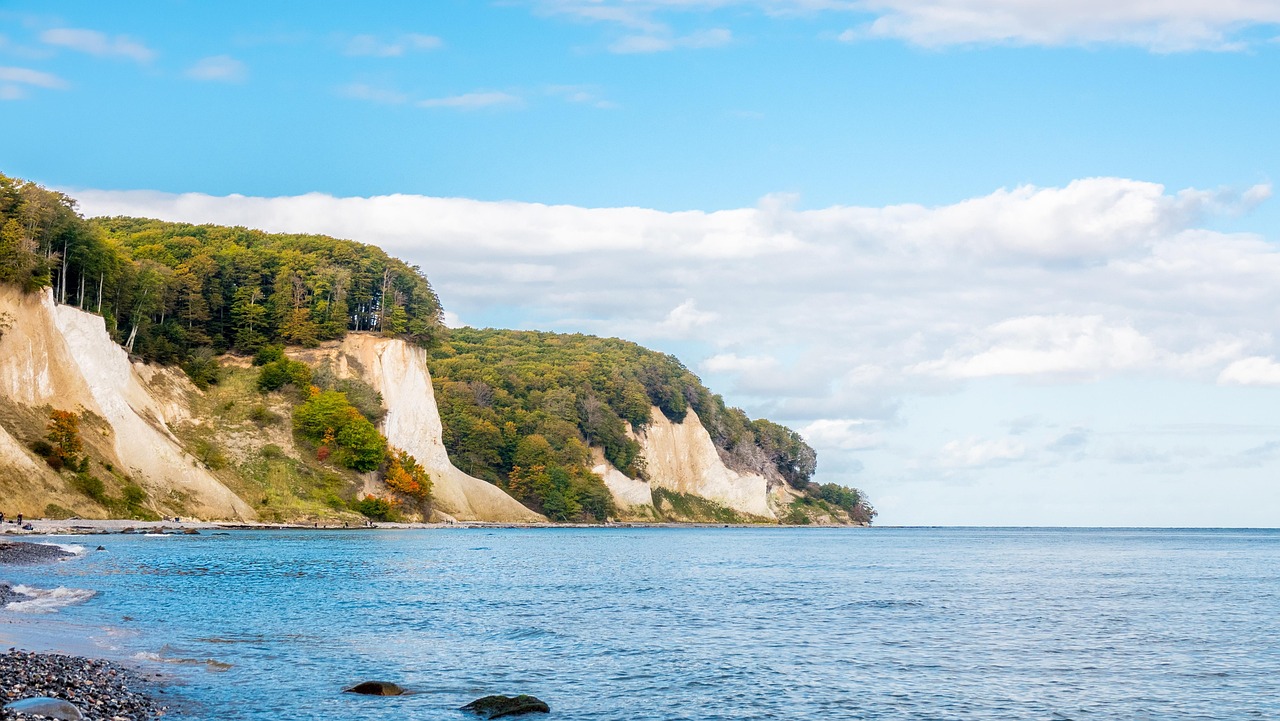
This is one of the most iconic views along the entire Baltic Coast Route: beech forests dropping dramatically into white chalk cliffs, turquoise water below (on a sunny day) and narrow paths threading through the trees.
- Things to do: Walk the clifftop paths; visit the Königsstuhl visitor centre; take a boat tour for the classic cliff view from below.
- Tip: Paths can be muddy and occasionally closed due to landslides; check conditions at the visitor centre. Wear decent shoes – I’ve seen too many flip-flop regrets here.
- Romantic: Sunrise hikes when the forest is misty and quiet. In May 2025, I watched the first light catch on the beech leaves and felt like I was in a painting.
Kap Arkona & Putgarten
Push north to Kap Arkona, a double-lighthouse headland with sweeping sea views. Park in Putgarten and walk or take the shuttle train; the road itself is car-free past a certain point.
- Highlights: Two lighthouses, a Slavic fort site, and cliff-edge paths.
- Hidden gem: The hamlet of Vitt below the cliffs, with its thatched cottages clustered around a tiny chapel.
Overnight: Base yourself in Sassnitz or one of the nearby coastal villages. For an 11 leg itinerary for Baltic Coast Route, give northern Rügen a full three nights – enough to explore slowly and include some lazy afternoons in harbor cafés.
Leg 7 – Rügen Island: Binz, Sellin & the Southeast (2–3 Days)
Distance: Short drives between resorts, but lots to see.
Best for: Resort architecture, piers, long beaches, both family and romantic stays.
Binz: Grand Dame of Rügen
Binz is a classic Baltic seaside resort: white villas with ornate balconies, a long pier, and a promenade that hums in summer. It can be busy, but if you stay a block or two back from the main drag you’ll find quieter streets.
- Things to do: Walk the promenade; visit the pier; take the narrow-gauge “Rasender Roland” (Rushing Roland) steam train inland.
- Family-friendly: Shallow beaches, playgrounds, mini-golf, and ice cream shops everywhere.
- Romantic: Book a balcony room and watch the light change over the water in the evenings.
Sellin & Göhren: Piers & Clifftop Paths
Sellin’s pier is one of the most photographed structures on the Baltic Coast Route – a delicate pavilion at the end of a long walkway, especially lovely at dawn when it’s quiet. I once got up at 4:30 am in August just to have it almost to myself, sharing the view with a fisherman and a couple doing wedding photos.
- Göhren: Further east, with a slightly more low-key feel and access to both north and south-facing beaches.
- Hidden gem: The high forested cliff paths between the resorts; you can walk for hours with constant sea views.
Prora: Concrete, Controversy & New Life
Prora is one of the most unusual stops on Rügen: a massive, formerly derelict holiday complex built in the 1930s, now partly redeveloped into apartments, a museum, and hostels. It’s a place where history feels heavy but important.
- Things to do: Visit the documentation centre museum, walk the seemingly endless beach, and reflect on the layers of German history here.
Overnight: Two nights in Binz or Sellin is ideal. For a 12 leg itinerary for Baltic Coast Route, you can separate the northern and southern Rügen sections into distinct “mini-trips” with different bases.
Leg 8 – Rügen to Hiddensee: Car-Free Interlude (1–2 Days)
Distance: Short drive to ferry port, then boat; no cars on Hiddensee.
Best for: Slow travel, walking, cycling, romance, and true quiet.
Getting to Hiddensee
Ferries to Hiddensee typically leave from Schaprode on Rügen or sometimes Stralsund. You’ll leave your car on the mainland or on Rügen; Hiddensee is blissfully car-free. On my first visit in 2019, the sudden silence after stepping off the ferry – just gulls and the creak of bike wheels – felt like dropping out of time.
Life on a Car-Free Island
Hiddensee is long and narrow, with sandy paths running its length. People get around on foot, by bike, or by horse-drawn carriage.
- Things to do: Climb the lighthouse at Dornbusch; walk the dunes and heath; visit the Gerhart Hauptmann museum; sit in the dunes with a book for hours.
- Romantic: Sunset on the west beach with hardly another person in sight, especially outside high summer.
- Family-friendly: Kids love the freedom to run and cycle without traffic; beaches are wide and safe.
Overnight: Stay at least one night if you can. It’s possible to do a day trip, but evenings on Hiddensee are when its magic really settles in.
Leg 9 – Stralsund to Greifswald & Peenemünde (1–2 Days)
Distance: ~80–100 km, depending on side trips.
Best for: University town vibes, history, and a less-touristed stretch of coast.
Greifswald: Student Town with Baltic Roots
Greifswald feels younger than the other Hanseatic towns, thanks to its university. The old town is compact, with a handsome market square and the brick Gothic cathedral of St. Nicholas.
- Things to do: Wander the old town; visit the Pomeranian State Museum; walk along the Ryck river to the harbor village of Wieck with its wooden drawbridge.
- Hidden gem: The harbor district in Wieck is one of my favourite “small moments” on the Baltic Coast Route – fishing boats, a simple fish shack, and locals out for evening walks.
Peenemünde: Dark History & Open Skies
Following the coast further east brings you to Peenemünde, on the northwest tip of Usedom. It’s known for its role in rocket development during WWII and now houses the Historical Technical Museum in a former power plant.
- Things to do: Tour the museum; walk the harbor; visit the submarine museum (a decommissioned Soviet sub).
- Tip: It’s heavy history – perhaps not ideal for very young children, though older teens often find it fascinating.
Overnight: You can base in Greifswald, Peenemünde, or move on to one of Usedom’s imperial spa towns for the night.
Leg 10 – Usedom Island to the Polish Border (2–3 Days)
Distance: ~60–80 km including detours along the island.
Best for: Long beaches, spa architecture, cross-border day trip to Poland.
Imperial Spas: Ahlbeck, Heringsdorf & Bansin
The “Kaiserbäder” (imperial baths) of Ahlbeck, Heringsdorf and Bansin line up along Usedom’s Baltic shore, connected by a long promenade. This is seaside grandeur again – ornate villas, piers, and long, wide beaches.
- Things to do: Stroll or cycle the promenade; spa treatments; pier cafés; swimming in summer.
- Romantic: Evening walks with the pier lights reflecting on the water.
- Family-friendly: Plenty of activities, playgrounds, and easy shallow beaches.
Toward the Polish Border & Świnoujście
From Ahlbeck, it’s a short walk or bike ride along the beach to the Polish town of Świnoujście, effectively extending your Baltic Coast Route road trip into another country without any drama – just a border sign and different language on the menus.
- Tip: Bring your ID/passport and some Polish złoty or a card that doesn’t mind small foreign-currency transactions. The seafood and ice cream kiosks are worth the small detour.
End of the Line: For many, this is the de facto “end” of the German Baltic Coast Route. From here you can loop back via inland highways or continue your coastal odyssey into Poland’s Baltic resorts.
18 Essential Stops & Viewpoints Along the Baltic Coast Route
Across those legs, there are certain places I return to every single time. Here are 18 of the best stops on Baltic Coast Route, with a mix of must-see attractions, hidden gems, and personal notes.
-
Lübeck Altstadt
Lübeck’s UNESCO-listed old town is where you tune into Hanseatic history: red-brick churches, merchant houses, and the smell of marzipan. Founded in the 12th century, it quickly became the “Queen of the Hanseatic League.” I still like to start my Baltic Coast Route trips with a quiet coffee under the arcades off the market square, watching locals cycle past with baskets of groceries.
-
Travemünde Beach & Harbor
Part fishing port, part ferry terminal, part seaside resort, Travemünde is where the Baltic Coast Route first properly touches the sea. The mix of locals, Scandinavians waiting for ferries, and holidaymakers makes for great people-watching.
-
Holstentor, Lübeck
This twin-towered city gate has become a symbol of northern Germany itself. Its slight lean and massive walls speak of centuries of defense and trade. Inside, exhibits trace Lübeck’s role in the Baltic – helpful context before you hit the road.
-
Boltenhagen Pier
Boltenhagen’s pier isn’t as famous as those on Rügen or Usedom, but it has a gently faded charm. I like arriving here on weekday afternoons when most visitors are locals; the sea feels like it still belongs to them.
-
Wismar Harbor & Market Square
Wismar’s central square is one of the most atmospheric in northern Germany, ringed by gabled houses in soft pastels. A few blocks away, the old harbor adds working boats and the smell of tarred ropes to the mix.
-
Island of Poel North Shore
Quiet, reedy, and full of birds, Poel’s north shore is my go-to for peaceful walks. It’s a reminder that not every Baltic beach is about umbrellas and ice cream; some are just for watching the clouds move.
-
Kühlungsborn Promenade
In summer evenings, Kühlungsborn’s promenade hums with strollers, street musicians, and the clink of cutlery on terrace tables. Catching sunset from the end of the pier is a low-effort, high-reward ritual.
-
Heiligendamm Seafront
The white facades and manicured lawns of Heiligendamm tell stories of 19th-century aristocratic seaside cures and, more recently, political summits. It’s a good reminder that the Baltic coast has long been a stage for both health and power.
-
Warnemünde Lighthouse & Beach
This is beach culture writ large: beach chairs in neat rows, kite-flyers, volleyball nets, and an old lighthouse watching over it all. When Baltic storms roll in, standing on the pier and feeling the spray is oddly exhilarating.
-
Darß Weststrand (West Beach)
One of the wildest-feeling stretches of coast in Germany, Weststrand is where trees grow twisted by the wind and the dunes feel constantly on the move. Even in high season, you can find your own patch of sand if you’re willing to walk a bit.
-
Zingst Bodden Viewpoints
Observation towers dot the Bodden shores near Zingst, offering panoramas of reeds, water and sky. During crane migration, they become packed with photographers; the rest of the year, you may share them only with a heron.
-
Stralsund Old Harbor & Ozeaneum
The juxtaposition of Stralsund’s medieval skyline with the futuristic Ozeaneum is striking. Inside, huge tanks recreate Baltic and North Sea ecosystems – kids and adults alike tend to press their noses to the glass.
-
Jasmund Chalk Cliffs (Kreidefelsen)
Rising up to 118m above the sea, the chalk cliffs of Jasmund have inspired artists for centuries. Standing at a safe distance from the edge, you can see how the sea continues to nibble away at them; landslides are a constant reminder that this landscape is alive.
-
Kap Arkona
At Rügen’s northern tip, Kap Arkona offers big skies and a sense of standing at the edge of something. I like walking the clifftop paths between the lighthouses and the village of Vitt, watching ships slip along the horizon.
-
Sellin Pier
Elegant and almost theatrical, Sellin’s pier is especially beautiful at night when lit up. Having dinner in the pier restaurant as waves lap underneath is one of the more romantic experiences on Rügen.
-
Hiddensee Lighthouse & Heath
The path up to Hiddensee’s lighthouse winds through heath and low pines. From the top, the island spreads out like a map – narrow, sandy, and embraced by water on all sides.
-
Greifswald-Wieck Harbor
This small harbor village at the mouth of the Ryck river has a wooden drawbridge that still opens for boats. On summer evenings, locals sit on the quay with beers and watch the ritual; I’ve joined them more than once, grateful for how unhurried it all feels.
-
Usedom Imperial Piers
The piers at Ahlbeck, Heringsdorf and Bansin combine nostalgia and seaside fun: ornate railings, café terraces, and views along a beach that seems to run forever. They’re also practical landmarks on long promenade walks – “we’ll turn back at the next pier” becomes a familiar refrain.
Eating & Sleeping Along the Baltic Coast Route
One of my pleasures on the Baltic Coast Route is how quickly it teaches you a new food vocabulary: Fischbrötchen, Matjes, Grünkohl, Kuchenbuffet. Here’s how to eat, sleep, and plan your days so you enjoy the ride without stress.
Local Food in Baltic Coast Route
- Fischbrötchen (Fish Rolls): The road trip staple. Try herring, mackerel, or salmon in rolls loaded with onions and pickles. My favourites: harbor kiosks in Travemünde, Warnemünde, Sassnitz and Wieck.
- Matjes: Young, mild herring – often served with fried potatoes and onions. Perfect with a cold beer after a windy walk.
- Smoked Fish: Rügen and Usedom are full of Räuchereien smoking their own fish. In Sassnitz, the smell alone will steer you to the right door.
- Cakes & Coffee: Afternoon coffee and cake is almost a ritual in northern Germany. Look out for plum cake in late summer and apple cake in autumn.
- Game & Hearty Dishes: Inland from the coast, menus feature venison, wild boar, and cabbage dishes. Ideal in winter months.
Where to Sleep: Range of Options
The Baltic Coast Route is blessed with a dense network of accommodation:
- Seaside Hotels & Spas: Binz, Kühlungsborn, Heiligendamm, Heringsdorf. Great for romantic or wellness-focused legs.
- Pensions & B&Bs: Family-run guesthouses in villages and smaller resorts; often the best value and most local interaction.
- Holiday Apartments: Very common, especially for families and longer stays. Book ahead for July/August.
- Campgrounds & Campervan Spots: Plentiful along the coast, though in high season many require reservations. I’ve spent some of my best nights on the route in a small camper under pine trees a short walk from the sea.
Planning Fuel Stops & Daily Rhythm
Distances are short, so fuel isn’t a stress, but it’s wise to:
- Fill up before heading onto peninsulas or islands late at night – smaller stations may close earlier.
- For EVs, map charging stations in advance; Rügen, Usedom and the major Hanseatic towns now have a decent spread of chargers as of 2026, but rural gaps remain.
- Adopt a rhythm: long breakfast, driving and short sightseeing before lunch, a longer afternoon stop, and a short hop to your overnight stop before dark.
Budgeting for a Long-Distance Trip
Costs vary, but for 2026 a realistic mid-range daily budget per couple (excluding getting to Germany) might be:
- Accommodation: 90–150 € per night.
- Food: 50–90 € per day (mix of supermarket breakfasts, snack lunches, and one sit-down dinner).
- Fuel/Transport: 15–30 € per day, depending on car and mileage.
- Activities & Museums: 10–30 € per day.
Self-catering apartments and campsite cooking can cut that significantly, especially for families.
Evenings on the Road Along the Baltic Coast Route
Evenings are when the Baltic Coast Route shifts from day-tripper bustle to something more intimate. Here’s how to make the most of them.
Small-Town Main Streets After Dark
In places like Wismar, Greifswald, and Stralsund, the old towns are beautifully lit, with church towers glowing against the night sky. I like to do a “second walk” after dinner, when most tourists have retreated to their hotels and the only sounds are footsteps and the occasional clink of glasses from a late bar.
Route-Side Bars & Live Music
Don’t expect wild nightlife everywhere, but:
- Rostock & Greifswald: Student bars and occasional live music, especially in term time.
- Resorts like Binz, Kühlungsborn & Heringsdorf: Hotel bars and terrace concerts in high season.
Star-Camping & Quiet Nights
On clear nights, especially on the Darß, Hiddensee, or rural parts of Rügen, the stars can be surprisingly bright. In 2023, I camped just inland from Zingst and lay on a jetty watching the Milky Way reflected in the Bodden – a reminder of how quickly you can escape light pollution up here.
Where to Linger vs Push Through
- Worth a Proper Night (or More): Lübeck, Wismar/Poel, Kühlungsborn/Heiligendamm, Rostock/Warnemünde, Darß-Zingst, Stralsund, Rügen (at least 3 nights split north/south), Hiddensee, Greifswald, Usedom.
- Okay to “Blow Through” with Short Stops: Boltenhagen, some smaller inland villages, quick pier visits if time is tight.
Extras: Day Trips & Nearby Attractions
If you have a few spare days, consider these add-ons to your Baltic Coast Route road trip itinerary:
- Hamburg: Easy train hop from Lübeck before or after your trip; big city contrast with your coastal days.
- Schwerin: Inland from Wismar, with a fairy-tale castle on a lake – an easy day trip and a nice architectural contrast to the brick Gothic coast.
- Rostock Hinterland: Quiet lakes and forests south of the city for hikes and swims.
- Polish Baltic Coast: From Usedom, continue by car or train to Świnoujście, Międzyzdroje, and beyond for a cross-border extension.
Cultural Experiences, Etiquette & Local Customs
Cultural Experiences in Baltic Coast Route
- Maritime Museums & Ships: Ozeaneum in Stralsund, ship museums in Rostock and Peenemünde, and historic sailing vessels in various harbors.
- Hanseatic Architecture Walks: Self-guided or guided walks through Lübeck, Wismar, Rostock, Stralsund, and Greifswald.
- Local Festivals: Harbor festivals (Hafentage), sailing regattas, and music events (see Events section below).
Local Customs & Etiquette
- Reserve & Be Punctual: For nicer restaurants and guided tours, reservations are common. Arriving on time is appreciated.
- Cash Still Useful: Cards are widely accepted, but small harbor stands, rural bakeries, and campsite kiosks may still prefer cash.
- Beach Etiquette: Respect FKK (nudist) areas where signed; they’re normal here. Keep noise down at night, especially in campgrounds.
- Recycling: Germans take waste separation seriously. Follow bin labels at campgrounds and holiday apartments.
- Tipping: 5–10% in restaurants if service was good; round up for taxis and small services.
Route Logistics & Driving Advice
Which Direction to Drive?
You can drive either west-to-east (Lübeck to Usedom) or the reverse. I prefer west to east because:
- You move from more developed to wilder landscapes, which feels like a narrative arc.
- Most international arrivals (Hamburg, Berlin) plug neatly into Lübeck or Rostock starts.
Realistic Daily Distances
The Baltic Coast Route isn’t about clocking up miles. Most legs are 60–120 km of actual driving – maybe 1–3 hours – leaving plenty of time for stops. On days with ferries or island detours, keep your driving ambitions modest.
Fuel & Charging Stations
- Fuel: Regular gas stations in and around all towns; on islands and peninsulas, they may be less frequent but still easy to find.
- EV Charging: As of 2026, fast chargers are present in Lübeck, Wismar, Rostock, Stralsund, Greifswald, and major resorts on Rügen and Usedom. Use apps like Plugsurfing or EnBW mobility+ to plan, especially for the Darß and Hiddensee legs where you’ll park before ferries anyway.
Seasonal Closures & Weather
- Winter (Dec–Feb): Rare heavy snow, but storms and strong winds common. Some beach facilities and smaller pensions close; check ahead.
- Spring (Mar–May): Unpredictable, but quieter. Great for bird migration and empty beaches.
- Summer (Jun–Aug): High season. All services open, but crowds and higher prices, especially on Rügen and Usedom. Book accommodation early.
- Autumn (Sep–Nov): My favourite: warm sea, fewer people, crane migration, and golden beech forests in Jasmund.
Vehicle Suitability
- Regular Car: Absolutely sufficient for the entire Baltic Coast Route.
- Campervan/RV: Very popular; lots of campgrounds and dedicated parking, but book ahead in peak season.
- Motorcycle: Lovely, especially on quiet coastal roads; just be mindful of sudden sea breezes and sand patches.
- 4x4: Not required; off-roading is generally not allowed in coastal national parks.
Breakdowns & Assistance
Germany has excellent roadside assistance networks (e.g. ADAC). If you’re renting a car, confirm included breakdown coverage. On major roads and islands you’re rarely far from a town or workshop.
Permits & Border Crossings
- Permits: No special permits needed for the German Baltic Coast Route; just follow parking rules and any local environmental zones (mostly in big cities, not the coast).
- Border: Crossing into Poland on Usedom is usually straightforward with Schengen rules, but carry your ID/passport. Check for any temporary border control updates before you go.
Practical Travel Advice for the Baltic Coast Route
How to Get Around
- By Car: The easiest and most flexible option for a full Baltic Coast Route road trip itinerary.
- By Train & Bus: Lübeck, Wismar, Rostock, Stralsund, Greifswald and Usedom are all reachable by train or regional buses; local buses link smaller resorts, but schedules can be thin, especially off-season.
- By Bicycle: The Baltic Sea Cycle Route (Ostseeküstenradweg) runs parallel to much of the drive; many travelers combine driving with day-cycle trips.
Car Rental & Foreign Licenses
- Major rental companies operate in Hamburg, Lübeck, Rostock and other cities.
- EU/EEA licenses are accepted without issue.
- Many non-EU visitors (e.g. from the US, Canada, Australia) can drive with their home license plus, ideally, an International Driving Permit (IDP). Check current rules before you travel; in practice, rental agencies often accept just the home license if it’s in Latin script.
Visas & Entry Requirements
Germany is part of the Schengen Area. Depending on your nationality, you may enjoy visa-free entry for short stays or need to apply for a Schengen visa in advance. Always check the official German foreign office or your local German embassy for up-to-date rules.
SIM Cards & Connectivity
- eSIMs: In 2026, several providers offer European eSIMs you can activate before arrival – helpful if you cross into Poland.
- Physical SIMs: Available from supermarkets, electronics stores, and phone shops in Lübeck, Rostock, Stralsund, etc. Look at providers like Telekom, Vodafone, or O2.
- Coverage is generally good, but can drop in remote national park areas; download offline maps for Jasmund, Darß, and Hiddensee.
Money-Saving Tips
- Travel in shoulder seasons (May–June, September–early October) for lower prices and fewer crowds.
- Use holiday apartments and cook some meals – fresh fish from harbor stalls is cheap and delicious.
- Buy a regional transport pass if you plan to use trains/buses frequently.
- Visit free attractions: beaches, promenades, old town walks, and most viewpoints cost nothing.
Best Seasons for Specific Activities
- Beach Swimming & Family Holidays: July–August (book well ahead).
- Hiking & Cycling: May–June and September–October.
- Bird Watching (Cranes & Geese): March–April and September–October, especially around Darß-Zingst.
- Storm Watching & Cozy Evenings: November–February.
Events & Festivals on the Baltic Coast Route (2026–2027)
Dates shift each year, but here are some recurring highlights to watch for in 2026–2027 (check local tourism sites for exact schedules as they’re announced):
- Hanse Sail Rostock (August 2026 & 2027): One of the largest maritime festivals in northern Europe, with tall ships, regattas, music, and fireworks. Book accommodation months in advance if you plan to attend.
- Warnemünde Week (July): Sailing regatta and beach festival vibe.
- Zingst Environmental Photo Festival (late May–June): Major photography event with exhibitions, workshops, and outdoor installations – excellent if you’re into landscape or wildlife photography.
- Stralsund & Wismar Harbor Festivals (summer weekends): Food stalls, live music, and ship parades.
- Christmas Markets (December): Lübeck, Rostock, Wismar, Stralsund and Greifswald all host atmospheric Christmas markets – a very different but charming way to experience parts of the route.
Summary & Final Recommendations
The Baltic Coast Route is not a highway of dramatic shortcuts; it’s a meandering string of harbors, dunes, forests and piers that rewards curiosity and unhurried days. Whether you choose a 7 leg itinerary for Baltic Coast Route to hit the highlights or expand to a 12–14 leg itinerary for Baltic Coast Route with long pauses on islands, the route works because the distances are modest and the experiences rich.
Key takeaways:
- Start in Lübeck or Rostock, end on Usedom, and drive west-to-east if you like building toward wilder landscapes.
- Anchor your route around the “big four” Hanseatic cities (Lübeck, Wismar, Rostock, Stralsund) and the islands (Rügen, Hiddensee, Usedom).
- Mix famous spots (Jasmund cliffs, Sellin pier, Heiligendamm, Warnemünde) with quieter corners (Poel, Wieck, Hiddensee heath paths, Darß Weststrand).
- Eat locally – smoked fish, Fischbrötchen, cakes – and use seaside promenades as your evening living room.
- Choose your season: summer for lively beaches, spring and autumn for birds and calm, winter for moody seascapes and cheap, cozy stays.
Above all, leave room in your Baltic Coast Route road trip itinerary for detours: a side road to a lighthouse, an extra hour on a bench in a small harbor, a last-minute decision to stay two nights instead of one. This is a coastline that reveals itself slowly, and it rewards those who let it set the pace.