Why Visit Museum Island in 2026
Museum Island sits in the River Spree, at the historical core of Berlin. Within a short walk you can stand before the blue Ishtar Gate of Babylon, walk through an ancient Greek temple, gaze at Egyptian queens, explore Prussian palaces, and then step back outside into a living, breathing contemporary capital. Few places in Europe layer history this densely in such a compact area.
In 2026, Museum Island is in a particularly interesting phase. The long transformation known as the “Masterplan Museumsinsel” is maturing: the James Simon Gallery is fully integrated as the central entrance; museum connections are smoother; and the Humboldt Forum across the water has settled into its controversial role as a new cultural heavyweight. This is a great year to visit if you’re curious about how Europe negotiates its past – colonial collections, war scars, and all.
What makes Museum Island special to me is its rhythm. Early in the morning, the colonnades are quiet; you may share them only with joggers and art students. By midday, school groups and tour buses spill into the Lustgarten; in the evening, the whole island softens under golden light and the archways along the Spree feel like a film set. I still get a little thrill walking over the Schlossbrücke and seeing that ensemble of stone, water, and sky open up ahead.
Table of Contents
- Why Visit Museum Island
- Understanding the Layout & History
- The 12 Essential Sites & Quarters on and around Museum Island
- 1. Pergamonmuseum & Pergamonmuseum. Das Panorama
- 2. Neues Museum & the Egyptian Collection
- 3. Altes Museum & the Lustgarten
- 4. Bode-Museum & the Northern Tip of the Island
- 5. Alte Nationalgalerie
- 6. Berliner Dom (Berlin Cathedral) & Crypt
- 7. Kolonnadenhof & Riverfront Promenades
- 8. James Simon Gallery
- 9. Humboldt Forum & Schlossplatz
- 10. Kupfergraben & Geisteswissenschaftliche Mitte
- 11. Unter den Linden & the Historic Axis
- 12. Nikolaiviertel & Old Berlin Echoes
- Suggested Itineraries: 2–4 Days on and around Museum Island
- Local Food in & Around Museum Island
- Evenings on Museum Island
- Events & What’s New in 2026–2027
- Day Trips & Nearby Attractions
- Cultural Etiquette & Local Customs
- Practical Travel Advice for Museum Island
- Summary & Final Recommendations
Understanding the Layout & Historical Layers of Museum Island
Museum Island is a long, narrow island in the Spree, with the Bode-Museum at the northern tip and the Humboldt Forum / Berliner Schloss reconstruction at the southern end. In between, lined roughly from south to north along the eastern side, you find the Altes Museum, Neues Museum, Alte Nationalgalerie, and the Pergamonmuseum, knit together by the colonnades and the James Simon Gallery.
In medieval times this area was an outlying river island. By the early 19th century, Prussian kings began reshaping it into a sanctuary for the arts and sciences – “a sanctuary for art and science,” as Friedrich Wilhelm IV put it. The Altes Museum (opened 1830) was the first; others followed over the decades, each reflecting the architectural fashions and ideological aspirations of its era. Postwar East Berlin kept the museums but struggled to repair them. Since reunification, massive investment has created today’s elegant yet still-evolving ensemble.
When I guide friends here, I think of the island chronologically: start at the Altes Museum to feel early-19th-century classicism; move to the Neues Museum’s 19th-century romantic historicism and 21st-century reconstruction; step into the Pergamonmuseum’s imperial imagination of the “Orient”; then let the Bode-Museum’s fin-de-siècle elegance wash over you. The Humboldt Forum, just across the water, adds a fresh – and at times uncomfortable – layer of 21st-century debate about power and memory.
Walking-wise, picture three rough “spines”:
- Eastern museum spine: Altes Museum → Neues Museum → Alte Nationalgalerie → Pergamonmuseum → Bode-Museum.
- Central colonnade spine: A sheltered walkway connecting the major museums with views of the Lustgarten and Spree.
- Western civic spine: Berliner Dom and Lustgarten opposite the Humboldt Forum, leading to Schlossbrücke and Unter den Linden.
It’s compact – you can cross from one end to the other in about ten minutes – but don’t be fooled: each building could swallow an entire day. The art of visiting Museum Island is about pacing and choosing, not trying to see everything.
The 12 Essential Sites & Quarters on and around Museum Island
1. Pergamonmuseum & Pergamonmuseum. Das Panorama
The Pergamonmuseum is the headline act – the one everyone has heard of, even if they can’t quite place Berlin on a map. I’ve visited it in every phase of its long renovation, from echoing halls behind scaffolding to the polished galleries of the Ishtar Gate. In 2026, the museum is still undergoing partial renovation, but the experience has been smartly rethought with Pergamonmuseum. Das Panorama, a separate building a short walk away at Am Kupfergraben.
The core collection is a monument to early 20th-century archaeology and imperial collecting: the monumental Ishtar Gate of Babylon, sections of the Processional Way, the Market Gate of Miletus, and, famously, the Pergamon Altar. Because of ongoing work, not all parts are always accessible – check the official website before visiting – but what’s open is still extraordinary.
Highlights & what to look for
- Ishtar Gate: The lapis-blue tiles, lions, and dragons are more vivid in person than any photo suggests. I like to stand at the side first, to feel the sheer scale, then walk slowly through as if I were part of a procession 2,500 years ago.
- Processional Way: Look down at the patterned bricks. Imagine the heat, dust, and sound of an ancient Babylonian festival – it’s one of those rare museum pieces that fully immerses you.
- Islamic Art collections: The Aleppo Room and intricate woodwork are ideal for those who like details: calligraphy, domed ceilings, and carved panels that reward lingering.
- Das Panorama: A 360-degree panoramic artwork by Yadegar Asisi that recreates Pergamon in 129 AD. I remember stepping inside and feeling almost seasick from the scale – voices, soundscapes, and a day-night cycle make it strangely emotional.
Personal tip: My favorite visits have started late afternoon, when the worst crowds thin. I’ll book a timed ticket for around 15:00, take my time with the main highlights, then walk over to Das Panorama for the last slot of the day. Emerging into the twilight of Kupfergraben afterwards, with the Bode-Museum glowing at the end of the canal, is quietly magical.
Practicalities: The Pergamonmuseum uses time-slot tickets, and combined tickets with other Museum Island institutions are available. Lockers (coin or token operated) are provided; backpacks must often be checked. Photography is allowed but no flash; tripods are banned. Families: kids tend to love the sheer size of the gates and the dramatic lighting, making this surprisingly family-friendly.
2. Neues Museum & the Egyptian Collection
If the Pergamonmuseum is about spectacle, the Neues Museum is about mood. It was bombed heavily in World War II and left partly in ruin for decades. British architect David Chipperfield’s reconstruction kept the scars: missing ceilings, bullet-pocked walls, fragments of fresco. Walking through it feels like stepping into an essay on time itself.
The star is the bust of Nefertiti. I’d seen her in photos long before I moved to Berlin, but the first time I queued quietly into her octagonal room, I was startled by how serene – and modern – she looks. Photography is not allowed in that room, and I’m grateful: the hush adds to the intimacy.
Highlights & what to look for
- Nefertiti’s Room: The lighting is theatrical but restrained. She’s alone in the center, and the lack of labels nearby keeps the room uncluttered. I tend to walk a slow circle twice, then step back and just sit for a moment.
- Staircase & Wall Textures: Don’t rush past the architecture. Exposed brick, traces of 19th-century murals, and new concrete tell the story of destruction and reconstruction.
- Egyptian Collection: Everyday objects – combs, games, scribal tools – offer a counterpoint to royal glamour. If you’re traveling with kids, the animal mummies and amulets are a hit.
- Prehistory & Early History: Rooms on German and European prehistory are less visited but fascinating, especially if you want a sense of how long this part of the world has been inhabited.
Personal tip: I like to visit the Neues Museum on gray or rainy days. The subdued natural light fits the interior perfectly. When I brought my parents in winter 2025, we spent almost three hours without noticing the time, then emerged to find snowflakes drifting over the Lustgarten – one of those small, perfect travel moments.
Practicalities: You can enter via the James Simon Gallery or directly. It’s included in the Museum Island day pass. The museum has good, if sometimes busy, cloakroom facilities. Accessibility is strong, with elevators and ramps, though some older stair sections remain.
3. Altes Museum & the Lustgarten
The Altes Museum is the dignified elder on the island – a neoclassical temple with a grand Ionic colonnade facing the Lustgarten, the green square in front of the Berliner Dom. Built in the 1820s and 30s, it embodies an early ideal of the museum as a civic temple of knowledge.
Inside, you’ll find Greek and Roman art: vases, sculpture, jewelry, everyday items. The central rotunda, modeled on the Pantheon, is my favorite space to catch my breath between denser galleries. If you’re tight on time or energy, I sometimes suggest visitors pop in just to experience the architecture and a few key pieces, rather than trying to see every case.
Highlights & what to look for
- Entrance Colonnade: The view back towards the Berliner Dom is one of the classic Berlin vistas. On warm days, buskers sometimes play under the steps; I’ve lingered more than once just to listen.
- Rotunda: Look up at the dome, then slowly circle the statues, many of which were once part of wealthy collections. It’s a beautiful space for sketching if you like to draw.
- Greek Vases: If you want a “shortcut” through Greek myth, the black-figure and red-figure scenes are a visual crash course – gods, heroes, and daily life in ceramic form.
Lustgarten: Outside, the grassy Lustgarten is where Berliners and visitors sprawl in good weather. I’ve picnicked here after museum marathons, grabbing a simple takeaway lunch from a nearby bakery and sitting with my back against a tree, watching bubble-blowers entertain children.
Practicalities: The Altes Museum is compact compared to others on the island; budget 1–2 hours. It’s an easy family stop, with enough grandeur to impress but not so much content that kids get overwhelmed. Restrooms and a small shop are near the entrance.
4. Bode-Museum & the Northern Tip of the Island
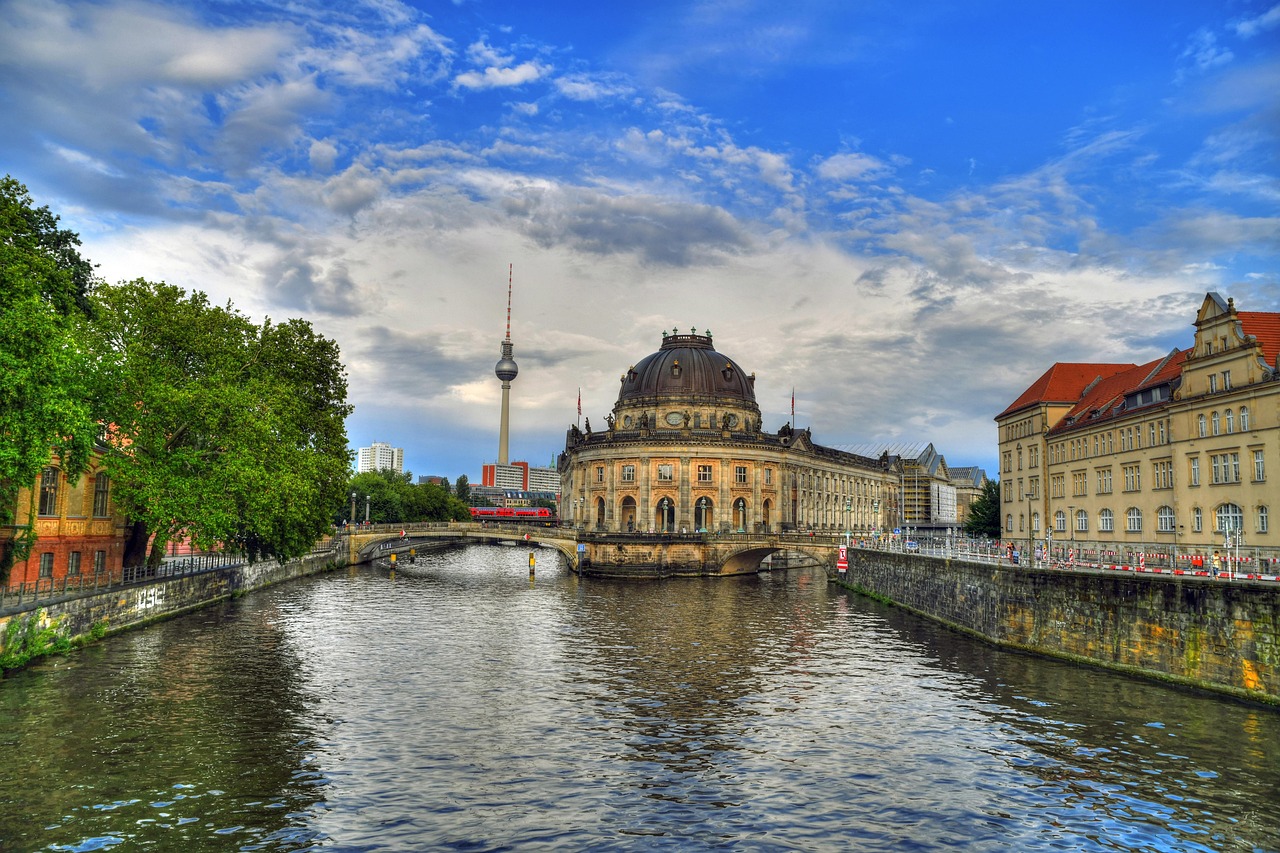
The Bode-Museum sits like a stone ship at the northern tip of Museum Island, its Baroque dome mirrored in the Spree. It’s one of my favorite buildings in Berlin, partly because it feels slightly removed from the main crowds. When I need a quieter museum day, this is where I go.
Inside, you’ll find sculpture, Byzantine art, and coins in grand, often dimly lit halls. It’s less about blockbuster objects and more about atmosphere: wooden Madonnas glowing in pools of light, mosaics that hint at vanished churches, and cool marble underfoot.
Highlights & what to look for
- Entrance Staircase & Dome: The sweeping staircase immediately sets the tone. Look up into the dome and notice how the light filters down.
- Byzantine Art: Icons, reliquaries, and fragments that connect Berlin to a much older Christian world. I remember standing for a long time before a small ivory carving once, feeling oddly moved.
- Coin Cabinet (Münzkabinett): For numismatics fans, this is a treasure trove; even if you’re not, the sheer variety of ancient coins is impressive in small doses.
Personal tip: Time your visit so you exit around sunset. The views from the bridges around the Bode-Museum – especially from the Monbijoubrücke – are some of the most romantic in Berlin. I’ve walked there on winter evenings with friends, watching ice floes drift in the Spree, and on late-summer nights when the sky refuses to go fully dark.
Practicalities: The Bode is a little further from the central James Simon Gallery entrance, but still easily walkable. Cafés nearby are more limited; I often pair a Bode visit with a coffee stop in the Oranienburger Straße area just across the river.
5. Alte Nationalgalerie
The Alte Nationalgalerie is the art-lover’s sanctuary on the island: 19th-century paintings and sculpture housed in a building that looks like a temple raised on a high plinth. When I need my fix of Caspar David Friedrich, this is where I go.
The permanent collection spans German Romanticism, Impressionism, and early Modernism, with some French and other European works. It’s manageable in size – you can meaningfully see a lot in two hours without feeling crushed.
Highlights & what to look for
- Caspar David Friedrich: His misty landscapes, ruined abbeys, and moonlit scenes resonate especially on overcast Berlin days. Standing before them, I often think of how this city has repeatedly rebuilt itself from ruins.
- Monet & French Impressionists: Not a huge collection, but enough to give you that light-soaked Parisian feeling as a contrast to Berlin’s grit.
- Terrace & Exterior Stair: Even if you don’t go inside, the terrace offers one of my favorite oblique views of the Berliner Dom and Lustgarten.
Personal tip: I like visiting early, right at opening, then grabbing a coffee nearby. On one particularly quiet weekday morning in 2024, I had an entire Friedrich room to myself for several minutes – a rare gift in any major European museum.
Practicalities: Included in Museum Island passes. Lockers and restrooms are near the entrance. The building has multiple levels; lifts are available.
6. Berliner Dom (Berlin Cathedral) & Crypt
The Berliner Dom, with its massive green dome, dominates the skyline at the southern end of Museum Island. It’s technically not on the island proper but on its immediate edge, and spiritually it’s part of the ensemble. I’ve climbed its dome with visiting friends more times than I can count; the view over the Spree and rooftops never really gets old.
Inside, the Dom is ornate, almost operatic, with stonework, mosaics, and an imposing organ. The crypt, where many members of the Hohenzollern dynasty are buried, is a sobering counterpoint to the grandeur above.
Highlights & what to look for
- Dome Climb: A spiral stairway takes you up to an exterior walkway. I like timing this for late afternoon on clear days; the low sun over the TV tower and Museum Island is spectacular. It’s a bit of a climb, so not ideal if you hate stairs.
- Main Nave & Organ: If you’re lucky, you may catch an organ rehearsal or short concert. The sound fills the space in a way that makes time feel slower.
- Crypt: Sarcophagi ranging from modest to ostentatious. It’s a place that invites quiet reflection, and I always remind friends to speak softly.
Personal tip: Some of my favorite photos of Museum Island have been taken from the Dom’s dome, especially in winter when the light is crisp and the air clear. Wrap up warm; it can be windy up there.
Practicalities: The Dom charges an entrance fee (separate from museum tickets). There is a dress code of basic respect: no swimwear, keep shoulders covered if possible, and hats off for men inside the nave. Services and concerts are held regularly; tourists are usually welcome outside of core worship times.
7. Kolonnadenhof & Riverfront Promenades
The Kolonnadenhof is the elegant colonnaded courtyard between the Alte Nationalgalerie, Neues Museum, and Bode-Museum. It’s an outdoor sculpture garden, a shortcut between museums, and one of the most atmospheric architectural spaces in Berlin.
On summer evenings, I often find myself here almost by accident, crossing from one end of the island to the other and slowing down under the colonnades as the light slants in. Couples pose for photos, artists sketch, and the noise of central Berlin recedes to a soft murmur.
What to do here
- Stroll at Golden Hour: The columns catch the late light beautifully. If you’re a photographer, this is prime time for textured shots.
- Pause by the River: Benches along the Spree offer one of the most peaceful breaks in what is otherwise a busy area.
- Family-friendly Runaround: If you’re traveling with kids, this is a good place to let them burn off energy safely between museums.
Practicalities: Free, open access; no tickets required. Just remember that the sculptures are artworks – no climbing on plinths or touching pieces, even outdoors.
8. James Simon Gallery – The New Gateway
The James Simon Gallery is the modern front door of Museum Island: all pale stone, clean lines, and generous staircases. When it opened, Berliners debated its looks; personally, I’ve grown to like how its minimalist aesthetic contrasts with the older facades around it.
It houses ticket counters, cloakrooms, a café, and an auditorium, and links directly to the Pergamonmuseum and Neues Museum. On wet or cold days, this indoor circulation is a blessing.
Personal tip: I usually start my museum days here, especially with first-time visitors. We grab a coffee, map out our priorities, and time our entries to avoid peak crowds. The terrace has a subtle but lovely view back towards the Spree.
Practicalities: If you’ve booked online, you can usually head straight to the entrance gates with your QR code, but it’s still worth allowing extra time for security checks during busy seasons.
9. Humboldt Forum & Schlossplatz
The Humboldt Forum occupies the reconstructed shell of the Berlin Palace (Berliner Schloss), a project that has stirred substantial debate. Three Baroque facades and a dome recreate the royal palace demolished by East Germany in the 1950s; the fourth side is starkly modern. Inside, you’ll find exhibitions on world cultures, Berlin’s history, and colonial collecting practices.
I’ve had complicated feelings about the place since it started opening in phases. Architecturally, it’s undeniably dramatic. Ethically, it raises hard questions about what belongs in European museums. That tension is part of what makes visiting here in 2026 so compelling: the Forum is still shaping its identity, and it’s refreshingly open about the controversies.
Highlights & what to look for
- Top-floor terraces: Panoramic views over Museum Island, Alexanderplatz, and the Unter den Linden axis. Great photo spot, especially around sunset.
- Berlin Exhibition: A well-curated overview of the city’s history across centuries, complementing what you’ll learn implicitly on Museum Island.
- Debates on Colonialism: Exhibitions and discussions about provenance and restitution make this a must-visit if you care about cultural politics.
Practicalities: Many parts of the Humboldt Forum are free, some special exhibitions ticketed. Bags are checked at the entrance. It’s fully accessible and has multiple cafés and rest areas – a useful base between museum visits.
10. Kupfergraben & Geisteswissenschaftliche Mitte
On the western side of the island, along the Kupfergraben canal, the atmosphere shifts: fewer tour groups, more students and academics. This is Berlin’s Geisteswissenschaftliche Mitte – the humanities hub – with Humboldt University buildings, bookshops, and quiet courtyards.
I often take visitors along this stretch after the intensity of the major museums. We cross the bridges by the Bode-Museum and stroll past the water, watching tour boats glide by. On one side, the stern, slightly worn facades of old academic buildings; on the other, the more polished museum fronts.
What to do here
- Canal Walk: A gentle, romantic stroll any time of day, especially at dusk.
- Cafés & Bookshops: Duck into a small café on Universitätsstraße or a second-hand bookshop; these are more for locals than crowds.
Personal tip: In spring, look for benches where you can sit with a takeaway coffee and watch the reflections on the Kupfergraben. It’s a simple pleasure but one of my strongest associations with living near Museum Island.
11. Unter den Linden & the Historic Axis
Unter den Linden is the grand boulevard running west from the Schlossbrücke, connecting Museum Island to the Brandenburg Gate. Lined with lindens (linden trees), embassies, opera houses, and historic buildings, it’s the spine of old Prussian Berlin.
When I leave Museum Island by foot, I often cross the Schlossbrücke, pause to look back at the ensemble of buildings and bridges, then head along Unter den Linden to the Staatsoper or Gendarmenmarkt. It’s an axis that rewards slow walking and frequent detours.
Highlights nearby
- Staatsoper Unter den Linden: Opera lovers should glance at the program; even if you don’t go inside, the building anchors the avenue.
- Bebelplatz: Site of the 1933 Nazi book burning, marked by a haunting underground memorial of empty shelves.
- Humboldt University: The main building faces Bebelplatz; often you’ll see students buzzing in and out.
Practicalities: This is a busy area with traffic, bikes, and pedestrians; stay aware when crossing streets, especially with children.
12. Nikolaiviertel & Old Berlin Echoes
A short walk south-east from Museum Island lies the Nikolaiviertel, a reconstructed “old town” quarter around the Nikolaikirche. It’s not strictly original – much was rebuilt after wartime destruction – but it has a tangle of narrow lanes, half-timbered façades, and riverside beer gardens that give a sense of how Berlin might have felt in earlier centuries.
On evenings when I’ve had my fill of high culture, I sometimes drift here for a low-key dinner. Touristy in places, yes, but there are pockets that feel surprisingly local, especially a little off-season or later at night.
What to do here
- Wander the Lanes: Small squares, bronze statues, and quaint houses made for slow exploration.
- Riverside Biergarten: In good weather, a beer or apple spritz on the Spree’s edge is a fine way to end a museum day.
- Nikolaikirche: Often hosts concerts; the interior is simple compared to the Dom but has its own charm.
Family & romantic angle: For families, the small scale makes it an easy place for kids to roam under an eye; for couples, the combination of lantern-lit alleys and river views can be surprisingly romantic, especially in shoulder season when crowds thin.
Itineraries: 2–4 Days on and around Museum Island
Museum Island can be a quick cultural hit or the anchor for a deeper Berlin stay. Below are narrative itineraries based on how I actually host friends and family – with pacing, café stops, and real-world stamina in mind. These are SEO-friendly structures too, if you’re specifically looking for a 2 day itinerary for Museum Island, a 3 day itinerary for Museum Island, or a 4 day itinerary for Museum Island.
2 Day Itinerary for Museum Island – The Essentials
If you have just 2 days in Museum Island and its immediate surroundings, focus on the greatest hits while leaving room to actually feel the place. Here’s how I’d do it.
Day 1: Icons of Antiquity & Evening by the Spree
Morning – Pergamonmuseum & Das Panorama
Start at the James Simon Gallery around opening time (usually 10:00). I like to arrive 15–20 minutes early, coffee in hand, to get through security and orient myself. With a timed ticket booked in advance, you can glide straight into the Pergamonmuseum.
Spend the first two hours with the Ishtar Gate, Processional Way, and Islamic Art collection. Don’t try to read every label; focus on the spaces. Stand in the center of the Ishtar Gate hall and look slowly from the glazed bricks up to the ceiling – it’s worth a full minute of simple contemplation.
Then walk out and follow signs or your map to Pergamonmuseum. Das Panorama. When I brought two art historian friends here in 2025, we lost track of time; the immersive 360-degree reconstruction of ancient Pergamon, with its shifting light and city noise, sparked a long debate over lunch about how we represent antiquity today.
Lunch – Simple & nearby
For lunch, keep it close and casual: a soup-and-sandwich combo at the James Simon Gallery café or a quick bite from a bakery along Unter den Linden. If I’m in a “locals not tour buses” mood, I’ll slip into a side street around Friedrichstraße or Kupfergraben for a quieter café used by students.
Afternoon – Neues Museum & Nefertiti
After lunch, head into the Neues Museum. Give yourself at least two hours. I usually take a deliberately slow route: up the main staircase, into the Egyptian collection, timing my Nefertiti visit for mid-afternoon when some of the early rush has passed. The no-photos rule in her room is a blessing; everyone’s focus is fully on her, not their screens.
Once you’ve seen Nefertiti and a few of the major Egyptian pieces, don’t skip the building itself. Pay attention to the patched brick, reopened windows, and Chipperfield’s subtle modern interventions – understanding this building helps you understand Berlin.
Late afternoon – Lustgarten & Berliner Dom exterior
By now, you’re likely saturated. Step outside, walk across to the Lustgarten, and sit on the grass with the Berliner Dom towering over you. When my niece visited at age eight, she spent half an hour rolling down the gentle grassy slope, giggling, while we recovered from museum legs.
Evening – Spree promenade & Nikolaiviertel
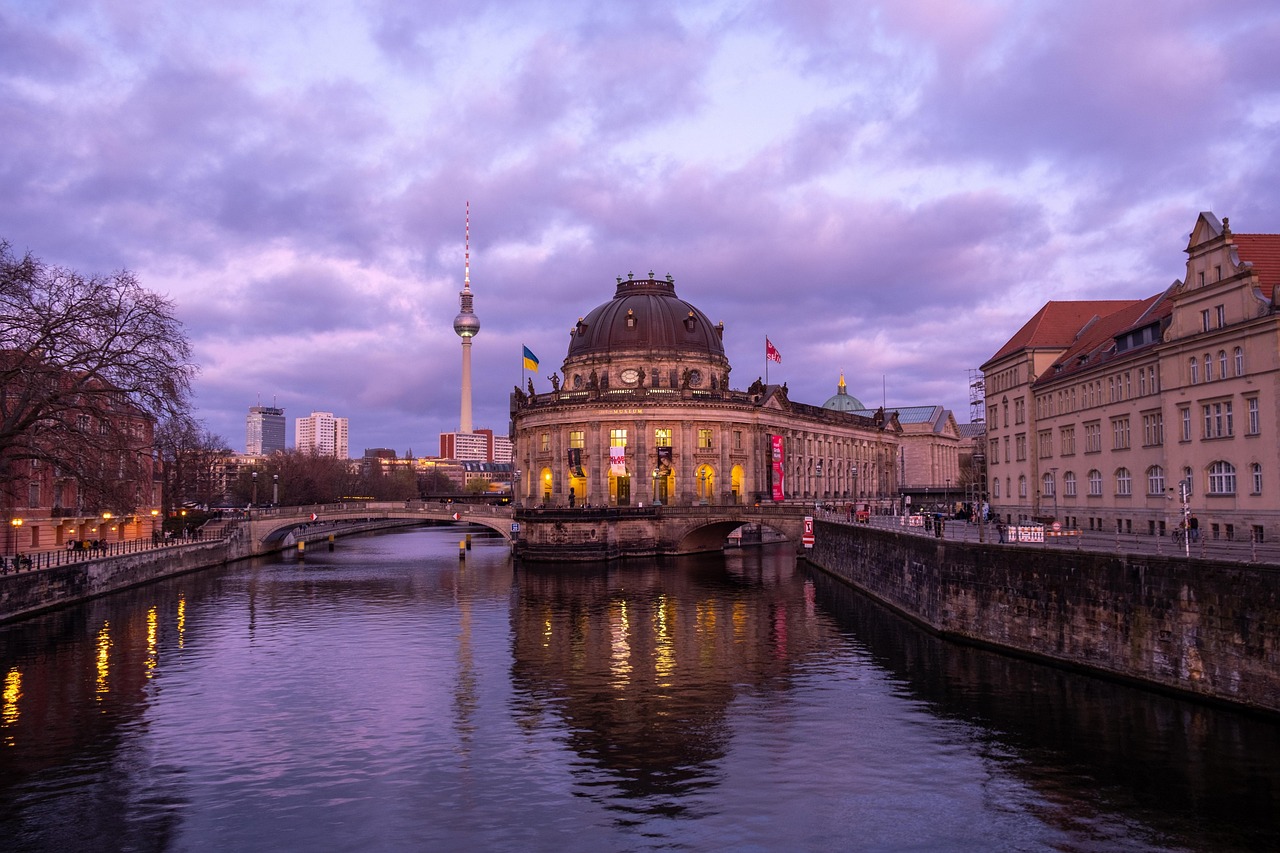
As the light softens, walk north along the Spree, through the Kolonnadenhof, emerging near the Bode-Museum. Cross over towards Kupfergraben and meander south-east towards the Nikolaiviertel. The streets here, though reconstructed, are atmospheric at dusk.
Dinner options lean traditional – think hearty German classics – but there are a few smaller spots on side streets where locals outnumber tour groups, especially outside peak summer. After dinner, walk back along the river; Museum Island’s façades lit up at night are one of Berlin’s quiet glories.
Day 2: Art, Domes & Debates
Morning – Alte Nationalgalerie
Begin at the Alte Nationalgalerie. If you arrive at opening, you can often enjoy the main galleries in relative calm. I like to bee-line to the Caspar David Friedrich paintings first – “The Monk by the Sea” and other works hit differently when you’re almost alone with them – then wander back through the rest of the 19th-century art.
After about two hours, step out onto the terrace. The view over the Lustgarten, Berliner Dom, and Humboldt Forum is one of my favorite vantage points on the city; I often bring a small notebook and jot a few thoughts while I’m up there.
Lunch – Unter den Linden side streets
Cross the Schlossbrücke onto Unter den Linden. Duck into one of the side streets for lunch – there are smaller bistros and cafés frequented by office workers and students rather than only tourists. Avoid the most obvious “menu translated into seven languages” spots if you want a more local feel.
Afternoon – Berliner Dom & Dome Climb
After lunch, head back to the Berliner Dom. Explore the interior, then, if you’re up for the climb, tackle the stairs to the dome. The first time I took a friend with a fear of heights, we agreed to take it step by step; by the time we reached the outdoor walkway, she was flushed but triumphant, and the 360-degree view made every step worthwhile.
Back down, visit the crypt if energy allows. It’s a sobering, reflective space that balances the ornate church above.
Late afternoon – Humboldt Forum
Cross the square to the Humboldt Forum. With limited time, I recommend focusing either on the Berlin history exhibition or on one of the better contextualized world culture displays, depending on your interests. Don’t miss the rooftop terrace for another perspective on Museum Island and the Spree.
Evening – Return to your favorite view
For your final evening, revisit whichever corner of Museum Island resonated most. I often end at the Monbijoubrücke north of the Bode-Museum, watching the dome and colonnades reflect on the water as boats pass below. It’s a fitting farewell to two intense days of art and history.
3 Day Itinerary for Museum Island – Depth & Breathing Room
With 3 days in Museum Island and environs, you can see the essentials without rushing and add some “living Berlin” experiences: cafés, quiet walks, and perhaps a performance.
Day 1: Classical Core (Similar to Day 1 Above, Slowed Down)
Follow the Day 1 plan from the 2-day itinerary, but give yourself permission to linger longer in the Pergamonmuseum and Neues Museum, or to pause for a proper sit-down lunch with a glass of wine or beer. With an extra day up your sleeve, you don’t need to race.
Day 2: Art, Domes & Academic Berlin
Start again at the Alte Nationalgalerie, as described above, then extend your afternoon into the Kupfergraben and Humboldt University area. Step into a university courtyard, browse a German-language bookshop (even if you don’t read German, art books and maps are universal), and end with coffee by the canal.
In the evening, consider booking an opera or concert at the Staatsoper Unter den Linden or a classical performance in the Berliner Dom. I’ve had some of my most memorable Museum Island evenings wrapped in music, stepping out afterwards into near-empty streets.
Day 3: Bode-Museum, Hidden Corners & Nikolaiviertel
Morning – Bode-Museum
Dedicate a morning to the Bode-Museum. Because fewer people prioritize it, you often get more space to yourself. I remember one winter morning where I wandered for nearly an hour without seeing another visitor in a particular wing – eerie, yes, but also wonderful.
Lunch – Across the River
Cross to the Monbijoupark side and find a local lunch spot – smaller Middle Eastern, vegetarian, or Asian eateries abound in the side streets. These are the places where students and office workers eat, and they’re a good antidote to anything that feels too “sightseeing-oriented.”
Afternoon – Kolonnadenhof, Spree Walk & Nikolaiviertel
Spend the afternoon slowly wandering the Kolonnadenhof and river promenades. Let yourself get lost in detail: cracked stone, iron railings, reflections on the water. Then drift south-east to the Nikolaiviertel for an early dinner or late coffee.
Evening – Night Walk
Take a deliberate late-night walk around the island. After 22:00, many day-trippers are gone; the colonnades and squares feel almost private. On a still night, you can hear the gentle hum of the city without the daytime roar.
4 Day Itinerary for Museum Island – Immersion & Side Trips
If you can spare 4 days in Museum Island’s orbit, you can fold in nearby neighborhoods, a day trip, and more serendipity – the recipe for an excellent Berlin visit.
Day 1–3: Follow the 3-Day Itinerary
Use the three-day plan above as your backbone.
Day 4: Beyond the Island – Nearby Museums & a Day Trip Flavor
Option A – Stay Urban: Nearby Museums & Galleries
Use Day 4 to explore museums and sites just beyond the core island:
- German Historical Museum (Deutsches Historisches Museum): A short walk away, this is a brilliant overview of German history and connects directly to what you’ve seen on the island.
- Topography of Terror or Jewish Museum: Both require more travel time (via U-Bahn), but each adds necessary context to understanding Berlin and Germany in the 20th century.
Option B – Short Day Trip by S-Bahn
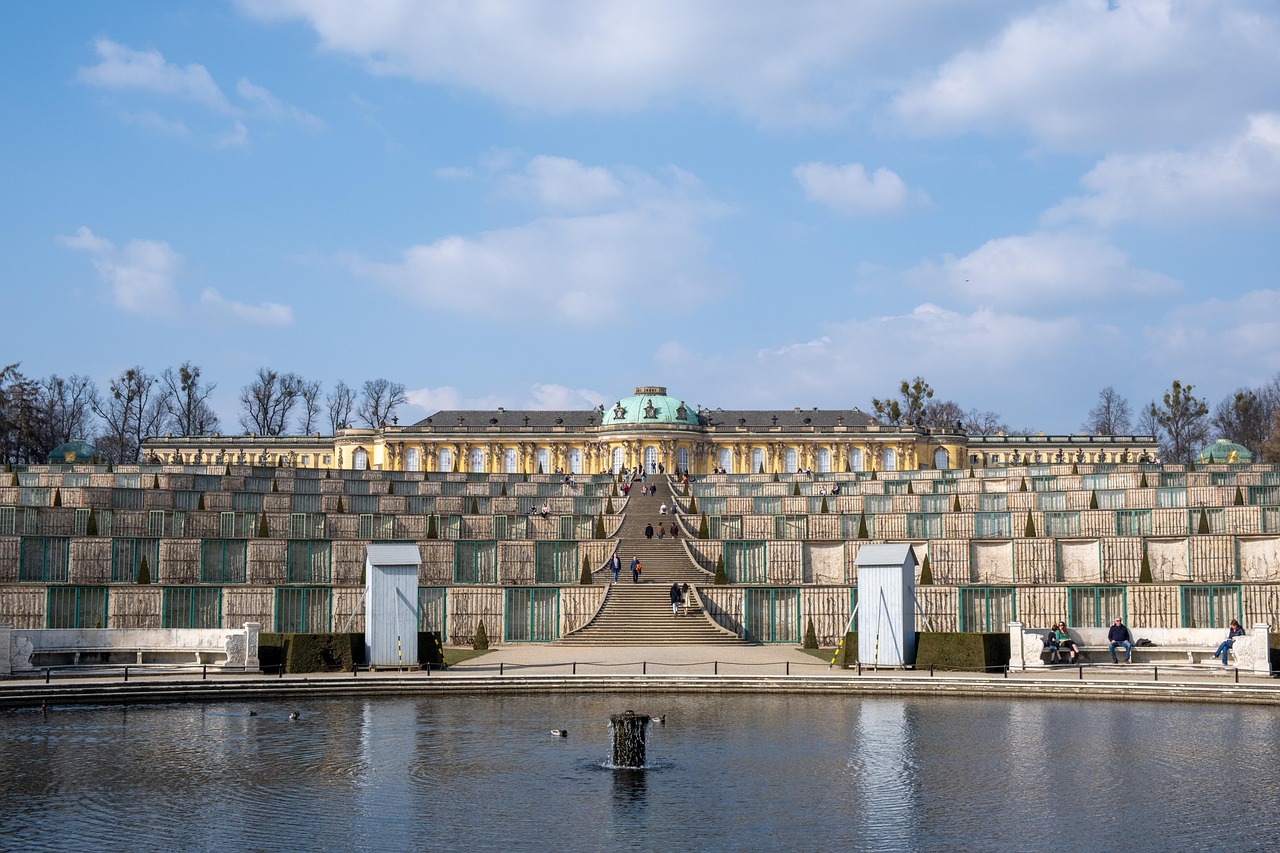
If you need a break from museums, take a short S-Bahn ride (around 30–40 minutes) to Potsdam. Stroll the gardens of Sanssouci Palace and the Dutch Quarter, then return to the city for an evening wander around Museum Island. It’s a gentle way to break up your stay while keeping Berlin’s historical threads in mind.
Option C – Slow Day, Local Style
Sleep in, have a lazy brunch in Mitte, then spend the afternoon revisiting your favorite Museum Island spot or exploring one you skipped. In the evening, join a guided night tour or boat cruise that circles the island, letting someone else narrate for a change while you simply look.
Local Food in & Around Museum Island
Museum Island itself doesn’t overflow with restaurants – it’s more about culture than cuisine – but within a 10–15 minute radius you’ll find plenty of places where locals actually eat. The trick is to step just beyond the obvious tourist strip.
Traditional German Flavors
In and around the Nikolaiviertel, look for smaller, family-run spots that have survived more on regulars than on bus tours. You’ll find:
- Eisbein (pork knuckle) and Schweinshaxe for meat-lovers, best enjoyed with sauerkraut and potatoes.
- Königsberger Klopse (meatballs in a caper cream sauce), a classic from East Prussia with a long local presence.
- Seasonal dishes: asparagus in spring (the famous Spargelzeit), chanterelle mushrooms in late summer.
My own preference, as a semi-local, is to go for the lighter end of German cooking – grilled fish, salads, and seasonal vegetable sides – especially after a museum-heavy day when my brain, not my stomach, has done the heavy lifting.
Cafés & Quick Bites
- James Simon Gallery café: Reliable for coffee and cake between museums; prices are slightly elevated but the convenience and view make up for it.
- Unter den Linden side streets: Venture one or two blocks off the boulevard for bakeries and simple lunch spots used by office workers.
- Humboldt University area: Around the university buildings you’ll find fast, affordable options – good for salads, falafel, and noodles.
Evening Atmosphere
For an atmospheric evening meal, I like the following approaches:
- Riverside dinner in Nikolaiviertel: Sit outside in warm months; watch boats and reflections on the Spree.
- Mitte alleys: Head towards Hackescher Markt and slip into one of the smaller side courtyards for a more local, slightly artsy feel.
Personal tip: Berlin tap water is safe and free, but in many sit-down restaurants you’ll be gently nudged towards bottled water. Don’t be shy about asking for “Leitungswasser” (tap water), especially if you’re budget-conscious; some places will oblige, others less so, but it never hurts to ask politely.
Evenings on Museum Island
Evening is when Museum Island loosens its tie. The tour groups thin, the light softens, and the colonnades and domes take on a theatrical quality. I’ve walked the same circuit here at midday and again at midnight; it feels like two different places.
Lit-Up Monuments
- Bode-Museum & Spree: The dome reflected in the river is one of the most photographed night scenes in Berlin, and with good reason.
- Berliner Dom: Illuminated to emphasize its curves and statues; from the Lustgarten, it feels almost like a stage set.
- Humboldt Forum: Its reconstructed Baroque facades glow softly; if you circle the building, you’ll see how the modern façade contrasts in the darker corners.
Evening Tours & Performances
- Night-time boat cruises: Depart from nearby piers and often loop around Museum Island; commentary can be cheesy, but the views are excellent.
- Organ concerts at the Berliner Dom: Check schedules; hearing the organ under the dimmed lights is unforgettable.
- Seasonal light festivals: In some years, Berlin’s Festival of Lights uses Museum Island facades as canvases. Keep an eye on 2026–27 listings.
Quiet Late-Night Walks
After 23:00, Museum Island feels almost private, especially outside peak summer. I sometimes finish late dinners in Mitte with a slow lap: across the Schlossbrücke, through the Lustgarten, under the colonnades, and along the Spree. The only sounds might be water, distant traffic, and your own footsteps. For couples, it’s gently romantic; for solo travelers, it’s contemplative rather than creepy, though as always in any city, keep standard street smarts in mind.
Events & What’s New in 2026–2027
Note: Exact programs change often; always confirm closer to your travel dates. As of 2026, here’s what to watch for around Museum Island:
- Pergamonmuseum reopening phases (2026–2027): Additional sections of the Pergamon Altar wing are slated to reopen in stages, with new interpretive material focusing on provenance and context.
- Special exhibitions at the Neues Museum & Altenationalgalerie (2026): Expect at least one major temporary exhibition per year – often blockbusters on ancient civilizations or 19th-century art, drawing international crowds.
- Humboldt Forum debates & programs: Continuing public panels, performances, and exhibitions on colonialism, restitution, and global cultural exchange – ideal if you’re interested in contemporary cultural politics.
- Long Museum Nights (Lange Nacht der Museen): Once or twice a year, Berlin museums (including Museum Island) stay open late with special programming and combined tickets.
Day Trips & Nearby Attractions from Museum Island
While Museum Island can easily absorb several days, it also makes a convenient base for short excursions.
Potsdam & Sanssouci
From Alexanderplatz or Friedrichstraße (both reachable on foot or a short tram ride from Museum Island), take the S7 S-Bahn to Potsdam Hbf (about 35–40 minutes). From there, buses or a pleasant walk bring you to Sanssouci Park with its palaces and gardens. It’s an ideal complement to Prussian history glimpsed around Museum Island.
Jewish Museum Berlin
Take the U-Bahn (U2 from Alexanderplatz, change as needed) to reach the Jewish Museum. Daniel Libeskind’s architecture and the exhibitions inside are essential for understanding Berlin’s 20th-century trauma and resilience.
Topography of Terror & Checkpoint Charlie
Closer in, these sites document the Nazi era and Cold War division. They’re sobering but vital context if you’re using Museum Island as your anchor for a broader Berlin history trip.
Cultural Etiquette & Local Customs
Berlin is casual and tolerant, but there are a few norms worth knowing, especially when visiting the must-see attractions on Museum Island.
In Museums
- Quiet voices: Galleries are shared spaces; keep phone calls outside and conversations low.
- No touching: Even stone sculptures and columns are sensitive; oils from hands cause long-term damage.
- Photography: Generally allowed without flash, but some rooms (like Nefertiti’s) forbid it entirely. Respect signage.
- Backpacks & coats: Often must be checked or worn on the front; follow staff instructions without taking it personally.
In Churches & Sacred Spaces
- Dress respectfully: No problem with casual clothes, but avoid very revealing outfits.
- Services in progress: If you wander in during a service, stand quietly at the back or return later unless you intend to participate respectfully.
- Photography: May be restricted during worship; always check.
General Berlin Customs
- Punctuality: Trains, tickets, and tours in Germany take time seriously. Arrive a few minutes early.
- Cash vs. card: Berlin is gradually more card-friendly, but some smaller cafés still prefer cash; carry a bit of both.
- Recycling: Bottle deposits (Pfand) are common; return bottles to collection points or leave them neatly by bins, where bottle collectors can pick them up.
Practical Travel Advice for Museum Island
Tickets & Money-Saving Strategies
Combined Tickets
- Museum Island Day Pass: Gives access to the main museums on the island. Good value if you plan 2–3 museums in one day.
- Multi-day passes: Check current offers; sometimes 3-day museum passes including off-island institutions are available.
- Time-slot reservations: Essential for the Pergamonmuseum and advisable for peak times at the Neues Museum.
Peak-hour & Rush Avoidance
- Arrive at opening (around 10:00) or after 15:30 for popular sites.
- Avoid mid-mornings on weekends and public holidays, when tour groups peak.
- If a cruise ship is docked in nearby ports (less common than in coastal cities, but river cruises exist), expect more groups mid-day.
Getting Around
On Foot
Museum Island is best explored on foot. Distances are short, but wear comfortable shoes – cobblestones and long gallery walks are harder than they look.
Public Transport
- Nearest hubs: Alexanderplatz, Friedrichstraße, and Hackescher Markt stations are all within a 10–15 minute walk.
- Tickets: ABC zone tickets cover greater Berlin; AB is enough for central areas. Day passes are worthwhile if you plan multiple rides.
Bikes & E-scooters
Berlin is cycle-friendly, but Museum Island itself can be crowded; cycle respectfully and dismount in busy pedestrian zones.
SIM Cards & Connectivity
For EU visitors, roaming is often included in home plans. For others, prepaid SIMs from major operators (Telekom, Vodafone, O2) are easy to buy at airports, big electronics stores, and some supermarkets. E-SIM options are increasingly common. Museum Island museums usually offer free Wi-Fi, but don’t rely on it for heavy use.
Accommodation: Where to Stay
Staying “inside the old quarter” (Mitte)
- Pros: You can walk to Museum Island in minutes; perfect for early starts and late-night strolls. Great for first-time visitors and families who value convenience.
- Cons: Higher prices, more tourist traffic, and fewer quiet late-night streets.
Staying in “modern town” districts (e.g., Prenzlauer Berg, Kreuzberg)
- Pros: More local neighborhood feel, better variety of restaurants and bars, often better value.
- Cons: 15–30 minutes travel to Museum Island each day by tram or U-Bahn.
Personally, I like staying just north of Museum Island in the quieter parts of Mitte: you’re close enough to walk but off the noisiest tourist arteries.
Accessibility & Mobility
Most major Museum Island institutions have elevators, ramps, and accessible restrooms, but older buildings mean some areas are trickier. Cobblestones, steps, and long corridors can be challenging for visitors with mobility issues. Check each museum’s accessibility page for specifics.
Visa Requirements & Driving
Visas
Germany is part of the Schengen Area. Many nationalities can enter visa-free for short stays; others require a Schengen visa. Always check up-to-date requirements with the German consulate or embassy before traveling.
Driving & Foreign Licenses
- Driving in central Berlin is generally unnecessary; parking near Museum Island is limited and expensive.
- Most foreign driver’s licenses are accepted for temporary stays; an International Driving Permit can help with car rentals.
- Consider public transport, walking, and cycling instead; they’re more relaxing for a museum-focused trip.
Seasonal Considerations – When to Visit Museum Island
- Spring (April–June): Mild weather, blooming trees along the Spree, increasing crowds. Great for walking and photos.
- Summer (July–August): Warm, sometimes hot; busiest season with school holidays and long queues. Good for evening river walks and outdoor dining.
- Autumn (September–October): My favorite: cooler air, golden light, fewer crowds, and beautiful foliage around the Lustgarten and canal.
- Winter (November–March): Short days, cold, but ideal for museums – fewer visitors, and the interiors feel especially cozy. Christmas markets add charm in late November and December.
Hidden Tips & Ways to Save Money
- Prioritize: Don’t buy every ticket; choose 2–3 museums that really interest you and savor them.
- Use lunch menus: Many restaurants have cheaper midday specials than dinner prices.
- Free city views: Instead of always paying for tower climbs, use terraces (like the Humboldt Forum’s) where free or cheaper views may be available.
- Water & snacks: Bring a refillable bottle and light snacks; you’ll walk more than you think.
Summary & Final Recommendations
Museum Island is the beating historical and cultural heart of Berlin – a place where ancient gates, Romantic canvases, royal crypts, and contemporary debates about colonialism all coexist within a ten-minute walk. Whether you follow a tight 2 day itinerary for Museum Island, unfold a more expansive 3 day itinerary, or immerse yourself with a 4 day itinerary, the key is to choose depth over breadth.
Key takeaways:
- Start with the Pergamonmuseum and Neues Museum, then add the Alte Nationalgalerie, Bode-Museum, and Berliner Dom as your energy allows.
- Use the James Simon Gallery as your logistical hub and the Kolonnadenhof as your breathing space.
- Explore beyond the museums: stroll Kupfergraben, linger in the Nikolaiviertel, and wander along Unter den Linden.
- Evenings are golden: lit monuments, quieter colonnades, and Spree reflections reveal a softer side of Berlin.
- For the best balance of weather and crowds, aim for spring or autumn; winter is ideal if you prefer empty galleries and don’t mind bundling up.
After years of visiting and re-visiting, I still find new details on Museum Island: a sculpture I’d walked past a dozen times without noticing, a change in light on the stone, a new exhibition challenging old assumptions. That’s the real magic of this place: it’s not a static monument but a living conversation between past and present. If you give it time, it will reward you with more than just pretty photos – it will reframe how you think about cities, collections, and history itself.