Why Visit Sanssouci Palace – And Why I Keep Going Back
I live in Berlin, just a short regional train ride from Potsdam, and I still find myself drifting back to Sanssouci Palace every few months. Sometimes it’s for a slow Sunday walk through the vineyards, sometimes to show visiting friends the best places to visit in Sanssouci Palace, and occasionally just to sit under the chestnut trees with a coffee and remember that Prussian kings once called this garden “home”.
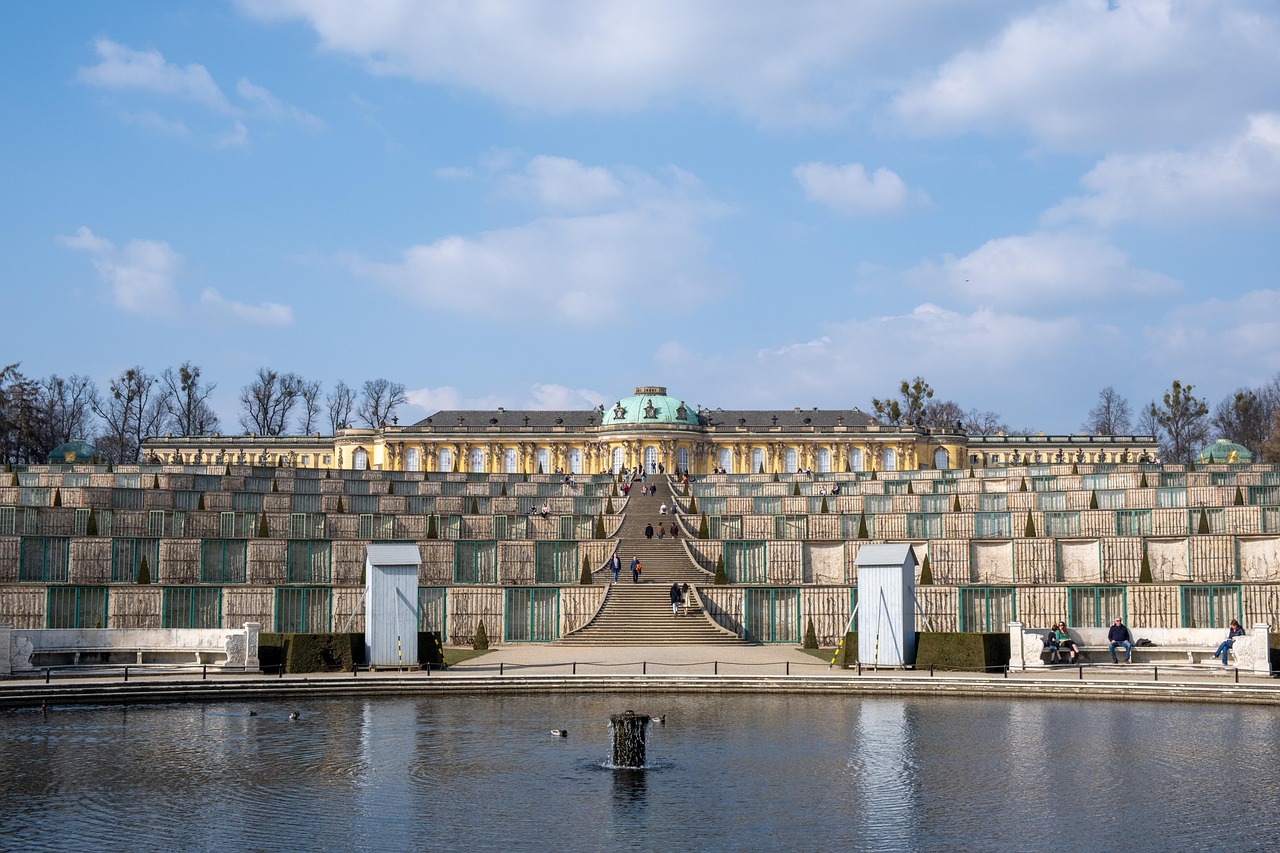
Sanssouci is often reduced to a single photo: that famous terraced vineyard, the pale-yellow rococo façade, the little dome perched above. But when you step into the estate, you discover an entire world: multiple palaces scattered among forests and lakes, secret viewpoints, an 18th‑century windmill, a faux-ruin Belvedere, a Chinese teahouse that glows at golden hour, and miles of paths where locals jog, flirt, and walk their dogs year-round.
What makes Sanssouci special isn’t just the UNESCO World Heritage label or the history of Frederick the Great. It’s the way this royal playground still feels lived in. Children on scooters weave past statues of Roman gods. Students picnic beside an obelisk fountain. A violinist might be rehearsing in a side garden while a wedding party lines up on the terraces. You can visit as a serious history buff, as a couple looking for a romantic day trip, as a family on a budget, or as a solo traveler craving some breathing space after a few days of Berlin.
This travel guide for Sanssouci Palace is written the way I take friends around: starting with the iconic palace itself, then unfolding outward into the landscape – with plenty of personal detours for coffee, pastries, and sunset views. Whether you have 1 day in Sanssouci Palace or are planning a full 3 day itinerary for Sanssouci Palace and Potsdam, you’ll find detailed routes, travel tips for Sanssouci Palace, and a few hidden corners I’m almost reluctant to share.
Table of Contents
- Why Visit Sanssouci Palace
- Sanssouci Overview: History, Layout & How It All Fits Together
- Suggested Itineraries: 1, 2 & 3 Days in Sanssouci Palace
- Main Attractions & Viewpoints (Deep Dives)
- Where to Eat & Drink Around Sanssouci Palace
- Where to Stay Near Sanssouci
- Sanssouci After Dark & Off-Hours Magic
- Events, Festivals & What’s New in 2026–2027
- Day Trips & Nearby Attractions
- Cultural Etiquette & Local Customs in Sanssouci & Potsdam
- Practical Travel Advice for Sanssouci Palace
- Summary & Final Recommendations
Sanssouci in Context: History, Layout & How to Think About the Park
The first time I visited Sanssouci, I made the classic mistake: I thought “Sanssouci Palace” meant one building. By 3 p.m. I was still wandering, slightly lost, past a Chinese pavilion and an obelisk, realizing that this is less a single palace and more an 18th‑century fantasy campus of royal architecture.
Sanssouci Park stretches roughly 2.5 km east to west across the western edge of Potsdam. It’s free to enter and open year-round; the buildings inside require tickets. At its heart sits the Sanssouci Palace itself, Frederick the Great’s intimate retreat built in the 1740s. To the west stands the massive New Palace (Neues Palais), a statement piece from the end of the Seven Years’ War. Between and around them are satellite structures: the Picture Gallery, Chinese House, Charlottenhof Palace, Roman Baths, Orangery Palace, the Historic Windmill, and the Ruinenberg hill with its artificial ruins and historic waterworks.
Think of it as a T‑shaped layout: the long east‑west axis from the Brandenburg Gate of Potsdam through the Obelisk Gate to the New Palace, and a north‑south axis leading from Sanssouci Palace up to the Ruinenberg. Most must‑see attractions in Sanssouci Palace line these paths, so it’s surprisingly easy to build efficient walking routes.
In 2026, the park feels more accessible than ever. Signage is clearer, digital ticketing is finally smooth, and there’s a growing emphasis on cultural experiences in Sanssouci Palace—from open‑air concerts to family days and special evening openings. Yet the soul of the place remains the same: a king’s wish, carved in sandstone letters above the palace door, to live “without cares” (sans souci).
Suggested Itineraries: 1–3 Days in Sanssouci Palace
Over the years, I’ve tested countless ways to structure a visit here—rushed half‑days, languid three‑day weekends, winter walks and peak‑summer marathons with kids in tow. Below are the itineraries I now use for friends, tailored to how much time they have and how deep they want to dive.
These aren’t just lists of things to do in Sanssouci Palace; they’re walking stories, designed so you’re moving with the light, hitting interiors when crowds thin out, and never too far from a good coffee or a shady bench.
Day 1 – Classic Highlights: Your Essential 1 Day Itinerary for Sanssouci Palace
If you only have 1 day in Sanssouci Palace, this is the route I swear by. I’ve walked variations of it more than a dozen times with visiting family and travel-writing colleagues, and it hits every box: iconic views, palace interiors, time to breathe in the park, and a relaxed finish in Potsdam’s old town.
Morning: Arrival & First Glimpse of the Terraces
I like to catch a mid‑morning regional train from Berlin—say, arriving in Potsdam around 9:30–10:00 a.m. From the Hauptbahnhof, I either hop on tram 91/94 or bus 605 to “Luisenplatz-Süd/Park Sanssouci”, or walk the 20–25 minutes if the weather is kind. The tram drops you right beside the Brandenburger Tor of Potsdam (not to be confused with Berlin’s), a smaller, honey‑colored arch that feels almost Italian in strong light.
From here, I usually duck into a bakery—often the branch of Backwerk or a smaller local spot along Brandenburger Straße—for a still-warm Schokocroissant or a savory Laugenstange. Potsdam mornings are quieter than Berlin’s; even in high season, you’ll mostly share the streets with locals on bikes and school groups.
Walk straight down the broad, pedestrian Brandenburger Straße until it dead‑ends at the Obelisk Gate (Obeliskportal), the ceremonial entrance to Sanssouci Park. The first time I passed under this gate, it felt like crossing an invisible border from city life into the 18th century: traffic noise fades, birdsong takes over, and the gravel crunch underfoot prepares you for a slower pace.
Late Morning: Sanssouci Palace Interior Tour
From the Obelisk Gate, follow signs slightly uphill towards Sanssouci Palace. The path curves gently, trees part, and suddenly the famous terraces appear—vines cascading in neat steps, the delicate yellow palace hovering above like a mirage. Even after dozens of visits, this moment still gives me a tiny adrenaline rush.
For your first time, I recommend booking a timed entry ticket to the palace itself sometime between 10:30 and 11:30 a.m. This lets you enjoy the façade and the terraces in good morning light, then step inside just as the first wave of tour buses thins.
You’ll enter through the side, swap street shoes for protective overshoes (a small ritual I secretly enjoy), and begin a one‑way walk through Frederick the Great’s private world: the circular Library with its curved bookshelves, the airy Marble Hall with views over the park, the intimate Voltaire’s Room with its riot of carved fruits and parrots. Audio guides in multiple languages are included and genuinely excellent; I’ve listened to the German and English versions and both add context without overwhelming.
Take your time—most people rush through in 30 minutes, but I recommend at least 45–60 minutes. Look closely at the details: the stylized acanthus on fireplace frames, the way light falls across the parquet floors, the little wear marks on thresholds that remind you real feet crossed here for centuries.
Midday: Terraces, Tomb & Vineyard Stroll
When you emerge, walk straight out to the balustrade overlooking the terraces. This is the iconic angle most guidebooks show in reverse, and it’s one of my favorite spots for people‑watching. Couples pose for photos, kids race down the wide staircases, and the symmetry of the vines makes even a quick smartphone snapshot feel painterly.
Before you head down, detour to the simple graves of Frederick the Great and his greyhounds on the upper terrace to the right of the palace (facing the park). Locals still leave potatoes on Frederick’s grave—an oddly touching habit rooted in his promotion of the crop in Prussia. On a quiet weekday, this spot can feel surprisingly moving; on busy days, it’s a lesson in how history and tourism coexist.
Now descend the central staircase slowly. Pause halfway down and look back up: this is, in my opinion, the best view of Sanssouci Palace if you like a sense of scale, vines leading your eye up to the dome. At the base of the terraces, stand by the fountain and turn in a slow circle to orient yourself. You’re standing at the heart of your 1 day itinerary for Sanssouci Palace.
Lunch: Café Stop & Picture Gallery
By now, you’ve earned lunch. I usually resist the urge to grab the first on‑site snack (the park kiosks are fine for ice cream, less great for real food) and instead walk 10–15 minutes back to the “Brandenburger Straße” area for something proper. Two good options a short walk from the Obelisk Gate are:
- Ristorante Pino – Unpretentious Italian with reliably good pasta and outdoor tables. Great if you need something kid‑friendly.
- Café Guam – Cozy café with soups, quiche, and good coffee; a favorite with students and locals.
After lunch, I like to re‑enter the park via the Obelisk Gate and head straight to the Picture Gallery (Bildergalerie), just to the left of the Sanssouci terraces as you look uphill. Many visitors skip it, which is a mistake; it’s one of Europe’s oldest surviving purpose‑built art galleries and a jewel box of baroque paintings.
Inside, golden stucco and deep wall colors frame works by Rubens, Caravaggio, and van Dyck. I’ve spent rainy afternoons here almost alone, watching storms roll across the park through the tall windows. If you’re traveling with kids, play a simple “find this painting” game to keep them engaged—it’s small enough to make that fun rather than exhausting.
Afternoon: Park Wander via Chinese House
Your afternoon is for the park itself. From the Picture Gallery, follow the paths south‑west towards the Chinese House (Chinesisches Haus). On my first visit, it suddenly appeared between trees like a mirage: a mint‑green pavilion ringed by gilded figures holding parasols and fruits, the very image of 18th‑century chinoiserie fantasy.
Walk a slow circle around it. Notice how the gold leaf glows differently depending on the time of day—early afternoon is bright and playful, but late afternoon can make it look almost molten. The interior is delicate and worth a quick peek if you have the combined ticket, though you can enjoy much of the charm from outside.
From here, wander loosely west along the main avenues. Part of the magic of a 1 day itinerary for Sanssouci Palace is leaving space for unstructured exploration. I like to veer slightly off the main paths, following whichever allée of trees looks most inviting, knowing that the park grid will eventually deposit me near the New Palace if I keep roughly westward.
Late Afternoon: New Palace Exterior & Courtyard
Eventually, the forest thins and a vast baroque façade reveals itself: the New Palace (Neues Palais), a red‑brick statement piece stretching almost 200 meters. The first time I approached it from the park side, I felt suddenly dwarfed, like I’d stepped onto the set of a period drama.
If you’re energetic and your ticket allows, you can pop inside for a quick highlights tour (40–60 minutes). But for a first day trip, especially in summer, I often suggest just exploring the exterior and courtyard: admire the dome, the rows of statues, the sweeping colonnades. There’s a small café nearby if you need a caffeine boost.
Evening: Stroll Back & Dinner in Potsdam
By now, your feet will be gently protesting. Rather than retracing your steps, follow signs from the New Palace to the “Potsdam Park Sanssouci” regional train station (not the main Hauptbahnhof). It’s a short, level walk and saves you some backtracking. From here, you can either:
- Catch a train back to Berlin if you’re day‑tripping, or
- Ride one stop to Potsdam Hbf, drop your bags if you’re staying over, and then stroll into the old town for dinner.
In the evening, I like to eat around the Dutch Quarter (Holländisches Viertel), about a 15‑minute walk from Potsdam Hbf. The brick gabled houses feel almost like a miniature Amsterdam. Two solid options here (both tested multiple times):
- Restaurant Juliette – French‑leaning, intimate, good for a romantic end to your Sanssouci day.
- Die Espressonisten – By day a café, by night often hosting small events; check current hours in 2026, but it’s a long‑time local favorite.
That’s your essential 1 day itinerary for Sanssouci Palace: palaces, pavilions, parkland, and a soft landing in Potsdam’s historic center.
Day 2 – Deep Dive: A 2 Day Itinerary for Sanssouci Palace & Surroundings
If you’re lucky enough to have 2 days in Sanssouci Palace and Potsdam, you can slow down, add interiors you skipped, and venture to the quieter southern edge of the park where fewer day‑trippers roam. This second day balances grand statements with contemplative corners and lakeside air.
Morning: New Palace Interiors & Communs
Start at the New Palace, ideally at opening time. Take tram or bus back to “Park Sanssouci” station and walk in from the west, so you approach the palace from the grand Cour d’honneur side. I still remember my first early‑morning arrival here: low sun catching the statues, almost no one else in sight, the hollow echo of my steps on the cobbles.
Inside, you’ll walk through a succession of rooms designed to impress visiting dignitaries after the Seven Years’ War: marble halls, stucco‑rich salons, guest apartments with ceilings that seem to reach to another era. The Grotto Hall—lined with shells and minerals—is especially surreal, like the inside of some baroque sea creature. Plan 60–90 minutes for the interior, more if you’re a history buff.
Afterwards, don’t rush off. Walk around to the rear to see the sweeping Communs, the symmetrical service buildings that mirror the palace across a wide court. In morning light, with students from the University of Potsdam cycling past (the Communs now house parts of the university), it’s a vivid reminder that these spaces are still part of a living city.
Late Morning: Through the Western Park to Charlottenhof
From the New Palace, head south‑east along quieter paths towards Charlottenhof Palace. This is one of my favorite stretches in the park: fewer landmarks, more rustling trees and glimpses of open lawns. In spring, the scent of wild garlic lingers here; in autumn, crunching leaves make a rhythmic soundtrack.
Charlottenhof itself is modest compared to the baroque giants, a neo‑classical villa built for Crown Prince (later King) Frederick William IV. White colonnades, clean lines, and a slightly Mediterranean feel give it a completely different mood. I like to think of it as the 19th‑century idea of a “country weekend house”.
Step inside if it’s open during your visit (seasonal hours vary; in 2026, check the SPSG website for the latest). The interiors are tasteful rather than extravagant; what makes it special is the atmosphere of retreat. Afterwards, sit for a moment on one of the benches outside and listen—often all you’ll hear is birds and the occasional distant laughter.
Lunch: Picnic or Café on the Southern Edge
For lunch on Day 2, I often go with a picnic. On your way into the park in the morning, stop by a bakery or supermarket in Potsdam (there’s a REWE and an ALDI near the Hauptbahnhof) and pick up:
- Fresh bread rolls (Brötchen)
- Cheese and sliced meats or hummus and veggies
- Seasonal fruit—German strawberries in early summer are a treat
- A bottle of Schorle (sparkling juice)
Spread out your lunch on the lawns south of Charlottenhof or near the Roman Baths (more on those below). Just be respectful: use the bins provided, and don’t feed wildlife. Picnicking here, I’ve had some of my most peaceful Sanssouci moments—feet bare in the grass, palace silhouettes on the horizon, and the sense that time has thickened slightly.
Afternoon: Roman Baths & Southern Park
After lunch, wander into the Roman Baths (Römische Bäder) ensemble, a fantasy “antique” villa complex designed in the 19th century. With pergolas, a little pond, and faux‑ancient details, it feels like a movie set for a classical romance. I once stumbled upon a photo shoot here and had to wait to cross a path while a bride in vintage lace adjusted her veil; it suited the place perfectly.
Even if you don’t go inside the buildings, the gardens around them are worth a slow loop. From here, you can continue along smaller paths towards the southern edge of the park and beyond to the lakes.
Late Afternoon: Lakeside Walk & Coffee in Potsdam West
One of my favorite “second‑day” moves is to exit the park near the Tiefer See or Heiliger See and walk along the water towards Potsdam’s western neighborhoods. On hot summer days, you’ll see locals swimming at designated spots (check 2026 signage for water quality updates). Even in cooler seasons, the lakes provide a beautiful, reflective backdrop.
Head towards the Hans-Otto-Theater area, whose modern, red‑curved architecture is striking against the water. Nearby, cafés like Café Kellermann offer a comfortable place to regroup with good coffee and cake. It’s a part of Potsdam most palace‑focused visitors never see, and it adds balance to your 2 day itinerary for Sanssouci Palace.
Evening: Sunset Return to the Park or Old Town Dinner
If you still have energy and it’s summer, consider looping back into the park for a golden hour stroll (more on specific viewpoints in the “After Dark” section below). Otherwise, wind down in the old town again—try a different restaurant in the Dutch Quarter or explore the area around the Alter Markt with its imposing St. Nicholas’ Church and reconstructed city palace.
Two days in Sanssouci and Potsdam lets you see beyond the obvious and gives the palaces room to breathe in your memory.
Day 3 – Explorers’ Circuit: A 3 Day Itinerary for Sanssouci Palace & Potsdam
With 3 days in Sanssouci Palace and its surroundings, you can finally slow to a local’s pace: revisit favorite spots at different times of day, climb to off‑the‑radar viewpoints, and weave in museums and neighborhoods.
Morning: Ruinenberg & Waterworks Approach
On your third morning, start somewhere many visitors never reach: the Ruinenberg, the artificial “ruin hill” north of Sanssouci Palace. Take tram/bus to the “Reiterweg/Helene-Lange-Gymnasium” stop and walk up through residential streets following signs to Ruinenberg. The transition from city to park here feels almost secretive, as if you’re slipping in through a side door.
At the top, you’ll find the remains of historic water basins and an 18th‑century fake ruin façade designed to look romantically ancient. But the real reason you’re here is the view back towards Sanssouci Palace. This elevated vantage point lets you see the whole park laid out below, with the palace terraces like a ribbon in the middle distance. On hazy mornings, it feels almost dreamlike.
Late Morning: Orangery Palace & Belvedere Terraces
From Ruinenberg, descend southwards towards the Orangery Palace (Orangerieschloss). This long, Italianate structure, built in the 19th century, is another of those Sanssouci buildings that shifts personality with the light. Arriving from the north, you get a more dramatic sense of its terraced siting.
Depending on the season and current restoration work (in 2026 some sections may still be under ongoing maintenance—check on site), you can tour parts of the interior and the plant halls. But my top recommendation here is to climb to the Belvedere terrace if access is open. From there, you look out over the park canopy towards Sanssouci Palace and beyond. I once spent almost an hour up there with a notebook, sketching the outlines of paths and treetops, trying to fix the park’s geography in my mind.
Lunch: Hidden Corners & Picnic 2.0
For lunch on Day 3, repeat the picnic strategy or try a late‑morning coffee and snack at one of Potsdam’s smaller, student‑friendly cafés (the area around Platz der Einheit has several). Bring something simple back into the park and aim for a quiet lawn near the Orangery or on the lesser‑used paths north of Sanssouci Palace itself.
This is where your visit starts to feel less like sightseeing and more like borrowing the park as your own backyard for a few hours. I often bring a book or simply lie back and watch the clouds; Frederick would approve.
Afternoon: Historic Windmill & Return to Favorite Spots
In the afternoon, circle back towards the heart of the park and visit the Historic Windmill (Historische Mühle) near Sanssouci Palace. This landmark, dramatically set against the sky, has been rebuilt over time but still captures the pastoral charm of the original. You can climb up for views and learn about milling history, which kids usually enjoy more than they expect.
From here, you’re perfectly placed to re‑visit any favorite parts of Sanssouci from Days 1 and 2—perhaps walking the terraces in a different light, spending more time in the Picture Gallery, or simply tracing a new path through the avenues of trees.
Late Afternoon: Museum or Filmpark Babelsberg
For a different flavor, you can use late afternoon of Day 3 for one of the day trips & extras outlined later: a visit to the House of the Wannsee Conference, a stroll through the Neuer Garten and Cecilienhof, or a family‑friendly outing to Filmpark Babelsberg, Potsdam’s movie theme park. Filmpark is especially good if you’re traveling with children or teens and want to reward their palace patience with stunt shows and sets from German film and TV.
Evening: Blue Hour Around the Dutch Quarter
End your 3 days in Sanssouci Palace and Potsdam with an evening wander through the Dutch Quarter once more. By now, you’ll recognize some streets; you might even nod to the same barista. This is when Potsdam feels most like home—small, walkable, and quietly content. Have one last glass of local wine or a beer, toast the Prussian kings for their decent taste in landscapes, and start plotting your return.
Main Attractions & Viewpoints – Deep Dives & Personal Notes
Sanssouci Palace & Terraced Vineyard
History & Significance: Built between 1745 and 1747 as Frederick the Great’s summer retreat, Sanssouci was designed as an intimate refuge rather than a show palace. The name, from the French “sans souci” (without cares), wasn’t a marketing slogan; it was the king’s stated wish. Unlike the imposing palaces of Vienna or Versailles, Sanssouci feels domestic in scale—one storey, a limited number of rooms, and a façade that curves gently along the hillside.
The terraced vineyard below was more than decorative; it symbolized cultivation and enlightenment, an ordered nature under benevolent control. Today, the vines are still maintained, their geometric rows providing a striking visual rhythm in every season.
What You Actually Walk Through: Your visit follows a one‑way route through the palace. You’ll start in the entrance hall, then pass through a series of guest rooms, the music room, the library, the Marble Hall, and Frederick’s own chambers. The floors creak softly under the protective overshoes, and the windows frame constant glimpses of the terraces and park beyond.
Look for the Marble Hall’s interplay of light and shadow in the late morning; the sun slants in at angles that make the columns almost glow. In Frederick’s study and bedroom, the scale shrinks—this is where the king actually lived, wrote, and (according to legend) paced through insomnia.
My Personal Take: I’ve visited Sanssouci Palace interiors in every season and at different crowd levels. The most memorable was a crisp February weekday when snow flurries drifted across the terraces outside. Inside, the rooms felt almost more vivid in the muted light, and without the summer crush, I could linger by individual paintings and decorative motifs.
How Long to Spend: Plan 45–60 minutes inside, plus at least another 30–45 outside exploring the terraces, Frederick’s grave, and the main fountain area.
Best Views:
- From halfway down the central staircase, looking back up at the palace and dome.
- From the base of the vineyard, near the fountain, looking straight up the terraces.
- From the upper balustrade, looking out over the park towards the Picture Gallery.
The New Palace (Neues Palais)
History & Significance: Where Sanssouci Palace whispers, the New Palace shouts. Built after the Seven Years’ War (1756–1763), it was Frederick the Great’s way of signaling that Prussia had emerged strong and prosperous. With its monumental dome, rows of statues, and grand colonnades, it’s one of the best places to visit in Sanssouci Palace for sheer baroque drama.
What You Experience Inside: Interior tours lead you through state apartments, sumptuous halls, and guest rooms once used to house visiting nobility. The Grotto Hall, encrusted with shells and minerals, is an almost psychedelic highlight. I still remember a child on one of my visits whispering, “It’s like being inside a dragon,” which is not far off.
Practical Tips:
- Start here early in the day to avoid group tours.
- Combine with a visit to the Communs and western park section.
- Photography policies can change; in 2026, expect flash‑free photos to be allowed in some rooms but not all—always check posted signs.
Picture Gallery (Bildergalerie)
This low, elongated building just east of Sanssouci Palace is a quiet revelation. Built in the 1760s, it’s one of the oldest purpose-built art galleries in the world. Inside, walls once hung with Frederick’s collection of Old Masters were later thinned by war and politics; what remains is still impressive.
Why I Love It: On a hot summer day, the gallery is a cool, contemplative refuge. I’ve ducked in here during sudden thunderstorms and watched rain streak the windows behind Rubens’ fleshy figures. For art lovers, it’s a must; for everyone else, it’s a compact, manageable dose of culture that pairs well with the nearby palace.
How Long to Spend: 30–40 minutes is enough for a first visit; art buffs could happily double that.
Chinese House (Chinesisches Haus)
The Chinese House is an 18th‑century European fantasy of “the East” rather than any accurate portrayal, dripping with gilded figures and exoticized motifs. It’s a perfect capsule of rococo taste—playful, extravagant, and a little absurd.
Best Time to Visit: Late afternoon golden hour, when the sun catches the gold leaf and the pavilion seems to hover in warm light. I once arrived just as a small string quartet began rehearsing nearby; their music and the pavilion’s shimmering details created one of my favorite Sanssouci memories.
Charlottenhof Palace & Roman Baths
Charlottenhof and the adjacent Roman Baths offer a shift of tone—a move from baroque to neo‑classicism, from royal pomp to an almost bourgeois ideal of country life. These are the places I take friends when they think they’ve “seen” Sanssouci and want something quieter.
Romantic & Family Angles: Couples often love the seclusion and leafy paths here; it’s easy to find a bench just for two. Families appreciate the open lawns where kids can run without knocking into priceless artifacts.
Orangery Palace & Belvedere Views
The Orangery is a long, terrace‑hugging palace with plant halls, statues, and sweeping staircases. In winter, citrus and exotic plants are sheltered here; in summer, the terraces provide one of the best elevated views over the park.
Personal Tip: If your legs can handle it, time a terrace visit for late afternoon on a clear day. Watching the sun lower over the tree line from here, with the park spreading out like a tapestry, is one of the most quietly thrilling things to do in Sanssouci Palace.
Ruinenberg & Historic Waterworks
Ruinenberg’s faux ruins and water basins were part of an ambitious 18th‑century hydraulic project designed to feed fountains in Sanssouci Park. The system never fully worked as intended in Frederick’s lifetime, but the structures remain as romantic stage sets.
For Adventurous Walkers: The climb is gentle but gives a satisfying sense of discovery. I love bringing visitors here on their second or third day; the view down to the palace ties together everything they’ve seen, and the relative solitude makes it feel like a private discovery.
Historic Windmill & Park Entrances
The Historic Windmill near the main palace entrance is both a photogenic landmark and a nod to the estate’s more humble origins. The current mill is a reconstruction, but it still grinds grain on certain days and houses a small museum.
Family Friendly: Kids tend to love the mechanics and the climb; adults appreciate the views and the way the mill anchors the palace in a working landscape rather than a pure fantasy bubble.
Eating & Drinking Around Sanssouci Palace
One of the most common questions I get is: “Where can we eat near Sanssouci that isn’t a tourist trap?” The short answer: step just outside the immediate park perimeter and into Potsdam proper, and you’ll find plenty of local‑loved options.
Inside the Park: There are kiosks and seasonal cafés offering snacks, ice cream, and basic drinks. These are fine for a quick bite but rarely memorable. I usually rely on them only for water or an emergency coffee.
Just Outside the Park (Recommended):
- Brandenburger Straße Area: A short walk from the Obelisk Gate, this pedestrian street is lined with cafés, bakeries, and restaurants. Look for places with more German than English on the blackboards; that’s usually a good sign.
- Dutch Quarter (Holländisches Viertel): About 10–15 minutes on foot from the park’s eastern edge, this neighborhood is one of my favorite eating zones in Potsdam, with a mix of German, Mediterranean, and international options.
What to Bring Into the Park: A refillable water bottle (there are some fountains but not everywhere), snacks or a light picnic, and perhaps a thermos of coffee or tea if you’re visiting in cooler months. Alcohol is generally tolerated in German parks if consumed discreetly and respectfully, but always double‑check current local regulations and avoid glass near playgrounds or busy paths.
Where to Stay Near Sanssouci
For deeper immersion, I recommend spending at least one night in Potsdam rather than commuting back to Berlin. You’ll get early‑morning and late‑evening access to the park, when crowds thin and light softens.
Areas I Recommend:
- Near Brandenburger Straße: Central, charming, and within a 10–15 minute walk of Sanssouci’s Obelisk Gate.
- Dutch Quarter: Atmospheric, with great food and an easy stroll to both the park and the river.
- Near Potsdam Hauptbahnhof: Slightly more functional, but convenient if you’re using trains frequently and still only a short tram ride to the park.
Accommodation options range from small boutique hotels in historic buildings to well‑run chain hotels and apartments. Book early for peak months (May–September), especially if your dates overlap with major events (see below).
Sanssouci After Dark & Off‑Hours Magic
While the palaces themselves close in the late afternoon, the park remains accessible, and this is when Sanssouci reveals a different personality.
Sunset Viewpoints:
- Sanssouci Terraces: In summer, the sun sets behind the park; the terraces catch soft side light. Sit on the lower steps and watch the façade shift color.
- Orangery Terrace: When accessible, this is my favorite golden‑hour perch, with broad views over treetops.
- Lake Edges (Heiliger See, Tiefer See): Technically just outside the main Sanssouci Park, these lakes mirror the evening sky and are popular local strolling routes.
Blue Hour: The half‑hour after sunset, when the sky deepens to cobalt and the last glow lingers on statues and façades, is particularly beautiful at Sanssouci. Bring a light jacket—even in June, temperatures can drop quickly once the sun dips.
Evening Programs (Seasonal): In recent years (and scheduled again for 2026–2027), the palace authority (SPSG) has hosted:
- Illuminated Park Walks: Selected evenings with subtle lighting on key buildings and guided tours.
- Open‑Air Concerts: Classical music events in front of the New Palace or within the park, often as part of the “Musikfestspiele Potsdam Sanssouci”.
Check the SPSG and festival websites for up‑to‑date schedules and tickets. These events can sell out weeks in advance.
Events & What’s New in 2026–2027
As of 2026, several recurring and special events shape the Sanssouci travel scene:
- Musikfestspiele Potsdam Sanssouci (June 2026 & 2027): A renowned music festival with concerts in and around the palaces. Expect some evening openings and busy weekend crowds; book accommodation early.
- UNESCO Heritage Days (September): Special tours, sometimes including rarely accessible spaces or behind‑the‑scenes looks at restoration projects.
- Winter Illuminations (Selected Dates, Nov–Jan): Subtle lighting and occasional evening programs that turn parts of the park into a winter fairy‑tale, especially around Christmas markets in Potsdam.
There are also ongoing restoration projects scheduled through 2027 on sections of the Orangery and various statues. These rarely disrupt visits, but you may find scaffolding on certain façades; the trade‑off is knowing your entrance fees help keep the site in good shape.
Day Trips & Nearby Attractions From Sanssouci
Once you’ve explored Sanssouci, there are several nearby sites that round out a cultural visit to Potsdam and Berlin’s southwest.
- Neuer Garten & Cecilienhof: A separate park north‑east of Sanssouci, home to the palace where the 1945 Potsdam Conference was held. Reachable by tram/bus or a 30–40 minute walk; ideal for history buffs.
- Glienicke Bridge: The “Bridge of Spies” linking Potsdam and Berlin, historically used for Cold War prisoner exchanges. Combine with a walk along the river and views back towards Babelsberg Palace.
- Filmpark Babelsberg: Family‑friendly movie theme park reachable by tram from Potsdam Hbf; plan a half‑day.
- Wannsee Lakes & Pfaueninsel (Peacock Island): On the Berlin side, accessible via S‑Bahn to Wannsee and a short ferry; great for summer days and picnics.
Cultural Etiquette & Local Customs in Sanssouci & Potsdam
Germany is generally relaxed, but a few norms will make your visit smoother:
- Quiet in Interiors: Voices are kept low in palaces and galleries; phone calls are frowned upon.
- Stay on Paths & Lawns: In most of Sanssouci Park, you can walk on the grass, but avoid flowerbeds and clearly marked restricted areas.
- Photography: Respect no‑photo signs and avoid blocking passageways for long shoots. Drones are not permitted in the park.
- Dogs: Allowed on leash in much of the park but not inside buildings; always pick up after them.
- Tipping: In cafés and restaurants, rounding up or adding 5–10% is customary.
Locals in Potsdam are used to tourists but appreciate basic politeness: a simple “Guten Tag” when entering small shops, “Bitte” and “Danke” sprinkled liberally, and a willingness to step aside on narrow sidewalks.
Practical Travel Advice for Sanssouci Palace
Tickets, Timed Entry & Opening Hours
Ticket Types (2026):
- Single‑Palace Tickets: For Sanssouci Palace, New Palace, etc., with specific time slots for popular interiors.
- Combined Tickets (e.g., “Sanssouci+”): Cover multiple palaces in one day at a better rate; ideal for ambitious 1‑day or 2‑day itineraries.
Reservations: Online booking is strongly recommended for Sanssouci Palace in high season (May–September) and during holiday periods. Time slots for late morning and early afternoon can sell out several days ahead.
Opening Hours: Typically:
- Palaces: Closed on Mondays; open roughly 10:00–17:00 (shorter hours in winter). Always confirm current times for your specific dates.
- Park: Open daily, generally from dawn until dusk; effectively accessible at most walking hours.
Queues & Security: Expect bag checks at major palace entrances. Mid‑morning (10:00–11:30) is peak arrival for tour buses; aim for opening time or later afternoon to avoid the heaviest crowds.
How to Get There & Get Around
From Berlin:
- Regional Train (RE1): From major Berlin stations to Potsdam Hauptbahnhof (approx. 25–35 minutes). Covered by appropriate ABC tickets or regional day passes.
- S‑Bahn (S7): Slower but frequent; also to Potsdam Hbf.
From Potsdam Hbf, take tram 91 or 94, or bus 605/606, to stops near “Luisenplatz/ Park Sanssouci” or “Potsdam Park Sanssouci”. Walking is very feasible if you enjoy a 20–30 minute stroll.
Within the Park: Cars are not allowed. Distances are significant but pleasant to walk; good shoes are essential. Bicycles are permitted on certain paths but not inside palace courtyards or on terraces—follow signage closely.
How to Save Money at Sanssouci
- Use Day Passes: Consider Berlin‑Brandenburg regional tickets if you’re doing multiple train journeys in a day.
- Picnic Instead of Restaurant Lunch: Especially on multi‑day visits.
- Combined Tickets: If you plan several palace interiors in one day, combined tickets offer a discount.
- Free Park Access: Remember that Sanssouci Park itself is free—on a tight budget, you can have a rich experience just walking the grounds.
SIM Cards & Connectivity
Germany’s mobile coverage in Potsdam and Sanssouci Park is generally good, though some wooded areas can be spotty. For visitors:
- eSIMs & Prepaid SIMs: Available from major providers (Telekom, Vodafone, O2) and at electronics stores or supermarkets in Berlin and Potsdam.
- Data‑Only Plans: Often the best value if you rely on messaging apps rather than voice calls.
Visa & Driving Advice
Visa Requirements: Germany is part of the Schengen Area. Citizens of many countries can enter visa‑free for short stays; others require a Schengen visa. Always check the latest requirements with your local German embassy or official consular website before travel.
Driving & International Licenses: An EU or EEA driving license is valid in Germany. Many non‑EU visitors can use their home license for short stays; some may need an International Driving Permit (IDP) in addition. If you’re only visiting Sanssouci and Potsdam, I recommend skipping a car entirely—public transport is easier, parking near the park is limited, and you can’t drive inside the grounds anyway.
Best Time to Visit Sanssouci Palace
Spring (April–May): Fresh greenery, blossoms, fewer crowds than high summer. My personal favorite time—bring a light jacket and enjoy longish days.
Summer (June–August): Long days, outdoor events, lively atmosphere. Also the busiest and often hottest; book tickets and accommodation early.
Autumn (September–October): Golden foliage, softer light, comfortable walking temperatures. A wonderful time for photographers.
Winter (November–March): Short days, some palace sections on reduced hours, but very few crowds and a stark beauty in the bare avenues. On snowy days, the park is magical; just dress warmly and check specific winter openings.
For most travelers, May–June and September strike the best balance of weather and crowd levels. If your focus is photography and contemplative walks, consider late October or a bright winter day.
Summary & Final Recommendations
Sanssouci Palace and its park are far more than a half‑day box to tick from Berlin. They’re a layered landscape where intimate rococo rooms, vast baroque façades, and quiet neo‑classical villas share space with joggers, students, and strolling families. Whether you opt for a 1 day itinerary for Sanssouci Palace focused on the headline sights, stretch to a 2 day itinerary for Sanssouci Palace with Charlottenhof and lakeside walks, or sink into a full 3 day itinerary for Sanssouci Palace and Potsdam, you’ll find enough variety to keep each day distinct.
Plan ahead for Sanssouci Palace tickets and tips: book timed entries, arrive early or late to dodge the crowds, and let the park itself be your free, flexible canvas between interiors. Respect local customs in Sanssouci Palace—from quiet interiors to staying on paths—and you’ll blend easily into the gentle rhythm of Potsdam life.
Above all, leave space in your schedule simply to wander: to follow a tree‑lined path you didn’t plan, to sit under Frederick’s beloved vines, or to watch golden hour soften the statues. That’s when Sanssouci lives up to its name and becomes, for a little while, a place “without cares.”
Whenever you come—spring blossom, summer festival, autumn gold, or winter hush—Sanssouci rewards those who slow down. And if you’re anything like me, you may find yourself planning the next visit on the train ride home.