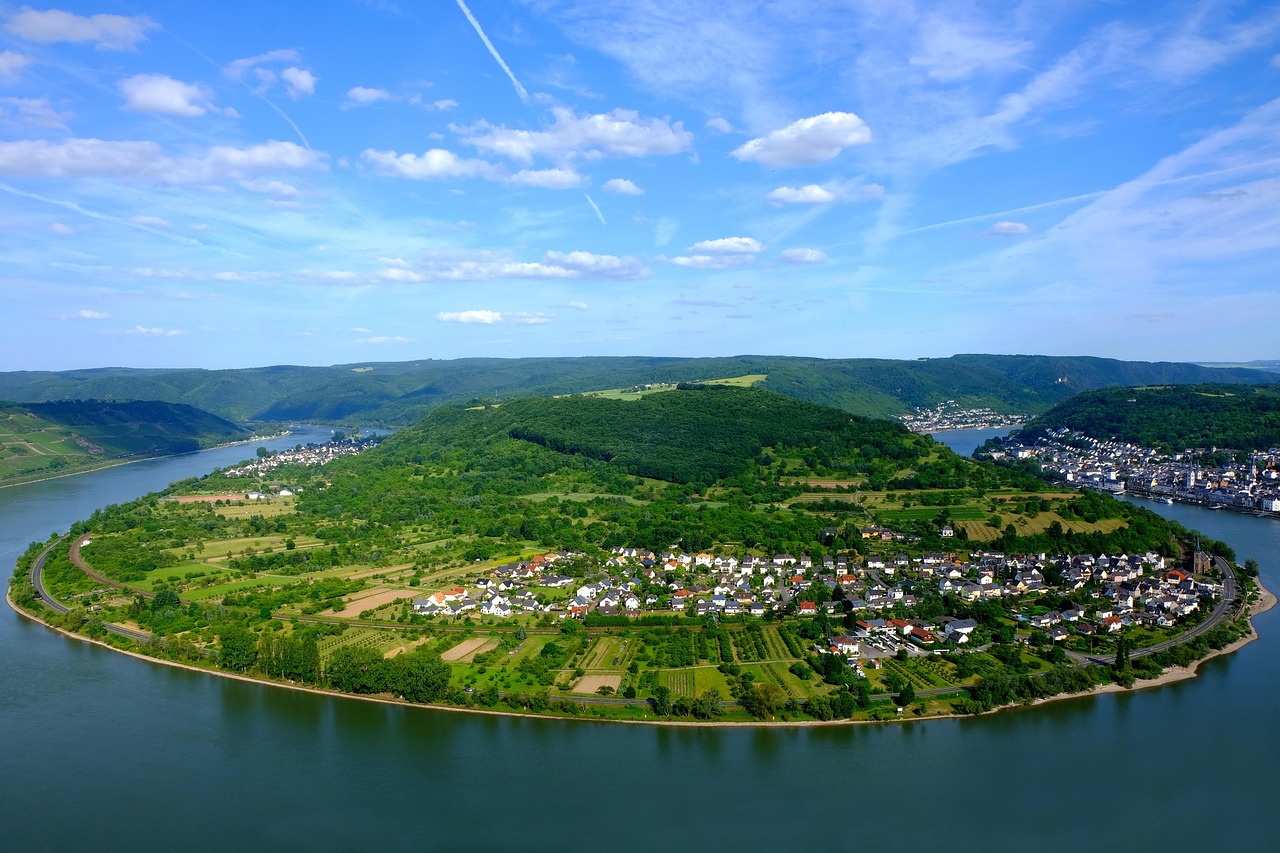
Why Visit Boppard?
If you’re dreaming of a classic Rhine escape—castle ruins on every bend of the river, wine taverns glowing with candlelight, easy day hikes through vineyards, and river cruises past storybook villages—Boppard is one of the very best bases you can choose.
Unlike some larger Rhine towns, Boppard still feels genuinely local. You’ll see school kids biking along the promenade in the afternoon, neighbors chatting over coffee on Marktplatz, and winemakers serving glasses of their own Riesling in tiny Straußwirtschaften (seasonal wine taverns). Yet, it’s also well connected by train, boat, and road, making it perfect for 3, 4, or 5 days in Boppard, especially if you want to explore the Rhine Valley without constantly packing and unpacking.
In 2026, Boppard is especially worth your time: the town is quietly refreshing its riverfront promenade, several historic wine estates have opened new tasting rooms, and a handful of young chefs are giving traditional Rhineland dishes a modern twist—all without losing the cozy, small‑town charm that makes Boppard so lovable.
Table of Contents
- Boppard at a Glance (2026 Overview)
- Neighborhoods & Areas to Explore
- Suggested Itineraries (3–5 Days in Boppard)
- Top 20+ Attractions & Experiences
- Local Food & Drink in Boppard
- Nightlife, Entertainment & Cultural Experiences
- Events & Festivals in 2026–2027
- Best Day Trips from Boppard
- Cultural Etiquette & Local Customs
- Practical Travel Tips for Boppard
- Summary & Best Time to Visit Boppard
Boppard at a Glance (2026 Overview)
Boppard sits roughly halfway between Koblenz and Bacharach in the UNESCO‑listed Upper Middle Rhine Valley. With about 16,000 residents, it’s big enough to have excellent transport links, good restaurants, and a steady year‑round rhythm—but still small enough to feel like a village once the day‑trippers leave.
- Region: Rhineland‑Palatinate (Rheinland‑Pfalz), Germany
- Population: ~16,000
- Best for: Romantic getaways, family trips, easy hiking, wine tasting, scenic train and boat rides
- Perfect trip length: 3–5 days in Boppard as a base to explore the Rhine Valley
In 2026, Boppard continues to be less crowded and cheaper than bigger Rhine hubs like Rüdesheim. It’s especially good value if you stay several nights, as many guesthouses and small hotels offer multi‑night discounts outside peak festival weekends.
Neighborhoods & Areas to Explore in Boppard
Altstadt (Old Town)
This is where you’ll likely spend most of your time: narrow cobbled lanes, half‑timbered houses leaning toward each other, the Romanesque church of St. Severus, and the lively Marktplatz. I usually stay within a 5–10 minute walk of the main square; it’s perfect for evening strolls and spontaneous glasses of Riesling.
Rheinpromenade (River Promenade)
Boppard’s riverfront is long, leafy, and ideal for slow walks. Cafés, ice‑cream parlors, and boat piers line the promenade, and benches face the water. Sunrise and sunset here are magical, especially in autumn when the vineyards glow gold.
Vineyard Slopes & Gedeonseck/Hirzenach Ridge
Above town, terraced vineyards climb steeply to the viewpoints of Gedeonseck and Vierseenblick. This is my favorite part of Boppard: quiet paths, birdsong, and panoramic Rhine views. It feels wild and rural, even though you’re only a 15–30 minute walk from the Old Town (or a quick chairlift ride).
Suburbs & Villages: Bad Salzig, Hirzenach & Others
Boppard includes several small districts along the Rhine and in the hills—Bad Salzig, Hirzenach, Buchholz. They’re linked by train and bus but feel worlds away from the tourist center. If you want a more rural base or a spa atmosphere, look at Bad Salzig in particular.
Suggested Itineraries: 3–5 Days in Boppard
I’ll lay out three flexible itineraries—a 3 day itinerary for Boppard, a 4 day itinerary, and a 5 day itinerary—based on how I usually structure my own trips. Mix and match depending on your pace and interests.
3 Day Itinerary for Boppard
Three days in Boppard is just enough to fall in love with the town, hike above the Rhine, and experience at least one castle and one river cruise. Here’s how I’d do it if it were your first time.
Day 1 – Old Town, Rhine Promenade & Chairlift
I like to arrive in Boppard around late morning if possible. The trains from Koblenz or Mainz glide along the river, and you’ll catch your first glimpse of the town’s church towers and riverside cafés as you pull in. Drop your bags at your guesthouse (many will store them before check‑in) and head straight for the Rheinpromenade.
Start with a slow walk along the water to get oriented. Have lunch at one of the riverside restaurants—something simple like Flammkuchen (a kind of thin, crispy flatbread) and a glass of local Riesling. After lunch, make your way to the Boppard Chairlift station at the southern end of town.
The chairlift ride up to Gedeonseck is one of the must‑see attractions in Boppard. The chairs are open (no cabin), so you’ll feel the breeze and hear the rustle of leaves as you rise above the vineyards. I still get a small thrill when the town shrinks beneath my feet and the river begins to curve into that iconic horseshoe bend.
At the top, walk to the Gedeonseck lookout terrace for a sweeping view of the Rhine loop. On my last summer visit, I spent almost an hour here just watching barges push upriver and tourist boats glide around the bend. Have a coffee or a beer at the restaurant, then—if you’re feeling energetic—follow the forest path to Vierseenblick
Descend by chairlift in the late afternoon and wander back through the Old Town. Visit St. Severus Church and end your day with dinner in Marktplatz. I often choose a cozy wine tavern and ask for a dry Riesling from the Bopparder Hamm vineyards—you can’t go wrong.
Day 2 – Rhine Cruise & Castle
Use your second day for a classic romantic Rhine experience: a cruise past castles and vineyards, plus a visit to a medieval fortress. In my opinion, the nicest day trip from Boppard by boat is to St. Goar or Bacharach, but even a shorter loop works well if you’re traveling with kids.
Check the current 2026 boat schedules (KD, Bingen‑Rüdesheimer, and other operators) and aim for a mid‑morning departure. I like to grab a coffee and pastry from a bakery on Oberstraße before boarding. Once on board, head to the open deck if the weather’s good; the commentary (in German and English) points out major castles and landmarks.
Disembark in St. Goar to visit the mighty Rheinfels Castle. Even though it’s technically not in Boppard, it’s one of the must‑see attractions in the region. I usually spend 2–3 hours exploring the ruins, tunnels, and ramparts. There’s a small museum, and the views up and down the Rhine are spectacular.
Return by boat or train in the afternoon. Back in Boppard, treat yourself to ice cream on the promenade and a leisurely dinner. If it’s summer, the riverfront can be lively into the evening with both locals and visitors enjoying the long twilight.
Day 3 – Hiking the Bopparder Hamm & Wine Tasting
Your final day is all about wine and views. The Bopparder Hamm is a sweeping amphitheater of vineyards surrounding the Rhine loop, and the hiking trails here are among the best things to do in Boppard.
Start with a hearty breakfast, then pick up a trail map from the tourist office near the train station. There are several circular routes; I usually take a 3–4 hour loop that climbs gently through the vines, passing small chapels and viewpoints. Wear proper shoes—the slopes are steep and can be slippery after rain.
Back in town, schedule an afternoon or early evening wine tasting at a local Weingut (winery). Many family‑run estates offer tastings by appointment; in 2026, more of them are listing English information on their websites, but a quick email or phone call is still the best way to arrange a visit. If you’re shy about German, don’t worry—Rheinlanders are used to visitors, and a mix of English, smiles, and pointing at the wine list goes a long way.
End your 3 days in Boppard with a final stroll along the Rhine. I always linger a bit on the last night, listening to the river and promising myself I’ll be back.
4 Day Itinerary for Boppard
If you have 4 days in Boppard, keep the first 3 as above and add a deeper dive into the surrounding countryside or a quieter castle visit.
Day 4 – Castle Ruins, Forest Walks & Bad Salzig
On my longer stays, I like to slow the pace on day four. Start with a late breakfast and then take the train or a scenic walk to Bad Salzig, a spa district just south of Boppard. The walk along the river takes about an hour; you can also hop on a regional train for a 5‑minute ride.
Bad Salzig has a restful, almost old‑fashioned spa vibe: grand villas, parkland, and mineral springs. It’s not overrun with tourists, which makes it a hidden gem for a quiet morning. If you’re in the mood, book a few hours at a local spa or simply wander the Kurpark.
In the afternoon, head back toward Boppard and explore one of the smaller castle ruins or chapels above town. There are several lesser‑known viewpoints and forest paths on the hillsides behind the Old Town. I often just pick a marked trail and follow it, trusting the excellent German signage to loop me back down.
For dinner, try a different style of restaurant—maybe something a bit more modern or international, as Boppard’s dining scene has slowly diversified by 2026 while still keeping traditional wine taverns at its heart.
5 Day Itinerary for Boppard
A 5 day itinerary for Boppard is ideal if you want to balance active days with true relaxation. With five days, you can add more hiking, another castle, or a day trip deeper into the Rhine or Moselle valleys.
Day 5 – Moselle Side Trip or Deeper Rhine Exploration
My favorite way to use a fifth day is to take a day trip from Boppard to the Moselle Valley—Cochem or Beilstein are classic choices—or further down the Rhine to Bacharach or Rüdesheim. The train network from Boppard makes this easy and relatively cheap, especially with regional day tickets.
Alternatively, keep things hyperlocal: another hike in the Bopparder Hamm, a picnic on a vineyard terrace, a long lunch in a neighboring village, and a lazy afternoon watching boats from the promenade. The beauty of 5 days in Boppard is that you don’t have to rush; you can let the rhythm of the river set your pace.
Top 20+ Attractions & Experiences in Boppard
Below you’ll find detailed guides to more than 20 of the best places to visit in Boppard and the surrounding area. These aren’t just checklists—I’ve woven in my own impressions, tips, and the little details that don’t always make it into standard brochures.
1. The Boppard Rhine Promenade
If Boppard has a living room, this is it. The Rhine promenade is where everything converges: locals walking their dogs, kids on scooters, cyclists cruising through, and travelers taking a hundred photos of the river and half‑timbered façades.
I like to start my mornings here with a takeaway coffee, sitting on one of the benches and watching the mist lift off the water. In summer, early mornings are surprisingly peaceful; the cruise boats haven’t yet disgorged their passengers, and you can hear church bells and the distant rumble of a freight train across the river.
History & Feel: The promenade developed as Boppard shifted from a trading town to a spa and tourism destination in the 19th century. Grand hotels sprouted along the river, and though some have changed function, the atmosphere of “Kurort” (spa resort) lingers—tree‑lined paths, ornate façades, and a subtle sense that strolling is an activity in its own right.
Tips:
- Come at sunset for golden light on the vineyards.
- In 2026, parts of the promenade are being gently upgraded (benches, lighting) but disruptions are minimal and usually well‑signed.
- Families: there’s ample space for strollers; kids love watching the ferries and barges.
2. Boppard Chairlift to Gedeonseck
The chairlift is, hands down, one of the must‑see attractions in Boppard. The first time I rode it, I was slightly nervous—the chairs are open, just a simple bar across your lap—but within a minute I was too captivated by the view to worry.
What to Expect: The ride takes about 20 minutes each way, floating over back gardens, forest, and then neat rows of vines. You’ll see how steep the slopes really are and understand why winegrowing here is such hard work.
At the Top: Gedeonseck is a classic viewpoint with a restaurant terrace. I’ve spent everything from foggy autumn afternoons to blazing summer evenings here. On clear days, you can trace the full curve of the Rhine loop, see trains snaking along both banks, and pick out riverboats gliding below.
Practical Tips:
- Season: Generally operates from spring through late autumn; in 2026, check updated opening dates as they sometimes extend into November on mild years.
- Tickets: Round‑trip tickets are cheaper than two singles; kids under a certain age ride at a reduced fare.
- Safety: Not ideal for those with severe vertigo. Secure hats and cameras; it can get breezy.
- Hikers: Consider going up by chairlift and walking down through the vineyards.
3. Gedeonseck & Vierseenblick Viewpoints
These twin viewpoints are the reward at the top of the chairlift and one of the best places to visit in Boppard for photographers and romantics alike.
Gedeonseck: The classic postcard shot of Boppard. I’ve watched sunsets here where the river turns molten gold and the villages on both banks light up one by one. There’s a restaurant where you can linger over cake and coffee or a full meal.
Vierseenblick: About a 20–30 minute forest walk from Gedeonseck. The name means “Four Lakes View” because of the way the river curves and is partially hidden by hills, creating the illusion of four separate lakes. On my last hike, I shared the viewpoint with only a couple of other people—a quieter, more contemplative spot than Gedeonseck.
Tips:
- Wear proper shoes; the forest path can be muddy after rain.
- Combine with a longer hike along the RheinBurgenWeg trail for a more adventurous day.
- For couples, sunset at Gedeonseck is about as romantic as Boppard gets.
4. Bopparder Hamm Vineyards
The Bopparder Hamm is not just a backdrop—it’s a living, working vineyard amphitheater that defines the town’s character. This sweeping stretch of south‑facing slopes is one of the Rhine’s most celebrated wine sites, especially for Riesling.
On my spring visits, I love watching the vines wake up: tiny green buds, farmers fixing trellises, tractors somehow navigating impossibly steep terraces. In late September and early October, you’ll see harvest crews picking by hand, often starting at dawn to avoid afternoon heat.
Wine & Terroir: Expect crisp, mineral‑driven Rieslings with a spectrum from bone‑dry to lusciously sweet. Some estates also produce Spätburgunder (Pinot Noir) and other varieties, but Riesling is the star. Many bottles proudly mention “Bopparder Hamm” on the label—look for it when you order local wine.
How to Experience It:
- Hike one of the signposted vineyard trails; look for information boards explaining the geology and grape varieties.
- Book a tasting or guided walk with a local winemaker—some offer vineyard picnics in 2026, a wonderful splurge if you’re traveling as a couple or small group.
- Visit during the Bopparder Hamm Weinfest (usually late March/early April and again in autumn) for an open‑air celebration of local wine.
5. St. Severus Church
St. Severus, with its twin towers and pale stone façade, anchors the Old Town near the river. I still remember the first time I stepped inside on a hot July afternoon—instantly enveloped by cool air, soft light, and the faint scent of incense.
History: The church dates back to the 12th and 13th centuries and is one of the best examples of Romanesque architecture on the Middle Rhine. Over the centuries it has been restored and embellished but still retains a solid, almost fortress‑like presence.
Inside: Look for the delicate wall paintings, vaulted ceilings, and carved details. I like to sit for a few minutes in the pews, letting the swirl of the outside world fade—especially on weekend mornings when the bells ring out across town.
Tips:
- Respect services; avoid loud talking and photography during mass.
- If you’re here at Christmas, the church is beautifully decorated, and the atmosphere is particularly special.
6. Boppard Roman Fort & City Walls
Boppard’s history stretches back to the Roman era, when it was known as Bodobrica, a fortified settlement on the Rhine frontier. You can still see substantial remains of the Roman fort integrated into the later medieval town walls.
I love how casually ancient stones appear in everyday life here—massive blocks of Roman masonry next to bus stops or small gardens. It’s a reminder that Boppard has been watching the river for nearly two millennia.
What to See:
- Sections of the Roman wall and towers near the Old Town.
- Interpretive panels explaining the fort’s layout and role.
Family Tip: Kids often enjoy “castle wall hunting”—spotting different sections of wall and towers as you wander. Turn it into a mini treasure hunt.
7. Boppard Kurfürstliche Burg (Electoral Castle)
This imposing riverside castle, once a residence of the archbishops and electors of Trier, now houses a local history museum. I’ve ducked inside on rainy days and ended up spending much longer than expected among its exhibits.
Inside: You’ll find displays on Boppard’s Roman past, medieval guilds, wine culture, and traditional crafts. The collection is modest but thoughtfully curated; even if you’re not a museum person, an hour here provides useful context for everything you’re seeing outside.
Views: Some rooms and the courtyard offer lovely glimpses of the river and Old Town. There’s something quietly satisfying about looking out the same windows that once framed medieval life along the Rhine.
Tips:
- Check opening hours, which can vary seasonally.
- Good option for families or rainy days; kids often like the models and old weapons.
8. Marktplatz & Old Town Lanes
Marktplatz is the beating heart of Boppard’s Altstadt. Half‑timbered houses, cafés spilling out onto the square, a fountain, and the pleasant buzz of conversations—it’s where I end up multiple times a day without even trying.
Architecture: Look up at the upper stories of the houses; many date back several centuries and feature carved beams, painted details, and intricate rooflines. The way the buildings lean toward each other gives the square a cozy, almost theatrical feel.
Personal Ritual: I like to grab a late‑afternoon coffee here and watch the light change. In 2026, Wi‑Fi is widespread, so it’s also a nice place to catch up on messages or post those inevitable Rhine photos.
Tips:
- Prices are a bit higher on the square than in side streets, but the atmosphere is worth it for at least one drink or meal.
- Explore the alleys radiating from the square; some of Boppard’s cutest corners hide just off the main routes.
9. Rhine River Cruises from Boppard
Taking at least one boat journey is almost non‑negotiable when you’re in Boppard. The perspective from the water—castles above, vineyards on both sides, villages sliding past—is unforgettable.
Types of Cruises:
- Short Scenic Trips: 1–2 hour loops ideal for families or those with limited time.
- One‑Way Transport: Use the boat as a scenic way to travel to St. Goar, Bacharach, or Rüdesheim.
- Themed Cruises: Evening wine cruises or special event sailings around fireworks nights (check 2026 festival dates).
My Advice: I usually take the boat one way and the train back—it gives variety and flexibility. Sit on the upper deck if the weather allows; bring a light jacket even in summer, as it can be breezy on the river.
10. Boppard–Bad Salzig Riverside Walk
When I need a gentle, flat walk to stretch my legs, I head south along the river from Boppard to Bad Salzig. It’s about 4 km one way, mostly on a paved path, and wonderfully peaceful outside peak hours.
What You’ll See: Barges chugging by, ferries crossing, vineyards rising across the river, and occasional fishermen along the bank. It’s easy to forget how close you are to town.
Tips:
- Walk one way and take the train back (or vice versa) if you don’t want to return on foot.
- Great for families with strollers or anyone wanting low‑impact exercise.
11. Bad Salzig Spa & Kurpark
Bad Salzig, part of greater Boppard, offers a mellow spa town ambiance. I’ve come here on drizzly days to soak in warm pools and emerge blissfully relaxed.
Kurpark: A leafy park with walking paths, benches, and traditional spa architecture. It feels like stepping back to an era when “taking the waters” was a prescribed therapy.
Spa Facilities: Depending on current operations in 2026, you’ll find thermal pools, saunas, and wellness treatments. Check ahead for day‑pass options and bring flip‑flops and a towel; some German spas also expect you to follow specific sauna etiquette (more in the customs section).
12. Hiking the RheinBurgenWeg near Boppard
The RheinBurgenWeg (“Rhine Castles Trail”) is a long‑distance hiking route running along the Rhine’s heights. Several of its most scenic segments are easily accessible from Boppard.
I’ve hiked multiple sections over the years, and my favorite is the stretch between Boppard and Brodenbach, which combines forests, cliffs, castle views, and quiet villages.
Why it’s Great:
- Well‑marked with red‑and‑white logos.
- Multiple entry and exit points, so you can tailor the distance.
- Plenty of viewpoints and picnic spots along the way.
Tips: Wear sturdy shoes, carry water (especially in summer), and check train/bus schedules for your endpoint if you’re not looping back.
13. Local Wineries & Wine Taverns
Exploring local wine is one of the top cultural experiences in Boppard. The town and its surroundings are dotted with family‑run estates, some of which have been cultivating the same slopes for generations.
Typical Experience: You sit at a simple wooden table, a flight of wines appears, and the winemaker (or their sibling, spouse, or child) explains each glass. Conversations naturally drift to weather, harvests, and how the Rhine looked in winter storms.
What to Try:
- Dry Riesling (“trocken”) from Bopparder Hamm.
- Off‑dry styles (“feinherb” or “halbtrocken”) if you like a hint of sweetness.
- Rosé or light red (Spätburgunder) in summer.
Tips:
- Call or email ahead—many tastings are by appointment.
- Ask about shipping if you don’t want to carry bottles; some estates ship internationally.
14. Boppard Wine Festivals (Weinfeste)
Wine festivals are where Boppard’s community spirit shines. Long tables under strings of lights, live music, food stalls, and locals and visitors shoulder to shoulder with glasses in hand.
I’ve timed trips to coincide with the Bopparder Hamm Weinfest more than once, and it’s always a highlight. You can sample wines from multiple producers in one place, often at very fair prices, and there’s usually a friendly, multi‑generational crowd.
2026–2027: Check the town’s official calendar closer to your trip; dates shift slightly each year but usually fall in spring and early autumn. Special fireworks on some evenings add extra magic.
Tip: Book accommodation well in advance for festival weekends; rooms sell out quickly.
15. Boppard Christmas Market
In late November and December, Boppard’s Old Town transforms into a cozy Christmas market. It’s smaller and more intimate than big‑city markets, which I actually prefer—less pushing, more chatting.
Atmosphere: Wooden stalls selling ornaments, crafts, and local specialties; the smell of Glühwein (mulled wine) and roasted almonds; carols drifting from St. Severus and occasional brass bands on the square.
Must‑Try: A mug of hot Riesling‑based Glühwein (yes, really) and a plate of Reibekuchen (crispy potato pancakes) with applesauce.
16. St. Peter’s Church (Bad Salzig)
St. Peter’s in Bad Salzig is a striking church with a tall, elegant tower that you’ll likely notice when arriving by train. Inside, it’s calm and bright, with beautiful stained glass.
I discovered it almost by accident on a winter walk and ended up staying for a short organ rehearsal. The acoustics and the quiet town outside made it a lovely, unexpected moment.
Tip: Combine with a stroll through Bad Salzig’s streets and Kurpark for a half‑day outing.
17. Ferry Crossing to Filsen
Sometimes the simplest experiences are the best. The small car and passenger ferry between Boppard and Filsen gives you a cheap, quick way to change perspectives.
From Filsen’s bank, you can look back at Boppard framed by vineyards—a classic skyline view. I’ve taken late‑evening crossings where the town lights shimmer on the water and the hills fade into twilight.
Tip: Bring a camera; this angle is great for architecture and landscape shots.
18. Local Museums & Galleries
Beyond the castle museum, Boppard has a handful of small exhibitions and galleries—often run by local artists or historical societies. They’re easy to miss but reward curious wanderers.
I once ducked into a modest gallery during a sudden summer storm and found a fantastic exhibit of Rhine landscapes by contemporary painters. The owner was behind the desk and happily told me about growing up in Boppard and watching the river change with the seasons.
Tip: Check notice boards around Marktplatz and the tourist office for current exhibitions in 2026.
19. Architecture Walk: Half‑Timbered Houses & Villas
Architecture lovers will find plenty to admire in Boppard: medieval half‑timbered houses, 19th‑century villas along the river, and occasional Jugendstil (Art Nouveau) details.
On one of my visits, I spent an entire afternoon just photographing doorways, window boxes, and rooflines. The variety is impressive for such a small town.
Tip: Take a slow loop: Marktplatz → side alleys → back streets behind the promenade → riverfront villas. Early morning or late afternoon light is best for photos.
20. Picnic at a Vineyard Chapel
Scattered among the vineyards are tiny chapels and shrines—whitewashed, often with red trim, sometimes adorned with flowers. They’re peaceful, simple places with sweeping views.
One of my favorite afternoons in Boppard was packing bread, cheese, and a half‑bottle of local wine (plus water!) and hiking up to a vineyard chapel for a quiet picnic. The only sounds were distant tractor engines and birds.
Tip: Remember to pack out all your trash and be respectful—these are religious sites, even if they’re in the middle of fields.
21. Sunset & Night Photography Spots
Photographers should make time for evening and night shots. My favorite spots:
- The Rhine promenade, capturing reflections and boat trails.
- The Filsen side of the river, looking back at Boppard’s illuminated skyline.
- Higher viewpoints like Gedeonseck at blue hour (check chairlift operating times in 2026; you may have to hike if staying late).
Local Food & Drink in Boppard
Local food in Boppard is hearty, seasonal, and perfectly matched to a glass of Rhine wine or a cold beer. Over the years I’ve developed a few go‑to dishes and places that I try to revisit whenever I’m in town.
What to Eat in Boppard
- Riesling Soup: A creamy soup infused with local white wine. Surprisingly delicate; great starter.
- Spundekäs: A tangy cheese spread, often served with pretzels—ideal with a glass of Riesling.
- Flammkuchen: Thin, crispy flatbread typically topped with crème fraîche, onions, and bacon.
- Schnitzel Variations: Pork or veal schnitzel with different sauces; classic comfort food after a long hike.
- Federweißer (in autumn): Partially fermented, slightly fizzy new wine, often paired with onion tart.
- Reibekuchen: Crispy potato pancakes, usually served with apple sauce.
Where to Eat & Drink (2026 Highlights)
Names and owners can change, but here’s the type of places I seek out:
- Traditional Wine Taverns: Wooden interiors, candles, handwritten menus, and local wines by the glass. I love ordering a small carafe and a plate of mixed cold cuts and cheeses.
- Riverside Restaurants: Slightly more formal, with terraces facing the Rhine—great for romantic dinners or long summer lunches.
- Cafés in the Old Town: Perfect for cake and coffee breaks; try seasonal fruit cakes (plum in late summer, apple in autumn).
- Ice‑Cream Parlors: Along the promenade and in the Old Town, lifesavers in July and August.
Saving Money on Food
Eating well in Boppard doesn’t have to be expensive:
- Have your main hot meal at lunch; many restaurants offer slightly lower midday prices.
- Pick up picnic supplies from supermarkets and bakeries for some meals, especially breakfast or light dinners.
- Order house wine (Hauswein) by the Schoppen (glass) or small carafe—it’s usually excellent value.
Nightlife, Entertainment & Cultural Experiences
Boppard’s nightlife is more about relaxed evenings than wild parties. Expect wine taverns, cozy bars, and seasonal events rather than clubs and all‑night dancing.
Evening Options
- Wine Taverns & Bars: Linger over a glass or two of local wine; many places have outdoor seating in warmer months.
- Riverside Strolls: An evening walk along the promenade is simple but lovely—especially during festivals when lights and music spill onto the street.
- Live Music: During wine festivals and some weekends, look for live bands or folk music in squares and venues.
- Cultural Events: Occasional concerts in churches or community halls—check posters and the tourist office for what’s on in 2026.
Cultural Experiences
- Church Concerts: Organ and choral performances in St. Severus or other local churches offer a moving, acoustically rich experience.
- Local Clubs & Associations: Shooting clubs, music societies, and volunteer fire brigades often appear in parades and festivals—great windows into local life.
- Seasonal Traditions: Christmas markets, Easter processions, and carnival (Fasching) events reflect broader Rhineland customs with a small‑town twist.
Events & Festivals in Boppard (2026–2027)
Exact dates for 2026–2027 will be confirmed closer to the time, but based on typical patterns, here are events to watch for:
- Bopparder Hamm Spring Wine Festival: Late March or early April. Open‑air wine stands, food, and music on the promenade or in town squares.
- Summer Rhine Events: Selected nights of Rhine in Flames style fireworks along the Middle Rhine (often accessible via boat from Boppard).
- Autumn Wine Festivals: Early October harvest celebrations with Federweißer, onion tart, and live bands.
- Christmas Market: Advent weekends from late November through December, centered around the Old Town.
In 2026, Boppard and neighboring towns are also focusing more on sustainable tourism, with events highlighting local produce, eco‑friendly hiking, and heritage conservation—keep an eye on the official tourism website for special programs.
Best Day Trips from Boppard
One reason I recommend using Boppard as a base is how easy it is to explore nearby gems without changing hotels constantly. Here are classic day trips:
St. Goar & Rheinfels Castle
How to Get There: Boat (scenic, 1–1.5 hours) or regional train (around 15 minutes). I often go one way by boat and return by train.
What to Do: Explore the vast Rheinfels castle ruins, wander St. Goar’s streets, and enjoy Rhine views from above.
Bacharach
How to Get There: Combination of train and/or boat via Oberwesel or direct regional train depending on schedule (around 30–45 minutes).
Why Go: One of the prettiest towns on the Rhine—half‑timbered houses, a castle hostel, and vineyard walks.
Koblenz
How to Get There: Regional train (~15–20 minutes).
Highlights: Deutsches Eck (where Rhine and Moselle meet), Ehrenbreitstein Fortress (reachable by cable car), museums, shopping, and a more urban feel.
Cochem (Moselle Valley)
How to Get There: Train via Koblenz (~1–1.5 hours).
Why Go: Dramatic castle above a winding river, colorful town center, and a slightly different wine profile (Moselle Riesling) compared to Boppard’s Rhine wines.
Cultural Etiquette & Local Customs in Boppard
The people of Boppard are generally friendly and down‑to‑earth, with a typical Rhineland warmth that comes out around wine tables and festival seasons. A few cultural notes will help you fit in smoothly.
Basics
- Greetings: A simple “Guten Tag” (good day) or “Hallo” works well. In shops and cafés, greeting when you enter and saying “Tschüss” or “Auf Wiedersehen” when you leave is appreciated.
- Language: Many people speak some English, especially younger folks and those in tourism, but starting with a German greeting goes a long way.
In Restaurants & Wine Taverns
- Seat yourself if there’s no host station, but avoid obviously reserved tables (“Reserviert”).
- Service is more relaxed than in some countries; staff won’t hover. Signal when you’re ready to order or pay.
- It’s normal to pay at the table. Tipping around 5–10% (rounded up) is customary if service was good.
- Clinking glasses? Make eye contact and say “Prost!”
Quiet Hours & Sundays
- Residential areas observe “Ruhezeiten” (quiet hours), especially at night and on Sundays. Avoid loud noise.
- Most shops close on Sundays, though restaurants and tourist services remain open.
Outdoor & Hiking Etiquette
- Stay on marked trails through vineyards and forests; these are working landscapes.
- Greet fellow hikers with a friendly “Hallo” or “Guten Tag.”
- Take all litter with you; bins can be sparse on trails.
Sauna & Spa Culture (Bad Salzig)
- In many German saunas, nudity is standard and swimsuits are not allowed; towels are used for sitting/lying.
- Mixed‑gender saunas are common; if you’re uncomfortable, ask about women‑only or family times.
- Always shower before entering pools or saunas.
Practical Travel Tips for Boppard (2026)
These are the nuts and bolts I’ve learned from multiple trips—how to get around, save money, stay connected, and avoid surprises.
Getting To & Around Boppard
- By Train: Boppard is on the busy Rhine rail line, with frequent regional trains from Koblenz, Mainz, Frankfurt, and Cologne. Boppard Hbf (main station) is a short walk from the Old Town.
- By Car: You can drive the scenic B9 road along the Rhine. Parking in Boppard includes paid lots near the center and some free spots further out—ask your hotel for advice.
- In Town: Boppard is very walkable. You won’t need a car for the Old Town, promenade, or chairlift.
- Public Transport: Regional trains and buses connect Boppard to neighboring towns and villages; day passes can make multiple trips economical.
- Boats: Treat boats as both sightseeing and transport; schedules vary by season, so check 2026 timetables.
SIM Cards & Connectivity
- In 2026, eSIMs and EU‑wide data plans are widespread. If you’re from another EU country, roaming is usually included.
- For non‑EU visitors, look for prepaid SIMs from major German providers at airports or larger cities before you reach Boppard.
- Most hotels, cafés, and many restaurants offer free Wi‑Fi.
Money & Costs
- Currency: Euro (€).
- Cards vs Cash: Card acceptance is improving, but small wine taverns and some family businesses still prefer cash. Carry some for small purchases and festival stalls.
- Budget Tips: Picnic meals, regional train day tickets, and house wines all help keep costs down.
Accommodation
Boppard has a good mix of:
- Riverside Hotels: Fantastic views and easy access to the promenade.
- Guesthouses & B&Bs: Often family‑run, with personal touches and good value.
- Holiday Apartments: Great for longer stays or families; having a kitchen helps with budget.
Tip: Book early for peak seasons (wine festivals, summer weekends, Christmas market). Off‑season, you can often find deals or last‑minute availability.
Visa & Driving Requirements
- Visas: Germany is in the Schengen Area. Many nationalities can enter visa‑free for short stays (up to 90 days), but always check current 2026 regulations for your passport.
- Driving Licenses: EU/EEA licenses are valid. Many other countries’ licenses are accepted; an International Driving Permit (IDP) is recommended if your license isn’t in English or German.
- Road Rules: Drive on the right; obey speed limits and alcohol limits (strictly enforced).
Best Seasons & What They’re Good For
- Spring (April–May): Blossoming trees, fresh greens, fewer crowds. Great for hiking and early wine festivals.
- Summer (June–August): Long days, warm weather, busiest season. Best for boat trips, outdoor dining, family holidays.
- Autumn (September–October): My personal favorite—harvest time, golden vineyards, wine festivals, often mild temperatures.
- Winter (November–March): Quiet, atmospheric, with Christmas markets adding charm. Some attractions (like the chairlift) may close or run reduced hours.
Safety & Health
- Boppard is generally very safe; usual common‑sense precautions apply.
- Tap water is safe to drink.
- Wear sun protection on hikes and boat rides; the combination of water reflection and elevation can be stronger than you expect.
Hidden Tips from Repeat Visits
- Start hikes early on hot summer days; many trails are exposed between vineyard terraces.
- Ask your hotel for a Gästekarte (guest card) if available; some include discounts on transport or attractions.
- Don’t overpack your schedule. Some of my best Boppard memories are unscripted hours on a bench, a glass of wine in hand, watching the Rhine flow by.
Summary & Final Recommendations
Boppard may not have the marketing machine of bigger Rhine towns, but that’s exactly why I keep returning. It offers everything people dream of when they imagine the Middle Rhine—castles, vineyards, river cruises, medieval lanes, and cozy wine taverns—without feeling overrun.
For a first visit, I recommend at least a 3 day itinerary for Boppard: one day around town and the chairlift, one day on the river and at a castle, and one day hiking the Bopparder Hamm with wine tasting. If you can stretch to 4 or 5 days in Boppard, you’ll be rewarded with slower mornings, deeper explorations, and the chance to slip into the town’s everyday rhythm.
Best Time to Visit:
- Overall Best: September–early October (harvest, festivals, golden vineyards).
- Great Alternatives: Late April–May (spring freshness, fewer crowds) and June (long days, vibrant greenery).
- Special Charm: December for Christmas markets and quiet winter walks.
Whether you’re planning a romantic escape, a family adventure, or a solo journey along the Rhine, Boppard makes an exceptional base. Let the boats set your tempo, the vineyards guide your walks, and the wine glasses mark the passing of unhurried evenings—you may find, as I did, that one visit is never quite enough.