Why Visit Brocken? The Mountain Where Myth, History, and Weather Collide
Brocken isn’t just another pretty summit in Germany. At 1,141 meters, it’s the highest peak in the Harz Mountains, but that number alone doesn’t explain why it has such a grip on the German imagination. This is the mountain of witches and Walpurgisnacht, of Goethe’s Faust, of Cold War surveillance domes and stubborn, wind-bent pines. It’s a place where, in a single day, you can ride a steam train through deep forests, hike across a bleak, almost arctic plateau, watch a “Brocken spectre” halo appear in the mist, and then end with hearty Harz cuisine and schnapps in a timbered guesthouse.
I’ve been coming up to Brocken since my student days, and I still feel a tug every time the weather forecast shows a clear window. I’ve climbed in summer heat and snowed-in October fog, taken the steam train from Wernigerode, trudged up from Schierke on icy paths, and once sat for two hours in the summit café waiting for the clouds to part – which they did, dramatically, for exactly six minutes. That’s Brocken: stubborn, moody, rewarding.
This long-form travel guide for 2026 is written in that spirit – not as a checklist, but as a practical, story-driven companion. If you’re planning a 1 day itinerary for Brocken, 2 days in Brocken, or even a slow 3 day itinerary for Brocken, you’ll find detailed routes, timing, food stops, and very honest notes about weather, crowds, and what’s worth your limited time up here.
Whether you come for the must-see attractions in Brocken – the steam railway, the summit, the Cold War domes – or for quieter cultural experiences in Brocken like village festivals and forest walks, the mountain repays anyone who lingers. And lingering, in my opinion, is exactly what Brocken deserves.
Table of Contents
- Why Visit Brocken?
- Brocken Overview: Geography, Weather, and Character
- Top 8 Brocken & Harz Highlights (Deep Dives)
- Suggested Itineraries: 1–3 Days in Brocken
- Eating & Drinking Around Brocken
- Brocken After Dark & Off-Hours Magic
- Events & Festivals 2026–2027
- Practical Travel Advice for Brocken
- Tickets, Opening Hours & Logistics
- Cultural Etiquette & Local Customs
- Day Trips & Nearby Attractions
- Summary: Key Takeaways & Best Time to Visit Brocken
Brocken Overview: Geography, Weather, and Character
Brocken sits near the center of the Harz range, straddling what used to be the inner-German border between East and West Germany. For decades, the summit was off-limits, bristling with East German and Soviet listening posts. Today, those domes and towers share space with hikers, families, and the clanking Harz Narrow Gauge steam trains.
What makes Brocken special compared with other German peaks is its microclimate. Because of its exposed position and Atlantic-influenced weather, it has alpine characteristics despite its modest height. That means:
- Frequent fog and storms: Brocken is famously cloudy – some years over 300 days of fog. Always pack layers, even in August.
- Temperature drop: Count on 6–10°C cooler at the summit than in Wernigerode or Goslar.
- Wind: The wind up here can be brutal. A light windproof layer is more useful than a heavy jumper.
On the human side, Brocken is a crossroads between hiking culture, nostalgic steam train tourism, and deeply rooted folklore. Walpurgisnacht – the witches’ night – still defines spring in the Harz, and the mountain is dotted with playful witch sculptures and motifs. Yet you’re never far from reminders of the Cold War, from interpretive panels to the Brocken Museum in the old radar building.
If you come expecting pristine wilderness, you’ll find a mix: regenerating forests (the bark beetle has hit hard in recent years), protected moorlands, and busy summit facilities. The trick is knowing when and how to approach Brocken so the magic outweighs the crowds. That’s what the rest of this travel guide for Brocken is about.
The 8 Big Highlights: What Not to Miss Around Brocken
1. The Brocken Summit Plateau: Between Witches and Weather Stations
Most people’s mental picture of Brocken is this: a broad, almost lunar plateau capped with a weather station, a radio mast, and the bulbous domes of former listening posts. The summit is more a landscape than a point, and that changes how you move through it.
On my most recent visit in September 2025, I arrived by steam train from Wernigerode on a day that started sunny in the valley and ended in thick soupy cloud up top. Stepping off the train, the first thing you feel is the wind; the second is the sudden opening of horizons – even in partial fog, the plateau feels exposed and wild compared to the dark spruce forests below.
What You’ll Actually Walk Through
From the Brocken train station, you’ll follow a paved path that loops around the summit structures. Think of the summit in four “zones”:
- 1. Arrival Zone (Station & Café): A cluster of buildings: the station, restrooms, a self-service café, and souvenir shop. This is where families regroup, hikers sling off backpacks, and everyone checks the weather again.
- 2. Summit Circle Path: A broad, mostly paved track that circles the top. Allow 30–60 minutes for a full, lazy loop with stops. Along the way, you’ll pass:
- The official summit stone (a must-do photo; expect queues on sunny weekends).
- Panoramic viewpoints with boards pointing out peaks and towns in every direction – on clear days you really can see to the Thuringian Forest and the Kyffhäuser.
- Exposed rock outcrops where the Brocken spectre (your shadow surrounded by a halo in the mist) is most likely to appear.
- 3. Brockenhaus Museum: Housed in the old listening post, this is essential if you care about Cold War history or the natural history of the mountain.
- 4. Quiet Corners: Step just a little off the main circle on signed side paths, and you can sit among low pines or on granite boulders with relative solitude, even at midday.
History & Significance
Brocken has a layered history. Long before it hosted radar dishes, it was a sacred and feared place in local folklore. The earliest recorded ascent dates back to the 16th century. By the 18th and 19th centuries, scientists were conducting experiments in meteorology and optics here – it’s from Brocken that the “Brocken spectre” phenomenon got its name.
In Goethe’s Faust, Brocken is the stage for the Walpurgisnacht scene, cementing its role in the German literary imagination as a place where the ordinary world thins.
In the 20th century, the mountain became a fortified zone in the GDR. The listening posts up here were among the most important in the Eastern Bloc, monitoring NATO communications. The summit was fenced off and off-limits for decades, adding a layer of geopolitical mystique that you still feel in the stark architecture and museum exhibits.
Personal Notes & Tips
- Time needed: If you take the train up, give yourself at least 2–3 hours on the summit: 1–1.5 hours for the loop walk, 1 hour for the Brockenhaus Museum and café, and extra time if the weather suddenly improves.
- Best time of day: Morning trains (first two departures) or late afternoon in shoulder season. Midday on summer weekends can feel like a theme park.
- Family-friendly? Yes. The summit paths are stroller-friendly, and older kids love the train and the slightly spooky weather stories.
- Romantic? In the right conditions. I once watched a sunset here in October with just a handful of other people – we had golden light on the plateau and a sea of clouds below. But you have to be okay with the risk of fog and wind.
- Food: The summit café is fine for basics (soups, sausages, cake), but I usually treat it as a backup. Bring a picnic from Wernigerode or Schierke for better quality and flexibility.
2. Harz Narrow Gauge Railway (Brockenbahn): Steam to the Clouds
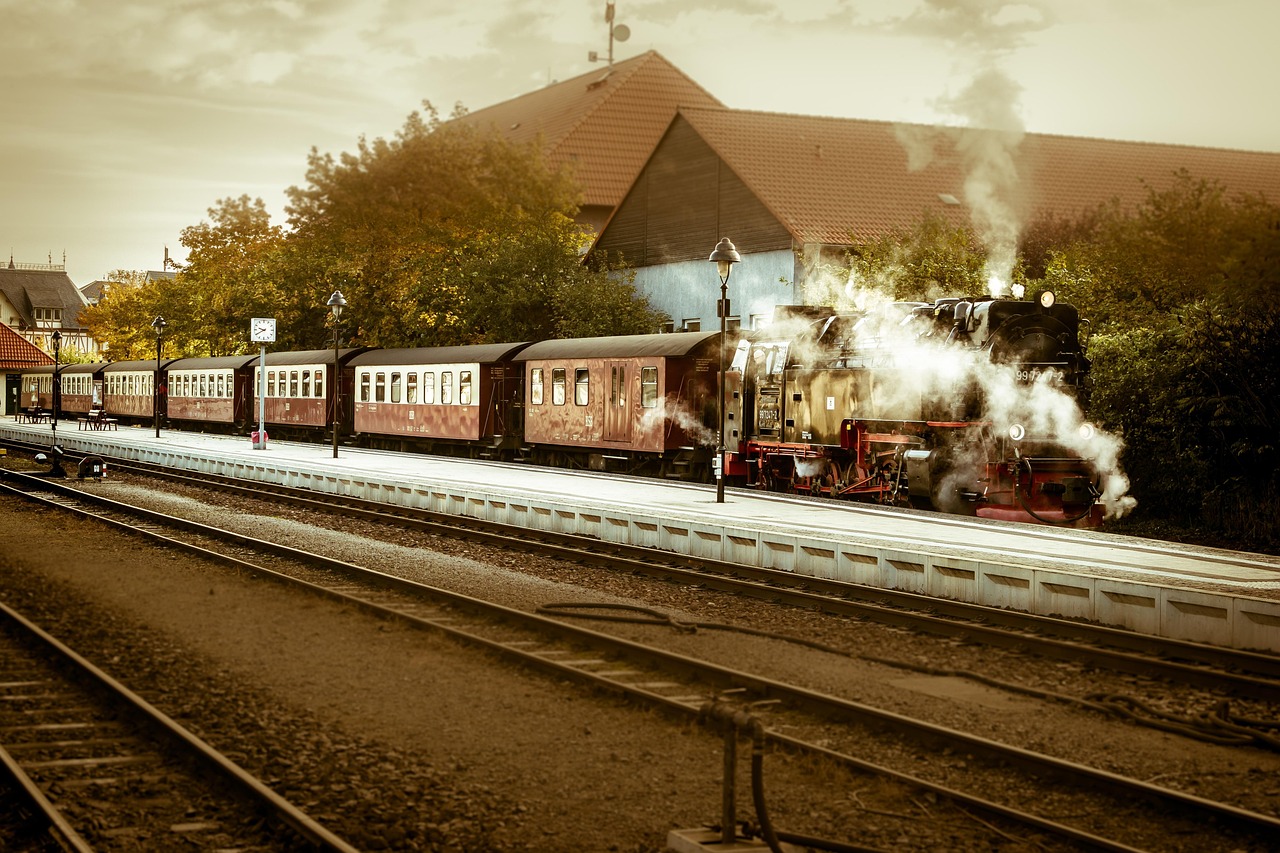
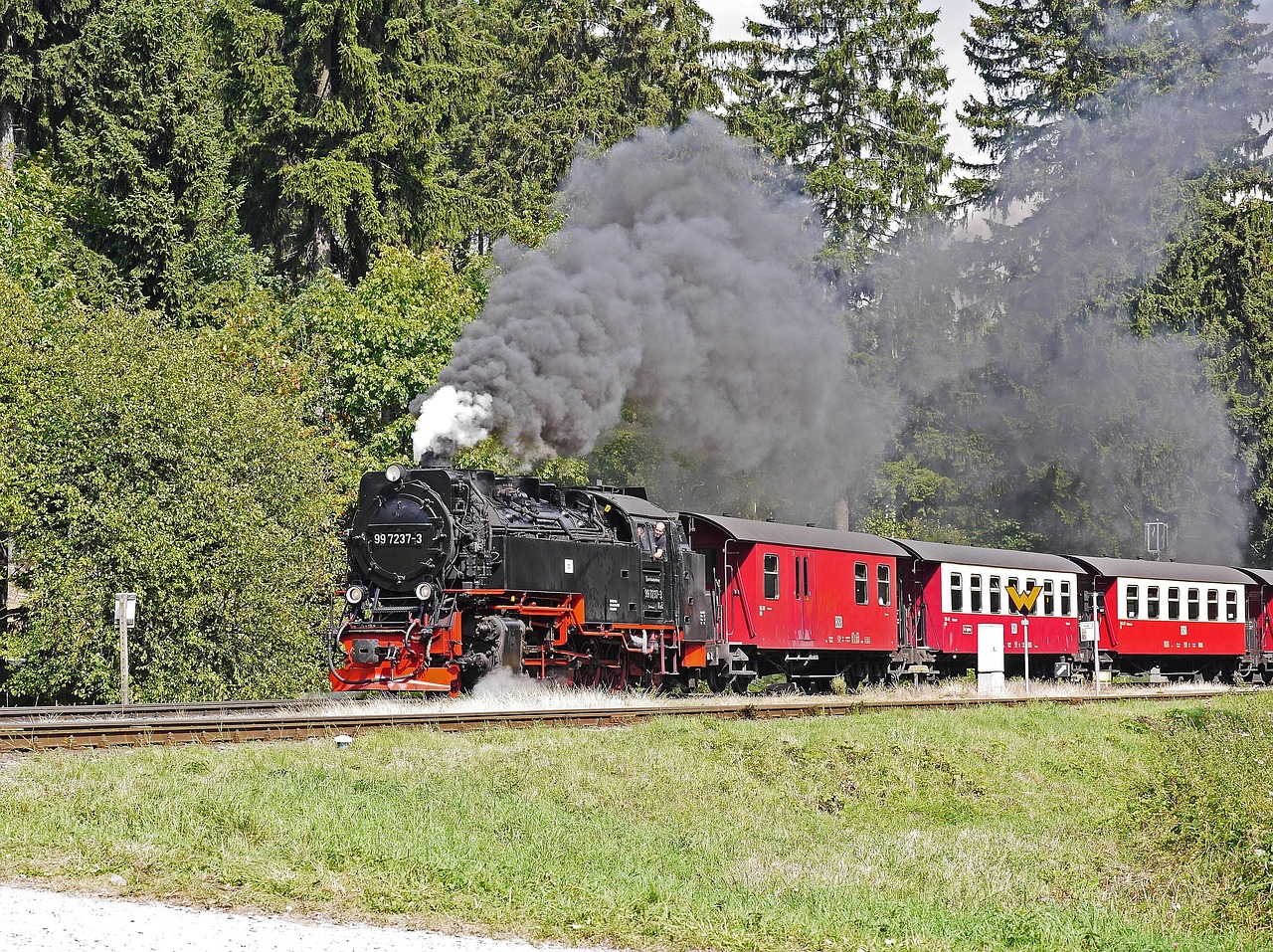
If there is one must-see attraction in Brocken, it’s not actually on the summit – it’s the way you get there. The Harzer Schmalspurbahnen (HSB) is a 140 km network of narrow-gauge railways, with the Brockenbahn branch climbing from Wernigerode through Drei Annen Hohne and Schierke to the top.
As a local, I admit I still get a childlike thrill when the black-and-red steam locomotive pulls into Wernigerode station, whistling and hissing, filling the air with coal smoke. The journey is slow by design: about 1 hour 40 minutes from Wernigerode to Brocken, through deep forest and gradually opening views.
What the Ride Is Really Like
On my last winter visit, I caught the mid-morning train from Wernigerode on a lightly snowy day. The carriages were warm (sometimes a bit too warm), the windows steamed up on the inside but quickly cleared once we got moving. The train chugs out of the half-timbered charm of Wernigerode into taller forests, then begins the steady climb.
Highlights along the way:
- Drei Annen Hohne: A little junction station where many hikers get off to start walking. The forest feels immediately wilder here. If you’re doing a mixed hike/train day, this is your spot.
- Schierke: The last stop before the serious ascent. In winter, snow here can be deep while the summit is a white-out.
- Upper Forest & Ridges: As you climb, trees thin and you get that first glimpse of the summit structures. The line does sweeping curves that are perfect for photography – if the carriage windows are clean.
Tickets, Reservations, and 2026 Updates
For 2026, HSB is continuing with its mix of reserved and open seating. You don’t technically need a reservation on all trains, but for Brocken trains, especially in high season, I strongly recommend it.
- Where to buy: Online via the HSB website, at station counters, or via partner tourist offices. Online gives you the best chance at your preferred departure times.
- How far in advance: For summer weekends and school holidays, book 1–2 weeks ahead for prime trains (mid-morning up, mid-afternoon down). On weekdays in shoulder season, you can often book just a day or two ahead.
- Ticket types:
- Return ticket Wernigerode–Brocken–Wernigerode.
- One-way ticket if you plan to hike one leg (my favorite option: train up, hike down via Goetheweg or Schierke).
- Harz-wide combination passes if you’re riding multiple days across the network.
Personal Tips
- Best carriages: The older, wooden-interior cars have more character. For photos, sit on the right-hand side going up from Wernigerode for better valley views.
- Early vs. late trains: The first train of the day is blissfully quiet outside peak season and dovetails perfectly with a summit loop before crowds arrive.
- Family-friendly: Absolutely. Kids love the steam, and there’s something reassuring about having a fixed schedule and warm carriage in mountain weather.
- Cost-saving: The train is not cheap. If you’re on a budget and reasonably fit, consider:
- Taking the train only one way and hiking the other.
- Using the train just between Drei Annen Hohne and Brocken (shorter, slightly cheaper) if you have a car.
3. Goetheweg Trail: The Classic Hiker’s Route
The Goetheweg is one of Brocken’s legendary paths, loosely following the route Goethe took in 1777. It’s my go-to recommendation for anyone who wants a full hiking experience without extreme difficulty.
I last hiked Goetheweg on an early October morning, starting from Torfhaus. The path begins gently through spruce and beech, then emerges into open bog and moorland with wooden boardwalks. Brocken’s summit structures hover in the distance like a ship on a grey sea, sometimes disappearing altogether into cloud.
Route Overview
The classic Goetheweg segment runs from Torfhaus to the Brocken summit:
- Distance: ~8 km one way.
- Elevation gain: Around 400 m, spread gently.
- Time: 2.5–4 hours one way, depending on pace and photo stops.
Key sections along the way:
- Torfhaus to Aussichtspunkt Goetheweg: Gradual ascent through forest to your first big viewpoint back towards the Harz foothills.
- Moorland Boardwalks: One of Brocken’s most distinctive landscapes: saturated bogs, stunted pines, rare flora. Stick to the boardwalks – this area is strictly protected.
- Final ascent: The last stretch feels longer than it is, as the summit buildings seem close but the path winds. In bad weather, this section can be windy and exposed.
Why I Love This Trail
Goetheweg gives you Brocken’s changing faces in a single walk: dense forest, open moor, big views, and finally the plateau. It’s also historically resonant; Goethe was fascinated by the mountain’s weather and atmosphere, and it’s easy to imagine him pondering the same mists and light effects you see today.
On that October hike, I walked most of the way in light drizzle, with the summit hidden. I nearly turned back at the last kilometer, but pushed on, and the clouds suddenly broke just as I reached the plateau. For about twenty minutes, we had sharp sun, long shadows, and clear views in every direction – enough for a few photos and a thermos of coffee before the next cloud rolled in. That’s the kind of reward Goetheweg offers: you earn the mountain’s moods.
Practicalities & Tips
- Start early: Especially in summer. Torfhaus parking fills quickly, and morning light is better for photos.
- Footwear: The trail is well-marked but can be wet and muddy. Waterproof hiking shoes or boots are recommended.
- Public transport: Buses run to Torfhaus from Altenau and other Harz towns. Check current timetables; in 2026, services are good in summer, thinner in winter.
- Families: Fit older children (10+) who are used to hiking can manage this; younger kids may find the distance long.
- Return options: Hike back the same way, descend via a different path to Schierke, or take the steam train down to Drei Annen Hohne or Wernigerode.
4. Schierke: Forest Village, Winter Base, and Quieter Ascent
Schierke is a compact village tucked in the forested valley below Brocken’s southern flank. I like to think of it as Brocken’s “back door”: calmer than Wernigerode, closer to nature, and with a touch of nostalgic East German mountain-resort atmosphere.
On a late January visit in 2025, I based myself in Schierke for three nights. Snow lay thick along the river, smoke curled from chimneys, and the night skies were dark and full of stars – a stark contrast to the bright summit lights.
Why Stay in Schierke
- Proximity: You’re just a couple of hours’ hike from the summit via well-marked forest paths, or a short steam train ride.
- Atmosphere: Less commercial than Wernigerode, with a feeling of “being in the mountains” rather than visiting them for the day.
- Winter activities: In good snow years, cross-country ski trails and sledging runs are prepared in and around the village.
Walking Up from Schierke
The classic route from Schierke to Brocken follows parts of the old Brockenstraße, now mostly closed to public traffic. The ascent is steady rather than steep, winding through spruce forest and, increasingly, open areas where bark beetle damage has led to extensive tree loss and regeneration.
I usually allow 2.5–3.5 hours up and 2–3 hours down, including breaks. In winter, add at least an extra hour and bring microspikes – icy sections are common.
Village Life & Food
Schierke has a handful of guesthouses, B&Bs, and small hotels. Many have their own restaurants serving classic Harz fare: game stews, schnitzel, hearty soups, and good cakes.
My habitual stop is a modest Gasthaus just off the main street, where, after winter hikes, I’ve thawed out over plates of Harzer Käse and onion bread, or venison goulash with red cabbage. These are not fine-dining experiences, but they’re the kind of honest, warming meals that feel right after a day in Brocken’s weather.
Family, Romance, and Adventure in Schierke
- Family-friendly: Yes. The village is small and safe, with short forest walks you can do with children, and snow play in winter.
- Romantic: In winter especially. Dim lighting, snow, and wood-panelled dining rooms make it ideal for couples who enjoy simple comforts.
- Adventure: Use Schierke as a base for multi-day hiking in the Harz or for tackling Brocken in “serious” weather with a safe retreat close by.
5. Torfhaus & Moorland Viewpoints: Wide Skies, Big Horizons
Torfhaus, on the western side of Brocken, is less of a village and more of a cluster of hotels, a visitor center, and cafés. It sits at about 800 m, with open views across boggy moorland to the summit. On clear days, this is one of the most photogenic vantage points in the Harz.
What to Do at Torfhaus
- Photograph Brocken: The classic shot is from the viewpoint just beyond the National Park visitor center, with wooden fences and marshland in the foreground.
- Start the Goetheweg: As described earlier, Torfhaus is the usual starting point for Goetheweg hikes to the summit.
- Short walks: If you’re short on time or energy, do a 1–2 hour loop through the moorland boardwalks and forest edges. The sense of space here contrasts nicely with the denser valleys elsewhere.
Personal Impressions
I often stop at Torfhaus for a half-day when driving across the Harz. On a clear, cold morning in February 2024, I arrived just after sunrise. A thin layer of frost coated the moor, and Brocken rose above a band of fog like an island. I walked a simple loop, saw almost no one, and was back at the visitor center café in time for a second breakfast. It’s a reminder that you don’t have to reach the summit to have a “Brocken day.”
Food-wise, the cafés at Torfhaus are a notch above the summit offerings, with decent coffee, cakes, and light meals. This is also where you’ll find more modern, apartment-style accommodation, which some travelers prefer over the half-timbered charm of the older towns.
6. Ilse Valley & Heinrich-Heine-Weg: Water, Rock, and Poetry
Most visitors approach Brocken from the south or west; the Heinrich-Heine-Weg from Ilsenburg is a quieter, more romantic route that follows the tumbling Ilse river up through a narrow valley.
I walked this path in May 2025, just as spring flowers were peaking. The contrast with the summit plateau could not be sharper: here you’re hemmed in by steep, mossy slopes, moving from waterfall to waterfall, with the constant sound of water and birdsong.
Trail Overview
- Distance: About 11–12 km one way from Ilsenburg to Brocken summit.
- Elevation gain: ~900 m. This is a more demanding route than Goetheweg or Schierke.
- Time: 4–6 hours up, depending on fitness and stops.
The path is named after poet Heinrich Heine, who walked here in the 19th century and wrote evocatively of the “wild, romantic” Ilse valley. You’ll pass engraved stones with quotations and small plaques along the way.
Why Hike This Route
- Scenery: The Ilse cascades over rocks in steps, with pools and mini-falls almost every few hundred meters.
- Shade: In summer, the valley’s shade makes it a cool, pleasant ascent.
- Solitude: You’ll see fewer people here than on the train routes or Schierke path, especially on weekdays.
This is not my first recommendation for families or first-time visitors, but for moderately experienced hikers who want a full-day Brocken adventure, it’s one of the best things to do in Brocken.
7. Wernigerode: Fairy-Tale Town and Ideal Brocken Base
If Brocken is the dramatic stage, Wernigerode is your comfortable backstage area. This half-timbered town on the northern slopes of the Harz is one of my favorite places to base for a 1 day itinerary for Brocken or a longer 3 days in Brocken plan.
What Makes Wernigerode Special
- Architecture: Cobbled lanes lined with colorful timber-framed houses, a storybook Rathaus (town hall) that looks almost too pretty to be real, and a hilltop castle that glows at night.
- Access: Wernigerode is the main hub for the Harz Narrow Gauge Railway, making it extremely convenient for steam-train ascents to Brocken.
- Food & Lodging: You’ll find everything from traditional Gasthäuser to modern boutique hotels and a wide range of restaurants and cafés.
My Typical Wernigerode Day
On a recent summer trip, I arrived in Wernigerode by mid-afternoon, checked into a small hotel just off the Marktplatz, and immediately walked up to the castle via the forest paths. The view back over the town – red roofs, church spires, and, behind them, the bulk of Brocken – is the perfect introduction to the region.
In the evening, the Marktplatz fills with a gentle buzz: locals and visitors drifting between ice cream parlors, beer gardens, and restaurants. I like to sit under the town hall’s eaves with a beer and Bratkartoffeln, planning the next day’s train up the mountain.
Practical Notes
- Where to stay: Look for accommodation within walking distance of both the Marktplatz and the HSB station. It makes early train departures and late dinners equally easy.
- Family-friendly: Very. The town is safe, walkable, with a small zoo and playgrounds for off-mountain days.
- Romantic: Absolutely. Night walks through the old town and castle views are hard to beat.
8. Stolberg & Southern Harz: Quiet, Historic Day Trips
Although not on Brocken’s immediate flanks, the town of Stolberg and the Southern Harz plateau make excellent day trips if you’re staying longer in the region. Think half-timbered streets, mining history, and gentler hills.
I visited Stolberg on a grey November day, the kind when Brocken is socked in by cloud. It was the perfect alternative: strolling quiet streets, visiting small museums, and lingering over late lunches without thinking about summit weather.
Why Include Southern Harz in a Brocken Trip
- Weather hedge: If Brocken’s forecast is terrible, head south for lower altitudes and often better visibility.
- Cultural contrast: Mining museums and smaller, less-touristed towns give a fuller picture of the region’s history.
- Driving loops: If you’ve rented a car, you can easily do scenic circuits that combine Brocken views with Southern Harz calmer landscapes.
Itineraries: 1–3 Days in Brocken
Planning how many days to spend is one of the most common questions I get. The honest answer: if you’re content with a highlight reel, 1 day in Brocken is enough for summit and steam train. For deeper hikes, off-peak hours, and alternate routes, go for 2 days in Brocken or a full 3 day itinerary for Brocken.
1 Day Itinerary for Brocken: Summit, Steam, and a Taste of the Harz
For a one-day plan, I’ll keep it realistic and satisfying without rushing. This is the itinerary I use when friends visit me and only have a single day to see Brocken properly.
Morning: Steam Train Ascent & Summit Loop
07:30–09:00 – Wernigerode Wake-Up
Start in Wernigerode if you can. I like to be out by 7:30, grabbing coffee and fresh rolls from a bakery near the Marktplatz. Pick up picnic supplies: bread, cheese (including the pungent local Harzer Käse if you’re brave), fruit, and water. Summit food is serviceable but nothing special; your own picnic will be better.
09:00–10:40 – Steam Train to Brocken
Catching the 9:00-ish train (times vary by season – check current schedules) gives you a civilized start and still enough summit time. With pre-booked returns, you’ll have assigned times and less stress.
On one recent July day, I rode this mid-morning train with a mixed crowd: families, older hiking groups from Hamburg, a couple on their honeymoon, and a few local day-trippers. We passed through sunlit forest, hit a belt of fog around Schierke, and popped back into bright sun near the top.
10:45–13:00 – Summit Exploration
- Walk the full summit circle path clockwise, stopping at each major viewpoint.
- Visit the summit stone for obligatory photos.
- Duck into the Brockenhaus Museum for at least 45–60 minutes; don’t miss the Cold War exhibits and weather station history.
Find a slightly sheltered spot (behind a boulder or building) for your picnic. I’ve eaten many lunches up here wearing a hat and gloves in what looked like summer conditions from below. Don’t underestimate the wind.
Afternoon: Hike Down & Forest Immersion
For a one-day itinerary, I strongly recommend hiking down if your knees can handle it. It gives you a completely different feel for the mountain and fits comfortably within the day.
13:00–16:00 – Descent to Schierke
Take the signed path towards Schierke, following wide forest roads and quieter side trails where possible. The descent takes 2–3 hours with breaks. In 2025 I walked this route with a friend’s 12-year-old; we took it slow, counted tree rings on fallen trunks, and stopped for a long break where the forest opened up to distant views.
In Schierke, reward yourself with coffee and cake at a café or an early dinner at a traditional Gasthaus. Try Harzer Hochzeitssuppe (a rich wedding soup) if it’s on the menu, or a simple Jägerschnitzel with mushroom sauce.
Evening: Return to Wernigerode & Old Town Stroll
16:00–18:00 – Back to Wernigerode
From Schierke, either catch a regional bus back to Wernigerode (check schedules in advance; services thin out on evenings and Sundays) or, if you’ve left a car there, drive back via Drei Annen Hohne with forest views.
18:00 onwards – Wernigerode by Night
End your single day in Brocken with a slow walk through Wernigerode’s old town. The castle and town hall are beautifully lit, and outdoor tables linger late in summer. It’s a satisfying full circle: you’ve seen Brocken from below, from the summit, and from its forested flanks – all in one long but manageable day.
2 Day Itinerary for Brocken: Summit, Steam, and a Signature Hike
With 2 days in Brocken, you can separate the steam-train summit day from a dedicated hiking day, adding flexibility for weather. I’ll outline how I usually structure this for visiting friends.
Day 1: Steam, Summit, and Wernigerode
Follow the 1-day itinerary’s core: steam train up, summit exploration, and either train or hike down. If the forecast is better on your second day, you can easily swap the order.
In the evening, linger in Wernigerode. I like to book a table at a slightly more refined restaurant for the first night: think local game, good wine list, and a slower pace. It’s a nice contrast to trail food and summit cafés.
Day 2: Goetheweg or Ilse Valley Hike
Morning: Choose Your Trail
- Option A – Goetheweg from Torfhaus (moderate, iconic):
- Take an early bus or drive to Torfhaus.
- Hike Goetheweg to the summit (2.5–4 hours).
- Lunch on the plateau or at the summit café.
- Return via a different route (e.g., to Schierke) or back the same way, depending on energy.
- Option B – Heinrich-Heine-Weg from Ilsenburg (longer, wilder):
- Start from Ilsenburg early, ideally by 8:00.
- Follow the Ilse valley up, enjoying waterfalls and rock formations.
- Reach the summit around early afternoon; rest thoroughly.
- Descend by train (if you’ve timed it well) or via a different trail if you’re very fit.
Afternoon & Evening: Recovery and Culture
Whichever hike you choose, you’ll finish the day pleasantly tired. I like to spend the second evening at a more casual spot in Wernigerode or Schierke – maybe a beer garden with simple dishes, or a pizzeria if I’ve had my fill of schnitzel.
If legs allow, climb up to Wernigerode Castle for sunset views – the castle terrace gives a long, low-angle view of Brocken silhouetted on the horizon, a perfect way to mentally connect the hikes you’ve just done.
3 Day Itinerary for Brocken: Deep Dive into Peaks, Forests, and Towns
With 3 days in Brocken, you can slow down and treat the mountain as part of a broader Harz experience: summit, multiple approaches, and at least one pure “valley day” with culture and food.
Day 1: Wernigerode & Orientation
Arrive in Wernigerode by midday if possible. Use this as a gentle first day:
- Check into your hotel or guesthouse.
- Stroll the old town, visiting the Rathaus and main streets.
- Walk or take the Bimmelbahn (tourist train) up to Wernigerode Castle for afternoon views.
- Dinner in town, early night to be fresh for Brocken.
I like this approach because it allows you to adapt if your train or car journey into the Harz is delayed. It also gives you a sense of Brocken’s silhouette from below before you tackle the summit.
Day 2: Steam Train & Summit, With Flex Time
Dedicate Day 2 to the classic summit experience, but keep your schedule a bit looser than the 1-day itinerary:
- Take a mid-morning steam train up, allowing more time in Wernigerode in the morning if you’re not an early riser.
- Circle the summit, visit the Brockenhaus, eat lunch, and then decide:
- Hike down to Schierke or Drei Annen Hohne if the weather is good and you’re feeling energetic.
- Take the train back if fog or fatigue set in.
With 3 days, you can afford to play this by ear, responding to Brocken’s notoriously changeable weather.
Day 3: Alternative Approach & Nearby Town
For your final day, choose between:
- A second ascent via a different route: Hike Goetheweg from Torfhaus or the Ilse valley from Ilsenburg, giving you a very different feel from the steam train route.
- A valley-focused day trip: If you’ve had enough altitude, spend Day 3 visiting Stolberg, Quedlinburg, or Goslar – all rich in half-timbered architecture and history.
Personally, my ideal 3 day itinerary for Brocken is: Day 1 Wernigerode & castle, Day 2 steam train up and hike down, Day 3 Goetheweg hike from Torfhaus, returning to Wernigerode by bus or car. It strikes a perfect balance between effort, variety, and recovery time.
Eating & Drinking Around Brocken
Summit options are limited, but the valleys are generous. When planning how to visit Brocken, think of your meals as anchors in Wernigerode, Schierke, and Torfhaus.
On the Summit
- Self-service café: Basic but reliable: soups, sausages, fries, cakes, hot drinks. Peak times can be crowded; queues move slowly.
- What I do: I usually buy just a hot drink (and maybe a slice of cake if it looks fresh) and rely on my own picnic for real sustenance.
Wernigerode: Where Locals Actually Eat
Within a 5–10 minute walk from the Marktplatz, you’ll find plenty of restaurants that are popular with locals as well as visitors. Skip the most obvious tourist traps directly facing the town hall; walk a street or two back.
- Hearty Harz kitchens: Serving venison, wild boar, mushroom dishes in season, and regional specialties like Forelle Müllerin (trout) from local streams.
- Bakeries & cafés: Ideal for stocking up before a Brocken day – look for Streuselkuchen (crumb cake) and good rye breads.
- Beer gardens: In summer, outdoor seating is common; you can sit with a view of the half-timbered facades and watch the evening passers-by.
Schierke & Torfhaus
In Schierke, I gravitate to smaller Gasthäuser slightly off the main road; menus tend to be similar, so follow your nose and check daily specials. In Torfhaus, the offerings are more modern and café-like – good for brunch before or after hikes.
What to Bring Onto the Mountain
- Water: At least 1–1.5 liters per person, more in summer.
- Snacks: Nuts, chocolate, dried fruit, sandwiches – anything that holds up to cold and bouncing around in a backpack.
- Thermos: In cooler months, a small thermos with tea or coffee can transform a windswept break into something almost luxurious.
Brocken After Dark & Off-Hours
Most visitors experience Brocken between about 10:00 and 16:00, but the mountain changes character outside these hours.
Sunrise & Dawn
Reaching the summit for sunrise typically requires either an overnight stay in the summit hotel (book well in advance) or a pre-dawn hike in the dark, which I do not recommend unless you’re experienced, well-equipped, and very familiar with the routes. When conditions align – snow, clear skies, low valley fog – sunrise on Brocken can be unforgettable: a golden band on the horizon, the sea of clouds below, and the towers silhouetted against the light.
Golden Hour & Blue Hour
If you’re not staying overnight on the summit, chase golden hour from the flanks or from nearby viewpoints like Torfhaus:
- Torfhaus viewpoint: Great for late-afternoon light on Brocken’s western face.
- Wernigerode Castle terrace: Beautiful views of Brocken turning purple at sunset.
Evening Programs & Seasonal Events
In some years, the National Park and local tourism offices organize evening walks, night-sky events, or Walpurgis-related programs. For 2026, expect:
- Guided full-moon hikes: From lower elevations (not always to the summit), focusing on nocturnal wildlife and night skies.
- Autumn night walks: Around Torfhaus and other accessible trails, with ranger commentary on forest regeneration and moorland ecology.
Check the National Park Harz website closer to your travel dates; offerings vary year to year.
Events & Festivals 2026–2027
While Brocken itself doesn’t host huge urban-style festivals, the surrounding Harz towns have a lively calendar that can shape your visit.
Walpurgisnacht (30 April – 1 May)
The Harz is synonymous with Walpurgisnacht, the night when witches are said to gather on Brocken. In practice, that means costume parades, bonfires, and late-night celebrations in towns like Wernigerode, Schierke, and Thale.
- 2026–2027: Expect full programs with concerts, markets, and family-friendly daytime events, plus more raucous evening parties.
- Brocken summit: Weather permitting, there are often special trains and extended opening hours around Walpurgis, but conditions can be harsh – snow is not unheard of.
Steam Railway Events
The Harz Narrow Gauge Railway runs themed trains throughout the year, such as:
- Winter steam specials: Extra trains during school holidays and around Christmas markets.
- Anniversary or heritage days: With historic rolling stock and photo opportunities.
Local Festivals 2026–2027
- Wernigerode Castle Festival (summer): Music and cultural events in the castle courtyard.
- Harz autumn festivals: Celebrating game season, mushrooms, and forest harvests.
- Christmas markets: Wernigerode’s market is small but very atmospheric, with Brocken often snow-capped in the background.
Practical Travel Advice for Brocken (2026 Edition)
How to Get There
By Train: Wernigerode, Goslar, and Nordhausen are the main rail gateways, with connections from cities like Hanover, Magdeburg, and Leipzig. From there, you transfer to regional trains or buses into the Harz and to places like Wernigerode and Ilsenburg.
By Car: The A36 and A7 highways bring you close. Roads in the Harz are generally good, but can be snowy or icy in winter – winter tires are mandatory in such conditions.
Getting Around: Public Transport vs. Car
- Public transport: Buses and regional trains connect main towns and trailheads. For a classic Brocken-focused stay (Wernigerode + steam train + one or two hikes), you don’t need a car.
- With a car: Gives you more freedom for day trips (Stolberg, Quedlinburg, Goslar) and more flexible access to Torfhaus and remote trailheads.
SIM Cards & Connectivity
Coverage in the Harz is patchy, especially on the mountain itself. In 2026, major German providers (Telekom, Vodafone, O2) cover towns and main roads well, but expect dead zones on some hiking trails.
- Options: Buy a prepaid SIM at airports, major train stations, or supermarkets; or use EU roaming if your plan includes it.
- Offline prep: Download offline maps (e.g., via Google Maps or a dedicated hiking app) before you arrive.
Visa Requirements & Driving Licenses
Brocken is in Germany, therefore Schengen rules apply:
- EU/EEA/Swiss citizens: No visa needed; travel with ID card or passport.
- Many non-EU visitors: Short stays (up to 90 days in 180) are visa-free for citizens of countries like the US, Canada, UK, Australia – always check current Schengen rules.
- Others: May require a Schengen visa; apply well in advance.
Foreign driving licenses are generally accepted for tourists. If yours is not in Roman script, carry an International Driving Permit alongside your license.
Money-Saving Tips
- Hike one way: The steam train is the biggest single cost; doing one leg on foot cuts that in half.
- Base in mid-range towns: Wernigerode offers better price/value than tiny summit or high-end resort stays.
- Self-cater some meals: Picnic lunches and simple supermarket dinners can trim daily costs without feeling deprived.
- Travel in shoulder season: Late May–June and September–October often have lower prices and fewer crowds than peak summer and Walpurgisnacht.
Best Seasons & Activities
- Spring (April–May): Unpredictable weather; can be magical around Walpurgisnacht but expect possible snow and storms on the summit.
- Summer (June–August): Best for stable hiking conditions and long days; also the busiest and warmest in valleys (though summit stays cool).
- Autumn (September–October): My personal favorite: colorful forests, crisp air, fewer crowds, but shorter days and more changeable weather.
- Winter (November–March): Brocken at its starkest: snow, ice, and howling winds. Great if you’re prepared; some trails and services limited.
Brocken Tickets, Opening Hours & On-the-Ground Logistics
Brocken Summit Access & Opening Hours
The summit plateau itself is open year-round, 24 hours a day, weather permitting. There’s no “ticket” to stand on the summit or use the circle path.
- Brockenhaus Museum: Typically open daily, with shorter hours in winter. Expect something like 10:00–16:00 off-season and slightly longer in summer; confirm current times before you go.
- Restaurants & cafés: Usually aligned with train schedules and daytime visitation; rarely open late into the evening outside special events.
Steam Train Tickets & Reservations
As covered earlier, buy tickets online in advance where possible. For 2026, peak trains (especially weekends from June to September and during school holidays) can sell out days ahead.
- Timed entry: Your ticket will specify a departure time; be at the platform at least 20–30 minutes early.
- Queues: Ticket queues at Wernigerode station can be long just before prime departures; another reason to prebook.
Dress Code, Behavior & Photography
- Dress code: There’s no formal code, but dress for mountain conditions: layers, waterproof outer shell, sturdy shoes. Jeans and city trainers are a recipe for misery in bad weather.
- Behavior: Stay on marked paths, especially in moorland and regeneration zones; this is a protected National Park.
- Photography: Generally unrestricted for personal use; drones may be prohibited or require special permission, especially near sensitive wildlife and former military installations.
Accessibility
Brocken is more accessible than many mountains:
- Steam train: Allows visitors with limited mobility to reach the summit.
- Summit paths: Paved or well-compacted in many sections; wheelchair access is possible in parts, though wind and slopes can be challenging.
- Facilities: Accessible restrooms and ramps at key buildings; check specific details with the Brockenhaus and summit hotel if you have particular needs.
Security & Queues
There are no airport-style security checks. The main “queues” you’ll encounter are:
- Ticket counters at Wernigerode HSB station.
- Boarding trains at popular times.
- Summit café lines around lunchtime.
In my experience, patience and off-peak timing solve most of this. Traveling outside peak school holiday weeks is the single best way to avoid crowds.
Cultural Etiquette & Local Customs
Mountain & Forest Etiquette
- Stay on trails: Especially through moorland and regeneration areas – off-trail footsteps damage fragile ecosystems.
- Silence in nature: Germans value quiet in forests. Keep voices low, avoid loud music on phones or speakers.
- Waste: Pack out all trash; bins are not always frequent on longer trails.
In Towns & Restaurants
- Reservations: For popular restaurants in Wernigerode on weekends or holidays, reserve ahead.
- Tipping: 5–10% is customary in restaurants and cafés if service is good; round up in taxis.
- Cash vs. card: Cards are increasingly accepted, but small places (especially in villages) may still prefer cash.
Local Customs & Festivals
- Walpurgisnacht costumes: Don’t be surprised by witches, devils, and other costumed revelers in late April. It’s festive, not threatening, and families participate widely.
- Quiet Sundays: Shops may close or keep shorter hours; outdoor activities and café visits are the norm.
Day Trips & Nearby Attractions from Brocken
Once you’ve had your fill of the summit, consider these nearby destinations:
Quedlinburg
A UNESCO-listed town with over a thousand half-timbered houses, cobbled lanes, and a hilltop collegiate church. Combine easily with Wernigerode in a 2–3 day Harz stay.
Goslar
Another UNESCO gem, rich in mining history and medieval architecture. The Rammelsberg mine and Goslar’s old town are worth a full day.
Thale & Bode Gorge
Dramatic cliffs, cable cars, and more Walpurgis-themed fun. If you enjoy Brocken’s folklore side, Thale is a natural extension.
Practical Tips for Day Trips
- By train: Quedlinburg and Goslar are reachable via regional trains from Wernigerode and other Harz hubs.
- By car: Harz roads are scenic but can be slow; allow generous time, especially in winter.
Summary: Key Takeaways & Best Time to Visit Brocken
Brocken is not just a tick-box summit – it’s a compact universe of weather, myth, and memory. To make the most of it:
- Plan at least 1 day in Brocken for the summit and steam train; aim for 2–3 days if you want to experience hiking routes and nearby towns.
- Use Wernigerode or Schierke as your base for a balance of access and atmosphere.
- Mix approaches: train up, hike down; or hike from Torfhaus or Ilsenburg on a second day.
- Time your visit for late spring, summer, or early autumn for the widest range of activities; choose winter only if you’re comfortable with snow and cold.
- Respect the mountain’s moods: pack for rapid weather changes, allow flexibility in your schedule, and don’t chase the summit at all costs if conditions are bad.
For me, the best time to visit Brocken is September to early October: the forests are turning, the air is clear, crowds thin, and the mountain’s moods feel particularly alive. But any season, with a bit of thought and patience, can give you that moment when the clouds lift, the view opens, and you feel – very briefly – that the mountain has decided to let you in.