Why Visit Freiburg im Breisgau?
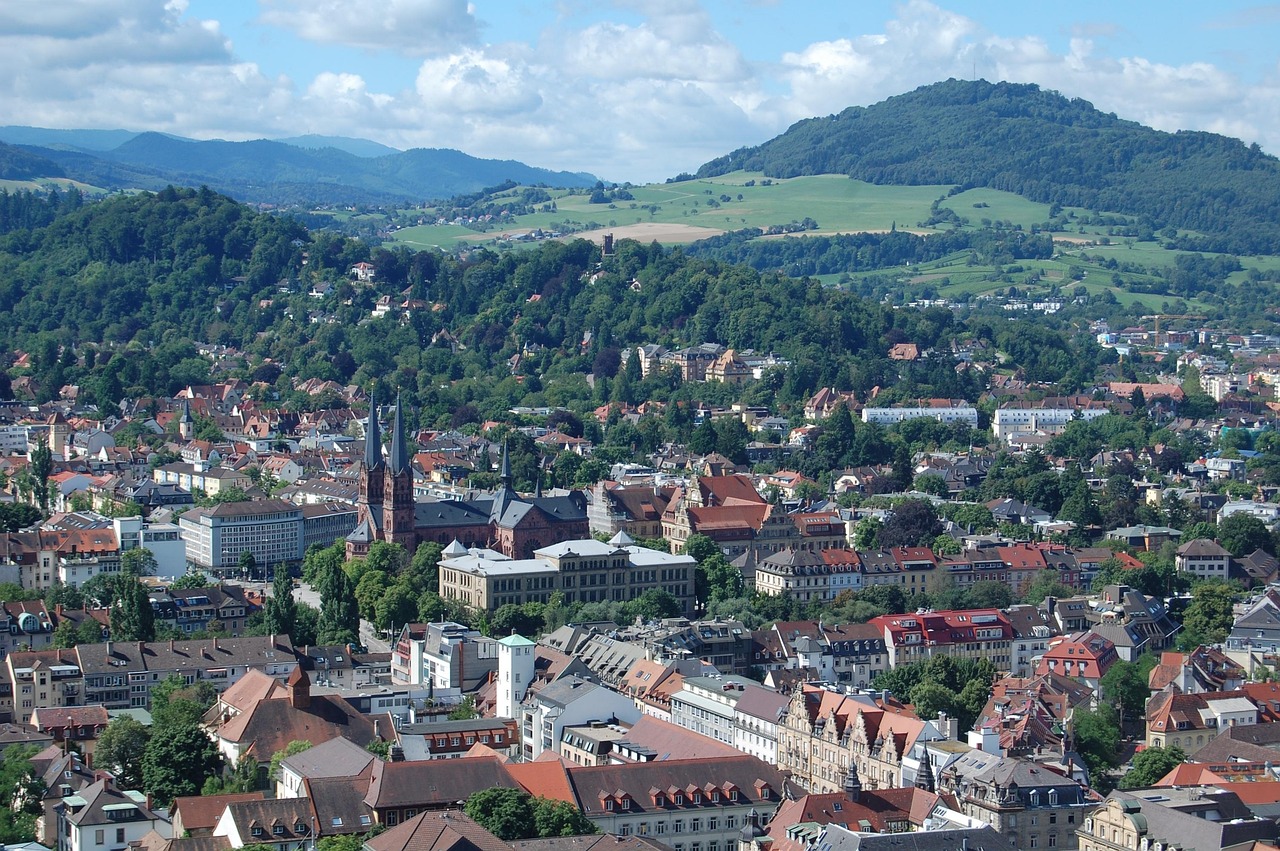
Freiburg im Breisgau is the kind of city that quietly gets under your skin. Tucked into Germany’s far southwest, brushed up against the Black Forest and within an easy hop of France and Switzerland, Freiburg feels at once medieval and progressive, sleepy and effortlessly cool.
The first time I arrived by train, stepping out into the soft light of late afternoon, I remember noticing three things immediately: the smell of roasted coffee drifting from tiny cafés, the musical gurgle of the Bächle (the little water channels that run along the old town streets), and more bicycles than I’d ever seen in my life. Five visits later, I still get that same feeling of “I could live here” every time.
Freiburg is famous for its soaring Gothic cathedral, its sunny climate (locals proudly call it Germany’s warmest city), and its role as a pioneer of green living. But what makes it special to me are the tiny details: students picnicking with cheap Riesling on Schlossberg, the smell of Flammkuchen in the winter market, families letting kids splash barefoot in the Bächle, and the way strangers will actually stop to help you figure out the tram map.
Whether you have 3 days in Freiburg im Breisgau or a 5 day itinerary for Freiburg im Breisgau, this guide will help you weave together the best places to visit, the most satisfying local food, and the hidden gems that most day‑trippers miss.
Table of Contents
- Why Visit Freiburg im Breisgau?
- Quick Overview & How This Guide Works
- Neighborhoods & Areas to Explore
- Top 20+ Must‑See Attractions in Freiburg im Breisgau
- Perfect 3–5 Day Itineraries in Freiburg im Breisgau
- Local Food & Drink: What and Where to Eat
- Nightlife, Entertainment & Cultural Experiences
- What’s New: Events & Festivals 2026–2027
- Best Day Trips from Freiburg im Breisgau
- Cultural Etiquette & Local Customs
- Practical Travel Tips for Freiburg im Breisgau
- Summary & Best Time to Visit Freiburg
Quick Overview & How to Use This Travel Guide
This is a deep‑dive travel guide for Freiburg im Breisgau, written as if I’m walking through the city with you. You’ll find:
- Detailed stories and tips for more than 20 must‑see attractions in Freiburg im Breisgau
- Suggested 3 day, 4 day, and 5 day itineraries that blend highlights with hidden gems
- Real‑world advice on where to eat, how to save money, and how to get around
- Local customs and cultural nuances that help you fit right in
Use the table of contents to jump to what you need: maybe you’re designing a 3 day itinerary for Freiburg im Breisgau, or just hunting for the best local food. Or read it straight through and let it inspire a longer stay – honestly, 5 days in Freiburg im Breisgau never feels too long.
Neighborhoods & Areas to Explore in Freiburg
Altstadt (Old Town)
The Altstadt is the heart of Freiburg: cobbled lanes, pastel‑colored townhouses, elaborate guild signs swinging above doorways, and the ever‑present silhouette of the Münster. This is where you’ll spend much of your time if it’s your first visit, and it’s also where I like to stay when I want to roll out of bed straight into the morning market.
You’ll wander past the Bächle (the little water channels – more on those later), boutique shops, traditional beer halls, and contemporary cafés. It’s touristy, yes, but in a gentle, easy‑going way. Early mornings and late evenings belong to the locals.
Vauban
Vauban is Freiburg’s eco‑poster child – a former French military base turned into one of Europe’s most famous sustainable neighborhoods. Streets are mostly car‑free, houses are built to ultra‑low‑energy standards, and solar panels seem to be on every available surface.
On my second trip to Freiburg, I rented a bike just to spend an afternoon wandering Vauban’s quiet residential streets. Kids rode scooters down the middle of the road, cafés spilled onto sidewalks, and community gardens buzzed with activity. It’s not a “sight” in the traditional sense, but it’s one of the best cultural experiences in Freiburg if you’re interested in urban living and sustainability.
Stühlinger
Just across the tracks from the central station, Stühlinger is young, diverse, and a little scruffy in the best way. Students cluster in inexpensive cafés, there are Turkish bakeries next to organic supermarkets, and the imposing Herz‑Jesu‑Kirche anchors the neighborhood.
I like Stühlinger for more affordable eats, relaxed bars, and a feeling of everyday Freiburg life. If the Altstadt sometimes feels like a stage set, Stühlinger is where you see the city behind the scenes.
Wiehre
Southern Freiburg’s Wiehre district is leafy, elegant, and quietly affluent. Think Jugendstil (Art Nouveau) villas, tall trees, and the kind of laid‑back charm that makes you want to walk slowly and peek into courtyards.
On a spring visit, I joined friends for the Wiehre Bauernmarkt (farmers’ market) and then strolled through side streets where wisteria spilled over wrought‑iron balconies. This is an excellent area if you want a peaceful guesthouse away from the bustle but still within walking distance of the Altstadt.
Herdern
North of the center, Herdern climbs gently up toward forested slopes. It’s residential, charming, and rewards walkers with beautiful views back over the city. I often come here on longer stays when I want to feel like I’m part of a neighborhood, not just passing through.
Güterbahnhof / Creative Quarter
The old freight yard area has been slowly reborn as a creative and cultural zone: think co‑working spaces, small galleries, street art, and the kind of experimental gastronomy that always seems to spring up in old industrial districts. It’s still evolving – each time I visit, another warehouse has become something interesting.
Top 20+ Must‑See Attractions in Freiburg im Breisgau
Below you’ll find detailed, story‑driven mini‑guides to more than 20 of the best places to visit in Freiburg im Breisgau. I’ve ordered them roughly from the most iconic to the more hidden gems.
1. Freiburg Münster (Cathedral)
If Freiburg has a soul, it’s the Münster. This Gothic cathedral rises from the heart of the old town, its intricate spire piercing the sky. No matter where you wander, you’ll keep catching glimpses of it between rooftops.
The first time I visited, I arrived just before 9 a.m. on a weekday. The square was still quiet, the market stalls half‑set‑up. Inside, the cool air smelled faintly of stone and candle wax. Sunlight filtered through stained glass, pooling in colors across the floor. I sat on a wooden pew and listened to the organist practicing – a private concert in an almost empty cathedral.
History & significance: Construction began in the early 13th century, and remarkably, the Münster survived World War II bombings that destroyed much of the surrounding old town. Its 116‑meter spire is often praised as “the most beautiful tower in Christian architecture.” For centuries, it’s been a symbol of Freiburg’s resilience and faith.
Don’t miss:
- Climbing the tower for panoramic views over the Altstadt, Schlossberg, and (on clear days) out to the Vosges in France.
- The gargoyles and sculpted portals – look closely, some are charmingly grotesque.
- The medieval stained glass windows donated by various guilds, each telling its own story.
Practical tip: Go early (before 10 a.m.) to avoid crowds, especially in summer and around Christmas. The tower climb involves narrow, spiral stairs – fine for reasonably fit visitors, but not ideal if you’re claustrophobic or have mobility issues. I like to climb mid‑morning, then reward myself with a sausage and coffee at the market below.
2. Münsterplatz & Daily Market
Every time I’m in Freiburg, I plan my mornings around one thing: the market at Münsterplatz. It wraps around the cathedral like a colorful necklace, overflowing with flowers, seasonal fruit, local cheese, and the irresistible smell of grilled sausages.
Personal ritual: My go‑to breakfast is a lange Rote – Freiburg’s iconic long red sausage – from one of the busy stands near the north side of the square. Locals have strong opinions about which stand is best; I’ve tried most and can confirm that the line is usually a good indicator. Grab your sausage in a roll, wander to the cathedral steps, and eat while people‑watching. It’s an instant mood‑booster.
What to buy:
- Seasonal fruit – strawberries and cherries in early summer, plums and apples in autumn.
- Regional cheeses and cured meats from the Black Forest.
- Locally made honey and jams – easy gifts if you’re traveling on.
- Handcrafted wooden toys and small souvenirs at the artisan stalls.
Timing: The market runs most mornings (except Sundays), with Saturdays being the busiest and most atmospheric. I prefer weekdays when I want to chat with farmers and stallholders; they’re usually happy to recommend what’s at its best.
3. Schlossberg & Schlossbergturm
For the best view of Freiburg without leaving the city, you climb Schlossberg. This wooded hill rises directly behind the Altstadt, offering forest paths, picnic spots, and a metal viewing tower that rewards a short workout with one of the most photogenic skylines in Germany.
On my third visit, I made it a sunset ritual: picking up a bottle of local wine and some snacks, then hiking up in the late afternoon. By the time I reached Schlossbergturm, the city below was bathed in warm light, the Münster glowing like copper. Groups of friends lounged on the grass, couples shared quiet conversations, and someone always seemed to have brought a guitar.
How to get there: From the Altstadt, it’s a 20–30 minute walk up signed paths. Alternatively, you can take the Schlossberg funicular (Bergbahn) from near the Schwabentor up to a higher starting point, then continue on foot.
Family & romantic factor: Kids love the tower (it’s slightly wobbly in the wind, in a thrilling but safe way), and there are plenty of spots for throwing a ball or laying out a picnic. For couples, sunset at Schlossberg is one of the most romantic things to do in Freiburg im Breisgau – bring a blanket and something to drink.
4. Schwabentor & Martinstor (City Gates)
Two medieval gates, Schwabentor and Martinstor, guard the old town like storybook sentinels. They’re among my favorite landmarks to photograph, especially in the soft light just after rain when the cobblestones glisten.
Schwabentor: On the eastern edge of the Altstadt, this gate feels more atmospheric and slightly quieter. Its painted façade and timbered upper section look straight out of a fairy tale. Walk through it to reach the starting point for Schlossberg hikes.
Martinstor: On the western side, this gate is busier, standing astride tram tracks and surrounded by shops. Look up to appreciate its tower and clock, then look down to dodge bicycles and trams. It’s a daily reminder of how Freiburg layers the medieval and modern together.
Tip for photographers: Come early or late for fewer people in your shots. I love framing the Münster or a Bächle through the archways for a classic Freiburg image.
5. The Bächle (Little Water Channels)
The Bächle are one of Freiburg’s most charming quirks: shallow water channels, fed by the Dreisam River, running alongside many old town streets. They were once practical – for fire‑fighting and livestock – but today they’re mostly aesthetic and playful.
On hot summer days, locals and visitors alike dangle their feet in the water, kids float little wooden boats (you can buy them at stands around the Altstadt), and dogs happily splash through. I’ve cooled blistered feet in the Bächle more than once after a long day of walking.
Local legend: If you accidentally step into a Bächle, you’re destined to marry someone from Freiburg. I’ve done it at least twice; we’ll see how that plays out.
Practical tip: Watch your step while walking and looking up at the architecture – a surprising number of people end up with wet shoes their first day.
6. Augustinermuseum
Even if you’re not usually a museum person, the Augustinermuseum is worth a couple of hours. Housed in a former monastery, it’s a light‑filled space showcasing art and cultural history from the Upper Rhine region.
The star of the show, in my opinion, is the collection of original stone figures and stained glass from the Münster. Seeing them up close, at eye level, after admiring them from afar on the cathedral, creates a lovely sense of connection. On one rainy afternoon visit, I lingered almost an hour in front of a single set of medieval glass panels, tracing the tiny details I’d never noticed from the pews.
Good for families: The museum often has interactive stations and kid‑friendly explanations. It’s a great bad‑weather option.
7. Seepark & Flückigersee
West of the city center, Seepark and its lake (Flückigersee) offer a taste of vacation without leaving town: water, lawns, beer gardens, and pedal boats. On warm days, it feels like half of Freiburg is here.
I like to come in late afternoon, rent a pedal boat with friends, then stay for a lakeside drink as the sun goes down. On one June evening, a spontaneous drum circle started up near the shore, kids chased each other through sprinklers, and the whole place hummed with an easy summer energy.
How to get there: Take tram line 1 toward Landwasser and get off at “Betzenhauser Torplatz” or “Paduaallee,” then walk a few minutes.
Tip: Bring a picnic if you’re on a budget. There are supermarkets not far from the tram stops.
8. University Quarter & Kollegiengebäude
Freiburg is very much a university town, and wandering the campus area gives you a feel for its youthful energy. The main university buildings, including the classicist Kollegiengebäude, sit just south of the Altstadt.
On my last visit, I spent a quiet hour in the university library café, watching students huddle over laptops and textbooks. Outside, bikes were jammed into every rack. It’s not a “sight” in the traditional sense, but it’s a slice of everyday life that I always appreciate.
Tip: Many university buildings are open to the public during the day – just be respectful of classes in session.
9. Vauban Eco‑District
As mentioned earlier, Vauban is one of Europe’s most famous sustainable neighborhoods. Walking through it feels a bit like visiting the future – in a gentle, human‑scale way.
On a sunny spring morning, I joined a guided walking tour led by a local urban planner. We visited “Solar Settlement” houses that produce more energy than they consume, community gardens, and car‑free streets where kids played in the middle of the road. It was fascinating to hear how residents negotiated everything from parking policy to communal spaces.
Good for: Travelers interested in sustainability, urban planning, and alternative ways of living. It’s also surprisingly nice for a relaxed bike ride.
10. University Botanical Garden
The Botanischer Garten is one of my personal favorite hidden gems in Freiburg. Slightly off the typical tourist path in Herdern, this university‑run botanical garden is free to enter and perfect for a quiet hour among palms, cacti, and lily ponds.
On my second visit, I sat on a bench under a huge tree, notebook in hand, listening to the rustle of leaves and distant hum of the city. A couple of students revised flashcards nearby; a retiree carefully photographed orchids in the greenhouse. It felt like a shared secret.
Tip: Check opening hours for the greenhouses; the outdoor areas are generally more accessible.
11. Historisches Kaufhaus & Alte Gerichtslaube
On Münsterplatz, the deep red facade of the Historisches Kaufhaus (Historic Merchants’ Hall) stands out like a jewel box. Built in the 16th century, it’s adorned with coats of arms and statues of Habsburg emperors – a reminder of Freiburg’s once‑important role in regional trade.
Nearby, the Alte Gerichtslaube (Old Court House) is equally atmospheric. While you won’t spend long inside these buildings unless you’re attending an event, they’re worth admiring from the square and including on any walking tour.
12. Rathausplatz & Old/New Town Hall
Rathausplatz, a short stroll from Münsterplatz, is ringed by the old and new town halls, both pretty in their own ways. In winter, this square turns into part of the Christmas market; in summer, outdoor seating spills from cafés and restaurants.
One summer evening in 2025, I found myself at a free open‑air concert here, part of a local festival. Families, students, and older couples clustered together, some dancing, others just sipping beer and enjoying the music. It struck me again how Freiburg manages to feel both small and cosmopolitan.
13. Colombischlössle & Archaeological Museum
Just northwest of the old town, Colombipark is a pocket of green anchored by Colombischlössle, a small neo‑Gothic villa that houses the city’s archaeological museum. Even if you don’t go inside, the park is lovely for a quick stroll or picnic.
On a warm afternoon, I watched toddlers chase pigeons while office workers ate lunch on benches. The villa itself looks like something out of a 19th‑century romantic novel.
14. Stadttheater Freiburg
For cultural experiences in Freiburg im Breisgau, the Stadttheater is a central player. This grand theater hosts opera, drama, dance, and concerts throughout the year.
I’ve seen both a modern dance performance and a classic play here; in both cases, the audience felt very local, a mix of students and older Freiburg residents who clearly treat theater as part of their weekly lives. Even if you don’t catch a show, the building and surrounding square are worth a look.
15. Museum für Neue Kunst (Museum of Contemporary Art)
This small but engaging museum focuses on modern and contemporary art, with a strong emphasis on artists connected to the Upper Rhine region. Exhibitions change regularly, and I’ve been pleasantly surprised more than once by the thoughtfulness of the curation.
If you’re crafting a 4 day itinerary for Freiburg im Breisgau, this makes an excellent addition for a slower, more reflective afternoon.
16. Dreisam River Promenade
The Dreisam River runs just south of the city center, and its banks are one of Freiburg’s favorite outdoor playgrounds. Paved paths run along both sides, used by cyclists, joggers, dog‑walkers, and families out for a stroll.
On a hot July day, I joined locals sitting on the stones with their feet in the water, reading books and sipping from reusable bottles. A group of students had a portable grill going; a few brave souls waded in deeper. It felt more like a beach than a city river.
Tip: Rent a bike and follow the Dreisam eastward for an easy half‑day ride into the lower Black Forest foothills.
17. Schauinsland Mountain & Cable Car
Technically just outside Freiburg, Schauinsland is the city’s house mountain, and it’s one of my non‑negotiable recommendations, especially if you’re planning a 5 day itinerary for Freiburg im Breisgau. At 1,284 meters, it offers panoramic views over the Rhine valley, the Black Forest, and on clear days, even to the Alps.
The cable car (Schauinslandbahn) is the longest loop cable car in Germany and makes the ascent an experience in itself. On my last trip up, low clouds drifted beneath the cabin as we rose, then suddenly we broke through into sunshine above a sea of mist. It felt like entering another world.
What to do:
- Hike one of the signposted trails from the top station.
- Visit the mining museum (Schauinslandbergwerk) if you’re interested in regional history.
- Enjoy a hearty meal at a mountain hut – think schnitzel, Käsespätzle, and apple strudel.
Family friendly: The cable car ride is a hit with kids, and there are easy, stroller‑friendly paths near the top.
18. Stadtgarten & Kanonenplatz
North of the Altstadt, the Stadtgarten is a manicured city park with lawns, flower beds, and a small pond. It’s where you go to read a book in the sun or listen to the occasional open‑air concert.
From here, short paths lead up to Kanonenplatz, one of Freiburg’s classic viewpoints. I like this spot in the blue hour after sunset, when the city lights flicker on and the Münster glows softly against the dark hills.
19. Augustinerplatz
Augustinerplatz is where Freiburg gathers on warm evenings. This sloping square, paved with cobblestones and lined with bars and cafés, becomes a giant open‑air living room as soon as the weather cooperates.
On a balmy night, you’ll find students with cheap bottles of wine, families with kids climbing on the steps, street musicians, and an overall vibe that says, “No one is in a hurry.” I’ve lost count of how many hours I’ve spent here, nursing a beer and chatting with friends or strangers.
Etiquette note: Glass bottles are common, but be mindful of noise levels after 10 p.m., and always pack out your trash. Freiburg takes its cleanliness seriously.
20. Markthalle Freiburg (Indoor Food Hall)
If you’re a food lover (and especially if you’re traveling on a budget), the Markthalle is a lifesaver. This indoor food hall, just off the main pedestrian zone, hosts stalls selling everything from Italian pasta and Indian curries to local specialties and fresh salads.
One rainy afternoon, I ducked in just to escape a downpour and ended up staying two hours, starting with a plate of homemade gnocchi and finishing with a slice of Black Forest cake. The communal seating makes it easy to strike up conversations with fellow travelers or locals on lunch break.
Tip: It’s especially good if you’re traveling with a group that can’t decide on a single cuisine – everyone can grab what they like and reunite at a shared table.
21. Konzerthaus Freiburg
Next to the main train station, the Konzerthaus is a sleek, modern venue that hosts classical concerts, conferences, and events. If you’re into orchestral music or chamber concerts, check the schedule – I’ve caught a couple of excellent performances here that cost far less than similar events in larger cities.
22. Creative & Street Art Spaces (Güterbahnhof Area)
For a different side of Freiburg, head to the former freight yard / Güterbahnhof district, where old industrial buildings have become canvases for murals and homes for studios and alternative venues. It’s still a bit under the radar, but each time I wander through I discover a new piece of art or a pop‑up event.
Check local listings or ask at tourist information for current exhibitions and performances; the scene here evolves quickly.
Perfect 3–5 Day Itineraries for Freiburg im Breisgau
Whether you have 3 days in Freiburg im Breisgau or you’re planning a slower 5 days in Freiburg im Breisgau, you can experience a satisfying mix of classic sights, local life, and Black Forest nature. Below are flexible itineraries based on several of my own trips.
3 Day Itinerary for Freiburg im Breisgau
This 3 day itinerary for Freiburg im Breisgau is ideal for first‑timers. It focuses on the historic center, iconic viewpoints, and a taste of the surrounding nature.
Day 1: Freiburg’s Historic Heart & Skyline Views
I usually tell friends to spend their first day getting lost – but in Freiburg, it’s a very intentional kind of getting lost. Here’s how I’d structure it.
Morning: Münsterplatz, Market & Cathedral
- Start early at Münsterplatz. Grab a lange Rote sausage or a fresh pastry from the market and a coffee from a nearby café.
- Explore the stalls: buy fruit for snacks, admire the flower stands, maybe pick up a small wooden toy if you’re traveling with kids.
- Head into the Freiburg Münster. Take your time with the stained glass and side chapels, then climb the tower if the weather is good.
The first time I did this sequence, I emerged from the tower slightly breathless (those stairs!) but exhilarated by the view. I spent a few minutes leaning against the railing, tracing my route for the rest of the day from above.
Midday: Old Town Wandering
- Walk toward Rathausplatz, admiring the Historisches Kaufhaus and old/new town halls.
- Follow the Bächle through side streets like Konviktstraße – one of Freiburg’s prettiest lanes, with ivy‑covered façades and hanging signs.
- Pause for lunch at a traditional Badisch restaurant or a casual spot in the Altstadt.
I like to choose somewhere with outdoor seating if the weather allows. Order something regional like Badischer Wurstsalat or Flammkuchen, and just watch the city move.
Afternoon: Schwabentor & Schlossberg
- Walk to Schwabentor and through the gate.
- Begin your Schlossberg ascent. If you’re short on time or not up for a full climb, take the funicular partway.
- Explore the paths, find Schlossbergturm, and climb for city views.
On one autumn visit, I timed this so that I was at the tower about an hour before sunset. The trees were turning copper and gold, and the city below looked almost painted. I shared the view with a handful of locals quietly sipping from thermoses.
Evening: Dinner & Augustinerplatz
- Head back down into the Altstadt for dinner – maybe try one of the wine taverns.
- End the night at Augustinerplatz, with a drink from a nearby bar or a takeaway beer from a kiosk.
If you’re jet‑lagged, this is a nice, low‑key way to soak up atmosphere without needing to do anything more than sit.
Day 2: Nature & Neighborhoods
Day two mixes the edge of the Black Forest with Freiburg’s greener, more residential side.
Morning & Early Afternoon: Schauinsland Excursion
- After breakfast, take tram 2 or a regional bus toward the Schauinslandbahn valley station (check current connections in 2026 via VAG app or DB Navigator).
- Ride the cable car up, enjoying the changing views. It takes about 20 minutes.
- At the top, choose a hiking loop appropriate for your fitness. Even a short walk yields excellent vistas.
- Have lunch at one of the mountain inns – hearty food tastes better with a view.
On a chilly spring day, I ducked into a hut where fog pressed against the windows. Inside, the air was warm from a wood stove, and my plate of Käsespätzle (cheesy noodles) arrived steaming. It felt like the quintessential Black Forest moment.
Late Afternoon: Dreisam Promenade or Botanical Garden
- Back in town, depending on your energy, either:
- Walk or cycle along the Dreisam River, joining locals relaxing by the water; or
- Head to the Botanical Garden in Herdern for a quieter, more contemplative hour.
Evening: Dinner in Stühlinger or Altstadt
Cross to Stühlinger for a more local‑feeling dinner – there are several good, budget‑friendly eateries and bars around Eschholzstraße and the side streets. Alternatively, return to the Altstadt for a more traditional vibe.
Day 3: Culture, Cafés & Vauban
Your third day dives deeper into Freiburg’s cultural side and its eco‑pioneer identity.
Morning: Museums & City Culture
- Choose between (or combine):
- Augustinermuseum for art and history; or
- Museum für Neue Kunst for modern and contemporary art.
On one drizzly February trip, I spent almost the entire morning ducking between these two, warming up with coffee breaks in between. It gave me a deeper sense of Freiburg beyond its pretty facades.
Midday: University Quarter & Lunch
- Wander through the university quarter, peeking into courtyards and watching student life.
- Have lunch at Markthalle – it’s especially good if you’re craving something other than German food by now.
Afternoon: Vauban Eco‑District
- Take tram 3 toward Vauban and get off at “Vauban” or “Paula‑Modersohn‑Platz.”
- Spend a couple of hours exploring pedestrian streets, community spaces, and the “Solar Settlement.”
- Consider joining a guided tour (often available in English) if you want context on how Vauban developed.
Evening: Farewell Views & Drinks
For a final evening, return to the Altstadt, perhaps revisit your favorite square, or head up to Kanonenplatz for one last look over the city lights. Toast your trip with a glass of local Pinot (Spätburgunder) at a wine bar.
4 Day Itinerary for Freiburg im Breisgau
With 4 days in Freiburg im Breisgau, you can follow the 3‑day plan above and add one more day of deeper exploration or a nearby excursion.
Day 4 Option A: Relaxed Freiburg & Seepark
If you’d like a slower, more local day:
- Start with a leisurely breakfast in Wiehre or Herdern.
- Visit the Colombischlössle and its park.
- Head to Seepark in the afternoon for pedal boats, lakeside lounging, or a casual beer garden dinner.
On a hot August afternoon, I lay on the grass at Seepark watching clouds drift over the water, thinking how different this felt from the bustle of larger European cities. It was vacation within a vacation.
Day 4 Option B: Short Day Trip (See Day Trips Section)
Use your fourth day for a half‑day or full‑day trip to somewhere like Kirchzarten & Höllental (easy Black Forest access) or Colmar across the border in France. See the Day Trips section for details.
5 Day Itinerary for Freiburg im Breisgau
With 5 days in Freiburg im Breisgau, follow the 3‑day base itinerary, add the relaxed fourth day, and then use your fifth for a more ambitious outing.
Day 5: Full‑On Black Forest or Wine Route
Depending on your interests:
- Adventure / Nature: Take a day trip to Titisee or Feldberg for hiking, biking, or in winter, skiing.
- Wine & Villages: Spend the day in Kaiserstuhl, the volcanic wine region northwest of Freiburg, tasting local wines and wandering through vineyards.
On one late‑September trip, I chose Kaiserstuhl. After a short train ride to a small village, I spent the day walking vineyard paths, chatting with winemakers, and sampling crisp whites and elegant Pinot Noirs. I returned to Freiburg at sunset, pleasantly tired and with a bottle or two in my bag.
Local Food & Drink in Freiburg im Breisgau
The local food in Freiburg im Breisgau is a delicious blend of Baden traditions, Black Forest comfort, and cross‑border influences from Alsace and Switzerland. Eating well here doesn’t have to be expensive – many of my favorite meals have been in simple taverns and markets.
What to Eat
- Lange Rote: The iconic long, red grilled sausage of Freiburg, usually served in a roll with mustard. Best from Münsterplatz stalls.
- Flammkuchen: A thin, crispy flatbread topped with crème fraîche, onions, and bacon (plus many variations). A must on cool evenings.
- Badischer Wurstsalat: Sliced sausage salad, usually with onions and pickles, eaten with bread.
- Käsespätzle: Soft egg noodles baked with cheese and onions – the ultimate comfort food.
- Schwarzwälder Kirschtorte (Black Forest Cake): Chocolate, cherries, cream, and a hint of Kirsch cherry brandy.
- Seasonal spargel (asparagus): In spring, white asparagus dominates menus, served with hollandaise and potatoes.
What to Drink
- Local Wines: The region is famous for Burgundy grapes – try Spätburgunder (Pinot Noir), Grauburgunder (Pinot Gris), and Weißburgunder (Pinot Blanc).
- Beer: Regional breweries serve up classic lagers and wheat beers. Look for local taps in traditional pubs.
- Apfelschorle: Sparkling apple juice – my go‑to non‑alcoholic drink after long walks.
Where to Eat: Personal Favorites
I won’t name every spot (places can change between now and 2026), but here are types of venues and areas I return to:
- Münsterplatz Stands: For quick, satisfying lunches – sausages, pretzels, and seasonal snacks.
- Traditional Badisch Pubs in the Altstadt: Dark wood interiors, hearty plates, and local wine by the glass.
- Markthalle: Perfect if you want variety on a budget; also good for solo travelers who don’t want a formal sit‑down meal.
- Cafés in Wiehre & Herdern: For slow breakfasts, good coffee, and cake in residential neighborhoods.
Saving Money on Food
Freiburg can be kind to your wallet if you eat like a local:
- Use supermarkets and bakeries for breakfast and picnic supplies.
- Take advantage of lunch menus; many restaurants offer cheaper midday dishes.
- Share large portions – dishes like Käsespätzle can be very filling.
- Drink tap water – it’s safe and good. In restaurants, though, bottled water is standard; if you want tap, ask for “Leitungswasser,” but be prepared that not all places are enthusiastic about it.
Nightlife, Entertainment & Cultural Experiences
Freiburg’s nightlife is more cozy than wild: think wine bars, student pubs, and open squares rather than mega‑clubs. That said, there’s always something happening if you know where to look.
Evening & Nightlife Options
- Augustinerplatz: The informal hub for warm evenings, especially popular with students and twenty‑somethings.
- Altstadt Wine Bars: Great for couples – dim lighting, local wines, small plates.
- Student Pubs in Stühlinger: More casual, with reasonable prices and mixed crowds.
- Clubs & Live Music: Freiburg has a handful of small clubs and music venues – check local listings (and posters on lampposts) for current events.
Cultural Experiences
- Stadttheater & Konzerthaus: Check schedules for opera, theater, and classical concerts.
- Seasonal Festivals: From wine festivals to the Christmas market (see Events section), these are some of the best cultural experiences in Freiburg im Breisgau.
- University Events: Lectures, exhibitions, and student performances often open to the public.
What’s New: Events & Festivals in Freiburg 2026–2027
As of 2026, Freiburg’s calendar remains packed with recurring highlights and a few evolving events. Always double‑check exact dates closer to your visit, but here’s what to expect:
- Freiburger Weinfest (Freiburg Wine Festival): Usually held in late June or July on Münsterplatz, with local wineries offering tastings and food stalls serving regional dishes. In 2026 and 2027, expect an increased focus on organic and sustainable wine producers.
- Zelt-Musik-Festival (ZMF): A tent music festival in early summer with a mix of international and local artists, from jazz and world music to pop and classical. It’s family‑friendly during the day, with free outdoor stages.
- Freiburg Christmas Market: Running from late November to just before Christmas, stretching across Rathausplatz, Franziskanerstraße, and parts of Münsterplatz. 2026 plans include expanded craft stalls and more regional food stands.
- Marathon & Sports Events: Freiburg hosts a spring marathon and various cycling events that bring extra life to the streets – and occasional traffic detours.
- Environmental & Sustainability Conferences: As a green city, Freiburg regularly hosts events focused on climate, energy, and urban planning; in 2026–2027, watch for expanded international participation.
Best Day Trips from Freiburg im Breisgau
One of Freiburg’s biggest advantages is its location. In under an hour or two, you can be in deep Black Forest, French wine country, or even Switzerland.
1. Black Forest: Titisee & Feldberg
Titisee: A picturesque lake resort about an hour by train. Rent a boat, walk the lakeshore, and sample Black Forest cake in one of the cafés.
Feldberg: The highest mountain in the Black Forest. Great for hiking in summer and skiing in winter.
How to get there: Regional trains from Freiburg Hauptbahnhof; check Baden‑Württemberg ticket options for day travel deals.
2. Kaiserstuhl Wine Region
A low, volcanic hill region northwest of Freiburg, covered in vineyards and dotted with small wine villages. Perfect for slow walks, tastings, and long lunches.
How to get there: Regional trains and buses connect Freiburg with towns like Endingen, Ihringen, and Vogtsburg.
3. Colmar (France)
Colmar’s canals, half‑timbered houses, and Alsatian cuisine make it a popular cross‑border excursion.
How to get there: Trains via Breisach or direct regional trains (check current timetables for 2026). Bring your passport/ID, as you’re crossing into France.
4. Basel (Switzerland)
In about an hour, you can be in Basel, exploring world‑class museums and walking along the Rhine.
How to get there: Direct regional and IC/ICE trains; note that Switzerland uses a different currency (CHF), though cards are widely accepted.
Cultural Etiquette & Local Customs in Freiburg im Breisgau
Understanding local customs in Freiburg im Breisgau will make your stay smoother and more enjoyable.
Greetings & Politeness
- Use Guten Tag (good day) or Hallo to greet shop staff and restaurant servers.
- Saying Bitte (please) and Danke (thank you) goes a long way.
- In more formal situations, use last names with Herr or Frau unless invited to switch to first names.
Dining Etiquette
- Wait to be seated in many restaurants; in casual places, it’s sometimes fine to seat yourself, but watch what others do.
- It’s polite to say Guten Appetit before eating.
- Tipping: round up or add about 5–10% in restaurants and cafés. Tell the server the total you’d like to pay, including tip, when handing over cash or card.
Quiet Hours & Public Behavior
- Residential areas observe quiet hours, especially late at night. Keep voices down in courtyards and stairwells.
- Recycling is taken seriously. Use the right bins when available.
- At squares like Augustinerplatz, it’s fine to drink in public, but be respectful about noise and always clean up.
Cycling & Walking
- Don’t walk in bike lanes – Freiburgers love their bikes and ride fast.
- On shared paths, keep right and listen for bells.
- At crossings, wait for the green man; jaywalking is frowned upon, especially around kids.
Practical Travel Tips for Freiburg im Breisgau
This section gathers key travel tips for Freiburg im Breisgau to help you plan smoothly and save money.
Getting Around
Freiburg is compact and wonderfully walkable. For longer distances, the tram and bus network is excellent.
- Public Transport: Operated by VAG, with integrated tickets for trams and buses. Day tickets are good value if you plan multiple trips.
- Bikes: Renting a bike is a fun, efficient way to move around, especially to Vauban, Seepark, or along the Dreisam.
- Cars: Not recommended in the city center; parking is limited and streets are often restricted. Use a car only if you’re making lots of rural excursions.
Saving Money
- Get regional day passes (like the Baden‑Württemberg ticket) for day trips by train.
- Use lunch menus and supermarkets to keep food costs down.
- Consider guest cards: many accommodations in the region provide cards that include free public transport and discounts.
SIM Cards & Connectivity
For 2026, expect widespread 4G/5G coverage in and around Freiburg.
- Buy a prepaid SIM from major providers (Telekom, Vodafone, O2) at electronics stores or phone shops.
- EU travelers can usually roam on their home plans without extra charges.
- Free Wi‑Fi is common in cafés, some public squares, and many hotels/guesthouses.
Visa Requirements & Entry
Germany is part of the Schengen Area.
- EU/EEA/Swiss citizens can enter with a valid ID card or passport.
- Many other nationalities (including US, Canada, UK, Australia, New Zealand, Japan, etc.) can visit visa‑free for short stays; check current Schengen rules for 2026, including ETIAS requirements when implemented.
- Always verify entry rules with official sources before travel.
Driving & Foreign Licenses
- Most visitors can drive in Germany with their home license for short stays; an International Driving Permit (IDP) is recommended (and sometimes required by rental agencies) if your license is not in Latin script or you’re from outside the EU.
- Observe speed limits and environmental zones; Freiburg’s center is generally not car‑friendly.
Best Seasons & Weather
Freiburg is visitable year‑round, but each season suits different activities:
- Spring (March–May): Mild temperatures, blooming parks, perfect for hiking lower trails and enjoying café terraces.
- Summer (June–August): Warm to hot; ideal for river swims, Seepark, and Schlossberg picnics. Also festival season – but busier.
- Autumn (September–November): My favorite: vineyard colors, wine harvest events, crisp hiking days, and fewer crowds.
- Winter (December–February): Christmas markets, potential snow in the Black Forest, cozy evenings with hearty food. The city itself is often cool and damp rather than deeply snowy.
Summary & Final Recommendations
Freiburg im Breisgau is not a city that overwhelms you; it wins you over slowly, with sunlight on red rooftops, the sound of water in the Bächle, and the easy rhythm of people who know how to balance work, study, and time outdoors.
If you’re planning a quick trip, a 3 day itinerary for Freiburg im Breisgau gives you the essentials: Münsterplatz, Schlossberg, the old town, and at least one Black Forest foray. With 4 days in Freiburg im Breisgau, you can add Vauban, museums, and more relaxed neighborhood wanders. And with 5 days in Freiburg im Breisgau, you can truly settle in – taking day trips, tasting regional wines, and finding your own favorite bench, café, and sunset spot.
For most travelers, the best times to visit are spring and autumn: comfortable temperatures, lighter crowds, and landscapes at their prettiest. Summer is vibrant and festival‑filled, ideal if you love warm evenings outside. Winter brings Christmas markets and cozy taverns, plus easy trips to snowy Black Forest slopes.
However long you stay, let Freiburg be more than a checklist of things to do in Freiburg im Breisgau. Slow down. Walk instead of rushing. Sit in the squares. Talk to people. That’s where the city truly reveals itself – and why, like me, you might find yourself coming back again and again.