Why Visit Jasmund National Park in 2026
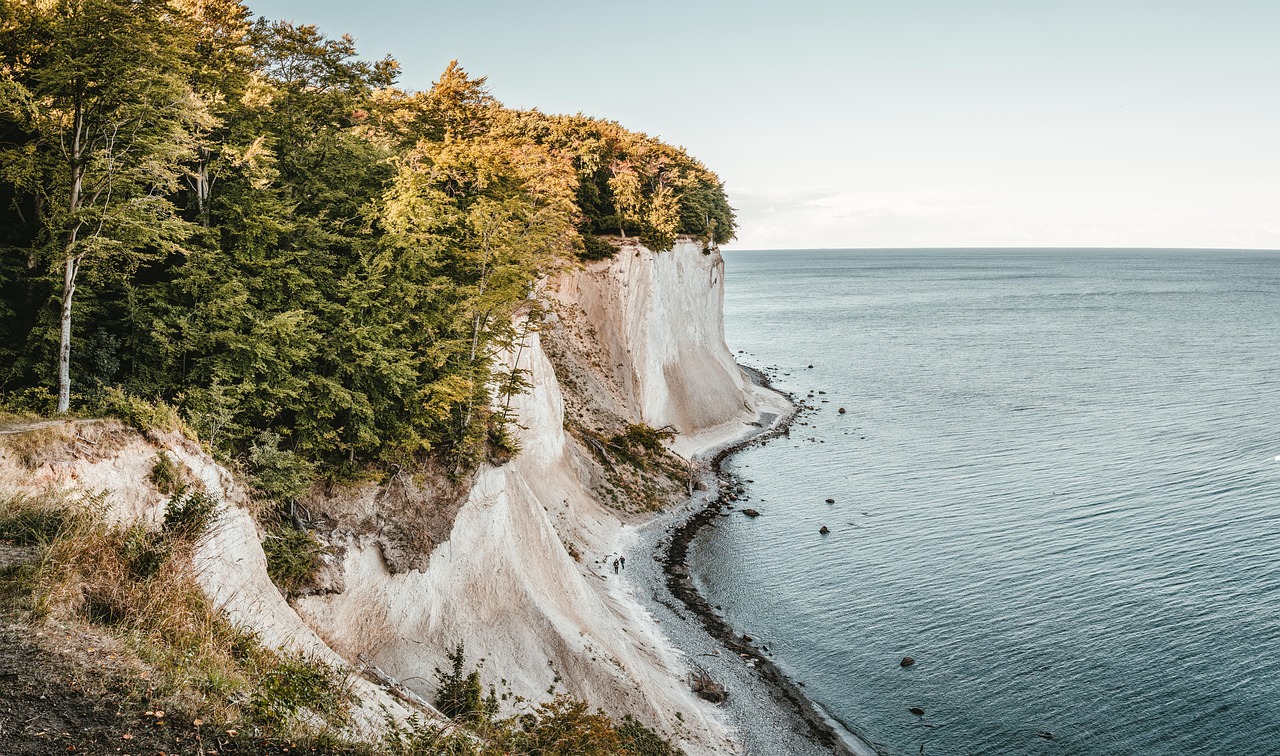
Jasmund National Park on the island of Rügen is Germany’s smallest national park – but it might be one of the most dramatic. Its main claim to fame is the iconic white chalk cliffs dropping straight into the Baltic Sea, crowned by ancient beech forests that are part of a UNESCO World Heritage Site. But Jasmund is much more than one postcard view.
- World-famous chalk cliffs: The Kreideküste (chalk coast) is unlike anything else in Germany. The contrast of white cliffs, emerald forest, and blue-green Baltic is surreal in good light.
- Ancient beech forests: The UNESCO-listed beech woods of Jasmund feel almost primeval, especially in mist or autumn color.
- Easy to explore, hard to exhaust: Compact enough for a 3 day itinerary in Jasmund National Park, but intricate enough that I still discover new corners on my 5th day in the park.
- Gateway to Rügen’s culture: Fishermen’s harbours, thatched villages, seaside resorts, and a distinctly Baltic mood – it’s as much about culture as scenery.
- Family friendly yet genuinely wild: Boardwalks and visitor centers coexist with rough, pebbly beaches where fallen chalk boulders crumble into your hands.
If you’re weighing up where to spend 3 days in Jasmund National Park or planning a deeper 4–5 day itinerary for Jasmund National Park as part of a wider Rügen trip, this guide will help you decide how long to stay, where to base yourself, and which experiences you really shouldn’t miss.
Table of Contents
- 1. Overview of Jasmund National Park & Gateway Towns
- 2. Key Zones, Scenic Areas & Trail Systems
- 3. The 15 Essential Trails, Viewpoints & Zones (Deep-Dive Stories)
- 4. Suggested 3, 4 & 5 Day Itineraries (With Personal Daily Stories)
- 5. Where to Eat & Stay In and Around Jasmund
- 6. After-Dark & Quiet Experiences
- 7. What’s New in 2026–2027: Events, Festivals & Changes
- 8. Day Trips & Nearby Attractions Beyond Jasmund
- 9. Cultural Etiquette & Local Customs
- 10. Practical Travel Advice & Park Logistics
- 11. Hidden Tips for Saving Money & Getting Around
- 12. Summary & Best Seasons to Visit
1. Overview of Jasmund National Park & Gateway Towns
Jasmund National Park lies on the Jasmund peninsula, in the northeast of Rügen island, Mecklenburg-Vorpommern, Germany. The park is about 30 km² – a sliver of land carved between the Baltic Sea and low inland hills, crisscrossed with trails and forest lanes.
Gateway Towns
- Sassnitz: The main gateway to Jasmund. A former fishing port now mixing faded GDR charm and fresh seaside energy. I usually stay here – it’s close, authentic, and has good food.
- Binz: A stylish seaside resort 20–30 minutes’ drive south. Great if you want beach promenades and spa hotels, but a little farther from the park gates.
- Neddesitz & Ranzow: Small clusters of holiday apartments and hotels right on the edge of the park – practical if you want to roll out of bed into the beech forest.
The park itself is essentially car-free beyond some edges. You park in designated lots (mainly Hagen and near Sassnitz) and explore by shuttle, on foot, or by bike. This is a place to slow down and feel the weather and light shift, not to tick off “attractions” from the car window.
2. Key Zones, Scenic Areas & Trail Systems
To plan an effective 3 day or 4 day itinerary for Jasmund National Park, it helps to think in zones:
2.1 Chalk Cliffs Zone (Kreideküste)
The showpiece: sheer white chalk cliffs between Sassnitz and Lohme. This zone holds the Königsstuhl, Victoriasicht, and multiple cliff-edge viewpoints.
2.2 UNESCO Beech Forest Zone
Inland from the cliffs, a rolling plateau of beech forest with glacial hollows, kettle lakes, and quiet trails. Fantastic in fog and autumn.
2.3 Coastal Forest & Lower Shore
Narrow, sometimes wild beaches at the foot of the cliffs. Accessed by steep staircases or gullies. Raw, moody, and less crowded.
2.4 Stubnitz Plateau
The heart of Jasmund, often referred to as “Stubnitz” – a plateau laced with forest roads, viewpoints, and smaller clearings. Great for longer, looping hikes and cycling.
2.5 Sassnitz Clifftop & Seafront
Just outside the park boundary but emotionally part of the experience: the long harbor, chalk quarry views, and the start of the coastal trail.
3. The 15 Essential Trails, Viewpoints & Zones – Deep-Dive Stories
Below are the core experiences that, together, make up the best places to visit in Jasmund National Park. I’ve structured each as a mini-article, with history, significance, and my own repeated-visit impressions.
3.1 Königsstuhl (King’s Chair) – The Icon You’ve Already Seen on Postcards
The Königsstuhl is the 118-meter-high chalk promontory that defines Jasmund’s silhouette. It’s the place everyone comes to first, and honestly, it deserves the hype – if you manage expectations.
Historically, the name “King’s Chair” comes from a legend that whoever could reach the cliff top in a single leap would be king (not recommended). In more recent times, it’s been a symbol of German Romanticism; painters like Caspar David Friedrich were obsessed with these cliffs.
I usually approach Königsstuhl from the Hagen car park, taking the shuttle bus (about 10 minutes) or walking 3–4 km through beech forest. In 2026, the new Nationalpark-Zentrum Königsstuhl continues to be the main visitor hub, with interpretive exhibits, a café, and controlled access to the main viewing platform to protect the cliffs.
My best visit was a chilly April morning. I arrived on the first shuttle, with frost still on the leaf litter. The cliffs glowed faintly pink against a calm, steel-blue sea. For 20 minutes, there were maybe five of us on the platform. By 10:30, the tour buses had arrived, and the mood shifted completely.
- Best for: First-time visitors, iconic photos, families, interpretive exhibits.
- Time needed: 2–3 hours with the visitor center, more if you hike in instead of using the shuttle.
- Tip: Pre-book the time-slot tickets in peak season (July–August, holiday weekends) – they do enforce capacity to keep the platform safe and the experience bearable.
- Food: The café at the center is decent but pricey. I often bring a picnic and save my budget for a proper meal back in Sassnitz.
3.2 Victoriasicht – The Cliff View I Secretly Prefer
A short forest walk north of Königsstuhl lies Victoriasicht, named for Crown Princess Victoria of Prussia. It offers one of the most photogenic angles on the chalk coast – especially for sunrise or late-afternoon side light.
The viewpoint juts subtly out from the forest, with a sturdy railing but enough openness that you can see both the cliff line and the endless Baltic. On a clear day you’ll see the long white arcs of chalk receding southwards; on foggy days, the cliffs loom like ghosts.
I’ve often done a “Königsstuhl + Victoriasicht” combo: start at Hagen, bus or hike to Königsstuhl, then walk along the clifftop path to Victoriasicht (about 15 minutes). On my last autumn trip, I lingered here far longer than planned – a sea eagle was circling between the cliffs and the water, and a group of kids next to me fell completely silent watching it. That silence is rare on a popular trail.
- Best for: Photographers, romantic couples, anyone who wants a grand view with less crowd crush than Königsstuhl.
- Tip: The railings are safe, but the ground behind can be slippery after rain. Stay well back from any unofficial cliff edges; the chalk undercuts and collapses unpredictably.
3.3 Sassnitz–Kreideküste Coastal Trail – The Classic Edge-of-the-World Walk
If you only have 3 days in Jasmund National Park and can handle a moderate hike, make space for the coastal trail between Sassnitz and the Königsstuhl area. This is the route that makes you feel the park’s full drama.
The trail undulates along the top of the cliffs, usually within or just at the edge of beech forest. Sometimes the trees part to reveal sudden, dizzying views down to the sea; sometimes you walk in a green tunnel with glimpses of blue far below.
I often start from Sassnitz’s north end, near the Tierpark (small zoo), and climb up onto the cliff path. The first kilometer is a wake-up call: steep, rooty, and already scenic. From there, it’s roughly 10–12 km to the Königsstuhl zone, depending on side detours to viewpoints.
On a June visit, I walked this entire stretch solo, starting at 6:30 am. The forest smelled of wild garlic and damp earth, and the only sounds were distant waves and blackbirds. Around the 8 km mark, I met a group of older locals who do this hike weekly; we walked together for a while, and they pointed out subtle signs of erosion and places where the path had been rerouted in the last decade. Jasmund’s coast is constantly changing – trees that once stood proudly at the edge now lie as bleached skeletons on the beach below.
- Length: About 10–12 km one-way Sassnitz–Königsstuhl. Plan 3–4 hours one way.
- Difficulty: Moderate – some roots, small ups and downs, can be slippery after rain.
- Logistics: Hike one way and then take the shuttle + bus/taxi back to Sassnitz, or do shorter out-and-back sections from either end.
- Best for: Hikers, landscape lovers, anyone wanting to feel the full scale of Jasmund beyond the viewpoints.
3.4 Unterer Hangweg & Beach Sections – Below the Cliffs
Walking beneath the cliffs is a totally different experience from looking down on them. You swap broad vistas for the texture of chalk dust on your fingers, flint nodules under your boots, and the sound of pebbles rolling in the surf.
The Unterer Hangweg (lower slope path) and beach sections run along parts of the coast, but they are frequently rerouted or closed due to rockfall risk. In 2026, several stretches remain seasonally or permanently restricted – always check current conditions at the visitor center or park website.
My favourite access is via the steep staircase at the Kieler Bach gorge. The descent is dramatic: you go from cathedral-like beech forest down to a narrow beach where the cliffs tower above you like frozen waves. Once, after a night storm, I arrived to find fresh white chalk boulders at the waterline, still sharp-edged and almost too bright to look at. It’s humbling – Jasmund rearranges itself while you sleep.
- Best for: Adventurous walkers, geology geeks, photographers seeking low-angle shots of the cliffs.
- Safety: Do not walk under overhanging sections or sit directly below fresh cracks. Rockfall is not theoretical here – it happens every year.
- Footwear: Sturdy shoes; the pebbles are ankle-twisting and slick when wet.
3.5 Herthasee & Herthaburg – Myth, Mist & Beech Reflections
Tucked inland from the cliffs, Herthasee is a small, dark lake ringed by beech forest, with an ancient Slavic rampart (Herthaburg) nearby. It’s a place where history, myth, and atmosphere collide.
The name Hertha has long associations with Germanic deities; 19th-century Romantics imagined this as a pagan sacrificial site. Archaeologists are more cautious, but there’s no denying the mood: on a drizzly November afternoon, with mist wisping over the water, it feels like a portal to another time.
I like to loop to Herthasee from the Königsstuhl area, using forest tracks that quickly leave the crowds behind. Within 15–20 minutes, you can find yourself almost alone, the noise of the visitor center replaced by rustling leaves and the occasional jay.
- Best for: Quiet seekers, history lovers, families wanting a gentle woodland walk.
- Time: 1–2 hours for a loop including Herthasee and Herthaburg.
- Tip: In summer, bring insect repellent; still water plus warm air equals enthusiastic mosquitoes.
3.6 Piekberg – The Highest “Peak” of Rügen (Don’t Expect the Alps)
Piekberg, at 161 meters above sea level, is technically the highest point on Rügen. In practice, it’s a gentle forested rise on the Stubnitz plateau, with no grand summit cross or panorama. But I still think it’s worth incorporating into a longer forest hike.
On one of my 5 days in Jasmund National Park, I dedicated a whole afternoon to wandering the plateau: from Hagen, up past Piekberg, looping towards Lohme, then back via quiet forest roads. I didn’t see another hiker for nearly two hours – just deer tracks and woodpecker holes.
The “summit” is more a symbolic stop than a viewpoint, but it adds a pleasant sense of achievement to a day of wandering. Kids seem to love the idea of “climbing the highest mountain on the island,” even if it feels more like a hillock.
- Best for: Long-distance walkers, those who appreciate subtle landscapes over big drama.
- Difficulty: Easy–moderate; mainly forest tracks.
3.7 Stubbenkammer – Historic Name for the Clifftop Heart
Historically, the area around Königsstuhl and its neighbouring cliffs is known as Stubbenkammer. Old travelogues from the 19th century are full of awed descriptions of “die Stubbenkammer,” and the name still appears on maps and in local conversation.
When people talk about walking “auf der Stubbenkammer,” they usually mean the network of cliff-edge paths north and south of Königsstuhl: a series of partial viewpoints, forest glades, and subtle clearings that, together, create a sense of spaciousness above the sea.
I like to treat Stubbenkammer as a zone rather than a single destination: start at one of the official viewpoints, then allow yourself to drift along the paths, following whichever side trails catch your eye. On one late-summer evening, I followed a small unmarked spur (still on official trail, not off-cliff) and stumbled on a wooden bench perfectly positioned for sunset – just me, a couple sharing a thermos of tea, and cormorants flying low over the water.
3.8 Lohme Cliffs & Harbor – Quieter Edges
At the northern edge of the park, the small village of Lohme clings to the cliffs, with a tiny harbor accessible by a steep path. It feels like the end of the world in the best way.
The cliffs here are lower and more wooded, but the sense of remoteness is greater than around Königsstuhl. I often park on the edge of Lohme and walk south into the park, then back again for a drink at the harbor café.
One September, I arrived just as a storm front cleared. The harbor was still lashed with waves, and the sun broke through a gap in the clouds, turning the wet cobbles to gold. A fisherman was hosing down his boat and nodded at me with that mixture of curiosity and quiet acceptance locals often have for solo hikers.
- Best for: Those wanting to escape the main park crowds, couples on a romantic walk, sunset appreciators.
- Tip: The path down to the harbor is steep but paved; take it slowly if it’s wet.
3.9 Sassnitz Harbor & Clifftop Promenade – Where Sea Life Meets Park Life
While technically just outside the park boundary, Sassnitz’s long harbor promenade and clifftop paths feel inseparable from the Jasmund experience. This is where most visitors sleep, eat, and start or end their hikes.
The harbor stretches along a long curve, ending in a green-painted lighthouse that glows at sunset. Old fishing trawlers, modern pleasure boats, and the faint remains of GDR-era industry mingle in a strangely harmonious way.
Early in my Jasmund addiction, I got into the habit of ending big hiking days with a slow stroll along this promenade, eating a still-warm Fischbrötchen (fish roll) from a kiosk and watching the light change on the chalk quarry across the bay. The contrast between human activity and the white cliffs in the distance is oddly grounding.
- Best for: Evening walks, casual dining, people-watching, families with strollers.
- Tip: If your legs are tired, the promenade is flat and forgiving – a good way to stay outside without much effort.
3.10 UNESCO Beech Forest Core Zone – The Quiet Soul of the Park
Away from the chalk cliffs, the beech forest is what turns Jasmund from a mere scenic coastline into a world heritage landscape. These are ancient, largely unmanaged beech stands, allowed to live, fall, and rot according to their own rhythms.
Walking here in October is something I recommend to anyone planning 4 days in Jasmund National Park or more. The forest becomes an explosion of gold and copper, with low sun streaking through the trunks. In May, the canopy is a translucent fresh green that feels almost unreal.
I often access the core zone from the Hagen area, following smaller trails like the Hochuferweg variants and forest spurs that lead away from the cliffs. Signage is subtle; bring a map or offline app. Some routes are intentionally minimally marked to maintain a sense of wildness.
- Best for: Forest lovers, photographers, meditative walkers.
- Tip: Respect closed or “core zone only on trails” signs. These areas are protected for their natural processes; the park is stricter about off-trail wandering here.
3.11 Hagen Visitor Hub & Meadows – Practical Gateway with Pastoral Charm
The small settlement of Hagen functions as a major parking and shuttle hub for the Königsstuhl area. On paper, it sounds dull; in reality, it’s a pleasant mix of meadows, forest edges, and small services.
On busy days, I actually like starting here: get the logistics sorted, use the restrooms, maybe grab a coffee, and then slip onto one of the footpaths leading away from the bustle. Within 5–10 minutes, you’re in genuine forest.
One July afternoon, I watched a local farmer move a herd of cows across a lane just outside Hagen, while a busload of visitors in flip-flops waited patiently. It was a gentle reminder that Jasmund is not just a tourist bubble – it’s embedded in a working rural landscape.
- Best for: Starting points for hikes, families, those using the shuttle system.
- Tip: In peak season, arrive before 10:00 am or after 3:00 pm to avoid parking stress.
3.12 Kieler Bach Gorge – A Dramatic Cut Through the Cliffs
The Kieler Bach is a stream that has carved a steep, narrow gorge through the chalk plateau to the sea. A path and staircase follow its course, linking the clifftop trails to the beach.
It’s one of the most visceral ways to feel Jasmund’s geology: you literally walk from beech forest through exposed chalk and flint layers down to the wave line. In spring, the stream gurgles beside you; in summer, it can shrink to a trickle, but the gorge remains impressively cool and green.
On a muggy August day, I used Kieler Bach as a natural air-conditioning route: we descended in sticky heat and emerged at the beach into a fresh sea breeze and lower temperature. Kids in front of us counted the steps on the way back up (it’s a lot; I stopped at around 250).
- Best for: Connecting clifftop and beach, families with older kids, geology enthusiasts.
- Difficulty: Steep; manageable with reasonable fitness but not ideal for very young children or anyone with knee issues.
3.13 Smaller Viewpoints: Ernst-Moritz-Arndt-Sicht & Other Nooks
Along the cliff path between Sassnitz and Königsstuhl lie a sprinkle of smaller, named viewpoints – Ernst-Moritz-Arndt-Sicht, various unsigned benches on little spurs, and forest windows that only appear in winter when the leaves are off.
These are the places where I’ve had my most intimate Jasmund moments: a sudden stag crossing the path at dusk, a solitary bench where I wrote postcards, a patch of wildflowers framed by the sea. None of them alone justify a detour, but together they create the sense of a living, breathing landscape.
When planning 4 days in Jasmund National Park, leave space in at least one day’s plan to simply wander the cliff paths and stop wherever feels right. Not every stop needs a name or a signboard.
3.14 Stubnitz Forest Bike & Multi-Use Routes – Cover More Ground Quietly
While many of Jasmund’s core trails are foot-only, there is a network of forest roads and designated bike routes through the Stubnitz plateau that allow you to see more in a day without a car.
I’ve rented bikes in Sassnitz several times and spent half-days cruising these wide, mostly gravel tracks. They thread between beech stands, past small clearings, and occasionally pop you out near a viewpoint or village. It’s not adrenaline mountain biking – more like relaxed forest cruising with occasional hills.
One early-morning ride in September, I startled a fox that was sitting casually in the middle of a forest road. We stared at each other for a long moment – me astride the bike, him with his head cocked – before he trotted calmly into the undergrowth. Moments like this rarely happen from a car window.
- Best for: Active travelers, families with teens, anyone wanting a different angle on the park.
- Tip: Stay on designated cycle routes; many smaller paths are foot-only to protect sensitive soils.
3.15 Winter Jasmund & Off-Season Moods – A Different Park
While not a single trail, the winter season in Jasmund is such a different experience that it deserves its own mention. Between late November and March, the crowds thin dramatically. Some facilities operate reduced hours, but the park itself can be magical.
I spent a long January weekend here once, staying in a small Sassnitz guesthouse. The beech forest was bare, branches etched against a pale sky. On one morning, a dusting of snow turned the chalk cliffs even whiter, with icicles hanging from seepage points. The Baltic was a moody, slate-blue presence, flecked with sea ice near the shore.
Trails can be muddy or icy; you need good boots and layers. But the reward is having viewpoints almost to yourself, sharing the clifftop with only ravens and the occasional hardy local walker. If your 3 day itinerary for Jasmund National Park happens to fall in winter, don’t be put off – just adjust your expectations and gear.
4. Suggested 3, 4 & 5 Day Itineraries for Jasmund National Park (With Personal Stories)
Below are flexible, story-driven itineraries based on how I actually structure my own visits these days. You can mix and match, but I’ve written them as if you’re basing yourself in Sassnitz without a frantic pace.
4.1 3 Day Itinerary for Jasmund National Park – The Essentials Without Rush
This 3 day itinerary for Jasmund National Park assumes you arrive in Sassnitz the evening before Day 1 and leave the morning after Day 3. It focuses on the absolute must-see attractions in Jasmund National Park: the chalk cliffs, core beech forest, and Sassnitz harbor life.
Day 1 – Königsstuhl, Victoriasicht & Beech Forest Loop
I like to start strong. On your first full day, you’ll tackle the most famous sights – but in a way that sidesteps the worst of the crowds.
I usually set my alarm early, grab a quick bakery breakfast in Sassnitz (there’s a reliable one near the main street – follow the scent of fresh bread), and drive or bus to Hagen by 8:30. The meadow is often still damp with dew, and the line for the shuttle is short.
From Hagen, take the shuttle up to the Königsstuhl visitor center. Spend an hour or so exploring the exhibits – they do a good job of condensing Jasmund’s geology, ecology, and history into tactile, multilingual displays. Kids love the interactive elements; adults appreciate the context.
Then head out to the viewing platform. In the softer morning light, the cliffs feel less harsh and more sculptural. Take your time. Notice how the cliff base curves; look for fallen tree trunks balanced improbably against the chalk; watch for cormorants and the occasional white-tailed eagle.
After soaking up the view, don’t dive straight back to the shuttle. Instead, walk north along the clifftop path to Victoriasicht. It’s a short, mostly level stroll that quickly leaves behind some of the noise of the visitor center. At Victoriasicht, claim a spot at the railing and let the scale sink in.
Around late morning, when the bus tours swell, I usually retreat into the beech forest. From the Königsstuhl area, pick one of the signed forest loops toward Herthasee. This is where your 3 days in Jasmund National Park start to feel less like sightseeing and more like inhabiting the landscape. The forest grows denser, the ground soft with centuries of leaves.
I like to picnic at one of the small clearings near Herthasee. Bring sandwiches or pastries from Sassnitz; the café prices at Königsstuhl add up quickly. After lunch, walk down to the lake’s edge. On still days, the reflection of beech trunks in the dark water is almost perfectly symmetrical.
Circle back via a different forest track if you can – many loop options exist. By mid-afternoon, you can decide: either ride the shuttle back to Hagen and return to Sassnitz for a harbor stroll, or, if you have energy, walk partway back along the cliff path toward Sassnitz and then cut inland to catch a bus later.
Evening is for the Sassnitz harbor promenade. I like to grab a simple fish roll from a kiosk – herring or salmon, maybe a Backfisch (fried fish) – and eat it on a bench facing the green lighthouse. If the weather is kind, linger until sunset; the cliffs in the distance turn pastel.
Day 2 – Sassnitz to Stubbenkammer Coastal Hike
Day 2 of your 3 days in Jasmund National Park is for the big hike: the coastal clifftop trail between Sassnitz and the Königsstuhl area. It’s my favourite single-day experience in the park.
Start from your accommodation in Sassnitz and walk toward the Tierpark / north edge of town. The climb up to the clifftop is a mini-workout; take it slowly and enjoy the first glimpses of sea through the trees. Once you reach the main coastal trail, turn north and simply follow the cliff line.
The trail alternates between open sections and beech-forest tunnels. You’ll pass occasional signed viewpoints and benches. Take breaks when they appear; this is not a trail to rush. On my last spring through-hike, I stopped at a small clearing where the forest floor was carpeted in anemones, white against the brown leaf litter.
If you want to extend the day, detour down one of the accessible gullies or staircases to the beach (checking first that it’s open and safe). The transition from forest to raw shoreline adds variety to the day and reminds you how high the cliffs really are.
For lunch, I usually pack a solid picnic: dark German bread, cheese, sliced cucumber, and a thermos of tea or coffee. Water sources are scarce on the trail; bring at least 1.5 liters per person in summer.
By mid-afternoon, you’ll approach the Königsstuhl area from the south. You can either briefly revisit the visitor center area to use facilities and catch the shuttle to Hagen, or cut inland on one of the forest tracks that lead toward the main road, where you can catch a bus or pre-arranged taxi back to Sassnitz.
This is a full, satisfying day that really anchors a 3 day itinerary for Jasmund National Park. Back in Sassnitz, reward yourself with a sit-down dinner – perhaps fresh Baltic fish at a harbor restaurant, with a local Rügen beer.
Day 3 – Lower Beaches, Kieler Bach & Slow Harbor Life
On your final day, aim for a gentler pace and different perspective: below the cliffs, then back to town for cultural and culinary impressions.
If the tide and conditions allow, plan a morning exploration of one of the accessible beach sections. I often use the Kieler Bach gorge because it’s dramatic and clearly signed. Start early to avoid crowding on the staircase, especially in summer.
Descend slowly, pausing to look at the chalk walls, tree roots protruding like frozen waves. At the bottom, step onto the pebbles and turn either direction along the beach – staying clear of any obviously unstable overhangs. Walking here, you’ll see layers of chalk and flint up close; some nodules break cleanly to reveal glossy interiors.
After an hour or two exploring, climb back up. This is a good test of how your legs feel after Day 2’s hike – take breaks and hydrate. Then head back toward Sassnitz for lunch: I often choose a harbor café with outdoor seating, to keep the sea in view.
Spend the afternoon exploring Sassnitz itself. Wander through the old town streets of Bäderarchitektur (seaside spa architecture) – ornate balconies, pastel facades, a slightly faded elegance. Duck into a bakery or ice-cream shop. Visit the U-Boat museum if you’re curious about history, or the small local museum for context on fishing and life on Rügen.
If your schedule allows, close your 3 days in Jasmund National Park with one last walk to the harbor lighthouse at golden hour, watching the chalk cliffs recede into memory as the ferry horns sound in the distance.
4.2 4 Day Itinerary for Jasmund National Park – Adding Depth & Forest Time
With 4 days in Jasmund National Park, you can follow the 3-day plan and add an extra day focused on deeper forest immersion and a quieter corner like Lohme.
Day 4 – Stubnitz Plateau, Piekberg & Lohme
I like to treat this day as a “breathing space” between the more obviously spectacular cliff days. It often ends up being my favorite.
Start from Hagen again, but this time ignore the shuttle and head inland on the forest roads toward Piekberg and the Stubnitz plateau. Depending on your energy, you can craft a loop of 12–18 km that threads between beech stands, past small clearings, and occasionally along the edge of the core UNESCO zone.
Visit Piekberg for the novelty of standing at Rügen’s highest point; then continue northward, eventually turning toward Lohme. The approach to Lohme from the forest feels like emerging from a green sea into a small human outpost on the cliff edge.
In Lohme, descend to the harbor if your legs allow. The view back along the coast is different from anything you’ve seen closer to Königsstuhl. Have a coffee or cake in the harbor café, then either hike back via a slightly different forest route or arrange a pick-up / bus connection.
Back in Sassnitz in the evening, this is a good day to indulge in a slightly nicer dinner – maybe try a restaurant specializing in regional dishes like Hering nach Hausfrauenart (herring in cream sauce) or a hearty fish stew.
4.3 5 Day Itinerary for Jasmund National Park – Slow Travel & Side Trips
With 5 days in Jasmund National Park, you can fully combine the iconic experiences with genuine downtime and a nearby day trip. This is how I structure my own longer stays these days.
Day 1–3 – As Per 3 Day Itinerary
Follow the 3 day itinerary for Jasmund National Park above, adjusting the order based on weather. For example, if the forecast shows clear skies on Day 2, swap to put the big coastal hike on the best-weather day.
Day 4 – Bike the Stubnitz & Hidden Forest Corners
Rent bikes in Sassnitz and spend a day exploring the forest tracks of Stubnitz. Choose a loop that includes a few gentle climbs and descents but avoids the steepest ravines.
I like starting early, when the forest roads are empty. The crunch of gravel under tires, birdsong overhead, and shafts of light through the beech canopy make for a meditative rhythm. Stop often: at a small meadow buzzing with insects, at a clearing with an old hunting stand, at a trail junction where a wooden sign points cryptically toward a place name you don’t know.
Pack a generous picnic and plenty of water; there are no kiosks deep in the forest. Aim to be back in Sassnitz by late afternoon, in time for a harbor drink and maybe a sunset from one of the clifftop benches just outside town.
Day 5 – Day Trip or Deep-Dive: Prora, Binz, or Second-Visit Favorite
On your fifth day, you have options:
- Option A – Cultural Day Trip: Take a bus or drive to Binz and Prora. Enjoy the classic seaside resort architecture of Binz, then visit the eerie remnants of the Nazi-era resort complex at Prora, now partly converted into museums, hostels, and apartments.
- Option B – Return to a Favorite: Revisit the cliffs in different light – sunrise at Königsstuhl, or a sunset walk near Lohme. A second visit often feels completely different due to changing weather and mood.
- Option C – Weather Flex: If earlier days were rainy, use Day 5 to catch up on whichever key experience you postponed.
With 5 days in Jasmund National Park, you can afford to follow your instincts a bit more. Leave at least half a day unscheduled; some of my best moments here have been unscripted – a spontaneous detour down a side path, a long conversation with a local café owner about winter storms.
5. Where to Eat & Stay In and Around Jasmund
5.1 Eating: From Fish Rolls to Sit-Down Feasts
Jasmund itself has no in-park lodges or big restaurants; most eating happens in gateway towns, especially Sassnitz and Binz.
In and Near the Park
- Königsstuhl Visitor Center Café: Convenient, decent coffee, soups, and cakes, but pricy. I treat it as a backup rather than a primary meal stop.
- Hagen Kiosks: Seasonal stands offering snacks, ice cream, sometimes simple hot dishes. Good for a quick bite before or after hikes.
- Picnic Spots: Numerous benches and clearings along trails. I often assemble picnics from Sassnitz bakeries and supermarkets and eat al fresco – a budget-friendly and scenic option.
Sassnitz
- Harbor Fish Kiosks: Ideal for Fischbrötchen – try Baltic herring, mackerel, or fried fish with tartar sauce. Quick, cheap, and very local.
- Harborfront Restaurants: Several offer sit-down meals with a focus on fresh fish, regional potatoes, and seasonal vegetables. Look for chalkboard menus listing the day’s catch.
- Cafés in the Old Town: Good for coffee and cake – try local specialties like Sanddorn (sea buckthorn) desserts.
Binz & Beyond
If you’re craving more variety, Binz has everything from sushi to upscale hotel restaurants. Prices are higher, but the seaside promenade atmosphere can be worth the splurge for one evening.
5.2 Where to Stay: From Simple Pensions to Spa Hotels
For most travelers, the choice is between:
- Sassnitz: My usual pick. Mid-range pensions, apartments, and small hotels. Walkable to harbor, bus stops, and some trailheads.
- Binz: Ideal if you want a classic Baltic resort feel, fancier hotels, and a long beach – but you’ll commute farther to Jasmund.
- On-Peninsula Lodgings: Small hotels and apartments near Hagen, Neddesitz, or Ranzow – perfect for hikers wanting dawn starts in the forest.
Wild camping is not allowed in Jasmund National Park. Official campgrounds exist elsewhere on Rügen, but you’ll need to drive or bus in daily.
To save money, I often book a simple apartment in Sassnitz with a kitchenette. Being able to cook breakfast and a few dinners easily pays off, especially in peak season.
6. After-Dark & Quiet Experiences in Jasmund
Jasmund is not officially a dark-sky reserve, but light pollution is low once you leave Sassnitz and Binz. On clear nights, especially outside midsummer, the stars can be surprisingly vivid.
Stargazing
- Best Spots: Forest edges near Hagen, open meadows on the Stubnitz plateau (reachable by day and returned from before full dark), and occasionally the Sassnitz harbor mole away from streetlights.
- Programs: Occasionally, the park or local astronomy groups host stargazing or night-walk events (check 2026 schedules at visitor centers).
Evening Walks & Sunsets
Sunset from clifftop viewpoints like those near Lohme or the outskirts of Sassnitz can be exquisite. I like to do short dusk walks on days when I hiked less, watching the forest slowly lose color while the sea keeps reflecting the sky.
Ranger Talks & Guided Walks
In peak season, rangers and local guides sometimes offer evening talks (in German, occasionally in English) about beech forests, coastal erosion, or local wildlife. They’re low-key but rich in insight; keep an eye on park bulletin boards.
7. What’s New in 2026–2027: Events, Festivals & Changes
As of 2026, a few developments shape the travel scene for Jasmund National Park:
- Refined Visitor Management at Königsstuhl: Timed-entry and capacity limits continue to be in effect, especially May–September and on public holidays. Book ahead online when possible.
- Beech Forest Interpretation Updates: Updated signage and new guided walks highlight climate-change impacts on the forest – worth joining if you’re curious about the future of these ecosystems.
- Regional Festivals Nearby: While not in the park, Rügen-wide events like the Störtebeker Festspiele (open-air theater on the mainland near Ralswiek, summer months) are reachable as an evening outing from Sassnitz.
- 2026–2027 Conservation Projects: Expect occasional minor detours due to erosion-control work on the most trafficked clifftop paths. These are short-lived but change quickly; check current maps when you arrive.
8. Day Trips & Nearby Attractions Beyond Jasmund
If you have 4 or 5 days in Jasmund National Park, you’ll likely want at least one excursion to see more of Rügen.
- Binz: Classic Baltic resort with a long sandy beach, pier, and ornate villas. Easy access by bus or car from Sassnitz (about 20–30 minutes).
- Prora: Fascinating and unsettling: a massive, unfinished Nazi-era seaside resort complex now partly revitalized. Visit museums here to understand Rügen’s 20th-century history.
- Cape Arkona: On the northern tip of Rügen, with lighthouses and sea views. About an hour’s drive from Sassnitz.
- Putbus & Lauterbach: Small, elegant town and harbor with parks and neoclassical architecture.
Public buses connect these points reasonably well in season; off-season, a rental car offers more flexibility.
9. Cultural Etiquette & Local Customs
Northern Germans, and especially people in Mecklenburg-Vorpommern, tend to be reserved but polite. In my years visiting Jasmund, I’ve found that a few simple habits go a long way:
- Greetings: A simple “Guten Tag” or “Moin” when entering shops, cafés, or passing hikers on narrow trails is appreciated.
- Quiet in Nature: Locals value the park for its peace. Keep voices low on trails, especially early or late in the day.
- Cash: Card payments are increasingly common, but some smaller kiosks and guesthouses still prefer or only accept cash. Carry some euros.
- Dogs: Welcome in many places but must be leashed in the park. Clean up after them; fines apply otherwise.
- Tipping: In restaurants, 5–10% tip is standard if service is good, usually by rounding up the total and telling the server the final sum you want to pay.
10. Practical Travel Advice & Park Logistics
10.1 Getting There & Around
By Train: Regional trains connect Berlin, Hamburg, and other cities to Rügen, with changes at Stralsund or Bergen auf Rügen. From there, local trains or buses reach Sassnitz and Binz.
By Car: From Berlin, it’s roughly 3.5–4.5 hours via the A20. From Hamburg, about 3–4 hours. In high season, expect congestion near the island’s causeways.
In the Park: Private cars are not allowed deep inside. You park at edges (Hagen, near Sassnitz, near Lohme) and then use shuttles, buses, bikes, or your own feet.
10.2 Entrance Fees & Passes
The national park itself is free to enter on foot or bike. The main fees are:
- Parking fees at Hagen and other car parks.
- Entrance fee to the Königsstuhl visitor center and viewing platform (with discounts for children, families, and multi-day visitors).
- Shuttle bus fees between Hagen and Königsstuhl.
There is no separate “park pass” like in some countries; you pay only for services you use.
10.3 Timed Entry & Reservations
In 2026, timed-entry for the Königsstuhl area is strongly recommended in peak months (May–September and major holidays). You can usually book online via the visitor center’s website. Trails outside the visitor center’s immediate platform area do not require booking.
10.4 Seasonal Road & Trail Closures
Rockfall and erosion can close sections of the clifftop or beach trails with little notice. Obey closures; they are based on real risk. Winter and early spring sometimes see temporary closures due to ice or storm damage.
10.5 Weather & Best Seasons
Jasmund is low-altitude and maritime, with relatively mild temperatures year-round:
- Spring (April–May): Fresh greens, fewer crowds, changeable weather. Great for hiking.
- Summer (June–August): Warmest, longest days, busiest crowds. Ideal for combining with beach time, but plan ahead for accommodation and parking.
- Autumn (September–October): My personal favorite. Autumn colors in the beech forest, still-comfortable temperatures, fewer visitors after school holidays.
- Winter (November–March): Quiet, atmospheric, sometimes stormy. Short days, some facility closures, but powerful moods and potential for snow-dusted cliffs.
10.6 Wildlife & Safety
Jasmund has no large predators like bears or wolves that visitors are likely to encounter. Typical wildlife includes deer, foxes, wild boar (usually shy), and rich birdlife.
- Ticks: Common in grassy and forested areas in warm months. Use repellent, wear long trousers, and do tick checks after hikes.
- Cliff Safety: The biggest hazard. Stay behind railings and on marked paths; do not stand or sit on cliff edges or under fresh overhangs. Chalk is unstable.
- Storms: Baltic storms can be fierce. Avoid beaches and exposed cliffs during high winds or heavy rain.
10.7 Leave No Trace Basics
- Stay on marked trails, especially in core UNESCO forest zones.
- Pack out all trash, including tissues and food waste.
- Do not collect fossils, chalk, or flint from the protected areas; leave what you find.
- Keep noise levels low; wildlife and other visitors will thank you.
10.8 Connectivity & SIM Cards
Mobile coverage is generally good near Sassnitz and along main roads, but can be patchy in deep forest hollows. For international visitors:
- EU travelers roam as at home under EU rules.
- Non-EU travelers can buy prepaid SIMs from major German providers (Telekom, Vodafone, O2) in larger towns or before arrival.
10.9 Driving, Licenses & Visas
Driving: Roads on Rügen are generally good but can be narrow in places. Observe speed limits strictly; speed cameras are common.
Licenses: EU and many international drivers’ licenses are accepted in Germany; if in doubt, bring an International Driving Permit along with your home license.
Visas: Germany is in the Schengen Area. Check current Schengen visa requirements for your nationality; many visitors from Europe, North America, and some Asian countries can enter visa-free for short stays.
12. Summary & Final Recommendations
Jasmund National Park is a compact but profound landscape: chalk cliffs plunging into the Baltic, ancient beech forests turning with the seasons, and quiet forest tracks where you can still walk for an hour without seeing another person.
For most travelers, 3 days in Jasmund National Park is enough to see the essentials – Königsstuhl, a stretch of the coastal trail, a taste of the beech forest, and Sassnitz harbor life. With 4 days, you can add deeper forest loops and quieter corners like Lohme. With 5 days, you can truly slow down, bike the Stubnitz, repeat your favorite hikes in different light, and take a side trip elsewhere on Rügen.
In terms of seasons, my personal ranking is:
- Best overall: Late September to late October – stable weather, autumn colors, fewer crowds.
- Runner-up: May – lush greens, wildflowers, and long days.
- For beach + park combo: June–August – busy but vibrant; book early.
- For solitude & mood: Winter – short days, but remarkable atmosphere.
However you structure your 3, 4 or 5 day itinerary for Jasmund National Park, make space not just for the must-see attractions but also for unhurried moments: sitting on a bench in the beech forest, listening to the sea below the cliffs, or watching the harbor lights blink on in Sassnitz as the sky darkens. That’s when Jasmund stops being just a destination and starts to feel like a place you’ve genuinely met.