Why Visit Lake Königssee?
Lake Königssee (Königssee in German) is the kind of place that looks like a screensaver until you’re actually standing on the pier at Schönau, watching the electric boats glide silently over green-black water beneath cliffs that shoot almost vertically into the sky. Every time I return, usually in late May or mid-September, I’m struck by the same thought: this might be the most dramatically beautiful lake in Germany.
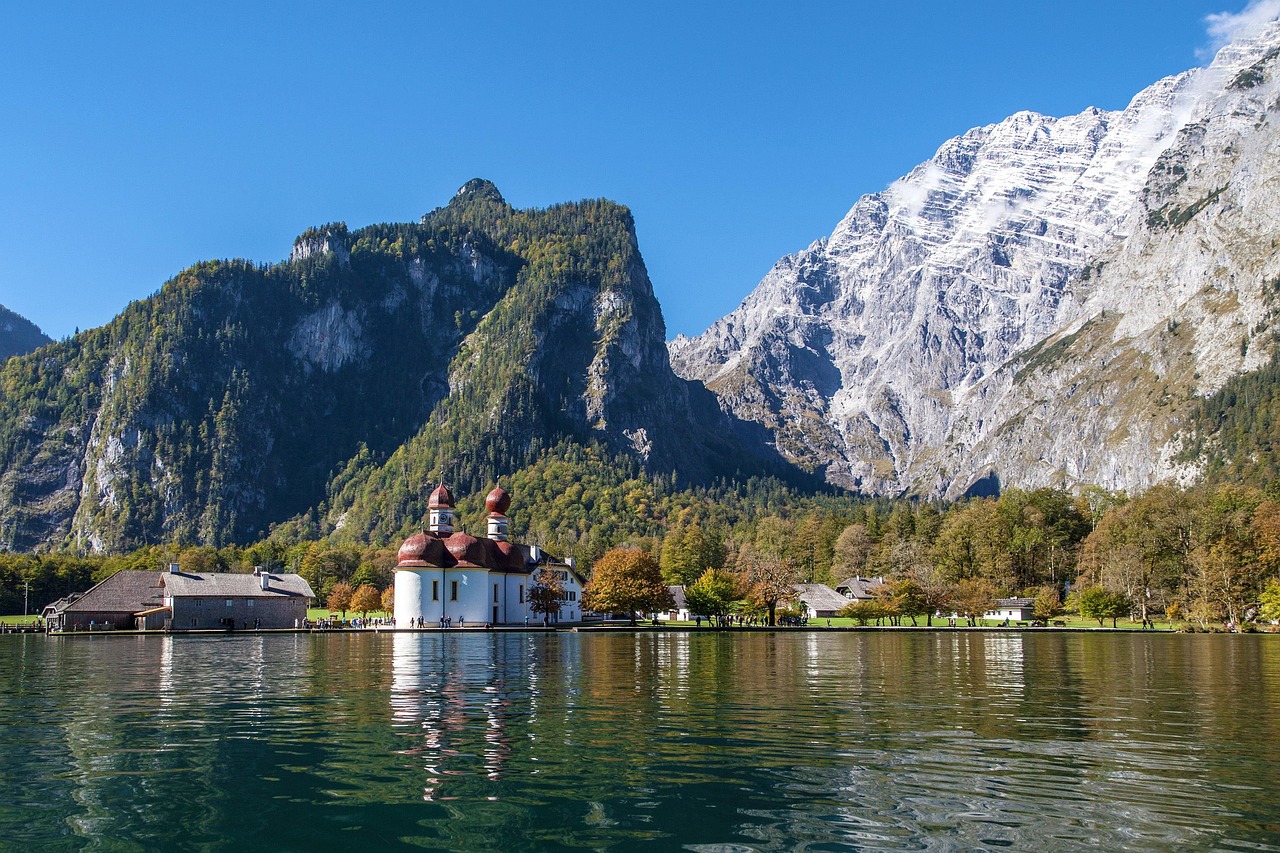
Set deep in Bavaria’s Berchtesgaden National Park, Lake Königssee is a long, narrow, fjord-like lake framed by the Watzmann massif and dense spruce forests. Motorboats have been banned for over a century; only electric passenger boats, a few human-powered craft, and the occasional park ranger’s boat disturb the surface. On calm mornings, the mountains reflect with photographic clarity. By afternoon, the light shifts, cliffs glow, and the echo demonstration from the boat – a trumpeter or flugelhorn player sending notes bouncing off the rock walls – still gives me goosebumps.
What makes Königssee special is not just the scenery, but the way you move through it: on quiet, humming boats from cove to cove; on steep alpine trails that start almost at lake level; through tiny hamlets where the same families have smoked fish and tended alpine pastures for generations. It’s compact enough to explore with a 2 day itinerary for Lake Königssee, rich enough to fill 4 days in Lake Königssee without a single dull hour.
In this 2026 travel guide for Lake Königssee, I’ll take you through the must-see attractions, lakeside villages, coves, bays, viewpoints, and boat stops – not just as a list of things to do in Lake Königssee, but as a lived itinerary: what I actually do when I’m here, where I eat, how I time the boats, and how I avoid the worst of the crowds.
Table of Contents
- Why Visit Lake Königssee in 2026
- Lake Königssee Overview: Geography, Character & Seasons
- The 12 Iconic Shores, Coves, Viewpoints & Trails (Deep Dives)
- 1. Schönau am Königssee (Main Village & Gateway)
- 2. St. Bartholomä Peninsula
- 3. Obersee & Salet Alm
- 4. Malerwinkel (Painter’s Viewpoint)
- 5. Eiskapelle (The Ice Chapel)
- 6. Jennerbahn & Jenner Summit Area
- 7. Kessel Bay & Lakeside Sauna Hut
- 8. Königsbach Waterfall & “Infinity” Ledge Area
- 9. Fischunkelalm & Obersee’s Far End
- 10. St. Bartholomä Plateau Trails & Rabenwand
- 11. Seeleinsee & High Alpine Bowl
- 12. Berchtesgaden Town & Surrounding Valleys (Your Off-Lake Base)
- Itineraries: 2, 3 & 4 Days in Lake Königssee
- Lakeside Dining & Local Food in Lake Königssee
- Evenings at Lake Königssee
- Cultural Experiences & Local Customs
- Events & What’s New in 2026–2027
- Best Day Trips from Lake Königssee
- Practical Logistics & Travel Advice for Lake Königssee
- Lake & Boat Logistics
- Hidden Tips & Money-Saving Tricks
- Summary & Final Recommendations
Lake Königssee Overview: Geography, Character & Seasons
Lake Königssee stretches roughly 8 km long but rarely more than 1 km wide, squeezed between near-vertical walls of rock. It sits at about 603 m above sea level, so not high enough to be truly alpine in climate, but high enough for refreshing nights even in midsummer. The north shore hosts Schönau am Königssee, the only large settlement right on the lake; the rest of the shoreline is essentially wild parkland, farms, or tiny hamlets accessible mostly by boat and trail.
The western shore is steeper and more austere; the eastern shore receives softer morning light and has forested slopes. The south is closed in by glacial cirques and waterfalls – the approach to Obersee feels like gliding into a dead-end canyon. Because of the electric-only rule, the lake is quiet; you don’t get the roar of speedboats or jet skis, just the hum of the engines and the slap of water on hulls.
Over the years, I’ve learned to think of Königssee in four moods:
- Morning (6:30–10:00): Best for reflection photos, peaceful walks around Schönau, an early Malerwinkel hike. Ideal for photographers and couples looking for solitude.
- Midday (10:00–15:00): The busiest window; boat queues build, trails fill. Good for families heading to St. Bartholomä or Obersee because services and snack huts are open and frequent boats run.
- Late afternoon (15:00–19:00): Crowds slowly thin, especially on the lake itself. This is my favorite time to be on a return boat from Salet or St. Bartholomä, watching the cliffs turn golden.
- Evening & night: Schönau quiets dramatically once the last boat comes in. Lakeside bars and terraces are relaxed, mostly locals and overnight guests. The water darkens to inky green; you hear cowbells drifting from the slopes.
Seasonally, here’s how it shifts:
- April–early May: Unpredictable. Some trails still snow-covered; Obersee access can be limited if ice persists. Boats run reduced schedules. Fewer people, but you must be flexible. I usually bring microspikes in late April.
- Mid-May–June: A sweet spot. Trails mostly open, waterfalls full, wildflowers blooming. Great for hiking and photography. This is when I try to spend at least a week each year.
- July–August: Peak season. Warmest swimming temperatures (often 17–20°C near the surface on hot afternoons), busiest boats. Families, school holidays, vibrant village life. You’ll need to reserve accommodation well in advance.
- September–early October: My personal favorite: quieter, crisp air, larch and beech turning gold. Hiking is superb, and the water is still swimmable in early September for hardy souls.
- Late October–March: Very quiet, some services closed, boats on winter schedule. Snow on higher trails; by deep winter, the lake can freeze along edges but usually not fully. Atmospherically beautiful but not ideal for first-time visitors wanting the full boat network.
The 12 Iconic Shores, Coves, Viewpoints & Trails (Deep Dives)
These are the places that define the character of Lake Königssee. I’ve chosen them not just because they’re photogenic, but because each offers a different way of experiencing the lake: village life, hiking, solitude, family-friendly play, or pure landscape drama.
1. Schönau am Königssee – The Lively Gateway
Every visit begins and ends here. Schönau am Königssee is the main village at the north end of the lake, the place with the boat pier, the big parking lots, and a mix of tourist shops, guesthouses, and genuinely local bakeries. At first glance it can feel busy, but give it a little time and you’ll find quiet corners, back lanes draped with geranium-heavy balconies, and locals chatting over morning coffee.
I usually arrive on the evening train into Berchtesgaden and either hop the local bus or walk the 40–50 minutes down the valley to Schönau, following the Königsseer Ache river. There’s something satisfying about arriving on foot – the roar of the river, the first glimpse of the lake through trees, the smell of woodsmoke in colder months.
Why Stay in Schönau?
If you’re deciding on a base for 2 days in Lake Königssee or more, Schönau makes the most sense for lake-focused travelers:
- Immediate boat access: You can wander down to the pier for the first or last boats without worrying about parking.
- Food & services: Bakeries, small supermarkets, sports shops (for last-minute hiking poles), and outdoor gear rentals.
- Jennerbahn cable car: The station is a 10–15 minute walk from the main pier, giving you rapid access to high alpine views.
My favorite morning routine is to grab a still-warm pretzel and a coffee from a local bakery, then walk to the lakeshore before the first tour buses arrive. On my last visit in September 2025, I sat on a bench just east of the main pier and watched low clouds roll down between the cliffs while fishermen silently prepared their small boats – a scene that felt timeless despite the souvenir stalls behind me.
Best for:
- Families: Flat lakeside promenade, easy access to boats, plenty of casual dining.
- First-time visitors: Everything is straightforward and signposted.
- Budget travelers: A range of guesthouses, including more modest options compared to lakefront hotels elsewhere.
Food & Drink in Schönau
While some restaurants are geared squarely at tourists, there are a few spots where locals actually eat. Look for menus that are not translated into five languages and blackboard specials featuring seasonal ingredients: chanterelles in late summer, game in autumn, freshwater fish year-round.
Try at least one meal on a terrace overlooking the lake, even if it costs a bit more. The evening I spent nursing a beer and a plate of grilled Saibling (char) while the last boat’s wake blurred the reflections is still one of my clearest memories here.
Practical Tips for Schönau
- Parking: Large paid lots near the pier. Arrive before 9:00 in July–August; by mid-morning they can be full.
- Accommodation: For quieter nights, choose a guesthouse a few hundred meters up the hillside rather than right beside the boat terminal.
- Shore Uses: The immediate shore here is more for strolling than swimming; the water deepens quickly and boat traffic is constant.
2. St. Bartholomä – The Iconic Peninsula
St. Bartholomä is the postcard view: a tiny peninsula halfway down the lake’s western shore, crowned by a baroque pilgrimage church with red onion domes, backed by sheer cliffs. The only way in is by boat or a demanding hike over the mountains, so stepping off the gangway feels a little like arriving on an island.
On my first visit over a decade ago, I did what everyone does: snapped the classic shot of the church from the pier and then rushed off to the beer garden. Over the years I’ve learned to slow down; now I always budget at least two hours here, sometimes four if I’m hiking up towards the Eiskapelle or exploring the plateau trails.
History & Atmosphere
The pilgrimage church dates back to the 12th century (rebuilt in its current form in the 17th), dedicated to Saint Bartholomew, patron of alpine farmers and dairymen. For centuries, people came here mostly on religious journeys or to fish and graze cattle; tourism only really took off with the advent of the electric boats in the early 20th century.
Look carefully at the walls inside: you’ll find votive paintings and old inscriptions that speak of storms survived and safe returns. On quiet days outside peak season, when the church is nearly empty, the combination of incense, beeswax, and cool stone is deeply grounding.
What to Do at St. Bartholomä
- Wander the peninsula: Follow the short paths around the peninsula edges. There are several bench spots that feel surprisingly secluded if you walk just 5–10 minutes away from the pier.
- Beer garden & smoked fish: The old hunting lodge is now a restaurant with a large beer garden. It’s touristy but the setting is unbeatable. Try the Steckerlfisch (fish grilled on a stick) if available.
- Short lakeside walks: There’s a gentle lakeside path to the west that gives different angles of the cliffs and church.
St. Bartholomä is also the starting point for serious hiking ventures – the Eiskapelle and beyond – which I’ll detail in dedicated sections.
Timing & Tips
- First or last boats: In high season, try to visit on the first boat from Schönau or stay until one of the last boats back. Middle-of-the-day crowds can feel intense.
- Photography: Late afternoon light is magical on the church and cliffs. Morning gives calmer reflections but can leave the church in shadow depending on season.
- Swimming: Technically possible from some rocky spots but the water is very cold and access is not straightforward; this is not a primary swimming area.
3. Obersee & Salet Alm – The Mirror-Lake Finale
If Königssee is dramatic, Obersee is serene. It’s a separate, smaller lake at the southern end of Königssee, reached via boat to Salet and then a short hike. On windless days, Obersee is one of the best reflection lakes I’ve seen anywhere in Europe – a perfect mirror of cliffs, forests, and the distant Röthbach Waterfall.
The first time I made it here – on a misty June morning after years of only getting as far as St. Bartholomä – I actually stopped speaking for a while. There’s a small wooden boathouse right on the lake’s edge that has become a favorite photography subject. It’s become more popular in recent years (Instagram has found it, of course), but early and late in the day it still feels almost primeval.
Salet & the Approach
The boat pier at Salet is little more than a landing stage and a few wooden buildings. From here, you walk along a wide, mostly flat trail for about 10–15 minutes to reach the northern shore of Obersee. Cows graze in the meadows, bells clanking softly. Families with strollers can manage this part fairly easily, though the path can be rocky in places.
Walking Around Obersee
A rough but rewarding trail follows the eastern shore of Obersee to Fischunkelalm at the far end (more on that later). For most travelers, though, simply reaching the first viewpoint and spending time there is enough:
- Short visit (1–2 hours total): Boat to Salet, walk to Obersee, linger at the boathouse area, maybe continue 10–15 minutes along the shore, then return.
- Longer visit (3–4 hours total): Continue all the way to Fischunkelalm for a snack, then possibly a side detour towards Röthbachfall viewpoint.
Families love Obersee because the walk is tangible and rewarding: you’re never far from water or cows, and there’s a clear destination. Couples often sit on rocks by the shore, feet dangling above crystalline water that reveals every pebble.
When to Visit Obersee
- Late morning–early afternoon: Best for families; the cows are often closer, and snack huts more lively.
- Early boats: For photographers chasing that “perfect mirror” and softer light.
Note that in spring, if winter has been long, trails can be muddy or partially snow-covered. By June, everything is usually clear.
4. Malerwinkel – The Painter’s Viewpoint
Malerwinkel (literally “painters’ corner”) is the classic land-based viewpoint of Lake Königssee, a short, family-friendly loop trail starting right from Schönau. Several romantic-era painters and early photographers set up their easels and tripods here to capture the lake’s sweeping S-curve and the distant glint of St. Bartholomä; the name stuck.
I like to walk this trail on my first evening in town. It’s a way of checking in with the lake, seeing how the water level and colors have changed since my last visit. In 2024, I did the loop just after a storm had passed; leftover clouds clung to the cliffs like smoke, and the water looked almost black-green, streaked by wind.
The Trail
The Malerwinkel loop is about 3 km, with some modest ups and downs, accessible for most reasonably fit visitors and older children. From the main lakeside promenade in Schönau, you follow clear signs up into the forest; within 20 minutes you’re looking down onto the lake from a low bluff.
- Trail type: Forest path with some roots and rocks; sturdy shoes recommended, especially after rain.
- Time: 1–1.5 hours at a leisurely pace with photo stops.
- Family-friendly: Yes, though keep an eye on young children near the steeper drops by the viewpoints.
There are a couple of main viewpoints, each with slightly different framing of the lake. When it’s busy, I sometimes continue a little further past the obvious spots; there are quieter clearings where you can sit on a log and just watch boats trace their lines on the water far below.
Best Time of Day
Malerwinkel works well at almost any time, but:
- Morning: Softer light, fewer people, more reflective water.
- Golden hour: The cliffs catch late light beautifully, though the sun may be behind you depending on season.
5. Eiskapelle – The Ice Chapel Beneath Watzmann
From St. Bartholomä, a rough mountain trail leads up into a side valley towards the Eiskapelle, a semi-permanent snow and ice field at the foot of the Watzmann’s rock wall. In some summers it forms an ice cave or arch; in others it’s more like a collapsed tunnel. Either way, it’s a raw, glacial place – and one that demands respect.
I’ve hiked to the Eiskapelle three times: once in a cool July, once in a sweltering August, and once in a temperamental September when mist hugged the rocks. Each time, the snowfield looked different. The last time, in 2023, the cave portion had partially collapsed; from a distance it looked like the mouth of some giant, pale creature.
The Hike
From St. Bartholomä, allow about 1.5–2 hours each way, depending on fitness. The trail is signposted and begins gently, then gradually steepens as you enter the narrowing valley. The soundscape shifts: first lake sounds and cowbells, then the increasing roar of meltwater streams.
- Difficulty: Moderate; not technical but rocky and uneven, with some loose sections.
- Footwear: Sturdy hiking boots recommended; trails can be wet and slippery.
- Children: Strong, experienced young hikers can manage it, but it’s not ideal for small kids.
Safety at the Eiskapelle
This is critical: do not enter the ice cave or walk under overhanging sections. Every year there are collapses; chunks of ice and rock can fall without warning. Locals will tell you – quietly but firmly – that the Eiskapelle is to be admired from a safe distance.
I usually stop 30–40 m back from the edge, find a rock to sit on, and pull out a thermos. The contrast of green valley, pale snow, and black cliff face is starkly beautiful. In late summer, wildflowers cling to any patch of soil they can find, defying the harshness of the setting.
When & Whether to Go
For many visitors on a 2 day itinerary for Lake Königssee, Eiskapelle might be too time-consuming. If you have 3 days in Lake Königssee or more and enjoy longer hikes, it’s a compelling option in good weather. Check with local information offices about trail conditions; heavy rain can make the route less pleasant.
6. Jennerbahn & Jenner Summit – High Balcony Over the Lake
For a change in perspective, nothing beats the Jenner. This mountain rises directly above Schönau, and the Jennerbahn cable car whisks you from valley floor to high alpine terrain in under 20 minutes. From up here, Königssee looks like a strip of polished jade laid between cliffs, and you can trace the line of the boat route with your eyes.
I try to ride the Jennerbahn at least once every visit, usually timing it for a late afternoon or just after a clear-sky morning. The new cable cars (refurbished in recent years) are smooth and mostly glass, so you get continuous views on the way up.
At the Top
The upper station opens onto a developed summit area with a modern mountain restaurant, viewpoints, and signed hiking paths. A short, well-built path (including some steps) leads from the station to the official Jenner summit and main platform.
- Views: Königssee below, Berchtesgaden valley, and a sweep of Austrian peaks beyond.
- Accessibility: The cable car and main terrace are accessible for many visitors with limited mobility; the last bit to the very summit involves some steps and uneven rock.
- Family appeal: Kids love the feeling of being “on top of everything” and spotting the boats as moving dots below.
Hiking Options from Jenner
From the upper station, a network of trails fans out along ridges and into side valleys. Some favorites:
- Short summit loop: Summit and return, with multiple photo stops – ideal if you’re on a tight schedule.
- Intermediate ridge walks: Follow waymarked paths to nearby peaks or alms (alpine pastures) – give yourself 2–4 hours.
- Serious descents: Fit hikers can descend back to the valley on foot, but knees will feel it; I usually prefer to ride down and save my joints.
When to Go
Jenner is a strong anchor for any 3 day itinerary for Lake Königssee or longer, as it introduces the vertical context of the landscape. In summer, plan for midday thunderstorms; start earlier in the day for longer hikes.
7. Kessel Bay – Quiet Cove & Lakeside Sauna Hut
Kessel is one of the quieter stops along the lake, a small bay on the eastern shore between Schönau and Salet. The boat only stops here on request, and many day-trippers glide past without ever noticing it. That’s precisely why I love it.
There’s a tiny hut, a clearing, and a sense that you’ve slipped out a side door of the national park. On several visits, I’ve disembarked here with a picnic, spent a lazy afternoon reading by the water, then flagged down a returning boat as the light softened.
What’s at Kessel?
- Small clearing & hut: A rustic building that, in some seasons, is used as a simple lakeside sauna or shelter. Check locally for current use and regulations.
- Lake access: Rocky shorelines where strong swimmers can carefully enter the water. There is no lifeguard; the water gets deep quickly and can be very cold.
- Trailheads: A couple of steep, lesser-used trails head up from here into the surrounding forest and slopes – these are for experienced hikers only.
Who Will Enjoy Kessel?
- Couples: Looking for a quiet, romantic, semi-wild spot away from the bustle of St. Bartholomä and Salet.
- Solitude seekers: Solo travelers with a book and time to linger.
- Adventurous swimmers: Who understand the risks of cold, deep water and want a more intimate lake experience.
Because boats don’t always stop here, watch the schedule and tell the crew you want to disembark at Kessel when you board. On your return, stand clearly visible on the pier and signal the approaching boat.
8. Königsbach Waterfall & The Notorious “Infinity” Ledge Area
Above the eastern shore of the lake, the Königsbach waterfall tumbles down forested slopes. A few years ago, a particular rocky pool near its course went viral online as an “infinity pool” over the lake, attracting crowds and leading to dangerous behavior and rescues. Authorities and park rangers have since stepped up efforts to discourage people from seeking it out.
I mention this area not as a recommendation to go there, but as a cautionary story. On one of my 2022 visits, a ranger I know shook his head while telling me about yet another rescue of a flip-flop-wearing visitor who’d followed a social media pin straight into trouble.
Current Situation (2026)
- Trails: There are official, marked hiking trails in the vicinity. Stick to those and follow signage.
- Closed/Discouraged areas: Any unmarked, steep scramble to unofficial “pools” or cliff edges is hazardous and may be actively patrolled.
If you’re keen on waterfalls and elevated views, there are far safer, sanctioned options – from the Jenner’s official viewpoints to high alpine lakes like Seeleinsee. The park’s message in 2026 is clear: enjoy Königssee without putting search-and-rescue teams at risk.
9. Fischunkelalm – Alpine Pasture at the Far End of Obersee
Continue along Obersee’s eastern shore and you’ll eventually reach Fischunkelalm, a traditional alpine pasture with a cluster of wooden huts, grazing cows, and a snack stand in season. This is one of my favorite places to linger on a warm summer day; the combination of lake, pasture, and waterfall backdrop is almost too idyllic.
The path to Fischunkelalm is more rugged than the short walk from Salet to Obersee’s near shore. You negotiate tree roots, rocks, and some narrow sections above the water. On my most recent hike in 2025, I watched several nervous-looking day-trippers turn back halfway, which is always a wise call if you’re uncomfortable.
Food & Atmosphere
At Fischunkelalm, you can usually buy simple fare: fresh buttermilk, cheese, smoked sausages, and sometimes homemade cakes. Everything tastes better after the walk, sitting at a rough wooden table, watching cows swish their tails while the Röthbachfall whispers down the cliffs in the distance.
Family & Fitness Considerations
- With children: Suitable for sure-footed older kids; not recommended for toddlers unless in carriers and with careful supervision.
- Footwear: Solid shoes with grip; the path can be muddy and slippery in places.
10. St. Bartholomä Plateau Trails & Rabenwand
Beyond the main lawns and beer garden at St. Bartholomä, a network of less-trafficked paths winds up onto the low plateau and towards viewpoints like Rabenwand. These are not the high alpine assaults of the Watzmann proper, but modest ascents that reward you with different angles on the lake and a sense of leaving the crowds behind.
On one overcast afternoon in 2024, I spent a couple of hours exploring these quieter paths. I passed only a handful of other hikers, mostly locals with dogs, and more than once I stopped simply to listen: wind through trees, distant boat horns, no chatter.
Trail Highlights
- Rabenwand viewpoint: Offers a raised vantage over Königssee and back towards Schönau.
- Forest loops: Shorter circuits through mossy spruce forest, good for stretching your legs without committing to a major hike.
Ask at the national park information point near the pier for current conditions and a simple trail map; they’re usually happy to point visitors toward appropriate options for their fitness and time budget.
11. Seeleinsee – High Alpine Bowl Above the Lake
Seeleinsee is a small alpine lake perched high above Königssee, reachable via demanding trails from the lakeshore. This is not a casual addition to your 2 day itinerary for Lake Königssee; it’s a full-day outing for experienced hikers comfortable with elevation gain and variable mountain weather.
I hiked to Seeleinsee in late September 2021, on a day that started with blue skies and ended with fast-moving clouds and a sharp drop in temperature. The lake itself, set in a grassy bowl beneath rocky ridges, felt like a secret held above the main tourist currents. A few other hikers sat spaced far apart, sharing chocolate and quietly watching wisps of fog form and fade.
Trail Notes
- Route: Multiple approaches exist; some begin from the St. Bartholomä side, others from nearby valleys and passes.
- Elevation: Significant gain; expect a long, sometimes steep day.
- Season: Generally late June–September, depending on snow. Always check with local offices before setting out.
For most travelers, especially families and first-time visitors, Seeleinsee can remain an aspirational note – a glimpse of the larger mountain system that frames the Königssee basin.
12. Berchtesgaden Town & Surrounding Valleys – Your Off-Lake Hub
Though not on the lake itself, Berchtesgaden is inseparable from any serious travel guide for Lake Königssee. This small town, a short bus ride or drive from Schönau, offers a more traditional urban core, additional accommodation, and cultural diversions – from salt mines to museums – that complement lake days nicely.
On longer stays, I often split my time: a few nights in Schönau for boat-and-hike days, then a couple in Berchtesgaden for a broader view of the region. The old town’s narrow lanes, pastel facades, and painted house fronts are especially pleasant in the evenings when day-trippers have left.
From Berchtesgaden, valleys like Ramsau (with the famous church and Hintersee), and peaks like the Kehlsteinhaus (Eagle’s Nest) are within easy reach. I’ll outline some of these in the day-trip section later, but keep Berchtesgaden in mind when planning where to stay, especially if you’re here for more than 4 days in Lake Königssee and want variety.
Itineraries: 2, 3 & 4 Days in Lake Königssee
These itineraries blend popular attractions with quieter pockets and local flavor. Distances are short, but don’t underestimate how much time you’ll want to simply sit and stare at the lake.
2 Day Itinerary for Lake Königssee
This plan assumes you’re based in Schönau am Königssee and want to see the classic highlights without rushing too much. I’ve followed versions of this schedule with visiting friends several times; it works well for couples and families alike.
Day 1: Arrival, Malerwinkel & St. Bartholomä
Morning: Arrive in Schönau, check into your accommodation, and orient yourself. If you’re here by mid-morning, walk down to the lakeside promenade and just absorb the scene. Listen to the electric boats humming in and out, watch ducks patrol the shore, and note the schedule board for boat departures.
I like to start with something light after travel, so I usually grab a simple lunch – maybe a soup and bread or a snack from a bakery – and then head out for the Malerwinkel loop. This gives you your first elevated overview: you’ll see where the boats go, how the lake narrows and curves, and how the cliffs rise almost unnervingly steep from the water.
Afternoon: Take a mid-afternoon boat to St. Bartholomä. The journey itself is part of the day’s pleasure: the famous echo demonstration, the gradual reveal of the church, the sense of moving deeper into a stony corridor.
At St. Bartholomä, give yourself time to wander beyond the crowds. Skip the immediate photo scrum at the pier and walk along the lakeside paths first. Sit on the grass or a bench and just watch light shifting on the water. Then, when the initial crush has thinned, visit the church interior and consider an early dinner or late-afternoon snack at the beer garden.
Evening: Catch one of the later boats back to Schönau; they’re almost always calmer than the midday crossings. Back in the village, take an evening stroll along the riverside or find a terrace for a nightcap. By this point, travel stress has usually fallen away for my guests; the combination of boat ride, fresh air, and simple walking works wonders.
Day 2: Obersee & Jenner Views
Morning: Have an early breakfast and aim for one of the first boats to Salet at the southern end of the lake. This is where your must-see attractions in Lake Königssee list really pays off: Obersee is unforgettable.
From Salet, stroll to Obersee’s near shore, savor the reflections, and decide if you want the longer walk to Fischunkelalm. With only two days, I usually take friends partway along the eastern shore trail, enough to get away from the denser crowd near the boathouse but not so far that time gets tight.
Return to Salet for a lakeside snack, then catch a boat back towards Schönau around midday or early afternoon.
Afternoon: In the second half of the day, ride the Jennerbahn. This gives you the classic “balcony over the lake” perspective that completes a short visit. Spend an hour or two at the top: summit path, photos, maybe a coffee and cake at the mountain restaurant while watching paragliders drift out over the valley if conditions allow.
Evening: Back down in Schönau, celebrate your last night with a lakeside dinner. If you’re into photography, head to the quieter eastern edge of the promenade for golden-hour shots: boats lined up, water darkening, mountains silhouetted. For me, this is when a 2 days in Lake Königssee visit feels complete: you’ve seen the lake from water and from air, you’ve walked its shore and peered into its side valleys.
3 Day Itinerary for Lake Königssee
With three days, you can deepen the experience: add a more serious hike, linger longer at favorite spots, or build in some rest time at a lakeside café.
Day 1: Schönau, Malerwinkel & Gentle Settling-In
Follow a similar plan to Day 1 of the 2-day itinerary, but at a more relaxed pace. If you arrive early, you can add a swim in one of the designated bathing areas near the outflow of the lake (ask locals for current recommendations; official swimming spots can shift slightly).
Use the evening to wander Schönau’s backstreets, note which restaurants feel less touristy, and maybe pick up picnic supplies for tomorrow.
Day 2: St. Bartholomä & Eiskapelle or Plateau Trails
Morning: Take an early boat to St. Bartholomä. Decide between two main paths:
- Option A – Eiskapelle (for hikers): A full outing to the ice chapel, as described earlier. Start early, bring proper gear, and respect the snowfield boundaries. Plan for 4–5 hours round trip including rest time.
- Option B – Plateau Trails (gentler but still active): Explore Rabenwand and other forest loops above St. Bartholomä. This is my go-to with mixed-ability groups; everybody gets a bit of hillwalking and views without overcommitting.
Either option rewards you with a sense of leaving the busiest areas. Pack a picnic to enjoy in a clearing or on a safe rock perch, watching boats come and go far below.
Afternoon: Return to St. Bartholomä proper with enough time for a drink or snack by the water. The atmosphere often mellows a little by mid- to late afternoon, especially if you’re not here in peak August.
Evening: Boat back to Schönau, perhaps timing a later departure to catch low-angle light along the cliffs. In Schönau, you might treat yourself to freshwater fish at a restaurant that locals recommend – ask your guesthouse host; personal tips are gold here.
Day 3: Obersee, Fischunkelalm & A Quiet Cove
Morning: As in the 2-day plan, head early to Salet and Obersee. With the extra day, commit to the hike to Fischunkelalm. Take your time along the eastern shore path; stop often for photos and to let faster hikers pass so you can enjoy the relative quiet behind them.
At Fischunkelalm, have a simple alpine lunch. On my last summer visit, I lingered here long enough that I almost missed the boat I’d targeted back from Salet – easy to do when the combination of meadow and waterfall lulls you into timelessness.
Afternoon: On your way back up the lake, consider disembarking at Kessel for an hour or two of semi-wild shoreline time. Bring a towel if you’re planning a dip; the water here feels intensely cold, but the experience of swimming in such a steep-walled fjord-like basin is unforgettable for confident swimmers.
Evening: Back in Schönau, this is your “victory lap” night. You might pop into a local bar for a digestive schnapps, or simply walk the darkened promenade and listen to night-sounds: river, rustling leaves, occasional laughter from a hotel terrace.
4 Day Itinerary for Lake Königssee
A 4 day itinerary for Lake Königssee lets you blend lake time with broader Berchtesgaden explorations, or double down on your favorite style of travel: hiking, slow food, or photography.
Day 1–3: As per 3-Day Plan
Follow the 3-day itinerary above, adjusting as weather and energy dictate.
Day 4: Flex Day – Mountains, Culture, or Rest
Option A – High Mountain Day (Experienced Hikers): Use this day for a serious alpine hike, perhaps targeting Seeleinsee or another high objective recommended by local guides. Start early, and keep an eye on the forecast; in alpine environments, I always build in a turnaround time, regardless of how close a summit looks.
Option B – Cultural & Town Day: Ride the bus or drive up to Berchtesgaden for a more urban morning: stroll the old town, visit a café, perhaps tour the salt mine (Salzbergwerk) for a family-friendly underground excursion. In the afternoon, return to the lake for a final, unstructured few hours – maybe just reading on a bench by the water.
Option C – Ramsau & Hintersee Excursion: Take a bus to the village of Ramsau and continue to Hintersee, another beautiful small lake with gentle trails and views. This makes a great low-stress outing with strong “fairy-tale forest” vibes, particularly along the Zauberwald (enchanted forest).
However you use Day 4, let it breathe. A common mistake in the Alps is cramming every day with maximum activity. The quieter half-days – an unplanned lakeside coffee, a spontaneous chat with a local farmer, a long lunch on a sunny balcony – often become the most treasured memories.
Lakeside Dining & Local Food in Lake Königssee
Food around Königssee tends toward hearty alpine fare, with a strong emphasis on freshwater fish, dairy, and game in season. The trick is to navigate between high-turnover tourist spots and more characterful venues where locals linger.
What to Eat
- Freshwater fish: Saibling (char), Forelle (trout), Renke. Grilled, pan-fried, or smoked. Look for simple preparations that let the fish speak for itself.
- Alpine dairy: Bergkäse (mountain cheese), fresh buttermilk, and yogurt from local alms like Fischunkelalm.
- Classics: Schnitzel, Kasnocken (cheesy dumplings), Schweinebraten (roast pork) with dumplings.
- Sweet treats: Apfelstrudel, Kaiserschmarrn (shredded pancake), and seasonal pastries with berries or plums.
Where to Eat
In Schönau, I alternate between a couple of lake-view restaurants (for the setting) and simpler guesthouse kitchens slightly back from the shoreline (for better value and often better food). Ask your host where they eat on a Sunday with family; that’s almost always a solid recommendation.
At St. Bartholomä, the beer garden is worth experiencing once, especially if you can find a less-crowded moment. At Obersee and Fischunkelalm, embrace the rustic: a slice of bread with cheese, a glass of fresh milk, maybe a homemade cake if you’re lucky.
Money-Saving Food Tips
- Picnics: Stock up at supermarkets in Berchtesgaden or the small market in Schönau. Picnicking at viewpoints is not only cheaper, it’s often more memorable.
- Lunch vs dinner: Consider making lunch your main hot meal at a restaurant, when some places offer daily specials (Mittagsmenü) at better prices.
- Tap water: Perfectly drinkable throughout Germany. Refill bottles rather than constantly buying new ones.
Evenings at Lake Königssee
Evenings are when Königssee feels most like a place people live, not just visit. The last boats come in, day-trippers drift away, and there’s a subtle shift in energy: slower, softer, more local.
Sunset Spots & Dusk Walks
- Schönau promenade: Simple but satisfying. Watch the last glow on the cliffs and the ripple of returning boats.
- Malerwinkel (for the energetic): An early-evening loop can catch lingering light on the water, though bring a headlamp if there’s any chance you’ll be walking back after dusk.
- Riverside paths: Follow the Königsseer Ache for a quieter, more wooded evening stroll.
Bars & Terraces
You won’t find a club scene here, but there are several hotel bars and standalone restaurants with outdoor seating. Order a local beer or glass of Austrian wine, and watch the sky darken. In summer, you may catch live folk music or small ensembles playing on terraces, especially on weekends.
Evening Events & Festivals
Some years, the region hosts lakeside concerts, fishermen’s processions, or religious celebrations that include decorated boats on the water. Check the Berchtesgaden and Schönau tourist office calendars for 2026–2027; these events are often only advertised locally and can be a highlight if your dates line up.
Cultural Experiences & Local Customs
Bavaria has a strong, visible regional identity, and the Berchtesgaden area is no exception. You’ll see traditional clothing (Trachten) – dirndls and lederhosen – worn not just for tourists but at festivals, weddings, and sometimes even on a regular Sunday.
Etiquette Basics
- Greetings: A simple “Grüß Gott” (a local greeting) or “Guten Tag” is appreciated in shops, guesthouses, and on trails.
- On the trail: It’s normal to greet passing hikers with a nod or short hello.
- Quiet in nature: Locals value the silence of the national park. Keep voices moderate, especially on boats and in remote coves.
- Churches & shrines: Dress respectfully when entering churches; removing hats is customary for men.
Alpine Culture & Alm Life
When you visit places like Fischunkelalm, remember these are working farms as well as tourist stops. Respect fencing, don’t feed animals, and keep a bit of distance from cows – especially if they have calves. Doors marked “Privat” are exactly that; stick to obvious guest areas.
Tipping & Payment
- Tipping: In restaurants, 5–10% is standard if service was good, handed directly to the server when paying.
- Cash vs card: Cards are widely accepted, but small alms and some snack stands may be cash-only. Have some euros on hand, especially for mountain huts.
Events & What’s New in 2026–2027
Local tourism boards are increasingly focused on sustainability and visitor flow management. In 2026–2027, expect:
- Refined boat schedules: Fine-tuning of early and late-season electric boat timetables to balance local needs with visitor demand.
- Expanded ranger presence: Especially around sensitive areas like Königsbach falls and high alpine routes, with more educational signage in multiple languages.
- Seasonal lake festivals: Summer music evenings in Berchtesgaden and occasional lakeside folk events in Schönau – dates vary yearly, so check the 2026/27 event calendars on arrival.
Whenever I return, I also see small yet meaningful changes: improved wayfinding signs, upgraded trail steps in eroded sections, or a newly renovated guesthouse trying to balance tradition with modern comfort.
Day Trips from Lake Königssee
If you’re here more than a couple of days, these nearby destinations add depth to your stay.
Berchtesgaden Town
Stroll the old town, visit the royal castle complex, and enjoy café culture. The salt mine tour is particularly fun for families: slides, underground lakes, and a sense of the region’s industrial history.
Ramsau & Hintersee
An easy bus ride from Berchtesgaden, this valley offers archetypal Alpine village scenery and the tranquil Hintersee with forest paths. Great for gentler days or when weather at higher altitude looks unstable.
Kehlsteinhaus (Eagle’s Nest)
A controversial but historically important site with commanding views. Dedicated buses run from near Berchtesgaden. Go for the panorama and to understand the region’s WWII history; be prepared for crowds in high season.
Salzburg, Austria
About an hour away by bus and train or car, Salzburg makes a rich cultural day out: baroque architecture, music history, and a different urban rhythm. Return to Königssee in the evening for a quiet contrast.
Practical Logistics & Travel Advice for Lake Königssee
Getting There
- By train: To Berchtesgaden from Munich or Salzburg, then local bus to Schönau (frequent, short ride).
- By car: Well-signed roads; parking lots at Schönau can fill in high season, so arrive early.
Getting Around
- Boat: The main way to travel along the lake; electric ferries run regular routes between Schönau, St. Bartholomä, Kessel (on request), and Salet.
- Foot: Many short trails start right from Schönau and lake stops.
- Bus: Efficient bus network linking Schönau, Berchtesgaden, Ramsau, and beyond.
Boats & Passes
In 2026, expect tiered tickets: Schönau–St. Bartholomä, Schönau–Salet (with stops en route), and day passes that allow multiple journeys. Check the official Königssee boat company website or pier boards for up-to-date prices and timetables. Boats generally run more frequently in July–August and during school holidays; in shoulder seasons, intervals can be longer.
Electric-only rule: No private motorboats are allowed. Human-powered craft (like rental rowboats or SUPs, where permitted) must follow regulations and are limited in scope; check local rental outfits for the latest rules.
Swimming
Lake Königssee is cold year-round. Surface temperatures can be tolerable for brief swims in late June–August, especially near shallower edges and in sun-exposed coves. Always enter slowly, assess your limits, and avoid jumping from rocks or piers where depth and underwater hazards are uncertain.
Weather & Safety
- Storms: Afternoon thunderstorms are common in summer. If hiking, start early and aim to be off exposed ridges by mid-afternoon.
- Alpine basics: Pack layers, rain gear, sun protection, and enough water and snacks, even for “short” hikes.
- Altitude: At 600–1,800 m for most common viewpoints, altitude effects are modest but still noticeable for some; take it easy if you’re not used to hills.
SIM Cards & Connectivity
Germany’s main providers (Telekom, Vodafone, O2) offer prepaid SIMs at supermarkets and electronics stores; you’ll find options in Berchtesgaden or larger nearby towns. EU visitors can usually roam with their home plans. Coverage is good in villages and on the lake, but expect patchy or no signal in some deep valleys and higher trails.
Visas & Driving
- Visas: Germany is in the Schengen Area. Many nationalities can enter visa-free for short stays; check your country’s requirements well before travel.
- Driving licenses: EU/EEA licenses are accepted. Visitors from many other countries can drive with their home license plus, ideally, an International Driving Permit; confirm current rules for your nationality.
Where to Stay
- Lakefront (Schönau): Best for short trips focused on the lake; higher prices but maximum convenience.
- Nearby town (Berchtesgaden): Good for longer stays, better transport hub, slightly wider range of dining and cultural options.
- Further out: Rural guesthouses and farm stays in surrounding valleys – excellent for quiet, car-based trips and those seeking a more local feel.
Lake & Boat Logistics Specifics
Schedules & Seasonality
Boats typically operate year-round between Schönau and St. Bartholomä, with extended routes to Salet in the main season (late spring to autumn). Early and late-season schedules are reduced; always check the current timetable before planning tight connections.
Pass Options
Look for:
- Return tickets: To a single destination (e.g., Schönau–St. Bartholomä–Schönau).
- Through tickets: Schönau–Salet with stopovers at St. Bartholomä.
- Day passes: Occasionally offered, allowing multiple segments in one day; ask at the ticket office.
Parking at Access Points
The main car parks at Schönau are large, paid, and well-signed. In peak season, arrive early to secure a spot. Parking is charged by duration; keep your ticket safe. If you’re staying in Schönau, ask your accommodation about guest cards that may include discounted or free local transport, reducing your need to park repeatedly.
Summary & Final Recommendations
Lake Königssee is not a place you “do” and tick off; it’s a landscape you inhabit for a few days, letting its rhythms seep in. Boats hum, mountains loom, clouds perform daily theater, and human activity threads lightly along the shores.
For many travelers, a well-planned 2 days in Lake Königssee provides a strong first impression: Schönau, St. Bartholomä, Obersee, and at least one elevated viewpoint like Malerwinkel or Jenner. With 3 days in Lake Königssee, you can add deeper hikes or extra time at Obersee and Kessel. A 4 day itinerary for Lake Königssee opens space for day trips to Berchtesgaden, Ramsau, or high alpine routes.
Best seasons: For most, late May–June and September–early October offer the richest overall experience: open trails, vivid landscapes, and room to breathe. July–August brings warmest water and a festive atmosphere but also the thickest crowds. Winter is beautiful but pared-back, best for repeat visitors who already know the summer version.
Whichever season and itinerary you choose, prioritize time on the lake and time above it. Let one day be structured and the next a little loose. Talk to your hosts, greet fellow hikers, and remember that some of the finest hidden gems in Lake Königssee are not secret coordinates but quiet benches, side paths, and conversations you didn’t plan for – set against one of Europe’s most unforgettable lakes.